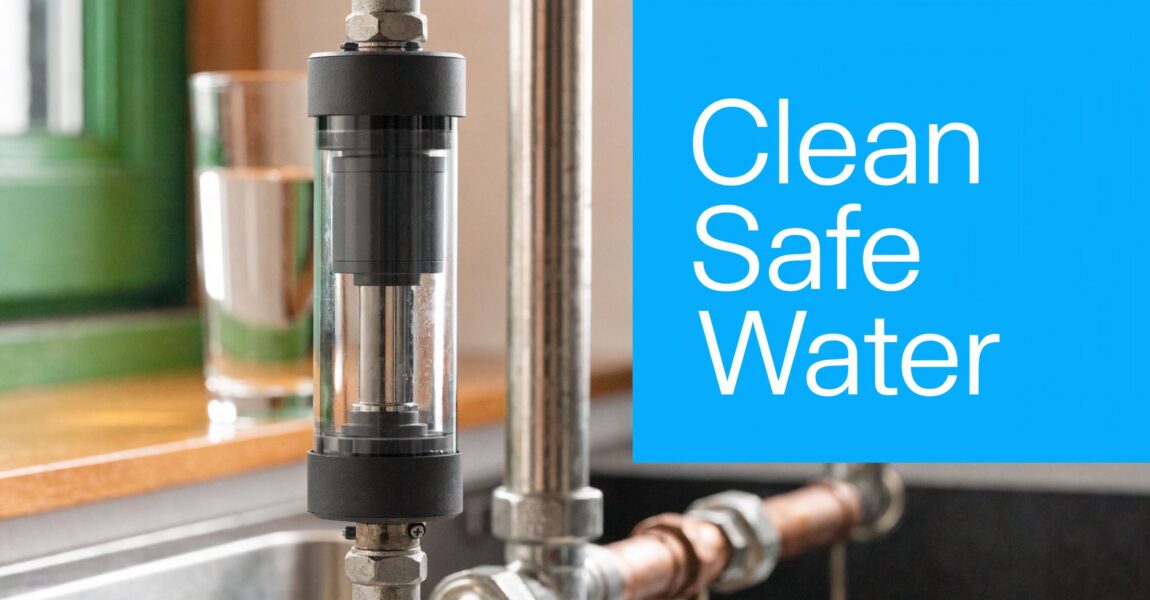
You push the fridge dispenser, fill a glass, and expect cold, clean water. Instead, the first sip tastes faintly like a swimming pool. Then the ice picks up the same flavor and turns a good drink into something you notice for the wrong reason.
Many homeowners end up there. The refrigerator is new, the kitchen looks sharp, and the water still isn’t right. In many homes, the built-in fridge cartridge only solves part of the problem. It may help with taste, but it often isn’t the best match for your specific water issue, your appliance layout, or the amount of water your family uses.
An inline water filter fixes that in a simple way. It installs directly on the water line feeding the appliance or faucet you care about most. Done right, it’s one of the cleanest upgrades you can make to a kitchen, refrigerator, RV, or dedicated drinking line.
Here’s the short version before we get into the details.
| Use case | Best fit | Why it works | Main trade-off |
|---|---|---|---|
| Fridge and ice maker | Carbon inline filter | Improves taste and odor at the appliance without changing your kitchen layout | Limited if your main concern is difficult contaminants |
| Under-sink drinking water | Certified carbon block inline filter | Strong contaminant reduction with straightforward installation | Cartridge access matters in tight cabinets |
| Lead, arsenic, uranium concerns | Inline RO system | Broad removal capability for tougher water problems | More complex install and wastewater considerations |
| Whole-house city water treatment | Whole-house inline system | Treats showers, sinks, laundry, and appliances together | Higher upfront cost and more space required |
| RV and marine | Compact hose-line inline filter | Portable, easy to connect, easy to remove for storage | Freeze damage and storage mistakes shorten life |
| Well water with iron or sulfur | Specialized system, not generic carbon only | Better matched to real well water problems | Standard inline units often disappoint |
The Hidden Problem with Your Fridge Water and Ice
The complaint usually sounds small at first. “The water tastes off.” Then it turns into cloudy cubes, stale-smelling ice, or a dispenser that’s technically working but never gives water you want to drink.
A refrigerator makes this more frustrating because the appliance looks like it should solve the problem for you. You paid for the dispenser, the ice maker, and often a built-in filter bay. But a fridge filter isn’t magic. It has to work with whatever your local water supply sends into the house, and that can include chlorine taste, sediment, lead concerns, or just water that doesn’t smell right.
Why built-in fridge filters often fall short
A built-in cartridge is limited by size. Small media volume means less room to handle tougher water problems or hold performance over longer stretches of use.
It also only filters after the water has already traveled through your home’s plumbing. If the line feeding the refrigerator picks up taste, odor, or fine debris, the fridge filter may not fully clean that up.
Many “bad fridge water” complaints are really water supply complaints. The refrigerator just happens to be where you notice them.
The other issue is convenience. When people get a weak result from the factory cartridge, they often assume the refrigerator is failing. Sometimes it is. A failing valve, a restricted line, or poor cooling can affect water and ice performance too. If your dispenser flow has changed or the ice maker is acting strangely, it helps to rule out appliance problems with professional refrigerator repair services before you blame the filter alone.
The simple fix behind the appliance
A refrigerator inline filter sits on the supply line behind or below the appliance. It treats water before it reaches the fridge’s internal components.
That matters for three reasons:
- Better taste at the point of use: You target the water going to drinking water and ice.
- Cleaner ice production: If the incoming line is better, the ice usually improves with it.
- Less dependence on the factory cartridge: In many setups, the external inline unit does the heavy lifting.
For a lot of households, this is the best inline water filter setup because it solves a narrow problem with minimal disruption. No separate faucet. No major remodel. No bulky equipment in the kitchen.
What Are Inline Filters and How Do They Work
Inline filters solve a very specific problem. They clean water on the way to one appliance or one branch line, instead of treating the whole house.
That sounds simple, but the application changes everything. A filter behind a refrigerator has to fit in a tight space and keep enough flow for the dispenser and ice maker. An RV filter has to be easy to disconnect before winterization. A filter feeding a coffee station may only need chlorine reduction, while a line used for drinking water may justify a filter rated for lead or PFAS reduction.
The basic inline filter layout
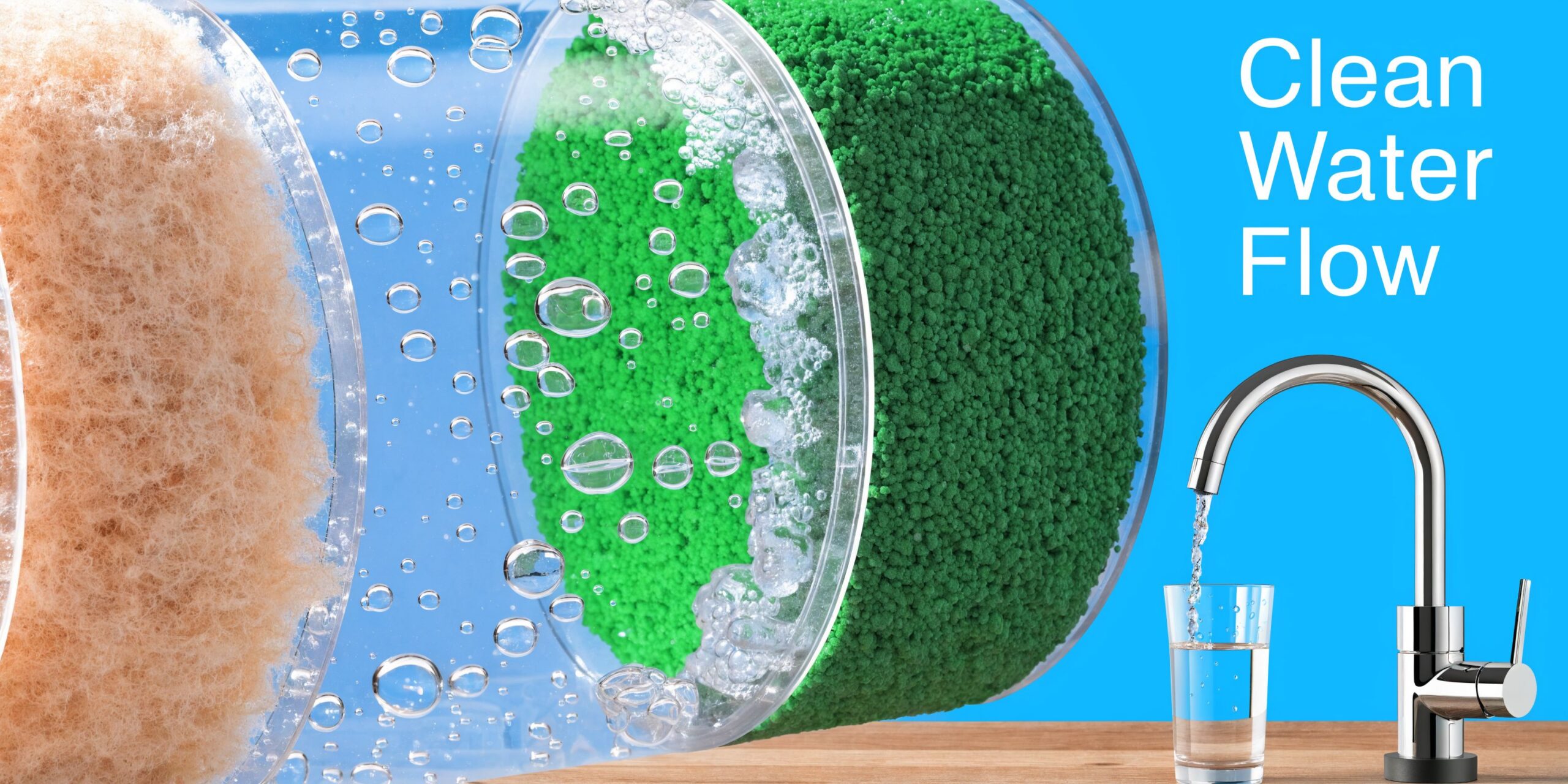
Most inline units are small cartridges with an inlet and outlet. Water enters, passes through one or more types of media, and leaves cleaner than it came in.
That basic design shows up in several places:
- Refrigerators and ice makers
- Under-sink drinking lines
- Dedicated beverage taps
- RVs and boats
- Larger housings used for higher-flow point-of-entry jobs
The right inline filter depends on three things. What is in your water, how much flow the appliance needs, and how much room you have to install and service the cartridge.
Carbon block for chlorine, taste, odor, and many city water problems
For municipal water, carbon block is usually the starting point. It does a good job with chlorine taste and odor, and better versions can also reduce lead, VOCs, and some PFAS compounds if the certification supports those claims.
This is why carbon block is so common on refrigerator lines and under-sink drinking water setups. It gives meaningful improvement without adding a tank, a separate faucet, or a complicated install. In a cramped fridge alcove, that matters.
The common mistake is assuming all carbon filters do the same job. They do not. Some are built mainly for taste and odor. Others are designed and tested for health-related contaminants. The housing may look similar, but the result can be very different.
KDF media for narrower use cases
KDF media works through a redox reaction, not just adsorption. It can help with chlorine and certain heavy metals, and it can limit bacterial growth inside the cartridge.
I treat KDF as a niche option, not a default choice. It can make sense in humid, intermittently used setups like some RVs, boats, or secondary beverage lines where microbial control inside the filter is part of the equation. It is less convincing as a catch-all answer for hard well water, iron, sulfur, or sediment-heavy supplies.
Practical rule: Choose media for the actual water problem and the appliance using it. A small inline cartridge can do a lot on treated city water. It cannot stand in for a full well-water treatment setup.
Inline reverse osmosis for harder contaminant problems
Reverse osmosis belongs in a different category. It is the better fit when the concern goes beyond chlorine and taste into broader contaminant reduction.
Modern compact RO systems waste less water than older designs. According to a comparison from Water Filter Guru, systems such as the Waterdrop G3P800 have improved the pure-to-waste ratio enough that inline RO is far more practical than older under-sink units.
The trade-offs are still real. RO needs more space, a drain connection, and more careful installation. It also slows delivery compared with a simple carbon inline filter, which matters if you are trying to feed a refrigerator, an ice maker, or any appliance that does not tolerate low pressure well. For that reason, I usually recommend standard inline carbon filters for fridge lines and reserve compact RO for dedicated drinking water setups.
What inline filters do poorly
Inline filters work best when the goal is narrow and realistic. Problems start when buyers ask a small cartridge to fix water issues it was never built to handle.
Common mistakes include:
- Using a basic carbon inline filter on severe well water
- Choosing a compact fridge filter when lead or PFAS reduction is the top priority
- Buying the shortest cartridge only because it fits, then losing service life and flow
- Installing an RV filter and forgetting the disconnect and drain steps before freezing weather
- Ignoring appliance flow requirements for ice makers, espresso machines, and fast-fill dispensers
Used correctly, inline filters are one of the cleanest fixes in residential water treatment. Used blindly, they disappoint fast.
Decoding Certifications and Performance Specs
A lot of inline filters look interchangeable until you read the fine print. That is where buyers miss the difference between a cartridge that improves taste and one that is rated to reduce lead, cysts, or other health-related contaminants.
For appliance use, that distinction matters more than the box design or the gallon claim. A refrigerator line has limited space and limited forgiveness for pressure loss. An RV setup adds vibration, seasonal draining, and winterization. An espresso machine or ice maker may work poorly if the filter is too restrictive. Certifications and specs tell you whether the filter fits the job or just fits the marketing.
What NSF and ANSI standards tell you
For inline filters, the two standards homeowners should check first are NSF/ANSI 42 and NSF/ANSI 53.
- NSF/ANSI 42: Covers aesthetic issues such as chlorine taste and odor.
- NSF/ANSI 53: Covers health-related contaminant reduction, including lead and cysts.
That difference is practical. If your complaint is “the fridge water smells like chlorine,” NSF/ANSI 42 may be enough. If you are trying to reduce lead from older plumbing, 42 alone is not enough. I see that mistake often. Buyers assume any carbon inline filter is a health filter. Many are not.
Some filters also advertise reduction for newer concerns like PFAS, but the only claims worth trusting are the ones backed by the product’s certification sheet or performance data sheet. If the listing is vague, skip it and keep looking. Water filter certification guidance and testing advice can help you verify what a filter is rated to reduce before you buy.
Read specs in this order
Start with function, not price.
| Spec | What it tells you | Why it matters |
|---|---|---|
| Certification | What claims were tested | Separates verified reduction claims from marketing copy |
| Contaminants reduced | Which water problems the filter targets | Keeps you from buying a chlorine filter for a lead or PFAS concern |
| Flow rate | How quickly water can move through the filter | Matters for refrigerators, ice makers, and coffee equipment |
| Capacity | Approximate service life under normal use | Affects replacement frequency and ownership cost |
| Fitting size | Whether the unit matches your tubing and shutoff setup | Prevents extra adapters, cramped installs, and more leak points |
That order saves time. It also prevents one of the most common buying errors: choosing the smallest, cheapest inline cartridge that physically fits, then finding out it drops flow too much or does not address the actual contaminant concern.
Micron ratings need context
Micron ratings get overused in filter marketing. They tell you how fine the particle screening is, but they do not tell you enough on their own.
A low micron rating may help with sediment. It does not automatically mean the filter is good at reducing chlorine, lead, VOCs, or PFAS. Media type matters. Certification matters more. A sediment cartridge can have a tight micron rating and still do very little for drinking water contaminants that affect health or taste.
A low micron rating without contaminant certification is a partial story, not a buying decision.
Flow rate and capacity are where daily use gets real
This is the part owners notice every day.
A filter can look excellent on paper and still be a bad fit for a fridge or appliance line if it restricts flow too much. Slow refill times, weak dispenser output, and poor ice production are common complaints after an inline filter swap. In many cases, the problem is not the refrigerator. It is a filter that was chosen for broad claims instead of appliance-friendly flow.
Capacity matters for a different reason. Short-life cartridges are easy to ignore until the water slows down, the taste comes back, or the owner forgets when the filter was installed. Longer-life models reduce maintenance, but only if they still fit the available space and meet the contaminant goal. Behind a refrigerator, cartridge length and replacement clearance matter almost as much as rated service life.
Under-sink inline setups usually have more room and can handle larger cartridges. Fridge lines and RV installations usually cannot. That is why the best spec sheet is the one that matches the installation, not the one with the longest list of claims.
A simple buying checklist
Use this before you click buy:
- Check the certification first: For lead reduction, look for NSF/ANSI 53 or another clearly stated health-related certification.
- Match the filter to the appliance: Fridges, dedicated ice makers, RV lines, and espresso machines all have different space and flow limits.
- Treat flow rate as a daily-use spec: If the filter chokes the line, the water system becomes annoying fast.
- Check replacement access: A cartridge that technically fits may still be miserable to service behind a fridge or inside an RV compartment.
- Buy for the actual water concern: Chlorine taste, lead, sediment, and PFAS are different problems and often need different filter media or certification.
Best Inline Filters Reviewed by Use Case
Most roundups get lazy here. They pile a fridge filter, an RO system, and a whole-house tank into one list and call it a comparison.
That doesn’t help if you’re standing behind a refrigerator with six inches of clearance, or trying to fit a system next to a garbage disposal, or winterizing an RV before a freeze.
Refrigerator and ice maker lines
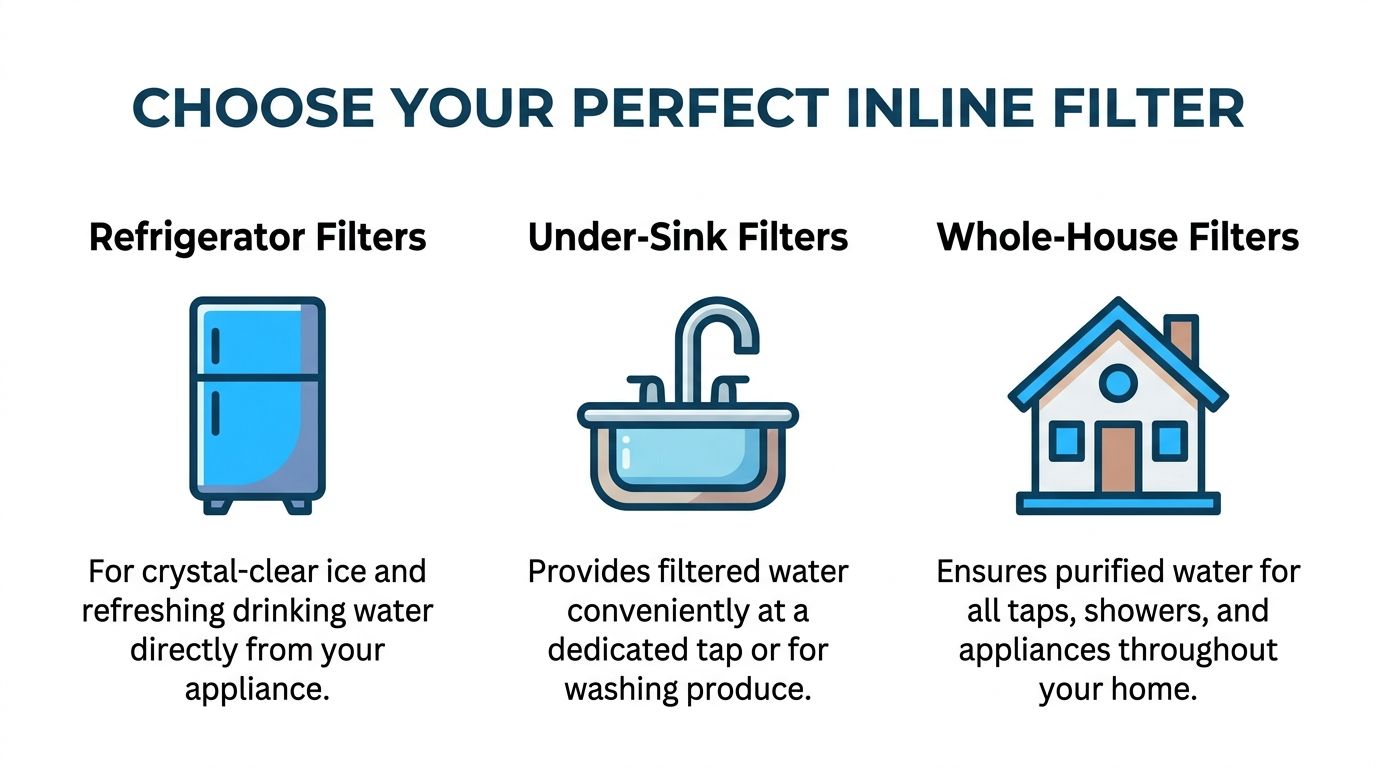
For refrigerators, compactness matters almost as much as filter quality. You need a unit that fits behind or beside the appliance, doesn’t kink the tubing, and won’t make future pull-outs miserable.
Best fit for city water taste and odor issues
Waterdrop 15UA is one of the strongest practical options when the main goal is improving drinking water and ice quality from municipal water.
Why it stands out:
- Strong verified reduction claims for chlorine, lead, heavy metals, and VOCs
- Long cartridge life
- Compact inline-friendly design
This is the kind of product I’d choose when a homeowner says, “The ice tastes bad, but I don’t want a separate faucet or a full under-sink system.”
Best fit for renters and no-drill setups
Clearly Filtered inline solutions make sense when the household wants broader reduction claims and a setup that avoids drilling and extra faucet hardware.
According to the same Quality Water Lab source already noted earlier, the Clearly Filtered inline filter is verified to remove 95-99% of chlorine, chloramine, lead, PFAS, VOCs, BPA, pharmaceuticals, and more for 784 gallons.
That profile is useful in apartments and rentals where a refrigerator line or existing cold-water connection is the only realistic installation point.
For renters, installation friction matters. A filter that avoids countertop clutter and doesn’t require a separate tap often gets used consistently.
Under-sink drinking water systems
Under-sink inline filters give you more room to work with, which means larger cartridges, better media volume, and often stronger performance than appliance-only options.
Best all-around carbon block under-sink choice
Aquasana Claryum is a good pick for households that want a non-RO under-sink system with broad city water utility. Good Housekeeping’s testing, summarized in the verified data, highlights Aquasana’s three-stage under-sink system as capturing a wide range of contaminants through NSF-certified performance.
This category works best when the water issue is broad but not severe enough to justify RO. You keep better flow, simpler maintenance, and less plumbing complexity.
Best for difficult contaminants under the sink
If lead, arsenic, or uranium are your priority, an inline RO system earns its space here.
In lab testing, the Waterdrop G3P600 showed 100% reduction in lead, arsenic, and uranium, bringing those concentrations to 0 ppm, according to TechGearLab’s water filter testing.
That kind of result puts it in a different tier from standard carbon systems.
A few practical notes matter here:
- It’s better suited to dedicated drinking water than casual “maybe I’ll install it later” buyers.
- RO requires more planning for drain routing and cartridge access.
- It’s worth it when the contaminant problem is serious.
Another strong RO option for volume-focused homes
APEC ROES-50 remains a reference point in the category because it set a high benchmark in heavy metal reduction testing. It’s a strong choice for households comfortable with a more traditional RO layout and willing to accept the footprint.
I don’t like recommending older-style RO systems when a tankless unit fits the budget and cabinet, but they still have a place in homes where proven contaminant reduction is the main goal and space is available.
Whole-house inline systems
Whole-house treatment belongs in the conversation because many buyers are trying to fix a house-wide problem with a point-of-use product.
If every sink, shower, and appliance shows the same chlorine smell or chemical taste, stop trying to solve that with one little fridge cartridge.
Best for municipal water across the whole house
SpringWell CF1 is the standout choice for city water when the problem extends beyond one tap. Independent testing cited in the verified data reports 95.93% chlorine reduction and up to 95% removal of chemicals such as chloramine, TTHMs, and VOCs via its multi-stage design, with a minimal pressure drop of less than 1 PSI at 20 GPM and a 100,000-gallon capacity, according to Just Plumbing AZ’s lab-test roundup.
That flow performance is why whole-house systems like this work in real homes. A filter is no bargain if the morning shower turns weak every time someone starts the washing machine.
If the complaint comes from the shower, laundry, kitchen sink, and ice maker at the same time, think whole-house first and point-of-use second.
RV and marine use
RV filters live a harder life than kitchen filters. They get tossed in storage bays, hooked to questionable campground spigots, and forgotten during freeze weather.
For RV use, what matters most is portability, easy hose connection, and how easy the unit is to drain and store. I prefer a simple external inline setup that can be removed quickly and fully dried before storage. Fancy filtration doesn’t help if the housing cracks over winter.
The biggest mistake here isn’t usually choosing the wrong model. It’s failing to winterize it. A good RV inline filter should be treated like any other water-bearing component. Drain it, disconnect it, and don’t leave it exposed to freezing temperatures.
Quick recommendations by buyer type
| If you are… | Better choice | Why |
|---|---|---|
| Fighting bad-tasting fridge water | Waterdrop 15UA | Compact, strong verified city-water performance |
| Renting and avoiding permanent changes | Clearly Filtered inline solution | No-drill friendly approach |
| Treating lead, arsenic, or uranium under the sink | Waterdrop G3P600 | RO-level reduction for difficult contaminants |
| Dealing with house-wide chlorine and chemical issues | SpringWell CF1 | Whole-house flow and media volume |
| Outfitting an RV | Portable hose-style inline filter | Easy seasonal use and easier winter storage |
A Practical Guide to Installation and Compatibility
A good filter installed badly becomes a leak. Most inline filter problems I see are installation mistakes, not bad cartridges.
The hardware is usually simple. The fit isn’t. Before you buy, confirm the tubing size, fitting type, and the direction of water flow marked on the housing.

Know your line before you touch a wrench
Most inline installs come down to a few common variables:
- Tubing size: Refrigerator lines often use smaller tubing than under-sink drinking lines.
- Connection type: Push-to-connect fittings are fast, but they need a clean, square tubing cut.
- Mounting space: Some filters fit physically but leave no room to replace the cartridge later.
If you’re unsure what fitting you’re looking at, a practical troubleshooting library like the advice section at https://www.waterfilteradvisor.com/advice/ is useful before you start pulling lines apart.
Refrigerator installation that doesn’t become a callback
For fridge installs, shut off the water, pull the appliance carefully, and inspect the supply line first. If the tubing is brittle, kinked, or already patched together with mismatched fittings, replace it before adding a filter.
Then follow this order:
- Cut the tubing cleanly with a proper tubing cutter.
- Observe flow direction on the filter body.
- Seat the tubing fully in push fittings.
- Turn water on slowly and check every connection with a dry paper towel.
- Flush the filter until the water runs clear and free of fines.
The dry paper towel trick catches slow leaks your eye misses.
Under-sink compatibility issues to watch
Under a sink, the problem is rarely the water line itself. It’s cabinet crowding.
Watch for:
- Garbage disposal interference
- Pull-out trash hardware
- Low-mounted outlets
- Filter location blocking shutoff access
A clean install keeps the cartridge reachable. If you have to remove half the cabinet contents and crouch around drain piping just to service the filter, the layout needs work.
RV installs need one extra habit
RV filters are easy to connect and easy to ruin. Use them on the supply line, secure them so hose strain doesn’t twist the body, and disconnect them before storage.
Leave enough slack in the hose or tubing so the fitting doesn’t carry the full load. Strain breaks connections faster than water pressure does.
For winter, remove the filter entirely. Don’t assume “mostly drained” is good enough.
Calculating the True Cost of Clean Water
The cheapest filter on the shelf is often the expensive one in practice. A short-lived cartridge, weak performance, or a filter that clogs early costs more than the sticker suggests.
Hardware price is only the opening bid
When I compare inline filters, I look at three things:
- Replacement frequency
- What the filter solves
- Whether the system creates extra costs through poor fit or wasted water
A long-life carbon filter can be a better value than a bargain cartridge you replace constantly. A more expensive RO unit can still be the right purchase if it solves a contaminant problem that a cheaper filter doesn’t touch.
Real examples of cost structure
The verified data gives a useful spread:
| System type | Cost angle from verified data | What that means in practice |
|---|---|---|
| Waterdrop 15UA | Long cartridge life | Fewer cartridge changes for steady city-water use |
| Waterdrop G3P600 | Competitive maintenance cost over its cartridge life | More costly than basic carbon, but justified for difficult contaminants |
| APEC ROES-50 | Estimated annual cost is competitive for high-volume use | Traditional RO can still be cost-competitive for high-volume use |
| SpringWell CF1 | Roughly $0.01/gallon in the verified source | Whole-house treatment can be economical over time when the problem is everywhere |
Those numbers only matter when tied to your actual use case. If your issue is bad-tasting fridge ice, don’t pay RO-level costs for a compact carbon problem. If your issue is lead or arsenic, don’t congratulate yourself for saving money on a filter that was never built for that job.
The hidden costs people forget
A few costs don’t show up on the product page:
- Adapter fittings: Cheap filters often need extra hardware.
- Lost cabinet space: Bulky systems can force awkward compromises.
- Leak risk from poor installation: The wrong fitting costs more than the cartridge.
- Skipped maintenance: If replacement is annoying, people delay it.
The best inline water filter is rarely the cheapest unit. It’s the one that solves the right problem, lasts a reasonable amount of time, and stays easy enough to maintain that you keep using it.
Common Questions About Inline Water Filters
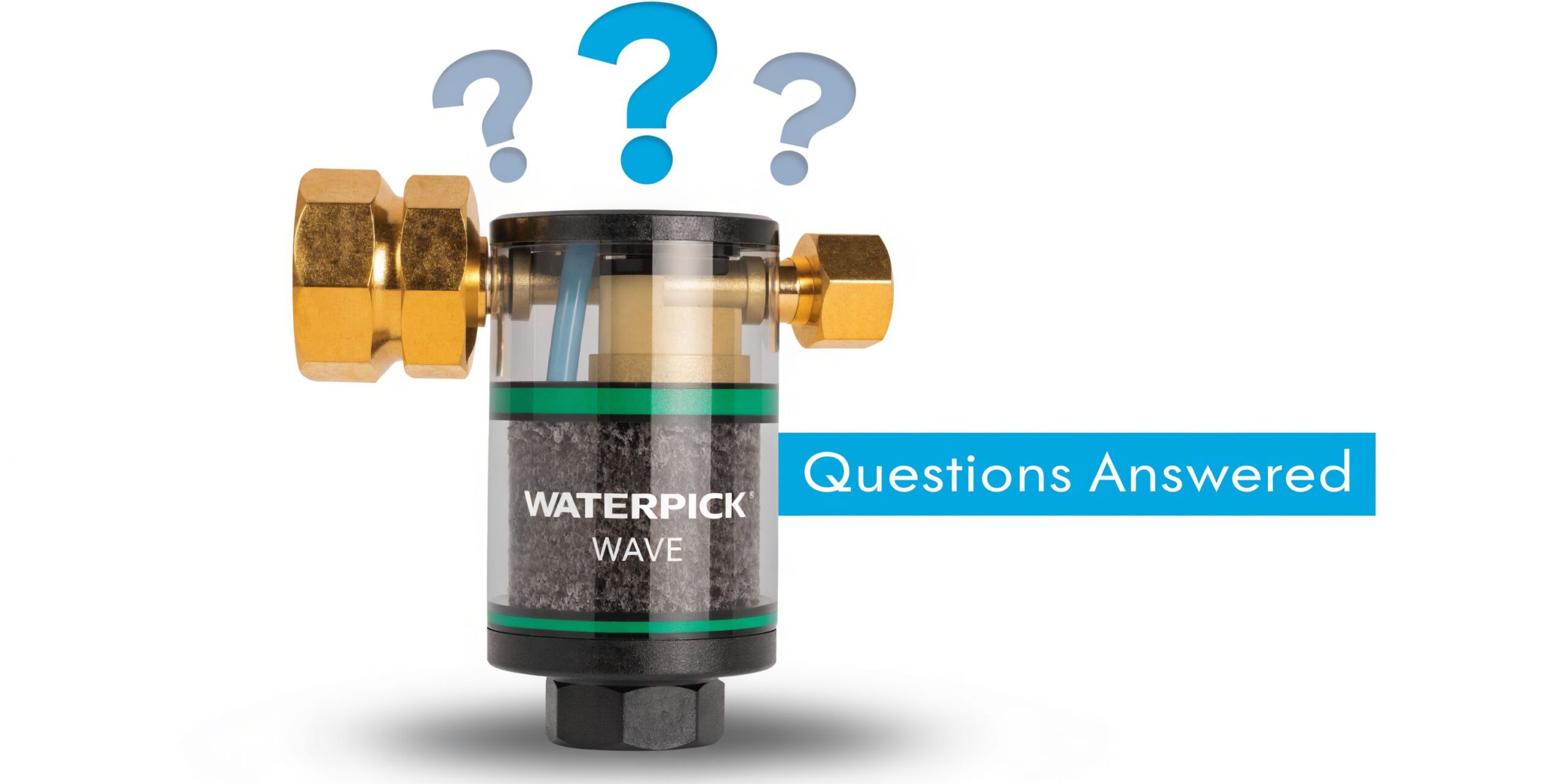
A lot of the useful questions never show up in product listings. They come up after the filter arrives, or after the first season, or when the water problem turns out to be tougher than expected.
Can I use a standard inline filter on well water
Sometimes, but buyers often encounter problems when using these filters on well water.
A major gap in many reviews is well-water performance. KDF-based filters such as the CuZn UC-200 can be strong for chlorine, but their effectiveness against iron can drop by 20-30% after 1-2 years in water with over 1 ppm iron, according to Bob Vila’s under-sink filter roundup.
That’s the warning sign. Well water often needs a specialized treatment approach, not a generic inline cartridge sold for municipal taste and odor.
If your well water has staining, sulfur smell, or sediment, test first. Then buy for those results.
Do inline filters remove PFAS without RO
Some do. Many don’t prove it clearly.
Certifications matter more than category labels here. “Inline” doesn’t automatically mean strong PFAS reduction, and “carbon” doesn’t automatically mean weak PFAS reduction either. You need explicit performance support, not assumptions.
For households thinking broadly about health and filtration choices, a practical piece on choosing the perfect water filter for home wellness can help frame the bigger decision, especially if you’re comparing simple taste improvement with more serious contaminant concerns.
My practical advice is simple: if PFAS is your primary concern, don’t buy based on convenience first. Buy based on certified reduction claims first.
How do I winterize an RV inline filter
Use this checklist and don’t skip steps:
- Disconnect the filter fully: Don’t leave it pressurized on the hose line.
- Drain it completely: Hold it in the direction that clears trapped water.
- Store it where it won’t freeze: A cracked housing often isn’t visible until spring.
- Inspect seals before reuse: Drying and temperature swings can stress O-rings and fittings.
Freezing damage is one of the easiest ways to ruin an otherwise good RV filter.
If there’s any chance the filter still holds water, it isn’t winterized yet.
Why did my water flow suddenly drop
Flow loss usually comes from one of four things:
- The cartridge is loaded up with sediment or contaminant buildup.
- The feed valve isn’t fully open after installation or service.
- The tubing is kinked behind the fridge or inside the cabinet.
- You chose a filter too restrictive for the fixture.
The fix starts with isolating the line. Bypass the filter if your setup allows it. If flow returns, the cartridge or housing is the restriction. If flow stays weak, look upstream.
Is an inline filter enough for the whole home
Only if the problem is limited to one line or one appliance.
If the shower smells like chlorine, the laundry water seems harsh, and the kitchen tap tastes off, a point-of-use inline filter won’t solve the house. At that point, you’re looking at a broader treatment strategy.
If you’re narrowing down the best inline water filter for your fridge, sink, RV, or whole house, Water Filter Advisor is a solid next stop for comparison guides, maintenance advice, and practical filter recommendations built around real water problems rather than marketing claims.
- April 11, 2026
- Uncategorized
