Learn How to Test for Chlorine in Water with This Easy Guide

So you want to know what's really in your tap water? Good call. Testing for chlorine is surprisingly simple. You can use test strips, grab a liquid kit, or get fancy with a digital meter. This quick check is your first step to exposing the secrets in your pipes, arming you with the intel needed to pick the right water filtration system. The goal? To finally get that pure, clean taste you've been missing.

Why Bother Testing Your Tap Water for Chlorine?

Let's be real—most of us turn on the tap without a second thought. But ever catch a whiff of that faint swimming pool smell? That’s your old friend, chlorine. It's the go-to disinfectant that stops our public water supply from becoming a bacterial free-for-all.

While it's a hero for public health, its job should be over long before that water hits your coffee maker. Knowing the specific chlorine levels in your home's water is the secret to choosing a filter that actually works. This isn't about guesswork; it's about getting hard numbers so you can make a smart move. Think about it—before modern water treatment, cities were constantly fighting off waterborne diseases. The introduction of chlorination was a game-changer, slashing illnesses like typhoid and cholera. But that doesn't mean you want it in your drinking glass.

Free Chlorine vs. Total Chlorine: The Showdown

When you run a test, you're looking for two different villains. Nailing down the difference between them is the key to finding a filter that will actually get the job done.

  • Free Chlorine: This is the active, germ-killing stuff. It's the frontline soldier keeping your water safe as it travels from the treatment plant to your faucet.
  • Total Chlorine: This is the big number that includes both free chlorine and its sneaky sidekicks, chloramines. Chloramines are what you get when chlorine mixes with organic stuff in the water. They are more stubborn and are often the real culprit behind that "chemical" taste and smell you can't stand.

Knowing both figures helps you diagnose the problem. High free chlorine means a strong chemical taste. But high total chlorine points to those pesky chloramines, which many basic filters can't touch.

Testing takes all the guesswork out of buying a water filter. It gives you a clear, data-driven starting point so you can invest in a solution that targets what's actually in your water, instead of just grabbing a generic filter pitcher that might not be up to the task.

This proactive approach puts you in control. Just like you'd want to know what's in your water, it's smart to consider other parts of your home's environment, like the air you're breathing every day. You can learn more about creating a healthier living space with expert air quality tests for a safer home. Ultimately, testing for chlorine empowers you to take charge of your water quality, leading you straight to the perfect filtration strategy.

Finding the Right Chlorine Test Kit for Your Home

Choosing a chlorine test kit can feel a bit overwhelming. Walk into any hardware store and you'll see a wall of options—strips, droppers, and digital readers, all promising to reveal the truth about your water. The trick is to match the tool to your mission. Your home water filtration goals will point you to the right choice.

Think of it this way: if you just snapped a new filter into your pitcher and want a quick thumbs-up that it's working, simple test strips are perfect. They're cheap, fast, and give you a solid ballpark reading in seconds.

But if you're installing a whole-house filtration system or trying to figure out why your tap water tastes a little "off," you're going to need more precision. That’s where liquid reagent kits and digital meters enter the ring. They deliver the detailed data you need to make bigger, more informed decisions about your home's water quality.

Comparing Your Testing Options

The world of home water testing really boils down to three main players. Each has its own strengths and weaknesses, so there's no single "best" option—it's all about what fits your budget, your patience, and your need for dead-on accuracy.

To make it easier, I've put together a quick comparison of the most common types of chlorine test kits you'll find. This should help you zero in on the best one for your situation.

Comparison of Home Chlorine Test Kits

Test Kit Type Best For Accuracy Ease of Use Average Cost
Test Strips Quick spot-checks & confirming a filter is working Low to Moderate Very Easy $10 – $20
Liquid Reagent Kits Accurate home testing & troubleshooting Moderate to High Moderate $15 – $30
Digital Meters Precise, data-driven analysis & system optimization Very High Easy $50 – $150+

As you can see, you can get started for very little money, but investing a bit more can give you a much clearer picture of what's happening in your pipes—and which filter can fix it.

Let’s break these down a bit more:

  • Test Strips: The speed demons of water testing. You just dip a strip into your water, wait a few seconds, and match the color to a chart. They're fantastic for quick checks and getting that instant gratification that a new filter is doing its job.
  • Liquid Reagent Kits: The reliable workhorse. You add a few drops of a chemical reagent (like DPD) to a vial of water, and it changes color. Compare that hue to a color chart to find the chlorine level. This is a big step up in accuracy from strips without a huge jump in price.
  • Digital Meters (Colorimeters): For the data nerds and precision fanatics. It works like a liquid kit, but instead of you squinting at a color chart, a light sensor measures the color change electronically. This eliminates the guesswork and gives you a precise, numerical reading—perfect for optimizing a high-end filtration system.

This infographic breaks down the two key measurements you'll be taking when you test for chlorine.

Infographic about how to test for chlorine in water

Understanding both free chlorine and total chlorine is fundamental. These two numbers are the foundation for any smart home filtration strategy.

Matching the Kit to Your Goal

Before you buy anything, ask yourself why you're testing. Are you just curious, or are you on a mission to solve a problem like dry skin after a shower or foul-tasting coffee?

The goal isn't just to get a number; it's to get actionable intel for your filtration strategy. A quick, cheap test is great for confirming a filter works, while a more precise test is essential for choosing and optimizing a whole-house system.

If you're about to invest in a serious filtration setup, you absolutely need an accurate baseline measurement first. For more in-depth guidance on choosing the right filters, check out the expert advice on Water Filter Advisor. Getting good data from the start is the only way to be sure you’re picking a solution that will actually solve your specific chlorine issues.

A Practical Guide to Testing Your Water

Person using a liquid reagent kit to test tap water for chlorine.

Alright, you've got your test kit. Now for the fun part. Forget the tiny, confusing print on the box for a minute—let's walk through how to actually do this right. Getting an accurate reading is the whole point, and a few simple tricks can make all the difference in choosing the right filter.

First things first: grab your water sample. Don’t just stick the vial under a trickling tap. Let the cold water run for at least 30 to 60 seconds. This flushes out any stagnant water sitting in your pipes, giving you a sample that truly represents what's flowing into your home from the main line.

Mastering Test Strips Without Mistakes

Test strips are the quickest way to get a reading, but their speed can be their downfall if you’re not careful. The most common mistake? Rushing the timing.

If you just dip the strip and immediately check the color, you'll get a faint, inaccurate reading. But if you leave it in too long, the reagents bleed out, also messing up the results. The sweet spot is a quick dip-and-remove, then waiting the recommended time—usually 15 to 30 seconds—before you match the color.

A few pointers to get it right every time:

  • Keep it level: After dipping, hold the strip perfectly horizontal. This stops the colors on the different pads from running into each other and muddying the results.
  • Find good light: Don't try to read the strip in a dim kitchen. Natural daylight is your best friend, as artificial lights can totally change how the colors look.
  • Hands off the pads: The oils on your fingers can contaminate the little reagent pads. Always hold the strip by the plastic end.

Nailing the Liquid Reagent Drop Test

Liquid reagent kits, often using a DPD indicator, give you a nice bump in accuracy. You add a few drops to your water sample and watch for a color change, usually some shade of pink or red. It sounds simple, but the details really matter.

When the instructions say to "mix," they mean a gentle swirl or turning the capped vial over a couple of times. They definitely don't mean a vigorous, bubble-making shake. Shaking too hard dissolves extra oxygen into the water, which can interfere with the chemical reaction and skew your results.

Your goal is an even, consistent color throughout the sample. A gentle swirl is all it takes to mix the reagent completely without adding other variables that could lead you to buy the wrong type of filter.

Here’s another pro tip: hold the vial against a plain white background when you compare it to the color chart. A busy countertop can trick your eyes into seeing a different shade. A simple white piece of paper works perfectly and ensures you’re making an accurate assessment.

This kind of color-based testing has been the backbone of water safety for a long time. Developing reliable methods to test chlorine was a cornerstone of public health for over a century. Early techniques were basic, but modern tech allows treatment plants to keep chlorine levels in that sweet spot—between 0.2 and 2.0 mg/L—to kill germs without ruining the taste. You can learn more about the history of water testing on the USGS website.

Making Sense of Your Chlorine Test Results

So you've done the test, and now you’re staring at a color or a number. What does it actually mean for your water filtration plan? The real trick is translating jargon—like "parts per million" (ppm) or "milligrams per liter" (mg/L)—into a clear course of action.

A test result isn't just data; it's a direct command from your water on which filter to buy. Most city water systems aim to keep chlorine between 0.2 and 2.0 ppm. The EPA sets the absolute maximum at 4.0 ppm, a level your water should never even approach.

Getting these numbers right is a delicate balancing act for water engineers. They need enough chlorine to kill pathogens but not so much that it creates an unpleasant taste or harmful byproducts. You can learn more about how global water safety standards are maintained on ketos.co.

What Your Chlorine Reading Tells You

Honestly, what you do next comes down to your personal goals. Your test result is your personal benchmark for deciding if you need a water filter—and if so, which kind.

Let's break it down with some real-world filtration scenarios:

  • Below 0.5 ppm: This is great news. Your water probably has very little chemical taste. A simple carbon-based pitcher or faucet filter is likely all you need to polish it to perfection.
  • Between 0.5 ppm and 1.5 ppm: This is typical for most city water. You can definitely smell and taste the chlorine here. It might even cause dry skin. This is where a more robust under-sink or countertop filter becomes a smart upgrade.
  • Above 1.5 ppm: At this level, the chlorine is impossible to ignore. Your iced tea tastes funky and your shower feels harsh. You should seriously consider a whole-house filtration system to get the chlorine out of every single tap.

A reading of 1.0 ppm might be perfectly safe according to public health guidelines, but if you're battling dry, itchy skin or can't stand the taste in your morning coffee, your personal standard is what truly matters when choosing a filter.

Free vs. Total Chlorine: What's the Goal for Filtration?

When it comes down to it, for the water you drink and shower in, you want both your free and total chlorine numbers to be as close to zero as possible. A good filtration system makes this happen.

Any reading above zero simply means there's a disinfectant in your water that has already done its job. Your test results give you the exact data you need to choose the right filtration system to get you there, turning a confusing number into a clear plan of action.

Choosing a Water Filter Based on Your Chlorine Levels

Person installing an under-sink water filter.

Alright, you've done the detective work. You have your test results. That's the diagnosis; now it's time for the cure. With your chlorine numbers in hand, you can stop guessing and finally pick a filter that solves your specific water problem.

When it comes to chlorine removal, there's one clear champion: activated carbon.

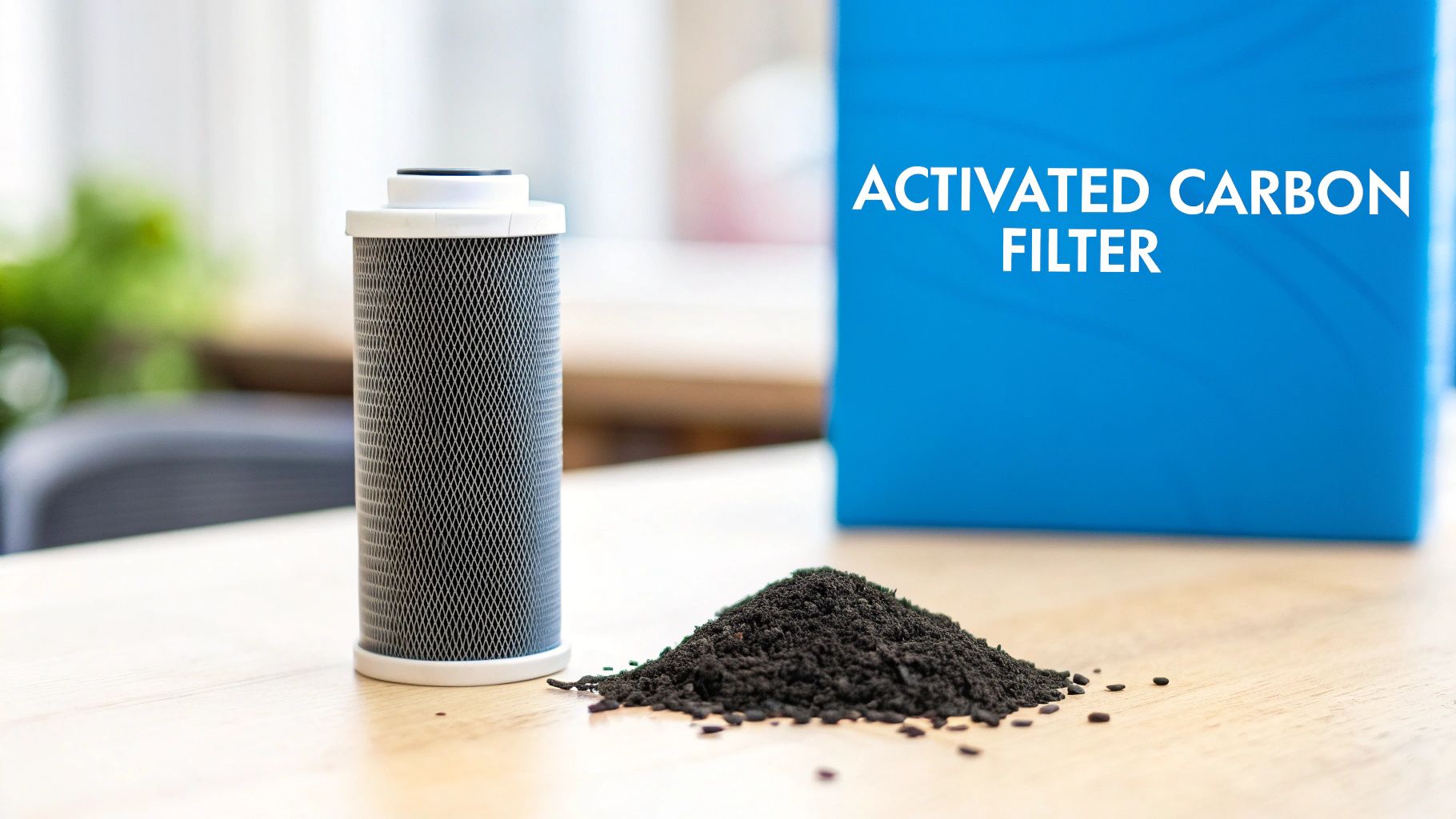
Think of it like a powerful chemical magnet. Through a process called adsorption, it grabs onto chlorine and chloramine molecules, pulling them right out of your water. So, the real question isn't if you need a carbon filter, but which type is the right fit for your home.

Matching the Filter to Your Test Results

Your test results are your personal roadmap to pure water. A high chlorine reading just at the kitchen sink points to a completely different solution than a house-wide issue that makes your skin feel tight and itchy after every shower.

  • Low to Moderate Chlorine (0.5 – 1.5 ppm): If you're mainly looking to improve the taste of your drinking water, a simple point-of-use filter is a great, wallet-friendly choice. This could be a pitcher filter, a faucet-mounted unit, or a countertop system. They're dead simple to install and focus on the water you consume.
  • High Chlorine (>1.5 ppm): When your tests come back high, you feel the effects everywhere. This is when it's time to upgrade to a more serious system. An under-sink filter is a fantastic option for a dedicated stream of purified water, while a whole-house system tackles the problem at the source.

If your tests show high chlorine levels all over the house, a whole-house system is hands-down the best investment. It doesn't just fix the taste of your drinking water—it deals with the chlorine you absorb in the shower and the stuff that’s fading your clothes in the laundry.

Point-of-Use vs. Whole-House Systems

An under-sink system strikes a great balance. It gives you high-performance filtration right where you need it most—the kitchen tap—without the expense and installation of a full whole-house unit. These systems typically use larger, more powerful carbon block filters than what you'd find in a basic pitcher.

But if you’re truly fed up with dry skin, brittle hair, and that swimming pool smell every time you turn on a faucet, only a whole-house carbon filtration system gets to the root of the problem. It's installed at your main water line, transforming every single tap in your home into a source of clean, chlorine-free water.

Your test results gave you the data. Now you can make an informed choice and invest in a solution that will directly fix your water quality issues.

Common Questions About Chlorine Water Testing

Once you start testing, a few common questions almost always pop up. Let's tackle some of the things people wonder about as they dive deeper into their home filtration journey.

How Often Should I Test My Water?

This all comes down to your filtration setup and your goals.

If you have a whole-house carbon filter, checking your water every three to six months is a smart move. This confirms the system is still working hard and gives you a heads-up when a filter change is on the horizon.

Using a simpler pitcher or faucet filter? A quick test right after you install a new cartridge is a great way to confirm it’s working. After that, testing once or twice a year—or anytime the water starts tasting "off"—is plenty.

Why Do Chlorine Levels Change Seasonally?

You're not imagining things if your water seems more chlorinated in the summer. It's a real phenomenon.

When it gets hot, the warmer water in pipes and reservoirs creates a breeding ground for bacteria. To fight this, municipal water suppliers often increase the amount of chlorine they add. This means your filtration system has to work harder in July than in January, which is why regular testing is so important.

Do I Need a Special Kit for Chloramine?

Yes, and this is a big one. It's a critical distinction many people miss.

Most standard chlorine test kits use a DPD reagent that only measures free chlorine. The problem is, they can't properly detect chloramines—a more stable compound of chlorine and ammonia. Testing for chloramine requires a different chemical reaction.

To get the full story, you need a test kit that specifically measures total chlorine. The difference between your total and free chlorine readings reveals the amount of chloramine present. This is vital to know because chloramine is much harder for many standard carbon filters to remove, often requiring a special type of filter called catalytic carbon.

Here's a little pro tip: Don't just toss an expired test strip. While you shouldn't trust it for an exact reading, an old strip can often still give you a basic "yes/no" indication for high chlorine levels. It's handy for a quick, informal check when you don't need a precise number.

Keeping up with testing is what empowers you to make the best decisions for your home's water filtration. It ensures the system you've invested in is actually working as hard as you expect it to.


At Water Filter Advisor, we're dedicated to helping you find the perfect filtration solution based on your specific needs. Explore our in-depth guides and reviews to make a confident, cost-effective decision for safer, better-tasting water at home. Learn more at https://www.waterfilteradvisor.com.

Your Guide to Home Water Testing and Finding the Perfect Filter

That glass of water from your tap might look perfectly clear, but let's be honest, looks can be deceiving. What you can't see could be a real problem for your home, your appliances, and your health. Before you assume that clear equals clean, it's time to play detective. Testing your water is the only way to know for sure what you're dealing with before you even think about buying a water filter.

Why You Should Test Your Home's Water Quality

A person holding a glass of clear tap water up to the light in a modern kitchen.

It’s easy to put your trust in the water flowing from your faucet, especially if you're on a city supply. And while that water is treated, contamination can absolutely happen as it travels through miles and miles of pipes to get to you.

Older plumbing in your neighborhood—or even lurking inside your own walls—can leach things like lead and copper straight into your drinking water.

On top of that, the very chemicals used to make the water safe, like chlorine, can create byproducts (known as DBPs) that have been linked to health concerns. This doesn’t automatically mean your water is dangerous, but it does show how much its quality can change on its journey to your glass.

Common Signs You Need a Water Test

You don’t have to wait for an official alert to start questioning your water. Sometimes, your house gives you clues. These are some of the most common red flags I see that point to a hidden issue:

  • You notice a weird taste. If your water has a metallic tang, that could signal iron, copper, or even lead. If it tastes more like a swimming pool, you've probably got high levels of chlorine.
  • Your appliances have white, chalky buildup. This is the classic calling card of hard water, caused by high levels of calcium and magnesium. That scale doesn't just look bad; it can kill the efficiency and shorten the lifespan of your dishwasher, coffee maker, and water heater.
  • You get your water from a private well. Unlike city water, private wells aren't regulated by the EPA. That means you are 100% responsible for making sure it's free from bacteria, nitrates, and other contaminants that can seep in from the ground.

Get the Data Before You Buy a Filter

Here’s the thing: testing your water isn't just about finding problems. It's about finding the right solution. Buying a water filter without knowing what's in your water is like throwing darts in the dark—you might get lucky, but you'll probably miss the bullseye.

Testing first gives you the power to pick a filtration system that actually targets the specific contaminants in your supply. This keeps you from wasting money on a complex system you don’t need, or worse, buying a cheap filter that doesn't fix your real problem.

At the end of the day, testing your water is about gaining peace of mind and taking back control over what’s flowing into your home.

What to Look For When Testing Your Water

A scientist holding a water sample test tube with clear liquid against a blurred lab background.

Before you can pick the right water filter, you first have to know what you’re up against. Think of it as playing detective—the clues are right there in your water. Learning how to test your water quality at home means knowing exactly which culprits to look for.

Most contaminants fall into a few key categories. This helps you figure out what matters most, whether you're dealing with city water and its treatment chemicals or you're a well owner worried about what's seeping into your groundwater.

Health Concerns

This is the big one. This group includes contaminants that pose a direct risk to your family's health. They’re often invisible, odorless, and tasteless, which makes testing the only way you’ll ever know they’re there.

  • Lead: A serious neurotoxin that often leaches from older plumbing. There is no safe level of lead exposure, period. It's a top priority for testing, especially if your home was built before 1986.
  • Bacteria and Viruses: If you're on a private well, microorganisms like E. coli are a major concern. They can get into your water from failing septic systems or farm runoff and make you sick fast.
  • Nitrates: Another common problem for well water, nitrates come from fertilizers and animal waste. They're especially dangerous for infants because they can interfere with the blood's ability to carry oxygen.

Nuisance Issues

These guys aren't usually as dangerous as the first group, but they can still wreak havoc on your home and make life unpleasant. These are the problems you can often see, taste, or feel.

The most frustrating part of nuisance issues is the slow, silent damage they do. You might not notice the scale buildup inside your water heater until it fails, or the dingy look of your laundry until it's too late.

A perfect example is water hardness, which is caused by too much calcium and magnesium. It's the culprit behind that chalky white scale on your faucets and the soap scum ring in your shower. Another classic is iron, which leaves those ugly reddish-brown stains in your sinks and toilets and can give your water a metallic tang.

General Quality Indicators

Finally, there are the general indicators that give you a bigger picture of your water’s overall condition. They don’t point to one specific contaminant but offer clues that something might be off.

Total Dissolved Solids (TDS) is a measure of everything dissolved in your water, both organic and inorganic. A high TDS reading isn't necessarily a health risk (it can include harmless minerals), but a sudden spike can be a red flag that something new has gotten into your water supply.

Similarly, the pH level tells you how acidic or alkaline your water is. Water that’s too acidic can actually corrode your pipes, which might leach metals like copper and lead right into your drinking water.

This kind of household-level testing is becoming a big deal globally. Since 2012, large-scale surveys in 29 countries have started using home water tests to get a better handle on drinking water safety. This is especially important for rural and lower-income families who often face higher risks. The data shows where city monitoring falls short and proves just how critical it is to check your water right at the tap. You can learn more about how household surveys identify water safety gaps and help inform public health.

Choosing Your Testing Method: DIY Kits vs. Lab Analysis

Alright, so you know what you might be looking for in your water. Now comes the big question: how do you find it? This is where you decide on your approach.

You’ve got two main paths to choose from when it comes to testing your water quality at home: doing it yourself with a DIY kit or sending a sample off for a professional lab analysis.

Each one has its place, and the right choice really boils down to your specific situation, how much you want to spend, and what will give you peace of mind. I like to think of it like a quick health check—sometimes, taking your own temperature at home tells you all you need to know, but other times, you need to see a doctor for the full workup to get the real story.

The Fast and Easy Route: DIY Test Kits

For a quick, on-the-spot snapshot of your water, you can't beat a DIY kit. These are the test strips, color disk kits, and handheld digital meters you can find online or at your local hardware store. They're built for speed, convenience, and affordability.

Most of these kits are designed to flag general quality indicators and common nuisance problems. They’re fantastic for getting a baseline reading on things like:

  • Chlorine: A must-have for anyone on city water who's curious about how much disinfectant is coming through their tap.
  • Water Hardness: Essential if you’re seeing that chalky scale building up on faucets and want to know just how hard your water is.
  • pH Levels: A good general indicator of acidity or alkalinity, which can impact your plumbing over the long haul.

You get results in minutes, which makes these kits a brilliant starting point. They empower you to quickly spot basic issues that a simple pitcher or faucet filter might be able to handle.

Choose a DIY kit when: You want a quick, general screening of your city water, you're curious about nuisance issues like hardness or chlorine, or you just need an affordable way to get an initial feel for your water's condition.

Digital Testers: A Step Up in DIY

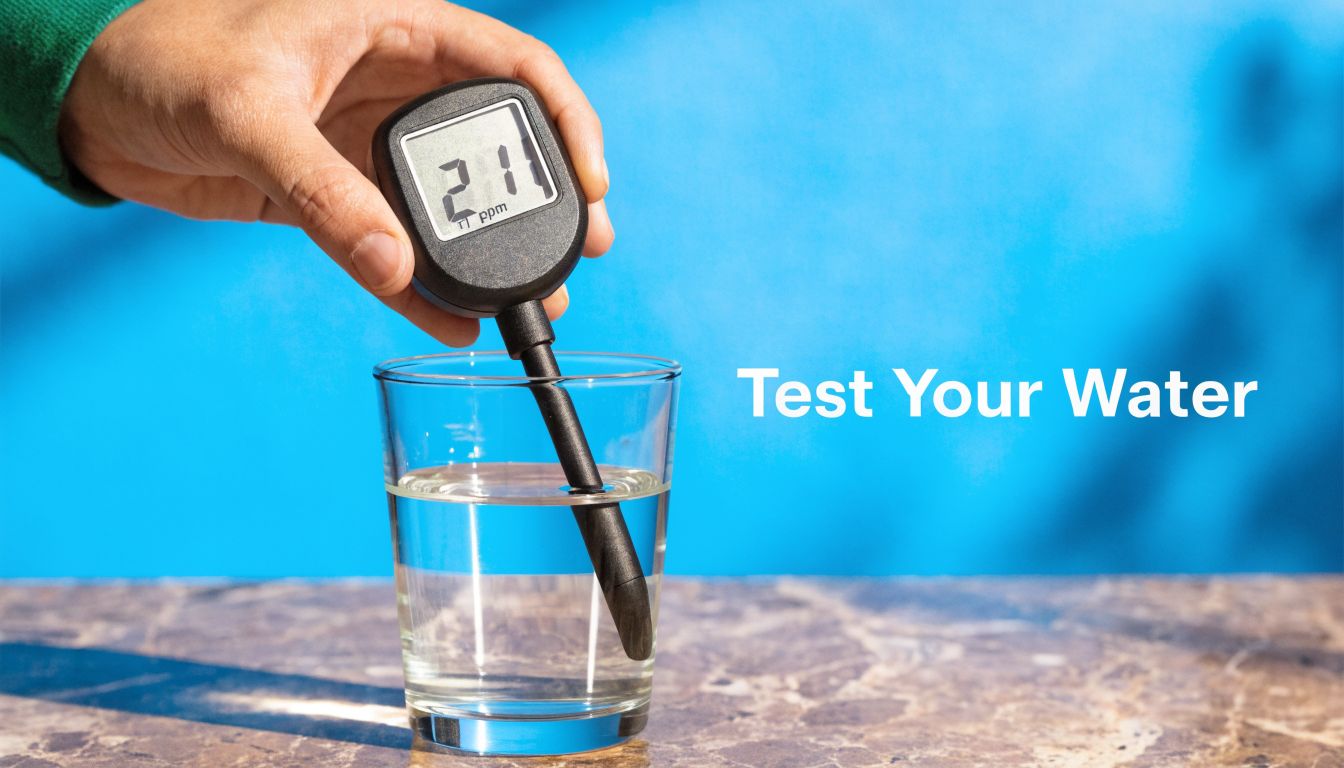
A really popular type of DIY option these days are digital water testers. I've seen these handheld gadgets become a favorite for homeowners who want to keep a constant eye on their water. They usually measure things like Total Dissolved Solids (TDS), pH, and temperature, giving you an instant number on a screen.

Now, they won't tell you if you have lead or arsenic, but they're an excellent screening tool. For example, a TDS reading below 300 ppm is generally considered pretty good. But if you see a number over 500 ppm, that’s a clear sign it's time to dig a little deeper.

These digital testers, which usually run between $20 to $100, are also incredibly handy for checking if your filtration system, like a reverse osmosis unit, is still doing its job.

When You Need a Definitive Answer: Professional Lab Analysis

DIY kits are great for a quick look, but they have their limits. They simply can’t see everything.

When you're dealing with serious health concerns or complex water issues, nothing beats the accuracy and detail you get from a professional, state-certified laboratory test. This is the gold standard for filtration prep.

It’s the most thorough way to find out exactly what’s in your water. The process is straightforward: the lab sends you a special collection kit, you fill it up with your water, and you mail it back. In about a week or two, you’ll get a detailed report breaking down dozens of potential contaminants with scientific precision.

Once you have those results, figuring out the next steps can feel overwhelming. For more in-depth guidance on choosing the right filtration systems, you might find our full library of water filtration advice helpful.

Opt for a lab test when: You're on private well water, you have a reason to suspect dangerous contaminants like lead or arsenic, you have infants or immunocompromised folks at home, or you simply want the most accurate, complete picture before investing in a whole-house filter.


DIY Test Kits vs. Professional Lab Testing

Still on the fence? This head-to-head comparison should help you decide which water testing method is the right fit for your needs and your filtration goals.

Feature DIY Test Kits (Strips & Digital Meters) Professional Lab Analysis
Accuracy Good for general estimates, but not precise. Highly accurate and scientifically precise.
Contaminants Detected Limited to common parameters like chlorine, pH, hardness. Can detect hundreds of contaminants, including heavy metals, VOCs, bacteria, and pesticides.
Speed Instantaneous results (usually within minutes). Slower turnaround, typically 1-2 weeks.
Cost Very affordable, often $15 – $100. More expensive, ranging from $100 to $500+ depending on the tests.
Best For Quick screenings, identifying nuisance issues, monitoring city water, and checking filter performance. Well water owners, confirming specific health-related contaminants, and getting a comprehensive water profile.

Ultimately, the best method is the one that answers your specific questions and gives you confidence to choose the right water filter for the job.

Matching Test Results to the Right Water Filter

Okay, you've done the detective work and your water test results are in. This is where all that effort pays off, because you can finally turn that raw data into a real solution.

Instead of just guessing which filter to buy, you now have a clear roadmap. You know exactly what problem you need to solve.

Think of it like getting a prescription from a doctor. You wouldn't just grab any medicine off the shelf; you get the one prescribed for your specific issue. It’s the same exact principle with water filters. Matching the filter to your results saves you money and, more importantly, actually fixes the problem.

This infographic is a handy little decision tree to help you visualize whether a quick test strip check-up is enough or if you need to call in the big guns with a lab analysis.

Infographic about how to test water quality at home

As you can see, the right testing method really depends on your initial concerns. This helps point you in the right direction from the get-go.

Solutions for Common Water Problems

Let's connect the dots between what your report says and the hardware that can fix it. Most water quality headaches fall into a few common buckets, and luckily, there are specialized filters for each one.

  • Problem: Chlorine Taste and Odor
    Does your tap water taste and smell like a public pool? Your test results probably showed high chlorine levels. Good news: this is an easy fix. Activated carbon filters are your best friend here. They basically act like a magnet for chlorine, yanking it out of the water and making it taste and smell great. You'll find these in affordable options like water filter pitchers, faucet-mounted filters, and even most refrigerator filters.

  • Problem: Hard Water and Scale Buildup
    If your results flagged high levels of calcium and magnesium, you've got hard water. That's the stuff causing that chalky white scale on your faucets and making it impossible to get a good lather with soap. The only real fix for this is a water softener. These systems use a process called ion exchange to physically remove those hardness minerals, which will save your pipes and appliances from costly scale damage down the road.

  • Problem: Heavy Metals Like Lead
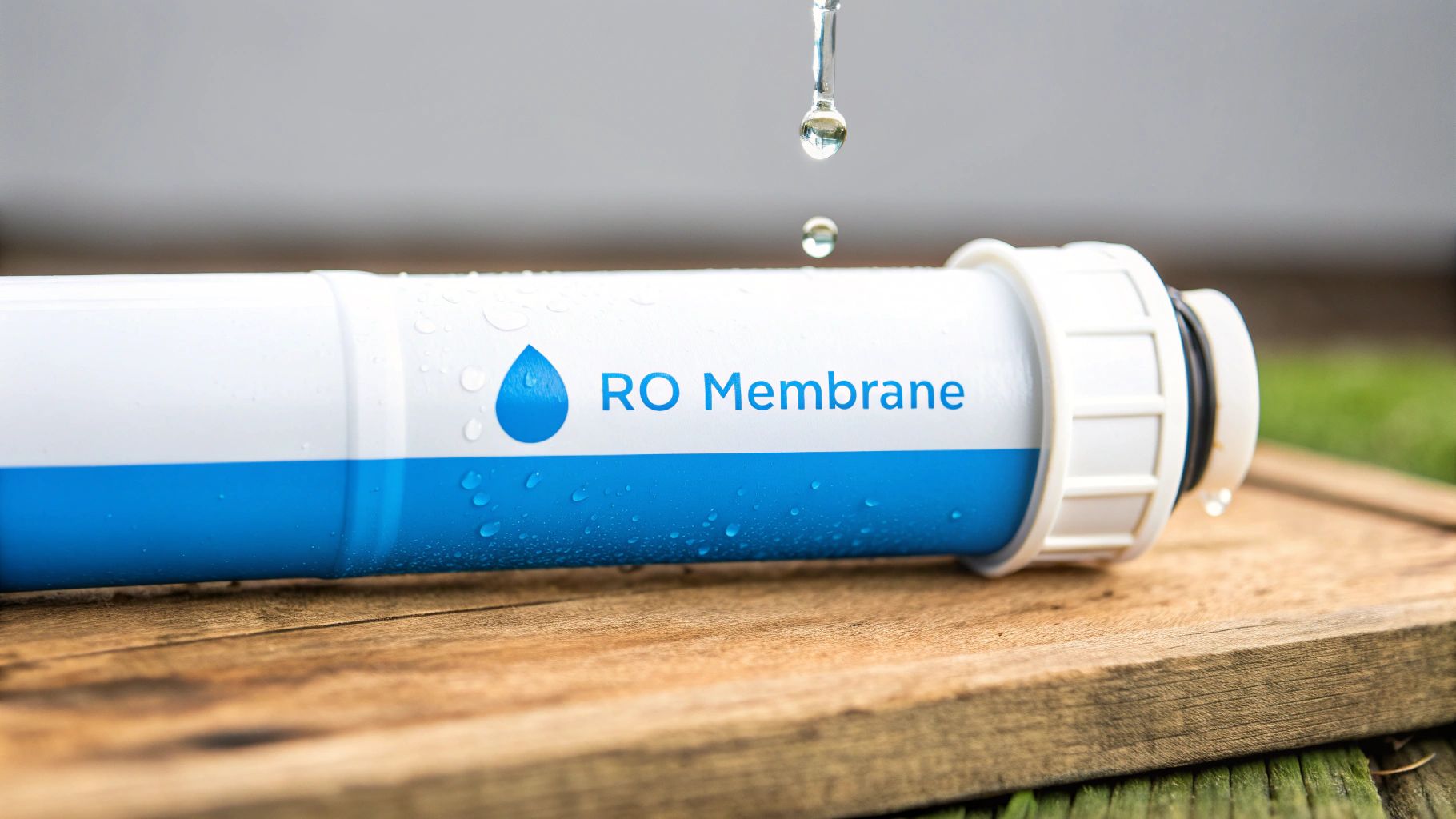
    A positive test for lead demands an immediate and serious response. Reverse osmosis (RO) systems are one of the most effective tools for removing lead and a whole bunch of other nasty contaminants. These are usually multi-stage filters installed right under your sink. They work by forcing water through a special membrane that blocks things like lead, arsenic, and nitrates.

Tackling Serious Contaminants

Some test results call for a much stronger defense. If you're on a private well or your lab report came back with microbiological threats, you need a system that offers true purification.

A UV purification system is a fantastic, chemical-free way to deal with bacteria and viruses. It uses powerful ultraviolet light to zap the DNA of nasty microorganisms like E. coli, which stops them from reproducing and making you sick. For well water, it's often paired with a sediment pre-filter to make sure the UV light can get a clear shot at any pathogens.

When you have real data from a water test, you're no longer just a consumer—you're an empowered homeowner. You stop buying generic products and start investing in a specific solution that’s perfectly matched to your home’s unique water profile.

This proactive mindset is catching on. Field studies have shown that the simple act of home water testing has a real impact on people's behavior. One study found that giving households access to water testing led to a 5.3 percentage point increase in the use of safer commercial water supplies over time.

It’s simple: when people know what’s in their water, they are far more likely to do something about it. You can read the full research on how testing changes water habits and see the data for yourself.

Maintaining Your Filter for Long-Term Purity

So you've installed a new water filter. That initial sense of relief is great, but the job isn't quite over. Keeping your water pure is an ongoing commitment, not a one-and-done deal.

Think of your filter like any other hard-working appliance in your home—it needs regular attention to keep doing its job right. This means you'll need to retest your water every so often to make sure your system is still working effectively.

Things can change with your water supply, sometimes without any warning. A big storm, a nearby construction project, or even small shifts in how your city treats its water can throw off the chemistry.

Create a Retesting Schedule

The best way to stay ahead of potential issues is to have a simple schedule based on where your water comes from and anything you notice that seems off.

  • For well water owners: Getting an annual professional lab test is non-negotiable. Your water source isn't regulated by the city, which means you're the first and only line of defense against contaminants like bacteria and nitrates that can pop up over time.
  • For city water users: Retest your water if you notice any sudden changes in taste, color, or smell. It’s also smart to test again after a "boil water" advisory is lifted, just to confirm everything is back to normal.

The Critical Role of Filter Cartridge Replacement

Beyond retesting, the single most important piece of maintenance is swapping out your filter cartridges on schedule. It’s so easy to let this slide, but putting it off can cause real problems.

An old, clogged filter doesn't just stop working; it can become a source of contamination itself.

Over time, all the junk your filter has been catching builds up. A saturated filter can turn into a breeding ground for bacteria, potentially making your so-called "filtered" water even worse than what's coming straight from the tap.

Sticking to the manufacturer’s replacement schedule—whether it’s every three months or once a year—is absolutely essential for protecting your investment and your family’s health.

And if you're thinking beyond just filtering what comes out of the tap, storing drinking water is another important step. You can find a comprehensive guide to potable water storage tanks that covers everything from materials and sizing to the crucial maintenance needed to ensure that water stays pure. Regular upkeep is the key to consistently safe water.

Answering Your Top Home Water Testing Questions

Even after you've got a plan, a few questions always seem to pop up. It's totally normal. Let's dig into some of the most common things people ask when they're figuring out how to test their water at home. This should clear up any last bits of confusion.

How Often Should I Be Testing My Water?

This is a big one, and the answer really hinges on where your water comes from. There's no single schedule that fits everyone.

If you have a private well, you're the one in charge of your water quality. Think of yourself as your own water utility manager. Because of that responsibility, an annual lab test is a must. Wells can be affected by all sorts of things—seasonal rain runoff, a neighbor's septic system, you name it. Consistent testing is the only way to stay on top of it and ensure your water is safe.

Now, if you get your water from the city, it's a bit different. That water is treated and tested before it even leaves the plant. The problem is, it can pick up contaminants on its long journey to your faucet. For city water, a good rule of thumb is to test every three to five years. The exception? Test immediately if you notice any weird taste or smell, or if the city issues a water advisory.

Can I Trust Those Free Tests from Water Filter Companies?

Ah, the "free" test. It's a tempting offer, but you have to be careful with this one. These tests usually come with a major catch.

More often than not, the person doing the test isn't a neutral water quality expert—they're a salesperson. Their entire job is to sell you a water filtration system. The "test" is really just a sales demonstration, designed to show you problems that their specific products can fix. It might reveal you have hard water or some chlorine, but it’s almost never a comprehensive, scientifically sound analysis of serious health concerns.

A free test might give you a small clue about your water, but it's usually just a high-pressure sales tactic in disguise. If you want a truly unbiased and accurate report on what's in your water, an independent lab test is the only way to go.

My Water Looks and Tastes Fine, So Why Bother Testing?

This is probably the most dangerous assumption you can make about your drinking water. So many of the worst contaminants are completely invisible to our senses. You simply cannot see, taste, or smell major threats like:

  • Lead: A powerful neurotoxin that can seep into water from old pipes and plumbing.
  • Arsenic: A known carcinogen that can be naturally present in groundwater, especially in certain regions.
  • Bacteria and Viruses: Microscopic pathogens that can lead to serious gastrointestinal illnesses.
  • Nitrates: A common contaminant in well water from agricultural runoff, which is especially dangerous for infants.

Let me say it again: clear water does not mean clean water. Testing is the only way to get the proof you need to know for sure that your water is free from these hidden dangers. It’s what lets you protect your family's health and make a smart, informed choice about whether you need a filter.


Ready to take the next step and find a filtration system that perfectly matches your water's needs? At Water Filter Advisor, we provide in-depth reviews, buying guides, and expert advice to help you make a confident, cost-effective choice. Explore our guides and find the right filter for your home today!

What Is the Real Water Filter Replacement Cost?

Let’s cut to the chase. When it comes to water filter replacement costs, you could be looking at anywhere from $20 for a basic pitcher filter to well over $200 for a high-tech reverse osmosis membrane. The final price tag really boils down to the kind of system you have in your home, how much water your family uses, and what kind of contaminant-busting technology is packed inside that filter.

Decoding Your Water Filter Expenses

Think of your water filter as the unsung hero of your kitchen, quietly working day in and day out to catch all the gunk you don't want in your glass. But like any hard-working hero, it eventually gets clogged up and needs a replacement to stay effective. Getting a handle on the ongoing water filter replacement cost isn't just a budgeting exercise—it's about making sure your water stays as clean, safe, and delicious as possible.

The demand for clean water solutions is bigger than ever. With new technologies and a growing awareness of water quality, the global water filtration market is on track to hit an estimated $35.18 billion by 2034. This boom shows just how many people are investing in better water for their homes, which makes understanding the long-term costs of maintenance more important than ever.

To give you a quick overview, here are some common costs you can expect.

Typical Home Water Filter Replacement Costs at a Glance

This table breaks down the estimated annual cost and replacement frequency for the most popular types of home water filters.

Filter Type Average Replacement Cost (Per Filter) Typical Replacement Frequency Estimated Annual Cost
Water Pitcher Filter $15 – $30 Every 2-3 months $60 – $180
Faucet Mount Filter $20 – $40 Every 3-4 months $60 – $160
Under-Sink Filter $50 – $100 Every 6-12 months $50 – $200
Refrigerator Filter $30 – $60 Every 6 months $60 – $120
Whole House Sediment $25 – $50 Every 3-6 months $50 – $200
Whole House Carbon $60 – $150 Every 12 months $60 – $150
Reverse Osmosis $100 – $250+ Every 1-2 years $50 – $250+

As you can see, the numbers can vary quite a bit. It all comes down to the specific system you've chosen for your home's needs.

Why Replacement Costs Vary So Much

So, what's behind those different price tags? A replacement filter's cost isn't just pulled out of thin air. It’s a direct reflection of the filter’s complexity, how long it’s built to last, and the specific job it’s designed to do. For some, this even affects their hobbies. If you're serious about your morning coffee, for example, knowing the details of optimizing water quality for brewing will shape your filtration needs and, in turn, your budget.

Here are the main factors that determine what you'll end up paying:

  • Filtration Technology: A simple activated carbon filter found in a pitcher is a world away from a complex, multi-stage reverse osmosis system that can pull out microscopic contaminants. The more advanced the tech, the higher the cost.
  • Filter Lifespan and Capacity: Some filters are designed to handle about 40 gallons and need to be swapped out every couple of months. Others are workhorses that can process thousands of gallons and last a whole year.
  • Brand and Certifications: You'll often pay a bit more for filters that are NSF certified. That certification means they've passed rigorous independent tests to prove they do what they claim to do, giving you peace of mind.

The initial price of a filtration system is just the beginning; the long-term replacement cost is what truly matters for your household budget. For a deeper dive into different systems and their maintenance, check out our https://www.waterfilteradvisor.com/advice/.

Breaking Down the Key Cost Factors

Ever wondered why your buddy's pitcher filter replacement costs less than a fancy coffee, but the cartridge for your under-sink system sets you back a bit more? That water filter replacement cost isn't just a random number. It's tied directly to what that little cartridge is built to do.

Think of it like buying tires for your car. A standard set for a daily driver is pretty straightforward and affordable. But if you need high-performance, all-terrain tires designed for rugged conditions? You're looking at a completely different price point for a completely different job. It's the same deal with water filters.

Filtration Technology: What's Under the Hood?

The single biggest factor driving the price is the technology inside the filter. It's the engine of the whole system.

A simple activated carbon filter, the kind you find in most pitchers and refrigerator dispensers, is a workhorse for improving taste and smell. It acts like a powerful magnet for chlorine. These are almost always your most budget-friendly option.

But then you have something like a reverse osmosis (RO) system. This is a whole different ballgame. An RO system uses pressure to force water through a super-fine membrane, stripping out nearly everything that isn't water—we're talking lead, arsenic, and other dissolved solids. That level of purification requires much more advanced engineering and materials, so the replacement membranes and their pre-filters naturally cost more.

This infographic gives you a quick visual breakdown of how the tech stacks up price-wise.

Infographic about water filter replacement cost

As you can see, there’s a real jump from a basic carbon filter to an advanced RO membrane. The price reflects just how much heavy lifting the filter is doing.

Filter Lifespan and Capacity

How long a filter lasts is another huge piece of the puzzle. This is usually measured in either gallons or months. A little filter on your faucet might be good for 100 gallons or so, lasting a few months. A big sediment filter for your whole house, on the other hand, can chew through thousands of gallons before it needs to be replaced.

Often, a longer-lasting filter will have a higher price tag upfront. But, because you're buying them less often, they can actually save you money in the long run. It's that classic trade-off: pay less now, or pay less overall.

A filter's capacity isn't just a suggestion—it's the point at which it can no longer effectively capture contaminants. Pushing a filter past its limit means you're no longer getting the protection you paid for.

Brand Reputation and Certifications

You've probably noticed a price gap between the official manufacturer's filters and generic third-party versions. There's a reason for that. Big-name brands pour a ton of money into research, development, and getting their products officially certified by groups like the NSF (National Sanitation Foundation).

That NSF seal is basically a guarantee. It means the filter has been rigorously tested and proven to remove the exact contaminants it claims to. A certified filter might cost a bit more, but you're paying for the peace of mind that it actually works.

It's also smart to keep an eye on the future. The cost of filter replacements is expected to creep up, thanks to global inflation rates of 5-8% pushing up the price of raw materials. You can get a deeper dive into how market trends are impacting future filtration costs on BruceMacKay.com.

Comparing Costs Across Different Filter Systems

Picking a water filter system is a bit like choosing a new kitchen appliance. Are you looking for the quick-and-easy convenience of a microwave, or do you need the heavy-duty power of a professional-grade oven? The right choice really comes down to your needs, and the water filter replacement cost will vary just as much.

Let's walk through the most common types of home filtration systems to see how their long-term costs really stack up.

A modern kitchen faucet with a water filter attached

Think of us as your personal shopper, guiding you through the different options to find the perfect fit for your home and budget. When you're thinking about the long-term investment, it helps to use the same mindset as when evaluating costs for household products like your morning coffee. The upfront price is just one part of the story.

H3: Pitcher And Faucet-Mounted Filters

Pitcher and faucet filters are the "grab-and-go" options in the filtration world. They're a fantastic choice for renters, college students, or anyone who just wants a simple, low-commitment way to get better-tasting drinking water.

Their main selling point is the super-low upfront cost. But because they're small, you'll be swapping out filters more often. A standard pitcher filter might last you about two months, while a faucet filter can stretch to three or four. This makes their ongoing water filter replacement cost feel more like a small, recurring subscription.

  • Replacement Cost Range: $15 – $40 per filter
  • Best For: Individuals or small households mostly looking to improve the taste and smell of tap water, especially by getting rid of chlorine.

H3: Under-Sink And Refrigerator Filters

Stepping up a level, you have under-sink and refrigerator filters. These are the "set-it-and-forget-it" workhorses of home water filtration. Tucked away out of sight, they give you filtered water on demand, right from your main tap or fridge dispenser.

These systems strike a great balance between performance and convenience. Their filters last a lot longer—usually six to twelve months—so you'll only have to think about replacements once or twice a year. The cost of an individual filter is higher than a pitcher's, but the total annual expense often works out to be similar, or even less, because they last so long.

These mid-range systems are often the sweet spot for families. They deliver excellent filtration for common contaminants without the complexity or expense of a whole-house setup.

H3: Whole-House And Reverse Osmosis Systems

Now we're getting into the premium end of the market with whole-house and reverse osmosis (RO) systems. A whole-house system is the ultimate solution, treating every single drop of water that comes into your home. This means it protects not just your drinking water but also your plumbing, appliances, skin, and hair.

A reverse osmosis system, which usually gets installed under the sink, provides the highest level of purification you can get for drinking water, removing up to 99% of all dissolved contaminants. The replacement filters for these systems are the most expensive, but they also have the longest lifespans—RO membranes can last for two years or even longer. These aren't just filters; they're major upgrades to your home's water quality.

  • Replacement Cost Range: $50 – $250+ depending on the specific filter stage and the complexity of the system.
  • Best For: Homeowners dealing with significant water quality issues (like hard water or well water) or families who want total protection at every single faucet.

A Detailed Comparison of Home Water Filter Systems

To help you visualize the differences, it's useful to see all the options side-by-side. Each system type serves a different purpose and comes with its own long-term cost commitment.

Filter System Type Replacement Cost Range Filters Contaminants Like… Best For
Pitcher & Faucet $15 – $40 Chlorine, taste, and odor Renters and individuals
Under-Sink $50 – $100 Lead, chlorine, cysts, VOCs Families wanting dedicated drinking water filtration
Whole-House $25 – $150 Sediment, chlorine, rust Homeowners wanting protection for all water
Reverse Osmosis $100 – $250+ Dissolved solids, heavy metals Maximum purification for drinking water

This table gives you a quick snapshot, but remember to factor in your own water usage and local water quality when making a final decision. What works for a small apartment won't be the right fit for a large family home on well water.

The Hidden Costs of Not Replacing Your Filter

It’s tempting to look at that water filter replacement cost and think, "I'll get to it next month." We’ve all been there. But what if we flip that thought on its head? The real cost isn’t the new filter; it’s the price you pay for not replacing the old one.

Think of it this way: a filter is basically a microscopic bouncer for your water. When it’s new, it’s a vigilant guard, stopping all the unwanted gunk from getting into your glass. But over time, that guard gets overwhelmed and clogged up. Eventually, the gate fails, letting through the very contaminants you bought the system to stop in the first place.

A glass of clean water being poured from a kitchen faucet

Timely replacement isn't just another chore—it's a critical investment in your family's health and your home's well-being.

The Impact on Your Health and Home

The biggest risk of procrastination? Your family’s health. An old, saturated filter just can't grab contaminants like chlorine, lead, or bacteria anymore. Worse, a clogged filter can become a breeding ground for germs, potentially making your water less safe than straight-from-the-tap.

And it doesn't stop there. A neglected filter can create a domino effect of problems for your appliances.

  • Reduced Water Flow: The first thing you'll notice is a drop in water pressure. That strain can wear out your refrigerator's ice maker and water dispenser over time.
  • Appliance Damage: All that scale and sediment that the filter should have caught can now build up inside your coffee maker, dishwasher, and water heater. This leads to expensive repairs or, even worse, having to replace them entirely.
  • Wasted Money: You're paying for a filtration system that simply isn't doing its job. Every glass of water becomes a reminder of an investment that's stopped paying off.

An expired filter isn’t just ineffective; it’s a liability. You lose the protection you invested in, and you open the door to bigger, more expensive problems down the line.

It's no surprise that people are taking water quality more seriously than ever. The global water filter market, valued at $2,987 million in 2025, is expected to jump to over $4,700 million by 2033. That’s a huge indicator of just how important clean water has become in homes everywhere. If you're interested in the numbers, you can explore the full market analysis on marketreportanalytics.com.

At the end of the day, ignoring that replacement reminder is a gamble. The few bucks you save by stretching an old filter's life just aren't worth the potential cost to your health and home. Viewing the water filter replacement cost as proactive protection is the smartest move you can make.

Smart Ways to Save on Replacement Filters

Keeping up with your water filter replacement cost doesn’t have to drain your bank account. With a few savvy moves, you can keep your water pristine without overspending. It’s all about finding those simple savings that really add up over time.

Think of it like buying in bulk at the grocery store. You could grab a single item every week, or you could buy a family-sized pack for a much lower cost per unit. The same idea applies to water filters, and it's one of the easiest ways to cut down on what you spend year after year.

A hand holding a new water filter cartridge, ready for installation

Lock in Savings with Smart Shopping

One of the most straightforward strategies is to look into subscription services. Plenty of filter brands and online stores offer a "subscribe and save" option, knocking 5% to 15% off the price for setting up automatic deliveries. This not only saves you cash but also means you'll never forget to swap out an old filter again.

Another great tactic? Buying in bulk. A single filter might look cheaper on the shelf, but grabbing a multi-pack of two, three, or even six at once almost always brings down the price for each one. This works especially well for common filters, like the ones in your fridge or pitcher, that you know you'll be replacing on a regular schedule.

Explore Certified Third-Party Options

While sticking with the original manufacturer's filters guarantees performance, the market for third-party compatible filters has really taken off. These alternatives often deliver identical filtration for just a fraction of the price. The trick is to know what you're looking for.

Always check for the NSF/ANSI certification mark on any third-party filter. This is an independent stamp of approval, showing the filter has been rigorously tested to meet the same tough standards for contaminant removal as the name-brand version. It's your guarantee that the filter is both safe and effective.

Filters without that certification are a roll of the dice. You might save a few bucks upfront, but you have no real proof that they're actually cleaning your water. Stick with certified options, and you get the best of both worlds—savings and peace of mind.

Protect Your Investment with a Pre-Filter

If you have a whole-house system, especially in an area with a lot of sediment in the water, a simple pre-filter is a total game-changer. Think of it as a bouncer for your main filtration system.

This inexpensive first line of defense is built to catch all the bigger gunk—sand, dirt, rust, you name it. By trapping that heavy debris, the pre-filter stops your more expensive carbon or reverse osmosis filters from getting clogged up too soon. This one small addition can seriously extend the life of your main filters, meaning you won't have to replace them as often and will save a good amount of money over the years.

Budgeting for Clean Water All Year Round

Thinking about your water filter replacement cost shouldn't feel like an unexpected hit to your wallet. It's much smarter to treat it like any other regular household bill, right up there with electricity or internet.

The price you pay for the filtration system itself is really just the starting point. The real, ongoing cost of ownership comes down to those replacement cartridges you'll need over time. By planning for this, you can make sure your family always has clean, safe water without any last-minute financial stress. Budgeting for your filters means you're never caught off guard when that little reminder light starts flashing.

Creating Your Annual Filter Budget

The easiest way to stay on top of things is to map out your costs for the entire year. It’s simpler than it sounds.

Here's a quick way to figure it all out:

  1. Identify Your Filters: Make a list of every single water filter you have in your home—think refrigerator, under-sink system, whole-house unit, even shower heads.
  2. Check Replacement Frequency: Look up the manufacturer's recommendation for how often to change each one. Is it every 6 months? Once a year?
  3. Calculate Annual Need: Do the simple math to see how many of each filter you'll need for the next 12 months.
  4. Total the Cost: Add up the prices for all the filters you'll need to get your total annual budget.

The key is to shift your mindset. Stop seeing it as a one-off purchase and start treating it as a predictable utility. That’s the secret to effortless maintenance and consistently pure water.

Go ahead and take a moment right now to check your current filter’s status. While you're at it, set a calendar reminder for its next replacement. You'll thank yourself later.

Frequently Asked Questions

It's totally normal to have questions when you're figuring out water filters. Let's tackle a few of the most common ones we get about water filter replacement cost and how often you need to swap them out.

How Often Should I Really Replace My Water Filter?

The manufacturer's guidelines are a great starting point, but honestly, your own senses are the best judge. A fridge filter might be good for six months, while a simple pitcher filter often needs a swap every two months.

But here's the real test: if you notice the water flow slowing down, or if the taste or smell starts to seem a little "off," it's time for a change. Don't wait for the calendar if your water is telling you something's up.

Are Generic Filters as Good as Brand-Name Ones?

They definitely can be, and you can save a good chunk of change. The trick is knowing what to look for. Many generic filters work just as well as the big-name brands for a much lower price.

The most important thing is to check for an NSF/ANSI certification on the filter or its packaging. This is your proof that it's been independently tested and meets real standards for removing contaminants. If a filter isn't certified, there's no way to know if it's actually doing its job.

Does Hard Water Make Me Replace Filters More Often?

Oh, absolutely. Hard water is loaded with minerals like calcium and magnesium, and those minerals will clog up your filter way faster than soft water.

If your home has hard water, you should plan on replacing your filters more often than the manufacturer recommends to keep getting clean water.

This is a huge deal for whole-house systems. A simple sediment pre-filter or a dedicated water softener can make your main filters last so much longer, saving you a lot of money over time.


At Water Filter Advisor, our goal is to help you get clean, safe water without the guesswork. Check out our guides and reviews to find the right solution for your home and budget. Learn more at Water Filter Advisor.

How to Remove Chloramine from Your Home Water

If you’ve ever poured a glass of water and thought, "Hmm, smells like a swimming pool," you might be quick to blame chlorine. But these days, the culprit is more likely chlorine's tougher, more persistent cousin: chloramine. It's a blend of chlorine and ammonia, and it’s the new go-to disinfectant for many water treatment plants to keep our supply safe all the way to your home.

What Is Chloramine and Why Is It in Your Water?

So, why did your local utility make the switch to this super-disinfectant? It all comes down to staying power.

Built to Last in the Pipes

Standard chlorine is a fantastic germ-killer, but it has the stamina of a sprinter. It fizzles out pretty quickly. By the time water travels through miles and miles of pipes to reach your house, that chlorine protection can wear off, giving nasty microorganisms a chance to throw a party before they get to your faucet.

Chloramine, on the other hand, is a marathon runner. It's designed for the long haul and doesn't fade away easily, providing what's known as a "disinfectant residual." This ensures your water stays protected right up until the moment you turn on the tap. That stability is the number one reason so many cities have made the switch.

Infographic about how to remove chloramine

As you can see, chloramine's persistence is a huge plus for water utilities, lasting three times longer than free chlorine.

This isn't a brand-new idea. While chlorine has been used in water since around 1908, chloramine started popping up in the 1930s. The real push came more recently as regulations tightened to reduce harmful disinfection byproducts. In fact, between 2007 and 2010 alone, chloramine use jumped by about 37% in the U.S. as utilities sought safer alternatives. You can dig deeper into the history of water disinfection on NCBI.

So Why Would You Want to Remove It?

While chloramine is a public health hero for your city, its stubborn nature can cause some real headaches inside your home. Once you get the downsides, you can decide if a home water filtration system is the right move for you.

Here are the most common reasons people want it gone:

  • Bad Taste and Smell: That chemical funk can ruin a perfectly good cup of coffee or a pot of pasta. Many people just find the flavor and odor of chloraminated water flat-out unpleasant.
  • Dry Skin and Hair: Ever step out of the shower feeling like your skin is tight and your hair is brittle? Chloramine is notorious for stripping away natural oils, leading to dryness and irritation.
  • Trouble for Hobbies: This is a big one for enthusiasts. Chloramine is toxic to fish and can kill them, making it a nightmare for aquarium owners. It can also throw a wrench in the works for homebrewers by messing with delicate yeasts.

Knowing why chloramine is used and why you might want it out of your life is key. The goal isn't just to remove a chemical; it's to get your water back to a state that's pure, pleasant, and perfect for everything you do at home.

The Best Way to Filter Out Chloramine

If you’re on a mission to kick chloramine out of your water, you've probably heard about "carbon" filters. But here's a crucial secret most people don't know: not all carbon is created equal. The chemical bond in chloramine is notoriously tough—way more stubborn than plain chlorine—and your average carbon filter just can't crack it.

This is where a special kind of filter media enters the scene: catalytic carbon. Think of it as activated carbon's smarter, more powerful older sibling. While standard activated carbon just passively traps contaminants, catalytic carbon is engineered to actively break apart the chloramine molecule.

A person inspects a whole-house water filtration system installed in a utility room.

It works by triggering a chemical reaction that splits the bond between chlorine and ammonia. This catalytic action is the secret sauce, neutralizing the chloramine and leaving you with water that tastes, smells, and feels noticeably better. It's the gold standard for a reason.

Why Standard Carbon Fails and Catalytic Carbon Wins

Let me put it this way. Trying to remove chloramine with a standard activated carbon filter is like trying to open a high-security lock with a regular house key. You might jiggle it around and get lucky once in a blue moon, but it’s simply not the right tool for the job.

Catalytic carbon, on the other hand, is the master key cut specifically for that lock. It slides in, turns, and gets the job done instantly. It's built to promote the exact chemical reaction needed to dismantle chloramine, making it wildly more efficient and perfect for a home water filtration system.

This isn't just theory—it's a critical solution for the 20% of Americans whose water is treated with chloramine. With the right setup, catalytic carbon can slash chloramine levels by over 90%, all without tanking your water pressure. You can dive deeper into the official chloramine treatment guidelines on WQA.org.

The bottom line is this: you need a filter that does more than just trap stuff. For chloramine, you need a filter that actively dismantles it. That's what catalytic carbon does.

To help you see the difference, here’s a quick comparison of the most common filter options.

Comparing Chloramine Filtration Media

Filtration Media Effectiveness on Chloramine Best For Relative Cost
Catalytic Carbon Excellent (90%+ reduction) Whole-house (POE) or dedicated drinking (POU) systems specifically targeting chloramine. $$$
Standard Activated Carbon Poor (Minimal reduction) Chlorine removal, taste, and odor improvement. Not recommended for chloramine. $
Coconut Shell Carbon Fair to Good (Moderate reduction) Point-of-use filters where space is limited; better than standard carbon but not as effective as catalytic. $$

As you can see, if chloramine is your main enemy, catalytic carbon is the undisputed champion, even with the higher initial investment.

Two Paths to Clean Water: At the Tap or for the Whole House

Once you know catalytic carbon is the secret weapon, your next big decision is where to put it. This really comes down to two main strategies, each with its own pros and cons.

  • Point-of-Use (POU) Systems: These are smaller filters that treat water at a single fixture, like your kitchen sink or showerhead.
  • Point-of-Entry (POE) Systems: Often called whole-house systems, these are beefy units installed where your main water line enters the house, treating every single drop you use.

Let's break down what this looks like in the real world.

The Targeted Approach: Point-of-Use (POU) Filters

A POU system is a fantastic choice if your main concern is the water you drink and cook with. Think of an under-sink filter dedicated to your kitchen faucet. It's out of sight, relatively easy to install, and concentrates its filtering power right where it matters most for consumption.

Pros of POU Systems:

  • Budget-Friendly: The upfront cost is much lower than a whole-house setup.
  • Easy to Install: Many models are designed for a straightforward DIY installation.
  • Focused Power: You get incredibly pure water for drinking without paying to treat the water flushing your toilet.

Cons of POU Systems:

  • Single-Location Treatment: Your shower, washing machine, and bathroom sinks still get untreated water.
  • Slower Flow: Can sometimes reduce the flow rate at the faucet it's connected to.
  • More Frequent Changes: The smaller cartridges need to be replaced more often than a large POE tank.

If you're renting, living in an apartment, or just want to drastically improve the taste of your drinking water, a POU filter is often the most practical and effective solution.

The All-in-One Solution: Point-of-Entry (POE) Systems

Now, for the total home upgrade, there’s the point-of-entry, or whole-house, system. This is the go-to for anyone who wants to get chloramine out of every tap, shower, and appliance. By installing it at the main water line, you're essentially creating a protective shield for your entire home.

For instance, if you or your family members have sensitive skin, you know how drying shower water can be. A whole-house system removes that chloramine, which can make a huge difference in skin irritation and brittle hair. It also protects your expensive appliances—like the dishwasher and water heater—from the long-term corrosive damage chloramine can cause.

Pros of POE Systems:

  • Complete Home Coverage: Clean, filtered water from every single faucet.
  • Healthier Showers: Helps reduce skin dryness and hair damage by removing irritants.
  • Protects Your Home: Extends the life of your plumbing and water-using appliances.
  • Low Maintenance: The massive filter media tanks can last for years before needing replacement.

Cons of POE Systems:

  • Bigger Investment: The initial cost for the system and installation is significantly higher.
  • Requires a Pro: You'll almost certainly need a plumber to install it correctly.
  • Needs Space: These systems require a dedicated spot, usually in a garage, basement, or utility closet.

The choice between POU and POE really boils down to your goals and budget. Are you looking for a laser-focused fix for better-tasting water, or do you want a comprehensive, whole-home solution that benefits your health and your house?

Alternative Ways to Neutralize Chloramine

While a whole-house catalytic carbon system is the undisputed champ for purifying your home’s water, it’s not always the right tool for every job. Sometimes you don't need to treat every single drop. You just need a quick, reliable way to neutralize chloramine in a small batch of water.

Think of these methods as the precision tools in your water quality toolkit—perfect for specialized tasks.

This is where chemical neutralization shines. Instead of filtering chloramine out, you add a substance that instantly breaks it down. It’s a fast, affordable fix for targeted situations where full-blown filtration is simply overkill.

A person adds a small amount of white powder from a spoon into a glass of water, demonstrating neutralization.

Vitamin C: The Everyday Chloramine Buster

One of the simplest and safest ways to knock out chloramine is with Vitamin C, specifically ascorbic acid. It's shockingly effective. A tiny pinch of pure ascorbic acid powder can neutralize all the chloramine in a gallon of water in just seconds.

This method has become incredibly popular for a few key reasons:

  • It's Safe: You’re literally just adding a vitamin to your water. It’s completely non-toxic for people, pets, and plants.
  • It's Fast: The reaction is almost instantaneous. No waiting around.
  • It's Accessible: You can find ascorbic acid powder easily online or at most health food stores.

A perfect example is prepping bathwater. If you have sensitive skin, soaking in chloraminated water can leave you feeling dry and itchy. By adding about 1,000 mg (roughly a quarter teaspoon) of ascorbic acid powder to your bath as it fills, you can neutralize those harsh chemicals and enjoy a much gentler soak.

Campden Tablets for Hobbyists

For homebrewers and aquarists, Campden tablets are the gold standard. These small tablets contain potassium metabisulfite or sodium metabisulfite, potent compounds that obliterate both chlorine and chloramine on contact.

Why are they so beloved by hobbyists? Because precision is everything. When you’re brewing beer, even a trace of chloramine can react with yeast and create a medicinal, plastic-like off-flavor called chlorophenol. One crushed Campden tablet is typically enough to treat up to 20 gallons of brewing water, keeping your batch clean.

It’s a similar story for fish owners. Chloramine is lethal to fish—it damages their gills and can quickly lead to death. Treating tap water with a Campden tablet before adding it to a tank is a non-negotiable step for a safe aquatic environment. Just be sure to follow the dosage instructions carefully, as a little goes a very long way.

Important Takeaway: Chemical neutralization is a fantastic tool for specific, small-scale tasks. Whether you're filling a fish tank, watering delicate orchids, or drawing a bath, these methods offer an instant solution without the cost of a full filtration system.

Understanding the Chemistry

The science behind this is pretty straightforward. Compounds like ascorbic acid and sulfites are known as "reducing agents." They essentially donate electrons to the chloramine molecule, which forces its chemical bonds to break apart, rendering it harmless.

This chemical stability is exactly why standard treatments like UV light just bounce off chloramine. You need something that can chemically dismantle it. While catalytic carbon is the most robust filtration method, removing up to 90-95% of chloramines, chemical reduction with ascorbic acid or sulfites gives you an immediate alternative for specific uses. To dive deeper into these different treatment methods, check out the official guidance on chloramine from Health Canada.

When to Choose Neutralization Over Filtration

So, how do you decide when to use a pinch of Vitamin C versus relying on your filter? It all comes down to the scope of the job.

  • Use Neutralization For:
    • Fish Tanks: A perfect use case for preparing new water for an aquarium.
    • Houseplants: Sensitive plants like orchids can suffer from chloramine. Treating their watering can is a smart move.
    • Homebrewing: Protecting your beer or wine from nasty off-flavors is critical.
    • Soothing Baths: An easy way to protect your skin during a long soak.
    • Fermenting Foods: Making sourdough or kimchi? Neutralize your water to protect those beneficial microbes.

These methods are ideal when you need a few gallons of chloramine-free water, right now. They are not, however, a substitute for a whole-house system. Constantly treating every glass of water you drink or all the water for your shower this way would be impractical. For everyday, whole-home protection, filtration is still king.

How to Choose the Right Filtration System

Feeling swamped by all the options for getting chloramine out of your water? Let's cut through the noise. Choosing the right filtration system isn’t about finding the single “best” one—it’s about finding the best one for you. It really comes down to a balance of your budget, your daily routine, and your home’s specific water situation.

The secret is to ask the right questions before you start shopping. Think of it like buying a car. You wouldn't get a two-seater sports car for a family of five, and you wouldn't try to parallel park a giant SUV on a tiny city street. Water filters are no different; the perfect fit is all about your circumstances.

A person thoughtfully reviewing water filtration system options on a tablet in their kitchen.

Assessing Your Home's Needs

First things first, let’s get a handle on the scale of your chloramine issue and what your daily water demands look like. A couple living in a small condo has completely different needs than a family of five in a sprawling house.

Start with your household size and how much water you use each day. A bigger family doesn't just drink more water—they also do more laundry, take more showers, and use more water for cooking. All that high demand puts a real strain on a filter, meaning a small under-sink unit might not be able to keep up.

This is where you need to be honest with yourself. Are you mostly worried about the chemical taste in your drinking water? Or are you also trying to stop chloramine from drying out your skin in the shower? Your answer will point you toward either a targeted point-of-use (POU) system or a comprehensive point-of-entry (POE) whole-house solution.

Whole-House vs. Under-Sink: A Practical Comparison

Let's look at a couple of real-world scenarios to make this choice clearer.

Scenario 1: The Family of Five
Meet the Millers. They've got three active kids, a dog, and a big house. They’ve noticed a chemical taste in the tap water, and their youngest's eczema seems to flare up after bath time. For them, a whole-house (POE) system with catalytic carbon is the clear winner. It’ll deliver chloramine-free water to every single faucet, protecting their child’s sensitive skin, making their drinking water taste better, and even helping their dishwasher and washing machine last longer.

Scenario 2: The Condo Couple
Now, picture Sarah and Tom in their two-bedroom condo. Their main goal is simple: get rid of the chemical smell in their drinking water and coffee. They don’t own the place, so a major plumbing overhaul for a whole-house system is a non-starter. A high-quality under-sink (POU) catalytic carbon filter is their perfect match. It's a more affordable, less invasive solution that fixes their main problem without treating water they aren’t even drinking.

If you happen to be building a new home, you have a unique opportunity. It's much easier to start thinking about integrating water quality solutions into your new home design from the very beginning.

Your choice isn't just about technology; it's about lifestyle. The best system is the one that seamlessly integrates into your daily life, solving your specific problems without creating new ones.

Your Essential Buyer's Checklist

Once you've decided between a whole-house and a point-of-use system, it's time to dig into the specific models. Don't just get fixated on the price tag. The true cost of a system includes its performance, how long it lasts, and the maintenance it'll need down the road.

Here’s a quick checklist to keep in your back pocket:

  • Flow Rate (GPM): Measured in Gallons Per Minute (GPM), this is absolutely critical for whole-house systems. A low flow rate means a frustrating drop in water pressure when the shower and the dishwasher are running at the same time. Find a system that can handle your peak usage.
  • Filter Lifespan & Capacity: How many gallons can the filter handle before it needs replacing? For under-sink systems, this might be every six months. For big whole-house systems, the catalytic carbon media can last for 5-10 years. A longer lifespan means less hassle and a lower long-term cost.
  • Certifications: Always look for certifications from trusted third parties like the NSF (National Sanitation Foundation). Specifically, NSF/ANSI Standard 42 covers the reduction of things like chlorine and chloramine. This is your proof that the filter actually does what the company claims.
  • Maintenance: What will it take to keep this thing running? Is it a simple cartridge swap you can do yourself in a few minutes, or will you need to call in a pro? Be realistic about how much time and effort you're willing to commit.

Navigating these choices can be tough, but expert resources can really help. You can get more practical guidance and in-depth reviews by checking out the expert advice on water filters, which is great for comparing specific models.

By thinking through these key factors—your household needs, the right scale for the solution, and these performance metrics—you can go from feeling overwhelmed to feeling confident. You’ll be ready to pick a chloramine removal system that fits your home, your budget, and your life perfectly.

Keeping Your System Running Flawlessly

So, your new filtration system is in, and the water tastes fantastic. Job done, right? Well, not quite.

Getting the system installed is the big first step, but the real secret to enjoying chloramine-free water for years is consistent maintenance. Think of it like your car—you wouldn't just drive it forever without an oil change and expect it to run perfectly.

A little upkeep protects your investment and, more importantly, prevents that chemical taste from creeping back into your life. When you skip maintenance, you’re not just letting chloramine through; you could also be setting yourself up for lower water pressure or even damage to the system.

Spotting The Signs Of A Tired Filter

Your filter will start dropping hints when it needs some attention. The trick is to know what you're looking for before it becomes a major issue. Most of the time, the red flags are subtle at first, but they clearly signal that your catalytic carbon media is getting worn out.

Keep an eye (and nose) out for these tell-tale signs:

  • The Return of "That Smell": This is the most obvious one. If you start noticing that distinct chemical or "pool water" odor again, it means the carbon media is saturated and can't break down chloramine anymore.
  • A Drop in Water Pressure: Shower not feeling as powerful as it used to? Faucets seem a little sluggish? A clogged filter is the usual suspect. Over time, as it traps sediment, it can start to restrict water flow.
  • A Change in Taste: You got used to pure, clean water pretty fast. If it starts to taste "off" or metallic again, your filter is probably exhausted.

Your own senses are your best maintenance tool. The second you notice a change in your water's taste, smell, or flow, that's your filter telling you it needs help. Ignoring it just means you're no longer getting the clean water you paid for.

Creating A Simple Maintenance Routine

Staying on top of filter changes doesn't have to be a drag. The best way to handle it is to be proactive, not reactive. Set a schedule and stick to it, and your system will always be working at its best.

Here are a few tips to make it painless:

  • Mark Your Calendar: The day you install a new filter, check the manufacturer's recommended replacement schedule. Go ahead and set a reminder on your phone or calendar for a week before it's due.
  • Order Spares in Advance: Don't wait until the last minute to buy a replacement. Having a new filter on hand means you can swap it out right away with zero downtime.
  • Keep a Log: For those big whole-house systems with media that lasts for years, it’s super easy to forget when it was last serviced. Just keep a simple log in your utility room with the installation date and the next service date.

While this guide is all about your chloramine system, good homeownership involves keeping everything in order. For a bigger picture, you might find a comprehensive monthly home maintenance list helpful for keeping your whole property in great shape.

Ultimately, a little planning makes all the difference. Regular maintenance is the only way to guarantee your system keeps delivering the pure, chloramine-free water your family deserves. It’s a small bit of effort that pays off with every glass you drink.

Common Questions About Chloramine Removal

When you start digging into how to get chloramine out of your water, you’ll run into a ton of questions. It's easy to get lost in a sea of myths and half-truths, so let's cut through the noise and get you some clear, straightforward answers.

Will a Standard Water Pitcher Filter Work?

This is probably the most common question, and the answer is a hard no. Those basic water filter pitchers you grab off the shelf at Target or Walmart? They almost all use standard activated carbon. That stuff is great for chlorine, bad tastes, and weird smells, but it's completely outmatched by the much tougher chloramine molecule.

Chloramine is chemically way more stable and just doesn't break down easily. To actually get rid of it, you need a filter specifically built for the task, which almost always means it uses catalytic carbon. Without that special media, your pitcher is just letting chloramine flow right on through to your glass.

Can I Just Boil the Water?

Boiling is another old wives' tale that just doesn't hold up for chloramine. It works for free chlorine, which will gas off pretty quickly when you heat water, but chloramine is incredibly stubborn.

You’d have to keep a pot of water at a rolling boil for a ridiculously long time to even make a dent in the chloramine levels. Honestly, it's not a practical or reliable way to treat your water at all. You're much better off sticking with proven methods like proper filtration or chemical neutralization if you want real results.

Don't waste your time or energy trying to boil chloramine away. The chemical bond is simply too strong, making filtration with the right media the only truly effective household solution.

What About Reverse Osmosis Systems?

Now this one is a bit more complicated. A reverse osmosis (RO) system can be fantastic for chloramine removal, but there’s a catch: its success is 100% dependent on its pre-filters. The RO membrane itself, which is the real workhorse of the system, can't remove chloramine.

Good news is, any quality RO system is designed with this in mind. They come equipped with one or more pre-filter cartridges loaded with catalytic carbon blocks. These pre-filters are there specifically to tackle chloramine before the water gets to the sensitive RO membrane. This not only purifies the water but also protects the membrane from damage. If you're looking at an RO system, just make sure you see it's officially rated for chloramine reduction.

How Do I Know if My City Uses Chloramine?

Finding out what’s in your tap water is actually simpler than you’d think. Your local water utility is required by law to publish an annual water quality report, which you might see called a Consumer Confidence Report (CCR).

This report is a complete breakdown of your water source, treatment methods, and what’s in it, including the specific disinfectant used. You can almost always find it on your utility's website, or just give them a call and ask for a copy. It will tell you in black and white whether you’re dealing with chlorine, chloramine, or a combination of both. No more guesswork.


Ready to stop guessing and start enjoying pure, chloramine-free water? The experts at Water Filter Advisor provide in-depth guides and unbiased reviews to help you find the perfect filtration system for your home. Explore your options and make a confident choice today at https://www.waterfilteradvisor.com.

The Gurgling Secret Under Your Sink: Taming Reverse Osmosis System Water Waste

You love the crisp, pure taste of water from your reverse osmosis (RO) system, but have you ever paused to listen to the sound it makes? That quiet gurgling from under the sink is the system's dirty little secret: for every pristine gallon of water you drink, it's sending a whole lot more straight down the drain.

This isn't a sign your system is broken. In fact, it's a critical part of how reverse osmosis works its magic. But it does mean there's a huge opportunity to make your home water filtration a lot smarter and more efficient.

Why Your RO System Wastes So Much Water

Think of the reverse osmosis membrane as the world's most exclusive nightclub for water molecules. It's got a bouncer at the velvet rope, and the guest list is incredibly strict. Only the absolute purest H₂O molecules get inside.

Everyone else—all the dissolved salts, heavy metals, pesticides, and other microscopic party crashers—gets turned away. To keep the entrance from getting clogged with this rowdy crowd of contaminants, a steady stream of water acts like a continuous bouncer, flushing them away from the door and down the drain.

This process is called cross-flow filtration, and it's the very reason you get reverse osmosis system water waste. While some water (the "permeate") pushes through the membrane to become your drinking water, the rest (the "brine") is the cleanup crew, carrying all the rejected impurities away.

The Shocking Reality of RO Water Ratios

So, how much water are we really talking about? Brace yourself, because the numbers might be a little jarring.

A standard home RO system often has a waste ratio of 3:1 or even 4:1. Let that sink in: for every single gallon of pure water you collect, three to four gallons are sent swirling down the drain. In other words, only about 20-25% of the total water entering the system ever makes it to your glass.

To put that into perspective, here's a quick look at what that means for your pipes.

Standard RO System Water Use at a Glance

This table shows the typical relationship between purified water and wastewater in a standard home RO system, highlighting the efficiency gap.

Metric Typical Amount
Water Purified (Permeate) 1 Gallon
Water Wasted (Brine/Concentrate) 3-4 Gallons
Total Water Used 4-5 Gallons
System Efficiency 20-25%

Seeing that only a quarter of the water becomes drinkable can be a tough pill to swallow. You can learn more about the global context of water use from the World Economic Forum's insights.

But remember, this isn't just waste for waste's sake. The amount of brine your system produces depends heavily on factors like your home's water pressure and just how contaminated your tap water is to begin with.

The key takeaway is this: the wastewater isn't just a byproduct; it’s a crucial part of the machine. It’s the janitor that keeps the filter clean, ensuring the membrane works effectively for years to come.

Fortunately, you're not stuck with a 4:1 ratio. Modern upgrades and a few simple tweaks can dramatically boost your system's efficiency. In this guide, we'll dive into exactly what causes this waste and give you practical solutions to save water, cut down your utility bills, and make your filtration system much more sustainable.

A Look Inside Your RO Filtration System

A modern reverse osmosis system installed neatly under a kitchen sink, showing the various filters and tubes.

To really get why RO systems create "waste" water, you have to peek behind the curtain at the clever process happening under your sink. It’s not quite like making coffee, where water just passes through grounds and into your cup.

Reverse osmosis is much smarter, using a technique called cross-flow filtration. This is the secret sauce that makes it so incredibly effective at purifying water, but it's also the reason it sends some water down the drain.

Instead of just catching gunk like a simple screen, an RO membrane is constantly being rinsed. A stream of water flows across the filter's surface, sweeping away all the rejected minerals, salts, and other dissolved junk. This prevents the filter from getting clogged up and failing.

Why That “Waste” Water Is a Feature, Not a Flaw

This self-cleaning action is what produces the wastewater, which is technically called brine or concentrate. This brine is just the vehicle carrying away everything the RO membrane has blocked—nasty stuff like chlorine, arsenic, fluoride, and heavy metals.

Without this constant flushing, the membrane would get fouled almost immediately and stop working.

In short, the wastewater is the system's built-in cleaning crew. It keeps the microscopic pores of the membrane clear so it can keep delivering exceptionally pure water for you and your family.

This process works so well that it's become a global standard for water purification. The market for reverse osmosis parts was worth a staggering $16.9 billion in 2023 and is expected to nearly double by 2029. It’s a testament to how many homes and industries rely on this tech.

The Stages of Purification

A typical under-sink RO system is more than just one filter; it's a multi-stage purification machine. Each stage has a specific job to do, protecting the delicate RO membrane and making sure your water tastes great.

  • Sediment Pre-Filter: This is the bouncer at the front door. It catches bigger particles like rust, sand, and dirt, preventing the more sensitive filters down the line from getting choked with grit.
  • Carbon Pre-Filter: Next, water moves through an activated carbon filter. This is critical for grabbing chlorine and other chemicals that could literally eat away at the RO membrane, shortening its life.
  • The RO Membrane: Here’s the star of the show. High pressure forces water molecules through the semipermeable membrane, which has pores as tiny as 0.0001 microns. Contaminants can't fit through and are washed away by that brine stream we talked about.
  • Post-Filter/Polishing Filter: After leaving the storage tank, the clean water usually gets one final pass through another carbon filter. This "polishing" step removes any lingering tastes or odors, making sure the water that hits your glass is crisp and refreshing.

Getting a handle on how these parts work together is key to understanding water filtration systems as a whole. Once you see how each piece contributes, it becomes clear that the wastewater isn't a flaw—it's just a necessary part of a very sophisticated purification process.

What Determines Your System's Water Efficiency

A person checking the water pressure gauge on a home water filtration system.

You might think every reverse osmosis system wastes the same amount of water, but that's not how it works. The efficiency of your RO unit is actually a moving target, heavily influenced by the unique conditions inside your home’s plumbing. Several key factors can make your system work much harder—and waste a lot more water—than your neighbor's.

Think of it like this: your system has a tough job to do, and these variables determine whether it's having an easy day or struggling through a marathon. By understanding what affects your RO system’s performance, you can pinpoint the exact cause of any inefficiency and get it fixed.

The Impact of Household Water Pressure

The single most important factor is your home's water pressure, which we measure in pounds per square inch (PSI). The "reverse" in reverse osmosis is all about using force to push pure water molecules through the membrane, overcoming the natural direction of flow.

Low water pressure is like trying to squeeze a sponge with just your fingertips. You won't get much water out, and the whole process will be painfully slow and inefficient.

For an RO system to do its job, it needs a good, strong push. If your household pressure drops below 40 PSI, the system really struggles to force water through the membrane. When that happens, a whole lot more water gets diverted down the drain as brine.

Total Dissolved Solids Overload

Another major player is the concentration of Total Dissolved Solids (TDS) in your tap water. TDS is basically a catch-all term for all the invisible minerals, salts, and metals floating around in your water. The higher your TDS level, the more junk the RO membrane has to block and flush away.

If your water is loaded with these impurities, the system has to generate more wastewater just to keep the membrane from getting clogged up. It’s like a bouncer at a crowded club with a very long line of troublemakers to turn away—it takes a lot more effort and time to keep the entrance clear.

Water Temperature Plays a Role

Believe it or not, even the temperature of your water matters. Colder water is denser and more viscous, which makes it physically harder to shove through the tiny pores of an RO membrane.

  • Colder Water: During the winter months, you might notice your system produces pure water more slowly and creates more waste. That’s because the colder, denser water requires more pressure to filter properly.
  • Warmer Water: On the flip side, warmer water flows more easily, which can improve the system's efficiency and cut down on the amount of reverse osmosis system water waste.

Each of these factors—pressure, TDS, and temperature—creates a unique operating environment in your home. By figuring out which one is the primary culprit, you can take targeted steps to make your system run as efficiently as possible.

Practical Ways to Reduce RO Water Waste

So, you know your RO system creates wastewater. It's easy to feel a little guilty about it, but the good news is you're not helpless. You actually have a ton of control over your system’s efficiency.

You can slash the amount of reverse osmosis system water waste your home produces by taking one of two routes: either upgrading the hardware itself or getting a bit clever with reusing the water you already have.

Both strategies work great. The right one for you just depends on your budget and how hands-on you want to get. Let's dive into the most practical solutions out there for homeowners.

Upgrade Your System for Maximum Efficiency

If you're after a long-term, "set it and forget it" solution, upgrading some of your RO system's parts can lead to massive water savings. The technology has come a long way from those old, wasteful 4:1 ratios.

  • Install a Permeate Pump: This is easily one of the best upgrades you can make to an existing system. A permeate pump is a simple, non-electric device that uses the energy from the wastewater to help push the purified water into your storage tank. It’s a game-changer—it can cut down wastewater by up to 80% and helps the tank fill up faster, all without using a single watt of electricity.
  • Choose a High-Efficiency System: If you’re in the market for a new system, keep an eye out for models that specifically advertise a 1:1 waste ratio. These units are designed from the ground up to minimize brine, which means for every gallon of pure water you get, only one gallon goes down the drain.
  • Consider a "Zero-Waste" System: This is the peak of RO efficiency. A "zero-waste" system uses a small pump to redirect the brine (wastewater) into your home’s hot water line. That slightly mineral-heavy water just mixes in with the hot water you use for washing dishes or hands. Absolutely no water gets sent to the drain.

This infographic breaks down just how much water a standard RO system uses, showing the ratio of waste to pure water.

Infographic about reverse osmosis system water waste

As you can see, a typical system sends a whopping 80% of the water it uses right down the drain. That adds up fast, day after day.

Reuse and Repurpose Your Wastewater

For a more budget-friendly approach you can start today, you can simply collect and reuse the brine water.

Think about it: this water has already gone through your sediment and carbon pre-filters, so it’s free of big particles and chlorine. It just has a higher concentration of the dissolved solids the RO membrane rejected.

This makes it perfectly safe for all sorts of non-drinking household jobs. On a bigger scale, initiatives are already exploring this. A project in India, for example, is working to save millions of liters of water every month just by collecting and reusing RO wastewater in local communities.

Setting up your own collection system is surprisingly easy. All you have to do is divert the little brine tube from your drain into a storage container—a bucket or a small water barrel stashed under the sink works perfectly.

Pro Tip: Just remember, this wastewater is a bit more concentrated in minerals than your regular tap water. While it's great for most things, you'll want to avoid using it on delicate, salt-sensitive indoor plants like ferns or azaleas.

Here are a few smart ways to put that "waste" water to good use:

  1. Water Your Garden: It's perfect for most outdoor plants, shrubs, and even your lawn.
  2. Mop Your Floors: Use it for all kinds of general household cleaning.
  3. Wash Your Car: The water is plenty clean to get your vehicle sparkling.
  4. Flush Toilets: Instead of using fresh water from the tank, just pour a bucket of brine water into the toilet bowl for a manual flush.

Choosing the right upgrade or just forming a few new habits can make a huge dent in your home's water consumption. For more expert tips, you can always find great water filtration advice to keep your system running its best.

Comparing Water Waste Reduction Methods

Deciding between an upgrade and a new habit can be tricky. This table breaks down the most common methods to give you a clear, side-by-side look at what each involves.

Method Waste Reduction Potential Estimated Cost Installation Difficulty
Permeate Pump Up to 80% $50 – $150 Moderate
High-Efficiency System Up to 75% $300 – $600+ Moderate to Difficult
"Zero-Waste" System Up to 100% $350 – $700+ Difficult (Plumbing Required)
Wastewater Reuse Up to 100% (if all is used) $0 – $20 Easy

Ultimately, whether you invest in new hardware or simply put a bucket under your sink, you have powerful options to make your RO system much more sustainable.

The True Cost of Wasted Water

A water meter with spinning numbers and a water faucet dripping, symbolizing the cost of wasted water.

You know that quiet gurgling sound coming from under your sink? It's easy to tune out, but it’s the sound of water—and money—constantly heading down the drain. The impact of reverse osmosis system water waste isn't just some abstract concept; it directly connects your kitchen to your wallet and the environment.

The most obvious hit is financial. A few gallons here and there might not sound like much, but it adds up surprisingly fast over the course of a year. Doing the math can be a real eye-opener, turning a vague number into a real line item on your household budget. It makes you wonder: is my system costing me more than it needs to?

Calculating Your Financial Impact

Figuring out the actual cost is simpler than you might think. You just need two things: the rate from your latest water bill and your RO system’s waste ratio. For most standard models, that ratio is about 4:1.

Here’s a quick and easy way to estimate what your system’s inefficiency is costing you each year:

  1. Estimate Daily Pure Water Use: Most people drink about half a gallon of water a day. So, for a family of four, let’s assume you’re using 2 gallons of RO water daily for drinking and cooking.
  2. Calculate Daily Wastewater: With a 4:1 ratio, every 2 gallons of pure water produces 8 gallons of wastewater (2 gallons x 4).
  3. Find Your Annual Waste: Now multiply that daily waste by 365 days. That comes out to a whopping 2,920 gallons of wastewater every single year (8 gallons x 365 days).
  4. Determine the Cost: Grab your utility bill and find the combined water and sewer rate. If it's around $0.015 per gallon, the annual cost for that wasted water is $43.80 (2,920 gallons x $0.015).

This simple math reveals the direct financial drain caused by an inefficient system. While under $50 a year might not break the bank, that’s money you could save with a high-efficiency model or a permeate pump.

The Broader Environmental Strain

Beyond your own bank account, there’s a much bigger community cost to consider. When millions of homes are each sending thousands of extra gallons of water to municipal treatment facilities, it puts a serious strain on our shared resources.

This problem is especially critical in water-scarce regions where every drop truly counts. The widespread use of inefficient RO systems can burden local water supplies, contribute to shortages, and increase the energy needed to treat and distribute water for everyone.

Understanding these financial and environmental costs gives you a powerful reason to look into the water-saving solutions we've talked about. By making your system more efficient, you directly help your budget, shrink your environmental footprint, and do your part for your community's water security.

Common Questions About RO System Waste

https://www.youtube.com/embed/zTWUCHjZQp0

Even after getting the technical details down, you probably still have some practical questions about what reverse osmosis system water waste means for your daily life. It’s one thing to understand the mechanics, but another to live with it.

Let's tackle some of the most common concerns we hear from homeowners who are trying to balance pure water with being water-wise.

Is RO Wastewater Safe for My Home and Garden?

For most uses outside of drinking, absolutely. Think of this "wastewater" (also called brine) as just your regular tap water, only with a slightly higher concentration of the stuff you wanted filtered out in the first place.

Because it's already been through your system's initial sediment and carbon filters, it’s actually pre-cleaned of grit and chlorine. That makes it surprisingly useful around the house.

You can safely use it for:

  • Watering the lawn, trees, and most garden plants.
  • Mopping floors and other household cleaning.
  • Washing your car.
  • Flushing toilets manually to conserve fresh water.

Just a heads-up: If your home's water is naturally salty (common in coastal areas) or you use a water softener, that brine will have a higher salt concentration. Be cautious using it on salt-sensitive plants like azaleas, ferns, or gardenias, as it could harm them.

Do "Zero Waste" Systems Actually Eliminate Waste?

"Zero waste" is a pretty clever marketing term, but it's not magic. These systems don't make the filtered contaminants vanish into thin air. Instead, they find a brilliant way to reuse the brine water so none of it goes down the drain.

Here’s how it works: a small pump takes the wastewater from the RO membrane and reroutes it into your home's hot water line. From there, it mixes in with the water you use for washing dishes, showering, or doing laundry.

The amount of dissolved solids in the brine is so small that once it's diluted in your hot water tank, you'll never notice a difference. So while it's technically not eliminating waste, it's putting it to good use elsewhere. It's the ultimate in-home water recycling.

Will a Water Softener Help Reduce Waste?

Yes, and it’s a fantastic upgrade. A water softener is the perfect partner for an RO system, especially if you have hard water. Softeners are specifically designed to remove minerals like calcium and magnesium.

Those are the two biggest culprits behind scale buildup, a crusty deposit that can clog up the tiny pores of your RO membrane. When the membrane gets scaled up, it has to work much harder and flush itself more often just to produce pure water—which means more waste.

By installing a water softener before the RO system, you remove those scale-forming minerals from the equation. This protects the membrane, helps it last longer, and allows it to run at peak efficiency with far less wastewater.

Gravity Water Filter Comparison (MSR vs. Katadyn vs. Platypus)

Gravity Water Filter Comparison (MSR vs. Katadyn vs. Platypus)


Gravity water filters are a great way to filter water in volume fast, and efficiently while hunting or backpacking. In this video we took a moment to point of some of the key features from the Katadyn, MRS, and Platypus Gravity Filters. Kendall has years of experience using these filters and lays out some tips for getting clean water in the backcountry.

Learn all about the best gravity water filter for your hunt and pick up a few tips to filter water right. Whether it’s the MSR water filter or the Platypus water filter for hiking, we’ll walk you through each one and what makes them a good option.

Shop Water Filters on BlackOvis.com:

Shop Katadyn gravity water filters on BlackOvis.com:

Shop MSR water filters on BlackOvis.com:

Shop Ovis Sacks Game bags:

Shop Camping on BlackOvis.com:

0:00 – Intro
1:14 – Key Features
4:08 – KATADYN GRAVITY BEFREE MICROFILTER WATER FILTER –
9:41 – MSR AUTOFLOW XL GRAVITY FILTER 10 LITER

16:37 – PLATYPUS GRAVITYWORKS WATER FILTER SYSTEM –
22:19 – Conclusion – Shop at BlackOvis.com
Follow BlackOvis on Instagram
Follow BlackOvis on Facebook
Subscribe to BlackOvis on Youtube

Original Video Source