How to Maintain a Water Softener for Peak Performance

So you've welcomed a water softener into your home. Fantastic choice! Now, let's make sure this champion of home water filtration stays in fighting shape. Taking care of your water softener really boils down to a few simple tasks. You’ll need to keep an eye on the salt levels, give the brine tank a good cleaning about once a year, and occasionally use a resin cleaner. If you can stick to this simple routine, you'll head off most common problems and keep your system running smoothly for years to come.

Why Bother with Water Softener Maintenance

You invested in a water softener to protect your pipes, fixtures, and appliances from the scaly tyranny of hard water. That’s a smart move. But it’s not an appliance you can just "set and forget." Think of it more like a high-performance engine for your home's water—it needs a little TLC to perform its best and avoid expensive repairs down the line. A bit of regular upkeep is all it takes to guarantee a steady supply of silky-smooth soft water and get the most life out of your unit.

Letting your softener go without maintenance is like watching money swirl down the drain. An ignored system becomes less efficient, burning through more salt and water with every regeneration cycle. That means higher utility bills and more trips to the store for salt. More importantly, a little effort now prevents a massive plumbing headache later.

The Real Payoff of a Simple Routine

A small amount of care pays off in big ways, saving you money and keeping your home's entire water system running smoothly. With regular maintenance, a good water softener can last up to 20 years—far longer than the typical 10-15 year lifespan of a neglected one. This is huge, especially considering that over 85% of households in North America are in a constant battle with hard water.

Something as simple as checking the salt every few weeks can prevent 70% of common failures. It makes sense when you realize that salt-based systems, which make up a whopping 74.18% of the market, are completely reliant on it to do their job.

Before you start any hands-on maintenance, make sure you know how to turn off your water main. It’s a crucial first step that can save you from turning a small fix into a major flood.

The core tasks aren't complicated. We're talking about managing salt levels, cleaning out the brine tank, and making sure the settings are optimized for your household's needs. Getting these right is the key to peak filtration performance.

If you’re looking to get a better handle on your home's water quality, our complete collection of advice on water filtration systems is packed with helpful information. To get you started, here’s a quick-glance guide to your softener’s maintenance schedule.

Water Softener Maintenance at a Glance

This table breaks down the essential maintenance tasks, how often you should do them, and what you’ll need to get the job done.

Maintenance Task Recommended Frequency Required Tools & Supplies
Check Salt Levels Every 2-4 weeks Water softener salt
Clean Brine Tank Annually Mild soap, water, soft brush
Add Resin Cleaner Every 6-12 months Resin cleaner solution
Check Settings Quarterly Your system's manual

Sticking to this simple schedule will keep your water softener in peak condition, ensuring it works efficiently for its entire lifespan.

Mastering the Brine Tank and Salt Levels

Your water softener's brine tank is its command center. This is where the salt lives, creating the brine solution that strips all those hard minerals out of the resin bed. Keeping an eye on this tank is probably the most important thing you'll do for your softener. If you let it run dry, the system just stops filtering. Simple as that. You'll be right back to dealing with hard water scale.

A good habit is to keep the tank at least half-full of salt. This guarantees you'll always have enough on hand for a strong brine solution when it's time to regenerate. For most families, a quick peek every two to four weeks is plenty. Just top it off as needed, but try not to fill it all the way to the brim—that can sometimes lead to clumping and other headaches.

Choosing the Right Salt for Your System

When you're at the store, you'll see a few different kinds of salt. They all work, but they're not all the same. The one you pick can really affect how often you have to clean the tank and how well your home's water filtration system performs.

  • Evaporated Salt Pellets: This is the good stuff. It’s typically 99.9% pure sodium chloride, which means it leaves almost no gunk behind in your tank. You'll clean it less often, and it's the least likely to cause salt bridges. For most modern softeners, this is the top recommendation.
  • Solar Salt Crystals: Made from evaporated seawater, this type is also very pure (around 99.6%). It's a solid, budget-friendly choice. The only downside is it might leave a bit more sediment at the bottom of the tank over time compared to the pellets.
  • Rock Salt: It’s the cheapest option, but you get what you pay for. Rock salt has more impurities and minerals that don't dissolve. All that dirt and sediment builds up fast, potentially clogging up your filtration system and forcing you to do a lot more cleaning.

Honestly, spending a little extra on evaporated salt pellets usually pays for itself. You'll save time on maintenance and keep the system running better for longer.

This simple workflow gives you a great visual of the core tasks for keeping your softener in top shape.

A diagram showing three essential steps for water softener maintenance: check salt levels, clean brine tank, and add cleaner solution.

As you can see, it's all about a simple, proactive cycle: regular salt checks, an annual tank cleaning, and throwing in a resin cleaner every now and then.

The Annual Brine Tank Deep Clean

About once a year, you’ll want to give the brine tank a good scrub. This gets rid of all the sludge, dirt, and "salt mush" that can build up, preventing clogs and keeping your filtration process sanitary. It's an easy job that shouldn't take you more than an hour.

The easiest way to start is to let the salt level get low so there’s less to scoop out. Next, switch the softener to bypass mode—this stops water from flowing to the unit. Now you can disconnect the brine tank, dump out any leftover salt and water, and tip it on its side to drain completely.

Once it's empty, grab a soft brush or cloth and some mild soapy water to scrub the inside clean. Really focus on the bottom, since that's where most of the gunk settles. Rinse it out well with fresh water, hook it back up, and you're ready to fill it with a fresh bag of salt.

Defeating the Dreaded Salt Bridge

A salt bridge is one of the most common—and annoying—filtration problems you'll run into. It’s a hard crust of salt that forms in the tank, creating a dome over the water. The salt above can't drop down and dissolve, so your system stops making brine, even though the tank looks full. You'll know it's happened when your water suddenly feels hard again.

A salt bridge effectively starves your softener of the one thing it needs to regenerate. Identifying and breaking it is a simple fix that solves a major filtration failure.

To check for one, just take a broom handle and gently poke the salt. If you feel a hard crust with an empty space underneath, you've got a salt bridge.

Breaking it up is easy. Just use the handle to gently tap the crust near the edges of the tank until it all falls apart. Just be sure not to use anything sharp, you don't want to puncture the plastic tank. After it's broken up, give the salt a good stir with the handle to make sure it settles back into the water. Then, just run a manual regeneration cycle to get things back to normal.

Keeping Your Resin Bed Healthy and Effective

A transparent resin bed water filter container with a 'RESIN BED CARE' sign on a blue panel.

While everyone talks about the brine tank, the real heavy lifting happens inside the resin tank. This tank is jam-packed with thousands of tiny, porous resin beads. Think of them like microscopic magnets that grab onto hard water minerals—calcium and magnesium—as water passes through. This is the heart of your home's water filtration process.

These little beads are the soul of your softener. When the system regenerates, that salty brine solution you’ve been maintaining washes over them, breaking the minerals' grip and flushing them away. This recharges the beads, getting them ready to filter more water.

But here's the catch: hard water minerals aren't the only thing that can get stuck to them.

Recognizing the Signs of Resin Fouling

Over time, other gunk like iron, manganese, sediment, and even chlorine can build up on the resin beads. This is what we call resin fouling. It essentially puts a stranglehold on the beads, stopping them from grabbing those hardness minerals. When that happens, your softener’s performance just tanks.

You’ll know you have a problem when those all-too-familiar hard water issues start creeping back. Keep an eye out for these tell-tale signs:

  • Your water just doesn't feel soft anymore. The soap won't lather up, and your skin and hair feel dry and sticky after a shower—just like before you got the softener.
  • Stains reappear on fixtures. See those ugly reddish-brown rust stains showing up in your sinks and toilets again? That's a dead giveaway for iron fouling.
  • Water pressure takes a hit. If the resin bed gets badly clogged with sediment, it can choke off the water flow, giving you weak pressure at your faucets and showerheads.

If you spot any of these, and you know your salt level is fine and the brine tank is clean, it's a pretty safe bet your resin bed is crying out for help. Ignoring it won't make it go away.

Think of resin cleaner as a powerful detox for your water softener. It strips away the iron and sediment that a normal salt regeneration cycle can't touch, restoring the beads to their original mineral-grabbing glory.

A good maintenance schedule that includes resin care is crucial for the long haul. A healthy resin bed can last a solid 10 to 15 years, but a fouled one might give up in just a few, sticking you with a hefty replacement bill.

Using a Resin Cleaner for a Deep Clean

Using a resin cleaner is a simple but incredibly effective task you should tackle every six to twelve months. Your timing really depends on your water quality. If you're on well water with high iron, you’ll want to do this more often, maybe even every four months.

Most resin cleaners are pretty straightforward. They’re specifically designed to dissolve iron and other crud without harming the delicate resin beads themselves. The process is a breeze:

  1. Read the Instructions: First things first, always read the label on the cleaner you buy. Most will have you pour a certain amount directly into the brine well—that's the narrow tube inside your brine tank.
  2. Add the Cleaner: Carefully measure and pour the recommended amount of cleaner right into that brine well. If your system doesn't have a well, the instructions might tell you to add it to the tank itself when the salt level is low.
  3. Run a Manual Regeneration: The final step is to immediately kick off a manual regeneration cycle. This will pull the cleaner-infused brine into the resin tank, letting it get to work scrubbing those beads clean.

This simple job restores your system’s filtration efficiency, keeps your water feeling great, and can seriously extend the life of your resin bed. It's one of the easiest ways to protect your investment and keep your softener working like a champ.

Optimizing Regeneration for Peak Efficiency

Your water softener's regeneration cycle is its reset button—it's how the system flushes out all the hard minerals it has trapped and recharges itself with salt. But get the settings wrong, and that "reset" becomes a huge waste of salt and water. This is where a little bit of know-how goes a long way toward keeping your filtration system running efficiently and your bills down.

The whole show is run by the control valve, which is basically the brain of your softener. Most of the time, when a softener is wasting resources, it's because the settings on this valve aren't matched to your home's water filtration needs.

Timer-Based vs. Demand-Initiated Regeneration

First things first, you need to know what kind of system you're working with. Softeners decide when to regenerate in one of two ways, and understanding which one you have is key.

  • Timer-Based Systems: These are the old-school, set-it-and-forget-it models. You program a schedule—say, every four days at 2 AM—and it regenerates like clockwork, no matter what. The downside is its inflexibility. It doesn't know you had a house full of guests or that you were away on vacation. This often leads to regenerating too early (wasting resources) or too late (hello, hard water).

  • Demand-Initiated (Metered) Systems: These are the smart ones. They actually track how much water your household uses and only kick off a regeneration cycle once a preset volume of water has been treated. It's a much more efficient approach because it adapts to your actual usage. A metered system can cut your salt and water consumption by up to 75% compared to a basic timer model.

If you have the option, a demand-initiated system is the hands-down winner for saving money and optimizing your home's filtration.

True water softener maintenance is about tailoring the machine to your life. The whole point is to sync up its regeneration schedule with your family’s water habits and the specific hardness of your local water.

Dialing in the Settings for Your Home

Fine-tuning your softener isn't guesswork; it's about plugging in the right numbers. You just need two key pieces of information to get started: your water hardness level and how much water your family uses.

You can usually find your water hardness on your local utility's website or by using a simple test kit. It’s measured in grains per gallon (GPG). For water usage, a solid rule of thumb is 75 gallons per person, per day. A family of four, for example, will go through about 300 gallons daily.

Let’s run through a quick example. Say you're that family of four, and your water is a very hard 20 GPG.

  1. Figure out the daily hardness load: Just multiply your daily water use by the hardness. So, 300 gallons/day × 20 GPG = 6,000 grains of hardness that your softener has to tackle every day.
  2. Know your system's capacity: Check the manual for your softener's grain capacity. A 32,000-grain unit is a pretty common size.
  3. Calculate the regeneration frequency: Divide the softener's capacity by the daily hardness load. 32,000 grains ÷ 6,000 grains/day = 5.3 days. This tells you the system needs to regenerate roughly every five days to keep up.

That's it. This simple math takes all the mystery out of it.

Fine-Tuning at the Control Valve

Once you've got your numbers, it's time to head to the control valve. Every model's a bit different, so grab your owner's manual. Generally, you’ll be punching in the hardness (GPG) and the number of people in your household.

On a metered system, entering these values lets the softener's computer figure out the regeneration schedule automatically. If you have a timer-based unit, you'll use your own calculation (like our "every five days" result) to set the schedule manually.

And don't be afraid to tweak things. If you start to feel that hard water film on your skin again, you might need to shorten the time between cycles. On the flip side, if you're burning through salt like crazy, try extending the cycle by a day. A few small adjustments can make a huge impact on both filtration performance and your wallet.

Troubleshooting Common Water Softener Problems

Even with perfect maintenance, filtration systems can act up. One day your water is silky smooth, and the next you’re right back to dealing with spotty dishes and soap scum. It’s frustrating, but don’t pick up the phone just yet.

Most of the time, the fix is something you can easily handle yourself in just a few minutes. We’ll walk through the most common hiccups—from a system that mysteriously stops using salt to weird noises and leaks—so you can play detective and get your filtration running again.

Hard Water Is Suddenly Back

This is the number one complaint I hear, and it almost always has a simple solution. Before you assume the whole filtration unit is shot, let's run through a quick checklist.

First thing to check: is the bypass valve on? This handle routes water around the softener, which is great for maintenance but not for daily use. If it's in the "bypass" position, just flip it back. Problem solved.

If that's not it, take a look inside the brine tank. A salt bridge is a frequent offender. This is a hard crust of salt that forms above the water level, creating an empty space underneath. The system thinks it has salt, but none is dissolving. Just take a broom handle and gently poke at the salt. If it collapses, you've found your culprit.

Why Isn’t My System Using Any Salt?

You keep checking the brine tank, but the salt level never goes down. This is a clear sign your softener isn’t regenerating, which means your water isn't actually getting softened.

Again, check for a salt bridge first. If the salt is solid all the way down, you might be dealing with "salt mushing." This is a thick, pasty sludge at the bottom of the tank that’s clogging everything up. If you see that, you'll need to scoop it all out and give the tank a good cleaning.

Also, trace the brine line—that little tube running from the tank to the control valve. Make sure it isn’t kinked, disconnected, or blocked. No brine can get to the resin tank if that line is compromised.

Neglecting basic water softener maintenance isn’t just an inconvenience; it can drive up operational costs by 25-40% annually. In regions like Europe and North America, unchecked systems often suffer from resin fouling, which can slash efficiency by 50% in just two years and spike energy bills as the system works harder to compensate.

Decoding Leaks and Strange Noises

A puddle of water or a new clanking sound is enough to make any homeowner nervous, but it's not always a five-alarm fire.

Most leaks come from loose fittings. Get a flashlight and carefully check where the water lines connect to the control valve and where the brine line attaches. Often, a simple hand-tighten is all it takes to stop the drip.

As for noises, a bit of gurgling during the regeneration cycle is normal. But if you hear a constant hiss or a loud, mechanical grinding sound you haven't heard before, that could point to an issue with the valve motor or internal seals. Beyond troubleshooting, addressing common issues often requires delving into general maintenance and repairs to restore your system's functionality.

For a quick reference, here are some of the most common issues at a glance.

Quick Fixes for Common Softener Issues

Symptom Potential Cause DIY Solution to Try First
Water feels hard again Bypass valve is engaged Locate the bypass valve and ensure it's in the "Service" position.
Salt level isn't dropping Salt bridge has formed Gently break up the hard crust of salt with a broom handle.
Water in brine tank is too high Clogged brine line or injector Disconnect and clear the brine line; clean the venturi/injector assembly.
System is making unusual noises Loose parts or air in the line Check for loose fittings. Manually run a regeneration to purge any air.
A small puddle is on the floor Loose hose connections Check and hand-tighten the connections on the bypass valve and brine line.

This table should get you through the most frequent headaches, but remember, some problems are bigger than a quick DIY fix.

When Is It Time to Call a Professional?

Knowing your limits is key. Trying to be a hero on a complex repair can turn a small issue into a very expensive one. It's time to call in an expert if you run into these situations:

  • Electrical Issues: The display is dead or flashing an error code you can’t clear (and yes, you’ve already checked the outlet). This usually points to a bad circuit board.
  • Persistent Leaks: You've tightened every fitting you can find, but the drip continues. This could be a cracked tank or a bad internal seal, which isn't a simple fix.
  • Motor or Valve Failure: The softener is stuck in a regeneration cycle for hours, or you hear a constant grinding from the control head. The internal mechanics have likely failed.
  • You've Tried Everything: If you've gone through this guide and are still stumped, a pro has the diagnostic tools and experience to find the root cause quickly.

Knowing how to troubleshoot the basics empowers you to handle the small stuff and make a smarter call when you need backup.

Your Top Water Softener Questions Answered

We’ve covered the nuts and bolts of routine maintenance, but a few questions always seem to pop up. It's totally normal to have a few lingering "what-ifs" as you get to know your system. Let's tackle some of the most common ones we hear from homeowners.

Think of this as your quick-reference FAQ. No fluff, just straight answers to help you manage your home water filtration system like a pro and protect your investment.

How Often Should I Really Clean My Brine Tank?

The standard answer is "once a year," but honestly, it really depends on what you’re feeding your softener.

If you stick to high-purity evaporated salt pellets and your city water is relatively clean, you can easily push that to every 18 months. But if you're using cheaper rock salt or have well water that’s heavy on iron and sediment, you need to be more watchful.

In that case, I’d pop the lid and take a look every six months. See a thick layer of gunk, sludge, or just general nastiness at the bottom? It's cleaning time, regardless of what the calendar says.

A little proactive cleaning goes a long way. It's much easier to prevent a sludge problem than it is to fix a clogged-up injector assembly later.

Can I Use Any Type of Salt in My Water Softener?

While most softeners can technically use pellets, crystals, or block salt, that doesn't mean you should. One type is almost always the right choice for your specific unit. High-purity pellets are the gold standard for a good reason—they burn clean, dissolve evenly, and are the least likely to cause frustrating salt bridges.

Solar salt crystals are another great, often more affordable, option. Block salt is the cleanest but is also the most expensive and is really designed for specific models that can handle it. The most important thing you can do? Check your manufacturer's manual. Using the wrong salt can tank your filtration performance and might even void your warranty.

What Are the Signs I Need a New Water Softener?

A well-cared-for softener is a workhorse, often lasting 15 years or more. But nothing lasts forever. There are a few dead giveaways that it's time to start shopping for a replacement.

  • Hard Water Returns: If your water feels hard again and you've already deep-cleaned the resin bed and checked the settings, that's the biggest red flag.
  • Constant Repairs: Are you on a first-name basis with your plumber? If repair bills are piling up, they can quickly eclipse the cost of a new, more efficient unit.
  • Visible Damage: Cracks, rust, or serious leaks on the tanks aren't just cosmetic issues; they are major warning signs.
  • Major Drop in Water Pressure: If you've ruled out other plumbing issues, a sudden drop in pressure throughout the house could mean the resin bed is so clogged it's strangling your water flow.

If your system is over a decade old and showing any of these signs, investing in a new model is usually the smarter financial move.

Should I Install a Pre-Filter Before My Softener?

For most people, yes. A pre-filter is one of the best upgrades you can make to protect your softener.

If you're on a private well, a simple sediment pre-filter is practically a necessity. It’s your front-line defense, catching sand, silt, and rust before they can gum up your softener's control valve or foul the resin.

Even on city water, a carbon pre-filter is a brilliant move. It removes chlorine, which slowly degrades the resin beads over time and can drastically shorten their lifespan. Think of a pre-filter as a cheap insurance policy for your much more expensive water softener.


At Water Filter Advisor, our mission is to empower you with the knowledge to achieve safer, better-tasting water at home. From in-depth buying guides to practical maintenance checklists, we provide clear, research-driven advice to help you make confident decisions for your family. Explore our resources today at https://www.waterfilteradvisor.com.

DIY Home Water Filtration: Your Complete Guide to Purer, Tastier Water

Building your own home water filtration system is one of the most empowering projects you can take on. It puts you in the driver's seat, giving you total control over the quality of your water. You get to build a solution that's a perfect match for your home's unique needs—often for a lot less than hiring a pro—and you get complete peace of mind about what's coming out of your tap.

Why Build Your Own Home Water Filter?

A smiling woman and a child fill a glass with clean tap water from a kitchen faucet.

Ever notice that faint swimming pool smell from your tap? Or wonder why your morning coffee just tastes a bit… off? While municipal water is treated to be safe, it often leaves behind things like chlorine, sediment, and minerals that can mess with the taste, smell, and even the lifespan of your appliances.

Taking on a DIY home water filtration project lets you tackle these issues head-on. This isn't just about saving money; it’s about becoming more self-reliant. You'll gain a real understanding of your home's water—from the source right to your glass—and build something that fixes your specific problems.

Addressing Real-World Water Woes

Imagine a family on well water who's constantly dealing with that awful "rotten egg" smell from hydrogen sulfide. A professionally installed system could run them thousands, but a well-designed DIY setup with the right carbon filter can knock out that odor for a fraction of the cost.

Or think about the city apartment dweller who's sick of chlorine ruining their tea. A simple under-sink activated carbon filter—a project you can easily knock out in an afternoon—solves the problem instantly. It's this direct, hands-on approach that connects your concerns with a real, working solution.

The real magic of the DIY approach is customization. You aren't just buying a generic box off the shelf. You're engineering a solution perfectly matched to your water quality report, whether you're targeting lead, sediment, or excessive hardness.

This drive for tailored solutions is a big reason why the home water filtration market, valued at a massive USD 20.26 billion in 2024, is projected to hit USD 50.89 billion by 2033. For people like us, simple point-of-use filters are a huge part of this trend. Going the DIY route can slash installation costs by up to 70% compared to hiring a professional.

DIY vs. Professional Installation: Cost and Benefit Snapshot

Deciding between a DIY project and hiring a pro often comes down to balancing cost, time, and complexity. This table gives you a quick look at what to expect from each path for common filtration setups.

Factor DIY Home Water Filtration Professional Installation
Upfront Cost Low. Mainly parts and basic tools. High. Includes parts, labor, and company overhead.
Time Commitment Moderate. From a few hours to a full weekend. Low. Usually completed in a few hours.
Skills Required Basic plumbing and handyman skills. None. The expert handles everything.
Customization High. You choose every component. Limited to the pro's available systems.
Key Benefit Cost savings and deep system knowledge. Convenience and warranty-backed work.

While hiring a professional guarantees a quick and polished result, the satisfaction and savings from doing it yourself can't be beaten, especially for simpler systems.

The Power of Knowing Your System

When you build your own filter, you know exactly what's inside it, how every part works, and when it needs a tune-up. That knowledge is incredibly empowering.

  • Complete Control: You hand-pick the filtration media, whether it's a sediment filter to catch rust or a carbon block to absorb chemicals.
  • Cost Savings: Sourcing your own parts and putting in the elbow grease dramatically cuts the final price tag, making top-tier filtration more affordable.
  • Skill Building: You’ll pick up basic plumbing skills and get more confident with home maintenance—a huge win for any homeowner.

There's a special kind of satisfaction that comes from turning on your faucet and knowing you're the one responsible for that pure, great-tasting water. If you enjoy the self-sufficiency that comes from creating your own home solutions, you might also be interested in exploring other DIY home wellness projects. It's about more than just a project; it's about making your daily life better, one drop at a time.

Understanding Your Water Before You Build

Before you even think about buying parts for a DIY home water filtration system, you need to play detective.

Building a filter without knowing what’s in your water is like trying to fix a car without looking under the hood—you might get lucky, but you're probably wasting time and money. The goal is to build a system that solves your specific water problems, not someone else's.

The very first step is to figure out exactly what you're up against. Are you dealing with the lingering taste of chlorine from city treatment, or is your well water leaving rust-colored stains from high iron content? Each contaminant requires a different filtration strategy.

Decoding Your City Water Report

If you get your water from a municipal source, you have a powerful tool at your disposal: the Consumer Confidence Report (CCR). Your local water utility is required by law to provide this report to its customers annually. It's a detailed breakdown of what's in your water, including detected contaminant levels and how they compare to legal safety limits.

You can usually find your CCR on your water company's website. Keep an eye out for terms like:

  • Chlorine/Chloramine: These are common disinfectants. While effective, they can leave a chemical taste and odor. High levels are a clear signal that an activated carbon filter should be a core component of your build.
  • Hardness: Measured in grains per gallon (GPG), high hardness is caused by calcium and magnesium. It's not a health risk, but it causes scale buildup that can destroy appliances.
  • Lead and Copper: These often leach from old plumbing pipes. If your report shows levels close to the action limit, a specialized filter certified for lead reduction is essential.

Understanding this report turns a guessing game into a targeted plan. For more detailed advice on interpreting these results and choosing the right filter, you can find a wealth of information in guides for homeowners. For an in-depth look, you might be interested in exploring the expert advice at Water Filter Advisor to make a more informed decision.

When to Test Your Well Water

For those on private well water, the responsibility for testing falls squarely on you. Unlike city water, well water isn't treated or monitored by a utility, meaning its quality can change with the seasons or due to environmental factors. A professional lab test is a non-negotiable first step.

A comprehensive well water test will screen for a different set of potential troublemakers. You'll want to check for things like iron, manganese, sulfur (that "rotten egg" smell), nitrates, and bacteria like E. coli. High sediment, for instance, points to the need for a robust pre-filter to protect the more sensitive components of your system downstream.

A water test isn't an expense; it's an investment in your project's success. It provides the exact blueprint you need to build a DIY filtration system that actually works, ensuring every dollar you spend is on a component that targets a real problem.

Before deciding on a filtration method, it's also crucial to understand the quality of water entering your home, and for many, this includes ensuring a clean water supply starts at the source with proper water tank cleaning. Contaminants can build up in storage tanks, undermining even the best filtration system.

Once you have your test results in hand, you can confidently move forward. High iron? An oxidizing filter is your answer. Bacteria present? A UV purification stage becomes a priority. This data-driven approach is the foundation of every successful DIY home water filtration project, ensuring you get safe, clean, and great-tasting water from day one.

Choosing Your Filtration Superheroes

Alright, you’ve got your water test results in hand and you know what you’re up against. Now for the fun part: choosing your filtration method. This isn't a one-size-fits-all situation. The best DIY home water filtration setup depends entirely on what you're trying to remove.

Think of it like building a custom toolkit. You need to pick the right components for the job, balancing performance, cost, and how much time you want to spend on the project. Let's dig into the most common technologies you can put together yourself.

The Foundation: Sediment Filters

A sediment filter is the first line of defense for any serious water filtration system. Its job is simple but crucial: it catches all the big stuff. We’re talking about the sand, silt, rust particles from aging pipes, and any other gunk that makes your water look murky.

This is almost always the first stage in any DIY build, and for good reason. It acts as a bodyguard for the more delicate (and expensive) filters down the line. Without it, a high-end carbon filter or a reverse osmosis membrane would get clogged and destroyed in no time.

You'll run into a few main types:

  • String-Wound: These look just like they sound—a big spool of string. They’re fantastic for well water where you might have particles of all different sizes.
  • Pleated: With a huge surface area, these filters allow for great water flow without a big drop in pressure. They're usually the go-to for city water.
  • Spun-Polypropylene: These are a solid, budget-friendly choice for basic sediment removal.

If you're in an apartment on city water, a simple pleated filter is probably all you need to snag any debris from the pipes. But if you're on a well, you'll likely want a lower-micron string-wound filter to handle the heavier load.

The Workhorse: Activated Carbon Filters

Hate that "public pool" smell and taste? Activated carbon is your answer. These filters are masters at pulling chlorine out of water. They work through a process called adsorption, where chemical contaminants literally stick to the carbon's massive internal surface area.

Beyond just chlorine, activated carbon is a champ at removing volatile organic compounds (VOCs), pesticides, and a whole host of other chemicals that mess with your water's taste and odor.

For most DIY projects, you'll be looking at an activated carbon block filter. These solid blocks can filter particles down to an incredibly fine 0.5 microns. That means they don't just improve taste—they can also trap nasty cysts like Giardia and Cryptosporidium, making them a seriously versatile part of your system.

A simple two-stage setup with a sediment pre-filter and a carbon block filter is probably the most popular DIY project out there. It’s a weekend warrior’s dream, solving the most common city water problems—cloudiness and chlorine—in just a couple of hours.

This combo is perfect for renters or anyone who wants a massive upgrade in water quality without touching their home's main plumbing.

The Heavy-Hitter: Reverse Osmosis (RO)

When you need water that's as pure as you can possibly get it, you bring in the big guns: Reverse Osmosis (RO). This is serious filtration. An RO system uses high pressure to force water through a special membrane that strips out almost everything else. We’re talking lead, arsenic, fluoride, nitrates, salts—you name it.

Putting together a DIY RO system is a more involved project, but it's totally achievable. A typical setup has a few key parts:

  1. Pre-filters: You'll always have a sediment filter and at least one carbon filter to protect the RO membrane.
  2. RO Membrane: This is the heart of the system, where the real magic happens.
  3. Storage Tank: RO makes water slowly, so a small tank keeps a supply of purified water ready to go.
  4. Post-filter: This is usually a final carbon filter to give the water a final "polish" for taste before it hits your glass.

The market shows just how effective these systems are. RO units command over 60% of the market share, but other technologies are making moves. For example, UV purifiers are seeing a projected 10.6% growth rate, largely because they offer a chemical-free way to kill bacteria, which is a great option for renters. As a reader of Water Filter Advisor, you know the golden rule: test your water first, then build your system with NSF-certified media. You can read the full analysis of the home water filtration market to see where the industry is heading.

Building an RO system is a commitment, but if your water report shows heavy metals or other nasty contaminants, it's the single most effective DIY path to getting water that’s purer than most bottled brands, right from your own tap.


Choosing the right filter media is the most critical decision in your DIY build. This table breaks down what each type is good at, so you can mix and match components to target the specific contaminants in your water.

Filtration Media Performance Against Common Contaminants

Filtration Media Removes Chlorine Removes Sediment Removes Lead/Metals Removes Bacteria/Viruses
Sediment Filter No Excellent No No
Activated Carbon Excellent Good (some) Good (some) Poor (cysts only)
Reverse Osmosis Excellent Excellent Excellent Good
UV Purifier No No No Excellent

As you can see, no single filter does it all. That's why multi-stage systems are so popular and effective. A sediment filter protects a carbon filter, which in turn protects an RO membrane, giving you layers of purification that cover all your bases.

Building a Basic Under-Sink Water Filter

Alright, time to roll up your sleeves. We're going to walk through one of the most practical and rewarding DIY home water filtration projects you can tackle: a two-stage under-sink filter. This setup is a fantastic starting point for dealing with both sediment and common chemical culprits like chlorine.

We’ll go from gathering the parts to doing that final, all-important leak check. Even if you're new to this kind of work, don't sweat it. The process is pretty straightforward when you take it one step at a time. With a bit of patience, you can have a custom filter up and running in a single afternoon.

Gathering Your Tools and Materials

A successful project starts with having everything you need laid out and ready to go. Trust me, there’s nothing worse than having to make a frantic trip to the hardware store with your water shut off.

Here’s what you'll need for a standard two-stage system:

  • Two 10-inch Filter Housings: These are the main bodies that hold your filter cartridges. Make sure the kit includes a mounting bracket and a housing wrench—you'll need it.
  • A Sediment Filter Cartridge (5-micron): This is your first line of defense, designed to catch the bigger stuff like rust, sand, and silt.
  • An Activated Carbon Block Cartridge (0.5 to 5-micron): Stage two. This one is for tackling chlorine, weird tastes and smells, and VOCs.
  • PEX Tubing or Braided Steel Lines: You'll need a couple of sections to plumb the water from your cold line, through the filters, and back to the faucet.
  • Shut-off Valve (Angle Stop Adapter): This little piece is a game-changer. It lets you isolate the filter system so you don't have to shut off water to the whole sink just to change a cartridge.
  • Fittings: You'll need the right connectors (push-to-connect and compression are common and easy to use) for your tubing, filter housings, and water line.
  • Plumber's Tape: An absolute must-have for creating a watertight seal on any threaded connection.

For tools, grab a pipe cutter, an adjustable wrench, a drill for the mounting bracket, and definitely a bucket and some old towels. No plumbing job is ever completely dry.

The diagram below shows a typical filtration sequence. It starts with a sediment filter, then carbon for chemicals, and often reverse osmosis for the highest level of purification.

Diagram illustrating a three-stage filter selection process for water purification: Sediment, Carbon, and RO.

This multi-stage approach is so effective because each filter does a specific job and protects the next one down the line, making the whole system more efficient and longer-lasting.

Assembling and Mounting the Filter Unit

With all your parts in front of you, the first real step is putting the filter unit together. Go ahead and attach the two filter housings to the mounting bracket. Next, you'll install the inlet and outlet fittings into the housing caps. Before you do, wrap the threads with plumber's tape—give it three to four wraps in a clockwise direction—then tighten them down.

Pro Tip: Get your fittings hand-tight first, then give them just a gentle quarter-to-half turn more with a wrench. Over-tightening is the #1 reason people end up with cracked housings and annoying leaks. The tape is what creates the seal, not brute force.

Once it's all assembled, find a good spot for it under your sink. You need to leave enough clearance below the housings—at least a couple of inches—to have room to unscrew them when it's time to swap cartridges. Use your drill to mount the bracket securely to the cabinet wall.

Tapping Into Your Cold Water Line

This is the part that seems intimidating, but it's really not that bad. First thing's first: shut off the main water supply to your house. Then, open your kitchen faucet to let the line drain completely.

Put your bucket under the cold water line to catch the last few drips. Now, use your pipe cutter to make a single, clean cut in the line that runs between the wall shut-off and the faucet. This is where you'll install your new angle stop adapter. This adapter is key because it gives you an extra port to feed water to your new filter system.

From there, it's just a matter of connecting the dots. Run a piece of PEX tubing from the adapter's outlet port to the "IN" port of your first housing (the sediment filter). Then, connect another piece of tubing from the "OUT" port of your second housing (the carbon block) and run it back to connect with the faucet's cold water line.

The Moment of Truth: Testing for Leaks

Okay, deep breath. Before turning the water back on, give every connection one last check to make sure it's snug. A great trick is to place a dry paper towel under each fitting; they'll show you even the tiniest drop of water instantly.

Now, head to your main valve and very slowly turn the water back on just a crack. Go back to the sink and listen for any hissing and watch every single connection point for drips. If everything looks good and stays dry, you can open the main valve the rest of the way.

Let the water run through the new filters and out the faucet for about five minutes. This flushes out any loose carbon fines from the new cartridge.

And that's it! You just built and installed your own under-sink water filter. This simple but powerful DIY home water filtration system will give you much cleaner, better-tasting water right from your kitchen tap.

Maintaining Your DIY Filtration System

A person's hands are changing white cylindrical water filters on a clean white kitchen counter.

So, you’ve built and installed your DIY home water filter. Fantastic work. But getting it up and running is just the first step. To keep that clean, pure water flowing, you've got to think about long-term care.

Proper maintenance is what keeps your system working like it should. If you neglect it, filters get clogged, water pressure plummets, and worst of all, it stops trapping contaminants. A filter that's completely saturated can actually start leaking the gunk it's already captured right back into your water.

The easiest way to avoid this is to set up a simple maintenance schedule you can stick to.

Creating a Practical Filter Replacement Schedule

Knowing when to swap out your filters is the heart of the maintenance plan. There's no single magic number here—lifespan depends on the filter type and just how much work it has to do with your specific water source. Someone on well water with lots of sediment will be changing pre-filters way more often than a person on city water.

As a rule of thumb, here are some good starting points for common filters:

  • Sediment Filters: These are your workhorses, catching all the initial grit and grime. Expect to change them every 3 to 6 months.
  • Activated Carbon Block Filters: Great for taste, odor, and chemicals, these typically last 6 to 12 months before they're "full."
  • Reverse Osmosis (RO) Membranes: The RO membrane itself is surprisingly resilient. If you're good about changing your pre-filters, it can last 2 to 3 years.

Of course, these are just guidelines. The real trick is learning to recognize the signs that your system is telling you it's time for a change.

Visual Cues and Performance Indicators

Your filter will give you some pretty clear hints when it's time for a swap. Instead of just marking a date on the calendar, learn to spot the physical signs of a filter that's done its job.

One of the first things you'll almost always notice is a drop in water pressure. If your faucet flow has slowed to a sad trickle, it’s a dead giveaway your sediment filter is clogged and fighting a losing battle.

Another clue is when old problems reappear. That chlorine taste you got rid of suddenly comes back? Your carbon filter is saturated. For sediment filters, you don't even have to guess—just look at it. If a once-white filter cartridge is now a nasty shade of brown or orange, it's long overdue for a change.

The Importance of Post-Installation Testing

How can you be sure your filter is still working? You test the water. Regular testing is the only way to get real proof that your system is performing up to snuff.

You don't need to be a chemist or send samples off to a lab every week. There are plenty of simple, affordable home water testing kits that give you quick answers on things like chlorine levels, pH, and water hardness.

Testing your water every few months is a smart move. Let's say a test shows chlorine is slipping past your filter. That tells you it's time for a new carbon cartridge, even if you haven't hit the six-month mark yet. This kind of data-driven approach takes all the guesswork out of maintenance and makes sure your water is always as clean as you intended.

Got Questions About DIY Water Filtration?

Building your own home water filtration system is a great project, but it's totally normal to have a few questions before you start twisting wrenches. Getting the right answers can be the difference between a smooth installation and a frustrating Saturday afternoon. We've pulled together some of the most common questions we hear to help you get started.

What Size Filter Do I Need?

Picking the right filter size is all about balancing how much filtration you need with your home's water flow.

For most projects tucked under a sink or sitting on a countertop, the standard 10-inch filter housing is your best bet. It’s small enough to fit into tight spaces but big enough to hold a huge variety of effective filter cartridges.

But if you're building a system for your whole house, you need to think bigger. We're talking about the 20-inch "Big Blue" style housings. These brutes can handle a much higher volume of water without choking your home's water pressure. Just match the filter size to the demand you’re putting on it.

Will a DIY Filter Kill My Water Pressure?

Yes, any filter will reduce water pressure a little bit, but it shouldn't feel like you've gone back to a low-flow showerhead from the 90s. If you notice a major drop, your system probably isn't designed right.

The usual suspects for pressure loss are:

  • A Clogged Sediment Filter: This is the #1 reason. As that first filter catches all the gunk, it gets harder for water to pass through. You have to change these regularly.
  • An Undersized System: Trying to force all your home’s water through a little 10-inch filter is a recipe for a weak flow.
  • A Super-Fine Filter: A filter with a tiny micron rating (like a 0.5-micron carbon block) will naturally slow things down more than a standard 5-micron filter.

To keep your pressure up, always use the right size filter for the job and don't slack on your replacement schedule.

A properly built DIY system might cause a pressure drop so small you'll barely notice. If your shower suddenly feels weak right after an install, your first move should be to check for a clogged or undersized filter.

Can I Actually Filter My Own Well Water?

Absolutely. In fact, this is where DIY systems really shine. You can build a custom, multi-stage setup to knock out the specific problems common in well water, like iron, sulfur, and heavy sediment—issues you rarely see with city water. A typical DIY well setup might go from a heavy-duty sediment filter to an iron filter, then finish with a carbon filter to fix any taste and odor issues.

The most important first step, though, is getting a comprehensive lab test on your well water. This test is your roadmap; it tells you exactly what you're fighting so you can pick the right tools for the job. If you skip the test, you're just guessing.

How Often Do I Really Need to Change My Filters?

The "change every six months" on the box is a good starting point, but the real answer comes down to your water quality and how much you use. If your water is loaded with sediment, you might be changing that first-stage filter every three months, while the carbon filter after it could easily last the full year.

Let the system tell you what it needs.

  • Look: Is that white sediment filter looking more like mud? It's time.
  • Taste: Can you taste the chlorine coming through again? Your carbon filter is done.
  • Flow: Has your water pressure taken a nosedive? Your pre-filter is probably clogged solid.

It helps to jot down when you change each filter. Soon you'll have a realistic schedule dialed in for your specific home and water. Consistent maintenance is what makes a DIY home water filtration system work, giving you clean, safe water for years.


Ready to stop wondering and start building? The team at Water Filter Advisor has spent years reviewing and testing every type of filter imaginable. Our in-depth guides and unbiased reviews will help you choose the perfect components for your project, ensuring you get it right the first time. Visit us today to make confident, cost-effective decisions for your home's water.

Find your perfect filter at https://www.waterfilteradvisor.com.

How to Treat Hard Water: A Homeowner’s Filtration Face-Off

Tired of chalky faucets, sad-looking soap suds, and dishes that come out of the dishwasher looking dirtier than they went in? You’re not just imagining it—you’re in a battle with hard water. The only way to win this war for good is to install a whole-house water filtration system that attacks the problem at the source, kicking those pesky hardness minerals like calcium and magnesium to the curb. This is your ticket to stopping limescale in its tracks, getting a luxurious lather, and saving your appliances from an early, crusty demise.

The Telltale Signs of Hard Water in Your Home

An old faucet with running water in a kitchen sink, showing mineral deposits from hard water.

Before you can pick your weapon, you need to be sure you're fighting the right enemy. Luckily, hard water isn't subtle. It leaves a trail of evidence all over your house, disguised as everyday annoyances you've probably just accepted as normal.

Hard water is simply water that’s loaded with dissolved minerals—mostly calcium and magnesium—that it picked up on its journey through the ground. While it’s perfectly safe to drink, it’s a menace to your home. So, if you think your shower doors have a permanent fog or your faucets look like they have a bad case of dandruff, you're not going crazy. That's just hard water making itself at home.

Visible Clues Around Your Sinks and Showers

The easiest place to spot the signs of this mineral invasion is wherever you use water the most. Your kitchen and bathroom are ground zero, and they're probably covered in a trail of gunk that defies all your cleaning efforts.

Look at the base of your faucets and around your showerhead. See that stubborn, white, crusty buildup? That's limescale, the calling card of hard water. It’s what’s left behind when water evaporates, and it’s basically rock. Another dead giveaway is the slimy soap scum that clings to your shower doors and tub. The minerals in your water are having a chemical party with your soap, creating that sticky, insoluble mess.

Chalky spots are another telltale sign, and they can be a real pain to remove. For some specific tips on that, check out Your Ultimate Guide to Removing Hard Water Spots on Windows.

You might also be dealing with:

  • Dull, spotty dishes and glassware: No matter how much rinse aid you use, your glasses look like they were dried with a dirty towel.
  • Weak water pressure: Limescale isn’t just an eyesore; it’s building up inside your pipes and faucet heads, slowly strangling your water flow.
  • That filmy feeling on your skin: The same reaction creating soap scum in your tub is happening on your body, leaving a residue that can clog pores and make your skin feel dry and itchy.

The Invisible Damage to Appliances and Fabrics

What you can't see is often doing the most damage. Hard water is waging a silent war on your appliances, and the collateral damage can get expensive.

Your water heater is public enemy number one for limescale. As it heats the water, scale forms directly on the heating elements, acting like a concrete blanket. This forces the unit to work way harder and burn more energy just to do its job, often leading it to fail years before its time. In fact, studies show that hard water can slash a gas water heater's efficiency by up to 24%.

Hard water doesn't just make cleaning harder; it actively works against the things you’re trying to clean. The minerals prevent detergents from lathering properly, meaning you have to use more product to get the same result, whether you're washing clothes, dishes, or yourself.

This problem carries over to the laundry room, too. Those same minerals get trapped in the fibers of your clothes, leaving them feeling stiff and scratchy. You’ll notice that your bright colors fade faster and your whites start looking dingy or gray, no matter how much bleach you throw at them. It’s a frustrating cycle of washing things that never seem to get truly clean.

To help you connect the dots, here’s a quick reference table.

Hard Water Problems and Their Filtration Solutions

This table breaks down the common issues you're seeing and points you toward the most effective water filtration system to solve them.

Common Problem Primary Cause Effective Filtration Solution
Limescale on fixtures & appliances High calcium and magnesium levels Ion-Exchange Water Softener, Salt-Free Conditioner
Soap scum & poor lather Minerals reacting with soap Ion-Exchange Water Softener
Dull, stiff, or faded laundry Mineral deposits in fabric fibers Ion-Exchange Water Softener
Dry skin and dull hair Soap residue left on skin/hair Ion-Exchange Water Softener, Showerhead Filter
Cloudy or spotty dishes Mineral deposits left after drying Ion-Exchange Water Softener, Reverse Osmosis
Reduced appliance efficiency Scale buildup on heating elements Ion-Exchange Water Softener

Ultimately, understanding these signs is the first step toward finding the right filtration treatment and reclaiming your home.

Alright, you've seen the signs. The soap scum that won’t quit, the chalky film on your faucets—something’s definitely up with your water. The next move is to find out just how hard it is.

Knowing your water's specific hardness level isn't just for bragging rights. It's the critical first step to choosing the right water treatment system. You don’t want to end up with a system that’s too weak to handle the job or, conversely, pay for more power than you actually need.

The Quick and Dirty Soap Suds Test

If you're impatient and want a rough idea right now, try the classic soap suds test. It's free, takes about five minutes, and all you need is a clean bottle with a cap and some basic liquid soap—think simple castile soap, not a fancy detergent.

Here's the drill:

  • Fill the clean bottle about a third of the way with your tap water.
  • Add around 10 drops of the liquid soap and screw the cap on tight.
  • Now, give it a good, hard shake for about 15 seconds.

Take a look. If your water is soft, you’ll see a nice, thick layer of suds, and the water below will be mostly clear. Hard water, on the other hand, will give you a sad-looking, suds-free surface and the water itself will look cloudy or milky. That cloudiness? That's your soap reacting with all the calcium and magnesium, creating the very soap scum you’re trying to get rid of.

For a More Accurate Number: DIY Test Strips

For a more scientific result, grab a pack of DIY water hardness test strips. They're cheap, easy to find at any home improvement store or online, and they give you a real number to work with.

You just dip a strip into a glass of tap water for a couple of seconds, pull it out, and wait. After a minute or so, the strip will change color. You then match that color to the chart that came in the kit.

The chart gives you a hardness reading, usually in Parts Per Million (PPM) or Grains Per Gallon (GPG). Professionals almost always talk in GPG, but the conversion is easy: 1 GPG equals 17.1 PPM.

This number is what really matters. For most homes, once you get over 7 GPG (or 120 PPM), you’re in the territory where a water softener starts to make a lot of sense. That’s the point where you’ll really see limescale build-up wreak havoc on your pipes and appliances.

For Pinpoint Accuracy: A Digital Tester

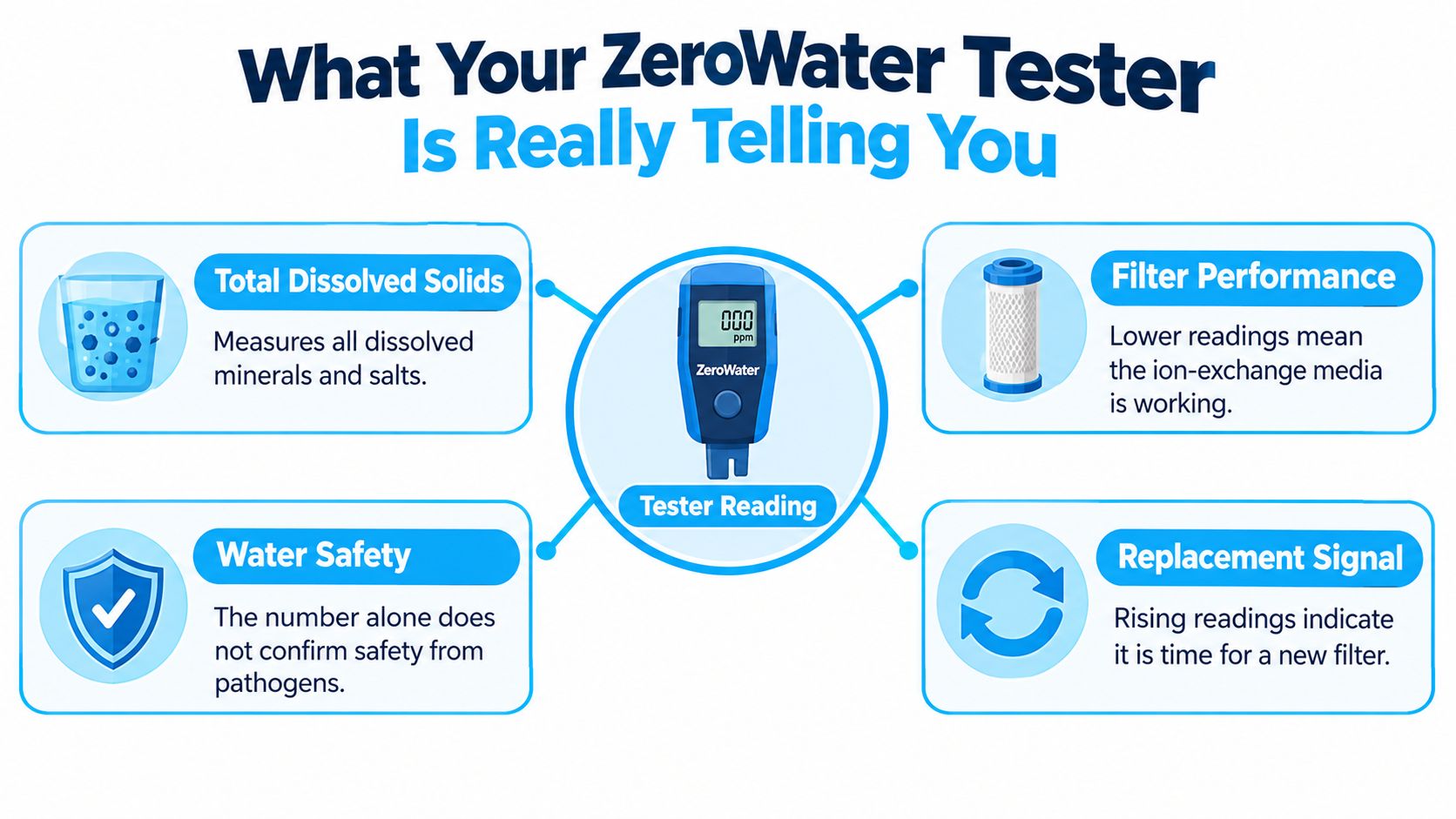
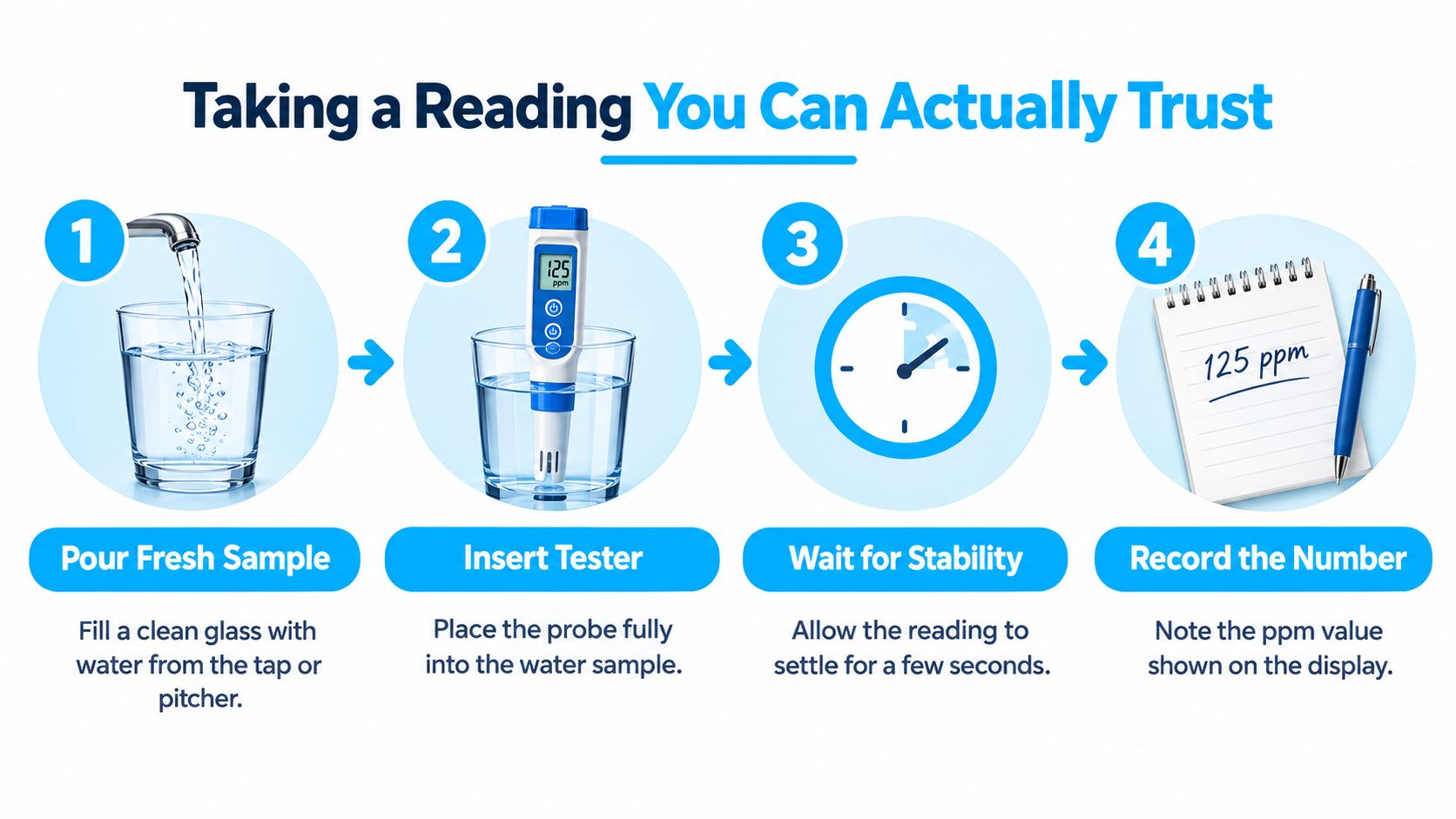
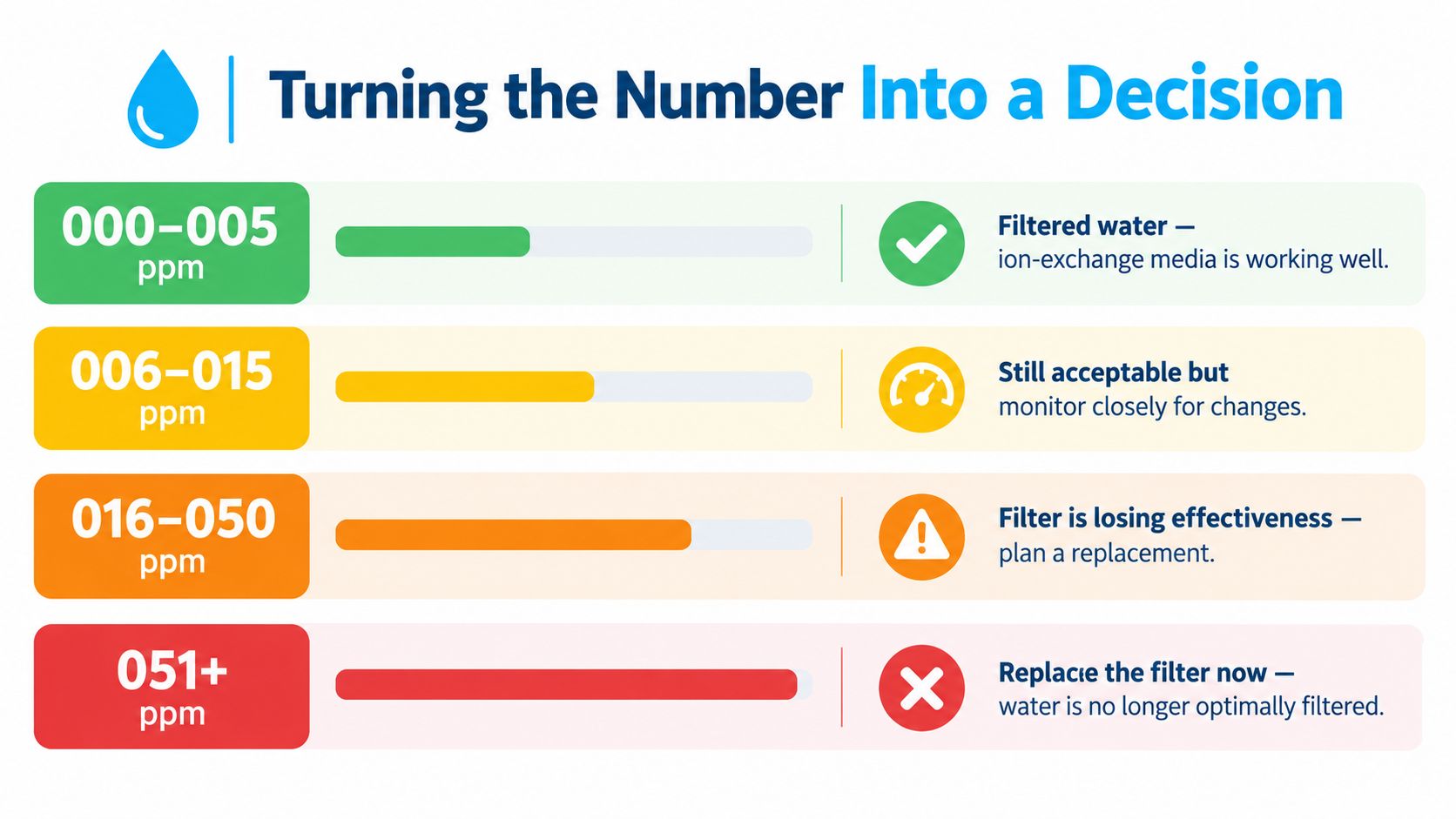
If you're a data geek or just want to be absolutely certain, a digital water tester is your best bet. These are handheld gadgets that measure the Total Dissolved Solids (TDS) in your water.

While a TDS meter measures everything dissolved in the water (not just the hardness minerals), a high TDS reading in city tap water is almost always a dead giveaway for high hardness. You get an instant, precise reading in PPM on a digital screen, which takes all the color-matching guesswork out of the equation. This kind of precision is perfect if you’re trying to dial in the settings on a high-efficiency water softener.

It's no surprise that more and more people are getting serious about this. The global water softener market was a US$2.9 billion industry back in 2022 and is projected to hit $6.8 billion by 2033. That’s a lot of homeowners deciding to protect their homes from hard water damage. You can check out more details on the water softener market trends on custommarketinsights.com.

Water Softeners vs. Water Conditioners: The Main Event

Okay, so you've confirmed hard water is the problem. Now, how do you fix it? When you're looking for a whole-house filtration solution, it really comes down to two main players: the classic salt-based water softener and the modern salt-free water conditioner.

This isn't just about plumbing hardware. It’s a choice between two completely different philosophies for dealing with those pesky minerals.

Think of it this way: a water softener is like a bouncer at a club, physically throwing the troublemakers (calcium and magnesium) out. A water conditioner, on the other hand, is like a skilled negotiator that convinces them to behave so they don't cause any problems. Both get the job done, but their methods are worlds apart.

The Classic Solution: Salt-Based Water Softeners

For most people, the image that pops into their head when they hear "hard water treatment" is a salt-based water softener. There's a good reason for that—they are the undisputed champions of hardness removal, and their method is both simple and incredibly effective.

The magic happens through a process called ion exchange. Your water flows through a tank filled with resin beads that are covered in sodium ions. Since the calcium and magnesium ions in your water have a stronger charge, they get pulled to the resin like a magnet, bumping the sodium ions off and into your water. It’s a direct swap: bad minerals out, harmless sodium in.

This total removal of hardness minerals is what gives you genuinely soft water. The difference is night and day:

  • Limescale vanishes: With the scale-forming minerals gone, they can't build up on faucets, shower doors, or inside your water heater.
  • Soap works like it should: You'll get that rich, sudsy lather you see in commercials. You'll also use way less soap, shampoo, and detergent.
  • That signature "slippery" feel: This is the tell-tale sign of truly soft water. Without minerals to react with soap, it rinses off completely, leaving your skin's natural moisture behind. It feels slick, but that’s actually the feeling of being 100% clean.

But this level of performance requires some upkeep. Eventually, those resin beads get clogged with all the minerals they've collected. To clean them, the system runs a regeneration cycle, flushing itself with a saltwater brine from a second tank. That brine tank is the part you have to keep topped up with heavy bags of salt.

The Modern Alternative: Salt-Free Water Conditioners

If you're looking for a way to stop scale damage without adding sodium to your water or lugging salt bags, a salt-free water conditioner is a fantastic option. The most important thing to know is that these systems do not remove the minerals, so they don't technically "soften" the water.

So what do they do? They change the minerals' behavior. The most proven technology here is Template Assisted Crystallization (TAC). As water flows through the TAC media, the calcium and magnesium minerals are converted into microscopic crystals.

These tiny, harmless crystals can't stick to pipes, fixtures, or heating elements. They just flow right on through your plumbing and down the drain. You get the number one benefit—scale prevention—without actually altering your water's mineral content. The healthy calcium and magnesium are still there, they've just been neutralized.

Here's the bottom line: Salt-free conditioners are all about preventing scale. You won't get that slippery feeling or mountains of soap bubbles, but you will protect your pipes, water heater, and dishwasher from destructive limescale.

This infographic lays out a few simple ways to figure out just how hard your water is. Knowing your numbers is the first critical step before picking any treatment system.

Infographic on water hardness testing, outlining a summary and three methods: DIY, test strips, and digital testers.

Whether you use a basic soap test or a precise digital meter, getting this data helps you choose and size your system correctly.

Making the Right Choice for Your Home

So, which one is for you? It really comes down to what you're trying to achieve. There’s no single “best” system, just the one that’s the best fit for your home and your priorities.

This head-to-head comparison should make the differences crystal clear.

Water Softener vs. Water Conditioner: Head-to-Head Comparison

Feature Salt-Based Water Softener Salt-Free Water Conditioner
Primary Function Physically removes calcium & magnesium Neutralizes minerals to prevent scale
How It Works Ion Exchange Template Assisted Crystallization (TAC)
Scale Prevention 100% elimination Excellent scale prevention (99%+ effective)
"Soft Water" Feel Yes, creates the distinct slippery feel No, water chemistry is unchanged
Soap Lather Significantly improves lather No change in lather
Maintenance Regularly add salt (40-50 lbs/month) Virtually maintenance-free
Environmental Impact Discharges salt brine into wastewater No salt, no waste, no electricity
Initial Cost Generally lower upfront cost Often a higher initial investment
Ongoing Costs Salt, water, and electricity for regeneration None
Best For Homeowners wanting to fix all hard water issues Homeowners focused on protecting plumbing & appliances

In the end, it’s a straightforward choice.

If you want the full soft-water experience—no scale, better skin and hair, and amazing soap lather—then a salt-based water softener is the clear winner. It's the only way to physically remove the minerals that cause all the problems.

If your main goal is to protect your home's expensive plumbing and appliances from scale buildup, and you want a zero-maintenance, eco-friendly solution, then a salt-free water conditioner is an excellent choice. It's the ultimate "set it and forget it" system for preventing the costly damage hard water can do.

Exploring Other Hard Water Filtration Methods

While whole-house softeners and conditioners are the heavy hitters, they aren't the only tools in your filtration arsenal. Sometimes, a more focused, targeted approach is exactly what’s needed.

Maybe you just want ultra-pure drinking water or a simple fix for your dry hair. For that, other filtration methods offer the perfect solution. These alternatives can work great on their own or even supplement a larger system, letting you fine-tune the water quality throughout your home.

Reverse Osmosis for Pure Drinking Water

You’ve probably heard of Reverse Osmosis (RO) systems. They are the gold standard for water purification, usually installed right under the kitchen sink with a small, dedicated faucet. An RO system is a multi-stage filtration beast that does a lot more than just soften water.

It works by pushing water through a special membrane filled with microscopic pores. This process strips out nearly everything that isn't H₂O, including:

  • Hardness minerals like calcium and magnesium
  • Contaminants like chlorine, lead, and pesticides
  • Dissolved solids, salts, and even fluoride

What you get is exceptionally clean, great-tasting water that's amazing for drinking and cooking. But that level of purification is exactly why RO is rarely a whole-house solution. These systems produce water slowly and create wastewater in the process, making them impractical and wasteful for things like showers and laundry.

Key Takeaway: An RO system is the ultimate point-of-use filtration fix for pristine drinking water. It will remove hardness minerals from the water you drink, but it isn't designed to protect your home's entire plumbing network from limescale.

The Power of Showerhead Filters

Is your main complaint about hard water what it does to your hair and skin? If so, a specialized showerhead filter is a fantastic and incredibly budget-friendly fix.

These devices are a breeze to install—they just screw on between your existing showerhead and the pipe coming out of the wall. They target the water exactly where it impacts your personal care routine the most.

They use filtration media, often a mix of KDF (Kinetic Degradation Fluxion) and carbon, to cut down on both hardness minerals and chlorine. While they don't technically "soften" water like an ion-exchange system, they do a great job reducing the scale and chlorine that are the real culprits behind dry, itchy skin and dull, brittle hair. This is an ideal solution for renters or anyone who wants to solve skin and hair issues without the cost of a whole-house system.

A Broader Look at Water Filtration

As you can see, treating hard water often involves more than just tackling minerals. The world of water filtration is huge, with systems designed for everything from sediment to specific chemical contaminants. For instance, you might have a softener to handle the minerals but still want a carbon filter to improve the taste and smell.

This is especially true in unique setups, like mobile living. In these cases, a broad approach to water quality is key. For more on keeping water clean on the go, you might want to read up on finding the best RV water filter system.

Reverse osmosis is only becoming more popular. In fact, within the water treatment world, reverse osmosis systems are expected to command about 35% of the market share by the end of 2035. It's easy to see why, since these membrane filters can remove up to 99% of water impurities. Whether it’s for your whole house, your RV, or just your drinking glass, understanding all these options is the key to finding the perfect fix for your water.

Installation and Maintenance for Your Filtration System

A man performing maintenance on a white water heater in a utility room with tools and a bucket.

Getting a hard water filtration system is a huge step, but the work doesn't stop once you've made the purchase. Proper installation and a little upkeep are what protect your investment and keep your home running scale-free for years to come.

Think of it this way: even a brand-new car needs its oil changed.

A whole-house system is a serious piece of plumbing. You're cutting into your home's main water line, which can feel pretty daunting. Your first big call is deciding whether to roll up your sleeves and do it yourself or bring in a pro.

DIY Installation vs. Professional Help

If you're already comfortable with plumbing projects, a DIY installation is definitely on the table. Most systems arrive with detailed instructions, and the basic process is straightforward: shut off the main water, cut a piece of pipe, and hook up the new unit. If you've handled pipe cutters, soldering, or PEX fittings before, you'll probably feel right at home.

For a lot of folks, though, this is a job best left to a professional plumber.

A licensed pro brings a lot to the table. They’ll ensure the system is installed to code, won’t leak (preventing a potential disaster), and can help you figure out the optimal spot for the unit. That's a big deal, especially since a salt-based softener needs to be near both a drain and a power outlet.

Expert Insight: Spending a few hundred dollars on a professional installer buys you total peace of mind. A bad install can cause leaks, a drop in water pressure, or even void your warranty, which makes hiring a pro a smart move for such a long-term home improvement.

Your Long-Term Maintenance Checklist

Once your system is up and running, a little routine care goes a long way. The maintenance you'll need to do really depends on the type of filtration system you picked.

For a traditional salt-based water softener, your main task is pretty simple: keep the brine tank topped up with salt. Here’s what that looks like:

  • Check the Salt Level: Take a peek inside the brine tank at least once a month.
  • Refill as Needed: A good rule of thumb is to keep the tank at least one-third full. For a typical family of four, you'll likely add one 40-pound bag of salt every month or two.
  • Choose the Right Salt: Stick to high-purity salt pellets made specifically for water softeners. Cheaper rock salt often has dirt and gunk that can clog up the system's more delicate parts.
  • Clean the Brine Tank: About once a year, it's a great idea to empty and clean out the brine tank. This gets rid of any sediment or "salt mush" that’s built up on the bottom.

Care for Salt-Free and Cartridge-Based Systems

If you went with a salt-free water conditioner that uses Template Assisted Crystallization (TAC), your to-do list is much shorter. There's a reason people call these "set it and forget it" solutions.

The TAC media inside the tank will eventually need to be replaced, but usually only every three to five years. It's a job many homeowners can handle themselves in under an hour—just unscrew the tank head, dump out the old media, and pour in the new.

For smaller, cartridge-based filters, like the ones you find on showerheads or under a sink, it’s even easier. All you have to do is swap out the filter cartridge based on the manufacturer's schedule, which is typically every six months to a year. Keeping up with this is key to making sure the filter keeps doing its job effectively.

Your Hard Water Questions Answered

After digging into all the different filtration methods for hard water, there are always a few questions that pop up. This is where we tackle those last few uncertainties head-on, giving you straight answers to the things we hear most often from homeowners just like you. Let's get everything cleared up so you can feel good about your next step.

Will a Water Softener Make My Drinking Water Salty?

This is probably the biggest myth we run into, and it's a totally fair question. While salt-based softeners do use sodium chloride (salt) to regenerate, the actual amount of sodium that makes its way into your tap water is tiny.

It's an ion exchange, not an addition. The system swaps a sodium ion for a calcium or magnesium ion. For most homes with moderately hard water, the sodium added is less than what's in a single slice of white bread. Honestly, you'd be hard-pressed to taste any difference at all.

That said, if you're on a strict, doctor-ordered low-sodium diet, it's something to discuss with them. A great workaround many people choose is to install a whole-house softener and then add a reverse osmosis system under the kitchen sink. You get the best of both worlds: your whole house is protected from scale, and you have ultra-pure, sodium-free water for drinking and cooking.

Can I Treat Hard Water if I Live in an Apartment?

You absolutely can. Installing a big whole-house system is usually off the table for renters, but you’ve still got some fantastic point-of-use filtration options that can make a world of difference. You don't have to just put up with hard water because you don't own the place.

Here are the most common filtration fixes for renters:

  • Showerhead Filters: This is the go-to for apartment dwellers. A simple screw-on shower filter designed for hard water can drastically cut down on scale and chlorine. The result? Skin that feels softer and hair that's healthier and easier to manage.
  • Faucet-Mounted Filters: For your kitchen sink, a filter that attaches right to the faucet is an easy way to improve the taste and quality of the water you drink and cook with.
  • Countertop Filtration Systems: From simple pitcher filters to more advanced countertop units, you can get great-tasting, filtered water without touching the plumbing at all.

These targeted solutions let you enjoy many of the perks of treated water without making a single permanent change.

How Do I Choose the Right Size Water Softener?

Getting the right size water softener is a huge deal for its efficiency and your long-term happiness with it. If it's too small, it will regenerate constantly, wasting salt and water. If it's too big, you've just spent more money than you needed to.

The right size all comes down to two numbers: your water hardness level (in Grains Per Gallon, or GPG) and how much water your household uses each day.

You can figure out your daily needs with a quick calculation:
(Number of People in Home) x (75 Gallons per Person) x (Your Water’s GPG) = Daily Grains to Remove

Let's walk through a real-world example. A family of four with water that has a hardness of 10 GPG would figure it out like this: 4 people x 75 gallons x 10 GPG = 3,000 grains per day. Since you want the system to go a few days between regeneration cycles, a standard 32,000-grain unit would be a solid choice for this family. Most manufacturers have easy-to-read sizing charts to help you lock in the perfect model. For more general filtration questions, you can always find more in-depth articles in our water filter advice section.


At Water Filter Advisor, our goal is to give you the clear, unbiased information you need to find the perfect solution for your home's water. Whether you need a whole-house system or a simple faucet filter, explore our guides and reviews to make a confident choice. Visit us at https://www.waterfilteradvisor.com to get started.

A DIY Guide to whole home water filtration system installation That Won’t End in a Flood

Let's be honest, a successful whole-home water filtration system installation doesn't start with a pipe cutter. It begins long before you even dream of getting your tools out; it starts with a rock-solid plan. This isn't just about avoiding a DIY disaster—good planning is what separates a system that delivers pure, delicious water for years from one that becomes your next big headache.

Planning Your Installation for Flawless, Filtered Water

A man kneels outside a home, writing on a clipboard while performing a water quality test.

Jumping into the installation without a little forethought is like trying to bake a cake by just throwing ingredients in a bowl. It’s a recipe for chaos. Trust me, spending an hour or two on planning will save you a world of frustration and maybe even a call to an emergency plumber. This is what separates a pro-level setup from a weekend project gone sideways.

It's no surprise that more people are seeking water that doesn't taste like a swimming pool. The global home water filtration market is expected to hit a staggering USD 37.54 billion by 2034, and whole-house systems are a massive part of that wave. In fact, interest in these systems is set to grow by 61.56% by 2026, mostly because we're all tired of that chlorine funk coming from every tap. You can learn more about these market trends to see just how big this movement for better water has become.

First Things First: Play Detective with Your Water

Before you can fix your water, you have to know what you're fighting. Is it "hard," leaving that chalky film on your shower door? Does it have that faint swimming pool smell or, worse, smell like rotten eggs? Maybe you’re seeing those lovely rust-colored stains in your sinks and toilets.

A good water test is non-negotiable. You can grab a simple DIY kit from the hardware store for a quick snapshot, but for the real story, I recommend sending a sample to a certified lab. They'll give you a detailed report on contaminants like:

  • Chlorine and Chloramine: The stuff cities use to disinfect water that makes your morning coffee taste "off."
  • Sediment and Silt: Gritty particles that make water cloudy and can slowly destroy your appliances from the inside.
  • Hard Minerals: Calcium and magnesium, the tag-team duo behind stubborn limescale buildup.
  • Iron and Manganese: Metals that leave ugly orange and black stains and give water a metallic tang.
  • Lead and VOCs: The more serious troublemakers you definitely want to know about.

Once you know exactly what’s lurking in your H2O, you can choose a filter that’s specifically designed to kick those contaminants to the curb.

Find the Perfect Home for Your Filter

Location, location, location! The best spot for your system is almost always right where the main water line enters your house. Think basement, garage, or a utility closet. Placing it here ensures every single drop of water, both hot and cold, gets purified before it travels anywhere else in your home.

When you’re scouting for a location, keep these things in mind:

  • Accessibility: You're going to need to get to this thing to change filters. Don't shove it into a creepy corner you can barely reach. Think about future-you.
  • Protection: Make sure it's in a place that won't freeze. A frozen filter housing will crack, and you’ll have an indoor water park you never asked for.
  • Drain Access: If you choose a system that backwashes (like a water softener or some large carbon filters), it needs a place to send its wastewater.
  • Power Source: Many modern systems have electronic control heads or UV lights that need to be plugged into a standard outlet.

Don't Choke Your Water Flow: Size Your System Correctly

One of the most common DIY mistakes is buying a system that's too small for the home. The result? A frustrating drop in water pressure every time you try to do two things at once, turning your powerful shower into a pathetic dribble.

To get this right, you need to match the system to your home's peak water demand, which is measured in gallons per minute (GPM).

Think about a chaotic morning in your house—the shower's running, the dishwasher is on, and someone's washing their hands. You need a filter that can handle all of that without breaking a sweat. A plumber can do a proper flow rate test, but you can also get a good estimate based on your home’s size and the number of bathrooms. For more in-depth guidance on choosing the right system, you might find valuable advice on specialized water filtration platforms like https://www.waterfilteradvisor.com.

Of course, clean water is just one piece of the healthy home puzzle. Many homeowners who upgrade their water also look into things like whole-home air purifiers to improve their environment from top to bottom.

Assembling Your Tools and Materials Like a Pro

Nothing kills the momentum of a weekend project faster than an unexpected, last-minute trip to the hardware store for that one tiny fitting you forgot. Trust me, we've all been there. A successful whole home water filtration system installation hinges on having every single tool and part ready before you make that first cut.

Think of it like a TV chef preparing their ingredients—what they call mise en place. Everything is in its place, prepped and waiting. Taking the time to get organized turns a potentially chaotic job into a smooth, professional-feeling process.

Before you even think about shutting off the water, lay everything out on a tarp or drop cloth near your work area. This simple step keeps tiny fittings from rolling into oblivion and protects your floors. It's also your final chance to eyeball everything and make sure you have it all, from the big wrenches down to the last screw.

Your Essential Water Filter Installation Toolkit

To make sure you're not that person making a frantic mid-project hardware store run, I've put together a checklist. This covers just about everything you could need for a standard installation.

Tool or Material Category Essential Items Pro Tip for Selection
Cutting & Measuring Pipe cutter (specific to your pipe type), measuring tape, permanent marker. For copper, a simple tubing cutter is best. For PEX or PVC, a ratchet-style cutter prevents burrs and ensures a clean, square cut.
Wrenches & Fasteners Two pipe wrenches (or one pipe, one adjustable), drill with assorted bits, screwdriver set. Always use two wrenches working in opposite directions on fittings. This stops you from stressing and damaging old pipes.
Safety Gear Safety glasses, work gloves. Non-negotiable. Debris in your eye or a sharp metal burr on your hand will end your project and your good mood instantly.
Sealing & Cleanup Thread seal tape (Teflon tape), a bucket, several old towels or rags. Wrap Teflon tape clockwise on male threads. If you go counter-clockwise, it will unravel as you tighten the fitting.
Piping Specifics Solder & flux (copper), crimp rings & tool (PEX), or primer & cement (PVC/CPVC). Push-to-connect fittings can be a universal alternative. Double-check that your primer/cement is rated for the type of plastic pipe (PVC vs. CPVC) you have. They are not interchangeable.

Having these items on hand before you start is the difference between a frustrating afternoon and a job you can be proud of.

The Right Stuff for a Watertight Seal

The tools get the job done, but the materials are what guarantee every connection stays secure and leak-free for years. This is where you buy your peace of mind.

A leak isn't just a drip; it's a potential disaster waiting to happen. Using the correct fittings and sealant for your pipe type is the single most important step in preventing water damage down the road.

Your shopping list for materials will depend entirely on what kind of plumbing you have. Let's break down the most common setups.

Working with Your Pipe Type

  • For Copper Pipes: You'll be soldering. This means you need solder, flux, a propane torch, and the right copper fittings. Don't forget a small piece of emery cloth or a wire brush to clean the pipe ends—flux won't stick to a dirty surface.

  • For PEX Tubing: Your main options are crimp or clamp rings, which require a special tool. Alternatively, push-to-connect fittings (like SharkBite) are a fantastic, solder-free option that's incredibly DIY-friendly.

  • For PVC/CPVC Pipes: This is a solvent-weld job. You'll need primer (usually purple) and cement specifically designed for your pipe material. The primer cleans the plastic and prepares it for a permanent chemical bond with the cement.

One universal item is thread seal tape. You'll wrap this 3 to 5 times around any male pipe threads to create a perfect, watertight seal.

And for a final bit of real-world advice: have a drill ready. You’ll need it to mount the filter housing securely to a wall or joist. If you’re working in a basement, knowing about selecting the right drill bit for concrete is crucial for anchoring into those tough foundation walls.

Installing Your Water Filtration System: The Main Event

Alright, you’ve done the prep work, your tools are laid out, and now it’s time to bring on the main event. All that planning is about to pay off as we get hands-on with the whole home water filtration system installation. Let's walk through this together, step by step, so you can feel like a plumbing rockstar.

The very first thing you need to do is arguably the most important. To keep this project from turning into an indoor swimming pool, you have to shut off the water supply to the entire house.

Safety First: Shutting Down Your Water Supply

First, find your main water shutoff valve. It's usually hiding in a basement, crawl space, or sometimes in an exterior utility box near your water meter. Give the handle a full clockwise turn until it stops. If it's a lever-style ball valve, you need to turn it 90 degrees until it’s perpendicular to the pipe.

With the main shutoff closed, you still need to get the water out of the pipes. Go open the lowest faucet in your house—think basement sink or outdoor spigot—and then the highest one, like a second-floor bathroom. This little trick uses gravity to drain the lines so you don't get a face full of water when you make that first cut.

Pro Tip: Even after draining, there’s always some water left in the pipes. I always stick a bucket right under where I'm about to cut and have a few old towels ready. It’s the best way to keep your workspace from turning into a swamp.

Measuring and Cutting Your Main Water Line

You’ve heard it a thousand times, but "measure twice, cut once" is the gospel of plumbing for a reason. Hold your fully assembled filter unit up to the section of pipe you’ve chosen. Don't just measure for the filter housing; make sure you account for all the fittings and, crucially, the bypass valve.

Grab a permanent marker and mark your cut lines clearly on the pipe. A crooked cut is a recipe for a bad seal and a frustrating, slow leak down the road.

When you’re ready, grab the right cutter for your pipes:

  • For copper pipe: A tubing cutter clamps on, and you just rotate it around the pipe, tightening the knob with each turn until it pops right through.
  • For PEX or PVC/CPVC: A ratchet-style plastic pipe cutter will give you a clean, straight cut with a few squeezes.

Once the pipe is cut, take a minute to clean up the edges. A simple deburring tool or even a small piece of sandpaper will smooth out any burrs. This is a critical step—any little plastic or metal bits can tear the O-rings inside your new fittings and cause a leak you'll be chasing for weeks.

Assembling the Filter and Bypass Valve

Before you even think about fitting this into your main line, it’s much easier to assemble the filter head, housing, and the bypass valve on a workbench. That bypass valve is a non-negotiable part of the setup. It’s a three-valve system that lets you route water around the filter, which is a total game-changer when it’s time for maintenance. No more shutting off water to the whole house just to swap a filter.

Pay close attention to the manufacturer's directions here, especially the flow-direction arrows on the filter head. For every threaded connection, use thread seal tape. Wrap it clockwise 3-5 times around the male threads; this ensures the tape tightens as you screw in the fitting instead of unraveling.

Making Your Final Connections

Now it’s time to marry the filter assembly to the main water line you just prepped. How you do this depends entirely on the type of plumbing you have.

A diagram illustrating three steps for tool preparation: pipe cutter, fittings, and sealant tape.

As you can see, it comes down to three things: a clean cut, the right fitting, and a proper seal.

These are the most common ways to make the connection:

  • Push-to-Connect Fittings (e.g., SharkBite): These are a DIYer's dream. You just push the fitting onto a clean, deburred pipe until you feel it "click." They work on copper, PEX, and CPVC.
  • PEX Crimp/Clamp Rings: If you have PEX, you'll slide a metal ring over the tubing, insert a barbed fitting, and use a special tool to secure the ring tightly over the barb. It creates a rock-solid connection.
  • Copper Soldering: This is a more advanced skill. It involves cleaning and fluxing the pipe and fitting, heating the joint with a torch, and letting solder flow into the gap to create a permanent bond.
  • PVC/CPVC Solvent Weld: For plastic pipes, you'll apply primer, then a coat of cement. Push the pipe into the fitting with a quarter-turn twist and hold it firmly for about 30 seconds while the chemicals literally weld the two pieces together.

With your connections made, the last step is to securely mount the filter bracket to a wall stud or another solid surface. A filter full of water is surprisingly heavy, and you don't want that weight hanging directly on your pipes.

Bringing Your New System To Life: The Moment of Truth

A man in a blue shirt inspecting an outdoor water filtration system on a house wall.

You’ve tightened every fitting and secured the last bracket. Now comes the moment of truth. This is the commissioning process, where patience pays off big time. Jumping in too fast here can lead to leaks, sputtering faucets, and water that still tastes off.

This stage is the real test of your whole home water filtration system installation. Rushing it now puts all that careful work at risk.

The Slow And Steady Water Turn-On

First, leave the bypass valve open and close both the inlet and outlet valves on the filter. Then head to your main shutoff valve and crack it open—just a quarter turn is enough. Listen for a soft hiss as the pipes begin to fill.

After that gentle hiss fades, open the valve fully. Grab a flashlight and go inspect every connection you made. Even a tiny droplet on a new joint means you need to tighten it again before moving forward.

Purging Air And Hunting For Leaks

Next, shut off the bypass valve. Very slowly open the inlet valve feeding the filter and listen as water floods the housing. This is the most pressure-sensitive moment; any weak seal might start leaking now.

The most common leak appears the second the system pressurizes. Watch every connection like a hawk—if you spot a drip, close the inlet, release the pressure, and fix it immediately.

Once the inlet is fully open, repeat the process with the outlet valve. Your system is now under full pressure.

Finally, get the air out. Turn on a nearby cold-water tap (a laundry sink is perfect for this) and let it sputter and spit until you see a smooth, steady stream.

Initiating The First Flush

If your system supports backwashing, now's the time to trigger the cycle from the control head. Expect it to run for 10 to 30 minutes as it washes out fine particles and factory dust.

For simpler cartridge-style setups, you just need to do a straight flush.

  • How to Flush: Simply run cold water from a high-flow tap, like a bathtub, for at least 15-20 minutes.
  • What to Look For: Initially, the water may look cloudy or discolored from fine carbon dust ("fines"). This is completely normal and expected.
  • When It's Ready: Keep flushing until the water runs perfectly clear.

Once you see that crystal-clear stream, pour yourself a glass. With air purged, leaks resolved, and the filter media flushed, your whole home water filtration system is officially open for business.

Maintaining Your System for Long-Term Awesome Water

Alright, your whole home water filtration system installation is done. You're already enjoying that clean, crisp water flowing from every faucet. But to keep things running like a dream, a little routine care is in order. Think of it as protecting your investment, not another chore.

A good maintenance schedule is your ticket to consistently great water. Let it slide, and you're looking at clogged filters, a noticeable drop in water pressure, and the return of the very contaminants you worked so hard to get rid of.

Why You Can’t Just "Set It and Forget It"

The filter media is the heart of your system. Whether it’s a simple sediment cartridge or a massive tank of carbon, it has a limited lifespan. Once it’s saturated with all the gunk it has pulled from your water, it’s done. Using an exhausted filter is like trying to dry dishes with a soaking wet towel—it just doesn’t work.

That’s why sticking to a replacement schedule is the single most important thing you can do.

  • Sediment Pre-filters: These are the bouncers at the club door, catching all the dirt and rust. They usually need swapping out every 3 to 6 months. If you notice your water pressure taking a nosedive, a clogged pre-filter is almost always the culprit.
  • Carbon Filters: The big carbon tank is the heavy lifter, tackling chlorine, funky tastes, and chemicals. The media inside can last a surprisingly long time—anywhere from 3 to 10 years, depending on the quality of the carbon and how much water your family uses.
  • Specialty Cartridges: If you have extra stages for things like bacteria (a UV bulb) or heavy metals (KDF), they have their own schedules. A UV lamp, for instance, needs to be replaced every year. Even if it’s still lit, its sterilizing power fades over time.

Creating Your Simple Maintenance Schedule

You don't need a complicated spreadsheet for this. Just pop a few reminders in your phone's calendar or scribble the dates on a sticky note and slap it right on the filter housing. This little habit will save you a ton of headaches.

Your water filtration system is the guardian of your home's water supply. A little routine maintenance is all it asks for in return to keep doing its job effectively day in and day out.

To make it even easier, here’s what a typical maintenance plan might look like.

A Simple Maintenance Schedule for Whole Home Filters

This schedule gives you a ballpark idea. Your manufacturer's guide will have the exact details, but this is a great starting point.

System Type Maintenance Task Recommended Frequency Time Commitment
Cartridge-Based System Replace sediment pre-filter. Every 3-6 months 15-20 minutes
Carbon Tank System Replace carbon filter cartridge. Every 6-12 months 20-30 minutes
Water Softener Check and refill salt reservoir. Monthly 5-10 minutes
UV Purifier Replace UV lamp and clean quartz sleeve. Annually 30-45 minutes
All Systems Conduct a post-installation water test. Annually 10 minutes (to collect a sample)

A little bit of planning goes a long way in keeping your water pure and your system humming.

Beyond the Basics: Sanitizing and Testing

Here’s a pro tip: when you change a cartridge filter, take an extra ten minutes to sanitize the housing. A few capfuls of unscented household bleach mixed into a gallon of water is all you need. Give the inside a good scrub to keep any nasty bacteria from setting up shop.

It's also a smart move to test your water again about a year after the installation. This confirms the system is still working as it should and alerts you if any new contaminants have snuck into your water supply.

Staying on top of this is more important than ever. The home water treatment market is projected to hit an incredible USD 91.39 billion by 2034, driven by homeowners who are more aware of water quality issues. You can learn more about these market trends and see how consumer awareness is shaping the industry. A little upkeep ensures your system remains a top-tier solution.

Got Questions About Your Filter Install? We've Got Answers.

Even with the best guide in hand, tackling a whole home water filtration system installation for the first time can leave you with a few nagging questions. That's completely normal. This is a big upgrade for your home, so let's clear up some of the common uncertainties we hear from homeowners.

Think of this as the final pep talk. Getting this right isn't just a plumbing project; it's an investment in your family's health and the longevity of all the water-using appliances in your house.

How Much Does It Cost to Have a Pro Install It?

If you're thinking of calling a licensed plumber instead of going the DIY route, you can expect the cost to land somewhere between $300 and $1,500.

Why such a big range? It really boils down to the complexity of the job. If you have easy-to-access PEX or PVC pipes and you're installing a basic cartridge system, you'll be on the lower end. But if it's an involved multi-tank system that requires sweating new copper pipes and running a drain line, the price will naturally creep up.

My best advice? Always get at least three itemized quotes from reputable, licensed plumbers. It's the only way to know you're getting a fair price.

Can I Really Install a Whole House Water Filter Myself?

Absolutely. If you have some basic plumbing skills under your belt and the right tools, installing a whole house water filter is a totally doable weekend project. Honestly, systems with modern push-to-connect fittings have made the job easier than ever.

But you have to be honest with yourself. If the thought of taking a pipe cutter to your home's main water line gives you cold sweats, or if you've never soldered a copper joint, hiring a pro is the smart move. A small mistake can turn into a hidden leak or a full-blown flood—and the cost of that water damage will make a plumber's invoice look like a bargain.

Will a Whole House Filter Kill My Water Pressure?

This is probably the number one concern we hear. The short answer is yes, it will reduce it slightly, but it shouldn't be a deal-breaker. A correctly sized system will typically only cause a minor drop of about 5 to 15 PSI. Most people barely even notice it.

The secret to keeping your pressure strong is all in the sizing. You have to make sure your system's flow rate—measured in gallons per minute (GPM)—can keep up with your family's water usage at its peak.

To keep that pressure drop to a minimum, here's what to do:

  • Go for a High Flow Rate: Pick a system with a GPM rating that meets or beats your home's demand. A house with 3-4 bathrooms, for example, really needs a filter rated for 12-15 GPM.
  • Choose Bigger Ports: Look for filters with 1-inch inlet and outlet ports instead of the smaller ¾-inch ones. Bigger pipes mean better flow.
  • Consider a Booster Pump: If your water pressure is already on the low side to begin with, you can install a water pressure booster pump right alongside the filter to solve the issue for good.

Where’s the Best Place to Install My Filter System?

Location is everything. The sweet spot is on your main water line, right after it enters your house but before it splits off to your water heater or any other fixtures.

Most people find these spots work best:

  • Basements
  • Garages
  • Utility closets

The perfect location isn't just about space. It needs to be easy to get to, so you aren't doing plumbing gymnastics in a crawlspace. It also has to be a spot that's protected from freezing temperatures—a frozen filter housing will crack, and you'll have a major mess on your hands. And don't forget, if your system needs power or has a backwashing feature, you'll need an electrical outlet and a drain nearby.


At Water Filter Advisor, our mission is simple: give you the knowledge you need to get cleaner, safer water in your home. From picking the perfect system to walking you through the install, we're here to help you make smart choices for your family. Check out all our in-depth guides and reviews at https://www.waterfilteradvisor.com.

Will Reverse Osmosis Remove Chlorine From Your Water?

Yes, a reverse osmosis (RO) system is brilliant at removing chlorine from your tap water. But if you think it's the fancy, high-tech membrane doing all the work, you're in for a surprise. The real story is a classic tale of teamwork.

It’s not actually the famous RO membrane doing the heavy lifting here.

Chlorine Removal in RO Systems Is a Team Effort

You’d be forgiven for thinking the sophisticated RO membrane is the star player for every contaminant, but when it comes to chlorine, another component steals the show. The unsung hero is the activated carbon pre-filter, which acts as a dedicated bodyguard for the entire system.

Its main job is to grab onto and neutralize chlorine before it ever gets a chance to reach the delicate RO membrane.

This pre-filtration step is absolutely critical for two main reasons:

  • Protection: Chlorine is a powerful oxidant that can eat away at the thin-film material of an RO membrane. Without a pre-filter, the membrane would get damaged and fail way too early, which is an expensive fix.
  • Taste and Odor: The carbon filter is what finally gets rid of that unpleasant "swimming pool" taste and smell that comes from chlorinated tap water, giving you crisp, clean-tasting water.

Modern home RO systems are remarkably good at this, with quality models often achieving chlorine removal rates over 99%. This incredible efficiency is all thanks to the activated carbon pre-filter adsorbing the chlorine molecules long before the water hits the main event: the membrane.

This diagram shows you exactly how water flows through these initial stages to get the job done.

As you can see, the carbon filter is the essential first line of defense, neutralizing chlorine to protect the RO membrane downstream.

To give you a clearer picture, here’s a quick breakdown of which part does what.

Chlorine Removal At A Glance

System Component Role in Chlorine Removal Typical Effectiveness
Carbon Pre-Filter The primary workhorse; removes chlorine through adsorption. Highly effective, often removing >99% of chlorine.
RO Membrane Secondary role; primarily removes salts and dissolved solids. Limited effectiveness; can be damaged by direct exposure.
Carbon Post-Filter "Polishes" the water, removing any lingering tastes or odors. Very effective for final taste and odor improvement.

So, while the RO system as a whole gets the job done, it's really the carbon filters doing the specific work of chlorine removal.

This all ties into the broader impact of water quality and filtration on things you might not even think about, like how your morning coffee tastes. Getting that first stage right is what makes the entire process a success.

Meet the Carbon Filter: Your System's First Line of Defense

While the reverse osmosis membrane usually gets all the glory, the real workhorse for chlorine removal is actually the activated carbon pre-filter. This isn't just some minor preliminary step; it's a critical component that acts as your home system's first and most important line of defense against chlorine damage.

It all works because of a process called adsorption. Think of it like a magnet for contaminants. Instead of soaking up impurities like a sponge (that would be absorption), adsorption means the bad stuff sticks to the surface of the filter media. The activated carbon in these pre-filters is incredibly porous, giving it a massive internal surface area.

Just how massive? Get this: a single pound of activated carbon can have a surface area larger than 100 football fields. This intricate, web-like structure is what makes it so effective. As water rushes through, chlorine molecules are chemically attracted to the carbon's surface, where they get trapped and effectively neutralized.

An activated carbon filter cartridge and a pile of carbon granules sit next to a box labeled 'ACTIVATED CARBON FILTER'.

Every tiny crevice and passage you see in that image multiplies the surface area available for chlorine to grab onto, ensuring it's stripped out of the water before it can cause any trouble.

Why This Pre-Filter Is Not Optional

This carbon pre-filter stage is absolutely non-negotiable in a home RO system. Chlorine is a powerful oxidizer—that’s what makes it great for killing bacteria in city water, but it's also what makes it incredibly destructive to the delicate polyamide material of an RO membrane.

Without the carbon pre-filter, chlorine would literally burn microscopic holes right through the membrane. This damage would completely ruin the most expensive part of your RO system and let all sorts of other contaminants sneak through, defeating the whole purpose of having a filter in the first place.

This is why understanding will reverse osmosis remove chlorine means looking at the entire system. The carbon filter is the essential bodyguard, clearing out the threat so the RO membrane can do its job safely and effectively.

Granular vs. Solid Block Carbon Filters

When you're shopping for a home RO system, you'll generally see two types of carbon pre-filters. They look a little different but both get the same critical job done.

  • Granular Activated Carbon (GAC): These filters are filled with loose, coffee-ground-like granules of carbon. Water simply flows through the loose media, which offers a huge surface area for adsorption. They're fantastic for chlorine removal and getting rid of bad tastes and odors.
  • Solid Carbon Block: These are made from finely powdered carbon that’s been compressed into a solid block. They tend to provide even finer filtration, often coming with a micron rating that means they can trap sediment in addition to chlorine. Because the water is forced through the dense block, it gets more contact time with the carbon, which many consider to be a bit more thorough.

In the end, both GAC and carbon block filters are extremely effective at their primary mission: protecting your RO membrane from chlorine. Any high-quality home RO system will have one of these right at the front, guaranteeing you get pure, great-tasting water for years to come.

The RO Membrane: The Heavy Lifter of Water Purification

Once the carbon pre-filter has done its job and neutralized the chlorine, the real star of the show can get to work. The reverse osmosis membrane is what takes your water from simply being "filtered" to being genuinely pure. This is where the heavy lifting happens, targeting the stubborn, microscopic contaminants that most other filters can't touch.

A white and blue RO Membrane filter with water dripping on it, resting on a wooden surface.

Think of the RO membrane as an incredibly exclusive gatekeeper for your home's water supply. It’s a tightly wound sheet of material with pores so tiny—around 0.0001 microns—that only water molecules can get an invitation to pass through.

Just how small is that? It's about 500,000 times smaller than a single strand of human hair. Nothing but pure H₂O is getting past this bouncer.

How Pressure Does the Hard Work

Your home’s water pressure provides the force needed to push water molecules through this semipermeable membrane. While pure water squeezes through, anything larger is physically blocked and left behind. It’s a surprisingly simple yet profoundly effective process.

This is how the membrane rejects a massive list of unwanted guests in your water, delivering unparalleled purity.

If the carbon filter is the bodyguard that handles the obvious threat (chlorine), the RO membrane is the high-tech security system that scans for everything else. It separates pure water from a whole host of dissolved contaminants with incredible precision.

The contaminants that get rejected don't just build up and clog the system. Instead, they’re mixed into a small amount of wastewater (called brine) and flushed right down the drain. This keeps the membrane clean and efficient, ready for the next drop.

What the RO Membrane Really Removes

With chlorine out of the way, the membrane can focus on the contaminants that are often the most difficult to remove and potentially the most harmful. This is what truly separates RO from basic carbon or sediment filters you might find at the hardware store.

Here’s a shortlist of what the RO membrane is designed to eliminate from your drinking water:

  • Heavy Metals: Lead, arsenic, mercury, and cadmium don’t stand a chance.
  • Dissolved Solids (TDS): This includes things like salts, nitrates, and fluoride, which are all stripped away.
  • "Forever Chemicals": The membrane is one of the most effective ways to remove emerging contaminants like PFAS, microplastics, and trace pharmaceuticals.

By letting the carbon filter handle the chlorine first, the RO membrane is protected and can perform at its best for much longer. This teamwork is why a complete RO system can confidently eliminate chlorine while also tackling hundreds of other contaminants, giving you the purest water possible right from your kitchen tap.

Chlorine vs. Chloramine: Understanding Your Water Supply

Just when you thought chlorine was your main concern, another player has entered the game for many homeowners. A growing number of cities and towns—now over 20% in the U.S.—have made the switch from standard chlorine to a compound called chloramine to treat their water.

This change has some big implications for how you should filter the water in your home.

Chloramine is what you get when you mix chlorine with ammonia. It's a more stable compound, which means it lasts longer as it travels through the city's pipe system. While that's great for the municipality, that same stability makes chloramine a much tougher nut to crack for most home water filters.

Glass vial and blue box with 'CHLORINE vs CHLORAMINE' text discussing water treatment.

This is why it's so important to know what's in your water. A standard activated carbon pre-filter is fantastic at grabbing chlorine, but it really drops the ball when it comes up against the tough chemical bond in chloramine.

The Problem with Standard Carbon Filters

Think of a standard carbon filter like a magnet specifically designed to attract and hold onto chlorine. It works great for that one job. But when chloramine flows by, that magnet just doesn't have the right kind of pull. The filter gets overwhelmed and stops working effectively in no time.

If your water has chloramine, a standard carbon pre-filter won't do enough to protect your RO membrane. This can cause the membrane to fail way too early, torpedoing your system's performance and letting other contaminants slip right on through.

So, what's the fix? You need a filter that's built for the job.

The Solution: Catalytic Carbon

The answer is a special type of filter media called catalytic carbon. This isn't just a slightly beefed-up version of activated carbon; it's engineered from the ground up to break the stubborn bond between chlorine and ammonia. It acts as a catalyst, triggering a chemical reaction that dismantles the chloramine molecule.

Here’s a quick look at how the two filter types stack up against these disinfectants:

Filter Type Effective Against Chlorine? Effective Against Chloramine?
Standard Activated Carbon Yes No (Very limited)
Catalytic Carbon Yes Yes

Before you pick out a home RO system, you absolutely need to find out what your local water utility uses. You can usually get this info from your city’s annual water quality report, or you can just give them a call. Knowing whether you're dealing with chlorine or chloramine is the critical first step to ensuring your system will actually do its job and remove these chemicals from your home's water.

Comparing RO Against Other Filtration Methods

Walk into any home improvement store, and the wall of water filters is enough to make your head spin. You’ve got pitchers, faucet-mount gadgets, and a dozen other options. So, where does a reverse osmosis (RO) system actually fit in for a homeowner?

While most of those simpler filters do a decent job of making your tap water taste less like a swimming pool, that's pretty much where their job ends. They're a one-trick pony. This is where a home RO system really starts to shine.

Think of it this way: a basic pitcher or faucet filter is like a bouncer at a club. It checks for the most obvious problem—in this case, the taste and smell of chlorine—and lets everything else slide. They use a simple layer of carbon, make the water more drinkable, and call it a day.

A reverse osmosis system, on the other hand, is the full-on Secret Service detail for your water. It doesn’t just deal with the obvious threat; it runs a comprehensive security check to handle all the invisible troublemakers.

A Head-to-Head Comparison

The difference in what these filters can do is night and day once you look past just chlorine. While the simpler options are focused on a single problem, RO systems are engineered from the ground up to be a complete water purification solution for your home.

Sure, a standard carbon filter can knock out 85-95% of chlorine, and a pitcher filter might get you 75-90% of the way there. But an RO system goes further, removing over 95% of chlorine while also eliminating up to 98% of arsenic, 95% of lead, and 90-99% of nasty PFAS "forever chemicals." You can see the full list of contaminants an RO system handles on softprowatersystems.com to get the whole picture.

The real takeaway here is that while lots of filters can make your water taste better, an RO system is one of the few that provides true purification. It gets rid of the chlorine, then keeps going to tackle the heavy metals, dissolved solids, and other contaminants the others just can't touch.

To lay it all out, let's put these systems side-by-side. This simple table makes it crystal clear where each filter excels and where it comes up short.

Chlorine Filter Comparison RO vs Other Methods

When you're shopping for a chlorine filter, it helps to see exactly what you're getting for your money. Here's a quick rundown of the most popular options for home use.

Filter Type Chlorine Removal % Removes Other Contaminants? Average Cost
Water Pitcher Filter 75-90% Very limited (some sediment, maybe zinc) $20 – $50
Faucet-Mount Filter 85-95% Limited (often lead and some VOCs) $30 – $70
Reverse Osmosis System >95% Yes (heavy metals, TDS, PFAS, etc.) $200 – $600+

As you can see, asking if RO removes chlorine is really just scratching the surface. Its true value is in its power to do so much more, giving you a level of protection and peace of mind that single-stage filters simply can't offer for your home.

Keeping Your RO System Running Smoothly

Knowing how your reverse osmosis system works is one thing, but keeping it in top shape is how you get years of pure, fantastic-tasting water. A little bit of routine care goes a very long way in protecting your investment in your home's water quality.

When you're shopping for a system, keep an eye out for official certifications. These aren't just marketing fluff; they're your guarantee of performance. Specifically, you want to see NSF/ANSI 42 certification, which confirms the system is effective at reducing chlorine, taste, and odor. On top of that, NSF/ANSI 58 is the gold standard for the overall performance of RO systems, verifying their claims for reducing a whole host of contaminants.

Choosing a certified system means you're not just taking a manufacturer's word for it. You're buying a product that has been independently tested and proven to meet strict public health and safety standards.

Your Simple Maintenance Checklist

Once your system is up and running, the maintenance is actually pretty simple. It mostly just boils down to swapping out the filters on a regular schedule. If you let this slide, you'll start to see reduced water flow, off-tastes, and—worst of all—you could damage the delicate RO membrane.

Here are the dead giveaways that it’s time for a filter change:

  • Slower Water Flow: If your RO faucet has gone from a steady stream to a disappointing trickle, that’s a classic sign your pre-filters are clogged up and need to be replaced.
  • A Change in Taste or Odor: The return of that all-too-familiar "swimming pool" smell is a sure sign your carbon pre-filter is spent and isn't pulling chlorine out of the water anymore.

The easiest way to stay on top of this is to just set a calendar reminder to check your filters every six to twelve months. Sticking to a schedule is the single best thing you can do to make sure your system keeps removing chlorine and other gunk for years to come.

For more pro tips on system upkeep, check out the comprehensive advice on water filter maintenance from our specialists. This simple routine protects your system and guarantees the pure water you expect.

Got Questions About RO & Chlorine? We've Got Answers.

We get a lot of questions from homeowners trying to figure all this out. Here are some of the most common ones, answered straight and simple.

Will Reverse Osmosis Get Rid of That Chlorine Smell?

You bet. That "swimming pool" odor and weird chemical taste you get from the tap? That's all chlorine. The activated carbon filter that comes before the RO membrane is a superstar at grabbing those chlorine compounds right out of the water.

It completely knocks out the taste and the smell, giving you nothing but clean, fresh-tasting water right in your kitchen.

Can I Test My Water to Make Sure the Chlorine is Actually Gone?

Absolutely, and you don't need a science degree to do it. You can pick up some simple DPD test strips or drops—the same kind used for pools and spas—at most hardware stores. They're cheap and easy to use.

Just test a sample from your kitchen tap and then another from your RO faucet. When your RO water shows a reading of zero, you know your system is doing its job perfectly.

Is It Okay to Use an RO System With a Water Softener?

Not just okay—it's one of the best things you can do for your home's water system. A water softener's job is to remove hard minerals like calcium and magnesium, which are notorious for building up scale and wrecking the delicate RO membrane.

Think of the water softener as a bodyguard for your RO system. By letting the softener tackle the hard minerals first, you protect the most critical (and expensive) part of your reverse osmosis unit. This little bit of teamwork helps the RO membrane last longer and keeps the whole setup running at peak efficiency for years to come.


Here at Water Filter Advisor, our whole goal is to give you clear, honest, research-backed advice so you can feel good about the water in your home. Check out our detailed guides and reviews to find the right water filter for your family at https://www.waterfilteradvisor.com.

Choosing the Right Water Filters for Coliform Bacteria

So, you've got a microscopic party happening in your pipes, and coliform bacteria are the uninvited guests. What's the plan? You need a bouncer, a filtration system that either zaps these critters into oblivion with ultraviolet (UV) light or physically blocks them with a barrier so fine they can't sneak through, like reverse osmosis or ultrafiltration. The mission is simple: neutralize the bacteria or trap them so they never make it to your morning coffee.

Understanding Coliform Bacteria: Your Water's Unwanted Guests

Think of coliform bacteria as the smoke alarm for your water supply. Just finding them doesn’t mean your house is on fire, but it’s a blaring warning that your water's defense system has been breached. It’s a sign that a pathway exists for more dangerous germs to crash the party.

Before you can pick the right bouncer for your plumbing, you need to know who you're dealing with. These microscopic intruders can show up in city water from old, cracking pipes or in private wells thanks to a leaky septic tank or farm runoff.

The Coliform Family Tree

Not all coliforms wear the same villainous cape. The type found in your water test tells you if you're dealing with a petty thief or a master villain. Labs usually test for three categories, and each one paints a different picture of your water’s safety.

  • Total Coliforms: This is a huge, sprawling family of bacteria living all around us—in soil, on plants, and in rivers. Most are as harmless as a housefly. But if they're in your drinking water, it means the front door has been left wide open for nastier microbes to wander in.

  • Fecal Coliforms: This is a smaller, more concerning sub-group of total coliforms. They come from the gut and waste of warm-blooded animals (yep, including us). Finding these is a major red flag that your water was recently contaminated by sewage or animal manure. Time to pay attention.

  • E. coli (Escherichia coli): The most infamous member of the fecal coliform family, E. coli is the clearest sign of recent fecal contamination. While most types of E. coli are just harmless gut dwellers, some nasty strains can make you seriously sick with stomach-twisting gastrointestinal issues.

Finding any of these in your water means it's time to take action. A positive test for fecal coliforms or E. coli means you need to act fast to keep your family safe.

How These Party Crashers Get In

Contamination isn't just a problem for rustic farm wells—it can happen anywhere. If you live in a city, old pipes and water main breaks can create tiny cracks where dirt and bacteria sneak into the treated water supply long before it reaches your home.

Well owners have their own set of worries. The contamination trail often starts at sources like:

  • A failing septic system weeping into the groundwater.
  • Runoff from nearby farms carrying animal waste.
  • Cracks in the well casing or a poorly sealed wellhead letting surface water trickle in.

This is a massive global issue. In 2022, the World Health Organization estimated that at least 1.7 billion people around the world drink from water sources contaminated with feces. According to WHO guidelines, safe water should have zero detectable E. coli in a 100 mL sample. That incredibly strict standard is what drives the technology behind modern bacteria filters.

To really get a handle on preventing coliforms, you have to look at your entire water system. This even includes things like maintaining clean water tanks, where bacteria can set up a colony if they aren't cleaned out. A positive test result is your signal to find the source of the problem and put a reliable filter in place.

The Real Health Risks of Contaminated Water

When you find coliform bacteria in your water, it's not just a minor inconvenience—it's a massive red flag. Your water system is supposed to be a closed, protected pipeline. The presence of coliforms is like finding a crack in that pipe, a breach that allows all sorts of nasty things from the outside to get in.

That crack opens the door for genuinely dangerous pathogens like E. coli O157:H7, Salmonella, and Giardia. These aren't your average germs. They're capable of causing severe gastrointestinal illnesses, leading to debilitating cramps, vomiting, and diarrhea. Ignoring a positive coliform test is, frankly, a gamble you don't want to take with your family's health.

Protecting Your Home's VIPs

A healthy adult might fight off a low-level exposure and just feel a bit off for a day. But for others in your home, the stakes are significantly higher.

  • Children: Their immune systems are still under construction, making them far more susceptible to severe symptoms and the dangerous effects of dehydration.
  • The Elderly: As we age, our immune responses naturally weaken, which can turn a common waterborne bug into a serious health crisis.
  • Immunocompromised Individuals: For anyone dealing with a chronic illness or undergoing medical treatments, exposure to these pathogens can be life-threatening.

The point isn't to scare you; it's to give you a clear-eyed view of the urgency. A reliable water filter isn't a luxury; it's the last line of defense, a crucial barrier that protects everyone under your roof from these invisible threats.

The connection between contaminated water and disease on a global scale is staggering. Unsafe water contributes to an estimated 1.7 million deaths each year. In fact, a shocking 88% of diarrheal diseases worldwide are traced back to unsafe water, inadequate sanitation, and poor hygiene, highlighting just how critical effective filtration is for public health.

More Than Just Bacteria in Water

A compromised water supply is often a symptom of a larger environmental issue in your home. It’s a sign that the whole system may need a closer look. Beyond the immediate worry of waterborne bacteria, homeowners should also be understanding the health risks associated with common household mould, another contaminant that can thrive in damp environments and impact both air and water quality.

Ultimately, a positive coliform test means the natural or municipal safeguards for your water have failed. Taking swift, decisive action is the only responsible next step. Installing the right water filters for coliform bacteria is how you restore that protective barrier and ensure every tap in your home delivers clean, safe water.

How to Confidently Test Your Home Water Supply

You can't fight an enemy you can't see. Before you even think about buying a water filter for coliform bacteria, you have to know for sure if they're actually in your water. This isn't a time for guesswork—you need solid data.

The good news? Testing your water is pretty straightforward. You have two main options: send a sample to a professional lab or use a simple at-home test kit. Both are useful, but only one gives you the concrete proof needed to make big decisions about your water treatment.

Professional Lab Testing: The Gold Standard

For absolute certainty, nothing beats getting a professional water analysis from a state-certified laboratory. This is the only way to get a precise, legally defensible result, which is a must if you're on well water or need to know just how bad the contamination is.

Finding a certified lab is easier than you might think. Your local health department is a great place to start, or you can check the EPA's website for a list of accredited labs in your area. Once you get in touch, they'll send you a specialized collection kit with sterile bottles and very specific instructions.

Following their instructions to the letter is critical. If you don't, you could easily contaminate the sample yourself and get a false positive. Here’s the basic rundown:

  1. Pick the Right Faucet: Go for a cold-water tap you use often. One without an aerator screen, like a bathtub faucet, is ideal.
  2. Prep the Tap: Take off any aerators or filters. Wipe down the end of the faucet with an alcohol swab or a diluted bleach solution, then let the cold water run for a few minutes to flush the pipes.
  3. Collect the Sample: Fill the bottle to the line without letting the rim touch anything. Screw the cap on tight right away and stick the sample in the fridge until you can get it to the lab, usually within 24 hours.

The lab will take it from there, giving you a clear report that says whether total coliforms, fecal coliforms, or E. coli are present.

At-Home DIY Test Kits

If you just want a quick check, at-home test kits are convenient and fast. You can find them easily online or at hardware stores, and they'll give you a simple "present" or "absent" result for total coliforms, often in about 48 hours. They're perfect for an initial screening or for doing periodic spot-checks between professional tests.

Just be aware of their limits. These DIY kits aren't as sensitive as a lab analysis and are prone to user error during collection, which can mess with the results.
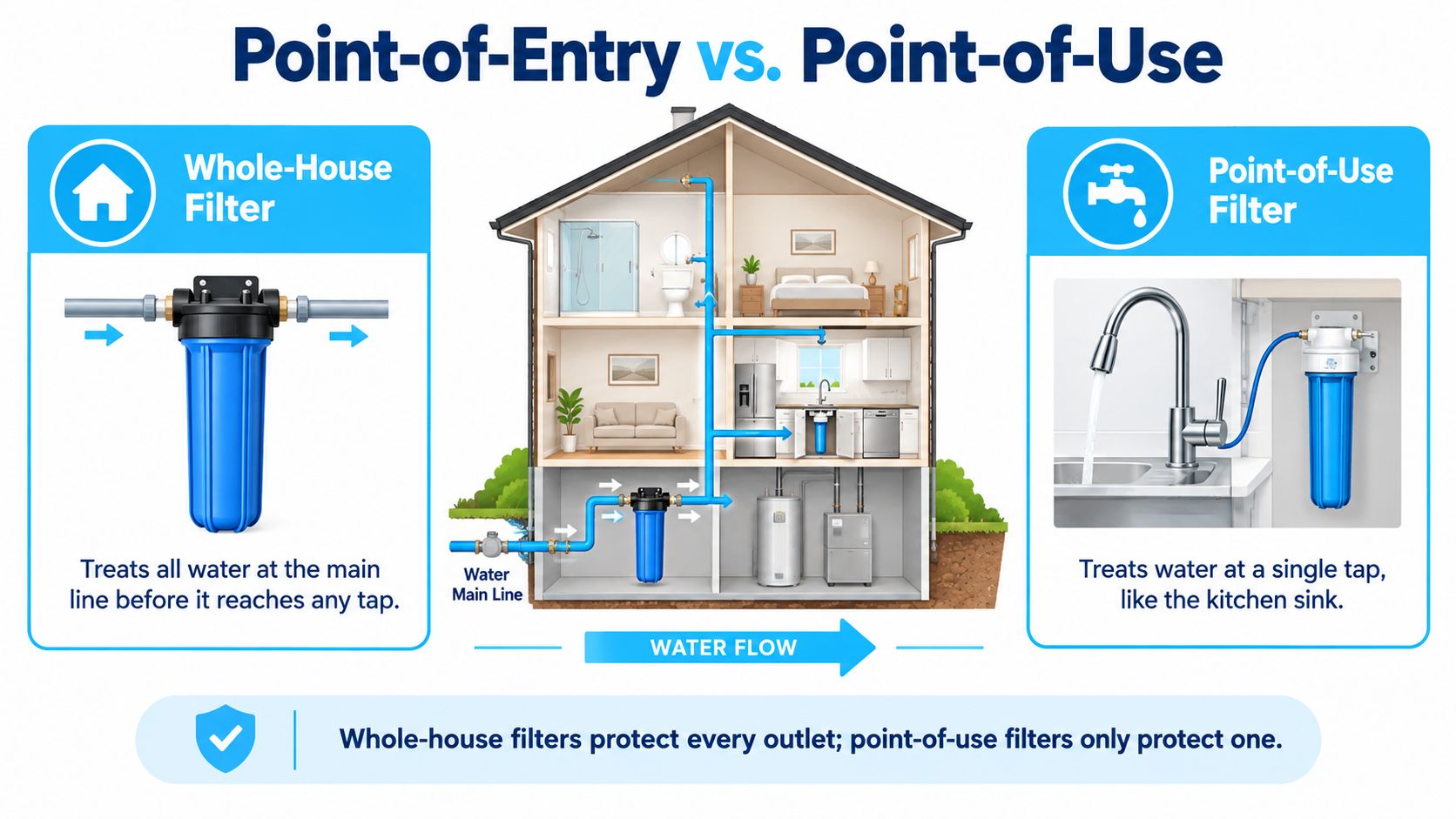
Contamination isn't just a problem for remote wells. A 2023 survey in one California valley found total coliforms in a shocking 50% of tap-water samples and 41% of school fountains. It’s a powerful reminder of how widespread these invisible threats can be. This is exactly why regular testing is so important for catching risks before they turn into health problems. You can discover more about these microbial survey findings and what they mean for public health.

Bottom line: if an at-home kit comes back positive, your very next step should be to confirm it with a professional lab test. Think of the home kit as the smoke alarm—it tells you there might be a problem. The lab test is the firefighter who comes in to confirm if there’s a real fire and where it’s coming from. Once you have that confirmation, you can confidently move forward and choose the right filtration solution for your home.

Comparing Filtration Technologies That Stop Bacteria

So, your water test came back positive for coliform bacteria. The next logical step is to pick the right shield to protect your home's water supply. This isn't a job for your standard pitcher filter; those are great for taste and odor, but they won't touch microscopic threats like bacteria. You need a system specifically built for the task.

Let's dive into the heavy hitters—the proven technologies that either physically block bacteria or neutralize them completely, making sure your tap water is safe to drink.

The Power of Inactivation: UV Disinfection

Think of a UV disinfection system as giving bacteria a lethal sunburn. Water flows through a chamber where it's blasted with a powerful UV lamp. This intense light zaps the DNA of bacteria, viruses, and other nasty microorganisms, turning them into harmless, sterile zombies.

It's important to understand that this process doesn't remove the bacteria; it just renders them sterile and harmless. They can't reproduce or make you sick. The biggest plus here is that UV is a chemical-free process, so it doesn't change the taste or smell of your water one bit.

  • Pros: Extremely effective, with a 99.99% kill rate against a huge range of pathogens. It adds no chemicals, requires low maintenance (just an annual bulb change), and doesn't waste any water.
  • Cons: It needs electricity to run and won't work well in cloudy or murky water, as sediment can literally shield bacteria from the UV light. It also doesn't remove other contaminants like chlorine or heavy metals.
  • Best For: Well water owners who need a reliable, whole-house defense against microbiological threats. It's almost always paired with a sediment pre-filter to ensure the UV light has a clear shot at the contaminants.

The Ultimate Sieve: Reverse Osmosis

Reverse Osmosis (RO) is less of a zapper and more of an impenetrable barrier. It works by using high pressure to force water through an incredibly fine membrane. The pores in this membrane are minuscule—around 0.0001 microns—which is so small that bacteria, viruses, lead, chlorine, and even dissolved salts are left behind and flushed away.

RO systems are the champions of purification, producing exceptionally clean water. The trade-off is that the process is slow, which is why they're usually installed as point-of-use systems under the kitchen sink, feeding a dedicated faucet for drinking and cooking water.

Key Takeaway: The difference between disinfection (UV) and filtration (RO) is critical. UV zaps bacteria, rendering them harmless but leaving them in the water. RO physically blocks and removes them, flushing them away with the wastewater.

Before you choose a system, you need to be certain about what's in your water. The infographic below shows the two main ways to confirm contamination.

As you can see, a full lab test gives you the complete picture, while a home kit is great for a quick, preliminary check.

Comparing Water Filter Technologies for Coliform Removal

To make sense of all the options, it helps to see them side-by-side. This table breaks down the most effective methods for getting rid of coliform bacteria, comparing how they work, how well they perform, and what they'll cost you.

Technology How It Works Effectiveness on Coliforms Pros Cons Best For
UV Disinfection Scrambles microbial DNA with ultraviolet light, rendering them harmless. Very High (99.99% inactivation) No chemicals, no wastewater, low maintenance, keeps healthy minerals. Requires electricity, ineffective in cloudy water, doesn't remove other contaminants. Whole-house treatment for well water with known biological contamination.
Reverse Osmosis (RO) Forces water through a semipermeable membrane with tiny pores (0.0001 microns). Extremely High (Physical removal) Removes a vast range of contaminants including bacteria, viruses, metals, and salts. Wastes water, removes healthy minerals, slower flow rate, requires a storage tank. Point-of-use (e.g., under-sink) systems for the purest possible drinking water.
Ultrafiltration (UF) Pushes water through a hollow fiber membrane with pores of 0.01-0.1 microns. High (Physical removal) Blocks bacteria and viruses without wasting water or removing minerals. Doesn't remove dissolved contaminants like salts, chlorine, or lead. Point-of-use or whole-house systems where mineral retention is desired.
Ceramic Filters Uses the natural, complex pore structure of ceramic to physically trap bacteria. High (Physical removal) Inexpensive, no electricity needed, long-lasting and cleanable filter elements. Slow filtration rate, can be brittle, requires regular cleaning to prevent clogging. Gravity-fed countertop units, portable filters, and emergency preparedness.
Distillation Boils water to create steam, leaving contaminants behind, then condenses it back to liquid. Extremely High (Complete removal) Removes nearly all contaminants, including bacteria, minerals, and heavy metals. Very slow process, high energy consumption, removes healthy minerals. Creating small batches of highly purified water for specific uses (not practical for whole-house).

Each of these technologies offers a solid defense against coliforms, but the right one for your home depends on your specific water test results, your budget, and how you use your water every day.

Other Effective Technologies

While UV and RO get most of the attention, a few other technologies are excellent at stopping coliform bacteria in their tracks.

Ultrafiltration (UF)

You can think of Ultrafiltration as a slightly less extreme version of Reverse Osmosis. Its membrane has larger pores (around 0.01 to 0.1 microns), but that's still more than small enough to physically block bacteria, parasites, and even some viruses.

Unlike RO, UF systems don't need a storage tank and don't produce wastewater, which makes them much more efficient. The downside is that they won't remove dissolved minerals or salts, so the water's mineral content remains unchanged.

Ceramic Filters

These classic filters rely on the natural, maze-like pore structure of ceramic to trap contaminants. The pore size is small enough to physically block bacteria and larger protozoan cysts. You'll often find them in gravity-fed countertop systems or portable filters, making them a fantastic choice for renters or for your emergency prep kit.

Distillation

This method is a perfect imitation of the Earth's natural water cycle. Water is boiled, turning it into steam and leaving everything else—bacteria, minerals, you name it—behind. The steam is then cooled and condenses back into pure, clean water. While it’s incredibly effective, distillation is slow and uses a lot of energy, making it impractical for a whole-house solution but great for producing small amounts of purified water.

Your Homeowner's Selection Checklist

Feeling a bit buried under all the technical specs and different options? Let's cut through the noise. This checklist is designed to walk you through the process, turning what seems complicated into a series of clear, manageable steps.

Think of it as your roadmap. We’ll go step-by-step, making sure you’ve covered all the important bases before you decide on the right water filter for coliform bacteria for your home.

Step 1: Confirm the Contamination

Before you spend a dime on equipment, you need to know exactly what you’re dealing with. A positive lab test is your non-negotiable starting point.

  • Get a Lab Test: At-home kits are fine for a quick check, but a state-certified lab gives you the definitive answer. It provides precise, reliable results, telling you if you have total coliforms, fecal coliforms, or even E. coli.
  • Understand Your Results: What kind of bacteria shows up will determine how quickly you need to act. Any sign of E. coli means you need a serious solution, and you need it now.
  • Identify the Source: If you're on a well, a positive test is your cue to inspect the wellhead, casing, and any nearby septic systems for problems. If you're on city water, the issue could be somewhere in your home's own plumbing.

Step 2: Decide Your Scope of Protection

Now, think about where you need clean water. Are you just worried about drinking and cooking, or do you want every tap in the house to be safe? This is the point-of-use vs. point-of-entry decision.

Point-of-Use (POU) Systems: These systems treat water at a single spot, like your kitchen faucet.

  • Examples: An under-sink reverse osmosis unit or a countertop water distiller.
  • Best For: When you only need purified water for drinking and cooking. They're also a great option for renters who can't make major changes to the plumbing.

Point-of-Entry (POE) Systems: Often called whole-house systems, these are installed right where the main water line enters your home.

  • Examples: A whole-house UV disinfection system, usually installed with a sediment filter right before it.
  • Best For: When you want every single tap—from the kitchen and bathrooms to the shower and laundry—to be protected. This is the gold standard for anyone dealing with a contaminated well.

Step 3: Match the Filter to Your Water Source

Where your water comes from makes a huge difference. Private wells and city water supplies have completely different challenges, so they need different solutions.

The EPA has a zero-tolerance policy for E. coli or fecal coliforms in public drinking water. A single positive sample is a violation. This standard underscores the importance of choosing a filter that guarantees complete removal or inactivation.

  • For Well Water: The biggest threat is almost always microbial. A whole-house UV disinfection system is the industry go-to, and you'll almost always need a sediment pre-filter to make sure the UV light can do its job without interference.
  • For City Water: While bacteria aren't as common, old pipes or water main breaks can cause problems. A point-of-use system, like a good reverse osmosis filter under the kitchen sink, is usually more than enough to handle this while also removing other city water contaminants like chlorine.

Step 4: Verify Certifications and Plan for Maintenance

Don't just take a manufacturer's word for it. You need proof from a third-party that the system actually performs as advertised.

  • Look for NSF/ANSI Certifications: These certifications are your best guarantee.
    • NSF/ANSI 53: Certifies that a filter can reduce specific health-related contaminants, including cysts like Giardia.
    • NSF/ANSI 55: This one is specifically for UV systems. You want Class A, which is certified for microbial disinfection. Class B systems are not.
    • NSF/ANSI 58: The standard for reverse osmosis systems, certifying their ability to reduce a long list of contaminants.
  • Consider Long-Term Costs: Get a clear picture of the maintenance schedule and costs. A UV system needs a new bulb every year (around $50-$150), while an RO system will need its filter cartridges replaced periodically (typically $100-$300 annually).

By walking through this checklist, you can confidently choose a system that delivers certified protection. For more detailed comparisons and recommendations, you can find a ton of expert water filter advice to help you find the perfect fit for your family.

Common Questions About Coliform Water Filters

Finding out you have coliform bacteria in your water can be a pretty stressful experience. Suddenly, you're faced with a whole host of questions you never thought you'd have to ask. Don't worry, you're not alone. We've compiled the most common questions we hear from homeowners to give you the clear, straightforward answers you need to handle this.

Can a Brita or Standard Pitcher Filter Remove Coliform Bacteria?

This is probably the most important question we get, and the answer is a hard no. Your standard Brita-style pitcher filter is designed to make your water taste and smell better. They use activated carbon, which is great for pulling out things like chlorine.

But when it comes to microscopic bacteria, they just don't cut it. The pores in those filters are way too big to physically stop something as small as a coliform bacterium. Thinking a pitcher filter will protect you is a dangerous mistake. You absolutely need a system that's specifically built and certified for microbiological purification, like UV, reverse osmosis, or a certified sub-micron filter.

Do I Need a Whole-House System for a Positive Coliform Test?

Not necessarily, but it’s usually the most surefire way to protect your entire home. It really boils down to where the contamination is getting in. Your first move should always be to try and figure out the source.

  • Localized Problem: If you find out the bacteria are only showing up at one faucet (like the kitchen sink), a point-of-use (POU) system could be all you need. An under-sink reverse osmosis or UV unit can treat the water right where you use it for drinking and cooking.
  • System-Wide Problem: On the other hand, if the bacteria are coming from your well itself or your main water line, then a point-of-entry (POE), or whole-house, system is the only way to go. This puts a barrier up for your entire home, protecting every tap, showerhead, and appliance from the contaminated water.

What Is the Difference Between Disinfection and Filtration?

This is a fantastic question because it gets right to the heart of how these systems work. People often use the terms interchangeably, but they describe two totally different ways of dealing with contaminants.

Filtration is a physical barrier. It’s like a bouncer at a club door. The filter membrane has microscopic pores that are small enough to physically block bacteria and other contaminants while letting clean water pass through. Reverse osmosis is a classic example of this.

Disinfection is more like a neutralization process. It doesn't remove the microbes, but it zaps them so they can't hurt you. A UV purifier is the perfect example—it uses ultraviolet light to scramble the DNA of bacteria and viruses, making it impossible for them to reproduce and cause illness. They're left in the water, but they're completely harmless.

Often, the best systems use a one-two punch of both. You might have a sediment filter to get rid of physical debris, which then flows into a UV chamber that disinfects whatever's left.

Expert Insight: The EPA has a zero-tolerance policy for E. coli or fecal coliforms in drinking water. A single positive sample is considered a violation of federal standards. This strict rule is why choosing a system that provides complete disinfection or removal is non-negotiable for your family's health.

How Often Should I Re-Test My Water After Installing a Filter?

Getting a new system installed is a huge relief, but you're not quite at the finish line. The only way to know for sure that your system is still doing its job is through regular testing.

Here’s a simple schedule to follow:

  1. Right After Installation: Test your water as soon as the system is up and running. This is a critical step to confirm the installation went smoothly and the unit is working as advertised.
  2. Annually for Well Owners: If you're on a private well, you're the one in charge of your water quality. We strongly recommend testing for coliforms at least once a year to keep an eye on your groundwater.
  3. After Major Events: You should always re-test if something happens that could affect your well or plumbing. This includes things like major plumbing repairs, nearby flooding, or if you ever notice a sudden change in how your water tastes, smells, or looks.

Consistent testing isn't just a suggestion; it’s a core part of keeping your home's water safe. It's how you ensure that investment in a water filter for coliform bacteria keeps paying off for years to come.


Ready to find the perfect filtration solution for your home? The experts at Water Filter Advisor have done the research for you, with in-depth reviews and easy-to-understand guides on everything from UV systems to reverse osmosis. Take the guesswork out of water safety and explore your options today at WaterFilterAdvisor.com.

A Homeowner’s Guide to Filters That Remove Fluoride

When it comes to getting fluoride out of your home’s drinking water, here's the straight truth: your standard Brita-style pitcher filter just isn't going to get the job done. To really take on this specific contaminant, you need a filtration system built for the task. It's a special ops mission, and you need the right gear.

The most reliable, proven technologies are Reverse Osmosis (RO), Activated Alumina, and Bone Char Carbon. Each one uses a completely different process to grab and remove those tiny fluoride ions, ensuring your tap water is as pure as you want it to be.

Finding the Right Fluoride Filter for Your Home

A white water filter system on a modern kitchen counter with a glass of water and a faucet.

Picking the right water filter can feel like navigating a maze, but it’s simple when you know the secret: fluoride is a dissolved mineral. This means it behaves very differently in water than the chunky stuff like chlorine or sediment that most basic filters are designed to catch.

Think of it this way: a standard carbon filter is like a fishing net trying to catch grains of sand. The sand (our fluoride) is so fine it slips right through the holes. To actually filter out fluoride, you need a method with a much, much finer "net"—or one that can attract the fluoride ions like a magnet.

The Proven Technologies

This is where the three heavy hitters come into play. Each one has a unique superpower for tackling fluoride, and understanding their different approaches is the first step to choosing your champion.

Here's a quick look at how they work:

  • Reverse Osmosis (RO): This high-tech method uses serious pressure to force water through a special membrane packed with microscopic pores. Water molecules get VIP access, but fluoride and other dissolved solids are left behind at the velvet rope.
  • Activated Alumina (AA): This filter media acts like a specialized magnet for fluoride. As water passes over it, fluoride ions are literally pulled out of the water and stick to the alumina surface.
  • Bone Char Carbon: This is an all-natural media made from charred animal bone. It works through a process called adsorption, where fluoride ions chemically bond to its unique surface.

Understanding these core technologies is essential. You'll see a lot of products out there making big claims, but only filters using one of these three methods have been consistently proven to slash fluoride levels in your home's drinking water.

To give you a quick, at-a-glance comparison, the table below lines up these top methods side-by-side. It focuses on what matters most to homeowners—how well they work, what they cost, and where they make the most sense in your home. This should give you a solid starting point before we dig into the details of each.

Comparing Top Fluoride Removal Technologies

Here's a quick comparison of the most effective filter types for removing fluoride, highlighting their performance, cost, and best applications for homeowners.

Filtration Technology Fluoride Removal Rate Ideal Application Average Cost
Reverse Osmosis (RO) Up to 99% Under-sink systems for drinking/cooking water. Moderate to High
Activated Alumina Up to 98% Both under-sink and whole-house systems. Moderate
Bone Char Carbon Up to 90% Often used in countertop or pitcher-style fluoride filters. Low to Moderate

As you can see, each has its strengths. Now, let’s get into the nitty-gritty of how each one performs in a real-world home setup.

Why Your Standard Water Filter Can't Remove Fluoride

A white water filter pitcher and glass of water on sand, with a fishing net and a banner: "STANDARD FILTERS FAIL".

It's a mistake anyone could make. You've got that water pitcher in the fridge or a simple filter screwed onto your faucet, and you assume it’s taking care of everything. After all, you bought it to make your water safer, right? But when it comes to fluoride, that's almost never the case. Most standard filters just aren't built for the job.

The problem comes down to the very nature of fluoride in your water. Fluoride is a dissolved ionic mineral. Think about stirring salt into a glass of water—it vanishes, becoming one with the liquid. You can't see it, and you can't strain it out with a coffee filter.

That's exactly how your typical activated carbon filter sees fluoride. Imagine the filter is a fishing net. It's fantastic at catching the "big fish" like chlorine molecules, which are large enough to get snagged easily. It also grabs sediment and other gunk that makes water taste and smell off. But those tiny, dissolved fluoride ions? They're like grains of sand, slipping right through the holes.

The Science of What Slips Through

Standard activated carbon filters work using a process called adsorption. It’s a surface-level action where contaminants like chlorine literally stick to the carbon's massive internal surface. It's a bit like how lint clings to a sweater.

But this method is completely useless against dissolved minerals like fluoride. The fluoride ions just don't have the right chemical properties to "stick" to the carbon. This is the fundamental reason why your go-to pitcher filter can make your water taste a whole lot better, but leaves the fluoride level completely unchanged.

To actually pull fluoride out, you need a different game plan entirely. You need a filter that can either:

  • Physically block the ions with pores so tiny they can't pass through (like Reverse Osmosis).
  • Chemically grab and bond with the fluoride ions (like Activated Alumina or Bone Char).

The core takeaway is simple: standard filters target taste and odor by removing large contaminants. Filters that remove fluoride are specialized systems designed to target tiny, dissolved minerals that basic filters can't even see.

A Market Built on Two Sides of the Same Coin

It's a strange situation. While many of us are actively looking for filters that remove fluoride, a massive global industry is paid to do the exact opposite. Utilities across the United States and Australia deliberately add fluorosilicic acid to public water supplies to promote dental health.

This practice supports a market that's projected to be worth US$161.8 million by 2025, with water treatment making up almost half of that demand. This constant addition of fluoride is what directly fuels our need for specialized home filtration. It’s created a unique cycle of treatment and removal. You can dig into the scale of the fluorosilicic acid market over on fluoridealert.org.

Getting this distinction is the first step to avoiding products that don't work and money that's better spent elsewhere. Knowing what fails—and why—is the key to finding a solution that actually gets the job done.

The Big Three: A Look at Proven Fluoride Removal Methods

So, your trusty pitcher filter isn't cutting it for fluoride. That’s okay—it was never really designed for that job. Now, let’s talk about the heavy hitters, the specialized technologies that are actually built from the ground up to target and remove fluoride from your water.

When you get serious about filtering fluoride, there are really only three games in town. These are the methods that have been proven time and again in home water systems.

We’re going to break down each one, but don't worry, we'll skip the dense, jargon-filled textbook explanations. Instead, I'll give you some simple analogies to help you understand exactly how they work, what they're great at, and where you might run into some trade-offs.

Reverse Osmosis: The Bouncer of Water Filtration

Think of your water supply as an exclusive club, and only the purest water molecules can get inside. Reverse Osmosis (RO) is that huge, no-nonsense bouncer standing at the velvet rope, checking IDs and turning away anyone who isn't on the list.

An RO system uses the water pressure in your pipes to force water through a special semipermeable membrane. This isn't just any filter material; it's a sheet engineered with microscopic pores so incredibly small that almost nothing besides H₂O can pass through.

Bigger molecules—like dissolved salts, heavy metals, and of course, fluoride ions—are physically stopped in their tracks. They get denied entry and are rerouted down a separate drain line. What makes it past the bouncer is some of the purest water you can get.

  • The Good: RO is the undisputed champion of purity. These systems routinely remove 95% to 99% of fluoride, along with a massive list of other contaminants like lead, chlorine, arsenic, and nitrates.
  • The Catch: This level of filtration has a couple of strings attached. RO systems create wastewater (the stuff that gets "bounced"), and they require their own dedicated storage tank and faucet, which usually gets installed under your kitchen sink.

It's hard to overstate just how popular reverse osmosis has become for households looking to get serious about their water quality. RO systems now make up about 29% of the entire global water treatment market, giving them the biggest piece of the pie worldwide. The main reason? Sheer performance. A well-designed RO unit can strip out up to 99% of dissolved contaminants, including fluoride. This incredible effectiveness has made RO a go-to solution, especially in areas where fluoride levels in the groundwater are higher than the 1.5 mg/L guideline set by the WHO. You can dig into more stats on the water filtration market over at zionmarketresearch.com.

Activated Alumina: The Fluoride Magnet

If RO is the bouncer, then Activated Alumina (AA) is more like a high-powered, specialized magnet. It doesn’t physically block contaminants with a barrier. Instead, it pulls them right out of the water.

The filter itself is filled with a highly porous form of aluminum oxide. As your water flows through the filter cartridge, fluoride ions are chemically attracted to the surface of these little alumina beads, where they stick tight. The water flows on, but the fluoride gets left behind, clinging to the filter media.

This process is called adsorption, and it’s extremely effective for zeroing in on specific contaminants. And I know what you’re thinking—aluminum? Don't worry, a properly designed and certified system won't leach any significant amount of aluminum back into your water.

One thing to keep in mind with Activated Alumina is that its performance really depends on your water's pH. It works best in slightly acidic water (pH 5.0 to 6.0), and its ability to grab fluoride can drop off if your water is on the alkaline side.

Bone Char: The Original Natural Adsorber

The last of our proven methods is Bone Char Carbon, which is actually one of the oldest water purification tricks in the book. This filter media is made by charring animal bones at incredibly high temperatures without much oxygen, a process that creates a highly porous carbon material with a massive amount of surface area.

Bone char works a lot like Activated Alumina through the process of adsorption. But it has a secret weapon called hydroxyapatite. The chemical structure of hydroxyapatite has a natural, powerful attraction to fluoride and heavy metals, causing them to bond right onto the bone char's surface.

For centuries, bone char has been used not just for water but in other industries (like sugar refining) for its amazing purification abilities. It’s particularly good at removing fluoride, lead, arsenic, and chlorine.

  • The Good: It’s a very effective and completely natural way to filter water without any complex machinery. It’s also great at reducing a whole cocktail of common contaminants.
  • The Catch: Its fluoride removal rate, while good, typically maxes out at around 90%, which is a little less than what you can get from a top-tier RO or AA system. The quality of the bone char media can also vary a bit from one brand to another.

Each of these three methods will get you to your goal of fluoride-free water, but they all take a different road to get there. Getting a handle on these key differences is the first step in picking the perfect system for your home, your budget, and your water.

Now, let's stack these three technologies side-by-side to make the comparison even clearer.

A Deep Dive into Fluoride Filtration Technologies

Choosing a filter isn't just about picking the one with the highest removal rate. You also have to consider installation, maintenance, cost, and how it fits into your daily life. This table breaks down the key differences between the "big three" fluoride filters to help you see which one truly fits your needs.

Feature Reverse Osmosis (RO) Activated Alumina (AA) Bone Char Carbon
Fluoride Removal Rate 95% – 99%+ Up to 95% Up to 90%
How It Works Filtration: Pushes water through a micro-porous membrane, physically blocking contaminants. Adsorption: Fluoride ions chemically stick to the surface of the alumina media. Adsorption: Fluoride and heavy metals bond to the hydroxyapatite in the carbon structure.
Other Contaminants Removed Very broad spectrum: lead, arsenic, chlorine, nitrates, pesticides, pharmaceuticals, and many more. Primarily targets fluoride and arsenic. Can reduce some other contaminants. Effective for fluoride, lead, arsenic, chlorine, and other heavy metals.
Typical Installation Under-sink (Point-of-Use) with a dedicated faucet and storage tank. More complex installation. Can be used in countertop, under-sink, or whole-house (Point-of-Entry) systems. Can be used in countertop, under-sink, or whole-house systems.
Water Waste Yes. Produces wastewater (brine) that is flushed down the drain. No. Does not produce wastewater during the filtration process. No. Does not produce wastewater.
Impact on Water pH Can make water slightly acidic by removing alkaline minerals. No. Does not significantly alter water pH. No. Does not significantly alter water pH.
Best For Homeowners who want the absolute highest level of purity and need to remove a wide range of contaminants. Homeowners specifically targeting fluoride and arsenic who prefer a system with no water waste. Homeowners looking for a natural, effective filtration method without water waste.

As you can see, there's no single "best" filter—just the best one for your specific situation. If you're after ultimate purity and don't mind a more involved installation, RO is a powerhouse. But if you're focused on fluoride and want a simpler, zero-waste system, Activated Alumina or Bone Char are fantastic and highly effective alternatives.

Choosing Between Under-Sink and Whole-House Systems

So you’ve landed on the right filter technology for your needs. Great. Now for the next big question: where do you put it? This really comes down to a choice between treating the water at one specific faucet or treating every single drop that comes into your house.

It’s the classic showdown between a Point-of-Use (POU) system and a Point-of-Entry (POE) system. There’s no single right answer—it all depends on what you're trying to accomplish.

Think of your home's plumbing like a tree. A whole-house system (POE) gets installed right at the main trunk where water enters your home. It purifies all the water flowing to every branch—every shower, every sink, every appliance. An under-sink system (POU), on the other hand, is like hanging a small, specialized filter on just one of those branches, focusing only on the water you'll be drinking and cooking with.

Point-of-Use: The Targeted Approach

For most folks who are specifically concerned about fluoride, an under-sink system is the way to go. These units, which often use Reverse Osmosis, are installed right in the cabinet under your kitchen sink. They feed a small, dedicated faucet on your countertop, giving you purified water on demand.

This approach is smart, efficient, and easy on the wallet. You get incredibly pure, fluoride-free water exactly where you need it most—for drinking, making coffee, boiling pasta, and filling up water bottles. You’re not wasting money filtering the water you use to flush toilets or wash your clothes.

The chart below gives you a quick visual on how to decide between the most common filter types, which are almost always found in these targeted under-sink setups.

Fluoride filter decision guide flowchart presenting reverse osmosis, activated alumina, and bone char options.

As you can see, whether you go with Reverse Osmosis for the highest level of purity or an adsorption media like Activated Alumina, the technology is perfectly suited for a specific point of use.

Whole-House: The Comprehensive Solution

A whole-house system is a much bigger deal. We're talking a larger investment upfront and a more involved installation. These systems are workhorses, built to handle the high flow rates needed to treat thousands of gallons for your entire home.

Why would someone go this route for fluoride? The main reason is if you have serious concerns about skin absorption during baths and showers, or if you simply want the peace of mind of knowing there’s no fluoride in your laundry or dishwasher water.

Keep in Mind: While the skin can absorb certain things from water, fluoride absorption through bathing is generally considered pretty minimal for most people. The primary way we take in fluoride is by drinking it. This is why a targeted under-sink system is the most practical choice for the vast majority of families.

So, how do you decide? It really comes down to weighing a few key factors:

  • Cost: Under-sink systems are way more affordable. The initial price is lower, and the replacement filters won't hit your wallet as hard.
  • Installation: Many homeowners can tackle an under-sink filter installation as a DIY project over a weekend. A whole-house system? Not so much. It almost always requires a professional plumber because it involves cutting into your home's main water line.
  • Maintenance: Both systems need filter changes, but the big, heavy cartridges for whole-house units are more expensive and can be a real pain to swap out.
  • Your Goal: Is your main priority pure drinking water? An under-sink system is the clear winner. Do you want fluoride gone from every single tap, no exceptions? A whole-house system is the only way to make that happen.

When you're looking at different home water solutions, it's sometimes helpful to think about the bigger picture of your home's plumbing. You might need to coordinate a filter installation with other work. A company that provides a range of services, like water heater installation services, will have a good understanding of how all these systems tie together.

Ultimately, the choice is yours. Once you're clear on what you want to achieve with your water, you can confidently pick the system that’s the perfect match for your family’s needs and your budget.

Your Smart Buyer's Checklist for Fluoride Filters

A flat lay of a desk with coffee, a clipboard with a 'Filter Checklist' and a pen.

You've waded through the different technologies and you've got a good idea of where you want to install your filter. Now for the fun part—actually picking one out. But before you hit that "buy" button, it pays to run through a quick final checklist. This will make sure the system you choose is a genuine performer that actually delivers, without any nasty surprises down the road.

Think of it like a pre-purchase inspection. A great filter isn't just about a high removal rate; it’s about having proof of that performance, understanding the long-term costs, and finding a maintenance routine you can actually live with. Let's walk through the essential checkpoints.

Look for Third-Party Certification

First things first: verify the manufacturer's claims. The easiest way to do this is by looking for independent, third-party certifications. In the water filter world, the gold standard comes from groups like the NSF (National Sanitation Foundation) and ANSI (American National Standards Institute). These organizations don't just take a company's word for it—they put these filters through some seriously tough testing to prove they do what they claim.

When you're shopping for filters that remove fluoride, these are the key certifications you want to see:

  • NSF/ANSI 53: This is the big one for health-related contaminants, including fluoride. A filter with this stamp of approval has proven it can reduce high fluoride levels down to the EPA's maximum allowable limit of 4 mg/L.
  • NSF/ANSI 58: This standard is specifically for Reverse Osmosis (RO) systems. It's a really comprehensive certification that covers everything from fluoride reduction to the system's structural integrity and overall efficiency.
  • NSF/ANSI 42: While this one is more about aesthetics—like getting rid of that chlorine taste and smell—it's still a great sign of a quality product. You'll often see the best fluoride filters carry this certification alongside NSF 53 or 58.

Be wary of vague claims like "tested to NSF standards." True certification means you should be able to look up the product right on the official NSF website.

Scrutinize the Performance Data Sheet

Every legitimate water filter comes with a Performance Data Sheet. This is the spec sheet, the nitty-gritty document that spells out exactly what the filter removes and just how well it does it. You can usually find it on the product page online or tucked inside the box.

Don't just give it a quick glance—actually read it. Hunt for the line item for "Fluoride" and check the average percentage reduction. A top-tier system should be removing over 90% of fluoride, easy. This sheet is basically the manufacturer’s contract with you, so if a company can't or won't provide one, that's a huge red flag.

Calculate the True Cost of Ownership

The price you see on the website is just the beginning. The real cost of any water filter is what you spend over its entire life. This is called the total cost of ownership, and figuring it out now can save you a ton of money and frustration later on.

To get the real number, you need to add up:

  1. Initial Purchase Price: The upfront cost of the system.
  2. Replacement Filter Costs: This is the biggest ongoing expense. How much are the replacement cartridges?
  3. Filter Lifespan: How often do they need to be changed? Every six months? Every few years? A cheap filter that needs new cartridges constantly can end up costing you more than a pricier unit with long-lasting filters.

Think about it this way. System A is $150, but needs a $60 filter change every 6 months. System B is $300, but its $100 filter only needs replacing once a year. After two years, you’d have spent $390 on System A ($150 + 4x$60), but only $500 on System B ($300 + 2x$100). Knowing these numbers helps you make a smarter long-term investment.

Check Maintenance Needs and Ease of Use

Last but not least, be honest with yourself about maintenance. How easy is it to swap out the filters? Do you need a bunch of special tools or have to shut off the main water line to your house? Some under-sink RO systems have brilliantly simple twist-off cartridges, while others are a bit more involved.

Jump on YouTube and watch a video of the filter change process if you can, or at least read some customer reviews. A system that's a complicated, messy hassle to maintain is one you're going to put off dealing with, and that defeats the whole purpose.

For even more tips on picking the right unit, check out our general advice on water filters to help guide your decision. By running through this checklist, you can be confident you're choosing a reliable and effective solution for your home.

Common Questions About Fluoride Water Filters

Even after you've got a good handle on the technology, a few practical questions almost always come up when you’re about to pull the trigger on a filter. To help clear up any last-minute doubts, we’ve put together the most common questions we hear from homeowners. Think of these as the final pieces of the puzzle to help you move forward with confidence.

Let's dive in and tackle some of the biggest concerns.

Do Brita Pitcher Filters Remove Fluoride?

Nope. Standard pitcher filters like Brita or Pur just can't do it. These filters use a basic activated carbon, which is great for getting rid of that chlorine taste and smell, making your water more pleasant to drink. But when it comes to dissolved minerals like fluoride, they’re completely ineffective.

Imagine trying to catch salt dissolved in water with a spaghetti strainer—it's just going to pass right through. To actually grab onto fluoride ions, you need a specialized filter media like reverse osmosis, activated alumina, or bone char.

Does Boiling Water Get Rid of Fluoride?

This is a really common myth, and it's a dangerous one. Boiling water does the exact opposite of what you want. As the water boils, pure H₂O turns into steam and evaporates, but all the minerals—including fluoride—get left behind.

This actually makes the fluoride more concentrated in the water that's left. If you boil a liter of water down to half a liter, you’ve just doubled the fluoride concentration. This is a huge deal for anyone using tap water to mix baby formula or when cooking things that soak up a lot of water, like rice and pasta.

Is an Under-Sink System Enough or Do I Need a Whole-House Filter?

For most families, an under-sink system is the perfect sweet spot. If your main goal is simply to have pure, fluoride-free water for drinking and cooking, then a Point-of-Use (POU) system installed at your kitchen sink is the most effective and cost-efficient way to go.

A whole-house filter, or a Point-of-Entry (POE) system, is a much bigger and more expensive project. It's usually only necessary if you have very specific concerns about absorbing fluoride through your skin during baths and showers. Since drinking is the primary way we're exposed to fluoride, most people find that just treating the water they consume is more than enough.

Here's the bottom line: unless you have a compelling medical reason to treat every single faucet, an under-sink system delivers the best bang for your buck in terms of performance, cost, and convenience for removing fluoride.

How Can I Find Out if My Tap Water Contains Fluoride?

Knowing what you’re dealing with is always the first step. Thankfully, finding out your fluoride level is pretty straightforward.

  • For City or Municipal Water: Your local water utility is required by law to send out an annual water quality report, often called a Consumer Confidence Report (CCR). This report will list the average fluoride concentration. You can usually find it right on their website, or you can call and ask them to mail you a copy.
  • For Private Well Water: If you're on a well, you're the captain of your own ship—and that includes water testing. The only way to know for sure what your fluoride level is is to send a sample to a state-certified lab. They'll give you an exact number so you can choose the right filter for your situation.

Will a Fluoride Filter Also Remove Essential Minerals?

That’s a great question, and it comes up a lot, especially with Reverse Osmosis (RO) systems. The short answer is yes—because RO membranes are so fine, they strip out nearly everything, including beneficial minerals like calcium and magnesium.

But it’s important to keep this in perspective. We get the vast majority of our essential minerals from the food we eat, not the water we drink. While tap water can chip in a little, it’s not our main source. For anyone still concerned, many modern RO systems now come with a remineralization filter as the final step. This adds a healthy balance of minerals back into the water right before it hits your glass, which also improves the taste and pH.


At Water Filter Advisor, we're here to give you clear, research-backed advice to help you protect your family's health. Check out our detailed guides and reviews to find the perfect filtration system for your home.

Ready to find your filter? Learn more at https://www.waterfilteradvisor.com.

How to Get Rid of Calcium in Your Water: The Ultimate Homeowner’s Guide

Tired of chalky water spots and crusty faucets? The most effective way to eliminate calcium from your home's water is with a whole-house ion-exchange water softener. If you're only after pure water for drinking and cooking, a point-of-use reverse osmosis system under your kitchen sink is your best bet. This guide will break down the science, cut through the jargon, and help you choose the right filtration system to declare victory over hard water.

The Hard Truth About Your Home's Water

A kitchen sink with a faucet and dirty dishes, showing visible hard water stains and mineral deposits.

If you're locked in a never-ending battle with stubborn white spots on your glassware, constantly scrubbing crusty buildup off your showerheads, or wondering why your towels feel like sandpaper, you’re not alone. Welcome to the world of hard water, where the main villain is dissolved calcium.

This isn't some industrial pollutant; it’s a natural mineral that water absorbs as it travels through underground rock like limestone and gypsum. Whether you're on city water or a private well, this invisible mineral can infiltrate your pipes and become your home's arch-nemesis. It's the secret force behind some of your most frustrating household chores.

Why Calcium Is a Household Nuisance

While calcium is perfectly safe to drink, the high concentrations found in hard water create a host of expensive and infuriating mechanical problems. And the damage goes far beyond a few unsightly stains.

  • Appliance Sabotage: Calcium buildup, also known as limescale, forms an insulating layer on the heating elements in your water heater and dishwasher. This forces them to work harder and guzzle more energy just to reach the right temperature, leading to higher bills and premature failure.
  • Plumbing Clogs: Over time, limescale builds up inside your pipes, slowly choking off the flow of water. You might first notice a drop in water pressure, which can eventually lead to a full-blown, wallet-draining plumbing emergency.
  • Personal Care Problems: That same mineral residue doesn't just stick to pipes—it clings to your skin and hair, leaving them feeling dry, brittle, and lifeless. It also clogs pores and neutralizes soaps and shampoos, preventing them from lathering up properly.

Water hardness is one of the most common water quality headaches homeowners face. According to the U.S. Geological Survey, water with calcium levels over 120 mg/L is considered very hard. That level of hardness can slash an appliance's energy efficiency by 15-25%. The constant strain from limescale forces your machines to work overtime, shortening their lifespan and driving up your utility bills.

The frustrating cycle of cleaning, scrubbing, and replacing appliances often leads back to one root cause: hard water. By tackling the calcium at its source, you can protect your investments and simplify your daily routines.

The impact of hard water goes beyond your home's pipes and appliances. For hobbyists, managing water parameters is everything, highlighting the crucial need for specific water conditions in aquariums. It's a perfect example of how mineral content affects more than just our plumbing.

If you want to dive deeper into different filtration options, you can explore plenty of comprehensive guides and advice over at https://www.waterfilteradvisor.com.

Pinpointing Your Calcium Problem: What the Tests Reveal

Before you can declare war on hard water, you need to know exactly what you’re fighting. It’s like a doctor diagnosing an illness before prescribing medicine—guessing is not an option. Measuring the calcium level in your water gives you a specific number, and that number is the single most important factor in choosing the right filtration system.

Trying to figure out how to get rid of calcium in water without knowing your hardness level is a recipe for failure. You could end up with a system that's too weak for the job or, just as bad, an overpowered one that wastes salt and water.

Starting with Simple Home Observations

You can get a quick gut check on your water with a simple, old-fashioned soap test. Grab a clear bottle with a tight-fitting cap, fill it halfway with tap water, and add about ten drops of pure liquid soap (like castile soap, not detergent).

Shake it vigorously for 30 seconds. If you get a thick, sudsy head of foam that sticks around, your water is likely on the softer side. If all you see are a few pathetic bubbles and a cloudy, milky film, you’re definitely dealing with hard water. This won't give you a precise number, but it confirms your suspicions and tells you it's time to dig deeper.

Getting a Specific Number with Test Strips

For a more accurate measurement, home water hardness test strips are an affordable and incredibly easy option. You can grab them at most home improvement stores or online. They work just like a litmus test: dip a strip into a glass of tap water, wait a few seconds, and then compare the color to a chart on the package.

That chart translates the color into a specific hardness level, usually measured in grains per gallon (GPG). This is the magic number you need. For instance, a result of 12 GPG tells you your water is "very hard" and gives you the exact data needed to properly size a water softener.

Knowing your GPG is non-negotiable. It dictates the grain capacity of the water softener you'll need and ensures it regenerates at the right intervals, saving you money on salt and water while guaranteeing soft water on demand.

The Most Accurate Testing Methods

For the highest degree of accuracy, you have two great options. If you're on city water, your local utility is required to publish a yearly Water Quality Report (sometimes called a Consumer Confidence Report). You can usually find this on their website, detailing everything about your water supply, including its average hardness level.

If you have a private well, sending a sample to a certified water testing laboratory is the best investment you can make. This will not only give you a precise hardness reading but will also screen for other potential contaminants. It gives you a complete picture of your water's chemistry so you can choose a system that addresses all your home's needs.

Imagine this: a family buys a new, high-efficiency washing machine but is constantly frustrated because their clothes come out stiff and dingy. They blame the machine, but a simple $10 test kit reveals their water is a staggering 18 GPG. Armed with this number, they install a properly sized water softener, and suddenly, the washer performs perfectly. That small diagnostic step saved them from needlessly replacing an expensive appliance.

Alright, you've got your water test results in hand and now it's time to pick your weapon. Walking into the world of water treatment can feel overwhelming, with a bunch of technical jargon like "ion exchange" and "reverse osmosis" getting thrown around.

Let's cut through the noise. I'm going to break down the most common ways to deal with calcium in your water so you can figure out what actually makes sense for your house.

This decision tree gives you a good visual of where to start. It's all about figuring out if you have a problem first, then deciding how deep you need to go with testing.

The bottom line is simple: you have to confirm you've got hard water before you start shopping. A quick DIY test can give you a clue, but a lab analysis gives you the hard numbers you need to make a smart choice.

Ion Exchange Water Softeners: The Gold Standard

If you want to protect your entire home—we're talking pipes, faucets, showerheads, and every appliance that uses water—then a traditional salt-based water softener is the undisputed champ. This is the only method that physically yanks the hard minerals right out of your water.

They work on a principle called ion exchange. Water flows into a tank filled with resin beads coated in sodium. The calcium and magnesium in your water are like magnets to these beads, sticking to them and "kicking off" the sodium into the water.

The result? Genuinely soft water. The kind that feels silky smooth, makes soap lather like crazy, and stops scale buildup dead in its tracks. It’s a true whole-house fix that tackles the problem at its source.

Salt-Free Water Conditioners: A Different Approach

You've probably seen "salt-free water softeners" advertised. Let's be crystal clear: these are water conditioners, not softeners. They don't actually remove any calcium.

Instead, they use a clever bit of science (often called Template Assisted Crystallization, or TAC) to change the physical form of the calcium minerals. Think of it like turning sticky Velcro into smooth little crystals that can't grab onto pipes or fixtures.

This is a great way to prevent scale buildup, but the calcium is still there. You won't get that classic "slick" feel of soft water and might still see some light water spots, but it's a fantastic, low-maintenance option if you just want to protect your plumbing without adding salt.

Reverse Osmosis: For Pure Drinking Water

Maybe you're not worried about your pipes, but you want absolutely pure, amazing-tasting water for drinking and cooking. In that case, a reverse osmosis (RO) system is what you're looking for.

These are typically installed right under the kitchen sink. An RO system pushes water through an incredibly fine membrane that acts like a bouncer, blocking up to 99% of all dissolved solids—calcium included.

You get incredibly clean water from a special, dedicated faucet. The catch? It's a "point-of-use" solution. It does nothing to protect your dishwasher, shower, or water heater from scale. For extreme purity, some specialized systems like lab water purifiers for distilled water use similar, highly advanced filtration principles.

Calcium Removal Methods at a Glance

To make it even simpler, here’s a side-by-side look at how these options stack up.

Treatment Method How It Works Effectiveness on Calcium Average Upfront Cost Ongoing Maintenance
Ion Exchange Water Softener Physically removes calcium and magnesium ions, replacing them with sodium ions. Excellent. Completely removes hardness minerals for whole-house protection. $800 – $3,000+ Regular salt refills (typically every 1-2 months).
Salt-Free Water Conditioner Alters mineral structure to prevent scale formation without removing calcium. Good at scale prevention. Does not soften water or remove calcium. $600 – $2,000 Minimal. Media replacement may be needed every 3-6 years.
Reverse Osmosis System Forces water through a fine membrane to remove dissolved solids. Excellent. Removes up to 99% of calcium at a single point of use. $200 – $600 Annual filter and membrane replacements.
Magnetic Descaler Uses a magnetic field to supposedly alter mineral ions. Poor / Unproven. Lacks consistent scientific backing for effectiveness. $100 – $400 None. "Set it and forget it" installation.

As you can see, the right choice really boils down to whether you want to completely remove calcium for your whole house or just manage its effects at specific taps.

What About Magnetic Descalers?

You’ll also stumble across magnetic or electronic "descalers." These are little gadgets that you clamp onto the outside of your main water pipe. The claim is that a magnetic field changes the calcium ions so they won’t form scale.

Frankly, the science behind these is shaky at best. While some people swear they see a small difference, most independent tests and plumbing pros agree they just don't provide the reliable, long-term results you get from a real softener or conditioner. I generally tell people to save their money and invest in a proven technology.

Sizing and Selecting Your Water Filtration System

Alright, you've got your water test results in hand. Now comes the fun part: picking the right hardware to finally get rid of that pesky calcium.

This is where a little bit of planning can save you a mountain of headaches later. One of the most common—and costly—mistakes homeowners make is choosing the wrong size system. You either end up with a unit that can't keep up with demand or, just as bad, one that’s constantly wasting salt and water.

Let’s walk through exactly how to match a filtration system to your home's unique needs. Getting this right means you’ll nail that perfect balance of performance and efficiency.

Calculating Your Water Softener Grain Capacity

When you're shopping for water softeners, "one size fits all" is a recipe for disaster. The most important number you need to get familiar with is grain capacity. This tells you how many "grains" of hardness the softener can pull out of your water before it has to run a cleaning cycle, which is called regeneration.

To figure out the right capacity, you only need two things:

  • Your water hardness in grains per gallon (GPG). This is the key number from your water test.
  • Your family's daily water usage. A solid rule of thumb is 75 gallons per person, per day.

The math is actually pretty simple:
Number of People x 75 Gallons/Person x Hardness (GPG) = Total Grains Per Day

That final number is the daily workload your softener will be up against. With that, you can pick a system sized to regenerate about once a week—the sweet spot for peak efficiency.

Pro Tip: Try to find a softener that regenerates roughly every seven days. If it regenerates too often, you're just throwing money away on salt and water. If it waits too long, you risk hard water "bleeding" back into your pipes before the cycle runs.

A Real-World Sizing Example

Let's make this real. Imagine a family of four—two adults, two teenagers, and a dishwasher that seems to be running 24/7.

  • Family Size: 4 people
  • Water Hardness Test Result: 15 GPG (which is considered very hard)

Here’s how they'd calculate their daily grain requirement:
4 people x 75 gallons/person x 15 GPG = 4,500 grains per day

Since the goal is a weekly regeneration cycle, we just multiply that by seven days:
4,500 grains x 7 days = 31,500 grains

Based on this, the family should be looking for a water softener with a capacity of at least 32,000 grains. A standard 32k-grain unit would be a perfect match, easily handling their high water usage without constantly having to regenerate.

Whole-House vs. Point-of-Use: The Strategic Choice

Your next big decision is about scope. Are you trying to protect your entire home from calcium buildup, or is your main goal just to get crystal-clear drinking water at the kitchen sink?

A whole-house water softener is your go-to solution if you want to eliminate calcium everywhere. It gets installed right where the main water line enters your home, which means every faucet, showerhead, and appliance—from the water heater to the washing machine—gets treated, soft water. This is the best way to protect your plumbing and extend the life of your appliances.

On the flip side, a point-of-use (POU) system, like an under-sink reverse osmosis (RO) filter, is a more targeted approach. It delivers incredibly pure water to a single tap, which is perfect for drinking and cooking. Just remember, it won't do a thing to stop scale from building up in your pipes or dishwasher. The right choice really just depends on what problem you're trying to solve.

Look for Credible Certifications

In the world of water treatment, it’s easy for a company to make big claims. Real proof is what separates the good from the junk. To make sure you’re buying a product that actually does what it promises, always look for third-party certifications from reputable organizations.

  • For water softeners, the gold standard is NSF/ANSI 44. This certification guarantees the system effectively reduces hardness as advertised.
  • For reverse osmosis systems, look for NSF/ANSI 58. This confirms the system's ability to reduce a whole host of contaminants, including dissolved solids like calcium.

Think of these certifications as your quality-control check.

This is especially critical when you look at the global picture. The World Resources Institute has documented that 25 countries, home to a quarter of the world's population, face extreme water stress. In these areas, shrinking water supplies often lead to higher concentrations of minerals. This makes effective calcium removal a must-have for both homes and industries. You can explore the findings on high water-stress regions to learn more about these growing challenges.

Installation and Maintenance for Lasting Results

A person maintains a water softener system, pouring water into its brine tank for optimal function.

You've done the research and picked out the perfect water treatment system. That’s a huge win, but it's really only half the battle.

The truth is, a top-of-the-line softener with a sloppy installation is just a fancy, oversized paperweight. Proper setup and a little routine upkeep are what really lock in years of soft, scale-free water.

Whether you're a confident DIYer ready to roll up your sleeves or you'd rather leave it to the pros, let's walk through what it takes to get it done right.

The DIY Installation Path

If you're comfortable with basic plumbing, installing a water softener can be a totally manageable weekend project. It just requires attention to detail. The whole idea is to install the unit near your main water line—usually in the garage, basement, or a utility closet—before the line splits off to your water heater.

Before you even think about cutting pipes, make sure you've got the right gear. A smooth installation is all about having the proper tools from the start.

  • Essential Tools for the Job:
    • Pipe cutters and a deburring tool (for clean, professional cuts)
    • Two adjustable wrenches to get fittings nice and snug
    • Teflon tape for creating those crucial leak-proof seals
    • A tape measure and a level to keep everything straight
    • The right pipes and fittings for your specific plumbing (PEX, copper, or PVC)

One of the most important parts of any softener is the bypass valve. This is a godsend. It lets you route water around the softener for maintenance or repairs without shutting off water to the entire house. Trust me, you’ll be glad it's there.

On a difficulty scale of 1 to 10, I’d put a DIY softener installation around a 6 or 7. It’s definitely more involved than changing a faucet, but it's not as intense as replumbing a whole bathroom. If cutting into your home's main water line makes you nervous, it's always smarter to call a pro.

Vetting a Professional Plumber

Not into the idea of a DIY plumbing project? No problem. Hiring a qualified plumber is the most surefire way to get the job done right. But don't just hire the first person who pops up in a search.

A great installation starts with asking the right questions. When you're getting quotes, make sure you ask:

  • "How many water softener installations have you done?" (You want experience here.)
  • "Are you fully licensed and insured for this type of plumbing work?"
  • "Does your quote include all parts and labor, or will there be hidden fees?"
  • "Do you offer a warranty on your installation work?"

A plumber who gives you confident, straightforward answers to these questions is likely a pro you can trust.

A Simple Maintenance Schedule for Peak Performance

Once your system is up and running, a little routine care is all it takes to keep it working perfectly for years. Think of it like changing the oil in your car—a small task that prevents huge, expensive problems.

1. Keep the Salt Topped Off: This is your main job. Check the brine tank about once a month and add salt as needed. The golden rule is to always keep the salt level above the water line. This ensures the system can make the brine solution it needs for the regeneration cycle.

2. Clean the Brine Tank Annually: At least once a year, it’s a good idea to empty and clean out the brine tank. Over time, salt impurities can form a "salt bridge" or a layer of sludge at the bottom, which can clog up the works.

3. Check the Settings Periodically: If you suddenly notice your water feels hard again or your salt usage goes through the roof, your settings might have been knocked out of whack. Just take a look and verify the hardness level programmed into the control valve still matches your original water test results.
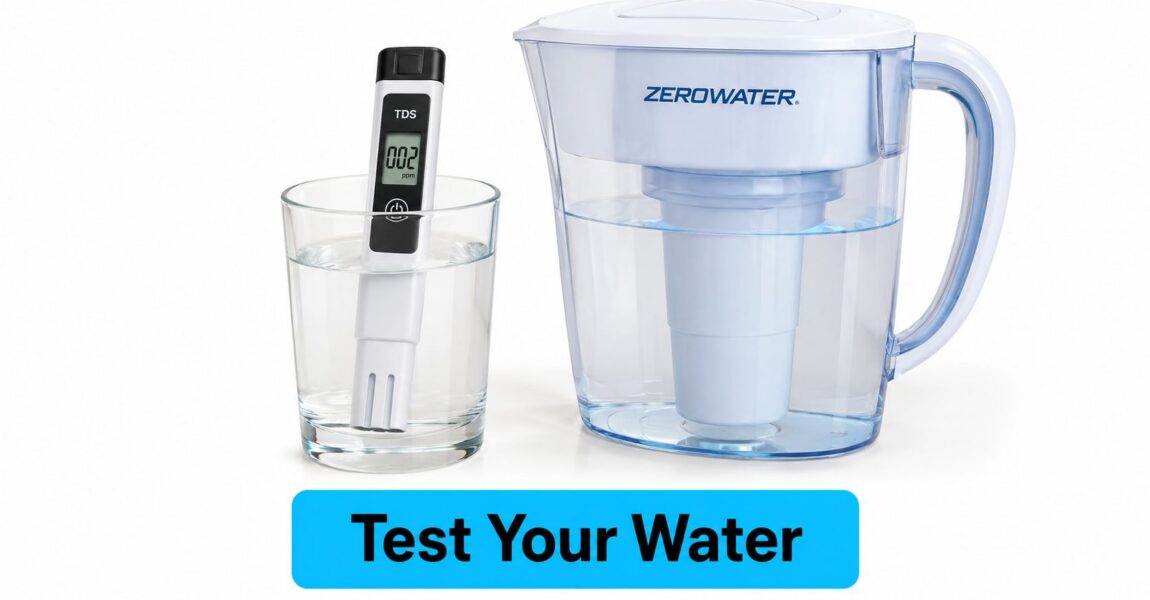
Got Questions About Removing Calcium from Water?

Even after you've done your homework on getting rid of calcium in your water, a few questions always seem to come up. Let's tackle those last-minute uncertainties and bust a few common myths so you can move forward with total confidence.

It's perfectly normal to have some lingering thoughts. You're making a pretty big decision for your home, after all, and you want to know you've covered all your bases. Here are the most common questions we hear from homeowners just like you.
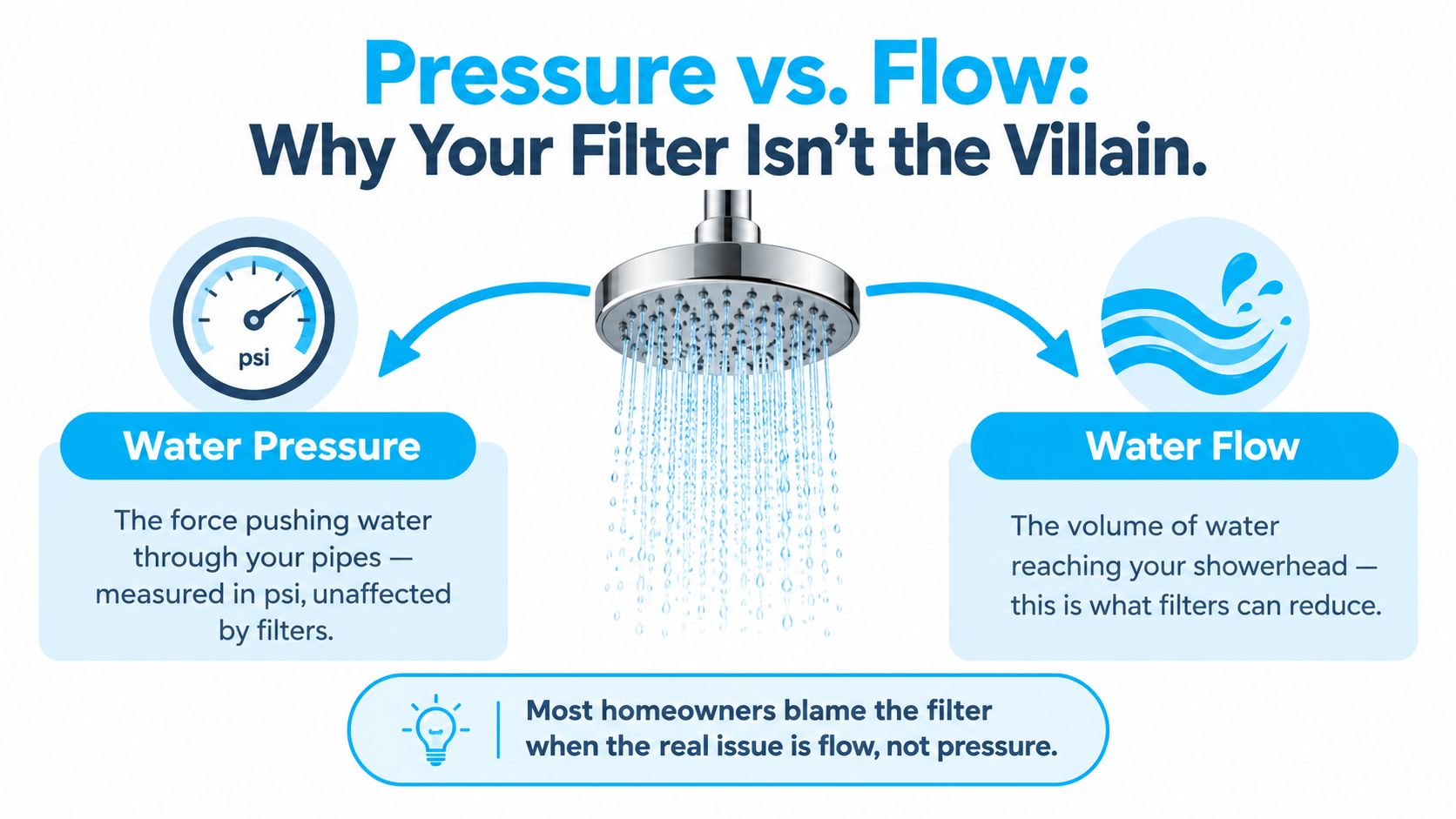
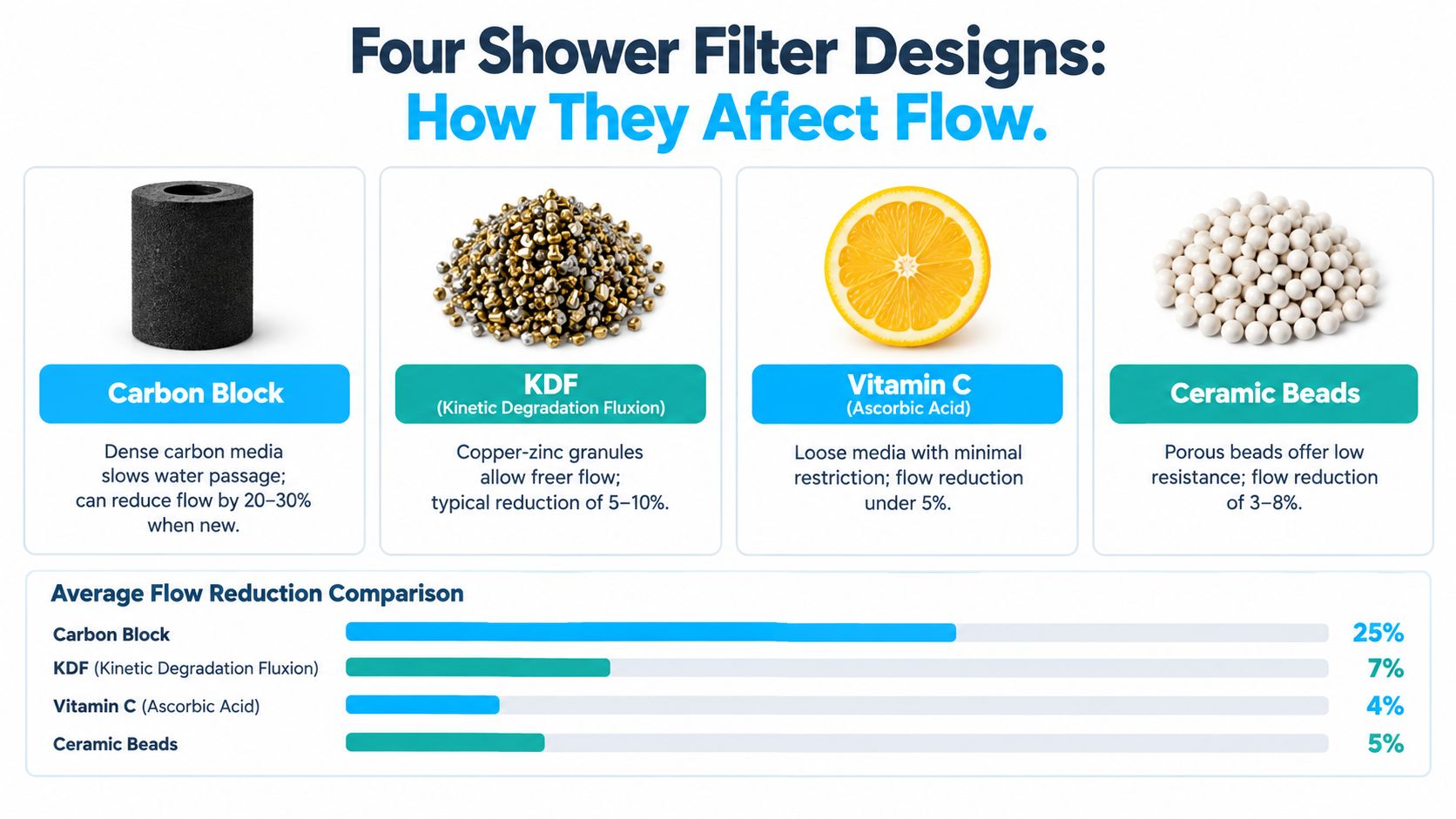
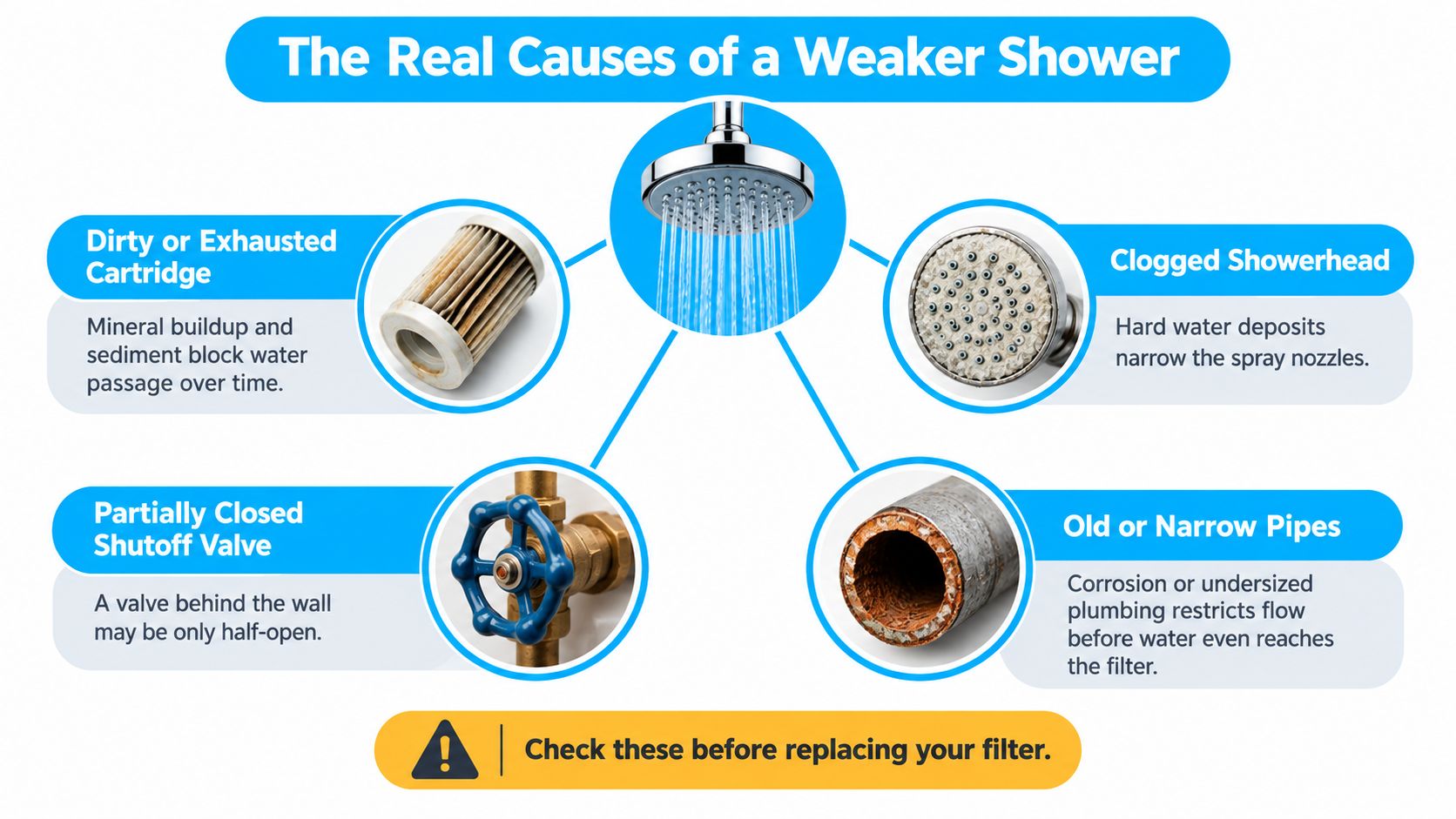
Will a Refrigerator or Pitcher Filter Get Rid of Calcium?

This is a big one, and the answer is a hard no. Your standard refrigerator filter, countertop pitcher, or the little filter you screw onto your faucet are almost always just activated carbon. Their job is to make your water taste and smell better by grabbing things like chlorine.

They simply aren't designed to capture dissolved minerals like calcium and magnesium—those minerals sail right on through. To actually pull calcium out, you need a system built for that specific job, like a water softener that uses ion exchange or a reverse osmosis system that filters water down to the molecular level.

Is It Actually Unhealthy to Drink Hard Water?

For most people, drinking hard water is totally fine. In fact, it can be a small source of essential minerals like calcium and magnesium. The fight against hard water is really about protecting your house, not your health.

The real problems are mechanical and financial. Hard water is brutal on your appliances, clogs up your pipes, and leaves that scaly film on your skin and hair. The only time a health concern might come into play is for someone with specific medical issues, like a history of kidney stones. In that case, they should definitely talk to their doctor.

I Installed a Softener, So Why Do My Dishes Still Have Spots?

This is super frustrating, but it's usually an easy fix. If you're seeing spots on "clean" dishes after putting in a new softener, a few things could be going on.

First off, a rinse aid is your dishwasher's best friend, even with soft water. It helps water slide right off the dishes so spots can't form as they dry. Second, go check the settings on your softener's control head. If the hardness level is programmed too low, the system won't regenerate often enough and some hard water can slip through.

And finally, take a look in the brine tank. The number one reason a softener stops working is because it's out of salt. No salt means the resin beads can't get recharged to do their job.

What’s the Annual Cost to Run a Water Softener?

A lot of homeowners worry about the ongoing costs, but you'll be surprised at how low they are. You're really only looking at two things: salt and a tiny bit of electricity.

A typical family of four can expect to spend somewhere between $50 and $100 a year on salt, depending on how hard their water is and how much they use. The electricity is minimal—often less than what your digital alarm clock uses.

Most people find these costs are easily covered by the savings. You’ll use less soap, detergent, and cleaning supplies, and you’ll significantly extend the life of your water heater and dishwasher, which helps you avoid having to replace them way too early.


At Water Filter Advisor, we believe everyone deserves access to clean, high-quality water. Our in-depth guides and unbiased reviews are designed to help you navigate your options and make the best choice for your family. Explore our resources to find the perfect solution for your home at https://www.waterfilteradvisor.com.

Does Reverse Osmosis Remove Chlorine From Your Water?

Yes, a reverse osmosis (RO) system is a powerhouse when it comes to getting chlorine out of your water. But here’s the twist: the famous RO membrane, the star of the show, isn't the component doing the chlorine-busting work.

The real MVP is an unsung hero—the activated carbon pre-filter that comes with every complete RO system. It’s the bouncer at the club door, handling all the chlorine before the water gets anywhere near the delicate, high-tech membrane.

Why the Pre-Filter is the Real Star of the Show

A blue pre-filter for water purification stands on a wooden kitchen counter next to a sink.

The water flowing from your kitchen tap has been treated with chlorine to kill off nasty bacteria and viruses—a standard public health practice that keeps us safe. While this is great for getting water safely to your home, it leaves behind that distinct "swimming pool" taste and smell.

Even worse, that same chlorine is public enemy number one for the heart of your RO system.

A proper home RO setup is a multi-stage affair, and it's designed this way for a very good reason. Think of the carbon pre-filter as a bodyguard for the RO membrane, neutralizing threats before they can cause any damage.

The Critical Role of Carbon Prefiltration

That first filter your tap water hits is typically an activated carbon block. Imagine it's a super-sponge with a massive, porous surface area that acts like a powerful magnet for chlorine. Through a process called adsorption, it grabs onto and neutralizes the chlorine molecules, stopping them in their tracks.

This isn't just a bonus feature; it's essential for the system's longevity. Chlorine is an oxidizer, meaning it would chemically burn and shred the thin-film composite RO membrane over time, completely ruining it.

A reverse osmosis system without a functioning carbon pre-filter is a system on a fast track to failure. Protecting the membrane is the single most important job of the pre-filtration stage.

So, while the RO system as a whole gets rid of chlorine, the credit really belongs to its hardworking carbon pre-filter.

You can count on this process being incredibly effective. Most residential RO systems with a standard carbon pre-filter will remove over 95% of chlorine. High-end systems can push that number up to an impressive 99–99.5%.

Considering that city water is usually treated with 0.2–1.0 mg/L of chlorine, this pre-filter step is more than enough to protect your system and give you fantastic-tasting water. You can learn more about the specifics of chlorine filtration from Island Well Service.

Chlorine Removal At A Glance: RO vs. Other Filters

It helps to see how a complete RO system stacks up against other common water filters when it comes to chlorine. While many methods work, they achieve it in different ways.

Filtration Method Typical Chlorine Removal Rate Key Mechanism
Reverse Osmosis System 95% to 99%+ Adsorption via carbon pre-filter
Activated Carbon Filter 95% to 98% Adsorption
KDF Filter 95% to 99% Redox (chemical reaction)
Catalytic Carbon Filter 98% to 99%+ Enhanced adsorption

As you can see, the carbon pre-filter in an RO system puts its performance right up there with dedicated chlorine filters. The main difference is that the RO system goes on to remove hundreds of other contaminants, too.

Understanding Why Chlorine Is The Membrane's Worst Enemy

To really get why reverse osmosis systems are built the way they are, you have to look at the relationship between chlorine and the RO membrane. It’s not just a minor tiff; it’s a full-on chemical assault that can wreck your entire filtration system. Without a pre-filter standing guard, the heart of your system gets destroyed in a shockingly short time.

Modern RO membranes are typically made from a material called Thin Film Composite (TFC). It's an incredible piece of engineering—a multi-layered polymer sheet rolled up like a scroll. It’s designed with microscopic pores, about 0.0001 microns wide, that are just big enough for water molecules to pass through while blocking almost everything else.

The Science Of Membrane Damage

This high-tech material is fantastic at its job, but it has one major kryptonite: it's extremely vulnerable to oxidation. Chlorine, the same chemical your city uses to disinfect the water supply, is a powerful oxidizing agent. When chlorinated water hits a TFC membrane directly, the chlorine literally attacks and burns the delicate polymer surface.

Think of it this way: your RO membrane is like a finely woven, high-tech piece of silk. Pouring chlorinated water onto it is like dumping bleach straight onto that fabric. The silk doesn’t just get a stain; its very fibers start to dissolve, weaken, and tear apart on a microscopic level.

This oxidative damage rips tiny tears and stretches the existing pores in the membrane. These new, bigger holes become a superhighway for all the contaminants the membrane was supposed to block in the first place.

Once a membrane is damaged by chlorine, it cannot be repaired. The damage is permanent and irreversible, allowing contaminants like heavy metals, salts, and dissolved solids to pass straight through into your drinking water.

The Consequences Of Chlorine Exposure

A membrane that's been hit by chlorine doesn't just work poorly—it fails spectacularly. Here’s what happens when that critical barrier is broken:

  • Contaminant Breakthrough: The system completely loses its ability to remove dissolved solids. Your water quality tanks as contaminants that were once blocked start pouring right out of your tap.
  • Reduced System Efficiency: A damaged membrane can't maintain the pressure needed for reverse osmosis to work. This leads to way more wastewater going down the drain and less purified water for you.
  • Costly Replacements: The RO membrane is the most complex and expensive part of the whole system. Letting chlorine get to it means you're looking at a big replacement bill much sooner than you ever should.

Ultimately, letting chlorine reach the RO membrane defeats the whole purpose of owning the system. You’re not just risking slightly less pure water; you're actively destroying its most important component, turning a powerful purification machine into little more than a leaky filter. This is precisely why the carbon pre-filter isn't just a nice-to-have—it's absolutely essential for protecting your investment.

Meet The Unsung Hero: The Carbon Pre-Filter

We’ve seen how chlorine can absolutely wreck a reverse osmosis membrane, but how do RO systems prevent this catastrophe? It’s all thanks to an often-overlooked component that does the heavy lifting.

While the RO membrane gets all the credit for its precision filtering, the real star of the chlorine removal show is the activated carbon pre-filter. Think of it as the system's bodyguard, working tirelessly to neutralize chlorine before it ever gets a chance to cause damage.

This little powerhouse works through a fascinating process called adsorption. This isn't the same as absorption, where a sponge soaks up water. Adsorption is all about molecules sticking to a surface.

Picture the activated carbon inside the filter as a massive, porous coral reef with an unbelievable amount of surface area. In fact, just one gram of activated carbon can have a surface area as large as a football field. As chlorinated water rushes through, the chlorine molecules are drawn to this huge surface and get trapped in all its nooks and crannies, sticking like tiny magnets.

Why Adsorption is a Game-Changer

This process is incredibly good at its job. The carbon pre-filter essentially sacrifices itself by adsorbing the vast majority of chlorine, keeping the delicate and expensive RO membrane safe and sound downstream. Without this critical first step, the entire system would be doomed to fail.

The diagram below shows exactly what happens when chlorine gets past this protective shield and reaches the membrane.

Flow diagram illustrating how chlorine causes oxidative stress, leading to membrane damage and contaminant entry.

It’s a simple but critical chain of events: a worn-out pre-filter leads directly to a damaged membrane, which ultimately lets contaminants sneak into your drinking water.

Two Key Types of Carbon Pre-Filters

When you’re shopping for a home RO system, you'll mainly run into two kinds of carbon pre-filters. Knowing the difference between them is key to understanding how well a system will protect itself from chlorine.

If you ever need help comparing systems or figuring out what’s best for your home, our experts at Water Filter Advisor have put together a ton of helpful water filtration advice to guide you.

Carbon Pre-Filter Showdown: GAC vs. Carbon Block

To really understand the difference, let's break down the two main players you'll find in home RO systems: Granular Activated Carbon (GAC) and Carbon Block filters.

Feature Granular Activated Carbon (GAC) Carbon Block
Structure Loose granules of activated carbon, similar to coarse sand or coffee grounds. Powdered carbon that has been compressed into a solid, dense block.
Water Flow Water flows around the loose granules, which can sometimes create channels and bypass some media. Forces water through the entire dense block, ensuring maximum contact time.
Performance Effective, but "channeling" can sometimes lead to slightly less consistent chlorine removal over time. Highly consistent and thorough removal of chlorine and other contaminants due to its uniform structure.
Contaminant Removal Primarily removes chlorine, taste, and odors. Less effective on very fine sediment. Excellent for chlorine, taste, odors, and can also filter out finer sediments and some VOCs.
Typical Lifespan Generally requires more frequent replacement due to potential for channeling. Often has a longer, more predictable service life because the entire media is used evenly.

Ultimately, for the best protection against chlorine, systems that include at least one carbon block pre-filter are the superior choice. Their solid design prevents water from finding an easy way out, ensuring every drop gets treated thoroughly. Knowing this helps you look past the marketing and see how well a system is truly built to last.

What Happens When Your Water Contains Chloramine

Just when you think you've got chlorine figured out, some cities throw a curveball: chloramine. This isn't just a fancy name for the same thing. It's a totally different chemical, made by mixing chlorine with ammonia.

Water suppliers love chloramine because it's tough and stable. It keeps doing its job disinfecting water as it travels through miles of pipes to get to your tap. That's great for public health, but its stubborn nature creates a real headache for most water filters.

Why Standard Carbon Filters Struggle

Your run-of-the-mill activated carbon pre-filter, which is a rockstar at grabbing free chlorine, just can't keep up with chloramine. The chemical bond holding the chlorine and ammonia together is incredibly strong, and simple adsorption just doesn't cut it.

Here’s a good way to think about it: a standard carbon filter is like a magnet for loose chlorine particles floating in the water. But chloramine is like chlorine that's been locked inside a chemical cage with ammonia. Your magnet can't just snatch it out; you need a special key to break the lock first.

If your city uses chloramine and your RO system only has a standard carbon filter, you're rolling the dice with your RO membrane. The pre-filter simply won't remove enough chloramine, letting it slip through and chew away at the membrane just like free chlorine would.

This is a huge deal for homeowners. You can't just buy a system that says "chlorine removal" and assume you're covered for chloramine, too. You need a filter specifically designed to break that bond.

The Solution: Catalytic Carbon

To really go to war with chloramine, you need to upgrade your ammo to catalytic carbon. This isn't just a re-branded filter. It's a special type of activated carbon that's been treated to give its surface a reactive charge.

This "catalytic" surface actively forces a chemical reaction to happen, shattering that stubborn bond between chlorine and ammonia. Once the cage is broken, the filter can easily grab the now-free chlorine and deal with the leftover ammonia.

Catalytic carbon is a complete defense system in one package:

  • It Breaks the Bond: First, it acts like the "key" to unlock the chloramine molecule.
  • It Adsorbs the Chlorine: Then, it works just like a standard carbon filter, pulling the free chlorine out of the water.
  • It Handles the Ammonia: Finally, it helps convert what’s left of the ammonia into harmless compounds that won't mess with your water quality.

For anyone living in an area with chloramine-treated water, picking an RO system with a catalytic carbon pre-filter isn't optional—it's essential. It is the only reliable way to protect your membrane and ensure your drinking water is truly free from these disinfectants. Anything less is like bringing a knife to a gunfight.

Keeping Your System's Chlorine Shield Strong

A man replaces a water filter in an under-sink reverse osmosis system beneath a kitchen counter.

Putting a reverse osmosis system in your home is a huge step toward better water, but its power to block chlorine isn't something you can just set and forget. That carbon pre-filter—your system's personal bodyguard against chlorine—is a consumable part. Think of it like the oil filter in your car; it needs to be changed regularly to keep the whole machine running right and protect the really expensive parts down the line.

Honestly, skipping this one simple task is the number one reason I see RO systems fail way too early. Once that carbon filter’s huge internal surface area gets clogged up with chlorine and everything else it has absorbed, it just stops working. This leaves your very delicate RO membrane totally exposed to the one chemical it was never built to handle.

Your Most Important Maintenance Task

If you do nothing else, the single most critical job for keeping your RO system alive is replacing the pre-filters on schedule. For most homes, this means you'll be swapping out the carbon and sediment filters every 6 to 12 months.

Picture that carbon filter as a sponge with a limited capacity. Once every microscopic pore is full, it physically can't grab another molecule of chlorine. From that moment on, chlorinated water just flows right past it and starts its destructive assault on the RO membrane.

Your maintenance schedule isn't just a friendly suggestion—it's the lifeline that protects your investment. A few dollars spent on new pre-filters can easily save you from a costly membrane replacement and ensure your system keeps delivering pure, chlorine-free water.

Sticking to the schedule is the absolute best way to guarantee your system's chlorine shield stays strong year after year.

How to Know When It's Time for a Change

While following the manufacturer's timeline is your safest bet, you can also use your own senses to tell when a filter is on its last legs. You just need to be on the lookout for a few key signs that chlorine is starting to slip past your system's defenses.

These clues mean your pre-filter is tapped out and needs to be replaced right away:

  • The Return of the Chlorine Smell: The most obvious sign is that faint but unmistakable swimming pool scent coming back to your purified water.
  • A Change in Taste: Your RO water should taste clean and crisp. If it starts to have a slight chemical or "tap water" flavor again, that's a red flag.
  • Visible Sediment: Noticing cloudy water or little particles could mean the sediment pre-filter is also clogged, which puts even more stress on the carbon filter.

If you want to be extra sure, grab some simple and cheap chlorine test strips. Just dip one into a glass of your RO water for a quick visual check. If that strip changes color, you know for a fact chlorine is getting through, and it’s time to change that pre-filter immediately.

How To Choose The Right RO System For Your Home

Now that you understand how a reverse osmosis system protects itself, picking the right one should feel a lot less intimidating. You know the secret: the carbon pre-filter is the unsung hero that takes care of the chlorine. With that piece of the puzzle in place, you can shop with confidence.

Your first move should be to zoom in on the pre-filtration stages of any system you're considering. Don't just glance at it—really look. You want to see models that specifically call out having at least one carbon block pre-filter. While a granular activated carbon (GAC) filter is okay, the tightly packed structure of a carbon block is way better. It forces the water to have more contact time with the carbon, which is key for completely wiping out the chlorine.

Check For The Right Certifications

How do you know if a system really does what it claims? Look for a crucial third-party seal of approval: NSF/ANSI 42. This is the specific industry standard for a filter’s ability to handle "aesthetic" issues like chlorine, funky tastes, and weird smells. When you see this certification, it means an independent lab has tested it and confirmed it actually works.

An NSF/ANSI 42 certification isn't just marketing fluff. It’s your proof that the pre-filters are up to the task of removing chlorine, which in turn protects the delicate RO membrane and gives you great-tasting water.

Address Chloramine If Necessary

Before you pull the trigger on a purchase, do one last bit of homework. Find out if your local water utility uses chloramine instead of just chlorine. This is a common practice. You can usually find this info on their website with a quick search, or just give them a call.

If they do use chloramine, you absolutely must get a system that has a catalytic carbon pre-filter. A standard carbon filter just won’t cut it against chloramine, and your expensive RO membrane will be left exposed to damage. By confirming what’s in your water first, you can match it to the right pre-filter technology and buy a system that’s truly built to last.

Common Questions Answered

Even after getting into the weeds of how reverse osmosis systems deal with chlorine, some specific questions always seem to come up. Let's get you some quick, clear answers to help you make the right call.

Does Reverse Osmosis Get Rid of Chlorine Taste and Odor?

You bet. In fact, killing that "pool water" taste and smell is one of the first things you'll notice. This job falls squarely on the carbon pre-filter. It grabs onto the chlorine compounds that cause the nasty flavor, leaving you with nothing but crisp, clean water.

Can I Add a Carbon Filter to My RO System?

Yes, and it's a super common maintenance step. If your current RO system isn't cutting it or you just want to beef up its chlorine defense, you can easily swap out the pre-filter cartridges. A great move is to upgrade from a standard Granular Activated Carbon (GAC) filter to a more solid carbon block filter for better performance and protection.

Your entire RO system's health really comes down to the pre-filters. Swapping them out on schedule is the single most important thing you can do to protect your investment.

How Long Does a Carbon Pre-Filter Last?

How long a carbon pre-filter lasts really depends on two things: how much chlorine is in your water and how much water your family uses. For most folks, you'll need to replace these filters every 6 to 12 months. A good carbon block filter might last a bit longer than a basic GAC one, but always stick to what the manufacturer says. Waiting too long is an expensive mistake you don't want to make.


Here at Water Filter Advisor, we're all about giving you the straight-up info you need to pick the best filtration setup for your family. Check out our detailed guides and reviews to find the right system for your home at https://www.waterfilteradvisor.com.