You unload the dishwasher, hold a glass up to the light, and there they are again. White spots. The same thing happens on the shower door, the faucet, and the black coffee maker that somehow looks dusty right after you wiped it down.
Then the shower starts feeling wrong. Soap does not rinse clean. Skin feels tight. Hair feels dull. You blame the soap, then the detergent, then the dishwasher. Often, the culprit is simpler. Your city water is safe to drink, but it is still carrying hardness minerals your treatment plant never tried to remove.
Why Your Spotless Glasses Still Have Spots
A lot of homeowners assume municipal water should already be “finished.” It is treated, tested, and delivered by the city, so it feels reasonable to expect it to behave well in the house. The surprise is that hardness is usually not the city’s problem to solve.
Calcium and magnesium move through the distribution system and into your plumbing just fine. They are considered safe for consumption, but they are rough on fixtures, water heaters, dishes, and skin comfort. That is why a home can have water that is perfectly acceptable from a public health standpoint and still be annoying every single day.
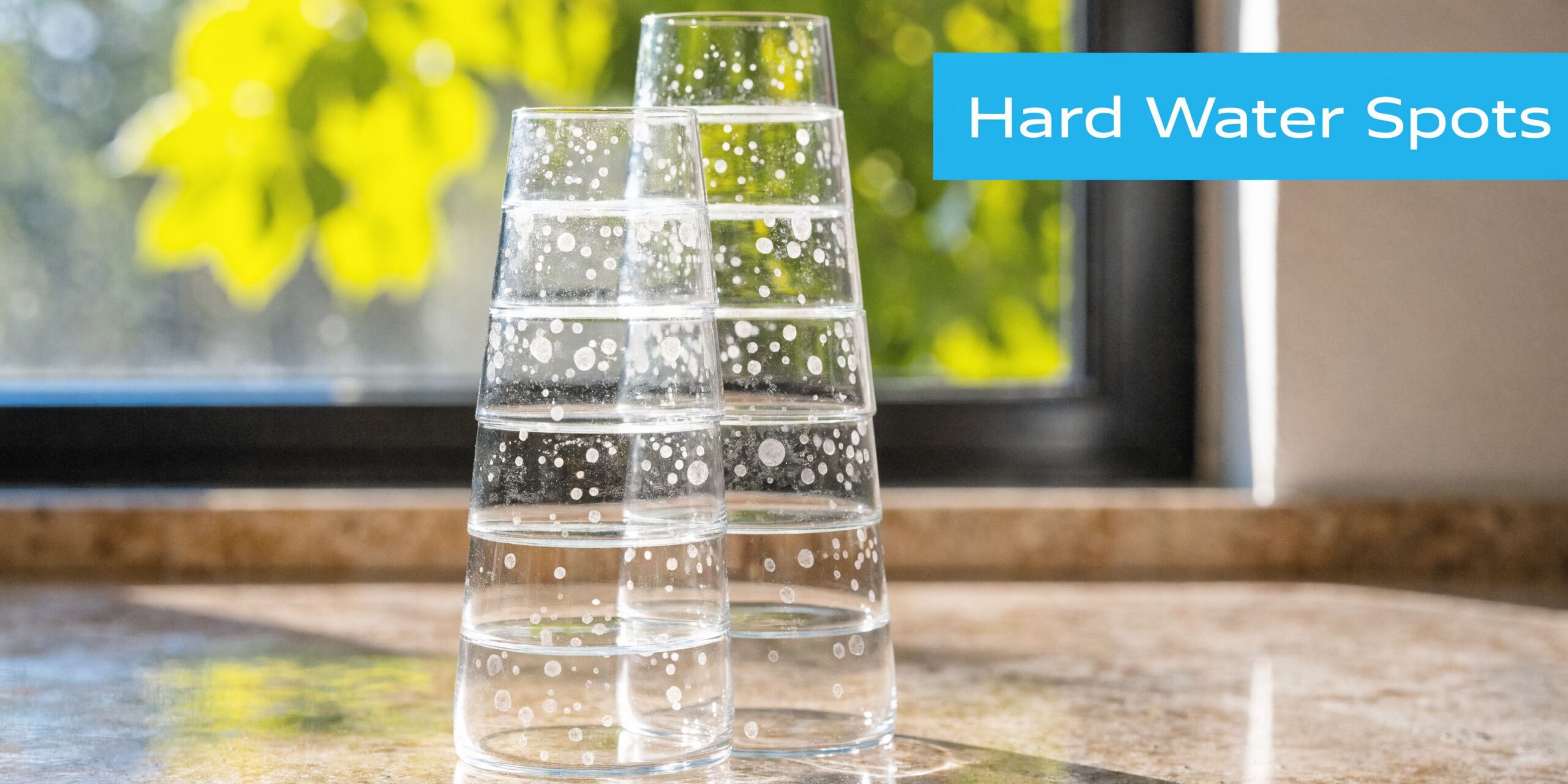
The scale issue is not rare. Over 85% of households in the United States receive city water classified as hard, and that translates to roughly 110 million households dealing with things like scale buildup, reduced appliance efficiency, and skin irritation, according to this city water hardness overview.
What hard water looks like in real life
The first clues are usually boring, repetitive problems:
- Dishes never look finished: Glassware dries with cloudy marks or chalky dots.
- Bathroom cleanup gets old fast: Faucets and shower doors collect crusty mineral residue.
- Soap acts strange: It lathers poorly and leaves a filmy feel behind.
- Hot water equipment takes the hit: Heaters, dishwashers, and washing machines work in mineral-heavy water every day.
Tip: If your house has both chlorine smell and hard water spotting, treat those as two separate jobs. A softener handles hardness. Carbon filtration handles chlorine taste, odor, and resin protection.
A good water softener for city water does not just make water feel nicer. It protects the plumbing you cannot see and the appliances you do not want to replace early.
Decoding Your City's Water Hardness Report
Hardness sounds abstract until you think of it this way. Your water is carrying a small amount of dissolved rock.
Those minerals are invisible in the glass, but once water dries or heats up, they stop being polite and start sticking to everything. That is why the inside of a kettle, water heater, or showerhead ends up looking like it has been dusted with chalk.
What GPG means
Most softener sizing is based on grains per gallon, usually shortened to GPG. It is just a way of expressing how much hardness mineral is dissolved in your water.
A practical rule of thumb used in the industry looks like this:
| Hardness reading | Plain-English meaning |
|---|---|
| 0 to 3 GPG | Soft to slightly hard |
| 4 to 7 GPG | Moderately hard |
| 7 to 10.5 GPG | Hard |
| Above 10.5 GPG | Very hard |
That last threshold matters. Once hardness climbs into clearly hard territory, daily annoyances become equipment problems. You get more spotting, more buildup, and more scale in hot-water appliances.
Where to find the number
Start with your city’s annual water quality report. Many utilities publish it online, and customer service can usually point you to the latest version if it is hard to find. Some reports list hardness directly. Others focus mostly on safety contaminants and leave hardness out.
If the city report does not clearly spell it out, use a home hardness test kit. They are simple and practical. You are not trying to run a lab. You just need a dependable hardness number so you can choose the right water softener for city water.
Use this simple process:
- Check the municipal report first: It gives you a baseline and sometimes notes seasonal changes.
- Test cold water from a frequently used tap: Kitchen cold water is usually fine for this.
- Write down the result in GPG: Keep it with your appliance records.
- Retest if something changes: New spotting, plumbing work, or a move to another neighborhood can justify another test.
Why one city can have different results by neighborhood
Municipal systems are not always perfectly uniform. Source blending, seasonal changes, and distribution zones can make one side of town feel different from another. Two homes with the same zip code can have noticeably different hardness behavior.
That is why I do not like buying a system based only on a neighbor’s experience. Borrow their plumber if you want. Do not borrow their hardness number.
Key takeaway: Do not shop by brand name first. Shop by your hardness level first. The wrong measurement leads to the wrong machine.
Once you know the number, the buying process gets clearer. You stop guessing and start matching technology to the water entering your house.
Comparing Softener Technologies for Municipal Water
Not all “softening” products do the same job. Homeowners lose money here, because boxes on showroom floors make very different technologies sound interchangeable.
They are not.
A proper water softener for city water needs to match the problem in the home. If you want soft water, one technology leads the pack. If you mainly want scale control with lower maintenance, another option can make sense. And if you are eyeing magnetic gadgets because they seem easy, that category deserves a hard look before you spend anything.

Ion exchange versus TAC in plain English
A salt-based ion exchange softener is the workhorse. It removes hardness minerals from the water. Consider it a coat check that takes calcium and magnesium away before they head into your plumbing.
A salt-free TAC conditioner works differently. It does not remove the minerals. It changes how they behave so they are less likely to cling to surfaces as scale. It is more like an usher guiding troublemakers to keep moving instead of sitting down and causing a mess.
That distinction matters because your water will still test hard after TAC treatment. The house may experience less scale, but the minerals are still present.
In a six-month study of homes with city water, premium salt-based softeners achieved up to 98% reduction of calcium and magnesium, compared to 70% for salt-free conditioners, with the gap becoming especially important in areas above 10.5 GPG, according to this performance comparison.
Quick comparison table
| Feature | Salt-Based Ion Exchange | Salt-Free (TAC) Conditioner | Magnetic Descaler |
|---|---|---|---|
| Main job | Removes hardness minerals | Reduces scale formation behavior | Claims to reduce scaling behavior |
| Water feel | Soft water feel | Water still feels like hard water to many users | Unpredictable |
| Spotting and soap performance | Best improvement | Mixed improvement | Often inconsistent |
| Maintenance | Salt refills, periodic service | Low routine maintenance | Low maintenance, but questionable payoff |
| Best fit | Homes that want true soft water | Homes focused on scale control and low upkeep | Buyers should be cautious |
| City water concern | Chlorine can be hard on components, so prefiltration may help | Often paired with sediment or carbon stages | Usually sold as a simple fix, often oversimplified |
Salt-based softeners for city water
If your goals are cleaner glassware, easier bathing, less soap scum, and better protection for hot-water appliances, ion exchange is usually the strongest answer.
These systems are especially sensible when city water is firmly hard or very hard. They do ask more from the homeowner. You need salt. You need a drain. You need occasional attention. But they solve the hardness problem instead of working around it.
For municipal water, I like seeing a softener paired with sediment filtration and, when chlorine is noticeable, carbon treatment ahead of the resin. Chlorine is useful for public disinfection, but it is not a friend to softener media over the long haul.
Salt-free TAC systems
TAC units earn attention because they avoid bags of salt and do not produce brine discharge in the same way as traditional softeners. If your main objective is scale prevention, not the silky feel of fully softened water, they can be a practical fit.
They also appeal to homeowners who want lower day-to-day maintenance. There is no salt bin to babysit, and ownership usually feels less hands-on.
Where TAC disappoints is expectation mismatch. People buy one expecting soft-water performance. Then they still see some spotting or still notice the shower does not feel like true soft water. That is not failure. That is buying the wrong tool for the wrong expectation.
Magnetic descalers
This is the category where I tell neighbors to slow down and get skeptical.
Magnetic and electronic descalers are often pitched as simple clamp-on cures. They sound wonderful because they promise almost no plumbing changes and little maintenance. In practice, results are inconsistent enough that I would not treat one as the primary answer for a home that clearly has hard city water.
If you already have one and think it helps a little, fine. I would not build a whole-house water strategy around it.
Practical advice: If your biggest complaint is dry skin, soap scum, cloudy glassware, and crust on fixtures, buy a system known to deal with hardness directly. Do not buy a gadget because the install looks easier.
One more city-water trade-off
Municipal homes often have both hardness and heated-water concerns. If scale is already affecting your water heater choice, this guide on tankless water heater vs regular water heater is useful context. Hard water changes the maintenance picture on either style, and tankless units are especially unforgiving when scale gets ignored.
Calculating the Right Softener Size for Your Home
Most bad softener experiences start with sizing mistakes. The unit is too small, so it regenerates too often and eats through salt. Or it is chosen by marketing label alone, not by household demand.
“Grain capacity” sounds technical, but the logic is simple. It is just the amount of hardness a system can handle before it needs to clean itself and go back to work.
Start with the hardness load
Use this formula:
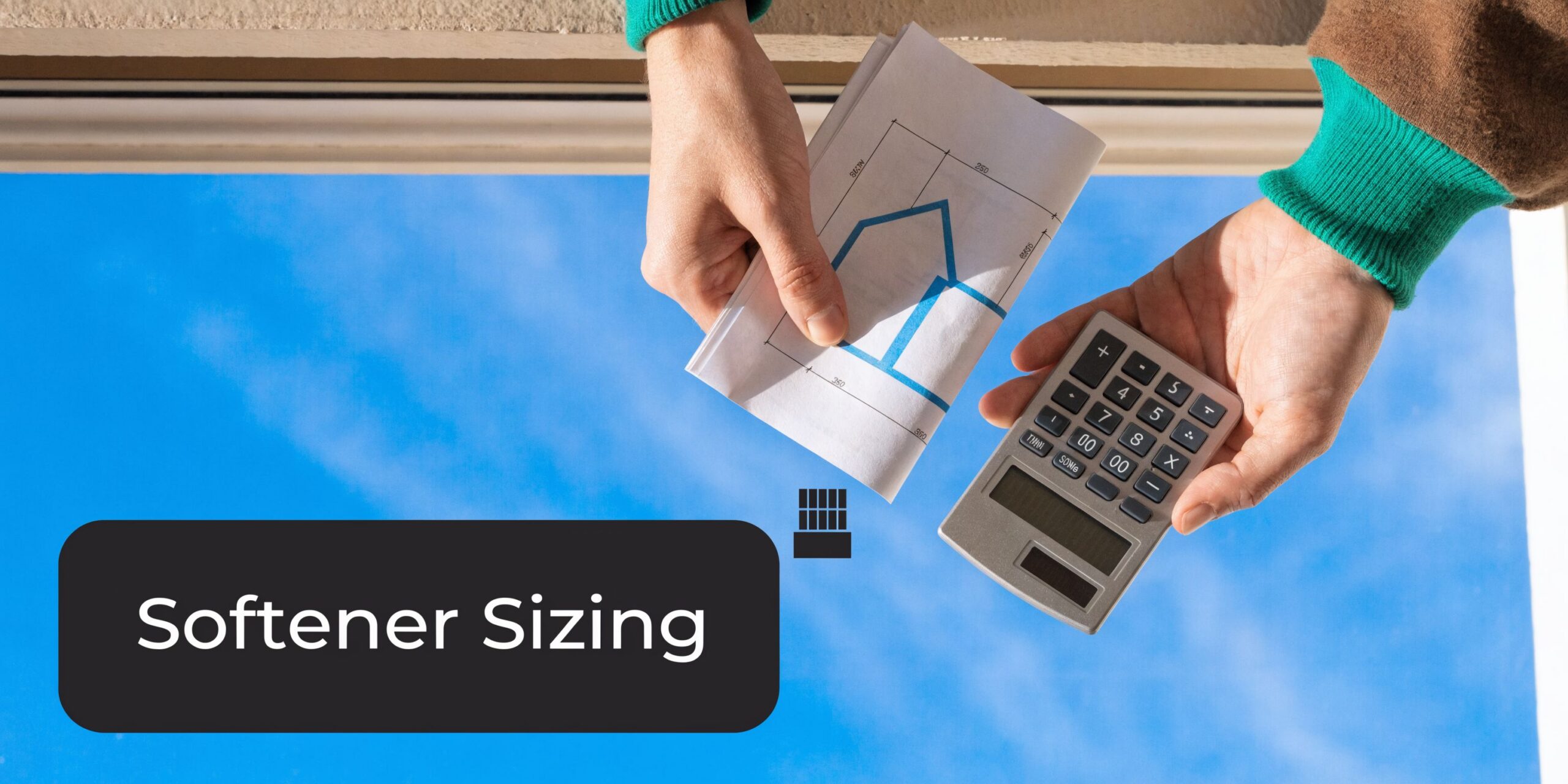
Daily water use per person × number of people × hardness in GPG = daily grain load
That gives you the amount of hardness your softener must handle each day.
For a 4-person home using 75 gallons per person per day with 15 GPG city water, the daily hardness load is 4,500 grains, according to the U.S. Department of Energy guidance summarized here on purchasing and maintaining a water softener.
What that means in practice
That same guidance gives a very useful real-world comparison. In that example, a 32,000-grain softener would regenerate every 7 days, while a larger unit could go 10 to 14 days, which improves salt and water efficiency. It also recommends a 20% to 25% capacity buffer for better performance.
That is the part many homeowners miss. Buying the smallest unit that technically works often raises the long-term operating cost. Frequent regeneration means more salt handling, more water use, and more wear.
A fast way to think about capacity
- Too small: Like a trash can that fills before pickup day.
- Right-sized: Handles normal life without constant cycling.
- Too large without purpose: Costs more upfront and can be awkward if your plumbing setup is tight.
Do not ignore flow rate
Capacity is only half the sizing job. Flow rate matters just as much.
If the system cannot keep up when two showers run and the washing machine fills, people notice it as weak pressure or poor performance. Product brochures can be slippery when discussing this aspect. A unit may sound powerful because of grain capacity while still being a bad fit for a busy household’s peak demand.
For a typical home, match the softener to the way the house is used, not just the family headcount. A one-bath house and a three-bath house with the same number of people can have very different peak flow patterns.
A few sizing mistakes I see often
- Buying by square footage: Water use does not follow house size neatly.
- Ignoring future household changes: A guest room that becomes a teen bedroom changes demand.
- Forgetting iron or other adjustments: If your water report includes extra complications, sizing gets more nuanced.
- Choosing based on sale price alone: Cheap systems become expensive when they regenerate too often.
This walkthrough is a good visual refresher if you want to see the parts and sizing logic in a more hands-on format:
Sizing rule I trust: Buy enough capacity to reduce unnecessary regeneration, but not so much that you ignore the home’s flow needs and installation space.
A well-sized water softener for city water should feel boring in the best way. No pressure complaints. No constant refills. No surprise performance drop halfway through the week.
Installation, Maintenance, and Total Cost of Ownership
The box price is only the opening bid. Ownership cost is where the comparison happens.
A lot of buyers compare two systems based on sticker price, then discover later that one asks for regular salt hauling, drain access, programming, and occasional service while the other mostly sits there. Neither approach is automatically better. The better choice is the one that fits your water and your tolerance for maintenance.
What installation usually involves
A whole-house unit needs the right location, a bypass valve, and a drain route that is practical. On city water, I also like seeing enough room to service prefilters and enough access to shutoffs without turning the utility corner into a yoga pose.
DIY installation can be fine for confident homeowners with straightforward plumbing. It gets less fun when you run into tight spaces, old valves, odd pipe materials, or no obvious drain path. That is where professional installation saves frustration and often leaves you with a cleaner service setup.
The costs people forget
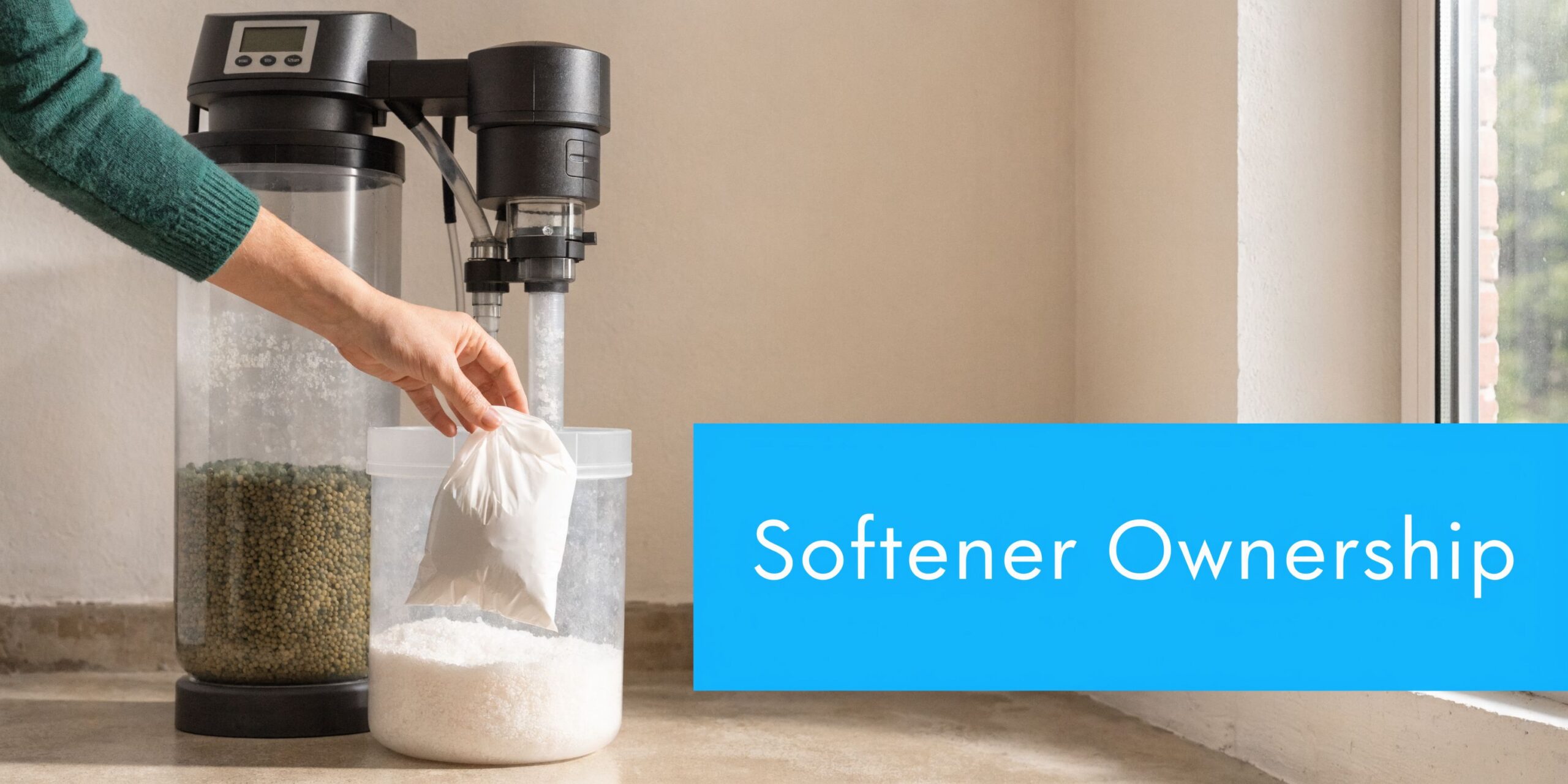
Salt-based systems keep charging rent after installation.
You buy salt. You use water during regeneration. You may eventually replace media or related parts. None of that makes the system a bad purchase, but it changes the overall math.
Salt-free TAC systems often win this comparison on simplicity. They can reduce ownership costs by up to 40% compared with salt-based systems by eliminating salt and brine discharge, and the source data also notes salt as an about $100 to $200 annual expense while TAC media can last 5 to 7 years before replacement, according to this city-water TAC overview.
Comparing ownership styles
Salt-based ownership feels like owning a hardworking appliance. It solves the bigger hardness problem, but it wants regular input from you.
Salt-free ownership feels lighter. Less routine handling, fewer recurring chores, but also less of the “true soft water” experience many homeowners expect.
A practical budget checklist
Before buying, account for these line items:
- Plumbing modifications: Extra shutoffs, drain routing, and fittings can matter more than the machine itself in a cramped utility area.
- Consumables: Salt for ion exchange systems is the obvious one.
- Service access: Leave room for cleaning, media changes, and bypass use.
- Pretreatment needs: Municipal sediment or chlorine issues may justify adding filtration ahead of the unit.
- Replacement planning: Every system has parts or media that age out eventually.
If you want a broader framework for comparing ongoing upkeep across treatment types, the practical advice at https://www.waterfilteradvisor.com/advice/ is a good place to organize the maintenance side before you buy.
Good buying habit: Ask not just “What does it cost to install?” Ask “What will this ask from me every year?”
That one question filters out a lot of buyer’s remorse.
Sodium Concerns and Smart Home Integration
Salt-based softeners create a predictable question. If the system uses salt, how much sodium ends up in the water you drink?
For many households, that is not the deciding factor. For some, it absolutely is.
Sodium in softened water
Salt-based softeners can add 10 to 30 mg/L of sodium to treated water, which matters more for sensitive households and especially for people managing sodium intake. The same source notes that this is a potential concern for the 116 million U.S. adults with high blood pressure, and advises testing post-softener water for those who are sensitive, with reverse osmosis as an option for drinking water, according to this discussion of city water softeners and sodium.
That does not mean a whole-house softener is off the table. It means you should separate household comfort water from drinking water strategy.
The pairing that solves most of the problem
A very practical setup is:
- Whole-house softener for plumbing and appliances
- Point-of-use reverse osmosis at the kitchen sink for drinking and cooking
That combination lets the softener protect the house while the RO system handles the water you consume most directly. It is a common-sense split of labor.
If sodium is a serious concern in your home, test the softened water after installation instead of guessing. This is one of those areas where “probably fine” is not as useful as a result from your own tap.
Neighbor-level advice: If someone in the house has been told to watch sodium, do not rely on forum debates. Test the treated water and set up a dedicated drinking-water tap if needed.
Smart softeners are starting to matter
The newer wrinkle in this category is smart control. Some city-water softeners now include app-based monitoring, usage tracking, and predictive regeneration features.
The primary benefit is not novelty. It is fewer “forgot to check the salt” moments, better visibility into water use, and earlier warning when something starts drifting. Smart features can also make it easier to spot unusual water consumption that might indicate a running toilet, a leak, or a regeneration setting that needs correction.
I like smart features when they solve maintenance blindness. I do not care much about them when they just add another app to your phone without making ownership easier.
The best use case is a homeowner who travels, rents out part of the house, or wants reminders instead of manual checking. The weak use case is paying a premium for flashy controls on a system that is still poorly sized or poorly matched to the water.
Your Action Plan for Perfect City Water
Most homeowners do not need more options. They need a clean decision path.
Start with your water, not the marketing. Get the hardness number from your city report or a home test. Then decide what result you want. If you want true soft water, ion exchange is the usual answer. If you mainly want less scale and lower routine maintenance, TAC may fit better.
The shortest path to a good decision
- Measure hardness first: Never buy a system blind.
- Choose the right technology: Removal and scale control are not the same thing.
- Size for your household: Capacity and flow rate both matter.
- Budget for ownership: Salt, service access, and plumbing changes belong in the decision.
- Plan drinking water separately if needed: Especially if sodium or chlorine is a concern.
A lot of buyers also benefit from seeing how softening fits into the larger picture of home water treatment options. It helps to view the softener as one part of a complete municipal-water strategy rather than the cure for every water issue in the house.
What I would tell a neighbor
Do not overcomplicate it. Buy the machine that solves the problem you have.
If your home is fighting hard water every day, a properly sized water softener for city water can be one of the most satisfying upgrades you make. The glassware looks better. The shower feels better. The fixtures stay cleaner. And the plumbing hidden behind the walls gets a break too.
Frequently Asked Questions
Can renters do anything about hard city water
Yes, but usually not with a full whole-house softener. Renters often get the most practical improvement from shower filters, faucet filters, or countertop drinking-water systems. Those will not duplicate whole-house softening, but they can improve comfort and tap quality without permanent plumbing work.
Do I still need chlorine filtration if I install a softener
Often, yes. A softener targets hardness minerals. It does not do the same job as carbon filtration for chlorine taste and odor. On city water, pairing the right softener with chlorine-focused filtration is often a smarter setup than expecting one device to handle everything.
Will a softener reduce water pressure
A properly sized and properly installed system should not create noticeable pressure problems in normal use. Pressure complaints usually point to bad sizing, clogged pretreatment, poor plumbing layout, or a unit that cannot meet the home’s peak flow demand.
Is salt-free the better choice for everyone
No. Salt-free systems can be a very good fit for homeowners who want lower maintenance and scale control. They are not the best answer for someone who wants softened water and the strongest improvement in soap performance, spotting, and day-to-day feel.
Are magnetic descalers worth trying
I would treat them cautiously. Some homeowners report modest help, but I would not rely on one as the primary answer for a house with clear hard-water symptoms. If you need dependable performance, choose a proven technology and size it correctly.
How often should I check on my system
Make it part of normal home maintenance. Look at salt level if you own an ion exchange unit. Watch for new spotting, reduced lather, or scale returning. Those changes usually show up before a complete failure does.
Water problems are easier to solve when the advice is clear and practical. Water Filter Advisor helps homeowners compare systems, understand maintenance, and choose filtration that fits the way they live. If you want straightforward guidance before you buy your next filter or softener, it is a solid place to start.
- April 10, 2026
- Uncategorized
