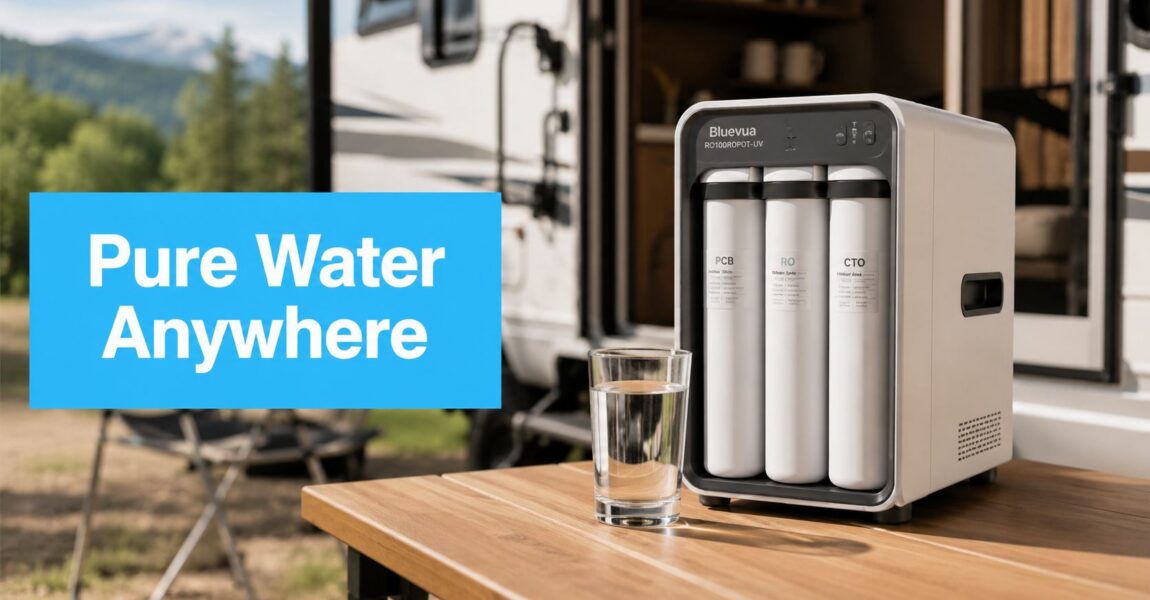
You're standing in a kitchen, RV, or rental with a glass in your hand and a simple question in your head, is this water as clean as it tastes? That's where portable reverse osmosis earns its keep. It takes a purification method once tied to bulky plumbing and turns it into something you can set up for everyday drinking water, weekend trips, or a backup plan when the tap situation feels uncertain.
The Rise of On-Demand Pure Water
A lot of people first look into portable reverse osmosis after one of two moments. Maybe they've spent a few nights in an RV and don't love the taste at the campsite sink. Maybe they've moved into a rental and don't want to drill holes, call a plumber, or argue with a landlord about plumbing changes. In either case, the goal is the same, better-tasting water without turning the kitchen into a renovation project.
That shift is bigger than a convenience trend. Portable water purifier buyers are treating RO as a practical category, not a novelty, because they want cleaner water without giving up counter space, mobility, or control over the setup. The bigger market around these systems has grown around real homeowner needs, not just curiosity, and that growth points to a simple pattern, people want the performance of RO, but they also want a system they can move, store, and use without a permanent install.
Practical rule: if a system has to fight for space, power, or water supply, portability matters as much as filtration quality.
For homeowners, that matters because the appeal isn't just travel. Portable systems can fit situations where you want a cleaner glass of water without committing to an under-sink install. If you're comparing broader residential water filtration solutions and you want to understand where portable reverse osmosis fits in, it helps to see it as the flexible middle ground between pitchers and permanent systems.
The best part is how normal it feels once it's in place. You fill it, power it if needed, and get water that's meant to taste cleaner and feel more reliable. The trade-off is that the convenience comes with real engineering choices, especially around waste water, pressure, and output speed.
How Reverse Osmosis Magic Works
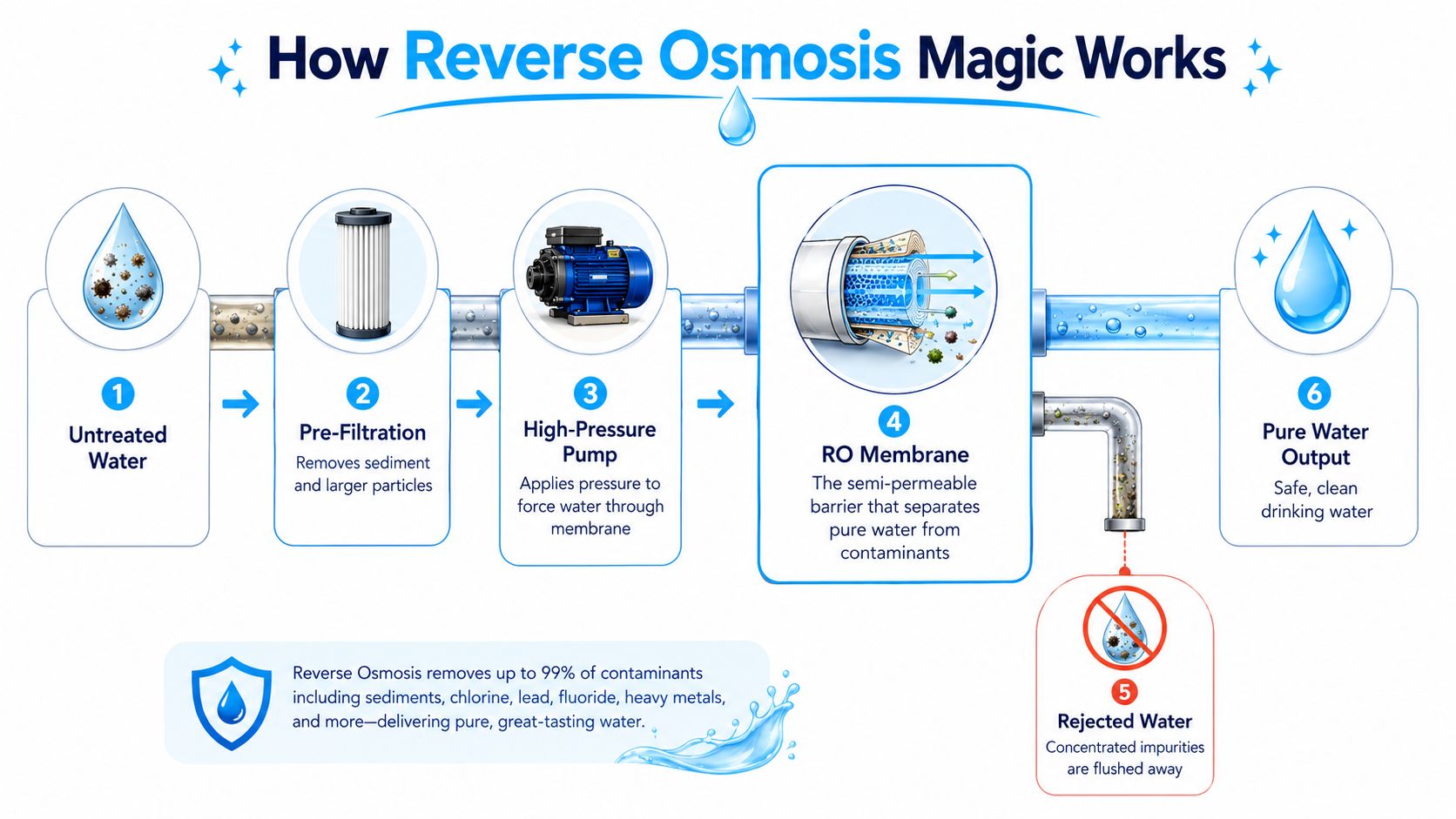
A portable reverse osmosis system works by pushing water through a very fine membrane, then collecting the cleaner water on the other side while keeping many unwanted materials behind. The basic idea is simple enough for a homeowner to picture at the sink. Water goes in, pressure does the pushing, and the membrane acts like a careful gatekeeper that lets water through while blocking a long list of dissolved and suspended contaminants. For a closer look at how membrane systems are built and how prefiltration fits into the process, see HomeProBadge's filter guide.
The Four Core Stages of Purification
The easiest way to understand portable reverse osmosis is to break it into four core stages. First comes pre-treatment, which removes sediment and larger particles so the rest of the system does not clog too early. Then the system applies pressure, because water has to be pushed against natural osmotic pressure to move through the membrane efficiently. A technical guide says 40 psi or greater is the norm, and 50 psi is recommended for best output (TechnoWaters).
Next comes membrane separation, the part that does the heavy filtering. The membrane works like a very strict gate at the front of a crowded shop, letting clean water pass while holding back dissolved contaminants, including salts and other unwanted materials. After that, post-treatment stabilization helps polish the water so it is ready to drink and tastes clean at the tap.
Portable systems are especially sensitive to pressure because the process is active, not passive. Stronger input conditions usually mean smoother output, while weak pressure can slow everything down. The same basic technology can perform very differently depending on the water source, the condition of the filters, and the pump design.
Pressure is not just a number on a spec sheet. It determines whether the system produces water at a useful pace or creeps along.
That is why portable reverse osmosis is more than a single membrane cartridge. It is a small chain of functions working together, and each one affects taste, flow, and waste.
Key Performance Metrics for Portable RO
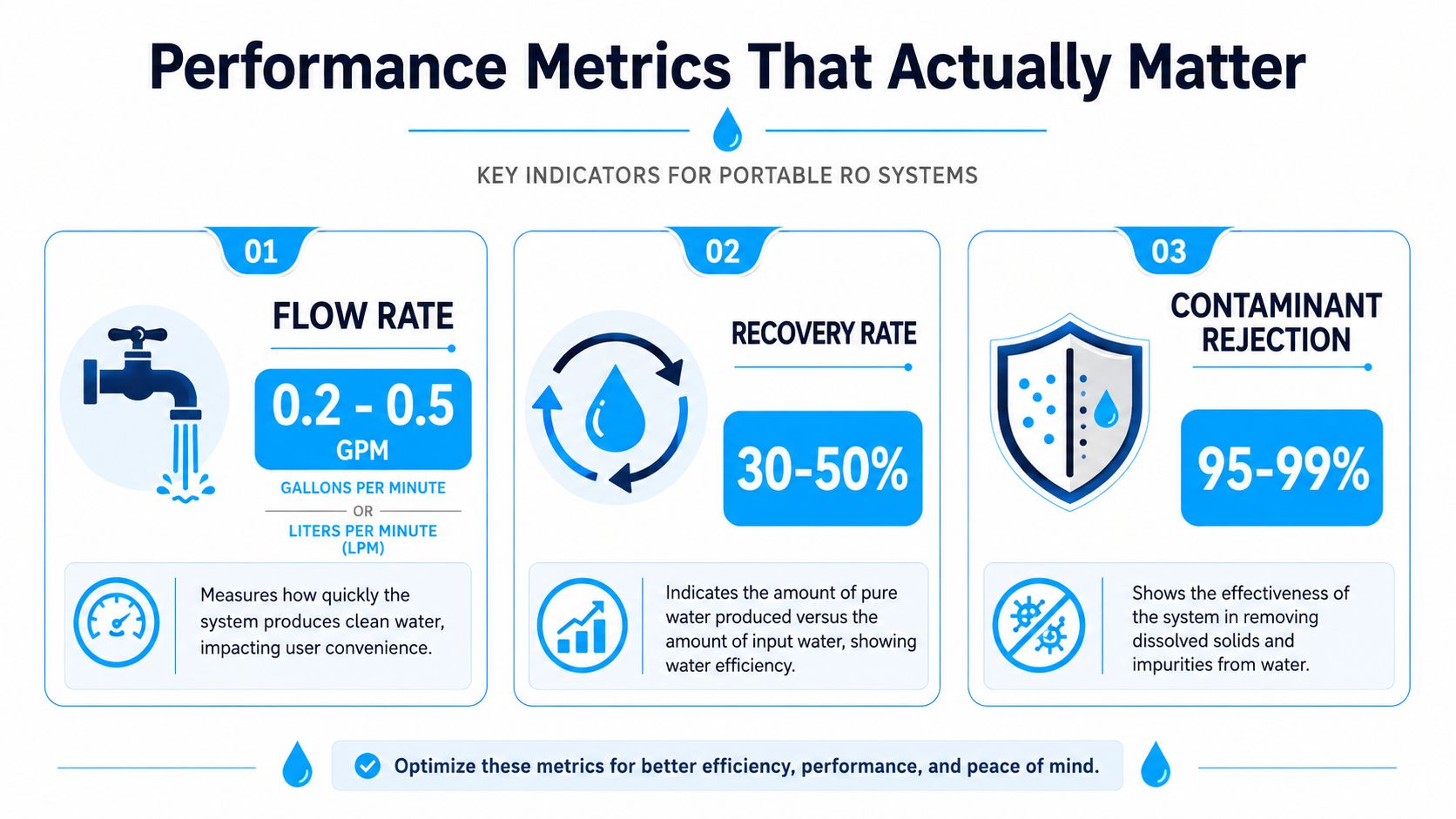
Shoppers often start with brand names, but the numbers that matter are easier to judge than that. Focus on three things, how clean the water is, how quickly it comes out, and how much water the system sends to drain. Those trade-offs shape daily use in a house, an RV, or a travel setup.
Clean water, output speed, and waste
The first metric is contaminant rejection, which tells you how well the membrane keeps unwanted material out of the finished water. The second is flow rate, which affects whether filling a glass feels quick or slow. The third is wastewater output, and that one is easy to overlook until you are the person emptying a tank or watching the drain line.
A portable RO system can make water taste much cleaner and still create a lot of reject water if the ratio is poor. That matters in a home with a limited water budget, and it matters even more in an RV or on the road, where every gallon has to be accounted for. In practical terms, a system that performs well on paper can still feel inconvenient if it is slow to produce water or wastes too much of it.
The EPA notes that point-of-use RO systems can generate a large amount of reject water compared with the water they keep, while WaterSense-labeled systems are designed to limit that waste more tightly (EPA WaterSense). That is why two systems can both be called portable RO and still feel very different in everyday use. One may be better for a kitchen where the tank can handle some waste, while another may fit better where storage and water supply are tight.
If you want a simple way to judge fine filtration before the membrane, HomeProBadge's filter guide is a useful place to start. Pre-filtration does quiet work in the background, and it helps the RO stage stay stable instead of clogging too early.
Bottom line: a portable RO system can make excellent drinking water and still be the wrong fit if its waste rate is too high for your setup.
Ideal Use Cases for Portable RO Systems
A portable reverse osmosis system makes the most sense when you want cleaner water but your setup keeps changing. That is the daily reality for renters, RV owners, and frequent travelers, and each group runs into a different problem. One person needs a solution that avoids plumbing work. Another needs water that feels dependable at every hookup. Another just wants to stop wondering what is coming out of an unfamiliar tap.
An apartment setup is the simplest place to start. You can improve the taste of drinking water without calling a plumber or changing the sink, which keeps the apartment itself untouched. For a renter, that practical trade-off matters. You get more control over daily water quality while keeping the installation easy to remove later.
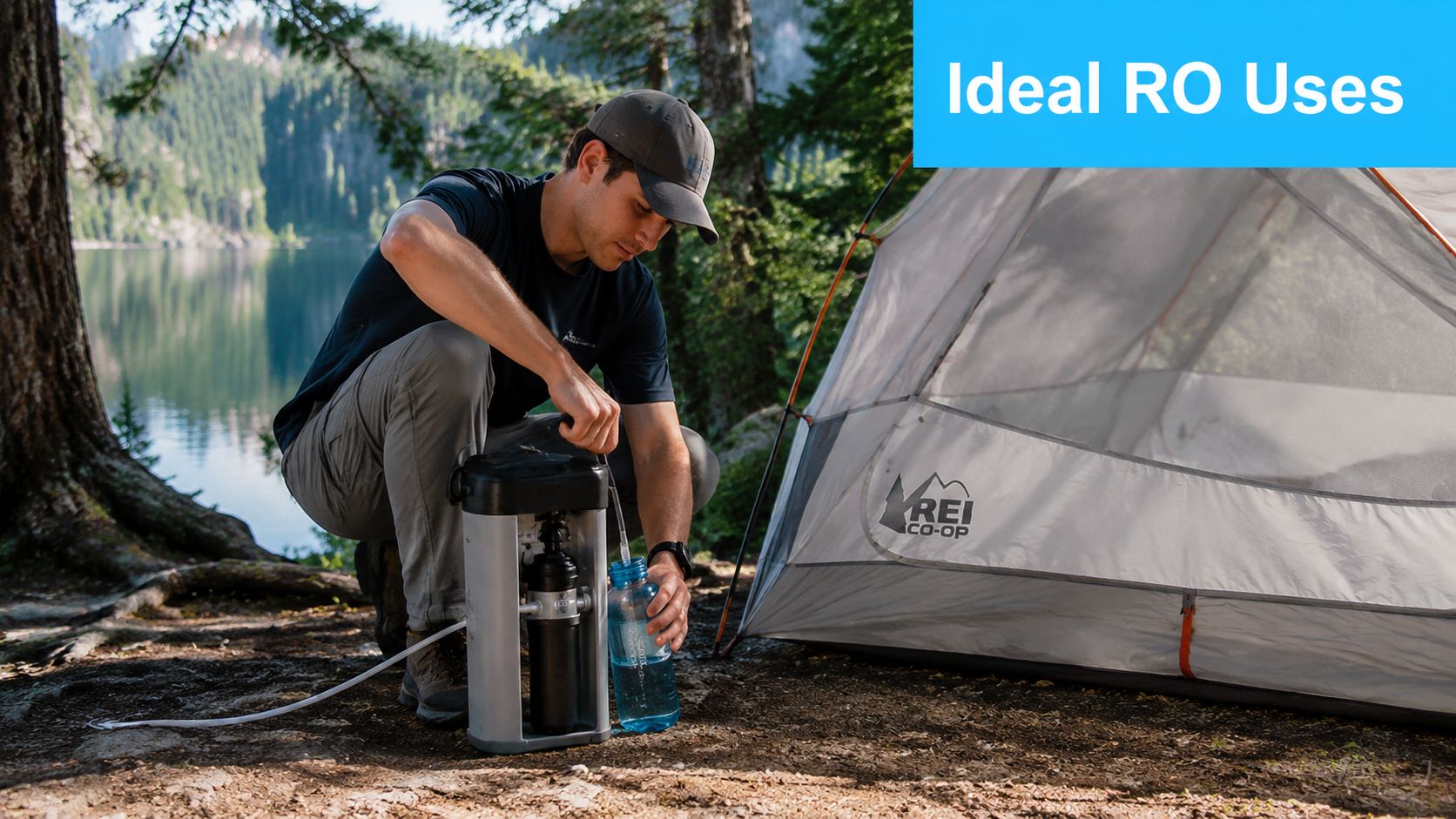
RVs and marine setups call for a different kind of thinking. Campsite hookups and marina water can vary a lot, so portability is less about novelty and more about keeping the water routine steady from one stop to the next. A system that travels with you can make each glass feel familiar, even when the source water is not.
The image below fits that outdoor reality well.
When portability matters most
Travel is the obvious case, but backup planning matters too. If you want a water option that does not depend on permanent plumbing, a portable RO setup gives you a way to produce drinking water in short-term stays, temporary living situations, or places where the water source feels inconsistent. It is a practical fit when you need flexibility first and a fixed installation second.
Portable RO also makes sense in emergency readiness. A system that can be packed up and used without a permanent mount gives you one less thing to worry about when normal routines are disrupted. That is why it appeals to people who want a backup plan that stays simple to move and simple to use.
In real life, portable RO is less about gadget appeal and more about reducing guesswork.
For RV owners who also deal with other plumbing headaches, it helps to keep the whole water system in good shape. If your rig needs broader attention beyond filtration, a source for reliable RV water heater service in Texas can be useful alongside your water treatment planning.
The common thread is easy to see. You want better-tasting water without making your living space harder to use. Portable RO works best in homes, RVs, and travel setups where convenience, water quality, and everyday practicality all have to fit together.
How to Choose the Right System for You
Choosing a portable reverse osmosis system gets easier once you sort out the practical limits first. Where will it sit, how will it get water pressure or power, and how much water do you expect to use each day? A countertop model, a manual travel unit, and an RV or marine setup each answer a different need, much like choosing between a kitchen mixer, a carry tool, and a built-in appliance.
Buyer checklist
- Countertop system: Best if you want no plumbing changes, a steady home setup, and simple refilling from the kitchen tap.
- Travel or manual system: Best if you need something light enough to move, store, or pack often.
- RV or marine system: Best if the water source changes often and you need a setup that can keep up with life on the move.
Installation is the next trade-off to examine. Some portable systems only need a faucet adapter or a fill tank, while others behave more like compact appliances and still expect proper water pressure and a reliable power source. That difference matters because a system that looks simple on paper can feel awkward in daily use if it needs several steps every time you want a glass of water.
Efficiency deserves attention too. EPA WaterSense describes point-of-use RO systems with a waste ratio standard that helps show how much water goes down the drain during purification. That makes waste ratio one of the clearest signs of how thoughtfully a unit is designed. Performance also depends on feed-water quality, so a well-made system can protect the membrane and keep waste lower when the incoming water is in better shape.
Practical rule: if a portable unit does not explain its waste ratio clearly, keep looking.
| Factor | Countertop System (Apartment) | Travel/Manual System (Backpacking) | RV/Marine System |
|---|---|---|---|
| Installation | No plumbing changes, usually plug-and-use | Minimal setup, often manual filling | Connection depends on vehicle or vessel setup |
| Best fit | Renters and small kitchens | Frequent movers and short trips | Campers, RV owners, boat users |
| Main advantage | Easy everyday use | Maximum portability | Consistent drinking water on the road or water |
| Main trade-off | Takes counter space | Lower convenience | More attention to pressure and system fit |
If you are comparing options, focus on your habits instead of the spec sheet alone. The right portable RO unit is the one you will use without feeling annoyed by it. If you want more buying guidance, the practical advice on water filter selection tips can help you compare features without getting lost in jargon.
Your Setup Maintenance and Troubleshooting Checklist
Portable reverse osmosis is simple to own when you stay ahead of the basics. The system does its best work when filters stay fresh, hoses stay tight, and the membrane isn't forced to fight old buildup. If you treat it like a small appliance instead of a one-and-done gadget, it'll behave a lot better.
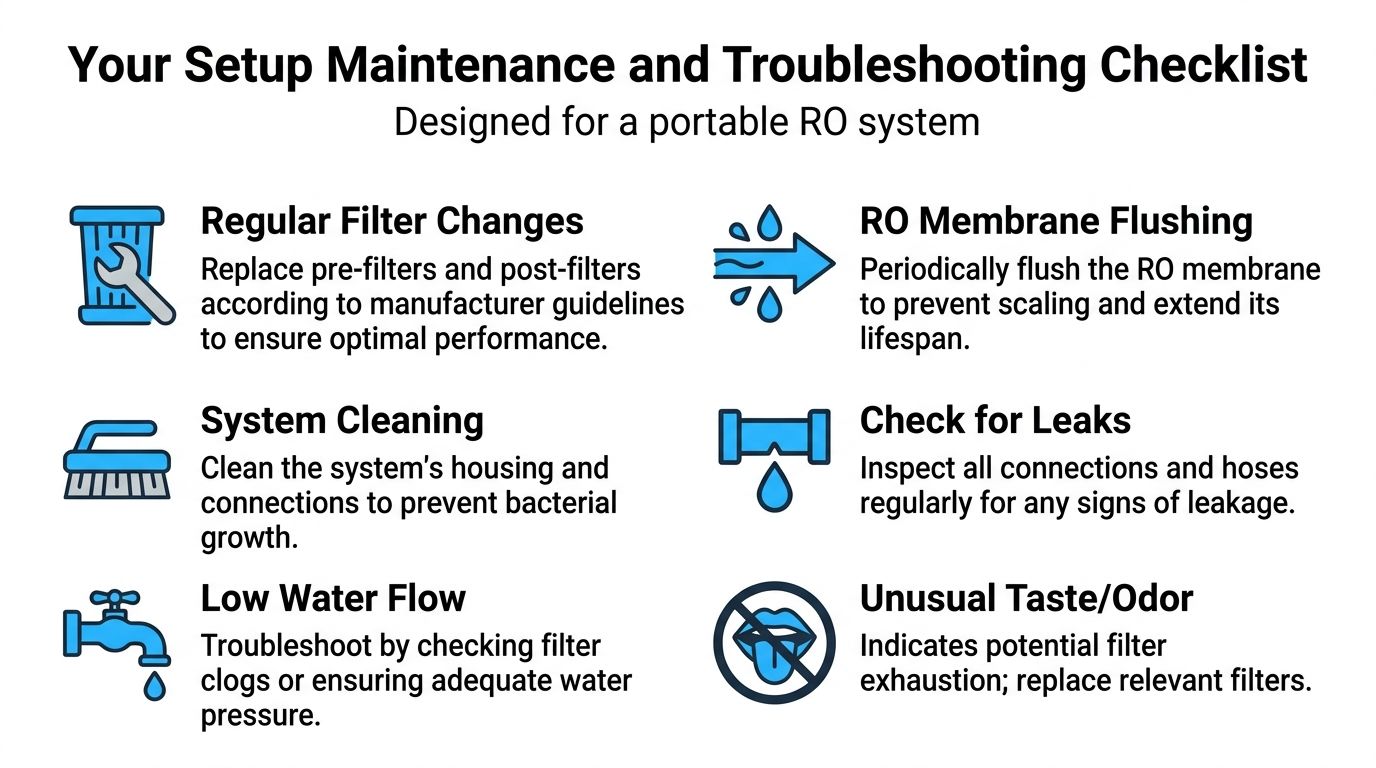
A simple routine that prevents most problems
Start with setup. Make sure every connection is snug, the feed water is clear enough for the pre-filter to handle, and the unit has the pressure it needs to work efficiently. Then test the output before relying on it for daily drinking water.
For maintenance, the best habit is consistency. Replace pre-filters and post-filters on schedule, flush the membrane when the manufacturer recommends it, and keep the housing and fittings clean. A compact system can only stay compact if sediment and residue aren't building up inside it.
If something feels off, troubleshooting should start with the obvious. Low flow often points to a clogged filter or weak inlet pressure. An odd taste or smell usually means a filter is exhausted or the system needs cleaning. A leak is usually a connection problem, not a reason to panic.
- Regular filter changes: Replace pre-filters and post-filters according to the maker's guidance so the membrane isn't doing all the work.
- RO membrane flushing: Flush when recommended to reduce scaling and keep water production steadier.
- System cleaning: Wipe down housings and check fittings so residue doesn't turn into a bigger problem.
- Check for leaks: Inspect hoses and connections before each major trip or after moving the unit.
- Low water flow: Check filter clogging first, then confirm the inlet pressure is adequate.
- Unusual taste or odor: Treat it as a sign that a filter may be tired.
If you want a broader maintenance mindset for home filtration, a good place to compare common care routines is this water filter advice resource from Water Filter Advisor. It's useful when you're trying to understand how one system's upkeep compares with another's.
Clean filters don't just improve taste, they protect the rest of the system from avoidable strain.
Is a Portable RO System Worth It
If your main goal is pure, better-tasting water without committing to a permanent install, portable reverse osmosis makes a lot of sense. It's especially appealing for renters, RV owners, and anyone who wants a flexible drinking-water setup that can move with them. The payoff is control, you decide when and where the system is used.
The trade-offs are just as real. Portable units still need filter changes, they still produce reject water, and they still depend on pressure and design quality to perform well. Professional-grade portable systems show how far the technology can scale, but they also show the cost of scaling. One medical portable RO unit can produce 730 GPD, weighs 135 lb, and requires a 115V/20A dedicated circuit (AmeriWater). That's a useful reminder that more output usually means more size, weight, and power demand.
The right choice comes down to lifestyle. If you want cleaner water in a place where permanent plumbing changes don't make sense, portable RO is worth serious consideration. If your setup is power-limited, space-limited, or highly sensitive to water waste, you'll want to compare it carefully against other filtration formats.
Water Filter Advisor helps homeowners make sense of filtration choices without the jargon overload. If you're weighing portable reverse osmosis against other home water options, visit Water Filter Advisor for practical guides, comparison advice, and maintenance tips you can use.
- August 10, 2026
- Uncategorized
