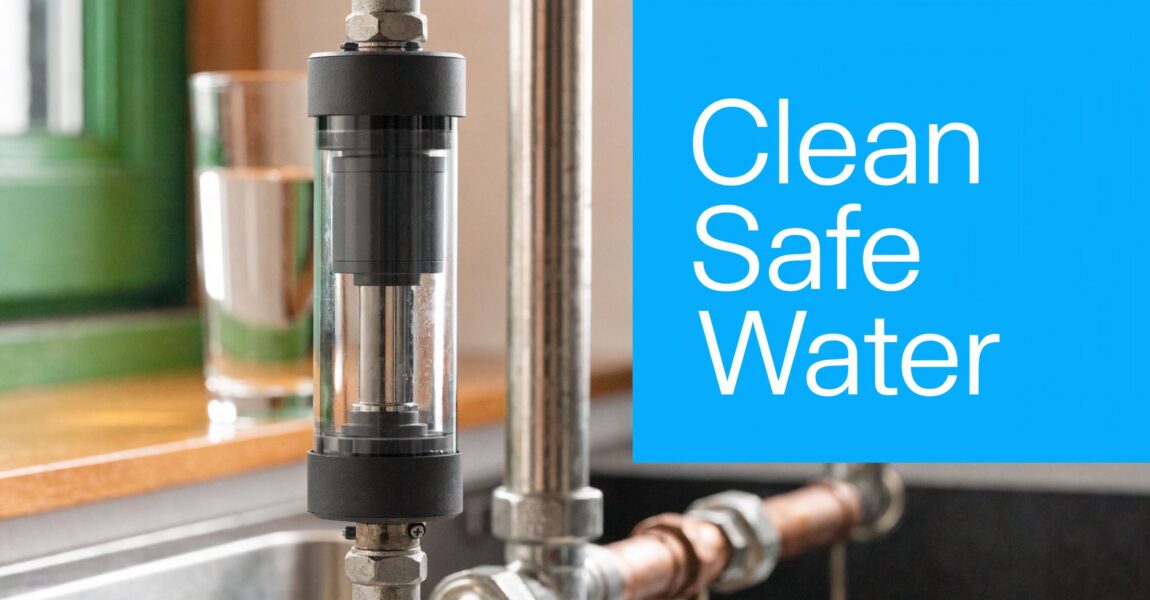
Best Inline Water Filter for Clean, Safe Water
You push the fridge dispenser, fill a glass, and expect cold, clean water. Instead, the first sip tastes faintly like a swimming pool. Then the ice pi ...
You push the fridge dispenser, fill a glass, and expect cold, clean water. Instead, the first sip tastes faintly like a swimming pool. Then the ice pi ...
When you’re hunting for the best inline filter for your home, the real question is: what problem are you trying to solve? A filter to stop your refrigerator’s ice from tasting funky has a totally different job than one installed under the kitchen sink to tackle serious contaminants. Think of it as hiring a specialist for a very specific task.
Top-tier options almost always feature multi-stage carbon block filters with a low micron rating—think 0.5 microns—and crucial NSF certifications. Those certifications are your golden ticket, the independent proof that the filter actually does what it claims, like kicking chlorine, lead, and sediment to the curb for water that just tastes, well, like water. Our guide will walk you through the best inline filter choices so you can find the perfect match for your home.

Picture this: crisp, clean water flowing from your fridge or a separate tap, without you ever having to fill a clunky pitcher again. That's the magic of a good inline water filter. It's a small but mighty device that gets spliced directly into your water line, providing targeted filtration right where you need it most.
These filters are the quiet workhorses of home water treatment. They're usually tucked away behind an appliance or under a sink, silently ambushing water before it reaches your glass, ice cube tray, or coffee maker. Their main job is to strip out the uninvited guests—impurities that ruin the taste, smell, and quality of your drinking water.
So, why are these simple filters becoming such a popular home upgrade? It all boils down to their focused, efficient approach. Instead of treating every single gallon of water in your home (including the water your toilet uses), an inline filter concentrates its power on delivering high-quality water for you to drink and cook with.
You’ll notice the benefits right away:
An inline filter is an ideal solution for renters or homeowners who want targeted filtration without major plumbing surgery. It offers a significant step up from a basic pitcher filter with minimal installation hassle.
To help you get started, we've put together a quick comparison table of our top picks for 2026. This chart lays out our favorite filters for the most common uses around the house, highlighting what makes each one a solid choice.
This table highlights our top-rated inline filters for common household uses, allowing you to quickly compare their key specifications and find the best match for your home.
| Model / Type | Best For | Key Feature | Lifespan |
|---|---|---|---|
| EcoPure EP-INL30 | Refrigerator & Icemaker | 5-year/30,000-gallon lifespan | Up to 5 Years |
| CuZn ILFC-200 | Under-Sink (Chloramine) | KDF-55 media for chloramine & heavy metals | Up to 12 Months |
| Woder 10K-Gen3 | Dedicated Faucet (Lead) | Certified for lead, chlorine, and contaminants | Up to 3 Years |
| Culligan IC-EZ-4 | All-Purpose / Easy Install | Twist-on design and NSF 42/53 certification | Up to 6 Months |
This table gives you a high-level overview. Now, let's pull back the curtain and see what makes these filters tick.
Ever wondered what’s going on inside that little tube hooked up to your fridge? It seems simple enough: your regular tap water goes in one end, and clean, crisp water comes out the other. It’s not magic, but it’s a brilliant bit of engineering that targets specific contaminants right at the point of use.
At its core, an inline filter is a tiny, self-contained purification plant. Water from your supply line gets pushed through a sealed cartridge that's packed with filter media. You can picture it as a microscopic maze where water molecules are allowed to pass, but all the unwanted gunk gets trapped.
This simple "point-of-use" convenience is why these filters are taking over. The global market was valued at $2.5 billion back in 2025 and is expected to hit $4.2 billion by 2033. People want an affordable, easy-to-install way to get rid of things like chlorine and lead, and many certified models can slash contaminants like total trihalomethanes (TTHMs) by up to 95%. You can check out the full market analysis on Data Insights Market to see how it’s changing household water quality.
An inline filter might look basic on the outside, but its power comes from what's packed inside. You've got two main parts doing all the work: the housing and the media.
The most common media you’ll find is activated carbon. Think of it as a super-powered sponge. A single gram of this stuff can have a surface area of over 3,000 square meters—that's about half a football field! It works through a process called adsorption, where things like chlorine, pesticides, and VOCs literally stick to its vast surface and are pulled out of the water.
Here’s a simple way to think about it: Activated carbon is like a contaminant magnet. As water rushes past, chemicals like chlorine are drawn to the carbon's surface and trapped, letting cleaner, happier water flow on through to your glass.
Another critical spec is the filter’s micron rating. This number tells you how big the pores in the filter media are. A smaller micron number means smaller holes, which means it can stop tinier particles.
Here’s a quick breakdown:
While a lower micron rating is usually better for purity, there’s a trade-off. Tighter pores can slow down your water flow and clog up faster if your water is heavy with sediment. That's why choosing the right filter is all about balancing your purification goals with your home’s water pressure and quality.
When you’re picking an inline filter, it’s easy to get lost in a sea of marketing jargon. To find the right one, you have to cut through the noise and look at the actual specs. Things like micron ratings, the type of carbon used, and flow rates are what really matter—they tell you if a filter can actually solve your water woes.
This flowchart is a great starting point. It helps you connect a common water problem to the right type of filter technology.

As you can see, different problems point to different solutions. Let's dig into the specs that make those solutions work.
Most inline filters rely on activated carbon to make water taste and smell better, but how that carbon is constructed makes a huge difference. You'll mainly see two types: Granular Activated Carbon (GAC) and Carbon Block.
A GAC filter is just what it sounds like: a cartridge filled with loose carbon granules. Water meanders around the granules, which works well for reducing chlorine and improving taste. Because the media is loose, these filters usually have a higher flow rate.
A Carbon Block filter is different. It’s made of powdered carbon that’s been compressed into a solid brick. This forces water through a dense, torturous path of tiny pores, giving it way more contact time with the carbon.
While both will improve the taste of your water, a carbon block filter offers much more thorough filtration. Its solid form is better at removing a wider array of contaminants and prevents "channeling"—where water carves a lazy path through the loose media and bypasses the filtration process.
For a simple coffee maker where you just want better-tasting coffee, a GAC filter is probably fine. But if you're filtering drinking water from your kitchen tap, a carbon block is the superior choice.
To help you match the right filter spec to your specific water problem, we've put together this quick comparison table. It breaks down what each specification means and what it's best at targeting.
| Specification | What It Means | Best For Targeting… | Good to Know |
|---|---|---|---|
| GAC Media | Loose carbon granules. | Chlorine, bad taste, and odors. | Higher flow rate but can be prone to "channeling." |
| Carbon Block Media | Solid, compressed carbon. | Chlorine, lead, VOCs, cysts, and sediment. | More comprehensive filtration, lower flow rate. |
| 5 Micron Rating | Pores block particles 5 microns or larger. | Sediment, sand, silt, and rust. | Good for pre-filtration, not for health contaminants. |
| 0.5 Micron Rating | Pores block particles 0.5 microns or larger. | Cysts (Giardia, Crypto), asbestos, and particulate lead. | Essential for filtering health-related contaminants. |
| NSF/ANSI 42 | Certified for aesthetic improvements. | Chlorine taste and odor. | Your baseline for better-tasting water. |
| NSF/ANSI 53 | Certified for health-related contaminants. | Lead, mercury, VOCs, cysts, and other specific contaminants. | The gold standard for safe drinking water. |
This table should give you a clear idea of what to look for on a product's spec sheet based on the issues you've identified in your water.
A filter's micron rating tells you the size of its pores, which determines the smallest particle it can stop. A lower number means finer filtration.
A 5-micron filter is great for catching larger particles like sand, rust, and sediment that you might see in your water. But for health-related contaminants, it just won’t cut it.
This is where a 0.5-micron rating becomes non-negotiable. Filters this fine are able to capture microscopic cysts like Giardia and Cryptosporidium, which are notorious for causing stomach illness and are resistant to chlorine. It’s also a must-have for reducing lead, which often exists as tiny particles. A 0.5-micron filter is far more effective at trapping lead than a 1-micron or 5-micron filter.
If the water is for drinking—especially for kids—you need a filter rated at 0.5 microns and certified for lead reduction. Period.
Flow rate, measured in gallons per minute (GPM), is all about how fast water moves through the filter. This might seem like a boring detail, but it's critical for your appliances. A filter that's too slow can cause real problems.
Remember, a finer micron rating usually means a lower flow rate. You have to balance the need for high-level filtration with the flow rate your appliance demands.
A certification from NSF/ANSI is the only way to know for sure that a filter does what it claims. These are independent, third-party tests that verify a manufacturer's performance claims. For inline filters, two standards are key:
Always check the fine print to see exactly what a filter is certified to remove under NSF/ANSI 53. The best inline filter isn’t just one with a lot of marketing claims; it’s one with the specific certifications that match your water test results.

It’s one thing to understand the specs, but where do these filters really prove their worth? Their true value lies in their versatility. You can tuck these compact filters away to fix specific water problems right where they happen.
An inline filter is a simple upgrade with a surprisingly big impact on everything from your morning coffee to the ice in your drink. Let's look at the most common places to install one in your home.
This is probably the #1 reason people start looking for the best inline filter. The filter that comes with your fridge is often absurdly expensive, doesn't last long, and might only handle basic chlorine taste. Even worse, people often forget to change them, leading to cloudy, awful-tasting ice cubes that ruin a perfectly good drink.
Placing an external inline filter on the water line that feeds your fridge is a total game-changer.
Installation is usually a walk in the park. You just cut and splice the filter into the 1/4-inch water line behind your fridge. Most come with quick-connect fittings that just push on, so you don't need a toolbox full of special equipment.
For refrigerators, your main goal is improving taste and odor. You'll want an inline filter with a quality carbon block and an NSF/ANSI 42 certification. A 5-micron rating is plenty for this job.
If you want purified water on tap just for drinking and cooking, an inline filter hooked up to its own dedicated faucet is a fantastic setup. You get a steady supply of clean water without filtering all the cold water you use for washing dishes.
Under-sink systems are perfect for tackling more serious contaminants. Since it's for a dedicated faucet, you can choose a filter with a much finer micron rating (like 0.5 microns) and higher-level certifications without worrying about slowing down your main kitchen faucet.
This is where it really shines for specific water issues:
Installation is a bit more involved here since you have to tap into your cold water line and run a new, smaller line to a separate faucet. The most common connector size is 3/8-inch, but always double-check your plumbing before you buy.
If you're serious about coffee, you already know water quality is everything. The minerals and chemicals in your tap water can completely sabotage the flavor of your expensive, single-origin beans. On top of that, scale buildup from hard water is the number one killer of coffee and espresso machines.
An inline filter is the perfect fix. You can install it on the water line of a plumbed-in machine or simply use it to fill the reservoir of a countertop model. The commercial inline water filters market is growing fast, projected to reach $1.85 billion by 2025. Businesses know that pure water equals happy customers and longer-lasting equipment—a trend largely driven by the $4.78 billion North American market. For more on this, you can review the commercial water filter market insights on Data Insights Market.
For coffee lovers, an inline filter delivers two key victories:
Look for a filter that specifically mentions scale control. These are often the best inline filter choices for protecting both your brew's taste and your appliance's lifespan.
Alright, we've waded through the technical details—micron ratings, certifications, and flow rates. Now it's time to put that knowledge to work and pick the right filter for your home.
Instead of just giving you a list, I'm going to show you which filters make the most sense for specific jobs, like your fridge's icemaker or the tap you use for drinking water. We'll look at the best filter for simply better-tasting water, and the top choice if you're worried about serious contaminants like lead.
There's a reason these little filters are getting so popular. The home water filtration market is projected to hit $7.13 billion by 2026, and inline filters are a huge part of that. They can slash contaminants like hydrogen sulfide by up to 95%, getting rid of that rotten-egg smell instantly. Plus, with replacement costs often 70% lower than whole-house systems, they just make financial sense. For many families, switching from bottled water saves over $1,000 a year. You can dig into the numbers in these home water filtration market trends on Arizton.
When you just want better-tasting water and clearer ice from your fridge, the goal is simple: get rid of chlorine and other funky tastes. You need a filter that lasts a long, long time and doesn't need constant changing.
If your main goal is just getting rid of that chemical taste in your fridge's water and ice, a long-lasting aesthetic filter is your best bet. It saves you from buying expensive, proprietary fridge filters every six months.
If you're dealing with a serious health concern like lead, especially from a dedicated drinking water tap, you have to get serious about your filter choice. Certification and a fine micron rating are non-negotiable here.

Getting the most out of your inline filter really comes down to two things: a solid installation and proper upkeep. The great news? You probably don’t need to call a plumber for this one. Most inline filters are designed for a quick and simple DIY install.
With just a few basic tools and a bit of focus, you can have cleaner, better-tasting water flowing in less than an hour. We’ll walk through the essentials right here, from getting started to handling the long-term care that keeps your water pure and your appliances protected.
Don't just jump in. Taking a few minutes to prep will save you a world of headache and a soggy floor. Make sure you knock these out before you ever think about cutting a water line.
Flushing your new filter is the single best way to avoid cloudy water or a clogged faucet aerator right after installation. It gets rid of all the harmless but messy black carbon fines that are normal in a brand-new filter.
Most inline filters with quick-connect fittings install the same way. The instructions might look a little different from brand to brand, but the core process is simple. Let’s use a standard refrigerator water line as our example.
Step 1: Find Your Spot
Pick a spot on the 1/4" water line behind the fridge where the filter will be easy to get to. Remember, you'll have to change it later, so don't bury it in a spot you can't reach.
Step 2: Cut and Connect
With the water off, use your tube cutter to make a clean, square cut in the plastic tubing. Push one end of the line firmly into the filter's "inlet" port and the other into the "outlet" port. There’s always an arrow on the filter showing the direction of water flow—make sure you follow it.
Step 3: Check for Leaks
Slowly turn the water back on. Now, watch the connection points closely for any signs of a drip. If you spot one, shut the water off again. Usually, it just means the tube isn't pushed in all the way or the cut wasn't perfectly straight.
Even the pros hit a snag now and then. If you run into trouble, it’s almost always one of these two things.
For a deeper dive into filter maintenance and other expert tips, our library has plenty of guides to help you out. You might be interested in our article which provides more water filter advice.
Even after you've done your homework, a few nagging questions can pop up. Let's walk through the most common ones we hear from people trying to pick the right inline filter.
Any filter will cause a tiny drop in pressure, but it should be so small you don't even notice. For a properly sized inline filter, we're talking a drop of only 2-5 PSI. If you suddenly feel like your water is just trickling out, something's wrong.
The usual suspect is a mismatch between the filter and your water. Trying to use a very fine 0.5-micron filter on a line that's heavy with sediment is a classic mistake. The filter just clogs up instantly. Always match the filter's GPM to what your appliance actually needs, and if your water is full of gunk, put a simple sediment pre-filter in front of it.
The timeline on the box? Think of it as a suggestion, not a rule. A filter’s true lifespan comes down to two things: what’s in your water and how much of it you use.
If your city goes heavy on the chlorine, that carbon media is going to get used up fast. The same goes for high sediment levels—they'll clog the works long before the "official" replacement date.
Forget the calendar. Pay attention to your water. The moment you start tasting chlorine again or notice the flow from your fridge slowing down, it’s time for a change.
Not usually. For most jobs, like hooking a filter up to your refrigerator’s 1/4-inch water line, it's a simple DIY project. Most people with quick-connect fittings can get it done in less than an hour.
That said, know your limits. If the job involves cutting into a main copper pipe or if you’re just not comfortable with plumbing, call a pro. A small mistake can cause a huge, expensive mess from water damage. It's always better to be safe than sorry.
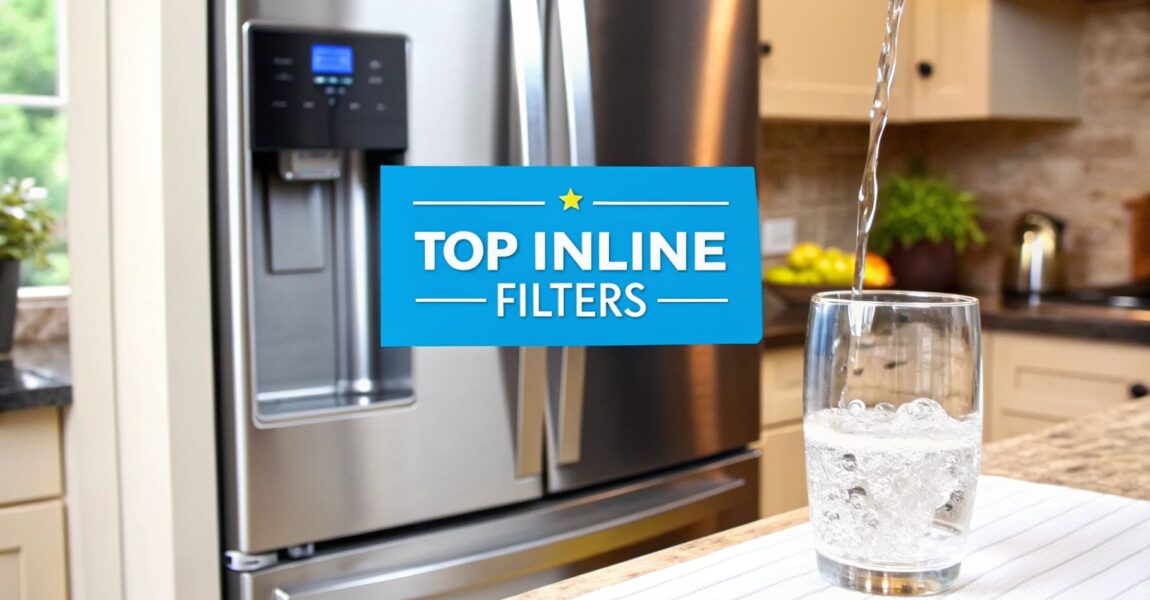
Ever wonder why the water from your fridge dispenser tastes a little… off? Or why your ice cubes look cloudy and melt into a drink with a faint swimming-pool funk? You’re not imagining it. While your refrigerator’s built-in filter is a nice thought, it’s often just a glorified tea bag for your water line. It might catch a little chlorine, but that’s about it. If you want truly clean, safe, and delicious water and ice, it’s time to call in the specialist: the inline water filter.
Think of it as a bouncer for your fridge's water line. It installs before the water even reaches the appliance, creating a powerful checkpoint that strips out a whole host of nasty contaminants that internal filters can't touch. The best ones are certified for NSF 53, a seal of approval that means they’re proven to reduce health-related contaminants like lead, cysts, and nasty chemicals. They are the secret to unlocking water that's not just better-tasting, but fundamentally cleaner.
Let's be honest, those little pop-in cartridges inside your fridge are designed for convenience, not performance. They’re tiny, so they can only hold a small amount of filtration media, which is why they’re mostly good for one thing: reducing the taste and smell of chlorine. An inline filter, however, is a whole different beast. It’s an external powerhouse that gets plumbed directly into your water line.
This "outside the box" design is its superpower. Since it isn’t crammed into a tiny refrigerator compartment, an inline filter can be much larger. More size means more filtration media, and that translates into two huge wins for your home: a filter that lasts way longer and, more importantly, one that can wage war on a much broader spectrum of impurities.
An inline filter isn't just about masking bad tastes; it's about actively purifying your water to make it safer for your family.
The real game-changer is the level of protection. An internal filter might be certified for NSF 42 (Aesthetic Effects), but a great inline model will often carry the NSF 53 (Health Effects) certification. That's your proof it removes contaminants that can actually impact your health.
This isn't just a niche product anymore. The demand for cleaner water at home has exploded, pushing the global refrigerator water filter market toward $2.5 billion by 2025, with a steady annual growth between 5.4% and 7.7%. This just shows how vital reliable home water filtration has become. By choosing an inline filter, you’re not just buying a piece of hardware; you’re investing in a more powerful and long-lasting system for truly pure water and ice.
Choosing the right inline water filter can feel like trying to crack a secret code. You've got terms like "micron rating" and "NSF 42" flying around, and it's easy to get lost in the jargon. But once you understand what these specs actually mean for the water in your home, you can see right past the marketing fluff and find a filter that genuinely delivers.
Think of the filter media as the engine of the whole operation. It’s the stuff inside the cartridge that does all the heavy lifting to pull contaminants out of your water. You'll mainly encounter two types: Granular Activated Carbon (GAC) and Carbon Blocks.
GAC filters are filled with loose bits of carbon. As water weaves its way through these granules, the carbon acts like a magnet for chlorine, which is a huge help for improving the taste and smell of your water. They work well and usually don't choke your flow rate, so you won't be waiting an eternity to fill a glass.
Carbon Block filters are a different animal. They're made from super-fine carbon powder that's been compressed into a solid block. This creates a much denser and more intricate maze for water to navigate, allowing it to trap a wider variety of smaller contaminants, including some VOCs and cysts. The trade-off can be a slightly slower flow, but you often get a much higher level of filtration.
Here's the bottom line: if your main goal is to banish that swimming-pool taste from your water and ice, a good GAC filter is your champion. But if you’re concerned about a wider range of chemical contaminants in your home's water supply, a carbon block filter is your best bet for a more robust defense.
A filter's micron rating tells you the size of the particle it can reliably trap. A micron is impossibly small—one-millionth of a meter. So a filter with a 5-micron rating will stop anything 5 microns or larger, but a 0.5-micron filter will snatch much smaller, sneakier particles from your water.
To give you some perspective:
A smaller micron number means more powerful filtration. For instance, to get certified for reducing cysts, a filter needs a rating of 1 micron or less. This is a huge deal if you're concerned about microbiological contaminants in your water.
This is arguably the most important thing to look for on the box. An NSF/ANSI certification is a seal of approval from an independent lab, verifying that the filter actually does what the manufacturer claims. It's not just marketing hype; it's a performance guarantee.
These are the three big ones you'll see for home water filters:
Finally, you have to think about the day-to-day experience. The flow rate, measured in gallons per minute (GPM), dictates how fast your dispenser fills a glass. Most inline filters run at about 0.5 GPM, which is plenty for filling a water bottle without feeling like you're watching paint dry.
The filter lifespan tells you how many gallons it can purify before it needs to be replaced. A standard inline filter is usually good for about 1,500 gallons or six months of use. Knowing this helps you calculate the true long-term cost and how often you'll be performing a quick filter swap.
Alright, now that we’ve decoded the technical jargon, let’s see how the best inline filters actually perform in the real world. A simple list of features on a box is one thing, but finding the best inline water filter refrigerator solution for your home comes down to your unique water quality, your daily needs, and what you value most.
We're going to move past the marketing fluff and put the top contenders side-by-side, focusing on what really counts: raw filtration power, official certifications, water flow, lifespan, and overall value. This is about connecting the dots from specs on a page to the practical benefits you'll enjoy every day.
This quick guide highlights the big three specs—certifications, micron rating, and flow rate—that separate a decent filter from a great one.
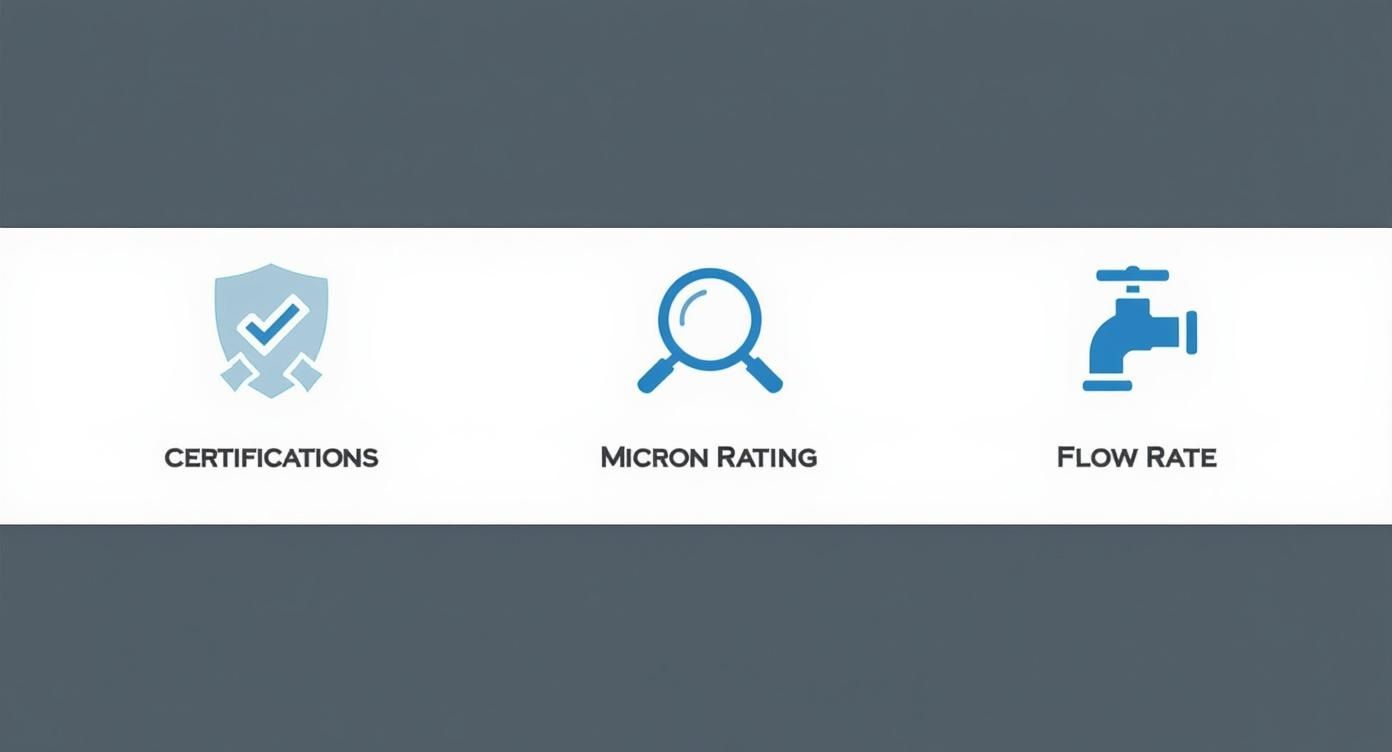
As you can see, these three elements have to work in harmony. They're what determine if a filter just makes water taste a little better or if it's a serious purification workhorse for your home.
To give you a clearer picture, let's lay out the key metrics for a few top-performing models in a side-by-side comparison. This table breaks down what you get with each filter, helping you match their strengths to your specific household needs.
| Model | Key Certifications | Filter Lifespan (Gallons) | Flow Rate (GPM) | Primary Contaminants Reduced | Best For |
|---|---|---|---|---|---|
| Heavy Metal Specialist | NSF/ANSI 42 & 53 | 750 | 0.5 | Chlorine, Lead, Cysts, VOCs | Homes with older plumbing and lead concerns. |
| The Marathon Runner | NSF/ANSI 42 | 3,000 | 0.75 | Chlorine, Taste, Odor | Busy families seeking long-term value and convenience. |
| Multi-Stage Defender | NSF/ANSI 42 | 1,500 | 0.6 | Sediment, Chlorine, Bacteria | Households using well water or with high sediment. |
| The Budget Champion | NSF/ANSI 42 | 1,500 | 0.75 | Chlorine, Taste, Odor | Renters or those prioritizing low upfront cost. |
This showdown illustrates that there’s no single "best" filter—just the best one for a particular home. Now, let's put these into real-world contexts.
Picture this: you live in an older city apartment or a house built before the 1980s. Your biggest water worry isn't just that chlorine taste. It's the nagging thought of lead leaching from old pipes and solder. In this case, your buying decision should hinge on one critical credential.
You absolutely need a filter with a solid NSF/ANSI 53 certification specifically for lead reduction.
For anyone with older home plumbing, the choice is clear. The superior contaminant removal of the Specialist is the only responsible option, even if it’s a bit more expensive or has a slightly slower flow.
Key Differentiator: This isn't about better-tasting water; it's about health protection. An NSF 53 certification for lead is a non-negotiable feature for homes with old pipes, elevating the filter from a simple convenience to an essential home safety device.
Now, imagine a suburban family with decent municipal water. Their main goals? Get rid of the chemical taste in their water and ice, find a filter that lasts as long as possible so they don't have to change it constantly, and keep the budget in check.
Here, the focus shifts from hardcore contaminant removal to longevity and cost-effectiveness.
While the Budget Champion saves you a few dollars at the register, the Marathon Runner is the smarter long-term buy. You'd have to purchase and install two of the budget filters to get the same life out of one long-lasting model, which wipes out the savings and doubles the hassle. For any busy household, that "set it and forget it" factor is a huge win.
Finally, let's consider a homeowner on a private well. Their water problems are completely different. Instead of chlorine, they're battling sediment, maybe some rust particles, and that "earthy" taste. Plus, their water pressure can be unpredictable.
The right filter for this job needs to be a multi-stage powerhouse.
For anyone on a well, the multi-stage filter is really the only way to go. Its layered design ensures you get clean water and a decent filter life because it doesn't let sediment overwhelm the carbon core.
A filter's effectiveness is completely situational. The "best" filter is simply the one whose strengths are a perfect match for your home water's specific weaknesses.
When you're ready to buy, look past the brand name and get right to the performance data. Certifications are your proof of performance, filter life determines your long-term cost and how often you'll be under the sink, and the filter media dictates what’s actually being removed from your water.
As you compare models, you can explore a wide selection of Awesome Water Fridge Filters to see how these different specs line up with different price points. By matching the filter's capabilities to your home's unique water profile, you can confidently pick an inline filter that will deliver pure, fantastic-tasting water and ice for years to come.
https://www.youtube.com/embed/kho7FMA4t1Q
Installing an inline water filter probably sounds a lot more intimidating than it really is. The truth is, most modern filters are designed for a quick DIY job that just about anyone can knock out in less than 30 minutes. You can put away the plumber's number and that giant toolbox. All you really need is a little confidence and a couple of basic items.
This guide will walk you through it, step by step. We’ll demystify the process and make sure you get a solid, leak-free connection. Your reward? Crisp, clean water and ice straight from your fridge for years to come.
Before you even touch that water line, get all your supplies laid out and ready. It beats scrambling to find something mid-installation. Luckily, the list is short and sweet.
You will need:
That's it. Seriously. Most of the best inline water filter refrigerator kits these days use push-to-connect fittings, so you won’t need any special glues, clamps, or wrenches to get a tight seal.
With your gear ready, you're set to begin. Just follow these simple steps for a perfect install.
Locate and Shut Off the Water Supply: This is the most critical first step. Find the small shut-off valve on the 1/4" plastic or copper tube running to the back of your refrigerator. It’s usually a small handle or a saddle valve. Turn it clockwise until it stops. To double-check, try the water dispenser on your fridge—if nothing comes out, you're good to go.
Cut the Water Line: Now, decide where you want the filter to live. You'll thank yourself later if you pick a spot with easy access for future changes, like right behind the fridge or under the kitchen sink. Once you've found the perfect spot, use your tube cutter or utility knife to make one clean, straight cut. A crooked cut is the number one cause of a leaky connection.
Connect the Filter: Take a look at your new filter. You should see an arrow printed on it that shows the direction of water flow. This arrow must point towards your refrigerator for the filter to work correctly. Now, just push the end of the waterline coming from the wall firmly into the "in" port. Then, push the other end of the line that goes to your fridge into the "out" port.
The real trick to these modern push-to-connect fittings is making sure the tube is seated all the way in. You should feel a little "click" or see it bottom out about half an inch into the fitting. Give the tube a gentle tug to be sure it’s locked in.
You're on the home stretch! These last few steps are just to make sure your work is solid and the filter is ready to provide great-tasting water.
Once the water runs clear, you're officially done. Don't forget to write the date on the filter so you'll know when it's time for a replacement—usually every six months. You've just successfully installed the best inline water filter refrigerator solution for your home.
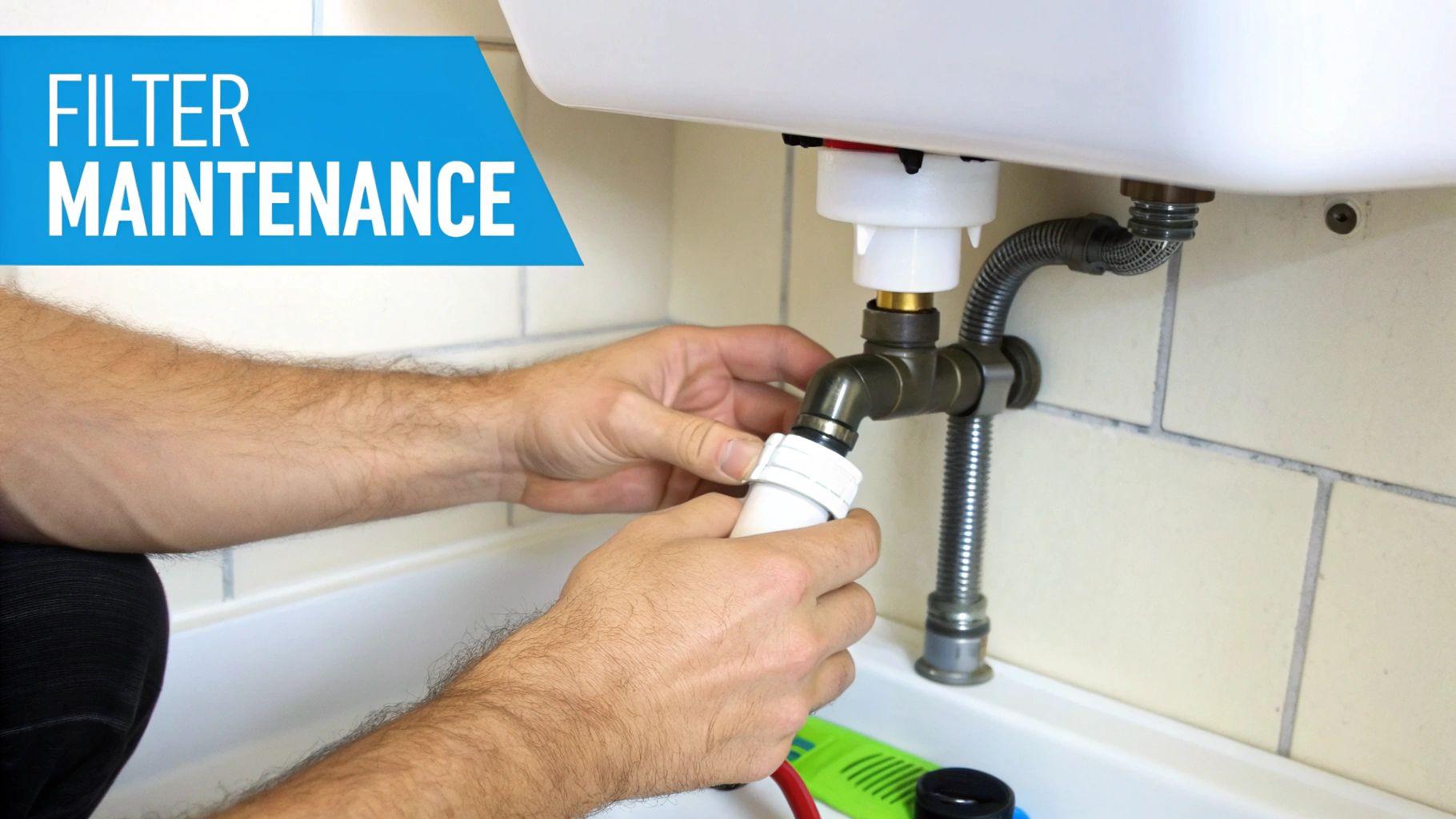
Alright, you’ve got your new inline filter installed. Fantastic! But before you grab a glass, there’s one small but critical step to get everything running perfectly. Properly commissioning the filter is the key to getting that clean, crisp taste you’re after from day one.
Any new carbon-based filter needs a good flush. This does two things: it clears out any harmless carbon "fines"—tiny, loose particles of carbon left over from the manufacturing process—and it saturates the filtration media. This ensures water flows evenly through the entire cartridge for the best possible performance.
Just run about 2-3 gallons of water through your fridge’s dispenser into a bucket or the sink. Don't be alarmed if the water looks a bit cloudy or discolored at first; that's totally normal. Once it runs crystal clear, your filter is officially ready for duty.
It's tempting to take a "set it and forget it" approach with an inline filter, but changing it on time is the single most important part of keeping it working. Over time, the filter's media gets clogged with all the contaminants it has trapped from your water. Once it hits capacity, its ability to capture new impurities plummets.
Worse yet, a clogged filter can become a breeding ground for bacteria. It also forces your refrigerator’s water system to work harder, which can strain the appliance and lead to leaks or a frustratingly slow water flow. If neglected, your powerful filter can quickly turn into part of the problem.
Sticking to the manufacturer's replacement schedule isn't just a recommendation—it's the only way to guarantee you're getting the water quality and safety you paid for. An old filter is often worse than no filter at all.
Most inline filters are built to last about six months or for a certain number of gallons, whichever comes first. The easiest trick is to just write the installation date on the filter cartridge with a permanent marker. Pair that with a recurring reminder on your phone’s calendar for six months down the road.
You also need to consider your local water conditions.
There’s a reason the replacement filter market is so huge. The global refrigerator water filter market is projected to grow from $1.23 billion to nearly $1.90 billion by 2031, and replacement cartridges are a massive slice of that pie. It just goes to show how critical regular changes are for home water filter performance.
By following these simple maintenance steps, you can ensure your investment continues to deliver the best-tasting and safest water for your family.
Even after getting the basics down, you probably still have a few questions about how these filters work for your home. Let’s tackle the most common things people ask, so you can feel totally confident in your choice.
Getting these details sorted out is what separates a decent purchase from a great one.
Absolutely! In fact, that's one of the best reasons to get one. Inline filters are the perfect solution for refrigerators that didn't come with a built-in filter system.
They connect directly to the standard 1/4-inch water line that feeds your ice maker and water dispenser. The filter purifies the water before it even enters your fridge, giving you a serious filtration upgrade no matter how old or basic your appliance is.
It shouldn’t. While adding anything to a water line will technically slow it down a tiny bit, a good inline filter is designed to maintain a smooth flow. Most run around 0.5 GPM (gallons per minute), which is plenty for a fast fill-up at the dispenser.
If you ever notice a major drop in pressure, it's almost never the filter's fault. It’s actually the clearest sign that the filter has done its job, has captured a ton of gunk, and is ready to be swapped out for a fresh one.
An inline filter is often a much better choice than the standard one inside your fridge. They're bigger, so they hold more filter media. This means they last longer and can pull out a much wider range of contaminants—not just the chlorine that affects taste and smell.
Most manufacturers suggest a new filter every six months, or after a specific number of gallons (like 1,500) has passed through it. The easiest trick is to grab a permanent marker and write the installation date right on the filter cartridge itself.
I also like to set a recurring reminder on my phone calendar. Beyond that, just trust your senses. If you notice the water starts tasting a little off or the flow from the dispenser slows down, it's definitely time for a change. For more tips on this, you can find a lot of practical advice on water filter maintenance.
When it comes to pure filtration performance, yes, in most cases they are a significant upgrade. The built-in filter that comes with your fridge is convenient, but it's also small and typically only certified to improve taste and smell (NSF 42).
An inline filter, on the other hand, gives you a much higher level of protection. Many are certified under NSF 53, which means they are proven to reduce serious health-related contaminants like lead, cysts, and harmful chemicals. You're getting far more comprehensive purification for your home's water.
At Water Filter Advisor, we provide the insights you need to make confident decisions about your home's water quality. Explore our guides and reviews to find the perfect filtration solution for your family.
https://www.waterfilteradvisor.com
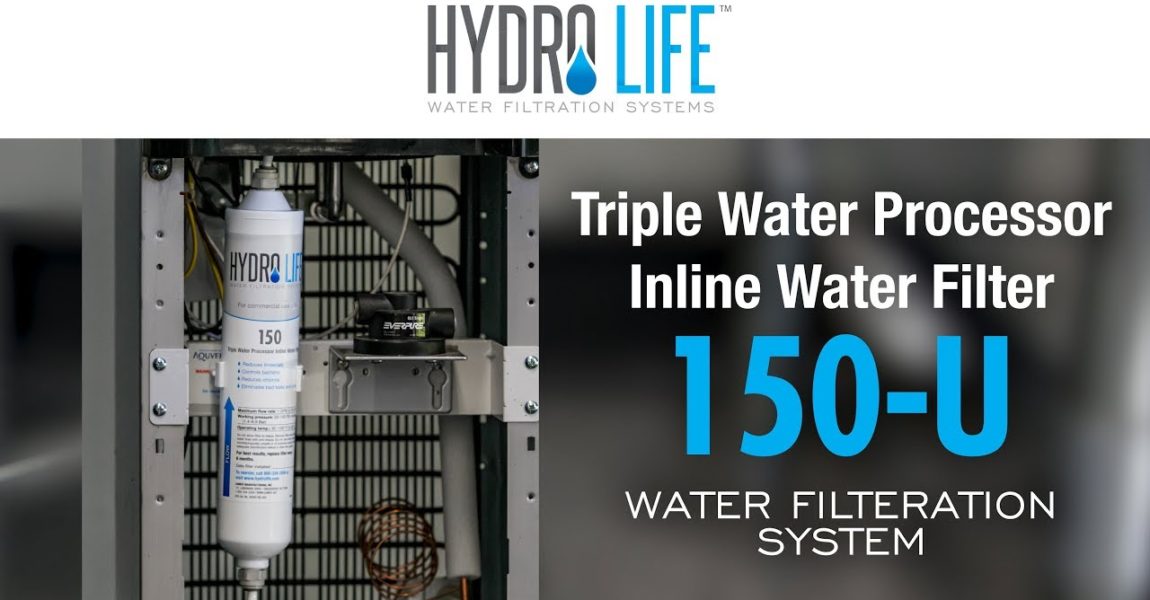
Hydro Life™ Triple Water Processor Inline Water Filter 150-U Water Filtration System
(Camco 52600)
Original Video Source
