Water Filtration System Home: Your 2026 Guide to Purity

You fill a glass from the kitchen tap, take a sip, and pause. Maybe it tastes a little like a swimming pool. Maybe it smells faintly chemical. Maybe the water looks clear, but you still don't feel fully settled about what's in it.

That moment matters more than people think.

A lot of homeowners start caring about filtration the same way. Not from a big disaster, but from a tiny moment of doubt at the sink, in the shower, or while filling a baby bottle. You're not being picky. You're paying attention to something your family uses every day.

That First Sip of Doubt

One customer at a hardware counter once described it perfectly. “I don't know what's wrong with my water,” she said, “but I don't like wondering every time I drink it.” That's where many people are right now. The water may be legal to drink, but “safe enough” and “something I trust” aren't always the same feeling.

A person holding a clear glass of water while looking at it, with the text Tap Doubts.

That concern is common. As of 2023, 91% of Americans reported using a water filter, a 25% increase since 2020, and EPA data showed that 27% of public water systems violated at least one drinking water standard in 2022, according to NSF's water filter research summary.

What your senses are telling you

Your eyes, nose, and tongue can't identify every contaminant, but they often notice clues:

  • Taste changes can point to chlorine, minerals, or old plumbing.
  • Odor problems often show up before you ever see an issue in the glass.
  • Cloudiness or particles may suggest sediment, rust, or disturbed pipes.
  • Skin and hair complaints after showering can make people realize the issue isn't only about drinking water.

The tricky part is that clean-looking water can still contain things you'd rather remove. Clear water isn't the same as filtered water.

Practical rule: If you've started wondering about your tap water more than once, that's enough reason to look into filtration.

Why filtration feels confusing

Home water treatment has a jargon problem. You start searching for a water filtration system home setup and suddenly you're buried in terms like carbon block, KDF, RO, UV, micron rating, NSF 42, NSF 53, point-of-entry, and point-of-use. It sounds more complicated than it is.

The job is simple. You're trying to match a water problem to the right tool.

Some systems improve taste. Some protect pipes and appliances. Some target lead. Some handle a broad mix of dissolved contaminants. Some do one job at one faucet. Others treat every drop that comes into the house.

Once you sort those categories out, the whole subject gets much easier to live with and much easier to shop for.

Mapping Your Home's Water Filtration Options

Think of home filtration like tools in a garage. You wouldn't use the same tool to hang a picture, rebuild a fence, and tighten a loose cabinet hinge. Water filters work the same way. The right system depends on where the problem is and what outcome you want.

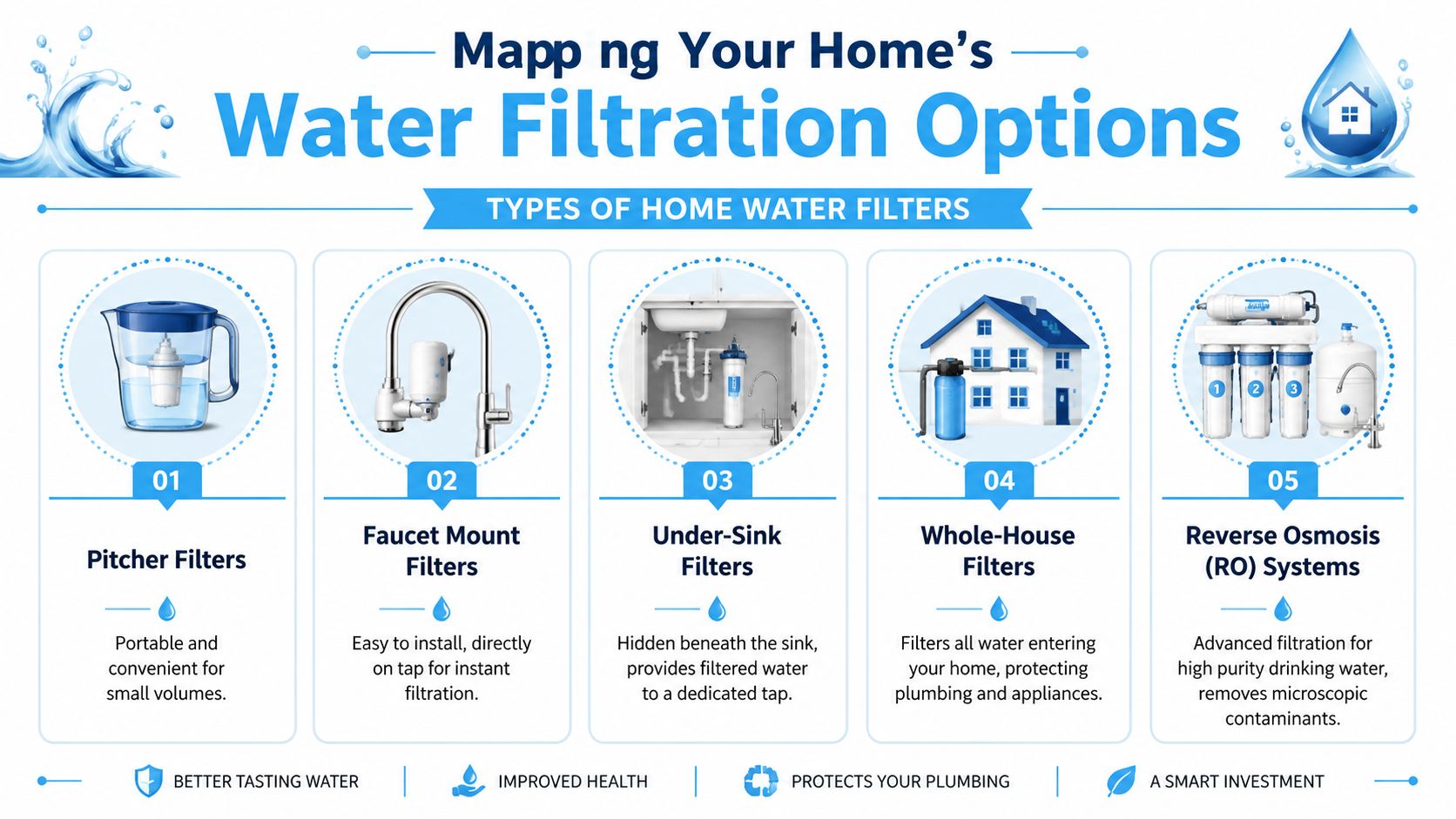
An infographic illustrating five different types of water filtration systems available for residential home use.

Point of use versus whole house

The first split is simple.

A point-of-use filter treats water at one location, like a kitchen faucet, under-sink tap, or pitcher. A whole-house system, also called point-of-entry, treats water where it enters the home. That means the kitchen sink, shower, washing machine, and water heater all get filtered water.

If your main complaint is drinking water taste, a point-of-use filter may be enough. If you care about showers, laundry, scale, plumbing protection, and chlorine smell across the whole house, you're looking at a bigger system.

The main filter types people actually buy

Here's the plain-English version of the common options:

  • Pitcher filters are the easiest entry point. Fill, wait, pour. Good for renters, small households, and people who want a no-tools solution.
  • Faucet-mount filters snap onto a kitchen tap. They're convenient when you want filtered water on demand without opening a cabinet.
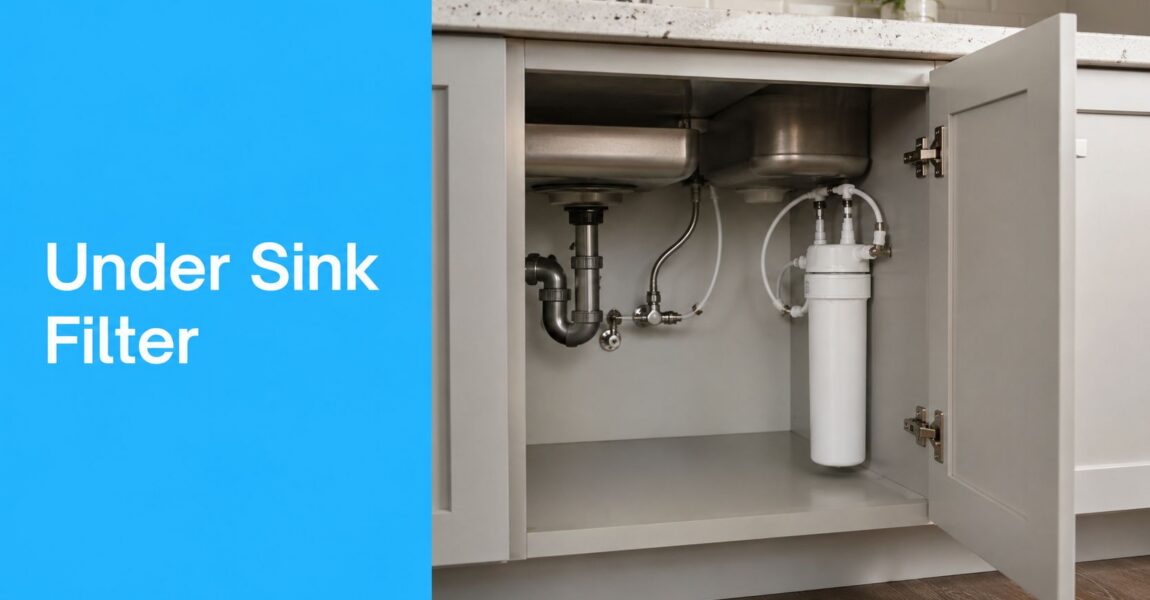
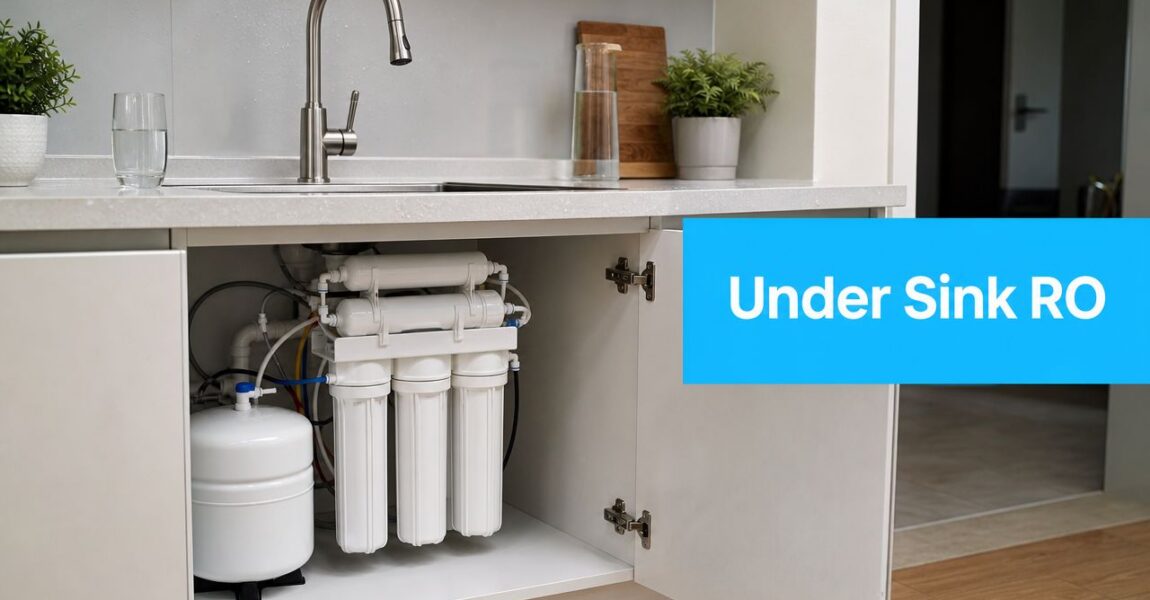
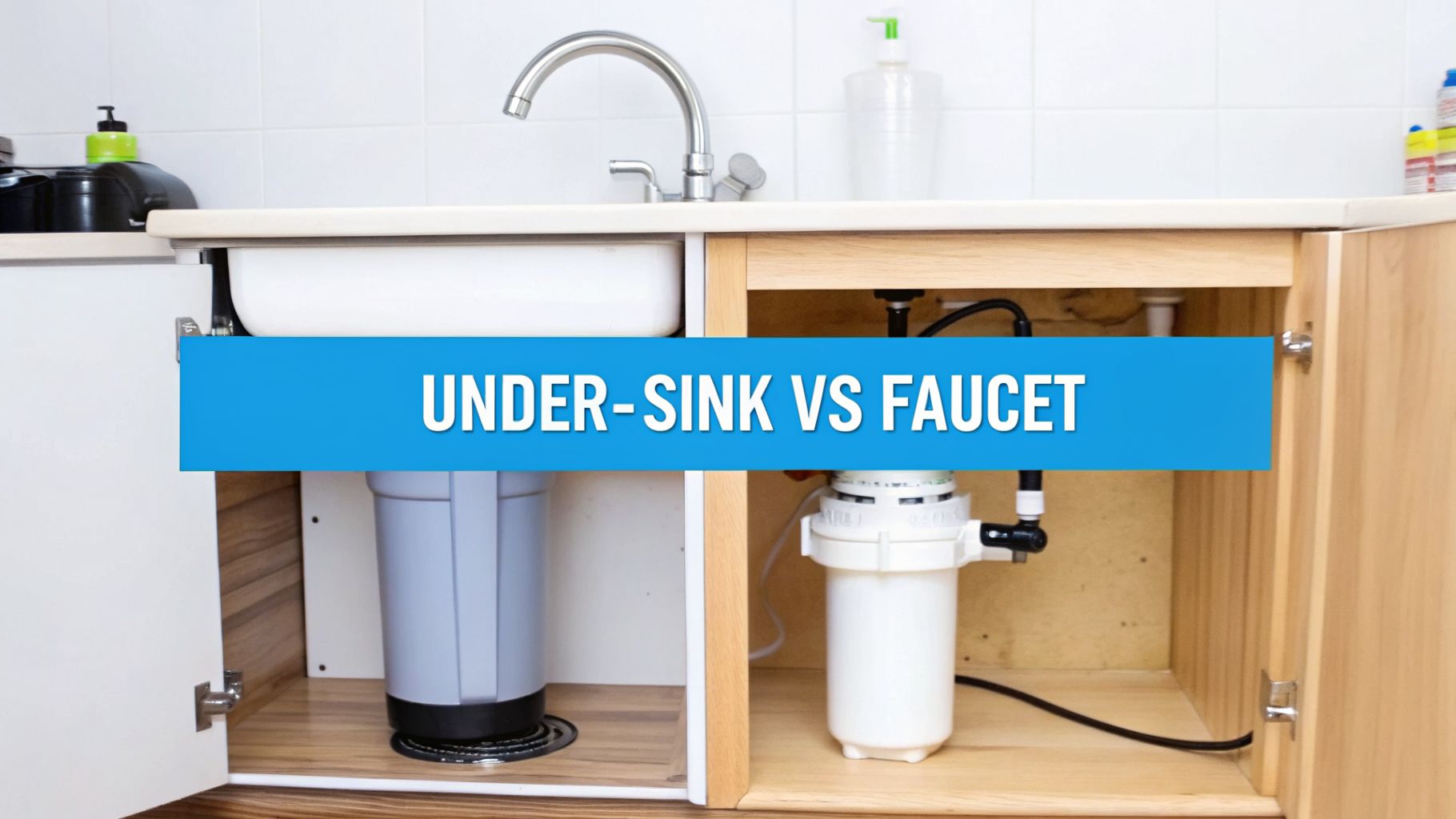
  • Under-sink filters hide below the counter and usually feed a dedicated drinking-water faucet. They keep the counter clear and feel more permanent.
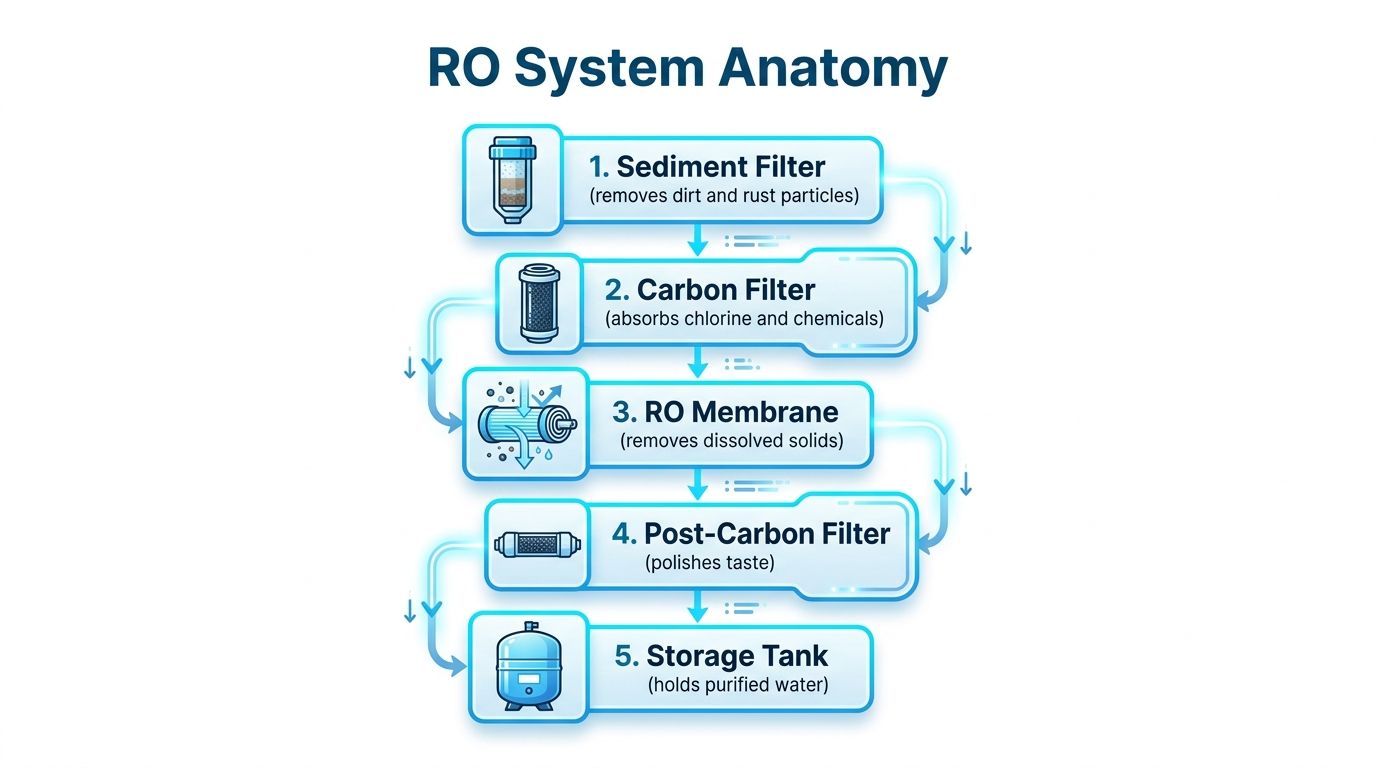
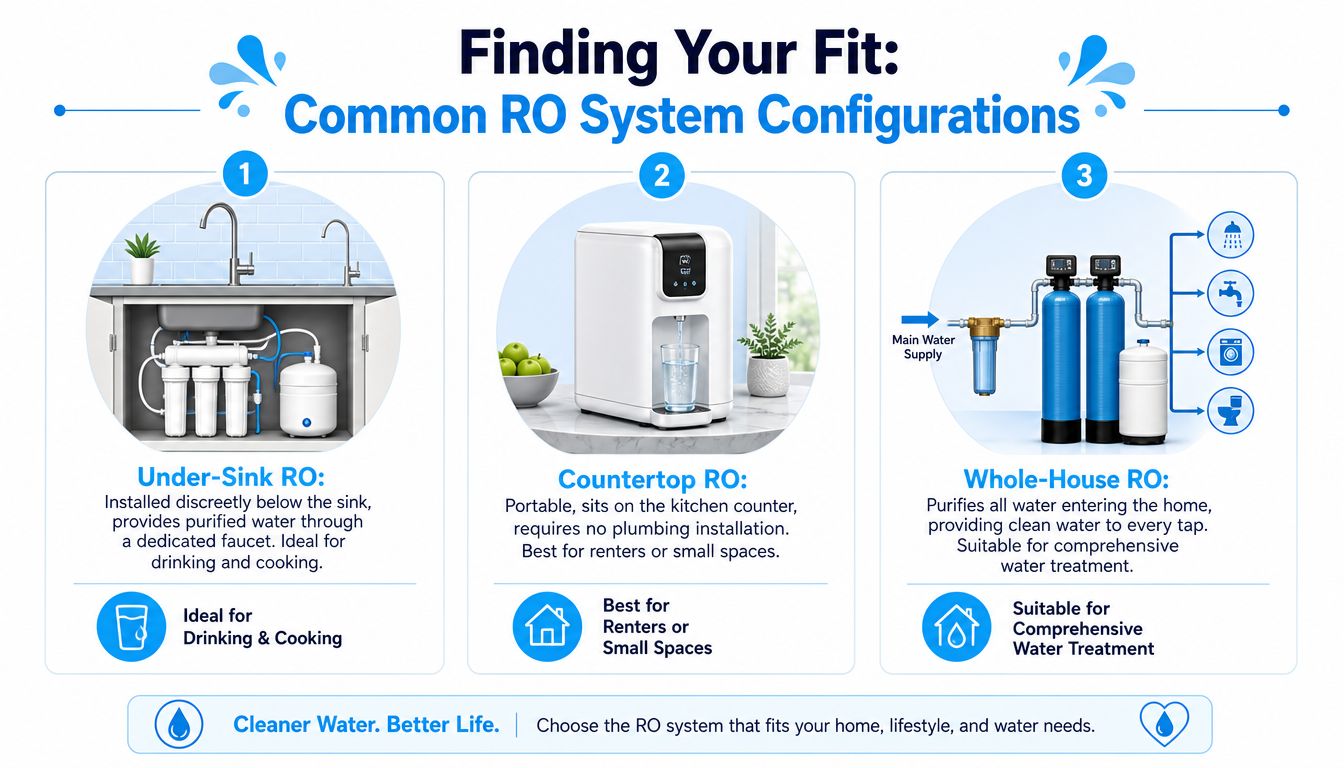
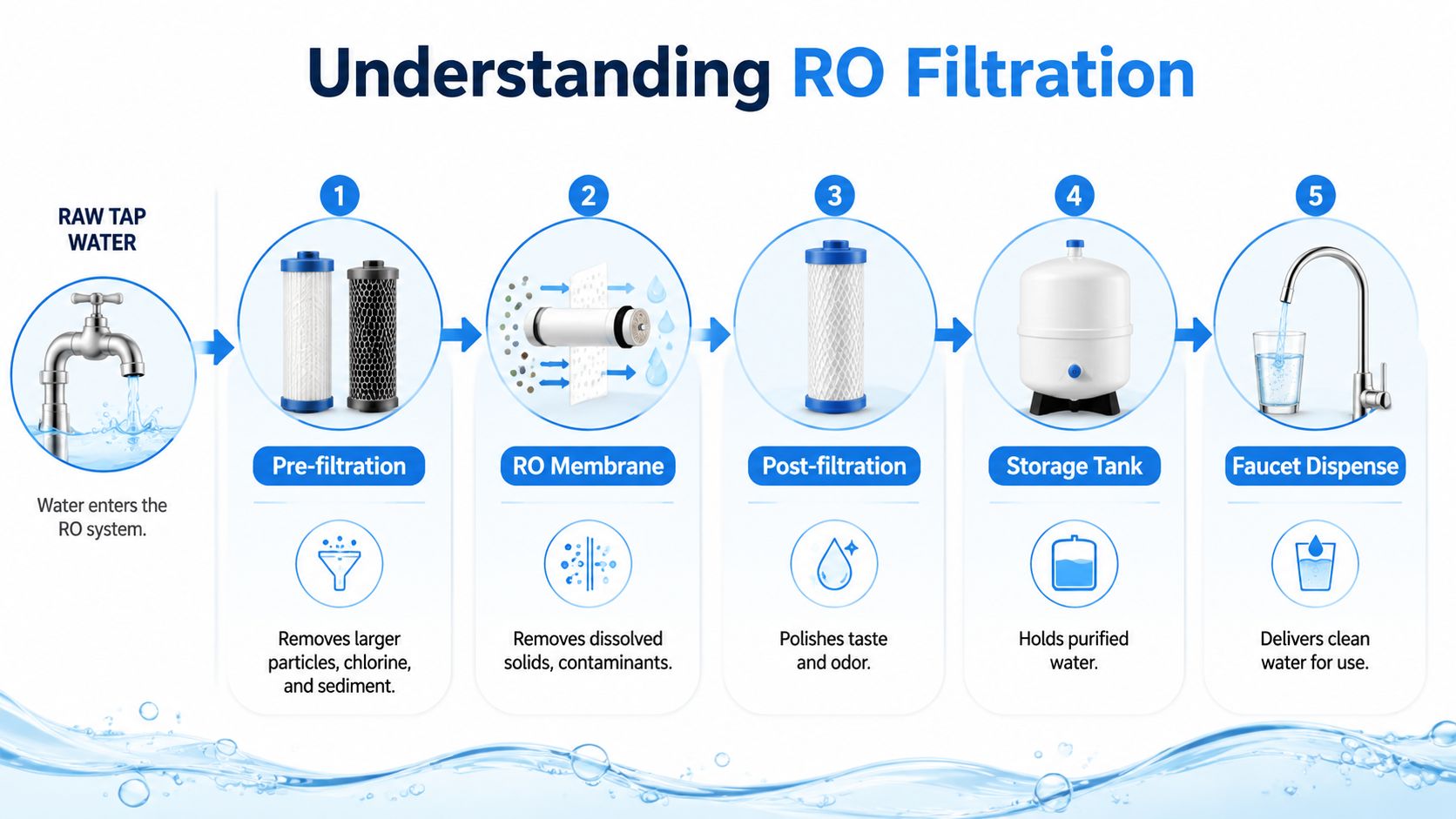
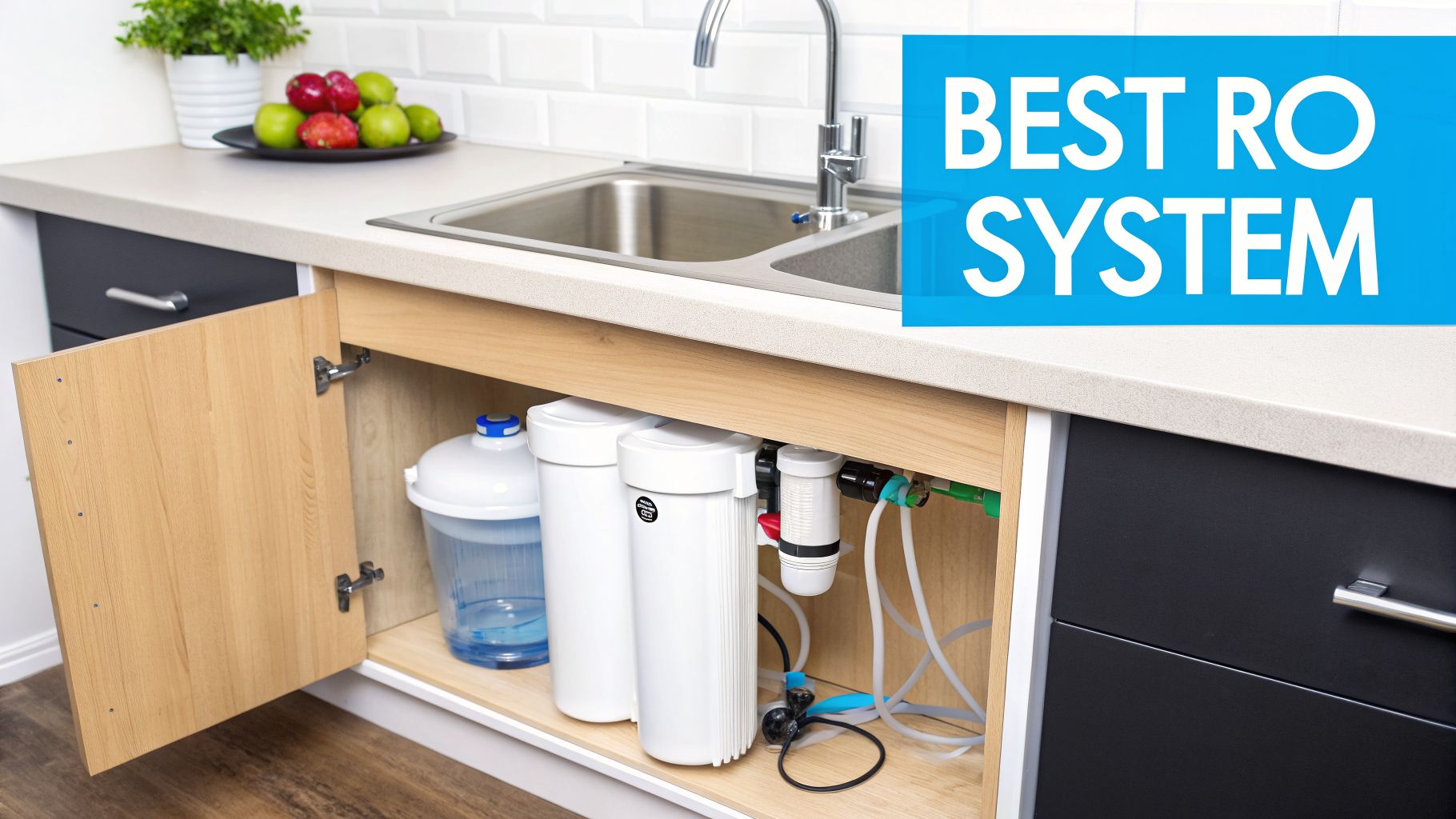
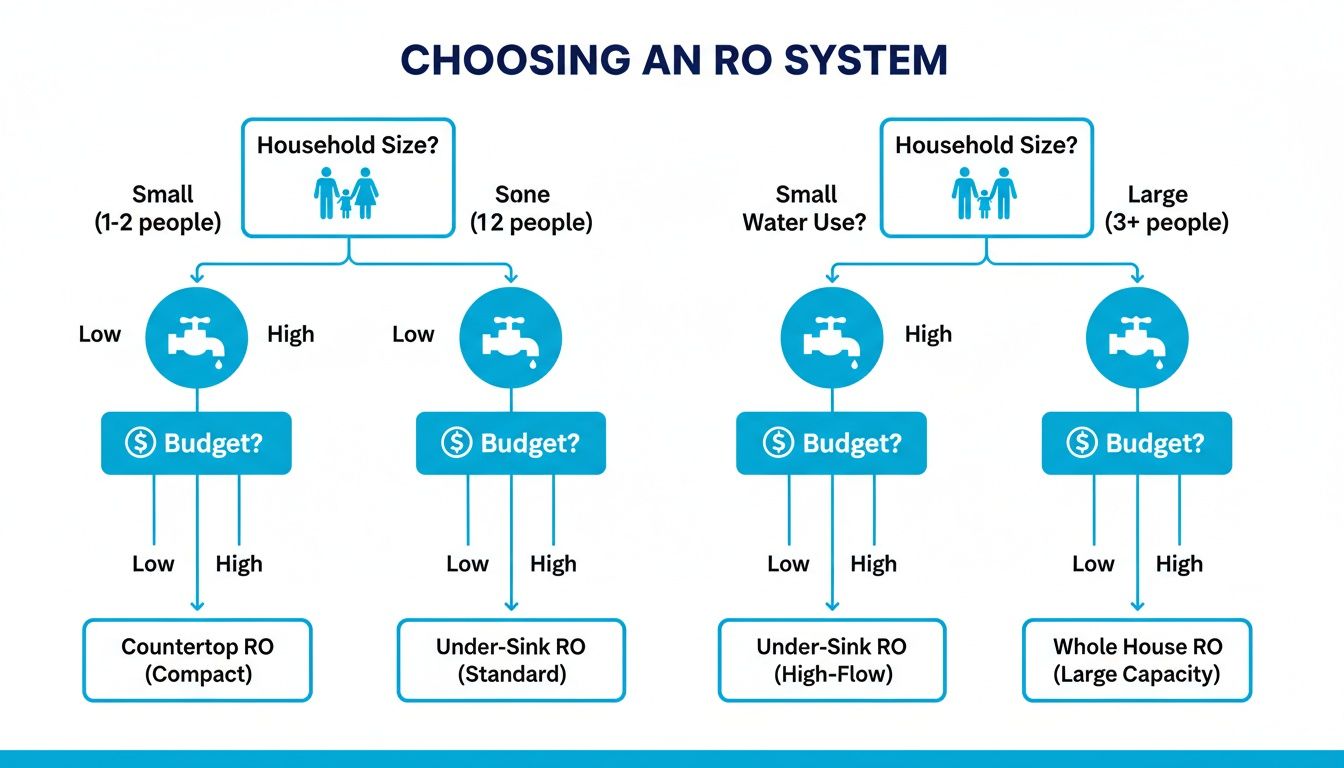
  • Reverse osmosis systems are usually installed under the sink. They use multiple stages and are chosen when people want very high-purity drinking and cooking water.
  • Whole-house filters sit near the main water line and treat all incoming water before it reaches fixtures and appliances.
  • Shower and refrigerator filters are specialty tools. They target one use case rather than the whole home.

What whole-house systems do differently

A whole-house filter changes the character of water throughout the building. That matters when the problem isn't only the taste in a glass. It matters when chlorine smell rises in hot showers, when sediment clogs fixtures, or when you want to protect water-using appliances.

Modern systems are better at this than many people expect. Some whole-house systems maintain flow rates of 12 to 15 GPM, and the first sediment stage can process up to 1,000,000 gallons, helping protect the later media stages and reduce pressure-drop issues, based on the lab-test summary from Just Plumbing AZ.

That means “whole-house” doesn't automatically mean weak showers. A properly sized system can keep up.

A whole-house filter is less like a Brita pitcher and more like changing the quality of the water supply your home lives on.

Home Water Filter Types at a Glance

System Type Where It's Installed Typical Cost Best For Primary Benefit
Pitcher filter Countertop or refrigerator Lower upfront cost Renters, small households Simple improvement in drinking water taste
Faucet mount On the kitchen faucet Lower upfront cost Quick kitchen upgrades Instant filtered water without major installation
Under-sink filter Beneath the sink Moderate upfront cost Cooking and drinking water Hidden setup with dedicated filtration
Reverse osmosis system Usually under the sink Higher upfront cost than basic POU filters High-purity drinking water Broad contaminant reduction at one tap
Whole-house filter Main incoming water line Highest upfront cost Full-home treatment Protects fixtures, appliances, and every tap

Which option fits your home

A few simple examples make this easier:

If you own a house and hate chlorine smell in every shower, a whole-house setup makes more sense than a pitcher.

If you live in an apartment and only care about drinking water, a faucet filter or under-sink unit is usually the practical move.

If you want broad home protection plus better-tasting water at the kitchen sink, many households combine a whole-house filter with a separate drinking-water system. Homeowners comparing larger systems often browse guides like this roundup of best whole-house water filtration systems to narrow down sizes and media types before talking with an installer.

And if you're not sure whether your plumbing layout can handle a main-line install, local pros who offer dependable plumbing services can usually tell you quickly what's realistic in your home.

Decoding Your Water The Villains and The Heroes

Water filters make more sense when you stop thinking in brand names and start thinking in matchups. Something in the water causes a problem. A certain filtration method is built to tackle it.

That's the whole game.

A glass of fresh water being filled from a modern faucet with bright blue background.

The usual villains in household water

Some water issues are annoying. Some are costly. Some raise health concerns. A few common categories show up again and again.

Sediment is the easy one to picture. Think sand, rust, grit, or silt. It can make water look cloudy and can wear on valves, cartridges, and appliance parts.

Chlorine and chemical odors often show up as taste and smell complaints. If your shower smells like a pool when hot water runs, that's usually what people notice first.

Lead and other heavy metals are less dramatic to the senses, which is part of what makes them unsettling. Water can look and taste normal and still be something you want to treat more carefully.

Dissolved solids and microscopic contaminants are where many shoppers start hearing about reverse osmosis. These are often too small for basic sediment filters.

The heroes and how they work

A filter is only useful if you know what job it's doing.

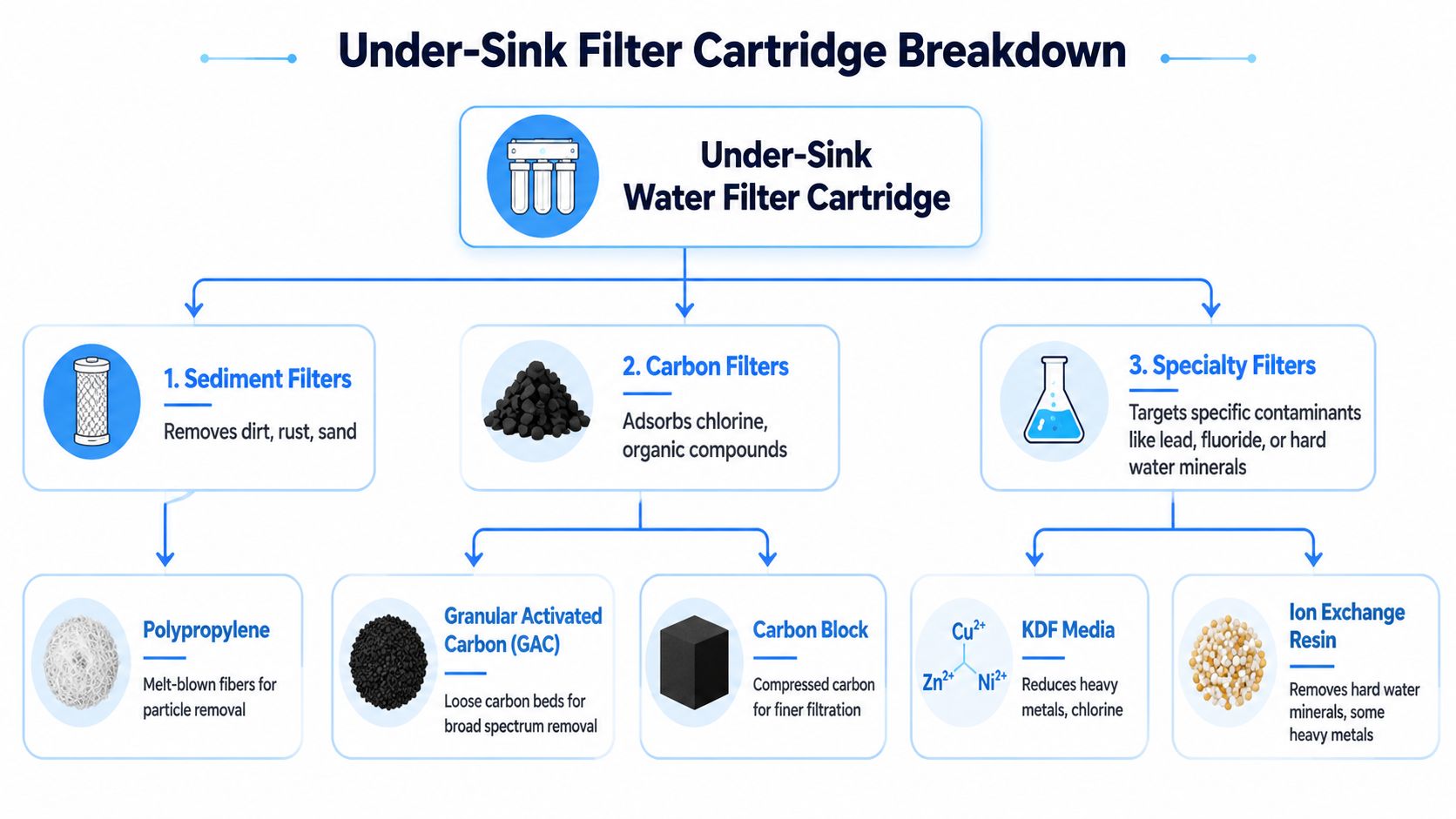
Carbon works like a sponge for chemicals

Activated carbon is one of the most common media in home filtration. The easy analogy is a sponge with an enormous amount of surface area. It attracts and holds many compounds that affect taste and odor.

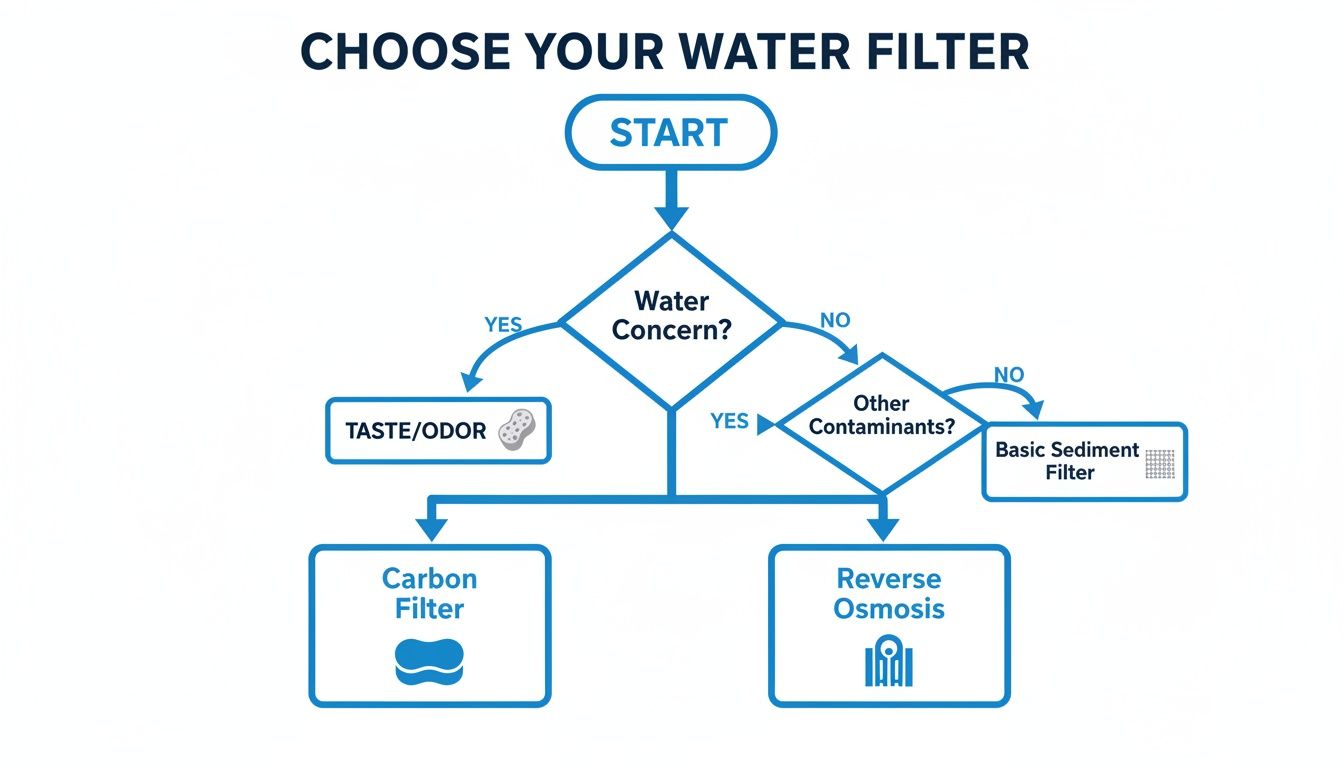
If your water smells chemical or tastes flat, carbon is often the first hero on the scene. For a homeowner, the outcome is easy to notice. Water tends to taste cleaner, smell better, and feel more pleasant to drink and cook with.

Sediment filters are the doormat

A sediment filter doesn't do the glamorous work. It does the necessary work. It catches the visible grit before that grit reaches more specialized media farther downstream.

That's why multi-stage systems often start with sediment. It's the doormat at the front door. If you let mud into the house, everything else has a harder day.

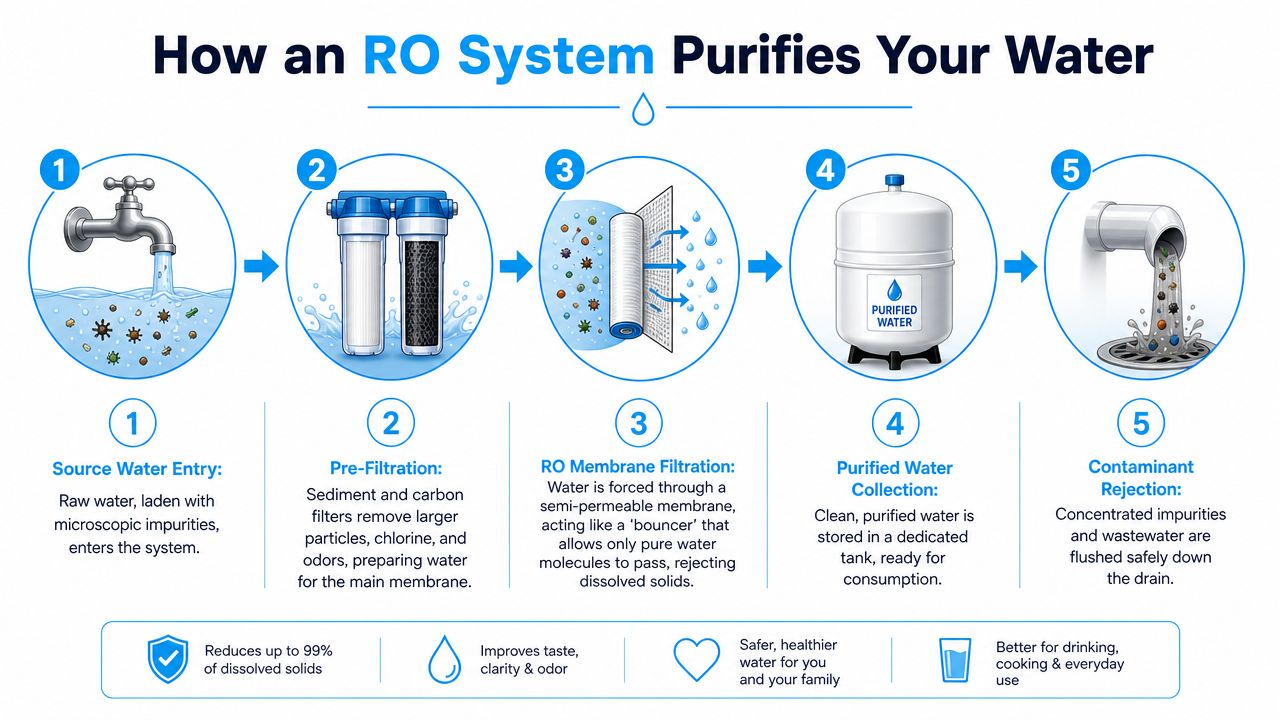
Reverse osmosis is the super-fine sieve

The global home filtration market is projected to reach USD 50.89 billion by 2033, and reverse osmosis units held a 62.23% market share in 2024, according to Grand View Research's home water filtration market analysis.

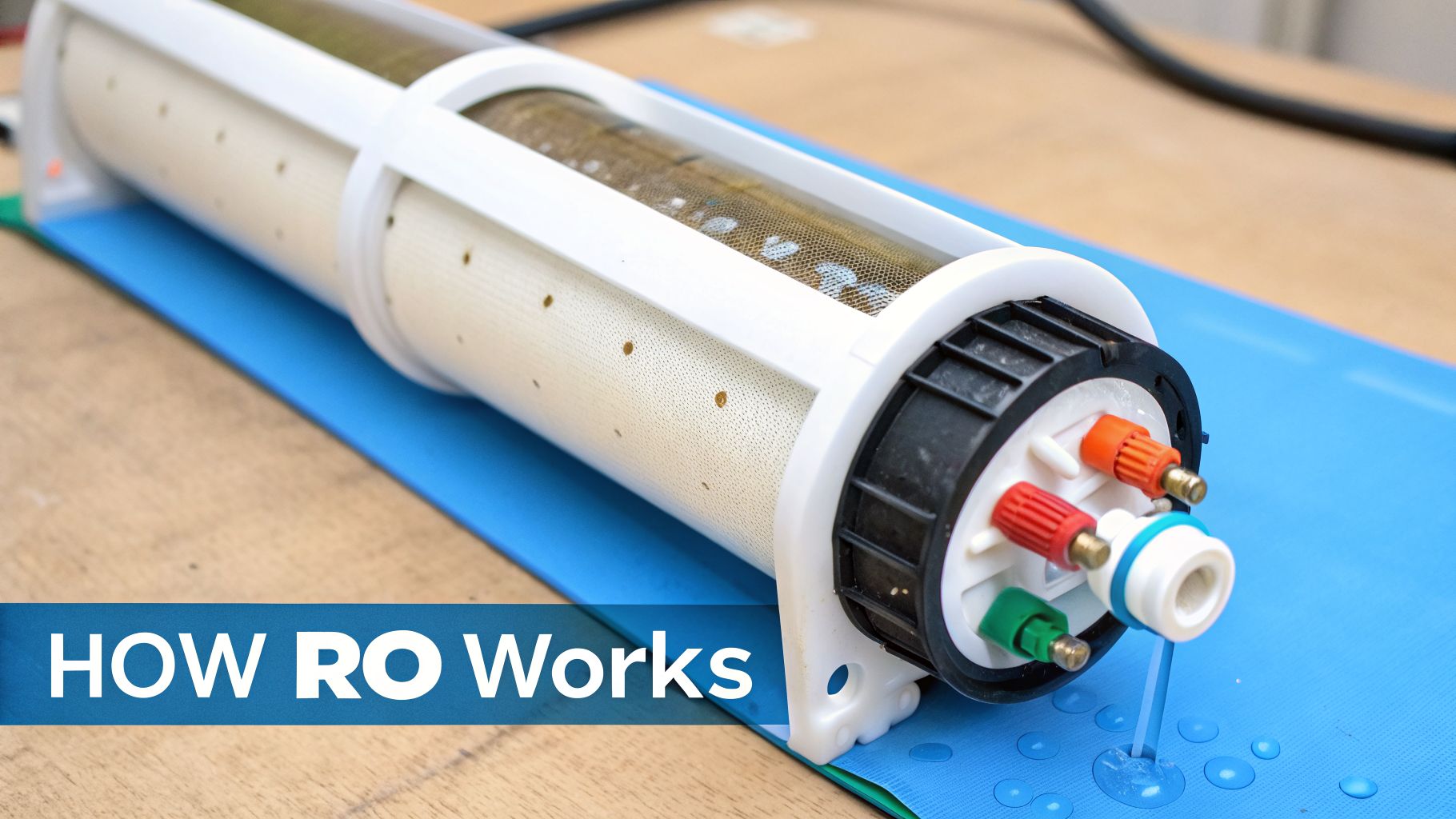
RO is popular because people understand what they're buying: very thorough filtration for drinking water. The simple analogy is a super-fine sieve that pushes water through a membrane while leaving many unwanted dissolved contaminants behind.

What this means in daily life is straightforward. RO water often tastes noticeably “lighter” and cleaner, especially if your tap water has mineral heaviness or a stubborn aftertaste.

For a quick visual explanation of how filtration stages work together, this overview is helpful:

UV is the quiet guard

Ultraviolet treatment doesn't trap particles like a sediment filter or adsorb chemicals like carbon. It works more like a silent security light. It targets microorganisms using light rather than a physical barrier.

Homeowners sometimes get confused here because UV doesn't usually fix taste or odor. It has a different mission. It's about microbiological control, not flavor.

If a filter promises to do everything, slow down and read the details. Good filtration is usually a team effort, not a magic trick.

Why multi-stage systems exist

No single media is the hero for every problem. That's why you see combinations such as sediment plus carbon, or carbon plus RO, or sediment plus KDF plus carbon in larger home systems.

Cleaning a muddy window requires a multi-step approach. You would not use only a squeegee. First you rinse off grit, then you scrub, and finally you polish. Water treatment works the same way. Each stage handles a different part of the mess.

How to Choose Your Perfect Water Filtration System

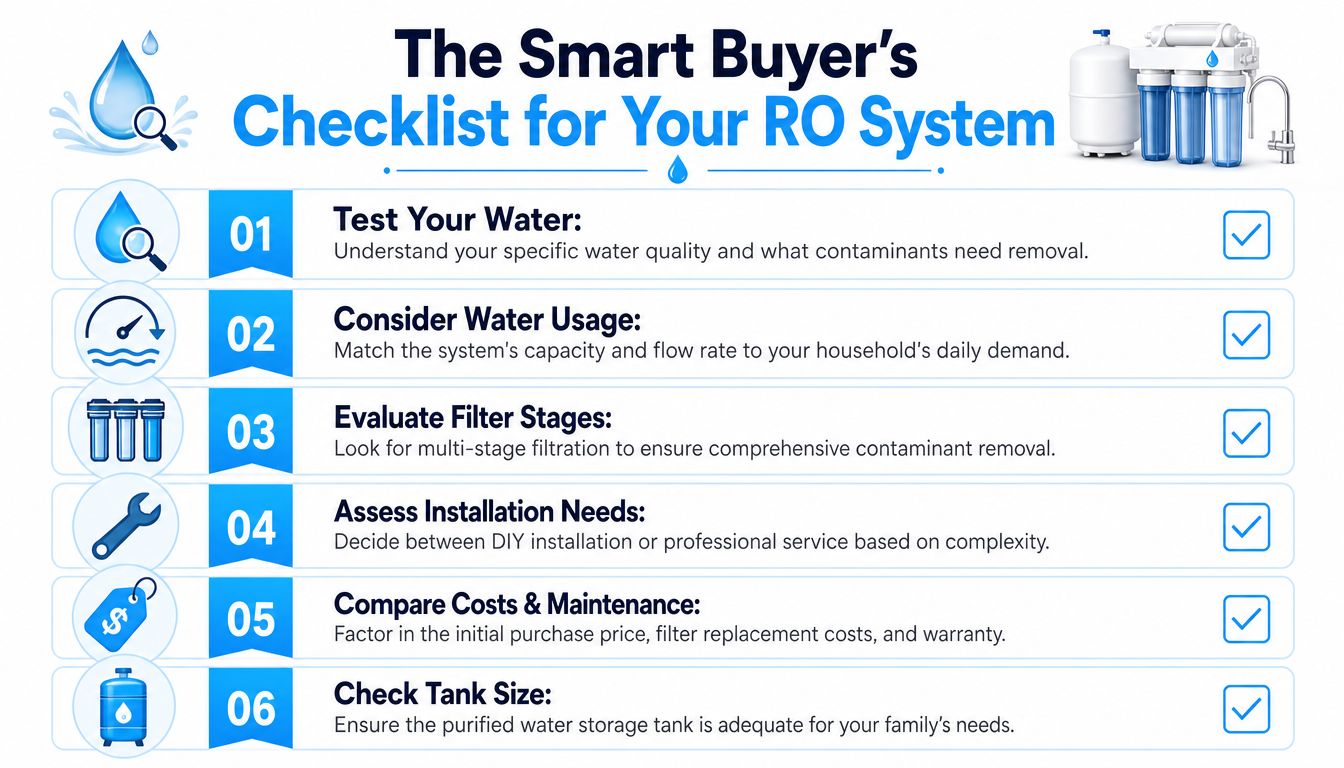
Buying a filter gets easier when you answer four questions in order. Not brand first. Not price first. Start with your water, then your house, then your habits.

Start with the water source

Municipal water and private well water create different shopping lists.

City water users often complain about chlorine taste, odor, sediment from older distribution lines, or concerns tied to aging plumbing. Well water owners usually need a more customized approach because well conditions can vary widely from one property to the next.

If you don't know what you're targeting, test first. A water filter should solve a known problem, not just give you a comforting box under the sink.

Decide what outcome matters most

A lot of people say they want “clean water,” but that can mean very different things.

Use this short checklist:

  • Better taste and smell: Look first at carbon-based systems.
  • Lead reduction: Check the certification details, not just the marketing.
  • Whole-home comfort: Think about showers, laundry, and appliance protection, not only the kitchen tap.
  • High-purity drinking water: RO usually belongs on your shortlist.
  • Visible particles: Sediment filtration should be part of the setup.

Learn the labels before you buy

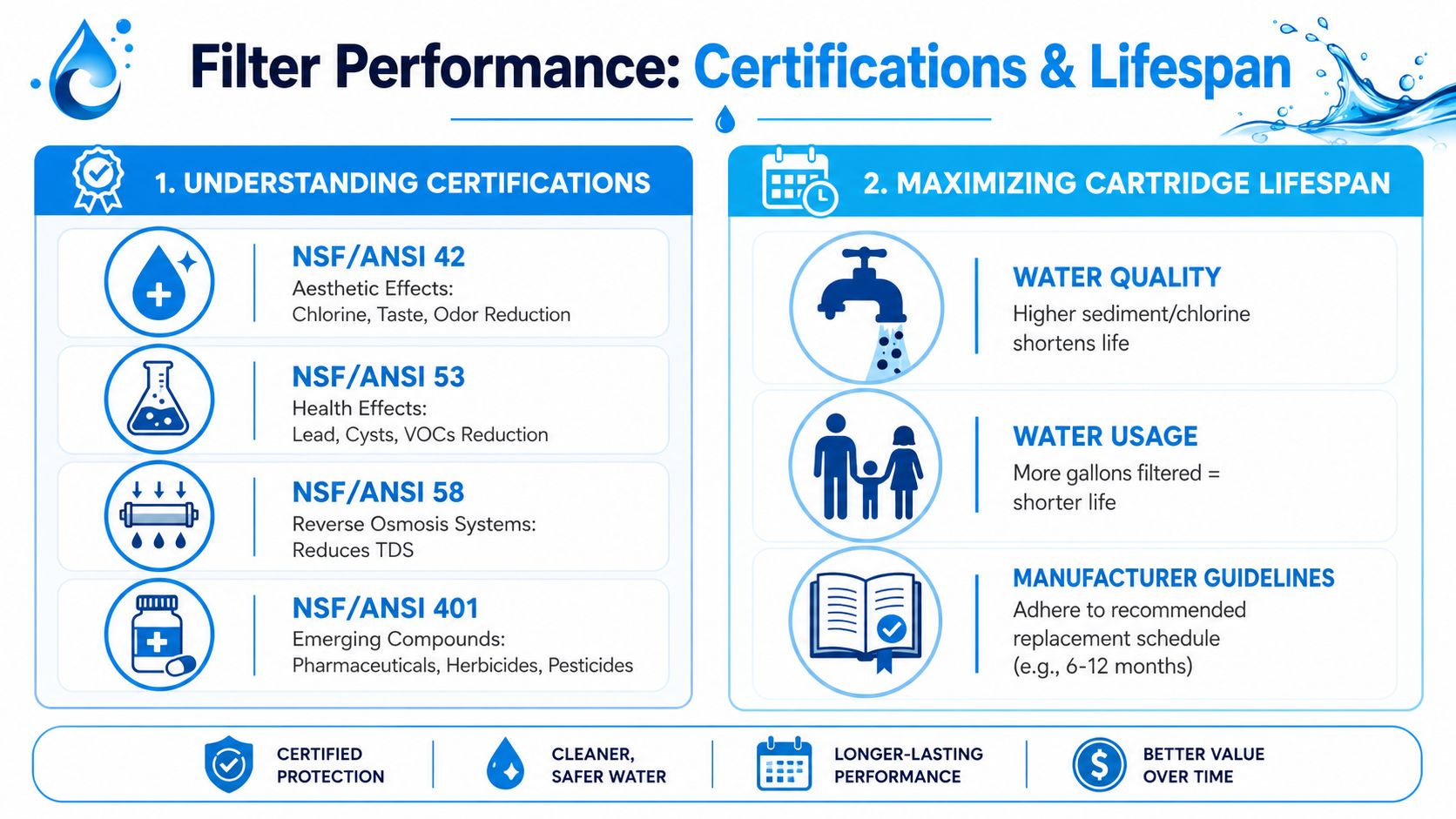
Certification labels matter because they tell you what a filter has been tested to reduce.

NSF/ANSI 53 is one of the labels homeowners should know. NSF notes that NSF/ANSI 53 certification means a filter reduces specific health-related contaminants like lead by at least 99%, and certified systems that reduce chlorine below 0.5 ppm can help extend pipe life by 5 to 10 years while lowering disinfection byproducts linked to health risks, as explained in NSF's guide to home water treatment.

That sounds technical, but the practical takeaway is simple. Don't buy a filter because the box says “premium.” Buy it because the certification tells you what it's been tested to handle.

Know what each certification means to your house

A label isn't just paperwork.

  • For your drinking glass, a health-related certification can mean greater confidence about lead reduction.
  • For your plumbing, chlorine reduction can mean less wear on pipes and fixtures.
  • For your wallet, a well-matched certified system is less likely to become an expensive guess.

Buying advice: Read the contaminant reduction claims as carefully as you'd read the ingredients on food for your family.

Don't ignore flow rate and daily use

People often focus so hard on contaminant claims that they forget how the system will feel to live with.

If your home has multiple bathrooms and people shower, run laundry, and use sinks at the same time, whole-house sizing matters. If you hate countertop clutter, that rules out some point-of-use options. If you rent, anything requiring permanent plumbing changes may be a poor fit no matter how good the performance sounds.

A good choice isn't only about what the filter removes. It's also about whether your household will enjoy using it.

Build your own filtration profile

Here's a practical way to narrow the field:

  1. Water source
    City or well.

  2. Main complaint
    Taste, odor, particles, lead concern, or whole-home treatment.

  3. Coverage area
    One tap, one room, or every fixture.

  4. Installation tolerance
    DIY only, light plumbing, or professional install.

  5. Maintenance style
    Are you fine changing cartridges often, or do you want longer-service media?

That profile usually points you to the right category quickly. Then you can compare systems inside that category without getting lost in marketing noise.

Installation and Upkeep A Guide to Long-Term Ownership

A water filter isn't a one-time purchase. It's more like owning a furnace filter, only with more direct effect on what you drink, cook with, and bathe in. The best system is the one you'll maintain properly.

What you can install yourself

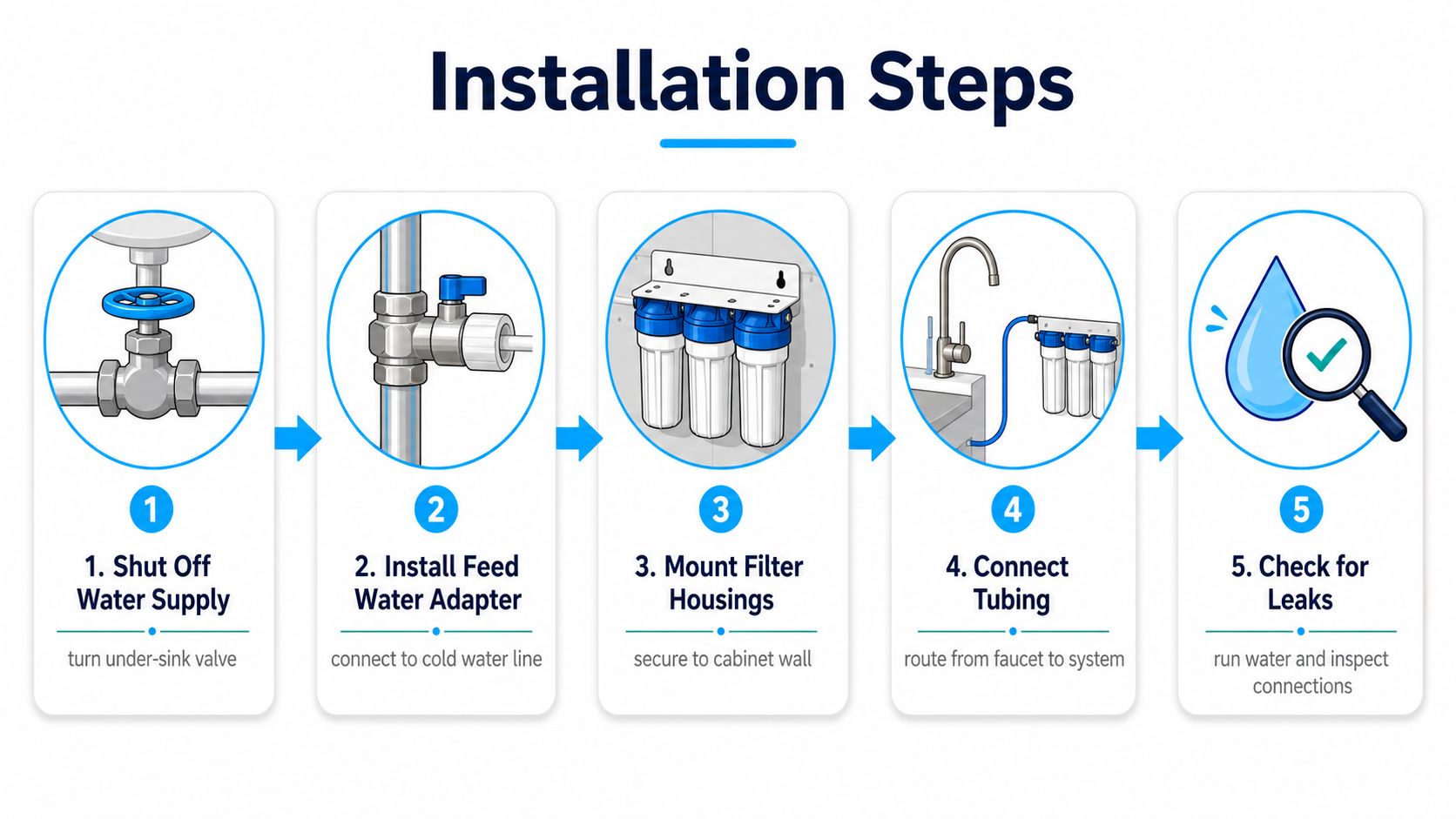
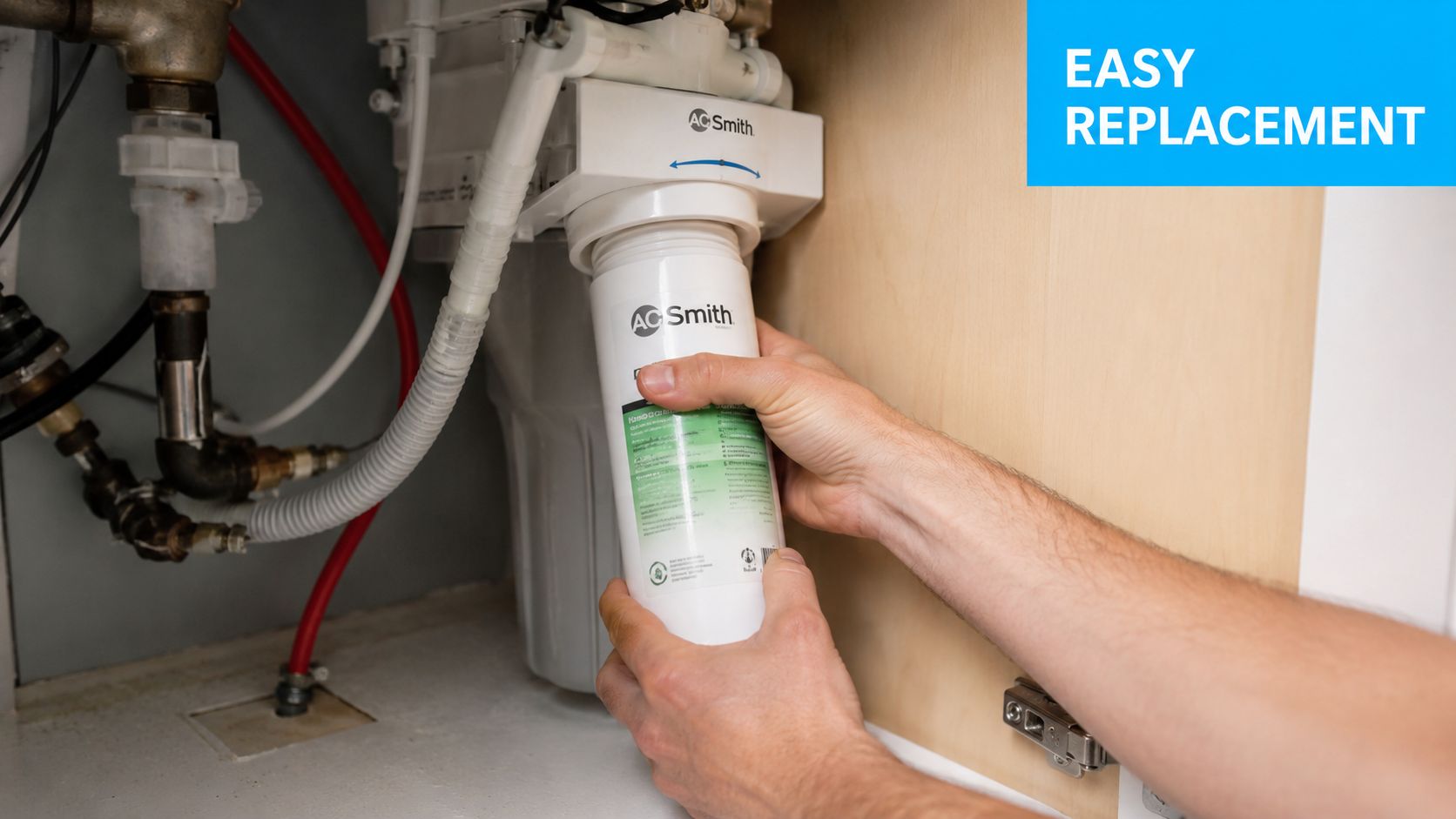
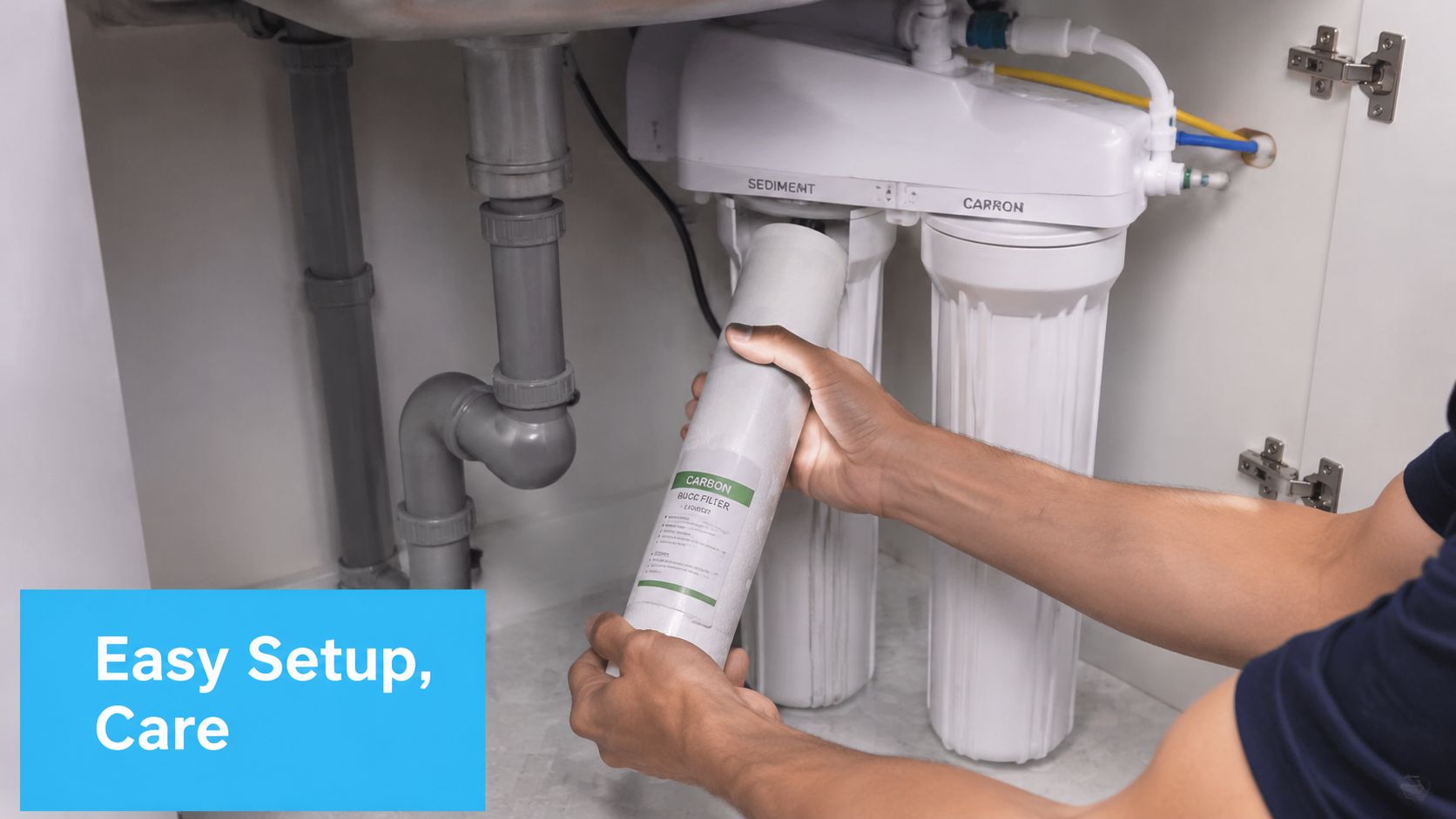
Pitchers and faucet-mount filters are straightforward. These units can be installed in minutes. Many under-sink filters are also manageable for a confident DIYer if the plumbing is accessible and you're comfortable tightening fittings carefully.

Whole-house systems are a different animal. They connect near the main line, need enough physical space, and have to be sized and oriented correctly. If you're thinking about a main-line system, a step-by-step guide like this overview on how to install a whole-house water filter can help you understand the job before deciding whether to DIY or call a pro.

What maintenance actually looks like

Filter ownership is mostly about staying on schedule.

  • Sediment pre-filters usually need more frequent attention because they catch the visible dirt first.
  • Carbon stages last longer, but they don't last forever. Once exhausted, they stop doing the job you bought them for.
  • Multi-stage systems need each stage changed according to its role, not all by guesswork on the same day.

If you ignore maintenance, the system doesn't “sort of work.” It gradually stops protecting your water the way you expect.

When professional help makes sense

Call for help when you're dealing with the main line, limited clearance, unusual pipe materials, or a setup that affects multiple fixtures. It also makes sense when your water issue is more complex than “I want it to taste better.”

If you want a local example of the kind of specialist profile worth checking, a listing like the Amber Pump local service profile shows the type of water-treatment-focused provider homeowners often look for when installation goes beyond a simple cartridge swap.

A good installer doesn't just mount equipment. They help make sure the system matches the water and the house.

The ownership mindset

The easiest way to stay happy with a filtration system is to think ahead about cartridge changes, access, and replacement parts before you buy. A compact filter tucked into an impossible corner becomes annoying fast. A larger system with simple service access may be easier to live with for years.

The goal isn't only cleaner water today. It's cleaner water without headaches six months from now.

Your Top Water Filtration Questions Answered

Do water filters remove everything good and bad

Not all filters work the same way. A simple carbon filter mainly targets things that affect taste, odor, and certain contaminants. Reverse osmosis is more aggressive. That's why you should choose based on your water issue, not assume every filter behaves the same.

What's the best option if I rent

Renters need flexibility. There's a real gap here, because 15% of U.S. renters face higher lead exposure from aging pipes in multi-family units, and non-permanent point-of-use options such as certified pitchers or faucet mounts can reduce contaminants like lead by 99% under NSF/ANSI 53, based on the renter-focused guidance from Antunes residential water filtration.

That makes pitchers, faucet filters, and some countertop systems practical choices when lease rules prevent plumbing changes.

Do I need whole-house filtration and a drinking-water system

Sometimes yes. They do different jobs. A whole-house filter helps with water used for showering, cleaning, and appliances. A separate drinking-water filter, often under the sink, can provide extra treatment where you cook and drink.

How do I know what I'm paying for

Check three things: the contaminants named on the certification sheet, the installation type, and the replacement schedule. If a product talks more about “refreshing water” than tested reduction claims, keep shopping.

Will filtration change how water feels in daily use

Usually, yes. People often notice the practical stuff first. Better taste. Less odor. Cleaner ice. Showers that smell less chemical. Fixtures and appliances that deal with less sediment and less untreated water stress.


If you're ready to compare systems without getting buried in marketing language, Water Filter Advisor is a solid place to start. It's built for households that want clear guidance on filter types, certifications, maintenance, and real-world buying decisions, whether you're choosing a pitcher for an apartment or a full water filtration system home setup for every tap.

Brondell Circle Reverse Osmosis: A 2026 In-Depth Review

Your tap water may be safe enough to drink, but that doesn't mean you like it. A lot of homeowners end up stuck between two bad options. They either keep hauling home bottled water, or they install an older reverse osmosis unit and then cringe at how much water goes down the drain.

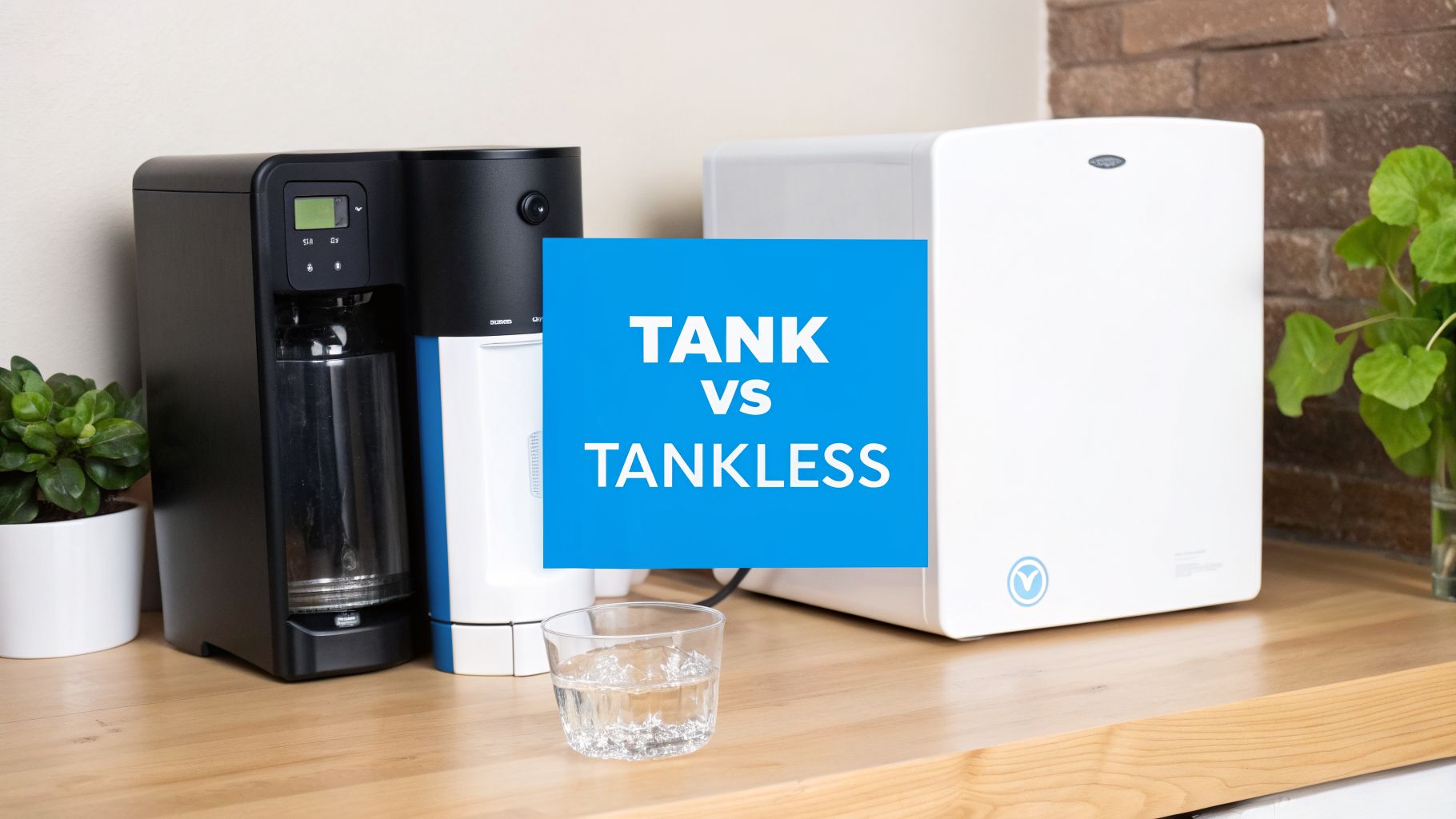
That's the gap the brondell circle reverse osmosis system tries to fill. It's an under-sink RO unit built for people who want the deep filtration reverse osmosis is known for, but don't want the usual bulky tank and heavy wastewater penalty that comes with many traditional systems.

Most write-ups stop there. They praise the design, mention the water savings, and move on. For homeowners, that's only half the story. The better question is simpler: how does it perform in a real kitchen, what do you have to maintain, and what does it cost to own over time?

Tired of Wasting Water or Buying Bottles?

If you've used bottled water as your workaround, you already know the routine. You keep a case in the garage, another in the pantry, and somehow you're always close to running out when guests come over. If you've gone the reverse osmosis route before, you may have run into the opposite problem. The water tastes great, but the system wastes so much water that it feels wrong every time it runs.

That's why the Brondell Circle gets attention. It was built as a tankless under-sink filtration solution with a much stronger focus on water efficiency than older RO designs, according to Tap Water Data's Brondell Circle review. It also avoids electricity, which matters for homeowners who want fewer moving parts and less under-sink complexity.

What matters in a home RO system

When I evaluate a reverse osmosis setup for a home kitchen, I care about four things first:

  • Wastewater behavior: If the system sends too much water to drain, homeowners notice it fast.
  • Filtration scope: Taste matters, but contaminant reduction is the primary reason to choose RO.
  • Maintenance rhythm: A system that performs well on paper but is annoying to service won't stay maintained properly.
  • Ownership cost: The purchase price is only the opening number. Filters and membrane changes decide whether the system still feels like a smart buy later.

A good residential RO system has to work on a Tuesday morning when everyone's rushing, not just on a spec sheet.

The Brondell Circle is strongest where many legacy systems are weakest. It aims squarely at water waste, cabinet space, and ease of living with the unit day to day. That doesn't mean it's perfect for every household. It does mean it deserves a closer look than the typical feature list.

How the Brondell Circle Ends Water Waste

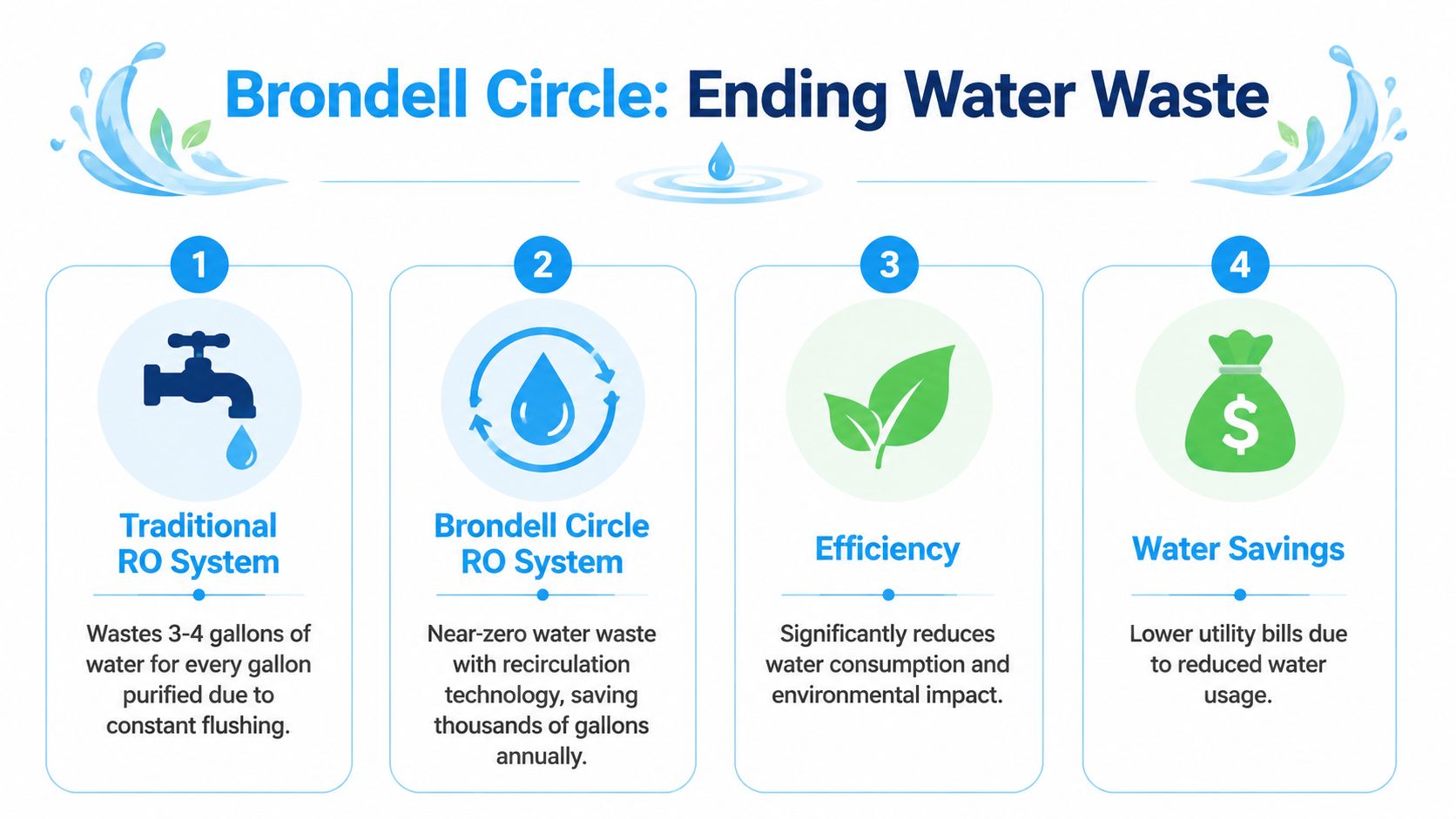
The central idea behind the Brondell Circle is straightforward. Traditional reverse osmosis systems often waste a lot of water because of backpressure. The storage side pushes back against the membrane, so the system has to work harder and flush more water away.

Why traditional RO systems waste so much

A simple way to think about backpressure is a balloon. If the balloon is nearly full, pushing more air into it gets harder. Old-style RO systems behave similarly. As stored water builds up, pressure builds against the membrane, and that pressure works against efficient filtration.

That's where Brondell changed the design. The RC100 achieves a product efficiency rating of 33.5% with a waste-to-product water ratio of about 2.1:1, compared with conventional reverse osmosis systems that typically generate 24:1 waste ratios, according to the Ferguson Home Brondell RC100 listing. The same source credits that improvement to patented Smart Valve technology, which reduces backpressure.

An infographic showing the environmental and economic benefits of the Brondell Circle water filtration system.

If you want a broader explanation of why this matters in real homes, this guide on reverse osmosis system water waste is worth reading.

What the Smart Valve is actually doing

Brondell pairs that valve design with a flexible 6-liter internal reservoir. Instead of forcing water into a rigid setup that constantly fights incoming pressure, the reservoir absorbs pressure more dynamically. In practice, that means less stress on the membrane and less reject water.

This is the part many homeowners miss. The Circle doesn't save water because of a marketing trick or a pump-heavy workaround. It saves water because the pressure problem is addressed at the design level.

Here's what that means in plain English:

  • Less drain waste: More of the water entering the system ends up as usable drinking water.
  • No bulky tank behavior: The internal reservoir changes how the unit stores water without relying on the old tank model.
  • No electricity required: The system runs on municipal water pressure rather than powered pumps.
  • Better fit for efficiency-minded homes: If water conservation is part of your buying decision, this design is the main reason the Circle stands out.

Traditional RO often makes homeowners choose between purity and efficiency. The Circle is one of the few systems that tries to deliver both.

That doesn't erase every trade-off. It still uses proprietary filters, and replacement timing matters. But on water waste alone, this is the feature that makes the brondell circle reverse osmosis system different from the pack.

The 4-Stage Filtration That Purifies Your Water

Water efficiency gets attention, but filtration remains the primary function. The Brondell Circle uses a four-stage filtration architecture that assigns a specific task to each filter stage, according to the Home Depot certification document.

Four different sponges pouring colored water liquids representing filtration stages in a water purification system.

Stage by stage under your sink

Think of the filter train as a team, not one magic cartridge.

  • Stage 1 handles grit first. The sediment filter, rated at 5 microns or larger, catches rust, sand, and particulate matter before they foul the later stages.
  • Stage 2 focuses on chemical cleanup. The pre-carbon plus filter targets chlorine and volatile organic compounds, which helps both taste and downstream membrane protection.
  • Stage 3 does the heavy lifting. The RO membrane reduces heavy metals, industrial chemicals, fluoride, and total dissolved solids.
  • Stage 4 finishes the water. The post-carbon block acts like the final polish, cleaning up residual taste and odor before water reaches your glass.
That sequence matters. Homeowners sometimes assume RO is all about the membrane, but the upstream and downstream filters decide how hard the membrane has to work and how the water tastes at the faucet.

What that means in daily use

In practical terms, this setup is designed for the kinds of concerns people mention at the sink:

  • Chlorine taste from city water
  • Worry about lead or other metals
  • Cloudiness or grit from aging plumbing
  • General “flat” or stale drinking water

One detail I like is that each stage has a clear purpose. That makes maintenance less mysterious. When a homeowner understands that one stage blocks sediment while another handles chlorine or dissolved solids, filter replacement feels like routine upkeep instead of a black box.

The best filtration systems make contamination control visible in your mind, even if the actual process happens inside sealed cartridges.

This four-stage design is one of the reasons the Brondell Circle appeals to households that want true RO treatment rather than a lighter taste-only filter.

Decoding Performance and Official Certifications

A lot of filter marketing collapses into one vague word. Certified. That sounds reassuring, but it only helps if you know what the certifications cover.

For the Brondell Circle RC100, the key point is that it holds NSF/ANSI 42, 53, 58, and 372 certification, with verification by the Water Quality Association, as shown in the earlier certification reference. Those standards tell you what kind of claims were independently tested.

What the standards mean at the kitchen faucet

Here's how I explain those standards to homeowners.

Standard What it covers Why it matters at home
NSF/ANSI 42 Aesthetic reduction for chlorine, taste, and odor Your water should taste and smell cleaner
NSF/ANSI 53 Health-related contaminants such as lead, arsenic, and cysts This is the standard people care about when safety is the issue
NSF/ANSI 58 Reverse osmosis performance including TDS reduction It confirms the RO side is doing real dissolved-solids work
NSF/ANSI 372 Lead content compliance It addresses the material side of the system itself

That list matters because not all filters with strong marketing have the same certification depth. A pitcher may improve taste. A faucet filter may reduce some contaminants. A certified RO system is usually the better fit when a homeowner wants broader contaminant reduction under one sink.

Performance in real homes

The certification document also shows something useful that doesn't get enough attention. It lists different rated capacities for different contaminant categories. For example, the system is rated for 3,500 gallons for aesthetic chlorine reduction but 243 gallons for VOC reduction in the cited document. That tells you filter media doesn't wear evenly.

If your water concern is mostly chlorine from municipal treatment, the maintenance experience may feel straightforward. If VOCs are part of your concern profile, the carbon stage can become the limiting factor faster.

Certification tells you a system was tested. It doesn't remove the need to match the system to your own water.
Pressure matters too. The Circle is designed to operate on standard municipal pressure, and homes with weak flow at the kitchen sink may need to address that before expecting ideal RO performance. If low pressure is already a known plumbing issue, this explanation of common low water pressure causes from MG Drain Services LLC can help you separate a house plumbing problem from a filter problem.

Installation and Ongoing Maintenance Guide

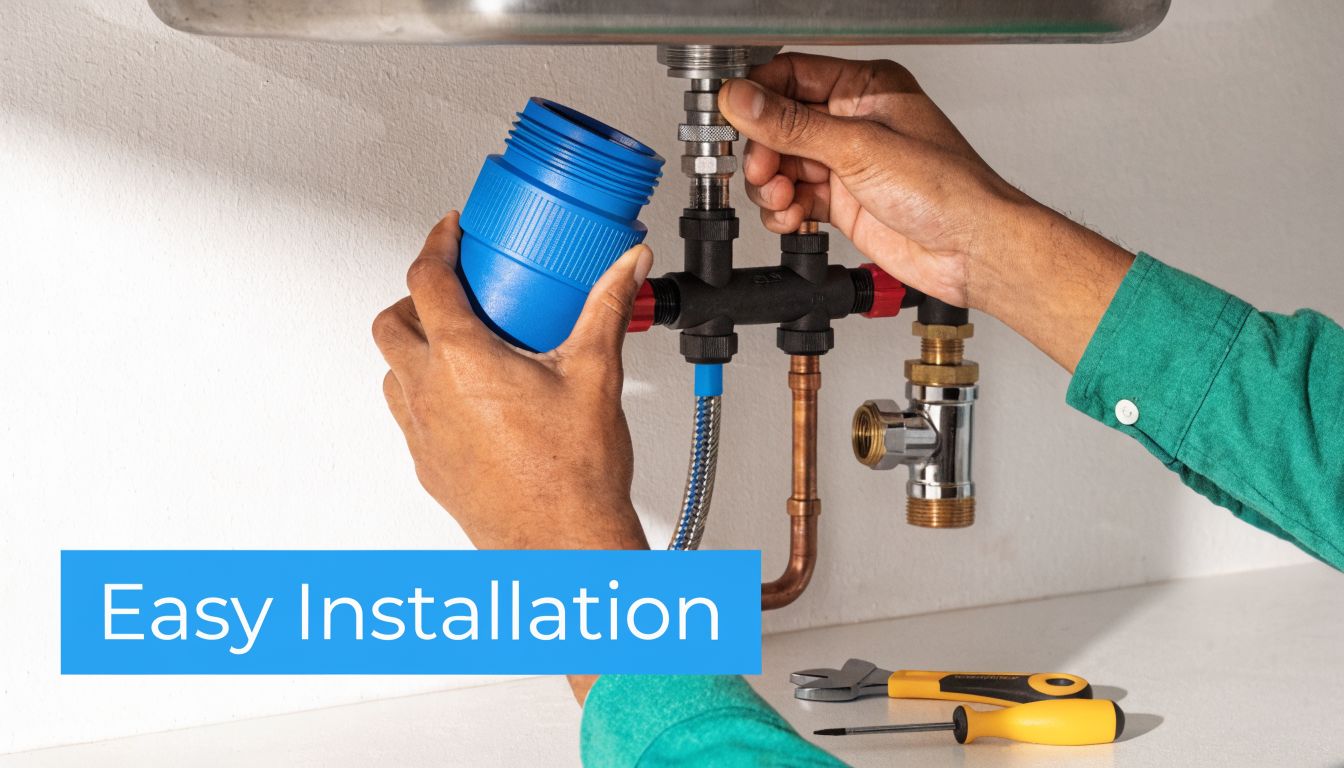
The Brondell Circle is friendlier to install than many older RO systems because it keeps the footprint compact and avoids the classic bulky storage tank. That doesn't make it a zero-effort project. You're still working under a sink, connecting feed water, drain, and faucet hardware in a tight cabinet.

A close-up view of a person installing a Brondell water filter system under a kitchen sink.

What installation usually feels like

For a DIY homeowner, the job is manageable if you're comfortable with basic under-sink plumbing. The all-in-one design helps because you're not trying to position a separate pressure tank somewhere behind cleaning supplies. Color-coded tubing also cuts down on the usual guesswork.

A practical install checklist looks like this:

  • Clear the cabinet first: Give yourself real working space before bringing in parts and tools.
  • Confirm faucet space: Under-sink RO units need a dedicated faucet unless your sink setup already accommodates one.
  • Check your pressure conditions: The unit is meant to operate on 40 to 120 PSI, with optimal performance around 60 PSI, according to the earlier product data.
  • Expect careful fitting work: The hardest part usually isn't the filter body. It's making neat, leak-free connections in a cramped space.

Living with the maintenance schedule

The day-to-day ownership side is simpler than installation. Filter changes are the primary recurring task.

The replacement schedule is clear in the manufacturer and retailer documentation referenced earlier:

  • Sediment, pre-carbon, and post-carbon filters: replace every 6 months
  • RO membrane: replace every 24 months

That's a reasonable maintenance pattern for an under-sink RO, but homeowners should be honest with themselves about consistency. Missing those replacement windows is how good systems turn into mediocre ones.

Here's a visual walkthrough for homeowners who want to see the system in action:

Practical rule: Put filter replacement dates on your phone calendar the day the system goes in. Don't trust memory.

One more maintenance reality deserves mention. The Circle is compact and polished, but it uses brand-specific filter components. That's convenient when the fit is exact, and less convenient if you prefer broad third-party cartridge options.

The True Cost of Ownership Over Five Years

Most Brondell Circle reviews lose their depth at this point. They mention the purchase price, hint at water savings, and stop before the harder question. What will this thing cost you after years of normal use?

The starting point is clear enough. The unit itself is typically listed around $399 to $449, and any honest cost review has to include the filter schedule of 6 months for the three main filters and 24 months for the RO membrane, as noted in the Lowe's product page.

What we can calculate and what we can't

There's one big limitation. Public listings and reviews don't give a consistent, transparent long-term filter cost history. That means a precise five-year dollar total for every household would be guesswork unless you use current vendor pricing, and those prices can vary.

So the transparent way to analyze the Circle is this:

  1. Use the verified purchase price range
  2. Map the required replacement intervals across five years
  3. Treat filter and membrane pricing as a variable you must verify before buying

That still gives you a useful ownership framework.

5-Year Cost Comparison

Filtration Method Year 1 Cost 5-Year Total Cost Notes
Brondell Circle $399 to $449 plus filter replacements based on actual vendor pricing $399 to $449 plus ongoing 6-month filter replacements and 24-month membrane replacements Strongest fit for buyers who value water efficiency and certified RO performance
Traditional tank-based RO Varies Varies Compare not just purchase price, but higher water waste and maintenance differences
Water filter pitcher Varies Varies Lower upfront cost, but it's a different filtration category with a different use case
Bottled water Varies Varies Usually the least convenient long-term option and the hardest to manage day to day

That table may look less dramatic than the typical review table full of made-up certainty, but it's more honest.

The real ownership trade-off

The Brondell Circle asks for a higher upfront commitment than simpler filters. In return, you get an under-sink RO system with strong efficiency and broad certification coverage. The financial catch is that filter economics remain a live variable, not a fixed number you should accept from a generic review.

What I tell homeowners is simple:

  • If you want the cheapest entry point, this isn't it
  • If you want certified under-sink RO with much better water efficiency, the premium may be justified
  • If you hate hidden ownership costs, confirm cartridge and membrane pricing before purchase

The wrong way to shop for reverse osmosis is to compare only the box price. The right way is to compare the box price plus the maintenance calendar.

That's especially true with proprietary systems. Convenience and compact engineering are valuable, but they tie you more closely to replacement part availability and pricing.

Is the Brondell Circle Right for Your Home?

The Brondell Circle is a strong match for a specific kind of homeowner. If you want serious under-sink filtration, care about wastewater, and don't want an old-school tank taking over the cabinet, it makes a convincing case.

It's not the universal answer. Some buyers will still be better off with a simpler and cheaper filtration method.

Who should seriously consider it

The Circle makes the most sense for these households:

  • Eco-conscious homeowners: Water efficiency is the reason this system exists. If drain waste bothers you, the design directly addresses that problem.
  • Homes short on under-sink space: The compact tankless layout is easier to live with than a bulky conventional RO setup.
  • Families focused on broad contaminant reduction: The certification profile gives more confidence than basic taste-improvement filters.
  • People staying put for a while: A permanent under-sink RO system makes more sense when you expect to use it long enough to justify installation and recurring filter purchases.

Who may want an alternative

Some homes should take a different path.

A renter who can't modify plumbing much may be happier with a countertop or faucet-mounted filter. A homeowner whose top priority is the lowest upfront spend may still choose a traditional tank-based RO and accept the water waste trade-off. Someone who only wants better-tasting city water, with no strong concern about dissolved solids, may not need reverse osmosis at all.

For readers comparing this model more directly with other under-sink options, this Brondell H2O Circle reverse osmosis system review is a useful next stop.

Final verdict

What works well with the brondell circle reverse osmosis system is clear. It addresses one of the oldest complaints about home RO. It also packages certified filtration in a cleaner under-sink format than many legacy units.

What doesn't work as well is just as important. The initial cost is higher than basic filtration options, and the long-term replacement economics require homework before you buy.

If you want my practical read, it's this. The Brondell Circle is best for homeowners who value efficiency, compact design, and certified RO performance more than the lowest possible purchase price. For that buyer, it's one of the more thoughtful under-sink RO designs on the market.


Need help comparing reverse osmosis systems, checking certifications, or figuring out which filtration type fits your water and budget? Visit Water Filter Advisor for practical guides, maintenance tips, and side-by-side reviews built for real households.

Bypass Water Filter: A Complete How-To & When-To Guide

You know the moment. The filter light starts blinking, water pressure seems a little off, and you remember that changing the cartridge means shutting water off, opening a housing that never comes loose gracefully, and dealing with the splash that somehow always lands in the wrong place.

That’s where the bypass water filter setup earns its keep.

A bypass isn’t glamorous. It doesn’t improve taste by itself, and it doesn’t remove contaminants. But it does something every homeowner appreciates. It keeps water moving through the house while you service the system, isolate a problem, or protect a filter from a job that doesn’t need treatment. Used properly, it’s one of the smartest parts of a home filtration layout. Used casually, especially on refrigerator and point-of-use systems, it can undo the very protection you paid for.

The key is understanding the trade-off. A bypass is a tool, not a free pass. In some situations it saves wear, time, and hassle. In others, it puts untreated water right back into your drinking glass.

Your Filter's Secret Weapon The Bypass Valve

Most homeowners think about the cartridge, the media, or the big blue housing on the wall. The bypass valve gets ignored until the day it saves the job.

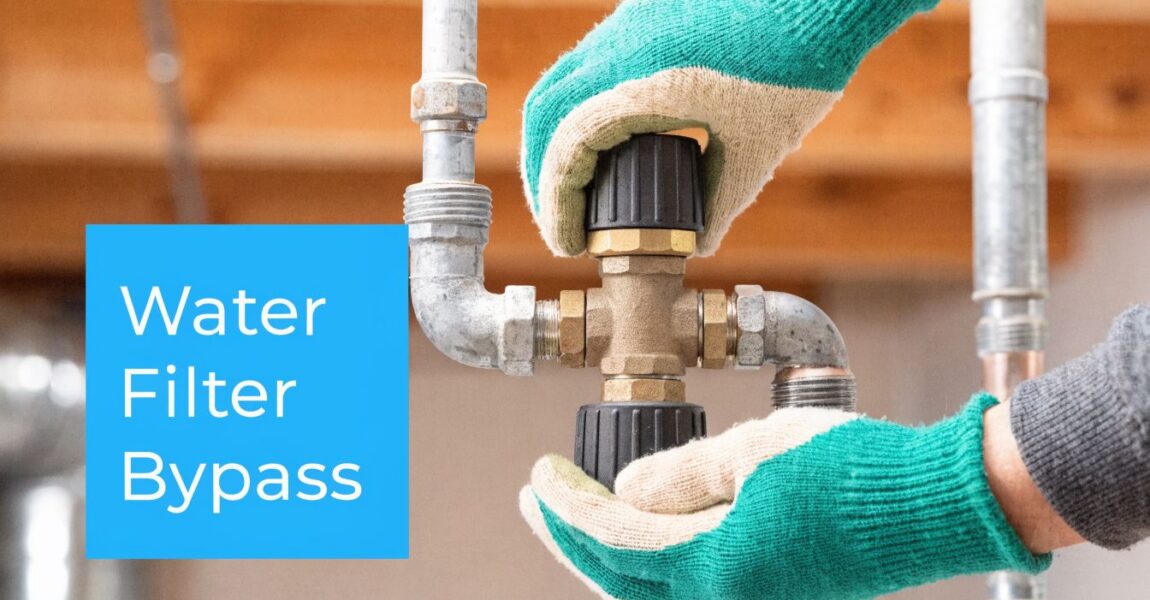
A bypass valve is a way to reroute water around the filter for a short period. It functions as a road detour around a construction zone. Water still reaches the house, but it skips the treatment equipment while you change a cartridge, inspect a leak, or troubleshoot low flow.

Why it matters in a real home

On a whole-house setup, that detour can be the difference between a clean maintenance job and a miserable one. If your system has no bypass, a basic cartridge change can mean shutting off the house, draining lines, opening the housing, and hoping nobody flushes a toilet halfway through. With a bypass, you isolate the filter and keep the rest of the plumbing usable.

That’s why plumbers like to see one built in from day one. It’s not an accessory. It’s part of a serviceable system.

Practical rule: If a filter can’t be isolated cleanly, maintenance gets delayed. Delayed maintenance turns a good filter into a bad one.

What a bypass does and what it does not do

A bypass valve does two jobs well:

  • Keeps water available: You can still wash hands, flush toilets, or run a faucet while the filter is out of service.
  • Protects the filter during service: You don’t force water through an open or partially disassembled housing.

What it does not do is provide treatment. Once water is on bypass, the filtration step is out of the loop. That’s fine when you’re changing a sediment cartridge in the basement. It’s a different story when the water you’re bypassing was supposed to improve taste, reduce odor, or address drinking water concerns at the kitchen tap.

That difference matters more than most DIY guides admit.

When to Use the Bypass and When to Think Twice

You notice the filter needs service on a Saturday morning. The house still needs water, the kids still need showers, and the temptation is to flip the bypass and leave it there until later. That is exactly where good maintenance can turn into a water quality problem.

A bypass is safest as a short-term tool with a specific purpose and a clear end point. The right use depends on what the filter was installed to do in the first place. Skipping a whole-house sediment stage for an hour is one decision. Skipping a drinking water filter for a week is a different one.

A person looking thoughtful while considering the settings of a bypass water filter valve system.

Good reasons to use a bypass

For a whole-house system, bypass mode is often part of normal service. It keeps water available while you change a cartridge, clean a housing, replace an O-ring, or confirm whether a clogged filter is causing pressure loss. On jobs like these, the bypass saves time and keeps the plumbing usable.

There are also cases where sending every gallon through a filter is hard to justify. Lawn watering, driveway washdown, and other heavy utility use can burn through cartridge life quickly, especially on sediment or carbon stages that were installed to improve indoor water use, not outdoor hose work.

Short-term matters here.

If the filter protects appliances from grit, stains, or scale-related debris, leaving it bypassed longer than necessary means the rest of the house starts seeing untreated water again.

Situations that deserve caution

The bigger risk shows up at fixtures where people drink the water. Under-sink systems and refrigerator filters are easy to dismiss because water still comes out of the faucet or dispenser. Flow is not treatment.

That trade-off gets ignored in a lot of DIY advice. If the filter was installed to reduce chlorine taste, odor, lead concerns, or hard-to-pronounce contaminants such as PFAS, bypassing it puts those concerns back at the tap immediately. The U.S. Geological Survey reported widespread PFAS detection in U.S. tap water, which is exactly why bypass decisions deserve more care than they usually get.

A bypass does not fail slowly. It removes the filtration step all at once.

Whole-house versus drinking water bypass

These choices are not equal, and I tell homeowners to judge them by exposure, not convenience.

System type Bypass usually makes sense when Main trade-off
Whole-house sediment or prefilter Filter changes, service work, troubleshooting, heavy non-potable utility use Dirt, sediment, or other untreated water can reach fixtures and appliances during the bypass period
Under-sink drinking water filter Brief cartridge replacement or filter-head service Drinking and cooking water quality drops right away
Refrigerator filter Diagnosing flow issues or keeping the ice maker running until the correct filter arrives Water and ice still dispense, but the filter media is no longer reducing taste, odor, and contaminant load

That last row causes the most confusion. Homeowners see normal flow and assume the system is “basically working.” It is not. It is only passing water.
The refrigerator filter trap

Official bypass plugs and bypass cartridges have a real use. They help confirm whether a blocked filter is causing low flow, and they can keep a refrigerator running while you wait for the right replacement. I use them for diagnosis, not as a long-term fix.

The trade-off is simple. You get water delivery back, but you give up the treatment the refrigerator filter was there to provide. In practical terms, that often means the chlorine taste returns first. If the filter was part of your plan for reducing lead or PFAS exposure at the dispenser, bypassing it undercuts that plan completely.

For homeowners weighing pressure loss, cartridge cost, and contaminant concerns, practical home water treatment guidance helps sort out whether bypassing is the right short-term move or a sign the system needs a different fix.

A simple way to decide

Use the bypass for maintenance, diagnosis, or limited utility use where untreated water is an acceptable short-term compromise.

Reconsider bypassing any filter that serves drinking water. If that filter was installed for taste, odor, lead, chlorine, or PFAS concerns, bypass should last hours or days, not become the new normal.
Installing a Whole-House Water Filter Bypass

A whole-house bypass solves a very practical problem. You need to change a cartridge, service a leaking housing, or diagnose a pressure issue, and the house still needs water. Done right, the bypass lets you keep showers, toilets, and laundry running while the filter is offline. Done poorly, it becomes the weak point in the system.
That trade-off matters more than many DIY guides admit. A bypass on a whole-house sediment or carbon filter is often reasonable for short maintenance windows. A bypass on a system installed to reduce a known contaminant problem changes the risk immediately. If your filter is part of your plan for PFAS, chlorine byproducts, or other source-water concerns, the bypass should be treated like a temporary service position, not normal operation.

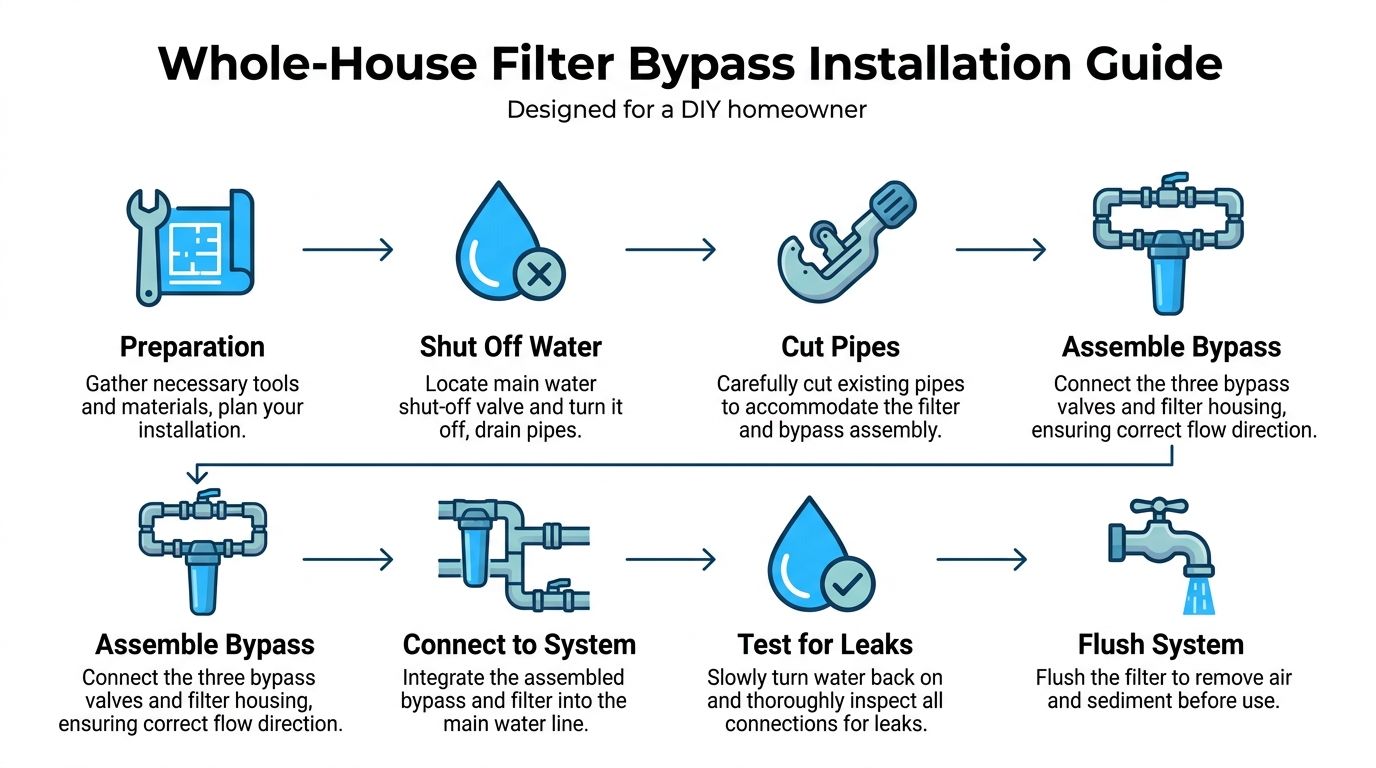
The standard layout is a three-valve bypass. One valve sits on the inlet side, one on the outlet side, and one bridges the two through a short bypass loop.

In service mode, water goes through the filter. In bypass mode, you close the inlet and outlet valves to isolate the housing and open the center valve so water travels around it.
A step-by-step infographic showing how to install a whole-house water filter bypass system for DIYers.

Tools and materials to gather first

Set everything out before you cut into the main line. For most installations, that includes:

  • Ball valves: Full-port valves matched to your pipe size
  • Pipe and fittings: Tees, elbows, unions, nipples, and the short section that forms the bypass loop
  • Thread seal materials: PTFE tape or an approved thread sealant for threaded joints
  • Cutting tools: A copper cutter, PEX cutter, or the correct tool for your plumbing material
  • Wrenches: Two adjustable wrenches or two pipe wrenches so you can hold back while tightening
  • Mounting hardware: A bracket and screws if the housing or manifold needs wall support
  • Bucket and towels: Always needed, even on clean installs

Heat needs extra care around plastic housings, valve parts, and nearby trim pieces. Midmark's installation document for bypass-equipped water treatment assemblies shows support hardware, union use, and orientation requirements, and it reinforces a rule every plumber learns fast: keep open flame work away from plastic components whenever possible, especially once the assembly is mocked into place (Midmark installation document).

Plan the layout before you cut

A clean layout is easier to maintain and less likely to leak later.

Leave enough space below the housing to drop the sump and remove the cartridge without fighting the floor or wall. Give yourself hand room around each valve handle. Dry-fit the tees, valves, and housing before making the first cut.

I see the same mistake over and over. The piping is technically correct, but the sump cannot be unscrewed without hitting the wall, or the bypass handle ends up tucked behind the housing where no one can reach it.

Basic valve positions

Before you install anything, know the finished valve positions:

Mode Inlet valve Outlet valve Bypass valve
Service Open Open Closed
Bypass Closed Closed Open

Label the valves after installation. A tag or marker saves confusion when somebody else has to shut it down during a leak or filter change.

Here’s a visual walkthrough that pairs well with the written steps below.

Step 1 shut off water and drain the line

Shut off the main supply. Open a downstream faucet to relieve pressure and drain the section you plan to cut.

Put towels down early if the filter is near finished walls, flooring, or electrical equipment. Water always finds the one spot you did not protect.

Step 2 mark the filter and bypass footprint

Hold the housing and bypass loop in position and mark your cut points. Confirm spacing for the housing ports, both tees, the center valve, and future service access.

Too tight, and the housing becomes miserable to maintain. Too spread out, and the pipe puts extra strain on the head and fittings.

Step 3 cut the pipe cleanly

Cut the main line with the right tool for the material and keep the cuts square.

Deburr as needed. Sharp edges can damage seals and cause push-fit connections to seat badly.

Step 4 pre-assemble the bypass loop

Build as much of the assembly as you can on a bench or floor. Usually that means the two tees, the short bypass section, and the center valve.

Then confirm the housing orientation and branch connections with a dry fit. This allows you to catch backward heads, awkward handle positions, and missing clearance before the system is glued, pressed, or threaded together.

Step 5 support the assembly

Mount the bracket firmly if your system uses one. Use unions where they make future service easier, especially on common residential sizes.

This step gets skipped in a lot of homeowner installs. The pipe ends up carrying the housing weight, the housing shifts every time someone changes the cartridge, and the threaded ports start weeping months later.

Step 6 check flow direction before final assembly

Some housings, valve bodies, and control components are directional. Follow the flow arrow on every part that has one.

This matters on simple filter heads and it matters even more on systems with accessories such as shutoff components or specialty controls. If the body is installed backward, you can get poor flow, bad sealing, or service problems that look like a defective filter.

Step 7 connect the assembly to the plumbing

Install the filter and bypass into the main line. On threaded joints, use two wrenches so you do not twist the housing head or rack the existing plumbing.

Use thread sealant only where the fitting type calls for it. Compression, push-fit, solvent-weld, PEX crimp, and threaded joints each have their own rules. Mixing methods out of convenience is how small leaks turn into callbacks.

Step 8 install the cartridge and check seals

Insert the cartridge, seat the O-ring correctly, and tighten the housing the way the manufacturer specifies. Clean the O-ring groove first and inspect the seal for nicks, flattening, or grit.

A dirty or pinched O-ring often gets blamed on the bypass because the leak shows up after the installation. The actual problem is usually at the sump.

Step 9 pressurize slowly and test for leaks

Bring the water back on slowly. With the bypass valve closed and the inlet and outlet valves in service position, crack the main supply just enough to fill the housing without a hard rush.

Check every joint, union, valve, and housing connection. A dry paper towel is better than your eyes for finding a small seep.

Step 10 flush the filter before normal use

Flush the cartridge according to the filter manufacturer's instructions. That clears trapped air, fines, and installation debris.

A little sputtering at first is normal while the air purges. Steady flow is the goal.

Common mistakes that create callbacks

These are the problems I run into most often:

  • Valve handles blocked by the layout: The bypass works on paper but cannot be operated easily.
  • No support under the housing: The assembly moves during cartridge changes and stresses the ports.
  • Not enough sump clearance: The filter cannot be opened without removing other plumbing.
  • Torch work too close to plastic parts: Housings, valve seats, and trim get damaged by heat.
  • No unions where service requires them: Future repairs become harder than they need to be.
  • Bypass left open by accident: Untreated water feeds the entire house and the filter appears to be "working" because flow is normal.

That last mistake deserves attention. On a whole-house sediment filter, the main consequence may be dirt getting through fixtures and appliances. On a whole-house carbon or specialty treatment system, bypassing can re-expose the home to the very contaminants the system was installed to reduce. If the household chose treatment because of taste alone, that is one problem. If the choice was driven by PFAS concerns or another drinking-water issue, bypass is a short-term maintenance position and should be treated that way.

A good bypass installation feels simple in use. The valves are easy to reach, the housing comes apart without a fight, and the system returns to service without leaks or guesswork.

Bypassing Under-Sink and Refrigerator Filters

You pull the refrigerator filter because flow has slowed to a trickle, snap in a bypass plug, and the water comes back strong. That feels like a fix. In practice, it only proves the filter was restricting flow. It also means the water is now passing through with little or no treatment.

That distinction gets missed all the time. With whole-house systems, a bypass usually sends water around the equipment through separate piping. Under-sink units and refrigerators often do it inside the filter head or by replacing the cartridge with a pass-through part. The hardware is simpler. The drinking-water trade-off is easier to overlook.

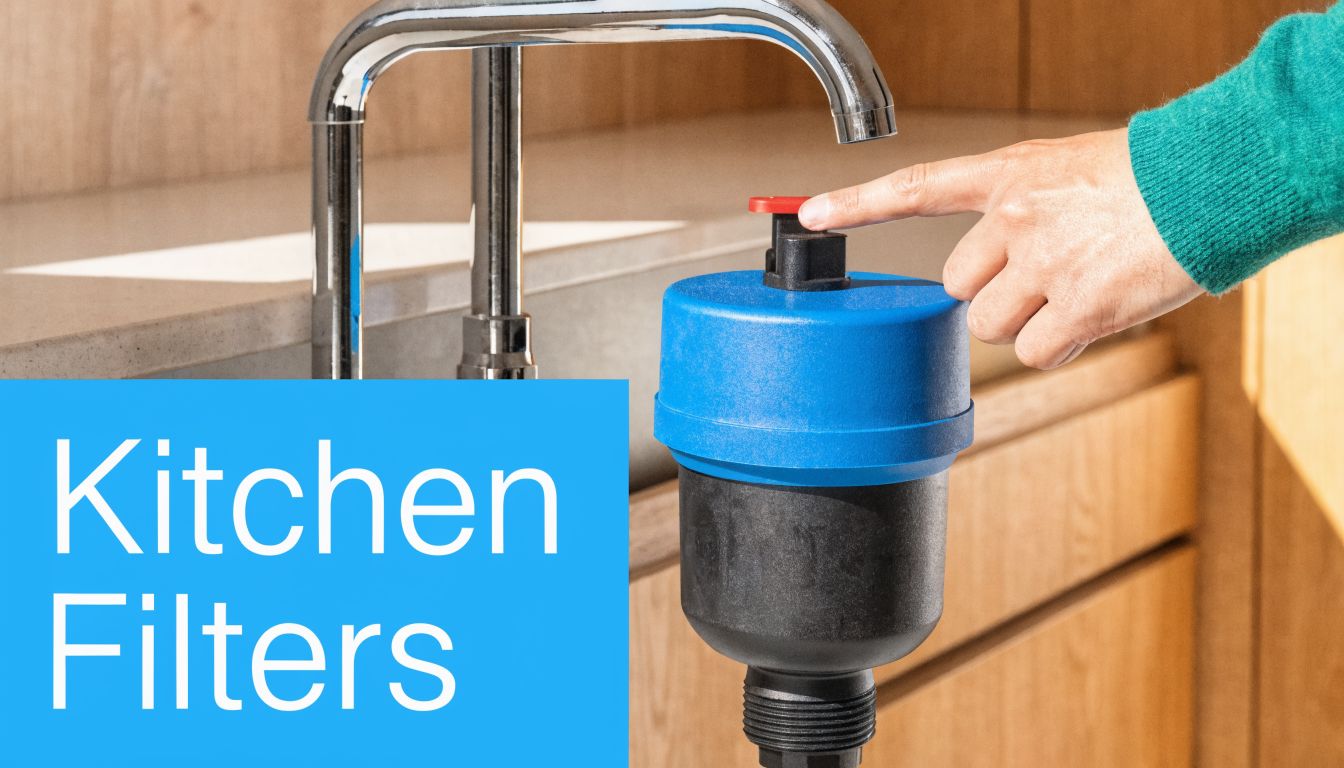
A person uses their finger to push the red button on a blue and black water filter.

Under-sink systems usually use a built-in bypass

Most under-sink filter heads are built for quick service. A lever, push button, or auto-shutoff in the head lets you remove the cartridge without shutting down the entire home. On a good design, cartridge changes are clean and fast.

Use the feature the way the manufacturer intended:

  1. Shut off the feed if your model requires it.
  2. Open the faucet to relieve pressure.
  3. Engage the release or service position.
  4. Remove the old cartridge.
  5. Seat the new cartridge fully.
  6. Return the head to filter mode and flush the faucet.

Correct seating matters more than many homeowners expect. If the cartridge is cocked, half-locked, or forced past a keyway, you can get leaks, poor flow, or a partial internal bypass that lets untreated water slip past the media.

Refrigerator filters use plugs or bypass cartridges

Refrigerators handle bypass differently. Many models need a bypass plug or bypass cartridge installed when the filter is removed. Without that insert, the dispenser or ice maker may slow down, stop, or behave erratically because the filter head is designed to stay mechanically engaged.

Manufacturers sell those parts for troubleshooting and short-term use. GE and other major brands provide model-specific bypass inserts that keep water moving through the refrigerator while the filter housing remains properly actuated. That proves a useful point for diagnosis. If flow improves the moment the bypass goes in, the old filter was clogged, installed incorrectly, or failing internally.

What it does not prove is that the water is still being treated.

Side-by-side trade-offs

Feature Under-sink bypass Refrigerator bypass plug
How it works Built into filter head or manifold Replaces the cartridge with a pass-through part
Main use Quick cartridge changes or service Troubleshooting or temporary operation
Best use case Brief maintenance window Waiting for the right replacement filter
Main downside Easy to forget system isn’t filtering if left in bypass Water flows, but treatment for taste and chemicals is lost

What works and what doesn’t

These bypass options are useful during maintenance, diagnosis, or a short wait for the correct replacement filter. I use them for exactly that.

Problems start when a temporary bypass becomes normal operation. A refrigerator bypass plug is not a filter. An under-sink head left in service position is not filtering either. If the original cartridge was there for chlorine taste, odor, lead reduction, or PFAS reduction, bypassing can put those contaminants back into the drinking water stream at whatever level the incoming supply contains.

PFAS is the part many DIY guides skip. If a household installed an under-sink filter because they were trying to reduce long-lasting contaminants, bypassing that unit takes them back to untreated source water. The same logic applies to refrigerators. Many fridge filters are mainly used for taste and odor improvement, but some households rely on them as a last point-of-use barrier for chemicals they do not want in drinking water or ice.

You can often taste the difference fast. More chlorine bite. More pool smell. Sometimes no obvious taste change at all, which is why bypass can be misleading. A lot of contaminants do not announce themselves in the glass.

Treat under-sink and refrigerator bypasses as service tools, not operating modes. That keeps the convenience without forgetting the reason the filter was installed in the first place.

Smart Alternatives to a Standard Bypass

Not every home starts with a neat three-valve bypass. Older installs often have a filter housing plumbed straight into the main line with no isolation at all. That’s when homeowners start looking for workarounds.

Some of those workarounds are solid. Some create more pressure loss and more service headaches than the original problem.

Two practical retrofit options

The first option is an isolation-style retrofit. Instead of a full classic bypass from the start, you add shutoff valves on either side of the filter and build a controlled path around it. This can be a good fix when access is tight or when you want to improve serviceability without rebuilding the whole area.

The second option is a temporary jumper for maintenance. In some situations, especially on PEX systems, a plumber can isolate the filter, disconnect a section, and create a short temporary pass-through using compatible tubing and fittings while the filter assembly is repaired or replaced. That’s a practical service method, not something to leave in place forever.

Flow loss matters more than people expect

A bypass layout can solve one problem and create another if the components are undersized or poorly chosen. Homeowners who install a DIY 3-way ball valve bypass using 3/4-inch NPT fittings need to be aware that it can reduce water flow by 15% to 20%, while factory bypasses designed for the application may preserve up to 95% of the original flow rate, according to this discussion of whole-house bypass trade-offs.

That’s the kind of issue people feel in the shower or when two bathrooms run at once. The system still “works,” but the house feels starved.

Which alternative fits which situation

  • Use a temporary maintenance jumper when the goal is to keep water on during a short repair.
  • Use isolation valves when you want easier service access but don’t need a full redesign.
  • Use a factory-made bypass assembly when preserving flow and compatibility matters more than shaving initial cost.

A bypass that kills pressure isn’t a clever hack. It’s just a different problem.

What about smart bypass valves

Some newer systems use app-controlled or automated bypass functions, especially on equipment that backwashes or cycles through service modes. Those can be useful in complex setups, but for most homes, simplicity still wins. A clearly labeled manual bypass with quality valves is easier to understand and easier to repair.

The smartest alternative is usually the one the next homeowner, the next plumber, or the next family member can operate without guessing.

Troubleshooting Common Bypass Problems

Bypass problems usually announce themselves in plain ways. A drip. A stuck handle. A sudden pressure drop. The trick is separating a valve problem from a filter problem, because they can look similar from across the basement.

A close-up view of a person's hands repairing or adjusting a bypass water filter valve system.

Quick diagnosis table

Symptom Likely cause What to do
Slow drip at valve handle Packing nut or internal seal issue Gently tighten the packing nut if the valve design allows. If it still drips, replace seals or the valve.
Valve won’t turn Mineral buildup, age, or lack of use Don’t force it. Shut down the line and service or replace the valve.
Pressure is low after returning to service Filter is clogged, valve not fully open, or housing issue Confirm valve positions first, then inspect the cartridge and housing seal.
Water still seems untreated Filter bypassing internally or poor seal at the housing Inspect the cartridge seating and O-ring before blaming the valve.

The problem may be the filter seal

One of the most overlooked causes of poor performance is leakage around the filter rather than through it. Research on filter bypass flow shows that even a 1 mm gap can allow about 1% to 2% of flow to bypass the media, and bypass can rise to nearly 40% with larger gaps or as a filter gets clogged, according to this California Energy Commission research document.

That matters because the symptoms mimic a faulty bypass valve. Water quality drops. Pressure acts strangely. The homeowner assumes the valve is partly open, yet the underlying problem is a bad seal, warped frame, or misseated cartridge.

Simple checks before you call for service

  • Verify handle positions: A half-turned valve can create confusing flow behavior.
  • Inspect the housing O-ring: Clean it and make sure it sits flat.
  • Look for frame or cartridge damage: A bent cartridge or worn seat can let water sneak around the media.
  • Cycle the bypass slowly: Sometimes a valve that sat untouched for years needs careful movement to reseat fully.

Don’t diagnose from the handle alone. The bypass path might be closed while the filter is still leaking around its own seal.

If you see cracked housings, heavily corroded valves, or fittings that move when touched, stop there and bring in a plumber. Water under pressure punishes wishful thinking.

Frequently Asked Questions About Water Filter Bypasses

Will installing a bypass void my filter warranty

It can, depending on the equipment and the parts used. Manufacturer-approved bypass components are always the safer route when warranty protection matters. On refrigerators especially, an official bypass cartridge is very different from a homemade workaround. If you’re unsure, check the filter or appliance documentation before modifying anything.

Is it okay to leave a bypass water filter on all the time

Usually, no. A bypass is meant for service, troubleshooting, or another short-term reason. If you leave the system in bypass, you’ve removed the treatment stage from the water path. On a whole-house system that may mean taste, odor, or sediment issues returning. On a drinking-water system, it means the water at the faucet or dispenser is no longer being treated as intended.

How do I keep bypass valves from seizing up

Operate them occasionally and do it gently. A valve that never moves is the one most likely to freeze in place when you need it. Turn the handles through their positions during routine maintenance, then return them to normal service mode. If a valve feels rough or gritty, don’t muscle it harder. That’s when stems snap and leaks begin.

How do I know whether low pressure is from the bypass or the filter

Start with the simple checks. Confirm the valve positions, then compare flow in service mode versus bypass mode if your system allows it. If pressure improves when bypassed, the cartridge may be loaded or the housing may have a sealing problem. If pressure stays poor either way, the restriction may be elsewhere in the plumbing.

When should I call a professional

Call for help if the bypass leaks at the body, not just the handle, if the housing threads are damaged, if the valve won’t move without force, or if you’re dealing with a complicated setup that includes directional parts or electrical controls. It’s also worth calling a pro if you’re not fully certain which water lines feed drinking fixtures versus utility lines. That’s where bypass mistakes become household water-quality mistakes.


If you’re sorting out a bypass water filter decision and want clearer guidance on replacement filters, whole-house setups, under-sink systems, and what helps with chlorine, lead, iron, or odor, Water Filter Advisor is a strong next stop. It’s built for homeowners who want practical, research-driven help choosing and maintaining the right filtration system without getting lost in marketing claims.

Best Under Sink Water Filter for Well Water (2026 Guide)

If you're shopping for the best under sink water filter for well water, you're probably already annoyed by something at the tap. Maybe the water smells faintly like rotten eggs in the morning. Maybe tea tastes metallic. Maybe the sink develops orange or brown stains no amount of scrubbing seems to fix. Those aren't cosmetic quirks. They usually mean your water needs a system built for well conditions, not a generic city-water filter with better marketing than staying power.

Most under-sink filter roundups miss the part that matters most to well owners. A strong drinking water filter is only half the job. The other half is protecting that filter from the sediment, iron, manganese, and microbial problems that make well water harder on cartridges, membranes, and UV chambers. I’ve seen plenty of homeowners buy an expensive under-sink unit, install it directly on untreated well water, and then wonder why flow drops, taste gets weird again, or replacement costs start stacking up faster than expected.

A good setup for well water usually isn't a single box. It's a complete system. Test the water first. Match the filtration technology to the actual contaminants. Add the right pre-filter so the under-sink unit can do its job. Then price the system based on what well water does to filters over time, not what a product page promises under ideal conditions.

Here’s the side-by-side view before we dig in.

Filtration approach Best for Main strength Main weakness Typical complete-system note
Carbon block under-sink Taste, odor, some metals, general polishing Good usability, no wastewater, usually simpler install Won't solve every dissolved contaminant issue and isn't a bacteria treatment Needs sediment protection on most wells
Reverse osmosis under-sink Dissolved contaminants, broad reduction goals Strong all-around contaminant reduction potential Sensitive to sediment and iron, creates wastewater, slower by design Usually needs pre-filtration before the RO unit
UV paired with filtration Microbial risk after proper pre-treatment Targets bacteria risk without changing taste much Doesn't work well if water is cloudy or full of particles Must be paired with sediment control and usually another filter stage
Complete staged system Most well-water homes with mixed issues Protects filter life and improves consistency More parts to maintain and more planning up front Best fit when the water report shows multiple problems

That 'Well Water Smell' Is a Warning Sign

A lot of well water problems start small. You fill a glass and notice a dull metallic finish. The guest bathroom toilet tank stains faster than it should. White laundry starts looking tired. Then the kitchen faucet begins to sputter a little, and suddenly that cheap filter choice from a year ago doesn’t look so cheap anymore.

Private well owners live with a different reality than city-water households. Municipal water is treated and regulated before it reaches the home. Well water isn't. That means your water can carry a shifting mix of sediment, iron, manganese, sulfur compounds, hardness minerals, nitrates, and microorganisms, depending on your geology, recent weather, the condition of the well, and how the plumbing system is set up.

Practical rule: If your water leaves stains, smells off, or changes with the season, treat that as a filtration design problem, not just a nuisance.

The mistake I see most often is buying an under-sink system for the symptom instead of the cause. A homeowner wants better-tasting water, so they install a sleek kitchen filter. But if the actual issue is oxidized iron and grit grinding through cartridges, or bacteria risk that a basic carbon block can't address, the “fix” becomes a short-term patch.

That’s why the best under sink water filter for well water is rarely just the unit under the sink. It’s the combination that works with your well instead of against it. Sometimes that means a carbon block system protected by a sediment stage. Sometimes it means reverse osmosis with a dedicated pre-filter. Sometimes it means you shouldn’t start under the sink at all until the incoming water is stabilized.

Homeowners who get this right usually stop chasing symptoms. Their filter lasts longer. Flow stays consistent. The water tastes better because the system is finally dealing with the actual problem.

Test Before You Invest in Any Water Filter

A homeowner sees brown staining in the sink, notices a sulfur smell on some mornings, and buys an under-sink filter to fix the drinking water. Six weeks later, flow drops, the cartridges are coated with rust-colored sludge, and the odor is still there. I’ve seen that sequence many times on private wells. The filter was not the first problem. It was the last piece in a system that had not been diagnosed.

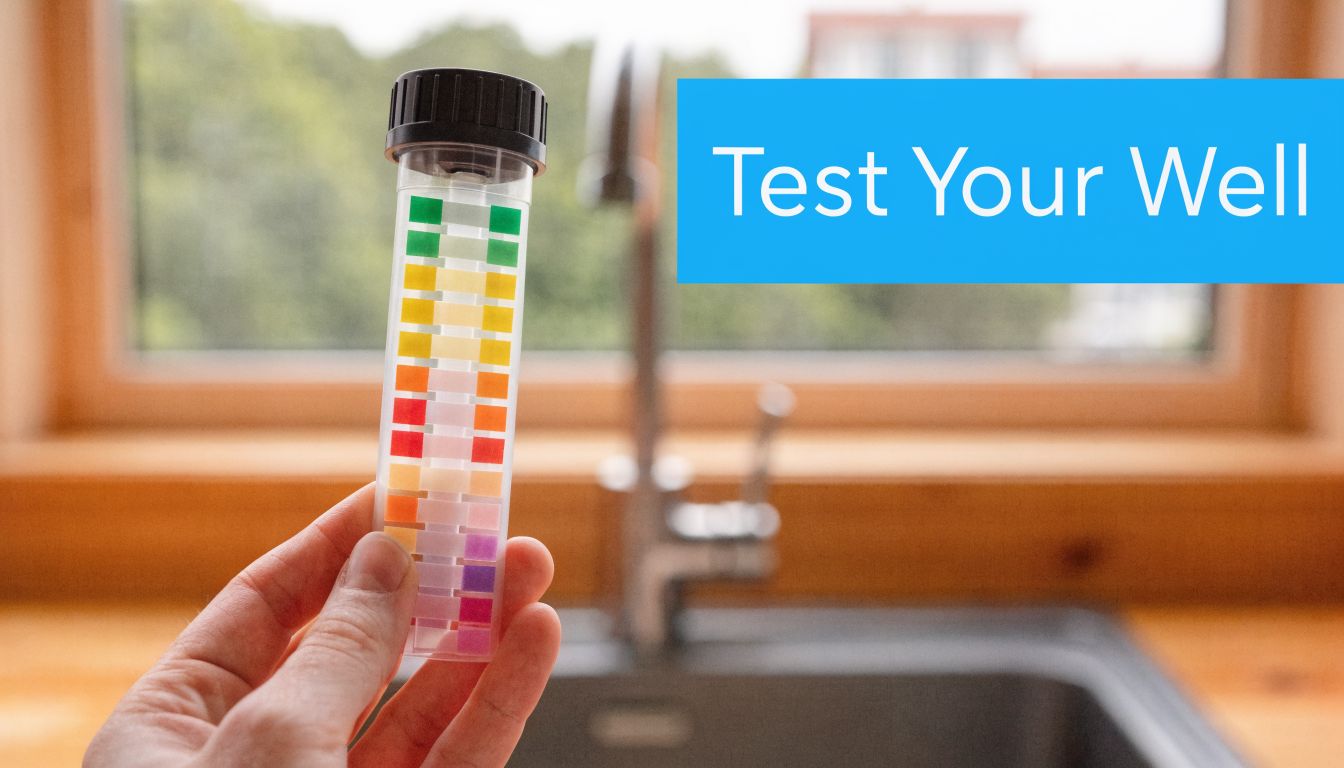
A hand holding a water test strip container in front of a kitchen sink faucet.

A quick strip test can help you spot a broad issue, but it is not enough to choose equipment with confidence. Well water needs a lab report or a reliable local water analysis that shows what is entering the house. Homeowners who want help reading those results can use Water Filter Advisor's advice library as a starting point before they compare systems.

What to test for first

Start with the contaminants that shorten filter life or point to the wrong treatment method.

  • Sediment and turbidity. Sand, silt, and fine particulate plug cartridges early and can foul RO components fast.
  • Iron and manganese. These cause staining, metallic taste, dark residue, and heavy loading on any under-sink filter.
  • Hardness minerals. Scale can reduce performance and increase maintenance.
  • Nitrates. Many homeowners assume any drinking water filter will reduce them. That is a costly assumption.
  • Microbial contamination. Coliform or other bacteria concerns change the equipment plan immediately.

Those results do more than identify contaminants. They tell you whether an under-sink unit can handle final polishing, or whether the water needs treatment upstream first.

Why the report matters more than the product page

Product pages are written to sell broad compatibility. Well water rarely behaves that way. A carbon filter that performs well on taste and odor can clog quickly if the actual issue is sediment and oxidized iron. A system that improves flavor may do very little for nitrates. A good-looking under-sink unit also does not solve a bacteria problem by itself.

That is why I recommend buying in this order. Test first. Then decide on pre-filtration. Then choose the under-sink unit that fits the treated water reaching the kitchen. That sequence usually saves money because it prevents premature cartridge changes and protects the more expensive components.

This is also where long-term cost starts to become clear. A filter rated for a certain lifespan on cleaner water may reach that limit much sooner on a well with grit, iron, or seasonal swings. The box does not tell you how fast your cartridges will load up if the incoming water is unstable. Your test report gives you the best clue.

Lab test first, video second

Many homeowners want to know what a proper water testing process looks like before paying for one. This walkthrough is a helpful primer.

A simple testing checklist

Use this before you buy anything:

  1. Pull a current sample. Do not rely on an old inspection report or a neighbor’s water test.
  2. Request a well-focused panel. Include sediment indicators, iron, manganese, hardness, nitrates, and bacteria.
  3. Note what you see and smell. Staining, rotten egg odor, cloudiness, and seasonal changes help explain the lab numbers.
  4. Shop with the report in hand. Choose equipment that answers the actual findings, not generic claims.

If the lab report and the marketing copy disagree, trust the lab report.

Comparing Under Sink Filtration Technologies for Wells

A clear lab report usually narrows the field fast. For well water under the sink, choices are carbon block, reverse osmosis, and UV paired with filtration. Each solves a different problem. The expensive mistake is expecting one cartridge or one compact unit to handle every well issue by itself.

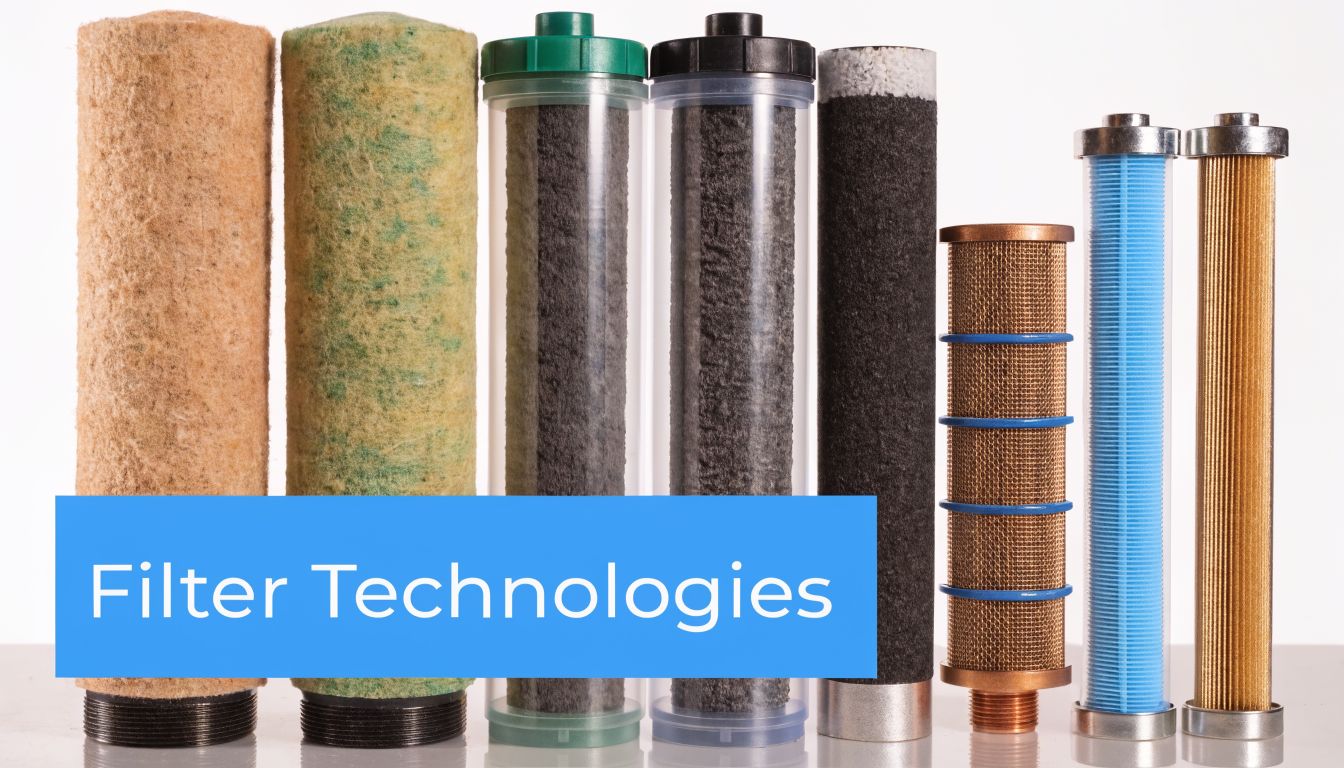
Various industrial and residential water filter cartridges standing in a row against a plain white background.

On city water, an under-sink filter often works as a standalone upgrade. On a well, it usually works best as the last stage in a treatment chain. That difference matters because iron, sediment, sulfur odor, and bacteria can overwhelm the wrong technology long before the rated filter life on the box.

Carbon block systems

Carbon block systems are often the easiest to live with. They keep normal faucet flow, do not waste water, and usually need less maintenance than RO. They also do a good job improving taste and odor and reducing many chemical contaminants, which makes them a strong finishing filter after the water has already been cleaned up upstream.

For well owners, that last part is the key trade-off. Carbon can polish water very well, but it does not like heavy sediment, iron loading, or active bacterial problems. If raw well water hits the carbon first, pressure drops early, cartridges foul faster, and replacement costs climb.

I install carbon block systems most often on wells that already have the big problems handled. That includes sediment control at minimum, and often separate treatment for iron or sulfur if those are present.

Carbon block works best on well water that is already reasonably clean by the time it reaches the kitchen sink.

Reverse osmosis systems

Reverse osmosis is the strongest under-sink option for dissolved contaminants. If the report shows nitrates, arsenic, sodium, fluoride, or a broad mix of dissolved solids, RO usually gives the homeowner the best chance of getting the drinking water where it needs to be.

It also has the most conditions attached to it. RO membranes are fine filters. Fine filters clog. On well water, that means shortened membrane life if sediment or iron gets through, more frequent prefilter changes, slower production, and wastewater that some homeowners do not expect until after installation. The water quality can be excellent. The operating cost can also be higher than online roundups suggest, especially on a well with seasonal swings.

For many wells, RO is the right drinking water core, but only if the incoming water has already been stabilized enough that the membrane is not doing everyone else’s job.

UV systems

UV belongs in the conversation any time the well has a bacteria history, a shallow casing, flooding risk, or a test result that points to microbial contamination. It treats a problem carbon and RO are not designed to solve on their own.

UV also has strict limits. It does not remove iron, manganese, sediment, hardness, or sulfur odor. It does not improve taste by itself. It needs clear water to work properly because suspended particles can shield microbes from the light. In practice, UV is an add-on disinfection stage, not a substitute for filtration.

Which technology fits which well problem

Technology Good fit for Weak fit for Best use on well water
Carbon block Taste, odor, many chemical reduction goals Heavy sediment, iron, bacteria concerns Final polishing stage after upstream treatment
RO Dissolved contaminants such as nitrates, arsenic, and high TDS Untreated well water with grit or iron fouling risk Drinking water filter after feed water is cleaned up
UV Bacteria control on clarified water Sediment, metals, odor, taste by itself Final disinfection step in a complete system

Mixed results are common on private wells. A water test might show sediment, iron staining, and bacteria risk all at once. In that case, the right answer is a matched system, not brand loyalty to one under-sink unit. That approach costs more upfront in some homes, but it usually costs less over time because the expensive filters last closer to their intended service life.

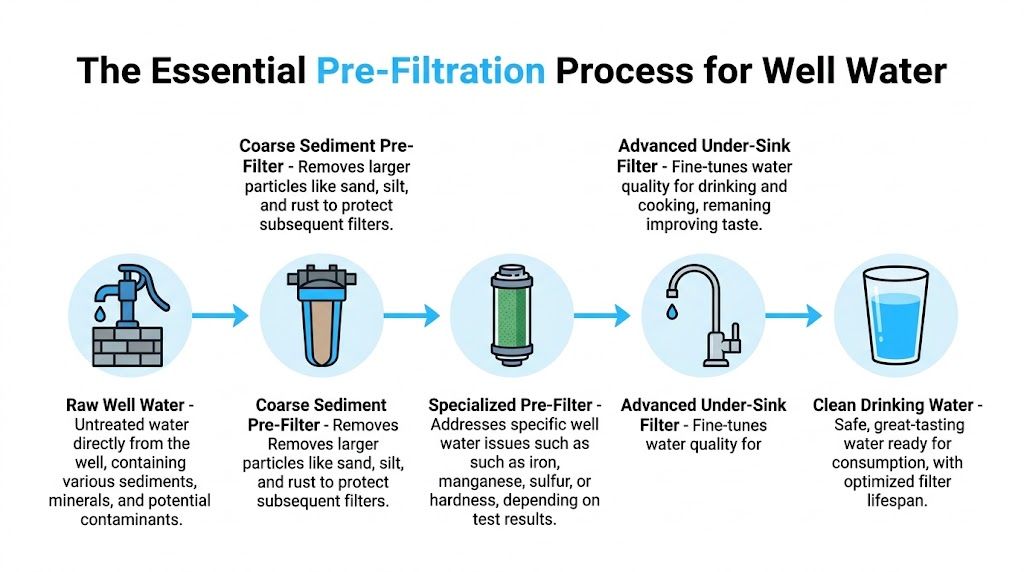
The Critical Pre-Filter Your Well Water Demands

A homeowner buys a premium under-sink system, installs it on a Friday night, and likes the taste right away. A few weeks later, flow slows down, cartridges look filthy, and the replacement schedule suddenly gets expensive. On well water, that pattern usually points to a setup problem, not a bad brand.

A diagram illustrating the essential pre-filtration process for cleaning well water from raw source to drinkable state.

Why under-sink units burn through filters on well water

Under-sink filters are finishing filters. They are built to polish water that has already had the rough work handled upstream.

Well water often arrives with sand, silt, iron particles, oxidized manganese, or fine debris stirred up by pump cycling. Feed that directly into a carbon block or RO system and the expensive stage becomes the first dirt catcher in the line. Flow drops faster. Pressure falls off. RO membranes foul sooner. Carbon cartridges load up long before their rated life.

I see this mistake all the time in homes with light staining or occasional cloudy water. The owner assumes the under-sink unit will "handle it." It will, for a while. Then the eventual cost shows up in short cartridge life and inconsistent performance.

Under-sink filters last longer on wells when they polish water instead of trying to clean raw well water by themselves.

What the pre-filter needs to do

A proper pre-filter protects the expensive equipment and gives the under-sink unit a cleaner, steadier feed. For many wells, that starts with sediment control. The exact micron rating depends on how dirty the water is and how much pressure loss the home can tolerate, but the job is the same. Catch the grit before it reaches the finer stages.

Some wells need more than a sediment cartridge.

If testing or clear symptoms point to iron, manganese, sulfur odor, or hardness, add treatment for that problem before the under-sink filter. At this point, many homeowners overspend. They keep replacing specialty under-sink cartridges that were never meant to carry iron or sulfur treatment on their own.

A complete setup works better and usually costs less over time

The most reliable approach is a staged system:

  1. Sediment pre-filtration first for sand, silt, rust, and other particles.
  2. Problem-specific treatment next if the well has iron, manganese, sulfur, or hardness.
  3. Under-sink filtration last for drinking water taste, odor, and any targeted reduction the water report calls for.

That order matters. It protects flow rate, reduces fouling, and helps the final cartridges reach something close to their expected service life.

How to match the pre-filter to the problem

Use your water test and what you see in the house.

  • Visible grit or cloudy water: Start with sediment pre-filtration before any under-sink unit.
  • Orange, brown, or black staining: Plan for iron or manganese treatment upstream. A kitchen filter alone is usually the wrong tool.
  • Rotten egg smell: Address sulfur before the water reaches the under-sink system.
  • Scale and soap issues: Hardness may need treatment before fine filtration if you want better filter life.
  • Mixed well problems: Build the system in stages instead of asking one under-sink product to solve everything.

A sleek tankless unit under the sink can still be part of a good well-water setup. It just should not be the whole setup. On private wells, the best results usually come from pairing the under-sink filter with the right pre-treatment so you are paying for clean drinking water, not constant replacements.

Top Filtration Approaches and Recommended Systems

The best under sink water filter for well water depends on what your report shows and what kind of maintenance you're willing to live with. I don't like generic top-five lists for wells because they blur together very different problems. A better method is to choose an approach, then pick a system type that fits.

Here’s the quick comparison.

Filtration Approach Best For Key Weakness Estimated 3-Year Cost
Sediment pre-filter + multi-stage carbon under-sink Wells with sediment, taste issues, staining concerns, and no major nitrate or microbial issue May not solve dissolved contaminant problems that call for RO Varies by filter change frequency and pre-treatment needs
Sediment pre-filter + under-sink RO Wells with broad dissolved contaminant concerns Membranes can suffer if iron and sediment control is weak Usually higher because of filter replacements, water waste, and add-ons
Sediment pre-filter + specialized treatment + under-sink carbon Wells with iron, manganese, sulfur, or hardness patterns plus taste/odor complaints More components to size and maintain Can be efficient long term if pre-treatment prevents premature cartridge loss
Clarification + UV + under-sink finishing filter Wells with microbial risk and drinking-water polishing needs UV alone won't fix particles, metals, or taste issues upstream Depends on lamp service, pre-filtration, and finishing filter schedule

Approach for sediment, staining, and everyday drinking water improvement

If your water report points to sediment, iron-related nuisance issues, or general taste problems, but not a major dissolved-contaminant or bacterial challenge, I usually prefer a sediment pre-filter plus a high-performance multi-stage carbon system under the sink.

For such applications, systems like Clearly Filtered make sense. The available lab data shows strong performance on uranium, chloroform, copper, barium, and strontium in treated well-water testing, and the flow rate remains practical for kitchen use. That kind of filter works best when it isn't being fed raw grit and oxidized debris all day.

A setup like this tends to fit homeowners who want:

  • Better taste and cooking water
  • No RO wastewater
  • A simpler faucet experience
  • Less concern about stripping minerals

The catch is that this approach isn't the answer if nitrates or microbes are the true problem. A polished glass of water can still be the wrong glass of water if the technology doesn’t match the report.

Approach for nitrates, arsenic concerns, and broad dissolved contaminant reduction

If the lab report points toward dissolved contaminants that call for stronger reduction, an under-sink RO paired with sediment pre-filtration is often the safer bet. Models frequently recommended in this lane include systems like Waterdrop G3P800, Cloud RO, and Aquasana SmartFlow.

I treat these as high-performance tools with strict feed-water expectations. They can be excellent if pre-filtration is done properly. They can also become maintenance magnets when homeowners skip that step and let dirty well water hit the membrane directly.

This approach usually makes sense when:

  • You need broader dissolved-contaminant reduction than carbon alone can provide.
  • You accept slower production and some wastewater.
  • You have room for maintenance and possible add-ons like remineralization.

If you're drawn to RO because it feels like the strongest option, make sure the pre-filtering is just as strong. Otherwise the membrane becomes an expensive sediment catcher.

Approach for iron, manganese, sulfur, or hardness patterns

Some wells are less about one dangerous contaminant and more about ugly, stubborn chemistry. Orange staining, black residue, sulfur odor, recurring scale, and filter cartridges that slime up early usually point to this category.

In those homes, the under-sink unit should be the last piece of the plan, not the first. The better approach is:

  • a sediment stage,
  • a specialized treatment stage chosen from the report,
  • then an under-sink carbon or RO unit for drinking water.

A system like Aquasana Claryum can make sense as the final under-sink stage in a broader setup because non-RO carbon filtration preserves minerals and avoids wastewater. But I wouldn't ask it to solve a raw iron problem alone. That’s where well owners waste money.

Approach for bacteria risk

If the report shows microbial concern, the system design changes again. You need a treatment train that includes clarification before disinfection, and many homeowners end up pairing filtration with UV.

A practical sequence is:

  1. particle reduction,
  2. any needed well-specific pre-treatment,
  3. UV or another appropriate microbial barrier,
  4. under-sink finishing filter for taste and use at the kitchen tap.

This kind of setup takes more planning, but it avoids the false confidence that comes from installing a nice under-sink cartridge while leaving the microbial issue unresolved.

What I’d choose by homeowner type

Homeowner situation Best fit
You want strong drinking-water improvement and your report doesn't point to major nitrate or bacteria issues Sediment pre-filter + multi-stage carbon under-sink
Your report shows dissolved contaminants that need broader reduction Sediment pre-filter + under-sink RO
Your well causes staining, odor, or rapid cartridge fouling Staged pre-treatment + under-sink finishing filter
You have confirmed microbial risk Clarification + UV + final under-sink filter

The winning setup is the one you'll still be happy maintaining a year from now. Well water rewards realistic design, not heroic expectations.

Calculating the True Lifetime Cost for Well Water Filters

A $300 under-sink filter can turn into a high-maintenance system fast if the well water feeding it is full of sediment, iron, or hardness. I see that mistake all the time. The unit itself is not always the expensive part. Keeping it working on well water is.

A hand holding a water filter cartridge next to a calculator and loose change on a table.

What the sticker price misses

Retail price tells you what the box costs on day one. It does not tell you what your water will do to that system over the next few years.

On a clean municipal supply, a manufacturer’s replacement schedule may be close to reality. On a private well, that schedule often breaks down. Sediment loads cartridges faster. Iron can blind carbon blocks and foul RO components. Hard water leaves scale where flow paths are narrowest, which is why some homeowners blame the filter when the actual problem is the untreated feed water ahead of it.

That is why I price well-water systems as a package, not a single product. The under-sink unit, the pre-filter stage, replacement cartridges, occasional sanitizing, and any parts that wear early all belong in the same budget.

Build a cost worksheet before you buy

Use a simple formula:

Three-year cost = system price + replacement filters + pre-filter replacements + service items + operating costs

For well water, the pre-filter line matters more than buyers expect. Adding a sediment stage or a better upstream treatment step raises the upfront spend, but it often saves money by protecting the expensive filters under the sink.

Operating costs depend on the technology:

  • RO systems can bring wastewater, slower production, and more frequent service if feed water is rough
  • Carbon systems usually cost less to run, but cartridge life can drop sharply if sediment or iron is not handled first
  • Specialty add-ons such as remineralization cartridges, UV lamps, or pumps add recurring cost and maintenance time

A cheaper unit with no protection in front of it can cost more than a better-designed system by the end of year two.

How I estimate cost in real well-water homes

Start with the water report, then look at the full treatment train. If the under-sink filter is being asked to catch everything, the ownership cost is usually headed the wrong way.

Ask these questions:

  • What reaches the kitchen filter after pre-treatment? Price the final water entering the unit, not the raw well water at the pressure tank.
  • Which cartridge or membrane is the most expensive part to replace? That part usually sets the long-term budget.
  • How easy is the system to service? Filters that are awkward to reach or proprietary to one brand tend to cost more over time.
  • Will low flow trigger early troubleshooting or part swaps? That labor and frustration have a cost, even if you do the work yourself.
  • Are replacement filters sold everywhere, or only through the manufacturer? Limited availability often means higher prices later.

One rule holds up well in the field. Protect expensive filtration with cheaper upstream filtration whenever the water justifies it.

Well water punishes undersized systems and rewards good staging.

Homeowners save the most money when they stop shopping for a single magic filter and start building a complete system. That usually means a modest pre-filter investment up front, fewer surprise replacements, and a kitchen filter that performs closer to its rated life.

Your Final Well Water Filter Decision Checklist

Before you buy, run through this list once. It catches most expensive mistakes.

Water quality match

  • Match the filter to the report. If the lab results point to nitrates, bacteria, or heavy sediment, the system should answer those issues directly.
  • Don't buy for taste alone. Better taste is nice. It isn’t the same as solving the main contaminant problem.

Performance and daily use

  • Check the flow you can live with. A high-performance system that annoys everyone at the sink often becomes a regret purchase.
  • Think about how the filter behaves on well water. Capacity claims are often cleaner and kinder on product pages than in well-water homes.

Certifications and proof

  • Look for relevant certifications. If a system claims reduction for specific contaminants, verify that the certification or test evidence matches the claim.
  • Separate lab data from marketing language. The details matter, especially on wells.

Installation reality

  • Measure the under-sink space. Tankless systems save space, but the plumbing path and service access still matter.
  • Plan the pre-filter location. The under-sink unit may be the final stage, not the first stage.

Maintenance honesty

  • Decide how much upkeep you're willing to do. A technically excellent system is still the wrong choice if you won't keep up with service.
  • Budget for well-water wear. If your water is hard on filters, assume more maintenance, not less.

A good purchase decision usually feels a little less exciting and a lot more solid. That’s the right instinct for well water.

Frequently Asked Questions About Well Water Filters

Can I use a standard pitcher filter on well water

You can, but I wouldn't rely on it as your primary solution. Pitcher filters are fine for minor taste improvement when the water is already fairly clean. They are not built to handle the sediment, iron loading, microbial concerns, or broad contaminant range that many wells bring with them.

Do I need a water softener with an under-sink filter

Sometimes yes, often no. It depends on whether hardness is just a nuisance or part of a larger pattern of scale, staining, and appliance trouble. An under-sink filter helps at the kitchen tap. A softener or other conditioning equipment addresses whole-home hardness behavior. They solve different problems.

Will a UV filter work if my water is cloudy

Not reliably. UV needs water that has already been clarified enough for the light to do its job. If the water carries sediment or visible cloudiness, fix that first with proper pre-filtration. UV should be part of a treatment train, not a shortcut around one.

How do I know when to change cartridges if my schedule keeps drifting

On well water, I tell homeowners to watch performance, not just the calendar. A drop in flow, return of odor, renewed metallic taste, or more visible staining usually means the system is loading up. Keep written dates anyway, but don't assume the printed replacement interval will match your well.

Is reverse osmosis always the best under sink water filter for well water

No. RO is excellent for some dissolved contaminant problems, but it isn't automatically the best choice for every well. If your main challenge is sediment, iron, or sulfur, RO without proper pre-treatment can become a maintenance headache. In some homes, a staged system with sediment protection and a strong carbon block under the sink is the smarter long-term fit.

Can one under-sink system fix all my well-water issues

Usually not by itself. If your well has mixed issues, and many do, the best answer is a staged design. The under-sink unit handles the final drinking-water job. Upstream filtration protects it and handles the rougher work.


If you want help sorting through test results, comparing filter types, or figuring out what a complete well-water setup should look like for your home, Water Filter Advisor is a practical place to start. It’s built for homeowners who want clear, research-driven guidance without the usual confusion around certifications, maintenance, and long-term filter costs.

Best Reverse Osmosis System for Home: Your 2026 Guide to Pure Water

If you're hunting for the best reverse osmosis system for your home, let me cut to the chase. Based on expert reviews and some serious lab testing, modern tankless models are leading the pack. A system like the Waterdrop G3P800 is a standout for its powerful filtration and instant water flow—perfect for families who want pure water without a bulky tank gobbling up precious under-sink real estate.

Why a Reverse Osmosis System Is Your Home's Best Upgrade

Under-sink reverse osmosis water filtration system installed in a modern kitchen cabinet.

Ever pause mid-sip and wonder what’s actually coming out of your faucet? You’re not alone. Between the swimming-pool tang of chlorine and genuine worries about lead, PFAS "forever chemicals," and other invisible nasties, getting clean water at home has become a big deal. A reverse osmosis (RO) system is, simply put, the heavyweight champion of home water purification, acting as a multi-stage bodyguard against a massive list of contaminants.

Think of it this way: a basic pitcher filter is like a friendly bouncer at a club, politely asking the obvious troublemakers to leave. An RO system, however, is a microscopic special agent with a VIP list, a velvet rope, and a semi-permeable membrane that blocks impurities on a molecular level. Only pure water molecules get past the checkpoint, while up to 99% of dissolved solids are unceremoniously shown the door (or, in this case, the drain).

What to Expect From This Guide

I know that navigating the world of RO systems can feel like trying to assemble IKEA furniture in the dark. You’ve got different types, technical jargon, and a dozen features to sort through. My mission here is to torch the confusion and give you clear, straightforward advice. We’ll break down everything you need to know to find the right reverse osmosis system for your home, from how the technology works to a direct comparison of the top models on the market.

For instance, lab tests from 2026 put the Waterdrop G3P800 at the top of the list for its incredible 99.99% filtration efficiency. It’s a tankless model that pumps out water at a solid 0.6 gallons per minute (GPM), so your family won’t be left waiting. Compare that to a traditional tank model like the APEC ROES-50, which still hits around 99% efficiency but eats up a lot more cabinet space. For most homeowners, the G3P800’s compact design is a huge win. You can find more deep-dives from these kinds of home water filtration reviews over at hellawater.com.

The real benefit of a reverse osmosis system is confidence. It's the peace of mind you get knowing, without a doubt, that the water your family drinks and cooks with is clean and safe from the worst contaminants found in both city and well water.

Top-Rated RO Systems at a Glance

To give you a quick lay of the land, this table breaks down how the leading RO systems stack up. We’ll get into the nitty-gritty later, but this gives you a fast look at their key differences and where they shine.

Model System Type Key Feature Best For
Waterdrop G3P800 Tankless Under-Sink On-demand flow and high efficiency (0.6 GPM) Families needing fast, continuous pure water with limited space
APEC ROES-50 Tank-Based Under-Sink Reliable, multi-stage filtration with storage Budget-conscious households with average water needs
iSpring RCC7AK Tank-Based Under-Sink Includes a remineralization filter for taste Users who prefer the taste of mineral water
Kinetico K5 Station Whole-House Point-of-entry system purifies all house water Homes on well water or those seeking total-home protection

This chart is just a starting point. As you'll see, the "best" system really depends on your water source, how much water you use, and how much space you have to work with.

How Reverse Osmosis Makes Your Water Pure

A transparent reverse osmosis water filtration system demonstrating how it works, with water dripping.

You might hear "reverse osmosis" and picture a vast, humming industrial complex, but the process happening under your sink is elegantly simple. Think of it as a multi-step cleanup crew for your tap water, where each stage targets a different set of problems.

First, your water hits a sediment pre-filter. Its only job is to get rid of the big stuff—the visible gunk that makes water look cloudy. This includes rust flakes from old city pipes, sand, silt, and any other grit that's crashed the party.

Next, the water moves through one or more carbon filters. These are the chemical warfare specialists. They use adsorption to snatch things like chlorine, which municipalities use for disinfection but which can leave your water with that tell-tale chemical taste and smell.

The Heart Of The System: The RO Membrane

With the large debris and chlorine out of the way, the water is ready for the star of the show: the reverse osmosis membrane. This is what does the real heavy lifting.

The membrane is a sheet of material with pores so ridiculously small they measure about 0.0001 microns. To put that in perspective, a single human hair is roughly 70 microns thick. Your home's water pressure provides the muscle, shoving water molecules through these tiny openings while almost everything else gets rejected.

This is the critical difference between an RO system and a standard water filter. It doesn’t just trap particles; it physically forces pure water through a barrier, leaving a huge range of dissolved contaminants behind. It's not a net; it's a nearly impenetrable wall.

This process is incredibly effective at removing tough contaminants that other filters simply can't touch. All the rejected gunk and dissolved solids are washed away into your drain line, so only the cleanest water remains.

  • Heavy Metals: Lead, arsenic, mercury, and chromium are stopped cold.
  • Dissolved Solids: It drastically cuts down the Total Dissolved Solids (TDS) in your water, which includes salts, nitrates, and fluoride.
  • Emerging Contaminants: RO is one of the very few residential filter types proven to remove PFAS, often called "forever chemicals," which are a growing concern in water supplies nationwide.

The Final Polish

After passing through the membrane, the purified water usually gets one last pass through a carbon "polishing" filter. This is a final quality check to catch any faint tastes or odors the water might have picked up along the way. The result is exceptionally crisp, clean water that tastes like… well, nothing at all. Just pure hydration.

Many modern systems also add a remineralization filter at the very end. Because RO is so thorough, it strips out healthy minerals like calcium and magnesium right along with the bad stuff. This final stage puts those beneficial minerals back in, not only getting rid of the "flat" taste some people notice in RO water but also raising its pH to be less acidic.

Key Factors for Evaluating RO Systems

Picking the right reverse osmosis system isn’t about grabbing the most popular box off the shelf. You need to look past the marketing and match the hardware to your home's water, your family's needs, and your budget. Get this right, and you'll have a system that works for you for years.

This decision tree breaks down the first few questions to ask. It’s a simple way to see if your situation points toward a smaller under-sink unit or a larger whole-house system.

Flowchart guiding the selection of an RO system based on household size, water use, and budget.

Use it to get a quick handle on which category you should be shopping in. From there, we can dig into the details that really matter.

Decoding Contaminant Removal Claims

An RO system's main job is pulling contaminants out of your water. But talk is cheap. You need proof, and that comes from NSF/ANSI certifications. These aren't marketing fluff; they are independent, third-party tests that prove a system performs as advertised.

Here are the two big ones to look for:

  • NSF/ANSI 58: This is the gold standard for reverse osmosis. It confirms the system can reduce tough contaminants like lead, fluoride, arsenic, and nitrates. A system carrying this seal has passed strict tests for filtration performance, structural integrity, and material safety.
  • NSF/ANSI 401: Think of this as an extra layer of defense against modern pollutants. This standard certifies the reduction of up to 15 "emerging contaminants," which can include certain pesticides, herbicides, and even trace amounts of pharmaceuticals. If you live near farmland or just want maximum peace of mind, this certification is worth its weight in gold.

If a system doesn't have these certifications, you're just taking the manufacturer's word for it. Always look for the NSF seal.

Matching Flow Rate To Your Household

Flow rate, measured in Gallons Per Day (GPD), tells you how fast a system makes purified water. This number directly affects your daily life. Go too small, and you'll be staring at a trickling faucet while waiting for a pot to fill.

For a one or two-person home, a 50–75 GPD system usually does the trick. But for a family of four or more—or if you're a home chef who cooks with a lot of filtered water—you'll be much happier with a system rated for 100 GPD or more.

Pro Tip: GPD is a lab-tested ideal. Real-world factors like low household water pressure or very cold tap water can slow things down. It's a smart move to buy a system with a slightly higher GPD rating than your bare minimum to ensure you're never left high and dry.

Evaluating Water Waste And Efficiency

Older RO systems were notoriously wasteful, dumping gallons of "brine" water down the drain for every gallon of pure water they produced. Thankfully, modern systems are much, much better. High-efficiency models now have waste-to-pure water ratios of 2:1 or even an impressive 1:1.

When you compare models, look for the "waste ratio" or "efficiency ratio." A lower number means less wasted water, which is good for the planet and your water bill.

For those wanting purified water at every faucet, some experts like contractor Mike Holmes recommend whole-house solutions. Systems like the Kinetico K5, for example, can be configured to target specific local issues like chloramine and deliver clean water everywhere. You can learn more about picking the right system on Make It Right.

The Importance Of Remineralization

Here's the one "catch" with RO filtration: it's so thorough that it strips out healthy minerals like calcium and magnesium right along with the bad stuff. This can leave the water tasting sterile and slightly acidic.

The fix is a remineralization filter. Many of the best home reverse osmosis systems now include this as a final stage to add a small amount of beneficial minerals back into the water.

This one step does two important things:

  1. Improves Taste: It brings back a clean, natural flavor. No more "flat" water.
  2. Balances pH: It makes the water less acidic, raising it to a more neutral or slightly alkaline pH.

If you care about the taste of your water or want the benefits of those minerals, make sure the system you choose has a remineralization stage. It makes a huge difference.

Comparing Tank vs Tankless RO Systems

Comparison of tank and tankless water filtration systems, black and white units, with a glass of water.

When you’re ready to get an RO system, the first big fork in the road is deciding between a model with a tank or one that's tankless. This isn't a small detail—it completely changes how you use your water, how much space you lose under the sink, and how fast you can fill a glass.

Let's dig into this crucial choice.

The traditional RO system, the kind that's been around for decades, uses a pressurized storage tank. Because reverse osmosis takes time, the system slowly fills this tank with pure water, creating a reserve you can draw from instantly. It’s a reliable, time-tested design.

Tankless RO systems are the modern answer. They use powerful internal pumps and beefier membranes to purify water on the spot, as soon as you turn on the faucet. No bulky tank needed, which is a huge win for anyone tight on cabinet space.

The Flow Rate Reality

The most obvious difference you’ll notice day-to-day is the flow of water. A tank-based system gives you a strong stream of water, but only until the tank runs out. Once it’s empty, you’re stuck waiting for it to slowly refill, which is a real headache when you're trying to fill a big pot for pasta or have guests over.

Tankless systems, on the other hand, deliver an endless supply. Their flow rate is steady and consistent, often measured in Gallons Per Day (GPD). A good tankless unit can push out 400–800 GPD, meaning you literally can't out-demand it.

The Bottom Line: If you have a large, busy family that’s always in the kitchen, a tankless system's non-stop flow is a massive quality-of-life upgrade. For smaller households or couples, a standard tank system will probably do the job just fine.

The Battle for Under-Sink Space

For many, this is the deciding factor. A traditional RO setup is a space hog. It needs room for the filter cartridges and a storage tank that can be as big as a small propane tank. If you have a garbage disposal or a deep sink, good luck fitting it all in.

This is where tankless systems clean up. Getting rid of the tank leaves you with a sleek, compact unit that fits neatly in almost any cabinet. You get to keep your storage space for cleaning supplies, which is a game-changer in apartments, condos, or any kitchen where space is at a premium.

Purity, Waste, and Upkeep

Both systems will give you incredibly pure water, but there are a few subtle differences. Water can sit in a storage tank for hours or even days, which can sometimes lead to a slightly stale taste. With tankless, the water is purified just seconds before it hits your glass, so it's as fresh as it gets.

Water efficiency is another key battleground. Older tank systems were notorious water wasters, often flushing 4 or 5 gallons of brine down the drain for every gallon of pure water produced. Modern tankless systems are far more efficient, with many achieving a 1:1 or 2:1 waste-to-pure-water ratio. That saves a lot of water and money over time.

Maintenance is also a bit different. Both require regular filter changes, but tank systems have the extra step of sanitizing the tank itself every year or so to prevent any bacterial buildup. Tankless systems are simpler—just twist off the old filters and twist on the new ones.

To make the choice clearer, here’s a direct comparison of how these two types of systems stack up across the most important factors.

Tank vs. Tankless RO Systems Head-to-Head

Feature Tank-Based RO System Tankless RO System Recommendation Context
Water Flow Strong initial flow, but limited by tank size. Can run out during high use. Continuous, on-demand flow. Can't run out. Tankless wins for large families or anyone who uses a lot of filtered water at once.
Footprint Large. Requires significant space for both filters and the storage tank. Compact and sleek. Fits easily under most sinks, saving valuable space. Tankless is the clear choice for small kitchens, apartments, or crowded cabinets.
Water Freshness Good. Water is stored, which can lead to a stale taste if not used quickly. Excellent. Water is filtered seconds before you drink it, ensuring maximum freshness. If taste is your absolute top priority, go tankless.
Water Waste Varies. Older models are very inefficient (4:1+). Newer models are better. Highly efficient. Most modern systems are 1:1 or 2:1 (waste-to-pure). Tankless is more eco-friendly and saves money on your water bill over the long run.
Initial Cost Generally lower upfront cost. A more budget-friendly entry point. Higher upfront investment due to the pump and advanced technology. If budget is tight, a tank-based system is a solid start.
Maintenance Requires periodic filter changes and annual tank sanitization. Simple twist-and-lock filter changes. No tank to clean. Tankless offers simpler, more straightforward maintenance.

Ultimately, there's no single "best" choice for everyone. A traditional tank-based system is a proven, affordable option that works well for many homes with average water needs and enough space.

But if you value on-demand convenience, want to save every inch of cabinet space, and prefer the freshest possible water with minimal waste, a tankless system is definitely the way to go in 2026.

Calculating The Real Cost Of An RO System

An RO system is a fantastic investment in your family’s health, but let's talk turkey: what’s the real long-term cost? To find the right reverse osmosis system, you have to look past the sticker price. The true cost includes the unit itself, ongoing maintenance, and even the impact on your utility bills.

Let's break down the numbers so you can budget accurately and avoid any nasty surprises down the road.

Beyond The Initial Purchase Price

The upfront price for an RO system can be anything from a couple of hundred dollars for a basic model with a tank to over a thousand for a high-end, tankless one. But that's just the start. Your biggest ongoing expense will be filter replacements.

Most systems use several filters that you'll have to replace on different schedules. Here’s what you can generally expect:

  • Sediment & Carbon Pre-filters: Plan on replacing these every 6 to 12 months.
  • RO Membrane: This is the workhorse of the system and should last 2 to 5 years.
  • Post-filter/Remineralization Filter: These are typically changed every 12 months.

Before you buy, do the math on the annual cost of these filters. A system that looks cheap upfront might cost you more over five years if the filters are pricey or need changing all the time.

Installation And Utility Bill Impact

Are you going to install the system yourself or call a plumber? A DIY job is free if you're handy with a wrench, but a professional will likely charge between $150 and $400, depending on how complex the installation is. If you're not comfortable drilling into your counter or tapping into water lines, you need to factor this cost in.

Water waste is another big one. Old RO systems were notoriously inefficient, but newer models are much better. According to EPA data, older units could waste as much as 10 gallons of water for every one gallon of pure water they produced. Today, new WaterSense-labeled models can get that down to just 2.3 gallons or less. That could save a household over 3,100 gallons of water a year. Top-tier systems can even hit an impressive 1:1 waste-to-pure water ratio. You can find more details on these efficiency standards from the EPA's page on reverse osmosis systems.

Choosing a water-efficient model isn't just about being green; it saves you cold, hard cash. The savings on your water bill can be huge over time.

Don't forget to count the savings from kicking the bottled water habit for good. If your family spends $30 a month on bottled water, you’ll save $360 a year. That’s often enough to cover your annual filter costs and pay off the system itself in just a couple of years. When you add it all up, an RO system is usually a very smart financial move.

RO System Installation And Maintenance Tips

So, you’ve picked out your reverse osmosis system. Before you can enjoy that first glorious glass of pure, clean water, you have to get it installed and figure out a maintenance plan. Getting these two steps right is the key to making sure your system works like a dream for years to come.

First up is the installation. You have two real options: do it yourself or call a plumber. Many of the newer RO systems are designed for DIY, coming with color-coded tubes and good instructions. If you know your way around basic plumbing, like shutting off the water and using a drill, you can probably get it done in an afternoon and save a couple hundred bucks.

But if the thought of drilling into a granite countertop or cutting into a drain pipe makes you break into a cold sweat, hiring a pro is money well spent. They'll make sure nothing leaks and the whole setup is optimized from the get-go.

Professional vs DIY Installation

If you're remodeling, checking a smart kitchen planning guide can help you figure out the best spot for your system so it fits seamlessly.

  • DIY Installation: This is a great option if you're handy with tools and feel comfortable with plumbing basics. The kits give you everything you need, but you have to follow the instructions to the letter to avoid leaks.
  • Professional Installation: Go this route if you have expensive counters, not much space under the sink, or just want the job done right without the stress. A plumber can also handle any weird plumbing quirks they might find.

Your Long-Term Maintenance Checklist

An RO system needs regular attention to keep working properly. If you skip filter changes, you're not just risking water quality—you could ruin the RO membrane itself.

Think of your RO maintenance schedule like getting an oil change for your car. The pre-filters protect the more expensive and critical parts—in this case, the RO membrane—from premature failure. Sticking to the schedule is the single best thing you can do to extend your system's life.

Here's a general schedule you can follow, but always double-check the guide that came with your specific system.

  1. Sediment and Carbon Pre-filters: These filters take the biggest hits, grabbing sediment and chlorine. You'll need to change them every 6-12 months to keep the RO membrane safe.
  2. RO Membrane: This is the core of the whole system. If you take care of it, it can last 2 to 4 years. If your water flow starts to slow down to a trickle, that's a good sign it's time for a replacement.
  3. Carbon Post-filter/Remineralization Filter: This is the last step that makes your water taste great. Replace it every 12 months so your water stays crisp and fresh.
  4. System Sanitization: It's a good habit to sanitize the storage tank (if you have one) and lines when you do your annual filter change. This prevents any bacteria from building up over time.

Common Issues And Quick Fixes

Even the best RO systems can act up sometimes. The good news is that most problems are pretty simple to fix yourself.

  • Slow Water Flow: This is the number one complaint. First, make sure the water supply valve is all the way open. If it is, your pre-filters are likely clogged, or the air pressure in your storage tank is low.
  • Strange Noises: A bit of gurgling is usually normal—that's just the sound of the system working and flushing wastewater. But if you hear a loud, constant noise, it could be a water pressure problem or a filter that isn't seated correctly.
  • Leaks: As soon as you spot a drip, shut off the water to the RO system. Leaks almost always happen at the connection points. Double-check that all the tubes are pushed in tight and the filter housings are snug (but don't crank on them too hard).

For more detailed guides on fixing these issues, check out our collection of water filtration advice. Keeping on top of this simple maintenance will ensure you get a long life out of your RO system.

Your RO System Questions Answered

We get a lot of questions from homeowners who are close to choosing a reverse osmosis system but have a few final concerns. Here are the answers to the most common ones.

A big question is about minerals: “Does reverse osmosis remove healthy minerals?” Yes, it does. The RO membrane is so effective it removes beneficial minerals like calcium and magnesium right along with the contaminants. This can leave the water tasting "flat" or sterile to some people.

That’s why many modern systems include a remineralization filter.

Remineralization and Water Waste

The best RO systems today add a final stage that puts a small amount of healthy minerals back into the water right before it comes out of your tap.

This final step accomplishes two things:

  • Improves taste: It brings back a crisp, natural taste to the water.
  • Raises pH: It makes the water slightly alkaline, which many people prefer to the slightly acidic water that comes directly from an RO membrane.

Another concern is water waste. Older RO systems were known for being inefficient, but today's models are much better. High-efficiency systems have significantly cut down on the wastewater, with the best units achieving a 1:1 pure-to-waste water ratio.

The "waste ratio" is a key spec to check. A lower number means less water is wasted, which saves you money on your water bill.

How Long Will An RO System Last?

With proper maintenance, a good reverse osmosis system will last 10 to 15 years. The main unit is built to be durable, but its lifespan really comes down to how well you take care of it.

The single most important maintenance task is changing the filters on schedule. Following the manufacturer's timeline for replacing the sediment, carbon, and remineralization filters is crucial. This not only keeps your water pure but also protects the RO membrane—the most expensive part of the system—from getting clogged and failing prematurely. In colder areas, it’s also a good idea to know how to winterize your home's plumbing to protect your entire system. If you stay on top of maintenance, your RO system will deliver clean water for years.


At Water Filter Advisor, we help you understand water filtration. Our reviews and guides are made to give you the confidence to choose, install, and maintain the right system for your home. See our resources to find the best water solution for your family at https://www.waterfilteradvisor.com.

Your Guide to Sink Water Filtration Systems for Cleaner, Safer H2O

If you've ever side-eyed your tap water and wondered what's really in there, you're not alone. Even if your water is officially "safe" to drink, that doesn't always mean it tastes or smells great. Think of the best sink water filtration systems as your personal bodyguard, standing guard at your kitchen tap to stop common intruders like chlorine and lead that sneak past your city's treatment plant.

This guide will show you how to transform your kitchen faucet from a source of questionable liquid into a pristine spring of truly clean, great-tasting water.

Turning Your Tap Water Into Liquid Gold

A hand fills a clear glass with fresh, clean water from a modern kitchen tap.

The water reaching your faucet has been on an epic journey. It starts at a treatment plant and then travels through miles and miles of pipes, some of which could be older than your grandparents. While municipal treatment does a solid job of meeting legal standards, that long trip can add some unwanted hitchhikers.

It's like washing your car and then driving it home through a dust storm. It won’t be showroom-shiny when you arrive. Your water picks up contaminants from old pipes or absorbs byproducts from the disinfection process itself. That's exactly why your "safe" water might smell like a public swimming pool or have a funky metallic tang.

Why a Sink Filter Is Your Kitchen's Best Friend

A sink water filter offers a targeted solution right where you need it most: for drinking, cooking, and making that perfect cup of coffee. It’s a final checkpoint to ensure the water filling your glass is as pure and delicious as possible.

Here’s what these home heroes can tackle:

  • Bad Tastes and Odors: The most common complaint is that chemical zing from chlorine. A basic carbon filter can banish it, leaving your water tasting crisp, clean, and refreshing.
  • The Unseen Villains: Old plumbing can leach lead into your water, which is a major health no-no. More advanced filters can remove heavy metals, pesticides, and even emerging concerns like microplastics.
  • Peace of Mind: There's a priceless comfort in knowing your family is drinking water that's been through an extra layer of purification right at the tap.

People have strong opinions on water filters, but most agree on one thing: a good system makes a noticeable difference. It takes an everyday necessity—water—and elevates it, so you can stop worrying about what's lurking in your pipes.

Making Water Filtration Fun (Yes, Really!)

The world of water filtration can feel like a stuffy science lecture, full of confusing acronyms and technical jargon. But we're here to cut through the noise. We’ll break down the magic behind different sink filters, from the simple gadgets you screw onto your faucet to the powerhouse systems that live under your sink.

This guide will walk you through everything you need to know. We'll explore how different filters work and demystify the process of picking the right one for your home's unique water needs. By the end, you'll be ready to choose the perfect system for your kitchen and start enjoying cleaner, better-tasting water right away.

Comparing Under Sink and Faucet Mount Filters

Two under-sink water filtration systems, one grey and one white, inside kitchen cabinets below a sink.

When you start exploring sink water filtration systems, you’ll quickly discover two main contenders: under-sink filters and faucet-mount filters. The choice boils down to a classic showdown: out-of-sight power versus grab-and-go convenience.

Think of it like choosing your home audio. An under-sink filter is like a custom-installed surround sound system—powerful, completely integrated, and invisible. A faucet-mount filter is more like a top-notch Bluetooth speaker; it's a breeze to set up, affordable, and delivers great results without any renovation.

Both will give you better water, but they’re designed for different homes, different priorities, and different people. Let’s dive into what makes them tick so you can figure out which one is your perfect match.

Under-Sink Filters: The Out-of-Sight Powerhouse

Just as the name suggests, these systems are installed right in the cabinet beneath your kitchen sink. They tap directly into your cold water line, sending purified water to either your main kitchen faucet or, more commonly, a sleek, dedicated tap right on your countertop.

These systems are the heavy lifters of home water filtration. Because they have more space to work with, they use larger, more robust filter cartridges. This means they can target a much wider range of contaminants, and you won't have to change the filters nearly as often.

Here's why people fall in love with under-sink systems:

  • Superior Filtration: They can handle multi-stage filtration, including powerful methods like Reverse Osmosis (RO) that can remove up to 99% of nasty stuff like dissolved solids, heavy metals, and chemicals.
  • Longer Filter Life: Bigger filters mean less hassle. You might only have to swap them out every 6 to 12 months—sometimes even longer.
  • Uncluttered Countertops: Everything is tucked away. The only thing you see is a slim, elegant dispenser faucet next to your main one.

The trade-offs? The installation is more involved and might require a bit of plumbing know-how (or a call to a professional). They also carry a higher upfront cost. But if your goal is maximum purification and long-term convenience, an under-sink system is tough to beat.

Faucet-Mount Filters: The Convenient Clip-On

Faucet-mount filters are all about simplicity. These clever little devices screw directly onto the end of your faucet, usually without any tools, in just a couple of minutes. A small lever on the side lets you instantly switch between filtered water for drinking and regular tap water for washing dishes.

Their biggest advantage is their accessibility. They are very budget-friendly and the dead-simple installation makes them a perfect fit for renters or anyone who'd rather not mess with their plumbing.

While they are incredibly convenient, their compact size limits their filtration capacity compared to their under-sink counterparts. They are fantastic for improving taste and odor but may not be the best solution for more serious contamination concerns.

When looking at what attaches to your faucet, it’s also worth considering other add-ons like high-efficiency aerators for kitchen faucets, which can help you save on your water bill.

Under-Sink vs. Faucet-Mount Filters At a Glance

So, how do they really stack up head-to-head? This table breaks down the key differences to make your decision a little easier.

Feature Under-Sink Systems Faucet-Mount Systems
Filtration Power High (can remove a wide range of contaminants, including lead, VOCs, and TDS) Moderate (primarily removes chlorine, improves taste and odor)
Installation Moderate to difficult (often requires plumbing work) Very Easy (clips on in minutes, no tools needed)
Kitchen Space Uses cabinet space, keeps counters clear Attaches to faucet, visible on the sink
Filter Lifespan Long (6-12+ months) Short (2-3 months)
Upfront Cost Higher Lower
Best For Homeowners wanting comprehensive filtration Renters, budget-conscious users, and simple taste/odor issues

Ultimately, choosing your filter is about finding the right balance. You have to weigh your water quality needs against your budget and how much time you're willing to put into installation and maintenance.

How Sink Water Filters Actually Clean Your Water

Ever wondered what’s happening inside that filter under your sink? It’s not magic, but a series of smart, scientific steps that grab the gunk and let the good stuff—clean water—flow through to your glass.

Think of it like a bouncer at an exclusive club. Each filtration stage has a specific job, checking for and kicking out different types of unwanted contaminants. Once you understand who does what, you can pick the right system to protect your family's water.

Activated Carbon: The Contaminant Sponge

The workhorse of almost every sink filter is activated carbon. It’s the single best tool for making your water taste and smell better, fast. Imagine a sponge with a massive surface area, but instead of soaking up water, it’s designed to trap chemical impurities.

To make it, carbon granules are treated with oxygen, which creates millions of microscopic pores. When water passes over it, a process called adsorption kicks in. Nasty stuff like chlorine, pesticides, and volatile organic compounds (VOCs) that give water off-tastes and odors get stuck to the carbon’s surface, while the clean water passes by.

This is why even a simple faucet-mounted filter can make such a huge difference. It’s a master at getting rid of that “public pool” chlorine smell.

Bottom line: Activated carbon is like a magnet for the most common things that make water taste and smell bad. It’s your first line of defense for better-tasting water right from the tap.

Reverse Osmosis: The Ultimate Gatekeeper

Carbon is fantastic for improving taste, but what about the contaminants you can't see, taste, or smell? That’s where Reverse Osmosis (RO) takes over. This is one of the most powerful purification methods you can get for your home. If carbon is a sponge, RO is a high-security checkpoint.

An RO system uses your home’s water pressure to force water through a special semipermeable membrane. This membrane is incredibly fine—its pores are only about 0.0001 microns wide. That’s so small that pretty much only pure water molecules can squeeze through.

So what gets left behind? Just about everything else.

  • Dissolved Solids: Salts, nitrates, and even fluoride.
  • Heavy Metals: Lead, arsenic, chromium, and mercury are stopped in their tracks.
  • Other Contaminants: It's also highly effective against tiny things like bacteria and viruses.

Because it’s so thorough, RO is the go-to choice for anyone dealing with serious water quality issues. It's a technology that dominates the market, with its share expected to hit 38.7% by 2026, mainly because people trust its power to remove heavy metals and other tough contaminants. As more families invest in these systems, you can check out more data on water purifier market trends to see how the technology is evolving.

One thing to know is that the RO process is so fine it can also strip out beneficial minerals. To fix this, many modern RO systems add a remineralization stage at the end. This step puts back a small amount of healthy minerals like calcium and magnesium, which actually improves the water’s taste and brings it to a more natural pH.

Other Key Filtration Methods

Beyond carbon and RO, some systems use extra stages to tackle specific problems. One you'll often see is Kinetic Degradation Fluxion (KDF).

KDF is a filter media made from high-purity copper-zinc granules. When water flows through it, an electrochemical reaction happens that reduces heavy metals like lead, mercury, and iron. It also has another key job: it helps control the growth of bacteria and algae inside the filter itself. This protects the carbon filter that often comes after it, helping it last longer and work more effectively. You’ll frequently find KDF paired with carbon in multi-stage systems for a really solid, broad defense against contaminants.

How to Choose the Right Filter for Your Home

Figuring out the "best" sink water filter is a personal decision. There’s no one-size-fits-all answer.

If all you're trying to do is get rid of a slight chlorine taste, a powerful, multi-stage system is total overkill. On the flip side, a simple faucet filter isn't going to cut it if you're worried about lead from old pipes. The right choice always starts with one thing: knowing what’s actually in your water.

Think of yourself as a water detective. Your first job is to gather some evidence. This is the single most important step in the whole process because it ensures you buy a filter that actually solves your problem.

Start with a Water Quality Report

If your water comes from a city or town, your first clue is free. It’s called a Consumer Confidence Report (CCR). The EPA requires every community water supplier to give their customers this report every year.

It’s basically a scorecard for your water, showing what contaminants have been detected over the past year. You can usually find it right on your local water utility’s website. This report gives you a baseline for things like chlorine, lead, nitrates, and other regulated stuff your filter might need to tackle.

Got a private well? Then you're the one in charge of testing. You can grab an at-home test kit or, for a much more detailed picture, send a sample to a state-certified lab. This is a must-do, as well water can have surprises like bacteria or high iron levels that you won't find in treated city water. For more in-depth guidance, you can explore our collection of expert advice on water filtration to help you along.

Match the Filter to the Foe

Once you have your "evidence" from a water report or lab test, you can pick your weapon. It's all about matching the right filtration technology to the specific contaminants you're trying to get rid of.

Here’s how it usually breaks down:

  • Problem: Your water tastes and smells like a swimming pool.

  • Solution: An activated carbon filter is your best friend here. It’s fantastic at grabbing the chlorine and other chemicals that cause those bad tastes and odors. A simple faucet filter or a basic under-sink unit will do the job perfectly.

  • Problem: Your water report shows lead, arsenic, or nitrates are a problem, or you live near industrial areas.

  • Solution: This is a job for the heavy-hitter: a Reverse Osmosis (RO) system. Its special membrane is like a bouncer at an exclusive club, blocking an incredibly wide range of contaminants that carbon filters just can't handle.

  • Problem: You've got bad taste and you're worried about things like heavy metals.

  • Solution: A multi-stage under-sink system is a great middle ground. These combine different filter types, like activated carbon and sediment filters, to give you broad protection without going to a full RO setup.

This handy chart can help you visualize the decision process. You start with your main concern and follow it to the right technology.

A flowchart guides users to choose a water filter based on taste, odor, or other contaminants.

The key is to identify your main problem first. That will lead you straight to the most effective and budget-friendly filter for your home.

Decode the Certifications

So how do you know if a filter really does what the box says it does? You look for proof from a third party. In the water filter world, the gold standard is a certification from the NSF (National Sanitation Foundation).

An NSF/ANSI certification is your guarantee that a filter has been rigorously tested by an independent lab. It proves the product meets strict standards for safety and performance, so you know it’s not just marketing fluff.

When you're shopping, keep an eye out for these key certifications:

  • NSF/ANSI 42: This one’s for aesthetic effects. A filter with this seal is proven to reduce things that affect taste and smell, like chlorine. It makes your water more pleasant to drink.

  • NSF/ANSI 53: This is the big one for health effects. If a filter has this, it's been tested and verified to reduce specific health-related contaminants like lead, mercury, or VOCs.

  • NSF/ANSI 58: This certification applies only to Reverse Osmosis systems. It confirms the system’s ability to reduce a long list of tough contaminants, including arsenic, nitrates, and total dissolved solids (TDS).

Don't just take a company's word for it. Look for that official NSF seal on the box or in the product manual. Taking an evidence-based approach is the best way to choose a system that delivers real protection and true peace of mind.

Understanding Installation and Long-Term Costs

A water filter, stacked and scattered coins, and a calendar on a wooden desk, symbolizing installation costs and scheduling.

Choosing the perfect sink water filtration system is a great first step. But the real journey begins when you get it home, and that involves both the initial setup and the ongoing upkeep. It's crucial to look beyond the sticker price and understand the total cost of ownership if you want to make a smart investment in your home's water quality.

This means factoring in everything—from getting the system installed to buying replacement filters down the road. Getting a clear picture of these expenses from the start ensures you can budget properly and pick a system that delivers both clean water and genuine value for years to come.

Navigating the Installation Process

The time, effort, and money it takes to install a sink water filter can vary wildly from one system to the next. On one end, you have what might be the easiest DIY project ever.

  • Faucet-Mount Filters: These are literally designed to be installed without any tools. You just unscrew the little aerator on your faucet, screw the filter on, and you're done. The whole thing usually takes less than five minutes.

  • Basic Under-Sink Systems: Many of the simpler single or dual-cartridge systems are also made with the homeowner in mind. They often come with color-coded hoses and quick-connect fittings, so all you might need is a basic wrench and a little bit of patience.

  • Complex RO Systems: This is where things get more involved. Reverse Osmosis systems are the heavy-lifters of water filtration, and their installation reflects that. You'll likely need to drill a hole in your countertop for a separate, dedicated faucet and also tap into your sink's drain line for the wastewater. While a handy person can definitely tackle this, it’s often a job best left to a professional.

If you're not comfortable with plumbing, calling in a pro ensures a clean, leak-free setup and gives you total peace of mind. The principles of quality plumbing work in Dubai are universal—a proper installation is key to a system working correctly from day one.

Calculating the True Cost of Ownership

The initial purchase price is a one-time thing, but the filters are a recurring cost. This is the single most important detail when you're trying to figure out the true, long-term price of your system. A cheap unit that needs new filters every other month can easily end up costing you more than a pricier system with long-lasting cartridges.

The real value of a sink water filtration system is found by looking at its annual cost. Calculate how much you'll spend on replacement filters per year to see the complete financial picture.

For instance, a $50 faucet-mount filter might look like a steal. But if its $20 replacement cartridge only lasts three months, you're actually spending $80 every single year. Compare that to a $200 under-sink system whose $60 filter lasts a full year. The more expensive system actually saves you money over time.

It's clear that homeowners are prioritizing clean water. The global water purification filters market was valued at a staggering USD 44.22 billion in 2024 and is expected to climb to USD 62.53 billion by 2034. This intense competition is great for us, as it pushes manufacturers to create filters that last longer and perform better. You can read more about these water purification market projections to get a sense of where the industry is heading.

Staying on Top of Filter Replacements

The number one way a water filter fails is simple: people forget to change the cartridge. An old, clogged filter doesn't just stop removing contaminants; it can also slow your water flow down to a frustrating trickle and even become a breeding ground for bacteria.

Most manufacturers suggest replacing standard filters every 6 to 12 months, but this can change based on how much water you use and how contaminated it is to begin with. RO membranes are the exception, typically lasting much longer—often 2 to 3 years.

Here’s how to make sure you never miss a change:

  1. Look for an Indicator: Many systems now come with a small LED light that changes color or an audible timer that beeps when it's time for a new filter.
  2. Use Your Calendar: If your system is low-tech, just use your phone. The day you install a new filter, set a recurring calendar reminder for its replacement date.
  3. Watch the Water Flow: A noticeable drop in water pressure from the filtered tap is a dead giveaway. If the flow slows down, the filter is clogged and ready to be replaced.

Common Questions About Home Water Filtration

Deciding to add a water filter under your sink is a great move, but it's totally normal to have a few questions before you start. Let's clear up some of the most common things people wonder about. We'll give you straight, simple answers to help you feel good about your choice.

Will an Under Sink Water Filter Reduce My Water Pressure?

This is probably the most common worry we hear, and the short answer is: it depends on the system. For a standard under-sink cartridge filter, the impact on your water pressure is usually so small you won't even notice a change at your main faucet.

Reverse Osmosis (RO) systems are a different beast. They work by forcing water through an incredibly fine membrane to get the highest level of purity, and that process does slow things down quite a bit.

But don't worry, they've already solved for that. Almost every RO system includes a small storage tank. This tank holds a reserve of purified water, ready to go. When you turn on the special RO faucet, you get a strong, steady stream. The system then quietly gets to work refilling the tank so you're never left waiting.

How Do I Know When to Change My Filter Cartridges?

Forgetting to change your filters is the number one reason a system stops working well. A clogged filter doesn't just fail to remove contaminants; it can slow your water flow to a trickle and even become a place for bacteria to grow.

Thankfully, you don't have to rely on memory alone. Many modern sink water filtration systems have built-in reminders, from a simple sticker for the date to an LED light that switches from green to red when it's time for a change.

If your system is more basic, just watch for these tell-tale signs:

  • Check the Manual: Start with the manufacturer's suggestion. It’s usually every 6 to 12 months for carbon or sediment filters. RO membranes are tougher and can last 2 to 3 years.
  • Slow Water Flow: If your filtered water starts sputtering out, that's a classic sign the filter is packed with gunk and needs to be replaced.
  • The Bad Taste Comes Back: Notice that old chlorine or musty taste again? Your filter is officially tapped out. Time for a new one.

A pro tip? Just set a recurring reminder on your phone’s calendar. It’s a foolproof way to stay on top of it.

Can I Install an Under Sink Filtration System Myself?

Absolutely. Most sink filters today are designed so that a handy homeowner can install them. The difficulty really just depends on the type of system you choose. Faucet-mount filters are the easiest—they just snap onto your tap in a few seconds, no tools required.

A lot of the single-cartridge under-sink systems are also very DIY-friendly. They often come with color-coded tubes and quick-connect fittings that make the job much simpler. If you can handle a basic wrench and follow a set of instructions, you can probably get it done in less than an hour.

Reverse Osmosis systems are a bit more involved. The installation usually means drilling a hole in your countertop for the new faucet and connecting a line to your sink's drain pipe. Plenty of people with some basic plumbing confidence do it themselves, but there's no shame in calling a plumber to ensure it's done right and without any leaks.

Do Water Filters Remove Healthy Minerals?

That's a fantastic question, and it gets right to the heart of how different filters work.

Your standard activated carbon, sediment, and KDF filters are what you might call "smart" filters. They are designed to target specific troublemakers like chlorine, lead, and pesticides while letting beneficial minerals like calcium and magnesium pass right on through.

Reverse Osmosis, on the other hand, is a powerhouse. It's so thorough that it strips out nearly everything—including those healthy minerals. This can sometimes leave the water tasting a little flat or even slightly acidic.

To fix this, many top-tier RO systems now come with a remineralization stage. After all the intense purification, the water flows through one last cartridge that adds a balanced blend of healthy minerals back in. This does two great things: it makes the water taste crisp and refreshing, and it raises the pH to a more natural, alkaline level.

It’s the perfect finishing touch, giving you the best of both worlds: incredibly pure water that also tastes fantastic.


At Water Filter Advisor, our mission is to give you the knowledge you need to make the best choice for your home's water. We have everything from deep-dive guides to honest reviews to help you find the right filter for your family. Start your journey to better water by exploring our resources at https://www.waterfilteradvisor.com.

DIY Home Water Filtration: Your Complete Guide to Purer, Tastier Water

Building your own home water filtration system is one of the most empowering projects you can take on. It puts you in the driver's seat, giving you total control over the quality of your water. You get to build a solution that's a perfect match for your home's unique needs—often for a lot less than hiring a pro—and you get complete peace of mind about what's coming out of your tap.

Why Build Your Own Home Water Filter?

A smiling woman and a child fill a glass with clean tap water from a kitchen faucet.

Ever notice that faint swimming pool smell from your tap? Or wonder why your morning coffee just tastes a bit… off? While municipal water is treated to be safe, it often leaves behind things like chlorine, sediment, and minerals that can mess with the taste, smell, and even the lifespan of your appliances.

Taking on a DIY home water filtration project lets you tackle these issues head-on. This isn't just about saving money; it’s about becoming more self-reliant. You'll gain a real understanding of your home's water—from the source right to your glass—and build something that fixes your specific problems.

Addressing Real-World Water Woes

Imagine a family on well water who's constantly dealing with that awful "rotten egg" smell from hydrogen sulfide. A professionally installed system could run them thousands, but a well-designed DIY setup with the right carbon filter can knock out that odor for a fraction of the cost.

Or think about the city apartment dweller who's sick of chlorine ruining their tea. A simple under-sink activated carbon filter—a project you can easily knock out in an afternoon—solves the problem instantly. It's this direct, hands-on approach that connects your concerns with a real, working solution.

The real magic of the DIY approach is customization. You aren't just buying a generic box off the shelf. You're engineering a solution perfectly matched to your water quality report, whether you're targeting lead, sediment, or excessive hardness.

This drive for tailored solutions is a big reason why the home water filtration market, valued at a massive USD 20.26 billion in 2024, is projected to hit USD 50.89 billion by 2033. For people like us, simple point-of-use filters are a huge part of this trend. Going the DIY route can slash installation costs by up to 70% compared to hiring a professional.

DIY vs. Professional Installation: Cost and Benefit Snapshot

Deciding between a DIY project and hiring a pro often comes down to balancing cost, time, and complexity. This table gives you a quick look at what to expect from each path for common filtration setups.

Factor DIY Home Water Filtration Professional Installation
Upfront Cost Low. Mainly parts and basic tools. High. Includes parts, labor, and company overhead.
Time Commitment Moderate. From a few hours to a full weekend. Low. Usually completed in a few hours.
Skills Required Basic plumbing and handyman skills. None. The expert handles everything.
Customization High. You choose every component. Limited to the pro's available systems.
Key Benefit Cost savings and deep system knowledge. Convenience and warranty-backed work.

While hiring a professional guarantees a quick and polished result, the satisfaction and savings from doing it yourself can't be beaten, especially for simpler systems.

The Power of Knowing Your System

When you build your own filter, you know exactly what's inside it, how every part works, and when it needs a tune-up. That knowledge is incredibly empowering.

  • Complete Control: You hand-pick the filtration media, whether it's a sediment filter to catch rust or a carbon block to absorb chemicals.
  • Cost Savings: Sourcing your own parts and putting in the elbow grease dramatically cuts the final price tag, making top-tier filtration more affordable.
  • Skill Building: You’ll pick up basic plumbing skills and get more confident with home maintenance—a huge win for any homeowner.

There's a special kind of satisfaction that comes from turning on your faucet and knowing you're the one responsible for that pure, great-tasting water. If you enjoy the self-sufficiency that comes from creating your own home solutions, you might also be interested in exploring other DIY home wellness projects. It's about more than just a project; it's about making your daily life better, one drop at a time.

Understanding Your Water Before You Build

Before you even think about buying parts for a DIY home water filtration system, you need to play detective.

Building a filter without knowing what’s in your water is like trying to fix a car without looking under the hood—you might get lucky, but you're probably wasting time and money. The goal is to build a system that solves your specific water problems, not someone else's.

The very first step is to figure out exactly what you're up against. Are you dealing with the lingering taste of chlorine from city treatment, or is your well water leaving rust-colored stains from high iron content? Each contaminant requires a different filtration strategy.

Decoding Your City Water Report

If you get your water from a municipal source, you have a powerful tool at your disposal: the Consumer Confidence Report (CCR). Your local water utility is required by law to provide this report to its customers annually. It's a detailed breakdown of what's in your water, including detected contaminant levels and how they compare to legal safety limits.

You can usually find your CCR on your water company's website. Keep an eye out for terms like:

  • Chlorine/Chloramine: These are common disinfectants. While effective, they can leave a chemical taste and odor. High levels are a clear signal that an activated carbon filter should be a core component of your build.
  • Hardness: Measured in grains per gallon (GPG), high hardness is caused by calcium and magnesium. It's not a health risk, but it causes scale buildup that can destroy appliances.
  • Lead and Copper: These often leach from old plumbing pipes. If your report shows levels close to the action limit, a specialized filter certified for lead reduction is essential.

Understanding this report turns a guessing game into a targeted plan. For more detailed advice on interpreting these results and choosing the right filter, you can find a wealth of information in guides for homeowners. For an in-depth look, you might be interested in exploring the expert advice at Water Filter Advisor to make a more informed decision.

When to Test Your Well Water

For those on private well water, the responsibility for testing falls squarely on you. Unlike city water, well water isn't treated or monitored by a utility, meaning its quality can change with the seasons or due to environmental factors. A professional lab test is a non-negotiable first step.

A comprehensive well water test will screen for a different set of potential troublemakers. You'll want to check for things like iron, manganese, sulfur (that "rotten egg" smell), nitrates, and bacteria like E. coli. High sediment, for instance, points to the need for a robust pre-filter to protect the more sensitive components of your system downstream.

A water test isn't an expense; it's an investment in your project's success. It provides the exact blueprint you need to build a DIY filtration system that actually works, ensuring every dollar you spend is on a component that targets a real problem.

Before deciding on a filtration method, it's also crucial to understand the quality of water entering your home, and for many, this includes ensuring a clean water supply starts at the source with proper water tank cleaning. Contaminants can build up in storage tanks, undermining even the best filtration system.

Once you have your test results in hand, you can confidently move forward. High iron? An oxidizing filter is your answer. Bacteria present? A UV purification stage becomes a priority. This data-driven approach is the foundation of every successful DIY home water filtration project, ensuring you get safe, clean, and great-tasting water from day one.

Choosing Your Filtration Superheroes

Alright, you’ve got your water test results in hand and you know what you’re up against. Now for the fun part: choosing your filtration method. This isn't a one-size-fits-all situation. The best DIY home water filtration setup depends entirely on what you're trying to remove.

Think of it like building a custom toolkit. You need to pick the right components for the job, balancing performance, cost, and how much time you want to spend on the project. Let's dig into the most common technologies you can put together yourself.

The Foundation: Sediment Filters

A sediment filter is the first line of defense for any serious water filtration system. Its job is simple but crucial: it catches all the big stuff. We’re talking about the sand, silt, rust particles from aging pipes, and any other gunk that makes your water look murky.

This is almost always the first stage in any DIY build, and for good reason. It acts as a bodyguard for the more delicate (and expensive) filters down the line. Without it, a high-end carbon filter or a reverse osmosis membrane would get clogged and destroyed in no time.

You'll run into a few main types:

  • String-Wound: These look just like they sound—a big spool of string. They’re fantastic for well water where you might have particles of all different sizes.
  • Pleated: With a huge surface area, these filters allow for great water flow without a big drop in pressure. They're usually the go-to for city water.
  • Spun-Polypropylene: These are a solid, budget-friendly choice for basic sediment removal.

If you're in an apartment on city water, a simple pleated filter is probably all you need to snag any debris from the pipes. But if you're on a well, you'll likely want a lower-micron string-wound filter to handle the heavier load.

The Workhorse: Activated Carbon Filters

Hate that "public pool" smell and taste? Activated carbon is your answer. These filters are masters at pulling chlorine out of water. They work through a process called adsorption, where chemical contaminants literally stick to the carbon's massive internal surface area.

Beyond just chlorine, activated carbon is a champ at removing volatile organic compounds (VOCs), pesticides, and a whole host of other chemicals that mess with your water's taste and odor.

For most DIY projects, you'll be looking at an activated carbon block filter. These solid blocks can filter particles down to an incredibly fine 0.5 microns. That means they don't just improve taste—they can also trap nasty cysts like Giardia and Cryptosporidium, making them a seriously versatile part of your system.

A simple two-stage setup with a sediment pre-filter and a carbon block filter is probably the most popular DIY project out there. It’s a weekend warrior’s dream, solving the most common city water problems—cloudiness and chlorine—in just a couple of hours.

This combo is perfect for renters or anyone who wants a massive upgrade in water quality without touching their home's main plumbing.

The Heavy-Hitter: Reverse Osmosis (RO)

When you need water that's as pure as you can possibly get it, you bring in the big guns: Reverse Osmosis (RO). This is serious filtration. An RO system uses high pressure to force water through a special membrane that strips out almost everything else. We’re talking lead, arsenic, fluoride, nitrates, salts—you name it.

Putting together a DIY RO system is a more involved project, but it's totally achievable. A typical setup has a few key parts:

  1. Pre-filters: You'll always have a sediment filter and at least one carbon filter to protect the RO membrane.
  2. RO Membrane: This is the heart of the system, where the real magic happens.
  3. Storage Tank: RO makes water slowly, so a small tank keeps a supply of purified water ready to go.
  4. Post-filter: This is usually a final carbon filter to give the water a final "polish" for taste before it hits your glass.

The market shows just how effective these systems are. RO units command over 60% of the market share, but other technologies are making moves. For example, UV purifiers are seeing a projected 10.6% growth rate, largely because they offer a chemical-free way to kill bacteria, which is a great option for renters. As a reader of Water Filter Advisor, you know the golden rule: test your water first, then build your system with NSF-certified media. You can read the full analysis of the home water filtration market to see where the industry is heading.

Building an RO system is a commitment, but if your water report shows heavy metals or other nasty contaminants, it's the single most effective DIY path to getting water that’s purer than most bottled brands, right from your own tap.


Choosing the right filter media is the most critical decision in your DIY build. This table breaks down what each type is good at, so you can mix and match components to target the specific contaminants in your water.

Filtration Media Performance Against Common Contaminants

Filtration Media Removes Chlorine Removes Sediment Removes Lead/Metals Removes Bacteria/Viruses
Sediment Filter No Excellent No No
Activated Carbon Excellent Good (some) Good (some) Poor (cysts only)
Reverse Osmosis Excellent Excellent Excellent Good
UV Purifier No No No Excellent

As you can see, no single filter does it all. That's why multi-stage systems are so popular and effective. A sediment filter protects a carbon filter, which in turn protects an RO membrane, giving you layers of purification that cover all your bases.

Building a Basic Under-Sink Water Filter

Alright, time to roll up your sleeves. We're going to walk through one of the most practical and rewarding DIY home water filtration projects you can tackle: a two-stage under-sink filter. This setup is a fantastic starting point for dealing with both sediment and common chemical culprits like chlorine.

We’ll go from gathering the parts to doing that final, all-important leak check. Even if you're new to this kind of work, don't sweat it. The process is pretty straightforward when you take it one step at a time. With a bit of patience, you can have a custom filter up and running in a single afternoon.

Gathering Your Tools and Materials

A successful project starts with having everything you need laid out and ready to go. Trust me, there’s nothing worse than having to make a frantic trip to the hardware store with your water shut off.

Here’s what you'll need for a standard two-stage system:

  • Two 10-inch Filter Housings: These are the main bodies that hold your filter cartridges. Make sure the kit includes a mounting bracket and a housing wrench—you'll need it.
  • A Sediment Filter Cartridge (5-micron): This is your first line of defense, designed to catch the bigger stuff like rust, sand, and silt.
  • An Activated Carbon Block Cartridge (0.5 to 5-micron): Stage two. This one is for tackling chlorine, weird tastes and smells, and VOCs.
  • PEX Tubing or Braided Steel Lines: You'll need a couple of sections to plumb the water from your cold line, through the filters, and back to the faucet.
  • Shut-off Valve (Angle Stop Adapter): This little piece is a game-changer. It lets you isolate the filter system so you don't have to shut off water to the whole sink just to change a cartridge.
  • Fittings: You'll need the right connectors (push-to-connect and compression are common and easy to use) for your tubing, filter housings, and water line.
  • Plumber's Tape: An absolute must-have for creating a watertight seal on any threaded connection.

For tools, grab a pipe cutter, an adjustable wrench, a drill for the mounting bracket, and definitely a bucket and some old towels. No plumbing job is ever completely dry.

The diagram below shows a typical filtration sequence. It starts with a sediment filter, then carbon for chemicals, and often reverse osmosis for the highest level of purification.

Diagram illustrating a three-stage filter selection process for water purification: Sediment, Carbon, and RO.

This multi-stage approach is so effective because each filter does a specific job and protects the next one down the line, making the whole system more efficient and longer-lasting.

Assembling and Mounting the Filter Unit

With all your parts in front of you, the first real step is putting the filter unit together. Go ahead and attach the two filter housings to the mounting bracket. Next, you'll install the inlet and outlet fittings into the housing caps. Before you do, wrap the threads with plumber's tape—give it three to four wraps in a clockwise direction—then tighten them down.

Pro Tip: Get your fittings hand-tight first, then give them just a gentle quarter-to-half turn more with a wrench. Over-tightening is the #1 reason people end up with cracked housings and annoying leaks. The tape is what creates the seal, not brute force.

Once it's all assembled, find a good spot for it under your sink. You need to leave enough clearance below the housings—at least a couple of inches—to have room to unscrew them when it's time to swap cartridges. Use your drill to mount the bracket securely to the cabinet wall.

Tapping Into Your Cold Water Line

This is the part that seems intimidating, but it's really not that bad. First thing's first: shut off the main water supply to your house. Then, open your kitchen faucet to let the line drain completely.

Put your bucket under the cold water line to catch the last few drips. Now, use your pipe cutter to make a single, clean cut in the line that runs between the wall shut-off and the faucet. This is where you'll install your new angle stop adapter. This adapter is key because it gives you an extra port to feed water to your new filter system.

From there, it's just a matter of connecting the dots. Run a piece of PEX tubing from the adapter's outlet port to the "IN" port of your first housing (the sediment filter). Then, connect another piece of tubing from the "OUT" port of your second housing (the carbon block) and run it back to connect with the faucet's cold water line.

The Moment of Truth: Testing for Leaks

Okay, deep breath. Before turning the water back on, give every connection one last check to make sure it's snug. A great trick is to place a dry paper towel under each fitting; they'll show you even the tiniest drop of water instantly.

Now, head to your main valve and very slowly turn the water back on just a crack. Go back to the sink and listen for any hissing and watch every single connection point for drips. If everything looks good and stays dry, you can open the main valve the rest of the way.

Let the water run through the new filters and out the faucet for about five minutes. This flushes out any loose carbon fines from the new cartridge.

And that's it! You just built and installed your own under-sink water filter. This simple but powerful DIY home water filtration system will give you much cleaner, better-tasting water right from your kitchen tap.

Maintaining Your DIY Filtration System

A person's hands are changing white cylindrical water filters on a clean white kitchen counter.

So, you’ve built and installed your DIY home water filter. Fantastic work. But getting it up and running is just the first step. To keep that clean, pure water flowing, you've got to think about long-term care.

Proper maintenance is what keeps your system working like it should. If you neglect it, filters get clogged, water pressure plummets, and worst of all, it stops trapping contaminants. A filter that's completely saturated can actually start leaking the gunk it's already captured right back into your water.

The easiest way to avoid this is to set up a simple maintenance schedule you can stick to.

Creating a Practical Filter Replacement Schedule

Knowing when to swap out your filters is the heart of the maintenance plan. There's no single magic number here—lifespan depends on the filter type and just how much work it has to do with your specific water source. Someone on well water with lots of sediment will be changing pre-filters way more often than a person on city water.

As a rule of thumb, here are some good starting points for common filters:

  • Sediment Filters: These are your workhorses, catching all the initial grit and grime. Expect to change them every 3 to 6 months.
  • Activated Carbon Block Filters: Great for taste, odor, and chemicals, these typically last 6 to 12 months before they're "full."
  • Reverse Osmosis (RO) Membranes: The RO membrane itself is surprisingly resilient. If you're good about changing your pre-filters, it can last 2 to 3 years.

Of course, these are just guidelines. The real trick is learning to recognize the signs that your system is telling you it's time for a change.

Visual Cues and Performance Indicators

Your filter will give you some pretty clear hints when it's time for a swap. Instead of just marking a date on the calendar, learn to spot the physical signs of a filter that's done its job.

One of the first things you'll almost always notice is a drop in water pressure. If your faucet flow has slowed to a sad trickle, it’s a dead giveaway your sediment filter is clogged and fighting a losing battle.

Another clue is when old problems reappear. That chlorine taste you got rid of suddenly comes back? Your carbon filter is saturated. For sediment filters, you don't even have to guess—just look at it. If a once-white filter cartridge is now a nasty shade of brown or orange, it's long overdue for a change.

The Importance of Post-Installation Testing

How can you be sure your filter is still working? You test the water. Regular testing is the only way to get real proof that your system is performing up to snuff.

You don't need to be a chemist or send samples off to a lab every week. There are plenty of simple, affordable home water testing kits that give you quick answers on things like chlorine levels, pH, and water hardness.

Testing your water every few months is a smart move. Let's say a test shows chlorine is slipping past your filter. That tells you it's time for a new carbon cartridge, even if you haven't hit the six-month mark yet. This kind of data-driven approach takes all the guesswork out of maintenance and makes sure your water is always as clean as you intended.

Got Questions About DIY Water Filtration?

Building your own home water filtration system is a great project, but it's totally normal to have a few questions before you start twisting wrenches. Getting the right answers can be the difference between a smooth installation and a frustrating Saturday afternoon. We've pulled together some of the most common questions we hear to help you get started.

What Size Filter Do I Need?

Picking the right filter size is all about balancing how much filtration you need with your home's water flow.

For most projects tucked under a sink or sitting on a countertop, the standard 10-inch filter housing is your best bet. It’s small enough to fit into tight spaces but big enough to hold a huge variety of effective filter cartridges.

But if you're building a system for your whole house, you need to think bigger. We're talking about the 20-inch "Big Blue" style housings. These brutes can handle a much higher volume of water without choking your home's water pressure. Just match the filter size to the demand you’re putting on it.

Will a DIY Filter Kill My Water Pressure?

Yes, any filter will reduce water pressure a little bit, but it shouldn't feel like you've gone back to a low-flow showerhead from the 90s. If you notice a major drop, your system probably isn't designed right.

The usual suspects for pressure loss are:

  • A Clogged Sediment Filter: This is the #1 reason. As that first filter catches all the gunk, it gets harder for water to pass through. You have to change these regularly.
  • An Undersized System: Trying to force all your home’s water through a little 10-inch filter is a recipe for a weak flow.
  • A Super-Fine Filter: A filter with a tiny micron rating (like a 0.5-micron carbon block) will naturally slow things down more than a standard 5-micron filter.

To keep your pressure up, always use the right size filter for the job and don't slack on your replacement schedule.

A properly built DIY system might cause a pressure drop so small you'll barely notice. If your shower suddenly feels weak right after an install, your first move should be to check for a clogged or undersized filter.

Can I Actually Filter My Own Well Water?

Absolutely. In fact, this is where DIY systems really shine. You can build a custom, multi-stage setup to knock out the specific problems common in well water, like iron, sulfur, and heavy sediment—issues you rarely see with city water. A typical DIY well setup might go from a heavy-duty sediment filter to an iron filter, then finish with a carbon filter to fix any taste and odor issues.

The most important first step, though, is getting a comprehensive lab test on your well water. This test is your roadmap; it tells you exactly what you're fighting so you can pick the right tools for the job. If you skip the test, you're just guessing.

How Often Do I Really Need to Change My Filters?

The "change every six months" on the box is a good starting point, but the real answer comes down to your water quality and how much you use. If your water is loaded with sediment, you might be changing that first-stage filter every three months, while the carbon filter after it could easily last the full year.

Let the system tell you what it needs.

  • Look: Is that white sediment filter looking more like mud? It's time.
  • Taste: Can you taste the chlorine coming through again? Your carbon filter is done.
  • Flow: Has your water pressure taken a nosedive? Your pre-filter is probably clogged solid.

It helps to jot down when you change each filter. Soon you'll have a realistic schedule dialed in for your specific home and water. Consistent maintenance is what makes a DIY home water filtration system work, giving you clean, safe water for years.


Ready to stop wondering and start building? The team at Water Filter Advisor has spent years reviewing and testing every type of filter imaginable. Our in-depth guides and unbiased reviews will help you choose the perfect components for your project, ensuring you get it right the first time. Visit us today to make confident, cost-effective decisions for your home's water.

Find your perfect filter at https://www.waterfilteradvisor.com.

TOP 5 Best Under Sink Water Filters 2025

TOP 5 Best Under Sink Water Filters 2025


Best Under Sink Water Filter 2025 | Links To Products ⤵️
1. Waterdrop X16 Tankless Reverse Osmosis System ✅
✓ Check Prices –

2. NU Aqua Tankless RO System ✅
✓ Check Prices –

3. Waterdrop G3P800 ✅
✓ Check Prices –

4. NU Aqua 7-Stage RO System ✅
✓ Check Prices –

5. Waterdrop G2 RO System ✅
✓ Check Prices –

We are a participant in the Amazon Services LLC Associates Program, an affiliate advertising program designed to provide a means for us to earn fees by linking to Amazon.com and affiliated sites.

00:00 Intro
00:25 5️⃣ Waterdrop G2 RO System Review
01:21 4️⃣ NU Aqua 7-Stage RO System Review
02:13 3️⃣ Waterdrop G3P800 Review
03:06 2️⃣ NU Aqua Tankless RO System Review
04:03 1️⃣ Waterdrop X16 Tankless Reverse Osmosis System Review

In today’s world, ensuring access to clean and safe drinking water is a top priority for many households. An under sink water filter has become an increasingly popular solution for homeowners looking to improve their water quality. These compact and efficient systems offer a convenient way to purify tap water right at the point of use.

The best water filtration system for home use often depends on individual needs and preferences. However, under sink water filters consistently rank among the top choices due to their effectiveness and ease of installation. These systems are designed to remove a wide range of contaminants, including chlorine, lead, pesticides, and microorganisms, resulting in better-tasting and healthier water.

One of the most advanced types of under sink water filter is the reverse osmosis filter. This technology is widely regarded as the best water purifier available for residential use. A reverse osmosis system uses a semi-permeable membrane to remove up to 99% of dissolved solids, providing exceptionally pure water. For those seeking the best reverse osmosis system, it’s essential to consider factors such as filtration capacity, water pressure, and maintenance requirements.

Water filtration systems come in various configurations, but under sink models offer a balance of performance and convenience. They’re hidden from view, saving valuable counter space while providing on-demand filtered water. The best under sink water filter system will typically include multiple stages of filtration, often combining activated carbon filters with sediment filters and, in some cases, UV sterilization.

As we look ahead to 2025, the best under sink water filter options continue to evolve. Manufacturers are incorporating smart technology, improved filter materials, and more efficient designs. The best under the sink water filter in 2025 is likely to offer enhanced contaminant removal, longer filter life, and easier maintenance.

When choosing the best water filter under sink for your home, it’s crucial to consider your specific water quality issues and household needs. Some systems are designed to address particular contaminants, while others offer more comprehensive filtration. The best under sink water filter 2024 models are expected to provide a perfect balance of filtration effectiveness, ease of use, and cost-efficiency.

Water purification systems have come a long way, and under sink filters represent a significant advancement in home water treatment. Whether you’re concerned about taste, odor, or potential health risks, investing in a high-quality under sink water filter can provide peace of mind and improve your overall quality of life. By choosing the best water filtration system for your needs, you can enjoy clean, great-tasting water straight from your tap, making it easier than ever to stay hydrated and healthy.

#undersinkwaterfilter #waterfilter #waterfiltersystem

Original Video Source

How to Install iSpring US31 Under Sink Water Filtration System | Step by Step Easy DIY

How to Install iSpring US31 Under Sink Water Filtration System | Step by Step Easy DIY


No more paying to have water delivered, the US31 Under-Sink Water Filter provides up to 2000 gallons of clean water directly from your tap at a fraction of the cost.

This system is designed for easy installation, low maintenance, and features dual carbon block filters along with a high-capacity sediment filter. The sediment filter protects and extends the life of your system, while the carbon block filters work to remove many harmful contaminants and provide you with bottled quality water on demand.

The on-demand fast flow rate of the US31 allows it to meet the widest possible range of needs in your home. Whether it’s washing fresh produce like fruit and vegetables, or providing us with some extra peace of mind about the safety of our best friends, this system can provide your entire family with delicious, clean water straight from your tap.

For more information please check out our website:
or purchase from:

0:00 Intro
0:26 Before we begin
0:41 Installation- Feed Water Adapter
2:00 Installation- Drinking Faucet
3:02 System Installation

Please give this video a thumb up if you think it’s helpful. If you have any questions about the product or filter replacements, feel free to contact us at 678-261-7611 (M-F, 9-5 EST). We are always happy to help!

—————————————————————-
Connect with us:
• Facebook –
• Instagram –
• Website –
• Amazon Store –
• Phone – 678-261-7611 (M-F, 8:30 – 5:30 EST)
• Email – support@123filter.com
——————————————————————–

#undersinkwaterfilter #Drinkingwaterfiltrationsystem #undersinkwaterfilterinstallation #waterfilter #howtoinstallundersinkwaterfiltration #HowtoInstallanUnder-SinkWaterFilter #ispring3stagewaterfilterinstallation #ispringwatersystemsinstallation #howtoinstallwaterfilterundersink #undersinkwaterfiltration #waterfiltrationsystemundersink #waterfilterinstallationathome #ispringus31 #ispringus313-stageundersink #undersinkwaterfilters #bestundersinkwaterfilters #waterfiltrationsystemdiy #drinkingwaterfilter

Original Video Source