
You notice it in small ways first. The shower smells a little like a pool. Clear ice cubes still leave a taste in your drink. White spots keep showing up on glasses even after a full dishwasher cycle. Then you start wondering whether a faucet filter would be enough, or whether the problem is really moving through every pipe in the house.
That's usually when people start searching for a whole house filter Menards carries, because Menards is the store they already know, the parking lot is familiar, and they can put eyes on the housings, cartridges, and fittings instead of guessing from a thumbnail online. That's not a bad starting point. It's a practical one.
The trick is knowing what you're buying. A whole house system can make a home feel better to live in, but only if the filter matches the water problem, the plumbing layout, and the amount of water your house uses when life gets busy. A bad match gives you weak pressure, short cartridge life, and a very expensive lesson.
Your First Step to Better Water Starts Here
Saturday morning usually starts the same way. Someone runs the shower, the dishwasher kicks on, and a faucet at the kitchen sink suddenly spits a little rust or gives off that flat, chlorinated taste again. That is the point where a lot of homeowners stop talking about “better water” in general terms and start looking for a whole-house fix they can buy.
Menards is a practical first stop because you can compare housings, cartridges, and a few different system styles in person. That only helps if you walk in knowing what problem you are trying to solve. Sediment, chlorine smell, iron staining, sulfur odor, and hard water scale can show up together, but they do not all call for the same filter.
I tell homeowners to start with symptoms, then verify with a water report or a basic test. Guessing gets expensive fast. A carbon cartridge will not solve iron. A sediment filter will not remove chlorine taste. A filter that looks big on the shelf can still choke flow if the house has two bathrooms and everybody is using water at once.
What homeowners usually want
Most homeowners are trying to fix a few very specific frustrations:
- Cleaner-smelling shower water
- Better-tasting tap water
- Less sediment in aerators and appliance screens
- Cartridges that are easy to find and replace
- Steady pressure during normal family use
Pressure is the one people overlook.
A whole-house filter sits upstream of everything in the house, so a bad choice shows up everywhere. You feel it in the shower first, but the washing machine, water heater, and refrigerator line pay for it too.
Practical rule: Match the system to the water problem first, then to the house size and plumbing layout.
If you want a broader look at system types before you shop the shelf at Menards, this guide to best whole house water filtration systems gives useful context. Then you can come back and compare what Menards stocks, including common homeowner brands like OMNIFilter and Aquasure, against your own water issues.
Why this project makes sense now
This project matters for both well homes and city-water homes, just for different reasons. The EPA explains that private wells serve millions of households and are not regulated under the Safe Drinking Water Act, while public water systems serve most U.S. residents through local utilities. You can review those basics directly on the EPA pages for private drinking water wells and public water systems.
In plain terms, nobody gets a free pass. Well owners often deal with sediment, iron, manganese, sulfur, or bacteria concerns. City-water homeowners are more likely to chase chlorine taste, odor, older-pipe debris, or a mix of hardness and scale. Menards can cover part of that range well, especially for sediment and carbon setups. If the shelf does not have the exact answer, the smart move is to know that early and build a better plan instead of forcing the wrong filter to do a bigger job than it can handle.
Decoding the Whole House Filter Aisle at Menards
You are standing in front of the shelf, looking at OMNIFilter housings, Aquasure systems, replacement cartridges, and a few boxes that all claim cleaner water. The mistake is treating them like interchangeable products. They are not. Menards usually has enough range to solve common sediment and chlorine problems, but the right pick depends on what is in your water and how far you need the filter to go.
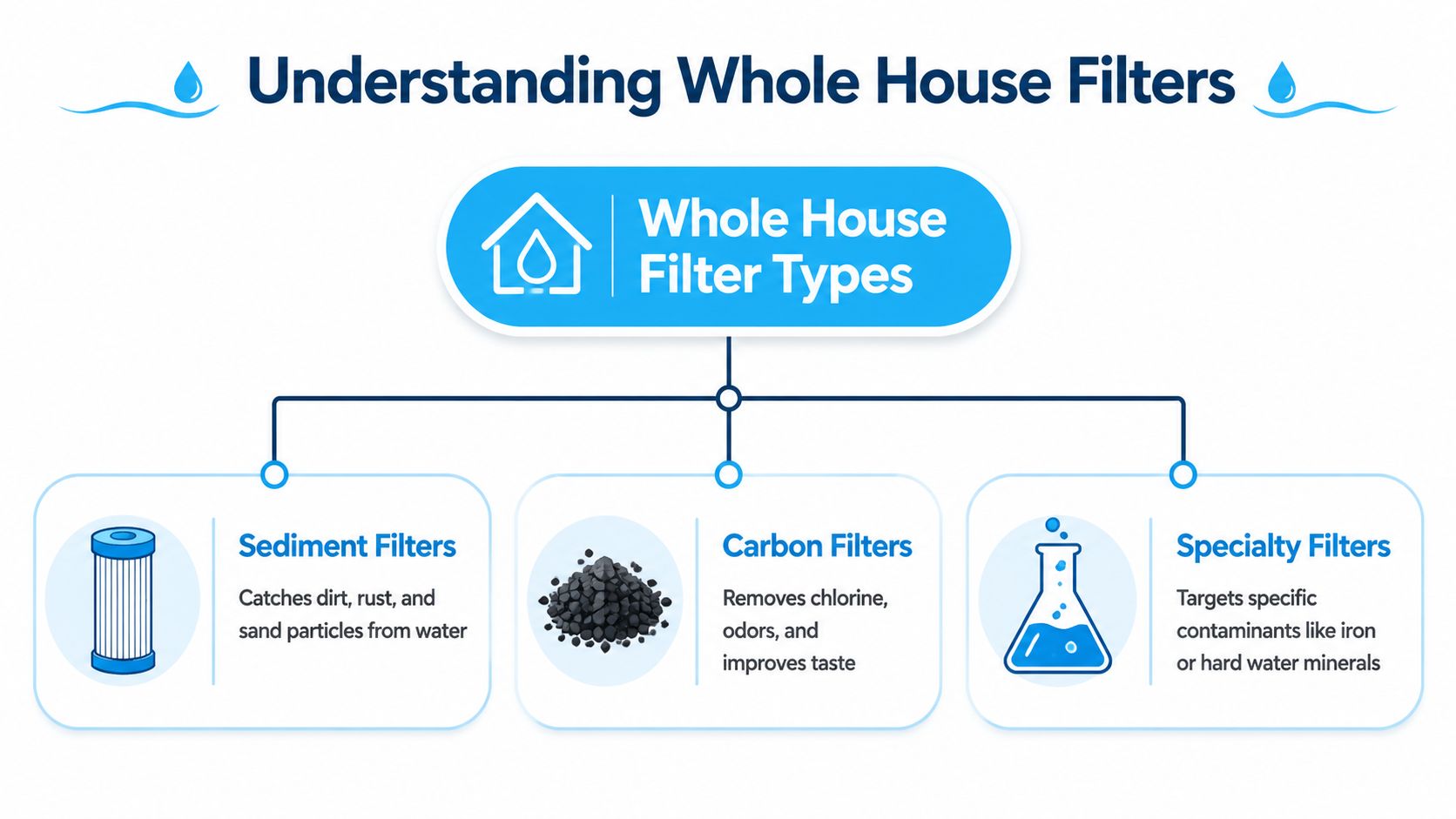
Sediment filters catch the physical stuff
Sediment filtration belongs at the front of the line. It catches sand, silt, rust, and pipe scale before that debris reaches faucets, appliances, or a second-stage cartridge that costs more to replace.
This is usually where Menards is strongest. OMNIFilter-style housings and standard sediment cartridges are a practical fit for homes with well sediment, older galvanized piping, or cloudy water after main line work. They do one job well. They do not fix chlorine smell, sulfur odor, or metallic taste.
A lot of homeowners expect more from a sediment cartridge than it can deliver. If the water looks cleaner but still smells bad, the filter is probably working exactly as designed.
Carbon filters handle chlorine, odor, and taste
Carbon is the category city-water homeowners ask for most often. It targets chlorine taste, chemical odor, and that flat swimming-pool smell that shows up at the shower and kitchen tap.
Menards commonly carries systems in this lane, including basic whole-house carbon setups and combo units that pair sediment and carbon stages. Some use granular activated carbon, and some use tighter carbon block media. The trade-off is simple. GAC usually allows better flow and works well for broad chlorine reduction. Carbon block is often tighter and more selective, but it can create more pressure drop if the system is undersized.
If your main complaint is taste and smell, carbon belongs on the shortlist.
Specialty filters solve narrower problems
This is the part of the aisle that trips people up. Iron, manganese, sulfur, lead reduction, and scale concerns are different problems. One cartridge will not handle all of them, even if the box uses broad language.
Menards does stock brands that hint at this split. OMNIFilter often covers the simpler cartridge-and-housing side. Aquasure tends to show up in more built-out treatment packages and multi-stage options. Morton and Watts can fill in specific niches depending on the store and local inventory. That lineup is useful, but it also has limits. If your water test shows heavy iron, sulfur, or a contaminant with a specific reduction target, the best answer may be outside the regular shelf selection.
That is where a Plan B matters. If Menards has the right prefilter but not the final treatment stage, buy the part it does well and source the specialty equipment elsewhere instead of forcing a near match to do a specialist job.
What those product types usually mean on the shelf
| Filter type | Best fit | Weak spot |
|---|---|---|
| Sediment housing | Dirt, sand, rust, visible particles | Doesn't fix chlorine taste or odor |
| Carbon system | Chlorine, smell, better taste | Won't solve every metal or well-water issue |
| Specialty or multi-stage unit | More than one problem, or a specific contaminant | Costs more, needs closer sizing and maintenance |
The certification mark matters
I always check the box for certification language before I look at marketing copy. If a filter claims reduction for a specific contaminant, the better products back that up with testing to recognized standards. You can verify those standards directly through NSF water treatment and filter certification information.
That still does not make the filter right for your house. Certification tells you the claim was tested. It does not tell you whether the cartridge has enough capacity for your flow rate, whether the media is aimed at your water issue, or whether replacement costs will get old fast.
If you want a wider frame of reference before committing to what is on one retail shelf, this guide to best whole-house water filtration systems helps show where Menards options fit and where a different supplier may make more sense.
Sizing Your System Correctly for Flow and Family
A filter can be perfectly good and still be wrong for your house. Sizing is where a lot of projects go sideways. The homeowner buys a small housing because it's cheaper and easier to mount, then wonders why the upstairs shower feels weak when the washing machine starts.
Menards' catalog shows that split clearly. It includes compact 10-inch cartridge systems like OMNIFilter models for smaller homes and extended multi-stage units like the Aquasure Fortitude V2 for larger households, as shown in the Menards OMNIFilter product listing. That same product context also notes that hard water issues affect an estimated 85% of U.S. homes, which matters because some buyers need scale-related treatment in addition to filtration.
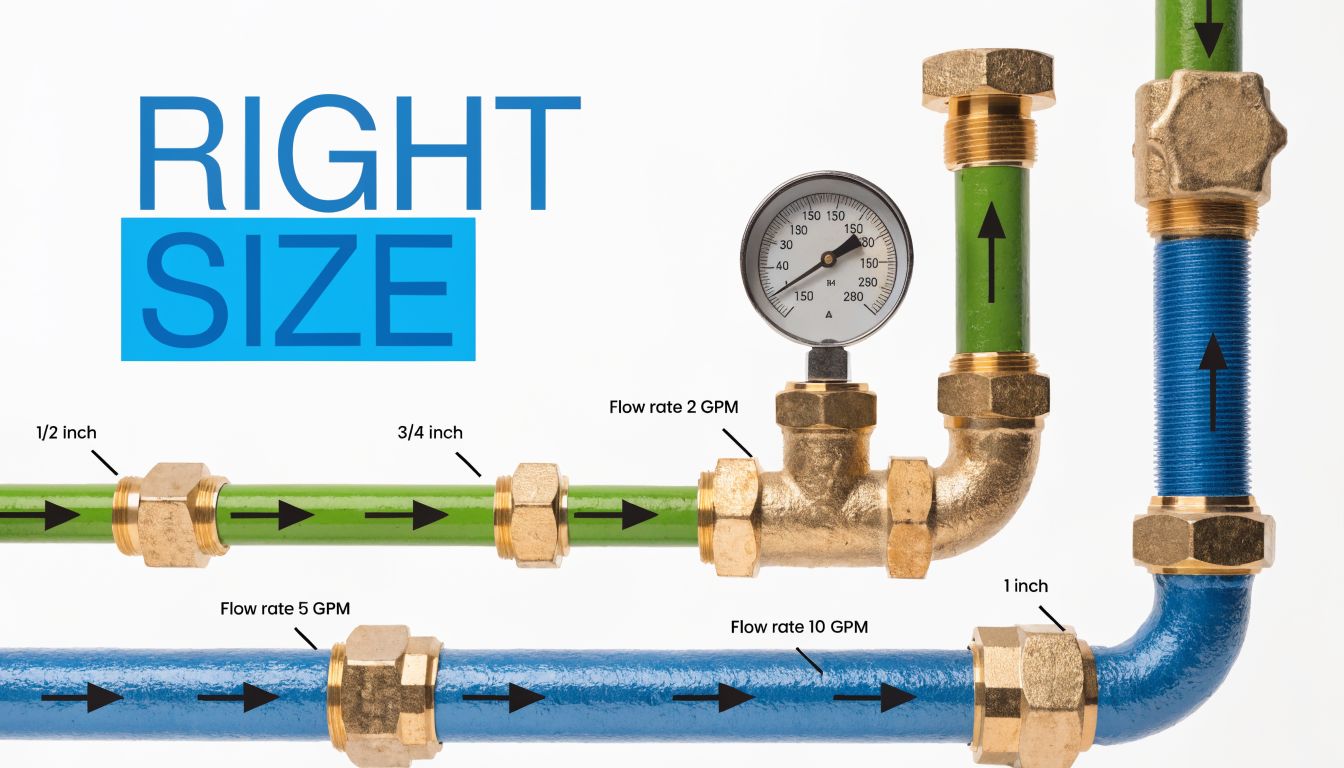
Think in peak use, not daily use
Don't size by how much water the house uses over a full day. Size by what happens when people use water at the same time.
A practical way to do it is to list what can run together during your busiest window:
- Start with showers. If two people shower in the morning, count both.
- Add common overlaps. Dishwasher, clothes washer, kitchen faucet, or a toilet refill.
- Look at your pipe layout. A larger home with multiple bathrooms needs more breathing room than a small single-bath layout.
You don't need a perfect engineering model to avoid the biggest mistake. You need an honest picture of your busiest moments.
Small housings vs larger systems
A 10-inch housing can work well when the house is smaller, occupancy is lighter, and the goal is straightforward sediment or carbon filtration. It's also easier to fit into tight mechanical spaces.
A larger multi-stage system makes more sense when several fixtures run at once, when chloramine reduction needs more contact time, or when the house has more than one water complaint.
Here's the simple trade-off:
- Smaller housing: easier fit, lower upfront cost, but less margin for heavy use
- Larger housing: better flow stability and media capacity, but needs more wall space and planning
Buy enough filter for your busiest hour. That's what your family will judge, not the quiet middle of the afternoon.
A simple way to judge fit before you buy
Use this checklist in the aisle or before you order:
- Count bathrooms: Don't size a family home like it's a cabin.
- Check the plumbing space: Measure wall area, height clearance, and access for wrench turns.
- Plan cartridge changes: Make sure you can drop the sump or remove the cartridge without hitting the floor or another pipe.
- Leave room for shutoffs and bypass: Future-you will thank you.
Don't confuse filtration with softening
A lot of buyers blend hard water and filtration into one mental category. They aren't always the same thing. If scale is your main issue, a scale-control product or softening approach may belong beside, or instead of, a standard whole house filter.
That's especially relevant because so many homes deal with hard water. If your faucets crust up, your water heater scale builds quickly, and soap doesn't rinse cleanly, don't expect a basic sediment-plus-carbon setup to solve all of it.
Matching Filter Technology to Your Water Problems
A neighbor usually calls after the symptoms start stacking up. Grit in the toilet tank. A bleach smell in the shower. Orange staining in the tub. The right filter choice starts by separating those into different jobs, because Menards carries systems that solve some of them well and barely touch others.
Start with a water test if you have one. If you do not, start with the symptom and stay honest about what you want fixed first. Sediment, chlorine, chloramine, iron, lead, sulfur, and hardness do not all respond to the same cartridge, even if the box makes broad promises.
Common Water Problems and Menards Filter Solutions
| Water Problem (Symptom) | Likely Contaminant | Recommended Filter Media/Type |
|---|---|---|
| Grit in tubs or clogged aerators | Sediment, sand, rust | Sediment pre-filter |
| Chlorine smell in shower or tap water | Chlorine | Carbon-based whole-house filter |
| Pool-like smell that lingers | Chloramine or persistent disinfectant taste/odor | Multi-stage carbon system with longer contact time |
| Concern about lead reduction | Lead | Lead-specific media such as ion-exchange resin or other lead-targeted cartridge |
| Rotten-egg smell | Hydrogen sulfide | Specialty system designed for hydrogen sulfide |
| Orange or brown staining | Iron | Iron-reduction media or dedicated iron system |
| Scale buildup on fixtures | Hard water minerals | Scale-prevention technology or water softening approach |
Chlorine, chloramine, and sediment each need a different answer
Sediment is the easy one to identify. If aerators clog, toilet tanks collect grit, or a clear filter housing turns brown fast, start with a sediment stage. Menards usually has OMNIFilter housings and replacement cartridges that fit this job well, especially as a first stage ahead of carbon. That setup protects the more expensive media behind it.
City-water odor takes a little more sorting out. Plain chlorine smell usually responds well to carbon. Chloramine is tougher and often hangs on after a basic carbon filter, especially in homes where several fixtures run at once and water moves through the media too quickly.
That is where Menards' larger multi-stage options, including Aquasure systems, make more sense than a single small cartridge. More media volume and slower contact through the tank give you a better shot at reducing that lingering disinfectant taste and smell.
Lead, iron, and sulfur are the categories where buyers make the most mistakes
Lead reduction sounds simple on the box, but whole-house lead treatment has limits. Many lead-focused cartridges are designed around controlled flow, and a whole house line can exceed that during normal use. If lead is the concern, read the cartridge specs carefully and decide whether the better answer is whole-house pretreatment, a point-of-use filter at the kitchen sink, or both.
Iron is another common miss. If you have orange staining, metallic taste, or rust-colored water, a standard sediment and carbon setup is usually not enough. You need media or equipment meant for iron reduction. Menards can cover the basics, but once iron levels climb or the iron type gets tricky, I usually tell homeowners to treat Menards as the starting point and compare specialty systems before buying.
Rotten-egg odor points to hydrogen sulfide, and that is its own category. A basic whole-house carbon unit may help a little, but odor that returns quickly usually needs a sulfur-specific approach.
One cartridge rarely fixes a sediment problem, a disinfectant problem, and a staining problem at the same time.
A practical way to match Menards products to the problem
Here is the simplest way to shop the aisle without wasting money:
- Visible dirt, sand, or rust: Start with an OMNIFilter-style sediment stage.
- Chlorine taste and odor on city water: Look at whole-house carbon systems.
- Chloramine or multiple city-water complaints: Move up to a larger multi-stage system such as an Aquasure unit.
- Hard water scale: Look at scale control or pair filtration with a softening plan.
- Lead at drinking fixtures: Verify flow limits and consider adding a dedicated under-sink filter.
- Iron or sulfur: Check Menards first, but be ready with a plan B if the shelf selection does not match your water test.
If you are still sorting out media order, bypass layout, or cartridge placement, this whole house water filter installation guide helps show how these systems are typically arranged in real plumbing.
When Menards is the right stop, and when it is not
Menards is a solid place to buy a whole-house filter when the problem is straightforward and the available lineup matches it. OMNIFilter works well for sediment staging. Aquasure makes sense for broader city-water treatment where odor, taste, and general particulate control all matter.
If your test shows heavier iron, persistent sulfur, unusual chemical contamination, or a combination problem that needs specialty media, do not force a retail shelf solution into the job. Buy the parts Menards handles well, then source the specialty treatment elsewhere. That usually costs less than replacing the wrong filter three times.
Planning Your Installation and Lifetime Costs
Saturday morning is when a lot of these projects start. You shut off the main, open a faucet, and realize the filter itself was the easy decision. The primary job is making sure you can service it next year without flooding the basement or cursing the person who installed it.

Where the system should go
Install the unit on the main water line after the main shutoff and where there is enough working room to change cartridges or open the housing. In many homes, that means placing it before the water heater so both hot and cold fixtures get treated water.
Clearance matters more than appearance. I would rather mount a housing in a plain, accessible spot than tuck it tight to a wall where the sump cannot drop straight down for service. Check overhead space, wall strength, and how much room you have below the canister before you buy anything.
If your basement layout is awkward, leave extra room for unions or flexible transition points. They make future service much easier.
The parts and tools that actually matter
A clean install usually needs more than the boxed filter system. Plan for the support parts at the same time, especially if you are buying at Menards and want to finish in one trip.
- Two shutoff valves: One on each side if the line is not already isolated well
- A bypass loop: So the house still has water during cartridge changes or troubleshooting
- The right fittings for your pipe: Copper, PEX, and CPVC all need different connectors and tools
- Thread seal tape or pipe dope rated for potable water: Match the fitting type
- Mounting screws and a solid backer: Full housings get heavy, especially larger OMNIFilter-style canisters
- A housing wrench and bucket: You will use both sooner than you think
Field advice: A bypass is not an upgrade. It is part of a serviceable install.
The install sequence that keeps trouble down
The basic order stays the same even if the brands differ.
- Shut off the water and relieve pressure at a nearby faucet.
- Mark the location with enough room to remove the sump or access the control head.
- Dry-fit the piping first so you can confirm direction of flow, spacing, and valve placement.
- Install the shutoffs and bypass before the filter body goes live.
- Mount the system securely so the plumbing is not carrying the housing weight.
- Pressurize slowly and inspect every joint.
- Flush the system fully based on the cartridge or media instructions.
That flush step gets skipped all the time. Then the homeowner opens a faucet and sees black carbon fines, trapped air, or cloudy water and assumes the system is defective. It usually is not. It just was not flushed long enough.
If you want a visual reference before cutting pipe, this step by step whole-house water filter installation guide shows the usual layout and service clearances.
Capacity claims vs real service life
Menards carries systems with very different long-term costs. A larger Aquasure unit may last much longer between media changes than a smaller canister setup, but the upfront price is higher and the install can take more space. A basic OMNIFilter housing costs less to get on the wall, but smaller cartridges can clog faster if your water carries a lot of sediment.
That is the actual trade-off. Lower shelf price does not always mean lower ownership cost.
Service life depends on your water, your flow rate, and whether the first stage is doing its job. If a sediment cartridge is undersized, it loads up fast, pressure drops, and every downstream stage has a harder life. I have seen homeowners blame the carbon stage when the actual problem was a cheap first cartridge that should have been larger or changed sooner.
Budget for ownership, not just purchase day
A realistic budget includes the system, install parts, replacement cartridges or media, and either your time or a plumber's labor. It should also include occasional testing if your water changes seasonally or you are on a well.
Use a simple replacement plan:
- Sediment stages: Check them regularly at first until you learn how quickly your water loads them up
- Carbon stages: Replace on schedule or sooner if taste, odor, or pressure starts slipping
- Specialty media or larger tanks: Price replacement intervals before you buy, not after
The cheapest box in the aisle often turns into the expensive choice because it needs frequent cartridge swaps, drops pressure during peak use, or cannot keep up with a larger family. If Menards has the right shell, housing size, or entry-level system for your water, buy with confidence. If the replacement costs or service limits do not fit your house, that is the point to use Menards for the install parts and source the treatment unit elsewhere.
Smart Shopping at Menards and Finding Alternatives
Menards is convenient, but convenience isn't the same as precision. Smart shopping means walking in with a problem definition, a rough plumbing plan, and enough skepticism to avoid buying a box just because it's in stock.
In-store vs online at Menards
Buying in-store works well when you need to compare housing size, inspect fitting quality, or grab install parts the same day. It also helps if you're the kind of buyer who wants to stand in front of the shelf and think through how a canister will fit on your basement wall.
Ordering through Menards online can make more sense when you've already narrowed the exact model and don't want local inventory to make the decision for you. The catch is simple. Online listings can be clearer than shelf tags, but they won't tell you whether your pipe layout is awkward or whether the cartridge wrench has enough clearance.
What to bring before you buy
Show up with specifics. It changes the whole shopping trip.
- A photo of the main water line: Include nearby walls, shutoffs, and clearance below the pipe.
- Your water complaints in plain language: Taste, odor, staining, sediment, or scale.
- A recent water test if you have one: Especially if you're chasing iron, lead, sulfur odor, or hard water.
- Basic pipe information: Copper, PEX, or CPVC matters when you're buying fittings.
Go to the aisle with evidence. Most filtration mistakes start with guessing.
If Menards doesn't have the perfect fit
This happens all the time. Maybe Menards has a good housing but not the exact cartridge you want. Maybe it has a solid carbon system, but your water really needs a more specialized iron or lead strategy.
When that happens, use a simple fallback plan:
- Identify the problem, not just the brand.
- Match by media type and housing compatibility.
- Confirm certifications and flow limits.
- Be willing to split the solution. A Menards sediment stage plus a specialty unit from another supplier can be the right answer.
That's the difference between shopping like a homeowner and shopping like a mechanic. The goal isn't brand loyalty. The goal is water that behaves the way it should.
If Menards has what you need, great. If it only gets you halfway there, treat it as one piece of the system and finish the job with a compatible specialty component elsewhere.
If you want help comparing systems, understanding certifications, or figuring out whether you need sediment, carbon, lead-specific media, or a full multi-stage setup, Water Filter Advisor is a useful next stop. It's built for homeowners who want clear filtration guidance without the guesswork.
- May 13, 2026
- Uncategorized
