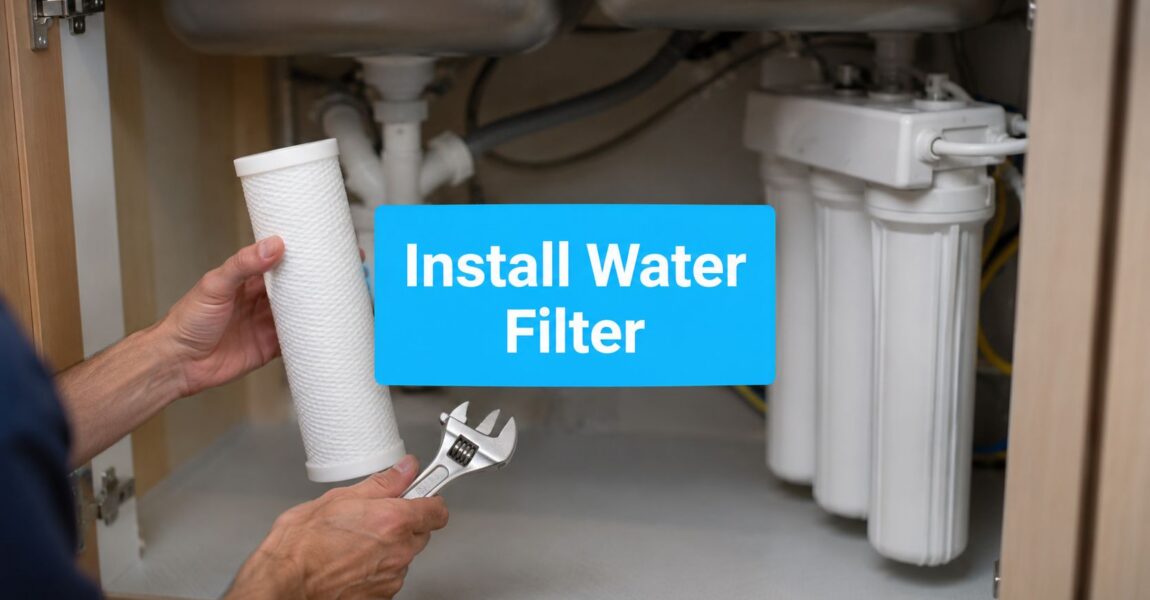
How to Install Under Sink Water Filter: A Step-by-Step Guide
You've got the box open, the parts are spread across the counter, and the cabinet under the sink already looks smaller than it did an hour ago. T ...
You've got the box open, the parts are spread across the counter, and the cabinet under the sink already looks smaller than it did an hour ago. T ...
You turn on the kitchen tap, fill a glass, take a sip, and stop halfway through the swallow. The water tastes wrong. Not metallic. Not swampy. Salty.
That usually sends people in two directions. One group assumes the water softener is acting up. The other starts worrying that something bigger is happening, especially if the house sits near the coast, relies on a private well, or uses brackish source water. Both reactions are understandable. Only one gets you to a fix.
Salt in water is a different problem from hard water. It needs a different toolset too. If you're trying to figure out how can you remove salt from water at home, the short answer is yes, but only with a few methods that separate dissolved salt from the water itself. A standard pitcher filter won't do it. A basic sediment filter won't do it. And in many cases, a conventional softener makes the situation worse.
A salty tap usually shows up in a way people remember. Morning coffee tastes flat and strange. Pasta water seems seasoned before you add anything. Ice cubes carry a faint ocean note. If you've never dealt with it before, it's unsettling because it feels like something that should only happen on a boat, not in your kitchen.
For homeowners, there are a few common real-world scenarios. Coastal wells can pick up saltwater intrusion. Some private wells pull from groundwater with naturally high sodium and chloride. In emergencies, people may only have access to brackish water and want to know whether they can make it drinkable at home. The good news is that desalination isn't only an industrial plant problem. Some methods scale down well. Others don't.
The biggest mistake is treating salty water like hard water. Hard water leaves scale. Salt changes taste, raises sodium and chloride, and behaves differently in treatment equipment. A softener is designed to exchange hardness minerals, not remove dissolved salt from source water.
Salty water and hard water can show up in the same house, but solving one doesn't automatically solve the other.
I've also seen people chase the wrong symptom. They clean fixtures, flush heaters, or swap faucet filters, hoping the taste will disappear. Maintenance matters, but it doesn't solve dissolved salt. It only solves buildup from other contaminants. If you're already in deep-cleaning mode for household equipment, Altitude Cleaning Crew's iron cleaner guide is a good example of how mineral residue behaves in appliances. The key difference is that visible residue and dissolved salinity aren't the same problem.
Start with diagnosis, not shopping.
Once you know which of those situations you're in, the treatment path gets much clearer.
Salt disappears into water so completely that it can feel impossible to remove. But the trick is simple. You either push water through something that blocks salt, or you turn water into vapor and leave salt behind.

When people hear "filter," they often picture a screen catching grit. Salt is much smaller than sand, rust, or sediment. So desalination needs a much finer barrier.
Reverse osmosis uses a semi-permeable membrane. Water molecules pass through. Salt ions mostly do not. The system uses pump pressure to force water the opposite direction of natural osmotic flow, which is why the method is called reverse osmosis. A useful analogy is a coffee filter designed for molecules instead of grounds. Water gets through. The dissolved salt gets left behind.
This approach isn't niche. Reverse osmosis is the most common membrane-based desalination technology nationwide, with more than two-thirds of all U.S. desalination facilities being brackish water reverse osmosis plants, according to the U.S. Department of Energy's desalination overview.
Distillation works on a different principle. If you've ever boiled a pot and seen steam collect on a lid, you've already seen the idea. The water turns into vapor first. The salt doesn't go with it. When the vapor cools and condenses, you collect water that has been separated from the dissolved salt.
Simple rule: If the salt is dissolved, you need either a membrane fine enough to reject it or a phase change that leaves it behind.
That makes distillation effective, but often slow for household use. You're moving heat, boiling water, managing condensation, and collecting only as much as the setup can produce.
A few methods help water quality without removing salt:
If you're trying to answer how can you remove salt from water, the science narrows the field quickly. For most homes, the practical choices are reverse osmosis for everyday use and distillation for small-batch or backup use.
For most homeowners, reverse osmosis is the best home-scale answer. It exists in real products, it fits under sinks, and it has a long track record. It also addresses the main thing you're trying to fix, which is dissolved salt, not just bad taste.
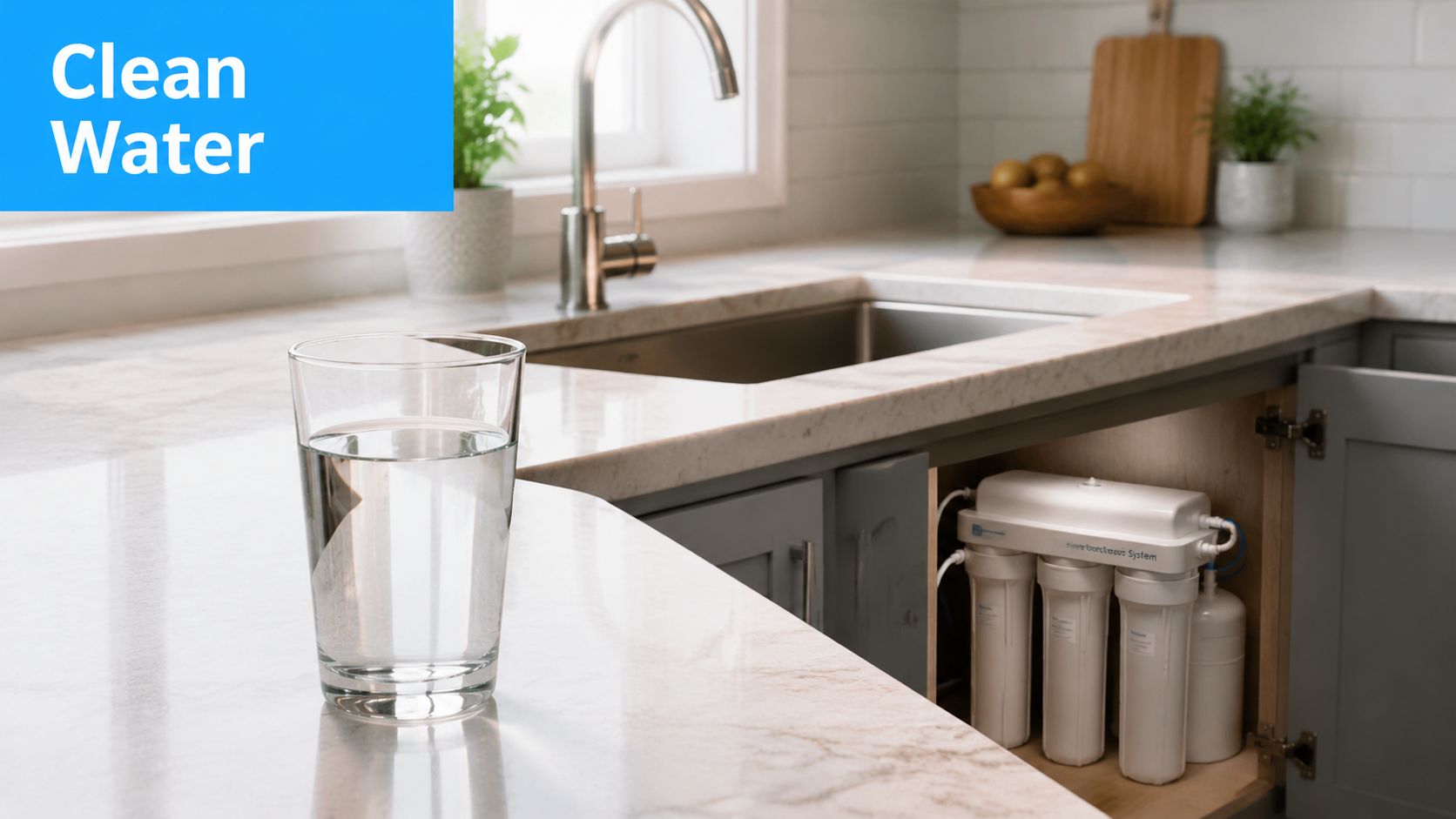
Reverse osmosis remains the most widely adopted technology for salt removal globally, with modern seawater RO systems capable of removing 99% or more of dissolved salts, including sodium and chloride ions, alongside other contaminants, as described in Frizzlife's RO desalination guide.
Most homeowners should first think in terms of point-of-use treatment. An under-sink RO system treats the water you drink and cook with. That's usually the smartest move because desalinating every gallon entering the home is much more demanding.
An under-sink setup typically includes:
Whole-house RO exists, but it's a bigger project. It needs more planning, more space, more pretreatment, and careful attention to wastewater handling. That's usually the territory for severe salinity problems, special properties, or homes where the incoming source is so compromised that every fixture needs treatment.
A DIY-capable homeowner can often handle an under-sink RO install if the cabinet has room and the plumbing is accessible. The work is usually about mounting the faucet, connecting the feed line, placing the drain saddle, setting the storage tank, and flushing the system before use.
What trips people up isn't usually the plumbing itself. It's the details.
Buy enough tubing, confirm the cabinet dimensions, and make sure you have an accessible drain line before opening the box. Most frustration starts with spacing, not the membrane.
Whole-house RO is different. That's where I strongly lean toward professional design and installation. You need to think about pretreatment, pump sizing, drain routing, and whether your household water use pattern matches what the system can produce.
RO earns its reputation. Salty water tastes flatter in the bad way. RO-treated water usually tastes clean, neutral, and crisp by comparison. Homeowners often notice the change first in coffee, tea, soups, baby formula preparation, and ice.
RO also works beyond salt. It reduces many dissolved contaminants along with sodium and chloride, which is part of why it remains the default desalination choice in both home and larger systems.
A few realistic trade-offs matter:
| Consideration | What it means at home |
|---|---|
| Wastewater | RO creates a reject stream that carries concentrated salts away |
| Flow rate | Production is slower than a standard faucet line |
| Maintenance | Prefilters and membranes need periodic replacement |
| Space | Under-sink systems take cabinet room |
That doesn't make RO inconvenient. It just means the system needs to fit your daily habits.
RO is the strongest fit when:
Later in the market, there are also newer desalination ideas beyond conventional RO. One notable example is Temperature Swing Solvent Extraction, developed by Columbia University researchers. It achieved up to 98.4% salt removal, uses low-grade heat of less than 70°C (158°F) instead of high-pressure pumping, and researchers estimate it could reduce energy consumption by approximately 30%, lowering desalinated water cost by roughly 6%, according to CNET's report on the TSSE method. That's promising, especially for hypersaline brines, but it isn't the thing you're ordering for your kitchen this week.
For home use today, RO still wins on availability and practicality.
A quick visual helps if you're comparing layouts and expectations:
Don't expect an under-sink RO system to behave like a full-flow kitchen line with unlimited output. That's not what it's designed for. Think of it as a high-purity drinking water tap, not a whole-home pressure replacement.
Do expect it to handle the main problem effectively when the source water and pretreatment are matched properly. That's why it's the method I recommend first when someone asks how can you remove salt from water without turning the house into a small utility plant.
Sometimes you don't need a permanent install. You need a backup plan. Storm prep, cabin use, travel, and short-term off-grid situations all change the question from "What's the best system?" to "What can I do with basic tools and time?"
That usually means distillation or a simple solar still.
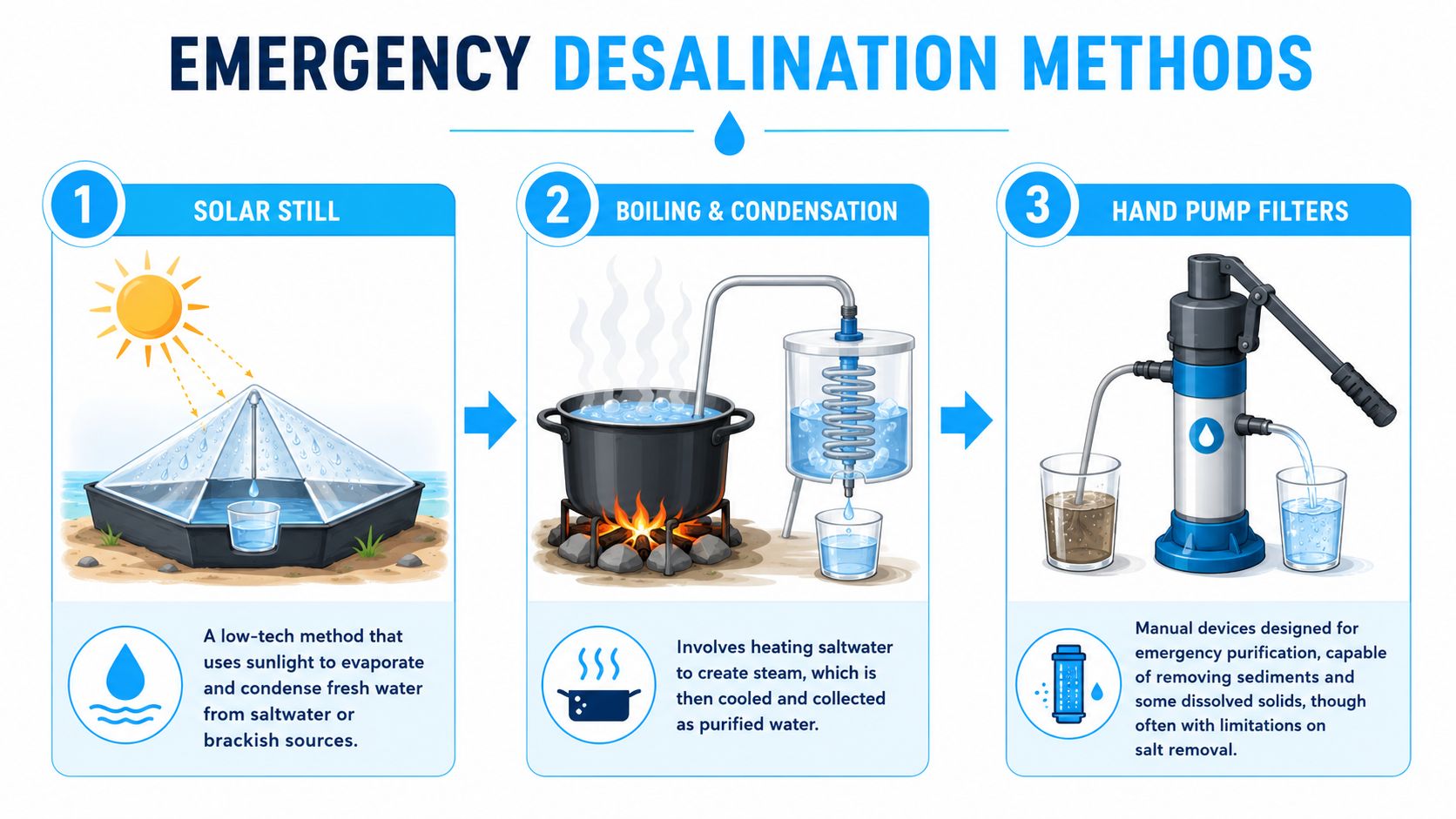
A solar still works because sunlight heats salty or brackish water, water vapor rises, and that vapor condenses on a cooler surface where you can collect it.
A stripped-down version looks like this:
The vapor that forms under the plastic condenses and drips into the cup. The salt stays behind in the basin.
This works. It also works slowly. That's the part people often underestimate.
If you have fuel and a kitchen, boiling and condensing water is usually more predictable than a solar still. The idea is straightforward. Heat the saltwater, capture the steam, cool it, and collect the condensed water.
A home improvised setup often uses a pot, a lid arranged to encourage condensation, and a clean collection vessel. The challenge isn't understanding it. The challenge is doing it safely and producing enough water to matter.
Distillation is excellent for small batches. It's a poor choice if you're trying to supply normal household water demand every day.
Portable emergency filters are often great for microbes, sediment, and debris. That's not the same as salt removal. Many people hear "survival water filter" and assume seawater is fair game. Usually it isn't.
If the packaging doesn't specifically say the device handles dissolved salts, don't assume it does. Hand-pump filters have real value in emergencies, but salinity is a different treatment category.
Research labs are pushing solar desalination in interesting directions. A new solar-thermal desalination method developed at the University of Rochester uses specially engineered black metal panels etched with femtosecond lasers to absorb nearly all solar radiation, distill water, and extract nearly 100% of salts in solid form instead of producing harmful brine waste, as described in the University of Rochester's desalination article.
There's also growing interest in ultra-compact solar devices. One widely discussed example is a $4 compact solar desalination device developed by MIT and Chinese researchers, with a 10.8 ft² (1 m²) model described as capable of providing continuous family drinking water using only sunlight, according to this Futurology discussion referencing the MIT-linked work. That's exciting, but for homeowners right now, it belongs more in the "watch this space" category than the "replace your kitchen system" category.
If you need regular, dependable drinking water at home, these methods are backups. They are not substitutes for a properly chosen RO system.
The right answer depends less on chemistry and more on your daily life. Are you trying to fill a glass at the kitchen sink every day, get through a storm outage, or fix a private well problem without tearing apart your plumbing twice?
Homeowners save money by being honest about the job.
| Method | Best for | Main advantage | Main drawback |
|---|---|---|---|
| Reverse osmosis | Daily drinking and cooking water | Reliable household use | Needs installation and creates reject water |
| Distillation | Small batches and backup use | Very pure output | Slow and energy-hungry |
| Solar still | Off-grid and emergency use | No grid power needed | Very low output and weather dependent |
RO wins when convenience matters. Distillation wins when purity matters more than speed. Solar stills win when you have sun, time, and no better equipment.
The most common bad decision I see is a homeowner with natural sodium or chloride in well water treating it like a hardness issue. That usually leads straight to a softener-first strategy that doesn't solve the underlying problem.
Watch this closely: A standard water softener is not the fix for naturally salty well water. It targets hardness minerals, not the source of sodium and chloride.
A critical gap in existing coverage is the lack of clear guidance on removing salt from well water specifically containing natural sodium/chloride. While reverse osmosis removes 85–94% of sodium, it is often misapplied by homeowners who confuse the issue with hardness, leading to recurring contamination, as noted in this well-water sodium treatment discussion.
If you're on a private well, don't assume "salty" means "needs a softener." It may need testing, source evaluation, and point-of-use RO for drinking water. In some cases, homeowners also look at deionization or distillation for targeted needs, especially when the water chemistry is unusual.
Choose based on the job:
Homeowners near the ocean may also consider dedicated home desalination setups. For coastal properties, land-based systems using RO are marketed specifically to produce fresh water from seawater or brackish sources, with claims of 99%+ salt, mineral, and contaminant removal, as described by Echotec Watermakers' home desalination page. That's a specialized path, but it shows that home desalination is no longer an exotic concept.
The simpler your goal, the simpler your equipment should be. A dramatic solution is not always necessary. The right one is.
Installing a treatment system isn't the finish line. You still need to confirm that it's working and deal with the salty reject water responsibly.
Reverse osmosis doesn't destroy salt. It separates it. The concentrated reject stream, often called brine or wastewater, has to go somewhere. In most home systems, that means a drain connection designed for the unit.
Don't improvise this part. A sloppy drain setup can create leaks, odors, or sanitation problems. If you're dealing with larger systems or unusual property conditions, ask a local pro how wastewater should be handled on your site rather than assuming every drain arrangement is acceptable.
A simple TDS meter is a useful homeowner tool because it gives you a quick before-and-after snapshot of dissolved solids. It doesn't replace a full lab analysis, but it helps confirm that the system is changing the water.
A practical maintenance routine looks like this:
For readers who want a reference point on just how pure water can get in technical settings, Herbilabs' guide to WFI use is helpful context. Water for Injection is a pharmaceutical standard, not a home drinking-water target, but it shows how tightly controlled water quality becomes when purity requirements are extreme.
If you want more homeowner-focused help on testing, maintenance, and treatment choices, the practical guides in Water Filter Advisor's advice library are a solid next step.
The last thing I'll leave you with is this. Salty water is fixable, but only when you match the method to the problem. If the source water is naturally saline, don't let anyone sell you a hardness solution and call it done.
If you want clear, no-nonsense help comparing reverse osmosis systems, understanding water test results, or choosing filtration that fits your home, visit Water Filter Advisor. It's built for homeowners who want better water without guessing.

You notice it in small ways first. The shower smells a little like a pool. Clear ice cubes still leave a taste in your drink. White spots keep showing ...
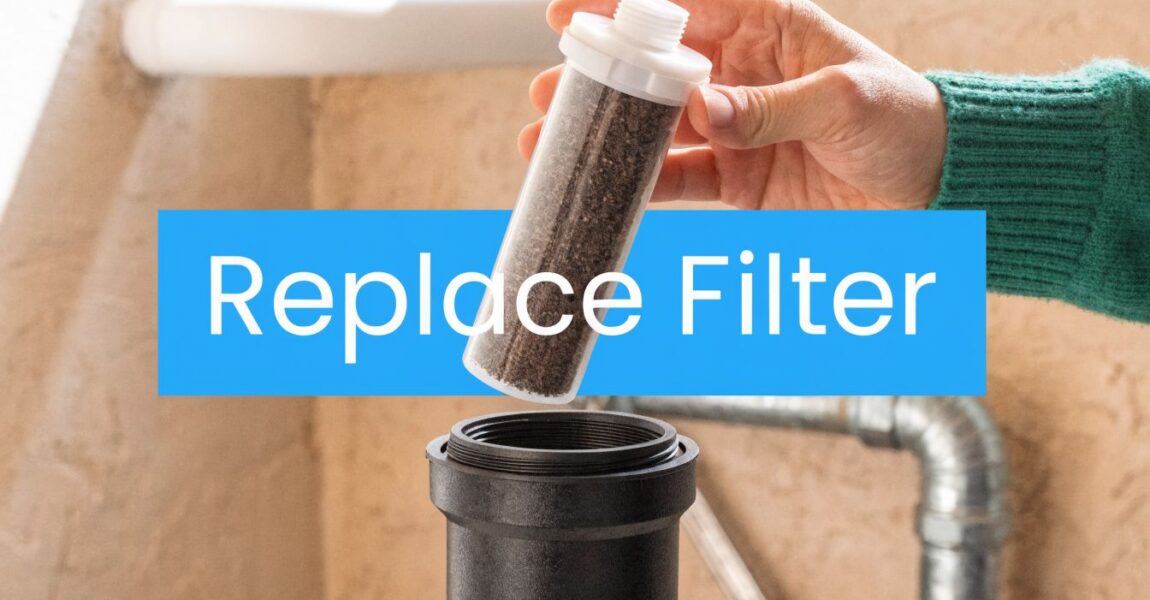
You usually notice a whole house filter problem in the least scientific way possible.
The shower loses some punch. A glass of water smells a little earthy. Coffee tastes flat, and you find yourself blaming the beans. Then somebody in the house says, “Did the water always taste like this?” That’s when one finally looks at the filter housing and remembers the cartridge hasn’t been changed in a while.
A whole house replacement water filter cartridge isn’t exciting. It sits there, does its job, and gets ignored until the signs get annoying. But that cartridge is carrying a lot of weight. It helps protect taste, odor, flow, fixtures, and the money you already put into your filtration setup. Whole house systems often cost 10,000 to 50,000 yuan, or about $1,400 to $7,000 USD, with premium brands running higher, and the total cost keeps going with routine replacements and maintenance, as outlined in this cartridge cost and maintenance overview.
I’ve seen the same mistake again and again. People spend good money on the system, then treat the cartridge like it’s optional. It’s not. The cartridge is the working part. Ignore it long enough and the system stops acting like protection and starts acting like a restriction.
It usually starts small.
One bathroom still feels fine, but the shower at the far end of the house seems weaker than it used to. The kitchen tap runs a little slower. Cold water tastes dull, or maybe there’s a smell you can’t quite place. Nothing dramatic. Just enough to make you suspicious.
That pattern matters because whole-house filtration problems rarely announce themselves with one big failure. More often, the system slowly chokes down as the cartridge loads up with whatever your water brings in. If you’re on sediment-heavy water, that slowdown can show up in pressure first. If chlorine or odor reduction is the main job, your nose and taste buds often catch the problem before a wrench ever comes out.
Homeowners tend to wait for obvious trouble, like a total pressure drop or visibly dirty water. In real homes, the first clues are usually more ordinary:
A filter doesn’t have to look terrible from the outside to be overdue inside.
That’s why smart filter maintenance is less about reacting to one dramatic symptom and more about paying attention to small changes before they turn into a messy Saturday.
A lot of people treat cartridge replacement like changing an air freshener. If the water still comes out, they assume it’s fine. That thinking costs you.
When the cartridge is spent, you don’t just lose performance. You also put stress on the rest of the system, make daily water use less pleasant, and risk buying the wrong replacement in a rush. That last one gets expensive fast, especially when you end up with a cartridge that technically “fits” but doesn’t match the housing, flow needs, or treatment goal.
The fix is usually simple. Identify the right cartridge, change it properly, and keep a basic replacement routine. The trick is doing it before that weak shower becomes a bigger water quality problem.
Most whole house filter cartridges should be changed on a schedule, not just when the water gets bad. Experts recommend replacing most whole house water filter cartridges every 6 to 12 months, but that window changes with water conditions and system design, according to Aquasafe’s replacement guidance.
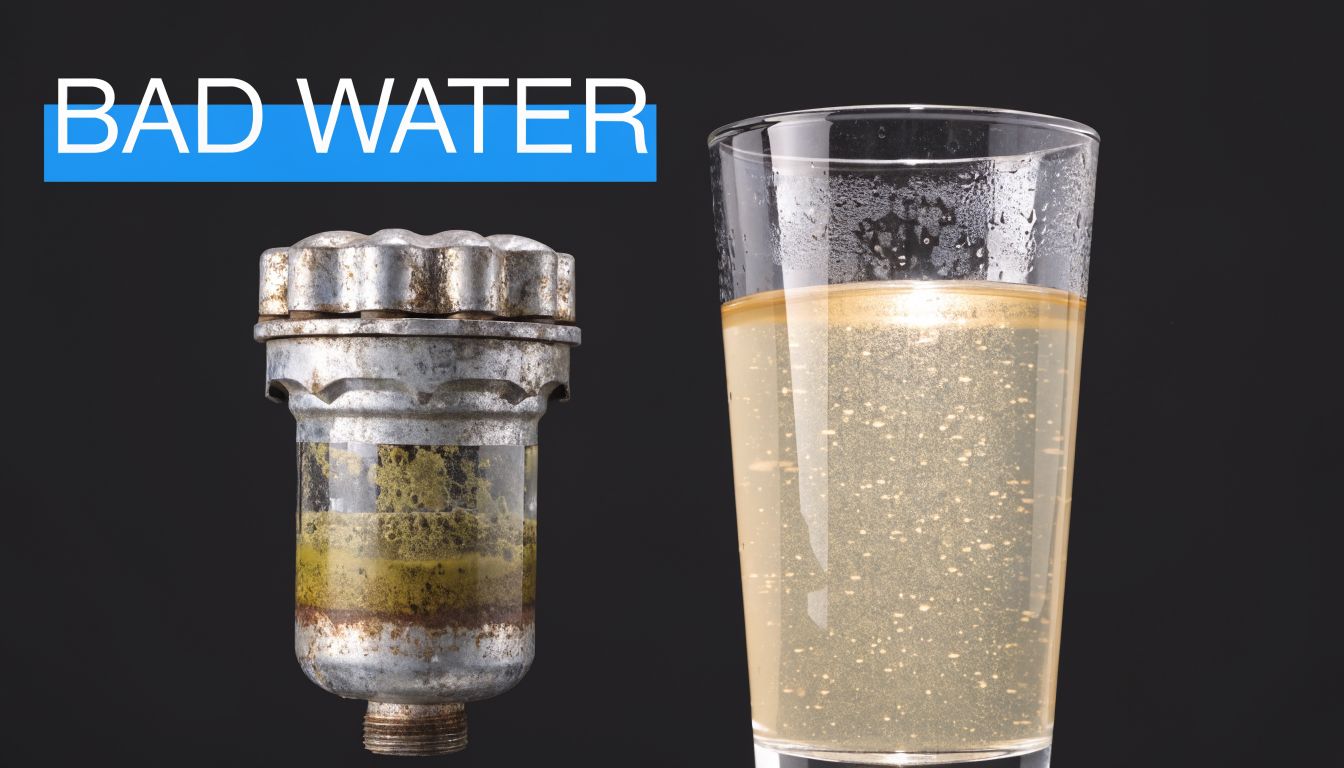
If your water carries more sediment or the house uses a lot of water, the cartridge won’t last as long as the label suggests. That’s especially true in multi-stage systems, where each stage has its own job and its own service life. Aquasafe notes that PP cotton pre-filters may need replacement every 3 to 6 months, activated carbon filters every 6 to 12 months, and reverse osmosis membranes every 2 to 3 years in systems that use them.
A cartridge can be overdue even if the water still looks clear. Not every exhausted filter announces itself with brown water or a dramatic drop in pressure. Some just lose treatment performance little by little.
Use both of these checks:
The biggest mistake is thinking an old cartridge merely stops helping. In reality, overdue cartridges can become part of the problem. Aquasafe warns that failure to replace cartridges on schedule can transform the filter into a source of bacteria, mold, and pollutants in the water.
That’s the part too many people miss. An exhausted cartridge isn’t just passive. It can become a dirty place in a wet, dark system, and that’s not something you want tied into every shower, faucet, and appliance line in the house.
Practical rule: If your water quality is questionable and your replacement date is fuzzy, replace the cartridge sooner, not later.
Here’s the clean version most homeowners can use:
| Filter part | Typical replacement timing |
|---|---|
| Sediment pre-filter | 6 to 12 months in many whole-house systems |
| Main drinking water filter cartridge | 6 to 12 months as a common recommendation |
| PP cotton pre-filter in multi-stage systems | 3 to 6 months |
| Activated carbon filter | 6 to 12 months |
| Reverse osmosis membrane | 2 to 3 years |
Schedules like these are a starting point, not a permission slip to ignore symptoms. If the shower softens, the taste slips, or the water starts smelling wrong, trust what the house is telling you.
A lot of bad cartridge buys happen the same way. The old filter comes out, the label is stained or missing, the homeowner grabs something that looks close, and the housing still screws shut. Then the pressure drops, the taste stays off, or the filter never seals quite right.
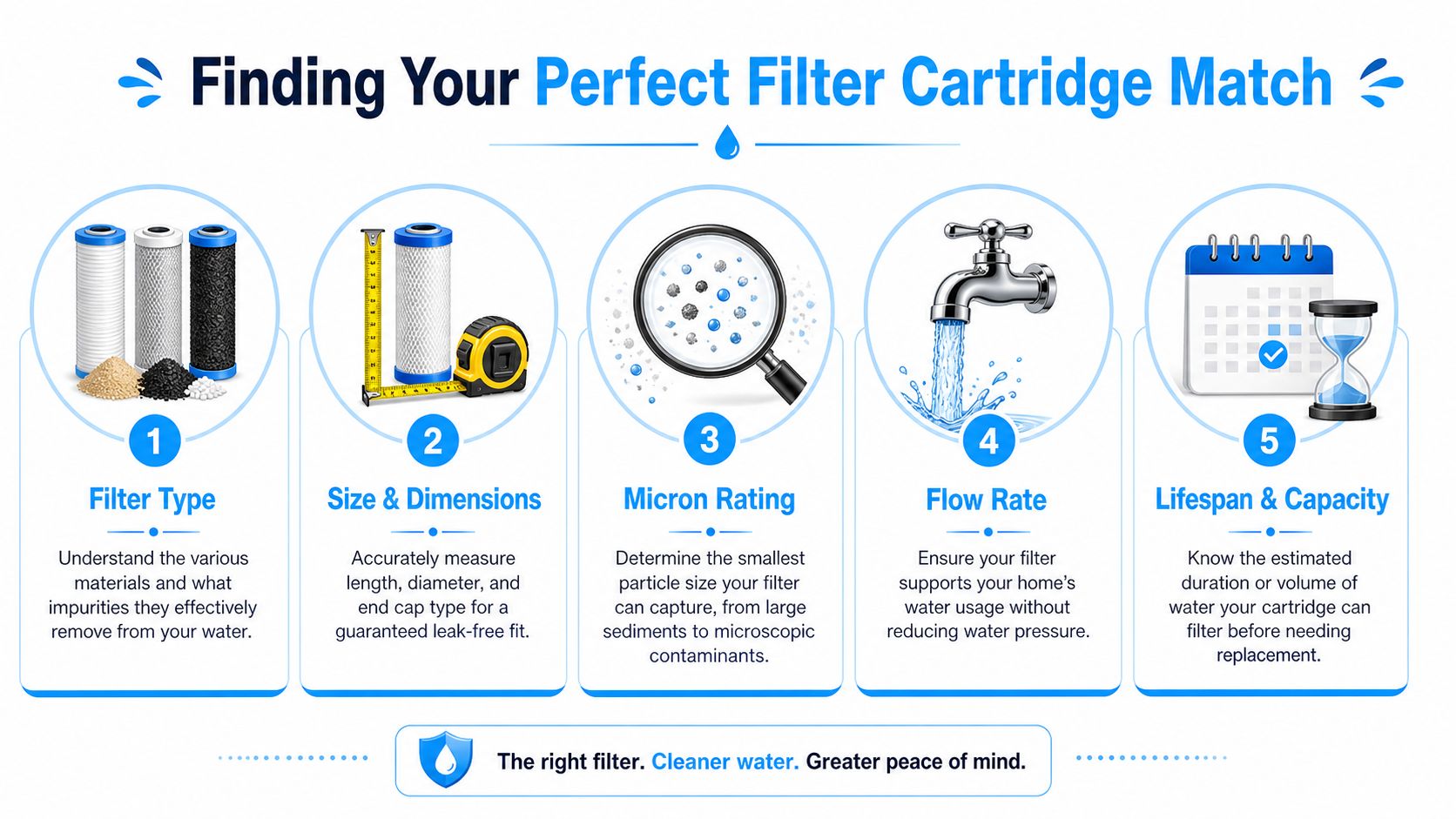
Buying the right whole house replacement water filter cartridge starts with compatibility, not price. Shelf price matters, but the expensive mistake is buying twice, or starving the house of flow because the cartridge was never a match for the system.
Before you pull out a tape measure, look for an exact ID.
Check these spots first:
If the system came with the house and there is no paperwork, take the old cartridge to the bench and inspect it closely. A blurry phone photo helps too. Guessing from memory at the supply counter is how people come home with the wrong diameter.
If you cannot find a part number, measure the cartridge you removed.
Length and diameter come first. Close is not good enough here. A cartridge that is a little short, a little narrow, or built with the wrong end style can let water slip past the media or fail to seat properly.
Look at four things:
That last one trips people up all the time. Two housings can look similar on the wall and still take different cartridges.
Shop-floor rule: Bring the old cartridge with you if you can. A two-minute side-by-side check beats a second trip to the store.
A cartridge can fit perfectly and still be the wrong filter.
Sediment cartridges catch dirt, rust, and grit. Carbon cartridges help with chlorine, taste, and odor. Some systems use both because they are solving two different problems. Putting a carbon cartridge where a sediment stage belongs can clog the system early. Putting in sediment only will not do much for chlorine taste.
The right question is not “Will this fit?” It is “What is this stage supposed to remove?”
That is the step many guides skip, and it is where ownership cost starts. If you put the wrong media in the first housing, the next cartridge down the line gets hit harder and wears out sooner.
Micron rating tells you how fine the filter is. Lower numbers catch smaller particles, but they also restrict flow faster if your water carries a lot of sediment.
That trade-off matters in real houses. A very fine cartridge can sound great on the package and still be a poor choice for a home with heavy sediment, multiple bathrooms, or a high-demand morning routine.
| Cartridge trait | What it affects |
|---|---|
| Micron rating | How fine the particle capture is |
| Media type | What kind of contaminant the cartridge targets |
| Flow compatibility | Whether the house keeps acceptable pressure |
| Lifespan | How often you will replace it |
If your water is dirty, a staged setup usually works better than asking one tight cartridge to do everything. Let a sediment filter catch the bigger debris first, then let the finer or carbon stage do its job without getting packed up early.
Generic cartridges can work fine if the dimensions, end style, and media specs exactly match the original. The problem is that “fits most” is not the same as “fits your housing correctly.”
Cheap cartridges turn expensive. The lower shelf price looks good until the filter life is short, the pressure is disappointing, or the fit is sloppy enough to risk bypass. Then you buy another cartridge, or you spend time chasing a problem that started with the wrong part.
Certified OEM replacements are usually the safer pick for whole-house systems, especially when the housing uses a less common cartridge style. If you do buy generic, compare specs line by line, not just the headline size.
A cartridge that costs less up front is not always a real bargain, it's just a lower price at checkout.
The true cost sits in three places:
I always tell people to keep a simple record on the wall or in their phone. Write down the cartridge model, install date, and how the water was behaving when you changed it. After one or two cycles, you stop buying blind. You know what fits, how long it lasts in your house, and whether the “cheaper” option saved money or just created another Saturday job.
Most cartridge changes are straightforward. The trouble starts when people rush, skip pressure relief, or crank the housing down like they’re tightening a truck wheel.
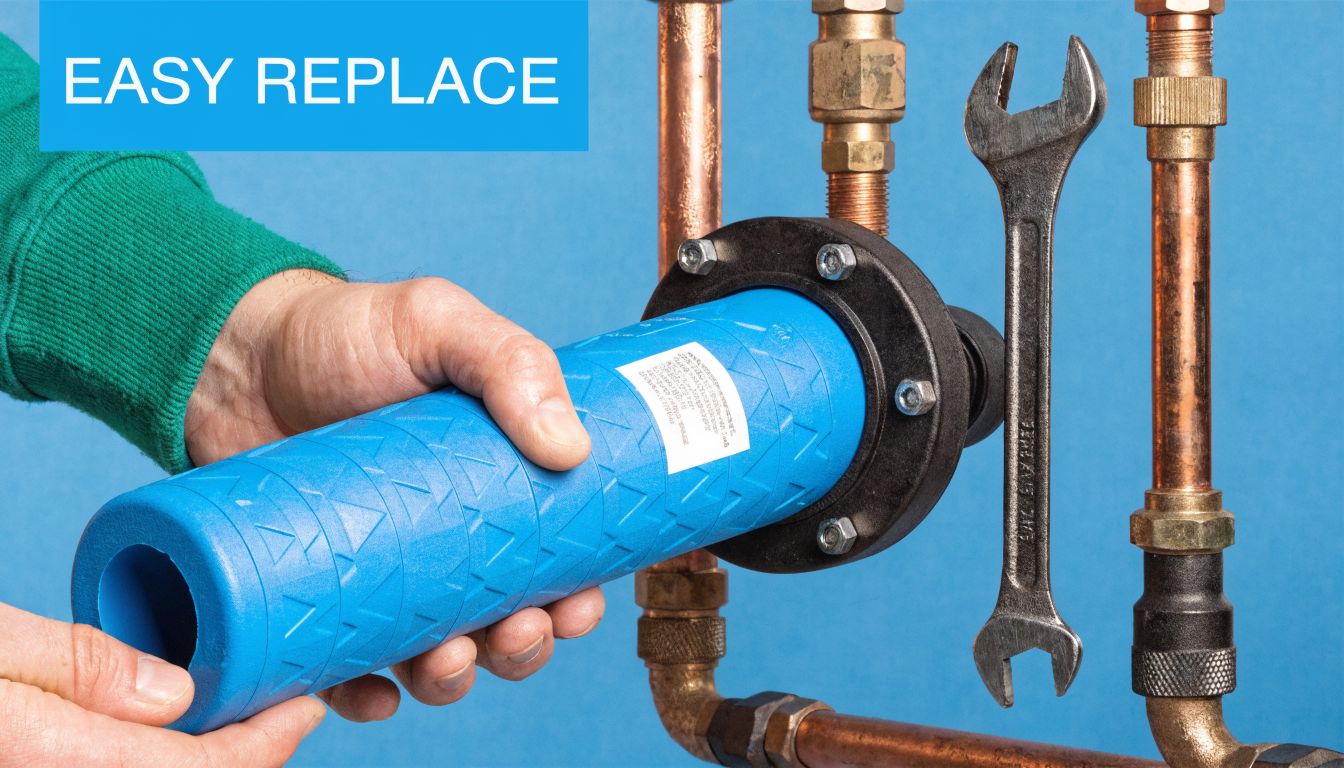
The replacement flow is well established. Shut off the water, relieve pressure, open the housing, inspect and clean, check the O-ring, install the new cartridge, tighten correctly, then bring the water back on slowly. SpringWell’s cartridge replacement instructions also note that 30% to 50% of failures stem from O-ring degradation, which is why experienced installers never skip that tiny gasket.
You don’t need a fancy truck full of gear. You do need a few basics:
If the housing has been overtightened in the past, the wrench stops this job from becoming an arm-wrestling match in your utility room.
Follow this order and you’ll avoid most common mistakes:
A slow restart is worth the extra minute. If you slam pressure back on immediately, small issues become wet issues fast.
Here’s a visual walkthrough if you like to watch the process before doing it yourself:
The first is skipping pressure relief. SpringWell reports that neglecting to relieve system pressure leads to 15% of splash-related mishaps. That’s the classic “why am I suddenly soaked” moment.
The second is treating the housing like it needs brute force. It doesn’t. Hand-tight plus a quarter turn is enough when the O-ring is seated and lubricated. If it only seals when you’re straining on the wrench, something else is wrong.
Tighten for the seal, not for revenge.
If you’re working on a multi-stage system, lay the cartridges out in order before you start. Mixing stages is a simple mistake with annoying consequences.
If the old cartridge came out looking unusually collapsed, torn, or oddly dirty on one side, pay attention. That can hint at fitment issues, bad flow direction, or a cartridge that never seated correctly in the first place.
A fresh cartridge is in, the housing is back together, and then you see a drip. Or the water looks cloudy. Or pressure still isn’t right. None of that automatically means you botched the job.
Start with the simple causes first.
If the leak is coming from a nearby valve instead of the housing itself, that’s a different repair. In that case, this shut off valve leaking guide is a useful next step before you start blaming the filter.
New carbon cartridges often shed fine carbon dust at startup. That usually shows up as gray or cloudy water right after replacement.
The fix is simple. Flush the system thoroughly and check again. If the cloudiness clears as the water runs, it was likely startup residue. If it lingers or appears along with strange taste or odor, recheck cartridge seating and make sure the replacement media matches the application.
Cloudy water right after a carbon change is often a flushing issue, not a disaster.
A new cartridge should improve flow if the old one was clogged. If pressure is still weak, work through this short checklist:
| Problem | Likely cause | What to do |
|---|---|---|
| Low pressure at the whole house | Wrong cartridge or blocked upstream issue | Verify cartridge specs and check valves |
| Low pressure at one fixture | Local aerator or fixture clog | Clean the fixture, not the filter |
| Pressure dropped after installation | Cartridge too restrictive or installed wrong | Reconfirm micron rating and seating |
The trap here is assuming every post-install problem is an installation mistake. Sometimes the filter change exposes another problem that was already there.
A whole-house filter runs best when replacement isn’t a surprise. The most practical homeowners don’t wait for bad taste or a weak shower. They build a simple routine and keep the next cartridge ready.
That matters because many people don’t have a good framework for the true lifecycle cost of a cartridge system. Replacement frequency changes with water quality, and flow rate affects how the system performs over time, which makes budgeting harder than it should be. That ownership-cost gap is spelled out in US Water Systems’ overview of whole-house cartridge system considerations.
The best maintenance plan is the one you won’t forget.
Try this:
A house with changing water conditions may need adjustments over time. If your incoming water gets dirtier during part of the year, your replacement schedule may need to move up. That’s normal. The system should fit the water, not the other way around.
Used filter cartridges are messy by design. They’ve collected the stuff you didn’t want moving through the house. Disposal depends on local rules and the cartridge materials, so check your municipal guidance first.
The practical approach is to let the used cartridge drain, bag it if it’s wet or dirty, and follow local disposal or recycling instructions where available. Some areas accept certain filter materials; others don’t. What matters is handling it deliberately instead of tossing a dripping cartridge into the garage corner for months.
If a delayed change or leak ever turns into wet drywall, flooring trouble, or a bigger cleanup problem, a solid reference like Restore Heroes' guide to water damage can help you understand what needs immediate attention.
The biggest improvement most homeowners can make isn’t buying a fancier system. It’s keeping better records on the one they already own.
Track the cartridge used, the install date, how the water behaved before replacement, and whether that specific cartridge gave you good service life. Do that for one year and your next buying decision gets much easier. If you want more practical maintenance help and filtration explainers, keep a trusted bookmark to Water Filter Advisor’s advice library.
A whole house replacement water filter cartridge should be routine. When you know the exact part, understand the fit, and replace it before trouble starts, the whole job becomes cheaper, cleaner, and less stressful.
If you want straightforward help choosing, comparing, and maintaining home filtration systems, Water Filter Advisor is a solid place to start. It’s built for homeowners who want clear guidance on cartridges, system types, certifications, and real-world maintenance without the usual confusion.

Let's be honest, a successful whole-home water filtration system installation doesn't start with a pipe cutter. It begins long before you even dream of getting your tools out; it starts with a rock-solid plan. This isn't just about avoiding a DIY disaster—good planning is what separates a system that delivers pure, delicious water for years from one that becomes your next big headache.
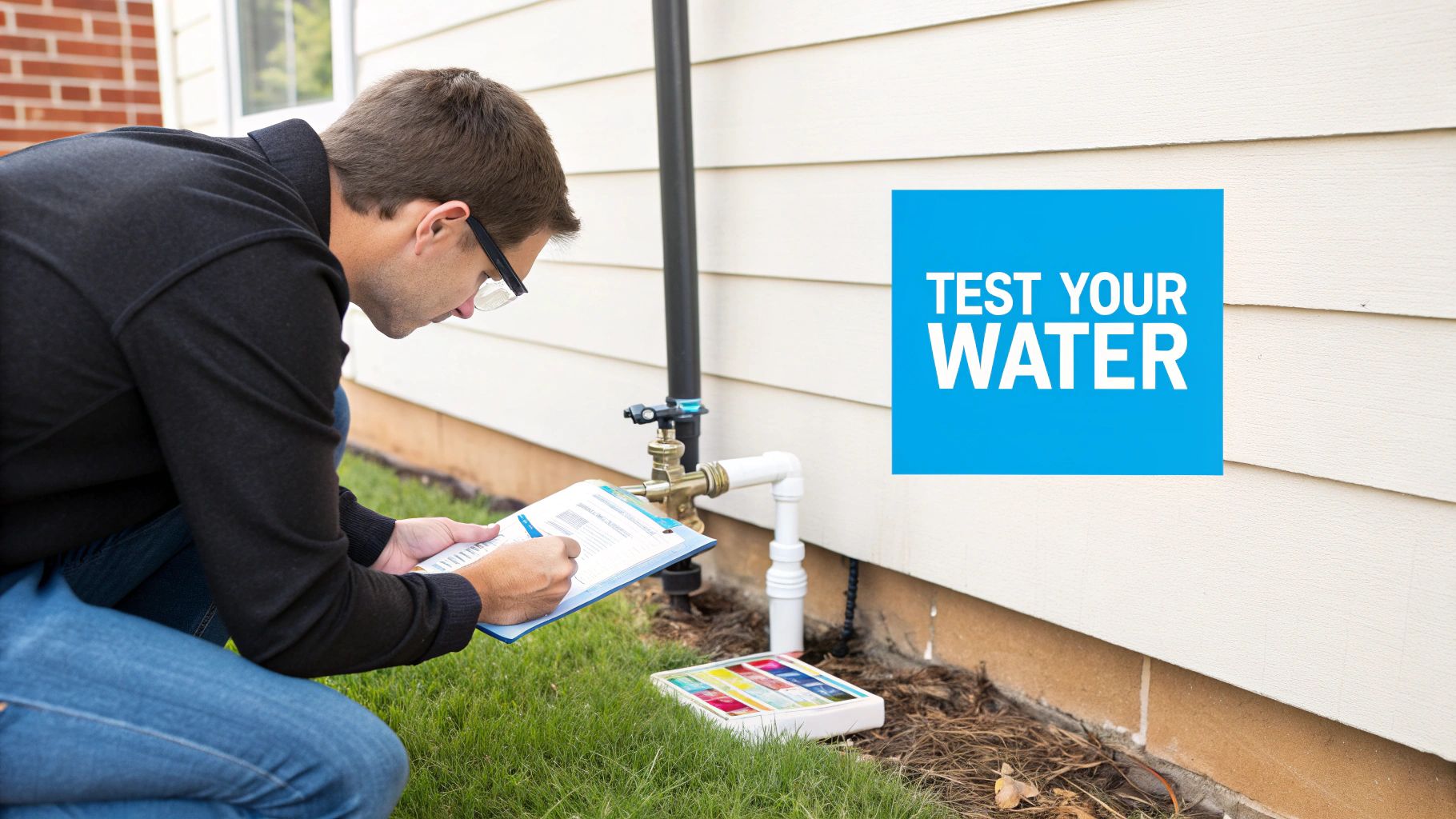
Jumping into the installation without a little forethought is like trying to bake a cake by just throwing ingredients in a bowl. It’s a recipe for chaos. Trust me, spending an hour or two on planning will save you a world of frustration and maybe even a call to an emergency plumber. This is what separates a pro-level setup from a weekend project gone sideways.
It's no surprise that more people are seeking water that doesn't taste like a swimming pool. The global home water filtration market is expected to hit a staggering USD 37.54 billion by 2034, and whole-house systems are a massive part of that wave. In fact, interest in these systems is set to grow by 61.56% by 2026, mostly because we're all tired of that chlorine funk coming from every tap. You can learn more about these market trends to see just how big this movement for better water has become.
Before you can fix your water, you have to know what you're fighting. Is it "hard," leaving that chalky film on your shower door? Does it have that faint swimming pool smell or, worse, smell like rotten eggs? Maybe you’re seeing those lovely rust-colored stains in your sinks and toilets.
A good water test is non-negotiable. You can grab a simple DIY kit from the hardware store for a quick snapshot, but for the real story, I recommend sending a sample to a certified lab. They'll give you a detailed report on contaminants like:
Once you know exactly what’s lurking in your H2O, you can choose a filter that’s specifically designed to kick those contaminants to the curb.
Location, location, location! The best spot for your system is almost always right where the main water line enters your house. Think basement, garage, or a utility closet. Placing it here ensures every single drop of water, both hot and cold, gets purified before it travels anywhere else in your home.
When you’re scouting for a location, keep these things in mind:
One of the most common DIY mistakes is buying a system that's too small for the home. The result? A frustrating drop in water pressure every time you try to do two things at once, turning your powerful shower into a pathetic dribble.
To get this right, you need to match the system to your home's peak water demand, which is measured in gallons per minute (GPM).
Think about a chaotic morning in your house—the shower's running, the dishwasher is on, and someone's washing their hands. You need a filter that can handle all of that without breaking a sweat. A plumber can do a proper flow rate test, but you can also get a good estimate based on your home’s size and the number of bathrooms. For more in-depth guidance on choosing the right system, you might find valuable advice on specialized water filtration platforms like https://www.waterfilteradvisor.com.
Of course, clean water is just one piece of the healthy home puzzle. Many homeowners who upgrade their water also look into things like whole-home air purifiers to improve their environment from top to bottom.
Nothing kills the momentum of a weekend project faster than an unexpected, last-minute trip to the hardware store for that one tiny fitting you forgot. Trust me, we've all been there. A successful whole home water filtration system installation hinges on having every single tool and part ready before you make that first cut.
Think of it like a TV chef preparing their ingredients—what they call mise en place. Everything is in its place, prepped and waiting. Taking the time to get organized turns a potentially chaotic job into a smooth, professional-feeling process.
Before you even think about shutting off the water, lay everything out on a tarp or drop cloth near your work area. This simple step keeps tiny fittings from rolling into oblivion and protects your floors. It's also your final chance to eyeball everything and make sure you have it all, from the big wrenches down to the last screw.
To make sure you're not that person making a frantic mid-project hardware store run, I've put together a checklist. This covers just about everything you could need for a standard installation.
| Tool or Material Category | Essential Items | Pro Tip for Selection |
|---|---|---|
| Cutting & Measuring | Pipe cutter (specific to your pipe type), measuring tape, permanent marker. | For copper, a simple tubing cutter is best. For PEX or PVC, a ratchet-style cutter prevents burrs and ensures a clean, square cut. |
| Wrenches & Fasteners | Two pipe wrenches (or one pipe, one adjustable), drill with assorted bits, screwdriver set. | Always use two wrenches working in opposite directions on fittings. This stops you from stressing and damaging old pipes. |
| Safety Gear | Safety glasses, work gloves. | Non-negotiable. Debris in your eye or a sharp metal burr on your hand will end your project and your good mood instantly. |
| Sealing & Cleanup | Thread seal tape (Teflon tape), a bucket, several old towels or rags. | Wrap Teflon tape clockwise on male threads. If you go counter-clockwise, it will unravel as you tighten the fitting. |
| Piping Specifics | Solder & flux (copper), crimp rings & tool (PEX), or primer & cement (PVC/CPVC). Push-to-connect fittings can be a universal alternative. | Double-check that your primer/cement is rated for the type of plastic pipe (PVC vs. CPVC) you have. They are not interchangeable. |
Having these items on hand before you start is the difference between a frustrating afternoon and a job you can be proud of.
The tools get the job done, but the materials are what guarantee every connection stays secure and leak-free for years. This is where you buy your peace of mind.
A leak isn't just a drip; it's a potential disaster waiting to happen. Using the correct fittings and sealant for your pipe type is the single most important step in preventing water damage down the road.
Your shopping list for materials will depend entirely on what kind of plumbing you have. Let's break down the most common setups.
For Copper Pipes: You'll be soldering. This means you need solder, flux, a propane torch, and the right copper fittings. Don't forget a small piece of emery cloth or a wire brush to clean the pipe ends—flux won't stick to a dirty surface.
For PEX Tubing: Your main options are crimp or clamp rings, which require a special tool. Alternatively, push-to-connect fittings (like SharkBite) are a fantastic, solder-free option that's incredibly DIY-friendly.
For PVC/CPVC Pipes: This is a solvent-weld job. You'll need primer (usually purple) and cement specifically designed for your pipe material. The primer cleans the plastic and prepares it for a permanent chemical bond with the cement.
One universal item is thread seal tape. You'll wrap this 3 to 5 times around any male pipe threads to create a perfect, watertight seal.
And for a final bit of real-world advice: have a drill ready. You’ll need it to mount the filter housing securely to a wall or joist. If you’re working in a basement, knowing about selecting the right drill bit for concrete is crucial for anchoring into those tough foundation walls.
Alright, you’ve done the prep work, your tools are laid out, and now it’s time to bring on the main event. All that planning is about to pay off as we get hands-on with the whole home water filtration system installation. Let's walk through this together, step by step, so you can feel like a plumbing rockstar.
The very first thing you need to do is arguably the most important. To keep this project from turning into an indoor swimming pool, you have to shut off the water supply to the entire house.
First, find your main water shutoff valve. It's usually hiding in a basement, crawl space, or sometimes in an exterior utility box near your water meter. Give the handle a full clockwise turn until it stops. If it's a lever-style ball valve, you need to turn it 90 degrees until it’s perpendicular to the pipe.
With the main shutoff closed, you still need to get the water out of the pipes. Go open the lowest faucet in your house—think basement sink or outdoor spigot—and then the highest one, like a second-floor bathroom. This little trick uses gravity to drain the lines so you don't get a face full of water when you make that first cut.
Pro Tip: Even after draining, there’s always some water left in the pipes. I always stick a bucket right under where I'm about to cut and have a few old towels ready. It’s the best way to keep your workspace from turning into a swamp.
You’ve heard it a thousand times, but "measure twice, cut once" is the gospel of plumbing for a reason. Hold your fully assembled filter unit up to the section of pipe you’ve chosen. Don't just measure for the filter housing; make sure you account for all the fittings and, crucially, the bypass valve.
Grab a permanent marker and mark your cut lines clearly on the pipe. A crooked cut is a recipe for a bad seal and a frustrating, slow leak down the road.
When you’re ready, grab the right cutter for your pipes:
Once the pipe is cut, take a minute to clean up the edges. A simple deburring tool or even a small piece of sandpaper will smooth out any burrs. This is a critical step—any little plastic or metal bits can tear the O-rings inside your new fittings and cause a leak you'll be chasing for weeks.
Before you even think about fitting this into your main line, it’s much easier to assemble the filter head, housing, and the bypass valve on a workbench. That bypass valve is a non-negotiable part of the setup. It’s a three-valve system that lets you route water around the filter, which is a total game-changer when it’s time for maintenance. No more shutting off water to the whole house just to swap a filter.
Pay close attention to the manufacturer's directions here, especially the flow-direction arrows on the filter head. For every threaded connection, use thread seal tape. Wrap it clockwise 3-5 times around the male threads; this ensures the tape tightens as you screw in the fitting instead of unraveling.
Now it’s time to marry the filter assembly to the main water line you just prepped. How you do this depends entirely on the type of plumbing you have.
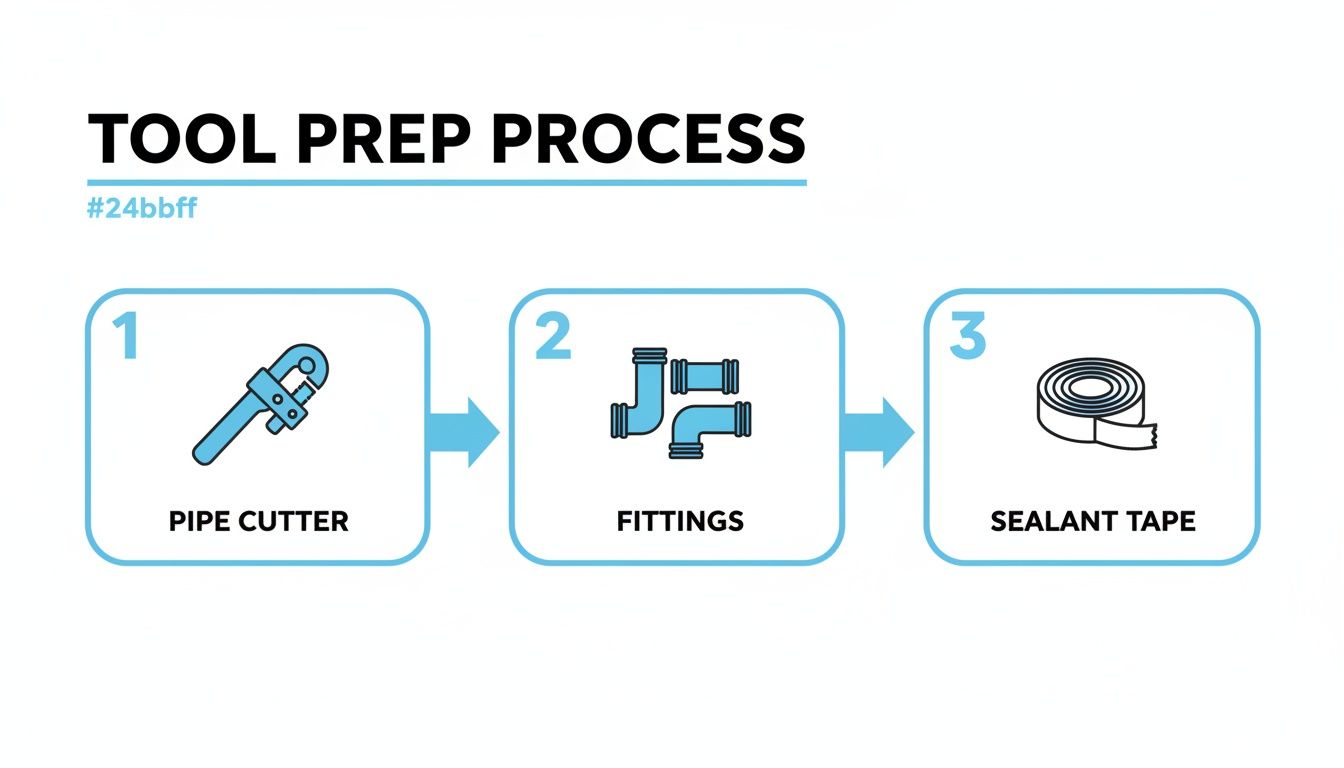
As you can see, it comes down to three things: a clean cut, the right fitting, and a proper seal.
These are the most common ways to make the connection:
With your connections made, the last step is to securely mount the filter bracket to a wall stud or another solid surface. A filter full of water is surprisingly heavy, and you don't want that weight hanging directly on your pipes.
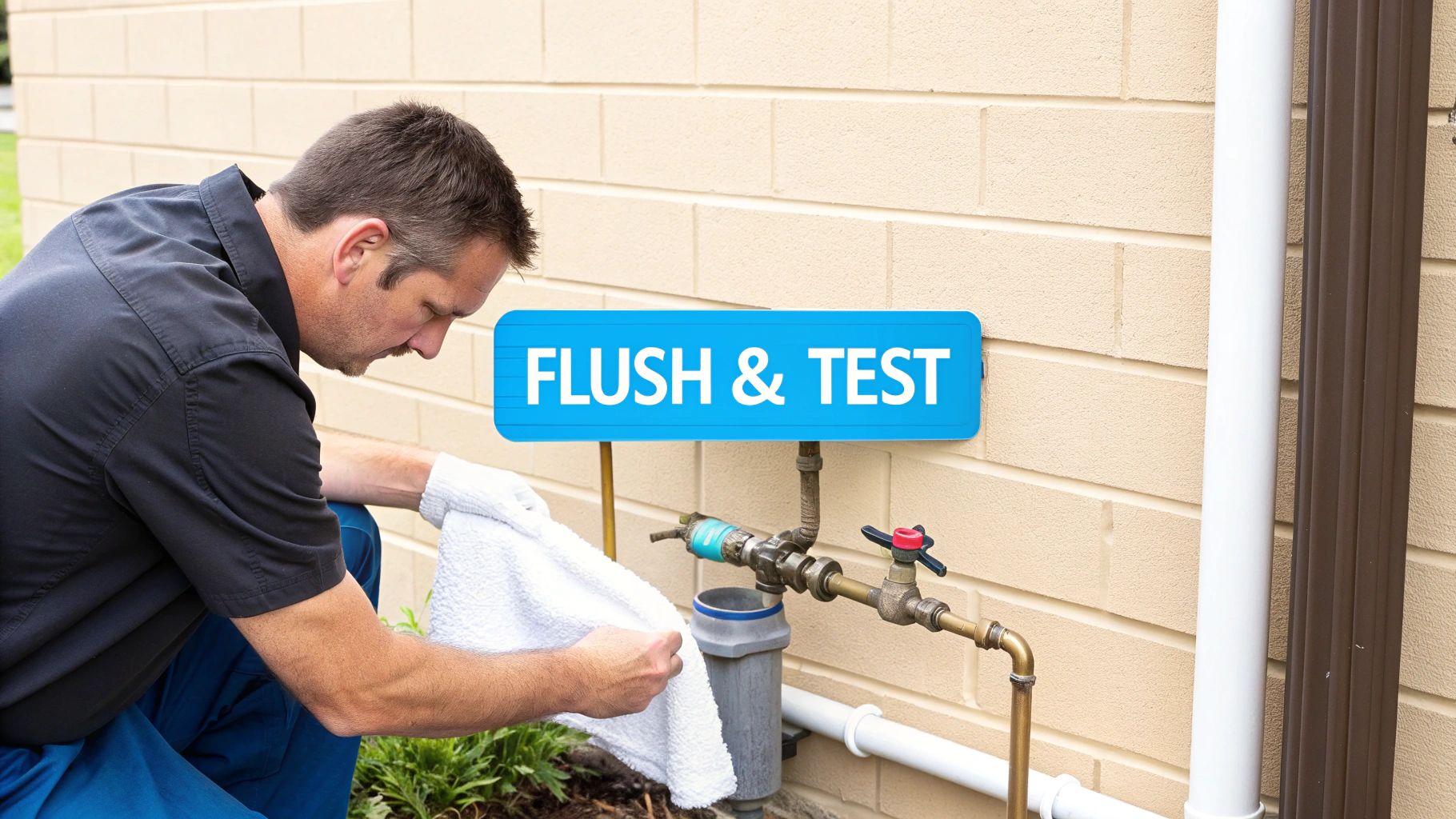
You’ve tightened every fitting and secured the last bracket. Now comes the moment of truth. This is the commissioning process, where patience pays off big time. Jumping in too fast here can lead to leaks, sputtering faucets, and water that still tastes off.
This stage is the real test of your whole home water filtration system installation. Rushing it now puts all that careful work at risk.
First, leave the bypass valve open and close both the inlet and outlet valves on the filter. Then head to your main shutoff valve and crack it open—just a quarter turn is enough. Listen for a soft hiss as the pipes begin to fill.
After that gentle hiss fades, open the valve fully. Grab a flashlight and go inspect every connection you made. Even a tiny droplet on a new joint means you need to tighten it again before moving forward.
Next, shut off the bypass valve. Very slowly open the inlet valve feeding the filter and listen as water floods the housing. This is the most pressure-sensitive moment; any weak seal might start leaking now.
The most common leak appears the second the system pressurizes. Watch every connection like a hawk—if you spot a drip, close the inlet, release the pressure, and fix it immediately.
Once the inlet is fully open, repeat the process with the outlet valve. Your system is now under full pressure.
Finally, get the air out. Turn on a nearby cold-water tap (a laundry sink is perfect for this) and let it sputter and spit until you see a smooth, steady stream.
If your system supports backwashing, now's the time to trigger the cycle from the control head. Expect it to run for 10 to 30 minutes as it washes out fine particles and factory dust.
For simpler cartridge-style setups, you just need to do a straight flush.
Once you see that crystal-clear stream, pour yourself a glass. With air purged, leaks resolved, and the filter media flushed, your whole home water filtration system is officially open for business.
Alright, your whole home water filtration system installation is done. You're already enjoying that clean, crisp water flowing from every faucet. But to keep things running like a dream, a little routine care is in order. Think of it as protecting your investment, not another chore.
A good maintenance schedule is your ticket to consistently great water. Let it slide, and you're looking at clogged filters, a noticeable drop in water pressure, and the return of the very contaminants you worked so hard to get rid of.
The filter media is the heart of your system. Whether it’s a simple sediment cartridge or a massive tank of carbon, it has a limited lifespan. Once it’s saturated with all the gunk it has pulled from your water, it’s done. Using an exhausted filter is like trying to dry dishes with a soaking wet towel—it just doesn’t work.
That’s why sticking to a replacement schedule is the single most important thing you can do.
You don't need a complicated spreadsheet for this. Just pop a few reminders in your phone's calendar or scribble the dates on a sticky note and slap it right on the filter housing. This little habit will save you a ton of headaches.
Your water filtration system is the guardian of your home's water supply. A little routine maintenance is all it asks for in return to keep doing its job effectively day in and day out.
To make it even easier, here’s what a typical maintenance plan might look like.
This schedule gives you a ballpark idea. Your manufacturer's guide will have the exact details, but this is a great starting point.
| System Type | Maintenance Task | Recommended Frequency | Time Commitment |
|---|---|---|---|
| Cartridge-Based System | Replace sediment pre-filter. | Every 3-6 months | 15-20 minutes |
| Carbon Tank System | Replace carbon filter cartridge. | Every 6-12 months | 20-30 minutes |
| Water Softener | Check and refill salt reservoir. | Monthly | 5-10 minutes |
| UV Purifier | Replace UV lamp and clean quartz sleeve. | Annually | 30-45 minutes |
| All Systems | Conduct a post-installation water test. | Annually | 10 minutes (to collect a sample) |
A little bit of planning goes a long way in keeping your water pure and your system humming.
Here’s a pro tip: when you change a cartridge filter, take an extra ten minutes to sanitize the housing. A few capfuls of unscented household bleach mixed into a gallon of water is all you need. Give the inside a good scrub to keep any nasty bacteria from setting up shop.
It's also a smart move to test your water again about a year after the installation. This confirms the system is still working as it should and alerts you if any new contaminants have snuck into your water supply.
Staying on top of this is more important than ever. The home water treatment market is projected to hit an incredible USD 91.39 billion by 2034, driven by homeowners who are more aware of water quality issues. You can learn more about these market trends and see how consumer awareness is shaping the industry. A little upkeep ensures your system remains a top-tier solution.
Even with the best guide in hand, tackling a whole home water filtration system installation for the first time can leave you with a few nagging questions. That's completely normal. This is a big upgrade for your home, so let's clear up some of the common uncertainties we hear from homeowners.
Think of this as the final pep talk. Getting this right isn't just a plumbing project; it's an investment in your family's health and the longevity of all the water-using appliances in your house.
If you're thinking of calling a licensed plumber instead of going the DIY route, you can expect the cost to land somewhere between $300 and $1,500.
Why such a big range? It really boils down to the complexity of the job. If you have easy-to-access PEX or PVC pipes and you're installing a basic cartridge system, you'll be on the lower end. But if it's an involved multi-tank system that requires sweating new copper pipes and running a drain line, the price will naturally creep up.
My best advice? Always get at least three itemized quotes from reputable, licensed plumbers. It's the only way to know you're getting a fair price.
Absolutely. If you have some basic plumbing skills under your belt and the right tools, installing a whole house water filter is a totally doable weekend project. Honestly, systems with modern push-to-connect fittings have made the job easier than ever.
But you have to be honest with yourself. If the thought of taking a pipe cutter to your home's main water line gives you cold sweats, or if you've never soldered a copper joint, hiring a pro is the smart move. A small mistake can turn into a hidden leak or a full-blown flood—and the cost of that water damage will make a plumber's invoice look like a bargain.
This is probably the number one concern we hear. The short answer is yes, it will reduce it slightly, but it shouldn't be a deal-breaker. A correctly sized system will typically only cause a minor drop of about 5 to 15 PSI. Most people barely even notice it.
The secret to keeping your pressure strong is all in the sizing. You have to make sure your system's flow rate—measured in gallons per minute (GPM)—can keep up with your family's water usage at its peak.
To keep that pressure drop to a minimum, here's what to do:
Location is everything. The sweet spot is on your main water line, right after it enters your house but before it splits off to your water heater or any other fixtures.
Most people find these spots work best:
The perfect location isn't just about space. It needs to be easy to get to, so you aren't doing plumbing gymnastics in a crawlspace. It also has to be a spot that's protected from freezing temperatures—a frozen filter housing will crack, and you'll have a major mess on your hands. And don't forget, if your system needs power or has a backwashing feature, you'll need an electrical outlet and a drain nearby.
At Water Filter Advisor, our mission is simple: give you the knowledge you need to get cleaner, safer water in your home. From picking the perfect system to walking you through the install, we're here to help you make smart choices for your family. Check out all our in-depth guides and reviews at https://www.waterfilteradvisor.com.
So, you're ready to ditch questionable tap water and upgrade your home with a water filtration system. Fantastic choice! But the big question looms: What’s this going to cost? The truth is, it’s a bit of a choose-your-own-adventure. You could be looking at a breezy $150 for an under-sink filter you tackle on a Saturday afternoon, or you could invest upwards of $5,000 for a top-of-the-line whole-house system installed by a seasoned pro. The final bill really comes down to the system you pick and whether you're calling in the plumbing cavalry.
Trying to pin down the water filtration system installation cost can feel like trying to guess the number of jellybeans in a jar. Are you just looking to make your kitchen tap water taste like it came from a mountain spring, or do you need a fortress-like system that purifies every drop coming into your home? Each path has a different price tag, not just for the unit itself but for the labor to get it humming along.
This guide is here to demystify the dollars and cents. We’ll walk through the typical costs for the most common types of home water filters, from small, single-faucet heroes to the big guns that guard your entire home, so you can build a realistic budget from the get-go.
Before we dive into the nitty-gritty of plumber rates and filter replacements, let's get a bird's-eye view. Your initial investment is always a mix of two things: the hardware (the filter system itself) and the installation (the brains and brawn to get it working). Some simpler systems are perfect for a weekend DIY project, while others really need a professional touch to avoid turning your basement into an accidental swimming pool. If you're curious about what the pros handle, checking out their professional water filtration system services can give you a great idea of the scope of work.
Here’s a pro tip: always start with a water test. Once you know exactly what’s in your water—whether it’s just chlorine giving it a "pool party" vibe or something more complex—you can choose the right filter without paying for features you don’t need. It's the smartest first step you can take.
To make things easier, we've put together a quick comparison table. It gives you an at-a-glance look at what to expect so you can match your needs to your budget. For a deeper dive into picking the perfect system for your water quality issues, you can find some fantastic advice at Water Filter Advisor.
Here’s a breakdown of what you can generally expect to pay for the most common types of water filtration systems, including both the unit and the cost of professional installation.
| System Type | Average Total Installation Cost (Materials + Labor) | Best For |
|---|---|---|
| Faucet/Shower Filter | $50 – $150 | Renters or those needing targeted chlorine and sediment removal at a single point. |
| Under-Sink Filter | $150 – $700 | Improving the taste and quality of drinking and cooking water at the kitchen sink. |
| Reverse Osmosis (RO) | $300 – $1,200 | Homeowners wanting to remove a wide spectrum of contaminants, including heavy metals and dissolved solids. |
| Whole-House System | $1,000 – $5,000+ | Families seeking comprehensive filtration for every tap, protecting plumbing and appliances from sediment and scale. |
As you can see, the range is pretty wide. A simple screw-on faucet filter is a quick and cheap fix, while a comprehensive whole-house system is a much bigger investment that protects your entire home's water supply.
When a plumber hands you an installation quote, it can feel like you're trying to decipher a secret code. You see a jumble of line items, part numbers, and dollar signs, but what does it all really mean for your wallet?
At the end of the day, every water filtration system installation cost breaks down into two main buckets: the equipment itself and the skilled labor needed to get it up and running in your home. Getting a handle on this split is the first step toward really understanding what you're paying for and not just blindly trusting the numbers.
Labor is almost always the wildcard in any quote. A plumber's hourly rate can swing wildly from $45 to over $200, depending on where you live and their level of expertise. For a simple under-sink filter, you might only be looking at an hour or two of work, which keeps the labor cost pretty manageable.
But things can get complicated—and expensive—fast. A few common curveballs can turn a quick job into a much bigger project.
This is exactly why you should always ask for an itemized quote. Seeing a breakdown of the estimated hours helps you understand precisely where the money is going and ensures there are no surprises.
The other half of the story is the system itself. The price tag on the hardware is all about the technology inside, the brand name on the box, and how much water it can handle. It’s no secret that high upfront costs are a major hurdle in the water filtration world, especially for advanced units.
While you can get a countertop reverse osmosis system installed for $100-$500 or an under-sink model for $300-$1,000, a whole-house solution can easily jump to $5,000-$12,000. Brand matters, too. A GE Pro Elite unit might run you $200-$500 for the hardware, whereas a system from a premium brand like Culligan could be anywhere from $250 to over $2,000. And that’s before you even factor in the national average labor cost of $300-$700. You can learn more about the factors influencing reverse osmosis system costs and see how they stack up.
By understanding both the materials and labor sections of your quote, you transform from a passive customer into an informed homeowner. You can ask targeted questions, compare estimates effectively, and ensure you're getting fair value for a system that will protect your home's water for years.
Think of a detailed quote not just as a bill, but as a blueprint for the project. It tells you exactly what parts are being used (like a Culligan versus an EcoWater system), how long the job is expected to take, and any obstacles the plumber is planning for. This kind of transparency is key to spotting a fair deal and making a confident investment in your home's water quality.
One of the biggest forks in the road for your water filtration system installation cost is deciding whether to go it alone or bring in a pro. It’s the age-old debate: save some cash on labor or guarantee the job gets done right the first time? The answer really boils down to the complexity of the system and how comfortable you are getting up close and personal with your home's plumbing.
This decision is about more than just the upfront cost; it's a balance between immediate savings and long-term peace of mind. Let's dig into when you should roll up your sleeves and when it's time to pick up the phone.
For the handy homeowner, installing your own filter can be a really satisfying project. You pick up a new skill, get to know your home's plumbing a little better, and—best of all—you get to keep that labor money in your pocket.
Many systems are practically made for DIY. Faucet-mounted filters, showerhead units, and most countertop systems are genuinely "plug-and-play." You’re usually just unscrewing an old part and attaching the new one. Even many under-sink filters are well within the grasp of a confident DIYer with a good YouTube tutorial.
If you're tackling it yourself, you'll need a few basic tools on hand:
There’s nothing quite like that feeling of turning on the faucet and tasting crisp, clean water from a system you installed yourself. But it's not a path without a few potential pitfalls.
As tempting as it is to save a few hundred bucks, some jobs are just better left to the experts. A licensed plumber doesn't just bring tools; they bring years of experience, a keen eye for potential problems, and crucial liability insurance.
Whole-house filtration systems and more complex reverse osmosis units often require cutting into your home's main water line. This isn't a beginner-friendly task. One small mistake here isn't a tiny drip under the sink—it could mean a flooded basement, serious water damage, and a repair bill that dwarfs what you would have paid for installation.
A slow, hidden leak from a poorly installed fitting can quietly fester behind a wall or cabinet, leading to thousands in mold remediation and structural repairs down the road. Worse yet, fumbling the installation yourself could instantly void your new system's warranty, leaving you high and dry if the unit itself fails.
Hiring a pro gives you some major advantages:
When looking for a plumber, make it a rule to get at least three itemized quotes from licensed and insured professionals. A quick check of their online reviews and a request for references can save you a world of headache. You're not just paying for labor; you're buying expertise and the confidence that the job is done right.
Not all filters are created equal, and neither are their price tags. Think of choosing a water filter like picking a vehicle—a zippy scooter is perfect for city errands, while you'll need a heavy-duty truck for hauling big loads. The right system for your home really depends on your specific needs and what's lurking in your water.
The biggest question is: what are you trying to get out of your water? Are you just fighting the funky chlorine taste from city treatment, or are you in a full-on battle with heavy sediment and iron from a private well? Each job requires a different tool, and each comes with its own water filtration system installation cost.
Let’s break down the most popular options to see how their costs and capabilities stack up.
Point-of-use (POU) filters are the specialists. Instead of treating every drop of water in your home, they focus their efforts on a single spot—usually the kitchen sink. This targeted approach is a super cost-effective way to get high-quality drinking and cooking water right where you use it the most.
Two main players dominate this category:
For a family that uses a lot of water, a high-capacity RO system is a serious investment. A 1000 GPD (gallons per day) system for a 4-5 person household can cost around $3,734, plus another $2,040 for a 220-gallon storage tank. Tack on $600-$1,000 for installation, and you're looking at a total of $6,374-$6,774 just to get started.
Over a decade, the total cost of ownership can hit $13,398.59, which works out to about $111.65 per month. That might sound like a lot, but it often beats the relentless expense and waste of bottled water. In comparison, a standard under-sink filter is a much more affordable solution, ranging from $150-$4,800 fully installed, and it still does a great job on common problems like TTHMs and iron. You can dig into more details by exploring the latest market research on home water filtration systems.
To help you visualize the differences, we've put together a handy table comparing the most common system types side-by-side.
| System Type | Upfront Equipment Cost | Average Installation Cost | Annual Maintenance Cost | Primary Benefits |
|---|---|---|---|---|
| Under-Sink Filter | $100 – $500 | $150 – $300 | $50 – $150 | Improves taste and odor at one faucet; removes chlorine and sediment. |
| Reverse Osmosis | $250 – $1,000+ | $200 – $600 | $100 – $300 | Removes the widest range of contaminants, including heavy metals, fluoride, and salts. |
| Whole-House Filter | $800 – $4,000+ | $500 – $2,000+ | $150 – $500+ | Treats all water in the home, protecting plumbing and appliances while improving water quality everywhere. |
Ultimately, the right choice balances your water quality goals with your budget, both for the initial purchase and for the ongoing upkeep.
If you want comprehensive protection for every faucet, shower, and appliance in your house, a whole-house system is the way to go. These systems are installed right where the main water line enters your home, acting as a gatekeeper to make sure only clean, filtered water flows through your pipes.
This all-in-one approach is perfect if you're dealing with widespread issues like:
The real benefit of a whole-house system is total peace of mind. You’re not just getting better drinking water; you're protecting your entire home's plumbing infrastructure, from the water heater to the washing machine.
Because they’re bigger and more complex, whole-house systems are a bigger investment. The equipment alone can run from $800 to over $4,000. You'll almost certainly need a professional to install it, which typically adds another $500 to $2,000 to the bill, depending on how complicated your plumbing is. For homes on well water that need multi-stage treatment (for sediment, iron, and bacteria, for example), the total installed cost can easily climb to $9,500 or more.
That feeling of satisfaction on the day your new water filter is installed is great, but it’s not where the story ends for your wallet. The initial water filtration system installation cost is just chapter one. To really get a handle on what you're spending, you have to look at the total cost of ownership—all the ongoing expenses that keep clean, safe water flowing for years to come.
It’s a bit like buying a car. You could grab one with a low sticker price that turns out to be a gas-guzzler with pricey, frequent oil changes. Or, you could spend more upfront for a fuel-efficient model that barely needs any maintenance. Over ten years, that "cheaper" car can easily cost you a whole lot more. Water filters are the exact same way.
The biggest recurring cost for any water filtration system is, without a doubt, the replacement filters. These cartridges are the heart of the whole operation, trapping all the gunk you don't want in your water. And just like any filter, they eventually get clogged and have to be swapped out.
How often you’ll be doing this comes down to two main things:
On top of the initial setup, you'll also need to factor in things like monthly water system maintenance, which is absolutely essential for keeping your system running efficiently for the long haul.
This chart gives you a quick look at what you can expect for annual filter replacement costs for the most common types of systems.
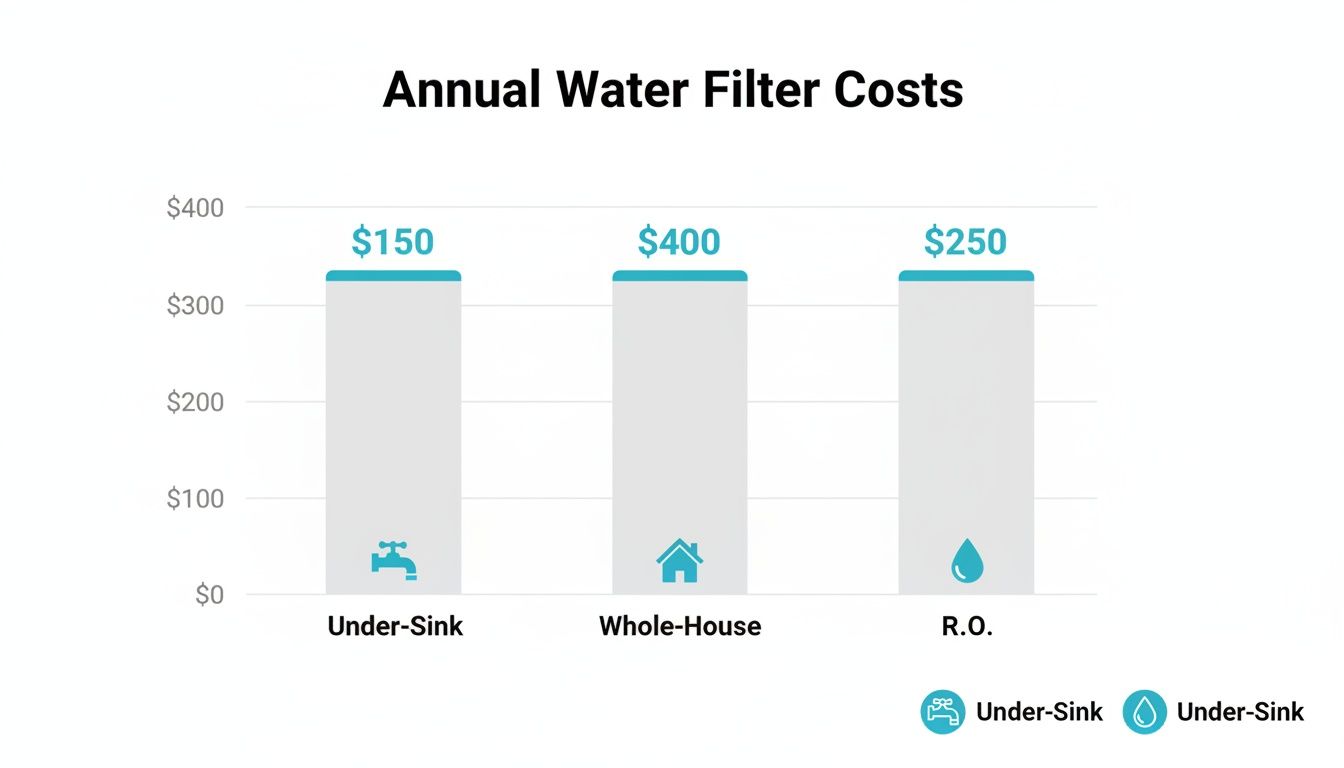
As you can see, whole-house systems usually have the highest yearly upkeep cost, mainly because their filters are bigger and more complex.
Let's put some real numbers to this. For a typical family home of 4-5 people, a reverse osmosis system could run you anywhere from $5,100 to $7,200 once it's fully installed with a storage tank. That price can creep up past $7,400 if you have well water and need pretreatment for things like iron.
But that's not all. You should also plan on spending about $400 a year for general maintenance and filter changes. And then, every 3-5 years, you’ll need to replace the RO membranes, which can cost another $50 to $100. It all adds up, so planning for the long term is key.
The real "cost" of clean water isn’t just the price on the installation invoice. It’s the sum of the upfront price plus a decade of replacement filters, membranes, and any professional servicing required.
When you're shopping around and comparing different systems, always ask about the price and lifespan of the replacement filters. A system that looks cheap at first but uses expensive, hard-to-find proprietary filters can become a real financial headache. Often, the smarter move is to spend a little more on a unit that uses affordable, widely available filters. That’s how you make sure your investment keeps paying you back with clean, safe water for your family.
Getting clean, safe water into your home is one of the best investments you can make, but it doesn't need to break the bank. With a little strategic thinking, you can knock down the total water filtration system installation cost quite a bit without skimping on quality. It's all about planning ahead before you pull out your credit card.
One of the easiest tricks in the book is to time your purchase right. Just like you wouldn't buy a new grill at the start of summer, water filtration systems often go on sale during certain times of the year. Keep an eye out for seasonal deals around Black Friday or end-of-year sales when companies are trying to clear out inventory.
Before you even think about which system to buy, the absolute best thing you can do to save money is get your water tested. Think of a comprehensive water test as your roadmap—it points out exactly what contaminants you're dealing with. Without that information, you could easily waste money on a heavy-duty system built to tackle iron and arsenic when all you really had was a chlorine taste problem that a simple carbon filter could fix.
Don't pay for filtration you don't need. A water test is your best defense against overspending. It makes sure the system you buy is the right tool for your specific problem, potentially saving you hundreds or even thousands on gear you never needed in the first place.
Once you know what's in your water, you can shop with surgical precision. This targeted approach is the cornerstone of a cost-effective installation.
Here’s a great pro tip: if you’ve already got a plumber scheduled to come over for something else—maybe to fix that drip under the sink or install a new water heater—ask them about bundling the filter installation. Many plumbers will cut you a deal for getting multiple jobs done in one trip, since it saves them time and travel. This is a fantastic way to shave a decent chunk off that final labor bill.
Finally, you need to play the long game. The price on the box is just the beginning.
Choosing a system with cheap, easy-to-find filters is one of the smartest financial decisions you can make. It turns what could be a one-time purchase with expensive upkeep into a truly sustainable, long-term solution for clean water.
When you're staring down the final quote, it's easy to get a little nervous. The world of plumbing, local codes, and your home's unique water situation can feel like it's adding a lot of complexity to the water filtration system installation cost.
Let’s clear the air and tackle those common "what if" questions head-on. We've put together answers to the most frequent things homeowners ask, so you can build your budget with confidence and sidestep any last-minute surprises.
It absolutely does. The cost of living in your area directly impacts what a licensed plumber charges per hour. You can expect a plumber in a major city like San Francisco or New York to have a much higher rate than one in a small, rural town.
On top of that, local regulations might require permits, which can add another line item to your bill. The best way to get a real number for your specific area? Get at least three quotes from local, reputable plumbers. That'll give you a solid baseline to work from.
A good plumber will be upfront about everything, but sometimes your home's plumbing throws a curveball. These "hidden" costs aren't about dishonesty; they're about dealing with unforeseen issues.
Here's a pro tip: always set aside a contingency fund of about 10-15% of the total quoted price. Think of it as a safety net. If an unexpected issue pops up, it won't wreck your budget or stall the project.
Filtering well water is a whole different ballgame—it's usually more complex and definitely more expensive than treating city water. Wells can have a nasty cocktail of contaminants that municipal water doesn't, like high iron, manganese, sulfur, sediment, and even bacteria like E. coli.
Because of this, a well water system is almost never a single filter. It's a multi-stage solution that often includes:
A complete system designed to handle well water problems can easily run from $3,000 to over $9,500 once installation is factored in. A professional water test is the essential first step to figure out exactly what your well needs.
While you probably can't haggle over a plumber's hourly rate, you're not powerless. Your best negotiating tool is being prepared. When you get at least three itemized quotes, you can compare them line by line.
If one quote seems way out of line for a specific part or labor task, you can politely ask them to explain the difference. You can also see if they offer discounts for bundling the job with other plumbing work, paying with cash, or if you buy the system directly from them. A homeowner who has done their homework is always in the best position to get a fair price.
Ready to stop wondering and start enjoying cleaner, safer water? At Water Filter Advisor, we provide in-depth guides, unbiased reviews, and practical tips to help you make the best choice for your home and budget. Explore our resources today to find your perfect water filtration solution. Find out more at https://www.waterfilteradvisor.com.
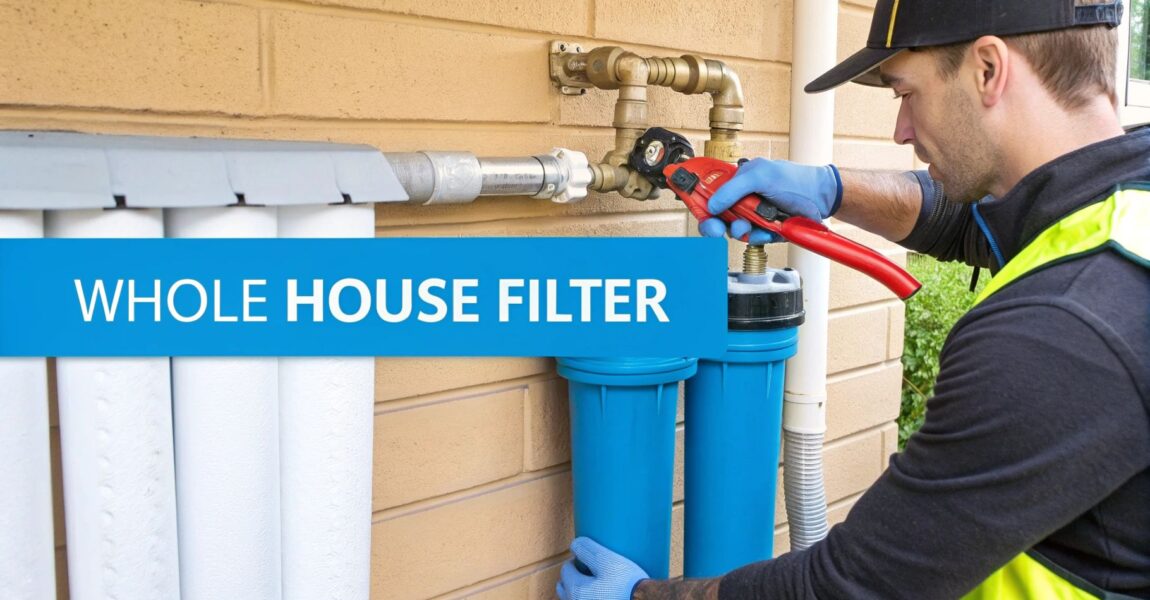
A successful whole house water filter installation doesn't begin with a pipe cutter—it starts with a plan. Think of this as your mission briefing ...
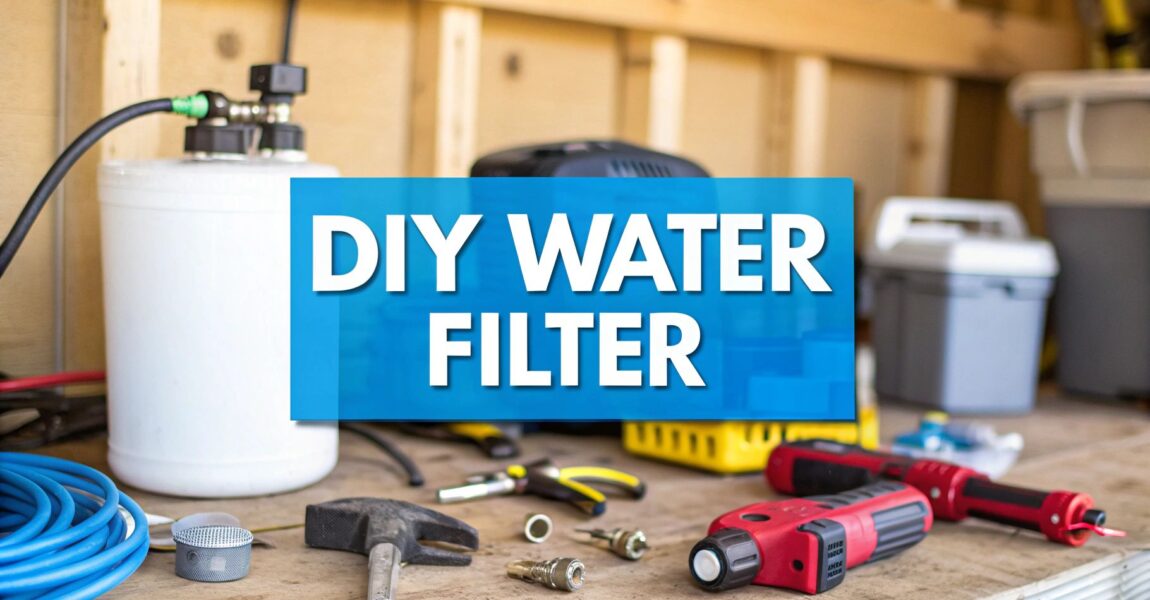
Ready to declare independence from funky-tasting water? Installing a whole-house water filter is one of the most satisfying DIY projects you can tackle. It's your ticket to pure, clean water from every single tap in your home. Before you touch a single pipe, though, a little prep work is the secret sauce. The key to a smooth installation lies in three crucial upfront steps: testing your water to figure out what microscopic villains you're fighting, finding the main water shut-off valve and a good spot for the unit, and measuring your pipes to get the right parts.
Getting these details sorted out first is the difference between a triumphant weekend project and an unscheduled, frantic trip to the hardware store—or worse, a call to a very expensive plumber.
Seriously, don't even think about cutting a pipe until you've got a solid plan. Think of this as your mission briefing—it's where you figure out exactly what you're dealing with. I’ve seen too many DIY projects go sideways because someone rushed this part. A bit of reconnaissance now saves you from a world of plumbing pain later.
This is all about understanding your home's unique plumbing personality. Every house is a little different, and your water quality isn't the same as your neighbor's. The goal here is simple: match the right filtration superhero to your water's specific problems and make sure you've got a clear, accessible path for the installation.
You wouldn't take medicine without knowing what you're treating, right? The same logic applies to water filtration. A simple water test is your non-negotiable first step. It's like a spy report that tells you exactly what’s hiding in your water, whether that's an over-chlorinated taste from the city, sediment from old pipes, or too much iron from your well.
Without that data, you’re just flying blind. A test kit can tell you if your Total Dissolved Solids (TDS) are over the recommended 500 parts per million (ppm), which is a big clue you'll need a more robust, multi-stage filter. You have to know your enemy to win the battle. If you need some help choosing a filter based on your water quality, we've got some great https://www.waterfilteradvisor.com/advice/ to get you started.
Next up, it’s time to play detective in your own basement or garage. Your mission: find the perfect spot for your new filtration command center. The ideal location is almost always on the main water line, immediately after your main shut-off valve but before your water heater. Placing it here guarantees that every drop of water in your house—hot, cold, and in-between—gets the full purification treatment.
Look for a spot with enough room not only to hang the unit but also to make changing filters a breeze later on. Most models will need at least a foot of clearance below them for easy cartridge swaps.
Pro Tip: While you’re scouting, snap a few photos of your plumbing with your phone. They’ll be a lifesaver when you’re at the hardware store trying to remember if you need a 90-degree elbow or a straight union.
Last but not least, let's get specific. You absolutely must know your pipe size. In the U.S., most homes run on either 3/4-inch or 1-inch main water lines. Grab a tape measure or a pair of calipers to get an exact measurement. This ensures you buy a filter and fittings that are a perfect match. Getting this wrong means another trip to the store with your project sitting half-finished and your plumbing in pieces.
Before you start the install, it's worth reminding yourself why you're doing this. Understanding the benefits of installing a home water filtration system can really reinforce your decision and keep you motivated through the process.
Alright, this is where the action begins. All that planning and prep work is about to pay off. You’ve scoped out the perfect spot, your tools are laid out, and it’s time to get your hands dirty. We're about to dive into the heart of the project: cutting into your home's main water line to tie in the new filtration system. It sounds a little nerve-wracking, I know, but if you take it step-by-step, it's a completely manageable job.
The whole game here is about being methodical and precise. We'll walk through shutting off the water, making clean cuts, and creating solid, leak-proof connections that will guard your home's water supply for years to come. This is the moment you transform that box of parts into a powerful protector for every faucet in your house.
Before we grab any tools, let's visualize the first few moves that set you up for success.

Nailing these three fundamentals—testing the water, finding the valve, and measuring your pipe—is the foundation for a smooth installation. It's how you avoid those "oops" moments and costly mistakes down the line.
First thing's first: you have to shut off the main water supply to your house. Don't even think about skipping this. Find your main shut-off valve, which is usually tucked away in the basement, garage, or near the water meter. A lever-style valve is off when the handle is perpendicular to the pipe. If you have an older gate-style valve, turn it clockwise until it gently stops.
With the main off, you need to drain the water still sitting in your pipes. The best way to do this is to open the highest faucet in your house (like an upstairs bathroom) and the lowest one (maybe a basement utility sink). This breaks the vacuum and lets gravity work its magic. You might be surprised how much water comes out—often 5-10 gallons—so just let it run until it slows to a drip.
Now that the lines are drained, it's time to make your mark. Grab the measurements you took earlier and mark the section of pipe where the filter assembly will live. Don't forget to account for the width of the filter housing plus the fittings and unions you'll need on each side.
Your goal is a perfectly square, clean cut. A smooth, burr-free edge is absolutely critical for getting a watertight seal, especially if you're using modern push-to-connect fittings.
Once the cut is made, take a minute to clean up the edges. Use a deburring tool or even a small file to smooth out the inside and outside of the pipe. This little step is a pro move; it prevents you from tearing the delicate O-rings inside your fittings.
With a section of pipe removed, you can now mount the filter housing. Position the mounting bracket against the wall or joist and use a level to get it perfectly straight. A crooked filter doesn't just look sloppy; it can put unnecessary stress on your plumbing connections over time, begging for a leak.
Drill your pilot holes and sink the screws to get the bracket good and firm. Then, attach the filter housing to the bracket. One of the most common rookie mistakes is not leaving enough room underneath the filter. You need space to unscrew the sump to change the cartridge, so make sure you have at least a foot of clearance.
Insider Tip: Before you drill a single hole, do a "dry fit." Hold the entire filter assembly up to the pipes to see how everything lines up. This simple check confirms your measurements are spot-on and can save you from the headache of patching and drilling a new set of holes.
This is the moment of truth. Every connection has to be perfect. For most DIYers, push-to-connect fittings (like the popular SharkBite brand) are a game-changer because they don't require any soldering. You just push the clean, deburred pipe into the fitting until you feel it click. It creates a strong, reliable seal in seconds.
If you have the skills and tools, soldering copper is a fantastic, permanent solution. It just requires a torch, flux, and a bit of practice to get a clean joint. If you're tackling a bigger plumbing project, checking out some DIY bathroom installation tips can give you some transferable skills and a confidence boost.
No matter which method you choose, always use Teflon tape on any threaded fittings. Wrap the tape clockwise—the same direction you'll be tightening—about 3-4 times. This fills any microscopic gaps in the threads and helps you get a tight, leak-free seal.
A skilled DIYer can save a lot on professional fees here. With the main shut-off located, which is the case in about 85% of U.S. homes, the process is pretty straightforward. Installing the filter and bypass, taping the threads, and torquing the fittings to the recommended 50-60 ft-lbs can usually be knocked out in under two hours.
You’ve tightened the last fitting and the filter is mounted. Looks good, right? While the heavy lifting is done, you can’t just turn the water back on and call it a day. This final phase—commissioning the system—is where a good installation becomes a great one. It’s the difference between a reliable, leak-free setup and a future plumbing disaster.
We're about to bring your new filter to life. This means carefully reintroducing water to avoid any nasty shocks to your plumbing, flushing the new filter media to get it ready for action, and doing a meticulous leak check on every single connection you made. Let's get it done right.
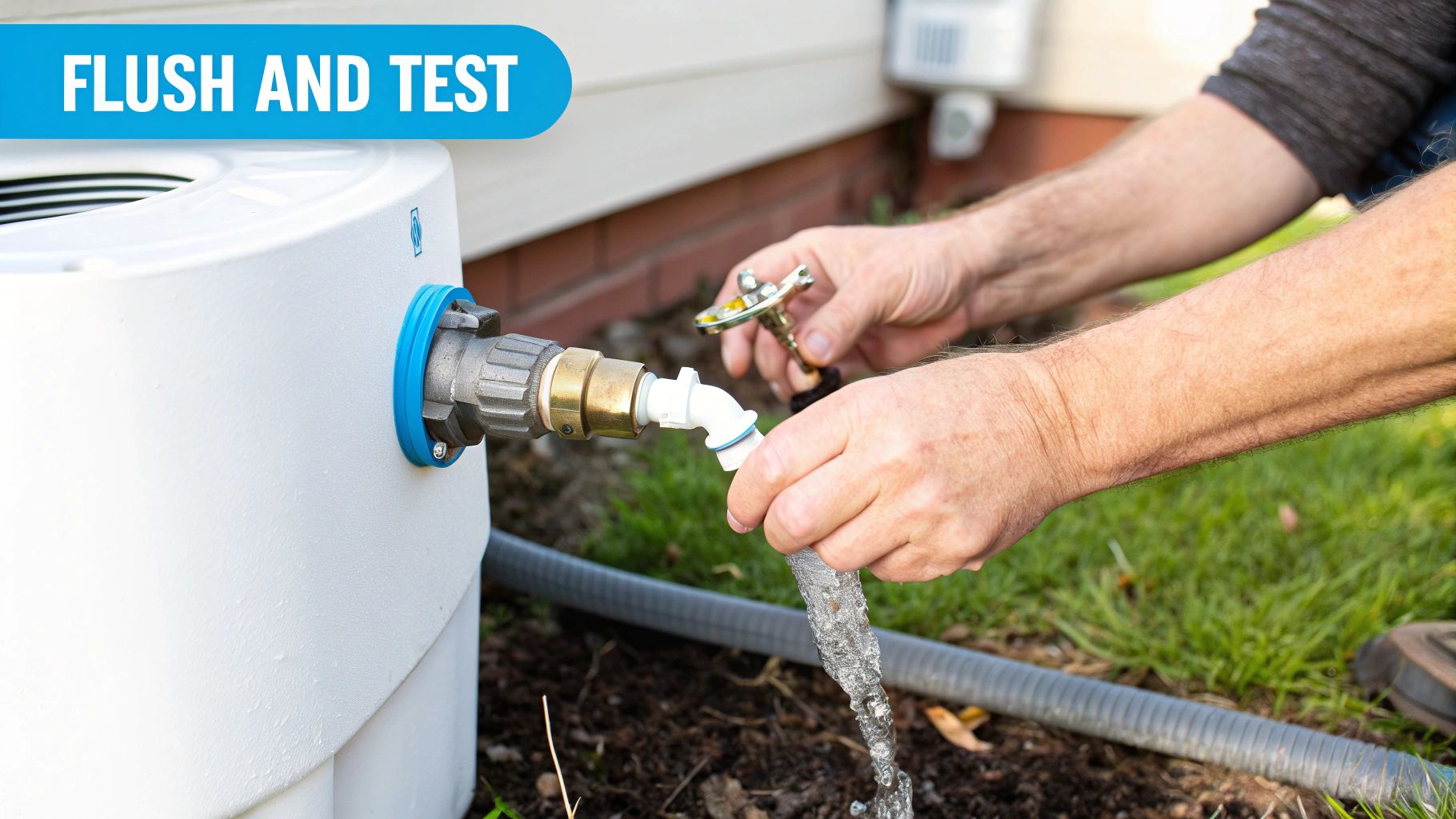
Right now, your home's plumbing is full of air. If you just crank open the main valve, you’ll unleash a violent surge of water called a water hammer. It's that loud, banging noise that can shake pipes loose, damage joints, and even wreck your appliances. It’s a classic rookie mistake, and it’s completely avoidable.
The trick is to re-pressurize the system slowly and gently.
This simple, gradual process lets the air escape gently, protecting your entire plumbing system from a damaging shockwave.
Okay, water is back in the main lines. Now it’s time to activate the filter itself. The goal here is to wash out any leftover dust from manufacturing, especially the carbon "fines" you find in new filters. They're harmless, but you definitely don't want that gritty black stuff in your first glass of water.
Close the bypass valve and slowly open the inlet valve to the filter. You’ll hear the housing fill up. Once it’s full, open the outlet valve. Now, go to an outdoor spigot or a big utility sink and turn on the cold water full blast.
Let it run for a good 10-15 minutes. Don't be alarmed if the water comes out cloudy or even black at first—that's the carbon dust washing out, and it's totally normal. You're just cleaning the pipes, so to speak. Keep it running until the water is crystal clear.
A proper installation sequence is crucial. Generally, this involves shutting off the main, draining the system for a few minutes, making square cuts to avoid leak risks, and using 3-4 wraps of PTFE tape on threads. When reconnecting, opening the valve slowly is key. After that, flushing about 10-20 gallons clears the media dust and ensures your pressure drop stays under a manageable 10 PSI.
This is the moment of truth. With the system under full pressure and the filter running, you have to inspect every single joint for leaks. Be patient and meticulous here. Even a tiny, slow drip can cause thousands in water damage down the road.
Your two best friends for this job are a bright flashlight and a dry paper towel.
Check everything right after you turn the water on, and then circle back an hour later to check again. Some sneaky leaks take a little while to show themselves. If you find a drip, don't sweat it. Just shut the water off, drain the pressure, and re-tighten or re-tape the fitting. A completely dry system is the signature of a job well done.
You did it. The whole-house water filter is installed, and clean, fresh water is flowing through every pipe in your home. It’s a great feeling, but the job isn't completely done. Think of it like owning a new car—a little routine maintenance is all it takes to keep it running perfectly. This is all about getting into a simple rhythm of care to protect your investment and keep that water quality sky-high.
The best part? Keeping your system in top shape is a whole lot easier than the installation was. It really just boils down to changing filters on time, a quick clean now and then, and keeping half an eye on your water pressure.
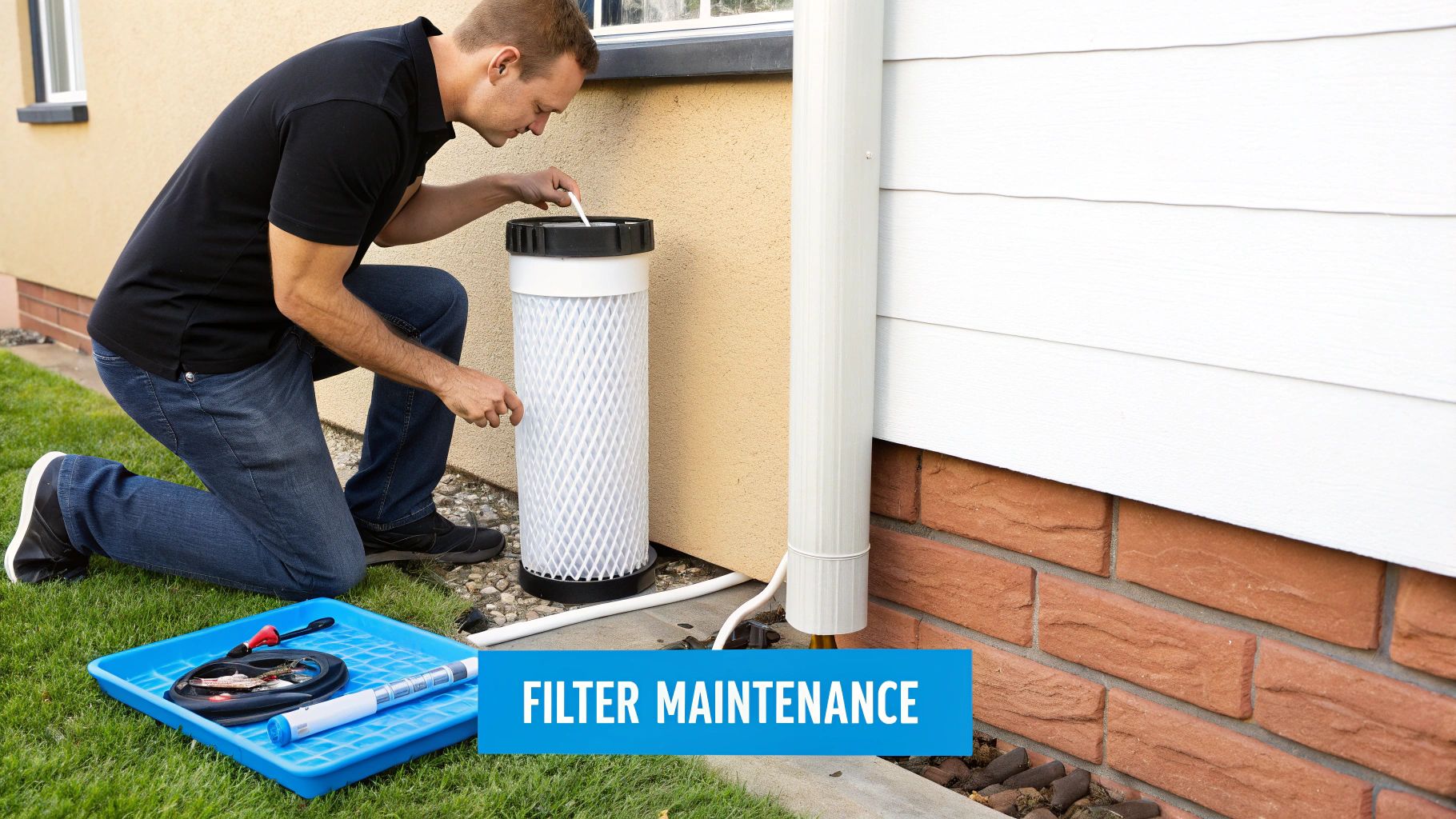
Not all filters are created equal, and they definitely don’t last the same amount of time. The manufacturer’s guide is your starting point, but your real-world replacement schedule will be dictated by your local water quality and how much you use. For instance, a house on well water with a lot of sediment is going to clog pre-filters way faster than a home on a clean city supply.
Here’s a general idea of what to expect for the most common filter types in a multi-stage system:
I recommend keeping a simple log. Just grab a marker and write the date you changed the filter right on the housing, along with the date it’s next due. It takes two seconds and completely removes the guesswork.
Changing a filter cartridge is a straightforward job that you’ll master after the first go. It's a quick and clean mission if you follow the right steps.
Crucial Maintenance Step: While you have the housing open, take a second to inspect and clean the O-ring. A little dab of food-grade silicone grease keeps it from drying out and ensures you get a perfect, leak-free seal every single time.
Forget the calendar for a second. Your home’s water pressure is the best real-time indicator of your filter's health. You should have pressure gauges on both the inlet and outlet sides of the filter. When a filter is fresh and clean, those two readings should be almost identical.
As the filter does its job and gets clogged with contaminants, the outlet pressure will start to dip. Once you see a pressure difference of 10-15 PSI between the inlet and outlet gauges, that’s your system screaming for a new filter, even if it's not "due" yet. It’s a clear sign the filter has done its duty and is ready for retirement. Paying attention to this one metric is the secret to proactive, smart maintenance.
Even the most carefully planned DIY project can throw you a curveball. You've followed every step, tightened every fitting, and suddenly your water pressure has vanished or you spot a stubborn little drip that just won't quit.
Don't panic. Most issues that pop up during a whole-house water filter installation are pretty common and, thankfully, have simple fixes. Think of this as your troubleshooting guide for those head-scratching moments. We’ll walk through the most frequent snags so you can get back on track without making a panicked call to a plumber.
You’ve turned the water back on, but the flow from your faucets is just a trickle. A big drop in pressure is one of the most common post-installation complaints, but it's rarely a sign of a serious problem. Before you start questioning your handiwork, let's run through the usual suspects.
Often, the issue is just an airlock trapped somewhere in your plumbing. This happens when air gets compressed in the pipes and blocks the flow of water. Another possibility is that the filter cartridge was installed incorrectly, or maybe a valve somewhere isn't fully open.
Here’s how to systematically hunt down the cause:
There is nothing more frustrating than seeing a tiny, perfect droplet of water forming on a brand-new connection. A leak, no matter how small, is a clear sign that a seal isn't quite right. The good news is the fix is usually quick. The most common reasons for a slow drip are an improperly sealed threaded fitting or a compromised O-ring.
Pro Tip: Never, ever overtighten a fitting to stop a leak. This is a classic rookie mistake that can crack the plastic housing or strip the threads, turning a tiny problem into a big, expensive one. The real solution is almost always to take it apart, re-seal it, and tighten it correctly.
If you spot a leak, shut off the water and open a faucet to relieve the pressure. Disconnect the leaking fitting and take a close look at the threads. Did you use enough Teflon tape? A good rule of thumb is 3-4 wraps in a clockwise direction (the same direction you tighten the fitting). If it's a connection with an O-ring, check that the ring isn't twisted, pinched, or dirty. A tiny piece of grit is all it takes to break the seal.
After the installation, you might hear a new humming, rattling, or thumping sound when water is running. This is often caused by something called water hammer—a pressure surge that happens when flowing water suddenly stops or changes direction. Your new filter system can sometimes make this more noticeable, but it's easily managed.
First, make sure the filter housing is mounted securely to a solid surface like a wall stud or floor joist. A loose bracket will vibrate and amplify any noise in the pipes. If the sound continues, you might need to install a water hammer arrestor. These are small, inexpensive devices that absorb the shockwave and quiet your pipes right down. They’re easy to install and simply screw into a nearby faucet line, like the one for your washing machine.
When a problem pops up, it’s easy to get flustered. This little cheat sheet covers the most common issues at a glance to help you quickly identify the cause and get things flowing smoothly again.
| Symptom | Likely Cause | Solution |
|---|---|---|
| Low Water Pressure | Airlock in pipes; partially closed valve; clogged or incorrect filter. | Purge air from the system; double-check all valves are fully open; verify and reseat the filter cartridge. |
| Slow Drip or Leak | Improperly sealed threads; damaged or dirty O-ring. | Shut off water, re-apply Teflon tape (3-4 wraps), clean and reseat O-ring. Do not overtighten. |
| Vibrating/Noisy Pipes | Loose filter mounting bracket; "water hammer" effect. | Securely tighten all mounting hardware; install a water hammer arrestor on a nearby appliance line. |
| Cloudy or Discolored Water | Air bubbles in the water; sediment flushed from pipes. | This is normal at first. Run faucets for 5-10 minutes until the water runs clear. |
| No Water Flow at All | Main shut-off valve is still closed; system is in bypass mode. | Fully open the main water supply valve; ensure the bypass valve is in the "service" or "filter" position. |
Remember, most installation hiccups are minor and can be fixed with a bit of patience and a methodical approach. Don't be afraid to retrace your steps
Even with the best guide in hand, it’s completely normal to have a few questions before you start cutting into your plumbing. This is a big project, after all. Let’s tackle some of the most common things people ask before they jump in.
This is usually the first question on everyone's mind. The honest answer? It depends on your specific system and plumbing setup. While getting a pro to do the job can set you back anywhere from $500 to over $2,000 just for labor, going the DIY route saves you a massive chunk of that.
Your main expenses will be the filter unit itself and the plumbing parts to connect it. A typical shopping list might look like this:
When all is said and done, a DIY install can easily save you 70% or more compared to hiring a plumber. That's a huge win for your wallet.
Time is money, right? For someone doing this for the first time—but who has read the instructions and has everything laid out—plan for about four to six hours. That gives you enough time to drain the system properly, make careful cuts, get the unit mounted securely, and double-check for leaks without rushing.
If you’ve done this kind of plumbing work before, you could probably get it done in two to three hours. The biggest things that affect the timeline are how easy it is to get to your main water line and what kind of pipes you have. Soldering copper always takes more time than using modern push-fit connectors.
My Advice: Whatever you estimate, add a couple of hours. Nothing good comes from rushing a plumbing project. Block out a Saturday morning so you're not trying to wrap things up when you're tired and it's getting dark.
Knowing when to tag in a pro is the sign of a smart DIYer, not a failure. This project is totally doable for most, but there are definitely times when it’s best to pick up the phone.
Think about hiring a plumber if you run into any of these situations:
There is absolutely no shame in calling for backup. That peace of mind from a professionally installed, guaranteed-not-to-leak system is often worth every penny.
At Water Filter Advisor, our goal is to help you get cleaner, safer water in your home. From picking out the perfect system to giving you the confidence to install it yourself, we've got your back. Check out all our guides and reviews at https://www.waterfilteradvisor.com.
So, you've decided to install a whole-house water filter. Fantastic choice! You're on the verge of upgrading every single drop of water in your home. But before you start dreaming of pristine showers and crystal-clear drinking water, let's talk about the real secret to success: the prep work.
Getting this part right is the difference between a smooth Saturday project and a frantic call to the plumber. It all boils down to three non-negotiable steps: testing your water, sizing the system like a pro, and picking the perfect spot for your new water guardian.
More and more homeowners are taking control of their water. It’s no surprise that the market for these systems is booming. Technavio projects the household water purifier filter market will grow by a staggering USD 2,102.2 million between 2025 and 2029. That's a huge shift, showing just how many people want to protect their homes from contaminants right at the source. You can dive into the numbers in Technavio's full report.
Let's make sure your project is a success from the start. Getting this planning phase right isn't just about avoiding a headache later—it's about making sure your investment actually delivers that liquid gold you're after.
Would you take medicine without knowing what you're treating? Of course not. The same logic applies here. Installing a filter without testing your water is like playing darts in the dark. You might hit something, but it probably won't be the bullseye. You could end up with a system that’s total overkill or, far worse, one that doesn’t even touch your main water problems.
A good water test is your strategic roadmap. It tells you exactly what kind of villain you're fighting.
Armed with this intel, you can choose a system that’s truly tailored to your home's needs, whether it's a simple sediment filter or a multi-stage beast for tricky well water.
One of the biggest complaints after a DIY filter installation is a sudden, soul-crushing drop in water pressure. This almost always happens when the filter system is too small for the home's water demand. Sizing isn't just about how many bathrooms you have; it's all about flow rate.
Flow rate is measured in gallons per minute (GPM). Think about it: a shower guzzles about 2.5 GPM, a dishwasher needs around 2 GPM, and a running faucet sips about 1.5 GPM. It adds up faster than you think when the whole family is home.
Your whole house filter must have a GPM rating that meets or exceeds your home's peak demand. For a typical family of four, that means you need a system rated for at least 10-15 GPM to avoid a pressure-less purgatory when the shower, dishwasher, and washing machine are all going.
Doing your homework upfront is critical. It's a lot like choosing the right water filter system for an RV—you have to match the equipment to your specific needs.
Where you put the filter is just as important as which one you buy. The ideal spot is indoors, right after your main water shutoff valve but before your water heater. This strategic placement ensures that every single drop of water in your home, both hot and cold, gets the five-star filtration treatment.
Here's what to look for when scouting the perfect real estate for your filter:
Alright, this is where the rubber meets the road. All that planning is about to pay off. I know, cutting into your home's main water line sounds pretty daunting, but trust me, if you’re methodical about it, it’s completely manageable. Think of it less like major surgery and more like a precise, planned upgrade to your home’s plumbing.
Before you even think about picking up a pipe cutter, let's just quickly recap the prep work. This isn't just busywork; it's what separates a smooth Saturday project from a weekend-long headache.
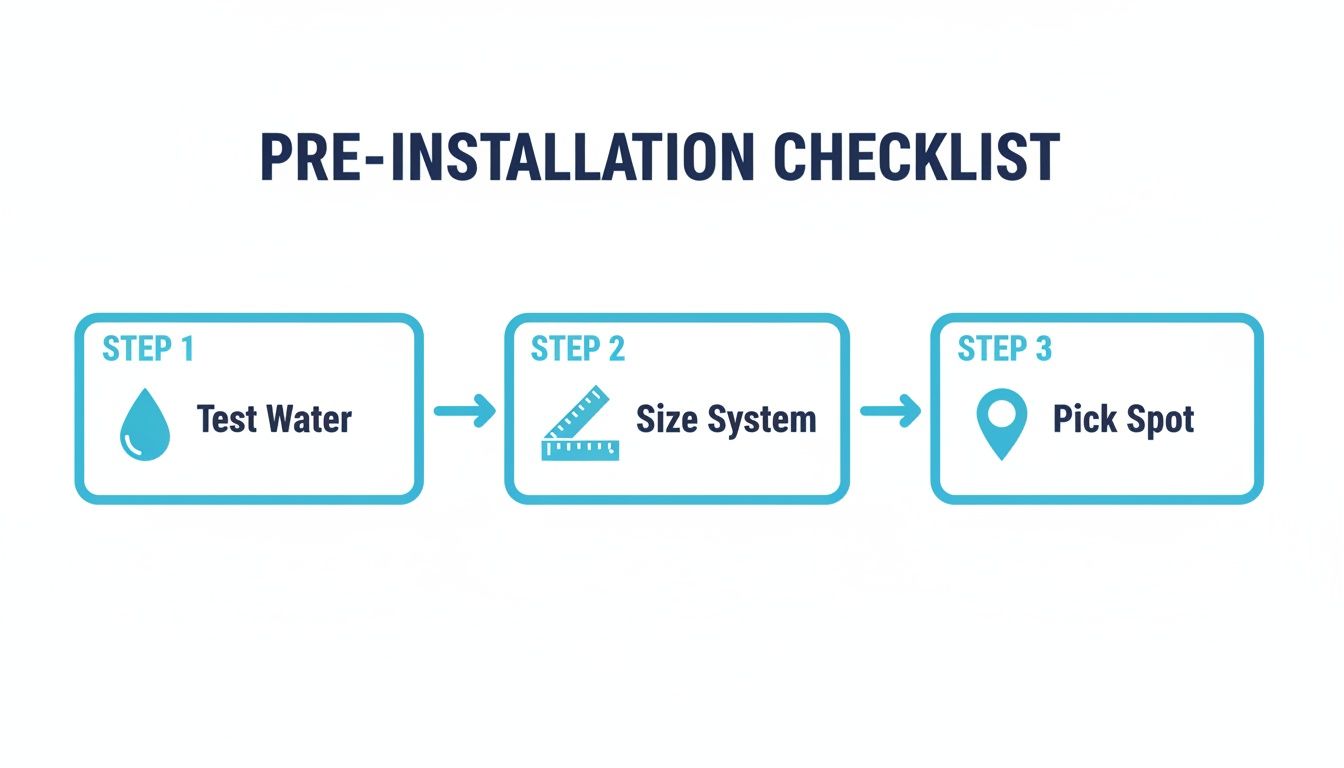
Getting these three things right—testing your water, sizing the system correctly, and finding the perfect spot—is the foundation for everything that comes next.
First things first: shut the water off to the entire house. Find your main shutoff valve, which is usually tucked away in the basement, a crawlspace, or near your water meter. Turn it all the way off. For a ball valve, that means turning the lever so it's perpendicular to the pipe. If you have an older gate valve, you'll turn the round handle clockwise until it stops.
Next, you've got to drain the lines. Open up a faucet on the highest floor of your house (like a second-floor bathroom) and another one on the lowest level (a basement sink is perfect). This lets air in and allows gravity to do its thing, draining the pipes. Keep a bucket handy right under where you’ll be working—there's always a little water left that will spill out.
Pro Tip: Don't even think about cutting until you're 100% sure the water is off. After closing the main valve, go turn on a faucet. If you get a trickle that peters out, you're golden. If it keeps running, your main shutoff might be shot, and that's a whole other problem you need to fix first.
The kind of plumbing in your house determines the tools for the job. You need a clean, square cut for a solid, leak-proof connection, and each pipe material has its own best practice.
Before you hook up the filter itself, you’re going to install a bypass loop. This is basically a little detour for your water, made up of three valves that let you send water around the filter instead of through it. Why bother? Because when it's time to change a filter or service the unit, you can do it without shutting off water to the whole house. It’s an absolute lifesaver.
Most filter kits come with the parts you need. You'll put a shutoff valve on the pipe going into the filter (inlet), one on the pipe coming out (outlet), and a third valve connecting the two. Normally, the inlet/outlet valves are open and the bypass is closed. For maintenance, you just reverse that.
Time to make the final connections. How you do this really depends on your pipe type and your comfort level with plumbing.
No matter which route you take, read the instructions that came with your filter and your fittings. Pay close attention to the arrows on the filter head that show the direction of water flow (IN and OUT). Hooking it up backward means it won't work, and you could even damage it.
With your pipes cut and the bypass loop ready, it's time to give your filtration system a permanent, stable home. This isn't just about hanging hardware on the wall; a secure mounting job prevents vibrations, protects your plumbing from stress, and makes future maintenance a whole lot easier. Think of it as the foundation for your entire setup.
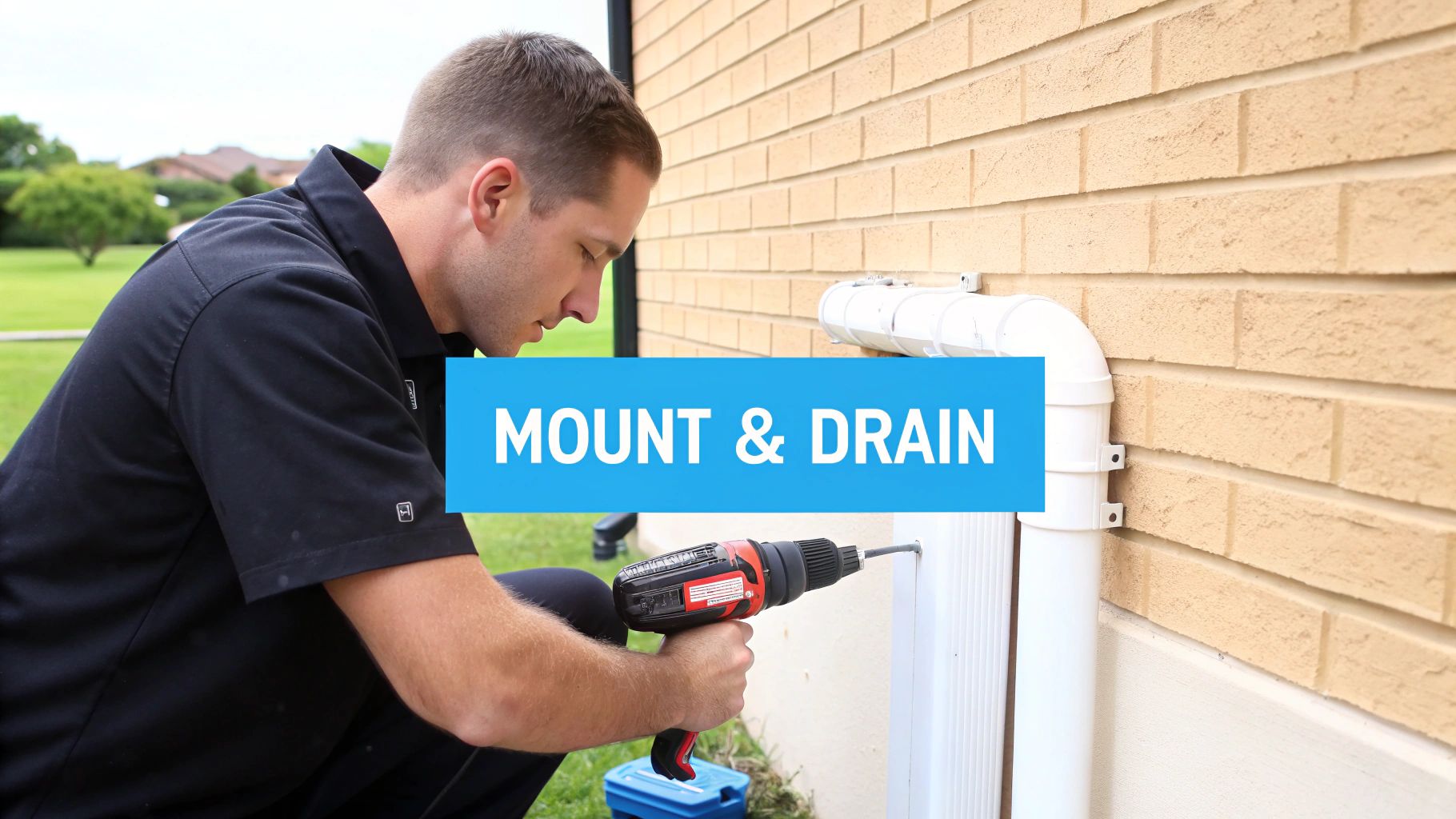
This focus on point-of-entry (POE) systems is driving some serious market growth. The water filter market as a whole is expected to jump from US$48.2 billion in 2025 to US$84.2 billion by 2032. Whole-home systems are a huge part of that surge, largely because they protect every single appliance and fixture in your house, which can extend their lifespan by a whopping 30-50%. You can dig deeper into these trends in this detailed market research from Persistence Market Research.
Your filter system is heavy, and once it's full of water, it's really heavy. Just screwing it into drywall is asking for trouble. You absolutely have to anchor the mounting bracket directly to wall studs or a solid surface like a concrete wall.
Grab a stud finder and locate two adjacent studs where you want to install the filter. Hold the mounting bracket up, place a level on top to make sure it's perfectly horizontal, and mark your drill holes. If the system isn't level, it puts uneven stress on the pipe connections—a leading cause of those annoying, slow leaks down the road.
Pro Tip: Don't forget about clearance! Before you drill a single hole, hold the filter housing up to the bracket and check that you have enough room below it to unscrew the sump and swap out the cartridge. A good rule of thumb is to leave at least the height of the housing itself as empty space underneath.
If you've got a simple sediment or carbon block filter, you can skip this part. But for water softeners, iron filters, or certain multi-stage media filters, a backwash cycle is critical. This process flushes out all the gunk the filter has trapped, and that wastewater needs a place to go.
Getting the drain setup right is non-negotiable for these systems.
Many of today's systems need power to run digital control heads, flow sensors, or UV purification lamps. When you install a whole house water filter that needs to be plugged in, safety is everything.
Any electrical outlet near your plumbing must be a Ground Fault Circuit Interrupter (GFCI) outlet. These are designed to instantly shut off the power if they detect a ground fault—like if water splashes into the outlet—preventing a very dangerous electrical shock.
If you don't have a GFCI outlet nearby, you have a couple of options:
Whatever you do, never use a standard extension cord as a permanent power source. They just aren't rated for the damp environment of a utility room and can become a serious fire and shock hazard. Unless you really know what you're doing with electrical work, this is one area where it’s not worth taking the risk.
You've done the hard work. The filter is mounted, the plumbing is connected, and your new system is sitting there, looking impressive. Now for the moment of truth. Bringing the system online isn't as simple as yanking the main valve open and hoping for the best. It’s a deliberate, careful process to protect both your home and your new investment.
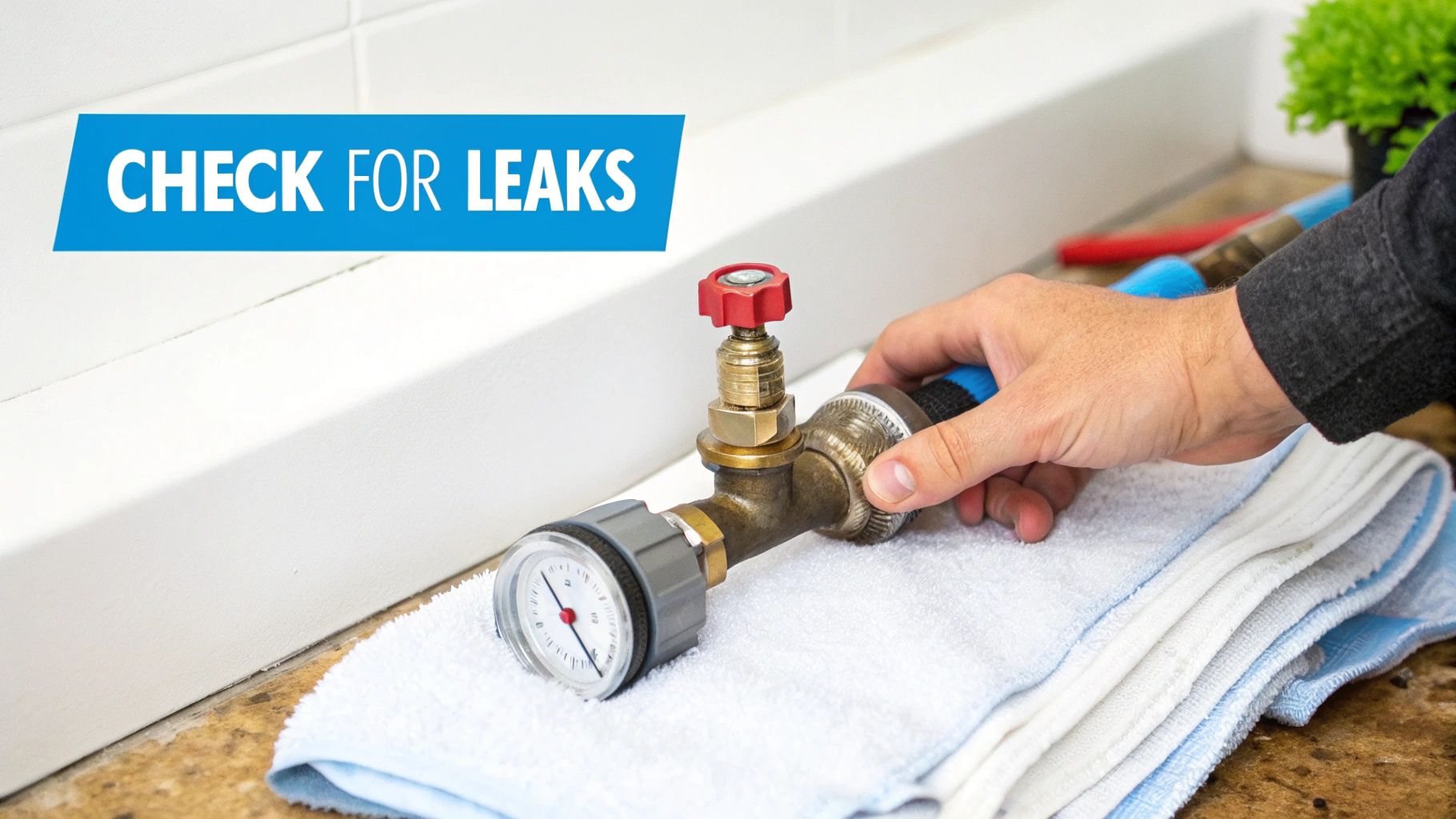
This final step is crucial, and the effort is absolutely worth it. These systems are a frontline defense against America's aging water infrastructure. In fact, the demand for home water purification is projected to jump from USD 7.09 billion in 2025 to over USD 10.35 billion by 2032.
Why the surge? It's driven by real concerns. Aging municipal pipes can contaminate up to 20% of homes with lead or PFAS, and the CDC connects poor water quality to an astonishing 7 million illnesses in the US every year. You can get a deeper dive into the home water purification market to see the trends.
First things first, let's use that bypass loop you worked so hard to install. Make sure the filter’s main inlet and outlet valves are closed, but the bypass valve is open. Now, head back to your main water shutoff and open it very slowly—just a quarter turn will do for now.
You’ll hear the pipes start to fill. Let them pressurize for a minute. This gentle approach prevents a nasty "water hammer," a pressure shockwave that can wreak havoc on pipes and fittings.
Once things quiet down, take a walk along the line and look for any big, obvious leaks. If it all looks dry, go ahead and slowly open the main valve the rest of the way. Your house now has water again, it's just bypassing the filter for the moment.
With the bypass active and your plumbing re-pressurized, it's time to introduce water to the filter itself. Go to the filter's inlet valve and crack it open just a hair. You should hear the filter housing begin to fill.
This is where you need to be on high alert. Grab a dry paper towel and a flashlight. Now, meticulously check every single connection you made:
Wipe each one down with the paper towel. Even the tiniest bead of moisture will show up instantly. If you find a drip, shut the inlet valve immediately, hit the red pressure-relief button on the filter housing, and give the fitting a tiny tighten—a quarter turn is usually all it takes. Be careful not to overtighten, as that can crack plastic fittings and make things much worse.
Once you're confident the inlet side is bone dry, slowly open the outlet valve to pressurize the rest of the system. Repeat the entire paper towel test on the outlet side until you are 100% certain every joint is completely watertight.
Congratulations, you've confirmed a leak-free installation! But hold on, you’re not quite done. The very last step before you can pour that first glass of clean water is the first flush. New carbon filters, in particular, are packed with "fines"—tiny, harmless particles of carbon dust from manufacturing. You have to flush them out to prevent them from showing up in your water or clogging your faucet aerators.
Here’s how to do it:
You’ll probably see the water run gray or even black for a bit. Don't panic; this is completely normal. It’s just all those carbon fines washing out. Once the water runs perfectly clear, your system is officially online. You’ve successfully managed to install a whole house water filter, and every tap in your home is now delivering clean, purified water.
Even the most carefully planned DIY project can go sideways. When it comes to installing a whole-house water filter, a few classic mistakes can quickly turn a productive afternoon into a weekend-long headache. Knowing what to watch out for is half the battle.
One of the most common blunders I see is simply over-tightening the fittings. It feels like the right thing to do, but putting all your muscle into cranking down on plastic threads is a one-way ticket to a leak. You can easily cause tiny, hairline cracks in the filter housing that lead to those slow, maddening drips you can never quite pinpoint.
Here's a plumber's mantra worth remembering: hand-tight plus a quarter turn with a wrench. That’s almost always enough to get a perfect, watertight seal without putting dangerous stress on the plastic parts.
Another classic slip-up is installing the filter backward. It sounds almost silly, but when you're focused on cutting pipes and applying Teflon tape, it’s an easy mistake to make. The filter head will always have "IN" and "OUT" arrows stamped on it for a reason—the water has to flow through the media in the intended direction. Get it wrong, and you've basically installed a very expensive and useless piece of pipe.
Beyond the immediate plumbing work, a little foresight goes a long way. The biggest planning mistake? Forgetting about your future self who has to do the maintenance. You might find a spot that’s just perfect for the install, but if you can't get a bucket and a wrench under the unit later, you'll curse yourself every time a filter change is due.
A few extra minutes thinking about these things during the installation will save you a world of frustration down the road.
There's no shame in calling for backup. While installing a whole-house filter is a totally achievable DIY for many homeowners, some situations are clear signs to put down the tools and call a licensed plumber. Pushing forward when you're out of your depth can lead to thousands in water damage and serious safety issues.
It's time to pick up the phone if you run into any of these red flags:
Hiring a professional isn't giving up; it's making the smart call to protect your home and your new investment. To help you decide, here’s a quick look at how the two options stack up.
| Factor | DIY Installation | Professional Installation |
|---|---|---|
| Upfront Cost | $50 – $150 for tools & materials (PEX, fittings, cutter, etc.) | $400 – $800+, depending on labor rates and job complexity. |
| Time Commitment | 3 – 6 hours for a straightforward install. Can be a full weekend for first-timers. | 2 – 4 hours for an experienced plumber. |
| Skill Level | Basic plumbing skills (cutting pipe, using fittings, leak testing). | Licensed professional with extensive experience and knowledge of local codes. |
| Tools Required | You'll need to own or buy specific tools like pipe cutters, crimpers, wrenches, etc. | The plumber arrives with a full set of professional-grade tools. |
| Risk Factor | High. A mistake like a hidden leak can cause thousands in water damage. | Low. The work is insured and guaranteed. Any issues are their responsibility to fix. |
Ultimately, the choice comes down to your comfort level, budget, and the complexity of your home's plumbing. A successful DIY install is incredibly rewarding, but a stress-free professional job provides peace of mind that's often worth the price.
So, you’ve got your new whole house filter installed and running. Fantastic! But even after the tools are put away, a few questions usually pop up about keeping the system in top shape. Let's walk through some of the most common things people ask.
The big one is always about changing the filters. How often do you really have to do it? Honestly, it’s not a one-size-fits-all answer. A basic sediment filter might need a swap every 3-6 months, while the main carbon filter could go for 6-12 months.
But those numbers are just a starting point. The real schedule depends on your home:
Instead of just circling a date on the calendar, get in the habit of listening to your system. A filter that’s getting clogged will almost always give you a heads-up.
The most common clue is a gradual drop in water pressure. When your shower starts to feel a bit weak or it takes longer to fill the coffee pot, that’s a tell-tale sign the filter is saturated and holding back water flow. You might also notice that old chlorine taste or smell creeping back in. That’s your carbon media waving the white flag, telling you it’s absorbed all it can.
Remember, a filter doesn't just stop working; its performance degrades over time. Timely changes are crucial for consistent protection and to prevent strain on your plumbing system from excessive backpressure.
Now, a sudden pressure drop right after you install a whole house water filter is a completely different story. That points to an installation snag, not a spent filter. The first thing to do is double-check that all your valves are fully open—the main shutoff, and the inlet and outlet valves on the filter unit itself. It's a simple mistake that's easy to make.
If the valves are wide open, the issue might be the system's size. If the filter's Gallon Per Minute (GPM) rating is too low for your home's needs, you'll feel it in the flow. This is exactly why getting the sizing right before you buy anything is so important. For more hands-on troubleshooting tips, you can find a lot of helpful advice for water filter owners.
Finally, don't forget any specialty filters you might have. If you've got cartridges for things like iron or specific chemicals, they'll have their own replacement schedule, sometimes lasting up to 24 months. Always check the manufacturer's guide for each part of your system to build a maintenance plan that’s right for your water.
Ready to stop worrying and start enjoying pure, clean water from every tap? The team at Water Filter Advisor has the expert reviews and in-depth guides to help you find the perfect system for your home. Explore our resources and make your next water filter decision with total confidence. Visit us at https://www.waterfilteradvisor.com.

Installing a whole house water filter is one of the best upgrades you can make for your home, providing clean, pure water from every single tap. Like any good home project, success starts with a solid plan. Before you even think about cutting a pipe, you need to nail down two things: the installation location and what kind of plumbing you're dealing with.
Getting this right from the start saves a ton of headaches and ensures your new water filtration system works like a charm for years to come.
Ready to transform your home's water? This guide is your no-nonsense roadmap to installing a whole house water filter. Forget the technical jargon—we're here to give you clear, practical steps to seriously upgrade every drop of water in your home, from what you drink to what you shower in.

It’s no surprise these systems are becoming so popular. The home water filtration market is on a major upswing, projected to grow from USD 20.8 billion in 2025 to a massive USD 35.7 billion by 2035. Whole house units are a huge part of that because they treat water right where it enters your home, protecting you and your appliances.
First things first, let's find the best home for your new filter. You’re looking for the spot where the main water line enters your house. This is usually in the basement, garage, or a utility closet.
The key is to install the filter before the main line splits off to your water heater or any other fixtures.
Why does this matter so much? By placing the filter at this "point of entry," you guarantee that every tap—hot and cold—delivers clean, filtered water. This is about more than just better-tasting water; it’s about protecting your entire plumbing system and every water-using appliance from sediment, chlorine, and other gunk.
When you're scouting locations, keep a few things in mind:
Alright, next up is getting to know your plumbing. The material of your main water line will dictate the exact tools and fittings you'll need to buy. Take a good look at the pipe where you plan to make your cuts.
Pro Tip: Don't just guess your pipe size. Most homes have either 3/4-inch or 1-inch main lines. The size is often stamped right on the pipe or the existing fittings. Using the wrong size is the #1 cause of frustrating, slow leaks.
Here are the usual suspects you'll find in most homes:
Taking the time to get this planning phase right is absolutely crucial for a smooth, leak-free installation. For more general tips and tricks on all things water filtration, check out the comprehensive advice available from our experts.
Alright, you've got your plan and your shiny new filter. Now it's time to get your hands dirty. This is where the real work begins, and trust me, a bit of prep now will save you from a major headache (and a major mess) later.
Before you even think about cutting a pipe, you absolutely have to shut off the water to your entire house. This is non-negotiable. It’s the first rule of plumbing: take control of the water.
First things first, you need to locate your home's main water shut-off valve. This is the master switch for all the water coming into your house. If you don't know where it is, don't sweat it—most people don't until they have to.
Here are the usual suspects for its location:
Found it? Great. Turn the handle or wheel clockwise all the way until it stops. To be 100% sure the water is off, go open a faucet in your basement and another one in an upstairs bathroom. If the flow trickles to a stop, you're golden. This also has the added benefit of draining most of the water out of the pipes, which will prevent a surprise shower when you make your first cut.
With the water off and the pipes drained, it's time to mark your territory. This is the classic "measure twice, cut once" moment, and it really matters here.
Grab your filter housing and hold it up against the pipe where you plan to install it. You need to account for the total length of the filter and any other fittings you're adding, like shut-off valves or unions on each side.
Use a permanent marker to draw clear lines on the pipe showing exactly where to cut. I always suggest giving yourself a tiny bit of extra room between the marks. It's way easier to trim a pipe down a little more than it is to magically add a piece back on.
A rookie mistake I see all the time is measuring only for the filter body. Don't forget to add the length of your inlet and outlet fittings! Forgetting this turns a simple job into a frustrating jigsaw puzzle where the last piece doesn't fit.
Before you reach for the pipe cutters, let's talk about a pro move that your future self will thank you for: building a bypass loop.
A bypass is just a small section of parallel pipe with a valve that lets water go around the filter instead of through it. It might seem like extra work, but it's a total game-changer for maintenance down the road.
Think about it. When it's time to change the filter cartridge, you don't want to shut off water to the whole house just to do a five-minute job. With a bypass, you simply:
It just takes a couple of extra T-fittings and one more ball valve, but the convenience is worth every penny. The core principles of creating secure, serviceable water lines are universal, whether on land or at sea; a solid setup requires good planning. For a deeper dive into the fundamentals, it can be helpful understanding boat plumbing systems, as many of the same concepts apply. Getting your plumbing prepped right is the foundation for a flawless installation.
Alright, now we get to the fun part—actually tying the filter system into your home's plumbing. This is where the magic happens, and the right approach depends entirely on what kind of pipes you're working with. Don't sweat it; we'll walk through the most common types so you can handle this like a pro.
Once the pipe is prepped, you're ready to make the final connections. The first three steps are universal, no matter what kind of pipes you have.
You absolutely must shut the water off, drain the lines, and make your cut before doing anything else. It's a non-negotiable foundation for a safe, dry installation.
Copper is the old standard in plumbing for a reason. You've got two solid options here, and your choice really boils down to traditional technique versus modern speed.
First up is sweat soldering. This is the classic plumber's method: use a torch to heat the pipe and fitting, then apply solder to create a permanent, bulletproof joint. It takes some practice, a torch, flux, and solder, but a well-soldered joint is second to none for reliability.
The other route, which is getting more popular by the day, is using push-to-connect fittings (think SharkBite). These things are a DIYer's best friend. You just clean up the end of the pipe, push the fitting on until it clicks, and you’ve got a watertight seal. They do cost more, but they can cut your installation time way down.
I’ve used both methods more times than I can count. My take? If you have the tools and know-how, soldering is rock-solid and cheap. For most homeowners, though, the speed and sheer simplicity of push-to-connect fittings are worth every extra penny for the peace of mind.
If you’re looking at older, silver-gray galvanized steel pipes, you'll be dealing with threaded connections. The secret here isn't brute force; it's all in the prep work. Old threads are often gunked up or corroded, and that will kill your seal.
Grab a wire brush and give the male threads a thorough cleaning. You want to see sharp, clean grooves. Once they're clean and dry, it's time for pipe thread sealant tape (you probably know it as Teflon tape).
Here's the right way to apply it:
Once it's wrapped, thread the fitting on by hand, then give it a couple of final turns with a pipe wrench to make it snug.
PEX, that flexible plastic tubing, is a staple in modern homes and is probably the easiest material to work with. You'll typically use either crimp or clamp connections, and both create a fantastic seal.
Crimp connections involve sliding a copper crimp ring over the PEX, inserting a barbed fitting, and then squeezing the ring with a special crimp tool. You’ll need a "go/no-go" gauge to double-check your work.
Clamp connections are very similar but use a stainless steel cinch clamp. A cinch clamp tool tightens a single tab on the clamp, which many people find a bit more forgiving.
Both methods require a dedicated tool, but they're incredibly fast and reliable, making them a great choice for a DIY filter install in a newer house.
The move towards these user-friendly connection methods is part of a bigger picture. The global water filter market is projected to grow from USD 48.2 billion in 2025 to USD 84.2 billion by 2032, largely because more people want clean water and are willing to install systems themselves. When dealing with PVC, a secure connection is just as critical; you might get some useful ideas from this guide on connecting a hose adapter to PVC.
With your pipes prepped and waiting, it's time to give that filter a permanent home. Getting the mounting right isn't just about aesthetics; it’s about preventing long-term stress on your plumbing. A rock-solid installation also means changing the filter cartridge later is a simple task, not a frustrating wrestling match.

This step ensures the full weight of the unit—which gets surprisingly heavy once full of water—is supported by the wall itself, not your pipes. This stability is a huge part of installing a whole house water filter that will last for years.
First things first, find a solid place to anchor this thing. Never mount a filter system directly to drywall. It simply won't hold the weight. Grab a stud finder and locate a wall stud right where you want to install it.
What if a stud isn't in the perfect spot? The pro move is to install a backer board. Just take a piece of 3/4-inch plywood and screw it securely across two studs. Now you’ve got a solid mounting surface anywhere you need it, giving you a ton of flexibility.
Hold the mounting bracket against the wall at your desired height. A good rule of thumb is to leave at least a foot of clearance below the housing. You'll thank yourself later when you have plenty of room to unscrew the sump for filter changes. Put a level on the bracket to make sure it's perfectly horizontal, then mark your drill holes with a pencil.
Drill some pilot holes into the stud or plywood, then drive in the lag screws that came with your kit. Give the bracket a good, firm tug to make sure it’s not going anywhere.
Now you can hang the main filter head assembly right onto the bracket. It should just slide or clip into place. With the head mounted, you can finalize the plumbing alignment.
Carefully bring your inlet and outlet pipes up to the filter's ports. This is where leaving a little extra pipe comes in handy. You want the pipes to meet the filter connections naturally, without you having to force or bend them into place.
Critical Check: Look closely at the filter head. You'll see arrows or labels marking "IN" and "OUT." This indicates the direction of water flow. Hooking it up backward is the most common DIY mistake, and it will keep the filter from working at all. Double-check this now. It’s a simple thing that can save you a massive headache.
Once everything is lined up perfectly, go ahead and make your final connections, whether that means tightening threaded fittings, soldering your copper, or snapping on push-to-connect fittings.
Before you even think about turning that main valve back on, stop and run through this quick list. This is your last chance to catch a small mistake before it turns into a big, wet problem.
Take a step back and admire your work. A good installation looks clean, professional, and feels solid. Once you've gone through this checklist, you’re ready for the moment of truth.
This is the moment of truth. All your planning and hard work comes down to these next few minutes. The goal is a perfect, leak-free installation, and the key is patience.
How you reintroduce water to the system is the difference between a smooth finish and a frantic dash back to the shut-off valve.
https://www.youtube.com/embed/k_YdNIGuWD8
Head back to your main water shut-off and crack it open just a quarter turn. You’ll hear a gentle hiss as water starts to fill the pipes and filter housing. Don't be tempted to open it all the way just yet.
This slow trickle does two things: it prevents a damaging pressure surge called water hammer, and it gives you a crucial window to start hunting for leaks.
Now it’s time to play detective. Your best tool for this job is a simple, dry paper towel.
Go to every single connection you made—every fitting, joint, and valve on both the inlet and outlet sides of the filter. Touch the bottom of each one with the paper towel.
Even the smallest bead of moisture will show up immediately. Pay close attention to these spots:
If you find a drip, don't panic. Just shut the water off, drain the pressure, and fix it. A threaded fitting might just need another turn with the wrench or fresh plumber's tape. For a push-to-connect fitting, make sure the pipe is seated all the way in.
Once you're sure it's fixed, turn the water on slowly and test it again.
With all your connections confirmed to be bone dry, you can open the main water valve completely. Your system is now under full pressure, but there's still air trapped inside that needs to get out.
Look for the small red or black pressure relief button on top of the filter housing. Press it down until the hissing stops and a steady little stream of water squirts out. That’s how you know the air is purged.
The final step is absolutely critical for water quality. New filter cartridges, especially carbon ones, are full of fine particles left over from manufacturing. Flushing them is not optional if you want clean, great-tasting water from the start.
Find the nearest cold water faucet—a utility sink or outdoor spigot works great—and turn it on full blast. Let it run for at least 10-15 minutes, or whatever your filter’s manual recommends.
The water might look cloudy or even dark at first. This is completely normal; it’s just harmless carbon fines washing out. Once the water runs crystal clear, your system is officially commissioned. You've successfully completed the process of installing a whole house water filter.
The demand for these systems is growing fast. The global household water purifier filter market is projected to expand by about USD 2.1 billion between 2025 and 2029, as more people seek cleaner water for their entire home. You can find more details in the latest market analysis from Technavio.
Even with the best guide in front of you, it’s natural to have a few last-minute questions before you start cutting pipe. Let's tackle some of the most common things people ask right before they dive into installing a whole house water filter.
For a handy DIYer who's done some basic plumbing before, you can expect the job to take anywhere from 2 to 5 hours. Honestly, it all comes down to your specific setup.
If your main water line is sitting right out in the open in your garage and you're using push-to-connect fittings, you could be finished in a couple of hours. But if you’re sweating copper pipe, building a three-valve bypass, or working in a cramped crawl space, you should probably block off an entire afternoon.
A word of advice from experience: Rushing is what causes those tiny mistakes that turn into big, leaky headaches. A pro plumber can usually knock this out in 1 to 3 hours because they have all the right tools and have done it a hundred times.
I've seen my share of installations, and a few simple mistakes pop up over and over again. If you can avoid these, you're well on your way to a perfect, leak-free system.
Putting in a whole house filter is a great DIY project, but there are definitely times when calling a pro is the smart play. It’s not about giving up; it’s about protecting your home from water damage.
Think about hiring a licensed plumber if:
Paying for a pro buys you peace of mind, a warranty on the work, and insurance against the massive cost of a leak gone wrong.
That’s a great question, and there’s no single right answer. It really depends on the type of filter, your family's water usage, and just how "dirty" your incoming water is.
As a general guideline, here’s what you can expect:
Your best bet is to start with the manufacturer's recommendation. But your house will tell you when it's time for a change. Look for two dead giveaways: a noticeable drop in water pressure at your faucets or the return of any tastes or smells the filter was getting rid of. If you spot either of those, it’s time for a new cartridge.
At Water Filter Advisor, our goal is to empower you with the knowledge to achieve safer, better-tasting water at home. Whether you're a DIY pro or just starting your research, we have the resources you need. Explore our in-depth guides and unbiased reviews at https://www.waterfilteradvisor.com.
