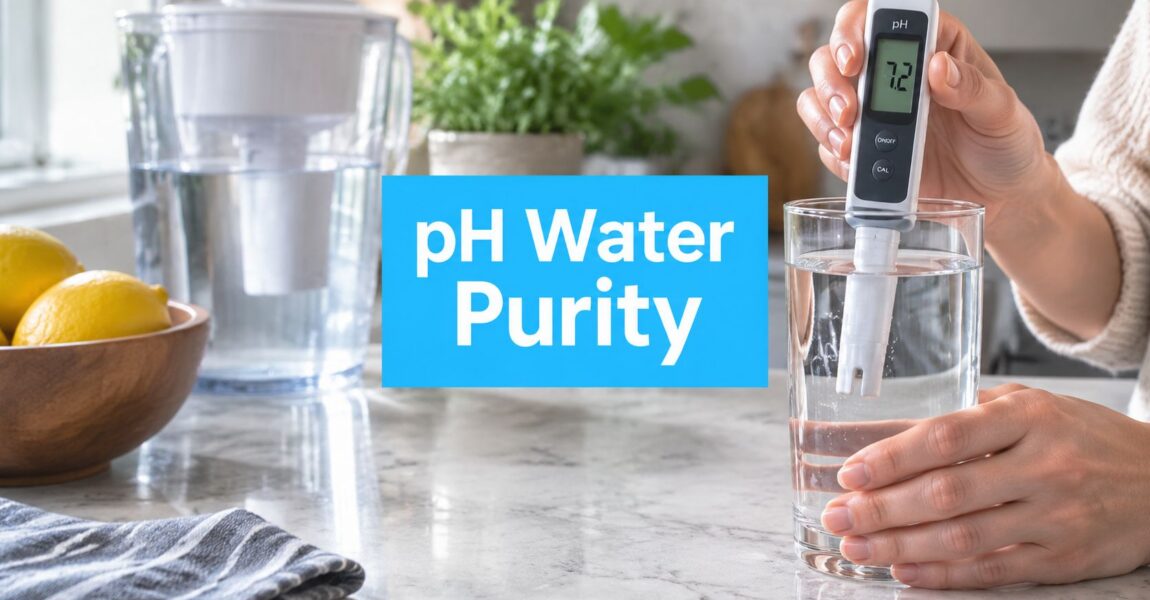
Have you ever bought a pH machine for water expecting it to make your tap water “better,” only to realize you're not even sure whether you needed a tester or a water ionizer? That confusion is common, and it matters, because one device measures water chemistry while the other tries to change it. For a homeowner, those are very different jobs.
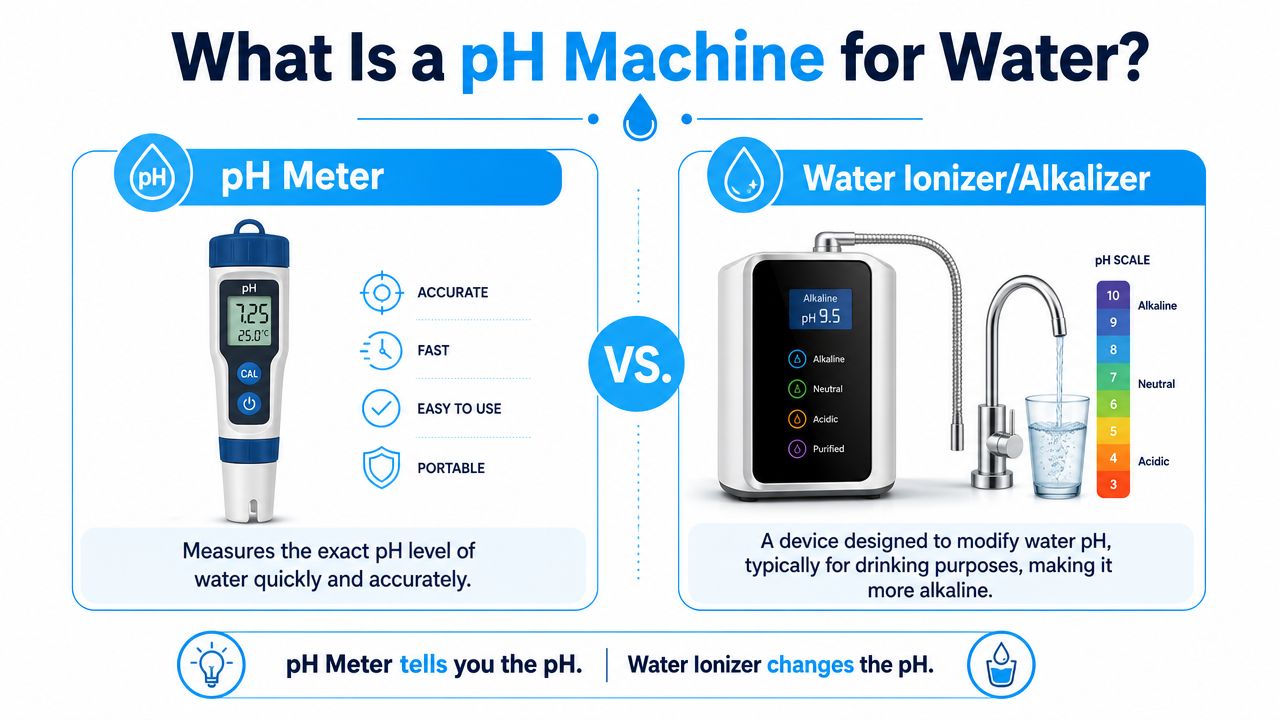
A pH meter is a diagnostic tool. A water ionizer is a treatment-style appliance that alters water chemistry, usually to make it more alkaline. Think thermometer versus furnace, one tells you what's happening, the other tries to change what's happening.
What Is a pH Machine for Water
If you're shopping for a pH machine water setup, the first question is simple, what problem are you trying to solve? If you want to know whether your water is acidic, neutral, or alkaline, you want a meter. If you want a device that changes the water's pH before you drink it, you're looking at an ionizer or alkalizer.
That distinction helps prevent a lot of bad purchases. A meter can tell you whether your water is drifting outside a practical range, but it can't remove lead, chlorine, or microbes. A water ionizer can change pH, but changing pH is not the same thing as cleaning water.
pH Meter versus Water Ionizer
A good mental shortcut is this, a pH meter is like a thermometer, and a water ionizer is like a furnace. The meter reads the water. The ionizer influences it.
Practical rule: If you want evidence, buy a meter. If you want a chemical change, ask whether that change solves the actual water problem.
Here's a quick side-by-side view.
| Feature | pH Meter (Tester) | Water Ionizer (Alkalizer) |
|---|---|---|
| Main job | Measures pH | Changes pH |
| Best use | Testing water quality, filtration checks, troubleshooting | Altering drinking water chemistry |
| Safety value | Helps diagnose corrosion or balance issues | Does not remove contaminants by itself |
| Maintenance | Needs calibration and electrode care | Needs appliance upkeep and correct use |
| Homeowner question | “What is my water doing?” | “Do I want to change how my water tastes or behaves?” |
For homeowners who want a plumbing-first perspective, a solid background in understanding plumbing systems helps make sense of why pH readings show up in corrosion, staining, and appliance wear. The device you choose should match the decision you need to make, not the marketing claim on the box.
Understanding Water pH and Why It Matters for Your Home
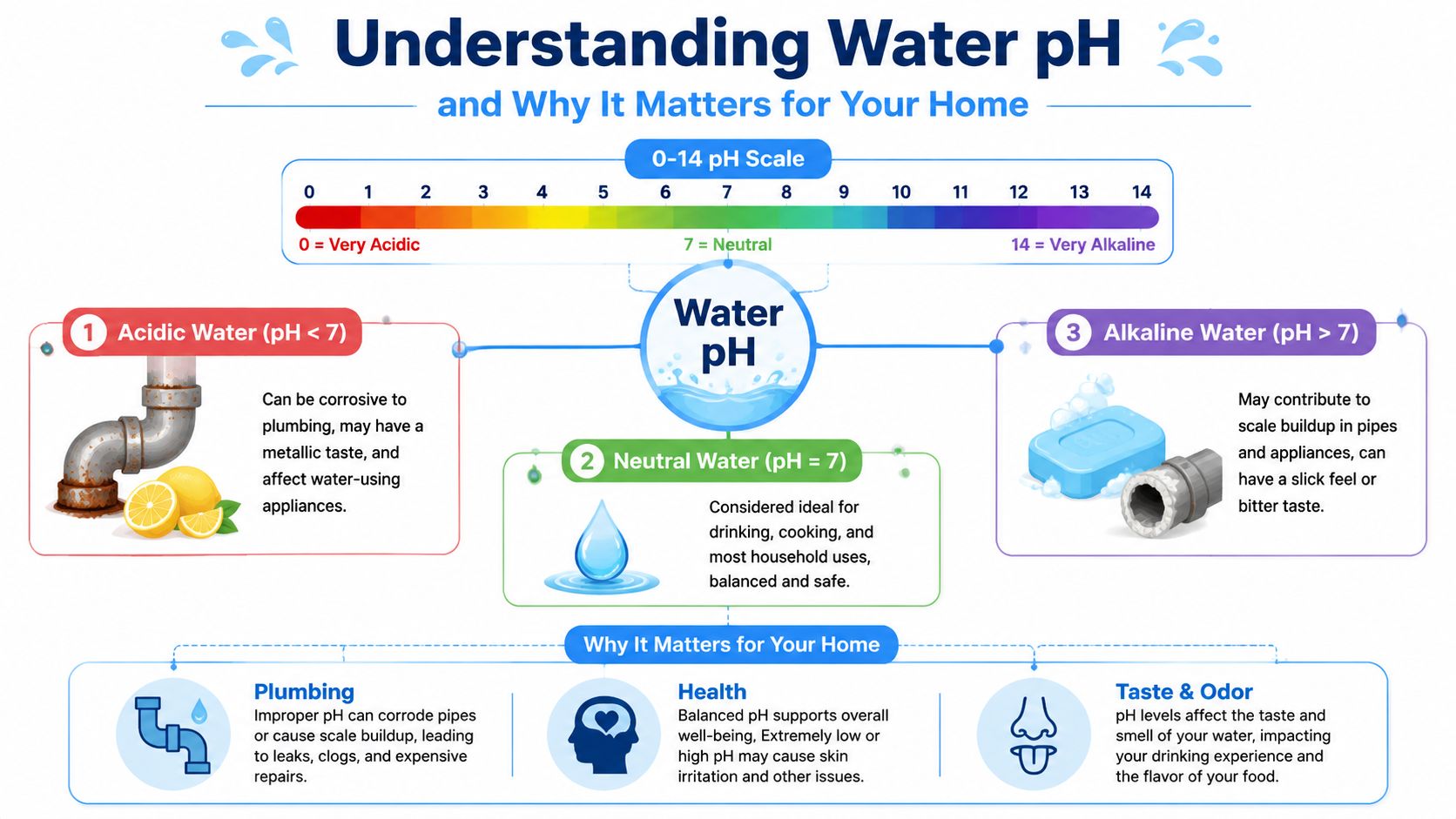
Water pH sits on a 0 to 14 scale, with 7 defined as neutral, and EPA guidance commonly treats 6.5 to 8.5 as a practical drinking-water target range for reducing corrosion and scaling concerns, while Canada's guidance allows 7 to 10.5 (EPA pH factsheet). That range difference is a reminder that pH is a management number, not a universal moral score for water. It's one clue in a bigger chemistry picture.
The easiest way to think about pH is sour versus slippery. Acidic water tends to behave more like a sour liquid, while alkaline water can feel more slippery or soapy. Neither feeling tells you whether the water is safe on its own, but both can signal conditions that affect plumbing and fixtures.
Why low and high pH show up in the house
Low pH water can be a corrosion concern, especially where pipes, fittings, and water-using appliances are involved. High pH water can contribute to scaling, which is the mineral buildup that narrows passages and makes equipment work harder. In both cases, pH is less about a single “good” number and more about what the water is doing to the system.
Water chemistry often shows up first at the faucet, but the damage usually starts inside the plumbing.
That's why pH testing makes sense for a homeowner who is already seeing metallic taste, odd staining, cloudy residue, or fixture buildup. It's also why pH should never be the only test you care about. If you want a practical filtration mindset, pH is the clue, and the plumbing is where the clue becomes visible.
How to Test and Interpret Your Water pH
Start with a clean sample cup, fresh water, and a calibrated meter. Rinse the probe, collect the sample, and let the reading settle before you trust the number. pH can shift with temperature, and low-ionic-strength water can take longer to stabilize, so a rushed reading can give you a misleading result.
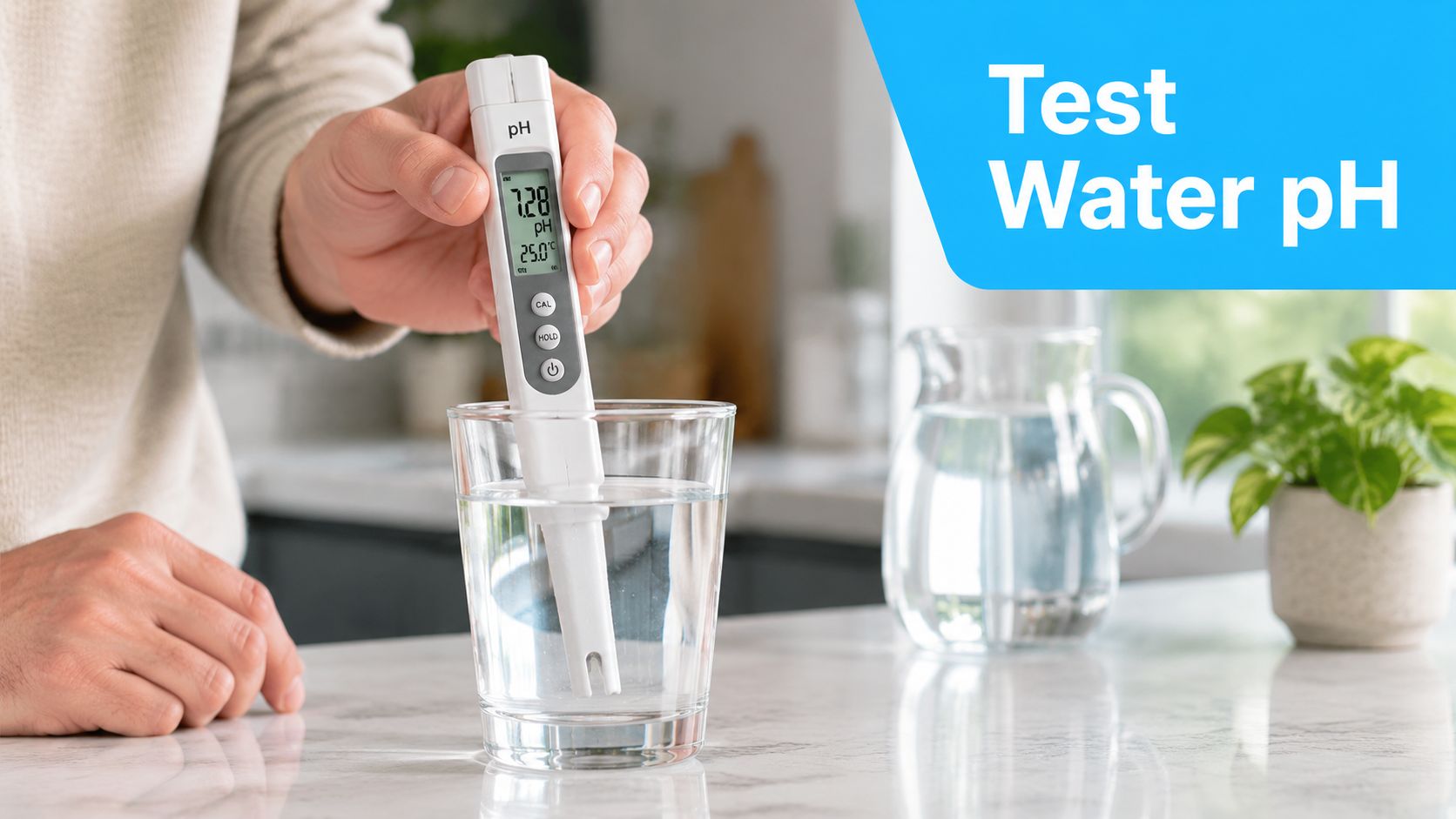
The meter matters, but the setup matters too. EPA Method 150.3 calls for calibration at two pH levels that bracket the sample and are about three pH units or more apart, and the post-calibration check must read within ±0.1 pH units before samples are reported to the nearest 0.1 pH unit (EPA Method 150.3). If the calibration is weak, the reading may look precise while the result is still off.
How to read the number
A low reading raises a practical question about corrosion. Water that is too acidic can be harder on plumbing, fittings, and appliances, so the number is a clue to inspect the system, not a verdict by itself. A high reading points you toward scale, mineral buildup, and the extra strain that can show up in fixtures and equipment.
The pH number does not tell the whole story. Hardness, treatment method, and the materials in your plumbing all affect what that number means in practice.
Helpful habit: Write the reading down with the date, the faucet location, and whether the water was cold or warm. That turns a random number into a trend.
For homeowners, comparison is where a pH meter earns its keep. Test the kitchen tap, a bathroom tap, and, if needed, water before and after filtration. Once you can see where the pH changes, it becomes easier to tell whether the issue is in the plumbing, the source water, or the treatment system.
Keeping Your pH Meter Accurate Calibration and Care
A pH meter is a measuring instrument, not a kitchen gadget you toss in a drawer and trust forever. If the electrode drifts, dries out, or gets contaminated, the number can look neat while the reading is no longer dependable. The EPA says pH meters should be calibrated before analysis and after every 25 samples, and the electrode should never be stored in distilled or deionized water because that can damage the sensing membrane and slow response time (EPA maintenance guidance).
What good maintenance looks like
Calibration means comparing the meter against known buffer solutions so it has a reference for neutral and the other points it uses to interpret a sample. The temperature of those buffers matters too, because a cold buffer and a warm sample do not behave the same way, and that difference can look like a water problem when the meter is really the issue. Use fresh, NIST-traceable buffers and let them come to sample temperature before you trust the reading.
A weak setup gives you a weak result. If the buffers are old, contaminated, or the wrong temperature, the meter starts from a poor reference and every reading after that is easier to doubt.
A few habits make the meter more reliable in real use:
- Rinse carefully: Use deionized water for rinsing between samples, then blot, don't scrub, the electrode.
- Store it correctly: Keep the probe in the manufacturer's storage solution, not plain distilled water.
- Watch for drift: If readings wander or stabilize slowly, recalibrate before you assume the water changed.
- Use fresh buffers: Old calibration fluid can give you a false sense of accuracy.
Slow response is often the first sign that the electrode needs attention. A meter that takes longer to settle may still show a number, but that number is only useful if the probe is healthy and the calibration is current. For a homeowner, that is the practical limit of the tool. It helps you spot corrosion risk, treatment changes, or a shift in source water, but only if the meter itself is being cared for. For broader decisions about filtration, softening, or a combined approach, Good Boy Plumbing residential systems can help you match the equipment to the actual water issue instead of chasing a single reading.
pH Health and Your Water Filtration System
pH is useful in filtration because it helps you ask the right question, not because it answers every water-safety concern. The CDC's home water treatment guidance says to test your water first and then choose a filter based on the specific germs or chemicals present, and if tap water doesn't contain harmful germs or chemicals, a filter may not be needed at all (CDC home filter guidance). That puts pH in its proper place, as one diagnostic variable, not a magic purification score.
If pH is low, one common response in home water systems is a neutralizing approach that raises pH to help protect plumbing. If pH is high, treatment may need to focus on the reason the chemistry is trending that way, not just on changing the reading. A pH adjustment device can improve how water behaves, but it doesn't automatically solve the underlying contaminant problem.
For homeowners comparing equipment, a good place to think through Good Boy Plumbing residential systems is Good Boy Plumbing residential systems, especially if the issue is broader than a single pH number and you're trying to decide between filtration, softening, or a combined approach. That's the right mindset, because the best system is the one matched to the actual water issue in your house.
Simple filter logic: Test first, identify the problem, then pick the treatment that removes or controls that problem.
That's why ionizers can be a distraction when the primary concern is lead, chlorine, iron, or microbial risk. A home can have “better tasting” water and still need actual filtration. pH is part of the map, not the destination.
Choosing a pH Tool and Your Next Steps
If you're buying a meter, prioritize the parts that make the reading dependable. The NSF says once a contaminant or water issue is identified, homeowners should look for a certified treatment solution, and performance data sheets should disclose lab-tested reduction percentages against specific contaminants, which is one of the clearest ways to verify effectiveness (NSF home water treatment guidance). That same evidence-first mindset applies to pH tools.
Buy for accuracy and upkeep
A practical checklist for a home pH meter looks like this:
- Accuracy: Choose a meter with stable, readable results, and don't rely on vague marketing language.
- Ease of calibration: Pick a model that makes calibration simple, because hard-to-calibrate tools get neglected.
- Automatic Temperature Compensation, ATC: Water temperature affects readings.
- Durability and waterproofing: A meter that survives splashes and storage errors is a better long-term buy.
- User reviews and brand reputation: Favor brands with a track record for consistency, not flashy claims.
For the next step, use the reading to guide a real water test. If your pH is low, consider broader testing for metals and corrosion-related issues. If it's high, evaluate hardness and scale-related concerns, then choose treatment based on the actual problem, not on a promise that alkaline water is automatically healthier.
If you want a deeper library of homeowner-friendly troubleshooting ideas, the practical advice at Water Filter Advisor advice can help you compare filtration paths without getting lost in marketing jargon.
If your water test is confusing, start with the basics, get a trustworthy pH reading, then match it to the right treatment instead of guessing. Visit Water Filter Advisor for clear, homeowner-focused help choosing a filtration solution that fits your water, your plumbing, and your budget.
- July 22, 2026
- Uncategorized
