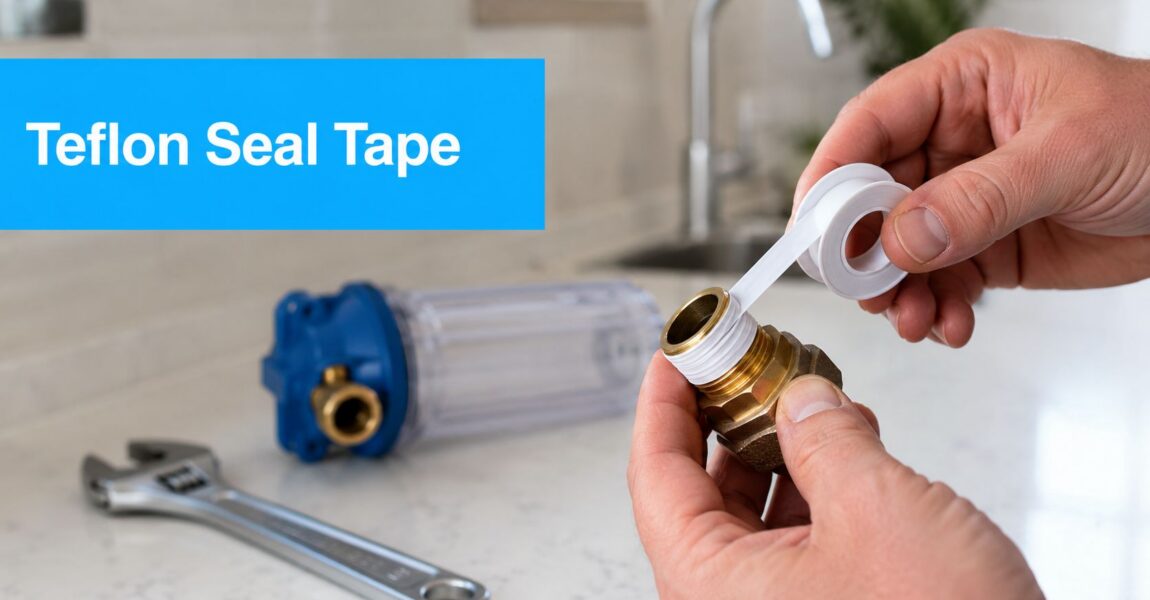
You're standing at the sink with a new filter housing, a wrench in one hand, and that familiar doubt in the back of your mind. If the threads don't seal right, the first clue might be a slow drip now, or a wet cabinet floor later. Teflon seal tape is the small detail that often decides whether a water filter install feels finished or turns into a second trip to the hardware store.
For home plumbing, PTFE tape, Teflon tape, and plumber's tape all point to the same thing, a polytetrafluoroethylene film tape used to seal pipe threads rather than bond surfaces, which matters a lot on water filter housings, adapters, and threaded fittings (thread seal tape overview). That's why the roll looks simple but earns its spot in the toolbox. Used well, it helps a fitting seat cleanly and seal without fighting the threads. Used badly, it can make a leak worse.
For a broader homeowner checklist on filter installs and maintenance, the practical advice on Water Filter Advisor's advice page fits neatly beside the guidance here.
Why This Little Roll of Tape Matters
A water filter install usually starts with confidence and ends with one stubborn threaded joint that refuses to behave. That's where teflon seal tape does its quiet work. It isn't glue, and it doesn't harden the way a paste sealant does. It acts more like a low-friction filler that helps the threads close the tiny gaps that can otherwise become seepage paths.
That matters on under-sink filters, whole-house housings, refrigerator lines, and inline cartridges, because those systems live or die on threaded connections. PTFE's history goes back to 1938, when DuPont chemist Roy Plunkett discovered the chemistry that later became widely used as tape and gasket material because of its chemical inertness and low-friction behavior (PTFE history and plumbing use). In plain language, the tape helps the male thread slide into the female fitting more smoothly while building a better seal.
Practical rule: if the joint seals by thread engagement, tape can help. If the joint seals somewhere else, tape can get in the way.
The other reason this little roll matters is maintenance. Water filters get opened, changed, and reassembled more often than many other plumbing parts. A thin PTFE film helps the parts come apart later without chewing up the threads as badly, which is one reason it became a staple in household plumbing. The material's low surface energy, listed in one specification sheet at 18.5 mN/m, helps explain that slick, non-stick feel around threaded joints (PTFE tape properties).
One more practical note, the tape isn't there to “make up for” a bad fit. It's there to support a good fit. If the fittings are mismatched or damaged, the roll won't rescue the job.
Choosing the Right PTFE Tape for Your Water Filter
The plumbing aisle can make this look more complicated than it is. For most home water filter jobs, a standard white PTFE tape is usually the default choice, because it's the most common general-purpose thread seal tape for water pipework. In many installs, that's enough when the threads are clean and the fitting is normal residential hardware.
Thicker or differently colored tapes exist because different jobs need different handling. Some tapes are made denser for heavier-duty sealing, and some colors are used as a quick visual cue for the intended application. The key is to match the tape to the connection, not to the packaging hype. A filter housing doesn't need a fancy roll if the threads are standard and the seal surface is correct.
| PTFE Tape Color Guide | Primary Use | Density | Potable Water Safe? |
|---|---|---|---|
| White | General water pipework and most household threaded joints | Usually standard | Often, when labeled for potable water |
| Pink | Heavier-duty water line use in some applications | Typically thicker | Often, when labeled for potable water |
| Yellow | Gas line applications where specified | Application-specific | Not the usual choice for drinking water |
| Gray | Specialized uses, often including stainless fittings | Application-specific | Depends on product labeling |
Don't buy by color alone. Buy by the manufacturer's label and the fitting's actual sealing method. The easiest mistake is grabbing a roll because it looks “plumbing-ish,” then discovering later that the connection needed a gasket, not tape.
If you're shopping for a water filter install, look for packaging that clearly says it's appropriate for potable water. That's the detail that matters more than the shade of the spool. The roll should fit the job, the job should fit the joint, and the joint should already be the right kind of threaded connection.
The Art of a Perfect Leak-Proof Wrap
Start with clean, dry threads. If there's old tape hanging off the male fitting, pick it out first. If the fitting has grime, water spots, or thread debris, wipe it clean before you reach for the spool. Tape works best when it can settle into the thread form instead of riding over junk.
The most important part is direction. A technical data sheet notes the tape should be applied in a clockwise direction so the female thread doesn't push it out of the joint during assembly, and it warns that wrapping the wrong way is one of the most common causes of leaks because the tape can strip off the lead thread before full engagement (clockwise application guidance). If the fitting tightens clockwise, wrap clockwise. That way the tape tightens with the joint instead of fighting it.
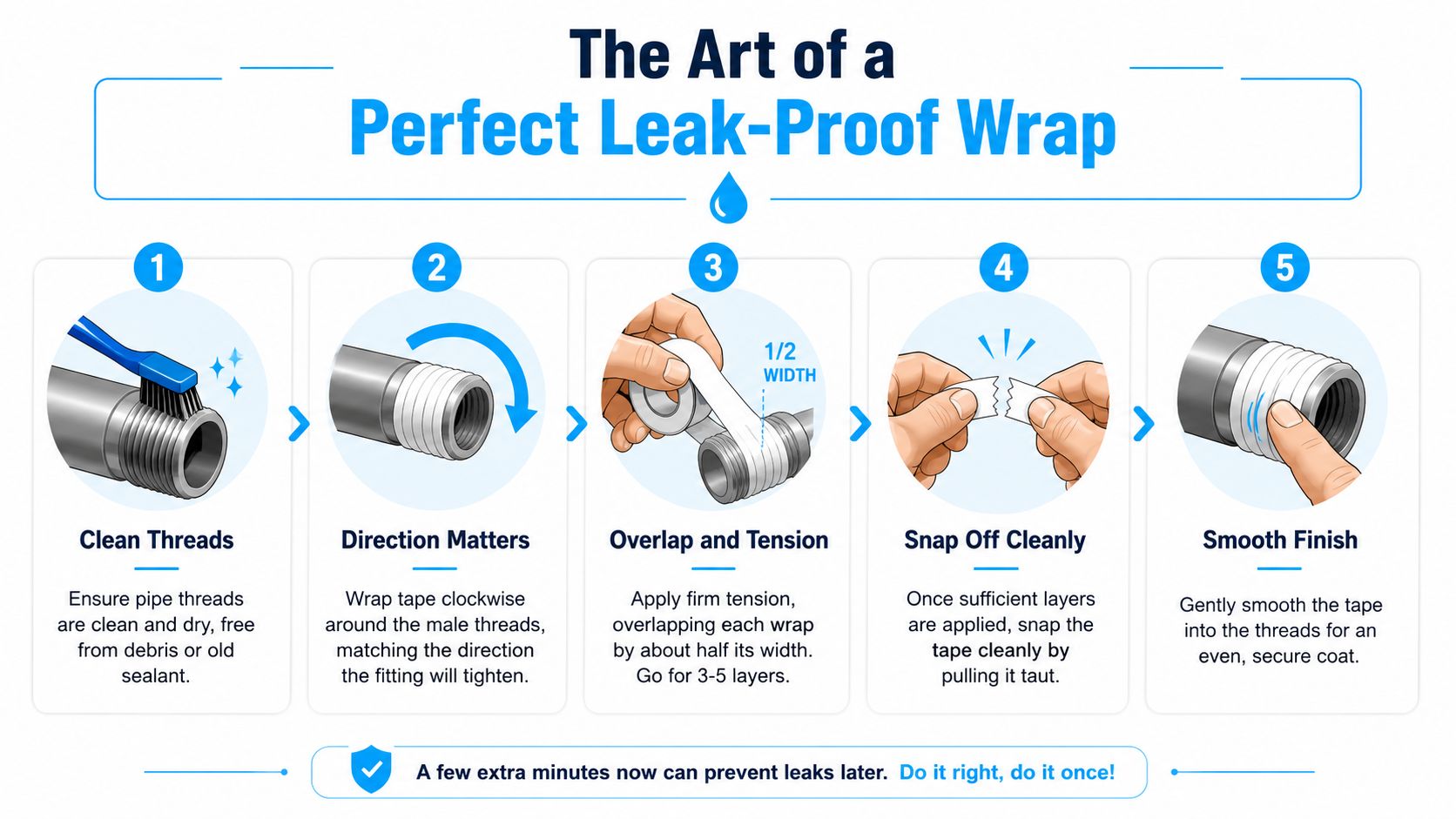
For most water filter fittings, one to a few wraps is the sweet spot. Practical guidance commonly describes 1 to 2 wraps for many connections and 3 to 5 wraps in some heavier-duty applications (PTFE tape use and wrap guidance). Zatkoff's application guidance also describes a one-turn method that starts about 1/8 inch from the thread end, keeps the tape tight, and finishes by snapping the tail cleanly before pressing it down (application standard).
Wrap with tension, not bulk. If the fitting looks swollen before you tighten it, you've probably used too much.
A good example is an under-sink filter housing inlet. Start the tape just back from the end, keep it snug, and let the threads do the work. You want the fitting to feel firm as it seats, not forced. For a related sealing mindset on exposed equipment, container weatherproofing tips are a useful reminder that the right seal depends on the right surface, not just on adding more material.
The last touch matters more than people think. Press the tail of the tape down so it doesn't unravel as the fitting starts to bite. That tiny step often keeps the tape from bunching inside the first turn of the joint.
When NOT to Use Teflon Seal Tape
A lot of DIY leaks start with a good instinct used in the wrong place. The mistake is assuming every threaded-looking connection needs tape. Some water filter parts seal with an internal gasket, an O-ring, a ferrule, a flare cone, or another compression-style design, and those joints are built to seal without extra tape (when not to use tape).
That's especially important on modern water filtration setups. A flexible hose connection under a sink may already rely on its own washer or gasket. A refrigerator ice maker line can also use a fitting that doesn't want thread tape stuffed into the seal path. If you add tape where the part isn't designed for it, you can stop the parts from seating fully and create the very drip you were trying to prevent.
The easiest test is simple. Look for the seal surface. If the connection seals at the flat washer, the cone, the ferrule, or the O-ring, leave the tape alone. If the connection seals by tapered pipe threads, tape may belong there. That distinction saves time, but it also saves fittings from being over-tightened just to compensate for the wrong sealing method.
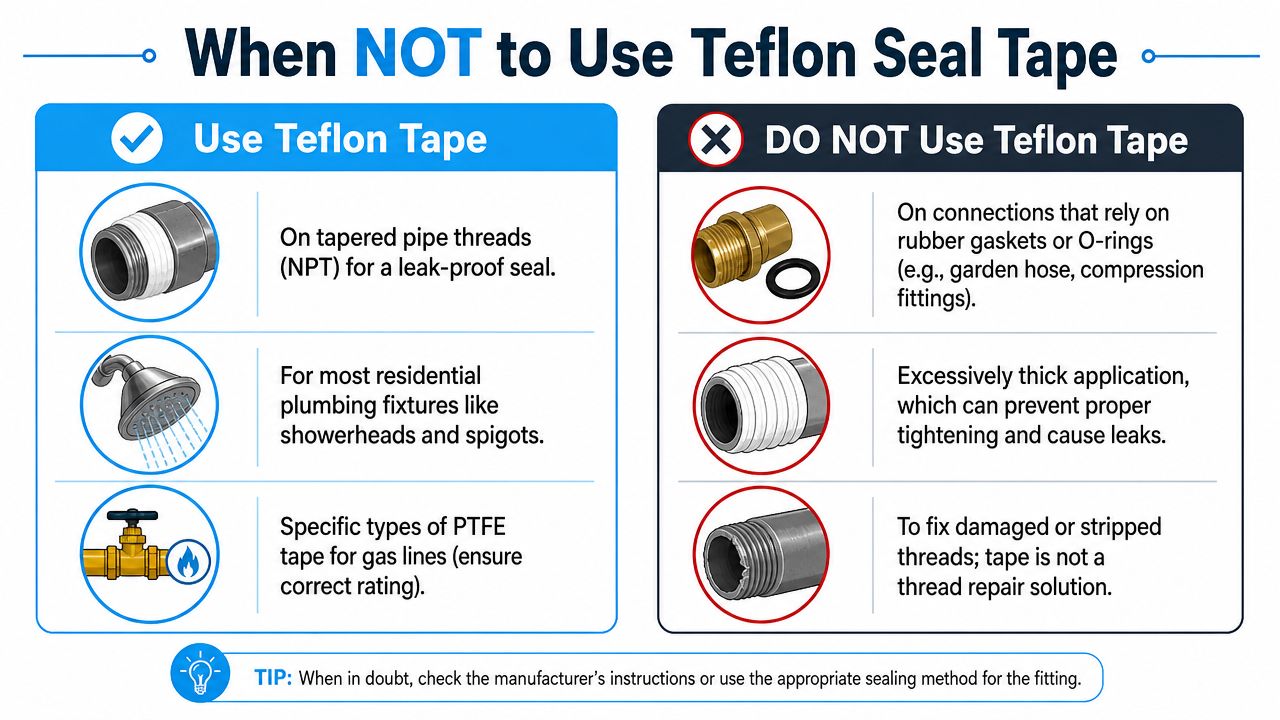
Too much tape can be a problem even on the right kind of joint. Excess thickness can keep the threads from engaging fully, and then the connection tightens before it seats completely. If you've ever felt a fitting stop just short and thought, “that's odd,” tape bulk may be the reason.
Use tape on the joint type it was meant for, not as a reflex. On water filter systems, that one habit prevents more leaks than any fancy trick.
Troubleshooting Drips and Exploring Alternatives
If a joint still drips after you wrapped it, don't assume the tape is cursed. Start with the usual suspects. The tape may have been wrapped the wrong way, the thread may be dirty, or the fitting may have been tightened against damaged threads that the tape can't save.
A second look often solves the mystery fast. If the tape came off in a shredded ribbon, the direction was probably wrong. If the fitting bottomed out too early, there may have been too much tape. If the joint never got snug, the threads may be worn, cross-threaded, or the wrong match for each other. Tape can help a decent thread seal, but it can't repair bad metal or bad plastic.
For jobs where tape isn't giving you the cleanest result, pipe thread sealant, often called pipe dope, is the main alternative. It can be a better fit for imperfect threads because it spreads into the gap as a paste, but it's messier and less pleasant to handle during a cramped under-sink install. If you want a practical comparison that leans into sealing compounds and leak prevention, the guidance from MA Hydraulics Ltd on preventing hydraulic system leaks is worth a look.
The trade-off is straightforward.
- Tape works best on clean, matched threaded joints where you want a dry, tidy application.
- Pipe dope can help more when the threads aren't perfect and you need a paste that fills more irregularity.
- Neither one fixes stripped threads or a fitting that was never meant to seal with threads alone.
If a filter housing still seeps after a careful redo, replace the fitting before you keep stacking more sealant on it. A fresh part is cheaper than cabinet damage.
Is Teflon Tape Safe for Drinking Water?
The PFAS question comes up for a reason. Teflon is a brand name tied to PTFE, and PTFE belongs to the broader fluoropolymer family people often discuss when they talk about PFAS. That can sound alarming, especially in a drinking water system where the whole point is cleaner water.
The more careful answer is that the material is widely used in plumbing because it's stable, inert, and designed for thread sealing, not for dissolving into water. One industry report says Massachusetts DEP said it had not heard a convincing argument that Teflon tape in plumbing fittings contributes significant PFAS, while also noting it's still hard to say with certainty whether specific brands or types contain PFAS and how much, if any, reaches water (PFAS discussion in plumber's tape). That's the right balance to hold, concern without panic.
For drinking water use, the safest practical move is to choose tape labeled for potable water and, when available, look for NSF/ANSI 61 approval. That certification matters because it's the clearest consumer signal that the product is intended for contact with drinking water systems. The certification label won't solve every PFAS debate, but it does give you a better basis for buying the right roll.
The bigger takeaway is simple. Tape is a small component in a system that may have many other materials, fittings, and contamination sources. Keep the focus on the right seal method, the right fitting type, and the right product label, and you'll handle the actual plumbing job without turning the tape roll into the villain.
If you're about to install a filter, replace a housing, or stop a drip that's testing your patience, use this guide at the sink and buy the right tape before you start. For clearer product comparisons, maintenance tips, and water filter guidance you can trust, visit Water Filter Advisor.
- July 23, 2026
- Uncategorized
