If you're on the hunt for the best water filter to remove fluoride, you're likely heading straight for a reverse osmosis system. These are the heavy hitters of home water filtration, capable of knocking out up to 95% of fluoride. Other knockout contenders include filters using activated alumina or bone char. The right champion for your corner really boils down to your home's setup, your budget, and how pure you want your water to be.
Why Even Think About Removing Fluoride From Your Water?
Let's be honest, the whole topic of fluoride in our drinking water is a spicy one, with passionate arguments on all sides. For decades, adding it to city water has been the standard public health play to fight tooth decay. But more and more, people are raising an eyebrow at that one-size-fits-all approach, wanting more control over what’s actually in their glass.
This is precisely why so many are now diving deep into the world of home water filtration. It’s not about dismissing public health; it’s about personal choice and the simple desire for purity. The conversation almost always lands on the type and amount of fluoride we’re consuming every single day.
Natural vs. Added Fluoride
It’s crucial to know that not all fluoride wears the same jersey. First, there's the naturally occurring stuff—a mineral found in rocks, soil, and groundwater. How much of it ends up in your well depends entirely on your local geology.
Then you have the fluoride compounds, like fluorosilicic acid, that are deliberately added to municipal water supplies. Proponents point to decades of dental health benefits, but a growing number of people are raising concerns about the long-term effects of consuming these additives. This distinction is often the starting point for anyone on the quest for a great fluoride filter.
You can see this growing interest reflected in market numbers. The global defluorination systems market was valued at $1.2 billion in 2024 and is projected to hit $2.5 billion by 2033. That kind of explosive growth signals a real shift as people get more hands-on with their home's water quality. You can learn more about the factors driving the water filtration market.
Key Filtration Technologies for Fluoride Removal
Thankfully, science has gifted us several proven ways to kick fluoride to the curb. Your standard carbon filter pitcher from the grocery store isn't going to cut it for this particular job. You need a system specifically designed for it, which usually means one of these three powerhouse methods:
- Reverse Osmosis (RO): This is the undisputed champion. It uses a hyper-fine membrane to physically block tiny fluoride ions. It consistently delivers some of the highest removal rates you can get in a home system.
- Activated Alumina (AA): Think of this media as a fluoride magnet. As water passes through, fluoride compounds get irresistibly attracted to and trapped by the alumina.
- Bone Char (BC): This is a natural, carbon-based media that’s also fantastic at grabbing fluoride through adsorption, along with other troublemakers like heavy metals.
Getting a handle on these technologies is your first step. Each has its own strengths and weaknesses when it comes to cost, maintenance, and overall performance. We’ll break them down so you can figure out what makes the most sense for your home.
How Fluoride Removal Technologies Actually Work
If you're serious about getting fluoride out of your home's water, you have to look past the marketing hype and get down to the science. Your everyday fridge filter or basic pitcher just isn't equipped for this fight. Real fluoride removal boils down to just a few specific technologies designed to target this stubborn compound.
Let's pull back the curtain on the three main methods that actually get the job done. Once you see how they operate, you'll be able to confidently match the right system to your home and your water purity goals.
Reverse Osmosis: The Purity Powerhouse
Think of Reverse Osmosis (RO) like a microscopic bouncer at the most exclusive club in town, but for your water. It uses your home's water pressure to force water through a special membrane with pores so ridiculously small, almost nothing but pure H₂O gets past the velvet rope.
These pores measure around 0.0001 microns. Tiny water molecules can squeeze through, but fluoride ions are physically too big to get on the list. They get stopped at the door, along with a whole gang of other undesirables like heavy metals, salts, and bacteria.
- The Process: Water is pushed up against the RO membrane.
- The Result: Pure, clean water gets through to your glass, while all the rejected contaminants—fluoride included—are unceremoniously washed down the drain.
This is a brute-force approach to purification, and it's incredibly effective, routinely removing over 90% of fluoride. It’s the go-to for anyone who wants the absolute highest level of purity from their tap.
Activated Alumina: The Fluoride Magnet
Next up is Activated Alumina (AA). This one works with finesse. Instead of a physical barrier, think of it as a specialized magnet that’s specifically attracted to fluoride.
Activated Alumina is a highly porous form of aluminum oxide. When water flows over the AA media in a filter cartridge, fluoride ions are chemically drawn to the surface and latch on, pulling them right out of the water stream.
This method is highly selective. It's engineered to target fluoride, arsenic, and selenium, which is exactly why you'll find it in municipal treatment plants in areas with naturally high fluoride. It’s a specialist that does its job exceptionally well.
While factors like water pH can affect its performance, in a typical home filtration setup, Activated Alumina is a reliable workhorse for fluoride reduction.
Bone Char: The Natural Adsorbent
Finally, we have Bone Char (BC), one of the oldest and most trusted methods of water purification around. It’s a natural media made from charred animal bones, and its porous, carbon-based structure is fantastic at adsorbing contaminants, including fluoride.
Much like Activated Alumina, bone char works through adsorption. Its surface contains hydroxyapatite, which has a natural chemical attraction to fluoride ions. As water passes through the filter, fluoride sticks to the bone char media like glue.
This all-natural approach doesn't just stop at fluoride; it's also great for grabbing heavy metals like lead and mercury. For those looking for a proven, chemical-free filtration process for their home, it's a rock-solid choice.
Comparing the Top Fluoride Removal Filter Systems
Alright, you know the science. Now let's get practical and figure out which system actually makes sense for your home. Picking the best water filter isn't just about the highest removal percentage; it's a balancing act between performance, cost, and how much effort you want to put into maintenance.
We're going to put the main contenders in the ring for a head-to-head comparison. I'll break down the real-world trade-offs so you can see why a renter might grab a simple countertop unit, while a homeowner might go all-in on an under-sink system for total peace of mind.
Under-Sink Reverse Osmosis Systems
If you're looking for the undisputed champion of fluoride removal, look no further than an under-sink Reverse Osmosis (RO) system. These units are the gold standard for a reason. Tucked neatly under the kitchen cabinet, they deliver water that’s as pure as anything you can buy in a bottle, right from a dedicated faucet.
The magic is in the RO membrane, which is so fine it physically blocks tiny fluoride ions. This process is incredibly thorough, consistently removing up to 95% of fluoride. It also takes care of other nasty contaminants like lead, chlorine, and arsenic.
Of course, that championship-level performance has its trade-offs. The initial cost is higher than a simple pitcher, and installation requires some basic plumbing comfort. You also need to budget for annual filter changes and understand that RO systems do produce some wastewater as part of the purification process.
Whole-House Filtration Systems
Want fluoride-free water from every single tap in your house? From the kitchen sink to your morning shower? A whole-house system is the ultimate setup. These large-and-in-charge units get installed right where your main water line enters your home, treating every drop of water before it goes anywhere else.
Most whole-house filters built for fluoride removal use large tanks packed with Activated Alumina or Bone Char. Because they're so big, they can handle a massive volume of water without your water pressure taking a hit. The filter media also lasts a long, long time—sometimes only needing a change every few years.
Key Insight: Think of a whole-house system as a major home upgrade. It's a serious investment, but it's perfect for homeowners who live in areas with high fluoride levels and want complete protection for drinking, cooking, and even bathing.
The biggest hurdles are the steep upfront cost and the need for a professional plumber to install it. This isn't a casual weekend DIY project. But once it's in, you get total, set-it-and-forget-it purification for your entire home.
Countertop Water Filters
Countertop filters hit a fantastic sweet spot. They give you powerful filtration without needing to get under the sink with a wrench. These units sit on your counter and hook up to your existing faucet, making them a go-to choice for renters or anyone who wants to avoid permanent plumbing modifications.
The best countertop models use multi-stage cartridges that often include Activated Alumina, Bone Char, or even compact RO technology. They pack a serious punch, often cutting fluoride levels by 85-90% or more—not far off from their under-sink cousins.
Sure, they take up some counter space, but their plug-and-play simplicity is a huge plus. You get near-RO performance with the flexibility to install it in minutes and take it with you when you move.
Water Filter Pitchers and Dispensers
For an easy entry into the world of fluoride removal, you can't beat specialized water filter pitchers and gravity-fed dispensers. They're inexpensive, require zero installation, and are totally portable. But the key word here is specialized.
Your standard carbon pitcher (like a basic Brita) will not remove fluoride. You have to get a model that specifically states it uses Activated Alumina or another fluoride-grabbing media.
While they're incredibly convenient, their performance is limited. The cartridges are small and need frequent replacement, so the long-term cost can add up. They're best for one person or a small household that doesn't use a lot of water and values convenience above all else.
This infographic shows a close-up of activated carbon filter cartridges, which are common in many basic water filters but are not effective for fluoride removal.
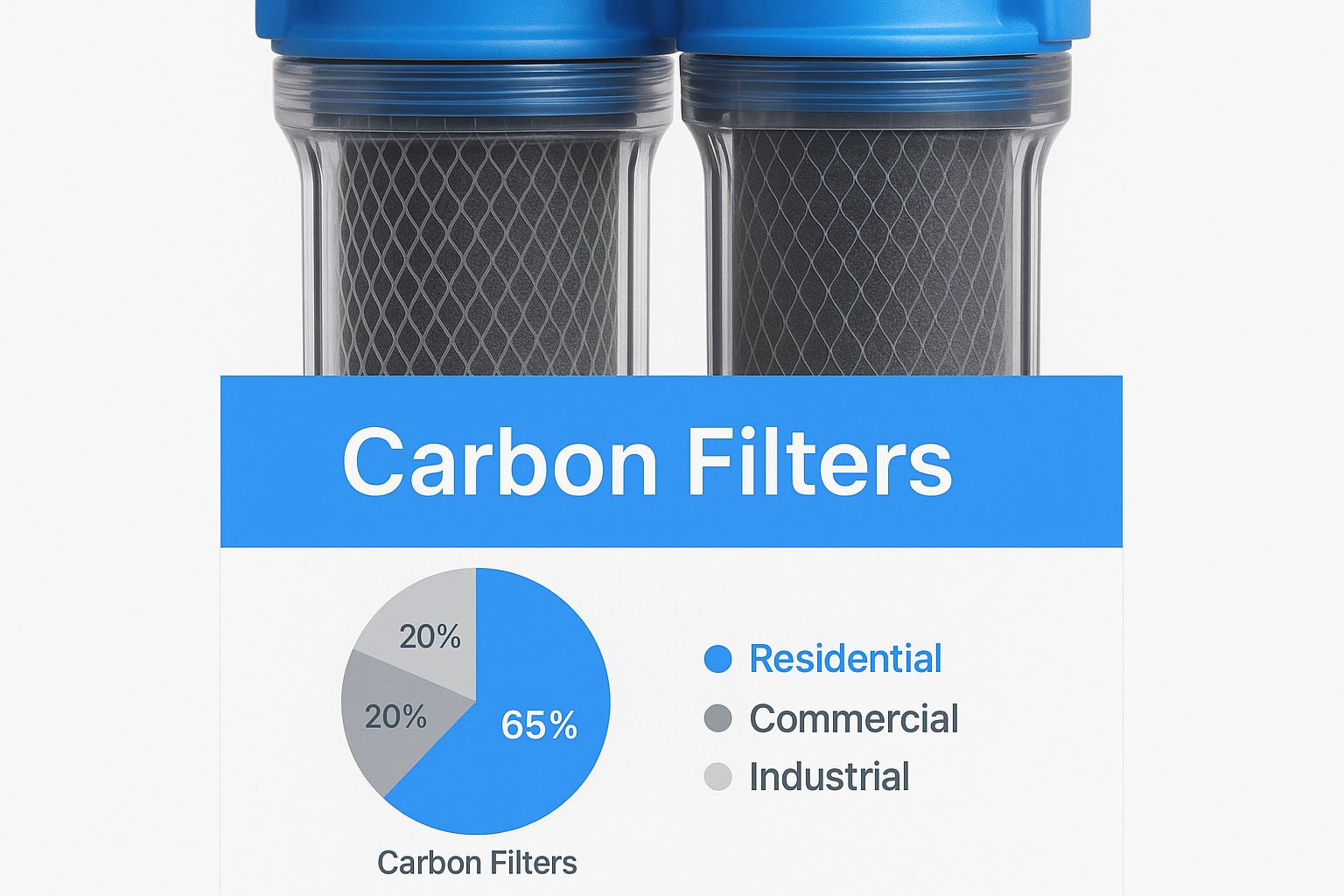
The image highlights that while carbon is great for taste and odor, specialized media is required to target dissolved minerals like fluoride.
Making the Right Choice: A Financial Snapshot
To really understand the best option for your home, we have to look beyond the sticker price and consider the total cost of ownership. That cheap pitcher can get surprisingly expensive when you're buying a new filter every two months for a family of four.
The market shows people are serious about getting this right. Reverse osmosis is widely seen as one of the most effective methods, with studies confirming it can slash fluoride concentrations by over 90%. This demand is fueling a huge industry; the global water purifier market hit $50.02 billion in 2025 and is expected to climb to $83.54 billion by 2032. You can dig into more data on the water purifier market's growth and trends.
Let's put all the numbers side-by-side to make this crystal clear.
Fluoride Water Filter System Comparison
This table breaks down the real-world differences between each filter type, helping you match a system to your budget, living situation, and purification goals.
| Filter System Type | Primary Technology | Fluoride Removal % | Initial Cost | Annual Maintenance | Best For |
|---|---|---|---|---|---|
| Under-Sink | Reverse Osmosis | 90-95% | $200 – $600 | $75 – $150 | Homeowners wanting maximum purity at the kitchen sink. |
| Whole-House | Activated Alumina | 85-95% | $800 – $3,000+ | $100 – $400 | Homeowners seeking comprehensive, whole-home fluoride removal. |
| Countertop | AA, BC, or RO | 85-90% | $100 – $400 | $100 – $200 | Renters or anyone needing a powerful, non-permanent solution. |
| Pitcher/Dispenser | Activated Alumina | 80-90% | $40 – $100 | $150 – $250 | Individuals or small households prioritizing portability and low initial cost. |
Seeing it laid out like this really highlights the trade-offs. An under-sink RO system, while more expensive up front than a countertop unit, often has a similar or even lower annual maintenance cost. For homeowners, that means it delivers better long-term value and superior performance where you need it most—your drinking water.
Choosing the Right Filter for Your Home
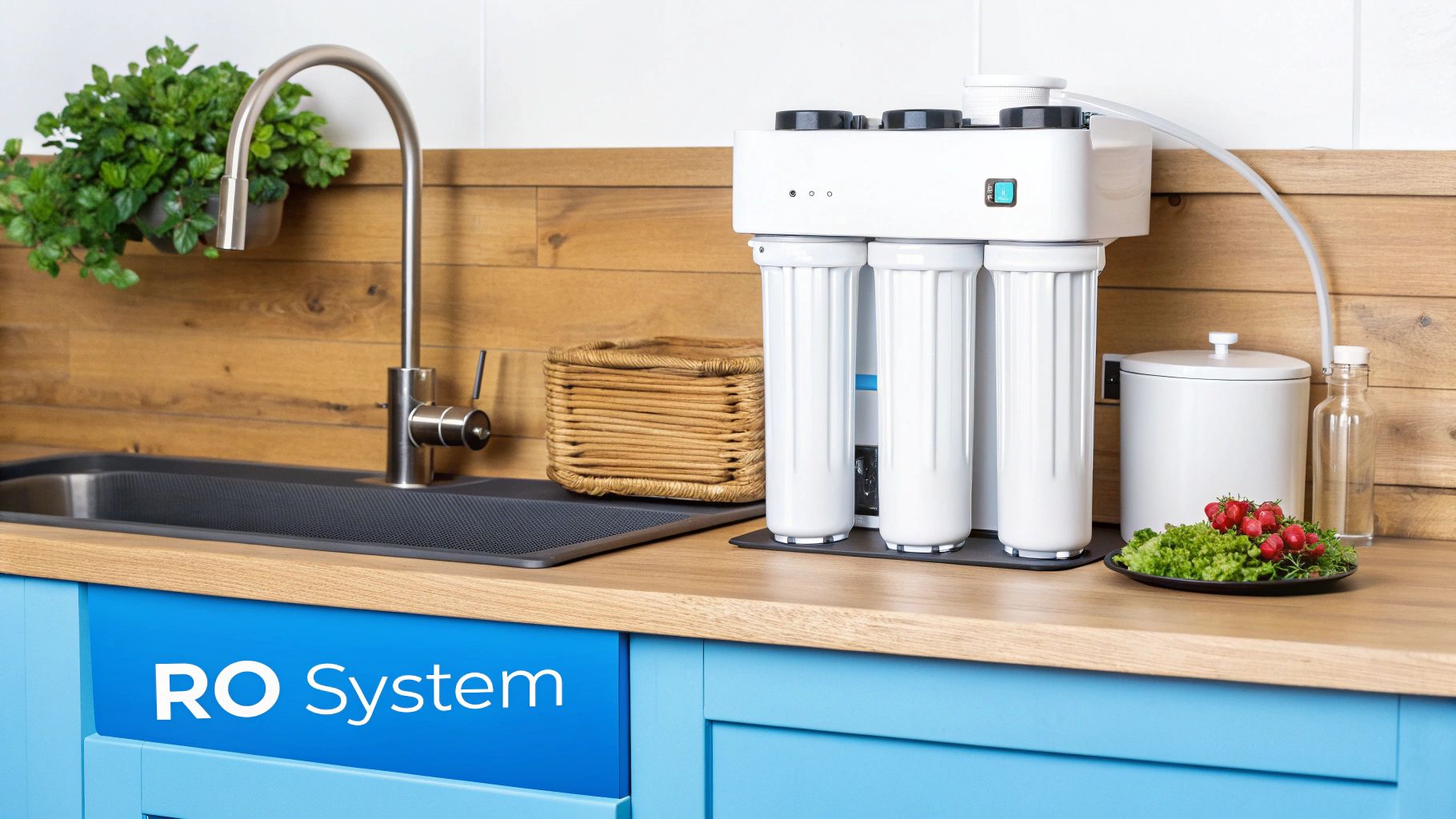
Looking at technical specs and fluoride removal stats is a great start, but those numbers don't paint the whole picture. The best filter for you is the one that fits seamlessly into your life and meets your family’s specific needs. It's less about finding a perfect system on paper and more about finding the perfect fit for your home.
This means we need to translate all that data into a real-world decision. A high-powered reverse osmosis system might look amazing in a chart, but it’s a total non-starter if you’re renting an apartment. Let's dig into a few common home scenarios to find your match.
For the Renter or College Student
Living in a rented space means permanent modifications are a big no-no. You can’t exactly drill holes in a countertop or mess with the plumbing without kissing your security deposit goodbye. In this case, portability and non-permanent solutions are your best friends.
Your top choices are going to be countertop filters or specialized fluoride-removing pitchers.
- Countertop Filters: These are a fantastic middle ground. They often use the same powerful filtration media as bigger systems (like activated alumina or bone char) but in a compact unit that just hooks up to your faucet. Installation takes minutes, and when you move out, you just unhook it and take it with you.
- Fluoride-Removing Pitchers: For pure simplicity and the lowest upfront cost, you can’t beat a specialized pitcher. The key here is to get one that specifically targets fluoride—your average carbon pitcher won't cut it. They’re perfect for one person or a small household with fairly light water usage.
The trade-off is clear: you're sacrificing capacity for convenience. You'll be refilling pitchers or changing filters more often, but the flexibility is unbeatable for a temporary home.
For the Small Family in Their First Home
Once you own your home, the game changes. For a family of three or four, the amount of water you use for drinking and cooking goes way up, and refilling a pitcher constantly becomes a real chore. This is the perfect time to look at an under-sink reverse osmosis (RO) system.
An under-sink RO system is a true home upgrade. It gives you a steady supply of highly purified water from its own dedicated faucet right at the sink. Yes, there's a higher upfront cost and some basic DIY plumbing involved, but the long-term payoff is huge.
By installing a filtration system right at your main point of use—the kitchen—you get the highest level of fluoride removal where you need it most. You get all the benefits without the major expense of a whole-house unit, and the yearly maintenance is often cheaper than buying a year's worth of pitcher filters for a family.
This solution really hits the sweet spot, balancing powerful filtration, long-term value, and everyday convenience for a busy family home.
For the Health-Conscious Homeowner
If your goal is to remove fluoride and other contaminants from every single drop of water in your house, then a whole-house system is the ultimate answer. This is for the homeowner who wants fluoride-free water for more than just drinking—we’re talking about bathing, showering, and even washing clothes.
A whole-house filter is a significant investment, installed right where the main water line enters your home to treat everything. These systems typically use massive tanks of activated alumina or bone char that can last for years before needing a media change, so maintenance is pretty hands-off.
But before you jump in, consider a few things:
- High Initial Investment: This is easily the most expensive option and usually requires a professional plumber to install.
- Space Requirements: You’ll need a decent amount of space for the tanks, typically in a garage, basement, or utility closet near your main water line.
- Complete Coverage: The payoff is that every tap in your house delivers filtered water. This is a huge plus for people with sensitive skin or those concerned about chlorine exposure in the shower.
Choosing the right system really comes down to matching the technology to your lifestyle. And if you want to look beyond just fluoride, a friendly guide to choosing the best water filter for home use can help you weigh all the options. When you find the right one, it stops feeling like just another appliance and becomes a natural part of your home.
Installation and Maintenance Insights
Picking the right water filter to get rid of fluoride is a big win, but the job isn't done yet. Nailing the installation and keeping up with maintenance is what ensures your system delivers clean, pure water day after day. It's just like owning a great car—you need a proper setup and regular tune-ups to keep it running perfectly.
The initial setup can be a quick five-minute job or a more involved weekend project, all depending on the filter you choose. A countertop unit, for instance, is usually a simple plug-and-play deal. Just screw a small diverter valve onto your kitchen faucet, and you're good to go. No tools, no permanent changes.
On the other hand, an under-sink reverse osmosis system is a bigger commitment. This job usually means drilling a hole in your countertop for its own dedicated faucet and tapping into your cold water line and drain. Many homeowners with some basic DIY skills can tackle this, but it’s one of those tasks where you have to pay close attention to the details.
Navigating the Installation Process
The complexity of the installation really comes down to the type of system you bought. Let’s break down what to expect with each.
- Pitchers and Countertop Units: These are by far the easiest. A pitcher needs zero installation, obviously. A countertop filter just needs its hose connected to your faucet's aerator threads—a tool-free task anyone can knock out in minutes.
- Under-Sink Systems: Here’s where you’ll need a few basic tools, like a drill and a wrench. The instructions are usually clear, but you need to be okay with working in that cramped cabinet under the sink and shutting off your water for a bit.
- Whole-House Systems: Now we're talking about a real project. These systems get plumbed directly into your main water line, which means cutting into your home's primary pipes. This is almost always a job for a pro.
If you’re looking at a more complex installation or just aren't comfortable with plumbing, calling in professional plumbing services is a smart move. It ensures everything is set up correctly and saves you from the headache of leaks later on. It's a small price to pay for peace of mind.
The Critical Role of Ongoing Maintenance
Once your filter is installed and running, your focus has to shift to upkeep. A neglected filter doesn't just stop working; it can become a breeding ground for bacteria and might even start releasing trapped contaminants back into your water. Following the manufacturer’s maintenance schedule isn't just a suggestion—it's essential.
The most important task is changing the filter cartridges on time. Every filter has a lifespan, measured either in months of use or the number of gallons it has cleaned. If you ignore this schedule, you’ll see a major drop in fluoride removal.
Key Takeaway: The single best thing you can do is set a calendar reminder for your filter changes. It’s simple but incredibly effective. An expired filter isn't protecting your family anymore; it’s just taking up space under your sink.
It's also a good idea to sanitize your system regularly, especially if you have a reverse osmosis unit. This usually means running a special sanitizing solution through the system about once a year to flush out any microbial growth and keep your water tasting fresh and clean. For more in-depth checklists and tips, checking out a dedicated water filter advice resource can give you some great guidance for your specific model.
Finally, make it a habit to check all the connections and fittings for leaks, particularly right after installing an under-sink or whole-house system. A tiny, slow drip can easily go unnoticed and cause a ton of water damage over time. Proper upkeep is what guarantees your investment keeps providing the safe, fluoride-free water your family deserves.
Common Questions About Fluoride Water Filters
Even after digging into the different filter types, you probably still have a few questions buzzing around. That's completely normal. Choosing the right filter for your home is a big deal, and you want to be sure you have all the facts straight. Let's tackle some of the most common questions we get about fluoride filtration.
We’ll give you clear, straightforward answers to help you separate myth from reality. Our goal is to make sure you have everything you need to confidently pick the best filter for your home.
Do Regular Pitchers Like Brita Remove Fluoride
This is easily the most common question we hear, and the short answer is no. Standard pitcher filters, including most models from Brita, use basic activated carbon. While that's great for getting rid of chlorine and improving taste, it doesn't touch dissolved minerals like fluoride.
Fluoride's chemical structure is tough to break down. To actually remove it, you need a system built for the job—think reverse osmosis, activated alumina, or bone char. These technologies are specifically designed to target and capture those fluoride ions.
Does Boiling Water Get Rid of Fluoride
Here’s another big misconception. Many people assume boiling purifies water of everything, but it actually does the opposite—it makes the fluoride concentration even higher.
It's a simple process, really:
- When you boil water, pure H₂O turns into steam and escapes.
- All the dissolved stuff, including fluoride, gets left behind.
- You end up with the same amount of fluoride in a smaller volume of water, which means it’s more concentrated.
Boiling is a great way to kill germs, but if you're trying to reduce fluoride, it's the last thing you want to do.
How Can I Test if My Filter Is Working
The only way to be 100% certain your filter is doing its job is to test the water yourself. You can get a decent idea with an at-home testing kit designed to detect fluoride. It’s a good first step to see if your system is performing as expected.
For dead-on accuracy, your best bet is to send a sample to a certified lab. Test your tap water first, then test the filtered water. This side-by-side comparison shows you the exact reduction percentage and proves your system is working like it should.
This is also a smart way to figure out when your filter cartridges are getting old and need to be swapped out.
Are There Downsides to Removing Minerals with an RO System
Yes, that’s a valid concern. Reverse osmosis is so thorough that it strips out nearly everything, including beneficial minerals like calcium and magnesium. Some folks worry about the health implications of drinking demineralized water long-term.
The good news is that most modern RO systems have a fix for this. Many now come with a remineralization filter as the very last stage. This little cartridge adds a healthy mix of essential minerals back into the water, which makes it better for you and improves the taste.
At Water Filter Advisor, we're dedicated to helping you find the perfect water filtration solution for your home. Explore our in-depth guides and reviews to make a confident choice. Learn more at https://www.waterfilteradvisor.com.
- October 3, 2025
- 0
- Uncategorized
