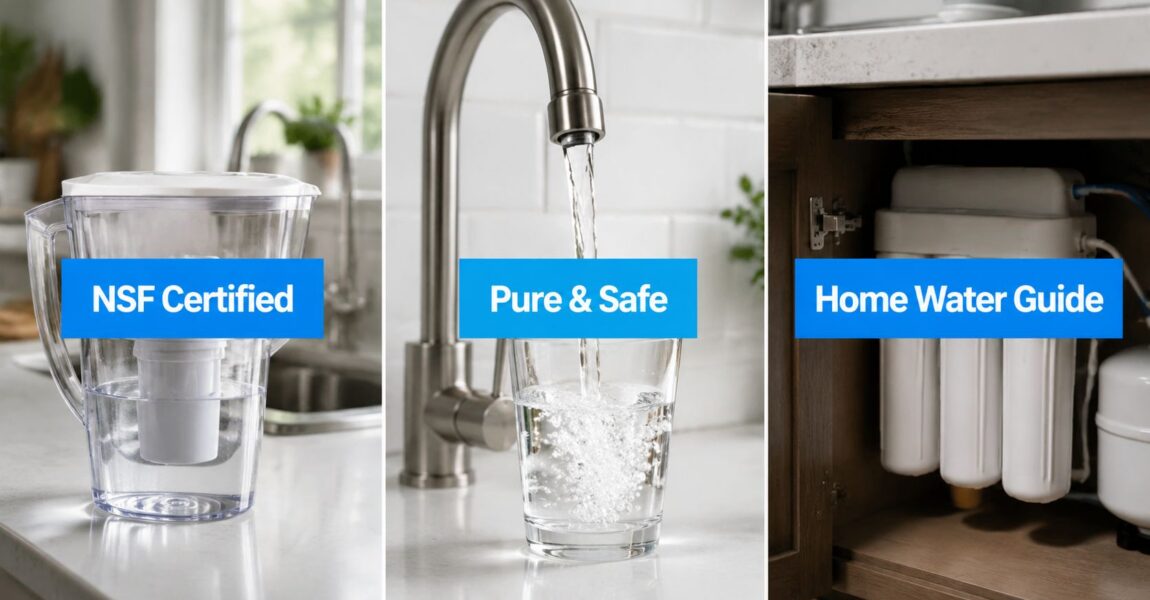
A water filter NSF certified sticker looks reassuring at first glance, but the sticker alone doesn't tell you what the filter does. That's the part most homeowners miss at the kitchen counter, and it's why two products can both wear an NSF mark while protecting your household in very different ways. If you want cleaner-tasting water, lower lead risk, or a reverse osmosis system that matches a specific contaminant concern, you have to read the label with more precision than the marketing copy invites.
The popular advice is too simple. “Look for NSF” sounds helpful until you realize certification is tied to a specific standard, a specific contaminant, and a specific model listing, not a universal approval stamp. If you already think of filtration the way you'd think about HVAC filters, Can Do Duct Cleaning air quality is a useful parallel resource, because the same habit applies, the label matters more than the logo.
Why an NSF Mark Is Not a Blanket Safety Guarantee
A homeowner can buy a pitcher filter, see an NSF sticker, and assume it handles lead. That assumption is exactly how people end up overtrusting a product that was certified for taste and odor instead. The NSF mark is real, but it isn't a shortcut around reading what the certification covers.
What the mark really means
NSF says NSF/ANSI 42 covers aesthetic effects like chlorine, taste, and odor, while NSF/ANSI 53 covers health-related contaminants, and both rely on adsorption or filtration as the core mechanism (NSF consumer standards guide). That distinction is the heart of the buying decision. A filter certified to 42 may make water taste better, but that doesn't automatically mean it reduces contaminants like lead.
Practical rule: If the box doesn't name the contaminant and the standard together, don't assume the filter covers the problem you care about.
This is why a countertop label can be technically honest and still mislead a hurried shopper. The product may be certified, just not for the thing on your mind. If your goal is better-tasting water for coffee, 42 may be enough. If your goal is health-related contaminant reduction, you need the standard to say so plainly.
Why homeowners confuse certification with general approval
The confusion is understandable because “certified” sounds global. In reality, certification is closer to a targeted promise than a blanket endorsement. A filter can earn certification for one claim and still leave other claims untouched.
That's also why filters for air and water cause similar confusion. In home comfort, a product can improve one outcome without covering every concern, and the box rarely explains the limits clearly enough. The safer habit is to ask, “Certified for what, exactly?” before you pay for the brand story.
The Core NSF/ANSI Standards Every Homeowner Should Know
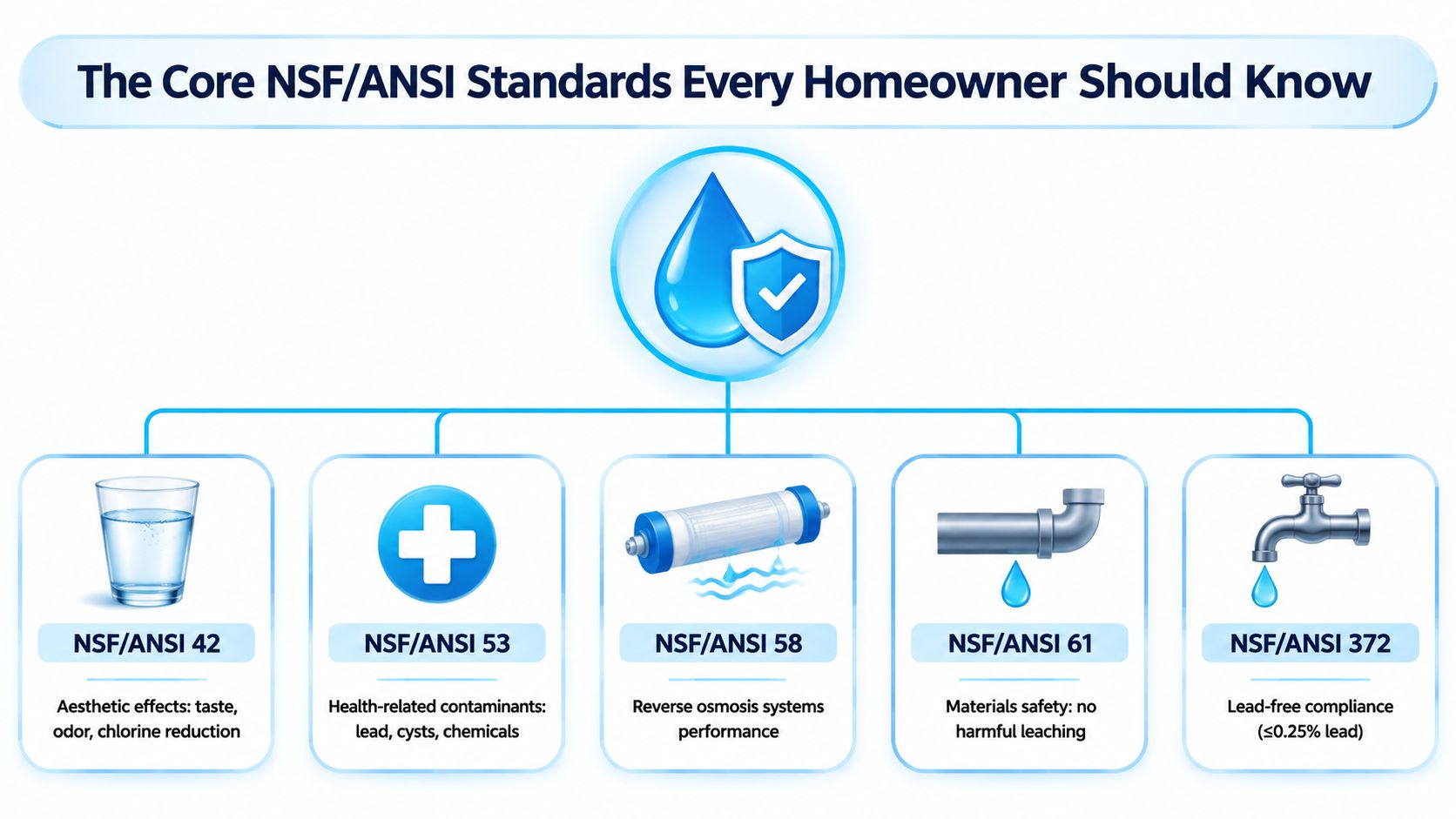
A filter box can say “NSF certified” and still leave you guessing. The useful question is which NSF/ANSI standard appears next to that claim, because the standard tells you what the product was tested to do. That is the difference between a general sticker and a model-specific certification that lines up with the problem in your kitchen.
For homeowners, the main standards to watch are 42, 53, 58, 61, and 372. Each one answers a different question, and they do not overlap as much as the packaging suggests. If you read them one by one, the label starts to make sense.
A quick hierarchy for reading the box
NSF/ANSI 42 works like a taste and odor fix. It is the one to look for when chlorine smell is the complaint and the water is otherwise acceptable.
NSF/ANSI 53 serves as the health protection layer. It is the standard you want when the concern is lead or another contaminant named on the product's certification, and that is where a listing such as NSF lead reduction listings becomes useful for checking what a model is approved to reduce.
NSF/ANSI 58 sits in a different lane. It applies to reverse osmosis systems, so when a homeowner compares under-sink RO units, this is the standard that shows the whole system was tested as an RO product, not just as a cartridge.
NSF/ANSI 61 covers materials safety, which matters because the parts touching your water should not add harmful substances of their own. NSF/ANSI 372 addresses lead-free compliance, which is about the lead content of the components, not the contaminant level in the water after filtration.
A good label does more than say the product is certified. It names the job that certification covers.
A simple way to match the standard to the household problem
If the water smells like chlorine, start with 42. If you are worried about contaminants that affect health, look for 53. If you are considering reverse osmosis, check for 58. If you want confidence in the materials and plumbing components, note 61 and 372 as part of the full picture.
That is also why certification language should be read like a map, not a slogan. A homeowner who only sees “certified” can miss the question of whether the claim matches the contaminant and the device in front of them. A filter may be certified for one job and offer no answer for another.
NSF International's role in this system goes back to the 1970s, when it helped develop the American National Standards for drinking water treatment materials and products, which later became the basis for standards such as NSF/ANSI 53 and NSF/ANSI 58. That history matters because the standards were built for specific performance claims, not for vague shelf appeal. They give buyers a way to compare labels with more confidence, especially when a product page also explains what what third party verification means.
How Certification Testing Works Behind the Scenes
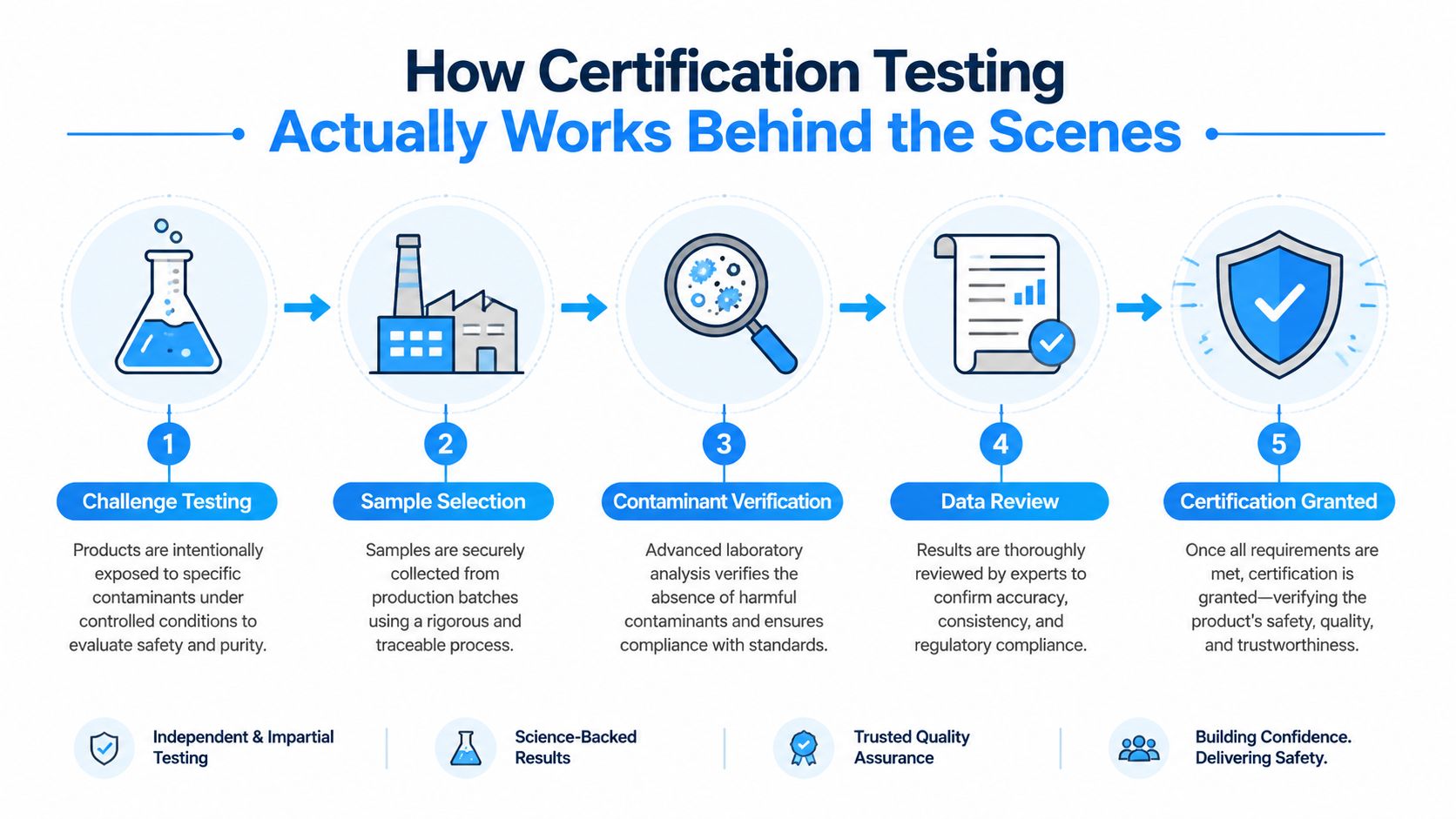
A certification mark is earned in a controlled test, not handed out because a box says the right words. The lab is trying to answer a practical question: does this filter still perform when the challenge is harder than the water in a typical kitchen sink?
Why the testing gets tougher than normal use
Certification testing is designed to pressure the product. For NSF/ANSI 53 lead reduction, the challenge water has been made stricter over time, and NSF's listings show the current lead-reduction claims tied to those tougher conditions (NSF lead reduction listings). That means the test does not copy normal household water, it pushes the filter beyond it so the mark has real meaning.
That setup helps buyers, because it separates a real performance claim from a marketing claim. A filter that passes under harsher lab conditions has earned something specific, but the label still only applies to the exact standard and contaminant it was tested for. A homeowner reading the package should treat the certification the way a mechanic treats a part number, the match has to be exact.
Why lab results and house results don't always match
A review in the peer-reviewed literature looked across 23 studies and 1,678 tested devices and found that most devices passed the NSF benchmark overall. It also found stronger results in field-installed filters than in lab-only testing, while the lab setting showed more failures (peer-reviewed review).
That difference does not mean the certification is weak. It means installation, water chemistry, and day-to-day use can change how a filter behaves after it leaves the lab. A pitcher, faucet unit, and under-sink system are all certified through the same general idea, but they do not live the same life once they reach a real home.
The cleanest way to read that gap is to separate proof of performance from proof of setup. What third party verification means is that an outside body checks the claim under defined conditions, while the homeowner still has to install, use, and maintain the product correctly.
How to Verify a Water Filter NSF Certified Claim Yourself
The safest habit is plain and practical. Match the exact model number to the exact listing in the official database before you trust the package. That takes less time than comparing box colors, and it avoids the most common mistake, assuming a whole brand is covered when only one version is.
The check that matters most
NSF's own guidance tells consumers to confirm the product listing and the specific contaminant reduction claim in the official database, because certification belongs to a standard and a named contaminant, not a generic “NSF certified” sticker (NSF verification guidance). A label can look official and still leave out the part that matters to your home.
Start with the model number on the cartridge, faucet, pitcher body, or performance sheet. Then compare it with the official listing. If the listing shows the same model but a different contaminant claim, do not assume the stronger claim applies to the unit in your kitchen.
What to compare on the box and in the listing
Look for the standard number first. Then look for the contaminant name. Then make sure the model number matches exactly. If one of those pieces is missing, the claim is weaker than it looks.
- Exact Model Match: The listing should show the same model number you are buying.
- Standard Number: The box should identify the relevant NSF/ANSI standard, not just say certified.
- Named Contaminant: The certification should connect to the contaminant you care about.
- Current Listing: If you are unsure, check that the entry is active and current.
- Whole Product, Not a Part: Make sure the certification applies to the system you are installing.
The same habit works with any filter type. A pitcher, faucet unit, and under-sink system can all carry a credible mark, but the mark only means something when the model and the tested claim line up. Reading the box this way is like checking a recipe against the exact ingredients in your pantry. The label may point you in the right direction, but the details decide whether the fit is real.
Marketing Claims and Labeling Pitfalls to Watch For
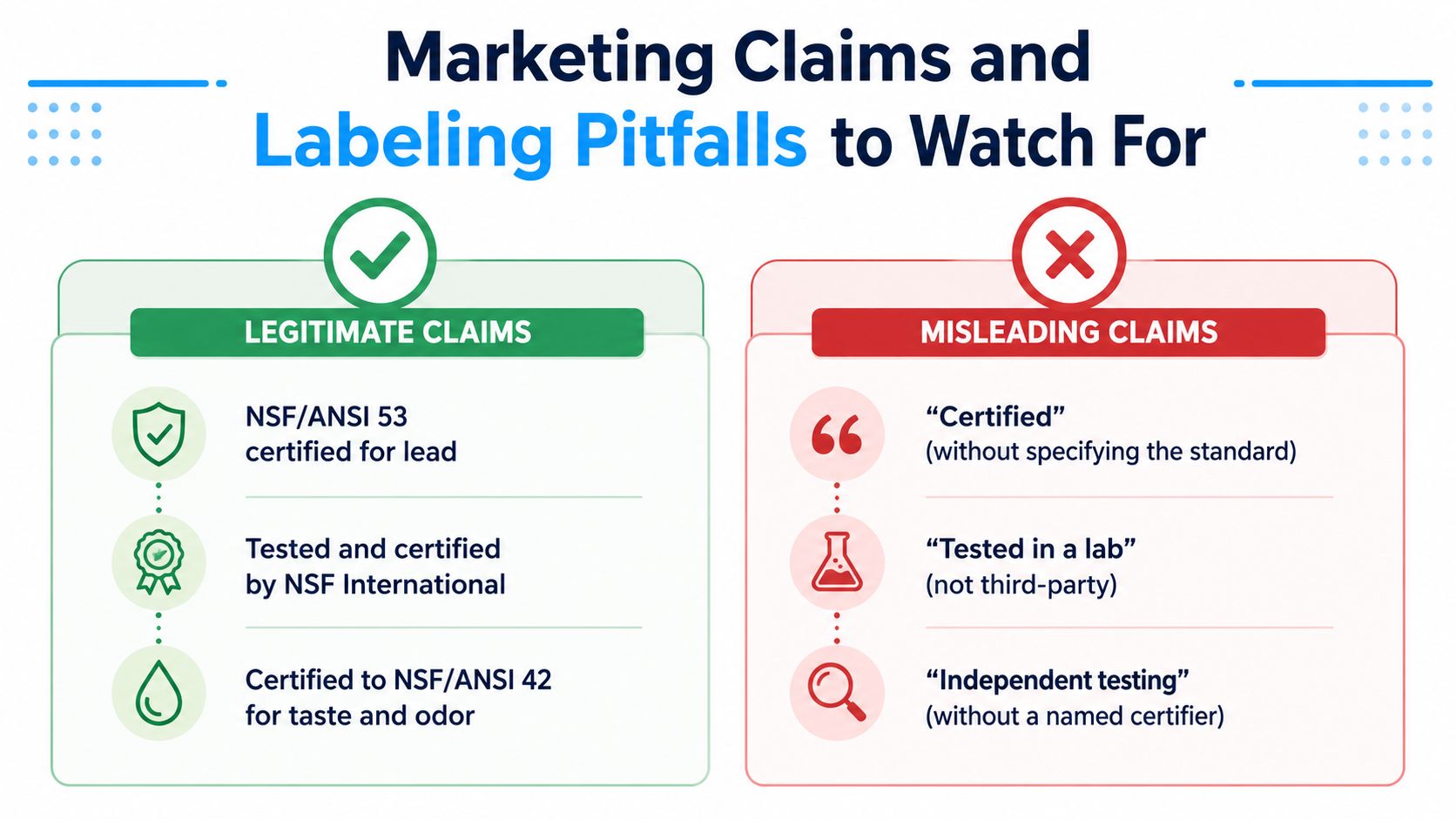
A label can sound reassuring and still leave out the part that matters to your home. The trick is to separate a real certification claim from packaging language that only borrows the look of one. That matters even more after you've already asked how plumbing affects family health, because the wrong filter claim can leave the actual water issue untouched.
Legitimate language versus soft language
A real certification claim names the standard, the certifier, and the contaminant. “NSF/ANSI 53 certified for lead” gives you a clear buying signal, while “tested in a lab” only says someone ran some kind of test. If a product says “NSF-style” or “meets NSF standards,” that can sound reassuring, but it is not the same as a verified third-party listing.
The wording matters because the label should match the job you want the filter to do. If you are trying to reduce lead, the claim should point to lead, not just to general water treatment or broad quality language. A generic mark can be real and still fail to answer the homeowner's question at the counter, which is whether this specific model was certified for this specific contaminant.
How packaging can overpromise
Some brands spotlight one certified claim and let the visuals imply more. A bold NSF logo on the front can make a pitcher look like it handles every drinking-water concern, even if the listing only covers taste and odor. That is why the model number and the standard matter more than the front-panel graphic.
The same kind of overstatement shows up in quiet wording choices. A box that says “certified” without saying what was certified leaves room for the buyer to assume too much. A box that names the standard and the contaminant gives you a claim you can check against the official listing.
A practical way to shop is to compare the wording side by side. One phrase is specific and verifiable. The other is only suggestive.
- Specific: “Certified to NSF/ANSI 53 for lead reduction.”
- Specific: “Certified to NSF/ANSI 42 for chlorine taste and odor.”
- Vague: “Certified.”
- Vague: “Tested in a lab.”
- Vague: “Independent testing.”
If the box gives you only the vague version, slow down. The product may still be useful, but you do not yet know whether it is useful for your water problem.
What Certification Means for Real Homes Over Time
Certification gets a filter onto your shortlist. What happens after installation decides whether it keeps earning a place under your sink, on your faucet, or in the fridge. Water chemistry shifts, cartridges age, and flow changes as media loads up.
Performance changes after install
A 2023 peer-reviewed review of NSF/ANSI 53 certified water filters found that performance can vary across certified products and operating conditions, which is a reminder that certification validates a defined test, not a permanent household guarantee (peer-reviewed review). That matters most when people treat the sticker as the end of the decision instead of the beginning of maintenance.
A filter that starts strong can drift if it's not replaced on schedule or if the household water conditions are different from the test assumptions. That's one reason a homeowner should treat certification, sizing, and replacement as a single system, not separate chores.
| Certified Filter Success Rates by Product Type | Reported Success Rate |
|---|---|
| Faucet-mounted filters | 99% (1,429/1,440) |
| Pitcher filters | 95% (60/63) |
| Under-sink filters | 78% (7/9) |
Those figures come from the same review, and they show that product type matters in practical use. A faucet unit, a pitcher, and an under-sink system all solve the same family problem in different ways, so the category you choose should fit your habits, your water use, and your willingness to replace cartridges on time.
If you're sorting out whether your plumbing setup will support a specific filter style, how plumbing affects family health is a useful companion read, especially if you're weighing installation convenience against long-term water quality.
Your Practical Roadmap for Choosing and Maintaining Certified Filters
Start with a basic water test or your local water report, then match the concern to the standard. Chlorine taste points you toward 42. Lead or similar health concerns point you toward 53. Reverse osmosis points you toward 58. That sequence keeps you from shopping by brand first and problem second.
Then check the exact model and certification listing before you buy. If you want a place to organize that research, the advice library at Water Filter Advisor advice can help you compare categories, standards, and replacement planning in plain language. That's where a lot of homeowners get unstuck, because the best product isn't the one with the loudest box, it's the one that matches the water you have.
Buy for the household, not the sticker. NSF-certified buyers are often willing to pay more for independent verification, and that preference makes sense when the product is tied to the right standard and maintained properly. Set the replacement reminder when you install the cartridge, not when the flow starts to fade.
Water Filter Advisor helps homeowners sort through NSF certification, model-specific claims, and the maintenance details that keep a filter doing its job after installation. If you want clearer comparisons and a calmer buying process, visit Water Filter Advisor and use the site to match your water problem to the right certification before you buy.
- August 2, 2026
- Uncategorized
