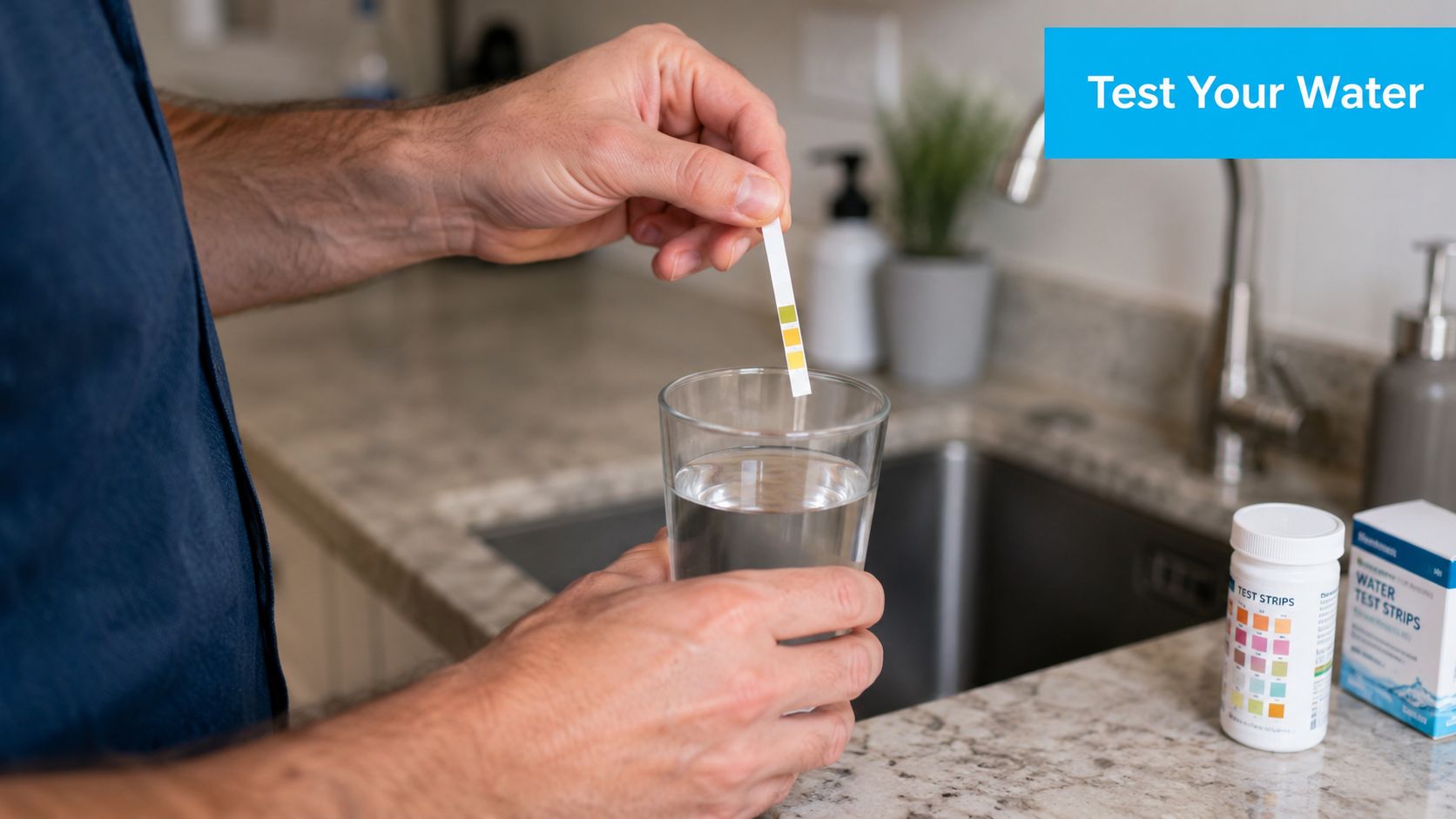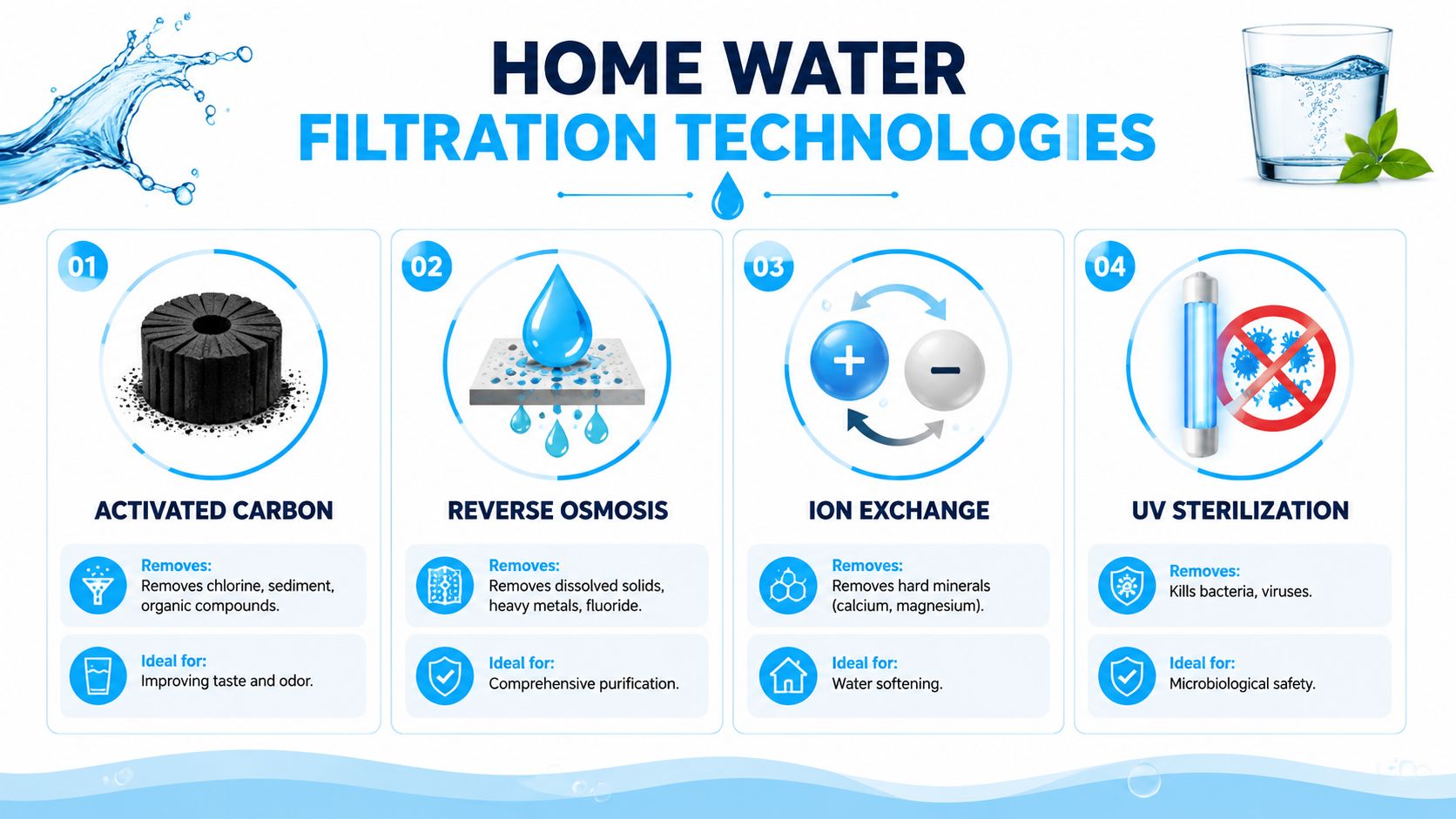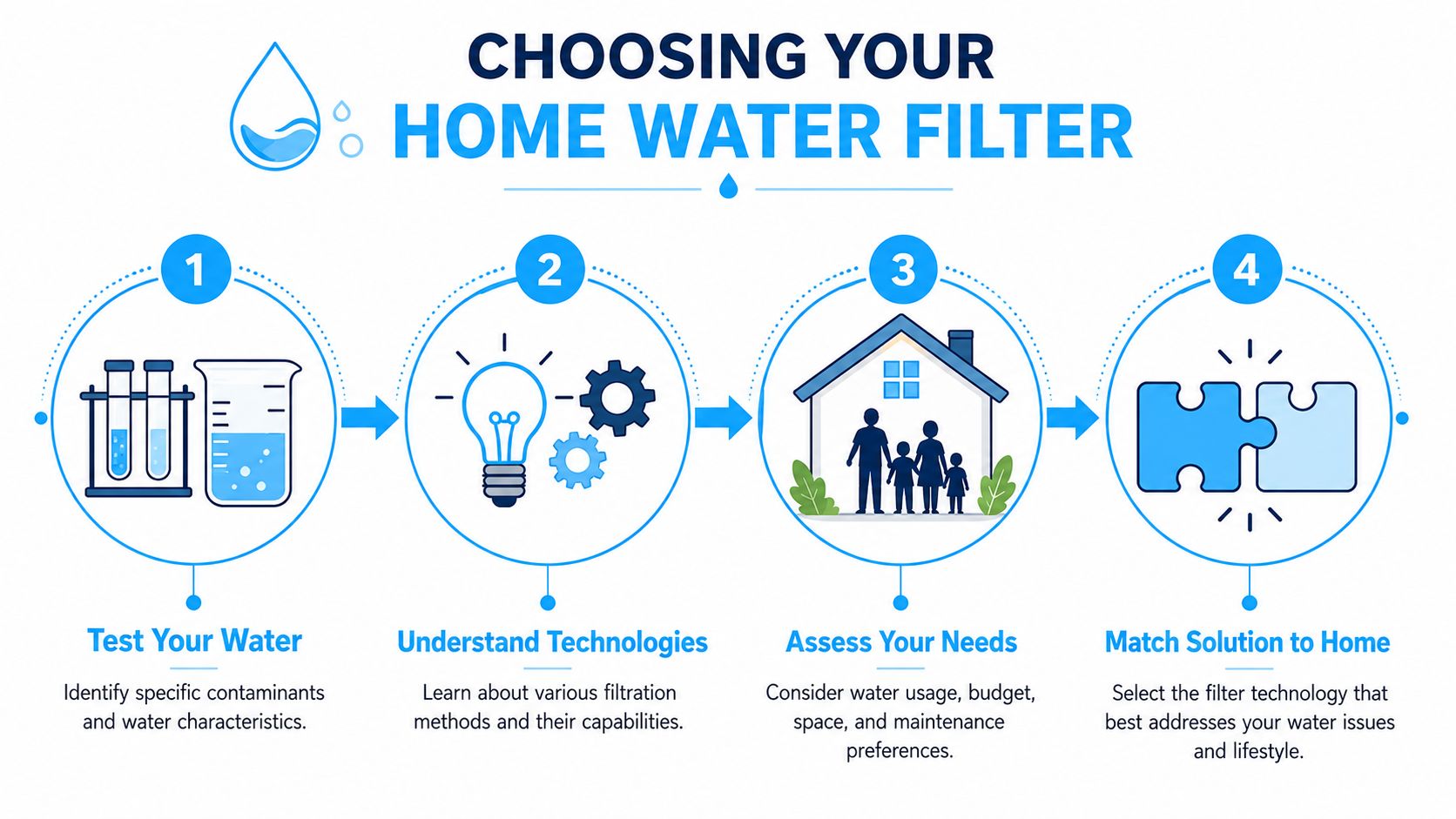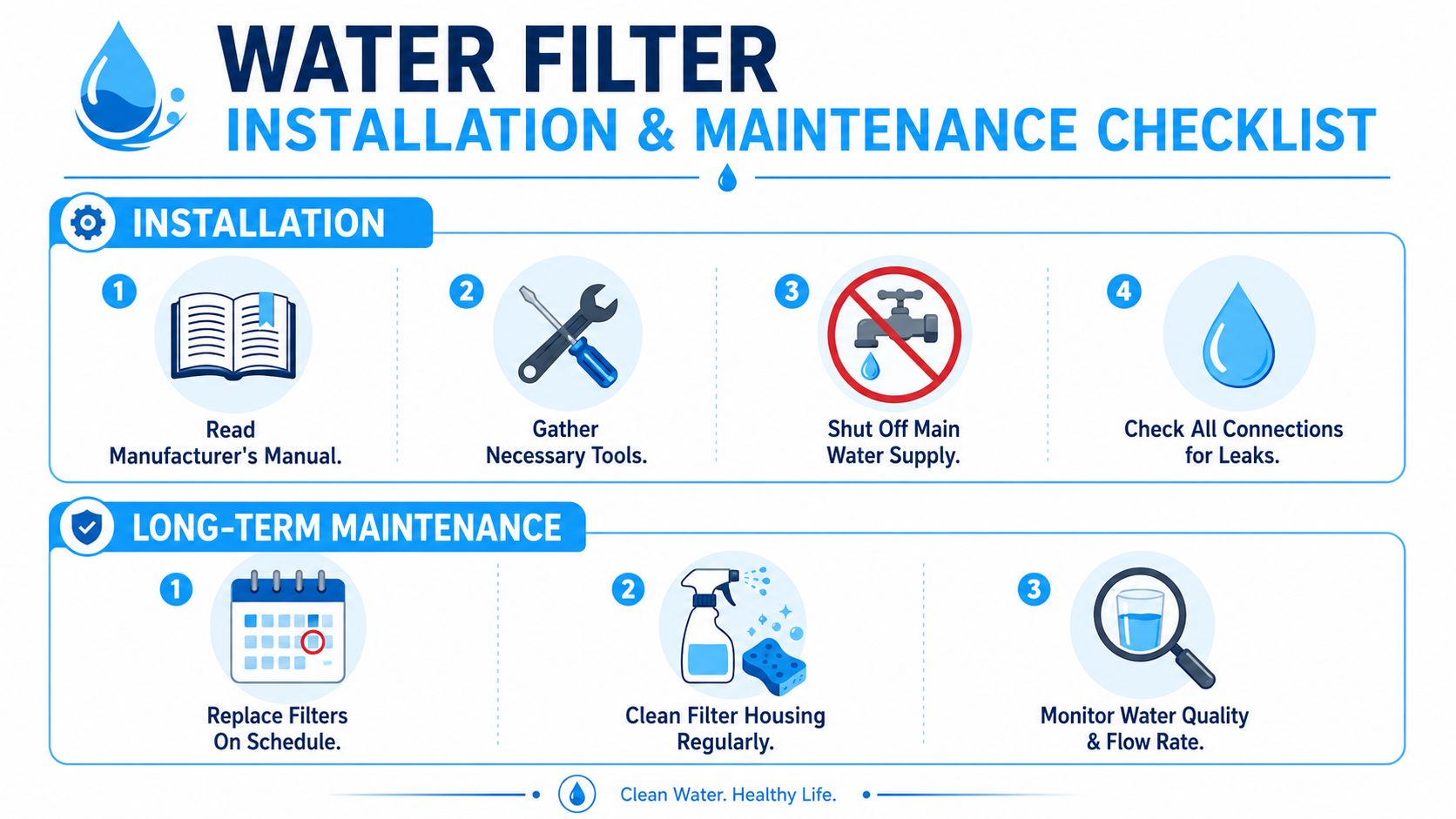
What Is TDS in Drinking Water? A Homeowner’s Guide

Your water probably got your attention before the term TDS ever did.

Maybe your ice cubes look cloudy. Maybe your coffee tastes dull one day and oddly salty the next. Maybe your dishwasher leaves a chalky film on glasses no matter how much rinse aid you use. Some homeowners first notice it in the shower, where soap won’t lather well and fixtures collect white crust. Others hear it in the utility room when a tank starts acting up, and a problem like a water heater making hissing noise turns out to be tied to scale buildup from mineral-heavy water.
Those little frustrations often point back to one simple idea. Something is dissolved in the water.

That “something” is what people mean when they talk about what is tds in drinking water. TDS stands for Total Dissolved Solids, and while the phrase sounds technical, the everyday effect is familiar. Water picks up minerals and salts as it moves through rock, soil, plumbing, and sometimes polluted areas. You don’t usually see those dissolved materials floating around like dirt in a glass. They’re invisible, but they still affect taste, spots, scaling, and filter choice.

A lot of online advice makes TDS sound like a pass-or-fail score. It isn’t. A higher number can mean ordinary minerals like calcium and magnesium. It can also be a warning sign that something less welcome may be in the water. That’s why homeowners get confused. They buy a cheap meter, see a number, and still don’t know what to do next.

The useful question isn’t just “Is my TDS high?” It’s “So what does that mean for my house, my drinking water, and the kind of filter I need?”

The Mystery of Spotty Glasses and Funny-Tasting Water

A homeowner fills a glass from the kitchen tap. It looks clean enough. Then the glass dries on the counter and a ring of white spots appears. The next morning, the same water goes into a kettle, and after a few weeks there’s a crusty layer inside. Coffee tastes different than it did at the last house. Ice cubes come out cloudy.
That’s usually where the TDS story starts.

Small clues around the house

Individuals rarely notice dissolved solids directly. They notice the clues:

  • On dishes: white film or spotting after washing
  • In hot water appliances: mineral scale in kettles, coffee makers, and water heaters
  • In taste: water that seems metallic, salty, bitter, or just “heavy”
  • In appearance: cloudy ice cubes or residue around faucets

None of those signs proves the water is unsafe. They do tell you the water is carrying dissolved material that stays behind when the water evaporates or heats up.

Practical rule: If water keeps leaving something behind, there’s a good chance dissolved solids are part of the story.

Why this matters for filtration

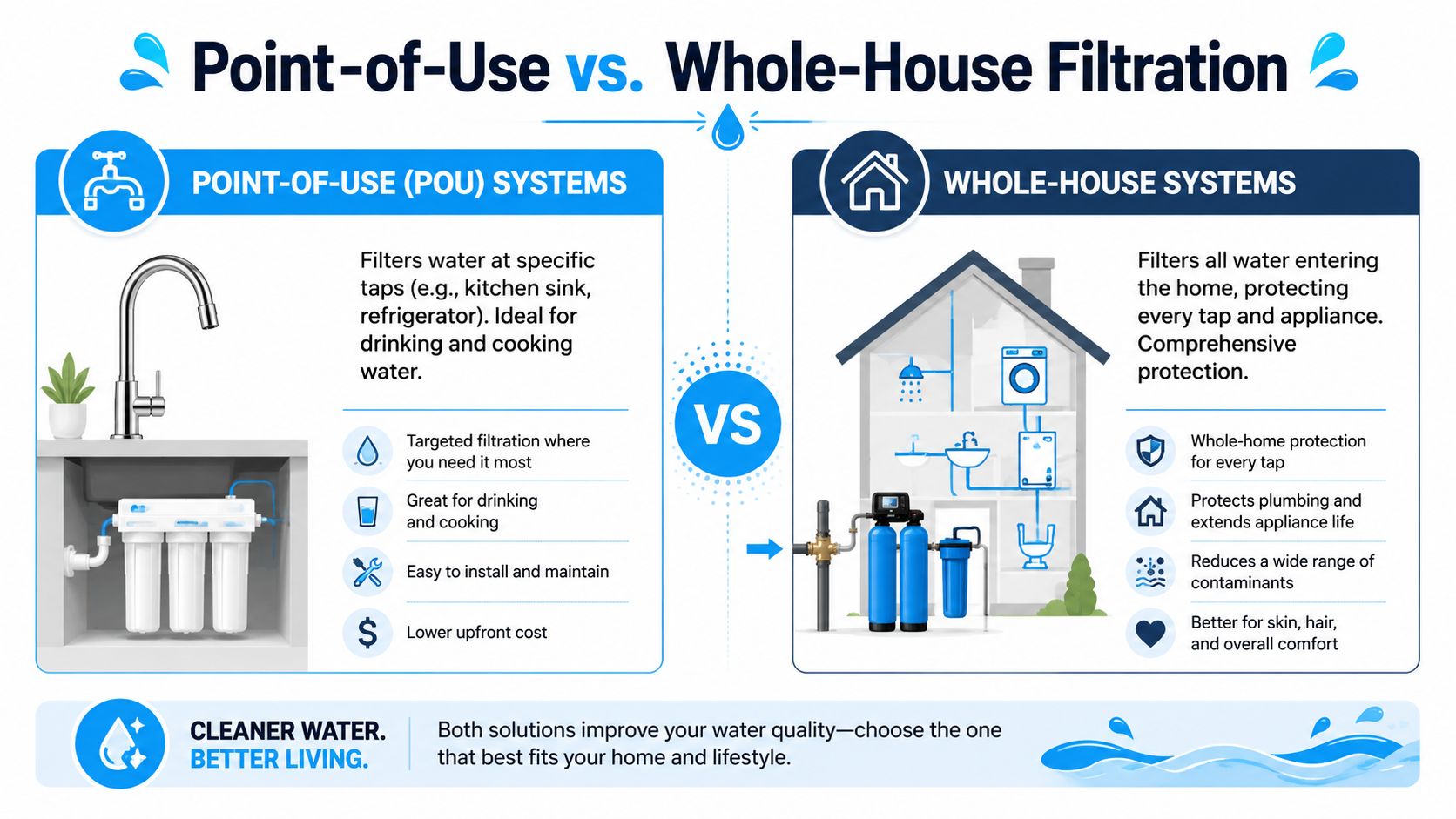
Homeowners often jump straight to buying a filter, but the right choice depends on what’s causing the symptoms. A carbon pitcher may help with chlorine taste, but it won’t do much if the underlying issue is a high load of dissolved minerals. A whole-house sediment filter won’t solve cloudy ice cubes caused by dissolved salts. A softener can help with hardness, but it doesn’t automatically fix every TDS problem.

That’s why TDS matters. It gives you a quick way to understand whether the trouble is mostly about taste and mineral buildup, or whether the water needs closer investigation before you decide on a filter.

TDS isn’t the whole water-quality picture. But for a homeowner trying to solve annoying, recurring water problems, it’s often the first clue that turns a mystery into a manageable decision.

What Exactly Are Total Dissolved Solids

Total Dissolved Solids means the combined amount of dissolved material in water. That includes inorganic salts such as calcium, magnesium, sodium, potassium, carbonates, nitrates, bicarbonates, chlorides, and sulfates, plus small amounts of organic matter. TDS is measured in milligrams per liter (mg/L) or parts per million (ppm). In everyday home water use, those units are treated much the same.

A clear glass filled with water against a bright blue background with the text What is TDS.

Think of sugar in tea

Stir sugar into hot tea and the grains disappear. They’re still there. They’ve just dissolved.

TDS works the same way. The water can look crystal clear while carrying minerals and salts you can’t see. That’s why clear water isn’t always low-TDS water, and why “looks fine” doesn’t tell you much.

Some dissolved solids are completely normal. In fact, a lot of drinking water gets its character from natural minerals picked up underground or along the distribution system.

What’s usually in the water

In homes, TDS often comes from naturally occurring minerals. Calcium and magnesium are common in hard water. Sodium, chlorides, sulfates, and bicarbonates can also show up depending on the source. Well water often contains more dissolved material than treated city water because it spends more time in contact with rock and soil.

Water source matters a lot. According to the Los Angeles Public Library water quality overview, rainwater can be as low as 5 to 30 ppm, typical U.S. municipal tap water ranges from 100 to 500 ppm, shallow wells can run from 200 to 1500 ppm, and deep aquifers can reach 500 to 5000 ppm in some cases (water source TDS ranges explained here).

What ppm means in plain English

You don’t need to love chemistry to understand ppm.

A ppm reading is a way of saying, “How much dissolved stuff is in this water?” Higher ppm means more dissolved material. Lower ppm means less.

Here’s the homeowner version:

TDS reading What it usually suggests
Lower reading Fewer dissolved minerals and salts
Mid-range reading Common for many tap water supplies
Higher reading More minerals, more chance of taste issues, scaling, or a need for closer testing

TDS doesn’t tell you exactly which dissolved substances are present. It tells you how much total dissolved material is there. That distinction matters a lot when you’re deciding whether you need a carbon filter, a softener, an RO system, or a proper lab test.

When TDS Is a Health Concern Versus Just a Taste Issue

Most homeowners get stuck. They see a TDS number and want one clean answer. Good or bad. But TDS doesn’t work that way.

A moderate reading may reflect normal mineral content that affects taste and scale more than safety. A high reading can still be mostly natural minerals. But a high reading can also be a warning that dissolved contaminants are present, especially if the level changes suddenly or the water has a new taste, odor, or staining problem.

Two clear glasses of water sitting on a table against a vibrant blue background with text overlay.

What official guidelines actually say

The World Health Organization classifies drinking water palatability by TDS level. Water is considered excellent below 300 mg/L, good from 300 to 600 mg/L, and poor from 900 to 1200 mg/L. The U.S. EPA sets a secondary standard of 500 ppm, mainly for aesthetic concerns such as taste and staining rather than direct health risk (WHO palatability ranges and EPA secondary standard).

That EPA point is easy to miss. A secondary standard is not the same as a health-based limit. It’s guidance about what water may taste like, look like, or do to plumbing and appliances.

When high TDS is mostly an aesthetic issue

If your water tastes mineral-heavy, leaves white spots, or scales up the kettle, the problem may be mostly practical:

  • Taste changes: water may seem salty, bitter, or flat
  • Residue: glasses, faucets, and shower doors show mineral spotting
  • Appliance wear: scale builds up in kettles, coffee makers, and heaters
  • Soap performance: washing and bathing can feel less satisfying

In those cases, the TDS number helps explain the symptoms. It doesn’t automatically mean the water is dangerous.

Water with dissolved minerals can be annoying long before it becomes a health discussion.

When TDS becomes a red flag

TDS is often misunderstood because it combines the good and the bad into one number. Natural calcium and magnesium raise TDS. So can less desirable dissolved substances.

That matters because high TDS can signal that harmful contaminants may also be present. The verified guidance for this topic notes that high TDS can indicate contaminants such as iron, manganese, sulfate, bromide, or arsenic, especially where runoff, wastewater discharge, aging plumbing, or other pollution sources affect the water.

Here’s the part many sales pitches skip. A TDS meter cannot tell you which dissolved substances are in the water. It can’t separate harmless mineral content from a contamination problem.

A practical way to think about it

Use TDS as a first clue, not a final verdict.

Situation What it may mean Best next step
Spots, scale, off taste, but no other warning signs Often a mineral or aesthetic issue Consider targeted filtration based on the symptom
Sudden jump in TDS or new strange taste Possible source change or contamination issue Test for specific contaminants
Well water with persistently high TDS Could be natural geology, could include unwanted dissolved substances Pair TDS screening with a broader water test
Low TDS reading Not proof of purity Check for specific contaminants if you have reason to worry

If you’re deciding whether to buy a filter, this distinction is the whole game. If the problem is mainly taste and chlorine, carbon filtration may be enough. If dissolved solids themselves are the issue, you need a technology that removes them. If contamination is the concern, don’t rely on TDS alone. Test for the specific contaminant you suspect.

How to Test Your Water's TDS Level at Home

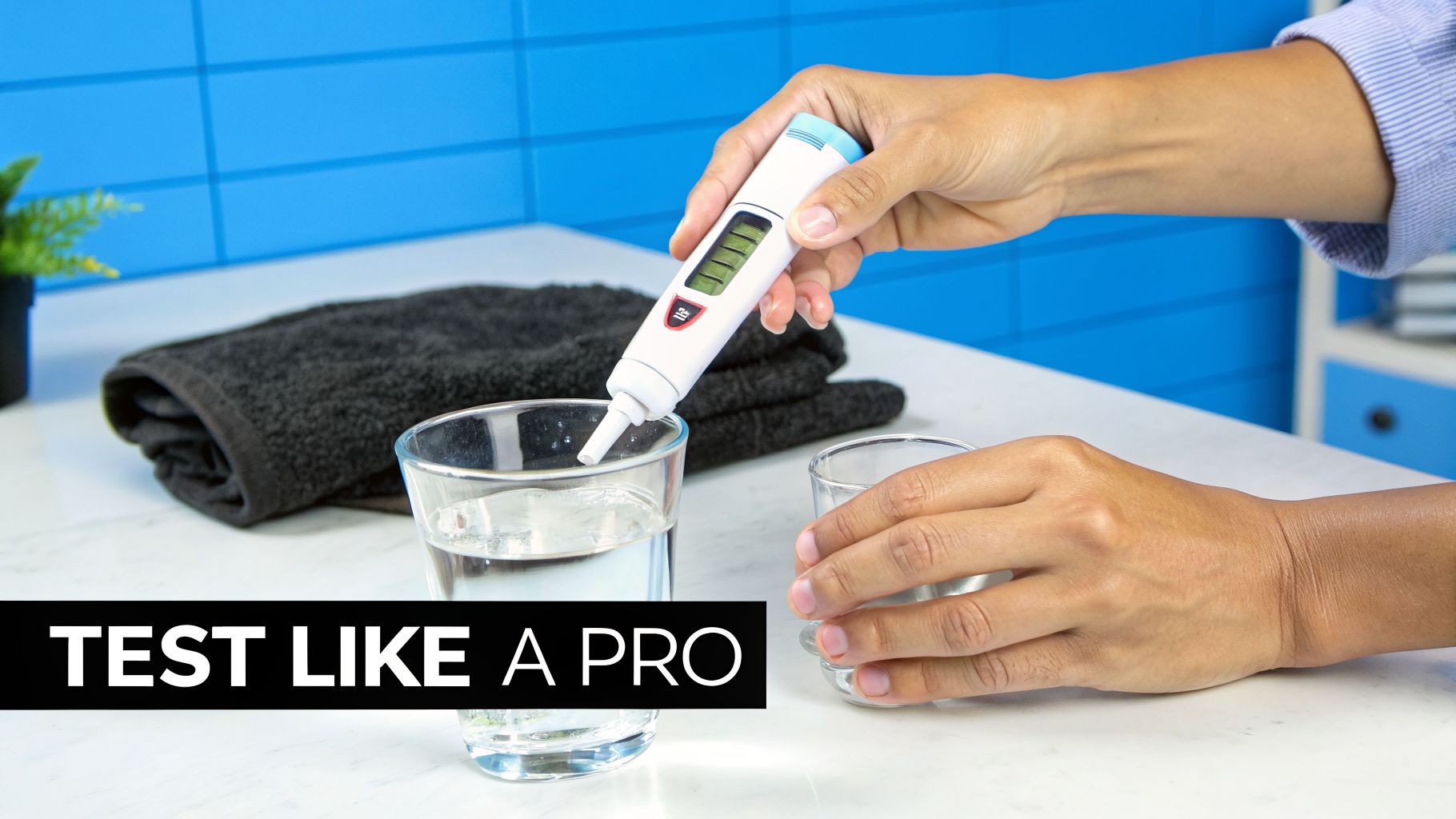
A TDS meter is one of the easiest water tools to use. Dip it into a sample of water, wait a moment, and it gives you a ppm reading. That speed is what makes it useful for homeowners. It turns a vague suspicion into a real number.
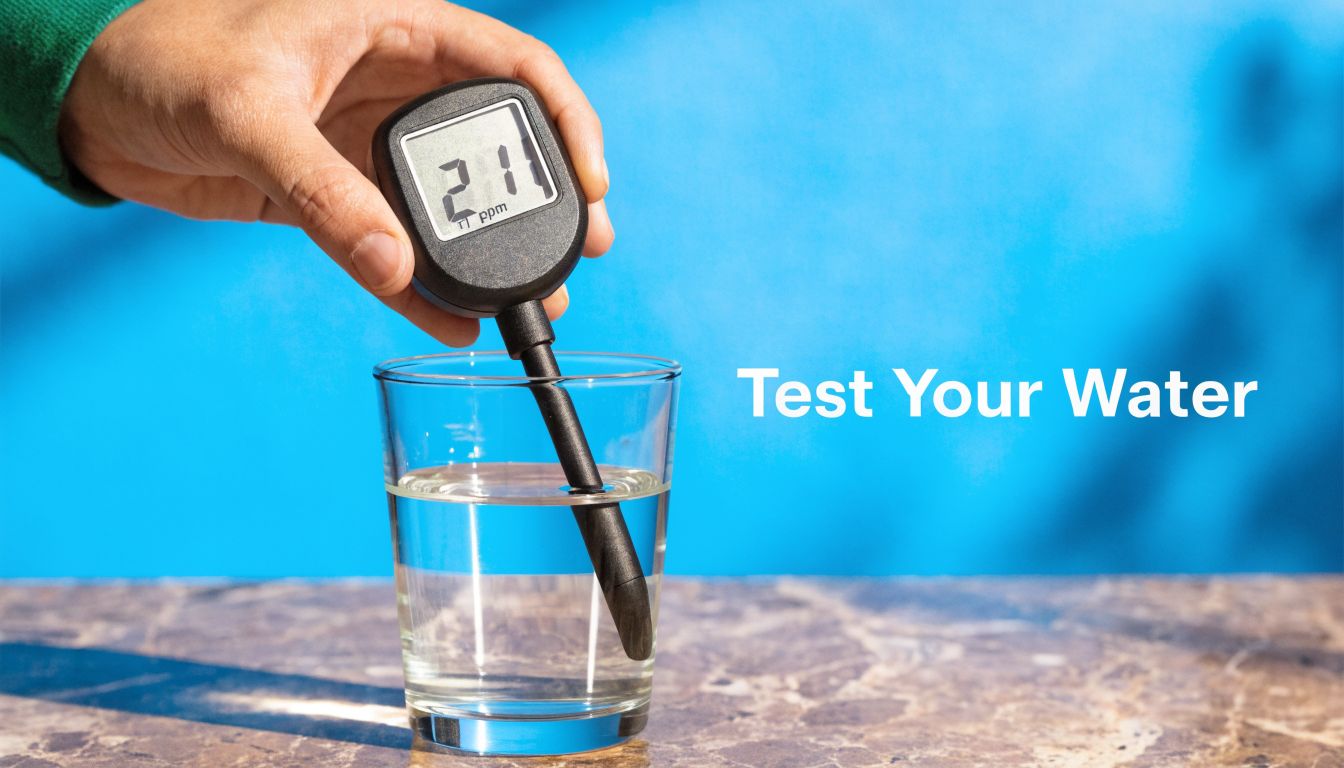
A hand holds a digital TDS meter testing the water quality in a clear glass of water.

What the meter is actually measuring

A digital TDS meter doesn’t directly count every dissolved particle. It measures electrical conductivity (EC) and converts that reading to ppm. For accurate readings in fresh water, it’s best to use a meter with a conversion factor around 0.7 and to calibrate it periodically so the reading stays reliable (how TDS meters use EC and why calibration matters).
That’s an important detail. If you compare two cheap meters, they may not display the exact same number if they use different conversion settings or haven’t been calibrated.

How to take a reading

Use a clean glass and test cold water from the tap you care about most, usually the kitchen sink.

  1. Rinse the glass first. You don’t want soap residue affecting the sample.
  2. Fill the sample with tap water. Let the water run briefly so you aren’t measuring stale water from the plumbing line.
  3. Turn on the meter and dip the probe. Keep the sensor in the water without touching the sides.
  4. Wait for the number to settle. Most meters stabilize quickly.
  5. Record the result. If you’re troubleshooting a problem, test more than one location in the house.

A short video can make the process even clearer:

How to read the number without overreacting

The number matters, but context matters more.

Your reading What it suggests
Below 300 Usually falls in the WHO “excellent” taste range
300 to 600 Often still tastes acceptable to many people
Around or above 500 Reaches the EPA secondary benchmark where taste, staining, or scaling may be more noticeable
900 to 1200 Often tastes poor
Very high or suddenly changed Worth investigating beyond TDS alone

Quick caution: A normal TDS reading doesn’t prove the water is free of harmful contaminants, and a high reading doesn’t prove it’s unsafe.

Best home testing habits

A single reading is helpful. A pattern is better.

  • Test the cold kitchen tap: That’s usually the water you drink most.
  • Compare before and after filtration: This shows whether your system changes dissolved solids.
  • Retest when taste changes: A shift in flavor, scale, or spotting is a good reason to check again.
  • Keep notes: Date, location, and reading help you spot trends over time.

For filtration decisions, the meter gives you direction. If the reading is moderate and your problem is mostly chlorine taste, a carbon filter may be enough. If the reading is high and scale is everywhere, you may need stronger treatment. If the reading is puzzling or changes sharply, move on to specific water testing instead of guessing.

Choosing the Right Filtration System for Your TDS Level

A lot of filters improve water. Far fewer reduce TDS.

That distinction saves people from buying the wrong system. If your concern is chlorine smell, many common filters can help. If your concern is dissolved minerals, salts, or other dissolved solids showing up in the TDS reading, you need a technology designed for that job.

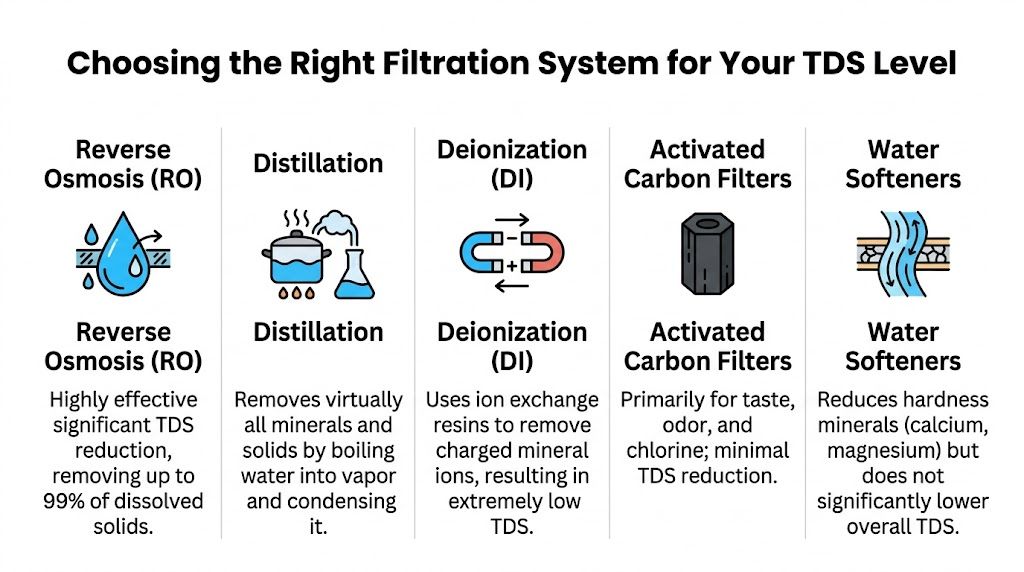
A chart illustrating five water filtration methods and their effectiveness in reducing total dissolved solids levels.

What each filter type actually does

Here’s the simple version homeowners need:

Filter type Best for TDS reduction
Reverse osmosis Drinking water with high dissolved solids Strong
Distillation Very low-mineral water at point of use Very strong
Deionization Specialized low-TDS applications Strong, but less common for household drinking water
Activated carbon Taste, odor, chlorine, some chemicals Minimal
Water softener Hardness problems from calcium and magnesium Doesn’t significantly lower overall TDS

Carbon filters and softeners are especially misunderstood. A carbon block may make water taste much better while leaving the TDS number nearly unchanged. A softener swaps hardness minerals in a way that addresses scaling, but it’s not the same as broad dissolved-solids removal.

When reverse osmosis makes the most sense

For homeowners focused on drinking water, reverse osmosis is usually the most practical TDS-reduction tool. A typical household RO system can reduce TDS by 90 to 99%, and water entering the system at 500 ppm may come out at 5 to 50 ppm. Many modern systems add a remineralization stage that puts back 20 to 100 ppm of calcium and magnesium to improve taste.

That matters because very low-TDS water can taste flat. A remineralization cartridge helps solve that without giving up the main benefit of RO.

RO is a strong fit when:

  • Your TDS reading is high and the taste is unpleasant
  • Your kettles and coffee makers scale up constantly
  • You use well water with heavy mineral content
  • You want a dedicated drinking-water solution at the kitchen sink

When a different filter may be enough

Not every TDS issue calls for an RO system.

If your water tastes bad because of disinfectants or odors, an activated carbon filter may be the better first move. If your main problem is hard-water scale across the whole house, a water softener may improve daily life more than a drinking-water unit alone. If you want ultra-low-mineral water for a special use, distillation or deionization can play a role, though they’re less common as the best all-around household answer.

Choose the filter to match the problem, not the marketing claim on the box.

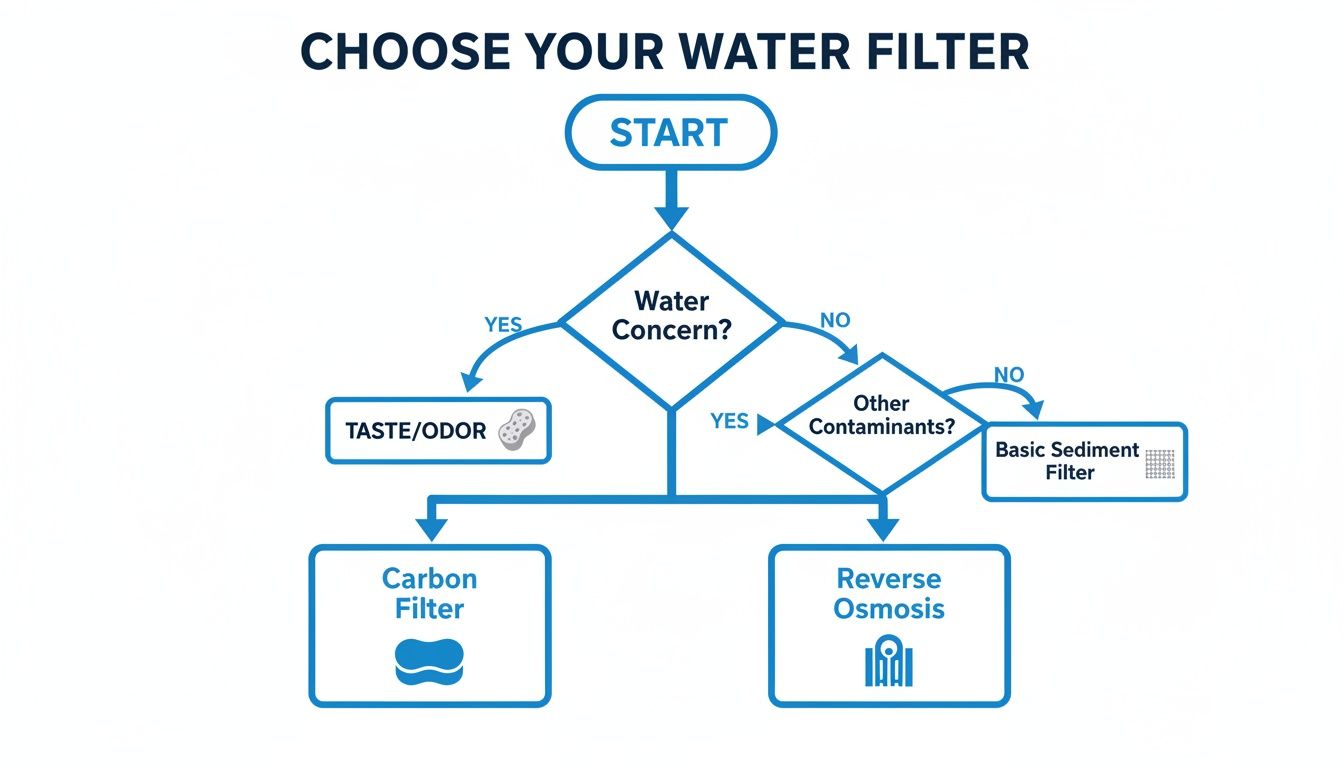
A simple homeowner decision guide

Use this practical framework:

  • Low to moderate TDS, but bad taste from chlorine or odor: start with carbon filtration.
  • Noticeable scale, spots, and mineral-heavy taste: look at a softener for whole-house comfort and RO for drinking water.
  • High TDS at the kitchen tap: RO is usually the strongest point-of-use option.
  • Concerned about hidden contaminants: order targeted testing first, then match the filter to those results.

If you split time between home and travel, it also helps to think about filtration by setting. RV owners, for example, often need portable setups designed around changing campground water conditions. A guide to the best RV water filter system can help you compare that very different use case.

If you want broader guidance on matching water problems to filter types, this water filtration advice library is a useful place to compare common home setups without guessing from product labels.

Maintaining Your Filter for Lasting Water Quality

Installing a filter feels like the finish line. It isn’t. It’s the start of a maintenance job.

A neglected system can lose performance imperceptibly. Water may still flow, but the filter may no longer be doing what you bought it to do. That’s how homeowners end up trusting a system that’s overdue for service.

Why maintenance matters more than most people think

Filters don’t fail in dramatic ways every time. More often, performance fades. Taste creeps back. Flow slows down. Scaling starts showing up again. The water seems “mostly fine,” so replacement gets postponed.

That’s risky because each filter stage has a specific job. Sediment cartridges protect downstream components. Carbon stages handle taste and certain chemicals. RO membranes handle dissolved solids. If the early stages clog or expire, the later stages can wear out faster or stop performing properly.

A simple upkeep routine

You don’t need a complicated spreadsheet. You do need a habit.

  • Check the replacement schedule: Follow the manufacturer’s guidance for each cartridge and stage.
  • Retest after a filter change: A fresh TDS reading or taste check helps confirm the system is working as expected.
  • Watch for warning signs: slower flow, renewed spotting, odd taste, or return of scale usually means something needs attention.
  • Keep spare cartridges on hand: waiting too long because you forgot to reorder is one of the most common maintenance failures.

Pay extra attention to RO systems

RO systems reward maintenance and punish neglect. If pre-filters clog, the membrane has a harder job. If the membrane ages, TDS reduction drops. If a remineralization stage is spent, the water may lose the taste balance you liked when the system was new.

A filter only protects your water when the parts inside it are still capable of doing their job.

For homeowners, the smartest move is simple. Pick a system you’ll realistically maintain. The best filter on paper isn’t the best filter in your house if replacement parts are hard to find or the service routine is so annoying that you put it off.

Your Simple Path to Cleaner Better-Tasting Water

TDS sounds technical, but the homeowner takeaway is straightforward. It’s a measure of the dissolved material in your water, and that helps explain why water may taste off, leave spots, or cause scale in appliances.

The key is not to treat TDS like a complete safety score. A higher reading can mean ordinary minerals. It can also mean you need to dig deeper with specific contaminant testing. That’s the “so what” behind what is tds in drinking water. The number matters because it helps you decide your next step.

If your problem is mostly taste or odor, a carbon filter may be enough. If dissolved solids are the issue, reverse osmosis is usually the strongest home option for drinking water. If the reading seems unusually high or changes suddenly, don’t guess. Test for the contaminants that TDS can’t identify.

Good water decisions usually happen in this order. Notice the symptom. Test the water. Match the filter to the actual problem. Keep the system maintained.

That’s how you move from cloudy ice cubes and spotty glasses to water you trust.


If you want help comparing filters, understanding test results, or choosing a system that fits your home, Water Filter Advisor offers practical guides that make water filtration easier to evaluate without the usual confusion.

Your Guide to Digital TDS Meters & Finding the Best Water Filter

Ever get that nagging feeling you don’t really know what’s in your tap water? A digital TDS meter is your new best friend. This little gadget is a pocket-sized detective that gives you an instant score for all the invisible stuff dissolved in your water. It measures Total Dissolved Solids (TDS)—a fancy term for the combined amount of minerals, salts, and metals floating around.

Think of it as the first, crucial step to becoming the boss of your home's water quality and finding the perfect filter for your needs.

What Is a Digital TDS Meter and Why Does It Matter for Your Home?

A white digital TDS meter stands next to a glass of water on a kitchen counter with a 'KNOW YOUR WATER' sign.

Beyond what you can see, your water carries a hidden load of dissolved substances from its long journey to your faucet. These are what we call Total Dissolved Solids, or TDS.

Imagine your water is a big pot of clear broth. The TDS is all the salt, spices, and other flavorings mixed in. You can’t see them, but they completely change the final product. A digital TDS meter is the super-simple tool that instantly tells you how much "stuff" is in your water, helping you decide if you need to filter it and what kind of filter to use.

What Your TDS Number Tells You

So, why should this number matter to you? A TDS reading is your secret weapon for connecting the dots on common household water woes and figuring out your filtration game plan.

Your reading can help explain things like:

  • Weird Taste or Smell: High levels of certain minerals can make your water taste metallic, bitter, or salty. A TDS meter puts a number to that funky flavor, telling you it's time for a filter.
  • Hard Water Headaches: The main culprits behind hard water—calcium and magnesium—are a big part of your TDS score. A high reading is a giant red flag that you're battling scale buildup on appliances and soap scum in the shower.
  • Choosing the Right Filter: Knowing your starting TDS is key to picking the right water filter. If your number is sky-high, you'll know a simple pitcher filter won't cut it, and you might need a heavy-hitter like a reverse osmosis system.

The Bottom Line: A TDS meter won’t tell you exactly which contaminants are in your water. What it does is give you a vital big-picture measurement of your water’s overall purity. It's the starting point for any homeowner serious about getting clean, great-tasting water.

Understanding TDS Levels in Your Home

To get a better sense of what your TDS reading means, it helps to see how it compares to other common water sources. A number that's perfectly normal for well water might be a red flag if you're expecting pure, filtered water.

This quick-reference table gives you a general idea of what to expect from your taps.

TDS Levels at a Glance: What to Expect from Your Water

Water Source Typical TDS Range (PPM) Common Characteristics
Reverse Osmosis Water 0 – 50 PPM The gold standard of purity; almost all minerals are removed.
Filtered Tap Water 50 – 200 PPM Clean, crisp taste; carbon filters remove chlorine but leave healthy minerals.
Typical Tap Water 200 – 400 PPM Varies by region; generally safe, but filtration can improve taste and quality.
Hard Water / Mineral Springs 400 – 700+ PPM Noticeable mineral taste; causes scale buildup. A prime candidate for filtration.
Well Water 300 – 1,000+ PPM Highly variable; often rich in minerals like iron and calcium that need filtering.

Use these ranges as a guide. Your own reading will give you a powerful clue about your water's journey and what kind of filtration might be best for your home.

The Growing Demand for Better Water

You're not the only one thinking about this. The market for home water testing tools is booming as more people question the quality of their municipal and well water.

In fact, one market analysis valued the global digital TDS meter market at $245 million in 2024, with projections for major growth. This isn't surprising. People are more aware than ever of how dissolved solids affect taste, plumbing, and health. If you want to dig into the numbers, the report from Archive Market Research about the digital TDS meter market has more details.

Ultimately, a TDS meter puts the power in your hands. It gives you the hard data you need to understand what's in your water and make smart decisions to protect your family and your home with the right filtration system.

How a TDS Meter Actually Tests Your Water

To really get what your digital TDS meter is telling you, it helps to understand what it’s actually doing. The science is pretty straightforward, and you definitely don't need a chemistry degree to get it.

Think of your TDS meter as a traffic cop, not a census taker. It doesn't count every single particle in your water. Instead, it just checks how easily an electrical current can pass through it. This is called electrical conductivity (EC).

The Science of Conductivity

Pure, distilled water on its own is a very poor conductor of electricity. There’s nothing in it to carry a charge. But when minerals and salts—like calcium, magnesium, and sodium—dissolve, they break apart into charged particles called ions.

These ions are what allow electricity to flow. The more ions you have, the higher the water’s conductivity. A digital TDS meter works by sending a very small, safe electrical current between two metal probes (electrodes) on its tip.

It measures how easily that current travels through the water. The higher the conductivity, the more dissolved solids are present. The meter then uses a built-in conversion factor to estimate the Total Dissolved Solids and show you that final reading in parts per million (PPM).

A digital TDS meter is basically an electrical conductivity tester. It doesn't identify what the solids are, just that there are electrically charged solids present.

What a TDS Meter Can and Cannot See

This is the most important part to understand as a homeowner. Knowing what your meter can detect—and what it’s completely blind to—is key to using it to make smart filtration choices.

A TDS Meter Is Great at Detecting:

  • Salts: Common compounds like sodium chloride (table salt) and potassium chloride.
  • Minerals: This includes the "hard water" minerals like calcium and magnesium, which clog up your appliances.
  • Some Metals: Dissolved metals that carry a charge, like iron, will register on the meter.

Basically, if it dissolves in water and creates an electrical charge, your TDS meter is going to pick it up. This is why they are so useful for checking the performance of a reverse osmosis system, which is designed to remove these exact types of contaminants.

Hidden Dangers Your Meter Misses

However, a TDS meter's biggest weakness is that it can only see things with an electrical charge. Many of the most serious water contaminants are invisible to it.

A TDS Meter Cannot Detect:

  • Many Organic Chemicals: Things like pesticides, herbicides, and certain pharmaceuticals often have no charge and won't affect the TDS reading at all.
  • Chlorine and Chloramine: The disinfectants your city uses to treat water are not detected by a standard TDS meter.
  • Bacteria and Viruses: These are living organisms and don’t contribute to electrical conductivity.
  • Heavy Metals like Lead: This is a big one. Lead can exist as tiny, uncharged particles that a TDS meter will not reliably pick up.

This is why a reading of 0 PPM doesn’t mean your water is 100% pure or safe. It just means it's free of electrically charged ions. A digital TDS meter is a fantastic tool for one specific job, but it’s not a substitute for a full lab test. It gives you one piece of the puzzle, helping you make smarter decisions about water filtration for your home.

What Your TDS Reading Means for Your Home

You’ve got a number on your TDS meter. So what does it actually mean? Is your water good, bad, or somewhere in between? Let's turn that number into a clear action plan for your home's water filtration.

Think of a TDS reading as a starting point, not a final verdict. The real goal is to use that number to make a smart decision about filtering your water.

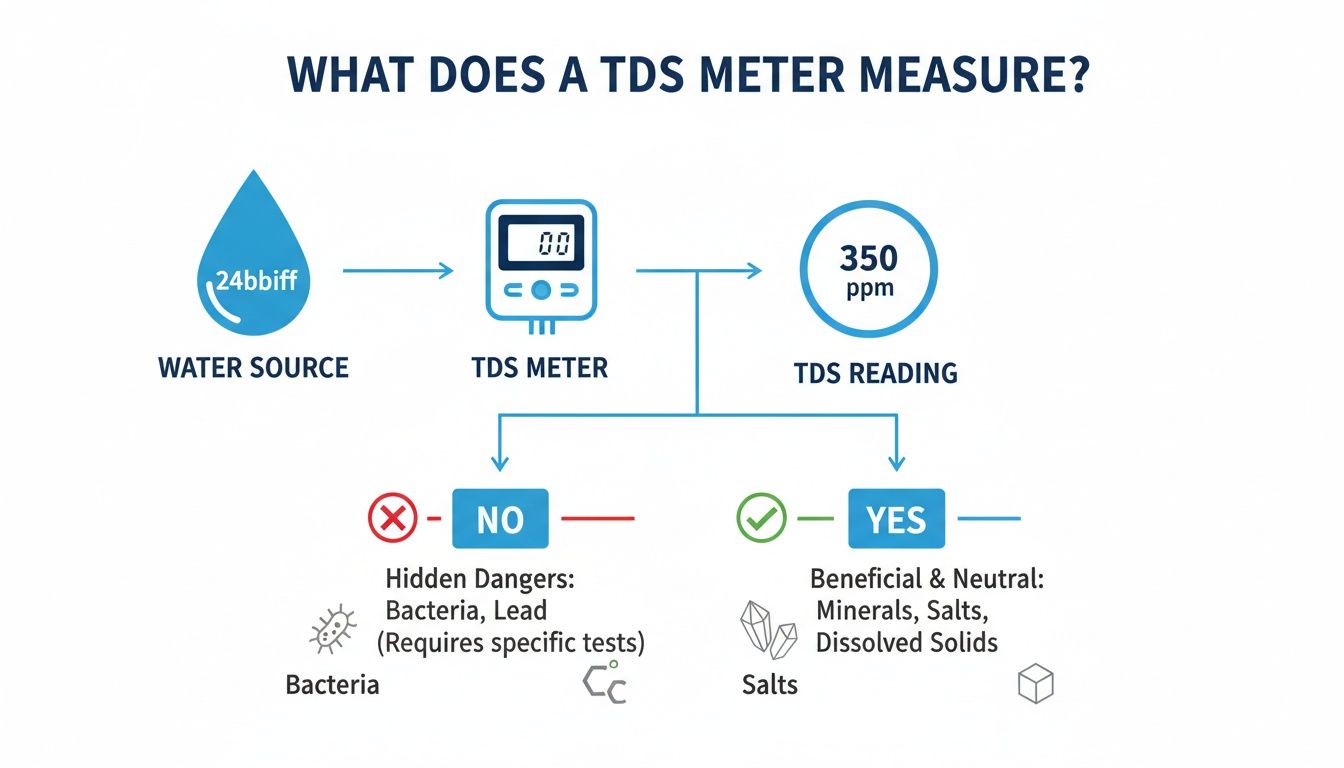
This chart shows you exactly what a TDS meter can and can't tell you.

Diagram illustrating how a TDS meter measures water quality, showing inputs, readings, and interpretations.

As you can see, the meter is great for spotting dissolved minerals and salts. But it can’t see dangerous contaminants like lead, pesticides, or bacteria—you’ll need different tests for those.

Putting Your TDS Number in Context

First, let's look at the numbers. The EPA recommends drinking water stay below 500 PPM (parts per million). Generally, though, a lower number is better for taste and keeps your appliances happy.

Here’s a quick guide to what the numbers usually mean for your filtration strategy.

  • Under 50 PPM: This is extremely pure water, like what you get from a reverse osmosis system or distillation. It has a very clean, crisp taste since most minerals are gone.
  • 50 – 300 PPM: This is a great range for most tap water. It has enough minerals for a pleasant taste without causing major scale buildup. Often, a simple carbon filter for chlorine is all you need.
  • 300 – 500 PPM: The water is still fine to drink, but you might notice a mineral taste. This is where you start seeing white scale forming in kettles and on faucets, signaling it's time to consider a filter.
  • Above 500 PPM: Once your reading is over 500, it's time to get serious about filtration. The water is likely very hard, which is tough on appliances, and might taste bitter or salty.

Remember, a TDS meter measures the quantity of dissolved stuff, not the quality. A 400 PPM reading could be harmless calcium, but the number is your signal to investigate and choose a filter that can handle it.

Matching Your Reading to the Right Filter

Your TDS reading helps you pick the right filter without wasting money. Don't buy a whole-house system if all you need is a simple pitcher filter.

Here’s how to match the filter to your water’s needs.

  • Low to Moderate TDS (Under 300 PPM): If you just want better-tasting water without chlorine, a carbon filter is perfect. You’ll find them in pitchers and faucet-mounted filters. They won't lower your TDS much, but they make a huge difference in taste and smell.
  • High TDS (300 – 1,000+ PPM): When a high reading is from hard water minerals (calcium and magnesium), a classic water softener is the best way to protect your plumbing and appliances. A softener swaps hardness minerals for sodium, so your TDS reading will actually stay the same or even go up while solving the scale problem.
  • Very High TDS & Purity Concerns (500+ PPM): To remove the absolute widest range of contaminants, you need a reverse osmosis (RO) system. An RO system can slash TDS by over 90%, getting rid of salts, minerals, and other unwanted solids. It's the top choice for anyone who wants the purest drinking water possible.

Growing concerns about water quality have made these tools more popular than ever. In India, for example, where groundwater TDS can top 1,000 PPM, sales have jumped 40% since 2020. This global trend means more affordable, high-quality meters are available to everyone. You can learn more about the global trends in the digital TDS meter market on Dataintelo.com.

Choosing the Best Digital TDS Meter for Your Needs

Shopping for a digital TDS meter can feel overwhelming, but don't worry. You don't need a complicated, lab-grade instrument to get a good handle on your home's water quality. The real goal is to find a reliable tool that gives you the data you need to make smart choices about water filtration.

Let's walk through what really matters so you can find the right meter and avoid paying for bells and whistles you'll never use.

The Non-Negotiable Feature: Automatic Temperature Compensation

If a TDS meter is missing this one thing, just put it back on the shelf. Automatic Temperature Compensation (ATC) is absolutely critical for getting an accurate reading. Here’s why: the electrical conductivity of water—which is what the meter actually measures—changes dramatically with its temperature.

This means testing cold water versus room-temperature water can give you two completely different PPM numbers, even if the amount of dissolved solids hasn't changed at all. Without ATC, your readings are just a wild guess. With it, the meter automatically adjusts for temperature, giving you a consistent, trustworthy measurement every time.

Accuracy and Convenience Features

For everyday home use, you don't need scientific precision, but you do need consistency. Look for a meter with a stated accuracy of +/- 2%. That’s more than enough to track how well your water filters are working or to monitor your tap water over time.

Beyond that, a few simple features can make a big difference in how easy the meter is to use:

  • Hold Button: This lets you freeze the reading on the screen after you’ve pulled the meter out of the water. It’s a huge help, as trying to read a tiny screen while it’s still submerged is a real pain.
  • Backlit Display: A screen that lights up is a lifesaver if you're testing in a poorly lit spot, like under the kitchen sink. No more squinting or using a flashlight.
  • Auto-Off Function: To keep you from draining the battery, find a meter that shuts itself off after a few minutes of not being used. It’s a small thing, but it ensures your meter is ready to go when you need it.

Technological innovations in digital TDS meters have revolutionized home water testing. Today, over 70% of new models include Bluetooth and automatic temperature compensation, allowing users to track TDS trends via smartphones, which is essential as temperature fluctuations can skew readings by 20-30%. For Water Filter Advisor readers, this means easily verifying that a whole-house system is reducing TDS from an incoming 400 PPM to under 100 PPM post-filtration, preventing scale that can hike energy bills by 15-20% in water heaters. You can find more on this in a report about the TDS measuring instrument market on VerifiedMarketReports.com.

What to Expect at Different Price Points

A higher price doesn't always mean a better tool for what you need. It’s all about finding that sweet spot between cost and performance. Here’s a simple breakdown of what your money gets you.

Which Digital TDS Meter Is Right for You?

This table compares the common tiers of TDS meters to help you decide which one makes the most sense for your home.

Feature Basic Model (~$15) Mid-Range Model (~$30) Advanced Model (~$50+)
ATC Often included, but verify Standard Standard
Accuracy +/- 3-5% +/- 2% (Ideal) +/- 1-2%
Display Basic LCD LCD with Backlight Large, easy-to-read screen
Extra Features Basic hold button Hold button, auto-off Bluetooth, multi-parameter
Build Quality Standard plastic More durable, splash-proof Waterproof, rugged design
Best For Quick spot-checks Reliable home testing Tech-savvy users, specific needs

For most homeowners, a mid-range model is the perfect choice. It gives you the best mix of accuracy and must-have features without the extra cost of things like Bluetooth connectivity, which most people don't need for basic filter checks.

How to Use Your TDS Meter for Accurate Results

A person tests water quality with a white digital TDS meter in a glass, with another glass and towel nearby.

Getting good numbers from your digital TDS meter is all about technique. A sloppy test gives you a useless reading, but if you take a minute to do it right, you can trust the results every single time.

Think of it like taking your temperature. You can’t just wave the thermometer in the air and expect an accurate reading. The same goes for your water. Let's walk through the right way to get a reading you can count on.

The Simple Guide to a Perfect Water Test

A consistent routine is your best friend for accurate measurements. This whole process takes less than a minute, but it makes all the difference.

  1. Rinse Your Gear: First things first, rinse out your testing glass and the meter's probe with the water you're about to test. If you just tested your hard tap water, leftover minerals can easily mess up the reading for your filtered water. A quick rinse prevents that.

  2. Get a Fresh Sample: Use a clean, dry glass and fill it with about an inch of water. You don't need much—just enough to completely cover the meter's electrodes on the tip.

  3. Let It Sit: Give the water about 30 seconds to settle. This lets any tiny air bubbles escape. Bubbles clinging to the probes can interfere with the electrical reading and give you a wonky number.

  4. Test and Swirl: Power on your meter, pop off the cap, and stick the probe in the water. Give it a gentle swirl for a second or two to knock off any stubborn bubbles.

  5. Wait for the Reading to Settle: Keep the meter in the water and just watch the display. If your meter has Automatic Temperature Compensation (ATC), the number might jump around for a few seconds while it adjusts. Just wait for it to stabilize.

  6. Lock It In: Once the number is steady, hit the "Hold" button. This freezes the reading on the screen, so you can pull the meter out and easily read the result.

Following these steps ensures every test is as accurate as the last. It’s the only way to reliably track the performance of your water filters. For more general help with water treatment options, you can check out our other articles for https://www.waterfilteradvisor.com/advice/.

Essential Care for Long-Term Accuracy

A TDS meter is a measuring tool, and like any tool, a little care goes a long way. If you want it to stay accurate for years, you have to keep it clean and store it properly.

A well-maintained meter is a reliable one. Rinsing and drying the probe after each use prevents mineral buildup that can coat the electrodes and cause inaccurate readings over time.

Think of that mineral scale like a little insulating jacket on the probes. It blocks the electrical current, which can make your meter give you a TDS reading that’s way lower than the real number.

Simple Maintenance Tips:

  • Rinse and Dry: After every test, rinse the probe with distilled or reverse osmosis (RO) water. If you don't have any, your filtered water will do. Shake off the extra water and wipe the meter’s body dry with a cloth.
  • Always Use the Cap: That protective cap is there for a reason. It keeps the electrodes from getting scratched, dirty, or damaged. Get in the habit of putting it back on right away.
  • Give It a Deep Clean: If you see gunk building up on the probes, you can clean them. Just dip the probe end into a bit of isopropyl (rubbing) alcohol and swirl it around. Rinse it well with pure water and let it air dry completely.

These small habits will make sure your meter stays a trustworthy tool. And if you’re managing water chemistry elsewhere, like a hot tub, pairing these tests with a good hot tub water testing log sheet can help you keep everything perfectly balanced.

Common Questions About TDS Meters and Home Water Filters

Once you have a TDS meter in hand, you'll probably have a few questions as you start testing the water around your house. Let's run through the most common ones so you can get clear, simple answers and start making sense of your readings.

Think of this as your go-to guide for real-world water testing.

Can I Use a TDS Meter to Know When to Change My Filter Cartridge?

Yes, and this is one of the most practical uses for your meter. It takes the guesswork out of filter changes, letting the data tell you when it's time.

Here's the simple process:

  1. First, test your unfiltered tap water. Write that number down—it's your baseline.
  2. Next, install the new filter and test the water coming out of it. This much lower number is your "clean" reading.
  3. Every few weeks, test the filtered water again.

As the filter does its job, it fills up with contaminants. Over time, you'll notice the TDS reading from your filtered water will start to slowly climb back up. We call this "TDS creep."

When the filtered water's TDS reading starts climbing closer to your original tap water number, it's a clear, reliable sign that the filter media is saturated and no longer working effectively. This TDS creep is your cue to order and install a replacement cartridge.

My TDS Meter Shows 0 PPM After My RO Filter, Is My Water Pure?

Seeing a reading of 0 PPM (or something very low like 1-10 PPM) after your reverse osmosis (RO) system is a great sign! It means the RO membrane is working perfectly, removing an enormous amount of dissolved solids like salts and minerals.

But is the water "perfectly pure"? Not necessarily. Remember, a TDS meter only detects dissolved solids that have an electrical charge. It cannot see uncharged contaminants.

Things a TDS meter misses include:

  • Certain pesticides and industrial chemicals (VOCs)
  • Disinfectants like chlorine and chloramine
  • Bacteria, viruses, and other microorganisms

So while a 0 PPM reading doesn't guarantee your water is 100% free of every possible contaminant, it's the gold standard for RO performance. It's a strong confirmation that your system is doing its job exceptionally well.

Why Is My TDS Reading Different from My Neighbor’s?

This is a great question. Even if you and your neighbor get water from the same municipal supply, a few things can cause your readings to be different.

The biggest factor is your home's plumbing. Older homes with copper pipes (and lead-based solder) or galvanized steel pipes can add small amounts of metals into the water as it flows to your tap. Newer plumbing, like PEX, won't affect the TDS count.

Another common reason is a water softener. A softener works by swapping "hard" minerals like calcium and magnesium for sodium or potassium ions. Your digital TDS meter reads these new ions, too. It's very common for softened water to have a higher TDS reading than the hard water that went into it.

Is a High TDS Level Dangerous to My Health?

Usually, no. The EPA classifies TDS as a Secondary Drinking Water Contaminant. This means it mostly affects aesthetics—like taste, smell, or color—not your health. In fact, many expensive bottled mineral waters are prized for their very high TDS levels, which come from beneficial minerals.

However, a very high TDS reading (especially over 500 PPM in city water) is a red flag. It’s not a sign of danger, but a signal to look closer. A spike in TDS could point to:

  • Extreme Water Hardness: This can cause major scale buildup that damages dishwashers, water heaters, and pipes.
  • Bad Taste: High levels of chlorides or sulfates can make water taste salty, bitter, or metallic.
  • Possible Contamination: For well owners, a sudden jump in TDS might mean contamination from septic systems or agricultural runoff.

A high TDS reading is like a check-engine light. It doesn't mean the car is broken, but it definitely means it's time to find out what's going on with your water and find the right filter for the job.

If you have more questions about water quality, testing, or wish to delve deeper into related topics, you might find valuable resources on their water technology blog.


Ready to take control of your home’s water quality? At Water Filter Advisor, we provide the expert guides and unbiased reviews you need to find the perfect filtration solution. From simple pitcher filters to whole-house systems, we help you make confident decisions for healthier, better-tasting water. Explore our resources at https://www.waterfilteradvisor.com today.

Your Ultimate Guide to an Osmosis Water Filter System

An osmosis water filter system is the heavyweight champion of home water purification. Think of it as a bouncer for your pipes, using a high-tech membrane to physically block up to 99% of unwanted contaminants like lead, chlorine, and even pesky microplastics from ever reaching your glass.

The system works by using your home’s water pressure to force tap water through this ultra-fine filter. All the impurities get left behind, and you get exceptionally clean, delicious-tasting water from a dedicated faucet. It’s the ultimate gatekeeper for your family's drinking water.

Why Your Tap Water Needs an Upgrade

Have you ever poured a glass of water and smelled chlorine, like you're at the city pool? Or maybe you're more concerned about the invisible freeloaders you can't see or taste, like lead from old plumbing or pesticides that have found their way into the water supply.

These are valid worries. The hard truth is, even the best municipal treatment plant can't guarantee what comes out of your specific faucet is perfectly pure. An old pipe a mile away could be leaching contaminants into your water long after it leaves the treatment facility.

An osmosis water filter system, most commonly called a reverse osmosis (RO) system, acts as your last line of defense right where you use your water most—your kitchen sink. This isn't just another pitcher filter; it’s a full-blown purification powerhouse that gets to the root of water quality problems.

The Bouncer for Your Pipes

Imagine the reverse osmosis membrane as a microscopic bouncer at an exclusive club, and only pure water molecules are on the guest list.

Anything else trying to sneak in—the whole crowd of unwanted contaminants—is turned away at the door and flushed down the drain. This includes:

  • Heavy Metals: Lead, arsenic, mercury, and cadmium are blocked.
  • Chemicals: Chlorine, fluoride, and pesticides are rejected.
  • Dissolved Solids: Salts, nitrates, and other gunk that makes water taste bad are removed.
  • Microscopic Threats: Bacteria, viruses, and tiny microplastics are stopped cold.

This process takes your questionable tap water and transforms it into something you can trust, no questions asked. The result is water that’s not just safer, but tastes incredibly clean and refreshing.

This level of performance is exactly why reverse osmosis is so popular. In fact, RO systems are expected to capture a massive 44% of the U.S. water purifier market share by 2026. This isn't surprising, given their unique power to remove a huge range of impurities that other filters just can't touch. You can learn more about the technology's effectiveness in this detailed report.

When you install an osmosis water filter, you take full control over your home's water quality. Before we dive deeper into how this tech works, the table below gives a quick snapshot of the problems an RO system can solve for you.

Reverse Osmosis At a Glance: Problems Solved and Benefits Gained

This table breaks down common water issues and shows exactly how a reverse osmosis system tackles them, giving you clear benefits for your home.

Common Water Problem How Reverse Osmosis Solves It Key Benefit for Your Home
Bad taste or odor (e.g., chlorine, sulfur) The membrane and carbon filters remove chlorine and dissolved solids causing foul tastes and smells. Fresh, clean, and delicious-tasting water right from the tap.
Worry about invisible contaminants like lead The semipermeable membrane blocks heavy metals, arsenic, and other toxic elements. Peace of mind knowing your family is safe from harmful substances.
Cloudy water or visible sediment Multi-stage filtration removes sediment, silt, and other total dissolved solids (TDS). Crystal-clear drinking water and ice cubes without floating particles.
Concerns about bacteria, viruses, or cysts The membrane's microscopic pores are too small for microbiological threats to pass through. Protection against waterborne illnesses from microscopic pathogens.
High cost of bottled water Provides an unlimited supply of purified water for a fraction of the cost of buying bottles. Significant savings over time and less plastic waste.

As you can see, a reverse osmosis system is a comprehensive solution that improves your water's taste, safety, and clarity all at once.

How Reverse Osmosis Filtration Actually Works

So, how does an osmosis water filter system take your regular tap water and make it so incredibly pure? It’s not magic, but a highly effective, multi-step process. The best way to think about it is like an assembly line for water purification, where each stage has one specific job to do before passing the water to the next.

This isn't a one-and-done deal. Your water has to get through a couple of crucial pre-filters before it ever reaches the main event—the reverse osmosis membrane itself. This team-based approach is exactly why these systems are so good at what they do.

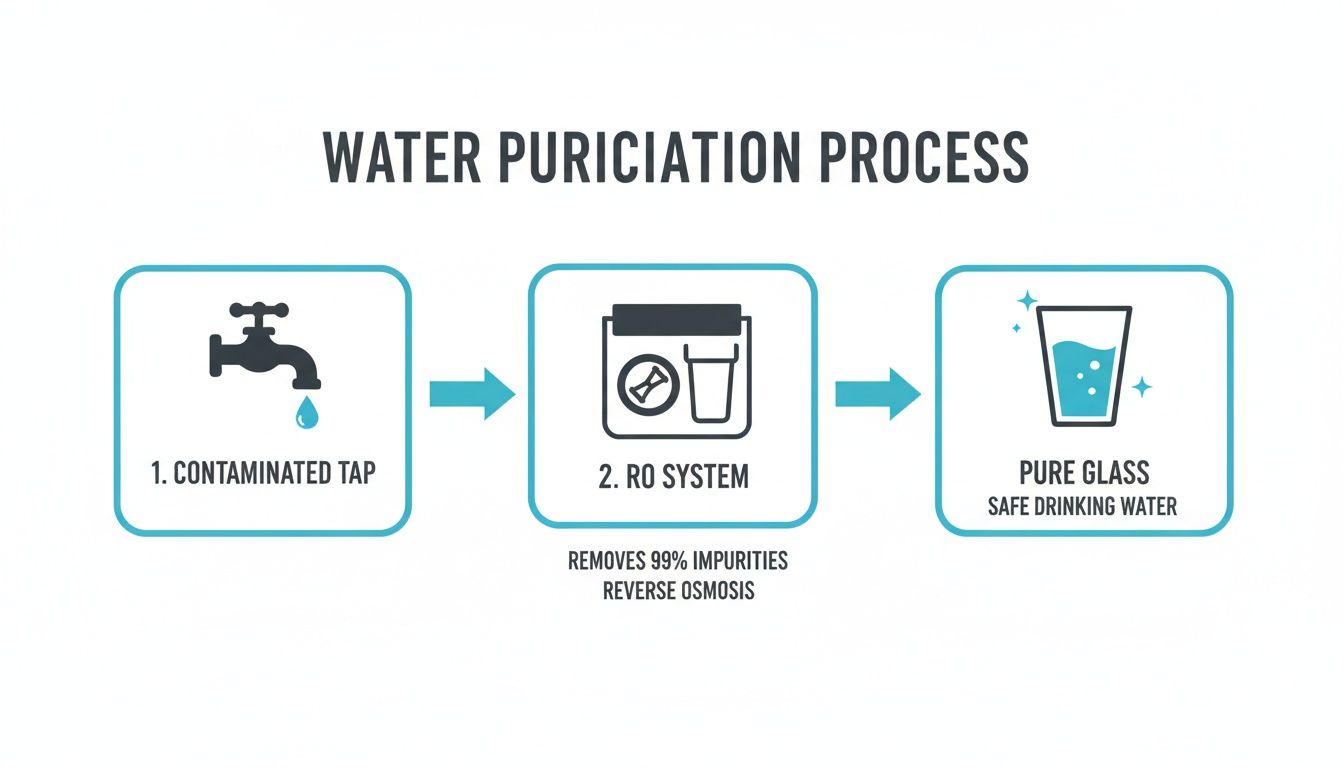
This diagram shows you the path your water takes, from the tap, through the RO system, and into your glass.

Diagram illustrating the water purification process from contaminated tap water to safe drinking water using an RO system.

As you can see, the system acts as a gatekeeper, intercepting your water and transforming it before it ever hits your lips.

The Opening Act: The Pre-Filters

The first stop for your water is a set of pre-filters. These are the workhorses of the system, designed to get rid of the biggest, most obvious contaminants first. Their job is to clear the path for the more sensitive stages that come later.

First up is the sediment filter. Its purpose is simple: catch the big stuff. We're talking about the visible grit and grime that can make water look cloudy. This includes things like:

  • Rust flakes from older plumbing
  • Sand and silt
  • Dirt and other floating debris

By trapping these larger particles, the sediment filter keeps the rest of the system from getting clogged, which is key for making sure everything runs smoothly and lasts as long as it should.

Next, the water moves through one or more carbon filters. These filters are all about tackling chemicals. They use activated carbon, which works like a magnet for certain contaminants, pulling them out of the water. Their primary target is anything that makes your water taste or smell bad—especially chlorine, a chemical disinfectant used in almost all city water supplies.

The pre-filters are absolutely essential for protecting your investment. By removing sediment and chlorine, they shield the delicate RO membrane from getting torn up by debris or degraded by chemicals. Without them, you’d be replacing the most expensive part of your system in no time.

The Main Event: The Reverse Osmosis Membrane

Now we get to the heart of the whole operation: the reverse osmosis (RO) membrane. Once the pre-filters have done their job clearing out the gunk and chemicals, the water is pushed toward the main stage. This is where the heavy-duty purification happens, removing contaminants so small you can't see them.

The RO membrane is what’s known as a semipermeable barrier. That’s just a technical way of saying it has incredibly tiny pores—around 0.0001 microns. That’s so small that only water molecules can fit through.

Your home's water pressure provides the force needed to push water against this membrane. The pure water molecules get squeezed through to the clean side, while almost everything else is rejected. Those leftover contaminants are then flushed out of the system and down the drain. This is how RO systems can remove such a massive list of dissolved solids and other invisible pollutants.

The Final Polish: The Post-Filter

After the water passes through the RO membrane, it’s stored in a small tank under your sink, ready to go. When you turn on the RO faucet, that water makes one final pass through the post-filter, also known as a “polishing” filter.

This final stage is typically another carbon filter. Its job is to do a last-minute quality check, getting rid of any faint tastes or odors the water might have picked up while sitting in the tank. It’s the finishing touch that guarantees every glass is as fresh and clean as possible.

Some systems offer a couple of optional upgrades at this final stage:

  • Alkaline Remineralization Filter: Because the RO process is so thorough, it also removes beneficial minerals. This filter adds back healthy minerals like calcium and magnesium, which can improve the taste and balance the water's pH.
  • UV Sterilizer: If you're on well water or have concerns about bacteria and viruses, a UV light sterilizer is a great add-on. It zaps any microorganisms that might have slipped through, giving you an extra layer of protection.

What an Osmosis Filter Removes from Your Water

So, what does an osmosis water filter system actually pull out of your water? You’ll often hear claims like “removes 99% of contaminants,” but what does that really mean for your glass? This is where the reverse osmosis membrane flexes its muscles, acting like a microscopic sieve for your water.

The whole process works by pushing water through this special membrane. Its pores are incredibly tiny—around 0.0001 microns—so only pure water molecules can squeeze through. Anything larger, from minerals to metals, gets blocked and flushed down the drain.

A magnifying glass highlights bubbles in a glass of water on a wooden table, with text 'REMOVES CONTAMINANTS'.

This level of purification is exactly why the global water filter market is taking off, jumping to USD 15.26 billion in 2024 and on track to hit USD 28.05 billion by 2033. We're seeing it firsthand in North America, where sales of whole-house RO systems have climbed 35% since 2020 as more people deal with well water contamination and other local water issues. If you want to see the numbers, you can review the full market analysis.

The Nasty Stuff RO Systems Remove

An osmosis water filter system is built with multiple stages, so it's ready to tackle a long list of things you don't want in your glass.

  • Heavy Metals: This is a big one. RO is fantastic at getting rid of lead, arsenic, mercury, chromium-6, and cadmium that can come from old city pipes or the ground itself.
  • Dissolved Solids (TDS): This covers all the salts, nitrates, and other inorganic stuff that makes water taste salty, bitter, or just plain weird.
  • Chemicals: The carbon filters in the system handle chlorine and chloramine, while the RO membrane takes care of tougher chemicals like fluoride, pesticides, and herbicides.
  • Emerging Contaminants: RO is one of the only home filtration methods proven to remove things like PFOA/PFAS (often called "forever chemicals") and tiny microplastics that are becoming more common in our water.

What an Osmosis Filter Leaves Behind

Because reverse osmosis is so good at its job, it doesn't just pull out the bad stuff. It also strips out naturally occurring minerals like calcium and magnesium. This leaves you with water that’s incredibly pure, but it can also be slightly acidic and taste a bit "flat" to some people.

That’s a common discussion point, but it's also an easy fix. Some folks actually prefer the clean taste of demineralized water. But if you want those minerals back, there’s a simple solution.

Optional Upgrade: The Remineralization Filter
Lots of modern osmosis systems now offer a final filter stage for remineralization. After the water has been completely purified, this filter adds back a healthy balance of minerals like calcium, magnesium, and potassium. Not only does this bring back a more natural taste, but it also raises the water's pH to a more alkaline state.

Prove It to Yourself with a TDS Meter

One of the coolest things about getting an RO system is seeing the results for yourself. All you need is a cheap and easy-to-use tool called a Total Dissolved Solids (TDS) meter.

TDS is just a measure of all the dissolved stuff in your water. While not all of it is harmful, a high TDS reading usually means more unwanted contaminants and a worse taste.

Here’s a quick test you can do:

  1. Test Your Tap Water: Get a glass of water straight from your tap and use the TDS meter. Depending on where you live, you might see a number between 200-500 ppm (parts per million), or even higher.
  2. Test Your RO Water: Now, do the same with water from your RO faucet. The reading will likely drop to just 10-25 ppm.

That massive drop is your proof. It shows the osmosis water filter system is doing exactly what it’s supposed to—stripping out nearly everything and leaving you with nothing but clean, great-tasting water.

Choosing the Right Osmosis System for Your Home

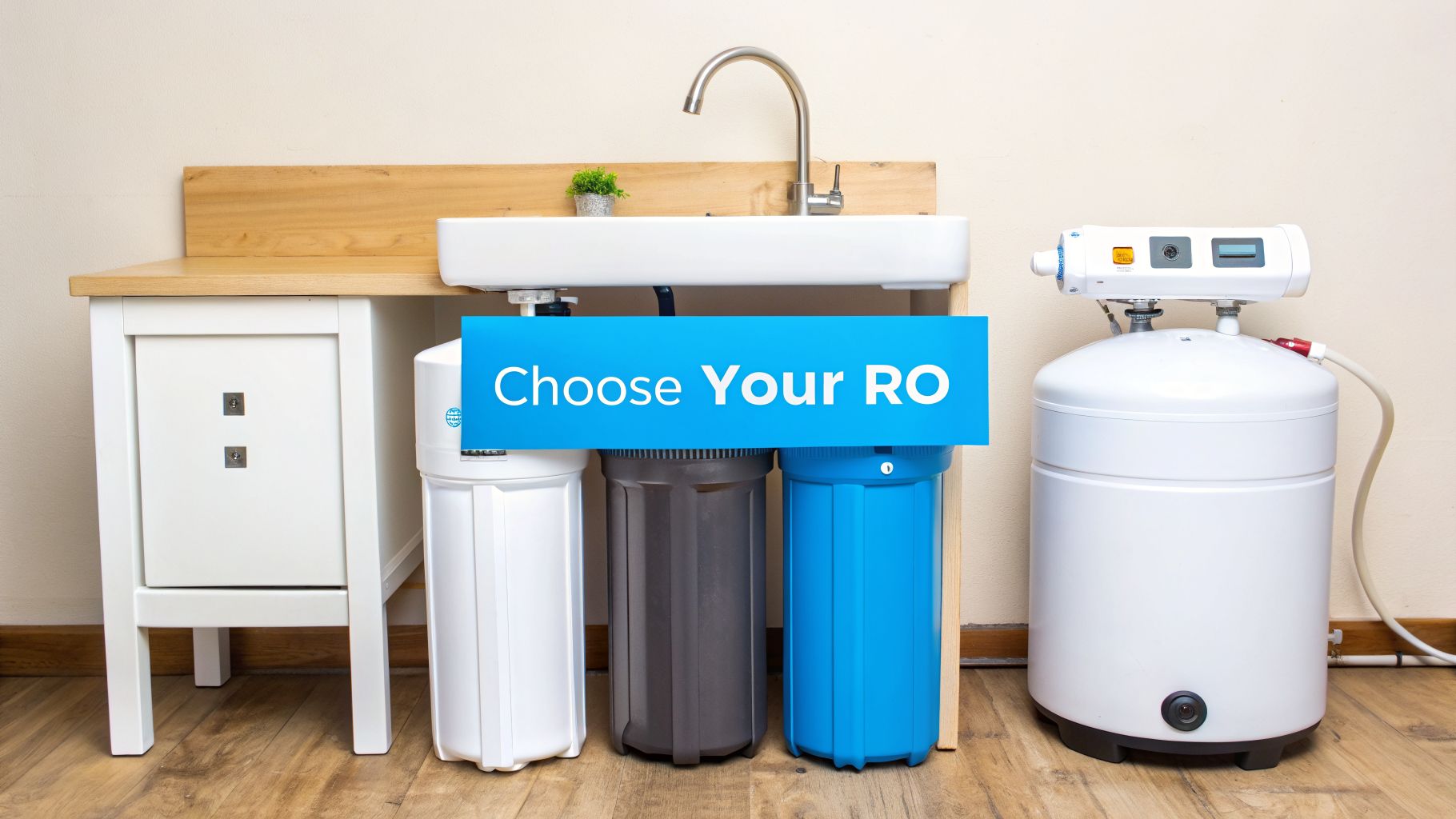
An under-sink reverse osmosis water filter system with multiple canisters and a storage tank, featuring a 'Choose Your RO' banner.

Alright, now that you understand how an osmosis water filter system works its magic, let's figure out which one actually fits in your home. These systems aren't all the same; they’re designed for different spaces, different needs, and different levels of plumbing confidence.

The right choice really comes down to your situation. Are you a homeowner ready for a permanent upgrade, or a renter who needs something you can pack up and take with you?

We’ll walk through the three main types you'll encounter: under-sink, countertop, and whole-house systems. Each one has its own job, from cleaning up the water at your kitchen tap to purifying every single drop that comes into your house.

Under-Sink RO Systems: The Homeowner Favorite

When you hear "osmosis water filter system," this is probably what you picture. Under-sink models are the go-to, classic choice for homeowners who want a clean, built-in source of pure water for drinking and cooking.

These systems get installed right under your kitchen sink, where they tap into the cold water line. The purified water comes out of a separate, dedicated faucet that sits right on your sink deck. This keeps all the tanks and filters tucked away out of sight, so your kitchen stays looking sharp.

Installation does involve some light plumbing, but it’s a totally doable weekend project for most folks. Once it’s in, you have an unlimited supply of pure water right where you need it most.

Countertop RO Systems: Perfect for Renters

Living in an apartment? Don't want to touch the plumbing? This is where a countertop reverse osmosis system comes in. These are compact, self-contained units that just sit on your counter and get to work—no installation needed.

You just fill the reservoir with tap water, and the machine handles the rest, filtering the water and storing it in a clean tank. It's like a supercharged water pitcher that gives you RO-level purity. They’re portable, convenient, and ideal for anyone who needs top-notch filtration without making any permanent changes.

The real beauty of a countertop model is its freedom. You can take it with you when you move, use it in a college dorm, or even bring it along in an RV. It gives you the full power of an osmosis water filter system with none of the commitment.

Whole-House RO Systems: The Ultimate Solution

For homeowners who want the absolute best water quality everywhere, a whole-house reverse osmosis system is the top-tier answer. Unlike systems that just treat water at one sink, a whole-house unit connects to your main water line.

This means you get purified water from every single tap—for drinking, showering, doing laundry, and everything else. It’s a major project that requires a professional plumber, a big storage tank, and a booster pump to keep your water pressure strong.

It’s a serious investment, but a whole-house osmosis water filter system delivers purity that protects your plumbing from scale and gives your family the cleanest possible water. If you need more guidance on what system fits your situation, check out our expert advice on choosing water filters.

Which RO System Is Right for You? A Homeowner's Comparison

Still weighing your options? This table breaks down the key differences between the three main types of RO systems to help you find the perfect match for your home and lifestyle.

System Type Best For Installation Typical Cost Key Advantage
Under-Sink Homeowners wanting dedicated drinking water Moderate DIY (1-3 hours) $200 – $600 Hidden, permanent, and great value for high-quality water at the sink.
Countertop Renters, small apartments, or offices None (plug and play) $300 – $500 Portable, no installation required, and provides RO water anywhere.
Whole-House Homeowners wanting pure water everywhere Professional installation required $5,000 – $15,000+ Purifies all water in the home, protecting plumbing and appliances.

Each system offers a powerful solution for clean water. By matching the system type to your living situation and water quality goals, you can find the ideal setup that works for you.

Understanding Installation, Maintenance, and Costs

Buying an osmosis water filter system is a big step. But what happens after you get it home? Let's break down what it really takes to install one, keep it running smoothly, and what the costs look like over time.

For most people, an under-sink model is the way to go, and it's a project you can definitely tackle yourself. Don't be put off by the thought of plumbing work. Most modern kits come with everything you need, including color-coded tubes and quick-connect fittings that just snap into place.

The basic idea is to hook up an adapter to your cold water line, drill a small hole in the sink's drainpipe for the wastewater, and mount a new, dedicated faucet. As you map out the connections, keep in mind that the right size tubing, like a 1 inch hose, is important for making sure the system runs efficiently.

A Typical DIY Installation Overview

Here’s a quick rundown of what it takes to install a standard under-sink RO system.

  1. Turn Off Water & Mount the Faucet: First things first, shut off the cold water supply valve under your sink. If you don't have a spare hole for the new RO faucet (from a soap dispenser, for example), you'll need to drill one.
  2. Connect the Water Supply: Next, you'll attach the feed water adapter that came with your kit to your cold water line. This little piece diverts tap water into the RO system.
  3. Install the Drain Saddle: Clamp the drain saddle onto your sink's drainpipe. You’ll drill a small hole into the pipe, which gives the wastewater (brine) a place to exit.
  4. Connect the Tubing: This is where the color-coding helps. Run the tubes from the water supply to the main RO unit, from the unit to the storage tank, from the tank up to the new faucet, and finally from the RO unit over to the drain saddle.
  5. Flush the System: With everything connected, turn the water back on. Follow the manufacturer's directions for flushing the system and the new filters before you start drinking the water.

While a lot of people can get this done in an afternoon, there's absolutely nothing wrong with calling a plumber. If you aren't comfortable with drilling or messing with plumbing, a professional will get it done right and give you peace of mind.

Ongoing Maintenance and Annual Costs

If you want your system to last and keep producing pure water, you have to do the maintenance. It's just like changing the oil in your car—the filters do the heavy lifting, and they will get clogged.

Regular filter replacement isn't just a suggestion; it's essential for maintaining water quality and flow rate. A clogged filter not only stops working effectively but can also strain the entire system, potentially damaging the delicate RO membrane.

Here's a typical replacement schedule you can expect:

  • Sediment & Carbon Pre-Filters: These take the first hit and need to be replaced every 6-12 months.
  • RO Membrane: This is the core of the system and is much more durable, usually lasting 2-4 years.
  • Carbon Post-Filter: This is the final polishing step. You should change it every 12 months to keep the water tasting crisp and fresh.

This regular upkeep is your main long-term cost. It's a big part of the global water purification filters market, which was valued at USD 44.22 billion in 2024. For many systems, replacement filters can make up 60-70% of what you'll spend over a three-year period.

But the savings are real. For an average family, an osmosis water filter pays for itself in just 2-3 years because you'll no longer be buying bottled water. You can find more data by reviewing these market insights on water purification filters.

Common Questions About Osmosis Water Filter Systems

Alright, you've got a handle on how these systems work, but it's completely normal to have a few more questions rattling around before you pull the trigger. An osmosis water filter is a real investment in your home's water quality, so let's get every last detail ironed out.

We've heard all the common worries and questions from homeowners over the years. Let's walk through them so you can feel 100% confident in your decision.

Does a Reverse Osmosis System Waste a Lot of Water?

This is probably the number one question we get, and it's a fair one. The short answer is: they used to, but modern systems are much, much better.

Here’s the deal: to push contaminants out, the reverse osmosis membrane needs a stream of water to flush them away to the drain. This wastewater is often called "brine." Without this flushing process, the membrane would clog up and fail in no time.

But technology has come a long way. Older, inefficient systems could waste several gallons for every single gallon of pure water they made. Today, you can easily find high-efficiency systems with waste-to-pure-water ratios as low as 1:1.

To get a low-waste system, look for these features:

  • Permeate Pumps: A brilliant little non-electric device. It uses the energy from the wastewater to help push clean water into the storage tank, which speeds up the process and cuts down on waste.
  • Booster Pumps: If you have low water pressure (under 45 PSI), an electric booster pump is a must-have. It gets the system running at its best, which dramatically improves efficiency and reduces wasted water.
  • High-Efficiency Membranes: Some manufacturers now produce special membranes engineered specifically to produce less wastewater.

When you do the math, the slight increase in your water bill is almost always a drop in the bucket compared to the cost—both financially and environmentally—of constantly buying bottled water.

Will an RO System Lower My Water Pressure?

No, an under-sink osmosis water filter system won't affect the water pressure from your main kitchen faucet, your shower, or anywhere else in the house. It's a self-contained unit that connects to its own dedicated drinking water faucet.

Now, you will notice that the flow from that dedicated RO faucet is a bit gentler than your main tap. That’s totally normal. The water is being purified on demand and pushed out of a storage tank, so the process is naturally more deliberate than just yanking open a main water line.

A quick note on whole-house RO systems: those are a different beast. They are always installed with a large storage tank and a powerful booster pump to make sure you have strong, steady water pressure at every single tap and appliance in your home.

Do I Need a Special Certification Like NSF/ANSI 58?

Yes, absolutely. Think of NSF/ANSI certifications as your proof of performance. These aren't just marketing stickers; they are independent, third-party verifications that a system can actually do what the company claims.

For an osmosis water filter system, the gold standard is NSF/ANSI 58. This certification specifically confirms the system's ability to effectively reduce a long list of tough contaminants, including:

  • Lead
  • Arsenic
  • Fluoride
  • Nitrates
  • Total Dissolved Solids (TDS)

Another one to watch for is NSF/ANSI 372, which certifies that the system's parts are lead-free. When you see these certifications, you get real peace of mind. It’s your guarantee that the system you're putting in your home is truly protecting your family's health.


At Water Filter Advisor, our goal is to give you the clear, unbiased information you need to find the best water filtration solution for your home. From in-depth guides to honest product reviews, we're here to help you achieve safer, better-tasting water. Explore our resources today at https://www.waterfilteradvisor.com.

Your Guide to Sink Water Filtration Systems for Cleaner, Safer H2O

If you've ever side-eyed your tap water and wondered what's really in there, you're not alone. Even if your water is officially "safe" to drink, that doesn't always mean it tastes or smells great. Think of the best sink water filtration systems as your personal bodyguard, standing guard at your kitchen tap to stop common intruders like chlorine and lead that sneak past your city's treatment plant.

This guide will show you how to transform your kitchen faucet from a source of questionable liquid into a pristine spring of truly clean, great-tasting water.

Turning Your Tap Water Into Liquid Gold

A hand fills a clear glass with fresh, clean water from a modern kitchen tap.

The water reaching your faucet has been on an epic journey. It starts at a treatment plant and then travels through miles and miles of pipes, some of which could be older than your grandparents. While municipal treatment does a solid job of meeting legal standards, that long trip can add some unwanted hitchhikers.

It's like washing your car and then driving it home through a dust storm. It won’t be showroom-shiny when you arrive. Your water picks up contaminants from old pipes or absorbs byproducts from the disinfection process itself. That's exactly why your "safe" water might smell like a public swimming pool or have a funky metallic tang.

Why a Sink Filter Is Your Kitchen's Best Friend

A sink water filter offers a targeted solution right where you need it most: for drinking, cooking, and making that perfect cup of coffee. It’s a final checkpoint to ensure the water filling your glass is as pure and delicious as possible.

Here’s what these home heroes can tackle:

  • Bad Tastes and Odors: The most common complaint is that chemical zing from chlorine. A basic carbon filter can banish it, leaving your water tasting crisp, clean, and refreshing.
  • The Unseen Villains: Old plumbing can leach lead into your water, which is a major health no-no. More advanced filters can remove heavy metals, pesticides, and even emerging concerns like microplastics.
  • Peace of Mind: There's a priceless comfort in knowing your family is drinking water that's been through an extra layer of purification right at the tap.

People have strong opinions on water filters, but most agree on one thing: a good system makes a noticeable difference. It takes an everyday necessity—water—and elevates it, so you can stop worrying about what's lurking in your pipes.

Making Water Filtration Fun (Yes, Really!)

The world of water filtration can feel like a stuffy science lecture, full of confusing acronyms and technical jargon. But we're here to cut through the noise. We’ll break down the magic behind different sink filters, from the simple gadgets you screw onto your faucet to the powerhouse systems that live under your sink.

This guide will walk you through everything you need to know. We'll explore how different filters work and demystify the process of picking the right one for your home's unique water needs. By the end, you'll be ready to choose the perfect system for your kitchen and start enjoying cleaner, better-tasting water right away.

Comparing Under Sink and Faucet Mount Filters

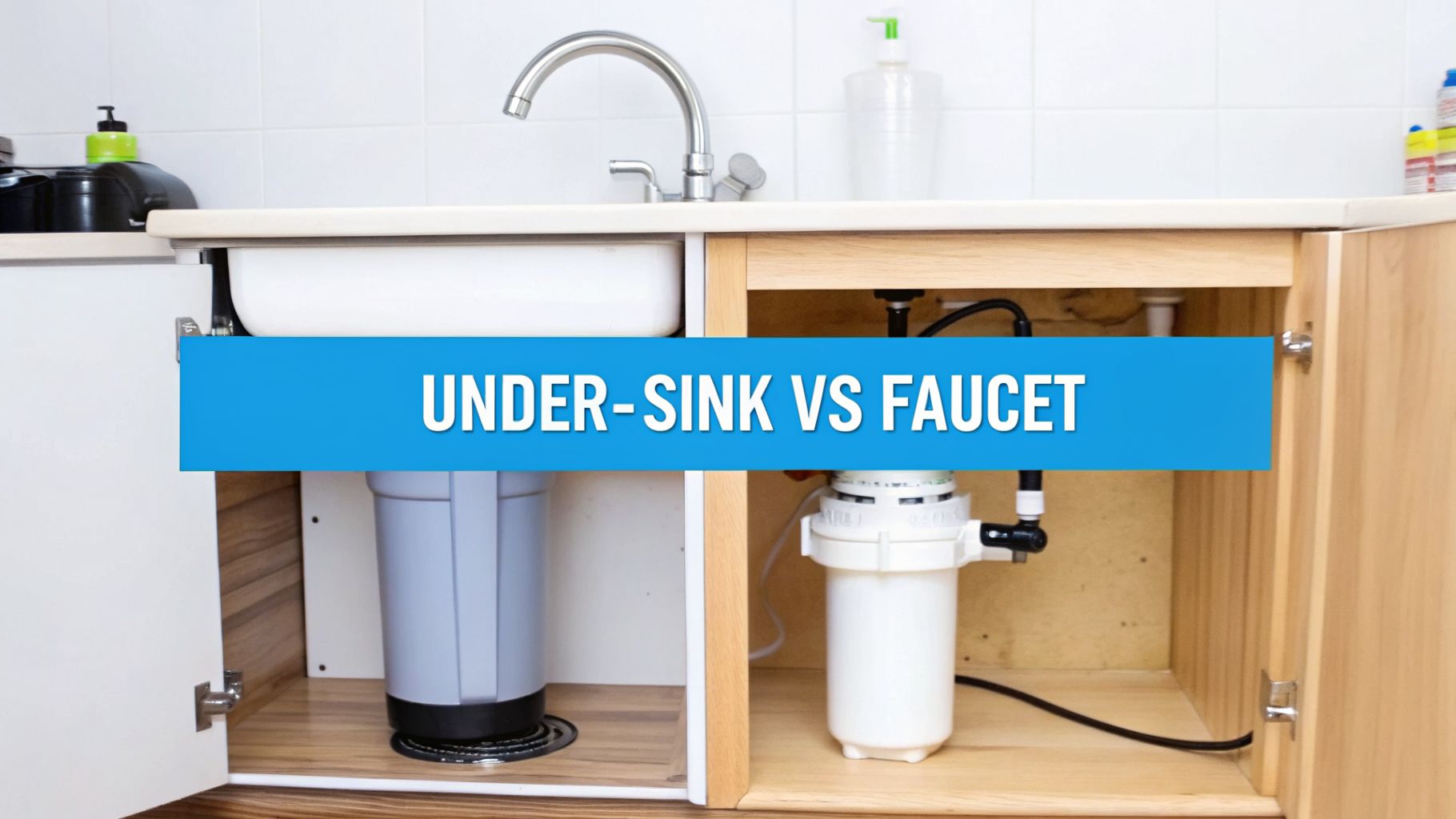
Two under-sink water filtration systems, one grey and one white, inside kitchen cabinets below a sink.

When you start exploring sink water filtration systems, you’ll quickly discover two main contenders: under-sink filters and faucet-mount filters. The choice boils down to a classic showdown: out-of-sight power versus grab-and-go convenience.

Think of it like choosing your home audio. An under-sink filter is like a custom-installed surround sound system—powerful, completely integrated, and invisible. A faucet-mount filter is more like a top-notch Bluetooth speaker; it's a breeze to set up, affordable, and delivers great results without any renovation.

Both will give you better water, but they’re designed for different homes, different priorities, and different people. Let’s dive into what makes them tick so you can figure out which one is your perfect match.

Under-Sink Filters: The Out-of-Sight Powerhouse

Just as the name suggests, these systems are installed right in the cabinet beneath your kitchen sink. They tap directly into your cold water line, sending purified water to either your main kitchen faucet or, more commonly, a sleek, dedicated tap right on your countertop.

These systems are the heavy lifters of home water filtration. Because they have more space to work with, they use larger, more robust filter cartridges. This means they can target a much wider range of contaminants, and you won't have to change the filters nearly as often.

Here's why people fall in love with under-sink systems:

  • Superior Filtration: They can handle multi-stage filtration, including powerful methods like Reverse Osmosis (RO) that can remove up to 99% of nasty stuff like dissolved solids, heavy metals, and chemicals.
  • Longer Filter Life: Bigger filters mean less hassle. You might only have to swap them out every 6 to 12 months—sometimes even longer.
  • Uncluttered Countertops: Everything is tucked away. The only thing you see is a slim, elegant dispenser faucet next to your main one.

The trade-offs? The installation is more involved and might require a bit of plumbing know-how (or a call to a professional). They also carry a higher upfront cost. But if your goal is maximum purification and long-term convenience, an under-sink system is tough to beat.

Faucet-Mount Filters: The Convenient Clip-On

Faucet-mount filters are all about simplicity. These clever little devices screw directly onto the end of your faucet, usually without any tools, in just a couple of minutes. A small lever on the side lets you instantly switch between filtered water for drinking and regular tap water for washing dishes.

Their biggest advantage is their accessibility. They are very budget-friendly and the dead-simple installation makes them a perfect fit for renters or anyone who'd rather not mess with their plumbing.

While they are incredibly convenient, their compact size limits their filtration capacity compared to their under-sink counterparts. They are fantastic for improving taste and odor but may not be the best solution for more serious contamination concerns.

When looking at what attaches to your faucet, it’s also worth considering other add-ons like high-efficiency aerators for kitchen faucets, which can help you save on your water bill.

Under-Sink vs. Faucet-Mount Filters At a Glance

So, how do they really stack up head-to-head? This table breaks down the key differences to make your decision a little easier.

Feature Under-Sink Systems Faucet-Mount Systems
Filtration Power High (can remove a wide range of contaminants, including lead, VOCs, and TDS) Moderate (primarily removes chlorine, improves taste and odor)
Installation Moderate to difficult (often requires plumbing work) Very Easy (clips on in minutes, no tools needed)
Kitchen Space Uses cabinet space, keeps counters clear Attaches to faucet, visible on the sink
Filter Lifespan Long (6-12+ months) Short (2-3 months)
Upfront Cost Higher Lower
Best For Homeowners wanting comprehensive filtration Renters, budget-conscious users, and simple taste/odor issues

Ultimately, choosing your filter is about finding the right balance. You have to weigh your water quality needs against your budget and how much time you're willing to put into installation and maintenance.

How Sink Water Filters Actually Clean Your Water

Ever wondered what’s happening inside that filter under your sink? It’s not magic, but a series of smart, scientific steps that grab the gunk and let the good stuff—clean water—flow through to your glass.

Think of it like a bouncer at an exclusive club. Each filtration stage has a specific job, checking for and kicking out different types of unwanted contaminants. Once you understand who does what, you can pick the right system to protect your family's water.

Activated Carbon: The Contaminant Sponge

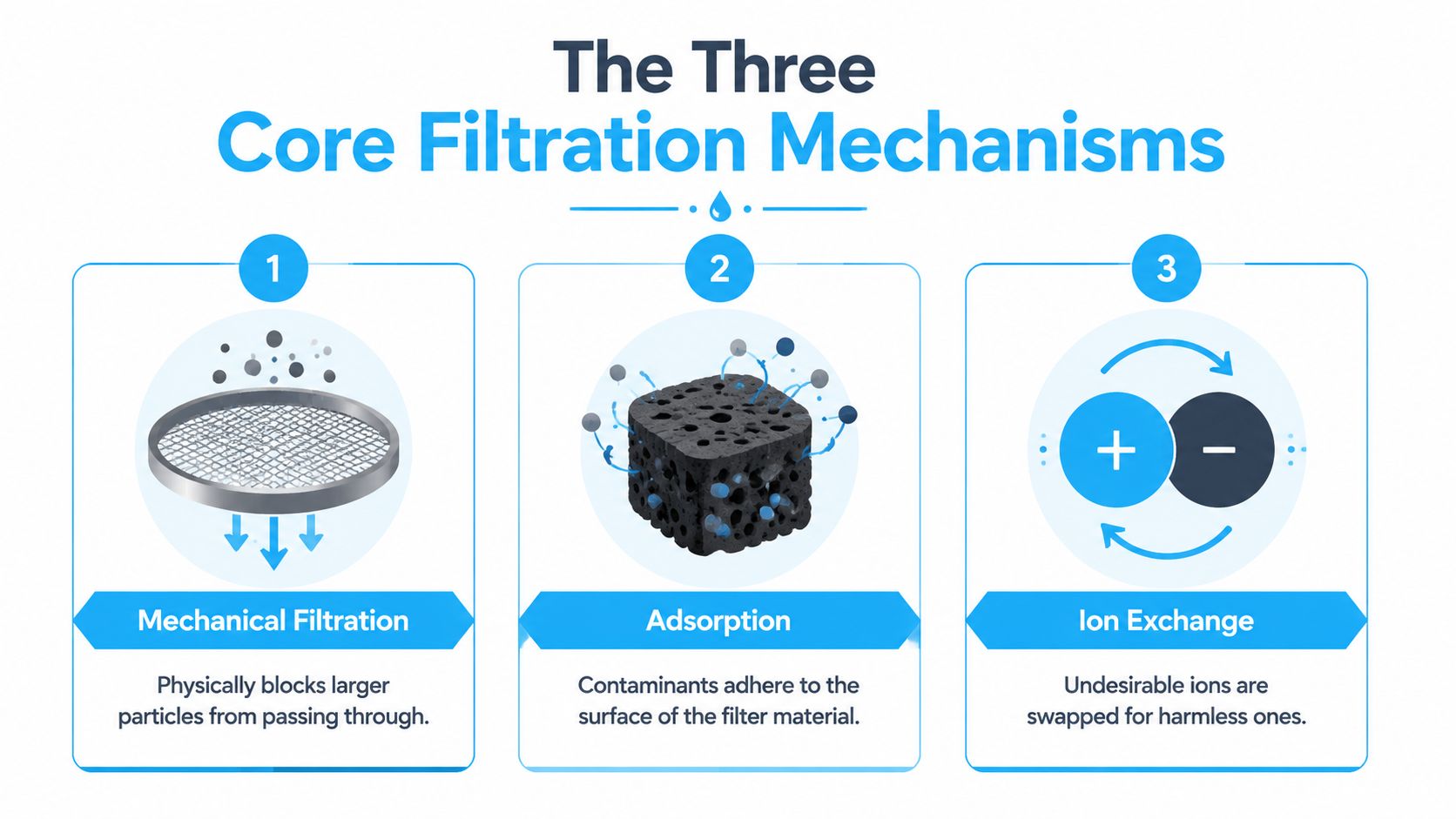
The workhorse of almost every sink filter is activated carbon. It’s the single best tool for making your water taste and smell better, fast. Imagine a sponge with a massive surface area, but instead of soaking up water, it’s designed to trap chemical impurities.

To make it, carbon granules are treated with oxygen, which creates millions of microscopic pores. When water passes over it, a process called adsorption kicks in. Nasty stuff like chlorine, pesticides, and volatile organic compounds (VOCs) that give water off-tastes and odors get stuck to the carbon’s surface, while the clean water passes by.

This is why even a simple faucet-mounted filter can make such a huge difference. It’s a master at getting rid of that “public pool” chlorine smell.

Bottom line: Activated carbon is like a magnet for the most common things that make water taste and smell bad. It’s your first line of defense for better-tasting water right from the tap.

Reverse Osmosis: The Ultimate Gatekeeper

Carbon is fantastic for improving taste, but what about the contaminants you can't see, taste, or smell? That’s where Reverse Osmosis (RO) takes over. This is one of the most powerful purification methods you can get for your home. If carbon is a sponge, RO is a high-security checkpoint.

An RO system uses your home’s water pressure to force water through a special semipermeable membrane. This membrane is incredibly fine—its pores are only about 0.0001 microns wide. That’s so small that pretty much only pure water molecules can squeeze through.

So what gets left behind? Just about everything else.

  • Dissolved Solids: Salts, nitrates, and even fluoride.
  • Heavy Metals: Lead, arsenic, chromium, and mercury are stopped in their tracks.
  • Other Contaminants: It's also highly effective against tiny things like bacteria and viruses.

Because it’s so thorough, RO is the go-to choice for anyone dealing with serious water quality issues. It's a technology that dominates the market, with its share expected to hit 38.7% by 2026, mainly because people trust its power to remove heavy metals and other tough contaminants. As more families invest in these systems, you can check out more data on water purifier market trends to see how the technology is evolving.

One thing to know is that the RO process is so fine it can also strip out beneficial minerals. To fix this, many modern RO systems add a remineralization stage at the end. This step puts back a small amount of healthy minerals like calcium and magnesium, which actually improves the water’s taste and brings it to a more natural pH.

Other Key Filtration Methods

Beyond carbon and RO, some systems use extra stages to tackle specific problems. One you'll often see is Kinetic Degradation Fluxion (KDF).

KDF is a filter media made from high-purity copper-zinc granules. When water flows through it, an electrochemical reaction happens that reduces heavy metals like lead, mercury, and iron. It also has another key job: it helps control the growth of bacteria and algae inside the filter itself. This protects the carbon filter that often comes after it, helping it last longer and work more effectively. You’ll frequently find KDF paired with carbon in multi-stage systems for a really solid, broad defense against contaminants.

How to Choose the Right Filter for Your Home

Figuring out the "best" sink water filter is a personal decision. There’s no one-size-fits-all answer.

If all you're trying to do is get rid of a slight chlorine taste, a powerful, multi-stage system is total overkill. On the flip side, a simple faucet filter isn't going to cut it if you're worried about lead from old pipes. The right choice always starts with one thing: knowing what’s actually in your water.

Think of yourself as a water detective. Your first job is to gather some evidence. This is the single most important step in the whole process because it ensures you buy a filter that actually solves your problem.

Start with a Water Quality Report

If your water comes from a city or town, your first clue is free. It’s called a Consumer Confidence Report (CCR). The EPA requires every community water supplier to give their customers this report every year.

It’s basically a scorecard for your water, showing what contaminants have been detected over the past year. You can usually find it right on your local water utility’s website. This report gives you a baseline for things like chlorine, lead, nitrates, and other regulated stuff your filter might need to tackle.

Got a private well? Then you're the one in charge of testing. You can grab an at-home test kit or, for a much more detailed picture, send a sample to a state-certified lab. This is a must-do, as well water can have surprises like bacteria or high iron levels that you won't find in treated city water. For more in-depth guidance, you can explore our collection of expert advice on water filtration to help you along.

Match the Filter to the Foe

Once you have your "evidence" from a water report or lab test, you can pick your weapon. It's all about matching the right filtration technology to the specific contaminants you're trying to get rid of.

Here’s how it usually breaks down:

  • Problem: Your water tastes and smells like a swimming pool.

  • Solution: An activated carbon filter is your best friend here. It’s fantastic at grabbing the chlorine and other chemicals that cause those bad tastes and odors. A simple faucet filter or a basic under-sink unit will do the job perfectly.

  • Problem: Your water report shows lead, arsenic, or nitrates are a problem, or you live near industrial areas.

  • Solution: This is a job for the heavy-hitter: a Reverse Osmosis (RO) system. Its special membrane is like a bouncer at an exclusive club, blocking an incredibly wide range of contaminants that carbon filters just can't handle.

  • Problem: You've got bad taste and you're worried about things like heavy metals.

  • Solution: A multi-stage under-sink system is a great middle ground. These combine different filter types, like activated carbon and sediment filters, to give you broad protection without going to a full RO setup.

This handy chart can help you visualize the decision process. You start with your main concern and follow it to the right technology.

A flowchart guides users to choose a water filter based on taste, odor, or other contaminants.

The key is to identify your main problem first. That will lead you straight to the most effective and budget-friendly filter for your home.

Decode the Certifications

So how do you know if a filter really does what the box says it does? You look for proof from a third party. In the water filter world, the gold standard is a certification from the NSF (National Sanitation Foundation).

An NSF/ANSI certification is your guarantee that a filter has been rigorously tested by an independent lab. It proves the product meets strict standards for safety and performance, so you know it’s not just marketing fluff.

When you're shopping, keep an eye out for these key certifications:

  • NSF/ANSI 42: This one’s for aesthetic effects. A filter with this seal is proven to reduce things that affect taste and smell, like chlorine. It makes your water more pleasant to drink.

  • NSF/ANSI 53: This is the big one for health effects. If a filter has this, it's been tested and verified to reduce specific health-related contaminants like lead, mercury, or VOCs.

  • NSF/ANSI 58: This certification applies only to Reverse Osmosis systems. It confirms the system’s ability to reduce a long list of tough contaminants, including arsenic, nitrates, and total dissolved solids (TDS).

Don't just take a company's word for it. Look for that official NSF seal on the box or in the product manual. Taking an evidence-based approach is the best way to choose a system that delivers real protection and true peace of mind.

Understanding Installation and Long-Term Costs

A water filter, stacked and scattered coins, and a calendar on a wooden desk, symbolizing installation costs and scheduling.

Choosing the perfect sink water filtration system is a great first step. But the real journey begins when you get it home, and that involves both the initial setup and the ongoing upkeep. It's crucial to look beyond the sticker price and understand the total cost of ownership if you want to make a smart investment in your home's water quality.

This means factoring in everything—from getting the system installed to buying replacement filters down the road. Getting a clear picture of these expenses from the start ensures you can budget properly and pick a system that delivers both clean water and genuine value for years to come.

Navigating the Installation Process

The time, effort, and money it takes to install a sink water filter can vary wildly from one system to the next. On one end, you have what might be the easiest DIY project ever.

  • Faucet-Mount Filters: These are literally designed to be installed without any tools. You just unscrew the little aerator on your faucet, screw the filter on, and you're done. The whole thing usually takes less than five minutes.

  • Basic Under-Sink Systems: Many of the simpler single or dual-cartridge systems are also made with the homeowner in mind. They often come with color-coded hoses and quick-connect fittings, so all you might need is a basic wrench and a little bit of patience.

  • Complex RO Systems: This is where things get more involved. Reverse Osmosis systems are the heavy-lifters of water filtration, and their installation reflects that. You'll likely need to drill a hole in your countertop for a separate, dedicated faucet and also tap into your sink's drain line for the wastewater. While a handy person can definitely tackle this, it’s often a job best left to a professional.

If you're not comfortable with plumbing, calling in a pro ensures a clean, leak-free setup and gives you total peace of mind. The principles of quality plumbing work in Dubai are universal—a proper installation is key to a system working correctly from day one.

Calculating the True Cost of Ownership

The initial purchase price is a one-time thing, but the filters are a recurring cost. This is the single most important detail when you're trying to figure out the true, long-term price of your system. A cheap unit that needs new filters every other month can easily end up costing you more than a pricier system with long-lasting cartridges.

The real value of a sink water filtration system is found by looking at its annual cost. Calculate how much you'll spend on replacement filters per year to see the complete financial picture.

For instance, a $50 faucet-mount filter might look like a steal. But if its $20 replacement cartridge only lasts three months, you're actually spending $80 every single year. Compare that to a $200 under-sink system whose $60 filter lasts a full year. The more expensive system actually saves you money over time.

It's clear that homeowners are prioritizing clean water. The global water purification filters market was valued at a staggering USD 44.22 billion in 2024 and is expected to climb to USD 62.53 billion by 2034. This intense competition is great for us, as it pushes manufacturers to create filters that last longer and perform better. You can read more about these water purification market projections to get a sense of where the industry is heading.

Staying on Top of Filter Replacements

The number one way a water filter fails is simple: people forget to change the cartridge. An old, clogged filter doesn't just stop removing contaminants; it can also slow your water flow down to a frustrating trickle and even become a breeding ground for bacteria.

Most manufacturers suggest replacing standard filters every 6 to 12 months, but this can change based on how much water you use and how contaminated it is to begin with. RO membranes are the exception, typically lasting much longer—often 2 to 3 years.

Here’s how to make sure you never miss a change:

  1. Look for an Indicator: Many systems now come with a small LED light that changes color or an audible timer that beeps when it's time for a new filter.
  2. Use Your Calendar: If your system is low-tech, just use your phone. The day you install a new filter, set a recurring calendar reminder for its replacement date.
  3. Watch the Water Flow: A noticeable drop in water pressure from the filtered tap is a dead giveaway. If the flow slows down, the filter is clogged and ready to be replaced.

Common Questions About Home Water Filtration

Deciding to add a water filter under your sink is a great move, but it's totally normal to have a few questions before you start. Let's clear up some of the most common things people wonder about. We'll give you straight, simple answers to help you feel good about your choice.

Will an Under Sink Water Filter Reduce My Water Pressure?

This is probably the most common worry we hear, and the short answer is: it depends on the system. For a standard under-sink cartridge filter, the impact on your water pressure is usually so small you won't even notice a change at your main faucet.

Reverse Osmosis (RO) systems are a different beast. They work by forcing water through an incredibly fine membrane to get the highest level of purity, and that process does slow things down quite a bit.

But don't worry, they've already solved for that. Almost every RO system includes a small storage tank. This tank holds a reserve of purified water, ready to go. When you turn on the special RO faucet, you get a strong, steady stream. The system then quietly gets to work refilling the tank so you're never left waiting.

How Do I Know When to Change My Filter Cartridges?

Forgetting to change your filters is the number one reason a system stops working well. A clogged filter doesn't just fail to remove contaminants; it can slow your water flow to a trickle and even become a place for bacteria to grow.

Thankfully, you don't have to rely on memory alone. Many modern sink water filtration systems have built-in reminders, from a simple sticker for the date to an LED light that switches from green to red when it's time for a change.

If your system is more basic, just watch for these tell-tale signs:

  • Check the Manual: Start with the manufacturer's suggestion. It’s usually every 6 to 12 months for carbon or sediment filters. RO membranes are tougher and can last 2 to 3 years.
  • Slow Water Flow: If your filtered water starts sputtering out, that's a classic sign the filter is packed with gunk and needs to be replaced.
  • The Bad Taste Comes Back: Notice that old chlorine or musty taste again? Your filter is officially tapped out. Time for a new one.

A pro tip? Just set a recurring reminder on your phone’s calendar. It’s a foolproof way to stay on top of it.

Can I Install an Under Sink Filtration System Myself?

Absolutely. Most sink filters today are designed so that a handy homeowner can install them. The difficulty really just depends on the type of system you choose. Faucet-mount filters are the easiest—they just snap onto your tap in a few seconds, no tools required.

A lot of the single-cartridge under-sink systems are also very DIY-friendly. They often come with color-coded tubes and quick-connect fittings that make the job much simpler. If you can handle a basic wrench and follow a set of instructions, you can probably get it done in less than an hour.

Reverse Osmosis systems are a bit more involved. The installation usually means drilling a hole in your countertop for the new faucet and connecting a line to your sink's drain pipe. Plenty of people with some basic plumbing confidence do it themselves, but there's no shame in calling a plumber to ensure it's done right and without any leaks.

Do Water Filters Remove Healthy Minerals?

That's a fantastic question, and it gets right to the heart of how different filters work.

Your standard activated carbon, sediment, and KDF filters are what you might call "smart" filters. They are designed to target specific troublemakers like chlorine, lead, and pesticides while letting beneficial minerals like calcium and magnesium pass right on through.

Reverse Osmosis, on the other hand, is a powerhouse. It's so thorough that it strips out nearly everything—including those healthy minerals. This can sometimes leave the water tasting a little flat or even slightly acidic.

To fix this, many top-tier RO systems now come with a remineralization stage. After all the intense purification, the water flows through one last cartridge that adds a balanced blend of healthy minerals back in. This does two great things: it makes the water taste crisp and refreshing, and it raises the pH to a more natural, alkaline level.

It’s the perfect finishing touch, giving you the best of both worlds: incredibly pure water that also tastes fantastic.


At Water Filter Advisor, our mission is to give you the knowledge you need to make the best choice for your home's water. We have everything from deep-dive guides to honest reviews to help you find the right filter for your family. Start your journey to better water by exploring our resources at https://www.waterfilteradvisor.com.

Finding the Best RO System for Your Home in 2026

When you're hunting for the best RO system, it really boils down to one thing: finding a unit that wages war on the specific junk in your water, fits your home, and doesn't make your wallet cry. The best systems out there are the ones that give you total confidence in every single glass.

Why Finding the Right RO System Matters

A father and child fill a glass with pure, filtered water from a modern kitchen tap.

It doesn't matter if your water comes from the city or a private well—you can never be too sure what's hitching a ride in it. City water is treated, sure, but that doesn't stop it from tasting like a swimming pool or carrying disinfection byproducts. Worse, ancient pipes can leach lead into your water long after it leaves the treatment plant.

If you're on well water, you've got a whole different cast of characters to worry about. Farm runoff can spike nitrate levels, and natural elements like arsenic or radium can be hiding in your water with no taste or smell to warn you. These are the invisible troublemakers that have families searching for something stronger than a basic pitcher filter.

The Best Defense for Your Home's Water

Reverse osmosis (RO) is considered the top-tier solution for home water purification for a good reason—it’s a ruthless contaminant-killer. An RO system works by forcing water through a special membrane that strips out up to 99% of total dissolved solids (TDS). It catches an enormous range of contaminants that other filters just can't handle:

  • Heavy metals like lead, mercury, and arsenic
  • Chemicals like chlorine and fluoride
  • Dissolved salts, nitrates, and sulfates
  • Microscopic organisms like Giardia and Cryptosporidium

More and more people are turning to this technology. The global RO system market, valued at USD 9.26 billion in 2025, is expected to hit USD 14.81 billion by 2034. That growth is all about people wanting to take control of their water quality. You can see the data yourself in market research on reverse osmosis systems.

Think of an RO system as the final line of defense inside your home. It’s a reliable guard against a huge list of impurities, giving you peace of mind that the water your family drinks and cooks with is truly clean.

This guide will walk you through everything you need to know to pick the best RO system for your house. We'll break down the tech, compare the different types of units, and point out the features that really matter so you can make a solid choice.

How Reverse Osmosis Guarantees Pure Water

You've probably heard of reverse osmosis, and it might sound a little like science fiction. But the idea behind it is actually pretty simple. Imagine a filter so ridiculously fine that it only lets pure water molecules pass through, leaving virtually everything else behind. That's RO in a nutshell.

The core of any RO system is its semipermeable membrane. This isn't your average filter; its pores are incredibly tiny, about 0.0001 microns wide. For perspective, a single human hair is about 75 microns thick. Only water can squeeze through these microscopic openings. Unwanted guests like heavy metals, salts, and other dissolved solids are physically too large to pass and get unceremoniously flushed away.

This is why RO is the gold standard for home water purification. It removes a massive range of impurities that standard filters just can't touch—we're talking lead, arsenic, fluoride, dissolved salts, and even some bacteria and viruses. It’s a physical barrier that separates the good stuff (pure H₂O) from the bad.

The Teamwork of Multi-Stage Filtration

Of course, that powerful membrane doesn't work alone. A good RO system is a multi-stage team, with each filter playing a specific role to protect the membrane and deliver the best possible water.

  1. Sediment Pre-Filter: This is the bouncer at the door. Its job is to catch the big stuff—rust, dirt, sand, and any other sediment floating in your water. Taking this debris out first is crucial to prevent the more sensitive filters down the line from getting clogged up.

  2. Carbon Pre-Filter: After the sediment filter, water moves through at least one carbon filter. Carbon is a superstar at grabbing chemicals, especially the chlorine and chloramines that cities use for disinfection. This step is vital because chlorine will absolutely destroy a delicate RO membrane over time. As a bonus, it also gets rid of foul tastes and odors.

  3. The RO Membrane: Here's where the real magic happens. With the path cleared by the pre-filters, water is forced through the RO membrane. This is the stage that rejects up to 99% of all total dissolved contaminants, washing them right down the drain. Bye-bye, bad guys.

  4. Post-Filter/Polishing Filter: Once the water leaves the storage tank, it gets one last pass through a final "polishing" filter. This is usually another carbon filter that mops up any residual tastes or odors the water might have picked up in the tank. The result is exceptionally crisp, clean water that’s a joy to drink.

Why Rejection Rate and TDS Matter

As you shop for a system, you'll see terms like "TDS" and "rejection rate" thrown around. Total Dissolved Solids (TDS) is just a measure of everything dissolved in your water—minerals, salts, metals, you name it. A high TDS reading doesn't automatically mean your water is dangerous, but it's a good indicator that there's a lot of stuff in there you probably don't want to drink.

The rejection rate tells you exactly how much of that TDS is being removed. This is where the thin-film composite (TFC) membrane shines. It’s so good at its job that it has completely changed the game for home filtration. In fact, TFC membranes powered over 91% of the RO market in 2022 because they can achieve rejection rates of up to 99.9% for nasty contaminants like lead and arsenic. You can see more on the RO membrane industry's impressive growth in recent reports.

A high rejection rate is the ultimate proof of performance. It's a direct measure of how well the system protects your family, turning unpredictable tap water into a consistently pure and safe source of hydration.

Choosing the Right RO System for Your Home

Alright, let's get practical. Knowing the science behind RO is one thing, but picking the right unit for your kitchen is where it really counts. Forget about finding one single “best” model—the best RO system is the one that fits your home, your water, and your life.

We're looking at three main players here: under-sink, countertop, and whole-house systems. Each one is built to solve a different problem, whether you’re short on space or dealing with seriously troubled water straight from the source. Let's walk through some real-world situations to see which one makes sense for you.

The Best RO System for Different Scenarios

The right choice for a family of four who owns their home is going to be totally different from what a student in a small apartment needs. A homeowner wrestling with nasty well water contaminants needs a heavy-duty solution, while someone in the city might just want their tap water to taste better.

Let's break down who each system is really for. This quick decision tree can help you visualize where you fall.

Flowchart guiding users to pick the best RO water filtration system based on space and permanence.

As you can see, a couple of quick questions about your space and how permanent you want the setup to be can point you in the right direction fast.

Under-Sink Systems: The Family Standard

For most homeowners and families, an under-sink RO system is the undisputed champ. These units get tucked away neatly inside your kitchen cabinet, hooking directly into your cold-water line. You get pure, filtered water on-demand from a separate, dedicated faucet right on your sink.

It's the perfect "set it and forget it" option. You get an endless supply of top-quality water for drinking and cooking without cluttering up your counters. If you're planning a kitchen remodeling project, that’s the ideal time to install one, since the plumbing work can be done along with everything else.

Countertop Systems: The Renter's Ally

What if you can't go drilling holes or messing with plumbing? If you're renting, living in a dorm, or just have zero space under your sink, a countertop RO system is your new best friend. These are completely self-contained units that work right out of the box.

Just plug it in, fill the tank with tap water, and it does the rest. It’s the ultimate choice for anyone who needs portability or can’t make permanent changes to their plumbing. You get all the filtration power of a bigger system with the convenience of a coffee maker. They take up a bit of counter space, sure, but you can take it with you when you move.

Whole-House Systems: The Ultimate Guardian

For those facing major water quality headaches across the entire house, only a whole-house RO system will do. We're not just talking about drinking water here—this is about protecting your pipes, dishwasher, washing machine, and even your skin and hair from hard water, iron, sulfur, and other harsh contaminants.

These are serious, large-scale systems installed where your main water line enters the house. Every single tap, from the kitchen to the shower, will deliver purified water. Because they process so much water, they almost always need a large storage tank and a booster pump to maintain strong, steady water pressure throughout your home. This is the best RO system for anyone on problematic well water or in a city with exceptionally poor water quality.

Comparing RO System Types for Your Home

To put it all together, this table gives you a clear, side-by-side look at how these systems stack up. Use it to quickly match your needs with the right technology.

Factor Under-Sink RO System Countertop RO System Whole-House RO System
Ideal User Homeowners, families Renters, apartment dwellers, students Homeowners with severe water issues
Installation DIY-friendly; requires plumbing connections None, plug-and-play Professional plumber required
Footprint Hidden in a cabinet Takes up counter space Large, requires dedicated space (garage, basement)
Water Output Dedicated faucet for drinking/cooking Batches of purified water Purified water at every tap in the home
Portability Permanent installation Highly portable Not portable; a permanent home fixture

At the end of the day, picking the right system comes down to knowing your own situation. Once you understand your water quality, living arrangement, and budget, you can make a choice with confidence. For more targeted help with a wide range of water concerns, you might find the helpful advice at Water Filter Advisor useful.

Key Features to Look for in an RO System

Assortment of water filtration system parts, including different-sized filter cartridges, tubing, and connectors.

When you start shopping for an RO system, the spec sheets can get confusing fast. But here's the bottom line: finding the best RO system isn't about getting the most features. It's about finding the right features to fix your specific water problems.

Let's cut through the marketing fluff. This is the no-nonsense buyer's checklist, focusing on the criteria that actually make a difference in the performance and safety of your drinking water.

Contaminant Removal Performance

An RO system’s main job is to pull contaminants out of your water. You shouldn’t have to just trust a manufacturer’s claims. That’s where third-party certifications from groups like the NSF (National Sanitation Foundation) and ANSI (American National Standards Institute) come in. They're not optional; they're proof.

Think of these certifications as a guarantee that the system has been put through its paces and performs as stated. They provide a clear, objective benchmark for what you're buying.

  • NSF/ANSI 58: This is the big one for reverse osmosis systems. It verifies the system’s ability to reduce nasty stuff like lead, arsenic, fluoride, and overall TDS (Total Dissolved Solids). If a system has this certification, you know it works.

  • NSF/ANSI 42: This standard deals with aesthetics—taste and smell. It certifies that the system effectively removes chlorine and other things that make tap water unpleasant. It's less about health and more about getting that crisp, clean flavor.

A system without these certifications is a gamble. The best RO system will always have its performance backed by a reputable third party.

Water Production Rate and System Capacity

How much pure water do you actually need in a day? Your answer points you to the right system capacity, which is measured in Gallons Per Day (GPD). This number tells you the maximum amount of water a system can produce in 24 hours under perfect conditions.

If you live alone, a 50 GPD system might be plenty. But for a big family that's always cooking, you’ll want to look at 75 GPD or even higher. It's important to know that GPD isn't the same as flow rate—the speed water comes out of your faucet depends more on water pressure and the system's tank.

Think of GPD like a car's top speed—it's an indicator of the machine's overall power. A higher GPD just means the system can refill its storage tank faster, so you're less likely to run out of pure water when you're filling pots or have guests over.

Tank vs. Tankless Designs

You'll have to choose between a classic RO system with a storage tank and a newer, tankless model. This decision affects everything from how much space you lose under the sink to how fast your glass fills up.

Traditional Tank Systems:
These are the tried-and-true workhorses. They store a few gallons of purified water in a pressurized tank so it's ready the moment you open the faucet. They're reliable, don't need electricity, and usually cost less upfront. The tradeoff is the bulky tank taking up cabinet space and the time it takes to refill once emptied.

Tankless RO Systems:
Also known as "on-demand" systems, these sleek units use a booster pump to purify water as you need it. This gets rid of the storage tank, which is a massive win for saving space. You get a continuous flow of freshly filtered water, and they're often more efficient. The downsides? They cost more and require electricity, so no filtered water during a power outage.

Wastewater Efficiency

The RO process works by pushing pure water through a membrane and flushing the leftover contaminants down the drain. The ratio of wastewater to pure water is a major factor in a system's efficiency. Older systems were notoriously bad, with some wasting 4 gallons for every 1 gallon of pure water produced (a 1:4 ratio).

Thankfully, modern systems are much better. You can now find units with waste ratios of 1:2 or even 1:1.

  • 1:1 Ratio: This is the gold standard for efficiency. For every gallon of pure water you get, only one gallon goes to the drain.
  • 1:3 Ratio: This is more common in standard, budget-friendly models. It means three gallons are wasted for every purified gallon.

In areas with high water costs, a more efficient system can pay for its higher price tag over time through water savings alone.

Remineralization for Enhanced Taste

Reverse osmosis is so effective it strips out nearly everything—including healthy minerals like calcium and magnesium that give water a good taste. Without them, the water can taste "flat" or slightly acidic. To fix this, many of the best RO systems now include a remineralization stage.

This is a final filter that adds a small amount of beneficial minerals back into the water after purification. It does two things: it dramatically improves the taste, making it similar to premium bottled water, and it raises the water's pH to make it less acidic. If taste is a top concern for you, definitely look for a system with a remineralization filter.

Calculating the True Cost of an RO System

It’s easy to get hung up on the sticker price when you're shopping for an RO system. But the real cost—the total cost of ownership—is what truly matters. This includes what you'll spend on filters, the water that goes down the drain, and maybe even installation.

Looking at these long-term costs upfront means no nasty surprises later. A cheap system might look like a great deal, but if it wastes tons of water or needs pricey filters, you could end up paying more in the long run. Let's break it down so you can budget smart.

Budgeting for Replacement Filters and Membranes

The biggest recurring cost for any RO system is replacing the filters. These are the parts doing all the heavy lifting, and they don't last forever. You'll need to schedule and budget for replacements to keep your water quality high.

Here’s a common replacement schedule to give you an idea:

  • Pre-Filters (Sediment & Carbon): These are the workhorses that protect the RO membrane. Plan on swapping them out every 6 to 12 months.
  • RO Membrane: This is the heart of your system. It's the most durable part, but you'll still need to replace it every 2 to 5 years, depending on how hard your water is.
  • Post-Filter (Polishing Filter): This filter gives your water that final crisp taste. It’s usually changed once a year.

For a standard under-sink system, you can expect to spend about $75 to $150 a year on filters. It’s an extra cost, for sure, but it’s a small price for pure water on demand and usually much cheaper than buying bottled water all year.

"A year worth of filters cost us roughly $150, which for us has been worth it. Compared to the effort of constantly refilling jugs or buying bottled water, maintenance feels minimal."

The Hidden Cost of Wastewater

Reverse osmosis works by flushing away contaminants, which creates wastewater. This "brine" water goes right down the drain, and the amount can add up on your water bill. A system's efficiency is measured by its pure-water-to-wastewater ratio.

For instance, an older, inefficient system might have a 1:4 ratio. That means for every one gallon of pure water you get, four gallons are wasted. Modern, high-efficiency systems, however, can hit a 1:1 ratio, which cuts that waste dramatically.

Think about it: if your family uses three gallons of RO water a day, switching from a 1:4 system to a 1:1 system can save you over 3,000 gallons of water every single year.

DIY vs Professional Installation Costs

The last piece of the puzzle is installation. If you're handy, most under-sink and countertop RO systems are designed for a straightforward DIY install. With a few basic tools, you can probably get it done in a couple of hours and save some cash.

But if you’re not comfortable with plumbing or you need to drill a new hole in a granite or quartz countertop, calling a pro is the way to go. A plumber will typically charge between $150 and $300 to install an under-sink system. It gives you a leak-free setup and total peace of mind.

For a big whole-house system, professional installation isn't optional—it's a must, and the cost will be higher.

Common Questions About Home RO Systems

Deciding on an RO system is a big step. It’s common to have a few last-minute questions before you commit. We'll cover the most frequent concerns homeowners run into, giving you clear, direct answers so you can make the right choice.

Let's clear up any final doubts about mineral content, filter changes, and installation.

Do RO Systems Remove Healthy Minerals?

One of the first questions people ask is whether reverse osmosis strips out beneficial minerals like calcium and magnesium. The answer is yes. The membrane is designed to remove nearly everything from the water, which includes healthy minerals. This is why some people find pure RO water tastes "flat."

However, the mineral content from water is minimal compared to what you get from food. If you're concerned about taste or mineral loss, many modern RO systems now come with a remineralization filter stage.

A remineralization filter adds small, controlled amounts of minerals like calcium and magnesium back into the water after purification. This improves the flavor—making it taste more like premium bottled water—and also raises the pH, so the water is less acidic.

How Often Will I Need to Replace Filters?

Replacing filters is the main ongoing maintenance for any RO system. The exact schedule depends on your water quality and usage, but following the manufacturer's guidelines is the best way to keep your system running correctly.

A typical replacement schedule for an under-sink RO system looks like this:

  • Pre-Filters (Sediment and Carbon): These do the heavy lifting by trapping sediment and chlorine. Plan on replacing them every 6 to 12 months.
  • RO Membrane: This is the core of the system. It's durable, but its lifespan depends on your water hardness and how well you maintain the pre-filters. Expect it to last 2 to 5 years.
  • Post-Filter (Polishing Filter): This final carbon filter removes any leftover taste or odor from the storage tank. It’s usually replaced once a year.

Many new systems now have filter life indicators—a light or an alert—that tell you exactly when a change is needed, taking out all the guesswork.

Will an RO System Lower My Home's Water Pressure?

This concern depends entirely on which type of system you choose. An under-sink or countertop RO unit will not lower the water pressure in your kitchen sink, shower, or other faucets. These are point-of-use systems that work independently and use their own dedicated faucet, which will have a slower flow because of the intensive filtration process.

A whole-house RO system, on the other hand, is a different story. Since it’s installed on your main water line, it can definitely reduce your home's overall water pressure. To solve this, these systems are almost always installed with a booster pump and a large storage tank to guarantee strong, consistent pressure at every tap.

Is It Possible to Install an RO System Myself?

Yes, absolutely. Most under-sink systems and all countertop models are designed for DIY installation. They come with color-coded tubing, quick-connect fittings, and step-by-step instructions. If you're comfortable with basic home projects, you can probably get it done in an afternoon.

The major exception is a whole-house RO system. These are complex installations that involve cutting into your main water line and doing electrical work for the booster pump. A job this big should always be left to a licensed plumber to ensure it's done safely and meets all local codes.


At Water Filter Advisor, we're here to help you find the right water filtration solution. We provide in-depth guides and unbiased reviews to give you the expert insight needed for a confident decision. Explore our resources to get safer, better-tasting water at home. Learn more at Water Filter Advisor.

A Splash of Genius: Your Guide to Countertop Water Filtration for the Home

Ever wish you had a personal spring of pure, delicious water right in your kitchen? That's the magic of a countertop water filter. Think of it as your personal hydration station, sitting smartly next to your sink, ready to transform your tap water from "meh" to "magnificent" without you having to touch your plumbing.

This is why they've become the rockstars of home water treatment—you get a massive upgrade in water quality without the commitment of a complex installation. They're the perfect sidekick for both homeowners and renters who are thirsty for better water, right now.

The Clear Choice for Convenient, Pure Water

Imagine unboxing a sleek gadget, spending a few minutes setting it up, and instantly having access to crisp, clean water. That’s the brilliant reality of countertop water filtration. These systems masterfully bridge the gap between a simple water pitcher and a full-blown under-sink renovation.

It operates a bit like a high-tech coffee machine, but instead of brewing your morning joe, it perfects your H₂O. You just connect it to your faucet or fill up a reservoir, and it immediately gets to work, evicting funky tastes, weird smells, and a whole rogues' gallery of contaminants. It's this blend of simplicity and power that has so many people raising a glass.

Before we dive into the nitty-gritty, here’s a quick cheat sheet on the main types of countertop filters. This table will help you spot which one might be your perfect match at a glance.

Countertop Water Filtration At a Glance

Filter Type Best For Installation Typical Contaminants Removed
Faucet-Connected High-volume, on-demand filtered water for busy kitchens. Attaches to faucet with a diverter valve. ~10 minutes. Chlorine, lead, sediment, bad tastes, odors.
Dispenser/Gravity-Fed Flexibility and portability. Great for offices, dorms, or kitchens with non-standard faucets. No installation needed. Just fill the reservoir. Chlorine, heavy metals, bacteria, viruses (depending on filter).
Reverse Osmosis (RO) Maximum contaminant removal for the purest possible water. Connects to faucet; requires drain line for wastewater. Fluoride, arsenic, salts, nitrates, and 99%+ of dissolved solids.

Each of these systems brings something unique to the party, but they all deliver on the core promise: better water with zero fuss.

Why Homeowners Are Making the Switch

This isn't just a trend; it's a movement. People are more curious and concerned than ever about what’s lurking in their tap water. In fact, the global market for home water filtration is projected to swell to an impressive USD 7.13 billion by 2026. This boom is fueled by growing awareness and a demand for home solutions that are both effective and easy. You can dive into the data in this home water filtration market analysis.

So, what makes countertop filters the hero of the modern kitchen? It all comes down to a few knockout advantages:

  • Zero-Hassle Installation: You can have most of these units pouring pure water in under 10 minutes, often without needing a single tool. It’s the ultimate plug-and-play upgrade.
  • Perfect for Renters: Since there's no drilling or permanent plumbing work, these are a dream for apartments. When you move, your clean water source comes right along with you.
  • A Difference You Can Taste, Instantly: They are brilliant at banishing common water woes like the smell of chlorine or an "earthy" aftertaste, making every glass of water a pleasure.

Here's the bottom line: a countertop water filter is your ticket to an immediate and significant upgrade in your drinking water. It blends serious filtration power with absolute convenience, putting you back in control of your home’s water quality.

By placing a compact, powerful filter right where you need it most, you gain the peace of mind that every sip is cleaner, safer, and more delicious.

How Do Countertop Water Filters Work Their Magic?

You don't need a degree in chemistry to understand the wizardry happening inside your countertop water filter. These clever devices employ a few different battle-tested methods to purify your water, with each one targeting specific types of unwanted guests.

Think of it like having an elite security team for your water glass. Each "guard" is a specialist trained to stop a particular kind of intruder—from the chlorine that makes your water taste like a swimming pool to invisible bacteria—before it ever reaches you. This multi-stage approach is what makes these home systems so effective; they’re not just straining things out, they’re actively transforming your water on a molecular level.

Let's pull back the curtain on the most common technologies and see how they deliver that crisp, clean taste right to your kitchen.

Activated Carbon: The Contaminant Magnet

Activated carbon is the undisputed champion of the water filtration world, and for good reason. Picture a tiny, hyper-porous sponge. Its surface is a labyrinth of microscopic nooks and crannies, creating a massive surface area that acts like a powerful magnet for certain chemicals.

As water flows through, a process called adsorption kicks in. This is where chemicals like chlorine, pesticides, and funky-tasting volatile organic compounds (VOCs) get snagged and stuck to the carbon's surface. It's why carbon filters are absolute rockstars at eliminating that "pool water" taste and smell from city tap water.

Ceramic Filtration: The Microscopic Maze

Ceramic filters operate on a simple yet incredibly powerful principle: mechanical filtration. Imagine a maze with passages so tiny that only water molecules can navigate them. The filter itself is a ceramic shell riddled with these minuscule pores, often less than a micron wide.

This physical barrier is like a brick wall for larger contaminants. Anything bigger than the pores—like sediment, protozoan cysts (think Giardia and Cryptosporidium), and most bacteria—is physically blocked from passing through. It's a straightforward, chemical-free method for tackling major microbiological threats in your home.

The real secret sauce of modern countertop systems is combining these methods. Many filters use a ceramic outer shell to block microbes and an activated carbon core to grab chemicals, giving you the best of both worlds.

Reverse Osmosis: The Ultimate Water Purifier

When you demand the absolute purest water your home can produce, Reverse Osmosis (RO) is the undisputed king. Think of an RO system as an ultra-exclusive bouncer at a club. It uses your home's water pressure to force water through a special semipermeable membrane—a material with pores so infinitesimally small that almost nothing besides H₂O can squeeze through.

This process is incredibly thorough, capable of removing up to 99% of all dissolved solids. RO is the go-to for the tough stuff other filters leave behind, including:

  • Heavy Metals: A champ at removing lead, arsenic, and mercury.
  • Dissolved Salts: Strips out sodium, chloride, and other minerals.
  • Fluoride: One of the only residential methods proven to effectively remove fluoride.

Because the filtration is so fine, it produces a small stream of wastewater that carries the rejected contaminants down the drain. While this makes it a bit less water-efficient, its purification power is second to none for those with serious water quality issues.

Ion Exchange & UV Light: The Specialists

Some home systems bring in extra tools for specific jobs. Ion exchange, for instance, is designed to combat "hard" water. It uses tiny resin beads that cleverly swap out hard mineral ions (like calcium and magnesium) for "softer" sodium ions. This not only improves your water's taste but also cuts down on that scaly buildup in your kettle.

Finally, you might find some high-end units that include UV (ultraviolet) sterilization. Imagine a special light that zaps viruses and bacteria on contact, scrambling their DNA so they can't make you sick. A UV lamp acts as a final, powerful line of defense, ensuring your water is biologically pristine and safe to drink.

So, Which Type of Countertop Filter is Right for You?

Now that we’ve peeked under the hood at the technology, let's talk about the actual hardware you’ll have sitting on your counter. The world of countertop water filtration isn't a one-size-fits-all affair. Each system is engineered to solve a specific problem, fitting different lifestyles, kitchens, and water challenges at home.

Choosing the right one is much easier once you can picture how it would fit into your daily routine. Think of this as going from reading the engine specs to actually taking the car for a test drive. We’ll look at the three main players, giving you a clear idea of which one might be the perfect sidekick for your daily grind.

Gravity-Fed Systems: The Off-Grid Powerhouse

Imagine a storm knocks out your power for a couple of days. The faucet runs dry, but you’re not worried. You have a sleek, stainless-steel gravity-fed filter on your counter, ready to turn potable water—even from a rain barrel—into safe drinking water for your family. That’s the real superpower of these units.

They're beautifully simple: two stacked chambers. You pour water into the top, and gravity does all the work, pulling the water down through powerful filter elements (usually ceramic or carbon block) into the bottom reservoir. Because they need no electricity or plumbing connection, they're the ultimate tool for emergency prep and off-grid living.

  • Best For: Large families who go through a lot of water, anyone wanting an emergency backup, and homes with funky, non-standard faucets that won't connect to a diverter.
  • Key Advantage: They're built like tanks. Unmatched reliability, and you can take them anywhere.
  • Heads-Up: Filtration isn't instant. It takes a little time for gravity to work its magic.

Faucet-Diverter Filters: The Renter’s Best Friend

Now, picture someone living in a rented apartment. They want better water but can’t touch the plumbing. A faucet-diverter filter is the perfect answer. It just screws right onto the existing faucet in minutes, and a small lever lets you switch between regular tap water and clean, filtered water on demand.

This setup is the definition of convenient. When it’s time to move, you just unscrew it and take it with you, leaving no trace. You get a continuous flow of filtered water for drinking and cooking without sacrificing precious fridge space for a pitcher.

These systems are a great example of how accessible clean water at home has become. Their simplicity is a big reason why the global countertop water filter market was valued at an impressive US$11,020 million in 2023 and is still growing. You can dig into the numbers in recent market analysis reports.

Countertop Reverse Osmosis: The Purity Specialist

Finally, think about a family whose local water report shows high levels of tough contaminants like fluoride, arsenic, or just a lot of dissolved solids (TDS). They need the strongest filtration they can get without tearing up their kitchen. A standalone countertop reverse osmosis (RO) system delivers exactly that.

These compact units sit next to the sink, connecting to the faucet when you need them and usually draining a small amount of wastewater. They force water through the same powerful RO membranes found in bigger under-sink models, knocking out over 99% of contaminants. For anyone who wants the absolute highest level of water purity for their home, a countertop RO system is the clear winner—it offers performance other portable filters just can't touch.

Countertop vs Under Sink vs Pitcher Filters

So, how do countertop systems really stack up against the other popular options for the home? Each has its place, but seeing them side-by-side makes the decision much clearer.

Feature Countertop Systems Under-Sink Systems Pitcher Filters
Installation Super easy; often screws onto the faucet in minutes. No tools needed for gravity models. Requires plumbing work and drilling a hole in the countertop. No installation needed; just fill and go.
Performance Excellent; removes a wide range of contaminants, including lead, chlorine, and VOCs. RO models offer top-tier purity. The best performance available; can handle heavy contamination with multi-stage filters and RO. Basic; mainly improves taste and odor by reducing chlorine. Limited on other contaminants.
Convenience On-demand filtered water right from the tap (diverter models) or a large reservoir (gravity models). The most convenient; filtered water comes from a dedicated faucet seamlessly. Not on-demand. Requires constant refilling and waiting.
Cost Mid-range initial cost ($50 – $400). Filter replacements are a recurring expense. Highest initial cost ($200 – $600+), plus potential plumber fees. Lowest initial cost ($20 – $50), but frequent filter replacements add up.
Space Takes up counter space next to the sink. Hidden away under the sink, keeping countertops clear. Takes up space in the refrigerator or on the counter.
Best For Renters, small kitchens, and anyone wanting a balance of performance and easy installation. Homeowners who want the highest level of seamless, invisible filtration. Individuals or small households looking for a simple, low-cost taste improvement.

Ultimately, the best choice boils down to your specific needs. If you're a renter or just want a powerful, easy-to-install solution, countertop filters are hard to beat. If you own your home and want top-tier filtration that's out of sight, an under-sink system might be worth the investment. And for basic taste improvement on a budget, a pitcher is a fine starting point.

What Contaminants Do Countertop Filters Actually Remove?

Think of a countertop water filter as a bouncer for your drinking glass—it decides what gets in and what gets kicked to the curb. While you can't see the action happening inside, these systems are working hard to target a whole host of unwanted stuff. Knowing exactly what a filter is designed to remove is the first step in picking the right one for your home.

Let's be clear: not all contaminants are the same. Some are just annoying, messing with the taste and smell of your water. Others are far more serious, posing real health risks over time. We'll break down the common culprits to see how different filters stack up.

Getting Rid of Bad Tastes and Smells

This is usually the first thing people complain about—the water just tastes… wrong. These are called aesthetic contaminants. While they aren't usually harmful, they can make drinking tap water a real chore.

  • Chlorine: This is the big one. Your city uses it to keep the water supply safe, but it often leaves behind that classic "swimming pool" taste and smell. Activated carbon filters are fantastic at grabbing chlorine, making your water taste crisp and fresh almost instantly.
  • Hydrogen Sulfide: If your water has a "rotten egg" smell, that's hydrogen sulfide. It's a naturally occurring gas, but it's definitely unpleasant. Once again, activated carbon is the hero here, trapping those stinky compounds.
  • Sediment and Turbidity: This is just a fancy way of saying your water has fine particles like sand, silt, or rust that make it look cloudy. Ceramic filters and multi-stage carbon blocks work like a physical screen, straining out this gunk and leaving you with crystal-clear water.

Tackling Dangerous Heavy Metals

Heavy metals are a much bigger deal. Things like lead can leach into the water from old plumbing, and you'd never know it because they're invisible and have no taste. Over time, they can build up in your body and cause serious health problems.

A filter's ability to handle heavy metals really depends on the technology inside. A basic carbon filter might reduce a little lead, but for a real solution, you need something more powerful.

Reverse Osmosis (RO) is the clear winner for removing heavy metals. Its membrane is so fine that it acts as a nearly impenetrable wall, blocking lead, mercury, arsenic, cadmium, and chromium from getting through.

Neutralizing Chemical Threats

Our water supplies can pick up a mix of man-made chemicals from farms and factories. These are the silent threats, from pesticides to industrial byproducts.

  • Pesticides and Herbicides: Chemicals like atrazine can seep into water sources. A good quality activated carbon block filter is great at capturing these types of organic chemicals.
  • Volatile Organic Compounds (VOCs): This is a huge category of chemicals, including things like benzene and trihalomethanes (THMs), which are created when water is treated with chlorine. Carbon filters are your best defense against VOCs.
  • PFAS: You might have heard of these "forever chemicals." They are incredibly tough to get rid of, but reverse osmosis and certain types of specialized activated carbon are the most effective options out there.

Concerns over these chemicals are a big reason why advanced home filtration is becoming so popular. In fact, the market for countertop reverse osmosis systems is expected to hit $13.23 billion by 2025, driven by worries over waterborne diseases that, according to the WHO, cause over 485,000 deaths each year. You can dig into the numbers in this global market forecast on RO purifiers.

Guarding Against Germs

If you're on well water or live in an area that gets boil-water advisories, then bacteria, viruses, and other microbes are your main concern.

  • Bacteria and Protozoan Cysts: The tiny pores in a ceramic filter are small enough to physically block larger bugs like E. coli, Giardia, and Cryptosporidium.
  • Viruses: Viruses are much, much smaller and can sneak past many filters. To truly purify your water, you need a system with UV sterilization. The UV light zaps the DNA of these pathogens, making them totally harmless.

You can find a ton of great information on the NSF website about which certifications match up with specific contaminants.

This image from the NSF site shows why it's so important to look for official certifications. When a product has an NSF/ANSI number on it, you know it's been independently tested to back up its claims, whether it's for lead, cysts, or something else.

Getting Set Up, Staying Maintained, and Sizing Up the Cost

One of the best things about countertop water filters for the home is just how ridiculously easy they are to get going. You can forget about calling a plumber or making major modifications under your sink. Most of these systems are designed to go from the box to pouring pure water in just a few minutes flat.

The whole process is refreshingly simple. For a faucet-diverter model, you just unscrew the little aerator at the end of your faucet and screw on the filter's diverter valve. Flip a tiny switch, and voila—water flows through the filter instead of straight into your sink. Gravity-fed systems? Even easier. Just assemble the chambers, pop in the filter elements, and pour water into the top. It’s a true "no plumber, no problem" situation.

A Simple Plan for Maintenance

Once you’re up and running, keeping that great performance comes down to a little bit of routine maintenance. Think of it like changing the oil in your car—if you skip it, things start to go downhill. For your water filter, that means staying on top of filter changes.

A filter that’s clogged or past its prime simply can't do its job. Your water flow will slow to a trickle, and worse, it might stop removing contaminants effectively. In some cases, a neglected filter can even start releasing the gunk it has already trapped right back into your water.

Following the manufacturer's replacement schedule isn't just a friendly suggestion—it’s the golden rule for ensuring your water stays consistently clean and safe. The easiest way to stay on top of this is to set a reminder on your phone or calendar the day you install a new one.

Here’s a rough guide for how often you'll be swapping out filters:

  • Activated Carbon Cartridges: These common workhorses usually need replacing every 2-4 months, or after filtering around 100-200 gallons.
  • Ceramic Elements: These are built to last, often going for 6-12 months or even longer. A great feature of many ceramic filters is that you can clean them—a quick scrub with a brush can restore water flow and extend their life.
  • Reverse Osmosis (RO) Membranes: The RO membrane is the heart of the system and can last a long time, typically 1-3 years. You'll still need to change out the pre-filters (usually carbon and sediment filters) every 6-12 months to protect it.

Figuring Out the Real Cost of Your Filter

When you're shopping for a countertop water filtration system, don't just stop at the initial price tag. The true cost of ownership is a combination of that upfront purchase and the ongoing expense of new cartridges. It might seem like an extra bill, but when you pit it against buying bottled water, the savings become crystal clear.

Let's break down what a typical year might look like for a family home:

Filtration Method Initial Cost (Average) Annual Replacement Cost (Average) Total First-Year Cost
Countertop Filter $70 $60 $130
Bottled Water (Family) $0 $400+ $400+
Pitcher Filter $30 $120 $150

The numbers don't lie. Even when you factor in the cost of replacement filters, a countertop system is dramatically cheaper than a bottled water habit. You're not just saving a significant amount of money over time; you're also drastically cutting down on plastic waste. It's a smarter move for both your wallet and the planet.

Choosing the Right Countertop Filtration System

Now that you're armed with knowledge about the different technologies and filter types, you're ready to pick a winner. But remember, the "best" countertop filter isn't the one with the most bells and whistles or the highest price. It's the one that fits perfectly into your home and your life.

Think of it as getting a personalized prescription for better water. To figure that out, we just need to answer a few key questions about your home. This will quickly cut through the noise and point you straight to a system that feels like it was made just for you.

Your Personalized Filter Checklist

The goal here is to match a filter's strengths with what you actually need at home. Let’s start with the big questions that will determine your daily happiness with your filter.

  • What's in Your Water? This is the most important question. Do you know what you’re trying to remove? If your main complaint is a strong chlorine taste from city water, a good carbon filter is your best friend. But if you’re genuinely concerned about things like lead, fluoride, or other tricky contaminants, a reverse osmosis system is the heavy-hitter you need.
  • How Much Water Do You Use? A single person living alone might get by just fine with a smaller dispenser. But a busy family of four that’s constantly filling water bottles, cooking pasta, and making coffee will need something with much higher capacity to keep up.
  • What's Your Budget? Don't just look at the upfront price tag. You have to consider the total cost of ownership. That means factoring in the price and lifespan of the replacement cartridges. A cheap unit with expensive filters that need changing every two months can easily cost more over a year than a pricier system with long-lasting cartridges.
  • How Much Counter Space Can You Spare? Let's be honest, kitchen real estate is precious. A slim faucet-diverter model takes up almost no room, while a big gravity-fed system needs a dedicated spot. Grab a tape measure and see what you're working with before you fall in love with a filter that won't fit.

This flowchart can help you visualize the decision-making process, starting with your water's contaminants and moving through your daily use and budget.

When you start with these priorities, you can immediately narrow your search to the type of system that makes the most sense for your home.

By thoughtfully answering each of these questions, you build a clear profile of your ideal countertop water filtration system. This moves you from simply browsing options to making a strategic, informed decision you'll feel great about for years.

The goal is to find a system that blends right into your daily routine, giving you clean, fantastic-tasting water without any fuss. If you’re ready to dive deeper and get more tailored recommendations, you can find a ton of expert advice on water filters here.

Your Top Questions About Countertop Water Filters, Answered

It’s totally normal to have a few questions before you commit to a new water filter for your home. You're making an investment in your family's health and well-being, so getting the details right is crucial.

Let's tackle the most common questions we hear, from what happens to healthy minerals to whether these systems are a good fit for well water. Think of this as your final checklist before finding the perfect filter.

Do These Filters Take Out the Good Stuff, Too?

Great question! The answer really comes down to the type of filtration technology you choose for your home.

Most standard countertop filters, especially those using activated carbon or ceramic shells, are quite selective. They're designed to target and grab contaminants like chlorine and lead while letting beneficial minerals like calcium and magnesium pass right on through. You get cleaner, safer water without stripping out the good stuff.

The main exception here is Reverse Osmosis (RO). An RO system is incredibly thorough, and its membrane is so fine that it removes almost everything—including those minerals. To solve this, many modern countertop RO units now include a remineralization stage that adds a balanced mix of healthy minerals back into the water right before it hits your glass.

How Often Do I Really Need to Change the Filter?

This is a big one, and sticking to the schedule is non-negotiable if you want your filter to keep doing its job. The lifespan of a filter cartridge depends on the specific model, the quality of your tap water, and how much water your household uses.

  • A typical activated carbon filter will last you 2-4 months, which works out to about 100-200 gallons.
  • A high-performance RO membrane can go for 1-3 years, but you'll need to change its pre-filters much more often.

Always, always follow the manufacturer's directions. A filter that's past its prime doesn't just stop working—it can get clogged and become a breeding ground for bacteria. Even worse, it could start releasing all the contaminants it's been holding back into your water. The easiest trick? Set a recurring reminder on your phone's calendar.

Can I Use a Countertop Filter for My Well Water?

You absolutely can, but there's a critical first step for any home on well water: get your water tested. Well water isn't treated by a municipality, so it can have a unique set of challenges, like high iron, bacteria, manganese, or even hydrogen sulfide (that "rotten egg" smell).

Once you have a water test report, you'll know exactly what you're dealing with and can pick a filter certified to remove those specific contaminants. For wells, a multi-stage system is almost always the best bet. A gravity-fed unit with powerful ceramic filters or a countertop RO system usually has the strength needed to make your well water perfectly safe and great-tasting.

Will a Filter Kill My Faucet’s Water Pressure?

This is a common worry, but it’s usually not an issue. If you choose a filter that connects directly to your faucet, you will notice a slightly slower flow only when the diverter is switched to the filter. That's actually a good thing! It means the water is getting enough contact time with the filter media to be purified properly.

Your normal, unfiltered water pressure from the tap remains exactly the same. Even better, standalone units like gravity-fed systems or countertop RO distillers don't connect to your main faucet at all, so they have zero impact on your sink's water pressure.


Ready to stop wondering and start enjoying pure, great-tasting water? At Water Filter Advisor, we provide in-depth reviews, comparisons, and practical guides to help you find the perfect filtration solution for your home. Explore our expert resources and make a confident choice today at https://www.waterfilteradvisor.com.

How to Filter Lead From Water for a Safer Home

When you turn on your faucet and fill a glass, you expect that water to be pure. But what if it's hiding an invisible neurotoxin? Knowing how to filter lead from water isn't just another home improvement task—it's a critical step in protecting your family's health. This guide gives you the actionable steps you need to secure your home's water supply.

The Invisible Threat Lurking in Your Tap Water

A young girl fills a glass with water from a kitchen tap, with a banner stating "LEAD IN TAP WATER".

The water flowing from your kitchen tap looks clean. It’s clear, has no odd smell, and tastes fine. Yet, a hidden danger could be lurking inside—one you can't see, smell, or taste. Lead, a potent heavy metal, can leach into your drinking water from the very pipes that deliver it.

This isn't just a problem for old industrial towns or historic homes. While houses built before the 1980s are at higher risk because of lead pipes and solder, even modern plumbing isn't completely safe. Today's regulations for "lead-free" fixtures still permit trace amounts of lead in brass fittings, faucets, and valves, which can contaminate your water over time.

Why Even Small Amounts of Lead Matter

Here’s the hard truth: there is no safe level of lead exposure. The health effects are serious and often permanent, which makes the need to filter lead from water an urgent issue for every household. The risks are especially high for the most vulnerable among us.

This is why this contaminant needs your immediate attention:

  • Impact on Children: For kids, lead exposure can trigger major developmental delays, learning disabilities, a lower IQ, and behavioral issues. Their small, developing bodies absorb lead far more easily than adults.
  • Risks for Pregnant Women: Lead can move from mother to unborn child through the placenta, where it's linked to premature birth and reduced fetal growth.
  • Adult Health Concerns: In adults, long-term exposure can lead to kidney damage, high blood pressure, and reproductive problems.

This problem points to a troubling global reality. According to the World Health Organization (WHO), about 1 in every 3 children worldwide—a staggering 800 million kids—have elevated blood lead levels from sources that include drinking water. It really drives home the need for effective filtration. At Water Filter Advisor, we recommend certified systems proven to capture over 99% of lead, drastically cutting these risks. You can read more about the global commitment to safer drinking water on sdgs.un.org.

The biggest danger with lead in water is how sneaky it is. Contamination happens silently, day after day, and the health problems can build up for years before you even notice them. This is why being proactive with filtration is the only reliable way forward.

Setting the Stage for a Solution

To fix the problem, you first have to know where it's coming from. Lead usually gets into your water after it leaves the municipal treatment plant. The contamination happens somewhere in the distribution system or right inside your home's plumbing.

The pipes that run from the street to your house, known as service lines, are a common source. Inside your home, older copper pipes joined with lead-based solder or old brass faucets are also big offenders. Because the problem is often so close to your tap, a point-of-use filter is an incredibly powerful defense. By taking control of your water quality right at the source, you create that final, vital barrier to protect your family.

Confirming the Problem: Testing Your Water for Lead

Before you can even think about a filter, you have to know what you’re up against. Guessing just won’t cut it when it comes to your family’s health—you need to know for sure if lead is in your water and, if so, how much.

Think of it as the diagnostic step. You wouldn't take medicine without a diagnosis, right? Same principle. You have two solid options to get the data you need: quick-and-easy DIY kits or a full professional lab test.

The Quick Check: DIY Home Test Kits

For a fast, initial screening, a DIY home test kit is a decent place to start. You can grab these online or at most big-box hardware stores pretty cheaply. Most of them are simple test strips that change color if lead is detected above a certain level, usually around the EPA's action level of 15 parts per billion (ppb).

A word of caution, though: make sure you buy a kit specifically for water, not lead paint. While these kits are handy for a quick "yes" or "no" answer, that's all they give you. They can't tell you the exact concentration, just that you're over a certain threshold. They're great for a first look, but they don't give you the whole story.

For Definitive Answers: Professional Lab Testing

If you want the real numbers, nothing beats sending a sample to a professional lab. This is the gold standard. It’s the most accurate method and gives you a detailed report with the precise concentration of lead, and often a whole list of other potential contaminants, too. This is the hard data that lets you choose the right filter with total confidence.

Finding a certified lab is simple. Just check with your local health department or water utility; they’ll have a list of state-approved labs.

The process is a breeze:

  1. Get the Kit: The lab mails you a collection kit with bottles and clear instructions.
  2. Take the Sample: You’ll need to do a "first draw" sample. It’s critical you follow their instructions to the letter for an accurate result.
  3. Mail It Back: Package it up and send it off.

In a week or two, you’ll have a full report in your hands. This is the information you need to take targeted, effective action.

Pro Tip: The First Draw Technique
The "first draw" is key. It means you collect water from your tap first thing in the morning before you've run the shower, flushed a toilet, or made coffee. This captures the water that’s been sitting in your pipes overnight, which is when the highest amount of lead leaches out. It gives you the worst-case scenario reading, which is exactly what you need to know.

Making Sense of Your Test Results

Your report will show a number in parts per billion (ppb) or micrograms per liter (µg/L). Here's the most important thing to remember: health experts agree that there is no safe level of lead. The EPA's 15 ppb "action level" is a guideline for municipal water systems, not a safety threshold for your home.

Any detectable lead is a signal to take action. Even a reading as low as 5 ppb means you should be seriously considering a filtration system. Now that you have the facts, the guesswork is over. You know the scale of the problem and can move forward to pick the right solution to get that lead out of your water for good.

Choosing the Right Water Filtration System for Your Home

Okay, you've got your water test results. The guessing game is over, and now you have the facts. This is the moment you switch from reactive to proactive, choosing the right defense to get that lead out of your water for good.

Stepping into the world of water filters can feel a bit overwhelming at first, with all the talk of "adsorption," "microns," and "membranes." But don't sweat it. We're going to break down the three most effective technologies for lead removal into plain English so you can feel confident in your choice.

The Powerhouse: Reverse Osmosis (RO)

When you want the absolute highest level of purification, you look at Reverse Osmosis, or RO. Think of it as the ultimate bouncer for your water supply—it has an incredibly strict guest list.

RO systems use household water pressure to push water through a special semi-permeable membrane. This membrane is so fine that only tiny, pure water molecules can pass through. Heavier stuff like lead, arsenic, and fluoride simply can't make it and get flushed away. It's a remarkably effective process, making RO a go-to for anyone who wants to be absolutely sure they’re getting rid of lead.

  • How It Works: It's a multi-stage process. You usually have pre-filters for sediment and chlorine, the RO membrane itself that tackles heavy metals, and a post-filter to polish the taste.
  • Effectiveness: An RO system can strip out 95% to over 99% of lead. That's one of the highest reduction rates you can get in a home system.
  • Common Systems: These are almost always installed right under the sink. They come with a small storage tank and a separate, dedicated faucet for your purified drinking and cooking water.

This flowchart can help you visualize the steps from initial testing to making a decision.

Flowchart outlining a lead water testing decision guide, from initial test to results interpretation.

Whether you start with a quick DIY kit or go straight for a precise lab test, the goal is the same: get solid data so you can pick the right filter.

The Reliable Defender: Activated Carbon Filters

Activated carbon is probably the most familiar filter technology out there, but here's the crucial part: not just any carbon filter will handle lead. To be effective, it must be certified to NSF/ANSI 53.

That certification is your proof that the filter has been independently tested and proven to reduce lead. These filters use a process called adsorption, where lead particles essentially get stuck to the carbon's massive surface area, kind of like a magnet grabbing metal shavings.

The most important thing to remember is the certification. A basic carbon filter just for taste and odor won't do much for lead. Always look for that NSF/ANSI 53 mark on the box.

The great thing about activated carbon is its flexibility. You can find it in all sorts of formats:

  • Faucet Mounts: Super easy to install, perfect for renters or anyone on a budget.
  • Water Pitchers: A convenient option, but make sure it’s NSF/ANSI 53 certified for lead and be prepared for frequent filter changes.
  • Under-Sink Systems: A step up from faucet mounts, with higher capacity and longer-lasting filters.
  • Whole-House Filters: The comprehensive choice that treats every drop of water coming into your home.

Since we started in 2007, we've helped thousands of families find the right solution. Lead in water is a serious issue, but the fixes are incredibly effective. A quality RO system can reject 98-99% of lead, and a certified activated carbon filter can adsorb 95% or more. Installing a proven system is the best way to protect your family right now.

The Specialist: Ion Exchange Systems

Ion exchange is a more specialized technology you’ll often find inside water softeners or as part of a multi-stage filter cartridge. It works like a trade. The filter media is loaded with harmless ions (like sodium) and when water flows through, it swaps them for undesirable ions, like lead.

While it's a great technology, you rarely see ion exchange used as a standalone lead filter for drinking water. It’s more of a team player, often working alongside activated carbon to provide a more complete filtration solution for various water quality issues.

Comparing Top Lead Filtration Technologies

To help you decide, it's useful to see how these top-tier technologies stack up. While a detailed guide to choosing the perfect water filter can provide more depth, this table gives you a quick, side-by-side look.

Filtration Technology Lead Removal Rate Initial Cost Annual Maintenance Best For
Reverse Osmosis 95-99+% $150 – $500+ $50 – $150 Homeowners wanting the highest level of purification for drinking/cooking water.
Activated Carbon (NSF 53) 95-99% $30 – $400 $40 – $120 Renters and homeowners needing a flexible, effective solution for specific taps.
Ion Exchange 95-98% Varies Varies Homes with multiple water issues, often used in conjunction with other filters.

At the end of the day, the best filter is one that's certified for lead, fits your budget, and is easy for you to maintain. Whether it’s a simple faucet filter or a full under-sink RO system, taking this step puts a vital barrier between your family and this invisible threat.

For more in-depth reviews and comparisons, check out our comprehensive advice on water filters at Water Filter Advisor.

A Practical Guide to Filter Installation and Maintenance

Picking out the right filter feels like a huge win, but it’s really only half the job done. A top-of-the-line system is completely worthless if it’s installed incorrectly or you let its maintenance slide. This is where you come in—your ongoing attention is what keeps your filter doing its one critical job: to filter lead from water effectively, day after day.

Think of it like owning a high-performance car. It needs to be set up right from the start and requires regular tune-ups to keep running at its peak. If you skip these steps, you’re not just getting poor performance; you’re creating a false sense of security while contaminants slip right through.

Getting Installation Right the First Time

Proper installation is the foundation for safe water. While a complex whole-house system is a job best left to a professional plumber, many of the point-of-use systems you'll encounter—like faucet mounts and under-sink units—are actually designed for a straightforward DIY setup.

Take a simple faucet-mounted filter, for example. Installing one of those often takes less than five minutes. Seriously. It's usually just a matter of unscrewing your faucet’s aerator and twisting the filter unit on. Most come with a handful of adapters to make sure you get a snug fit on any standard faucet. It’s an empowering first step toward cleaner water.

Under-sink systems, like a Reverse Osmosis (RO) unit, are a bit more involved but are still totally manageable for anyone with basic DIY confidence. The absolute key here is to follow the manufacturer's instructions to the letter. Don’t just skim them. Lay out all the parts, identify them with the manual, and take your time connecting the color-coded tubes. One wrong connection can lead to leaks or a system that doesn’t filter at all.

Your Essential Maintenance Schedule

Once your system is up and running, the real work begins. Maintenance isn't just a suggestion; it's a non-negotiable part of keeping your water safe. An old, clogged filter can’t capture lead. Even worse, it can sometimes do the opposite and release a concentrated burst of trapped contaminants back into your water.

Here’s a practical breakdown of what needs your attention:

  • Filter Cartridge Replacement: This is the big one. Your filter's manual will specify a replacement interval, usually in months or gallons. The day you install it, mark that date on your calendar or set a recurring reminder on your phone. Whatever you do, never try to push a filter past its recommended lifespan.
  • RO System Sanitization: For those with Reverse Osmosis systems, the storage tank can become a home for harmless but unpleasant slime-forming bacteria over time. A good rule of thumb is to sanitize the entire system, tank included, each time you change the filters (typically once a year). This just involves flushing the system with a specialized sanitizing solution.
  • Faucet Aerator Cleaning: Don't forget that little screen at the tip of your faucet! It can trap sediment and particles, including bits that might flake off from old plumbing. Just unscrew it and clean it out every few months to maintain good water flow and hygiene.

Pro Tip: Listen to Your Water
Your own senses can be a fantastic early warning system. If you ever notice a sudden drop in water pressure from your filtered tap, or if the water starts to taste or smell different, that’s a huge red flag. It’s a strong sign your filter is clogged and needs to be replaced right away, even if it’s before the scheduled date.

Heeding the Warning Signs of a Failing Filter

Besides a drop in water flow, other subtle clues can tell you a filter is on its last legs. Many modern systems come with a filter life indicator light, which is your most obvious signal. It usually changes from green to yellow (a warning) and finally to red (replace now).

But don't rely on the light alone. These indicators are often just simple timers and don't actually measure the filter's real-world performance. The most reliable method is sticking to a strict replacement schedule based on the manufacturer's gallon capacity rating. If you have a big family and go through a lot of water, you’ll probably need to replace filters more often than a single person would.

Following these guidelines is the only way to ensure your system continues to reliably filter lead from water, protecting your home and family with every glass you pour.

Simple Habits That Boost Your Water Safety

A person's hands filling a pot with water from a kitchen tap, promoting safe water habits.

While a high-quality filter is your main line of defense, it’s not the only move you can make. A few smart habits can act as a powerful backup, creating an extra layer of protection that works with your filter to keep lead exposure to an absolute minimum.

These aren't complicated changes. They’re small, easy adjustments to your daily routine that make a surprisingly big difference in the quality of your water.

Always Flush Your Pipes in the Morning

Here’s something to think about: when your home is quiet overnight, the water just sits in the pipes. It has hours and hours to pick up lead from older plumbing, solder, or even brass fittings. That means the very first glass of water from the tap in the morning can have the highest lead concentration of the day.

The fix is incredibly simple: flush your pipes. Before you make coffee or fill a glass, just run the cold water for a minute or two. This pushes out that stagnant, lead-heavy water and brings in fresh water from the main.

You don't have to waste it, either. Use that first bit of water for things you won't be drinking:

  • Water your houseplants.
  • Rinse a few dishes from the sink.
  • Fill a bucket for cleaning the floors.

This one habit is probably the easiest and most effective way to support your efforts to filter lead from water.

"The first draw of water in the morning can be a real wild card. By simply running the tap for a minute, you’re not just flushing the line—you’re actively reducing the contaminant load your filter has to deal with, which can even help extend its life."

Never Use Hot Tap Water for Consumption

This is a golden rule in our house: the hot water tap is for cleaning, not for cooking or drinking. Period. Hot water is much more effective at dissolving metals like lead from your plumbing.

It’s tempting to use hot water to get a pot of pasta boiling faster, but it's a risky shortcut. The heat from your water heater actually speeds up the leaching process, potentially delivering a much higher dose of lead straight into your food. Always, always start with cold water and heat it on the stove or in a kettle.

Keep Your Faucet Aerators Clean

You know that little screen on the tip of your faucet? That's an aerator. Its job is to mix air into the water so it doesn't splash everywhere, but it also acts like a tiny net, catching sediment and other gunk. If there's lead in your plumbing, lead particles can get trapped right there.

Every few months, just unscrew the aerators and give them a quick cleaning. A simple rinse and a gentle scrub with an old toothbrush is all it takes to clear out any buildup. It’s a two-minute job that keeps your water flowing clean.

The Flint water crisis back in 2014 was a tough lesson on what happens when corrosion control goes wrong, with some homes testing over 100 ppb for lead. While there's a global push for lead-free water by 2040, filtration is what protects families right now. You can read more about these global water safety initiatives on Frontiersin.org. Combining a good NSF/ANSI 53-certified filter with these simple habits gives you a rock-solid defense against lead.

Common Questions About Filtering Lead From Water

Once you've picked a filtration system and started building better habits, a few questions almost always pop up. Getting these final details right is what gives you real confidence that your home's water is safe. Let's dig into some of the most common things people ask when they're tackling a lead problem.

Getting clear answers on these points helps you know you’ve covered all your bases. From what popular products can't do to knowing when you can finally stop worrying, these details bring your whole water safety plan together.

Will a Standard Water Pitcher Remove Lead?

This is a huge point of confusion, and the answer is not necessarily. Your average water pitcher you grab off the shelf is really just designed to make your water taste and smell better, mostly by reducing chlorine. It’s simply not built to capture heavy metals like lead.

If you want a pitcher that works for lead, you absolutely have to find one that is certified under NSF/ANSI 53 for that specific job. Always check the box or, even better, look it up on the NSF's online database to be sure. Certified pitchers can be a great, convenient option, but remember they hold very little water and the filters need to be changed way more often than an under-sink system.

My House Is New, So Should I Still Be Concerned About Lead?

Having a new home is a fantastic head start, but it’s not a 100% guarantee against lead. Even though lead pipes and solder were banned decades ago, today's "lead-free" plumbing regulations still allow for up to 0.25% lead content in new fixtures like faucets, valves, and other fittings.

Over time, tiny amounts of lead can still leach out of these brand-new parts, especially if your city's water is on the corrosive side. There's also the service line—the pipe connecting your new house to the water main could still be an older, lead-based pipe owned by the utility. The only way to know for sure is to test the water coming directly out of your tap.

The term "lead-free" is a bit misleading. It just means very low lead, not zero. That's why testing is still so important, even in modern homes. It's the only way to confirm what's in your water and make the right call on filtration.

How Can I Be Sure My Lead Filter Is Still Working?

This all comes down to being diligent. The single most important thing you can do is stick to the manufacturer's filter replacement schedule. They don't just pull those timelines out of thin air; they're based on extensive testing to figure out the filter's maximum capacity in gallons or months.

For some extra peace of mind, you can also:

  • Keep an eye on the indicator light. Lots of modern systems have a simple light or digital meter that tells you when it’s time for a change.
  • Notice the water flow. If your filtered tap starts to slow down to a trickle, that’s a classic sign the filter is getting clogged and needs to be replaced.
  • Test your filtered water. If you really want to be certain, you can send a sample of your filtered water to a lab. Getting a result at or near zero is the ultimate confirmation that your system is doing its job perfectly.

Does Boiling Water Remove Lead?

This is a dangerous myth that needs to be busted right now. Boiling water does NOT remove lead. In fact, it actually makes the concentration of lead higher.

Think about it: when water boils, some of it turns to steam and evaporates, but the lead gets left behind in the pot. This makes the lead in the remaining water more concentrated and even more hazardous to drink. The only methods proven to filter lead from water are technologies like reverse osmosis, specialized ion exchange, and properly certified activated carbon filters. Never, ever boil water to try and make it safe from lead.


At Water Filter Advisor, we're here to give you the clear, unbiased information you need to protect your family. From in-depth reviews to practical maintenance guides, we help you navigate every step of your journey to safer water. Explore our resources to find the perfect solution for your home at https://www.waterfilteradvisor.com.