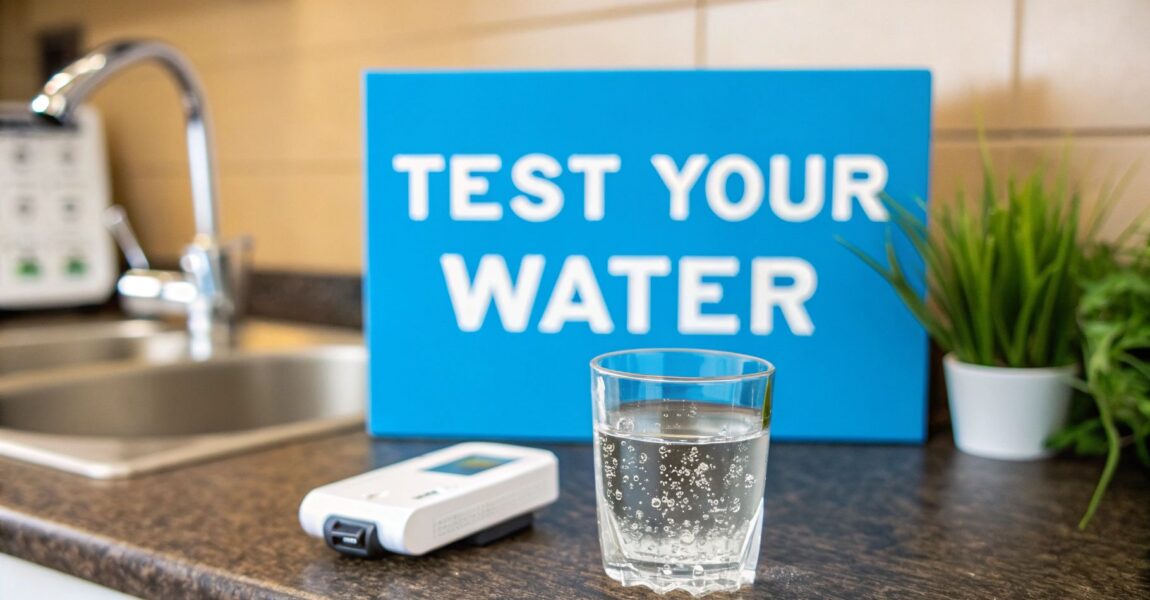
Think your tap water is just plain old H₂O? Think again. What if I told you your morning coffee tastes a little 'meh' because of invisible minerals hijacking the flavor? Or that the strange blue-green stains in your sink are a cry for help from your pipes? A good water quality tester is your secret decoder ring, giving you an instant look at the minerals, chemicals, and other gunk that might be hiding in your glass. It’s the essential first step to choosing the right water filter for your home and finally getting the clean, delicious water you deserve.
Understanding Your Home’s Water Composition
Before you even think about buying a water filter, you need to play detective. What's actually in your water? Guessing based on odd smells or sink stains is like trying to solve a mystery without any clues. To find the perfect filtration solution, you need real data on what’s flowing through your pipes.
A quality tester is what separates a smart investment from a shot in the dark. It helps you pinpoint the hidden problems, like:
- Total Dissolved Solids (TDS): An overload of minerals that makes your water taste flat and leaves spots on your dishes.
- pH imbalances: Water that's too acidic can quietly eat away at your plumbing, leading to expensive repairs.
- Trace contaminants: Things like chlorine or even trace metals that affect both the taste of your water and your family's health.
Think of it this way: you wouldn't take medicine for a headache if you had a stomachache. The same logic applies to water filters. A test tells you the exact problem so you can get the right cure.
Key Parameters Explained
So what are you actually looking for? Here are the big three that most home water quality testers check for, and why they matter for your filtration goals:
- Total Dissolved Solids (TDS): This tells you the concentration of dissolved stuff (mostly minerals) in your water, measured in parts per million (ppm). For crisp, clean-tasting drinking water, you want this under 300 ppm. Higher levels can harm appliances and make your drinks taste dull.
- pH (scale 0–14): This measures acidity or alkalinity. A neutral pH around 7 is the sweet spot. Water that’s too acidic or too alkaline can lead to pipe corrosion or scale buildup, respectively.
- Chlorine (mg/L): This is the swimming pool smell. Cities use it for disinfection, but leftover chlorine can leave a harsh chemical taste. An activated carbon filter is the perfect fix for this common issue.
Keeping an eye on these metrics helps you choose a filter that targets your home's specific needs.
Real-World Brewing Clarity
Let's make this real. Say your morning coffee just tastes… flat. A quick TDS check might reveal a super high mineral content, which is notorious for muting the delicate flavors of your expensive coffee beans. The solution? A reverse osmosis system that slashes TDS, letting that rich aroma shine through.
Or maybe you've noticed those ugly, rusty streaks running down your sink. That's often a sign of iron, something city filtration can miss. A simple test strip can flag the issue in minutes, pointing you toward an iron-specific filter instead of a generic one that won't solve the problem.
If you’re not sure where to start, this table can help you connect a common problem to the right kind of test.
Common Water Problems and the Tests That Find Them
This table is a handy shortcut. Find the symptom you're experiencing, and it'll point you toward the most likely culprit and the right tool for the job.
| Common Symptom in Your Home | Potential Contaminant | Which Water Quality Tester to Use |
|---|---|---|
| Chlorine smell in glass | Chlorine | Test strips for free chlorine |
| Bitter or metallic taste in coffee | High TDS | Portable TDS meter |
| Rust-colored stains on fixtures | Iron | Iron-specific strip kit |
| Sudden pH changes (green plumbing corrosion) | pH imbalance | Digital pH meter |
Once you run the test, you'll have a clear picture of what's going on and can stop guessing which filter to buy.
Interpreting Unexpected Results
Okay, so you got a weird reading. Don't panic! A high number isn't a death sentence for your water; it's a road sign pointing you toward the right filter. Before you do anything else, follow these steps:
- Repeat the Test. A second test helps rule out simple user error.
- Compare With City Reports. Your local water utility publishes quality reports. See if your results are wildly different.
- Test Filtered vs. Unfiltered Water. If you have a filter (even a pitcher), test water before and after to see if it's doing its job. This is the best way to know if it's time for a replacement!
- Consider a Lab Test. For serious concerns like lead, a home test isn't enough. A professional lab test gives you the definitive proof you need to choose a heavy-duty filtration system.
Following these steps turns raw numbers into an action plan, so you know exactly what kind of filter you actually need.
Beyond the Basics
Sometimes, home tests point to a bigger problem. If you suspect sewage contamination—often called "black water"—you're dealing with a serious health risk known as Category 3 water damage. This requires immediate professional help, not just a new filter.
It's no surprise that people are more concerned than ever about what's in their water. The trends in the water testing industry show a booming market, driven by homeowners who want to take control. With over 9.2 million American homes still using lead pipes, a targeted test is the only way to know for sure if you need a specialized filter.
A targeted water test cuts through the guesswork. It saves you money on the wrong filters and, more importantly, gives you peace of mind.
Next Steps After Testing
Once you have your results, choosing a filter becomes a whole lot easier. You can use your TDS, pH, and chlorine readings to zero in on the right technology for your home.
- Reverse Osmosis (RO) systems are fantastic for drastically reducing TDS and removing heavy metals.
- Activated Carbon filters are the go-to for targeting chlorine and other compounds that cause bad tastes and smells.
- Ion Exchange is what water softeners use to tackle hard water by swapping out calcium and magnesium ions.
- UV Purification is a great final step to handle any lingering bacteria after initial filtration.
Think of your test results as a roadmap. Each number points you directly to the filtration solution your home needs, so you can stop wasting money on trial-and-error.
Tip: Always test both your hot and cold taps. You'd be surprised how different the water chemistry can be, especially if you have an older water heater.
Remember, many of the worst contaminants are tasteless and odorless. Relying on your senses alone is a risky game. Regular testing is the only way to be sure your family is enjoying water that’s not just safe, but truly delicious.
Finding the Right Water Quality Tester for You
Picking the right water quality tester can feel overwhelming, but it's really about matching the tool to your filtration goal. You don't need a full-blown lab kit if you're just wondering why your city water tastes like a swimming pool. On the flip side, simple test strips aren't going to cut it if you're worried about bacteria in a private well.
Your choice boils down to what you need to know to pick the right filter. Getting this part right gives you real data to work with, helping you choose an effective filtration system without wasting money. It’s all about finding that sweet spot between accuracy, cost, and ease of use.
The Three Main Types of Home Water Testers
Most home testers fall into three main buckets, each with its own pros and cons. If you're renting an apartment, a quick and cheap test strip might be all you need to check for chlorine. But if you just bought a home with a private well, you should absolutely invest in a comprehensive mail-in lab kit to screen for invisible threats like nitrates and coliform bacteria before choosing a whole-house system.
Here’s a look at the most common options.
Comparing Home Water Quality Tester Types
To make it easier to decide, let's compare the most common types of home water testers. This table breaks down how they stack up on cost, accuracy, and what they're best at detecting.
| Tester Type | Best For | Typical Cost | Accuracy Level | Contaminants Detected |
|---|---|---|---|---|
| Test Strips | Quick, initial checks for common issues like hardness, chlorine, and pH. | $10 – $30 | Low to Moderate | Basic parameters like pH, chlorine, hardness, alkalinity. |
| Digital Meters | Getting instant, precise readings for specific parameters like TDS or pH. | $15 – $150+ | Moderate to High | Primarily Total Dissolved Solids (TDS), pH, or temperature. |
| Mail-In Lab Kits | Comprehensive, highly accurate testing for serious health-related contaminants. | $50 – $300+ | Very High | A wide range including lead, arsenic, bacteria, pesticides, VOCs. |
This comparison should give you a clear idea of where to start. Often, the best approach is a layered one: start with simple strips or a digital meter for a baseline, and if anything looks off, then spring for a lab test to get the definitive answers needed for a serious filtration investment.
If you're noticing obvious problems with your water, this handy guide can help you figure out what to test for.
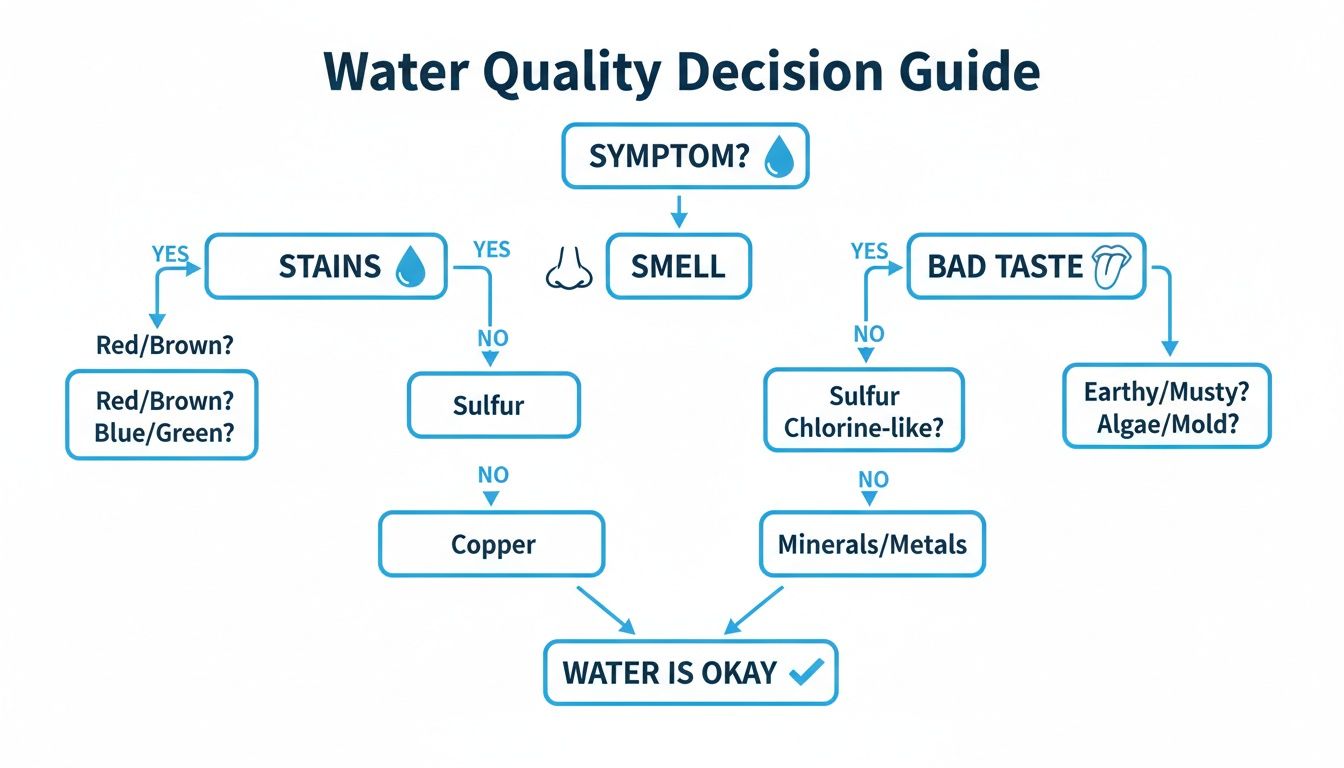
As you can see, things like stains, smells, or a bad taste can point you directly to the kind of contaminant you should be looking for.
Match Your Concerns to the Right Tester
Let’s get practical. If your only goal is to make better-tasting coffee, a TDS meter is your best friend. It’ll tell you if high mineral content is the problem, guiding you to a reverse osmosis filter. Seeing blue-green stains in your sink? That’s a classic sign of acidic water, and a simple pH test strip will confirm it, suggesting you might need a pH-neutralizing filter.
The growth in the home water testing market is all about putting more power in homeowners' hands. Portable testers let you check your own filter's performance, while professional lab testing remains the gold standard for choosing a system to tackle complex pollutants.
Understanding Key Water Quality Parameters
When you start testing, you'll run into a few key terms. Knowing what they mean is essential for making sense of your results and picking the right filter.
- pH: Measures how acidic or alkaline your water is. Water that's too acidic (below 7.0) can corrode plumbing, leaching metals into your drinking water. A neutralizing filter can fix this.
- Total Dissolved Solids (TDS): A catch-all for dissolved minerals, salts, and metals. High TDS often means hard water and can affect taste, pointing towards a reverse osmosis system for purification.
- Hardness: Caused by calcium and magnesium, this is the culprit behind soap scum and scale buildup. If your test shows high hardness, a water softener is the only true solution.
- Lead: A serious neurotoxin from old pipes. If your home was built before 1986, testing for lead is crucial. A positive test means you need a filter specifically certified for lead removal.
By picking a tester that targets your specific concerns, you get the exact information you need to find the right filtration system. If you want to dive deeper into those solutions, you can check out our guide on finding the right filter for your home. This way, you’re solving the actual problem instead of just taking a shot in the dark.
How to Properly Collect Your Water Sample
The old saying "garbage in, garbage out" is especially true when testing your water. Your final reading is only as good as the sample you take. A small mistake during collection can throw off the results, sending you on a wild goose chase for a filter you don't even need.
Getting a clean, representative sample isn't hard, but it does require a bit of care. This is about capturing a true snapshot of the water flowing from your pipes, not just filling up a bottle.
Setting the Stage for an Accurate Test
Before you even uncap your tester, a little prep work goes a long way. The goal is to test the water you actually use, not what’s been sitting in your pipes getting funky overnight.
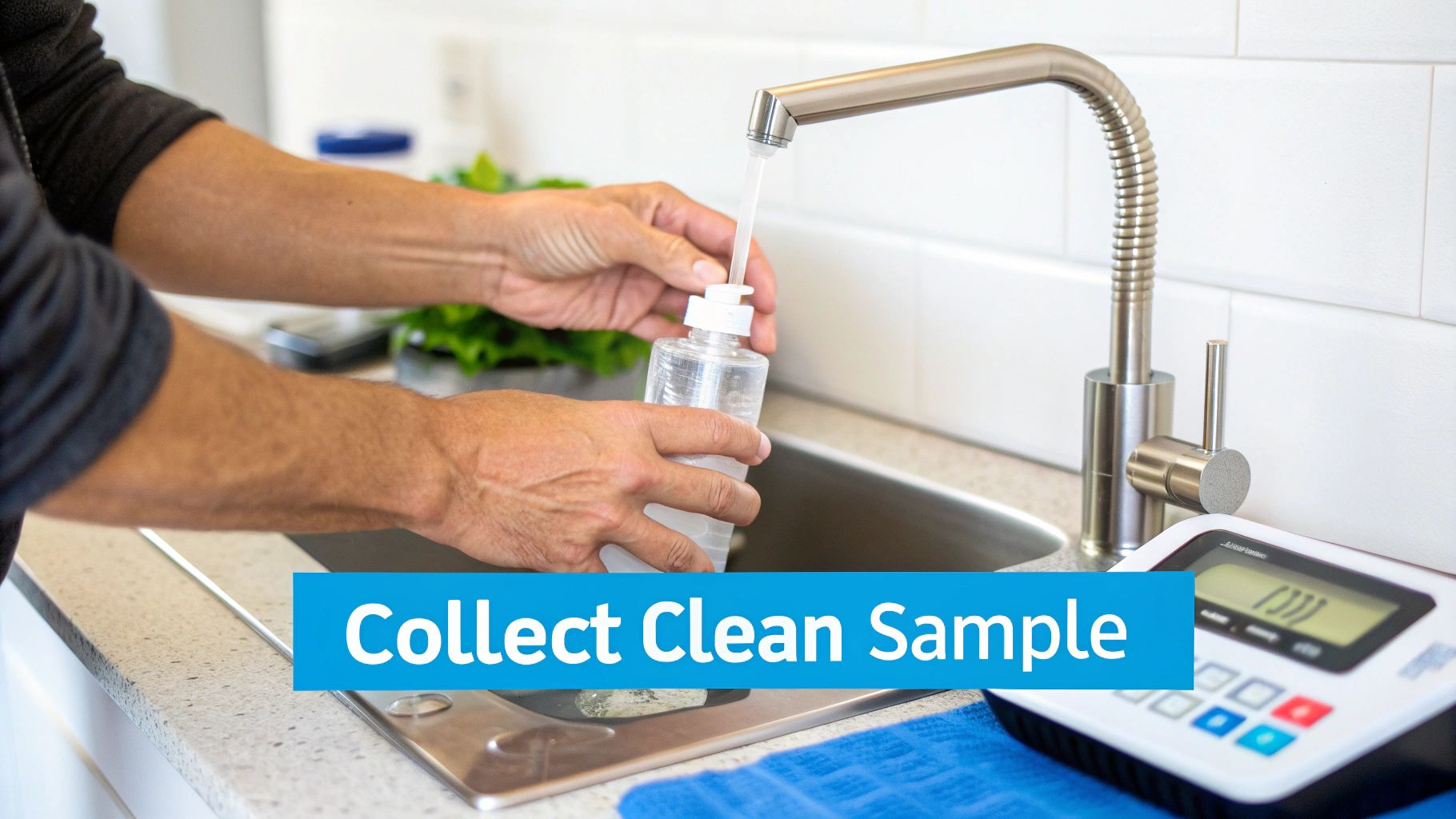
First, pick the right spot. I usually recommend a cold water faucet in the kitchen. Make sure it doesn't have a fancy aerator or connect to a water softener, since both can alter the water's chemistry and skew your results.
With your tap selected, here’s what to do next:
- Let it run. Turn on the cold water and let it flow for a solid two to three minutes. This simple step flushes out any sediment or metals that settled in the plumbing and pulls fresh water directly from the main line.
- Use a clean container. This is crucial. If your test kit came with its own bottle, use it. Otherwise, a squeaky-clean glass jar works great. Just be absolutely sure there's no leftover soap residue.
Following this routine ensures you’re getting a real baseline of your home's water quality, ready to inform your filter choice.
Pro Tip: I always tell people to test their water twice: once straight from the tap, and again from their current filter (if they have one). Comparing the two is the fastest way to know if your filter is actually working or if it's time for an upgrade.
Collection Methods for Different Testers
How you grab your sample will change a bit depending on what kind of tester you’re using. Each has its own quirks for getting the most accurate reading.
Using Basic Test Strips
Test strips are built for speed, giving you a quick, color-coded glimpse into things like pH, hardness, and chlorine.
- Dip, don't soak. Submerge the strip into your water sample for just a second or two—whatever the instructions specify.
- Don't shake it! Many people instinctively shake the strip, but that's a mistake that can make the colors bleed. Just hold it level for the recommended time, usually 15-30 seconds.
- Read it fast. Compare the colors on the strip to the chart on the bottle right away. Waiting too long can give you a false reading.
Taking Readings with a Digital Meter
For more precise numbers on TDS or pH, you’ll want a digital meter. With these, a clean sensor is everything.
Make sure your meter is calibrated, then just switch it on and stick the probe into your water sample. Let the numbers settle before you write them down. When you're done, always rinse the probe with distilled water to prevent mineral buildup from messing up your next test.
Preparing a Sample for a Mail-In Lab
If you’re choosing a serious filtration system to combat lead, bacteria, or pesticides, a professional lab test is your best bet. These kits come with very specific, must-follow instructions.
You’ll typically get a sterile bottle and a checklist. Fill the bottle to a specific line, don't touch the inside of the bottle or cap, and seal it immediately. Any shortcuts here could contaminate the sample and make the whole analysis—and your filter decision—worthless.
Making Sense of Your Water Test Results
Alright, you’ve run the test, and now you’re looking at a bunch of numbers and colors. This is the moment of truth—where raw data turns into an action plan for your home's water filtration.
Figuring out what these results mean is the most critical part of this process. It’s how you match a specific water problem to the right kind of filter. Get this right, and you'll solve your issue without wasting money on a system that doesn't target what's actually in your water. This is where your tester really earns its keep.
Decoding Common Contaminants and Health Thresholds
Think of your test results as a report card for your tap water. Each number tells a story, pointing you toward the perfect filter.
Let's break down what the most common findings mean for your home, and more importantly, which type of filter is built to fix each one.
High Chlorine: A Common City Water Issue
If your test strip lit up for chlorine, don't be surprised. Cities use chlorine to kill off bacteria, but the "free chlorine" left behind gives water that distinct swimming pool taste and smell. It’s enough to ruin a perfectly good cup of coffee.
- The Filtration Solution: When it comes to chlorine, activated carbon filters are the undisputed champions. They use adsorption, where chlorine literally sticks to the carbon's surface. You'll find this technology in everything from basic pitcher filters to powerful under-sink or whole-house systems.
Hardness and High TDS: The Scale Builders
Did your results show high levels of hardness or Total Dissolved Solids (TDS)? These two usually go hand-in-hand. Hardness is caused by dissolved calcium and magnesium—the culprits behind stubborn soap scum and the crusty scale inside your appliances. High TDS measures all dissolved minerals and often gives water a salty or bitter taste.
- The Filtration Solution: For hard water, a classic water softener using ion exchange is the most effective fix, period. To slash high TDS, a Reverse Osmosis (RO) system is the gold standard, capable of removing over 90% of dissolved solids for pure, crisp water.
Understanding your water's chemistry is key to choosing a targeted solution. The global water testing market is growing precisely because homeowners want this data. For instance, knowing that 15-20% of U.S. private wells have high nitrate levels helps well owners choose the right specialized filter, just as pH testing can flag corrosive water that needs a neutralizer. Read more about the trends in the water testing industry.
Iron and That Unmistakable Metallic Taste
If your test came back positive for iron, it probably just confirmed what you already knew from those rust-colored stains in your sinks or that metallic tang in your drinking water. This is a frequent problem, especially for homes on well water.
- The Filtration Solution: For small amounts of iron, a water softener can help. For higher concentrations, however, you’ll want a dedicated iron filter that uses an oxidizing media for more reliable, powerful removal, protecting your laundry and fixtures from stains.
Lead and Nitrates: The Invisible Dangers
These are the two you really don't want to see. Lead is a powerful neurotoxin from old plumbing, while nitrates—often from fertilizer runoff—pose a serious risk to infants. The EPA has set action levels, but ideally, you want zero.
- The Filtration Solution: Be careful here, as not all filters can handle these contaminants. For lead, you need a filter certified to NSF/ANSI 53, like a high-quality carbon block or RO system. For nitrates, you'll need a reverse osmosis system or a specialized anion exchange filter to get the job done right.
Matching Your Test Results to the Perfect Filter
Alright, you've done the testing and now you have the results. This is where your data turns into action. Knowing your water's specific chemical makeup means you can choose a filtration system that actually solves your problems instead of just guessing.
This isn't about grabbing the most expensive filter. It’s about making a smart, targeted choice. Think of your test results as a personalized roadmap, leading you straight to the right technology for clean, safe, and great-tasting water for your home.
From Test Results to Treatment Solutions
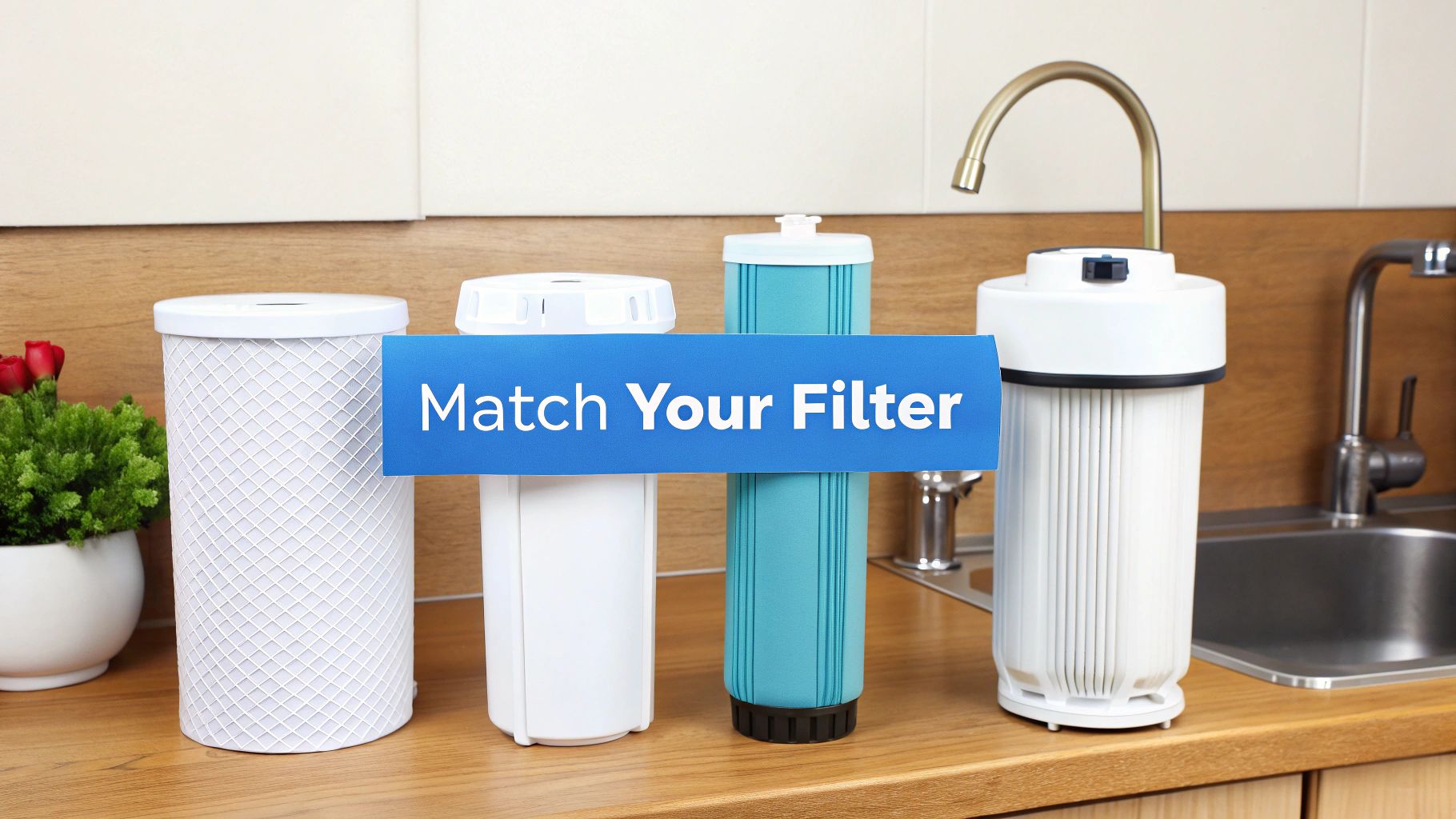
Let's turn those numbers and colors from your test into a real solution. Different filters are built for different contaminants, and the secret to success is making the right match.
For example, say your tests flagged high levels of both chlorine and lead. This combo points you directly to an under-sink activated carbon block filter that’s NSF-certified for lead reduction. The carbon soaks up that chlorine taste, while the filter's dense structure physically stops lead particles.
But what if you're a well owner seeing high hardness (that chalky buildup) and iron (the ugly rust stains)? A simple pitcher filter won't do. Your results are calling for a more serious setup: a whole-house system that pairs a water softener with a dedicated iron filter. This protects every faucet and appliance in your home from scale and staining.
Tailoring Your Filtration Strategy
Think of it like putting a puzzle together. Each contaminant your tester found is a problem, and each type of filter is a piece of the solution.
Here’s how to line up your findings with the right gear:
- High Chlorine & Bad Taste: An activated carbon filter is your go-to. They come in all shapes and sizes, from simple faucet attachments to more powerful under-sink units.
- Hard Water & Scale Buildup: If your test strips screamed "hard water," the only real fix is a water softener that uses ion exchange to stop scale from ruining your appliances.
- High TDS & Heavy Metals: Did your digital meter show a high TDS reading? Or did a lab test confirm lead? You need the gold standard: a Reverse Osmosis (RO) system to strip out a huge range of contaminants.
Choosing the right filter is all about precision. You're using your test data to pick a system that's certified to remove the exact contaminants in your water. That way, every dollar you spend is a direct investment in your family's health.
Planning for Installation and Upkeep
Once you’ve picked your filter, you need to think about logistics. Many smaller systems, like faucet filters or under-sink units, are designed for easy DIY installation. But for a whole-house system, it's usually smart to call in a professional plumber to ensure it’s hooked up right.
Don't forget about maintenance. Every filter needs its cartridge changed regularly to keep working.
- Pitcher/Faucet Filters: Plan on replacing cartridges every 2-4 months.
- Under-Sink Systems: These filters typically last 6-12 months.
- Whole-House Systems: Sediment pre-filters might need changing every 3-6 months, though larger carbon tanks can last for years.
Budget for these ongoing costs. A system might look like a bargain upfront, but if the replacement filters are expensive, it can become a real headache. Always check the price and availability of replacement cartridges before you buy.
And if you’re an RVer, the same rules apply. After you get your results, you can look into the best RV water filter system to handle whatever contaminants you find on your travels. Your water quality tester gives you the power to find the perfect solution, no matter where you are.
Common Questions About Home Water Testing
Once you start digging into home water testing, a few questions always pop up. Let's clear the air on some of the most common ones so you can confidently choose the right filter for your home.
How Often Should I Test My Water Quality?
A good rule of thumb is to test your water at least once a year, even on a city supply. For private well owners, annual testing is an absolute must. Beyond that, grab your water quality tester any time you notice a sudden change in taste, smell, or appearance. It’s your first line of defense.
Are Affordable Water Testers Reliable?
For the right job, you bet they are. Affordable testers like digital TDS meters or basic test strips are perfect for a first look at common issues like chlorine, pH, or water hardness. They provide a reliable snapshot to guide you toward general filtration solutions like carbon filters or softeners.
That said, when you're dealing with serious health concerns like lead, arsenic, or bacteria, your most accurate bet is always an EPA-certified mail-in lab test. The results from a lab are what you need to confidently invest in a high-end system like reverse osmosis.
My TDS Meter Reading Is High. Should I Be Worried?
Not necessarily. A high TDS reading just means there's a lot of dissolved mineral content in your water, often harmless minerals like calcium and magnesium. It’s a big clue that you have hard water, which can affect taste and leave scaly buildup on appliances. It's less of a danger sign and more of a nudge that a water softener or reverse osmosis system might dramatically improve your water.
Can a Tester Confirm My Brita Filter Is Working?
Absolutely. This is a perfect job for a simple TDS meter and a great way to see your filter in action. First, test your regular tap water and write down the reading. Then, filter a batch through your Brita pitcher and test that water. You should see a clear drop in the TDS number—that's proof the filter is working. When you no longer see much of a difference, you know it's time for a new cartridge.
Ready to move from testing to finding the perfect filtration solution? The experts at Water Filter Advisor have created in-depth guides to help you match your test results to the right filter for your home. Explore our buying guides and expert reviews to find the ideal system for clean, great-tasting water.
- February 15, 2026
- 0
- Uncategorized
