You fill a glass from your kitchen filter, take a sip, and pause. Maybe it tastes flatter than the tap water used to. Maybe your kettle keeps getting crusty buildup. Maybe you heard that “alkaline water” is better and now you're wondering if your filter is helping or making things worse.
That's a smart question.
A home water filter can absolutely affect pH, but the practical answer isn't about chasing a trendy number. It's about whether your water tastes right, whether it's hard on your plumbing, and whether your filter is changing the chemistry in ways that matter for daily use. The good news is that once you understand what pH does, the whole topic gets much less mysterious.
What Is Water pH and Why Does It Matter
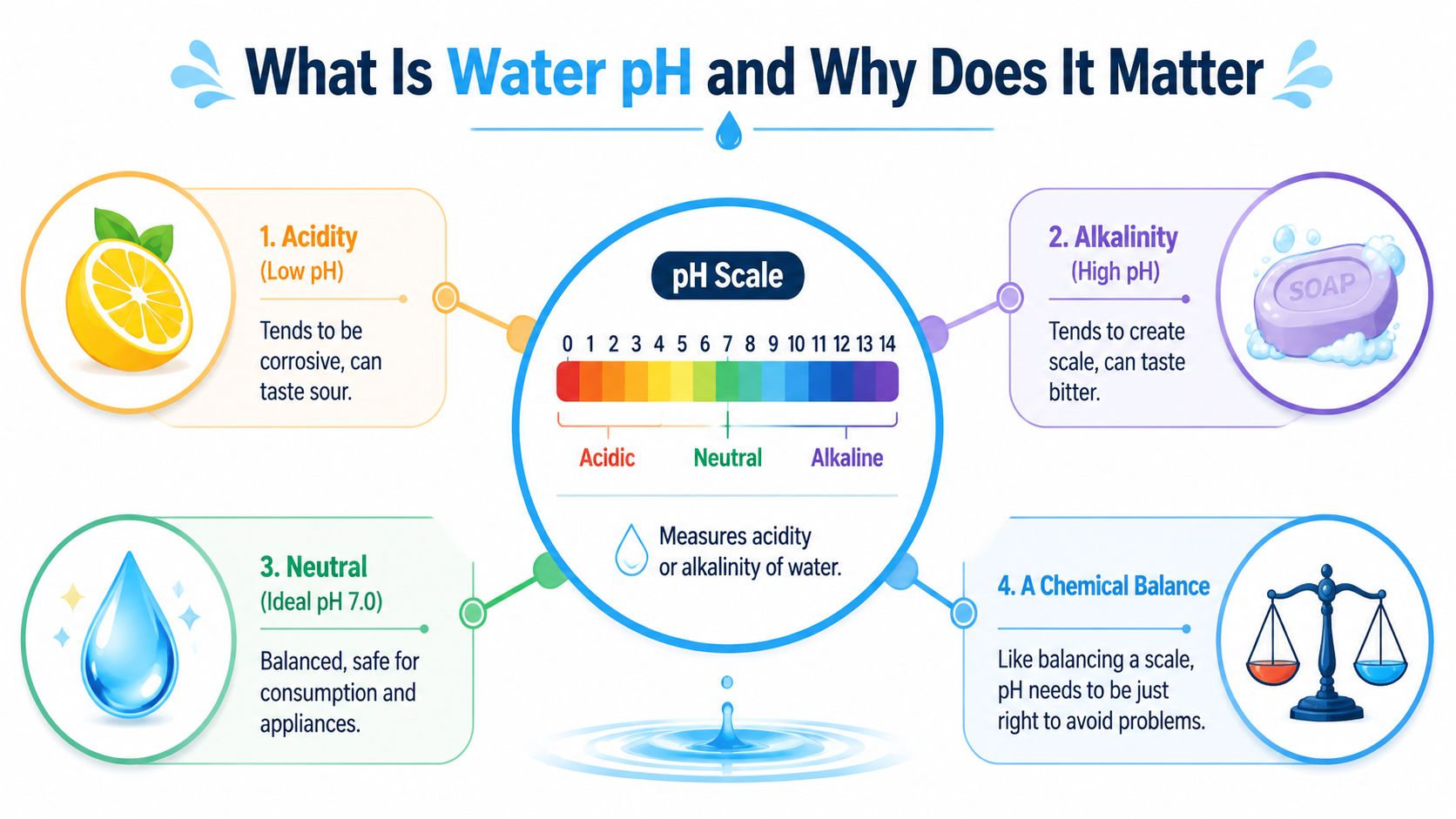
pH is a way to describe how acidic or alkaline water is. It functions like a see-saw: one side is acidic, the other side is alkaline, and the middle is neutral. If the balance tips too far either way, you start noticing problems.
On the pH scale, 7 is neutral. Below that, water is acidic. Above that, it's alkaline. The scale runs from 0 to 14, and the U.S. Environmental Protection Agency says drinking water should stay between 6.5 and 8.5 to protect taste, plumbing, and long-term water quality, according to this pH guide summarizing EPA standards. That same source notes that water below 6.5 is acidic enough to leach metals like lead and copper from plumbing.
What the see-saw means in real life
If the see-saw tips toward acidity, water can become more corrosive. That matters because your pipes, fittings, and faucet internals are in contact with water all day. Acidic water doesn't just affect taste. It can slowly pull metals from plumbing.
If it tips too far toward alkalinity, you usually get a different kind of headache. The water may taste bitter, and minerals can leave scale in pipes, coffee makers, water heaters, and showerheads.
Practical rule: Good pH isn't about perfection. It's about keeping water balanced enough that it doesn't attack your plumbing or leave a mess behind.
Why homeowners should care
People often notice pH in three places first:
- Taste: Water that's too acidic can taste sharp or odd. Water that's too alkaline can taste bitter.
- Appliances: Unbalanced water can shorten the comfortable life of kettles, ice makers, dishwashers, and water heaters.
- Health concerns: The biggest household issue isn't that water changes your body chemistry. It's that acidic water can interact with plumbing materials in ways you don't want.
That's why the phrase water filter pH level matters so much in a home. Your filter isn't working in isolation. It becomes part of your water's chemistry, and that chemistry affects your faucet, your glass, and your repair bill.
How Filters Affect Your Water pH Level
Not all filters change pH in the same way. Some barely touch it. Some shift it a little. One common filter type, reverse osmosis, often changes it enough that homeowners notice.
The big idea
A filter changes pH when it removes or adds the minerals that help keep water chemically stable. Calcium and magnesium act like tiny balancing weights on that see-saw. Remove them, and the water can drift acidic. Add them back, and pH may move closer to neutral or slightly alkaline.
A simple sediment filter usually won't do much to pH. An activated carbon filter may have only a modest effect. A reverse osmosis system is much more aggressive.
According to this explanation of reverse osmosis and pH, reverse osmosis systems typically lower water to a pH between 5 and 7 because they remove dissolved minerals like calcium and magnesium that normally buffer the water.
Water Filter Type vs. pH Impact
| Filter Type | Typical pH Change | Mechanism |
|---|---|---|
| Reverse osmosis | Often lowers pH | Removes dissolved minerals that buffer acidity |
| Activated carbon | Usually little to modest change | Improves taste and odor, but doesn't usually add minerals back |
| Distillation | Can leave water less buffered | Removes many dissolved substances, leaving water with little mineral content |
| Alkaline or remineralization filter | Can raise pH | Adds minerals back into filtered water |
Reverse osmosis works like an overachiever
RO systems are excellent at reducing a wide range of unwanted dissolved material. That's why so many homeowners like them for drinking water. But RO can be a little too good at cleanup. It removes the minerals that help hold pH steady, so the finished water often lands on the slightly acidic side.
That doesn't automatically mean the water is dangerous. It means you should understand what the system is doing and decide whether you want to add a finishing stage.
RO water often tastes “clean” but also a little flat. That taste change is usually your clue that the mineral balance has shifted.
Carbon filters and basic pitcher filters
Activated carbon filters, including many faucet filters and pitchers, are usually chosen to improve taste and reduce chlorine-related issues. They don't typically have the same dramatic pH effect as reverse osmosis because they aren't stripping out dissolved minerals to the same degree.
That's why many people switch to carbon filtration and notice better flavor without much change in the overall feel of the water.
Distilled and very pure water
Distilled water and highly purified water often have very low mineral content. In real life, that can make them behave a bit like RO water from a pH standpoint. The water may not stay right at neutral once it's exposed to air and ordinary handling.
Alkaline and remineralization filters
These filters do the opposite of RO's mineral stripping. They add minerals back, often as a final polishing stage. If your filtered water tastes too flat or tests lower than you want, this type of cartridge is often the practical fix.
For homeowners, that's the main takeaway. If your current filter lowers pH because it removes buffering minerals, the answer usually isn't to replace the whole system. It's to add the right finishing stage.
When Your Water pH Level Becomes a Concern
Homeowners hear a lot of noise about alkaline water. Some of it is marketing. Some of it is confusion. The useful question is much simpler: when does pH become a real household problem?
The genuine risk with low pH
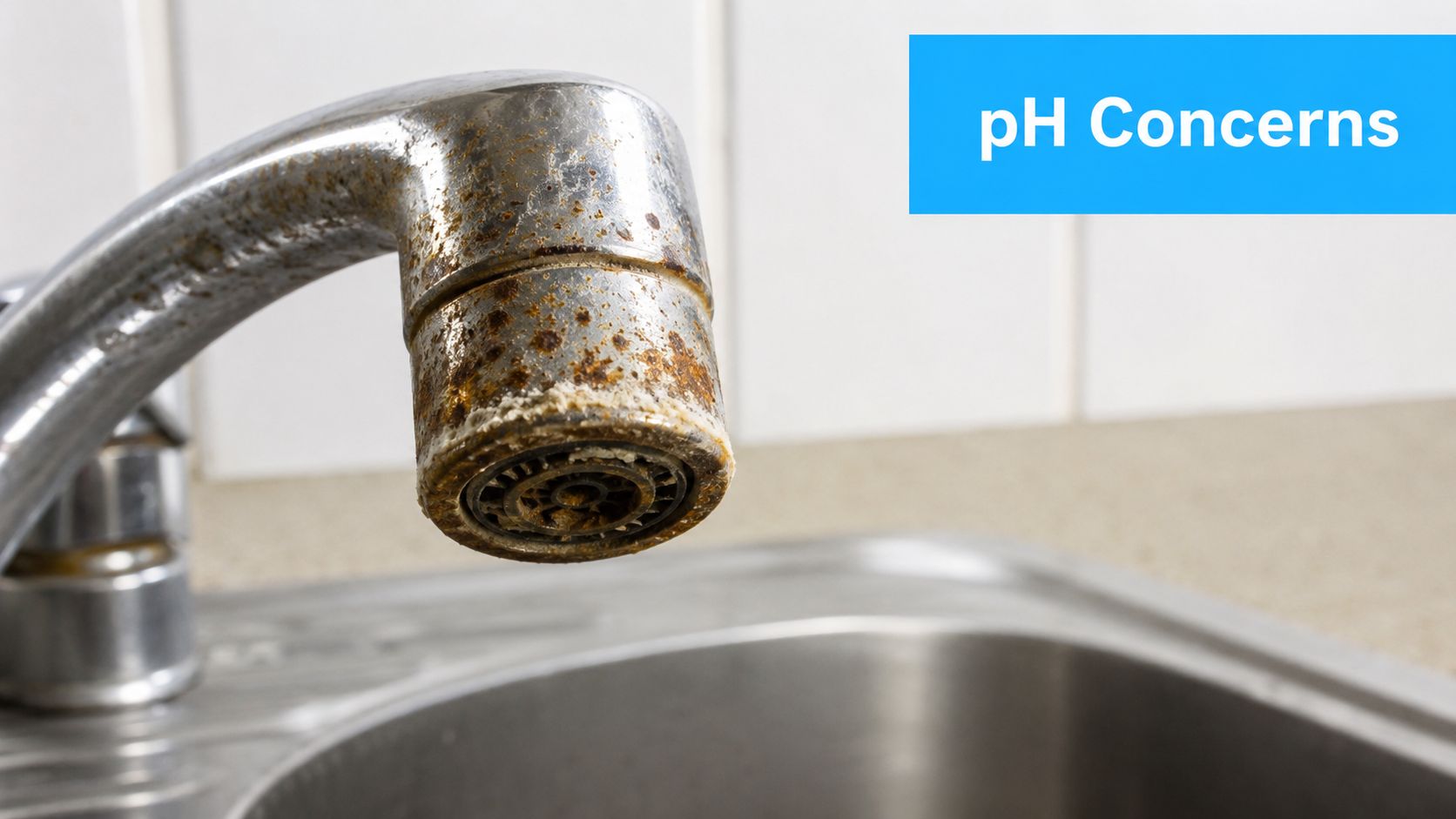
If your water is acidic, the biggest practical concern is corrosion. That's especially true in older homes or homes with plumbing components that can react to aggressive water. Corrosive water can pull metals into the water stream over time.
At this point, pH stops being an abstract chemistry lesson and starts becoming a home maintenance issue with health implications attached to it.
The hype around high pH
Some products imply that more alkaline always means healthier. That's where it helps to slow down.
According to this review of alkaline water claims, human blood naturally stays between 7.35 and 7.45, and there's insufficient quality research to support claims that alkaline water treats health conditions. That same source says water above 8.5 can cause dry, itchy skin in sensitive individuals.
Don't let marketing turn pH into a miracle story. In a home, the practical targets are comfort, plumbing protection, and clean-tasting water.
What high pH looks like around the house
Water that leans too alkaline often shows up through surfaces and appliances before anything else:
- Scale on fixtures: White or chalky deposits around faucets and showerheads
- Appliance buildup: Kettles, coffee makers, and water heaters collect mineral residue
- Taste complaints: Some people notice a bitter edge
That doesn't mean alkaline water is automatically unsafe. It means there's a tradeoff. Water that's too high can be annoying, and in some homes it can become expensive if scale keeps building up.
A simple way to judge urgency
Think in two categories.
If your concern is taste, and your filtered water seems flat or slightly off, you're probably dealing with a manageable pH shift from filtration.
If your concern is corrosion or heavy buildup, that deserves closer attention. Rust staining, metal taste, blue-green staining, and persistent scale are all signs that your water chemistry may need more than a basic pitcher filter.
Simple Ways to Test Your Water pH at Home
You don't need a lab to get a useful read on your water filter pH level. For most homeowners, a quick home test tells you whether the water is roughly balanced or whether it's time to investigate further.
Test strips for a fast snapshot
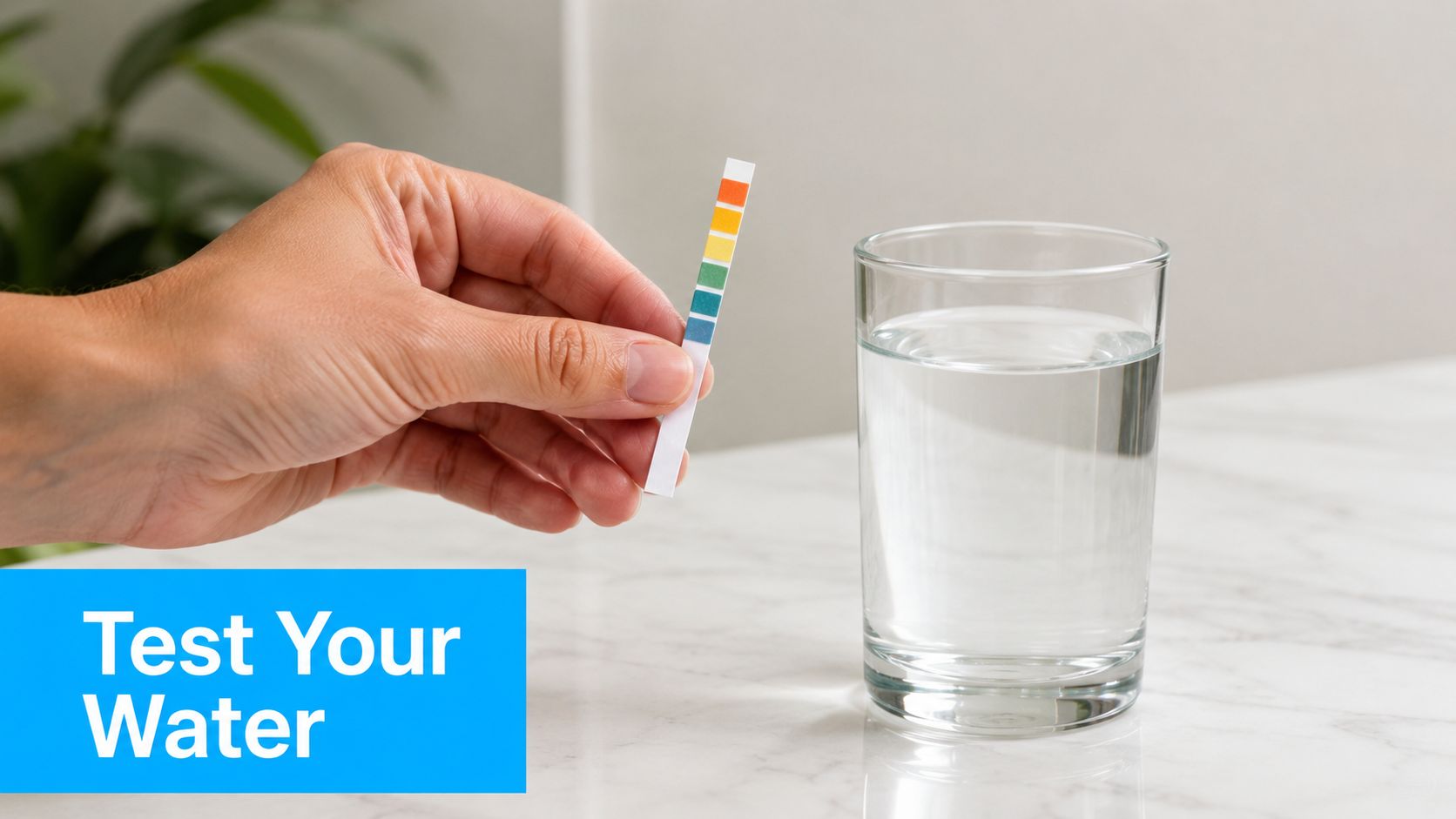
Test strips are the simplest option. Dip one in a glass of water, compare the color to the chart, and you'll get a quick estimate. They're easy to store and easy to use, which makes them great for a first check.
Their limitation is precision. If you want a rough answer, they're fine. If you're trying to fine-tune a filter setup, they can feel a little blunt.
Digital pH meters for repeat checks
A digital meter gives a direct reading and is easier to use over and over if you test often. Homeowners with RO systems, well water, or a remineralization stage usually appreciate that convenience.
The catch is maintenance. You have to keep the meter clean, calibrated, and stored properly or the reading can drift.
Liquid reagent kits for hands-on users
Liquid reagent kits sit in the middle. You add drops to a sample and compare the color result. Many people like them because they feel more deliberate than strips and less gadget-dependent than a meter.
If you want to compare options before buying, BlueRipple Aquatics' test kit reviews are worth a look. They focus on water testing tools in a practical way, and the comparisons can help you understand what makes one kit easier to use than another.
A short demonstration can also make the process less intimidating:
Best testing habits at home
- Test the source and the filtered water: That tells you what the filter changed.
- Use a clean glass: Soap residue can throw off your impression and your reading.
- Check at different times: Morning water and later water can sometimes behave differently depending on your system.
- Write the result down: Even a simple note helps you spot patterns after a cartridge change.
If you're a homeowner, that's enough to get started. You're not trying to run a chemistry lab. You're trying to answer one practical question: is my filter leaving my water in a comfortable, reasonable range?
Practical Ways to Adjust Your Water Filter pH Level
Once you know your pH, the fix is often simpler than people expect. Most homeowners don't need to overhaul the whole filtration system. They need the right add-on in the right place.
If your RO water is slightly acidic
This is the most common scenario. You install reverse osmosis, love the cleaner taste, then notice the water seems a little flat or your pH reading is lower than expected.
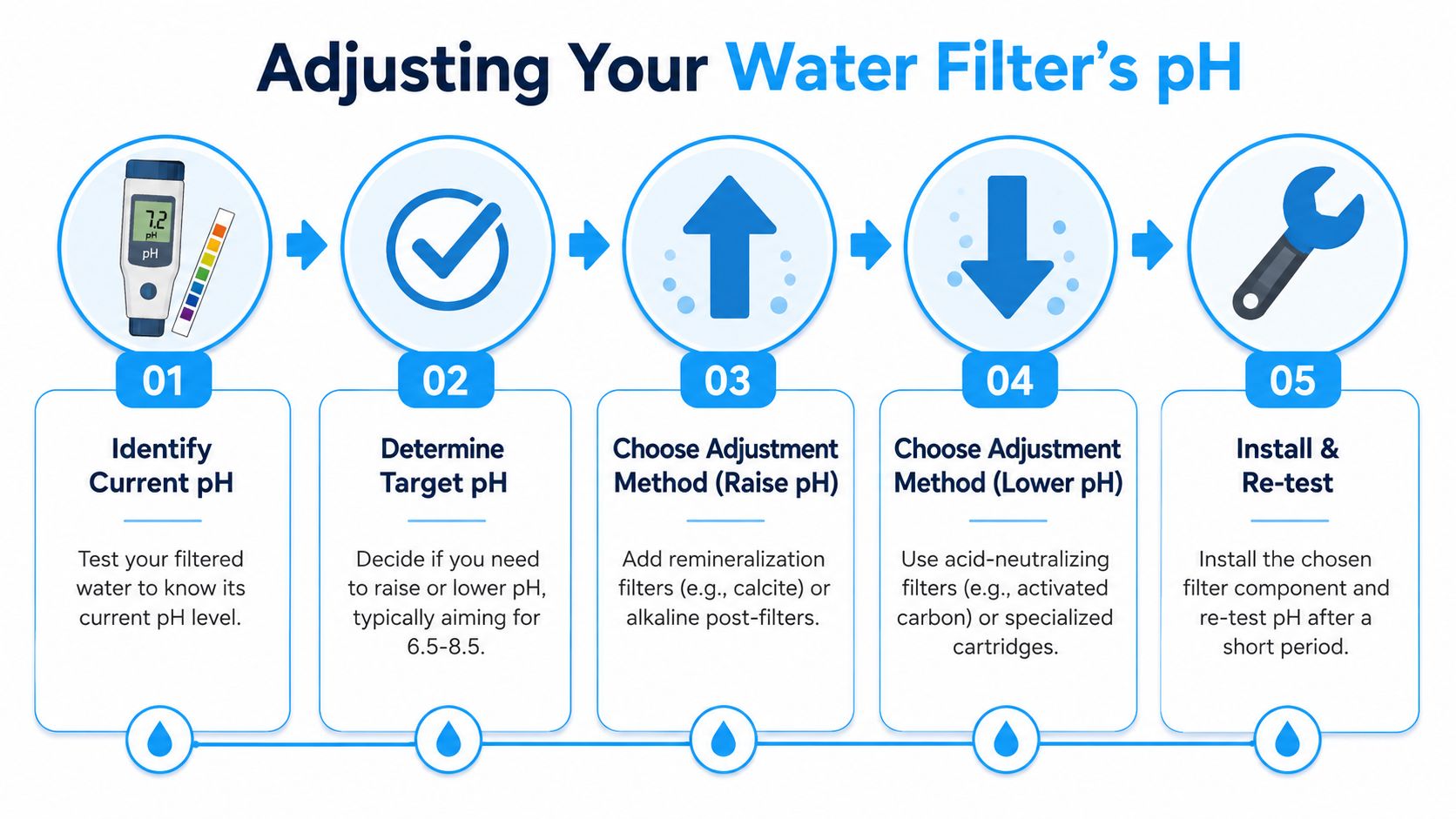
A guide focused on filtered water and pH balance notes that RO systems often produce slightly acidic water and that users who want alkaline water need a remineralization filter. That's the practical answer in many homes. A remineralization cartridge or alkaline post-filter adds minerals back after the membrane has done the heavy filtering.
If your source water is truly acidic
If you're on well water and the water starts acidic before it even reaches your kitchen filter, think bigger than an under-sink solution. In that case, a whole-house neutralizing system usually makes more sense because the problem affects every pipe, faucet, and appliance in the house.
Common neutralizing approaches use mineral media that raises pH as water flows through. These are point-of-entry solutions, which means they treat the water before it travels through your plumbing.
Homeowner shortcut: If the issue starts at the main supply, fix it at the main supply. If the issue starts after filtration, fix it at the filter.
Matching the problem to the fix
- RO water tastes flat: Add a remineralization stage after the RO membrane.
- Filtered water is fine, but fixtures show scale: Look at the full mineral picture, not just pH.
- Well water seems corrosive throughout the home: Consider a whole-house neutralizer first.
- You just want a higher-pH drinking option: A dedicated alkaline add-on can be a convenience choice, not a medical one.
Some homeowners also look at specialty devices when they want a drinking-water setup that raises pH after purification. If you're comparing that category, EcoQuest Purifiers offers an example of the alkaline water ionizer style so you can see how that approach differs from a standard remineralization cartridge.
Don't chase extremes
The smartest adjustment is usually the smallest one that solves the problem. You're aiming for balanced water that tastes good and plays nicely with your plumbing. You're not trying to win a pH contest.
That mindset saves money. It also helps you avoid piling on filter stages that sound impressive but don't address your actual issue.
Choosing the Right Water Filter for Your pH
The best filter choice starts with your source water, not the marketing on the box.
According to this overview of household pH standards and treatment options, household drinking water should stay between 6.5 and 8.5, and water around 4.5 is rare enough that it calls for advanced acid-neutralizing equipment rather than a simple drinking-water filter. That's an important dividing line. Mild pH shifts are one thing. Severe acidity is a whole-house treatment problem.
A simple buying framework
If your municipal water is already balanced and your goal is better taste, odor reduction, or common contaminant reduction, a basic carbon or under-sink system may be all you need.
If you want very thorough purification and are considering reverse osmosis, plan ahead for the possibility that the system may leave water less buffered. In that case, it's smart to choose an RO setup with an optional remineralization stage.
If you're on well water and suspect corrosive acidity, start with treatment at the entry point to the home. Don't rely on a small kitchen filter to solve a house-wide chemistry problem.
For people who like comparing higher-purity systems used in technical settings, Labs USA water systems can be useful for understanding how different purification levels are designed, even though a home usually needs a more practical, consumer-focused setup. And if you want broader homeowner guidance before buying, the advice library at Water Filter Advisor's advice center is a good next step.
Choose the filter that fits your water's starting point, your home's plumbing reality, and the kind of maintenance you'll keep up with. That's how you get water that tastes better without creating a new problem downstream.
If you want help comparing home filtration options without getting lost in hype, visit Water Filter Advisor. It's a practical resource for choosing, testing, and maintaining filters that fit your water, your budget, and your home.
- July 8, 2026
- Uncategorized
