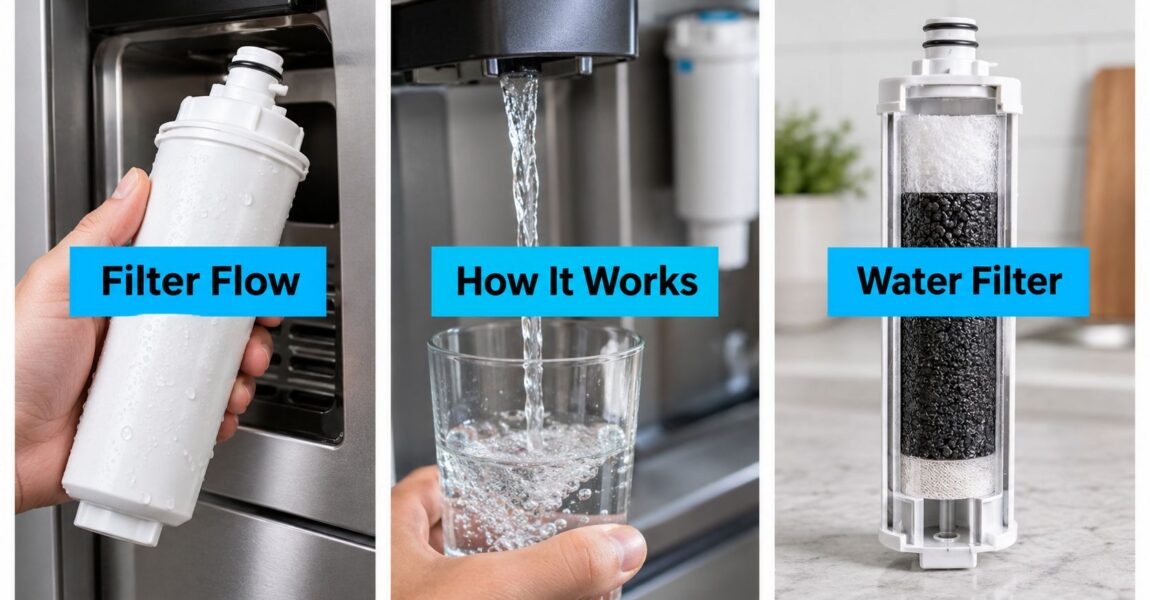
Carbon Block Filtration: Your Secret Weapon for Amazing Tap Water

That faint swimming pool smell from your kitchen tap? Or maybe the water looks just a little… murky in the glass? Those are the battle scars from your water's long, epic journey from the treatment plant to your home. But fear not! Carbon block filtration is a surprisingly simple yet incredibly powerful technology that acts as a final, heroic gatekeeper, trapping those unwanted impurities to give you safer, tastier water right where you use it most.

Your First Step Toward Better Tasting Water

When you turn on the faucet, you want clean, refreshing water. But what you often get is H2O that's been treated with chlorine to kill off bacteria—leaving behind that all-too-familiar chemical tang and odor. It's easily one of the biggest complaints people have about their tap water, and the first thing you'll notice is gone with a good filter.

Beyond just the taste, your water can pick up other unwanted hitchhikers on its way through ancient pipes and treatment plants. We're talking about things like sediment, industrial chemicals, and even pesticides. While your local utility works hard to meet safety standards, having a final line of defense in your own home offers real peace of mind. This is exactly where carbon block filtration shines.

How This Guide Will Help You

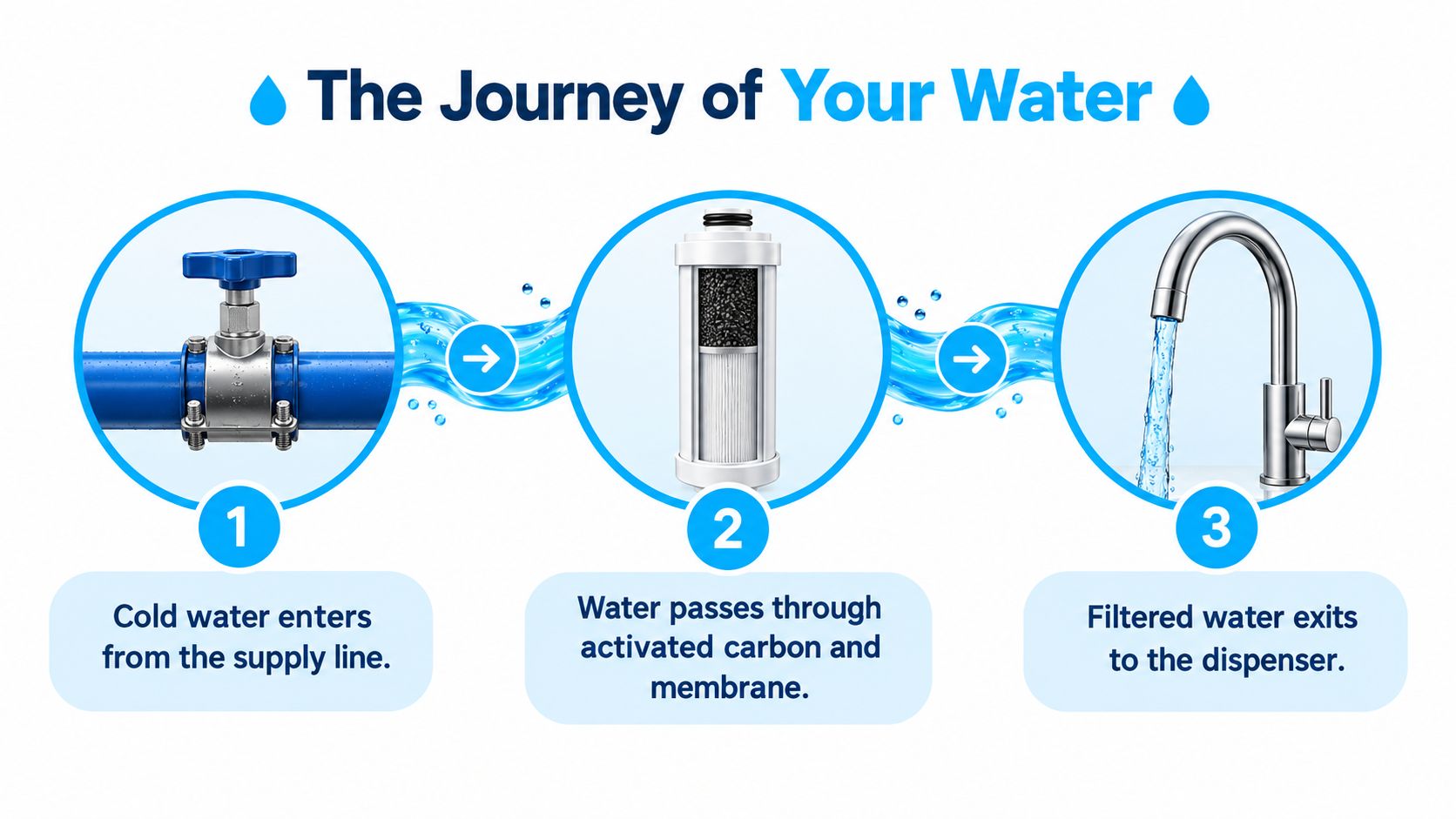
Think of a carbon block filter as a microscopic maze packed with a contaminant-grabbing sponge. It physically blocks larger particles and uses a process called adsorption—where impurities literally stick to the carbon's surface—to snag chemical contaminants, letting only the pure, clean water molecules pass through.

This guide will walk you through everything you need to know, covering:

  • The simple science behind how these filters work their magic.
  • How carbon block stacks up against other popular filtration methods.
  • Exactly what they remove—and just as importantly, what they don't.
  • Practical tips for choosing the right system for your home, from a simple pitcher to a whole-house solution.

By the time you're done here, you’ll have the know-how to pick and maintain the perfect filter for your family's needs. If your goal is pristine water from every tap, understanding carbon block filtration is the first step.

This technology is a straightforward and effective way to improve your water's quality, taste, and safety without a bunch of complicated plumbing. For more general guidance, you can explore additional advice on water filters to get a broader view of your options. Our goal is to give you clear, no-nonsense information so you can make the best choice for your home.

How Carbon Block Filters Actually Purify Your Water

To really get how a carbon block filter cleans your water, picture a super-dense, magnetic sponge shot through with billions of tiny tunnels. This isn't just any old sponge, though. It's an engineered maze designed to trap all the gunk you don't want, while letting clean water molecules sail right through.

This whole process boils down to two distinct methods working together in perfect harmony: a chemical attraction and a physical roadblock.

The magic ingredient is activated carbon, usually sourced from coconut shells. The "activation" part is key—it blasts the carbon with heat, creating a massive internal surface area. Believe it or not, a single gram of this stuff can have more surface area than a football field, giving contaminants plenty of room to get stuck.

This brings us to the first, and most powerful, purification method.

The Magnetic Pull of Adsorption

The main way a carbon block filtration system works is through a process called adsorption. It’s easy to mix up with absorption, but they’re totally different. A kitchen sponge absorbs water by soaking it in. Adsorption is when contaminants chemically stick to the outside surface of the carbon, kind of like how magnets snap to a fridge.

Here’s how it works: common troublemakers in tap water like chlorine, pesticides, and many VOCs (volatile organic compounds) have a negative charge. Activated carbon, on the other hand, has a slight positive charge. This creates a natural pull that yanks these impurities out of the water and holds on tight. As water flows through, these chemicals are drawn to the carbon's surface and trapped for good.

This is why you notice such a dramatic improvement in your water's taste and smell almost instantly after installing a carbon block filter. It’s tackling the biggest offenders head-on.

Key Takeaway: Adsorption is basically a chemical magnet. The massive, porous surface of activated carbon attracts and locks away chemicals like chlorine, stopping them from ever reaching your glass.

The Physical Barrier of Mechanical Filtration

While adsorption is busy grabbing chemicals, the solid structure of the carbon block is dealing with physical debris. This is the second critical purification method: mechanical filtration.

Think of it as a bouncer at a club with a very strict door policy. The carbon block is packed so tightly that the gaps between the particles are microscopic—often measured in microns. A micron, for reference, is one-millionth of a meter.

This dense structure creates a physical barrier that stops any particle larger than its pores from getting through. This includes stuff like:

  • Sediment: Fine bits of sand, dirt, and rust from older pipes.
  • Silt: Earthy material that makes water look cloudy.
  • Particulate matter: Any other gunk floating around in your water.

By physically blocking these particles, the filter doesn't just make your water clearer; it also helps protect your plumbing and appliances from getting clogged up over time.

Why the Solid Block Design Matters

So what’s the big deal about the block itself? Manufacturers take fine activated carbon powder, mix it with a binder, and then compress it under intense heat and pressure to form a solid, dense cylinder. This solid structure is precisely what gives it an edge over other filter types.

The biggest advantage is that it completely prevents channeling. In filters that use loose carbon granules, water can sometimes cheat the system by carving a single path of least resistance right through the media, bypassing most of the filtration.

A carbon block is a solid, uniform mass. This forces water to follow a long, winding route—what we call a "tortuous path"—through its microscopic maze. This design guarantees that every drop of water makes maximum contact with the activated carbon, boosting both adsorption and mechanical filtration. It’s this extended contact time that makes carbon block filters so reliable for delivering clean, great-tasting water.

Comparing Carbon Block to Other Filtration Methods

Choosing a water filter can feel like you're trying to crack a secret code. You're hit with a bunch of acronyms and tech specs, and it's tough to know what's what. While a carbon block filter is a seriously powerful tool for cleaning up your home's water, it’s not the only option out there.

Knowing how it stacks up against the other players is the real key to building a system that actually solves your water problems.

The most common comparison you'll see is with its closest cousin, the Granular Activated Carbon (GAC) filter. They both use the same magic ingredient—activated carbon—but how they're built makes a world of difference in how they perform.

Think of a GAC filter as a big jar of loose coffee grounds. The carbon granules are all packed in there, but water can still find some pretty easy paths to wiggle through. This means you get a great flow rate, which is a big deal for whole-house systems where you don't want to kill your water pressure. But there’s a catch. This design can lead to channeling, where water carves a mini-river right through the filter, completely bypassing most of the carbon. A lot of contaminants can just sneak right by.

Now, picture a carbon block filter. It’s more like a solid puck of espresso, where those same grounds are compressed into a dense, solid block. This design forces every last drop of water to take a long, winding journey through a maze of microscopic pores. It guarantees the water spends a ton of time in contact with the carbon, which means much more thorough and reliable filtration.

Carbon Block Versus GAC Filters

The real difference comes down to that structure. A GAC filter's loose carbon can be a bit of a gamble, while a carbon block’s solid form means every single drop of water gets the full treatment. It’s a much more consistent and dependable process.

Let's break down the key differences between these two common carbon filter types. While both have their place, understanding their strengths and weaknesses is crucial for choosing the right one for your home.

Carbon Block vs Granular Activated Carbon (GAC) at a Glance

Feature Carbon Block Filter Granular Activated Carbon (GAC) Filter
Structure Solid, compressed block of carbon powder Loose bed of individual carbon granules
Flow Rate Generally lower; can slightly reduce pressure Typically higher; minimal impact on pressure
Channeling Risk Virtually zero; forces uniform water flow High risk; water can bypass the carbon media
Filtration More thorough; longer contact time with carbon Less consistent; shorter contact time
Sediment Removal Good; acts as a sediment filter (e.g., 5 microns) Poor; loose media doesn't block fine particles
Common Use Under-sink systems, pre-filter for RO Whole-house systems, refrigerator filters

Ultimately, while both use the power of adsorption, the solid structure of a carbon block offers a superior defense. It eliminates the risk of water finding an easy way out, ensuring more contaminants are captured along the way.

Carbon Block Filters in a Multi-Stage System

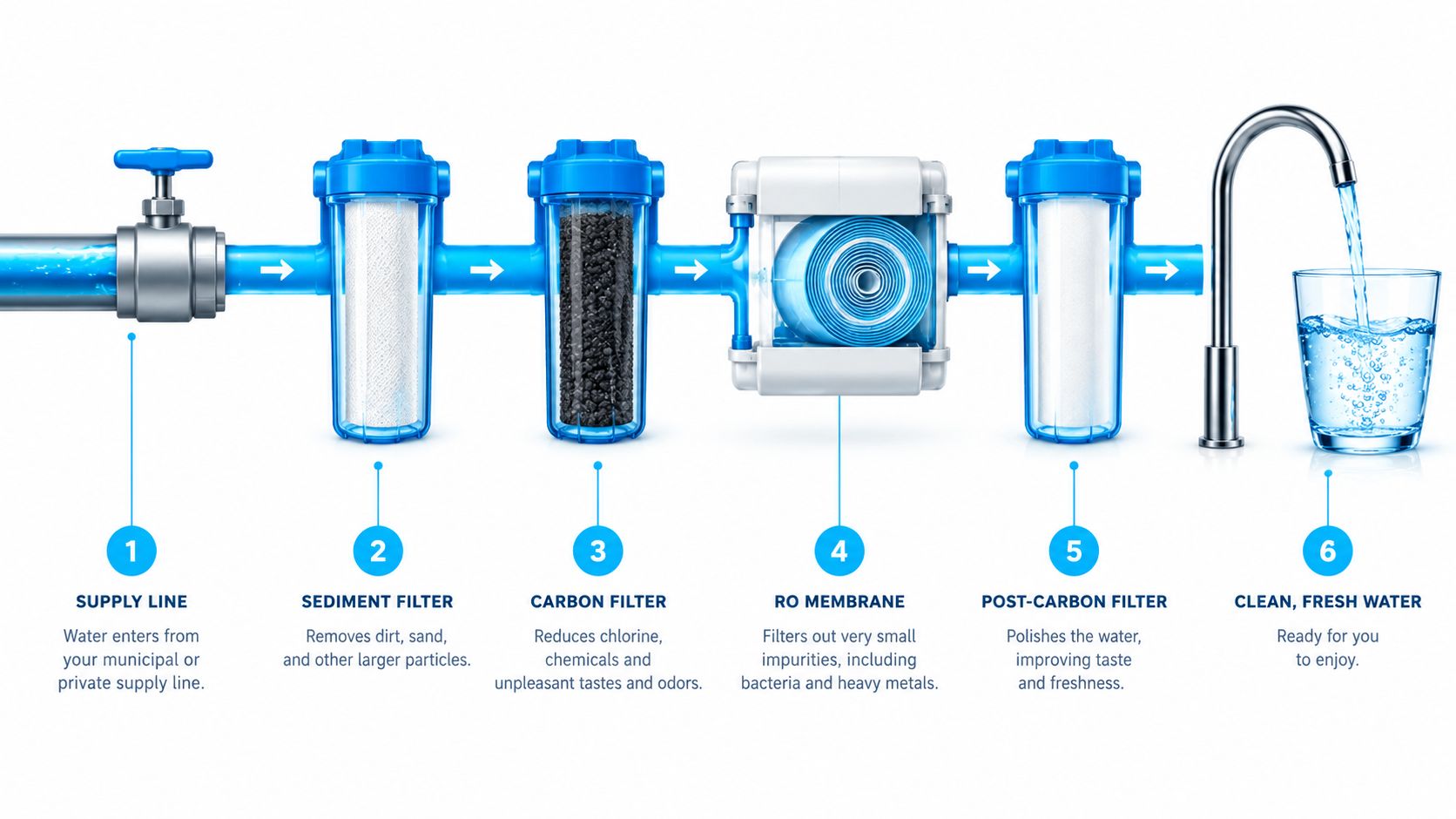
A carbon block filter is often the star of the show, but it also plays incredibly well with others. Most homes have more going on with their water than just chlorine, which is where systems like Reverse Osmosis (RO) and UV purifiers enter the picture.

A carbon block is your specialist for taking out chemicals, funky tastes, and weird smells. It's a champion at grabbing chlorine, VOCs, and pesticides. But it can’t do everything.

Reverse Osmosis (RO) Systems
RO systems are the heavy hitters. They use a super-fine membrane to force out a massive range of dissolved solids—we’re talking salts, nitrates, and heavy metals. The process is incredibly effective, but it has one major weakness: chlorine will absolutely shred that delicate RO membrane.

That’s why you'll find a carbon block filter acting as a pre-filter in nearly every RO system on the market. The carbon block takes out the chlorine first, acting as a bodyguard for the RO membrane so it can do its job for years to come. It's the perfect partnership.

Ultraviolet (UV) Purifiers
If you're on well water or just worried about what might be swimming in your pipes, a UV purifier is a must-have. It zaps bacteria, viruses, and other nasty microbes with ultraviolet light, scrambling their DNA so they can't make you sick. But there’s a condition: that UV light needs a clear shot.

If your water is cloudy with sediment, those tiny particles can act like microscopic umbrellas, casting shadows that shield germs from the UV rays. By installing a carbon block filter right before the UV lamp, you clarify the water. It removes the sediment and other gunk, ensuring the light can reach and neutralize every last threat.

So, What Do Carbon Block Filters Actually Remove?

Alright, let's get down to what this impressive piece of filtration tech is pulling out of your water. This is where a carbon block really shows its value, acting like a bouncer at the door of your home's water supply. It uses a one-two punch of physical filtration and chemical adsorption to grab a huge range of things you definitely don't want to be drinking.

The effectiveness of a carbon block filtration system really shines across three main areas. Each one tackles a different part of your water quality, all working together to give you water that’s cleaner, safer, and just plain better.

Improving Taste and Odor with Aesthetic Filtration

The first thing you’ll notice—probably within minutes of installing a carbon block filter—is how much better your water tastes and smells. That’s because these filters are absolute rockstars at nabbing the aesthetic impurities that make tap water unpleasant.

The biggest offender here is chlorine. Your local water treatment plant adds it to kill off nasty bacteria, which is a good thing. But the leftover chlorine can make your water taste and smell like a swimming pool. Not so good.

A carbon block filter uses adsorption to grab onto those chlorine molecules and hold them tight, pretty much eliminating them. In fact, many high-quality filters are certified to remove over 97% of chlorine, giving you instantly better-tasting water. It also goes after chloramine, a tougher disinfectant made from chlorine and ammonia that many other filters miss.

Targeting Harmful Health-Concern Chemicals

Beyond just making your water more enjoyable, a carbon block filter is a critical defense against a bunch of invisible chemicals that can pose real health risks. This is where the filter's tiny pores and massive internal surface area do the heavy lifting.

These filters are incredibly good at reducing a wide variety of synthetic chemicals, including:

  • Volatile Organic Compounds (VOCs): This is a huge category of industrial chemicals like benzene and trichloroethylene that can get into groundwater from things like fuel spills or factory waste.
  • Pesticides and Herbicides: Runoff from farms can wash these chemicals into water supplies. A good carbon block will seriously cut down on common ones like atrazine.
  • Pharmaceutical Residues: Tiny amounts of medications can end up in our water, and carbon filtration is one of the best ways to get them out.

By trapping these compounds, a carbon block filter gives you real peace of mind, knowing your family isn't drinking or cooking with this stuff.

Think of a carbon block filter as a chemical sponge, perfectly designed to attract and trap organic, carbon-based contaminants. It's a must-have for anyone on city or well water who's worried about chemical pollution.

Reducing Certain Heavy Metals

While it’s not their main job, top-tier carbon block filters can also reduce certain heavy metals. This usually depends on the specific blend of carbon used and whether any special media has been added to the mix.

The big ones a carbon block can help with are lead and mercury. Lead is a major health risk, especially for kids, and can get into water from old pipes. Specially designed carbon blocks can bind to lead and pull it out of the water. They can do the same for mercury, another toxic metal that can find its way into our water.

What Carbon Block Filters Do Not Remove

It’s just as important to know what a filter can't do. Being realistic about a carbon block's limitations helps you figure out if you need another piece of equipment to get the job done right.

Here’s what you can expect to stay in your water:

  • Healthy Minerals: Good-for-you minerals like calcium, magnesium, and potassium don't have the right chemical signature for carbon to grab, so they pass right through. This is actually a plus—these minerals are beneficial and make water taste better.
  • Dissolved Solids and Nitrates: Things like salts and nitrates won't be removed by carbon adsorption. If those are your concern, you’ll need to look at a reverse osmosis system.
  • Microorganisms: A standard carbon block won't remove bacteria or viruses. While some specialized filters with a very tight pore size (under 1 micron) can filter out larger cysts like Giardia, they aren't a replacement for a UV purifier, especially if you're on well water.

While carbon blocks are fantastic for chemicals and bad tastes, if you're worried about microbiological safety, you might want to look into how to remove bacteria from drinking water. It just goes to show how important it is to match the right filtration technology to your specific water problems.

Choosing the Perfect Carbon Block Filter for Your Home

Alright, you’ve got a handle on the science behind carbon block filters. Now, let's get practical and figure out how to pick the right one for your home.

Walking into the world of water filtration can feel a little overwhelming. Suddenly you're dealing with terms like "microns" and "GPM." Don't worry. This guide will help you cut through the jargon and give you a clear roadmap to find the perfect filter for what you actually need.

A good starting point is to pinpoint your main concern. Are you just trying to get rid of that funky chlorine taste, or are you worried about something more serious?

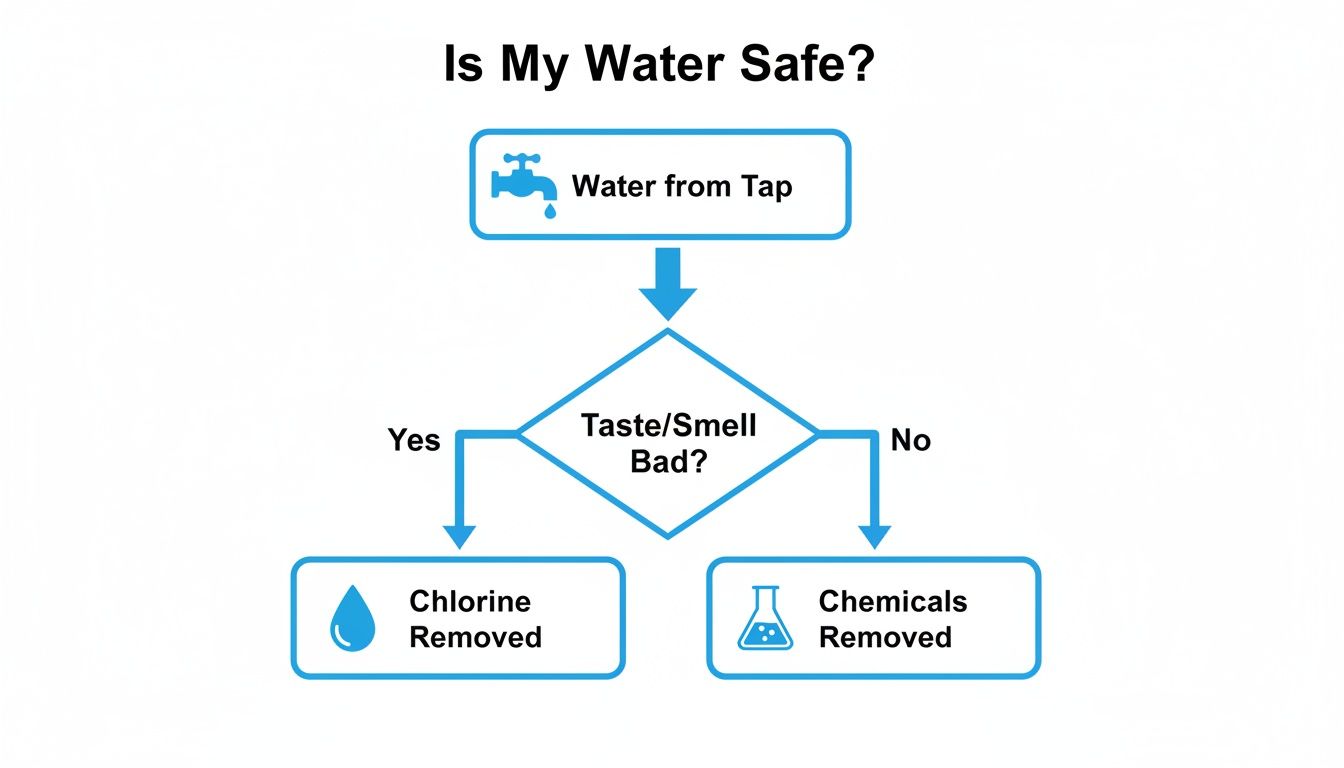
Flowchart illustrating water safety by checking tap water for bad taste/smell to remove chlorine or chemicals.

This simple chart lays out the most common decision for homeowners: are you dealing with a taste and smell problem, or do you have deeper concerns about invisible chemical contaminants?

Decoding the Technical Specs

When you start shopping for filters, you'll notice a few key numbers pop up on every product label. Understanding these is the secret to matching a filter's performance with your family's daily water use. Think of them as the filter's vital stats.

  • Micron Rating: This number tells you how small the pores are inside the carbon block. It’s simple: a smaller number means finer filtration. A 5-micron filter is a solid choice for general sediment and chlorine, but a 0.5-micron filter—often called a "sub-micron" filter—can snag much smaller things, including nasty cysts like Giardia.

  • Flow Rate (GPM): This is all about speed, measured in Gallons Per Minute (GPM). It tells you how fast water can get through the filter without losing pressure. A weak flow rate in a shower filter is incredibly frustrating. For a kitchen faucet, 1-2 GPM is usually plenty, but a whole-house system needs to be in the 10-20 GPM range to keep up with multiple showers and appliances running at once.

  • Total Capacity: This is basically the filter's lifespan, measured in gallons. A filter rated for 600 gallons will need to be replaced far more often than one rated for 10,000 gallons. You have to follow the manufacturer's replacement schedule to make sure you’re actually getting clean water.

Why NSF Certifications Are Your Best Friend

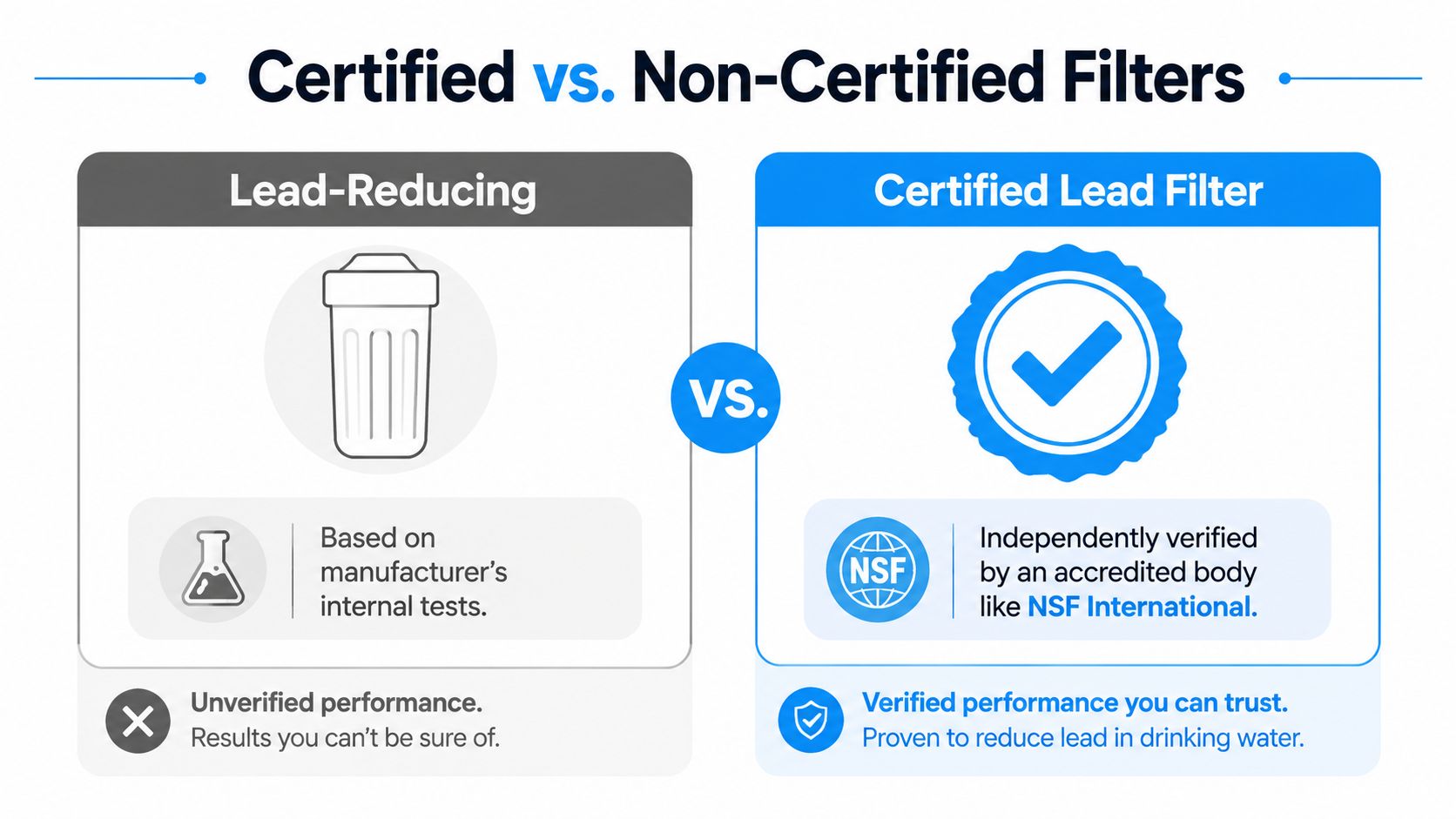
Want proof that a filter actually does what it says on the box? The most reliable way to know for sure is to look for third-party certifications from an independent organization like NSF International (formerly the National Sanitation Foundation). These aren't just fancy marketing stickers; they represent rigorous, standardized testing.

When you see an NSF/ANSI certification, it means the product has been scientifically tested and verified to meet specific standards for removing certain contaminants. It’s the gold standard for trust in the water filtration industry.

For carbon block filters, there are three main certifications you should keep an eye out for:

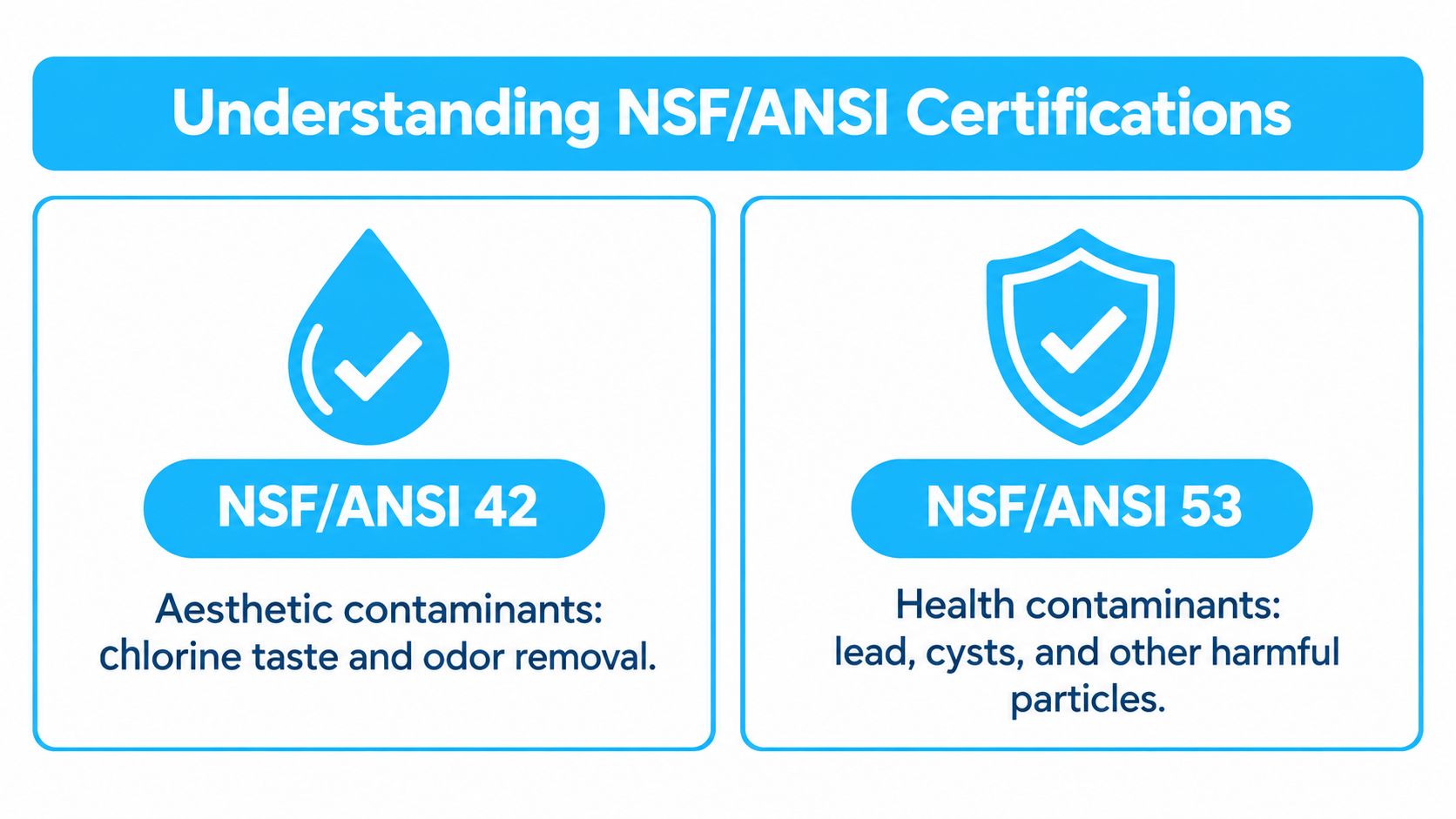
  1. NSF/ANSI 42 (Aesthetic Effects): This is your guarantee against bad tastes and odors. If a filter has this stamp, it’s been proven to significantly reduce chlorine and other things that make your water taste or smell off.

  2. NSF/ANSI 53 (Health Effects): This one is a much bigger deal. This standard certifies that a filter can reduce contaminants with known health risks—we’re talking about things like lead, mercury, asbestos, and certain volatile organic compounds (VOCs). If you’re concerned about your family's health, this certification is non-negotiable.

  3. NSF/ANSI 401 (Emerging Contaminants): This newer standard tackles the stuff we're just starting to worry about, like trace amounts of pharmaceuticals, herbicides, and pesticides that are showing up in water supplies. It’s an extra layer of defense against compounds that aren't even regulated yet.

A filter might be certified for one, two, or all three of these standards. Always dig a little deeper and check the filter's performance data sheet. It will tell you exactly which contaminants it's certified to remove and at what percentage.

Matching the Filter Type to Your Home

The last piece of the puzzle is deciding where you need filtered water. The right setup depends on your budget, whether you rent or own, and your ultimate clean water goals.

  • Under-Sink Systems: Installed neatly under a kitchen or bathroom sink, these systems connect to their own dedicated faucet. They strike a great balance between performance and convenience, giving you a steady stream of highly filtered water right where you need it for drinking and cooking.

  • Refrigerator and Pitcher Filters: These are the easiest and cheapest way to get started. They’re super convenient for getting cold, filtered drinking water, but their capacity is small and the flow rate is slow. They’re a good first step, but they’re really only effective for basic chlorine removal.

  • Whole-House Systems: For total peace of mind, a whole-house system is the ultimate solution. It treats every single drop of water that enters your home. That means cleaner water for drinking, cooking, showering, and doing laundry. As a bonus, it also protects your plumbing and appliances from sediment buildup and reduces your family's exposure to chlorine vapors in the shower.

By keeping these key factors in mind—micron ratings, flow rates, and those all-important certifications—you can confidently pick a carbon block filter that will deliver the clean, safe, and great-tasting water your family deserves.

Simple Maintenance for Long-Lasting Pure Water

A high-performance carbon block filter is a fantastic investment, but it's not a "set it and forget it" appliance. Think of it like changing the oil in your car—regular, simple maintenance is the secret to getting pure, great-tasting water year after year. If you let it go, you don't just lose performance; you can actually make your water quality worse.

The single most important job you have is replacing the filter cartridge on time.

Day in and day out, that carbon block is trapping a massive amount of junk. Eventually, every square inch of its surface area gets saturated, and it simply can't grab any more chemicals like chlorine. At the same time, all the sediment it has caught clogs up the pores, which is why you'll start to see your water pressure take a nosedive.

But it gets worse than just being ineffective. An old, saturated filter can become a breeding ground for bacteria. All that trapped organic gunk is a perfect food source, allowing nasty stuff to multiply inside the filter housing. Before you know it, your filter could be dumping contaminants back into your water, completely defeating the purpose of having it.

When to Call a Pro for Installation

While most under-sink or refrigerator filters are easy enough to install yourself, whole-house systems are a different beast entirely.

If the job requires cutting into your home's main water line, soldering pipes, or you just don't feel confident with that level of plumbing, call a licensed professional. It's always the smart move. A pro will make sure the system is installed correctly, preventing costly leaks and guaranteeing you get the flow and performance you paid for right from the start.

Quick Troubleshooting Checklist

Noticed a sudden change in your water? Don't panic. A few quick checks usually point right to the problem. Run through this list before you pick up the phone:

  • Sudden drop in water pressure? This is the classic, number-one sign that your filter is clogged solid. Check the manufacturer's replacement schedule—you're probably past due for a new one.
  • Is the chlorine taste back? If you start tasting or smelling that "public pool" flavor again, the activated carbon is officially spent. It's time for a fresh cartridge.
  • Lingering odors or a funky taste? This is a red flag. It almost always means the filter is saturated and potentially harboring bacteria. Replace it immediately to get your water quality back on track.

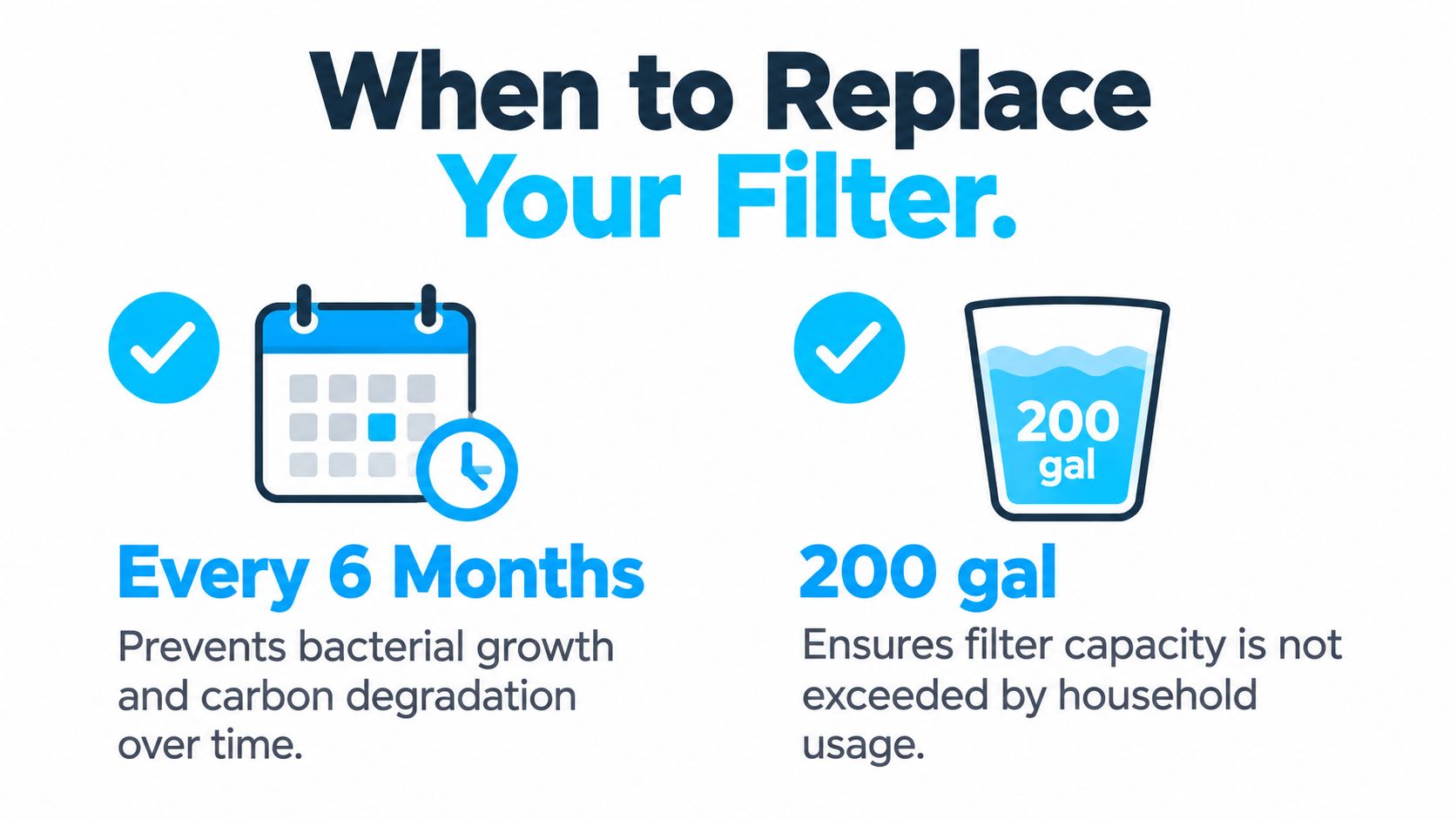
Staying on top of your filter changes—typically every 6 to 12 months for most under-sink systems—ensures your carbon block filter remains a reliable guardian for your home's water.

Common Questions About Carbon Block Filters

Even after getting the science down, a few practical questions always seem to come up when you're thinking about putting one of these filters in your home. Let's tackle some of the most common ones.

How Often Should I Change My Carbon Block Filter?

This really boils down to how much water you use and the specific filter you have. For a quick rule of thumb, plan on swapping out your under-sink or refrigerator filter every 6 to 12 months.

Bigger whole-house filters have a much longer lifespan, often lasting anywhere from one to three years. Your best bet is to always follow the manufacturer's directions, because once a filter hits its limit, its performance drops off a cliff.

Will a Carbon Block Filter Tank My Water Pressure?

When you install a new, correctly sized carbon block filter, you should barely notice any change in your water pressure. If you start seeing a major drop in pressure down the road, that’s a dead giveaway the filter is clogged with gunk and needs to be replaced.

Think of a sudden pressure drop as your filter's way of saying, "I'm full!" Ignoring it means you're not getting the clean water you paid for.

Can I Use a Carbon Block Filter with Well Water?

You bet. Carbon block filters do a fantastic job of pulling out the organic chemicals, pesticides, and funky tastes and smells you often find in well water.

But here’s the critical part: they do not remove bacteria or viruses, which is a major concern for any well owner. If you're on a well, your carbon block filter should be just one piece of a bigger system. You'll absolutely want a sediment pre-filter before it and a UV purifier after it to ensure your water is microbiologically safe.

Beyond just filtering, many homeowners are also thinking about protecting their homes from water damage. Looking into things like smart water leak detectors can provide that extra layer of security and peace of mind.


Ready to experience the difference for yourself? Water Filter Advisor provides in-depth guides and unbiased reviews to help you find the perfect water filtration solution. Visit us at https://www.waterfilteradvisor.com to compare systems and start your journey to safer, better-tasting water today.

Your Ultimate Guide to NSF Certified Water Filters for Your Home

Ever stood in the water filter aisle, stared at a wall of boxes, and felt completely lost? You're not alone. When you're trying to find the best way to get clean, safe water for your family, seeing the letters "NSF" is like finding a lighthouse in a storm. Using an nsf certified water filters list is your secret weapon to ensure the water from your tap is as pure as it gets.

Think of NSF certification as a brutally honest, tell-all review from a world-class expert. It means the filter has been rigorously tested by an independent third party and proven to do exactly what the manufacturer promises. No marketing fluff, just verified results.

What NSF Certification Really Means for Your Drinking Water

Let's be real: when you buy a product to protect your family's health, you're putting a massive amount of trust in the company that made it. But without an unbiased referee checking their work, it's just their word against whatever gunk might be lurking in your pipes.

That's where the National Sanitation Foundation (NSF) steps in. They are the impartial judge, the trusted umpire for home water filtration. That little blue NSF seal isn't just a sticker; it's a rock-solid guarantee that the filter delivers on its promises of performance and safety.

To earn that seal, a filter has to survive a gauntlet of intense tests:

  • Contaminant Takedown: The filter is challenged to prove it can actually remove the specific contaminants it claims to, whether that's lead, chlorine, pesticides, or microscopic cysts.
  • Material Safety Check: Every single part that touches your water is meticulously analyzed to ensure it won't add any new, harmful chemicals back into the mix. No leaching allowed.
  • Built to Last: The entire unit is pressure-tested to make sure it can handle the daily grind of your home's plumbing without springing a leak or falling apart.

This level of independent proof builds massive consumer confidence. It's no wonder that 92% of water filter owners say they have more trust in products certified by an organization like NSF. That confidence directly impacts how people shop—in fact, 81% of buyers feel much better about their purchase when they choose a certified filter. You can dig deeper into consumer trust in water filter certifications to see just how critical it is.

Beware the Marketing Mumbo-Jumbo

Keep an eye out for vague language. A company might claim its product "meets NSF standards" or is "NSF compliant." These phrases sound impressive, but they are not the same as being officially certified. It’s a marketing sleight of hand that often means the product has dodged the independent verification process entirely.

The NSF certification is a commitment to public health. It ensures the product in your home performs exactly as advertised, providing a reliable barrier against unwanted contaminants and giving you peace of mind with every glass.

Ultimately, choosing an NSF-certified filter removes the guesswork. It transforms a complex decision into a simple one based on verified science and trust. You're not just buying a filter; you're investing in a scientifically-proven tool to give your family safer, cleaner, and better-tasting water.

How to Decode the Secret Language of NSF Standards

https://www.youtube.com/embed/IP1qjUI24yM

Walking down the water filter aisle can feel like trying to decipher ancient hieroglyphics. You'll see numbers like NSF 42, 53, and 401 stamped on the boxes. What in the world do they mean for the water you drink every day?

Think of these numbers less like a random code and more like a specific job description for your filter. Each standard tells you exactly what that filter is certified to fight. Just because a filter is certified doesn't mean it removes everything, and learning to read these codes is the key to matching a filter to your home’s unique water quality challenges.

NSF 42: The Taste and Odor Specialist

First up is NSF/ANSI 42, which is all about the "aesthetic" qualities of your water. This is the standard that verifies a filter's ability to make your water taste and smell fantastic. Its primary job is to tackle non-health-related impurities that just make your water unpleasant to drink.

The most common villain it defeats is chlorine. While cities use it to disinfect water, it often leaves that distinct "public pool" smell and taste behind. An NSF 42 certified filter is your first line of defense, ensuring every glass is crisp, clean, and refreshing.

NSF 53: The Health Guardian

When your concerns go beyond just funky taste and odor, you need to look for NSF/ANSI 53. This is a much more serious standard focused on contaminants with known adverse health effects. Think of it as the bodyguard for your drinking water, trained to remove specific, harmful intruders.

This is the certification you need if you're worried about things like lead from old pipes, mercury, cysts like Giardia, or volatile organic compounds (VOCs). It's crucial to know that a product must be certified for each specific contaminant. Always read the fine print on the packaging to see exactly what an NSF 53 filter is certified to reduce.

A filter can be certified to NSF 53 for lead reduction but not for mercury. It's crucial to check the details to confirm it targets the specific contaminants in your local water supply.

To help you get a quick handle on these standards, here's a simple breakdown.

Common NSF Standards at a Glance

This table is your quick-reference cheat sheet for understanding what the key NSF certifications mean for your home water filter.

NSF/ANSI Standard What It Certifies Common Contaminants Reduced
NSF/ANSI 42 Aesthetic Effects Chlorine, Taste, Odor, Particulates
NSF/ANSI 53 Health Effects Lead, Mercury, Cysts (Giardia), VOCs
NSF/ANSI 401 Emerging Contaminants Pharmaceuticals, Herbicides, Pesticides

Bookmark this in your mind for your next trip to the store.

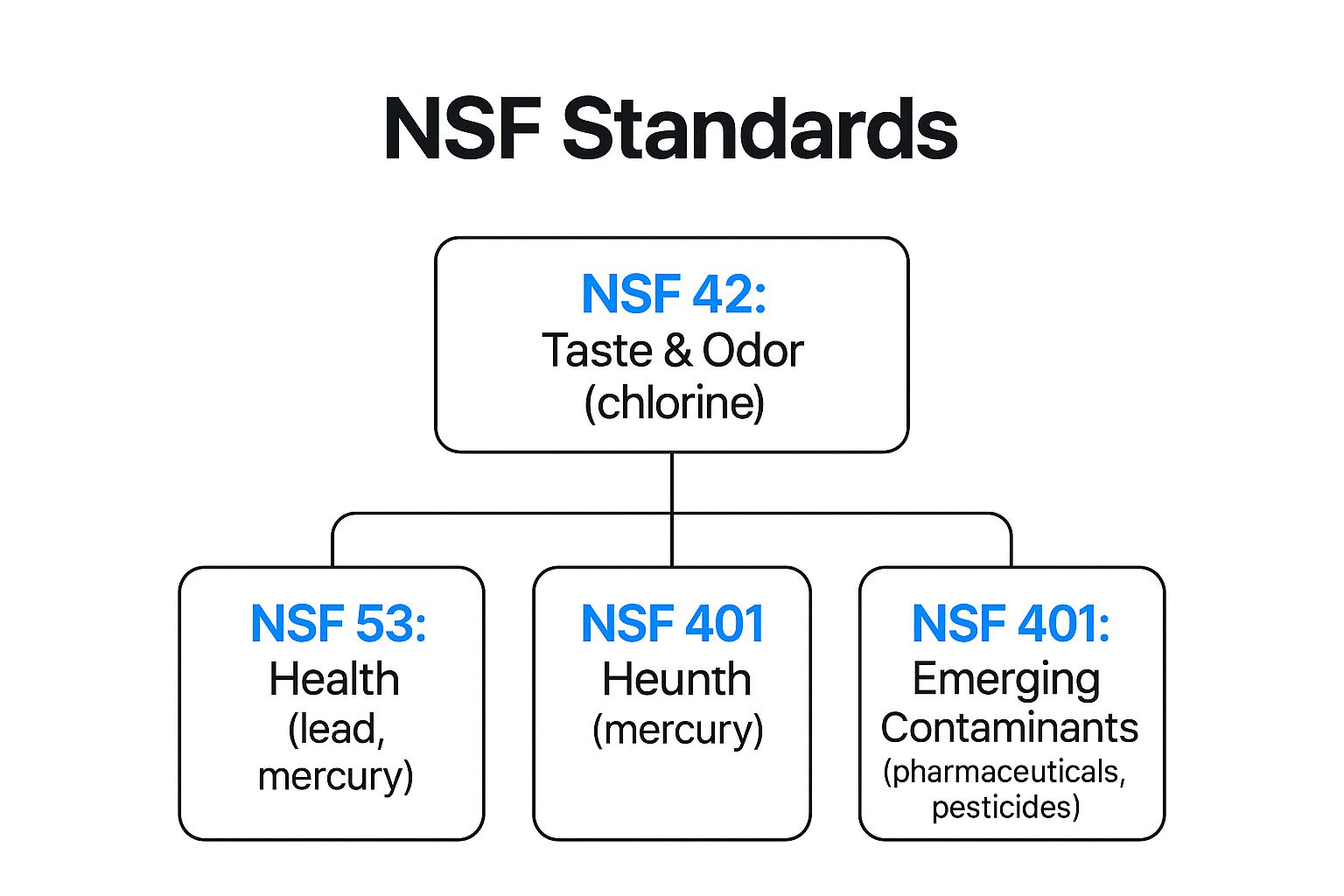
This infographic also helps visualize the primary roles of the most common NSF standards.

Infographic about nsf certified water filters list

This guide shows how each standard addresses a different level of concern, from simple taste issues to serious health contaminants.

NSF 401: The Modern Contaminant Watcher

Finally, there's NSF/ANSI 401, one of the newer standards on the block. This one tackles what are called "incidental contaminants" or "emerging compounds." These are substances whose long-term health effects we're just beginning to understand.

We're talking about trace amounts of pharmaceuticals, over-the-counter medications, herbicides, and pesticides that find their way into our water supplies. While these are usually found in very small concentrations, many people prefer to remove them as a precaution. A filter with an NSF 401 certification offers an extra layer of defense against this modern category of contaminants.

By understanding these three key standards, you can confidently browse any NSF certified water filters list and choose a product that provides the exact type of protection your family needs.

Choosing the Right Type of NSF Filter for Your Home

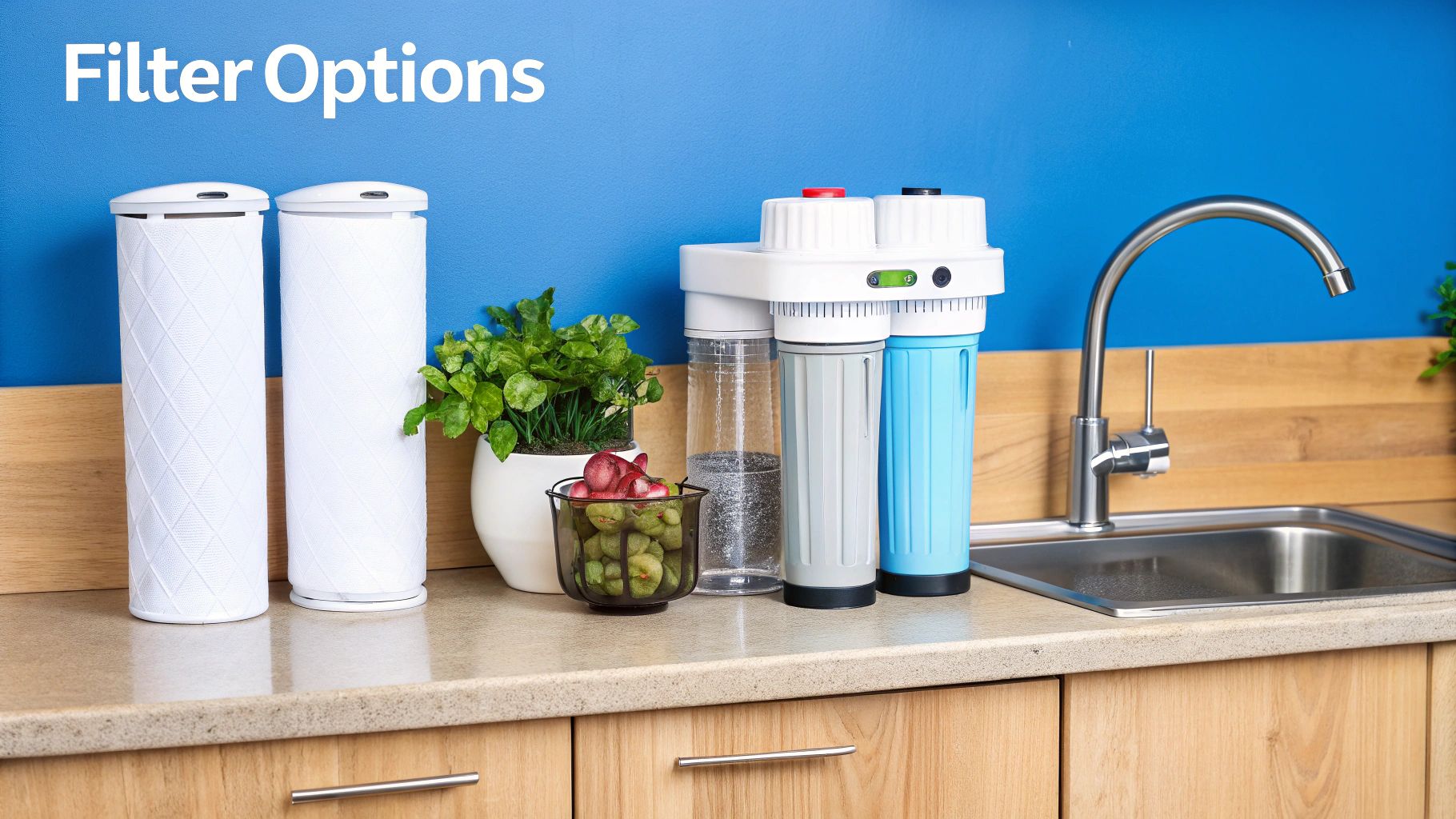
A kitchen sink area showing a water filter pitcher, a faucet-mounted filter, and a dedicated tap for an under-sink system, representing different filter choices.

Alright, you've cracked the code of NSF standards. Now for the fun part: picking the right tool for the job. The "best" water filter isn't just about what it removes—it’s about how it fits seamlessly into your life, your budget, and your home.

Think of it like buying a car. You wouldn't use a two-seater sports car to haul lumber, right? In the same way, a simple pitcher filter is perfect for a single person in an apartment, but it just won't cut it for a big family worried about what's coming out of every tap.

The global demand for clean water is exploding. The water filter market was valued at around USD 15.88 billion in 2024 and is expected to rocket to USD 26.42 billion by 2032. This isn't just a fad; it's a direct response to growing awareness about water quality and the amazing new filter technologies hitting the market.

Pitchers and Dispensers: Simple, Smart, and Effective

Water filter pitchers are the gateway to better water for most people, and for good reason. They’re affordable, require zero installation, and are perfect for renters or anyone who wants to keep things simple.

Just fill it up, pop it in the fridge, and you’ve got cold, filtered water ready to go. Most basic pitchers are certified to NSF 42, making them champions at improving taste and smell by eliminating chlorine. The best models also earn an NSF 53 certification for tackling nasty stuff like lead. Once your home water is sorted, finding the best water bottles for hiking is a great next step to stay hydrated on the go.

Faucet-Mounted Filters: Clean Water on Demand

Tired of the fill-and-wait game with a pitcher? A faucet filter is a fantastic upgrade. It attaches directly to your kitchen tap and delivers filtered water with the simple flip of a switch—no more waiting.

Installation is usually a snap and tool-free, making it another great choice for renters. These filters often carry both NSF 42 and NSF 53 certifications, offering a more powerful defense against common contaminants right where you fill your glass.

Your choice of filter should directly address your primary concern. If it's just about better-tasting coffee, a simple NSF 42 pitcher works. If your local water report shows lead, an NSF 53 certified system is non-negotiable.

Under-Sink Systems: The Hidden Powerhouse

If you're a homeowner looking for a more permanent and robust solution, an under-sink system is the champion. These systems are tucked away neatly under your cabinet, connect directly to the cold water line, and deliver purified water through their own dedicated faucet.

They boast a much higher filter capacity and a longer lifespan than pitchers or faucet mounts. Many are certified for NSF 42, NSF 53, and even NSF 401 to tackle emerging contaminants like pesticides and pharmaceuticals. Top-tier reverse osmosis (RO) models, certified under NSF 58, can remove an even broader spectrum of dissolved solids.

Whole-House Filters: The Ultimate Fortress of Filtration

For the most comprehensive solution, nothing beats a whole-house filter. Also known as a point-of-entry (POE) system, this unit is installed where the main water line enters your home. The result? It treats every single drop of water you use.

This is the ultimate choice for tackling widespread problems like hard water, sediment, or high chlorine levels that affect your showers, laundry, and appliances—not just your drinking glass. It's a bigger investment, for sure, but a whole-house unit provides total peace of mind by purifying all the water flowing into your home.

Our Top Picks for NSF Certified Water Filters

Trying to pick a water filter can feel like a guessing game. Every brand makes big promises, but how do you know which ones actually deliver? That's where we come in. We’ve cut through the noise and put together a straightforward list of our vetted NSF certified water filters to highlight options that are independently proven to do their job.

We've broken down our recommendations by type, making it easy to find the right match for your home, budget, and specific water concerns. You can rest easy knowing every filter here is backed by official NSF certifications, which means a trusted third party has put it through its paces.

Best Pitcher Filter for Simplicity and Performance

Brita Elite Pitcher Filter (Longlast+)

If you're renting, in a dorm, or just want an easy-to-use solution, the Brita Elite (you might know it as the Longlast+) is a fantastic choice. It’s the simplest way to get into water filtration—no tools, no installation, no fuss.

What makes this pitcher stand out is its certification lineup. It’s got the NSF/ANSI 42 certification, which means it dramatically improves the taste and smell of your water by tackling chlorine. But it also has the critical NSF/ANSI 53 certification for reducing nasty stuff like lead, mercury, and asbestos. That one-two punch makes it a surprisingly powerful filter for something so simple.

  • Key Certifications: NSF/ANSI 42, 53
  • Best For: Renters and anyone who needs a simple, affordable way to get lead and chlorine out of their drinking water without a complicated setup.

Best Faucet-Mounted Filter for On-Demand Convenience

PUR PLUS Faucet Filtration System

Tired of waiting for a pitcher to fill? A faucet-mounted filter gives you clean water right on tap, and the PUR PLUS system is a real winner in this category. It clicks right onto your kitchen sink for a seamless blend of convenience and serious filtration.

This thing is a workhorse, certified against NSF/ANSI 42, 53, and 401. So, it doesn't just make your water taste better (NSF 42) and pull out lead (NSF 53), it also handles emerging contaminants like certain pesticides and pharmaceuticals (NSF 401). A quick flip of a switch lets you go between filtered and unfiltered water, which is a great feature for making the filter last longer.

That triple certification is a big deal. It gives you a solid defense against a whole host of common water problems, making it one of the most capable faucet filters you can buy.

Best Under-Sink System for Hidden Power

Aquasana Claryum 3-Stage Under Sink Filter

For homeowners looking for a more permanent, high-capacity solution that doesn't clutter the countertop, an under-sink system is the way to go. The Aquasana Claryum 3-Stage system is an absolute beast that works its magic completely out of sight, feeding a dedicated, elegant faucet.

This filter is certified against NSF/ANSI 42, 53, and 401, and its multi-stage process is incredibly thorough. It’s proven to reduce over 77 different contaminants, including 99% of lead and asbestos, along with herbicides, pesticides, and pharmaceuticals. What’s really smart is that, unlike reverse osmosis systems, it leaves healthy minerals like calcium and magnesium in the water. You get all the good, none of the bad.

  • Key Certifications: NSF/ANSI 42, 53, 401
  • Best For: Homeowners who want a serious, long-term filtration system that tackles a massive range of contaminants while keeping healthy minerals in their water.

To make things even easier, here’s a quick side-by-side look at our top picks.

Top NSF Certified Water Filter Picks

Filter Model Type Key NSF Certifications Best For
Brita Elite (Longlast+) Pitcher NSF 42, 53 Renters and simple lead/chlorine removal.
PUR PLUS Faucet System Faucet-Mounted NSF 42, 53, 401 On-demand filtration for a wide range of contaminants.
Aquasana Claryum 3-Stage Under-Sink NSF 42, 53, 401 Homeowners wanting comprehensive, hidden filtration.

This should give you a solid starting point for finding the perfect NSF certified filter for your home and peace of mind.

How to Verify a Filter's NSF Certification Like a Pro

When it comes to your family's water, trust but verify. Anyone can slap a claim on a box, but how do you know it’s true? Learning to check for an official NSF certification yourself is the ultimate power move, giving you total confidence that a filter actually does what it says it will.

It’s a simple skill that cuts through marketing fluff and protects you from misleading claims. The best part? It only takes a minute.

Screenshot from https://info.nsf.org/Certified/DWTU/

The screenshot above shows the official NSF Certified Products Database—your one-stop shop for the truth about any filter's certification.

A Step-by-Step Guide to Verification

The only way to be 100% sure a filter is legitimate is to check the official NSF database. Be wary of vague phrases like “tested to NSF standards.” That’s not the same thing. Only an official listing in the database confirms the product survived the rigorous testing process.

Here’s how you can become a verification expert in four easy steps:

  1. Get the Product Info: Find the brand name and the specific model number. This is usually printed right on the box or in the online product description.
  2. Go to the Source: Head over to the official NSF Certified Drinking Water Treatment Units, Water Filters database. This is the only resource that matters.
  3. Search the Database: Type the brand or model number into the search bar.
  4. Check the Listing: If the filter is legit, it will appear in the search results. The listing will show you exactly which NSF standards it meets (like NSF 42, 53, or 401) and the complete list of specific contaminants it’s proven to reduce.

If a filter isn’t listed in this database, it is not NSF certified—no matter what the package says. This simple check is your best defense against clever marketing.

This process lets you see the full performance data sheet, so you can confirm every single claim the manufacturer makes. For more hands-on help choosing the right filter, you can find a ton of practical advice right here on our site. Learning more about water filter maintenance and selection will help you make a smart, informed choice. By verifying the certification yourself, you can be sure the filter you bring home is truly up to the job of protecting your family.

Common Questions About NSF Certified Filters

Even after you've waded through all the standards and product specs, a few questions always seem to pop up. Let's tackle those nagging doubts head-on so you can purchase your new filter with complete confidence.

The demand for certified filters is skyrocketing, and for good reason. In Europe, the water filter market hit USD 5.28 billion in 2024 and is expected to nearly double to USD 10.30 billion by 2033. This isn't just a trend; it's a direct response to growing concerns over water quality, with industrial and agricultural runoff linked to a staggering 3.5 million deaths worldwide each year from contaminated water. You can discover more insights on the European water filter market and see the data for yourself.

Is "NSF Compliant" the Same as "NSF Certified"?

Absolutely not. This is probably the single most important distinction to understand.

When a product is "NSF Certified," it means it has been sent to NSF International, put through a battery of independent tests, and proven to meet every single claim on its label. It’s a rock-solid guarantee that it does what it says it does.

On the other hand, phrases like "NSF compliant" or "tested to NSF standards" are just marketing speak. It usually means the company tested the filter themselves, in their own lab, without any third-party oversight. Always look for the official NSF seal on the product and double-check the model number on the NSF database.

Think of it like this: "NSF Certified" is like graduating with an official degree from an accredited university. "NSF Compliant" is like saying you "followed the curriculum" without ever taking the final exams or getting a diploma.

Do I Need a Filter if My Tap Water Is "Safe"?

Just because your city’s water meets the legal requirements doesn't mean it's as clean or tasty as it could be. For starters, municipal water is treated with chlorine. While it’s great for disinfection, it leaves behind a chemical taste and odor that most people find unpleasant. An NSF 42 certified filter is designed specifically to eliminate that.

More importantly, your water’s journey doesn’t end at the treatment plant. Contaminants like lead can easily leach into your water from old city service lines or even the plumbing inside your own home. An NSF 53 certified filter acts as the final line of defense, capturing these contaminants right at your tap before they ever make it into your glass.


At Water Filter Advisor, our mission is simple: to give you clear, honest information so you can find the perfect water filtration system for your home. Dive into our detailed guides and reviews to choose the right solution for your family.

Learn more and find your ideal filter at Water Filter Advisor