So, you've discovered your home's water has the personality of a grumpy lemon. What's the plan? Before you do anything, you need an accurate pH reading. From there, your two main battle plans are using alkaline additives like baking soda for a quick, "help-me-now" fix in a pitcher, or installing a whole-home pH neutralizing filter to solve the problem for good. These methods work by telling the acidity in your water to take a hike, bringing its chemistry back into a happy, balanced state.
Why Your Home's Water pH Matters
Ever notice those sneaky blue-green stains in your sink or bathtub? That’s not a quirky design choice from your plumbing—it's a cry for help. It’s the first big warning sign of acidic water, and it's a much bigger problem than a bit of discoloration.
When your water has a low pH, it gets aggressive. It becomes corrosive, silently munching away at your plumbing from the inside out. This isn't just about aesthetics; it's a direct threat to your home's circulatory system. Corroding copper pipes can leach metal into your drinking water, and if you live in an older home, you could be facing lead contamination from old solder. Yikes.
Beyond the serious health concerns, acidic water is a bully to your expensive appliances. It can cause premature failure in water heaters, washing machines, and dishwashers. Tackling low pH isn't just about making your water taste better; it's about protecting your castle from a slow-motion, expensive disaster. That's why testing is the critical first step.
Getting an Accurate pH Reading
You wouldn't start randomly replacing parts in your car without a diagnostic, and the same logic applies to your water. Guessing your pH is a recipe for frustration and wasted money. Luckily, you've got a few solid options to get a reliable measurement.
Which method you choose really comes down to what you need. If you just want a quick "Is everything okay in here?" check, test strips are fine. But if you're about to invest in a whole-home filtration system, you need the hard numbers that only a digital meter or a lab test can provide.
- pH Test Strips: These are the cheap-and-cheerful option. Just dip a strip in your water, watch it do a color-changing magic trick, and match it to the chart. They’re great for getting a ballpark idea but aren't precise enough for making serious treatment decisions.
- Digital pH Meters: For a much more accurate reading, a digital meter is the way to go. These cool little gadgets give you a specific number, often down to one or two decimal places. They need to be calibrated now and then, but that accuracy is exactly what you need to properly size and configure a water treatment system.
- Professional Lab Testing: If you suspect other villains are crashing the party (like heavy metals) or you just want the most comprehensive analysis possible, sending a sample to a certified lab is your best bet. They'll give you a pinpoint-accurate pH level and a full report card on a whole range of other contaminants.
This flowchart breaks down how to choose the right testing method, whether you need a quick spot-check or a highly detailed analysis.
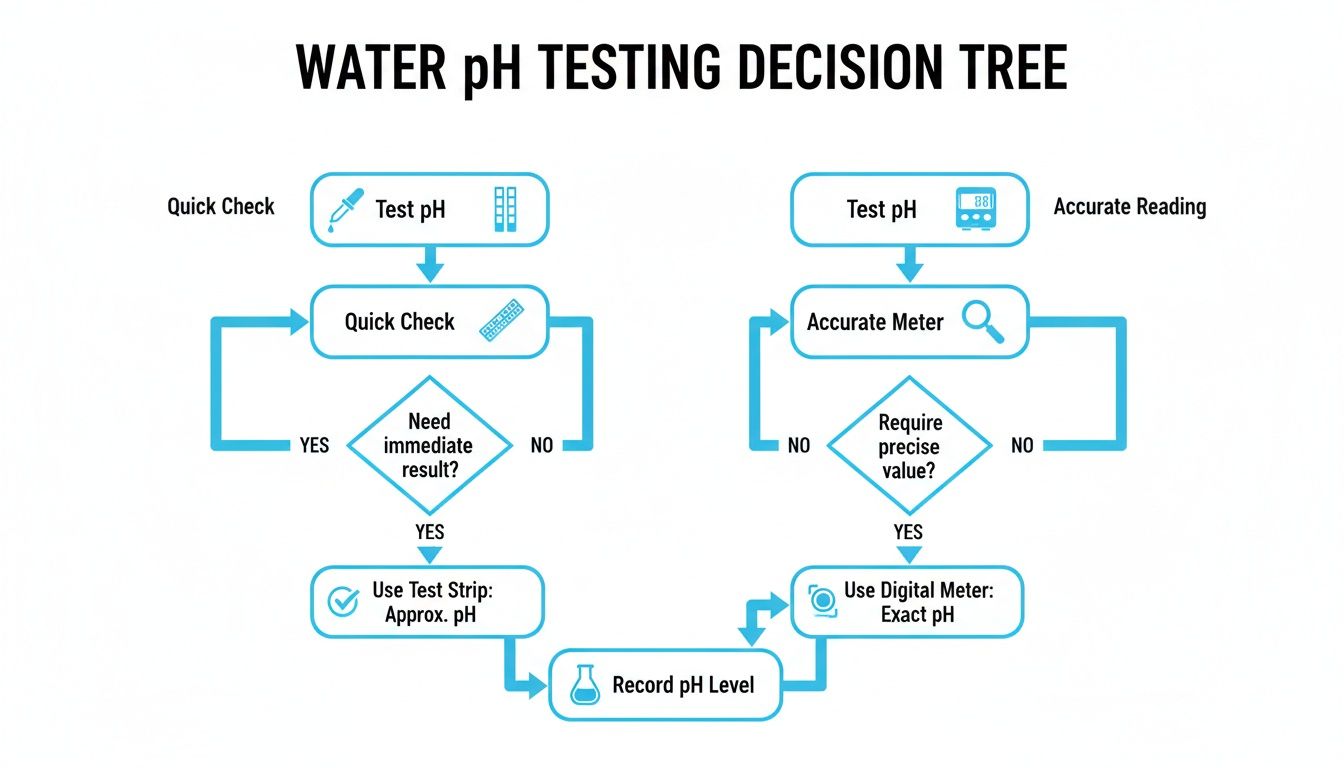
As you can see, while strips are handy for a quick peek, a digital meter is really the minimum you'll want for accuracy when planning any kind of water filtration strategy.
Comparing Home Water pH Testing Methods
To make it even simpler, here's a quick rundown of the most common home testing methods. This should help you decide which tool is the right one for your mission.
| Testing Method | Accuracy | Cost | Best For |
|---|---|---|---|
| pH Test Strips | Low | Low | Quick, "just curious" checks and getting a general idea. |
| Digital pH Meter | High | Medium | Accurate readings needed for sizing filtration systems. |
| Professional Lab Test | Very High | High | Comprehensive analysis for complex issues or total peace of mind. |
Ultimately, investing in a good digital meter or a lab test upfront can save you a ton of guesswork and money down the road.
Understanding the pH Scale in Your Home
You probably remember the pH scale from science class—it runs from 0 to 14 and measures how acidic or alkaline something is. In your home's water, anything below a pH of 7.0 is acidic, and anything above is alkaline.
Modern testing has become incredibly precise. Post-1993 guidelines, for example, have tightened potentiometric uncertainty to less than 0.02 pH units. That level of accuracy is a game-changer for the 80% of the global population that relies on treated water sources.
For most household water, you're aiming for a pH between 6.5 and 8.5. If your water drops below 6.5, it’s corrosive enough to start damaging your pipes. If it creeps above 8.5, you'll start seeing scale buildup on fixtures and might notice a bitter taste.
Knowing your water's exact pH is key because the solution depends entirely on how grumpy your water is. Mildly acidic water might be happy with a simple calcite filter, but extremely low pH levels will demand a more powerful setup. For a broader look at how this fits into your home's water quality, check out our general water filtration advice.
Quick Fixes Using Common Household Additives
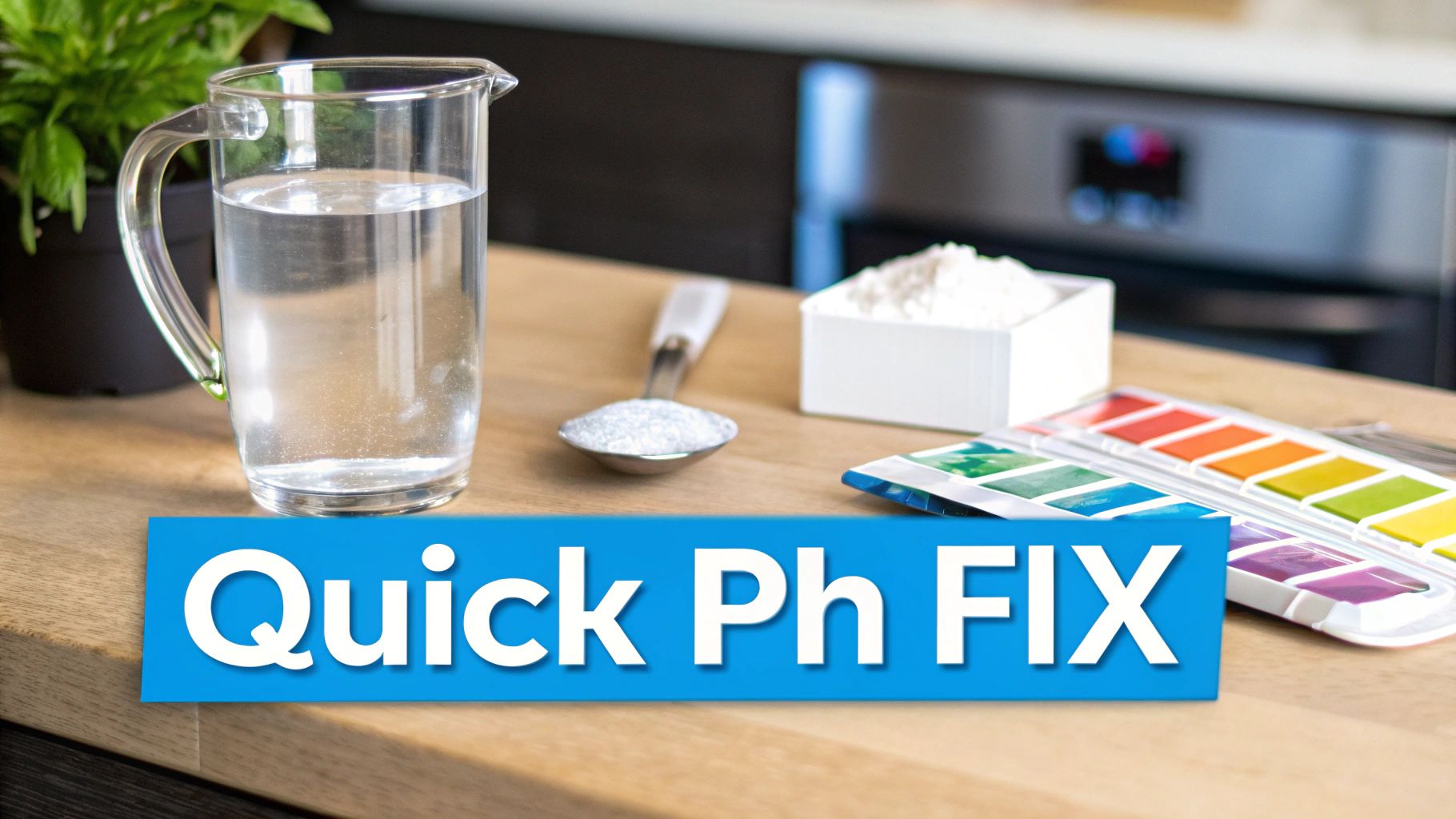
So you've tested your water and confirmed it's on the acidic side. Your mind might jump straight to complex, expensive filtration systems, but hold on. For small, immediate tweaks, the solution might be sitting right in your kitchen pantry.
These simple household additives are perfect for neutralizing acidity in small batches, like a single pitcher of drinking water. It's crucial to understand these are temporary band-aids. They won't do a thing to protect your pipes or appliances from the long-term corrosion party happening throughout your home. Think of this as first aid, not a cure.
Using Baking Soda: The Go-To Neutralizer
The easiest and most common additive is sodium bicarbonate, which you know as good old baking soda. It's a mild alkaline substance that gently raises both pH and total alkalinity. This is great because it also helps stabilize the water chemistry and prevents wild pH swings.
Think of it as an antacid for your water. It calms the acidity down and nudges it back toward neutral. Because it’s so gentle, it’s the perfect place to start. A tiny pinch in a gallon of drinking water can often be enough to get rid of that slightly metallic taste that comes with low pH.
A Word of Caution: Baking soda adds sodium to your water. If you’re watching your sodium intake for health reasons, you’ll want to use this method sparingly for drinking water.
Dosing for Small Batches
When you're adding anything to your water, precision is everything. Just dumping in a spoonful is a surefire way to send the pH skyrocketing, creating a whole new problem. The mantra is: start small, test, and then adjust.
Here are some real-world starting points for using baking soda:
- For a Gallon of Drinking Water: Start with just 1/8 teaspoon. Stir it until it’s fully dissolved, give it 30 minutes to settle, and then test the pH again.
- For a Small Aquarium (10 gallons): A good first dose is 1/4 teaspoon. Always dissolve it in a separate cup of tank water before you slowly pour it in. This prevents shocking your fish.
These are just guidelines. The golden rule here is to add less than you think you need. You can always add a little more, but you can’t take it out.
When to Use a Stronger Solution
If your water is more than just slightly acidic, you might need to bring out the bigger guns. Soda ash (sodium carbonate) is a much more concentrated alkaline powder. It packs a bigger punch and will raise pH much more dramatically than baking soda, so you have to handle it carefully. You’ll use a lot less soda ash than baking soda to get the same result.
It’s interesting to think about how what we do in our kitchen mirrors larger-scale environmental chemistry. Just like agricultural runoff can raise the pH in rivers, we’re doing the same thing by adding these mineral-based powders. Research on water quality often shows how elements like calcium play a huge role in elevating pH, which is the exact principle we're using. You can actually explore a full study on physicochemical factors influencing water pH to see how these concepts apply on a global scale.
Ultimately, these quick fixes are handy in a pinch, but they're not a practical whole-home solution. If you’re dealing with acidic water throughout your entire house, a permanent, automated filtration system is always the smarter long-term investment.
Choosing the Right pH Neutralizing Filter for Your Home
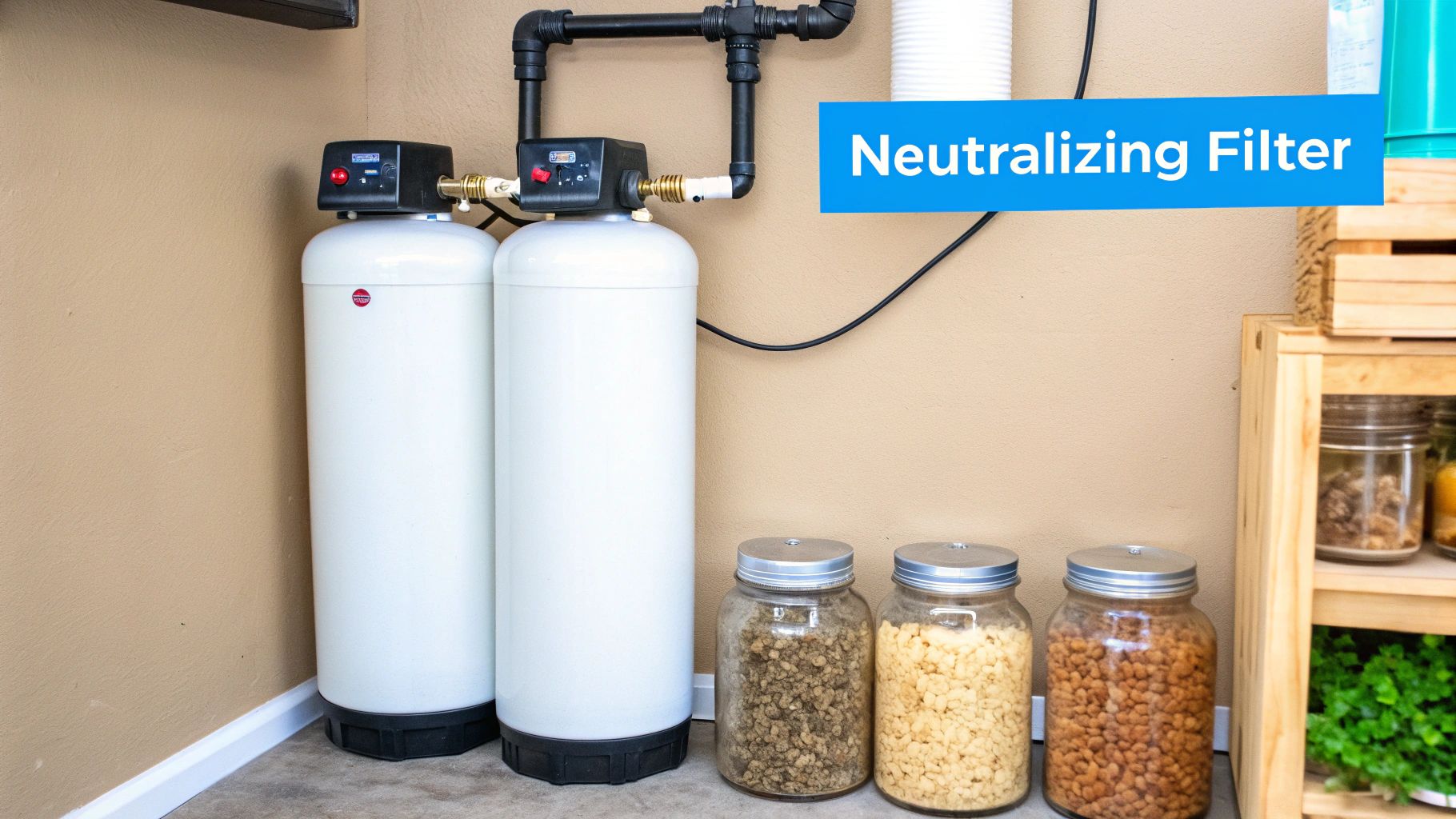
Sure, quick fixes like baking soda can help in an emergency, but they aren't a real strategy for protecting your home. That approach does nothing to stop the acidic water that’s silently eating away at your pipes and appliances. For a permanent, "set it and forget it" solution, a dedicated neutralizing filter is the gold standard of home water treatment.
These systems get installed right where your main water line enters your house, treating every last drop of water before it ever reaches a faucet or shower. They act as a constant guardian, using a special mineral media to raise the pH and bring your water chemistry back into a safe, non-corrosive zone. The real beauty here is that these filters are self-regulating. They’re the workhorses of residential water treatment, and understanding the two main types is key to picking the right one.
The Gentle Workhorse: Calcite Filters
The most common type of neutralizing filter uses calcite. Think of it as a super pure, ground-up form of calcium carbonate—basically limestone or marble. When acidic water flows through a tank full of this calcite media, it slowly dissolves the calcium, neutralizing the acid and bumping up the pH.
The process is naturally self-limiting. Calcite will only dissolve until the water hits a neutral pH of around 7.0. Because of this, it's almost impossible to "overcorrect" and make your water too alkaline. This makes calcite a fantastic choice for homes with mildly acidic water, usually in the pH range of 6.0 to 6.9.
A calcite filter is like a slow-release capsule for your water system. It provides a steady, gentle dose of alkalinity that solves the corrosion problem without a lot of fuss or risk of overshooting your target pH.
One thing to know is that this process does add some hardness to your water since you're introducing calcium minerals. For most folks, that's a very minor trade-off for protecting thousands of dollars in plumbing and appliances.
The Heavy Hitter: Corosex Filters
So, what if your water is more than just a little bit acidic? If you've got a pH below 6.0, calcite alone might struggle to keep up. This is where Corosex enters the picture.
Corosex is a specially processed form of magnesium oxide, and it's far more reactive than calcite. It can neutralize acidity much more aggressively—in fact, it can raise the pH up to 100 times more than the same amount of calcite.
That power comes with a serious warning: Corosex is not self-limiting. If water sits in the tank too long (say, overnight), it can push the pH way too high. For this reason, you'll almost always see Corosex used in a blend with calcite, typically a ratio of 80-90% calcite to 10-20% Corosex. This mix gives you the best of both worlds: the gentle, steady action of calcite with an extra kick from Corosex to handle more severe acidity.
Comparing Your Filter Options
Deciding between calcite, Corosex, or a blend all comes down to what your water test results say. Getting a precise pH reading is non-negotiable for making the right call. To help you choose, let's put these two filter media options head-to-head.
Calcite vs Corosex: Which Neutralizing Filter Is for You?
| Feature | Calcite (Calcium Carbonate) | Corosex (Magnesium Oxide) |
|---|---|---|
| Best For | Mildly acidic water (pH 6.0 – 6.9) | Severely acidic water (pH below 6.0) |
| Effectiveness | Gentle, slow-acting, and self-limiting | Highly reactive and powerful, not self-limiting |
| Risk of Overcorrection | Very low; naturally stops at a neutral pH | High if used alone; best when blended with calcite |
| Maintenance | Media must be refilled annually as it dissolves | Dissolves faster and requires more frequent refilling |
| Impact on Hardness | Adds calcium hardness to the water | Adds magnesium hardness to the water |
Ultimately, your water test will point you in the right direction. A pH of 6.5? Calcite is your friend. A pH of 5.5? You'll need a calcite/Corosex blend to get the job done right.
Installation and Long-Term Value
Most neutralizing filters are whole-house systems, which means they'll need to be installed by a professional plumber. While there's an upfront cost, the long-term value is undeniable. You're not just getting better drinking water; you're safeguarding your entire plumbing network. A one-time investment in a neutralizing filter can prevent catastrophic and expensive headaches. Maintenance is pretty straightforward, too. You'll just need to top off the tank with new media about once a year.
When You Might Need a Chemical Injection System
Sometimes, standard neutralizing filters just don't have the muscle for the job. If your water's pH is extremely low, or if your household has a really high water flow rate, a typical calcite filter can struggle to keep up. This is where you bring in the heavy artillery: a chemical injection system.
Think of it as the precision tool for serious water chemistry problems. Instead of letting water flow over a dissolving media, this system actively injects a neutralizing solution right into your water line. It gives you a level of control that passive filters simply can't match, making it the go-to for really challenging water.
How These Systems Work
At its heart, a chemical injection system is a proactive approach for when other methods of raising water pH just fall short. The system has a few key parts working together:
- Solution Tank: This is where you mix your neutralizing agent—usually soda ash (sodium carbonate)—with water to create a liquid solution.
- Dosing Pump: This small electric pump is the brains of the operation. It pulls the solution from the tank and injects a tiny, precisely measured dose into your main water line.
- Flow Switch or Meter: This device tells the pump when to work. The moment you turn on a faucet, the switch kicks the pump on. Turn the faucet off, and the pump stops.
This setup delivers an incredibly accurate and consistent pH level throughout your home. It doesn't matter how much water you're using; the system adds the perfect amount of solution to keep everything balanced.
Scenarios That Call for an Injection System
While a neutralizing filter is great for mildly acidic water, an injection system becomes the clear winner in more extreme cases. This method is often the only real choice for homes with a water pH that drops below 5.5. With acidity that aggressive, a standard filter would dissolve its media so fast that maintenance would become a constant headache.
High water demand is another key factor. Large families or homes with high-flow fixtures can send water through a filter tank too quickly for the media to do its job. A chemical pump injects its solution instantly, ensuring complete neutralization no matter the flow rate.
Why Professional Calibration is So Important
Unlike a calcite filter that more or less self-regulates, a chemical injection system needs to be calibrated perfectly. The dosing pump's injection rate has to be fine-tuned based on your water's starting pH, your flow rate, and the concentration of your soda ash solution. Get this balance wrong, and you could overcorrect and send the pH way too high, leading to a bitter taste and nasty scale buildup. Because of this, professional setup and calibration are critical to get the chemistry just right.
Maintaining Your Balanced Water System
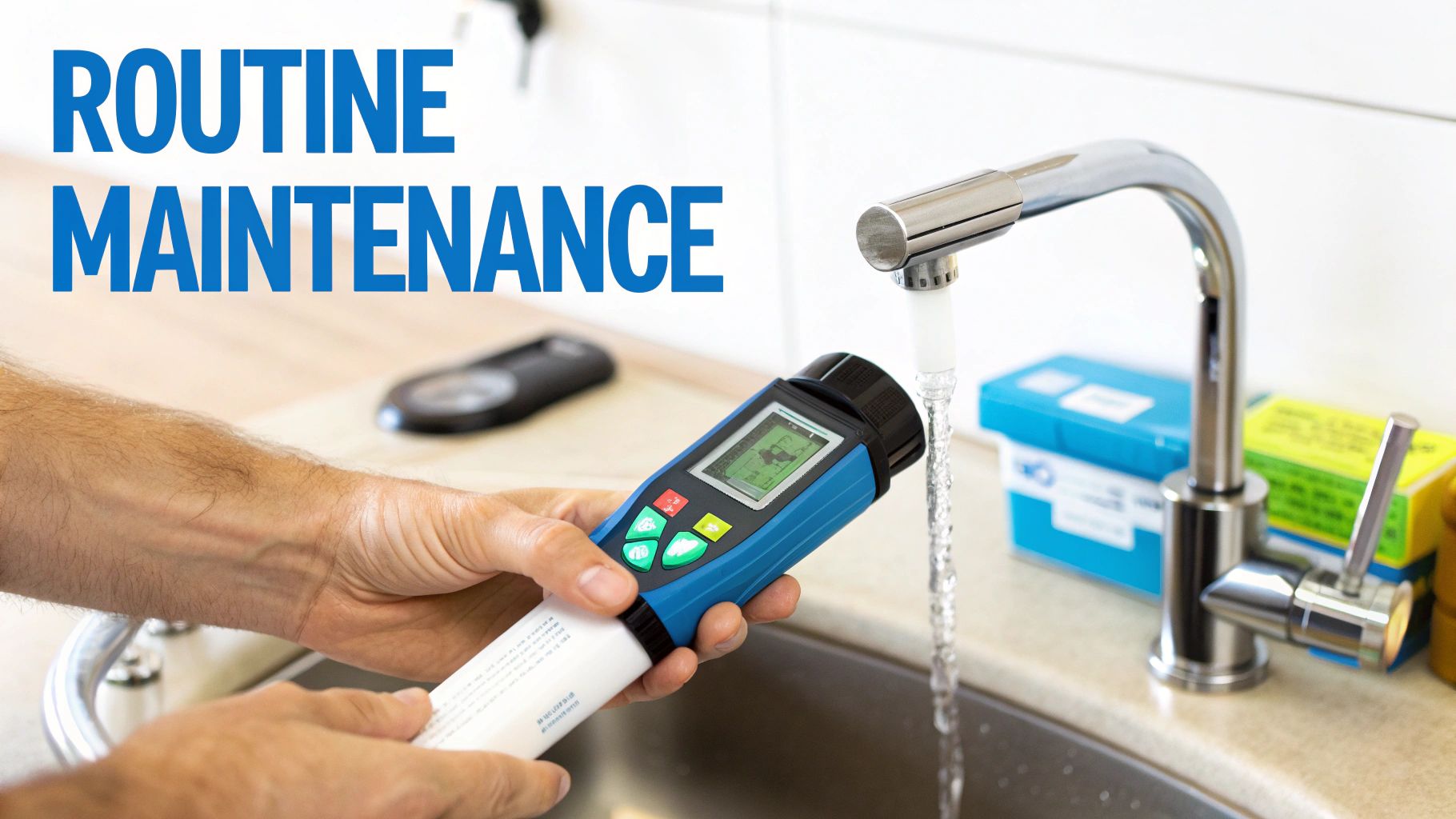
Getting your home's water pH into that perfect neutral zone is a huge win, but the job isn't quite finished. Think of your water treatment setup like any other major home system—it needs a little ongoing attention to keep performing at its best. This isn't about creating more work. It's about a smart, simple maintenance plan that ensures your filtration investment continues to protect your home.
Creating a Realistic Testing Schedule
The golden rule of water filtration is to never just assume your system is working. Regular testing is the only way you know for sure, and it's how you catch small issues before they snowball into big problems.
- Initial Follow-Up: Right after you install your new filter, test the water weekly for the first month to confirm the pH has stabilized.
- Quarterly Checks: Once things look good, switch to testing once every three months. This is frequent enough to notice if your filter media is getting low or if your water source's chemistry has changed.
- Annual Deep Dive: At least once a year, it's a good idea to do a more thorough test, especially if you notice any changes in water taste or see stains reappearing.
This regular feedback loop is your best defense against surprises.
Hands-On Maintenance for Your System
The actual maintenance you'll need to do depends on the kind of filter system you chose. For neutralizing filters that use calcite or a calcite/Corosex blend, your main job is topping off the media. This mineral bed is designed to slowly dissolve, so it will need to be replenished. A good rule of thumb is to check the media level every 6 months and plan to add more roughly once a year.
If you're running a chemical injection system, your routine will center around the solution tank. You'll have to mix a new batch of soda ash solution whenever the tank runs low. Getting into the habit of checking the level monthly is smart.
Don’t forget the simple stuff. No matter what system you have, give the filter tank or solution pump a quick visual inspection every few months. Look for leaks, listen for unusual noises, and just make sure everything looks clean and operational.
Watching for Signs of Trouble
Even with a great system, things can sometimes drift off-course. One of the most common issues is overcorrection, where the water becomes too alkaline (pH over 8.5).
Keep an eye out for these signs of overcorrection:
- Water that feels slippery or almost slimy to the touch.
- A bitter or "chemical" taste.
- The return of scale—that white, chalky buildup on faucets and showerheads.
Another thing to be aware of is increased water hardness. Since calcite filters work by adding calcium minerals, they will naturally make your water harder. This is a normal trade-off. If the hardness becomes a nuisance, you might consider adding a water softener after your neutralizing filter for the ultimate one-two punch.
Interestingly, the principles we use to manage water chemistry in our homes are the same ones being considered for our oceans. Since pre-industrial times, global surface ocean pH has dropped from 8.11 to 8.04. One proposed solution involves adding calcium carbonate to boost alkalinity—the exact same principle your calcite filter uses. You can learn more about the science behind counteracting acidification on a global scale.
This ongoing vigilance ensures your journey of learning how to raise pH in water ends with a stable, long-term filtration solution, not a whole new set of problems.
Common Questions About Raising Water pH
Even with the best plan, you're bound to have some questions pop up when you're figuring out how to raise the pH in your water. Let's be honest, tweaking your home's water chemistry can feel a little intimidating. We'll walk through some of the most common questions we hear from homeowners to help you feel good about your next steps.
Can a Water Pitcher Filter Raise My Water's pH?
This is a big point of confusion for a lot of people. While you can find specialized (and usually pricey) alkaline water pitchers designed to bump up pH, your standard carbon pitcher from a brand like Brita isn't going to do it. The main job of those filters is to get rid of things like chlorine to make your water taste and smell better, not to fix a core chemistry issue like low pH.
Think of a regular pitcher filter like a strainer—it catches the big stuff. It just doesn't contain the right kind of filter media to actually neutralize acid. So, while it might improve the taste, it offers zero protection for your home’s plumbing against the corrosive damage that acidic water causes.
Will Raising the pH Make My Water Hard?
Yes, it often will, and it’s a really important trade-off to get your head around. The most common whole-house filtration fixes for low pH—calcite and Corosex filters—work by dissolving minerals like calcium carbonate and magnesium oxide into your water. Those happen to be the exact same minerals that cause water hardness.
This process is great for solving the acidity problem and saving your pipes. The flip side is you might start seeing the classic signs of hard water, like soap scum in the shower or chalky scale on your faucets. For most people, that's a much easier problem to deal with than corroding pipes.
Pro Tip: If the new hardness is driving you crazy, the best setup is to install a water softener after the pH neutralizing filter. That combination gives you the best of both worlds: water that’s non-corrosive and soft all through the house.
Is It Safe to Drink Water with Baking Soda Added?
For a one-off, small adjustment, adding a tiny, carefully measured pinch of baking soda to a pitcher of drinking water is generally considered fine. But it is absolutely not a healthy or sustainable long-term solution for your daily drinking water.
Doing this every day can add a lot of sodium to your diet, which is a real concern if you're watching your blood pressure. Even more critical, it’s just a spot treatment. It does absolutely nothing to protect all the plumbing that brings the water to your tap. A proper neutralizing filter that adds beneficial minerals like calcium is a far safer and more effective way to treat your whole home.
How Do I Know If My Water Is Too Alkaline?
Just like acidic water causes headaches, so does water that's swung too far the other way. If your pH is consistently testing above 8.5, you've likely overcorrected. The signs are usually pretty obvious and can become a whole new set of frustrations.
Here’s what you should be looking out for:
- A slippery or almost "slimy" feel to the water when you wash your hands.
- A bitter, unpleasant taste, which is distinct from the metallic taste of acidic water.
- Scale buildup on fixtures and inside appliances, which can happen even faster with high alkalinity.
- Your water heater seems less effective, often because scale has built up on the heating elements.
The only way to know for sure is to test your water again after your treatment system has been running. If you find the pH is way too high, you’ll need to adjust your system, which might mean dialing back the feed rate on a chemical injection pump or calling a pro to adjust your filter's bypass valve.
At Water Filter Advisor, we believe every homeowner deserves access to safe, clean, and balanced water. Navigating the world of pH correction and filtration can be complex, but our in-depth guides and unbiased reviews are here to help you make confident decisions. Explore our resources to find the perfect solution for your home at https://www.waterfilteradvisor.com.
- December 13, 2025
- 0
- Uncategorized
