Well Water Acid Neutralizer: Your Home’s Ultimate Plumbing Protector
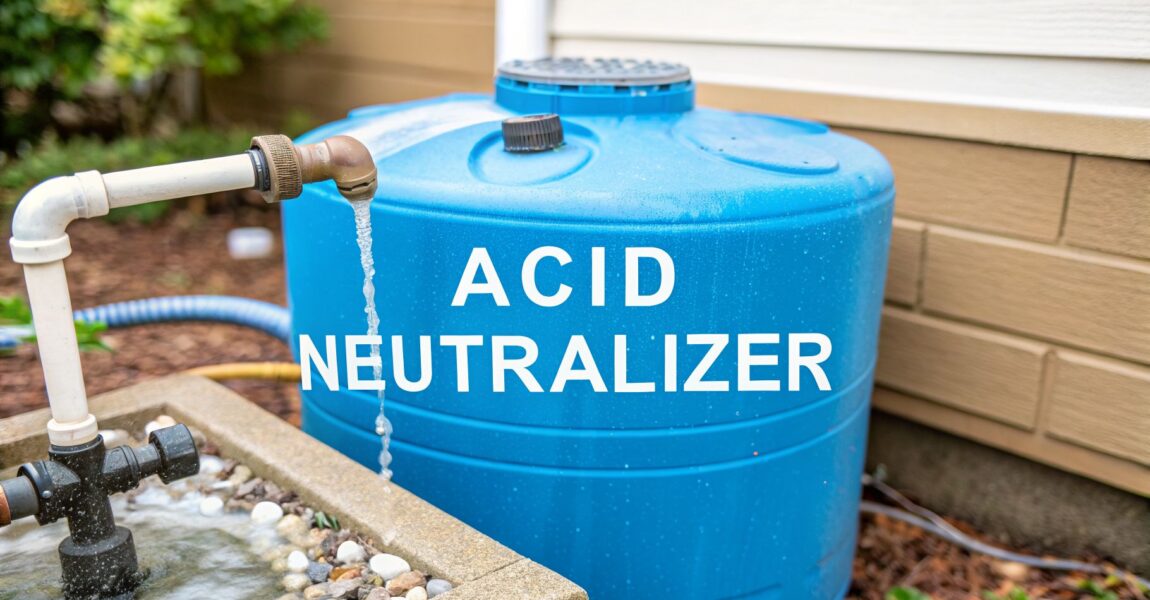
A well water acid neutralizer is a whole-house filtration system that does one thing exceptionally well: it raises the pH of acidic water. Think of it as a mighty, 24/7 bodyguard for your home’s plumbing. It uses natural minerals to get your water chemistry back in balance, protecting your pipes and appliances from the silent but costly damage of corrosion.
Your First Step to Fixing Acidic Well Water

Have you spotted those sinister blue-green stains crashing the party in your sinks, tubs, and toilets? That's not just a cleaning nuisance; it's a neon sign screaming that there's a much bigger problem brewing. It's physical proof that acidic water is literally dissolving your copper pipes from the inside out.
For anyone on a private well, acidic water is a common villain that can turn into a serious financial drain. If you ignore it, you’re looking at an unwelcome future of pinhole leaks springing up in your pipes, expensive appliances like water heaters and dishwashers dying young, and even a sharp, metallic tang in your drinking water.
But here’s the good news: there's a straightforward and permanent fix. A well water acid neutralizer is the definitive hero because it tackles the problem right at the source, before a single corrosive drop enters your home. This isn’t a temporary patch; it's a smart investment that protects your entire plumbing system.
How a Neutralizer Protects Your Home
Imagine your home's plumbing as its circulatory system. Acidic water is a constant irritant, slowly eating away at this vital network. A neutralizer system is installed right where the water line comes into your house, making sure every tap, shower, and appliance gets balanced, non-corrosive water.
This single system offers several layers of defense:
- Stops Corrosion: By bringing the water's pH up to a neutral level (around 7.0 or a bit higher), it puts the brakes on the chemical reaction that dissolves copper and other metals.
- Eliminates Stains: Say goodbye to those ugly blue-green streaks. Once the copper is no longer being leached from your pipes, the staining stops.
- Protects Appliances: Your water heater, washing machine, and dishwasher can live out their full expected lifespan without being destroyed by low-pH water.
- Improves Taste: Getting the acidity under control often banishes that unpleasant metallic or bitter taste caused by dissolved metals.
At its heart, an acid neutralizer works by adding beneficial minerals back into the water. As acidic water flows through a tank full of natural media like calcite, it safely dissolves these minerals, and that simple process raises the pH to a safe, neutral level.
The process is both brilliantly simple and incredibly effective. Instead of waiting to deal with the expensive mess of damaged pipes, you proactively treat the water itself. For more on different water quality issues, you might find our general water filtration advice page helpful.
How an Acid Neutralizer Works to Protect Your Plumbing

To get a handle on how a well water acid neutralizer protects your home, just picture it as a tough-as-nails bodyguard for your pipes. It’s not some complicated piece of high-tech machinery; it’s actually a brilliant system that runs on simple, reliable chemistry. Its only job is to intercept aggressive, acidic water as it enters your house and fix its pH before it can eat away at your plumbing.
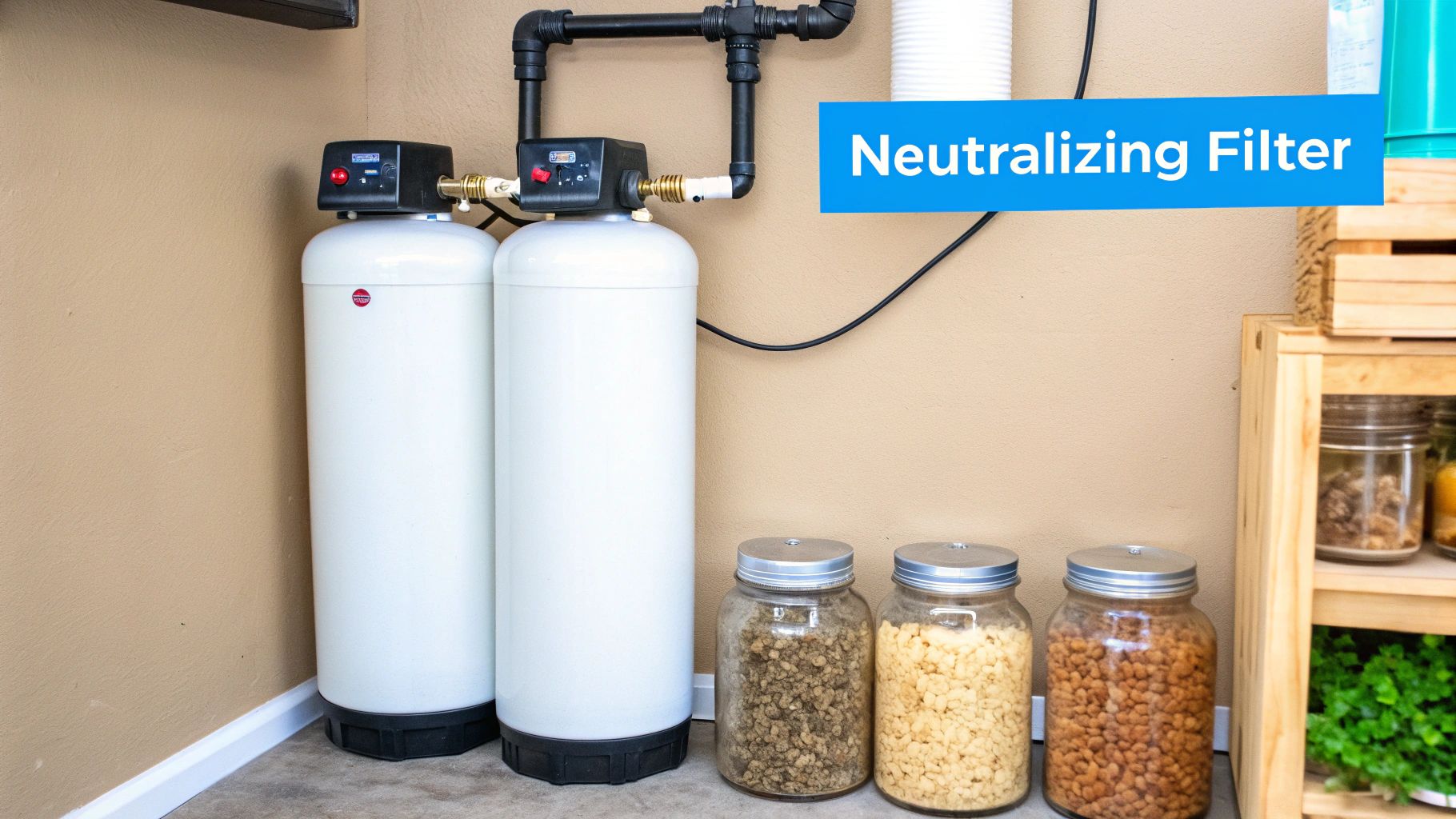
The whole process is surprisingly simple. Your well water, with a pH below 7.0, flows into the neutralizer tank and passes through a bed of special minerals. These minerals are "sacrificial," meaning they are designed to slowly dissolve as the acidic water flows over them.
That dissolving action is the magic right there. As the minerals break down, they neutralize the acid and raise the water’s pH back up to a safe, non-corrosive level. It’s this simple reaction that puts a stop to those telltale blue-green stains on your fixtures and prevents tiny pinhole leaks from springing up in your copper pipes. Left untreated, acidic water can wreck your home’s plumbing, leading to expensive headaches that require professional pipe repair and replacement services.
The Chemistry Inside the Tank
At its heart, the science is pretty elegant. The tank basically mimics a natural limestone spring, adding back essential minerals that the acidic rainwater washed away. This one chemical reaction is what makes every acid neutralizer tick.
There are two main types of mineral media used to get the job done, and which one you need depends entirely on how acidic your water is.
- Calcite (Calcium Carbonate): Think of this as the go-to workhorse for most systems. Calcite is just crushed-up white marble, a natural material that’s perfect for water that’s only mildly acidic—usually in the 6.0 to 6.9 pH range. It dissolves slowly and is self-limiting, so you don't have to worry about it raising the pH too much.
- Corsex (Magnesium Oxide): When you’re dealing with more aggressive water (pH below 6.0), you need to bring in the heavy hitter. Corsex is much more reactive and can boost the pH more powerfully than calcite can alone. It's almost always mixed with calcite, with a typical blend being about 80% calcite and 20% Corsex.
This controlled dissolving doesn't just raise the pH. It also puts a small amount of healthy minerals like calcium and magnesium back into your water. As a side effect, this does make the water slightly harder, but that’s a small price to pay for stopping corrosion in its tracks.
The Two Main Types of Neutralizer Systems
While the chemistry is the same, the mechanics can differ. Acid neutralizers come in two main designs, and the right one for your home depends on what else is in your water besides just low pH.
1. Upflow Neutralizers
In an upflow (or non-backwashing) system, water enters at the bottom of the tank and flows upward through the mineral bed. This constant upward flow gently lifts and swirls the media, which stops it from getting packed down or creating "channels" where water just drills a single path through, missing most of the minerals. These systems are simple, use no electricity, and don't need a drain line, making them a great fit for well water that's already clean and free of sediment or iron.
2. Backwashing Neutralizers
If your well water has iron, manganese, or sediment in it, a backwashing system is non-negotiable. This setup includes a control valve that automatically reverses the water flow on a set schedule. This powerful backwash cycle is like hitting the reset button—it forcefully lifts, scrubs, and resettles the entire mineral bed.
This cleaning cycle is absolutely crucial. It flushes out all the trapped gunk like sediment and iron that would otherwise clog up the media and make it useless. It also re-sorts the mineral bed, ensuring that water always makes even contact for consistent pH correction.
More and more homeowners are recognizing the need for these systems. The global market for acid neutralizers was valued at around $1,433 million USD and is expected to climb to $2,209 million USD by 2031, growing at a steady clip of 6.4%. This growth is all about people becoming more aware of how much water quality affects their homes. As the market expands, we're seeing more advanced and efficient options become available for everyone.
Spotting the Signs of Acidic Well Water
So, you suspect something is off with your water. How can you be sure acidic water is the silent culprit behind your plumbing woes? Before you start shopping for a well water acid neutralizer, it’s a good idea to play detective in your own home. The clues are often hiding in plain sight.
Acidic water is naturally aggressive. As it travels from the ground to your tap, it acts like a solvent, dissolving tiny amounts of everything it touches. When "everything" is your home's copper or iron plumbing, the results start to become very, very visible. These aren't just cosmetic annoyances; they're warning signs that your pipes are slowly being eaten away from the inside out.
The Visual Clues in Your Home
The most classic and tell-tale sign of acidic water is the appearance of blue-green stains on your fixtures. You’ll spot these distinct streaks in white porcelain sinks, bathtubs, and around drains. This isn’t soap scum—it’s the signature calling card of copper being leached from your pipes and deposited on your surfaces.
Of course, the color of the stain really depends on what kind of pipes you have.
- Blue-Green Stains: The dead giveaway for copper pipe corrosion. If you see these, your copper plumbing is actively dissolving.
- Reddish or Rust-Colored Stains: If you have older galvanized iron pipes, acidic water will leave behind rust-colored stains as it strips iron from your plumbing.
Beyond staining, you might even start to notice pinhole leaks in your copper pipes. These tiny, frustratingly hard-to-find leaks are a direct result of long-term acid corrosion and can lead to some serious water damage if you don’t catch them.
What You Can Taste and Feel
Sometimes the evidence is something you can taste or feel, not just see. Because acidic water carries dissolved metals along for the ride, you might pick up on a distinct, unpleasant flavor when you take a drink.
If your water has a sharp, metallic, or slightly bitter taste, that's a huge clue. That flavor is coming from the elevated levels of copper, iron, or other metals that have been leached from your plumbing system.
You might also notice other subtle things, like your hair feeling brittle or looking dull after you wash it. Some people even report a weird "squeaky" feeling on their skin that isn't from being clean, but from the water's low pH stripping away natural oils.
The Only Way to Know for Sure is Testing
While all these signs are strong indicators, they aren't a definitive diagnosis. The only way to know the exact pH of your water and confirm the problem is to test it. This step is absolutely non-negotiable before you invest in any kind of treatment system.
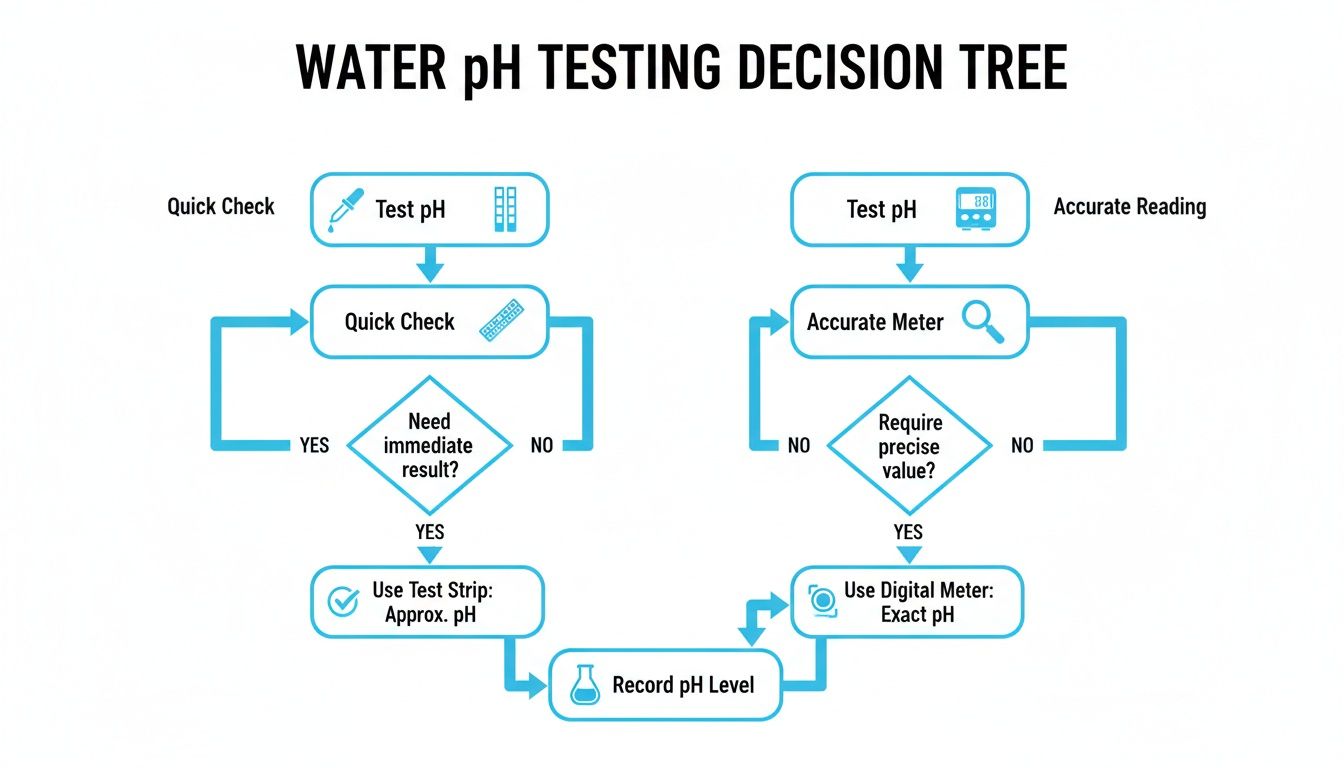
You’ve got two main options for testing.
It can be a little overwhelming to piece all these clues together. Here’s a quick reference table to help you connect the dots between what you're seeing and what it means for your well water.
| Symptom | What It Looks Like | What It Means |
|---|---|---|
| Blue-Green Stains | Streaks or rings on sinks, tubs, and around drains. | Copper is leaching from your pipes. |
| Rust-Colored Stains | Reddish-brown marks on fixtures, toilets, and laundry. | Iron is leaching from galvanized pipes. |
| Pinhole Leaks | Tiny, hard-to-find drips or wet spots on copper pipes. | Long-term acid corrosion has eaten through the pipe. |
| Metallic Taste | Water tastes like metal, bitter, or just "off." | Dissolved metals (copper, iron) are present in the water. |
| Dull/Brittle Hair | Hair feels weak and lacks shine after washing. | The low pH water is stripping natural oils. |
Seeing one or more of these signs is a very strong signal that it's time to get your water tested.
1. DIY Test Strips
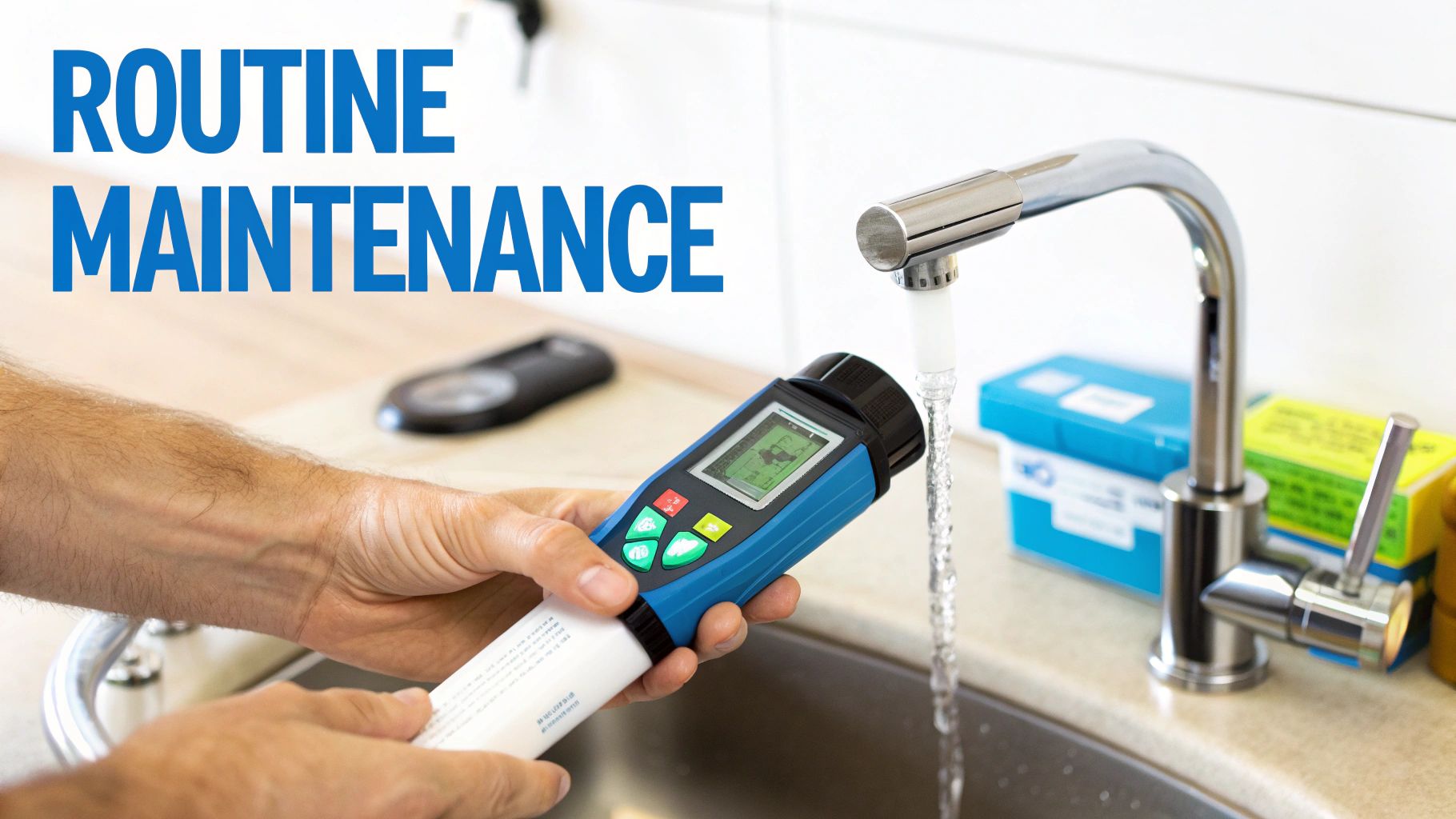
These are simple, cheap strips you just dip into a water sample. They’ll give you a quick and easy pH reading, which is great for getting a general idea of where you stand. Think of it as a preliminary check.
2. Comprehensive Lab Tests
For a truly accurate picture, sending a sample to a certified water testing lab is the way to go. A lab test will give you a precise pH number and will also check for other important factors like hardness, iron, and—critically—the specific levels of dissolved copper and lead.
A pH reading below 7.0 is considered acidic, but for well water, any reading below 6.8 should be a real cause for concern. That's a strong signal that you need to find a solution.
You're not alone in this, by the way. The global acid neutralizer system market was estimated at around $800 million USD and is expected to grow to over $1.4 billion by 2033. That growth shows just how many homeowners are turning to these systems to solve the exact problems you might be seeing. You can discover more about this growing market and see just how common this issue is. Taking action to fix acidic water is a necessary step for millions of well owners.
Choosing the Right Neutralizer for Your Home
Picking the right well water acid neutralizer is a lot like choosing an engine for a truck. Too small, and it’ll struggle under a heavy load. An undersized system can’t keep up, leading to low water pressure, incomplete pH correction, and the constant headache of refilling the media.
You want to get this right the first time. The goal is to find a system that perfectly matches your home's water demand and your well's specific chemistry. That’s how you solve your acidic water problem for good, without accidentally creating new ones.
Sizing Your System with Flow Rate
The single most important number you need is your home’s peak flow rate, measured in gallons per minute (GPM). Think of it as your household’s "rush hour" water usage—that moment when the shower is running, the dishwasher is on, and someone starts a load of laundry.
If your neutralizer can't handle that peak demand, it becomes a bottleneck. Water pressure drops, and you're left with a frustrating trickle from the tap.
Here’s a quick way to get a ballpark estimate of your needs:
- Standard Fixtures: Count each faucet and toilet as needing about 1 GPM.
- High-Use Appliances: Tally up showers and washing machines at 2-3 GPM a piece.
Add it all up, and you’ll have your target GPM. A home with two bathrooms, a kitchen, and laundry could easily demand 7-10 GPM at its peak. Always pick a system rated for your calculated peak flow rate to keep your water pressure strong and steady.
Matching the Tank Size to Your Needs
Once you know your flow rate, it’s time to pick a tank. The tank's size, usually measured in cubic feet, determines how much neutralizing media it can hold. This directly impacts how often you’ll be hauling bags of calcite to refill it.
Two main things affect how fast you’ll burn through media:
- Water Acidity: The lower the pH, the harder the media works. Water with a pH of 5.5 will dissolve calcite much faster than water at a more moderate 6.5.
- Water Usage: It's simple—a big family using lots of water will deplete the media quicker than a one- or two-person household.
Opting for a larger tank means less frequent maintenance. For a typical family, a properly sized system might only need a top-off once a year.
This decision tree breaks down the common signs that point to acidic water.
As you can see, while stains and a metallic taste are huge red flags, nothing beats a real water test to get an exact pH reading and confirm what you're dealing with.
Upflow vs Backwashing Systems
The final piece of the puzzle is choosing between an upflow (non-backwashing) and a backwashing system. Your decision here hinges entirely on your water quality, especially if you have any iron or sediment.
Making the right call between these two types is crucial for the long-term health of your system.
Backwashing vs Upflow Acid Neutralizers
| Feature | Backwashing System | Upflow (Non-Backwashing) System |
|---|---|---|
| Best For | Water with iron, manganese, or sediment. | Clean, clear water with no iron or sediment. |
| How It Works | Periodically reverses water flow to "fluff" and clean the media bed. | Water flows upward through the media, preventing it from packing down. |
| Media Clogging | Prevents clogging by flushing out trapped contaminants. | Prone to clogging if iron or sediment is present. |
| Installation | Requires a drain line and an electrical outlet for the control valve. | Simpler installation with no need for a drain or electricity. |
| Maintenance | Higher upfront cost but protects media from fouling. | Lower upfront cost, but can fail if used with the wrong water quality. |
A backwashing system is non-negotiable if you have any iron, manganese, or grit in your water. It automatically cleans the media bed, preventing it from turning into a solid, useless block.
On the other hand, if your well water is crystal clear, an upflow system is a fantastic, simpler choice. It doesn't need a drain or electricity, making for a straightforward installation.
Homeowner awareness of water quality issues continues to grow, driven by environmental concerns and regulations. The broader industrial water treatment market was valued at $24.86 billion USD and is expected to reach $32.74 billion by 2031. This trend benefits residential consumers by leading to better products and more reliable solutions for issues like acidic well water. Learn more about the drivers of the water treatment market on Wise Guy Reports.
Installation and Maintenance Made Simple

So, you're thinking about a well water acid neutralizer. Does that mean you’re signing up for another complicated appliance to babysit? Not at all. These systems are actually designed to be pretty hands-off, quietly doing their job in the background. Let's walk through what installation looks like and the simple upkeep needed to keep it running right.
While you can technically DIY the installation, I almost always recommend calling in a pro. They’ll make sure it's hooked up without leaks or pressure problems. The neutralizer gets installed at your home's "point of entry"—that’s right after your well's pressure tank and before the water heater. Putting it here ensures all the water flowing into your house gets treated first.
If your water has any iron or sediment (which is common), you'll need a backwashing model. For that, the installer will also run a drain line. This is just for the system to automatically flush itself clean every so often, washing away all the gunk it has trapped so the media bed stays fresh.
The Simple Art of Refilling the Media
The main job you’ll have is topping off the mineral media. This is the stuff that does all the work, and because it’s designed to dissolve as it neutralizes the acid, it needs to be replenished. It’s a lot like adding salt to a water softener—a simple but necessary chore.
Most tanks have a fill port right on top, making it easy to add more media. The trick is to just peek inside every so often to check the level. As a rule of thumb, you want the tank to stay at least two-thirds full to get consistent pH correction.
How often will you be doing this? It really depends on how acidic your water is, how much water your family uses, and the size of your system. For a typical family, it’s usually a once-a-year task. I tell people to get in the habit of checking it every six months just to be safe.
A Quick Guide to Media Top-Offs
When it's time to refill, it’s a straightforward job you can definitely handle yourself.
- Bypass the System: First, turn the bypass valve. This cuts off water going into the tank so you don't make a mess.
- Depressurize the Tank: Next, you need to release the pressure inside. With a backwashing unit, the easiest way is to start a manual regeneration cycle and then just unplug it once the backwashing starts.
- Open and Fill: Now you can safely open the fill port. Grab a funnel and pour in your new calcite or calcite/Corsex blend until you’re back to that two-thirds-full mark.
- Restore Service: Close the port up tight, then slowly open the bypass valve to turn the water back on.
Pro Tip: After you’ve refilled the media, run a manual backwash cycle. This rinses any dust off the new minerals and helps the whole bed settle properly, getting it ready to go back to work.
Other Maintenance Checks
Beyond adding media, there's not much else to do. If you have a backwashing model, the control valve is the brain of the system, and those things are built to last for years without any fuss.
Your only other task is to make sure the timer is set correctly for the backwash cycle—usually programmed to run once or twice a week in the middle of the night. Every now and then, take a quick look for any drips around the fittings, but a professionally installed unit should stay watertight for a long, long time. With just that little bit of attention, your neutralizer will be protecting your pipes for years to come.
A Few Common Questions About Acid Neutralizers
Even after you’ve got a handle on how these systems work, a few questions always seem to come up. That’s totally normal—you want to be sure you're making the right call for your home. Let's run through some of the most common things homeowners ask us so you can feel completely confident.
We'll cover everything from water hardness and taste to how long your media will actually last. Think of this as the final check-in before you move forward.
Will an Acid Neutralizer Make My Water Too Hard?
This is probably the number one question we get, and for good reason. The simple answer is yes, an acid neutralizer will add some hardness to your water. But it’s important to understand what that actually means for your home.
The whole point of neutralization is to dissolve minerals—calcite (calcium carbonate) and sometimes magnesium oxide—into your water to raise its pH. Those are the very same minerals that cause water hardness. So, as the system does its job, it is, by definition, making the water harder.
For most people with slightly acidic water (think pH 6.0-6.8), the increase is pretty minor. You might not even notice it. But if your water is really acidic (below 6.0), the system has to work overtime, dissolving a lot more media. That can definitely push your water into the "hard" category. The fix is simple: just install a water softener after the acid neutralizer.
The Perfect Pair: An acid neutralizer followed by a water softener is the classic one-two punch for well water. The neutralizer saves your pipes from corrosion, and the softener steps in to remove the extra hardness. You end up with perfectly balanced water that’s safe for your plumbing and feels great.
This two-step setup solves the big problem (corrosion) without creating a new one (scale buildup).
How Long Does the Neutralizing Media Last?
The minerals inside your tank are "sacrificial," meaning they get used up over time as they neutralize the acid. So, how fast will you burn through it? The lifespan of your media really boils down to three things:
- Your Water’s Acidity: The lower the pH, the faster it eats away at the media. Water with a pH of 5.5 is going to chew through calcite much quicker than water with a pH of 6.5.
- Your Water Usage: A family of five will obviously go through more water—and more media—than a couple living alone.
- The Size of Your Tank: A bigger tank holds more media, which means you won't have to refill it as often.
For a typical family with moderately acidic water, you can expect to top off the media about once a year. It’s a good habit to pop the lid and check the level every six months just to be safe. As long as you keep the tank at least two-thirds full, you’ll be in great shape.
Will It Change the Taste of My Water?
Yes, and almost always for the better! Acidic water often has that sharp, metallic taste. That's the taste of dissolved copper and other metals leaching from your pipes. By stopping the corrosion, an acid neutralizer gets rid of the source of that nasty flavor.
Most homeowners tell us that after installing a system, their water tastes cleaner and much fresher—more like natural spring water. The small amount of added calcium and magnesium can even give the water a smoother, more pleasant feel, but it shouldn't taste salty or chemical-like at all. The goal is just to get your water back to a clean, neutral state.
Can I Install an Acid Neutralizer Myself?
Look, it's tempting to save a few bucks on installation, but unless you're very comfortable with plumbing, this is one job best left to a pro. A proper installation is key to making sure the system works right and doesn't create new headaches.
A professional plumber will make sure:
- The system is tied into your main water line correctly.
- Bypass valves are installed so maintenance is easy.
- There are absolutely no leaks that could cause water damage.
- The drain line for a backwashing model is properly routed.
A bad installation can lead to big problems, like a serious drop in water pressure or, worse, a leak. Investing in a professional install is a smart move that ensures your system is protecting your home right from the start.
At Water Filter Advisor, we believe every homeowner deserves safe, clean water without all the guesswork. Our detailed guides and honest reviews are here to help you find the perfect fix for your home's unique water issues.
Take the next step toward better water by exploring our resources and buying guides at https://www.waterfilteradvisor.com.