
Stared into a glass of milky tap water and wondered if a tiny ghost has taken up residence in your pipes? Don’t panic! More often than not, it’s just tiny, harmless air bubbles throwing a party under pressure. The classic trick is to let a glass of water sit for a minute—if it magically clears from the bottom up, it’s just air, and you’re in the clear.
But if that ghostly haze sticks around, it’s pointing a cloudy finger at sediment. And that, my friend, means a home water filter might just be the hero your home needs.
What Is Your Cloudy Water Really Telling You?
It’s a little unsettling to turn on the faucet and get a glass of what looks like skim milk. Before you start planning a water exorcism, there's a quick one-minute diagnostic you can perform right in your kitchen. We call it the "glass test," and it's your first step to becoming a water wizard.
Just fill a clear glass with that cloudy concoction and let it sit on the counter. Watch it for about sixty seconds. If the cloudiness starts to vanish from the bottom up, what you're seeing is just aeration. It’s the water equivalent of a soda fizzing—completely harmless and usually caused by tiny air bubbles trapped by changes in water pressure or temperature.
Cloudy Water Quick Diagnosis Guide
This simple table is your cheat sheet to figuring out what's really going on with your water.
| Symptom | Most Likely Cause | Filtration Fix |
|---|---|---|
| Clears from bottom up in 1-2 mins | Aeration (Air Bubbles) | No filter needed! Just let it sit before sipping. |
| Particles settle to the bottom | Sediment (Sand, Silt, Rust) | Your new best friend is a sediment filter. |
| Remains cloudy and doesn't clear | Hard Minerals (Total Dissolved Solids) | A water softener or Reverse Osmosis system is the answer. |
| Has a distinct color (brown, yellow) | Corrosion or Contaminants | Stop drinking immediately. Call a pro, this is a job for a specialized filter. |
Basically, how the water behaves in that glass is the biggest clue to solving this cloudy mystery.
When Air Bubbles Are the Culprit
Air trapped in the pipes is a super common reason for cloudy water, especially after the city has done some maintenance or if there are big swings in water pressure. It's almost always due to aeration after utility crews work on a nearby water main. This is a temporary guest in your water, and no filter is required to show it the door.
When It's Something More
So, what if the water doesn't clear up? If you see tiny particles doing a slow-motion dance or settling at the bottom of the glass, your water is signaling a different issue. This lasting haze is often a sign of microscopic sediment, also known as total suspended solids (TSS).
These little party crashers can come from a few places:
- Old Plumbing: Aging galvanized or copper pipes can start shedding tiny flakes of rust or minerals.
- Water Main Work: Recent construction or flushing in your area can stir up sediment that’s been chilling in the municipal lines for years.
- Well Water Issues: If you're on a private well, it's not uncommon for silt, sand, or clay to hitch a ride into your water supply.
This decision tree gives you a good visual of how to diagnose what's going on.
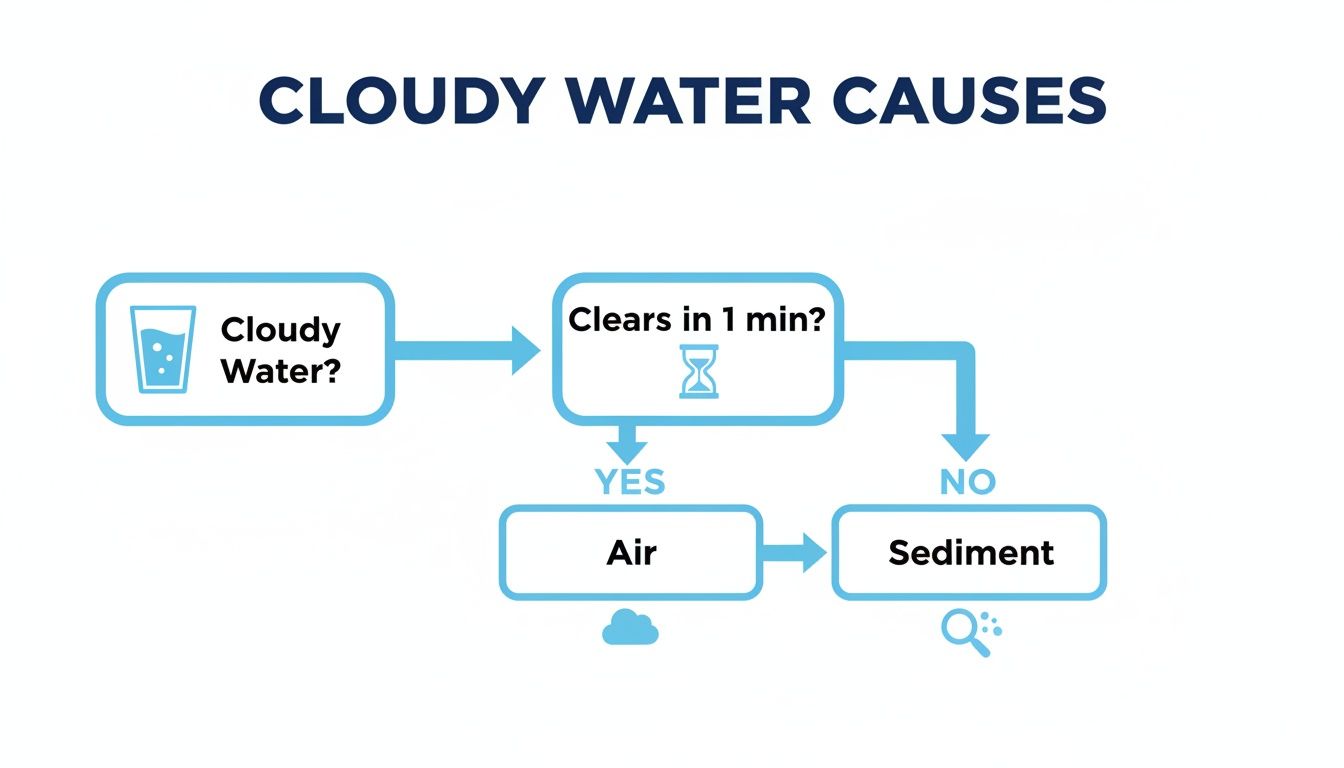
The big takeaway here is that the one-minute glass test is your most reliable first step. It helps you quickly tell the difference between harmless air and sediment that a good filter can easily handle. Sometimes, the problem is closer to home, like in your building’s water tank. This practical guide on how to clean your water tank can be a huge help. Once you know the cause, you can find the right filtration fix.
Simple Fixes You Can Try Before Installing a Filter
Before you dive headfirst into the world of whole-house filtration systems, let's take a beat. More often than not, the fix for cloudy tap water is surprisingly simple and won't cost you much at all. A few easy checks can often solve the problem right away, no plumber required.

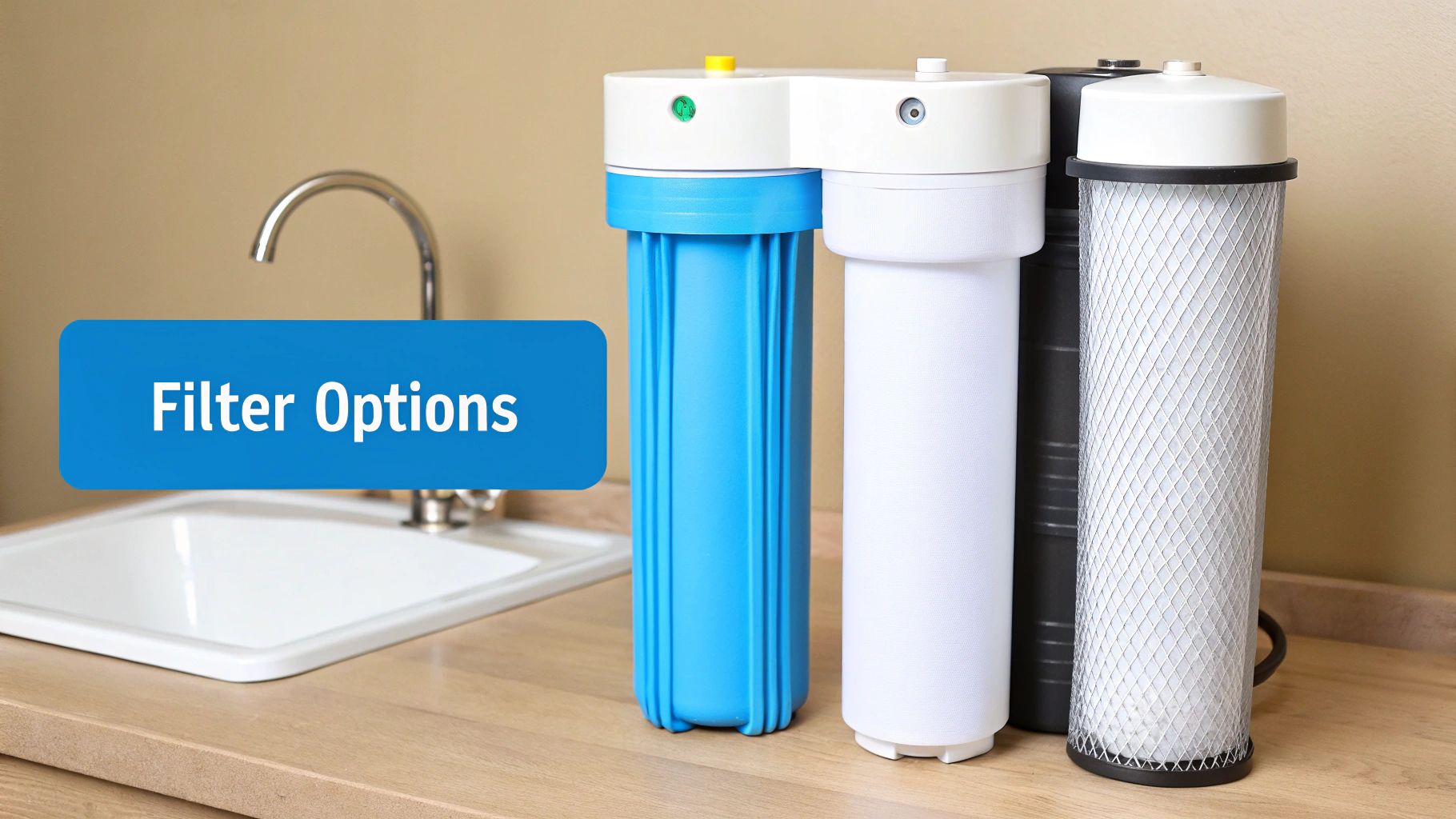
Sometimes, the issue isn't in your main water supply but in the last few inches the water travels. That little screen at the tip of your faucet, called an aerator, is a common culprit. It's there to catch sediment, but it can get clogged over time, causing both cloudiness and wonky pressure.
Tackle the Faucet Aerator First
Cleaning your aerator is a five-minute job that can make a world of difference. Most can be unscrewed by hand. If it's being stubborn, wrap a cloth around it and use pliers so you don't scratch the finish.
Once it's off, you’ll probably see a collection of tiny particles and mineral gunk. Here’s how to clean it out:
- Disassemble: Carefully take the screen and washer apart. Pro tip: do this over a towel so you don’t lose any of the small pieces down the drain.
- Scrub: An old toothbrush is your best friend here. Scrub away any loose debris from the screen.
- Soak: For the really stubborn buildup, let the parts chill out in a small bowl of white vinegar for about 30 minutes.
This quick vinegar spa treatment is surprisingly effective—it can dissolve most of the scale causing the issue. After its soak, give it a final rinse, put it back together, and screw it back onto the faucet. Turn on the water and see if your cloudiness has vanished.
Flush Your Home Plumbing System
If you suspect the cloudiness is from sediment stirred up in your pipes (this happens a lot after your local utility does work), flushing the system is a fantastic next step. This process helps boot any loose particles sitting in your home's plumbing right out the door.
A full system flush is particularly effective for dislodging sediment that has been sitting stagnant in your pipes. It's a proactive step that can immediately improve water clarity without any special tools.
To flush your pipes properly, start by turning on all the cold water taps in your house. Begin with the faucet highest up (like a second-floor bathroom) and work your way down to the lowest one (like a basement sink). Let them all run for about 10-15 minutes. This creates a powerful, one-directional flow that helps carry sediment right out of your system.
So, you’ve cleaned the aerators and flushed the pipes, but the water still isn’t quite right. When the simple fixes don't cut it, it might be time to bring in the big guns for that cloudy tap water. A good home water filtration system isn't just a patch—it’s a long-term solution that ensures every glass you pour is crystal clear and delicious.
The trick is matching the filter to the problem. Think of it like this: you wouldn't use a butterfly net to catch a whale. The same logic applies here. Whether your issue is fine sediment, dissolved minerals, or something else entirely, there’s a system designed to handle it.
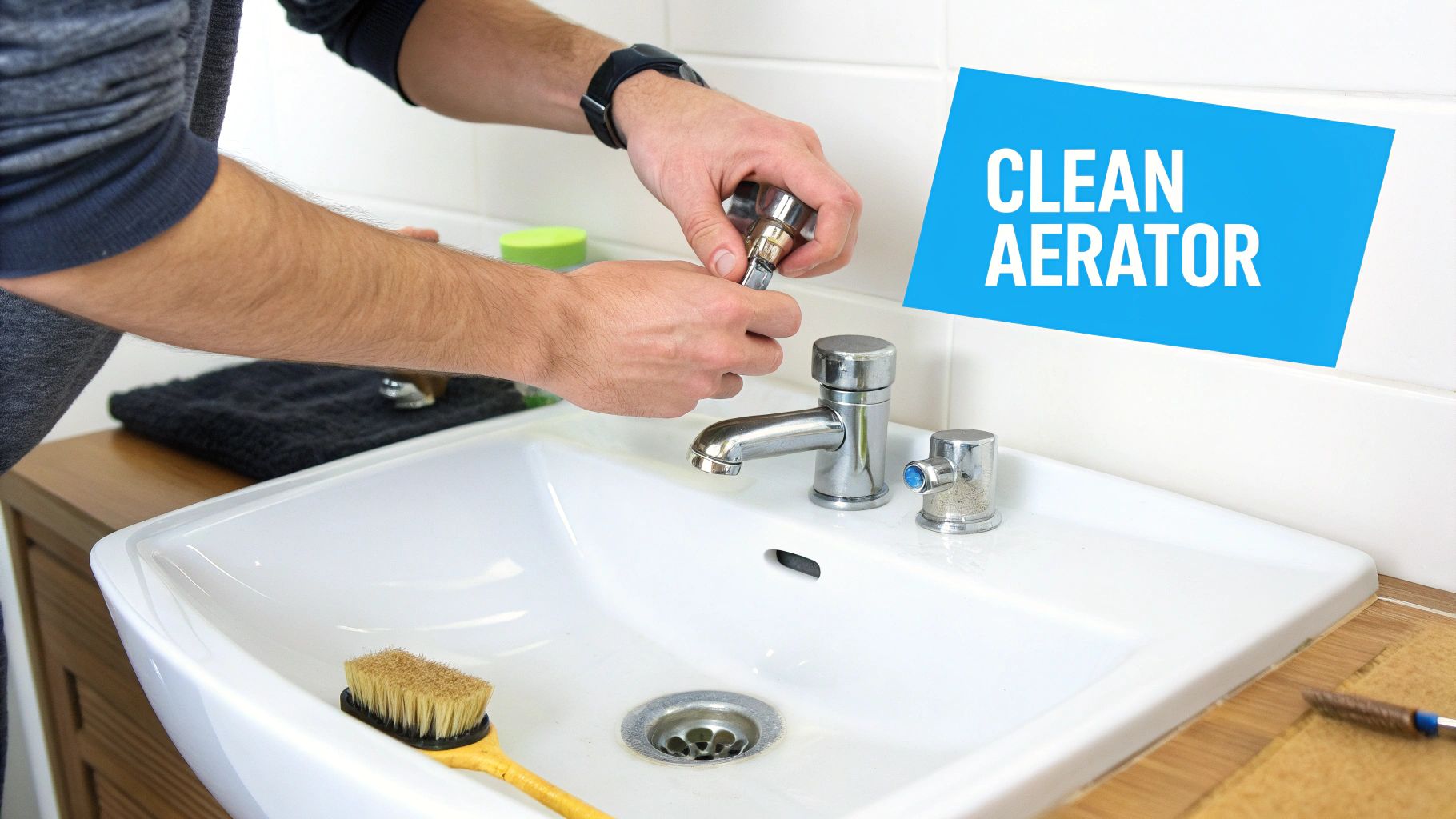
Let's break down the most common and effective options that turn cloudy water into a distant memory.
Whole-House Sediment Filters: Your First Line of Defense
If you're seeing cloudiness from sand, silt, rust, or other bits of debris in your water, a whole-house sediment filter is a fantastic investment. These systems are installed right where the main water line enters your home, acting as a bouncer for your entire plumbing system, letting only the pure H2O past the velvet rope.
It's about more than just clear drinking water. This filter protects your pipes, water heater, and appliances from sediment buildup that can shorten their lifespan and drain their efficiency. It’s a proactive approach that tackles the problem at the source, meaning clearer water from every single faucet in your house.
Pro Tip: When you’re shopping for a whole-house sediment filter, keep an eye on the micron rating. A lower number means it traps smaller particles. For most homes, a filter rated between 5 and 20 microns does an excellent job of knocking out the suspended solids causing that cloudy look.
Point-of-Use Filters for Targeted Clarity
Maybe the cloudiness isn't a house-wide Armageddon, or you're just looking for a more budget-friendly starting point. In that case, point-of-use (POU) filters are your go-to champs. They treat the water right where you use it most—typically the kitchen sink.
You've got a few solid choices here:
- Faucet-Mounted Filters: These little gadgets attach right to your faucet and are a breeze to install. Most use activated carbon to trap sediment and make your water taste like it came from a mountain spring.
- Under-Sink Filters: Hidden away under the kitchen sink, these multi-stage systems pack more of a filtration punch than faucet filters. They’re built to handle a wider range of issues that cause cloudy water.
- Countertop Filters: These units sit on your counter and connect to the faucet, giving you an effective filtration solution without any permanent plumbing changes.
These are perfect for renters or anyone who wants to zero in on a specific tap without overhauling their home's plumbing.
Reverse Osmosis for the Ultimate Purification
When your cloudy water is from extremely fine particles or high levels of total dissolved solids (TDS), a reverse osmosis (RO) system is the undisputed heavyweight champion of filtration. RO technology uses a special membrane to push water through, leaving nearly everything else behind—including the microscopic particles that make water look hazy.
An RO system can remove up to 99% of dissolved solids, delivering water that's exceptionally pure and clear. They’re usually installed under the sink and dispense water from a separate, dedicated faucet. It’s more than an aesthetic upgrade; it’s peace of mind, knowing you're removing a huge spectrum of substances that simpler filters can't even touch.
Choosing the right filter can feel daunting, but breaking it down by the cause of your cloudy water makes it much simpler. To help you compare your options, here’s a quick-glance table.
Home Filtration Options for Cloudy Water
| Filter Type | Best For | Maintenance | Typical Cost |
|---|---|---|---|
| Whole-House Sediment | Widespread cloudiness from sand, silt, rust, and larger particles. | Replace cartridge every 3-12 months. | $100 – $400+ |
| Faucet-Mounted | Minor sediment or taste issues at a single tap. Great for renters. | Replace cartridge every 2-3 months. | $20 – $50 |
| Under-Sink | Moderate sediment and other contaminants at the kitchen sink. | Replace cartridges every 6-12 months. | $100 – $300+ |
| Reverse Osmosis (RO) | Very fine particles, high TDS, and a broad range of contaminants. | Replace multiple filters/membrane on a schedule (6 months to 2+ years). | $150 – $600+ |
Ultimately, the best system is one that fits your home's specific needs and your budget.
If you want to explore these methods in more detail, you can find a lot of great, practical advice for your water filter needs on waterfilteradvisor.com.
When to Suspect a Deeper Plumbing Problem
Most of the time, cloudy water is a simple fix. But every once in a while, that persistent haze is your plumbing’s way of waving a red flag. Slapping a filter on it might clear up the water, but it won't touch the root cause. Knowing how to spot the real warning signs can save you a world of hurt—and a ton of cash—down the line.
If your cloudy water has a distinct reddish or brown tint, rust is almost certainly the culprit. This is a classic issue in older homes with galvanized steel pipes. After decades of use, these pipes start corroding from the inside, flaking off tiny bits of iron oxide that turn your water cloudy and can leave nasty stains on sinks and laundry. While a filter can catch this, it's a sign of a bigger plumbing issue.
Is Your Water Softener the Culprit?
A faulty water softener can also be the secret source of your cloudy water mystery. These systems are filled with tiny resin beads that do the heavy lifting of grabbing hard minerals. But if an internal part like a screen or valve gives out, those beads can escape into your pipes, clouding the water and clogging up your faucets.
Keep an eye out for these dead giveaways of a softener problem:
- You spot tiny, amber-colored beads in your faucet aerators or settled at the bottom of a glass.
- The water pressure suddenly takes a nosedive all over the house.
- The softener seems to be running its regeneration cycle way more (or less) than it usually does.
If you see this happening, it’s time to get your softener looked at by a pro. Filtering the beads out is just a temporary fix for a failing unit.
Here’s a critical distinction to make: is the problem inside your house or coming from the street? If it's just one faucet, the issue is isolated. But if every tap is running cloudy, you're likely dealing with something affecting your main line, water heater, or the city's supply.
When the Problem Is Beyond Your Property Line
Sometimes, the source of cloudy, sediment-filled water is completely out of your hands. A water main break in the neighborhood can shove a massive amount of sand, silt, and other gunk into the supply lines, overwhelming even the best whole-house sediment filters.
This is a huge issue with aging infrastructure. If your water suddenly gets incredibly murky and you see utility crews working down the street, it’s a safe bet the two are related. The best thing to do is wait until the repairs are done, then give your home’s plumbing a thorough flush. If it’s still cloudy long after they’ve packed up, a whole-house filter is your best defense. For those in remote areas, persistent cloudiness might point to more complex issues where understanding off-grid plumbing considerations becomes really important.
Staying on Top of Filter Maintenance for Clear Water
Putting in a water filter is a fantastic first step to dealing with cloudy water, but it's definitely not a "set it and forget it" kind of deal. Think of it like changing the oil in your car—it’s the routine maintenance that keeps everything working the way it should. If you skip this part, your filter will eventually clog up, stop working effectively, and that cloudy water will be back for an encore performance.
A little bit of upkeep protects your investment and makes sure your water stays pristine. A forgotten filter doesn't just stop working; it can turn into a breeding ground for bacteria or, even worse, release a concentrated burst of all the gunk it's collected right back into your pipes. That could make your water quality worse than it was to begin with.
When to Swap Out Your Filter Cartridges
The single most important job is changing out old filter cartridges. Every filter has a different lifespan, so it's a good idea to mark your calendar the day you install a new one. Following the manufacturer's replacement schedule is the only way to prevent a drop in performance and keep your water tasting great.
Here’s a rough timeline for the most common types of filters:
- Whole-House Sediment Filters: These are the workhorses of filtration and usually need a new cartridge every 3 to 12 months. The exact timing really depends on how much sediment is in your water. A noticeable drop in your home's water pressure is a dead giveaway that it's time for a change.
- Under-Sink and Faucet Filters: Because they’re smaller and filter a lower volume of water, these need a bit more attention. Plan on swapping the cartridges every 2 to 6 months to keep them filtering at their best.
- Reverse Osmosis (RO) Systems: These systems are a bit more involved since they have multiple stages. The sediment and carbon pre-filters will typically need to be replaced every 6 to 12 months, but the RO membrane itself is the long-hauler, often lasting 2 to 3 years.
A filter can only hold so much sediment and debris. Once it hits its limit, it can’t grab any more particles. Worse yet, the pressure of your water can actually force all that trapped gunk right through the filter and back into your clean water supply, undoing all the good work it did.
Keeping Your Whole-House System in Shape
If you’ve got a bigger whole-house system with a media tank—like an oxidizing filter or a backwashing sediment filter—then you need to know about backwashing. This is a crucial cleaning cycle where the system reverses the flow of water, flushing all the trapped sediment and contaminants out of the filter media and sending them down the drain.
Most modern systems handle this automatically, but it's smart to check the settings every so often. If you see cloudy water making a comeback, you can manually trigger a backwash cycle. It’s like hitting a reset button that cleans and revitalizes the filter media, extending its life and making sure it’s ready for whatever comes its way. A little proactive care is the best way to fix cloudy tap water for good and keep your system running smoothly.
Cloudy Water FAQs
After running through the usual suspects, you might still have a few lingering questions about cloudy tap water. Let's dig into some of the most common ones we hear from homeowners trying to get a permanent filtration fix.
Can a Faucet Filter Really Fix Cloudy Water?
Believe it or not, yes—for certain issues, a simple faucet-mounted filter can make a world of difference. If the cloudiness is from fine sediment or little rust particles kicked up inside your home's pipes, these filters are a great last line of defense right where you pour your glass.
Most of them use activated carbon, which is fantastic at grabbing the tiny particles that make your water look hazy. They won't solve a sediment problem for your whole house, but for a quick and budget-friendly fix for your drinking and cooking water, they're a great place to start.
Is Cloudy Well Water a Different Beast Than City Water?
It definitely can be. City water cloudiness often traces back to air in the lines or sediment from old municipal pipes. Well water, on the other hand, can have more complicated sources. Wells sometimes pull in super-fine silt, sand, or clay, which gives the water a murky look that never seems to clear up on its own.
For well owners, we usually recommend a two-pronged filtration attack:
- Spin-Down Sediment Filter: This acts as a pre-filter to catch the bigger stuff like sand. The best part is you can just flush it clean.
- Cartridge Sediment Filter: This is your second stage, trapping the finer silt and clay that sneaks past the first filter.
Using both in combination protects not just your drinking water but your entire home's plumbing and any other filters you have down the line.
If the Cloudiness Goes Away On Its Own, Do I Still Need a Filter?
That's a sharp question. If your water clears from the bottom up in a minute or two, that’s just air bubbles, and you don’t need a filter for that. But if the cloudiness is from sediment that eventually settles at the bottom of the glass, then yes, a filter is an excellent idea.
Here's why: just because the water in your glass clears doesn't mean the problem is solved. Those same particles are still coursing through your pipes, your water heater, and your appliances, causing slow but steady damage. Think of a whole-house sediment filter as an investment in protecting your entire plumbing system, not just a way to get a clearer glass of water.
Will a Water Softener Clear Up My Cloudy Water?
Probably not. In a weird twist, a water softener that's on the fritz can actually cause cloudy water if its resin beads start escaping into your pipes. Water softeners are built to remove dissolved minerals that cause hardness—things like calcium and magnesium—not the suspended particles that make water look cloudy.
If sediment is your main problem, a dedicated sediment filter is the right tool for the job. You'd actually install that filter before the water softener to keep it from getting clogged up with gunk, which helps both systems do their jobs properly.
At Water Filter Advisor, we're all about helping you get clear, great-tasting water right from your tap. Our detailed guides and honest reviews are here to help you navigate your options and find the perfect filtration system for your home. To see our reviews and compare systems, check us out at https://www.waterfilteradvisor.com.
- December 12, 2025
- 0
- Uncategorized
