So, what exactly is a fluoride removal filter? Think of it as a specialized home water filtration system, like reverse osmosis or activated alumina, engineered to specifically target and pull fluoride out of your drinking water.
These systems go way beyond what a standard carbon filter from the supermarket can do, giving you ultimate control over your home's water quality.
Why Consider Fluoride Filters for Your Home Water
Let's dive right into the big question: why is fluoride in our tap water in the first place? For over 75 years, communities have added this mineral to public water supplies. This practice, known as community water fluoridation, has a simple public health goal: to stop tooth decay in its tracks on a massive scale.
And honestly, it's been a smash hit. The initiative is credited with a huge drop in cavities—some studies point to reductions of up to 30%, especially in kids. It’s like a public health supplement delivered straight to your tap, designed to beef up tooth enamel and stop decay before it even gets a chance to start.
But, as with any broad health measure, a one-size-fits-all approach isn't for everyone. A growing wave of water-conscious homeowners are asking what’s really in their glass.
A Matter of Personal Choice
Today, the conversation around fluoride is more nuanced. While nobody is arguing with the dental benefits, some people are concerned about long-term exposure and simply want to manage their own intake.
This is especially true for families with young children. Too much fluoride exposure at an early age can lead to dental fluorosis, a cosmetic issue that causes faint white marks on the teeth. This concern is a primary driver for people looking into fluoride removal filters. It’s not about rejecting public health, but about tailoring water treatment to fit your family's unique needs and preferences. At the end of the day, it's about choosing what you consume.
Taking control of your home’s water filtration gives you the power to decide what’s in every glass. That choice isn’t just about purity—it’s about peace of mind.
What Your Standard Filter Misses
Here’s a common mix-up: many people assume their standard pitcher or fridge filter is removing fluoride. The truth is, most basic activated carbon filters are fantastic for removing chlorine and making water taste crisp and clean, but they don't even touch fluoride.
Why? Fluoride ions are simply too small and slippery to be trapped by that kind of filter media. This is where specialized fluoride removal filters come into play. Understanding that key difference is the first step toward finding a real solution for your home.
Of course, clean water is just one piece of the puzzle. A healthy home water environment starts with your plumbing. Knowing the common signs you need general plumbing repairs can help you keep everything from the pipes to the faucet in top shape. With that in mind, let’s find the right filter for you.
How to Find Out What's in Your Water
Before you can pick the perfect fluoride removal filter, you have to know what you’re up against. The first step is to turn that vague worry into a hard number. Thankfully, finding out your home's fluoride level is pretty straightforward.
The easiest, and often free, place to start is with your local water utility. Most are required to publish an annual water quality report, sometimes called a Consumer Confidence Report (CCR). It's a complete breakdown of what's in your tap water, including fluoride levels, and you can usually find it right on their website.
This report gives you an excellent baseline. It tells you the average fluoride concentration your public water system is aiming for, so you can get a good initial idea without spending a dime.
Getting a More Precise Measurement
While that utility report is a solid start, remember it’s just a system-wide average. The actual fluoride level at your tap can fluctuate depending on your home’s plumbing or how far you are from the treatment plant. For a more precise reading, you’ve got two main options: at-home test kits or professional lab testing.
- At-Home Test Kits: These are cheap, easy, and give you a quick snapshot. They usually involve a simple test strip or a digital meter that gives you an immediate reading in parts per million (PPM).
- Professional Lab Testing: If you want the most accurate, no-questions-asked result, sending a water sample to a certified lab is the way to go. This provides a comprehensive analysis, not just for fluoride but for a whole range of other contaminants that might be in your water.
Knowing your exact fluoride PPM is crucial. A level of 0.7 PPM is the standard for community water fluoridation, but your personal comfort level might be lower, guiding you toward a more powerful filtration system.
Choosing between these really just comes down to balancing cost, convenience, and how precise you need to be. If your utility report shows a level you’re comfortable with, you might not need to do anything else. But if you're on the fence or want to be absolutely sure before buying a filter, a dedicated test is a smart move. For more guidance on choosing the right approach for your home, you can find a wealth of practical advice for your water filtration journey here.
Comparing Fluoride Removal Filter Technologies
Alright, you've figured out how much fluoride is in your water. Now for the fun part: picking the right tool for the job.
When it comes to fluoride removal filters, you've got a few heavy-hitters to choose from. Think of them as specialists, each with a unique talent for cleaning up your water. We’re going to look at the big three for home filtration: Reverse Osmosis, Activated Alumina, and Bone Char. Understanding how they work is the key to choosing the right system for your home.
Reverse Osmosis: The All-in-One Purifier
Reverse Osmosis, or RO for short, is the heavyweight champion of home water purification. It's a powerhouse system that removes more contaminants than practically any other technology available for your home.
The best way to picture it is as a high-security checkpoint for water. At the heart of the system is a special membrane with microscopic pores. Only pure water molecules are small enough to get through. Everything else—fluoride ions, lead, chlorine, pesticides, you name it—gets stopped in its tracks and flushed away down a separate drain line. It’s incredibly thorough.
A good RO system can strip out up to 98% of the fluoride in your water, leaving you with exceptionally pure drinking water.
Key Takeaway: Reverse Osmosis is your all-in-one solution. It doesn't just target fluoride; it tackles a massive list of other common contaminants, making it the top choice for anyone wanting the highest level of water purity.
This kind of comprehensive filtration is why these systems are becoming so common. The global market for membrane filtration was valued at USD 18.85 billion in 2024 and is expected to hit nearly USD 33 billion by 2032. It just goes to show how many people are looking for effective ways to clean their water. You can explore more data on this expanding market to see how these technologies are evolving.
Activated Alumina: The Fluoride Specialist
Next up is Activated Alumina. This filter media is a true specialist. It's made of a porous form of aluminum oxide—the same stuff sapphires and rubies are made of—that acts like a magnet for certain contaminants, especially fluoride.
Here’s an easy analogy: imagine dropping a bunch of tiny metal shavings into a sandbox. You’d never be able to pick them all out by hand. But if you swept a powerful magnet through the sand, it would grab all the metal bits for you. That’s exactly how Activated Alumina works through a process called adsorption. It chemically attracts fluoride ions and holds onto them as water flows past.
This method is extremely effective, with fluoride reduction rates of over 90% under the right conditions.
But there are a couple of things to keep in mind for it to work its best:
- Water pH: It performs best when the water pH is below 8.5.
- Flow Rate: Water needs enough "contact time" with the media, so a slower flow helps it grab more fluoride.
You’ll typically find Activated Alumina in under-sink filters or as a specific cartridge in a multi-stage system. It's a fantastic, targeted solution if fluoride is your number one concern.
Bone Char: The Natural Solution
Bone Char is another brilliant adsorption media and, believe it or not, it’s one of the oldest water filtration methods around. It's a natural, porous material made from charred animal bones, which sounds a bit old-school but works incredibly well.
The magic ingredient in Bone Char is something called hydroxyapatite, which has a natural affinity for fluoride ions. Just like Activated Alumina, it uses adsorption to attract and lock onto fluoride. It’s a well-proven method, capable of removing upwards of 90% of fluoride from water.
A big plus for Bone Char is that it's a natural, sustainable product. Many people prefer it for that reason alone. It also does a good job of removing other things like heavy metals and chlorine.
Before you pull the trigger on a system, remember that the first step is always knowing what you're dealing with. Testing your water—whether by checking your utility's report, using a home kit, or sending a sample to a lab—is non-negotiable.
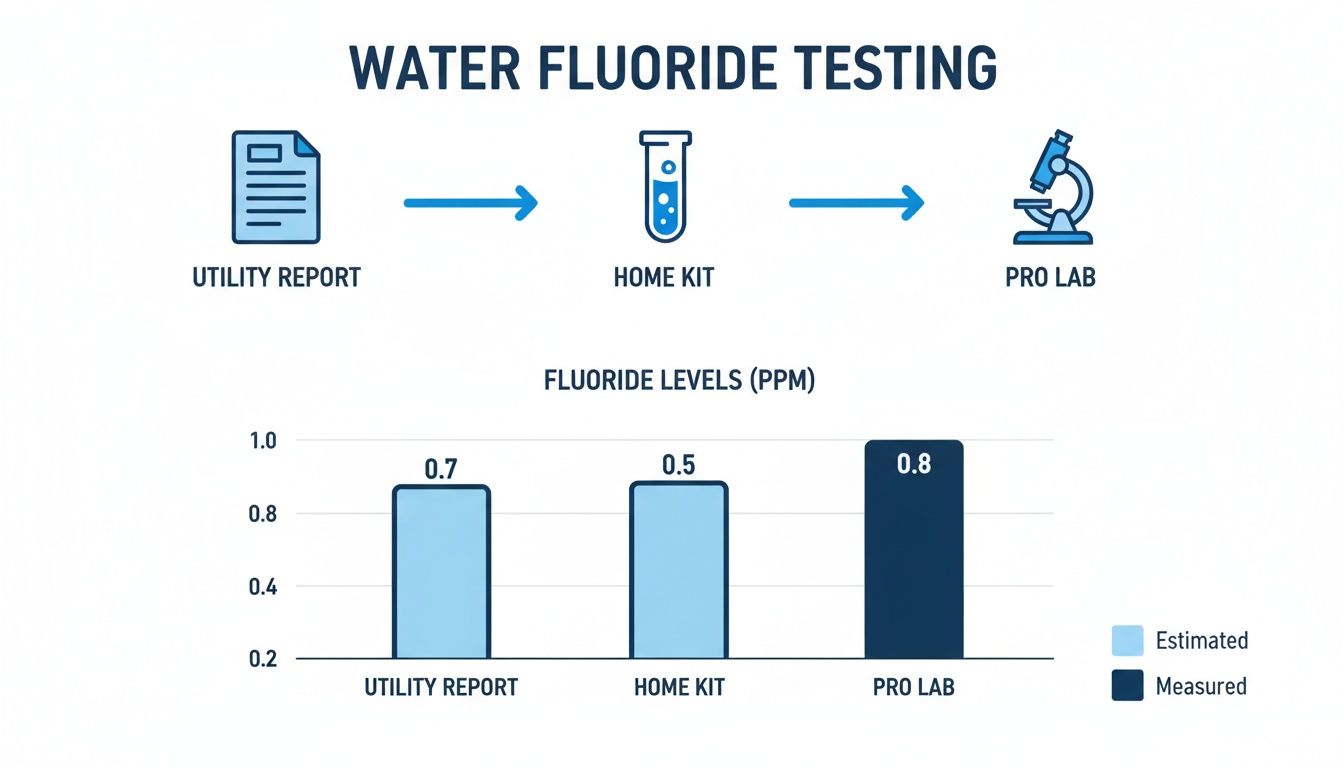
As you can see, a utility report gives you a ballpark idea, but home kits and lab tests give you the real story of what’s coming out of your faucet.
So, how do these technologies stack up head-to-head? Each has its own strengths, and the best one for you really depends on your goals and budget.
Comparing Fluoride Removal Filter Technologies
This table breaks down the key differences between the most common fluoride filtration methods. It covers everything from how well they work to what they cost, giving you a clear, side-by-side look to help you decide.
| Technology | Fluoride Removal Rate | Initial Cost | Ongoing Maintenance | Pros | Cons |
|---|---|---|---|---|---|
| Reverse Osmosis | Up to 98% | Moderate to High | Replace pre-filters, RO membrane, and post-filters | Removes the widest range of contaminants; very high purity | Produces wastewater; may remove beneficial minerals |
| Activated Alumina | Over 90% | Low to Moderate | Replace filter cartridges regularly | Highly effective for fluoride; no water waste | Performance depends on pH and flow rate; targets a narrow range of contaminants |
| Bone Char | Over 90% | Low to Moderate | Replace filter cartridges regularly | Natural and sustainable; no water waste; removes heavy metals | Less common than other types; may have a slower flow rate |
Ultimately, choosing the right fluoride removal filter is about matching the tech to your priorities. If you want the absolute purest water possible, Reverse Osmosis is the undisputed champion. If you're laser-focused on getting rid of fluoride with an efficient filter, Activated Alumina is a solid choice. And if a natural, time-tested approach appeals to you, Bone Char delivers excellent results.
Finding the Perfect Fluoride Filter for Your Lifestyle
Knowing the difference between reverse osmosis and activated alumina is great, but what really matters is figuring out how that tech fits into your day-to-day life. The best fluoride removal filter isn't just about the numbers; it's the one that slips seamlessly into your home, your budget, and how you actually use water.
Let's turn all that technical jargon into real-world solutions.
Think of it like buying a car. A two-seater sports car is a blast, but it’s a non-starter for a family of five. And a minivan is a lifesaver for school runs, but a nightmare for a city-dweller who has to parallel park in a tight spot. Picking your water filter requires that same kind of practical thinking.
Tailoring Your Filter to Your Home
First thing's first: take a quick inventory of your living situation. If you're renting a small apartment, your needs are going to be worlds apart from a homeowner with a big family. Your household size, how much space you have, and whether you own or rent are the biggest pieces of the puzzle.
A big family that goes through a ton of water will get the most bang for their buck with a permanent, high-capacity system. On the flip side, someone living in a dorm or temporary rental needs something that gets the job done without calling a plumber or making permanent changes.
The goal here is to find a filter that you'll actually use day in and day out. A system that’s a pain to maintain or takes up too much precious counter space will just turn into an expensive paperweight.
Let’s walk through a few common scenarios and match them up with the right kind of fluoride filter.
For the Renter or College Student
If you’re in an apartment or a dorm, you can’t exactly start messing with the plumbing. Your main priorities are something portable, easy to set up, and that won't get you in trouble with your landlord.
- Countertop Distillers: These are true plug-and-play devices. They sit on your counter, boil the water, and collect the pure, condensed steam, leaving fluoride and other gunk behind. They're incredibly effective but make water in batches, so they're best for one or two people.
- Gravity-Fed Filters: Think systems like the popular Berkey filters. They use simple gravity to pull water through their filter elements, which often include media that’s great at grabbing fluoride. No plumbing needed, totally portable—a renter's dream.
- Water Pitchers with Fluoride Filters: Most of the pitchers you see at the store don't touch fluoride. But some specialized models come with cartridges packed with activated alumina or other media that does. This is easily the most affordable and simplest option, perfect for just filtering your drinking water.
For the Busy Family in Their Forever Home
When you own your home and have a full house, your needs shift. You’re looking for high capacity, total convenience, and something that will last. You need a workhorse that can keep up with all the drinking, cooking, and coffee-making without you having to constantly refill a tank.
- Under-Sink Reverse Osmosis Systems: This is the gold standard for most families. The whole system is tucked away neatly under the kitchen sink and provides an endless stream of purified water from its own dedicated faucet. It can remove up to 98% of fluoride and a whole host of other contaminants.
- Whole-House Fluoride Filtration Systems: For the ultimate peace of mind, a whole-house system treats every single drop of water coming into your home. That means fluoride-free water for drinking, but also for showers, laundry, and cooking. These are big-league systems, usually using large tanks of activated alumina or bone char, and you'll need a pro to install them.
A Quick Guide to Choosing Your Filter
Run through these questions to narrow down the perfect match for your home. Answering them honestly will point you to a filter that fits your life, not the other way around.
- What is your living situation? (Renter vs. Homeowner)
- How much water do you use daily? (A single person vs. a family of five)
- What is your budget for initial setup? (Under $100 or over $500)
- Are you comfortable with basic plumbing, or do you need a no-installation option?
- Is fluoride your only concern, or do you want to remove other contaminants too?
By asking yourself these questions, you stop worrying about which technology is "best" and start focusing on which solution is best for you. Whether it’s a simple countertop unit or a full-blown under-sink system, the right fluoride removal filter is out there, ready to become a seamless part of your daily routine.
Keeping Your Water Filter Working Perfectly
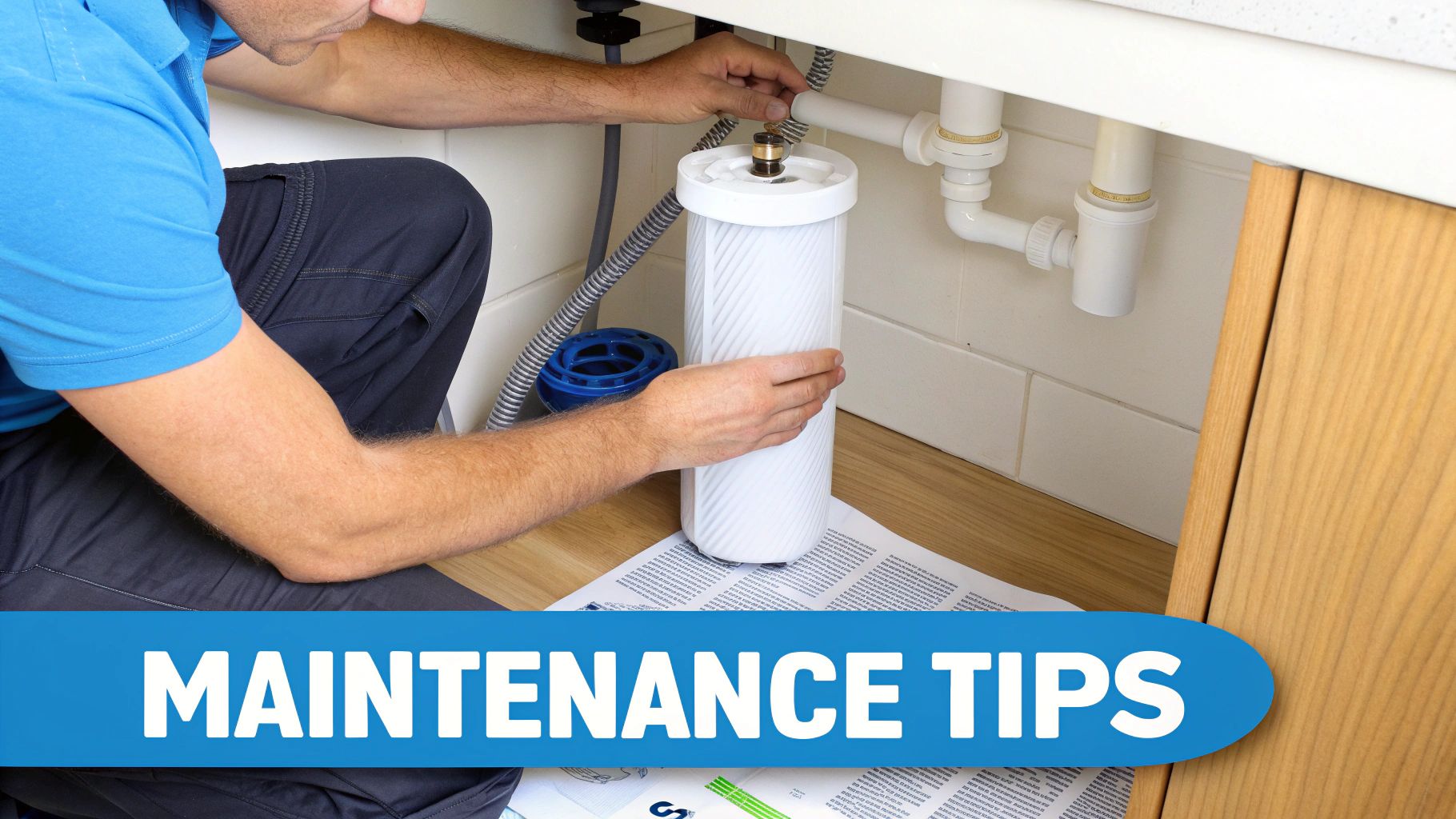
You’ve invested in a top-notch fluoride removal filter—now you need to protect that investment. The secret to getting pure, clean water for years isn't complicated: it's all about proper installation and consistent maintenance. Think of it less like a chore and more like a simple habit that guarantees great-tasting, safe water for your home.
A great filter is only as good as its upkeep. If you neglect it, you’re not just making it less effective; you could actually be making your water quality worse. A clogged, overworked filter can turn into a breeding ground for bacteria or even start dumping trapped contaminants right back into your glass.
Getting Started with a Smooth Installation
Whether you picked up a simple countertop unit or a more complex under-sink reverse osmosis system, a good setup is step number one. For pitchers or distillers, it's usually just plug-and-play.
For under-sink or whole-house systems, the installation takes a bit more effort, but it's completely doable. Before you even touch a tool, read the manufacturer's instructions from start to finish. I can't stress this enough—this simple step will save you countless headaches later on.
Pro Tip: Always, always turn off the main water supply to the area you're working on before you start. It’s a basic move that prevents a messy and expensive plumbing disaster.
And hey, if you’re not comfortable with basic plumbing, don't be afraid to call a professional. Paying a small upfront cost for an expert to install it right is way better than dealing with leaks and faulty connections down the line.
Creating a Simple Maintenance Routine
Once your system is up and running, a simple schedule is all you need. The most critical task is changing the filter cartridges on time. This isn't a suggestion—it's essential for any home water filtration system.
As filter media like activated alumina or bone char gets saturated with fluoride, its ability to grab more just stops. If you wait too long to swap it out, fluoride and other contaminants will start slipping right through. My advice? Set a calendar reminder on your phone for every filter change. It's the easiest way to stay on top of it.
Here are a few other habits to keep your system in peak condition:
- Perform Regular Leak Checks: Once a month, grab a flashlight and a paper towel and take a quick look around your system's connections. A quick wipe will show you any slow drips before they become a real problem.
- Sanitize the System: For systems like reverse osmosis, it's a good idea to sanitize the unit once a year to prevent any microbial buildup. Most manufacturers sell simple kits for this.
- Monitor Water Pressure: Is the water flow from your tap suddenly weak? That’s often the first sign your pre-filters are clogged and need to be replaced.
The demand for effective home filtration just keeps growing, showing how much more aware we all are of water quality. The global water filter market, valued at around USD 15.26 billion in 2024, is projected to climb to over USD 28 billion by 2033. You can learn more about these market trends here. This boom highlights just how many homeowners are taking control of their water—and a little routine care ensures that control is never compromised.
Busting Common Myths About Fluoride and Filtration
When it comes to home water quality, misinformation seems to spread faster than water from a tap. Let's clear the air and tackle some of the biggest myths about fluoride and filtration so you can make choices based on facts, not fiction.
One of the most common things I hear is that boiling water gets rid of fluoride. It’s a logical thought, but it’s completely backward. When you boil water, the pure H₂O escapes as steam, but the fluoride ions get left behind. This means the water left in the pot actually becomes more concentrated with fluoride.
Filters Versus Softeners
Another major point of confusion is the difference between a water filter and a water softener. People often think they do the same job, but they serve entirely different purposes in your home.
A water softener is built to tackle "hard" minerals like calcium and magnesium—the culprits behind scale buildup and soap scum. It uses a process called ion exchange to grab those minerals, but it does absolutely nothing to remove fluoride. A fluoride removal filter, on the other hand, uses specialized media like reverse osmosis or activated alumina specifically to target and capture fluoride ions.
Think of it this way: a water softener is like a bouncer at a club who only removes a certain type of troublemaker (hard minerals). A fluoride filter is more like a security specialist brought in to find one specific target (fluoride). They are not interchangeable.
Dispelling Other Common Beliefs
Let's quickly run through a few more myths that often trip people up:
- Myth: "All pitcher filters remove fluoride."
- Fact: Not even close. Most standard carbon pitchers you see at the store are only designed to make your water taste and smell better by removing chlorine. Only specially designed pitchers with fluoride-rated cartridges will actually work.
- Myth: "Filtered water is the same as purified water."
- Fact: "Filtered" is a very broad term. "Purified" water means it has been treated by a high-level system like reverse osmosis or distillation to remove at least 99% of all contaminants, which includes fluoride.
It’s also helpful to separate the idea of fluoride in your drinking water from its targeted use in dental treatments. For instance, knowing what fluoride varnish is and how it’s applied by a dentist helps show the different ways fluoride is used. By separating myth from reality, you can choose the right water solution for your home with confidence.
Common Questions About Fluoride Filtration
Let's wrap things up by answering some of the most common questions we get from homeowners looking into fluoride removal filters. This is the quick-fire round to tackle any last doubts you might have.
One of the first things people ask is, "Will my standard fridge filter or water pitcher get rid of fluoride?" The simple answer is almost always no. Most of those common filters rely on a basic activated carbon block. While that's great for getting rid of chlorine and making your water taste better, it just can't grab onto tiny fluoride ions.
To actually remove fluoride, you need a system designed for the job, like reverse osmosis, activated alumina, or bone char. Those technologies are specifically built to target fluoride, which a standard carbon filter isn't.
What About My Teeth?
Another big concern is whether filtering out fluoride will hurt your dental health. This is really a personal call and depends on where else you're getting fluoride.
Many of us already get plenty from toothpaste, mouthwash, and even some foods. If you and your family are using fluoride dental products, taking it out of your drinking water might not make a huge difference to your overall dental care. It's all about balancing your total exposure to a level that feels right for you.
A huge reason people choose a fluoride filter is for peace of mind. It’s about taking control of what's in your water and deciding for yourself what's best for your family.
Why Changing Filters on Time Is So Important
Finally, people often ask, "How big of a deal is it to change my filter cartridges on time?" This is probably the most critical question of all, and the answer is: it's extremely critical. Just think of your filter media as a sponge—it can only soak up so much.
Once the media (whether that's activated alumina or bone char) has absorbed all the fluoride it can hold, it's full. If you don't swap out the cartridge, fluoride and everything else it trapped will just flow right on by and into your glass. Even worse, a clogged filter can sometimes let go of a concentrated burst of contaminants. Following the manufacturer's schedule isn't just a suggestion; it's essential for keeping your water pure.
The demand for specialized filters is growing fast as people become more aware of what's in their water. For instance, the market for filters that target PFAS—chemicals similar to fluorides—is projected to hit USD 3.22 billion by 2030. This shows a broader trend toward cleaner water and the need for high-performance fluoride removal filters that actually work. You can discover more about the growing PFAS filtration market to see how this reflects the bigger picture.
Here at Water Filter Advisor, our mission is to cut through the noise and give you clear, honest information. We want to help you find the right filtration system for your home so you can enjoy safer, better-tasting water every single day. Check out all our guides and reviews at https://www.waterfilteradvisor.com.
- December 11, 2025
- 0
- Uncategorized
