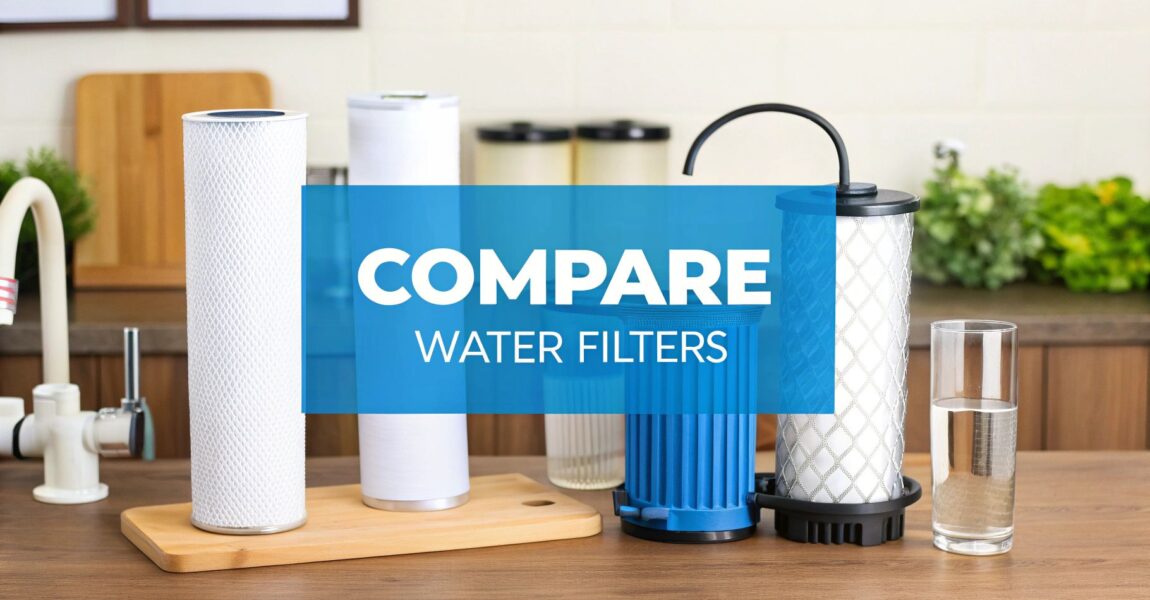
So, you're on a quest for better water. Awesome. The first big question on this journey is this: do you want to purify all the water flooding into your home, or are you just looking to upgrade the water at a specific tap? Think of it as choosing between a bouncer for your whole house or a personal bodyguard for your kitchen sink. The answer really comes down to whether you need a targeted fix for your drinking water or an all-encompassing shield for every faucet, shower, and washing machine.
Understanding the Different Types of Water Filters
Let's be honest, picking the right water filter can feel like deciphering an ancient scroll. But it gets a lot easier once you know the main players. Each system is built for a different mission, from giving you crisp, pristine drinking water to protecting your home’s entire plumbing system from the villainous clutches of hard water scale. The trick is to match the filter's superpower to the specific problem you're trying to solve—whether it’s chlorine that tastes like a swimming pool, sneaky lead, or something else entirely.
This push for better water isn’t just some fleeting trend. People are more clued-in than ever about what's lurking in their tap water, and it’s fueling a massive boom in the filtration market. It was valued at USD 14.23 billion in 2025 and is expected to more than double by 2034. That surge tells you one thing loud and clear: clean water has become a top priority for families everywhere.
A Quick Comparison of Popular Systems
Let's start by breaking down the most common options. Whole-house systems are the big guns, installed right where your main water line enters your home, ensuring every single drop of water gets treated. On the flip side, point-of-use filters are like snipers, installed exactly where you need them—under your sink or on a faucet—giving you purified water right on demand.
Before you jump into any installation that touches your main water line, it's a stellar idea to know some plumbing basics, like how to turn off your home's water main.
Choosing a filter is really about setting your priorities. Are you tired of that post-shower dry skin, courtesy of chlorinated water? Or is your main mission to make your drinking water taste less like… well, tap water? Nailing that down is your first step toward finding the perfect liquid sidekick.
For some extra help on your quest, you can check out our guide on how to choose the best water filter for your needs right here: https://www.waterfilteradvisor.com/advice/.
Quick Guide to Home Water Filtration Systems
To give you a bird's-eye view of your options, here’s a simple table comparing the main types of water filters. Think of it as your cheat sheet before we dive deeper into the nitty-gritty of each one.
| Filtration System Type | Best For | Installation Level | Key Contaminants Targeted |
|---|---|---|---|
| Whole-House Filter | Treating all water for general purity and appliance protection. | Professional | Chlorine, Sediment, Hard Water Minerals |
| Under-Sink Filter | High-quality drinking and cooking water at one tap. | Moderate DIY | Lead, VOCs, Fluoride, Cysts |
| Faucet Filter | Quick, convenient filtration for renters or budget-conscious users. | Easy DIY | Chlorine, Lead, Bad Taste/Odor |
| Shower Filter | Reducing chlorine and chloramine to improve skin and hair health. | Easy DIY | Chlorine, Chloramine, Hard Water |
This table gives you a snapshot of what each system does best, setting the stage for a more detailed look.
How to Assess Your Home's Water Quality
Hold up! Before you even think about comparing water filters, you have to know what's in your water. This is the single most important step. Buying a filter without knowing what you’re trying to remove is like playing darts blindfolded—you might get lucky, but you’ll probably waste your money on something that doesn't fix the real problem.
The good news? Getting a handle on your home's water quality isn't as complicated as it sounds. For most people on city water, it starts with a simple document from your local utility. This is your intel.
Find Your Local Water Quality Report
If you get your water from a public utility, they're required by law to provide an annual Consumer Confidence Report (CCR). This report is a treasure map. It breaks down all the contaminants found in your water supply over the last year and tells you if any of them are getting a little too close to the legal limits. You can usually find it right on your water provider's website or just ask them for a copy.
When you're scanning your CCR, keep an eye out for these usual suspects:
- Disinfectants: Things like chlorine and chloramine are everywhere. They’re used to kill bacteria, which is good, but they can make your water taste and smell like a public pool, which is bad.
- Disinfection Byproducts (DBPs): When disinfectants party with organic stuff in the water, they create compounds like Trihalomethanes (TTHMs). You don't want them crashing your party.
- Heavy Metals: Pay close attention to lead and arsenic levels. These are serious health villains.
- Hardness: This isn’t a health risk, but high levels of calcium and magnesium are the culprits behind that chalky limescale buildup that murders your appliances and clogs pipes.
Just remember, this report tells you about the water quality at the treatment plant—not necessarily what’s coming out of your kitchen tap. Contaminants like lead can sneak into the water from old pipes on the way to your house.
When to Use a Home Water Test Kit
The CCR is a great starting point, but a home water test gives you a real-time snapshot of what's happening right at your faucet. This is an absolute must if you have a private well because you're 100% responsible for your water's safety. It's also a brilliant move if your CCR shows any contaminants chilling near the legal limit.
An at-home test can spot problems the CCR won’t, like lead leaching from your own plumbing or bacteria that might have found its way into your well. It gives you the cold, hard data you need to pick a filter certified to eliminate your specific contaminants.
You've got two main options for playing detective:
- DIY Test Strips: These are cheap, easy, and give you fast results for the basics like chlorine, pH, and water hardness. They’re perfect for a quick check-up.
- Lab-Certified Kits: If you want the full CSI-level report, a mail-in lab kit is the way to go. You take a water sample, send it off to a certified lab, and they'll send back a detailed report on dozens of contaminants, from volatile organic compounds (VOCs) and pesticides to heavy metals.
Once you know exactly what you’re up against, you’re in the driver's seat. With your water quality data in hand, you can confidently compare water filtration systems and choose the one that actually solves your problem.
Whole-House Filtration Systems Explained
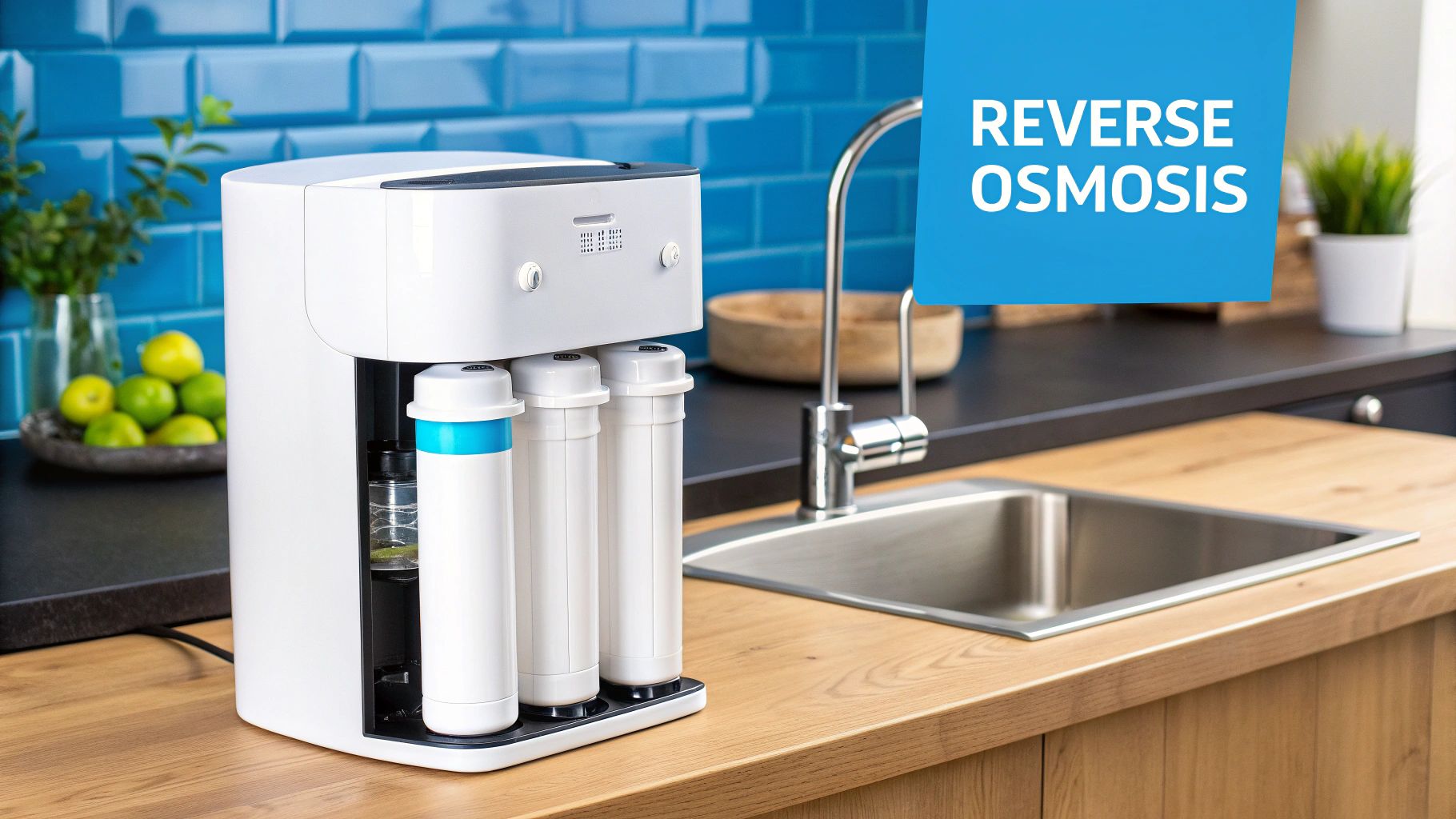
If you're after a solution that treats every single drop of water coming into your home, you need a Point-of-Entry (POE) system. We usually just call them whole-house filters. They get installed right where your main water line enters the house, acting as a gatekeeper that purifies water before it ever reaches your faucets, showerheads, or dishwasher. This gives you a fortress of protection that single-tap filters just can't match.
The whole point of a whole-house system is to solve problems that affect your entire home. We're talking about things like chlorine drying out your skin in the shower, sediment wrecking your washing machine, or hard water minerals leaving that crusty white gunk all over your fixtures. By catching these issues at the source, you're doing more than just improving your drinking water—you're protecting your health, your comfort, and the lifespan of your plumbing.
This all-in-one approach is catching on. The global market for water filters, valued at USD 15.88 billion in 2024, is expected to swell to USD 26.42 billion by 2032. That's a huge jump, and it shows that more homeowners are seeing the value in treating water for their entire household. You can actually explore the full research on water filter trends to see how fast the industry is growing.
Key Technologies for Whole-House Filtration
Not all whole-house systems are created equal. The right one for you depends entirely on what your water test revealed. Let's walk through the most common types and their special skills.
-
Large Sediment Filters: Think of this as your first line of defense. These filters are made to grab physical junk like sand, dirt, rust, and silt. If you're on well water or your town has older pipes, a sediment filter is non-negotiable. It stops that grit from clogging up your plumbing and destroying your appliances.
-
Carbon Filtration Systems: For anyone on city water, a carbon system is usually the perfect sidekick. These are fantastic at removing chemical contaminants, especially the chlorine and chloramine that water treatment plants use for disinfection. The difference is immediate: water that tastes and smells clean, and showers that don't leave your skin feeling tight and dry.
-
Water Softeners (Ion Exchange): Got hard water? If you see limescale buildup on your faucets or can't get your soap to lather, a water softener is your hero. It uses a clever process called ion exchange to swap out hard minerals like calcium and magnesium for sodium ions. The result is "soft" water that's much gentler on your skin, hair, and every water-using appliance in your home.
You'll often see these technologies bundled together in multi-stage systems to tackle a bunch of problems at once. For example, someone with hard well water might install a sediment filter, followed by a carbon filter, and finish with a water softener for truly comprehensive treatment.
A common misconception is that a whole-house filter purifies water to the same degree as a high-end drinking water filter. While they remove a ton of contaminants, their primary job is general treatment. For the absolute purest water at the tap, many people will pair their whole-house system with a dedicated point-of-use filter in the kitchen.
What to Consider Before You Buy
When you're looking at systems of this scale, a few key factors will make or break your investment. Two of the biggest are flow rate and filter capacity.
Flow Rate (GPM)
Flow rate is measured in gallons per minute (GPM), and it tells you exactly how much water can hustle through the system at any given moment. If the GPM is too low, you create a traffic jam. The result? A frustrating drop in water pressure, especially when the shower and the dishwasher are running at the same time. For a typical family home, you should look for a system with a flow rate of at least 10-15 GPM to keep things flowing smoothly.
Filtration Capacity and Maintenance
A system’s capacity tells you how long the filters will last before they need to be swapped out. This is usually rated in gallons (like 100,000 gallons) or a timeframe (like 1 year). If you slack on changing the filters, the system won't work as well, and you can end up with clogs and more pressure loss. Make sure to budget for the long-term cost of replacement cartridges—that's how you'll understand the true total cost of ownership.
A Practical Comparison of Point-of-Use Filters
While whole-house systems act like a bouncer for your entire plumbing system, Point-of-Use (POU) filters are more like personal bodyguards, purifying water right where you use it most. This targeted approach is perfect for dramatically improving the quality of your drinking and cooking water without the major expense and installation of a whole-home setup. When you start comparing POU systems, you'll see it's a fascinating balancing act between raw power, everyday convenience, and your budget.
Ultimately, the best choice really boils down to your life and your water. Renters might lean toward a simple screw-on faucet filter, while a homeowner dead-set on the purest possible water will probably gravitate toward an under-sink reverse osmosis system. Each has its place in the world of clean water.
Under-Sink Filters: The Hidden Powerhouse
Tucked away out of sight, under-sink systems are the real workhorses of POU filtration. They tap directly into your cold water line, delivering pristine water through a dedicated, elegant faucet right on your sink. No counter clutter, just clean water on demand. Because they have more space to work with, these units can house more complex, multi-stage filtration technologies.
This is where you'll find the heavy hitters like reverse osmosis (RO) systems. When it comes to sheer purification power, RO is the undisputed champion. It’s engineered to strip out an incredible range of contaminants—we're talking lead, fluoride, arsenic, and countless dissolved solids. Reverse osmosis is a dominant force in the water treatment industry, accounting for about 28.2% of the market's revenue in 2023.
- Best For: Homeowners who want top-tier drinking water quality without sacrificing an inch of counter space.
- Key Consideration: Installation involves some basic under-sink plumbing, and filter changes are a bit more involved than with simpler countertop models.
Faucet-Mounted and Countertop Filters: Convenience First
If you’re looking for a fast and easy upgrade, faucet-mounted and countertop filters are fantastic options. A faucet filter literally screws onto your existing tap in minutes. A quick flip of a lever lets you switch between filtered and unfiltered water, which is great for preserving the filter's life when you're just washing dishes.
Countertop systems offer a little more filtration muscle. They sit beside your sink and connect to the faucet with a small hose, pushing water through a much larger filter cartridge before it comes out of the dispenser.
A faucet filter offers maximum convenience for renters, while an under-sink system provides a powerful, permanent upgrade for homeowners. Both dramatically improve water taste and safety over unfiltered tap water.
It's no surprise these are so popular. They require zero permanent changes to your plumbing, making them perfect for apartments, dorms, or anyone who doesn't want to mess with pipes. Their main job is to make your water taste and smell better by removing chlorine and reducing common baddies like lead.
Refrigerator and Portable Filters: Specialized Solutions
Don't forget about the filter that might already be in your kitchen! The one in your refrigerator's water and ice dispenser is a type of POU filter. It’s incredibly convenient, but it's generally not as robust as a dedicated under-sink or faucet system. It mostly focuses on chlorine and some particulates to improve taste.
And for clean water on the move, there are specialized POU filters designed for personal use. You can check out portable water filter details to see how these options can keep you hydrated with safe water anywhere.
This chart helps break down the trade-offs you'll find with the filter media inside many POU systems, comparing their cost, performance, and maintenance needs.
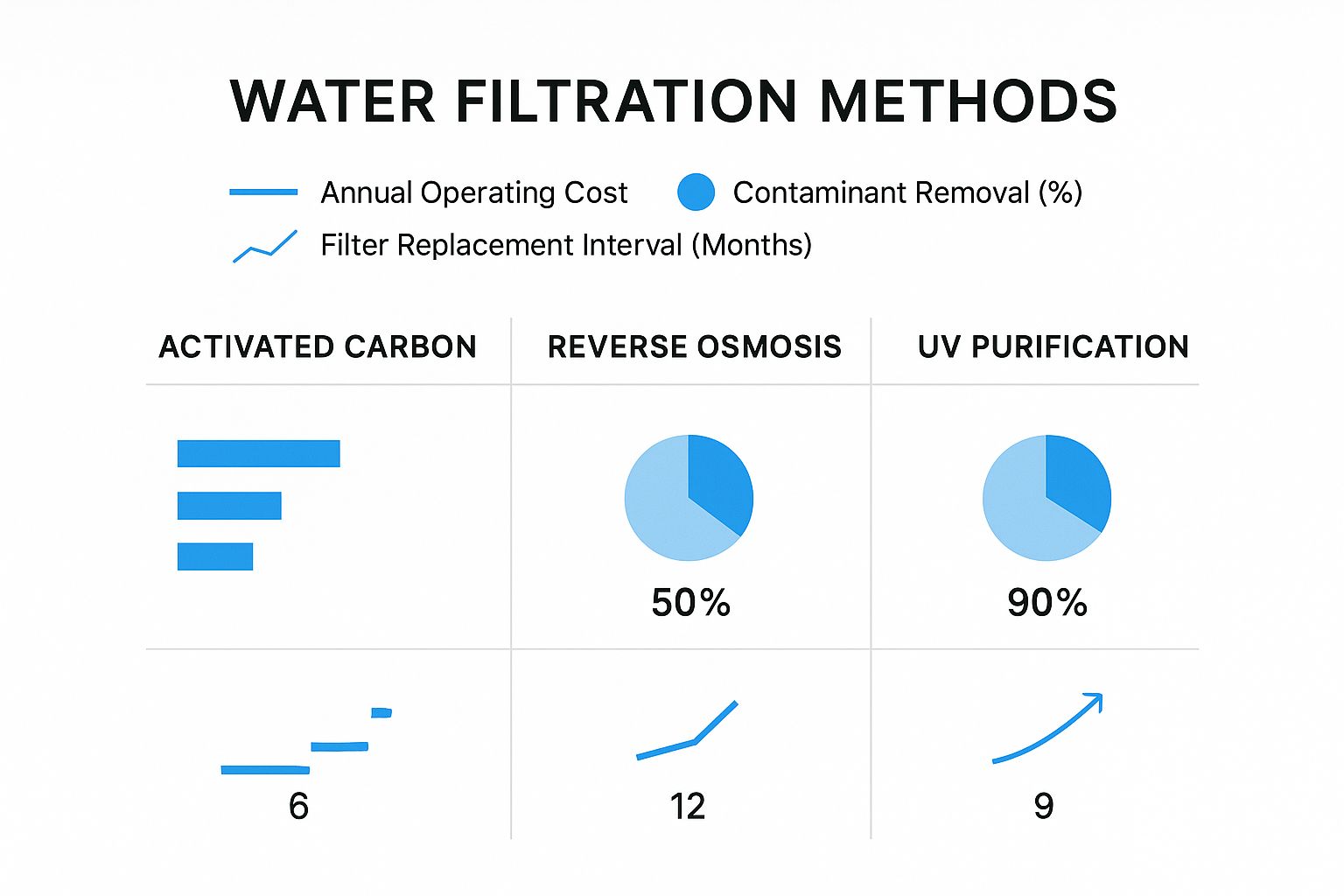
As you can see, while Reverse Osmosis gives you unparalleled contaminant removal, it comes with a higher annual cost. On the other hand, Activated Carbon is a budget-friendly workhorse with less frequent filter changes.
Point-of-Use Filter Showdown
To make sense of the most common options, it helps to see them side-by-side. Here’s a breakdown of how the main POU players stack up against each other.
| Feature | Under-Sink System | Faucet Filter | Countertop Filter | Refrigerator Filter |
|---|---|---|---|---|
| Performance | Excellent (esp. RO); removes wide range of contaminants | Good; reduces chlorine, lead, some VOCs | Very Good; larger filters remove more than faucet units | Basic; improves taste/odor by removing chlorine |
| Installation | Moderate; requires some plumbing under the sink | Easy; screws onto faucet in minutes, no tools needed | Easy; connects to faucet with a hose | Easy; twist or push-in cartridge replacement |
| Filter Life | 6-12 months (or longer for RO membrane) | 2-3 months | 4-6 months | 6 months |
| Typical Cost | $150 – $500+ | $20 – $50 | $50 – $150 | $30 – $60 (per filter) |
| Best For | Homeowners, high-purity needs, seamless look | Renters, budget-conscious, simple installation | Renters/homeowners wanting better-than-faucet performance | Convenience for chilled water and ice |
This table highlights the clear trade-offs: under-sink systems are a long-term investment in quality, while faucet and countertop models offer accessible, immediate improvements.
Making the Right POU Choice
Choosing the right POU filter really comes down to weighing four key factors. Spend a minute thinking about each one before you pull the trigger.
-
Contaminant Removal: What are you actually trying to remove? Check your local water quality report. If you have serious concerns like lead or VOCs, look for a system with NSF/ANSI 53 certification. If you just want to get rid of that swimming pool taste from chlorine, an NSF/ANSI 42 certified filter will do the trick.
-
Impact on Water Flow: Let's be real. Faucet-mounted filters will slow down the flow from your tap. It's just a fact of life. Under-sink systems, with their own dedicated faucet, usually provide a much faster and more consistent stream.
-
Filter Lifespan and Cost: Don't just look at the price tag on the box. Think about the total cost of ownership. That cheap initial unit might need expensive replacement filters every two months, making it a pricier choice over a year than a system with a more expensive but longer-lasting cartridge.
-
Installation and Maintenance: Are you comfortable getting under the sink with a wrench, or do you need something you can set up without any tools? Faucet filters are a simple screw-on affair. Under-sink systems require more effort upfront but give you a clean, permanent solution.
Matching a Filter to Your Home and Lifestyle
Technical specs are one thing, but they don't tell the whole story. The best water filter isn't just the one with the most impressive stats—it's the one that actually makes sense for your home and your daily routine. To truly compare water filtration systems, you have to step back from the data sheets and look at your own situation: your home's plumbing, your budget, and the specific water woes you're facing.
So, let's put the lab reports aside and walk through a few real-world scenarios. By looking at some common user profiles, you'll start to see how different filter types can be combined to solve very specific problems. It’s the best way to connect the dots between a filter's features and what you actually need.
The Suburban Family with Hard Water
Picture a busy family of four living out in the suburbs. Their water comes from the city, but their biggest headache is hardness. Glasses come out of the dishwasher covered in spots, showers leave their skin feeling tight and dry, and they're worried about scale buildup wrecking their brand-new appliances. They need a solution that protects their family and their home.
- The Problem: Hard water minerals like calcium and magnesium, plus the usual chlorine from municipal treatment.
- The Ideal Solution: A combination of a whole-house water softener and a carbon filter. The softener is the heavy lifter, taking out the minerals that cause scale, which saves their appliances and makes their skin and hair feel much better. The carbon filter then gets rid of that chlorine taste and smell from every single tap.
- Why It Works: This one-two punch tackles both the nuisance of hard water and the quality of their drinking water. They might even keep their simple refrigerator filter for cold, great-tasting water on demand. It's a practical, layered system that just works.
The Renter in a Small City Apartment
Now, let's think about someone renting a small apartment in the city. They can't go ripping out pipes, but they're sketched out by potential lead from the building's old plumbing and can't stand the strong chlorine taste. They need something effective, affordable, and easy to install—and just as easy to remove when they move out.
- The Problem: Funky chlorine taste, possible lead contamination, and a landlord who won't allow plumbing modifications.
- The Ideal Solution: A quality faucet-mounted filter that's certified for lead reduction (look for NSF/ANSI 53). For the shower, a simple screw-on showerhead filter can knock out the chlorine.
- Why It Works: This setup is a game-changer for renters. It requires zero tools or permanent changes. It's a low-cost way to get high-impact results right where they need them most: the kitchen sink and the shower. This is the perfect fix for a temporary living situation.
Choosing a filter is often about matching the system's permanence to your own. A renter needs a solution that's as flexible as their lease, while a homeowner can invest in a more integrated, long-term system.
The Health-Conscious Homeowner with a Well
Finally, consider a homeowner whose water comes from a private well. They are 100% responsible for their water's safety and are understandably concerned about everything from bacteria and sediment to iron and pesticides from nearby farms. Their number one priority is total peace of mind and the purest water possible.
- The Problem: A potential cocktail of contaminants, including sediment, bacteria, heavy metals, and agricultural runoff.
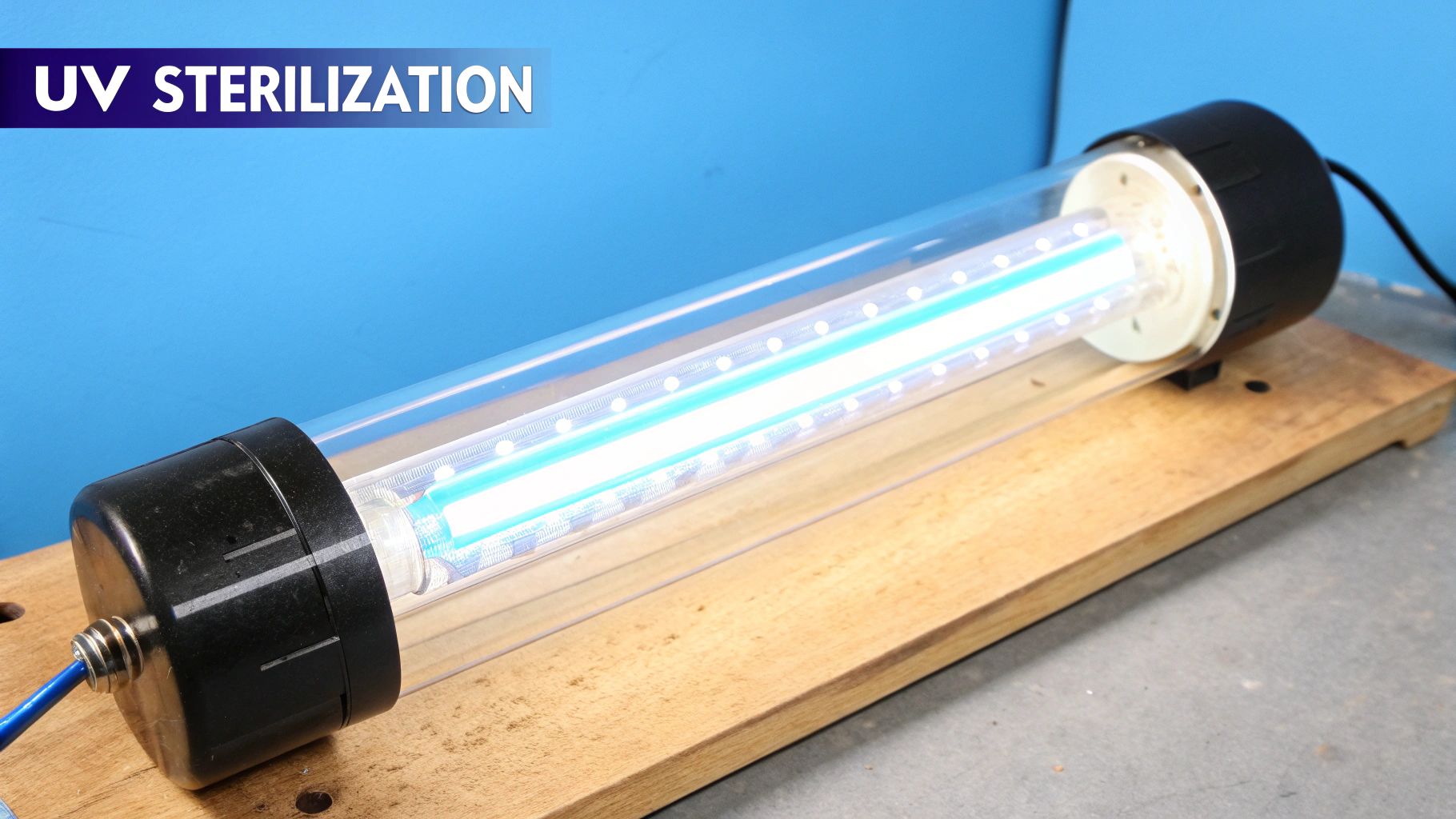
- The Ideal Solution: A multi-stage whole-house system paired with an under-sink reverse osmosis (RO) unit in the kitchen. The whole-house setup should have a sediment pre-filter, a carbon filter, and a UV purifier to kill any microorganisms.
- Why It Works: The whole-house system acts as the first line of defense, making all the water in the house safe for bathing and cleaning. Then, the under-sink RO system takes over for drinking and cooking water, acting as a final polisher to remove up to 99% of dissolved solids. This powerful combination provides robust, layered security against the wild west of well water.
Your Top Water Filtration Questions, Answered
Once you start narrowing down your options, the real questions begin to pop up. This is totally normal. As you compare water filtration systems, you move past the big picture and into the nitty-gritty details that impact your daily life and wallet. This section tackles the most common questions we hear, giving you straight answers to clear up any final confusion.
Think of this as your final sanity check before you make your choice. We’ll get into the practical side of things—combining systems, what certifications actually mean, figuring out long-term costs, and what to expect with water pressure. Getting these answers should give you the last bit of confidence you need to pick the right setup for your home.
Do I Need a Whole-House Filter and an Under-Sink Filter?
This is a great question because it cuts right to the chase of a smart filtration strategy. The answer isn't a simple yes or no—it really boils down to what you’re trying to accomplish. These two systems do very different, yet complementary, jobs.
An under-sink filter, particularly a reverse osmosis system, is a specialist. It’s built to deliver the absolute purest drinking water possible, right at your kitchen tap. A whole-house filter, on the other hand, is a generalist. It treats every drop of water coming into your home to take out common troublemakers like chlorine and sediment, which protects your skin in the shower and keeps your appliances from getting gunked up.
So, when would you want both?
- For total, comprehensive protection: If you want complete peace of mind, running both is the gold standard. The whole-house system acts as the first line of defense, stripping out chlorine and sediment everywhere, while the under-sink unit polishes your drinking water, catching anything the first system might have missed.
- For specific health worries: If a water test flags contaminants like lead or arsenic, an under-sink RO system is non-negotiable for drinking water. The whole-house unit still adds huge value by providing chlorine-free showers and protecting your plumbing.
If you have to pick just one, let your main goal be your guide. If top-tier drinking water is what you’re after, go with the under-sink system. If it’s more about protecting your appliances and getting better water for bathing, the whole-house filter is the clear winner.
What Does an NSF Certification Actually Mean for a Water Filter?
Spotting an NSF certification on a water filter is a very good sign. It’s your independent, third-party guarantee that the product does what the manufacturer claims. Anyone can say their filter removes lead, but without that NSF seal, it’s just a marketing promise.
The National Sanitation Foundation (NSF) puts filters through the wringer, testing them against strict standards to prove they work. When you compare water filtration systems, you'll see a few key certifications, and it’s crucial to know what they stand for.
- NSF/ANSI 42: This one is all about aesthetic effects. A filter with this certification is proven to reduce things that mess with taste and odor, like chlorine.
- NSF/ANSI 53: This is the big one for health effects. It’s a much higher bar to clear, certifying that a filter can reduce contaminants with known health risks, like lead, mercury, and cysts.
- NSF/ANSI 401: This standard tackles emerging contaminants, things like certain pharmaceuticals and pesticides that are becoming a bigger concern.
A filter without a legitimate NSF certification is a roll of the dice. It hasn't been independently proven to remove the contaminants it claims to, making it a risky bet for your family's health. Always look for the official NSF mark.
How Do I Figure Out the Real Cost of a Filtration System?
The price you see on the box is just the starting line. To really understand the financial commitment, you need to calculate the Total Cost of Ownership (TCO). This simple formula gives you a much clearer picture of what you’ll actually spend over the system's lifetime.
Calculating the TCO is easy. Just add these three numbers together:
- Initial Purchase Price: The upfront cost to buy the system.
- Installation Fees: What you'll pay a pro to install it, if you go that route.
- Ongoing Maintenance: The cost of all replacement filters over a specific time, like five years.
Here’s a quick example. A cheap $150 under-sink filter might look like a steal, but if it needs $100 in new filters every single year, its five-year TCO is actually $650. Meanwhile, a pricier $300 system with filters that only cost $50 a year has a five-year TCO of $550. All of a sudden, the "cheaper" option is the more expensive one. Always do the math before you decide.
Will a Water Filter Wreck My Water Pressure?
Yes, any filter will reduce your water pressure at least a little—that’s just what happens when you force water through a physical barrier. But how much it drops varies wildly from one system to another. The trick is to pick a system designed to minimize that drop.
Faucet-mounted filters are usually the worst offenders; you’ll probably notice the slower flow right away. On the flip side, well-designed whole-house and under-sink systems are engineered to handle a lot of water without creating a major bottleneck.
The spec you need to look for is the flow rate, measured in gallons per minute (GPM). For a whole-house system in a typical family home, you should look for a GPM of 10-20. That ensures you can run the shower and the dishwasher at the same time without the water slowing to a frustrating trickle. If your home’s pressure is already on the low side, choosing a system with a high GPM is an absolute must to avoid making the problem worse.
At Water Filter Advisor, our mission is to cut through the confusion and provide clear, research-backed guidance to help you find the perfect water filtration solution for your home. Explore our in-depth reviews and expert comparisons at https://www.waterfilteradvisor.com.
- October 5, 2025
- 0
- Uncategorized
