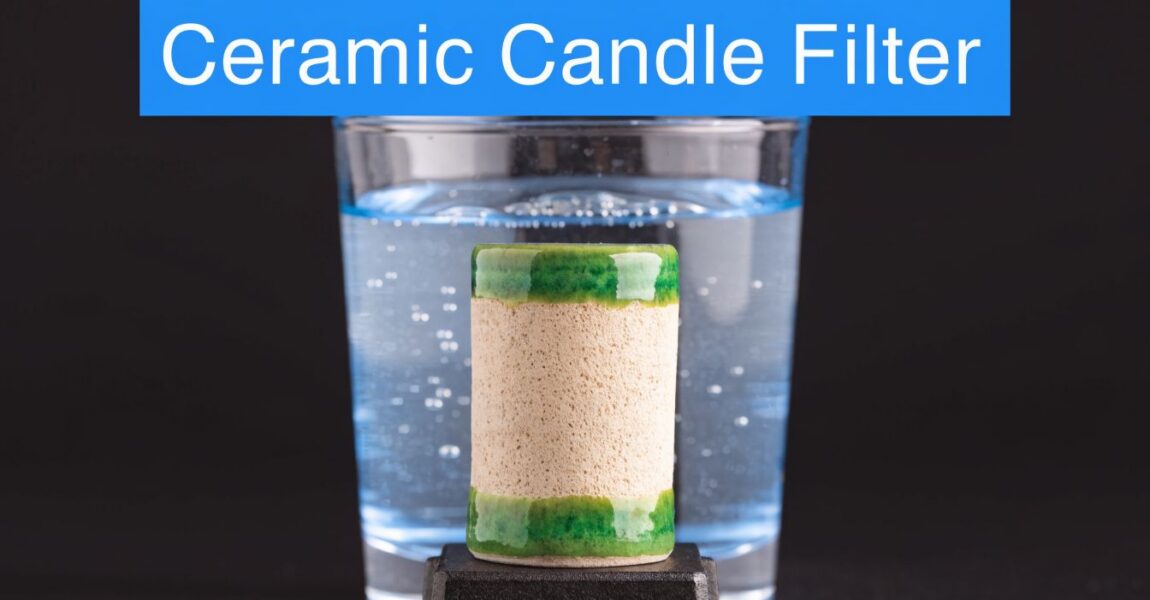
A neighbor once brought me a countertop ceramic filter and asked why it had become painfully slow. The answer was sitting right on the outside of the candle: a thin layer of trapped dirt doing exactly what the filter was built to do.
The Enduring Simplicity of Ceramic Water Filtration
A century ago, a family could set a clay filter on the counter, pour in cloudy water, and wait. No outlet, no app, no moving parts. The same basic appeal still draws homeowners to ceramic filtration today.
A ceramic candle water filter is simple by design. A porous, candle-shaped element sits inside a housing, and water passes through it slowly under gravity. The pace is part of the bargain. You get a filter that keeps working during a power outage, asks very little from the user, and is easy to understand with your own eyes and hands.
That simplicity is why ceramic filters have lasted so long. They solve a narrow set of problems well. If your main concern is visible dirt, cloudiness, or microbe reduction in a low-tech setup, a ceramic unit can be a practical fit. It works a bit like an old cast-iron pan in the kitchen. Slow, plain, dependable, and still useful because the basic job has not changed.
The trade-off matters.
A ceramic candle is not a fast, all-purpose treatment system. It usually produces water gradually, so it suits daily drinking and cooking better than whole-house demand. It also does not cover every contamination risk. Some dissolved chemicals, salts, and very small contaminants can pass through, which means the best choice depends on what is in your water, not just what you can see.
That is where many homeowners get tripped up. Clear water is not always fully treated water. Ceramic filtration earns its reputation by being reliable, repairable, and affordable to maintain, but its strengths are specific, not unlimited.
Used for the right job, it is one of the most sensible filter designs around. Used for the wrong job, it can give a false sense of security.
How a Ceramic Candle Turns Murky Water Clear
A homeowner fills the upper chamber with cloudy well water before bed. By morning, the lower chamber holds water that looks noticeably cleaner. The change can feel almost too simple to trust, especially because nothing buzzes, spins, or doses the water with chemicals.
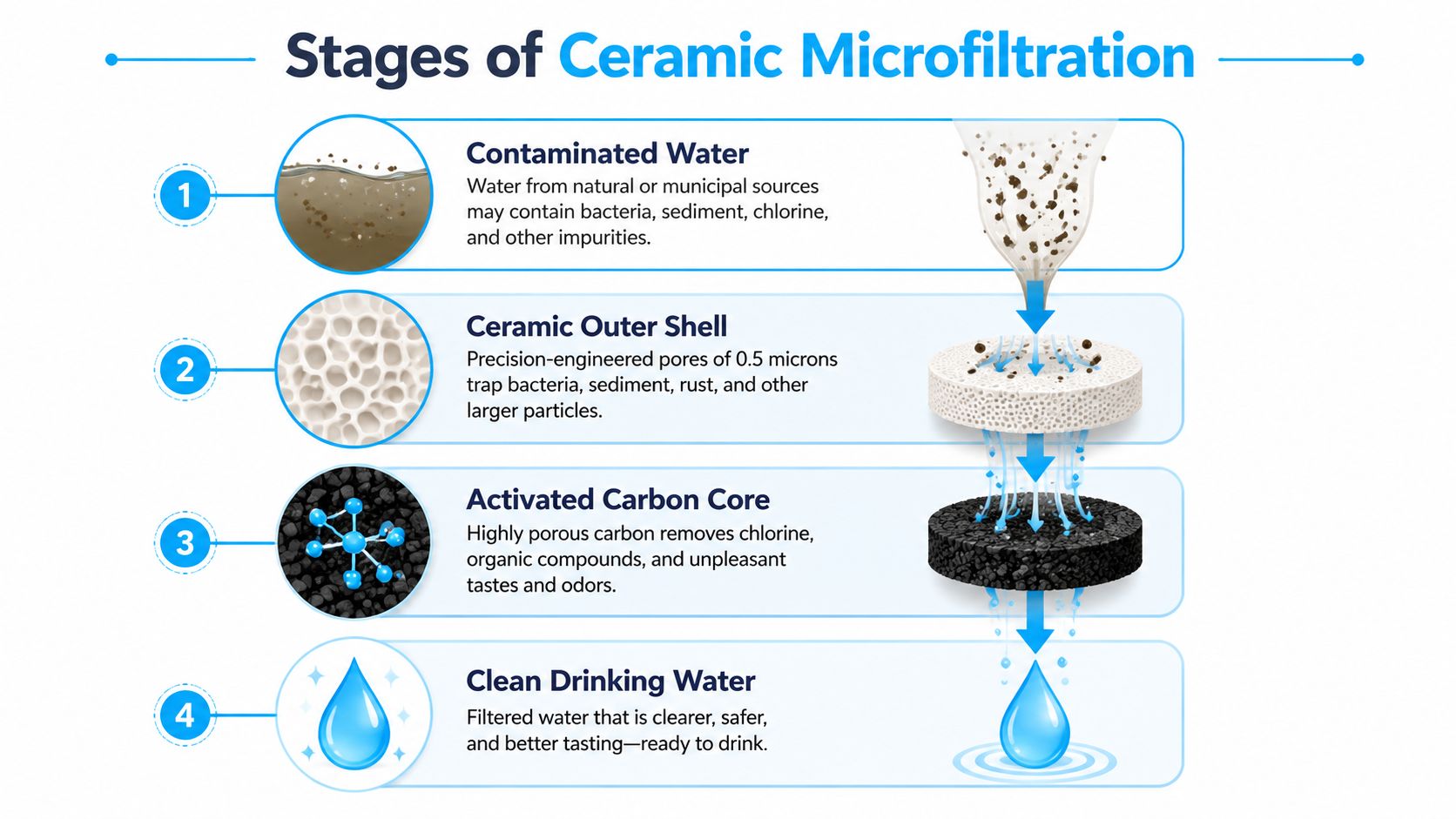
What is happening is straightforward. A ceramic candle cleans by microfiltration. Its wall is full of tiny pores, and those pores act as a physical barrier. Water moves through. Larger particles and many microbes do not.
A coffee filter is a useful comparison for the first step of understanding. It separates liquid from visible solids. A ceramic candle does the same job at a much finer scale, catching material that is far too small to see clearly with the naked eye.
That is why murky water often clears up so well. The cloudiness usually comes from suspended sediment, silt, rust, or organic matter. As water passes across and through the ceramic surface, much of that material gets strained out and stays behind on the outside of the candle.
Here is the process in plain language:
Untreated water surrounds the ceramic shell
Gravity or household pressure pushes water toward the porous wall.The ceramic surface screens out larger contaminants
Sediment and other suspended particles collect first on the outer surface, much like lint collecting on a dryer screen.Some particles lodge within the pore network
The filter does not work only at the skin. It also traps material within its fine passages as water moves through.Filtered water reaches the inner core and exits cleaner
In some candle designs, the water then passes through added media such as carbon for extra taste and odor improvement.
If you have ever noticed a used candle turning brown or gray, that discoloration is evidence of the job it is doing. The dirt is not disappearing. It is staying on the filter.
Pore size is the key idea that makes the whole system easier to understand. A ceramic candle is selective by size. It is very good at removing what is larger than its pore openings and far less dependable for contaminants that are dissolved in water or much smaller than the pores. That practical limit matters as much as the cleaning effect you can see in the reservoir.
Flow rate is the trade-off you feel every day. Water has to squeeze through a rigid maze of tiny passages, so production is gradual. Ceramic units work more like a slow drip coffee maker than a kitchen tap. That slow pace is part of why they are reliable and power-free, but it also means they are better suited to drinking and cooking water than to high-demand jobs.
People sometimes assume a slower filter is a failing filter. Often, the opposite is true. With ceramic candles, steady flow usually means the barrier is doing real physical work. If flow drops too far, the usual cause is buildup on the surface, which is why routine cleaning matters.
What Ceramic Filters Remove and What They Miss
A ceramic candle is often easiest to judge by the water it improves most clearly. If the problem is cloudy water, grit, or many larger microbes, it can do a very good job. If the problem is viruses, fluoride, or dissolved chemicals, a plain ceramic shell has clear limits.

That trade-off is why ceramic filtration has lasted so long. It is simple, durable, and easy to understand. But simple does not mean it handles every water problem.
Where ceramic candles perform well
Ceramic works like a very fine coffee filter for suspended material. It strains out what is physically larger than its pores, so it is well suited to water issues you can often see or that travel as particles.
In everyday home use, that usually means:
Sediment and turbidity
If water looks muddy or hazy, ceramic candles are a strong match because they trap the fine material causing that cloudiness.Many bacteria
Bacteria are often large enough to be reduced effectively by a properly made and well-maintained ceramic element.Protozoa and cysts
These are larger targets than bacteria, so ceramic filters are often a good fit for this category too.
A good way to frame it is this. Ceramic candles are strongest when the contamination behaves like particles that can be screened out.
Where homeowners can get a false sense of safety
Cleaner-looking water can invite overconfidence.
A review from IRC on household ceramic filters notes that real-world microbiological performance can vary, and some commercial candles tested in older evaluations did not consistently produce water of acceptable bacteriological quality as standalone treatment devices (IRC review of household ceramic filter performance). That matches what water professionals see in practice. Ceramic filters can improve water significantly, but the result depends on the filter design, the condition of the candle, and the quality of the source water.
Clear water is not the same as fully treated water.
This matters most for private wells, stored rainwater, surface water, and emergency use. If the source may carry sewage-related contamination or outbreak-related pathogens, a ceramic candle alone may not give you enough protection.
The biggest gap is usually viruses
Viruses are much smaller than bacteria and protozoa. That is where the size-based strength of ceramic becomes a weakness.
For a homeowner, the practical question is simple. Could your water source be exposed to fecal contamination from failing septic systems, floodwater, livestock runoff, or poor sanitation upstream? If the answer might be yes, a ceramic candle should be treated as one part of a system, not the whole system.
That is why many households pair ceramic with disinfection, such as UV or boiling during higher-risk periods. You give up some simplicity, but you gain a wider safety margin.
Dissolved contaminants need different media
Ceramic is much less useful for contaminants that are dissolved into the water itself. Once a substance is dissolved, it is no longer acting like a particle that can be screened out by pore size alone.
Fluoride is a common example. Standard ceramic candles usually do not reduce it well unless the filter includes media made for that purpose (fluoride-specific ceramic candle example). The same caution applies to many dissolved chemicals and some metals. If the product does not list a dedicated treatment media for those contaminants, do not assume the ceramic shell is handling them.
Taste and odor follow the same pattern. A plain ceramic candle may make water look cleaner, but chlorine taste, musty smells, and many organic compounds are usually better handled by carbon. If you want a simple explanation of that pairing, this guide to how carbon block filters improve taste and chemical reduction is useful.
A plain-English scorecard
| Water issue | Ceramic candle alone |
|---|---|
| Cloudiness and visible sediment | Strong fit |
| Bacteria | Often a good fit, but performance depends on design, condition, and source water |
| Protozoa and cysts | Strong fit |
| Viruses | Weak fit |
| Fluoride | Usually not effective unless specially enhanced |
| Taste and odor from chlorine | Better handled when carbon is added |
| Broad dissolved chemical reduction | Usually needs added media or different technology |
The practical lesson is straightforward. A ceramic candle water filter earns its place when you want low-tech, power-free filtration for sediment and many larger microbes. It is a weaker choice when the main concern is viral contamination or dissolved pollutants.
Enhancing Filtration with Carbon Silver and UV
A ceramic candle is a strong first barrier, but it is only one barrier. That matters in real homes, because the problems in water do not all behave the same way. Mud, chlorine taste, bacterial growth inside the filter, and viruses each call for a different tool.
The practical question is simple. What are you trying to fix, and what trade-off are you willing to accept? Adding carbon, silver, or UV can make a ceramic system more capable, but each upgrade solves a specific problem rather than turning the unit into an all-purpose purifier.
What carbon adds
Carbon handles a different job from ceramic. Ceramic works like a coffee filter for sediment and larger organisms. Activated carbon acts more like a sponge at the molecular level, holding onto many compounds that affect taste, odor, and some chemical concerns.
That is why a ceramic filter with a carbon core often feels better to use day to day. Water may already look clear after passing through ceramic, yet still smell like chlorine or have a stale taste. Carbon is the part that usually improves that experience. If you want a plain-language explanation of why this pairing is so common, this guide to how carbon block filters improve taste and chemical reduction is a helpful reference.
There is a trade-off. Carbon has a finite capacity, and performance depends on the contact time, the type of contaminant, and how the cartridge is built. It can improve water noticeably, but it does not remove every dissolved pollutant.
What silver is actually doing
Silver is often misunderstood.
In a ceramic candle, silver is generally used to limit bacterial growth on or within the filter media itself. In practical terms, it helps the filter stay more sanitary between cleanings and during routine use. That supports reliability, especially in slow gravity systems that hold water for hours at a time.
Homeowners sometimes read "silver" and assume broad disinfection. That is too much credit. Silver supports the filter. It does not replace proper filtration, and it does not guarantee protection against every microbe in the source water.
When UV makes sense
UV works at the end of the treatment train, after the water is already clear enough for the light to do its job well. It does not remove grit, and it does not improve taste. Its role is disinfection, especially in setups where microbial risk goes beyond what a ceramic pore barrier can reliably address.
This is often the point where trade-offs become clear. A plain gravity ceramic unit is simple, quiet, and power-free. Add UV, and you gain another layer against microorganisms, but you also add cost, electricity dependence, lamp replacement, and a need for correct sizing and maintenance.
For some households, that is a smart exchange. If your water comes from a well, a rainwater system, surface-influenced storage, or an emergency reserve, UV can be a sensible partner for ceramic. If your main complaint is chlorine taste in treated municipal water, carbon may solve the problem without the extra complexity.
A layered system gives you a more targeted result because each part covers a weakness in the others. Ceramic handles sediment and many larger microbes. Carbon improves taste and addresses some chemicals. UV adds a disinfection step for risks that physical filtration alone may miss.
That same logic shows up in other home maintenance decisions. You do not judge one tool by asking it to do every job. The process of comparing professional cleaners in Northern Arizona follows the same common-sense approach. Match the method to the problem, then decide whether the added effort is worth the added protection.
For many homeowners, that is the best way to judge upgrades to a ceramic candle water filter. Keep the system simple if your water problem is simple. Add carbon, silver, or UV only when the water quality goal clearly calls for it.
Maintaining Your Ceramic Filter for Peak Performance
A ceramic candle often looks worst right before it reminds you why people still trust it. The outside turns brown or gray. Flow slows to a trickle. It can look like the filter is failing, when in many cases it is loaded with what would otherwise be in your drinking water.
That visible buildup is part of the trade-off. Ceramic filtration is simple and dependable because it works as a physical barrier, much like a very fine coffee filter for grit and suspended matter. The same barrier that catches sediment also clogs over time, so maintenance is the price you pay for that simplicity.
Why the outside gets dirty
Water meets the outer wall of the candle first. As water passes inward through tiny pores, larger particles stay behind on the surface. Over days or weeks, that coating gets thicker and flow drops.
That is usually normal.
The key point is to read the filter correctly. A stained exterior often means the candle has been catching sediment and other particulate matter as intended. Clearer source water usually means slower buildup. Silty well water, rainwater with fine debris, or stored emergency water can foul the surface much faster.
A simple cleaning routine
Ceramic maintenance is low-tech, but it still rewards care. Scrubbing too hard can wear away useful material. Handling the clean side with dirty hands can undo the benefit of cleaning in the first place.
Use a routine like this:
Wash your hands first
Start clean so you do not transfer contamination to the filter body, threads, or lower chamber.Remove the candle carefully
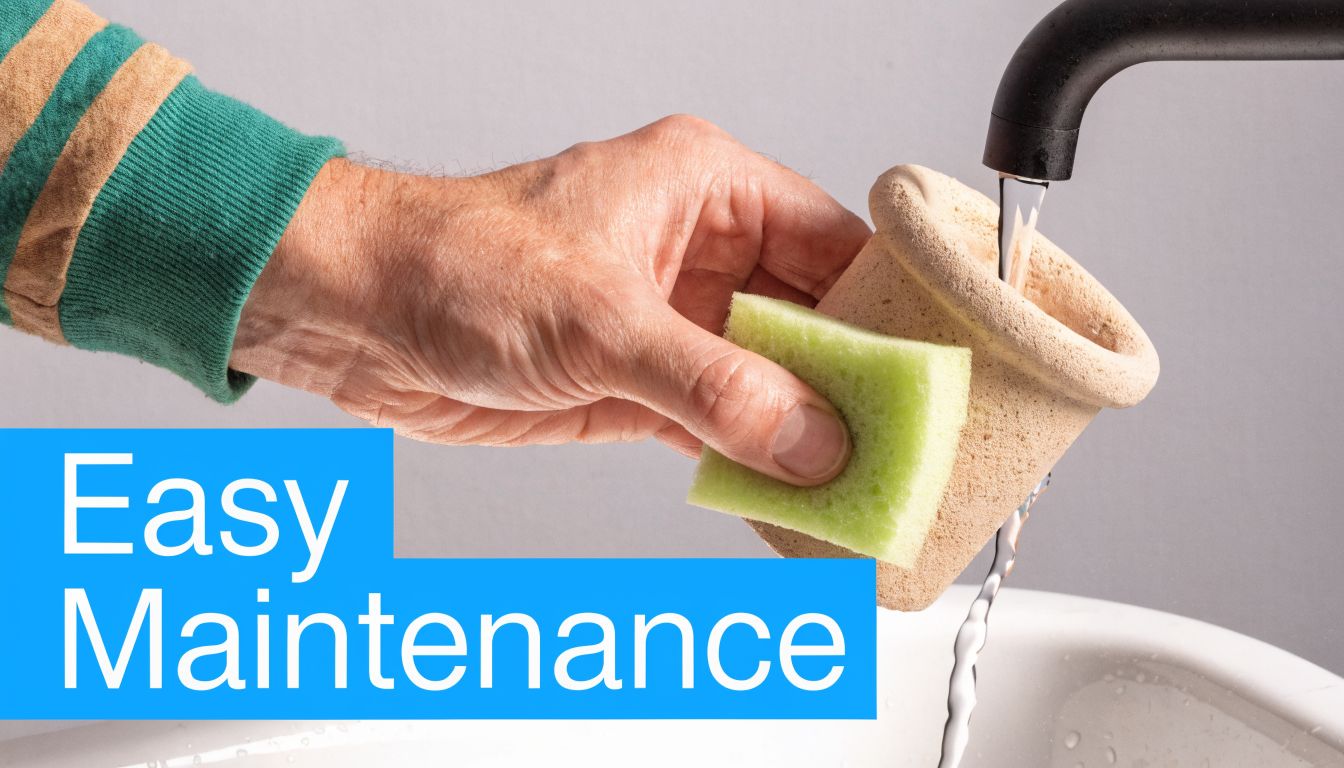
Ceramic is durable in use but brittle if knocked against a sink or countertop.Scrub only the outer surface
A soft brush or non-aggressive pad works well for loosening the film of trapped material.Rinse with clean water
Flush away the loosened residue before reinstalling the candle.Check washers and seals during reassembly
A good filter element cannot protect you if water slips around it instead of through it.
For a broader maintenance checklist that applies across filter types, this guide on how to clean water filters gives a useful framework for handling cartridges, housings, and hygiene.
The logic is the same as routine cleaning elsewhere in the home. Regular light maintenance usually works better than waiting for a bigger problem. If you have ever looked into comparing professional cleaners in Northern Arizona, you have seen the same pattern. Consistent care preserves performance.
Watch the flow, not just the calendar
Calendar reminders help, but flow rate is often the better clue. A ceramic candle rarely stops all at once. It usually gets slower in stages.
Treat that slowdown as feedback. If a cleaning brings flow back to a useful level, the candle is still doing its job. If flow stays poor after proper cleaning, the pores may be too fouled, the element may be wearing thin from repeated scrubbing, or the candle may be at the end of its service life.
This is one of the practical trade-offs with ceramic systems. They give you a visible, understandable maintenance signal. You can often see the buildup and feel the slowdown. In return, you give up the set-and-forget convenience people expect from some enclosed cartridge systems.
Here's a practical visual walk-through of the process:
Signs it's time to replace the candle
Cleaning extends service life, but it does not make a ceramic element last forever. Replace the candle if you notice any of the following:
Flow remains very slow after cleaning
That usually means buildup is no longer limited to the surface, or the element has reached the end of useful life.Cracks, chips, or hairline damage
Even a small fracture can create a path for untreated water to pass.Changes in taste or odor in ceramic-carbon models
The ceramic shell and the carbon media age differently. The carbon portion may be spent even if the outer ceramic still looks usable.Repeated cleaning removes more material than buildup
If the candle is getting noticeably thinner, replacement is safer than trying to stretch its life.
A ceramic candle should age gradually. Sudden changes in clarity, flow, or taste deserve a close inspection.
Maintenance keeps a ceramic candle water filter honest. It also helps you decide whether this simple system still matches your water. If cleaning becomes too frequent or performance remains inconsistent, the issue may not be the candle alone. Your source water may need a prefilter, a second treatment step, or a different setup altogether.
Choosing the Right Ceramic Filter Setup for Your Home
A homeowner with cloudy well water usually asks two questions first. Will this make the water look and taste better, and will it fit into daily life without becoming a chore? Those questions point you toward the right ceramic setup faster than any brand comparison.
A ceramic candle filter works best when the setup matches your routine, your water source, and your tolerance for slow flow. The practical trade-off is simple. You gain reliability, low-tech operation, and modest ongoing cost. You give up speed, and you may still need another treatment step if your water has viral risk or dissolved contaminants.
Gravity-fed countertop units
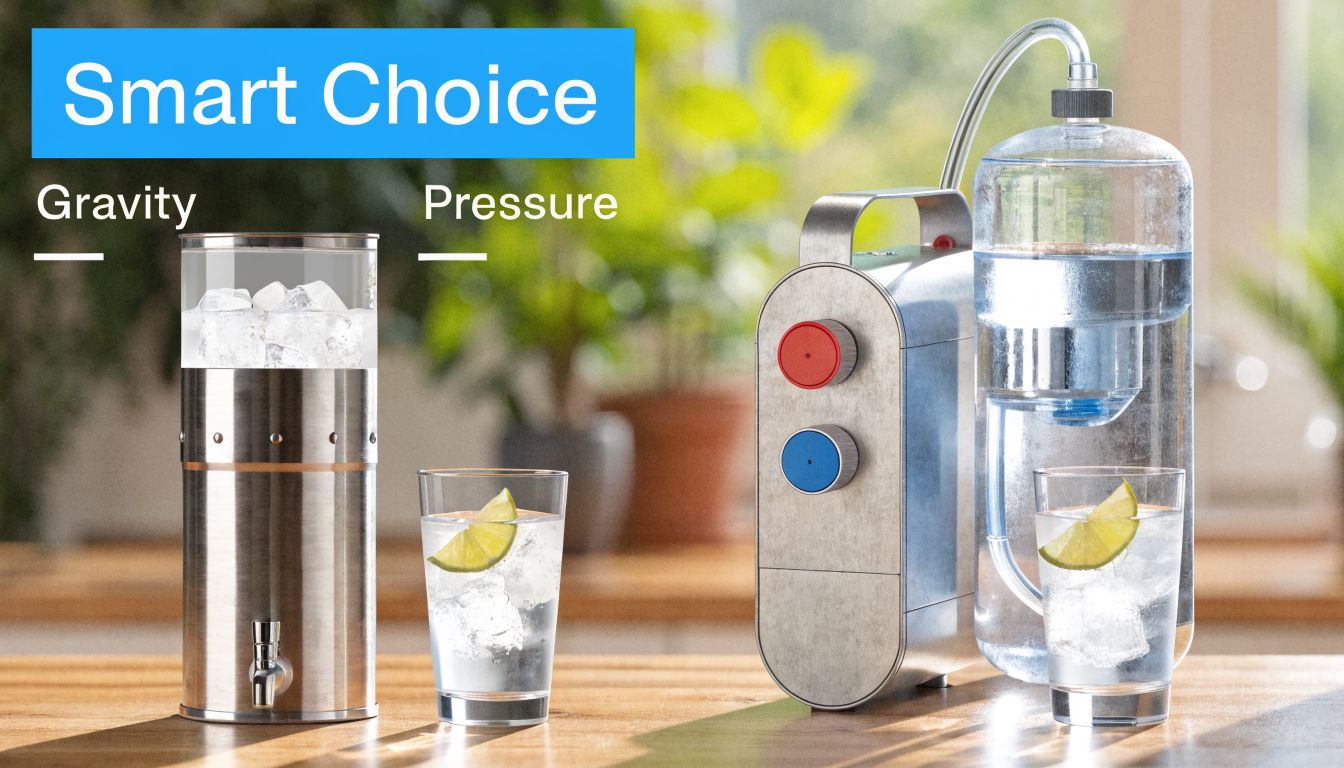
Gravity-fed units are the simplest version to live with. You pour water into the top chamber, gravity pulls it through the ceramic candles, and treated water collects below. It works much like letting coffee drip through a filter cone. The process is easy to see, easy to explain, and easy to troubleshoot.
This setup fits renters, cabins, emergency backup plans, and homes that do not want plumbing changes. It also suits people who value independence from electricity and moving parts.
The trade-off is output. These systems are slow by design, so they reward planning. If your household fills bottles in the morning and keeps a reserve ready, that pace often feels perfectly acceptable. If several people expect filtered water on demand from a tap, the slowness can become frustrating.
Pressurized and plumbed systems
Pressurized ceramic systems place the element inside an under-sink or faucet-connected housing. They feel more natural in a busy kitchen because filtered water comes from a tap where you already wash produce, fill pots, and pour drinking water.
They also give you more room to build a staged system. A sediment prefilter can protect the ceramic element from heavy dirt load. Carbon can help with taste and some chemicals. UV can add a disinfection step where microbiological risk is higher.
The trade-off here is maintenance discipline. A ceramic candle may be simple, but the full system includes housings, seals, fittings, and sometimes several cartridges with different replacement schedules. If you want the easiest possible ownership experience, a countertop gravity unit usually wins.
A side-by-side decision guide
| Home situation | Better ceramic setup |
|---|---|
| Apartment or rental | Gravity-fed countertop unit |
| Power outage backup | Gravity-fed countertop unit |
| Minimal installation hassle | Gravity-fed countertop unit |
| Daily cooking and drinking at the sink | Pressurized under-sink setup |
| Layered treatment with multiple stages | Pressurized setup |
| Frequent moves | Portable gravity unit |
Cost and ownership
Ceramic often appeals to homeowners who dislike disposable, high-turnover filter systems. A good candle can last a long time with proper cleaning, and replacement costs are often manageable compared with more complex systems. Another practical advantage is that ceramic filtration does not remove the full mineral content of water the way reverse osmosis does, which some households prefer for taste.
That said, low operating cost only holds true when the filter matches the job. Very dirty source water can clog a candle quickly and turn a low-maintenance system into a frequent cleaning project. In that case, adding a simple prefilter can make the entire setup easier to own.
When ceramic is the right primary filter
A ceramic candle water filter makes the most sense when:
- Your main concerns are visible sediment, cloudiness, and many larger microbes
- You want a filtration method that works without electricity
- You prefer equipment you can inspect, clean, and understand without special tools
- You want a practical daily-use filter or a reliable backup option
When you should look beyond ceramic alone
Ceramic alone is usually the wrong tool if your main concern is something you cannot strain out physically. Dissolved contaminants do not behave like grit in water, and viruses are smaller than the pore sizes many ceramic candles are designed to block.
Choose another technology, or pair ceramic with other treatment, if you are dealing with:
- Possible viral contamination
- Fluoride reduction
- A wide range of dissolved contaminants
- High daily water demand where slow flow will feel limiting
A good buying rule is to match the filter claim to the problem in your water. If a product promises reduction of a specific contaminant, check for clear testing or certification for that contaminant, not just general marketing language.
Is a Ceramic Candle Filter Your Best Choice?
For many households, the answer is yes. A ceramic candle water filter is one of the most practical ways to improve water when your priorities are simplicity, reliability, low running cost, and freedom from electricity.
It's especially appealing if you want a countertop or portable solution that handles sediment, cloudiness, and many larger microbes without turning your kitchen into a plumbing project. It also earns points for long service life and easy cleaning when used within its limits.
But those limits matter. Ceramic is not the best standalone answer for viruses. It's also not the right tool if your main goal is aggressive reduction of fluoride or a broad range of dissolved contaminants. In those cases, ceramic works better as part of a multi-barrier setup than as a solo hero.
If your water challenges are mostly physical and microbiological, ceramic may be exactly the right fit. If your risks are more complex, use ceramic as the sturdy first stage and let other technologies handle the rest.
If you're comparing filter types, replacement costs, or home setups, Water Filter Advisor is a helpful place to research practical options for kitchens, whole-house systems, and ongoing filter maintenance.
- May 14, 2026
- Uncategorized
