The Best Fluoride Water Filters for Your Home
So, you're on a quest to get fluoride out of your home's water. Great choice! The three main heroes in this story are Reverse Osmosis (RO) , ...
So, you're on a quest to get fluoride out of your home's water. Great choice! The three main heroes in this story are Reverse Osmosis (RO) , ...
Ever wondered how you can get that crisp, clean taste of bottled water right from your kitchen sink? The secret for many is reverse osmosis (RO), a seriously impressive water filtration method that can remove up to 99% of the unwanted gunk lurking in your tap water.
Think of it like an exclusive club for water molecules. A high-tech bouncer stands at the door—the RO membrane—letting only the purest H₂O get past the velvet rope. Everything else gets kicked to the curb.
So, what exactly is reverse osmosis? At its heart, it's a process that uses your home's water pressure to push tap water through a special, semi-permeable membrane.
This isn't your average Brita filter. The pores in an RO membrane are unbelievably small—around 0.0001 microns. For a little perspective, a single human hair is about 75 microns wide. It's this microscopic barrier that makes the magic happen. As water is forced through, the membrane acts like an ultra-fine sieve, catching and rejecting a massive list of impurities.
Reverse osmosis is built to snag the tiny contaminants that other filters just can't catch. It's incredibly effective at removing dissolved solids like salts, lead, and arsenic, which simply pass right through simpler filter types.
This is what makes it such a powerful line of defense against some of the most stubborn water quality issues out there.
To get a clearer picture, let's break down the basics of how this technology works.
This table gives a quick rundown of the core concepts behind RO.
| Concept | Simple Explanation |
|---|---|
| Semi-Permeable Membrane | An extremely fine filter with microscopic pores that only allow water molecules to pass through. |
| Applied Pressure | Your home's water pressure is used to force water against the membrane, overcoming natural osmotic pressure. |
| Permeate (Clean Water) | The purified water that successfully passes through the RO membrane. This is what comes out of your tap. |
| Brine (Waste Water) | The concentrated solution of rejected contaminants that are flushed away down the drain. |
Understanding these four elements is key to seeing how RO transforms your tap water into something much purer.
The whole point of an RO system is to deliver exceptionally clean, great-tasting water. This technology is a champion at removing:
The infographic below really brings home the end result of this powerful purification process—crystal-clear water, ready to drink.
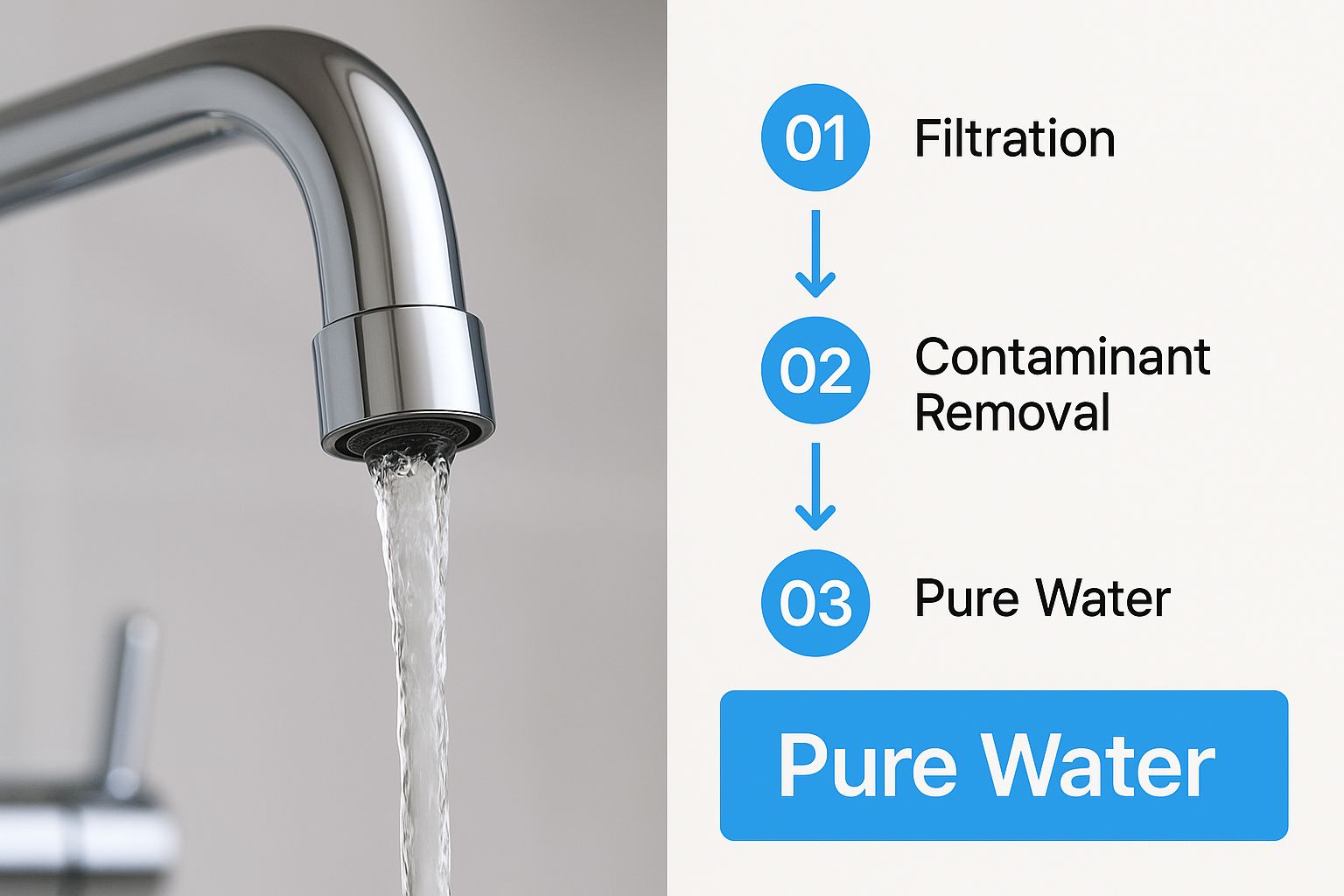
This simple visual shows what an RO system is all about: taking your standard tap water and turning it into a cleaner, safer, and better-tasting drink for your family. Once you grasp this fundamental idea, it's easy to see why it's become the gold standard for so many households.
To really get what reverse osmosis is all about, let’s follow a single drop of water as it makes its way from your pipes to your glass. Most RO systems you’ll find for your home aren't just one filter. They're a multi-stage purification machine, built to methodically strip away impurities layer by layer. It’s less like a simple kitchen strainer and more like an intense obstacle course for contaminants.
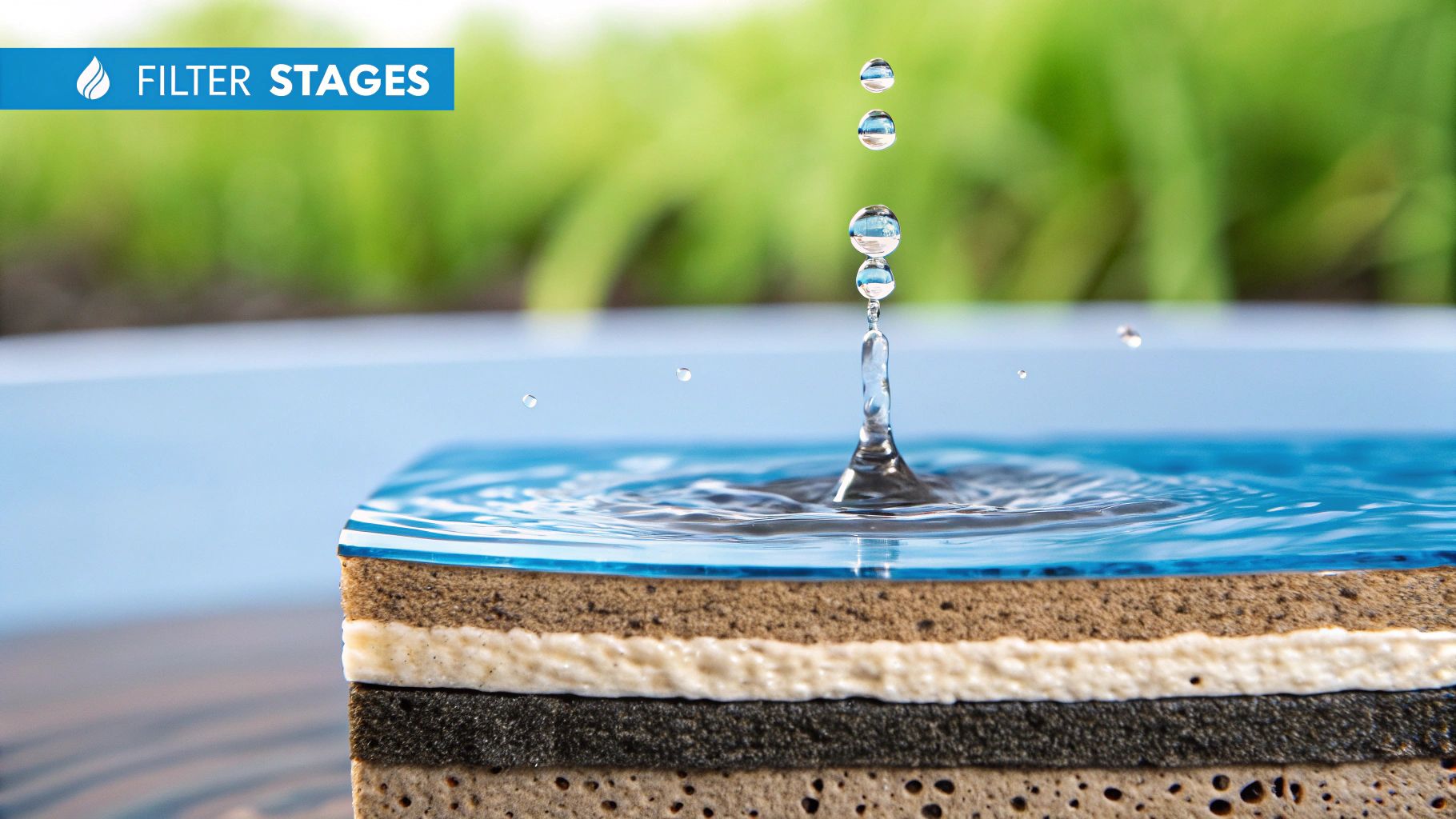
The whole thing happens in just a few moments, turning that cloudy, off-tasting tap water into something remarkably pure. Each stage has a very specific job, getting the water ready for the next step and protecting the more delicate, high-tech parts of the system down the line.
The trip kicks off at the sediment pre-filter. You can think of this as the bouncer at the front door—it's there to stop the most obvious troublemakers right away. Its mission is to trap bigger particles that make water look cloudy or could gum up the works of the filtration system.
This is the "macro" cleaning stage. It clears the path for the real fine-tuned purification that’s about to happen.
After it’s been screened for sediment, our water drop heads to the carbon pre-filter. This part of the system goes after chemical contaminants—the things that mess with the taste and smell of your water. Activated carbon is wild stuff; it's incredibly porous, which gives it a huge surface area to grab onto these unwanted elements.
This filter is like a chemical sponge. It’s especially good at soaking up chlorine, which is what most cities use to treat water. Getting the chlorine out not only makes your water taste better, but it's also absolutely essential for protecting the RO membrane itself, which can get damaged by long-term exposure to it.
Now we get to the main event. This is the heart of the whole operation. The water, now free of big particles and harsh chemicals, gets pushed hard up against the reverse osmosis membrane. This is where the magic happens, separating pure water molecules from a massive list of microscopic junk.
The membrane itself is a sheet of material wound up tightly with pores so tiny—around 0.0001 microns—you can't see them. Only water molecules (H₂O) are small enough to wiggle their way through.
This one stage does the heavy lifting, removing up to 99% of all total dissolved solids (TDS). We're talking heavy metals like lead and arsenic, salts, fluoride, and tons of other invisible contaminants. Everything else that can't fit through gets rejected and flushed down the drain as wastewater.
The demand for this level of clean water is exploding. The global market for reverse osmosis membranes is expected to jump from USD 4.04 billion in 2024 to a whopping USD 13.78 billion by 2037. That growth just goes to show how crucial this technology is for homes everywhere. You can discover more insights about the RO membrane market and its public health impact.
Finally, the now-purified water goes into a small storage tank. But before it gets to your faucet, it makes one last pass through a carbon post-filter. This is the final polish. It's designed to catch any lingering tastes or odors the water might have picked up sitting in the tank. This makes sure every glass you pour is as fresh and clean as possible, finishing the water drop's journey to pure perfection.
So, after a single drop of water makes its way through all those filtration stages, what actually gets kicked to the curb? The real magic of a reverse osmosis system is its incredible ability to remove a massive list of unwanted guests from your tap water.
It's not just about filtering out a few obvious things. We're talking about a near-total purification that completely transforms your water's quality and safety.
The easiest way to understand just how effective an RO system is, is to look at the different types of contaminants it targets. We can break them down into three main categories.
This is where reverse osmosis really shines. A lot of the most concerning things in water are totally invisible—dissolved solids that simpler filters just can't catch. The pores of an RO membrane are so microscopic they slam the door shut on these contaminants.
Here are the key offenders in this group:
Getting these out is a huge deal for your health. An RO system acts as the final line of defense, making sure these harmful substances don't make it into your family's drinking glasses.
Most city water is already treated to kill off biological contaminants, but things can go wrong. A broken water main or issues with a private well can introduce some nasty microorganisms. This is where reverse osmosis provides an amazing extra layer of security.
The membrane’s pores are just 0.0001 microns wide. That's way too small for bacteria, protozoa (like Giardia and Cryptosporidium), and even viruses to squeeze through. This makes RO an exceptional final safeguard for microbial purity.
Finally, let's talk about the stuff that just ruins the simple enjoyment of your water. These are the culprits behind funky tastes and smells that make you reach for a bottle instead of the tap.
An RO system, especially with its carbon filters, is fantastic at removing these aesthetic impurities. This includes chlorine—the chemical most cities use for disinfection—and sulfur compounds that give water that "rotten egg" smell.
By wiping them out, you get water that’s not only pure but also tastes and smells clean and crisp. It makes everything from your morning coffee to your home-cooked pasta taste better.
It's one thing to say RO is powerful, but seeing how it stacks up against other common filters really puts things in perspective. Pitcher filters and basic sediment filters have their place, but they operate on a completely different level when it comes to the types of contaminants they can handle. RO's semi-permeable membrane gives it a massive advantage, especially against the smallest, most difficult-to-remove dissolved solids.
| Contaminant Type | Reverse Osmosis (RO) | Activated Carbon (Pitcher) | Sediment Filter |
|---|---|---|---|
| Heavy Metals (Lead, Arsenic) | Excellent (95-99%+) | Limited to Good (Specific models) | None |
| Dissolved Solids (Salts, Fluoride) | Excellent (90-99%+) | None | None |
| Chlorine (Taste & Odor) | Excellent (via carbon pre-filter) | Good to Excellent | None |
| Bacteria & Viruses | Excellent (membrane blocks them) | None | None |
| Sediment (Sand, Silt, Rust) | Good (protected by pre-filters) | Poor | Excellent |
| Pesticides & Chemicals (VOCs) | Excellent (via carbon pre-filter) | Good | None |
As you can see, for comprehensive purification that tackles everything from heavy metals to viruses, reverse osmosis is in a class of its own.
This superior performance is a huge reason why these systems are becoming so popular. The global market for RO filtration is on track to hit around USD 15 billion in 2025, and it’s only expected to keep climbing as more people get serious about clean water in their homes. You can learn more about the reverse osmosis market growth and what's driving this trend.
So, you're thinking about getting a reverse osmosis system. It’s a fantastic way to upgrade your home's water, but like any big decision, it’s smart to look at the whole picture. There are some serious upsides and a few things to keep in mind.
Getting a clear-eyed view of both sides will help you figure out if an RO system is the right fit for your family and your home.
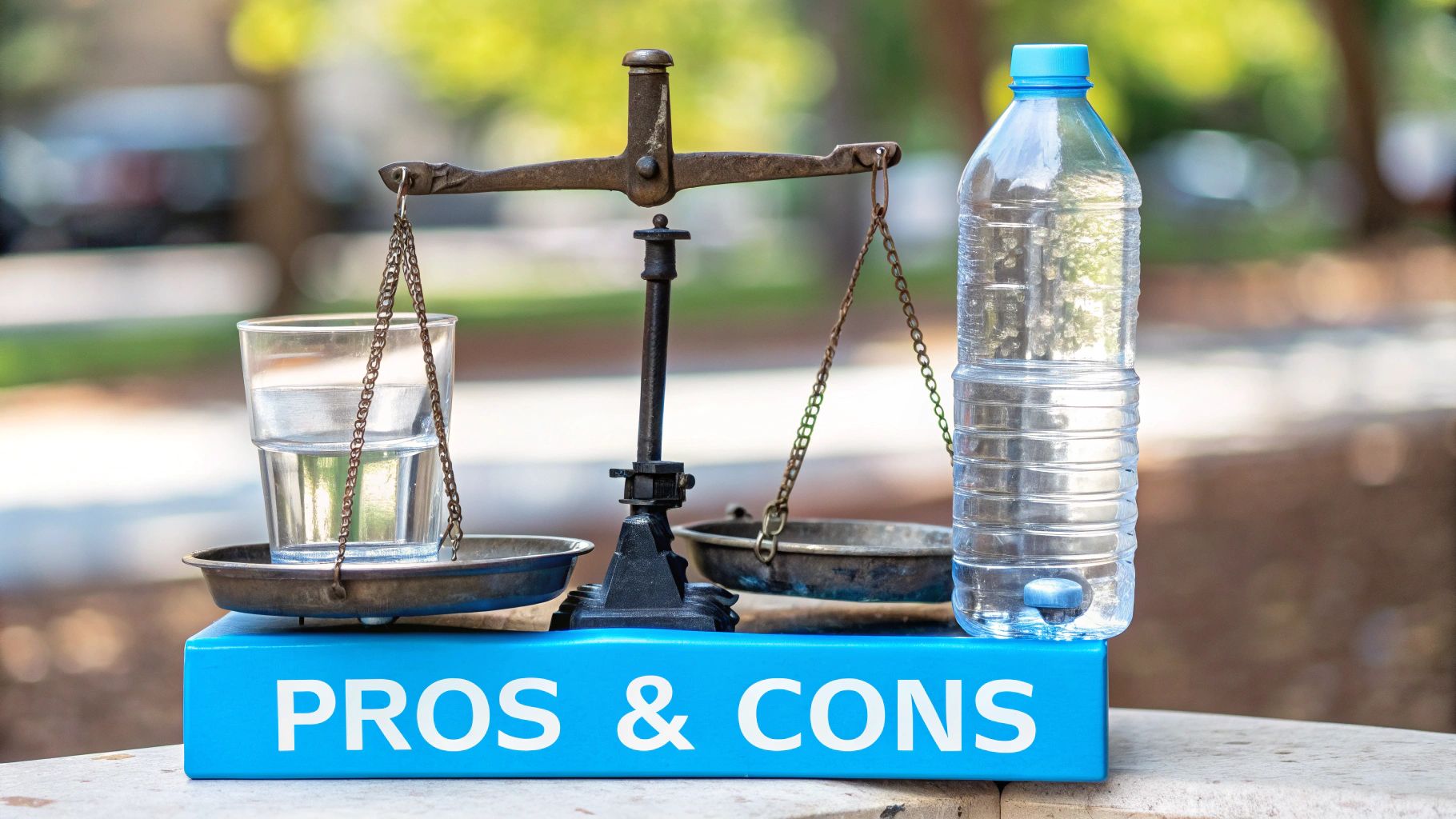
On one hand, the benefits can be a game-changer for everything from the taste of your morning coffee to your peace of mind. On the other, it's an appliance that needs an upfront investment and a little bit of regular upkeep.
Let's break it all down.
The biggest win here is the incredible purity of the water. RO technology is a true powerhouse, capable of removing up to 99% of the nasty stuff other filters just can't touch.
Of course, no system is perfect, and it’s good to know about the potential downsides before you pull the trigger. These are the most common things people worry about, but luckily, they're all pretty manageable.
Reverse osmosis is a powerful purification technology because it forces water through a semi-permeable membrane, effectively removing nearly all dissolved salts and contaminants. The process works by applying pressure to reverse the natural flow of osmosis, providing clean drinking water for homes. You can learn more about how this core RO technology works on a global scale.
This powerful process does have a few trade-offs:
https://www.youtube.com/embed/QtdOOYJ7DTs
Ready to bring the power of reverse osmosis into your home? Picking the right system can feel like a big decision, but it really just comes down to a few key things: your family's needs, your kitchen setup, and what you want out of your water.
Thinking through these points first will help you land on a system you'll be happy with for years to come. The first big choice is deciding where the unit will actually live. This affects both your daily convenience and how your kitchen looks, so it’s the perfect place to start.
You’ve got two main options here: under-sink and countertop models. Under-sink systems are definitely the most popular choice for a permanent, set-it-and-forget-it solution. They get installed right under your kitchen sink, hidden away, and connect directly to your plumbing to deliver pure water from a separate, dedicated faucet.
Countertop models, on the other hand, are all about portability and a super easy setup. These units just sit on your counter and usually don't need any permanent installation. That makes them a fantastic option if you're renting or just want the flexibility to move the system around.
Next up, you need to think about how much water your household actually uses. RO systems are rated by their Gallons Per Day (GPD) capacity. That number tells you the maximum amount of purified water the system can crank out in a 24-hour period, assuming ideal conditions.
It's often a smart move to choose a slightly higher GPD than you think you need. This ensures you never run out of clean water, even on those days when everyone seems extra thirsty.
Don't overlook the importance of certifications. A system that is NSF/ANSI 58 certified has been independently tested and verified to remove a specific list of contaminants, giving you true peace of mind about its performance and safety.
This certification is your guarantee that the system actually does what the company claims it does.
Modern RO systems come with some fantastic upgrades that can make your water even better. One of the most important add-ons to look for is a remineralization filter. The RO membrane is so effective that it strips out nearly everything—including beneficial minerals like calcium and magnesium.
A remineralization stage adds these healthy minerals back into the water after it's been purified. Many people find this really improves the taste and can even add healthy alkaline properties. For more help navigating different features and setups, you can find a lot of great advice on water filtration systems to guide your decision. Picking the right features from the start ensures your system perfectly matches your household's health goals and taste preferences.
Once you understand how reverse osmosis works, a few practical questions usually pop up. It's a big step up from a simple pitcher filter, so it’s smart to get a handle on what it’s like to own one day-to-day.
Let's walk through some of the most common things people ask about performance, upkeep, and what to really expect from an RO system.
This is probably the number one concern we hear, and it's a fair question. Yes, the RO process creates wastewater, which you'll often hear called "brine." But it’s not really "wasted" water—it's the vehicle that carries away all the nasty stuff the membrane catches.
Think of it like this: you rinse a muddy boot with a hose before bringing it inside. That rinse water isn't wasted; it served a critical purpose. The brine in an RO system does the same thing, flushing away contaminants like lead and chlorine to keep the membrane from getting clogged.
Older systems were definitely water hogs, but modern RO systems are way more efficient. Many high-quality models now have a 2:1 or even a 1:1 ratio. That means for every gallon of pure water you get, only one gallon goes down the drain.
The RO membrane is so good at its job that it strips out nearly everything—including healthy minerals like calcium and magnesium. This leads to a big debate: is the water too clean?
For most of us, the water we drink is only a small source of our daily mineral intake; we get the vast majority from our food. Still, those minerals do affect the water's taste and pH.
That's where a remineralization filter comes into play.
It's a popular add-on that gives you the best of both worlds: pure, contaminant-free water that still tastes great.
Just like changing the oil in your car, regular filter changes are what keep your system running at peak performance. The good news is that it’s a simple and predictable schedule.
Sticking to a basic maintenance schedule is the best way to protect your investment and ensure your family gets the highest quality water for years to come.
Here's a typical timeline for a standard under-sink system:
Of course, always double-check the manufacturer's guide, as the timing can vary a bit from one model to the next.
If you're comfortable with basic DIY tasks around the house, installing an under-sink RO system is totally doable. Most kits are designed for homeowners, with clear instructions, color-coded tubing, and easy push-to-connect fittings.
You’ll just need a few common tools, like a drill and a wrench. Most people can get the job done in an hour or two.
But if you’re not a fan of working under sinks or have some funky plumbing, there's no shame in calling a pro. A plumber will get it done quickly and make sure everything is connected correctly, so you don't have to worry about leaks.
At Water Filter Advisor, we're here to help you make sense of it all with clear, honest advice. Whether you're trying to figure out the right GPD rating or what filter stages you need, we have the resources to help you find the perfect filtration system for your home. Check out all of our in-depth guides and reviews at https://www.waterfilteradvisor.com.
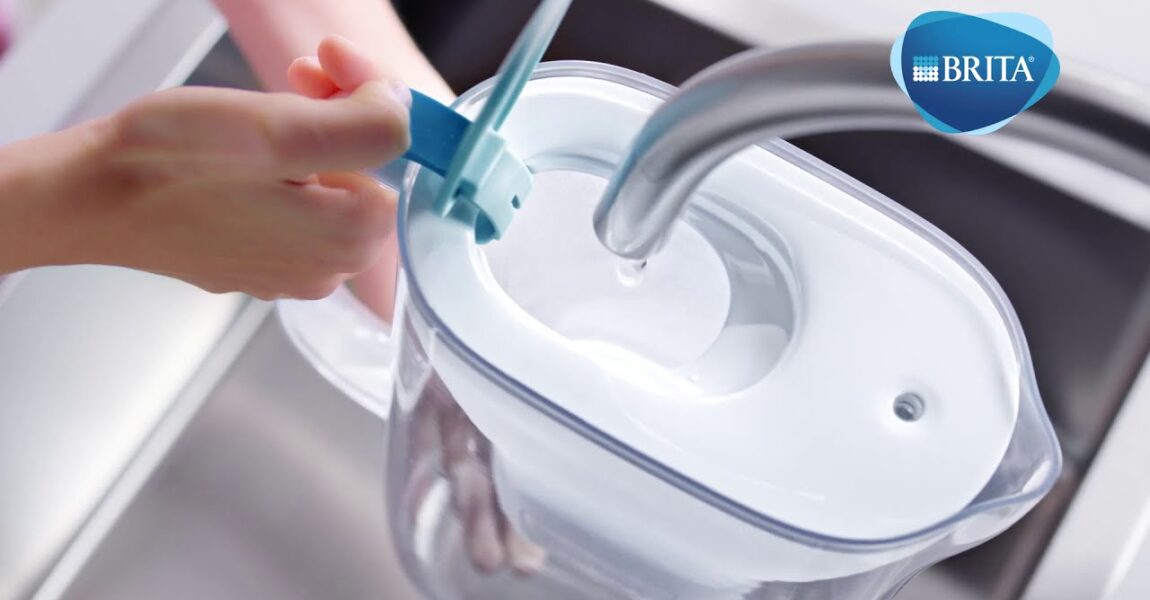
Introducing the BRITA Water Filter Jug Style – innovative BRITA Smart Light LED uses traffic light system to signal when it’s time to replace the cartridge (depending on time and water quality). Stylish design with flip-top lid for one-hand filling and dishwasher-safe (except BRITA Smart Light LED) – easy to clean. Designed to fit with BRITA MAXTRA+ for optional filtration. Reduce single use plastic!
Original Video Source
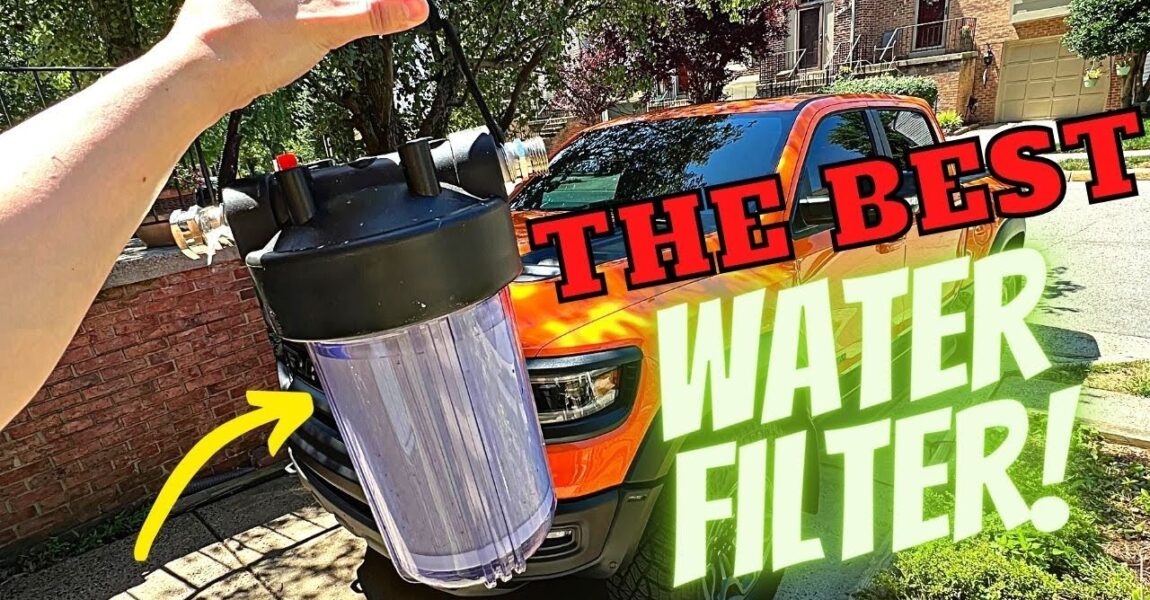
This in my opinion is the best water filter for washing your car if you live at a place where there is a lot of contaminates or harsh metals in your water. I recently moved and the water at my house is very harsh and awful for washing vehicles.
About this item
[CARBON FIBER CARTRIDGE] The upgraded cartridge can remove sediments, 99.5% of chlorine, 95.78% of chloroform, 99.5% of iron, 98.7% of manganese, 99.2% of lead, 98.8% of arsenic, odors, bad tastes and more
[THREE STAGE IN ONE] Integrates pleated polyester, carbon fiber and KDF55 in one 4.5×10 inch cartridge, while reducing the quantity of housing, the service life of each stage are 2.7 times more than the 2.5×10“ water filter with three housing
[ANTI-CLOGGING DESIGN] Pleated polyester design greatly increases the filter area to 1000 square inch, makes it 256 times more than small RV water filters, one cartridge can filter at least 18000 gallons of water without clogging
[FRESH WATER IN FULL FLOW] Benefit from NSF certified carbon fiber, you can hardly feel the drop in water pressure. Moreover, 0.1-6GPM outlet flow rate can be accepted, easily works perfect under most high water pressure
[18000 GALLONS CAPACITY] One replacement cartridge (ASIN:B094HXMLM5 ) have a 7 times of service life than ordinary small RV water filter, enjoy excellent performance and full water flow, will also reduce your spending by 60%
Kintim 3 Stage in 1 Water Filter:
Original Video Source
[ad_1] A boil water notice has been issued for some areas of Russell County.It affects customers in the Sun, Hamlin and Hanging Rock area who are on t ...
[ad_1] Childress ISD canceled classes for Monday, but the decision had nothing, Monday, February 27th due to a city wide water boil notice . Be safe and ...
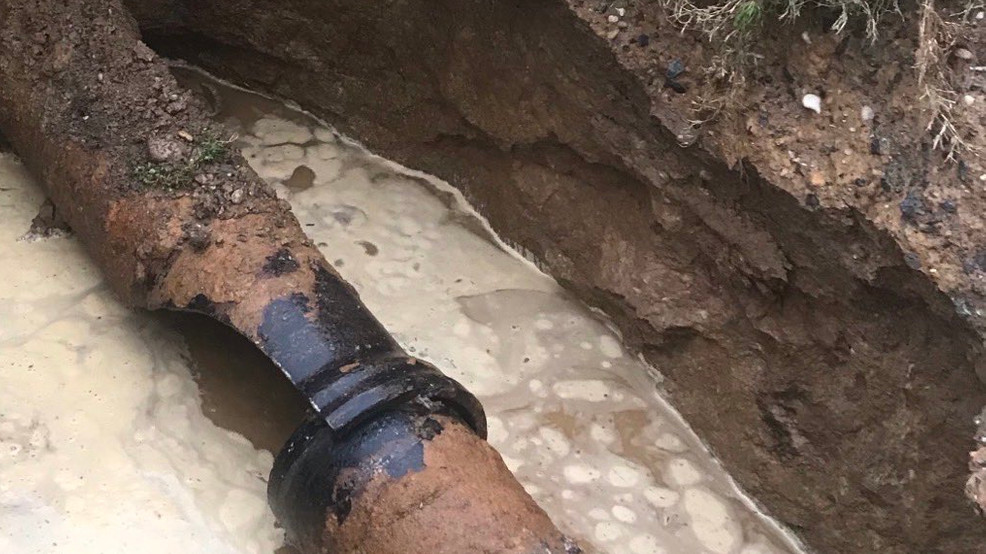
[ad_1] Due to a water main break on Broadway in the Village of Menands, a boil water advisory is in place.Officials say to bring tap water to a rollin ...

[ad_1] Saratoga Springs — Update: The City of Saratoga Springs is under a Boil Water Advisory after a significant water main break on Sunday morning,& ...
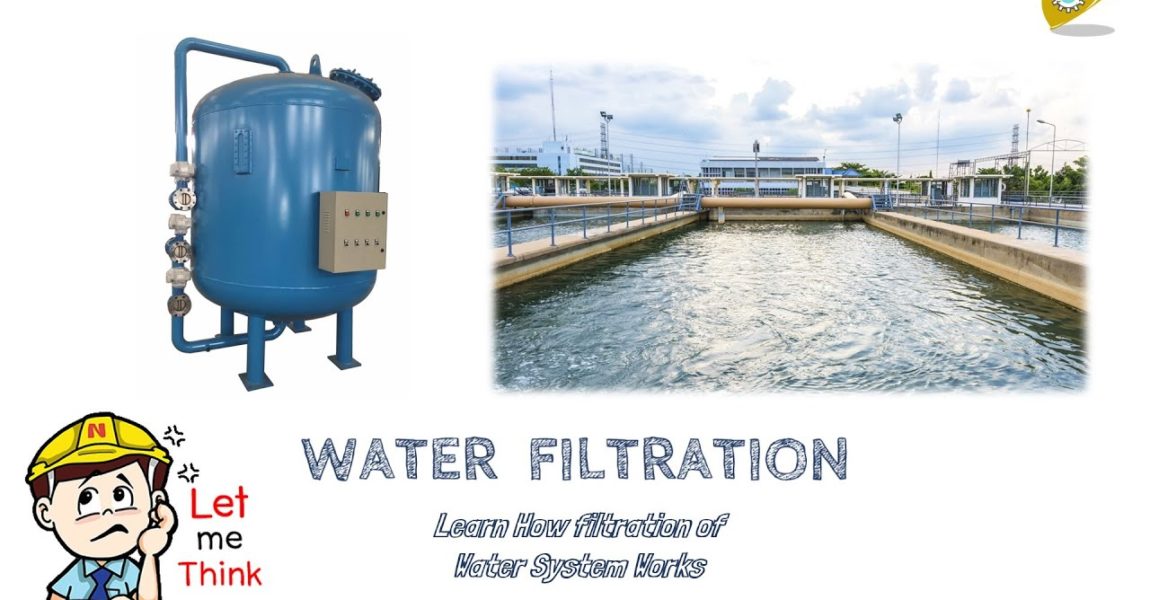
In this video, you will learn:
– How do a water purification plant work ?
– What is filtration ?
– Classification of filters
– Components of a filter
– Filtration mode
– How to calculate head loss in a filter
If you want to learn more about water treatment and waste water treatment equipments, subscribe to my channel !!!
And if you find this video interesting, please do like and share this video with your friends, and don’t forget to write on the comments what equipment do you want me to explain in the next Video.
Original Video Source

Water is unquestionably vital to human life. Most of the surface of our planet is made of water — and the majority of the human body is too.
But though this essential, hydrating fluid should be clear, refreshing and healthful, it isn’t always. Pollution, pesticides, other chemicals, heavy metals, and organic waste can all potentially seep into our water supplies. At best, they impart a mildly unpleasant tang or smell to our water. At worst, they compromise our short-term and long-term health.
Fortunately, water filtration and purification systems provide a convenient and cost-effective way to make sure you have clean, refreshing water in your home and even on the go. According to the EPA and the Water Quality Association, 40% of Americans use some form of water filtration in their homes to enhance the quality of their water.
Learn more:
Original Video Source
