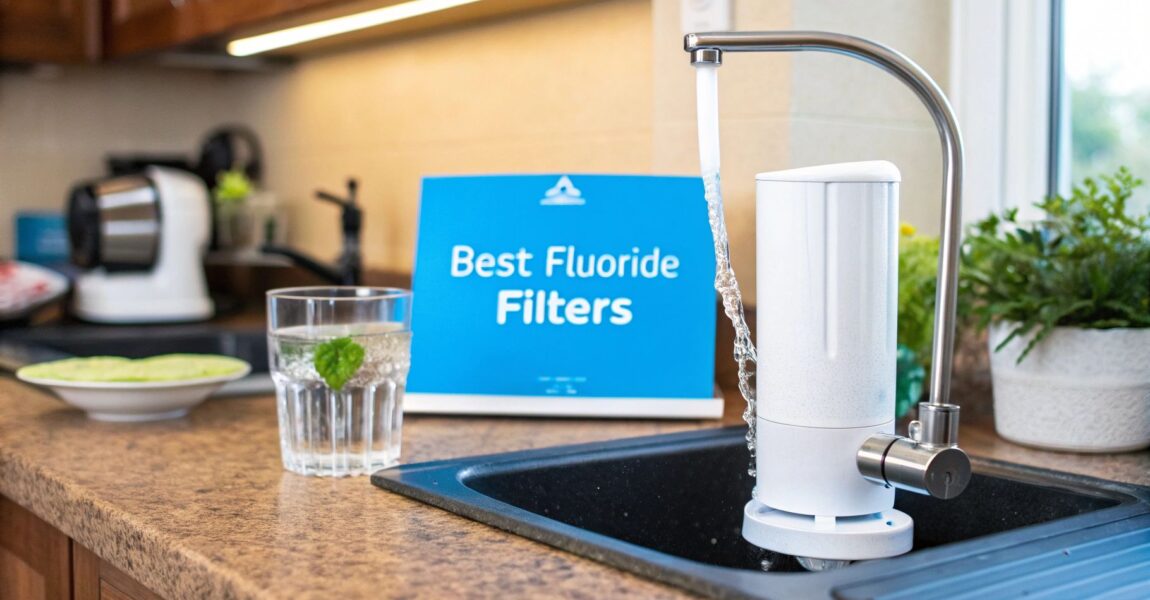
So, you're on a quest to get fluoride out of your home's water. Great choice! The three main heroes in this story are Reverse Osmosis (RO), filters using Activated Alumina, and certain powerhouse gravity-fed systems.
Think of RO systems as the all-stars of filtration, tackling a huge range of contaminants with gusto. But don't overlook the other two! Activated Alumina and gravity filters offer fantastic fluoride reduction without needing a plumber on speed dial or a hefty upfront investment. The best filter for you? It all comes down to your home, your budget, and what you need your water to be.
Your Guide to Pure, Refreshing Water
Choosing the right fluoride filter can feel like deciphering a secret code, but it doesn't have to be a head-scratcher. We've created this guide to slice through the technical jargon and help you find a water filtration system you can genuinely feel good about. This is less about a boring product list and more about empowering you to make a smart choice for your family's health and your wallet.
As awareness about tap water quality grows, the demand for effective filters has skyrocketed. The World Health Organization (WHO) points out that over 200 million people worldwide are exposed to fluoride levels above the recommended 1.5 mg/L, which is why more and more households are taking control of their water quality.
Consider this guide your personal roadmap to better water. We’ll break down the core technologies, compare the leading systems, and offer practical, no-nonsense advice for picking the best fluoride filter for your home. And if you're ever looking for more general pointers, our team has put together tons of useful water filter advice for homeowners.
Top Fluoride Filter Technologies at a Glance
Before we plunge into the details, let's get a bird's-eye view. This table gives you a quick snapshot of the most effective fluoride removal methods on the market. It’s the perfect cheat sheet to see how they stack up.
| Filtration Technology | Effectiveness | Typical Installation | Best For |
|---|---|---|---|
| Reverse Osmosis (RO) | Up to 99% | Under-sink with plumbing | Homes needing comprehensive removal of many contaminants, including fluoride. |
| Activated Alumina | 90-95% | Under-sink, countertop, or whole-house | Households primarily focused on high-efficiency fluoride and arsenic removal. |
| Gravity-Fed Systems | 95%+ | Countertop pitcher or dispenser | Renters, small households, or those wanting a portable, no-installation solution. |
This gives you a solid starting point. Now, let’s explore the science that makes these systems work and figure out which one is the perfect match for your kitchen.
So, How Do Fluoride Filters Actually Work?
To pick the best fluoride filter, you need to understand what's happening under the hood. These systems aren't magic—they use clever science to grab fluoride ions and yank them out of your water, leaving you with nothing but pure H2O.
Once you grasp the basics of how they operate, you'll be able to look at any filter and understand why it might be a superstar for your home… or a total mismatch. It boils down to two main strategies: forcing water through an incredibly fine sieve or using a material that acts like a magnet for fluoride.
Reverse Osmosis: The Power-Washer Approach
Reverse Osmosis (often called RO) is the heavyweight champion of the water filtration world. The simplest way to imagine it is a super-exclusive nightclub bouncer for water molecules. An RO system uses your home’s water pressure to push water through a special membrane riddled with microscopic pores.
These pores are almost impossibly small. They're just big enough for water molecules to squeeze through, but they slam the door on bigger troublemakers like fluoride, lead, chlorine, and salts. Those rejected contaminants get washed away down the drain. This process makes RO systems one of the most thorough and effective options if you want truly purified water.
Modern RO systems are far more efficient than their industrial ancestors. Today's home units are sleek powerhouses that can remove up to 90% of the fluoride from your tap. Studies show they can take water with a fluoride level over 5 mg/L and bring it down below the recommended 1 mg/L—a game-changing improvement. If you're a tech nerd, you can explore more about filtration technology growth trends to see how this market is booming.
Adsorption: The Fluoride Magnet
The other main technique is adsorption. Instead of physically blocking contaminants like RO, these filters use special materials, known as media, that act like powerful magnets for fluoride. The two most common media you'll encounter are Activated Alumina and Bone Char.
Here’s a quick rundown of how they work their magic:
- Activated Alumina: This is a porous, bead-like form of aluminum oxide. As water flows over it, fluoride ions are chemically attracted to the surface of the alumina and stick to it, effectively pulling them out of the water. It’s also a champ at removing arsenic.
- Bone Char (Brimac): This material is exactly what it sounds like—charred animal bones. It’s been used for centuries in water purification because it's rich in calcium phosphate, which has a natural affinity for fluoride ions, trapping them within its intricate structure.
Here's the key takeaway about adsorption: these filters don't strain fluoride, they capture it. This means the filter media will eventually get "full" and can't grab any more fluoride. That's why it's crucial to follow the recommended filter replacement schedule and factor that ongoing cost into your budget.
Comparing the Top Home Fluoride Filters
Trying to pick the right fluoride water filter can feel like navigating a maze. You have to cut through the marketing hype and focus on what truly matters: certified performance, long-term cost, and how well it fits into your daily life. Let's break down the main contenders—under-sink reverse osmosis, countertop gravity filters, and specialty pitchers—to see which one will be the champion for your home.
This isn't just a niche concern anymore. The global water filter market, valued at US$48.2 billion in 2025, is projected to soar to US$84.2 billion by 2032. This explosive growth signals one clear trend: people are more invested than ever in what’s in their water. For a deeper dive into market trends, check out the analysis from Persistence Market Research.
Now, let's put these systems head-to-head.
Removal Percentage And Certifications
When you're tackling fluoride, the filter's removal percentage is the name of the game. You want undeniable proof, not just flashy promises, which is where independent certifications from groups like the NSF (National Sanitation Foundation) become your best friend.
- Reverse Osmosis (RO) Systems: These are the undisputed heavyweights. RO systems are the gold standard, consistently removing up to 99% of fluoride. An NSF/ANSI 58 certification is your guarantee that it performs as advertised.
- Gravity-Fed and Specialized Filters: Don't underestimate these contenders. High-quality models using activated alumina or bone char elements can remove 95% or more of fluoride. Look for filters tested to NSF/ANSI 42 (for aesthetic effects like taste and odor) and NSF/ANSI 53 (for health-related contaminants), and always check for manufacturer-provided data specific to fluoride reduction.
The real takeaway here is certification. A brand can make any claim it wants, but an NSF/ANSI 58 certification on an RO system is the closest you'll get to a rock-solid guarantee for elite-level fluoride removal.
This chart really puts the power of reverse osmosis into perspective.
As you can see, when it comes to drastically reducing fluoride levels, RO technology is simply in a class of its own.
To make things even easier, here's a quick comparison of some popular models based on these key criteria.
Detailed Comparison of Fluoride Water Filter Models
This table breaks down the essential features and costs of leading fluoride water filter models, giving you a clear side-by-side look to help you decide.
| Filter Model | Type | Fluoride Removal % | NSF Certification | Initial Cost | Annual Filter Cost |
|---|---|---|---|---|---|
| Waterdrop G3P800 | Reverse Osmosis | 94.2% | NSF 58 & 372 | ~$500 | ~$120 |
| Clearly Filtered Pitcher | Pitcher | 99.5% | NSF 42, 53, 401 | ~$90 | ~$150 |
| Big Berkey Gravity-Fed | Gravity-Fed | 99.7% | Third-Party Tested | ~$380 | ~$80 |
| iSpring RCC7AK | Reverse Osmosis | 98% | NSF 58 | ~$230 | ~$75 |
Looking at the numbers reveals the trade-offs. An RO system like the iSpring delivers certified performance and lower long-term costs, while a pitcher offers incredible removal rates with zero installation headaches. It all comes down to what you prioritize.
Cost And Long-Term Maintenance
That initial price tag? That's just the opening act. The real cost of ownership lies in the replacement filters, and this is where you'll find the biggest differences between systems.
An under-sink RO system has a higher upfront cost, typically between $200 and $500. But its filters are marathon runners, not sprinters. You’re looking at around $60 to $100 a year for cartridges, plus a new RO membrane every two to three years.
In contrast, a countertop gravity filter or a pitcher seems like a steal, often priced under $100. The catch? You'll be swapping out filter elements every few months. Your annual costs could easily reach $80 to $150, sometimes more, depending on your water usage. Do the five-year math, and suddenly that "expensive" RO system starts looking like a savvy investment, especially for a family that drinks a lot of water.
Flow Rate And Installation
Finally, let's talk about convenience. How will this filter fit into your daily routine?
An under-sink RO system is the pinnacle of convenience. You get filtered water on demand from a dedicated faucet right at your sink, with a fast, steady flow. The downside is the installation. It requires some basic plumbing work, which might be a deal-breaker if you're renting or just not a fan of DIY projects.
A countertop gravity filter is the polar opposite. It requires zero installation. Just assemble it, fill the top chamber with water, and let gravity perform its slow, steady magic. The trade-off is speed—it can take an hour or more to filter a gallon, so you have to think ahead. It's a great choice for smaller households or anyone with a bit of patience, but it might struggle to keep up with the water demands of a large, active family.
Matching the Right Filter to Your Lifestyle
The best fluoride filter isn't the one with the most bells and whistles—it’s the one that seamlessly integrates into your life. The right choice depends entirely on your household, your living situation, and what you need from your water on a daily basis.
What's a perfect fit for a large family in a house would be complete overkill for a single person in an apartment. And a renter's dream filter won't work for a homeowner who wants a permanent solution. Let's walk through a couple of real-world scenarios to see how different needs lead to very different filters.
For the Busy Family of Five
Picture a bustling household with three kids. Between cooking meals, filling water bottles for school, and keeping everyone hydrated for sports, the demand for clean water is relentless. For them, speed and capacity are non-negotiable. They need a system that delivers plenty of pure water, right now.
This is where an under-sink reverse osmosis (RO) system shines as the clear winner. Plumbed directly into the water line, it provides an endless supply of purified water from its own dedicated faucet. No more waiting for a pitcher to slowly drip-filter when you need to cook pasta, mix baby formula, or get the team hydrated before soccer practice.
For a family, the benefits are immense:
- High Capacity: It easily produces gallons of clean water every day.
- On-Demand Water: Pure water is always ready at the turn of a handle. No planning required.
- Comprehensive Filtration: RO systems are filtration powerhouses, removing a vast array of contaminants beyond just fluoride for ultimate peace of mind.
Yes, the initial setup is a bit more involved, but its "set it and forget it" convenience makes it the smartest long-term investment for any busy home.
For the Renter in a Small Apartment
Now, let's shift gears. Imagine a student or a young professional living in a cozy apartment. Drilling holes into countertops and tinkering with plumbing is a big no-no—they need an effective solution that won't jeopardize their security deposit.
The perfect solution here is a high-quality gravity-fed filter or a dedicated fluoride-removing pitcher. These are countertop heroes that require zero installation. You just assemble them, fill the top chamber with tap water, and let gravity handle the rest.
These systems are a renter's best friend for several reasons:
- Totally Portable: You can easily move it around the kitchen or pack it up and take it with you when you move out.
- No Installation Required: Your landlord will never know it was there.
- Affordable Upfront: The initial cost is significantly lower than a plumbed-in system.
The trade-off is that filtration is slower, and you have to remember to keep it filled. But for one or two people, it’s a minor chore for a major upgrade in water quality. Whether it's making your morning coffee taste phenomenal or just giving your pets cleaner water, these filters are a practical and powerful choice for smaller living spaces.
Installation and Long-Term Maintenance
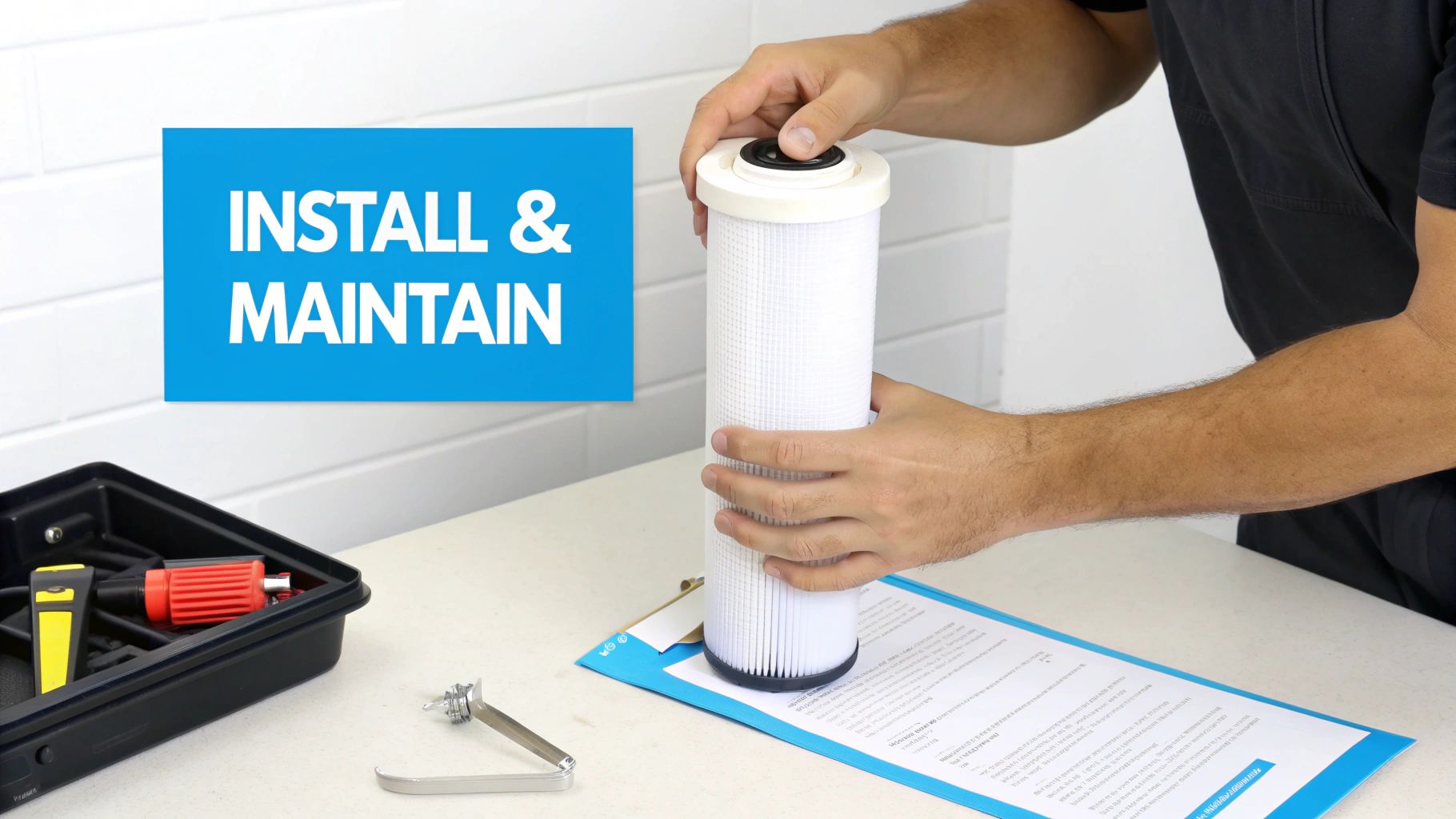
Buying a water filter is the start of a beautiful relationship. After you've chosen "the one," you need to get it installed and then keep it in peak condition to ensure it's always protecting your family.
The installation can range from ridiculously simple to a weekend project. A countertop gravity filter or pitcher often just needs a quick rinse and assembly. You can be enjoying pure water in under 10 minutes with zero tools.
Under-sink reverse osmosis (RO) systems, on the other hand, demand a bit more effort. These units connect directly to your plumbing, which can sound intimidating. However, most modern systems are designed for DIY installation, complete with color-coded tubing, clear instructions, and push-to-connect fittings that simplify the job immensely.
Setting Up Your System
If you're installing an under-sink model, the first, most crucial step is to shut off the water. Before you even unbox the filter, you need to know how to safely turn off your home's water main, unless your sink has its own dedicated shutoff valves. This one step can save you from a mini-flood.
Most kits include everything you need, but a few pro tips can ensure a smooth installation:
- Read the manual. Twice. Seriously. Familiarize yourself with all the parts before you begin.
- Clear out the space under the sink. Give yourself ample room to work comfortably.
- Keep a bucket and a towel handy. There's always a bit of leftover water in the lines.
And if you're not comfortable working with plumbing, there's absolutely no shame in calling a professional. A plumber can typically install an RO system in about an hour, giving you the peace of mind that it was done perfectly.
The true value of a water filter isn't just its day-one performance but its reliability over years of use. Consistent maintenance is the key to protecting your investment and ensuring your water remains free from fluoride and other contaminants.
Long-Term Care and Costs
Once your system is operational, maintenance is key. The single most important task is changing the filter cartridges on schedule. If you neglect this, not only will performance drop, but you could also allow trapped contaminants to break through into your drinking water.
Every filter has a recommended lifespan, measured in months or gallons. An RO system, for example, might have several pre-filters that need changing every 6 to 12 months, while the core RO membrane can last 2 to 3 years. Set calendar reminders on your phone—it's a lifesaver.
Beyond filter changes, it’s a good idea to sanitize the system periodically, especially if it includes a storage tank. An annual sanitization prevents any bacterial growth and is usually a simple process of running a cleaning solution through the unit, as detailed in the user manual. This small effort ensures your filter continues to deliver pure, delicious water for years to come.
Answering Your Fluoride Filter Questions
Even after diving into the technology and comparing models, you might still have a few questions. That’s perfectly normal. This final section tackles the most common queries we hear from homeowners, providing clear, direct answers to help you make your final decision with confidence.
Let's clear up any lingering doubts so you can move forward and enjoy better water.
Do Common Pitcher Filters Like Brita Remove Fluoride?
This is a major point of confusion, and the answer is a clear and simple no. Standard pitchers like Brita or PUR use a basic activated carbon filter. While this is great for removing chlorine and improving taste and odor, it does absolutely nothing to remove fluoride ions.
To get fluoride removal from a pitcher, you need to buy a specialty model, like the Clearly Filtered pitcher, which uses a more advanced filtration media designed for that specific purpose. The golden rule: always check the manufacturer's performance data sheet for third-party test results confirming fluoride reduction before you buy.
Can You Remove Fluoride By Boiling Water?
Boiling water is an excellent method for killing biological contaminants like bacteria and viruses, but it is completely ineffective against fluoride. In fact, boiling actually increases the concentration of fluoride in your water.
Here’s why: when you boil water, some of it turns to steam and evaporates, but the fluoride and other minerals are left behind. You end up with the same amount of fluoride in a smaller volume of water, thereby increasing its concentration. It's far better to rely on proven filtration methods like reverse osmosis or activated alumina.
How Can I Test The Fluoride Levels in My Water?
You can't effectively fight an enemy you don't understand. To choose the right filter, you first need to know your starting fluoride level. You have a few great options for this:
- Check with Your Water Utility: Every year, your local water provider must publish a water quality report, often called a Consumer Confidence Report (CCR). This document lists fluoride levels and is usually available on their website.
- Use a Home Test Kit: You can purchase a DIY water test kit online or from a home improvement store that specifically tests for fluoride. It’s a quick and affordable way to get a solid estimate.
- Send a Sample to a Lab: For the most precise and comprehensive results, a mail-in test from a certified laboratory is the best option. They'll provide an exact measurement of fluoride and other potential contaminants in your water.
Knowing what's in your water is the first step to filtering it effectively. A simple test will tell you if you need a heavy-duty system or if a basic filter will do the job.
Are Fluoride Filters Difficult To Maintain?
The maintenance workload depends entirely on the system you choose. Pitchers and countertop gravity filters are the easiest by a long shot—you simply swap out the filter cartridges every few months. The entire process takes less than five minutes.
Under-sink reverse osmosis systems require a bit more attention, but they are still very manageable for the average homeowner. You'll typically change the pre-filters every 6-12 months and the main RO membrane every 2-3 years. Just set a reminder, and it becomes a simple part of your home maintenance routine. While this guide is focused on fluoride, if you're curious about broader water quality topics, you might find answers in these general water purification frequently asked questions.
At Water Filter Advisor, our mission is to give you clear, trustworthy info so you can protect your family’s health. Check out our in-depth guides and reviews to find the perfect water filtration solution for your home at https://www.waterfilteradvisor.com.
- November 4, 2025
- 0
- Uncategorized
