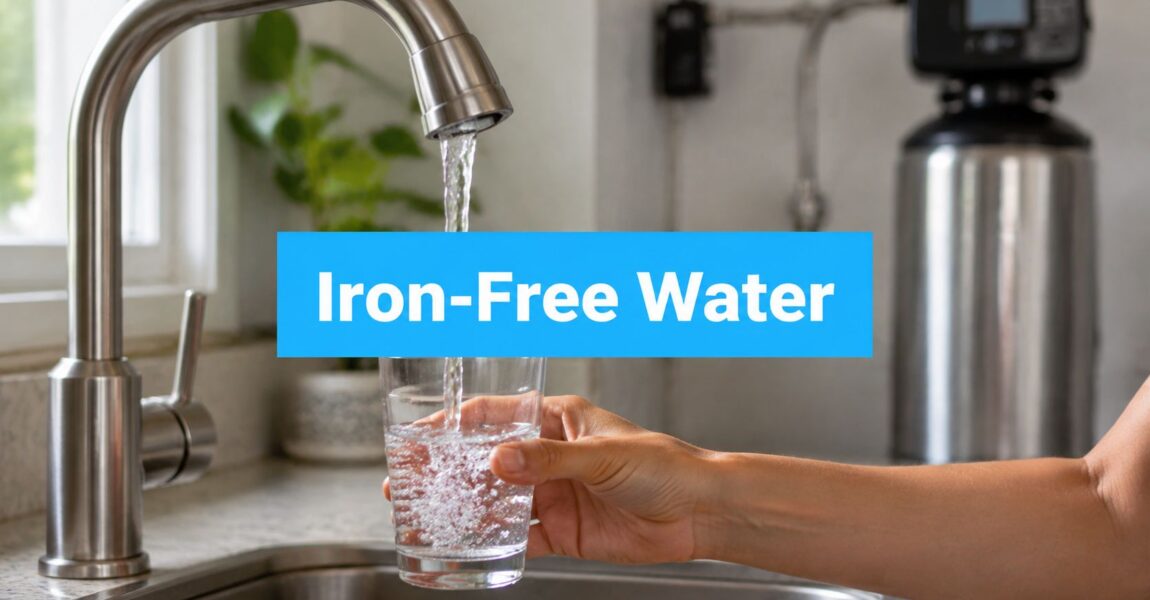
You scrub the bathtub on Saturday, and by Monday orange streaks are running down the sides again. The toilet bowl looks rusty within days, white laundry comes out yellowed, and water from the kitchen tap carries a metallic tang. In the morning, you fill the kettle and notice reddish flecks settling at the bottom. You start wondering whether an iron filter for well water will solve the mess, whether the water is safe, and whether you need a simple filter or a complete treatment system.
The right answer depends on more than seeing rust. Dissolved iron, visible iron particles, manganese, iron bacteria, pH, and hardness all affect treatment. This guide explains how to identify the problem, compare whole-house filtration options, size a system, and plan for maintenance without relying on brand hype.
Living with Iron in Your Well Water
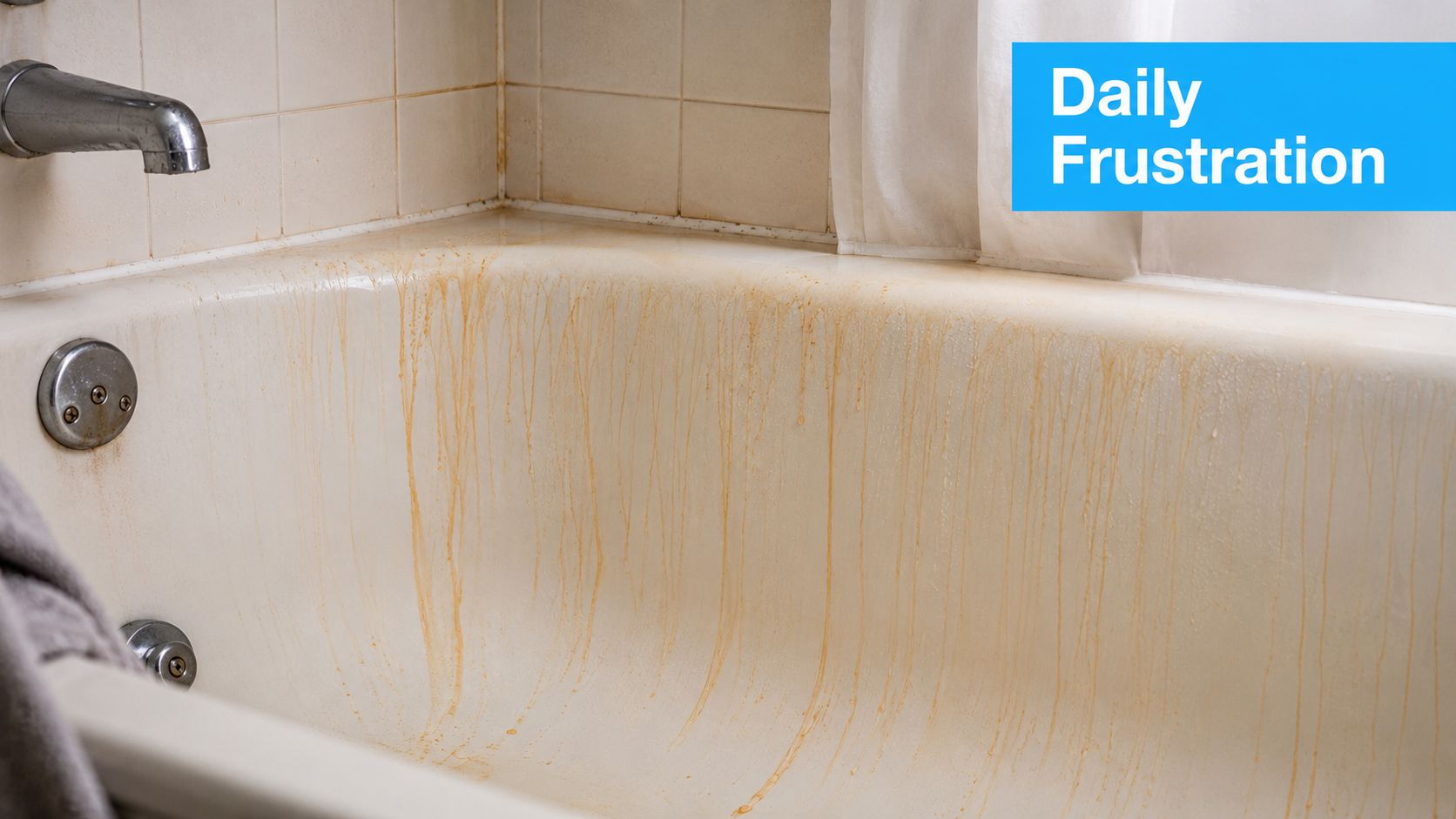
Saturday's bathtub cleaning can look pointless by Monday. Orange streaks return, a white shirt comes out yellowed, and reddish slime appears around the toilet tank's waterline. Water from the tap may look clear at first, then develop color after sitting in a glass or kettle.
That delayed change is why iron can be difficult to diagnose by sight alone. Dissolved iron passes through the faucet unseen, then reacts with air and leaves deposits on porcelain, fabric, plumbing, or appliances. Visible particles behave differently, so the right iron filter for well water depends on the iron form and test results.
What an iron filter does
A whole-house iron filter connects to the main water line, treating water before it reaches showers, sinks, laundry machines, and water heaters. Some systems capture iron particles already in the water. Others first expose dissolved iron to air or another oxidizing process, turning it into particles that the tank can trap and remove during backwashing.
The household benefits are practical:
- Cleaner fixtures: Less iron reaches tubs, toilets, faucets, and shower surfaces.
- Better laundry: Treating water before washing helps limit yellow or orange discoloration.
- Improved taste: Lower iron levels can reduce a metallic taste in drinking water.
- Protected plumbing: Filtration limits iron deposits inside pipes and appliances.
The EPA's secondary standard for iron is 0.3 mg/L, also called 0.3 ppm. This guideline addresses taste, odor, sediment, and staining rather than a health risk. The agency explains the regulatory context in its guidance on secondary drinking water standards for nuisance contaminants.
Practical rule: Select a filter after identifying the iron form, concentration, and surrounding water chemistry. A product page's removal claim is not enough.
A small amount of clear-water iron may call for a different treatment approach than visible ferric particles, iron bacteria, or a high iron load. The filter must match what the water test shows, not just the stain left behind.
How Iron Gets Into Well Water and Why It Matters
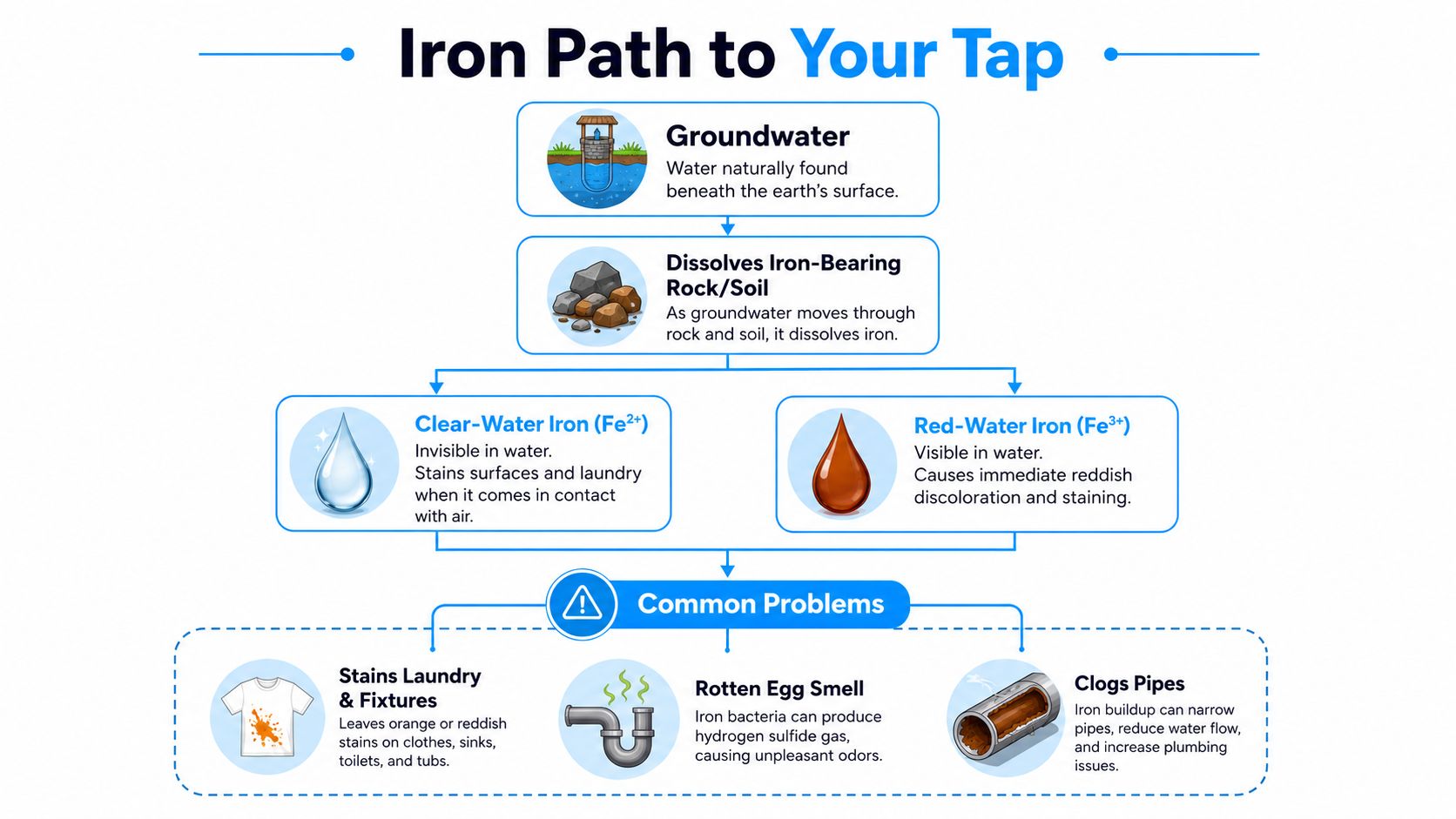
Groundwater picks up iron as it moves through iron-bearing rock and soil. The iron may remain dissolved, attach to particles, or support biological growth inside pipes and fixtures. Each form behaves differently, so two wells with equally unpleasant stains may need different treatment.
The forms homeowners usually encounter
Ferrous iron, or clear-water iron, is dissolved iron in the Fe²⁺ state. Water may look clear at the tap, then turn orange or brown after exposure to air. Oxidation changes the dissolved iron into solid particles, which is why a clear glass can develop a rust-colored film later.
Ferric iron, or red-water iron, is already oxidized in the Fe³⁺ state. It appears as visible orange, red, or brown particles as soon as the water emerges. A sediment filter may capture some of this material, but a household with continuing iron often needs a properly sized oxidation and filtration stage.
Iron bacteria create slimy deposits or biofilms in toilet tanks, pipes, and treatment equipment. A standard iron filter may remove particles but won't necessarily eliminate the biological source. Disinfection and professional diagnosis may be needed when slime, recurring buildup, or related odors appear.
Manganese often travels with iron. It can produce dark brown or black staining and a bitter or metallic taste, which changes the media and operating conditions a system needs. Hardness matters too, because a softener may be useful for low ferrous iron and hardness, while iron can foul softener resin when the load becomes too high.
A pH below 7 can reduce the performance of some iron-removal media. That doesn't mean every acidic well needs the same correction, but it does mean pH belongs in the treatment decision.
You can also watch this visual explanation of the path from groundwater to household problems:
The central lesson is simple. Iron form and concentration determine the treatment approach. Testing comes before shopping.
Testing Your Well Water Before You Buy a Filter
A water test keeps you from buying a filter that removes the wrong form of iron. Start with an inexpensive home test strip as a screening tool. It can help indicate whether total iron is near or above the practical nuisance threshold of 0.3 ppm, but it won't provide the complete chemistry needed for system design.
For a purchase decision, use a certified laboratory panel. Ask for results covering:
- Total iron, the overall iron concentration.
- Ferrous and ferric iron, when the laboratory offers separate reporting.
- Manganese, because it can require different media or oxidation conditions.
- pH, which affects oxidation and catalytic media.
- Hardness, useful when comparing an iron filter with a softener.
- Tannins, if the water has tea-colored staining or organic discoloration.
Collect the sample carefully
Run the cold-water tap for several minutes before filling the container. Use a clean sample bottle, avoid splashing or aerating the water, and send the sample to the laboratory promptly. A poorly collected sample can change the apparent balance between dissolved and particulate iron, making the report less useful.
Read the results as a treatment signal, not as a product recommendation. Water near the EPA's secondary iron standard may produce nuisance staining even when the water looks acceptable at first. The agency describes 0.3 mg/L as a non-mandatory aesthetic standard, not a health-based limit, so the result helps define comfort and treatment needs rather than proving that the water is unsafe.
| Parameter | EPA Secondary Standard | Action Level | Filter Implication |
|---|---|---|---|
| Iron | 0.3 mg/L, 0.3 ppm (EPA guidance) | Water above this level is often objectionable for taste, odor, or staining | Select treatment according to iron form, pH, and concentration |
| Manganese | 0.05 mg/L | Dark staining or taste can justify treatment | Consider media designed for both iron and manganese |
| pH | No single iron-treatment action value applies to every system | A pH below 7 can reduce performance for some media (Minnesota iron guidance) | Correct pH or choose media that fits the chemistry |
| Hardness | No iron-specific EPA secondary value | High hardness may influence equipment choice | Compare a dedicated iron filter with a softener |
As a broad engineering guide, Minnesota health information notes that many wells have iron below 10 mg/L, while some softeners may handle up to 10 mg/L under reported conditions, with 2 to 5 mg/L being a more common practical limit. Manganese greensand is often associated with roughly 10 to 15 mg/L in treatment guidance, while higher concentrations may need oxidation followed by filtration. These ranges are not guarantees. They show why the lab report should drive the design.
Comparing the Main Iron Filter Types
The five common approaches below solve different problems. A filter that performs well for low ferrous iron may struggle with manganese, iron bacteria, acidic water, or a heavy ferric load.
Birm
Birm is catalytic media used for low-to-moderate dissolved ferrous iron. It needs favorable water chemistry, including a pH above about 6.8 in common treatment guidance, and it doesn't require chemical regeneration. It can suit a household with clear-water iron and stable pH, but it isn't the automatic choice for bacterial iron or severe chemistry problems.
Manganese greensand
Manganese greensand and Greensand Plus use manganese-dioxide-coated media. The coating helps convert dissolved iron and manganese into filterable solids, and the media is periodically regenerated with potassium permanganate. Technical guidance commonly places this approach at about 6 mg/L for iron under stated conditions, while other private-well guidance cites moderate ranges that can extend higher depending on design and chemistry. See the manganese greensand treatment overview for the media principle.
Advanced oxidizing media
Media such as Katalox Light or Filox offers a stronger oxidation and filtration approach for households dealing with more substantial iron or manganese. These systems may avoid routine chemical feed, but they need adequate backwash flow to lift and clean the media. If the well pump can't deliver that flow, the tank may accumulate iron and lose performance.
Aeration systems
Aeration adds oxygen before filtration. The oxygen helps convert dissolved ferrous iron into solid particles, which a downstream filter then captures. This approach often fits higher ferrous iron or sulfur odors, although odor, bacteria, tannins, and manganese can require additional treatment stages.
Ion-exchange softeners
A water softener can help with hardness and some low-level ferrous iron. It isn't a dedicated solution for visible ferric particles, iron bacteria, or a high iron load. If you're also evaluating hardness treatment, this discussion of softener benefits for LA homes provides useful context, though well-water chemistry still determines whether a softener is appropriate.
| Filter Type | Best Iron Range (ppm) | pH Requirement | Chemicals Needed | Best For |
|---|---|---|---|---|
| Birm | Low to moderate ferrous iron | Commonly above 6.8 | None for regeneration | Clear-water iron with suitable pH |
| Manganese greensand | Moderate iron and manganese | Can work across a broader range than Birm | Potassium permanganate regeneration | Iron with manganese and manageable chemical maintenance |
| Advanced oxidizing media | Moderate to higher iron and manganese | Depends on media and design | Often none, but strong backwash is needed | Higher capacity treatment where the pump supports backwash |
| Aeration plus filtration | Higher ferrous iron or sulfur odor | Depends on the complete system | Air, with chemical oxidation possible when needed | Dissolved iron that needs oxidation before filtration |
| Water softener | Low ferrous iron with hardness | Depends on resin and water chemistry | Salt for regeneration | Combined hardness treatment and limited iron removal |
Recent research reinforces why this comparison can't become a universal “best filter” list. Natural-media systems using combinations such as sand-zeolite, sand-charcoal, silica sand with activated carbon, and coconut-shell carbon have shown iron removal ranging from about 72% to nearly 92%, depending on media depth and design (the reported natural-media results). The media name matters, but bed configuration and water chemistry matter just as much.
Sizing, Installation, and Real Cost
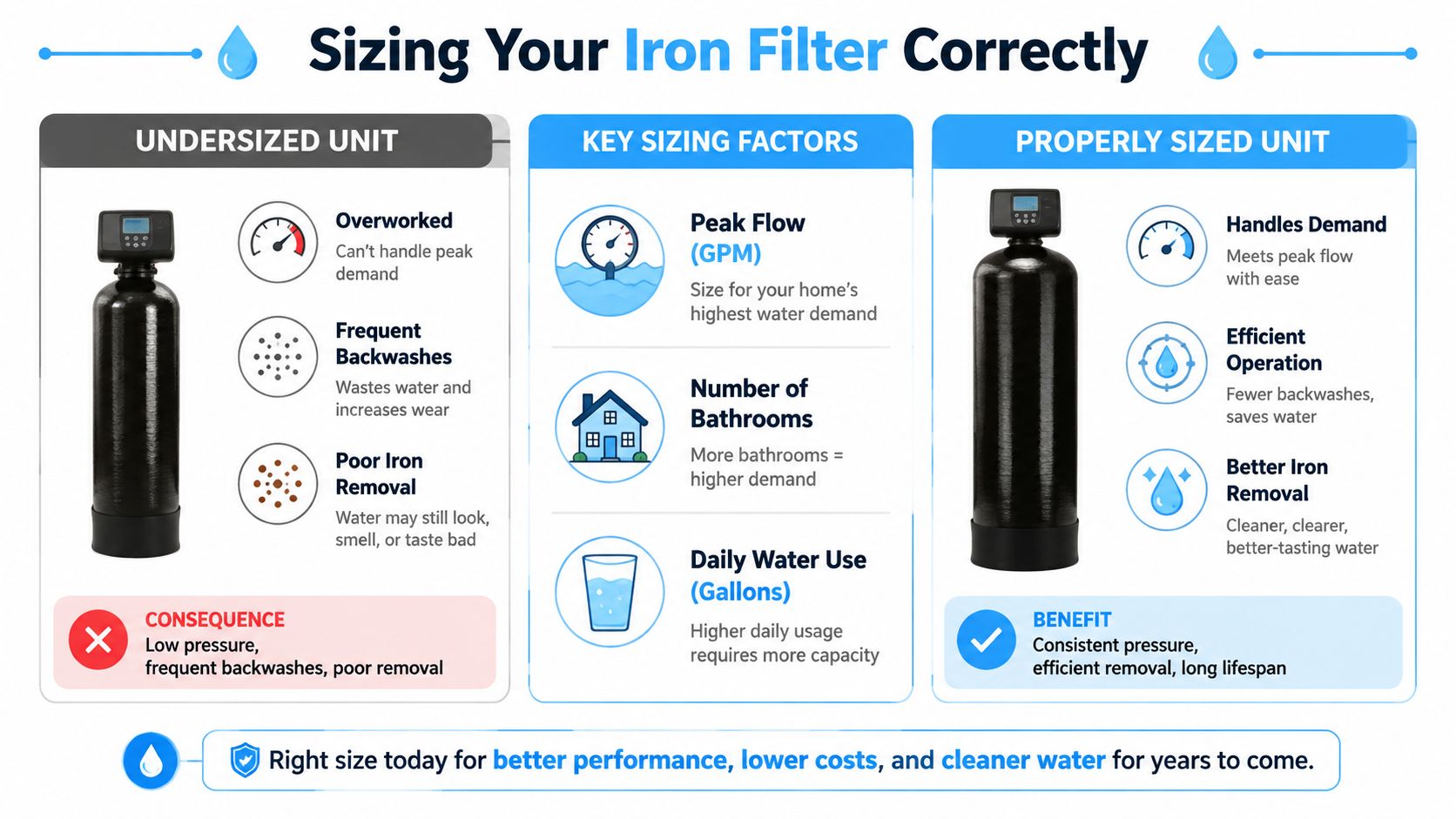
Iron concentration helps select the treatment method, but it doesn't determine tank size by itself. The unit must handle the home's peak flow, the number of bathrooms, daily water use, and the well pump's ability to provide backwash flow.
An undersized tank can restrict pressure, backwash too frequently, and allow water to channel through the media instead of contacting it evenly. An oversized tank may consume more backwash water and media than the household needs. Ask the installer to calculate service flow and backwash requirements together.
Where the system belongs
Most whole-house systems go at the point of entry after the pressure tank and before the water heater. Include a bypass valve so you can service the equipment, and provide a proper drain route for backwash water. Sediment pre-filtration may protect the control valve and media when the well carries sand or silt.
A single-tank Birm system or a softener replacement may suit an experienced DIY homeowner. Aeration equipment, chemical feeders, and multi-tank oxidizing systems deserve a licensed plumber or water-treatment professional, especially when electrical controls, drain flow, or chemical handling are involved.
Budget by treatment category
The following purchase ranges are the planning figures commonly used for these system types:
- Basic Birm: 800 to 1,500 dollars.
- Manganese greensand: 1,200 to 2,500 dollars.
- Advanced oxidizing media: 2,000 to 4,000 dollars.
- Aeration: 2,500 to 5,000 dollars.
- Professional installation: 300 to 800 dollars.
- Operating costs: 100 to 300 dollars per year, including salt, permanganate, electricity, and backwash water.
These figures are budgeting ranges, not guarantees, and the system's chemistry and plumbing requirements can change the final price. Media replacement also belongs in the lifecycle calculation rather than being treated as an unexpected repair.
Maintenance and Long-Term Performance
An iron filter doesn't remove the need for attention. It moves the work from scrubbing fixtures to managing backwash, checking water quality, and keeping the media exposed to the chemistry it needs.
Backwash frequency depends on iron load and tank size. Many residential systems are programmed to backwash every 2 to 7 days, but the correct schedule comes from the media manufacturer's requirements and the water test. Too little backwashing lets trapped iron accumulate. Too much wastes water and can shorten the useful life of the media.
Watch the water and the pressure
Returning stains are an obvious warning sign, but they're not the only one. A pressure drop, reduced flow, or a control valve that fails to complete its cycle can indicate that the bed isn't cleaning properly. Channeling is especially troublesome because water finds an easier path through the tank and bypasses much of the media.
Owners can handle several routine checks:
- Check supplies: Inspect salt or potassium permanganate levels when the system uses them.
- Inspect the brine tank: Look for bridging, buildup, or mechanical problems.
- Test treated water: Use iron test strips quarterly and compare the result with the system's target.
- Review settings: Confirm that the control valve follows the required regeneration schedule.
- Schedule service: Arrange a media change when treated water rises above 0.3 ppm, using the EPA secondary standard as the practical aesthetic benchmark.
Typical media life varies by water quality, maintenance, and operating conditions. Birm is often estimated at 5 to 8 years, greensand at 8 to 10 years, and advanced oxidizing media at 10 or more years. Replacement media commonly costs 300 to 800 dollars.
Research also shows that operating time and bed configuration influence performance. A 2025 study reported statistically significant differences at different sampling times, while a 2026 study found that increasing coconut-shell carbon thickness beyond 30 cm produced flattening gains (the study discussion of operating conditions). That supports a practical lesson: adding more media isn't automatically the same as improving a system.
Neglecting sediment pre-filtration, skipping annual inspections, or ignoring pH drift can reduce catalytic-media performance. A filter that worked after installation may need adjustment when the well chemistry changes.
Choosing the Right System and Next Steps
A clear glass of water can still contain dissolved ferrous iron, while orange particles usually indicate ferric iron. Start with the water test, then match the system to the iron form and concentration rather than choosing by product name.
Ask four questions:
- Is the iron ferrous, ferric, or biological?
- What is the measured iron concentration?
- What are the pH, manganese, hardness, sulfur, and tannin results?
- Can the well pump supply the required service and backwash flow?
A softener may suit low clear-water iron when hardness also needs treatment. Birm is commonly considered for roughly 0.5 to 5 ppm at pH above 7. Manganese greensand can suit approximately 1 to 10 ppm when manganese is part of the problem. Higher concentrations, or iron linked with sulfur, bacteria, or tannins, may need aeration or chemical oxidation before filtration. Minnesota's private-well iron guidance describes oxidation and filtration as a standard approach for higher iron levels, especially above 10 mg/L.
| Iron Level / Conditions | Recommended System | Best When |
|---|---|---|
| Low ferrous iron with hardness | Water softener | One system can address hardness and limited clear-water iron |
| About 0.5 to 5 ppm, pH above 7 | Birm | The well has stable chemistry and no bacterial iron |
| About 1 to 10 ppm, manganese present | Manganese greensand | The owner accepts potassium permanganate regeneration |
| Higher iron or difficult oxidation | Aeration or advanced oxidizing media | The pump and drainage support the required treatment |
| Above 10 ppm, sulfur, bacteria, or tannins | Chemical oxidation followed by filtration | Pre-oxidation is needed before solids can be filtered |
Installation depends on plumbing access, drainage, electrical needs, and the number of treatment stages. Renters may be unable to install a point-of-entry system. A point-of-use filter can improve drinking-water taste, but it will not prevent shower, laundry, or fixture staining.
Use a current laboratory test when the well changes, stains return, or treated-water results rise. Persistent problems can point to iron bacteria, pH drift, inadequate backwash flow, exhausted media, or a system that did not match the original test. For practical help comparing equipment and maintenance requirements, review this water filtration advice.
Confirm the final choice with a certified laboratory result and a licensed water-treatment professional. The right iron filter for well water matches the iron form, concentration, and household flow. Water Filter Advisor also provides factual guides on whole-house filters, treatment stages, media, testing, and maintenance.
- September 2, 2026
- Uncategorized
