
How to Test Water for Iron at Home: Kits and Lab Steps
Your laundry comes out with orange marks, the toilet bowl keeps developing a rusty ring, and the filter cartridge looks filthy even though the water i ...
Your laundry comes out with orange marks, the toilet bowl keeps developing a rusty ring, and the filter cartridge looks filthy even though the water i ...
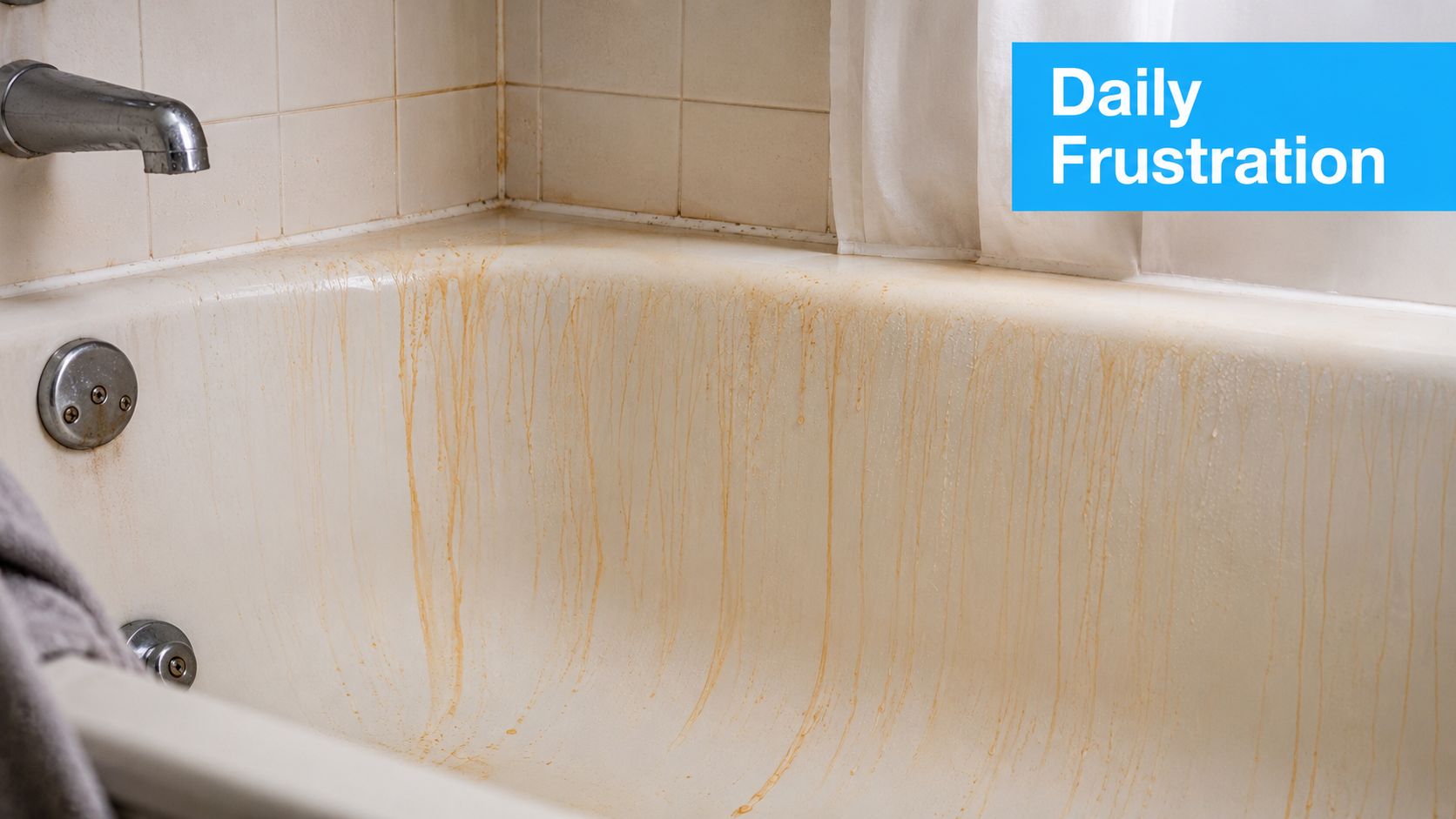
You scrub the bathtub on Saturday, and by Monday orange streaks are running down the sides again. The toilet bowl looks rusty within days, white laundry comes out yellowed, and water from the kitchen tap carries a metallic tang. In the morning, you fill the kettle and notice reddish flecks settling at the bottom. You start wondering whether an iron filter for well water will solve the mess, whether the water is safe, and whether you need a simple filter or a complete treatment system.
The right answer depends on more than seeing rust. Dissolved iron, visible iron particles, manganese, iron bacteria, pH, and hardness all affect treatment. This guide explains how to identify the problem, compare whole-house filtration options, size a system, and plan for maintenance without relying on brand hype.
Saturday's bathtub cleaning can look pointless by Monday. Orange streaks return, a white shirt comes out yellowed, and reddish slime appears around the toilet tank's waterline. Water from the tap may look clear at first, then develop color after sitting in a glass or kettle.
That delayed change is why iron can be difficult to diagnose by sight alone. Dissolved iron passes through the faucet unseen, then reacts with air and leaves deposits on porcelain, fabric, plumbing, or appliances. Visible particles behave differently, so the right iron filter for well water depends on the iron form and test results.
A whole-house iron filter connects to the main water line, treating water before it reaches showers, sinks, laundry machines, and water heaters. Some systems capture iron particles already in the water. Others first expose dissolved iron to air or another oxidizing process, turning it into particles that the tank can trap and remove during backwashing.
The household benefits are practical:
The EPA's secondary standard for iron is 0.3 mg/L, also called 0.3 ppm. This guideline addresses taste, odor, sediment, and staining rather than a health risk. The agency explains the regulatory context in its guidance on secondary drinking water standards for nuisance contaminants.
Practical rule: Select a filter after identifying the iron form, concentration, and surrounding water chemistry. A product page's removal claim is not enough.
A small amount of clear-water iron may call for a different treatment approach than visible ferric particles, iron bacteria, or a high iron load. The filter must match what the water test shows, not just the stain left behind.
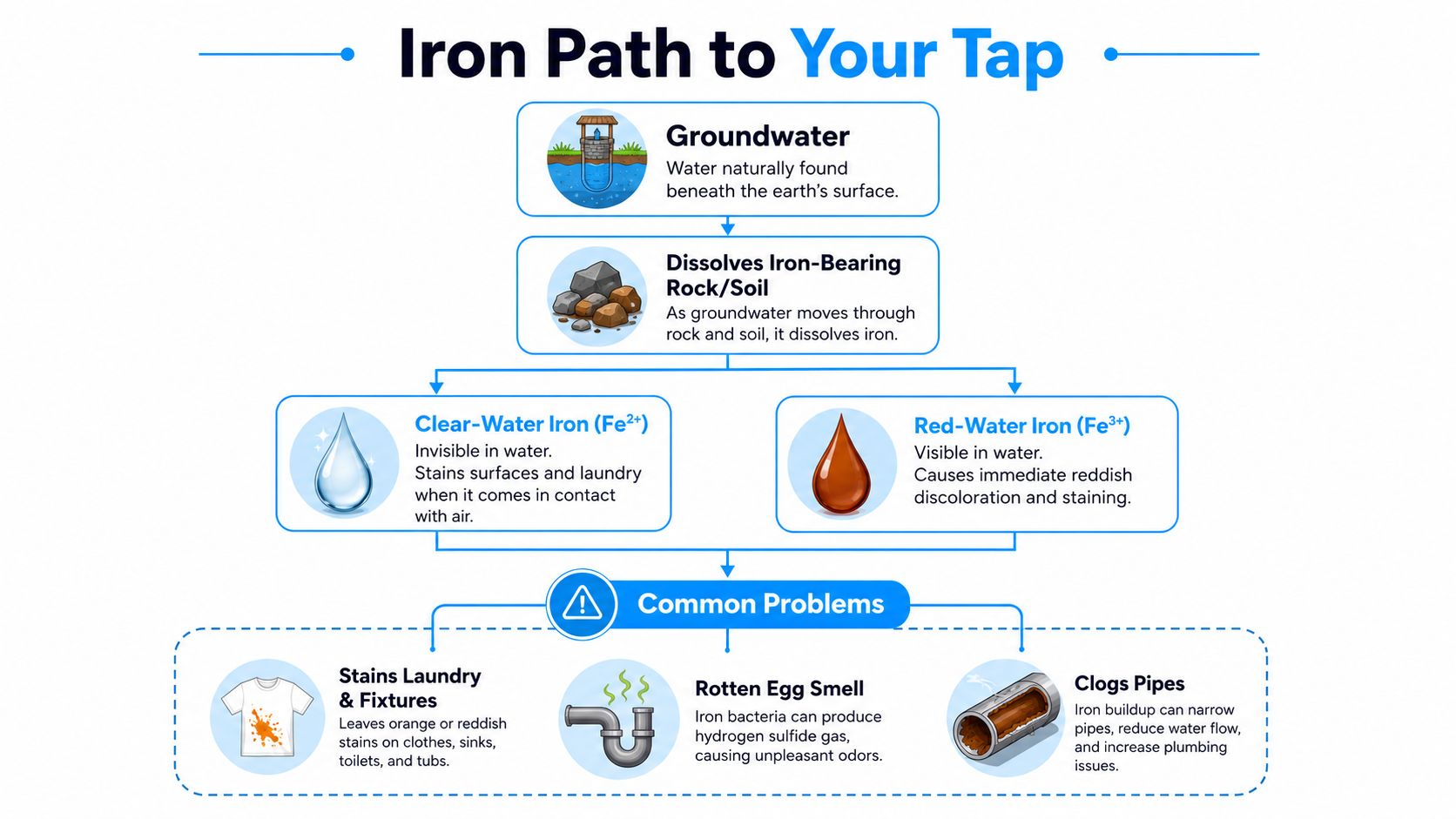
Groundwater picks up iron as it moves through iron-bearing rock and soil. The iron may remain dissolved, attach to particles, or support biological growth inside pipes and fixtures. Each form behaves differently, so two wells with equally unpleasant stains may need different treatment.
Ferrous iron, or clear-water iron, is dissolved iron in the Fe²⁺ state. Water may look clear at the tap, then turn orange or brown after exposure to air. Oxidation changes the dissolved iron into solid particles, which is why a clear glass can develop a rust-colored film later.
Ferric iron, or red-water iron, is already oxidized in the Fe³⁺ state. It appears as visible orange, red, or brown particles as soon as the water emerges. A sediment filter may capture some of this material, but a household with continuing iron often needs a properly sized oxidation and filtration stage.
Iron bacteria create slimy deposits or biofilms in toilet tanks, pipes, and treatment equipment. A standard iron filter may remove particles but won't necessarily eliminate the biological source. Disinfection and professional diagnosis may be needed when slime, recurring buildup, or related odors appear.
Manganese often travels with iron. It can produce dark brown or black staining and a bitter or metallic taste, which changes the media and operating conditions a system needs. Hardness matters too, because a softener may be useful for low ferrous iron and hardness, while iron can foul softener resin when the load becomes too high.
A pH below 7 can reduce the performance of some iron-removal media. That doesn't mean every acidic well needs the same correction, but it does mean pH belongs in the treatment decision.
You can also watch this visual explanation of the path from groundwater to household problems:
The central lesson is simple. Iron form and concentration determine the treatment approach. Testing comes before shopping.
A water test keeps you from buying a filter that removes the wrong form of iron. Start with an inexpensive home test strip as a screening tool. It can help indicate whether total iron is near or above the practical nuisance threshold of 0.3 ppm, but it won't provide the complete chemistry needed for system design.
For a purchase decision, use a certified laboratory panel. Ask for results covering:
Run the cold-water tap for several minutes before filling the container. Use a clean sample bottle, avoid splashing or aerating the water, and send the sample to the laboratory promptly. A poorly collected sample can change the apparent balance between dissolved and particulate iron, making the report less useful.
Read the results as a treatment signal, not as a product recommendation. Water near the EPA's secondary iron standard may produce nuisance staining even when the water looks acceptable at first. The agency describes 0.3 mg/L as a non-mandatory aesthetic standard, not a health-based limit, so the result helps define comfort and treatment needs rather than proving that the water is unsafe.
| Parameter | EPA Secondary Standard | Action Level | Filter Implication |
|---|---|---|---|
| Iron | 0.3 mg/L, 0.3 ppm (EPA guidance) | Water above this level is often objectionable for taste, odor, or staining | Select treatment according to iron form, pH, and concentration |
| Manganese | 0.05 mg/L | Dark staining or taste can justify treatment | Consider media designed for both iron and manganese |
| pH | No single iron-treatment action value applies to every system | A pH below 7 can reduce performance for some media (Minnesota iron guidance) | Correct pH or choose media that fits the chemistry |
| Hardness | No iron-specific EPA secondary value | High hardness may influence equipment choice | Compare a dedicated iron filter with a softener |
As a broad engineering guide, Minnesota health information notes that many wells have iron below 10 mg/L, while some softeners may handle up to 10 mg/L under reported conditions, with 2 to 5 mg/L being a more common practical limit. Manganese greensand is often associated with roughly 10 to 15 mg/L in treatment guidance, while higher concentrations may need oxidation followed by filtration. These ranges are not guarantees. They show why the lab report should drive the design.
The five common approaches below solve different problems. A filter that performs well for low ferrous iron may struggle with manganese, iron bacteria, acidic water, or a heavy ferric load.
Birm is catalytic media used for low-to-moderate dissolved ferrous iron. It needs favorable water chemistry, including a pH above about 6.8 in common treatment guidance, and it doesn't require chemical regeneration. It can suit a household with clear-water iron and stable pH, but it isn't the automatic choice for bacterial iron or severe chemistry problems.
Manganese greensand and Greensand Plus use manganese-dioxide-coated media. The coating helps convert dissolved iron and manganese into filterable solids, and the media is periodically regenerated with potassium permanganate. Technical guidance commonly places this approach at about 6 mg/L for iron under stated conditions, while other private-well guidance cites moderate ranges that can extend higher depending on design and chemistry. See the manganese greensand treatment overview for the media principle.
Media such as Katalox Light or Filox offers a stronger oxidation and filtration approach for households dealing with more substantial iron or manganese. These systems may avoid routine chemical feed, but they need adequate backwash flow to lift and clean the media. If the well pump can't deliver that flow, the tank may accumulate iron and lose performance.
Aeration adds oxygen before filtration. The oxygen helps convert dissolved ferrous iron into solid particles, which a downstream filter then captures. This approach often fits higher ferrous iron or sulfur odors, although odor, bacteria, tannins, and manganese can require additional treatment stages.
A water softener can help with hardness and some low-level ferrous iron. It isn't a dedicated solution for visible ferric particles, iron bacteria, or a high iron load. If you're also evaluating hardness treatment, this discussion of softener benefits for LA homes provides useful context, though well-water chemistry still determines whether a softener is appropriate.
| Filter Type | Best Iron Range (ppm) | pH Requirement | Chemicals Needed | Best For |
|---|---|---|---|---|
| Birm | Low to moderate ferrous iron | Commonly above 6.8 | None for regeneration | Clear-water iron with suitable pH |
| Manganese greensand | Moderate iron and manganese | Can work across a broader range than Birm | Potassium permanganate regeneration | Iron with manganese and manageable chemical maintenance |
| Advanced oxidizing media | Moderate to higher iron and manganese | Depends on media and design | Often none, but strong backwash is needed | Higher capacity treatment where the pump supports backwash |
| Aeration plus filtration | Higher ferrous iron or sulfur odor | Depends on the complete system | Air, with chemical oxidation possible when needed | Dissolved iron that needs oxidation before filtration |
| Water softener | Low ferrous iron with hardness | Depends on resin and water chemistry | Salt for regeneration | Combined hardness treatment and limited iron removal |
Recent research reinforces why this comparison can't become a universal “best filter” list. Natural-media systems using combinations such as sand-zeolite, sand-charcoal, silica sand with activated carbon, and coconut-shell carbon have shown iron removal ranging from about 72% to nearly 92%, depending on media depth and design (the reported natural-media results). The media name matters, but bed configuration and water chemistry matter just as much.
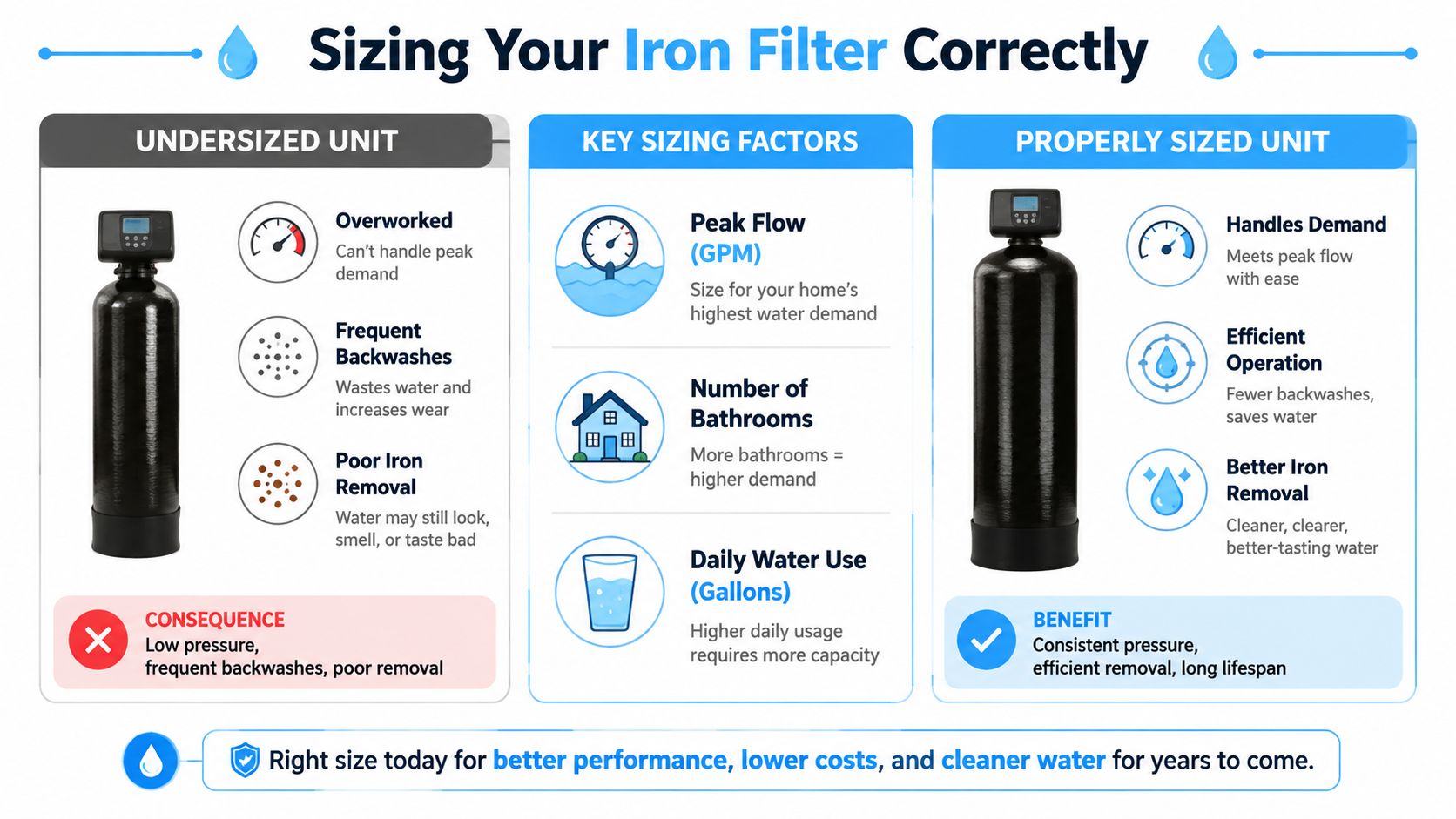
Iron concentration helps select the treatment method, but it doesn't determine tank size by itself. The unit must handle the home's peak flow, the number of bathrooms, daily water use, and the well pump's ability to provide backwash flow.
An undersized tank can restrict pressure, backwash too frequently, and allow water to channel through the media instead of contacting it evenly. An oversized tank may consume more backwash water and media than the household needs. Ask the installer to calculate service flow and backwash requirements together.
Most whole-house systems go at the point of entry after the pressure tank and before the water heater. Include a bypass valve so you can service the equipment, and provide a proper drain route for backwash water. Sediment pre-filtration may protect the control valve and media when the well carries sand or silt.
A single-tank Birm system or a softener replacement may suit an experienced DIY homeowner. Aeration equipment, chemical feeders, and multi-tank oxidizing systems deserve a licensed plumber or water-treatment professional, especially when electrical controls, drain flow, or chemical handling are involved.
The following purchase ranges are the planning figures commonly used for these system types:
These figures are budgeting ranges, not guarantees, and the system's chemistry and plumbing requirements can change the final price. Media replacement also belongs in the lifecycle calculation rather than being treated as an unexpected repair.
An iron filter doesn't remove the need for attention. It moves the work from scrubbing fixtures to managing backwash, checking water quality, and keeping the media exposed to the chemistry it needs.
Backwash frequency depends on iron load and tank size. Many residential systems are programmed to backwash every 2 to 7 days, but the correct schedule comes from the media manufacturer's requirements and the water test. Too little backwashing lets trapped iron accumulate. Too much wastes water and can shorten the useful life of the media.
Returning stains are an obvious warning sign, but they're not the only one. A pressure drop, reduced flow, or a control valve that fails to complete its cycle can indicate that the bed isn't cleaning properly. Channeling is especially troublesome because water finds an easier path through the tank and bypasses much of the media.
Owners can handle several routine checks:
Typical media life varies by water quality, maintenance, and operating conditions. Birm is often estimated at 5 to 8 years, greensand at 8 to 10 years, and advanced oxidizing media at 10 or more years. Replacement media commonly costs 300 to 800 dollars.
Research also shows that operating time and bed configuration influence performance. A 2025 study reported statistically significant differences at different sampling times, while a 2026 study found that increasing coconut-shell carbon thickness beyond 30 cm produced flattening gains (the study discussion of operating conditions). That supports a practical lesson: adding more media isn't automatically the same as improving a system.
Neglecting sediment pre-filtration, skipping annual inspections, or ignoring pH drift can reduce catalytic-media performance. A filter that worked after installation may need adjustment when the well chemistry changes.
A clear glass of water can still contain dissolved ferrous iron, while orange particles usually indicate ferric iron. Start with the water test, then match the system to the iron form and concentration rather than choosing by product name.
Ask four questions:
A softener may suit low clear-water iron when hardness also needs treatment. Birm is commonly considered for roughly 0.5 to 5 ppm at pH above 7. Manganese greensand can suit approximately 1 to 10 ppm when manganese is part of the problem. Higher concentrations, or iron linked with sulfur, bacteria, or tannins, may need aeration or chemical oxidation before filtration. Minnesota's private-well iron guidance describes oxidation and filtration as a standard approach for higher iron levels, especially above 10 mg/L.
| Iron Level / Conditions | Recommended System | Best When |
|---|---|---|
| Low ferrous iron with hardness | Water softener | One system can address hardness and limited clear-water iron |
| About 0.5 to 5 ppm, pH above 7 | Birm | The well has stable chemistry and no bacterial iron |
| About 1 to 10 ppm, manganese present | Manganese greensand | The owner accepts potassium permanganate regeneration |
| Higher iron or difficult oxidation | Aeration or advanced oxidizing media | The pump and drainage support the required treatment |
| Above 10 ppm, sulfur, bacteria, or tannins | Chemical oxidation followed by filtration | Pre-oxidation is needed before solids can be filtered |
Installation depends on plumbing access, drainage, electrical needs, and the number of treatment stages. Renters may be unable to install a point-of-entry system. A point-of-use filter can improve drinking-water taste, but it will not prevent shower, laundry, or fixture staining.
Use a current laboratory test when the well changes, stains return, or treated-water results rise. Persistent problems can point to iron bacteria, pH drift, inadequate backwash flow, exhausted media, or a system that did not match the original test. For practical help comparing equipment and maintenance requirements, review this water filtration advice.
Confirm the final choice with a certified laboratory result and a licensed water-treatment professional. The right iron filter for well water matches the iron form, concentration, and household flow. Water Filter Advisor also provides factual guides on whole-house filters, treatment stages, media, testing, and maintenance.
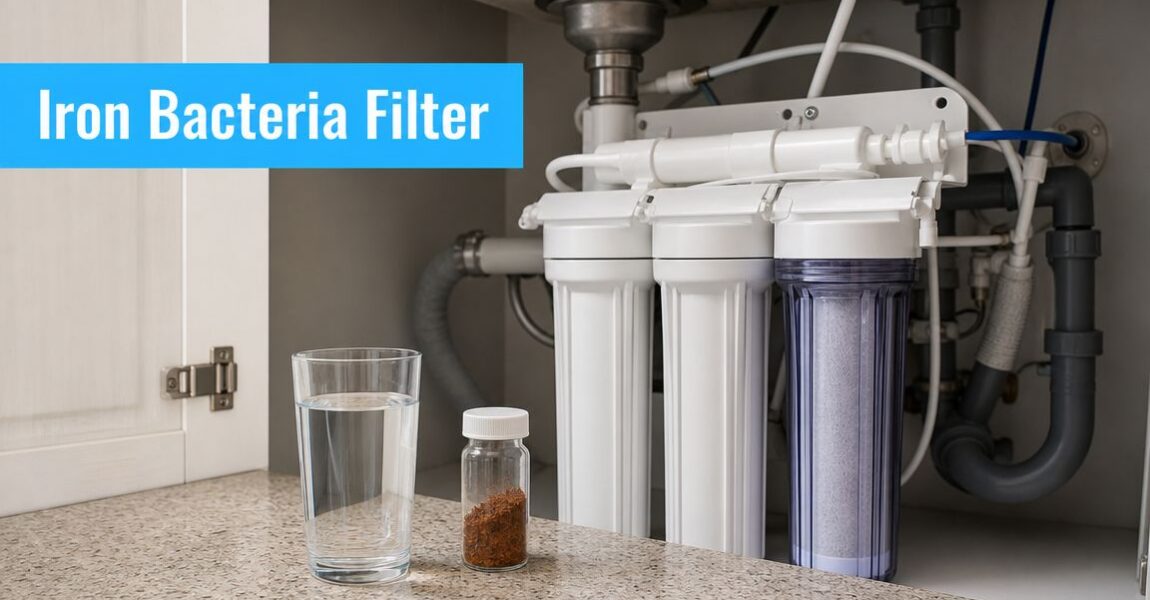
You lift the toilet tank lid and find reddish-brown slime clinging to the sides. The water smells a little earthy. Your white laundry keeps picking up rust stains. Then you search for a water filter for iron bacteria and get flooded with promises about miracle cartridges, UV gadgets, and “all-in-one” fixes.
That's where a lot of homeowners lose time and money.
Iron bacteria usually aren't a direct health threat, but they are a stubborn well-water nuisance. The Minnesota Department of Health describes them as naturally occurring microorganisms that combine iron or manganese with oxygen to form rust-like deposits and slime that can clog wells, reduce water production, and foul plumbing, as explained in the Minnesota Department of Health guidance on iron bacteria. In plain English, they turn your plumbing into a slow, sticky mess.
A simple filter often won't solve that. It may catch some debris for a while, but it won't deal with the living colony and the slime protecting it. And while people often worry about biological contamination in water for good reason, that concern is broader than iron bacteria alone. If you want a separate look at another contamination question homeowners ask, this guide on the risks of drinking moldy water gives useful context on why different water problems need different responses.
The biggest mistake homeowners make is treating iron bacteria like ordinary sediment.
That approach fails because the problem is not sitting in one spot waiting to be strained out. Iron bacteria can colonize the well, pressure tank, plumbing, and fixtures, then coat those surfaces with slime that keeps trapping iron and manganese. By the time reddish buildup shows up in a toilet tank, the issue usually involves the whole water system.
A cartridge filter may catch loose debris for a short time. It does not remove the colony feeding the slime, and it does not clean the fouled parts upstream.
The first warning is usually a pattern in the house, not a lab result.
Those symptoms point to a system problem. They also explain why a single filter so often disappoints.
Practical rule: If you have slime, odor, and recurring staining together, plan on disinfection plus filtration.
A common dead end for homeowners is buying a standalone iron filter before dealing with the bacterial growth itself. In the field, that often means the media loads up with slime, pressure drops, and the original odor or staining returns sooner than expected.
UV is another shortcut that gets overestimated. A well-water guide says “Do NOT use UV lights to control iron bacteria” because UV does not remove iron fouling or the slime layer protecting the growth, as noted in this iron bacteria treatment guide from Aqua Science.
The better approach is a treatment train. First break up or disinfect the biological growth. Then filter out the oxidized iron, loosened slime, and sediment. Homeowners who start with that sequence usually avoid the expensive cycle of replacing cartridges and blaming the wrong piece of equipment.
Iron bacteria are also different from other biological water issues people read about online. If you want a separate example of how contamination problems can have very different causes and responses, this guide on the risks of drinking moldy water gives useful context.
Iron bacteria are living organisms that feed on iron and manganese in groundwater and leave behind slime and rust-colored deposits. They often enter the system from the well itself, which is why even a clean, well-kept home can still develop the problem.
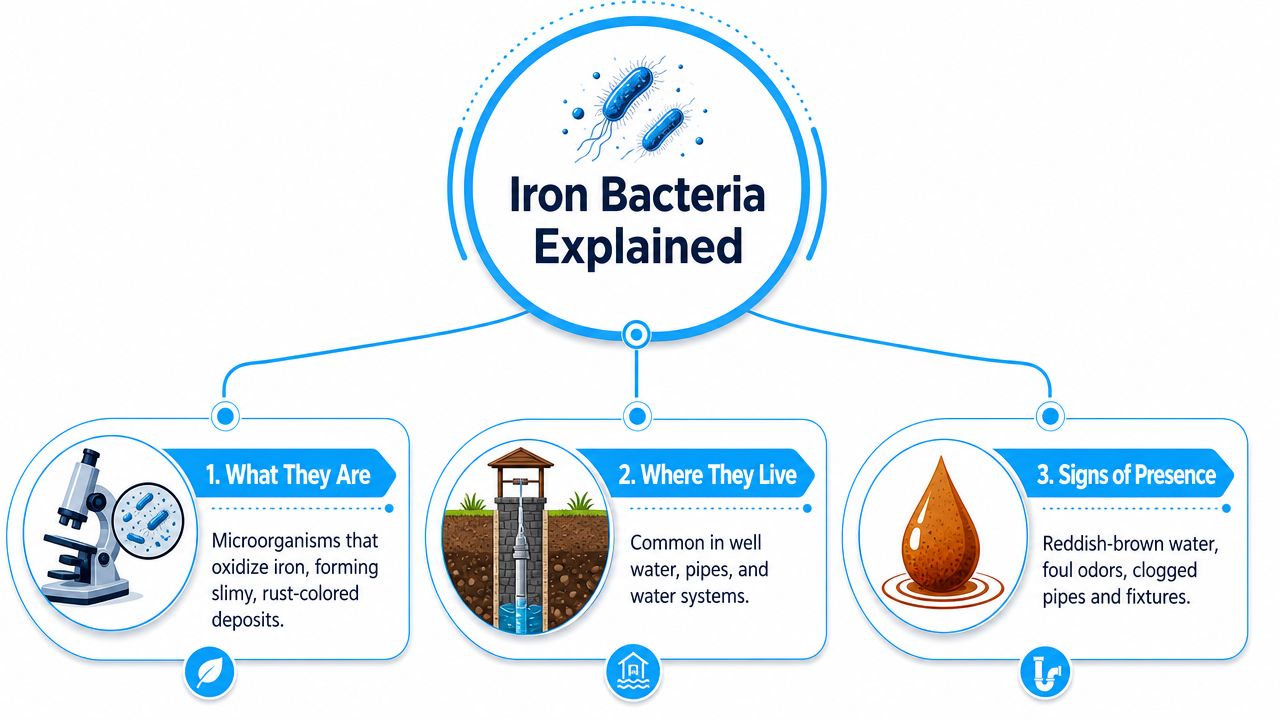
“Iron in the water” sounds simple, but iron bacteria create a system problem with three separate parts.
That distinction matters because each part behaves differently. A filter may catch loose debris. It does not remove a colony attached to the inside of the well casing. A one-time disinfecting step may knock the growth back, but if the loosened iron and slime are not filtered out, the system still performs poorly.
This is the mistake I see most often. A homeowner installs a sediment cartridge or a standard iron filter, the water improves for a short time, and then the odor, slime, or flow problems return.
The reason is mechanical as much as biological. Iron bacteria do not just float through the water like grit. They attach to surfaces, build layers, and keep shedding material back into the line. Oxidation helps convert dissolved iron into particles a filter can grab, but it does not replace disinfection. Backwashing helps carry trapped material to drain, but it cannot clean a contaminated well by itself. The parts have to work together.
A good way to understand it is to picture the system like a pipe with grease inside. Catching a few chunks downstream does not remove the buildup on the pipe wall.
Biofilm is what turns an iron problem into a recurring service problem. It narrows water passages, coats moving parts, and gives the colony protection from light treatment attempts. That is why faucet aerators plug, toilet tanks develop sludge, and pressure problems keep coming back.
This issue is usually more about performance, maintenance, and nuisance conditions than direct health risk. But for a homeowner, that distinction does not make the problem minor. Water that smells bad, stains fixtures, and keeps fouling equipment is expensive and frustrating.
The usual trouble spots are easy to recognize:
| Location | What you may see |
|---|---|
| Toilet tank | Rust-colored slime on walls and parts |
| Faucet aerators | Gunk, clogging, reduced flow |
| Pressure tank and plumbing | Fouling, buildup, recurring restrictions |
| Well casing | Deposits and ongoing recolonization |
The main takeaway is simple. Iron bacteria are not a single-filter problem. They are a whole-system problem, which is why lasting treatment usually starts with disinfection and follows with the right filtration setup.
Homeowners often call after trying a cartridge filter, a softener setting change, or a stain remover, and the slime keeps coming back. That usually happens because the purchase came before the diagnosis.
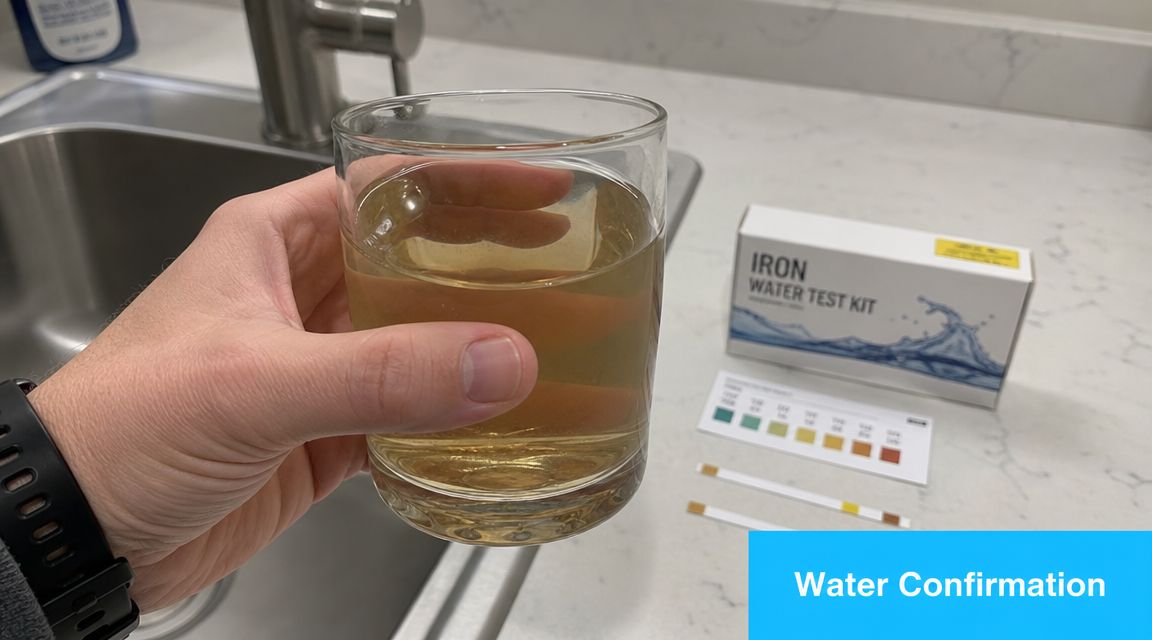
Testing is how you avoid that mistake. Iron bacteria problems are built around a system. The well, the plumbing, the iron level, and the household's flow demand all affect what will work.
Begin at the fixtures that collect buildup fastest. Lift the toilet tank lid and look for reddish-brown slime on the walls, flapper, and fill valve. Hard rust staining is one thing. Sticky or stringy residue points more toward biological fouling.
Then check faucet aerators and showerheads. If they keep clogging with soft gunk instead of gritty sediment, that matters. Let a glass of water sit for a while and watch what settles out or clings to the sides. Odor also helps with the diagnosis. Water affected by iron bacteria is often described as swampy, earthy, or musty.
This quick inspection will not size equipment, but it does tell you whether you may be dealing with more than dissolved iron.
A practical home check includes:
Visible symptoms are only half the job. The next step is water testing that helps you choose treatment that fits the house.
For iron bacteria cases, I want to know:
Those details matter because a system that works in a small cabin may be undersized in a busy family home. Flow rate affects filter size. Fouling levels affect how often equipment needs to backwash. If bacteria are established in the well and plumbing, a simple sediment cartridge usually plugs fast and does little to solve the source of the problem.
That is the mistake to avoid. Buying from symptoms alone, such as a stain photo or a jar of discolored water, is a risky approach.
A short visual walkthrough can help if you're not sure what signs you're seeing:
Good testing does more than confirm a nuisance issue. It helps separate three different questions that often get lumped together:
If you skip those questions, it is easy to buy the wrong tool. A standard iron filter may remove some oxidized iron and still struggle if biofilm is coating the well and plumbing. A sediment filter may catch debris for a short time and then choke down flow like a vacuum bag packed with wet leaves.
Testing gives you the blueprint for a full plan instead of another temporary fix.
A homeowner usually calls after trying the obvious fix first. They change a cartridge, maybe add an iron filter, and for a few weeks the water seems better. Then the orange slime returns, the toilets stain again, and the pressure starts dropping.
That pattern points to a planning problem, not just a product problem.
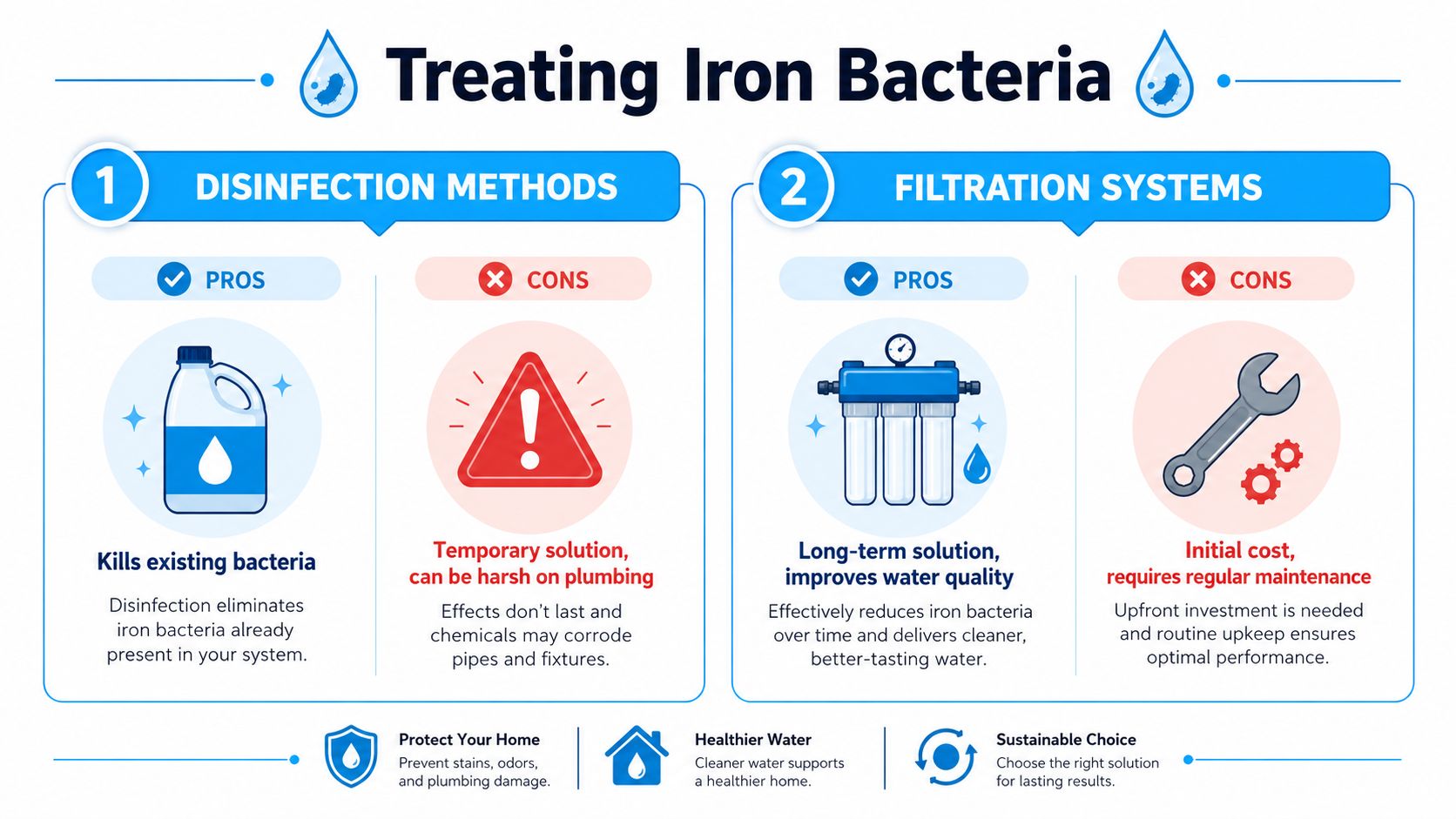
Iron bacteria treatment works best as a sequence. Clean up the colony. Give the chemistry time to work. Then remove what the treatment creates. If one of those steps is missing, the rest of the equipment has to do a job it was never built to do.
If slime is already growing in the well or plumbing, the first move is usually disinfection. The goal is to break up the biofilm and reduce the living mass coating the system.
Biofilm behaves like grease baked onto a pan. Running water past it does very little. A filter downstream does even less. The colony has to be attacked at the source before filtration can hold the line.
In the field, this is why a new filter installed on a fouled system often disappoints. The filter is catching debris from an active infestation while fresh slime keeps forming upstream.
After cleanup, the permanent setup usually has three working parts:
That middle step gets overlooked all the time. Water needs a little dwell time. Oxidation works like soaking a dirty pot before scrubbing it. If the water rushes straight from chemical injection into a filter, the reaction is incomplete and the media gets overloaded.
Backwashing matters for the same reason. Iron bacteria leave behind sticky solids, not just loose grit. A disposable cartridge can plug fast and drag down pressure. A backwashing media filter is built to flush itself clean on schedule, which is a much better fit for this kind of fouling.
A sediment filter can trap visible flakes for a while. It does not sanitize the well, clean the plumbing walls, or stop fresh slime from forming.
A standard iron filter can help with staining if the water chemistry is favorable. It still may struggle if bacterial slime is coating the media or if the iron has not been properly oxidized before it reaches the tank.
UV also gets misunderstood here. UV can disinfect clear water passing the lamp, but it does not remove iron, strip out slime, or clean buildup already attached to the system. For iron bacteria problems, that makes UV a supporting tool at best, not the main fix.
| Treatment stage | Main job | Common mistake |
|---|---|---|
| Disinfection or oxidation feed | Knock back bacteria and start changing dissolved iron into filterable particles | Skipping it and expecting the filter to solve an active colony |
| Retention or contact time | Let the reaction finish before filtration | Undersizing the contact stage and sending half-treated water to the filter |
| Backwashing media filter | Remove oxidized iron, slime fragments, and sediment | Using a small cartridge that clogs and starves the house of flow |
This is the part many articles gloss over. Iron bacteria are rarely a one-tank problem.
The right setup depends on where the trouble really lives. Some homes need a one-time cleanup plus a properly sized iron filter. Others need chemical feed, retention, and backwashing filtration because the well keeps reintroducing slime and iron. If you want help sorting out those trade-offs, the well water treatment guides and system advice can help you compare approaches before you buy equipment.
A good system does two jobs at once. It clears up the symptoms you see today, and it stops the same fouling cycle from chewing up the next filter you install.
A homeowner usually starts with the wrong question. They ask for the best filter for iron bacteria. The better question is which treatment train will stop the slime, protect flow, and fit the way the house uses water.
That difference matters because iron bacteria are a system problem. A cartridge may catch rust for a few days. A standard iron filter may improve color for a while. Neither one reliably handles an active colony that keeps coating pipes, pressure tanks, and fixtures with slime.
Choose the system by identifying what keeps going wrong.
If the main complaint is orange staining with only occasional slime, a properly sized backwashing iron filter may be enough after the well and plumbing have been cleaned up. If the water smells swampy, fixtures clog, toilet tanks grow slime, or the problem returns soon after shock chlorination, plan for disinfection plus filtration, not filtration alone.
That is the myth to drop first. There usually is no single magic tank for iron bacteria.
Three practical factors narrow the field fast:
A family home, a rental, and a weekend cabin can test almost the same and still need different equipment choices.
| Filtration Method | How It Works | Best For | Upfront Cost | Ongoing Maintenance | Pros | Cons |
|---|---|---|---|---|---|---|
| Backwashing media filter with oxidation support | Traps oxidized iron and fouling in self-cleaning media | Homes with manageable iron and limited biological fouling after cleanup | Moderate to higher | Backwash monitoring and eventual media service | Better whole-house flow and dirt-holding capacity than disposable cartridges | Can struggle if active bacteria are still growing upstream |
| Greensand filter | Oxidizes and filters iron under the right water conditions | Specific water chemistry where the media is a good match | Moderate | Regular care and media-specific upkeep | Can work well in the right application | Easy to oversell as a cure-all when bacteria are the real issue |
| Chlorine injection plus retention plus filtration | Disinfects first, gives contact time, then filters out the byproducts | Persistent iron bacteria, recurring slime, and systems that foul quickly | Higher | Chemical refills, pump checks, backwashing | Addresses the biological side and the iron side together | More parts to size, install, and maintain |
| Hybrid oxidation and filtration setup | Uses oxidizing media or air-based oxidation with backwashing filtration | Owners who want less day-to-day chemical handling when water chemistry allows | Varies | Backwashing and periodic service | Lower routine chemical handling in some homes | Still has to be matched carefully to the water and may need disinfection support |
The strongest-performing setup is not always the one people like living with.
Chemical feed systems can work very well, especially where bacteria keep coming back. But they ask something from the owner. Someone has to keep solution on hand, refill the tank, watch the feed pump, and make sure the dose stays in range. In a full-time home, that may be fine. In a cabin or rental, it often gets neglected.
Backwashing media systems reduce some of that hands-on work, but they are not maintenance-free. They need enough flow to clean themselves properly, a working drain, and settings that match the actual water use. Backwashing works like rinsing mud out of a sponge. If the rinse is weak or too short, the buildup stays behind and performance falls off.
The best system is the one that treats the water problem and still gets maintained six months from now.
Homeowners comparing equipment styles and upkeep can review these well water treatment guides and system advice before choosing a layout.
Use five questions before buying anything:
That checklist saves people from wasting money on undersized equipment and filter housings that were never built for slimy well water.
One more practical point. If your water system work is already tied up with plumbing repairs or you are coordinating other household priorities, such as emergency hot water services, keep the treatment design simple enough that it will still get looked after. Good water treatment on paper is worthless if nobody wants to run it.
A good system can solve the water problem and still frustrate you if installation and upkeep were underestimated.
That happens often with iron bacteria because the treatment setup is more involved than a basic under-sink filter or a simple cartridge housing.
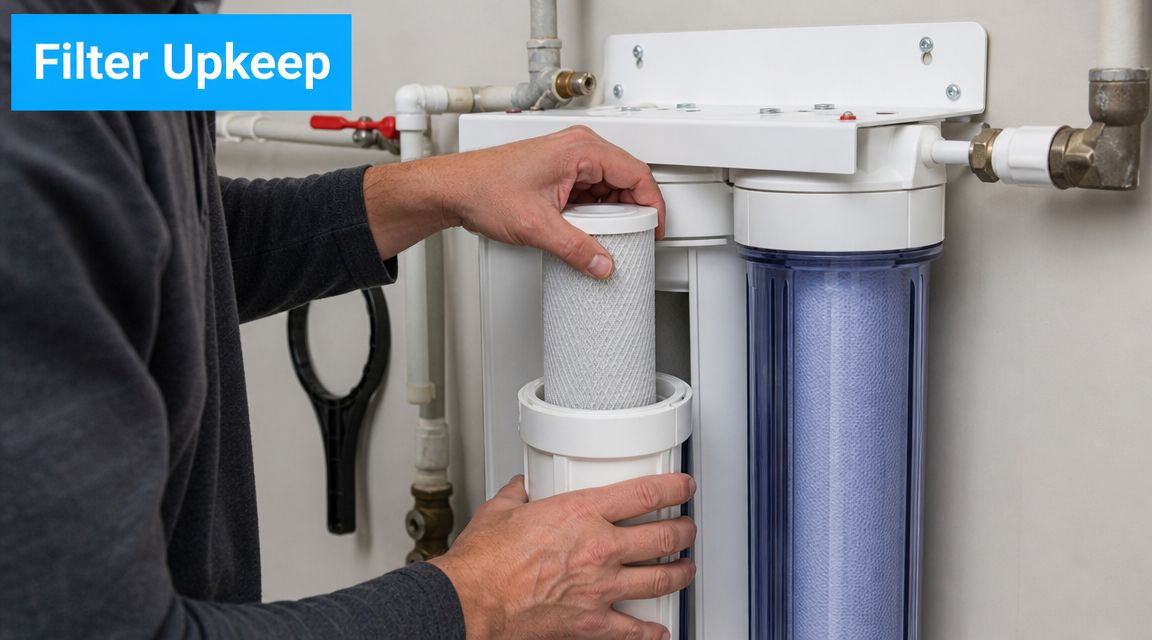
Some homeowners can install parts of a whole-house filter train, especially if they're comfortable with plumbing and drain connections. But iron bacteria systems often include injection equipment, retention components, drain lines for backwashing, and control settings that need to match actual water use.
If the system is installed poorly, the equipment may still run while performing badly. That's the dangerous part. You can end up thinking the water chemistry is impossible when setup is the issue.
A practical rule is simple:
Long-term care depends on the equipment, but common tasks include:
For households with heaters or plumbing already stressed by poor water quality, failures sometimes stack up. If treatment issues contribute to broader plumbing trouble, having access to reliable emergency hot water services can be useful when a fouled system starts affecting hot water delivery.
The sticker price isn't the full price. Owners should think about:
| Cost area | What to expect qualitatively |
|---|---|
| Chemicals | Ongoing if your system uses chlorine injection |
| Electricity | Control valves, pumps, and backwashing use power |
| Maintenance time | Refills, inspections, and occasional troubleshooting |
| Media replacement | A periodic cost on backwashing media systems |
| Service calls | More likely if the system is undersized or poorly tuned |
The best way to control long-term cost isn't always buying the cheapest equipment. It's buying the right-sized equipment and maintaining it before performance slips.
If the slime comes back, don't assume the whole system was a waste. Iron bacteria treatment often fails for a specific reason, and that reason can usually be narrowed down.
Use this quick guide:
Homeowners can inspect, clean aerators, confirm settings, and watch system behavior. But some situations need a pro:
If you're dealing with a living biofilm problem, random trial and error usually costs more than targeted help. The smart move is to treat the system logically, not keep swapping filters and hoping one finally wins.
If you're comparing options and want practical buying help without the usual marketing fog, Water Filter Advisor is a solid place to start. It's built for homeowners who need to choose, compare, and maintain filtration systems that fit their water problems, including tricky whole-house issues like iron, odor, and well-water fouling.
