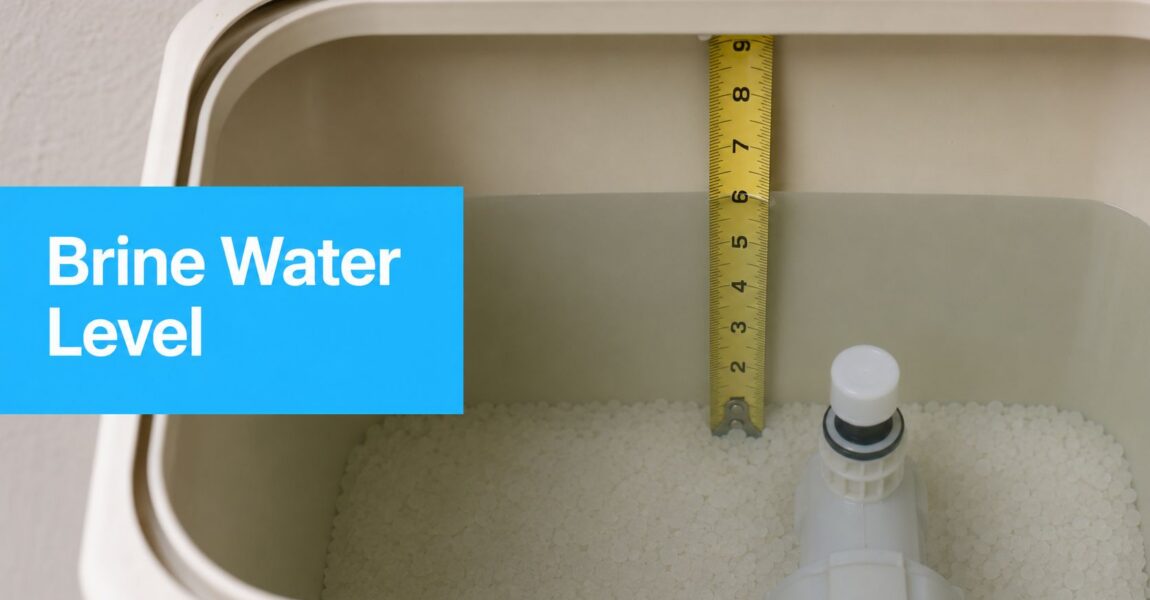
A wet brine tank should hold 3–6 gallons of water, about 6–10 inches deep. Dry brine systems should be mostly empty between regeneration cycles.
You're probably standing in a utility room right now, lid off, staring at the tank and wondering whether that water is normal or a warning sign. The answer depends on the system, but the important part is simple, the water level should look controlled, not random. In a healthy setup, the tank is either holding a shallow standing level for a wet design or staying mostly empty until a dry design prepares for the next cycle.
Why Your Brine Tank Water Level Matters
A brine tank is supposed to make salty water on purpose, not store a big pool of standing water. In a wet brine tank, the normal target is 3–6 gallons of water, which many guides translate to about 6–10 inches deep depending on tank shape, and the water should sit slightly below the salt line rather than crowding the tank. That shallow level matters because the water dissolves salt into brine before the next regeneration cycle, and if the level is off, the softener can't make the brine it needs to clean the resin bed. For homeowners trying to separate a routine check from a repair problem, that's the first clue. For direct help with that decision, a local resource like softener repair for homeowners can be useful when the tank's behavior doesn't match normal operation.
The mistake I see most often is treating all brine tanks like they're supposed to look the same. They're not. Dry brine systems only hold water briefly before regeneration, then they drain back out and stay mostly empty between cycles. Older wet designs can sit with a shallow base of water, but a tank that's full of water is never a healthy default.
Practical rule: if you can look at the tank and it seems flooded instead of measured, stop calling it “normal” and start treating it like a fault.
That distinction matters because the right answer isn't universal. It depends on the valve design, the manufacturer's instructions, and whether the system is built around continuous standing water or short-fill regeneration behavior. A homeowner who understands that difference can avoid unnecessary panic and avoid ignoring a real problem that's hurting softening performance.
Wet Brine Tanks Versus Dry Brine Systems
Wet and dry brine tanks can sit in the same basement, look similar at a glance, and behave completely differently. That's why so many homeowners misread the water level and chase the wrong fix. The easiest way to start is to identify the valve style, then compare what the tank does between regeneration cycles.
A wet brine tank keeps a small standing reserve of water. It's the older style many techs still service every week, and its normal look is a shallow pool under the salt bed, not a dry bin. A dry brine tank is the opposite. It stays mostly empty, then adds water shortly before a regeneration cycle and drains it back out afterward.
The timing is the giveaway. Some dry systems only show water about 1–2 hours before regeneration, and some manufacturer guidance says water is normally present only until the next regeneration removes it. That's why a dry tank looking empty is often a good sign, not a failure. If your system behaves more like a timed fill-and-drain unit, a shallow standing level between cycles is the wrong expectation.
A quick comparison helps keep the two designs straight.
| Feature | Wet Brine Tank | Dry Brine Tank |
|---|---|---|
| Standing water between cycles | Normal at a shallow level | Usually little to none |
| Typical behavior | Holds a reserve for brine formation | Fills shortly before regeneration |
| What looks wrong | Tank full or half full of water | Water remaining after the cycle |
| Maintenance focus | Salt level, bridging, shallow standing water | Fill timing, drain performance, valve operation |
For homeowners who want to compare what they're seeing against a broader system issue, even something like water heater repair in CT can remind you that plumbing equipment often fails in patterns, not in isolation. The same room can hold separate systems with very different normal operating states.
How to Measure the Water Level in Your Brine Tank
The cleanest way to check the tank is between regeneration cycles for a wet system, or just before a cycle for a dry one. Open the lid slowly, look for standing water under the salt, and use a ruler or tape measure to read the depth from the bottom of the tank to the water surface. If the tank is a wet design, the target is the shallow range already mentioned, not a rising pool that creeps toward the top.
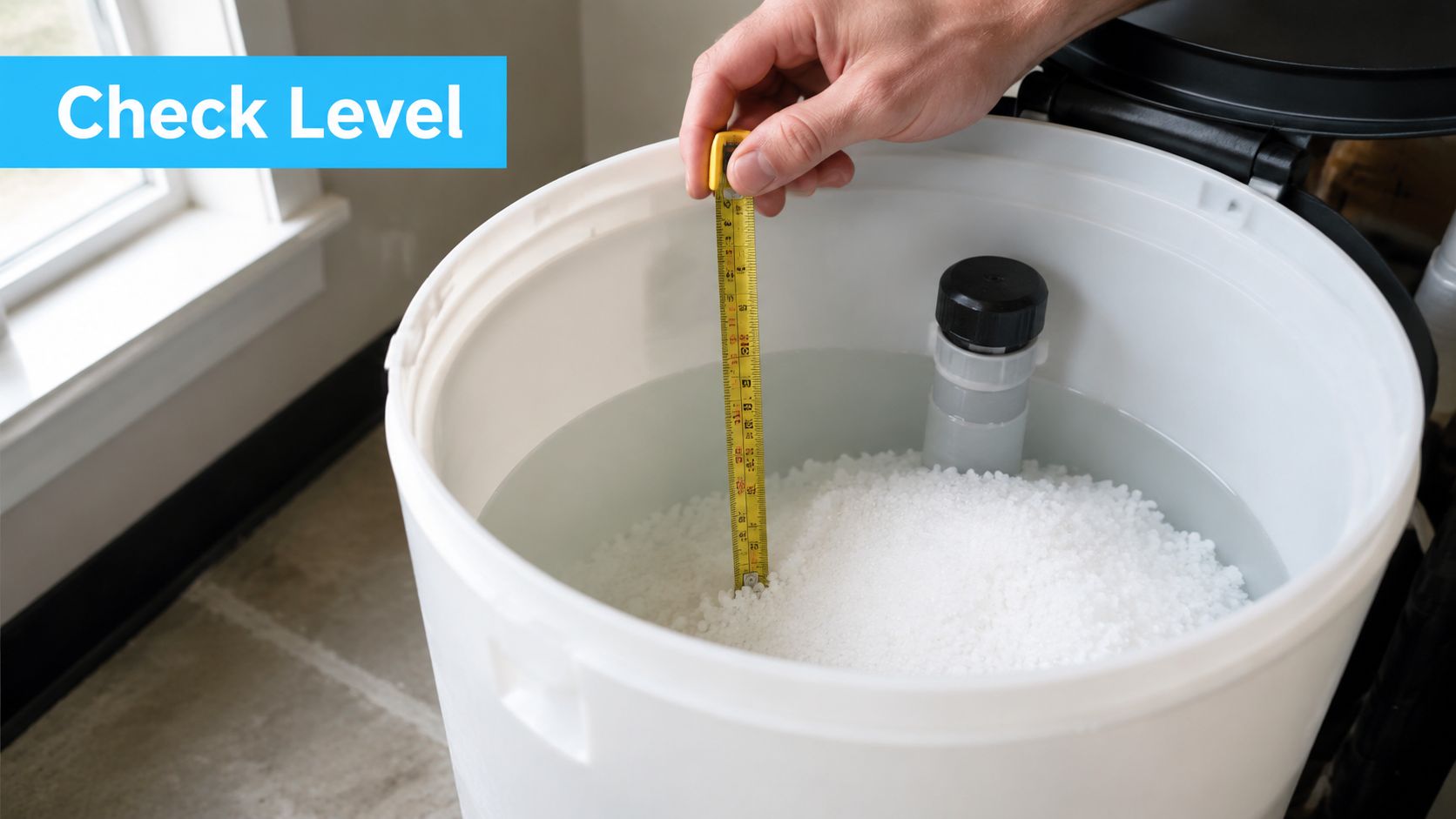
A few small mistakes throw off the reading. Condensation on the sidewall isn't standing water. Salt heaped against the tank can hide the true surface and make the tank look deeper than it is. And if the salt has formed a crust, the top can look normal while the bottom is wet in a way that doesn't match the cycle.
A good reading tells you what the tank is doing, not what the lid wants you to believe.
When the water is where it should be, it usually sits under the salt and doesn't keep rising between checks. When it's wrong, the level tends to make a statement. Half-full, near the rim, or still high after a regeneration cycle all point away from normal maintenance and toward a system issue. If you can't tell whether what you're seeing is shallow standing water or a problem, take the measurement twice, once right after a cycle and once later in the day. The pattern matters more than the snapshot.
What Excess Water Tells You About Your Softener
Too much water in the brine tank is useful information, because it usually narrows the problem instead of widening it. Multiple maintenance guides agree on the same basic warning, the tank should never be full of water, and even a tank that sits half full is not behaving normally. That doesn't just mean “needs salt.” It means something in the refill, draw, drain, or float path isn't doing its job.
The most likely failure points
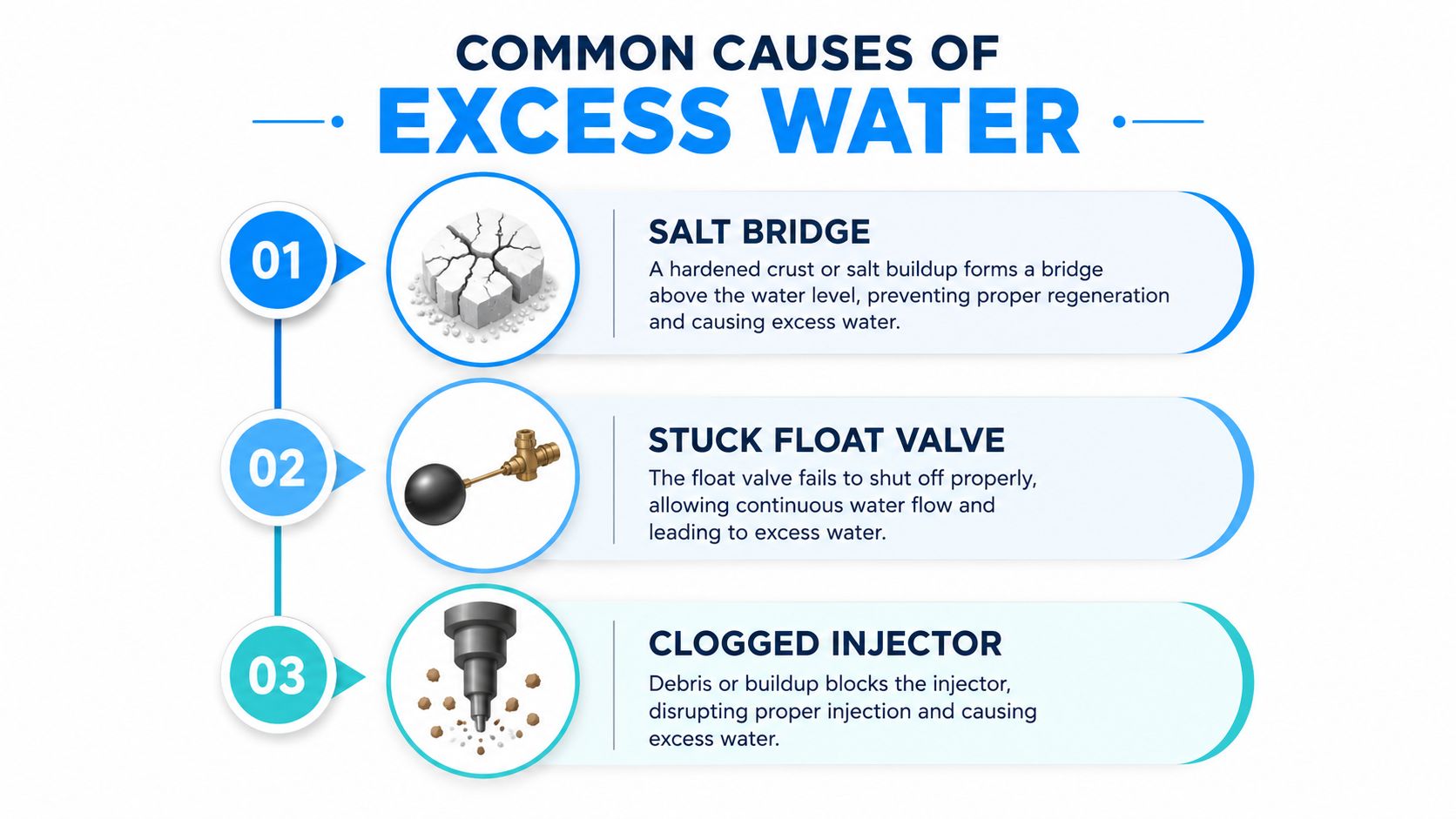
A stuck float can stop the tank from controlling water height, so the level keeps rising when it should stop. A clogged injector can keep the system from drawing brine properly, which leaves standing water behind after regeneration. A malfunctioning control valve can mismanage the fill or draw sequence. And a salt bridge can fool you into thinking the tank has salt contact when the water underneath can't dissolve anything useful.
The symptoms usually separate the causes pretty well:
- High water after each cycle: look at brine draw, injector condition, and the valve sequence.
- Water level that keeps creeping up: inspect the float assembly and fill control.
- Salt sitting on top of a hollow crust: suspect a salt bridge before anything else.
- Tank that stays wet when it should clear: the drain path or valve timing may be off.
A regeneration cycle should normally suck all of the water out of the brine tank. When it doesn't, the softener isn't just wasting space in the tank, it's failing to complete part of its cleaning routine. That can leave the resin bed undercharged and the whole system less effective.
The key diagnostic question is simple. Is the water there because the system is in a normal stage of its cycle, or because it failed to return to baseline? If you're staring at a tank that's still holding standing water long after the cycle should have ended, treat it as a repair issue, not a quirk of the model.
Fixing Common Brine Tank Water Level Problems
Start with the simplest fixes first. If the problem is a salt bridge, break it carefully with a broom handle or similar non-metal tool, then check whether the water underneath can contact the salt again. If the salt has turned mushy at the bottom, scoop out the sludge and clean the tank so the refill path isn't blocked by compacted residue.
What to check next
If the tank still holds too much water, inspect the float assembly. A float that's stuck with crust or mineral buildup can be cleaned, but a cracked or unreliable assembly usually needs replacement. Then look at the injector with a small brush and vinegar if the manufacturer allows it, because a clogged injector is a common reason the brine draw never clears the tank the way it should.
The brine line and flow control deserve a close look too. Kinks, scale, or restricted flow can create the same symptom, a tank that refuses to empty properly. At that point, the question isn't whether water is supposed to be there, it's whether the system can physically move water through the full cycle.
If you've cleaned the obvious parts and the tank still refills oddly, stop guessing and check the valve train.
A full drain and tank clean can help when the bottom has turned to mush or the salt has collapsed into sludge, but don't rush through it. Keep the controller programming intact, note the settings before you touch anything, and reset the system only if you know what each setting does. If repeated overfills keep coming back after cleaning, or if the valve seems to leak internally, that's the point where a licensed plumber or water treatment specialist makes more sense than another round of DIY trial and error.
The fix should match the symptom. Salt bridge, float, injector, drain path, valve. That order saves time and keeps you from replacing good parts just because the tank looked wrong.
Building a Simple Brine Tank Maintenance Routine
A brine tank stays predictable when you check it on purpose instead of waiting for trouble. For a wet system, a quick look at the water level during regular home maintenance is usually enough to catch a rising level, a salt bridge, or a float issue early. For a dry system, the important habit is noticing whether water appears only when it should, then disappears after the cycle.
Salt management matters just as much as the water level. Keep the salt high enough to feed the system, but don't pile it so high that it hides a problem or packs against the tank walls. Use the salt type your softener handles well, because cheap or dirty salt can create extra residue that makes troubleshooting harder later.
Homes on well water often need a little more attention because iron can foul the tank and make the bottom look muddy or stubborn. If summer usage pushes the softener harder, watch the tank a bit more often, because a system working harder deserves a closer glance. That's the kind of simple, repeatable habit that prevents small changes from becoming a soaked tank and a bad regeneration.
For more homeowner-focused maintenance guidance, the advice archive at Water Filter Advisor is a solid place to keep nearby.
The best routine is boring in the right way. Check the level, keep the salt clean, listen for abnormal refill behavior, and call for help before the tank turns a visual clue into a bigger plumbing headache.
A CTA for Water Filter Advisor.
- July 25, 2026
- Uncategorized
