When you turn on your tap for a glass of water, you expect it to be clean, refreshing, and—most importantly—safe. The question on many homeowners' minds is, "does reverse osmosis actually remove bacteria?" The short answer is a resounding yes. But like most things involving your family's health, there's a little more to the story.
A properly functioning reverse osmosis (RO) system is exceptionally good at kicking bacteria and other nasty microbes to the curb. Think of the RO membrane as a microscopic gatekeeper for your kitchen sink—it’s so incredibly picky that only pure water molecules are allowed to pass through.
The Truth About Reverse Osmosis And Bacteria
The real power of an RO system isn't a chemical trick; it's a feat of physical engineering. The system uses your home's water pressure to push water through a semipermeable membrane with pores so tiny they're almost unimaginable.
To put it in perspective, common bacteria like E. coli are complete giants compared to these pores. It would be like trying to fit a school bus through a mail slot. It’s just not going to happen.
A Microscopic Bodyguard For Your Water
The Centers for Disease Control and Prevention (CDC) even points to reverse osmosis as a highly effective method for removing bacteria, viruses, and other nasty protozoa from drinking water.
How effective? An RO membrane’s pores are around 0.0001 microns. The smallest known bacteria are about 0.2 microns—that’s a staggering 2,000 times larger than the holes they’d need to get through. This is why RO systems can boast removal rates of 99.9% or more for microbial threats like Salmonella and E. coli.
A reverse osmosis system works by physically blocking contaminants, not by neutralizing them with chemicals. This makes it an incredibly reliable last line of defense, but only if the entire system is properly maintained.
While the membrane does the heavy lifting, its performance depends on the whole setup working correctly. A tiny tear in the membrane, a leaky seal, or contamination that grows in the storage tank can let things slip past. That's why it's so important to look at the big picture, from pre-filters to the faucet itself.
Reverse Osmosis Effectiveness Against Microorganisms
To really see how an RO system stacks up against common waterborne germs, it helps to compare their sizes directly. It's like a bouncer at an exclusive club checking IDs—if your name's not on the list (or you're too big), you're not getting in.
This table gives you a clear snapshot of just how effective that microscopic barrier is.
| Microorganism | Typical Size (Microns) | RO Membrane Pore Size (Microns) | Removal Effectiveness |
|---|---|---|---|
| Bacteria (E. coli, Salmonella) | 0.2 – 10 | ~0.0001 | Excellent (Physically Blocked) |
| Viruses (Rotavirus, Norovirus) | 0.02 – 0.4 | ~0.0001 | Excellent (Physically Blocked) |
| Protozoa (Giardia, Cryptosporidium) | 1 – 15 | ~0.0001 | Excellent (Physically Blocked) |
As you can see, the physical size difference is so dramatic that these common pathogens simply can't make it through a functioning RO membrane.
How Reverse Osmosis Creates a Physical Barrier to Bacteria
To really get why reverse osmosis is so good at kicking bacteria to the curb, you have to look at how the system actually works. There's no chemical magic or complicated wizardry going on. It all boils down to a brilliantly simple concept: physical size and pressure.
Think about pouring sandy water through a fine-mesh kitchen strainer. The water zips right through, but all the bigger sand particles get stopped in their tracks. Reverse osmosis works on that same basic idea, just on a mind-bogglingly microscopic scale.
The Science of the Semipermeable Membrane
The heart and soul of any home RO system is its semipermeable membrane, a special material that's wound up into a tight spiral. This membrane is peppered with microscopic pores so incredibly tiny they're measured in microns—and a single micron is one-millionth of a meter.
The pores on a standard RO membrane are about 0.0001 microns across. That minuscule size is the secret to its filtering muscle. Water molecules (H₂O) are small enough to be forced through these openings by your home's water pressure.
Bacteria, on the other hand, are absolute giants in comparison. A common bug like E. coli might be 2 microns long and 0.5 microns wide. That makes it thousands of times larger than the pores in the RO membrane. It’s just physically impossible for the bacteria to get through.
This diagram shows you exactly how that RO membrane acts like a bouncer at a club, letting clean water pass while physically blocking bacteria from getting in.
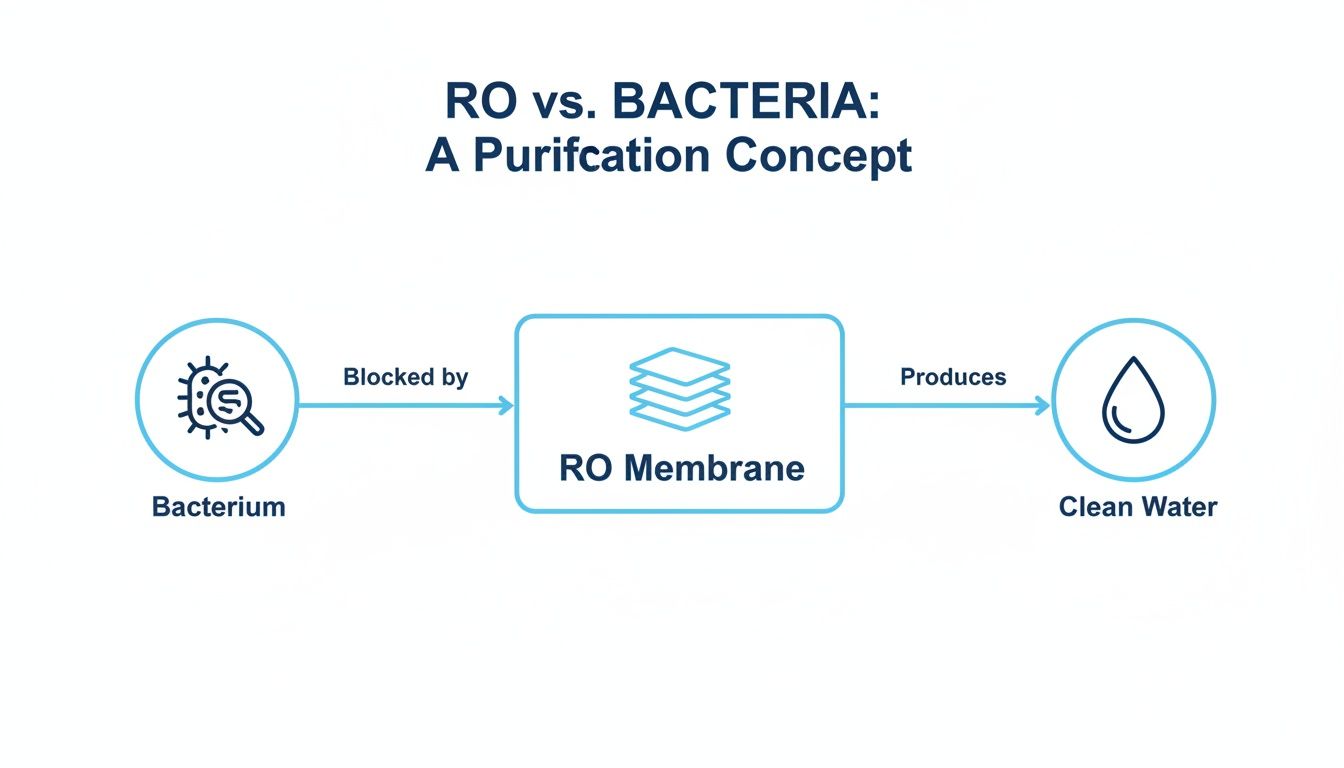
As you can see, the whole process hinges on a straightforward size-exclusion principle, cleanly separating pure water from nasty contaminants.
Wash Away the Unwanted Guests
So what happens to all the bacteria and other gunk that gets blocked? They don't just pile up and clog the membrane. As your water pressure pushes some water through the membrane to become purified drinking water, the rest of the water is designed to flow across the membrane's surface.
This cross-flowing stream of water is a built-in cleaning crew. It constantly sweeps away the rejected contaminants—bacteria, heavy metals, dissolved salts, you name it—and flushes them right down the drain with the wastewater. It's a clever design that lets the membrane work effectively for years without getting fouled up instantly.
This purely physical separation is what makes the answer to "does reverse osmosis remove bacteria?" such a confident yes. The system isn't trying to kill or zap the germs; it's just putting up a wall they can't get past.
Proven Performance Backed by Science
This isn't just theory, either. The power of this physical barrier is backed by a mountain of research. A huge systematic review that looked at 165 different scientific articles confirmed just how much of a powerhouse membrane filtration really is.
For bacteria, technologies like reverse osmosis achieved an average Log Reduction Value (LRV) of 4.5. But what on earth does that mean for your water?
An LRV of 4.5 translates to a 99.9968% removal rate. If you started with 100,000 bacteria in a glass of water, an RO system would leave only three or four behind. You can dig into the full findings of this comprehensive study to see the hard data yourself.
That level of performance is a powerful testament to the simple principle of size exclusion. The membrane physically strains out microbiological threats, giving you a reliable line of defense for your home's drinking water. But while the membrane is the hero of the story, its ability to protect you ultimately depends on the integrity of the entire system.
Why the RO Membrane Can't Do the Job Alone
Think of your RO membrane as the star goalie on a hockey team—it's incredibly good at stopping pucks, but it can't win the game all by itself. It needs a solid defense. Believing the membrane alone guarantees biologically safe water is a common, and frankly, risky assumption.
Even with its amazing power to block bacteria, a standard home RO system has a few weak spots. Relying solely on the membrane is like having a state-of-the-art bank vault but leaving the back door unlocked. To get truly bulletproof protection, you have to look at the whole system.
The Hidden Danger of Recontamination
One of the biggest issues is what happens after the water gets purified. Your RO system works slowly, filling a small storage tank under your sink so you have water ready when you turn on the faucet. That tank, along with the tubing and the faucet itself, can become a breeding ground for bacteria.
If any bacteria find their way into the system after the filter—maybe from a contaminated faucet spout or during a messy filter change—they can set up shop in the storage tank. This creates what's known as biofilm, a nasty, slimy layer of bacteria that loves dark, wet places.
The membrane might have done its job perfectly, but this recontamination completely undoes all that hard work, delivering contaminated water right to your glass. This is exactly why sanitizing your system during filter changes isn't just a "good idea"—it's a critical step.
When the Membrane Itself Fails
The second major point of failure is the membrane's physical condition. A high-quality RO membrane is tough, but it’s not invincible. Tiny tears, punctures, or even a bad seal can create microscopic highways for contaminants to sneak right past the filtration process.
These problems are far more common in cheap, low-quality systems or with a botched installation. Something as simple as a bad O-ring or a cracked filter housing can compromise the entire setup.
- Punctures or Tears: A tear the size of a pinhole is all it takes to let bacteria stream through.
- Improper Sealing: If the membrane housing isn't sealed tight, unfiltered water can just leak around the membrane and mix with the clean water on the other side.
- System Age: Like anything, parts wear out. Over time, plastic can degrade, increasing the risk of cracks and leaks.
This is why putting your money into a well-made system and making sure it's installed properly is so crucial for reliable performance.
The Unsung Heroes: Pre-Filters
Finally, the RO membrane needs a strong supporting cast: the pre-filters. These are the unsung heroes of your system, acting like bodyguards to protect the delicate and expensive RO membrane from getting wrecked.
Most RO systems will have at least two pre-filters:
- Sediment Filter: This is the first line of defense, catching bigger gunk like sand, rust, and dirt. Without it, these abrasive particles could physically tear or clog the RO membrane, killing it quickly.
- Carbon Block Filter: This filter is absolutely essential for removing chlorine. Cities treat our water with chlorine to kill bacteria in the pipes, but chlorine is brutal on RO membranes. It basically "burns" holes right through the thin-film material, destroying its ability to filter anything.
Even with a top-notch RO membrane, adding extra layers of protection is a smart move. For example, technologies like cleaning with UV light can add another layer of disinfection for total peace of mind. When you understand these vulnerabilities, it becomes clear why a complete system—not just one part—is the real key to safe, clean drinking water.
Building a Bulletproof Water Purification System at Home
If you want to move beyond a basic filter and create a truly comprehensive defense for your home's water, you need to think in layers. While a reverse osmosis membrane is a formidable barrier against bacteria on its own, pairing it with other technologies creates a system that's practically impenetrable. This is how you build a bulletproof setup right under your sink.
The whole idea is to create layers of protection, where each stage backs up the others. Think of it like a fortress: you have high walls, a deep moat, and skilled archers. Your water system can have multiple checkpoints, too. For this advanced setup, the star player is Ultraviolet (UV) sterilization—a powerful technology that acts as the final security guard for your water supply.
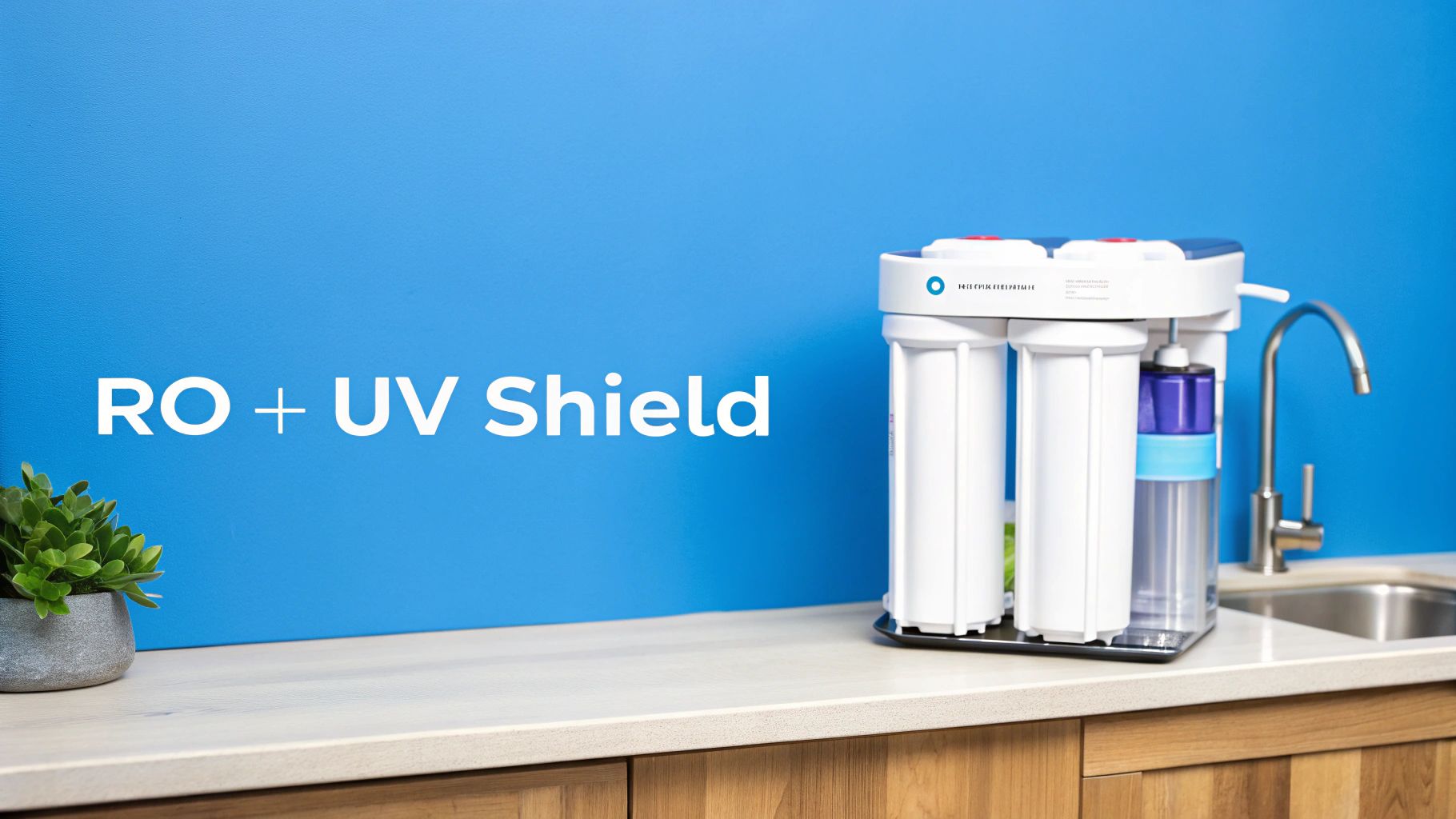
Adding UV to your RO system transforms it from a great filter into a complete purification powerhouse. You get true peace of mind against nearly all microbiological threats.
Introducing the Power of UV Sterilization
Think of a UV sterilizer as a silent, chemical-free assassin for germs. It’s a chamber that your water flows through right before it gets to your faucet. Inside, a special lamp emits a specific wavelength of UV-C light.
This light doesn't physically pull anything out of the water. What it does is target the very core of any living microorganism—its DNA and RNA. The intense UV energy scrambles their genetic code, making it impossible for them to reproduce or cause an infection. They are effectively neutralized on the spot. Harmless.
A UV sterilizer offers a final, non-chemical disinfection stage. It doesn't change the taste or odor of the water; it simply ensures that any bacteria, viruses, or cysts that might have slipped past a damaged membrane are zapped into oblivion.
This whole process is incredibly fast and effective. It provides an instant layer of security against any potential system failures or that dreaded post-filter recontamination.
RO Alone vs. RO Plus UV: The Ultimate Team-Up
So, what makes this combination so powerful? It’s all about redundancy. Reverse osmosis physically removes bacteria by blocking them, while UV sterilization neutralizes them with light. They tackle the same problem from two completely different angles, creating a safety net with no holes.
To really see the difference, it helps to compare an RO-only setup to a combined RO+UV system.
Comparing RO, UV, and Combined Systems for Bacterial Safety
This table breaks down the strengths and weaknesses of each approach, helping you decide what level of protection is right for your home.
| Feature | Reverse Osmosis (RO) Only | UV Sterilizer Only | RO + UV Combined System |
|---|---|---|---|
| Primary Function | Physically removes contaminants (bacteria, metals, salts) based on size. | Deactivates microorganisms (bacteria, viruses) by scrambling their DNA. | Physically removes contaminants, then deactivates any remaining microbes. |
| Effectiveness | 99%+ removal of bacteria, but vulnerable to membrane damage or tank recontamination. | Highly effective at killing germs, but does not remove any other contaminants like lead or chlorine. | Offers two layers of microbiological protection, ensuring near-total safety. |
| Best For | City water that is already biologically safe but has other contaminants. | Water that is clear of sediment but has known bacterial issues (e.g., some well water). | The highest level of protection for any water source, especially well water or homes with vulnerable individuals. |
| Weakness | A single point of failure (the membrane) can compromise bacterial safety. | Ineffective if water is cloudy or contains sediment, as particles can shield germs from the light. | Requires more space and initial investment, with two components to maintain (filters and UV lamp). |
As you can see, an RO system on its own is a fantastic filter. But when you add a UV sterilizer, you are no longer just filtering—you are actively purifying. The UV stage acts as a crucial failsafe, catching anything that might sneak through due to an unforeseen issue with the RO membrane or storage tank.
For a truly comprehensive system, especially in areas with hard water, many homeowners also choose to install a water softener before their RO unit to protect the membrane and boost its performance. Ultimately, the powerful duo of RO and UV gives you complete confidence that the answer to "does reverse osmosis remove bacteria?" is a definitive, multi-layered yes.
Keeping Your RO System in Fighting Shape
A reverse osmosis system isn't a "set it and forget it" appliance. It’s more like a partnership for pure water, and your side of the bargain is keeping up with maintenance.
Think of it like a high-performance car—you wouldn't just drive it for years without an oil change and expect it to run perfectly. Keeping your RO system in top condition is the only way to ensure it keeps doing its job: physically blocking bacteria and giving your family safe, clean water.
This isn’t about becoming a master plumber. It's really just about following a simple schedule. If you let it slide, you're not just losing efficiency; you could be turning your fancy filter into a breeding ground for the very contaminants you're trying to get rid of.
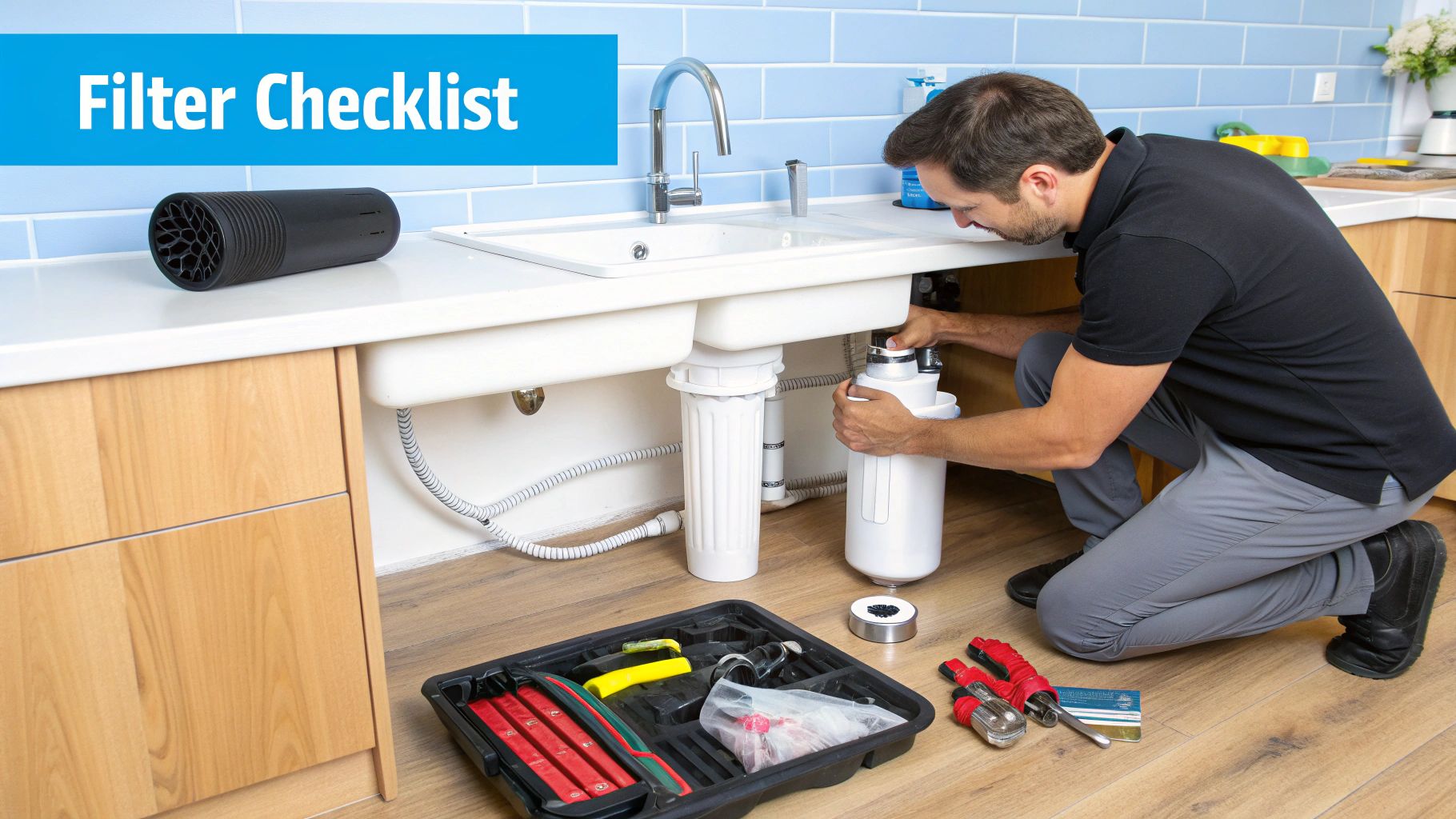
Your Essential Maintenance Checklist
Sticking to the filter replacement schedule is, without a doubt, the most important thing you can do. When filters get old and clogged, they don't just stop working—they can become loaded with trapped gunk, including bacteria, creating a slimy biofilm that ends up contaminating your water.
Pre-Filters (Sediment and Carbon): These are the bodyguards for the RO membrane. Plan on replacing them every 6 to 12 months. If you don't, chlorine can slip past and shred your delicate RO membrane, while sediment clogs it up.
RO Membrane: This is the heart of the whole system. As long as you take care of the pre-filters, the membrane itself can last a good 2 to 3 years. A failing membrane is a huge problem, as it means bacteria and other nasty stuff are no longer being reliably removed.
Post-Filter (Polishing Filter): This is the final step that makes your water taste crisp and clean. It should be changed every 12 months. An old one can grow bacteria and ruin all the hard work the other stages just did.
Neglecting filter changes is a recipe for disaster. The first thing you'll notice is probably a drop in water flow from your faucet, but the real risk is what you can't see—microbes getting through. An exhausted carbon filter can't stop chlorine, which then chews holes in the RO membrane, literally opening the door for bacteria.
Sanitizing for Complete Peace of Mind
Every time you swap out your filters, it's the perfect time to sanitize the whole system. This quick process zaps any potential bacterial growth that might have started in the storage tank, the tubing, or the filter housings. It's a simple but absolutely critical step to prevent recontamination.
Turn Off and Depressurize: First, shut off the water supply feeding the RO unit. Then, close the valve on top of the storage tank. Open your RO faucet and let it run until the system is completely empty.
Remove Old Filters: Pull out all the old filter cartridges and the RO membrane. Now is a great time to give the inside of the filter housings a good scrub with warm, soapy water and rinse them well.
Sanitize the System: You can use a small amount of regular, unscented household bleach or a sanitizer made specifically for RO systems (just follow the directions on the package). Pour it into the first filter housing and put the housings back on without any filters inside.
Flush and Refill: Turn the water supply back on. Let the system and the tank fill up with that sanitizing solution. Let it all sit for at least 30 minutes. After that, open the faucet and let the system flush itself out completely. You'll probably have to empty the tank a few times until you can't smell any chlorine.
Install New Filters: Once it's all flushed, turn everything off again. Now you can install your brand-new filters and membrane, then turn the system back on.
This straightforward routine ensures your system stays a fortress against bacteria, not a clubhouse for them. If you’re ever looking for more tips on taking care of different types of filters, you can find a ton of other water filtration advice to help you out.
How to Choose a System That Guarantees Bacterial Removal
When you're ready to invest in your family's health, walking into the water filter aisle can feel overwhelming. It’s a maze of technical jargon, confusing specs, and bold marketing claims. So, how do you cut through all that noise to find a system that actually delivers on its promise to remove bacteria?
The secret is to stop listening to the marketing and start looking for independent proof. Your best friend here is third-party certification. These aren't just fancy stickers slapped on a box; they're your guarantee that a system has been put through its paces by an independent lab and proven to meet strict public health and safety standards.
Decoding the Labels That Matter
To be certain a system can handle bacteria, you need to look for a specific combination of certifications. Don't fall for vague claims like "meets industry standards." You want to see these exact labels on the product packaging or in the user manual.
NSF/ANSI 58 (Reverse Osmosis Systems): This is the gold standard for any RO system. It certifies that the unit is effective at reducing a whole host of contaminants, including lead, arsenic, fluoride, and total dissolved solids (TDS). While this standard focuses on the RO membrane itself, it's the foundation of any high-quality system.
NSF/ANSI 55 (Ultraviolet Microbiological Water Treatment Systems): This is the one that really matters for biological threats. It's broken into two classes, and for bacterial disinfection, you must look for Class A. A Class A system is certified to disinfect water, killing or inactivating microorganisms like bacteria and viruses to make contaminated water safe. Class B systems are only rated for supplemental treatment on water that's already considered safe.
An NSF/ANSI 55 Class A certification is absolutely non-negotiable if your goal is guaranteed bacterial removal. It’s the only independent proof that the UV stage is powerful enough to neutralize microbiological threats and provide that critical safety net for your family.
Your Expert Shopping Checklist
Beyond the official certifications, a few other key features can separate a great system from an average one. As you compare different models, keep this simple checklist in mind to make sure you're getting a reliable, long-term solution.
- Integrated UV-C Sterilization: For the highest level of protection, don't just buy a standalone RO filter. Choose an integrated system that combines reverse osmosis with a powerful, built-in UV sterilizer. This creates the multi-barrier defense you need for true peace of mind.
- High-Quality Components: Look closer at the build quality. You want durable, lead-free materials, leak-proof fittings, and high-rejection RO membranes. Better components mean the system will last longer and perform more reliably day in and day out.
- Clear Maintenance Guides: The manufacturer should give you a simple, easy-to-understand schedule for replacing the filters and the UV lamp. Vague instructions are a red flag. Clear guidance empowers you to keep your system running at peak performance without any guesswork.
By focusing on systems with the right certifications and build quality, you can confidently pick a water filter that does more than just make your water taste better—it provides a proven, reliable barrier against bacteria.
Your Top RO and Bacteria Questions Answered
We get it. Even after digging into the details, you probably have a few specific questions popping into your head. Let's tackle some of the most common ones we hear from homeowners trying to decide if RO is the right move for them.
Can a Clogged RO Filter Actually Make Me Sick?
You bet it can. An old, maxed-out filter can turn into a breeding ground for bacteria. Instead of trapping contaminants, it can start dumping them back into your water. This completely defeats the whole point of having a filter and can become a genuine health risk. That's why sticking to the manufacturer's replacement schedule isn't just a suggestion—it's essential.
Does Reverse Osmosis Make Water Acidic?
By pulling out dissolved minerals, reverse osmosis can slightly lower the water's pH, making it a bit acidic. For most people, this is a non-issue and isn't considered a health concern. If you're set on having alkaline water, no problem. You can easily add a remineralization filter to your system which puts healthy minerals like calcium and magnesium back into the water.
What’s the Real Difference Between an RO System and My Faucet Filter?
Think of it like this: your standard faucet filter is mostly for improving taste and smell. It uses activated carbon, which is great for grabbing chlorine. But it does not create a physical barrier to stop bacteria.
Reverse osmosis is a whole different ballgame. It forces water through a super-fine membrane that physically blocks not just bacteria and viruses, but a huge list of other contaminants like lead, arsenic, and salts.
Key Takeaway: If you're looking for real microbiological protection, a standard filter just won't cut it. The answer to "does reverse osmosis remove bacteria" is a firm yes, and it's all thanks to that microscopic membrane—something a basic faucet filter simply doesn't have.
Is the Water in the RO Storage Tank Safe to Drink?
Absolutely, as long as the system is well-maintained. That tank is there to hold the purified water so you have it on demand. A critical part of maintenance is sanitizing the tank every time you change the filters. This quick step prevents any potential bacterial growth and ensures the water you pour is just as pure as it was right after passing through the membrane.
At Water Filter Advisor, our goal is to help you find the perfect water purification setup for your home. Dive into our expert reviews and buying guides to choose with confidence. Find out more at https://www.waterfilteradvisor.com.
- January 28, 2026
- 0
- Uncategorized
