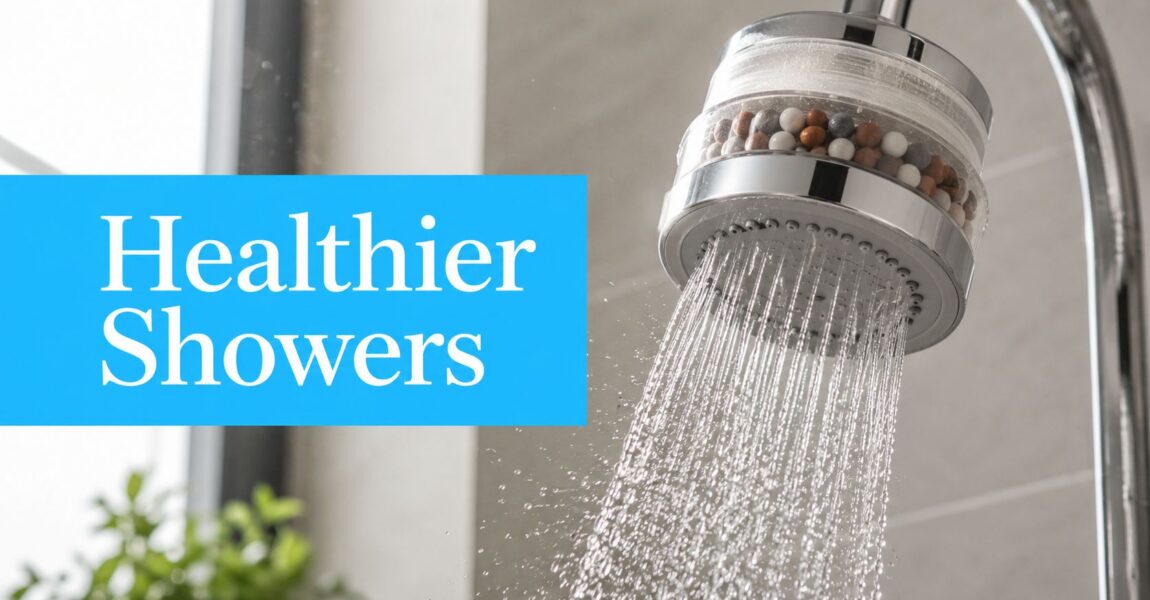
You're standing in a hot shower, hair dripping, skin feeling tight, and the water smells a little like a public pool. A lot of homeowners blame shampoo, soap, or weather first, but shower water itself is often a key variable. A chlorine filter shower head exists for exactly that moment, when you want to reduce what's coming out of the spray without rebuilding the whole house.
Chlorine is part of normal municipal disinfection, so seeing it in shower water isn't unusual. What matters is how that chemistry behaves at the showerhead, where warm water turns into fine droplets and steam, and those droplets touch skin, hair, and the air you breathe. If you're already reaching for comfort fixes, a gentle cleanser like olive oil shower cream for itch relief can help with dryness, but it doesn't change the water itself.
Why Shower Water Chemistry Matters in Your Bathroom
A shower is not the same as a kitchen tap. You're not just rinsing, you're bathing in warm water, breathing steam, and exposing your skin to whatever the supply line carries that morning. That's why chlorine complaints often show up as dry skin, dull hair, and that sharp “treated water” smell, even when the water is considered normal for a public system.
Municipal water is disinfected for a reason, and chlorine is one of the most common tools used to keep water safe on the way to your home. One reference notes that U.S. municipal water can contain about 0.2 to 4.0 ppm free chlorine Korea Consumer Agency and related technical summary. That range is wide enough that some households barely notice it, while others feel it every time they wash.
Why the shower feels different from the sink
Your shower creates contact in a way a drinking glass never does. Water hits your face, scalp, and body at high surface area, then becomes mist that lingers in the stall. In plain terms, the shower gives chlorine more chances to annoy you.
Practical rule: if the bathroom smell is strongest right after hot water runs, the shower is the right place to look first.
Homeowners often start with products aimed at the symptoms, like moisturizers or hair masks, which can absolutely help with comfort. But if the water itself is the trigger, those are only partial fixes. A more direct approach is to reduce the disinfectant before it reaches your skin and hair, which is why the chlorine filter shower head category exists at all.
What a Chlorine Filter Shower Head Actually Removes
The easiest way to understand shower filters is to treat the bathroom like a front door with three unwelcome guests. Free chlorine is the most common guest, chloramine is the stubborn one, and hardness is the mineral problem that leaves a mess behind. Marketing copy often blurs them together, but they're not the same issue.
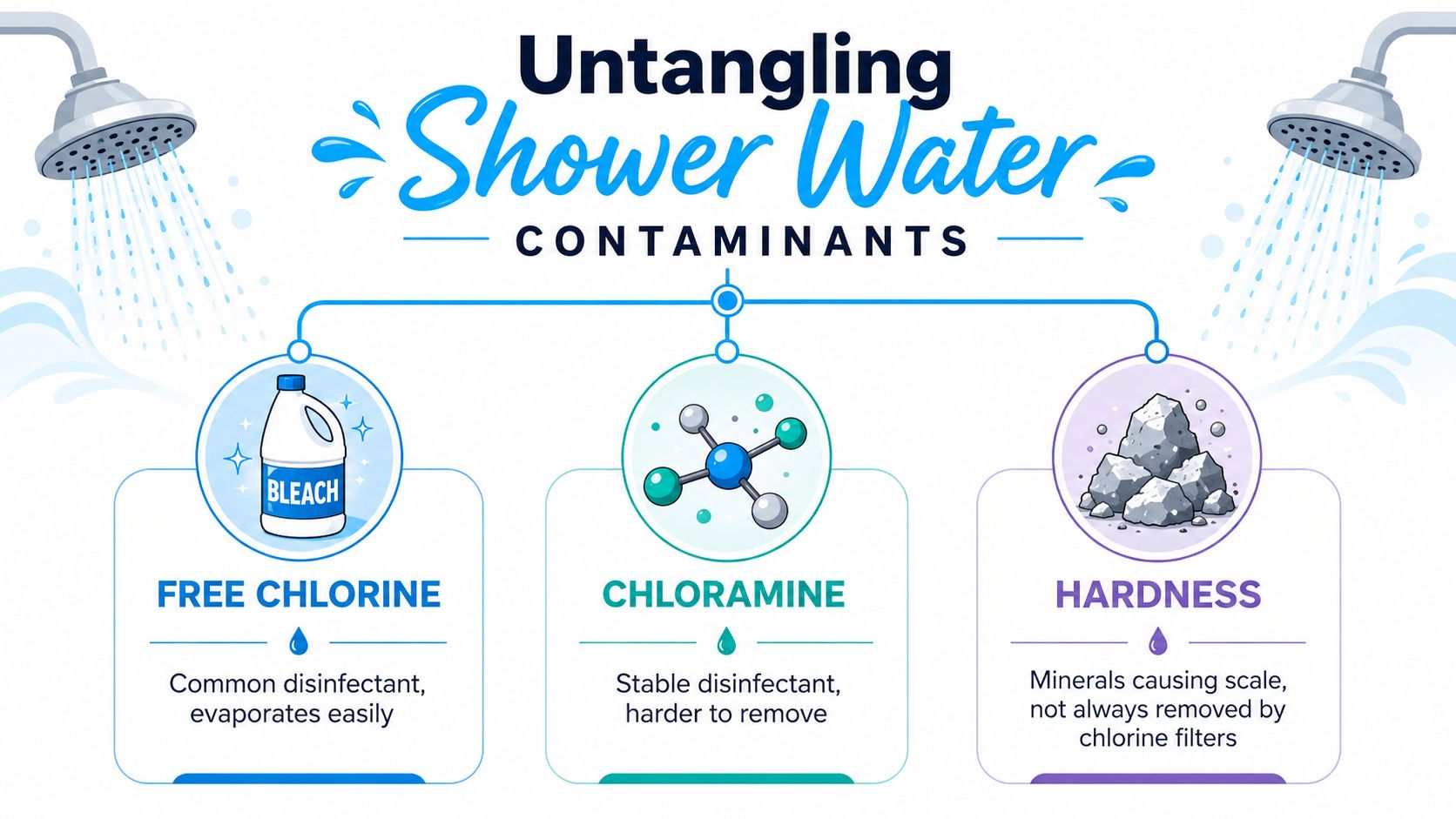
Free chlorine is the main target
A chlorine filter shower head is usually built to reduce free chlorine, the disinfectant commonly referred to as "chlorine in the shower." The credibility milestone here is NSF/ANSI 177, which is the standard for shower filters that reduce free chlorine in shower water Korea Consumer Agency technical summary. That matters because it shifts the category from advertising language to tested performance.
Independent testing has shown that good units can remove a lot of free chlorine. Kymera's Sprite Shower Master testing reported 96 to 100% chlorine removal at 103 to 105°F, falling to 83 to 91% at 82 to 84°F Kymera research page. Temperature changes the chemistry, so a shower filter isn't a magic wand, it's a reactive system with limits.
Chloramine is a different problem
Chloramine is more stable than free chlorine, which makes it harder to remove in a small shower cartridge. Some media can help, but many shower filters are mainly designed around free chlorine, not chloramine. If your utility uses chloramine, a shower filter may still help with odor or comfort, but it's often not the full answer Culligan on shower filters.
Hard water is not chlorine
Hardness means dissolved minerals, not disinfectant. A shower filter can reduce chlorine, but it doesn't soften water the way a dedicated softener does. That's why people sometimes buy a filtered showerhead and still complain about soap scum, dull hair, or residue.
Short version: chlorine filters treat disinfectant, not every water problem your shower can reveal.
Filtration Media Explained Without the Chemistry Degree
Once you know what you're trying to remove, the next question is how the cartridge does it. The answer depends on the media inside the housing, and most good shower filters rely on a combination rather than one miracle ingredient. A solid starting point for sorting options is a broader look at home water filtration options so you can see where shower-only filtration fits in the bigger picture.
KDF and activated carbon do different jobs
KDF-55 is a copper-zinc medium that works through a redox reaction, which is a controlled electron transfer process. The simple analogy is a magnet pulling rust flakes from a stream, except here the medium is helping alter the chemistry of chlorine and other compounds. It's common in shower filters because it tolerates hot water better than some alternatives and helps support longer cartridge life.
Coconut shell activated carbon acts more like a sponge with a strong preference for certain molecules. It's especially useful in combinations, because it gives the cartridge another way to trap or reduce unwanted compounds. In many shower products, KDF plus carbon is the standard pairing because each medium covers a weakness in the other.
The specialist media matter too
Calcium sulfite is the specialist when a design wants fast chlorine reduction in warm water. It's often used when a manufacturer wants strong performance in a compact format. Vitamin C media is another niche option, especially for people who want a non-metal approach, though it's typically seen in specific product lines rather than the broad mainstream.
Why spec sheets matter
If you're comparing cartridges, don't just look for the word “multi-stage.” Look for what the stages are and what problem each one is supposed to address. That's where the filtering logic lives.
A good spec sheet reads like a plumbing decision, not a perfume ad.
For homeowners comparing home systems alongside shower filters, Water Filter Advisor's advice pages can help you sort media, certifications, and replacement habits without getting lost in marketing language.
Shower Head Filters Compared to Inline and Whole-House Systems
A shower filter is one answer to one question, where does chlorine bother you most? If the answer is “only in the shower,” then point-of-use filtration may be enough. If the answer is “every tap, every rinse, every load of laundry,” then a bigger system starts making more sense.
| Option | Typical Media | Best For | Watch Out For |
|---|---|---|---|
| Shower Chlorine Reduction Options at a Glance | |||
| Filtered shower head | KDF, activated carbon, calcium sulfite, vitamin C | Renters and homeowners who want a simple fix at the shower | Usually targets one tap and may not address hardness |
| Inline shower filter | KDF, carbon, multi-stage blends | People who want to keep their current showerhead | Can be overlooked if flow or fitting is awkward |
| Whole-house system | Carbon, softening, or both | Households that want treatment at every tap | More involved and not just a bathroom project |
| Pitcher or under-sink filter | Carbon or specialty media | Drinking water and kitchen use | Doesn't touch shower water at all |
Where the shower filter fits
A showerhead or inline unit is the easiest install path. It stays focused on one use case, which makes it attractive for renters, small bathrooms, and people who want to improve shower comfort without changing the rest of the plumbing. That narrow scope is also the limitation.
Where whole-house systems win
If chlorine is affecting more than the shower, a whole-house filter treats every tap that brings water into the home. If hardness is part of the complaint, a softener enters the conversation too, because that's the tool that handles mineral scale. A shower filter can reduce what you feel in the stall, but it won't change the water in the kitchen or the laundry room.
How to think about point-of-use devices
Pitchers and under-sink units are useful, but they solve different problems. They're for drinking and cooking, not the shower. That's why homeowners sometimes own three different water tools and only one of them belongs in the bathroom.
How to Choose a Chlorine Filter Shower Head for Your Water
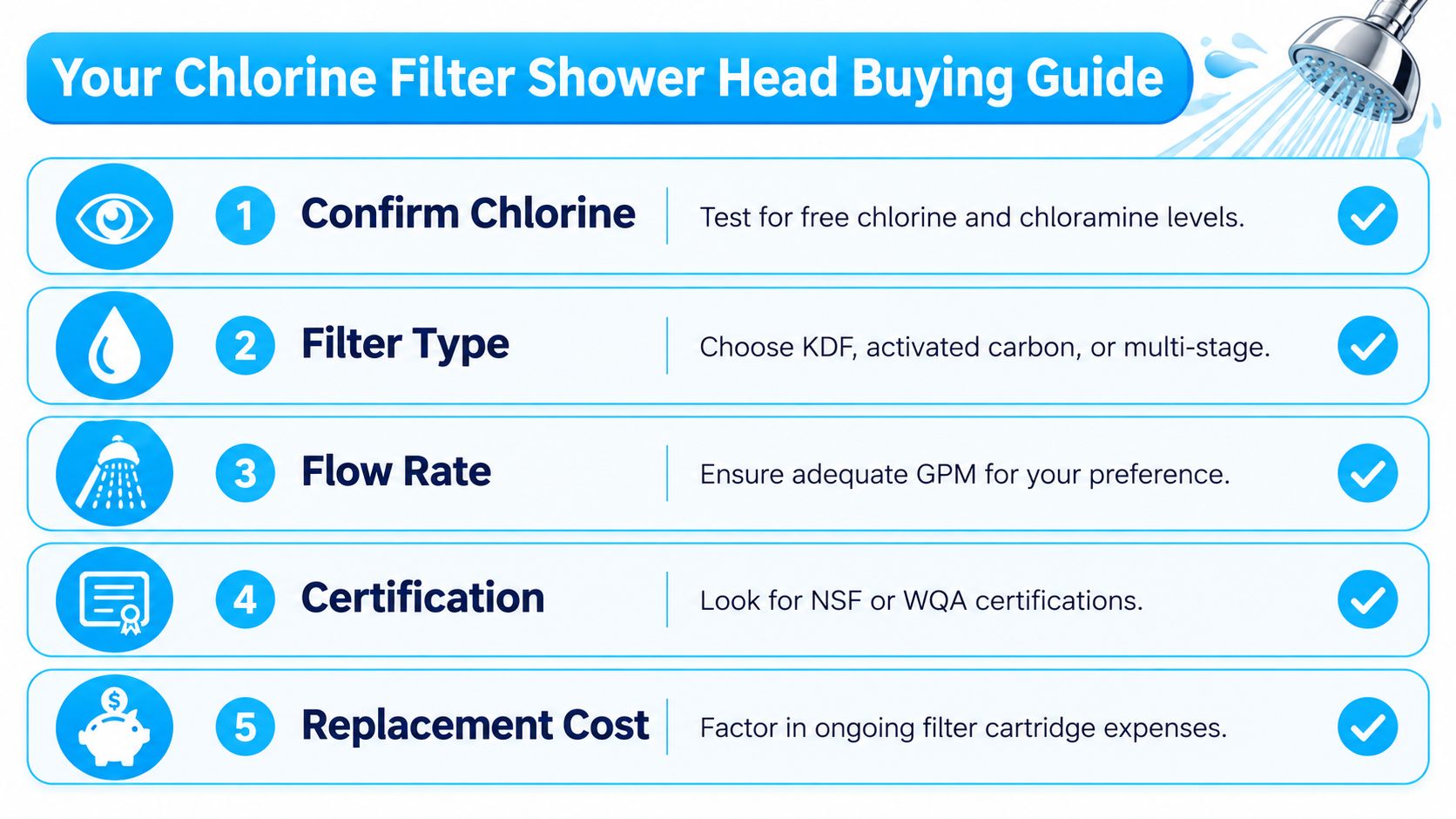
Start with your water report, not the product page. If your utility lists free chlorine, that gives you a reason to shop for a tested shower filter. If it lists chloramine, treat the purchase as a partial solution and check whether your overall home setup needs a different approach.
Match the fitting and the shower style
Most shower filters are built around the standard 1/2 in NPT thread Doulton shower cartridge specs. That's useful because it means many homes can swap units without changing the plumbing behind the wall. If you rent, a fixed filtered head or an inline unit may also be easier to reverse later.
Pay attention to flow, not just claims
Higher flow can reduce contact time, which affects how long water stays in the media. A product may promise strong filtration, but if the cartridge is too restricted for your preferred shower feel, you may not enjoy using it. Aquasana's filtered shower head, for example, lists 91% chlorine reduction, KDF plus coconut shell carbon, 1.75 gpm max filtered flow, and a 30 to 80 psi operating range Aquasana product listing.
Certifications beat vague percentage claims
Look for NSF/ANSI 177 when the goal is free chlorine reduction. That standard tells you the product was tested for the job it claims to do, instead of just decorating the box with performance language. If a listing says “removes 100%” but doesn't show how or under what conditions, treat that as advertising, not evidence.
For anyone planning a bathroom update, Modern Bathrooms' rain head shower guidance can help you think through the fixture style before you choose a filtered model. That matters because the shape of the showerhead can affect both comfort and filtration design.
Installing and Maintaining Your Shower Filter
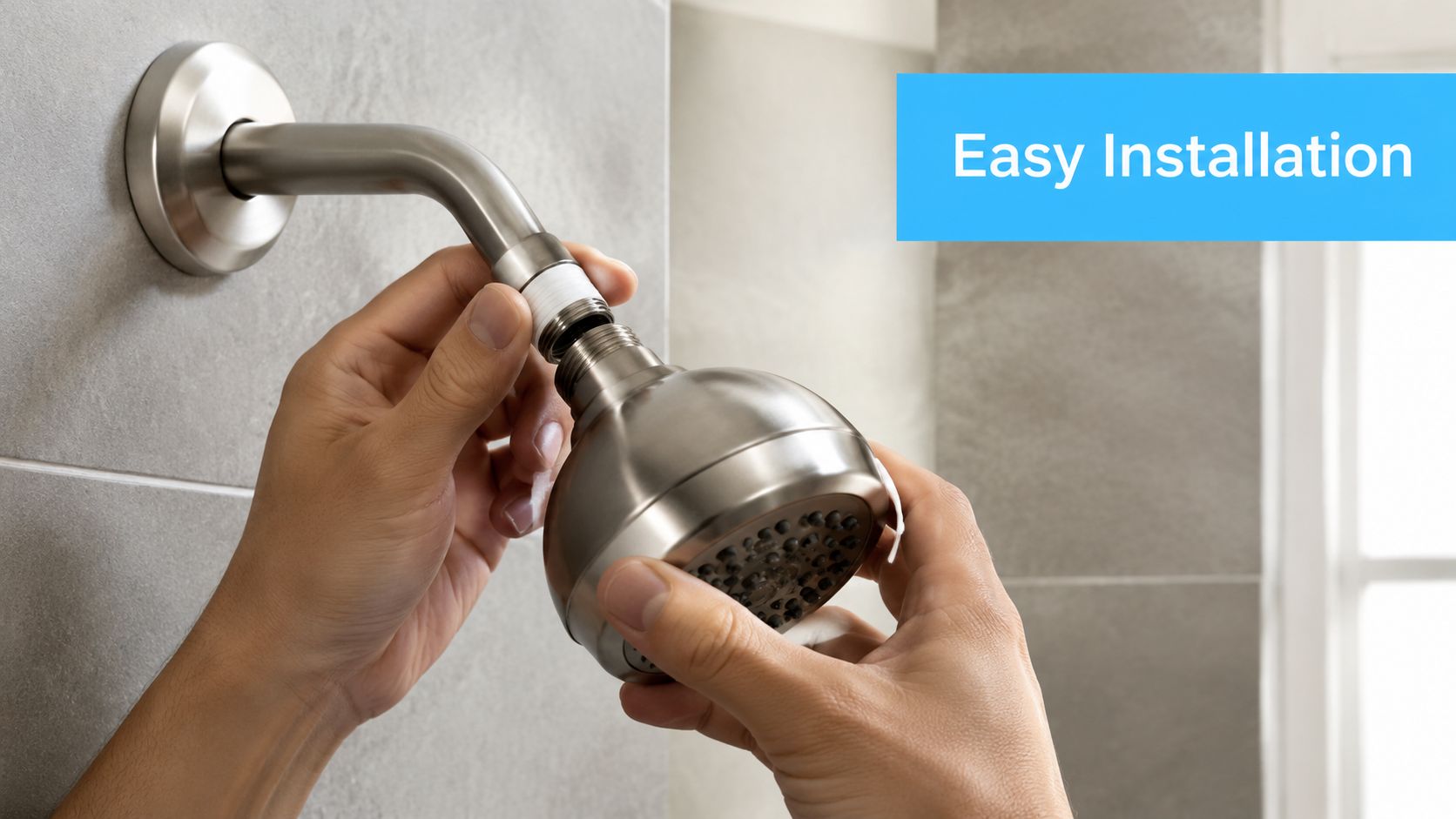
Most installations are quick enough to do before the water even cools. Shut off the shower, remove the old head, clean the threaded arm, wrap the threads with plumber's tape, and hand-tighten the new housing until it sits snug. Then run the water long enough to flush loose carbon dust or media fines before you judge the shower stream.
The first flush matters
New cartridges often need a short rinse before they're ready for normal use. That first flush clears loose particles from the housing and gives you a cleaner start. If the water looks cloudy for a minute, that's usually the cartridge settling, not a failure.
Maintenance is the part people forget
The most common reason a shower filter disappoints later is simple, the cartridge stayed in too long. Many systems are designed around gallons used or a replacement window measured in months, and the exact timing depends on your water quality and shower habits. If flow drops or the cartridge looks exhausted, don't wait for the shower to feel “bad” before swapping it.
Video walkthrough of shower filter installation
Build a small habit
Check the filter body every few weeks. Look for reduced spray, unusual discoloration, or any signs that the cartridge is nearing the end of its useful life. That small check keeps the unit from becoming decorative plumbing.
If a shower filter stops being maintained, it stops being a filter and starts being a housing.
Real Performance Expectations and Cost of Ownership
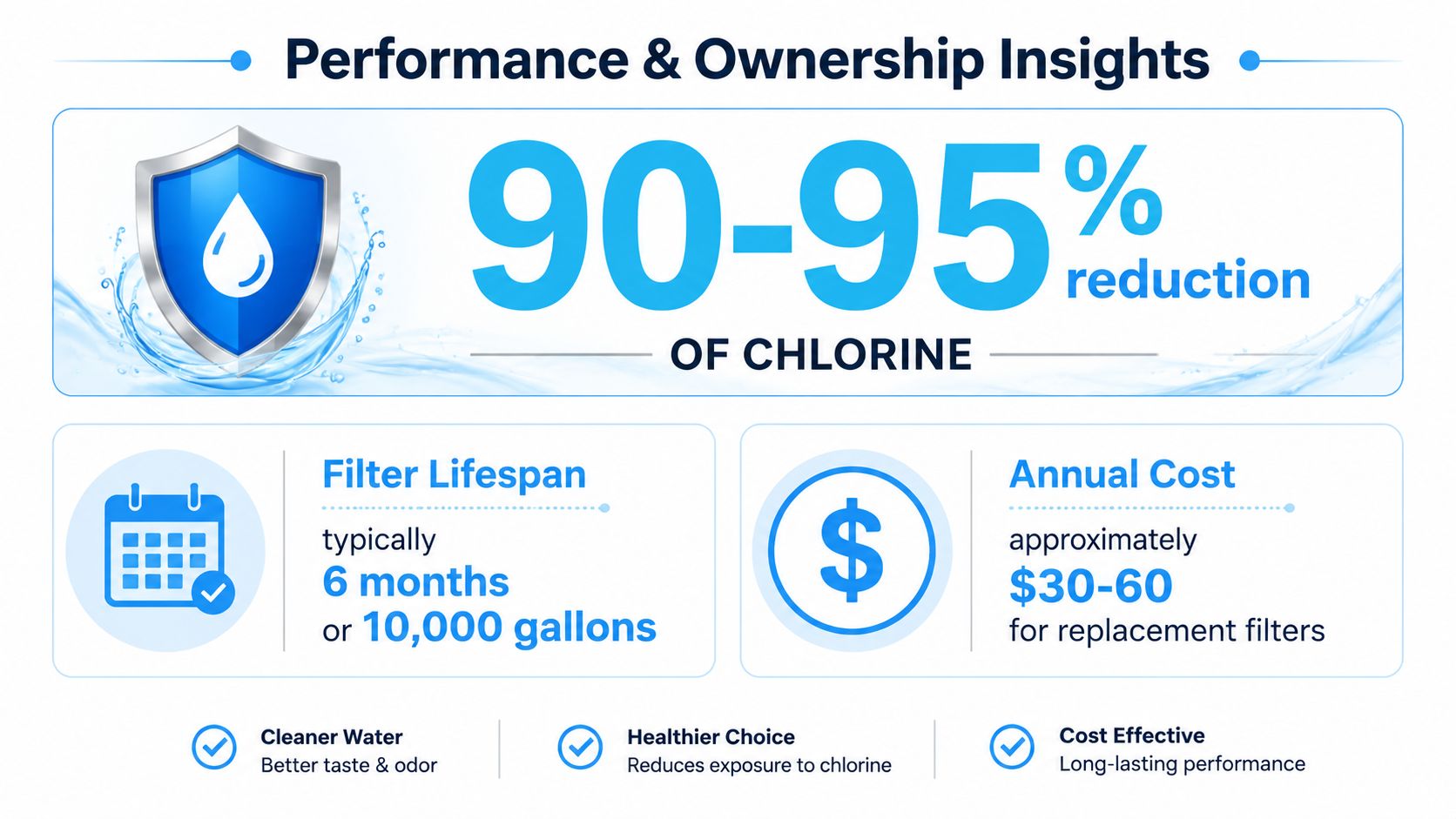
The most useful performance number is not what's printed in a headline, it's what happens under rated conditions. Quality shower filters commonly target 90 to 95% chlorine reduction at the right flow, but that performance depends on media loading, water temperature, and cartridge age consumer evidence review. Independent testing also shows the category is uneven, since Korea Consumer Agency found that 7 of 20 shower head filters sold online had an insufficient dechlorinating effect and removed less than 80% of residual chlorine in near-realistic use conditions Korea Consumer Agency test.
What strong performance looks like
A credible unit should show verified free-chlorine reduction, not just a promise. In product and lab-linked data, performance can range from excellent to modest depending on temperature and flow. A site-based lab result even reported one shower filter taking chlorine from 1.68 ppm to zero, which is a 100% removal reading on that colorimeter test Kymera lab page.
Lifespan and flow are part of the equation
Durability matters because a filter only helps while the media still has capacity. One filtered shower head reported an average 85.42% chlorine reduction over 3 months and testing to 10,000 gallons, with sample-table efficiency ranging roughly from 57.27% to 94.93% across usage points up to 10,000 gallons Kymera lab page. That spread is a reminder that a cartridge can perform well early and less impressively later.
Think in comfort, not just chemistry
A shower filter's real value is often easier mornings, less chlorine smell, and a better feel on hair and skin. Those are legitimate wins. The cost of ownership comes from the cartridge itself, plus the fact that higher flow or larger households can shorten the useful life of the media.
Deciding If a Chlorine Filter Shower Head Is Right for You
If your main complaint is dry skin, chlorine smell, or hair that feels rough after the shower, and your water report shows free chlorine, a quality certified shower filter is a sensible, renter-friendly place to start. It won't remake your plumbing, but it can reduce the disinfectant at the one tap where you notice it most. That's a practical win for a lot of households.
If your utility uses chloramine or your water is also hard, a shower filter becomes a partial fix rather than a complete one. In that case, a whole-house carbon system or a softener deserves a serious look, because those tools are built for broader treatment than the bathroom alone. A showerhead filter can still help, but it shouldn't be mistaken for the whole answer.
If your water already tests low in chlorine, the better move may be to spend your money elsewhere. You might get more comfort from a different shower fixture, a better skin-care routine, or a whole-home system if hardness is the true issue. The right tool depends on the water, not the marketing.
Water Filter Advisor helps households compare filtration media, certifications, and maintenance choices for shower filters and bigger home systems. If you want a clearer read on what your water needs, visit Water Filter Advisor and use the guides to match the filter to the problem before you buy.
- August 12, 2026
- Uncategorized
