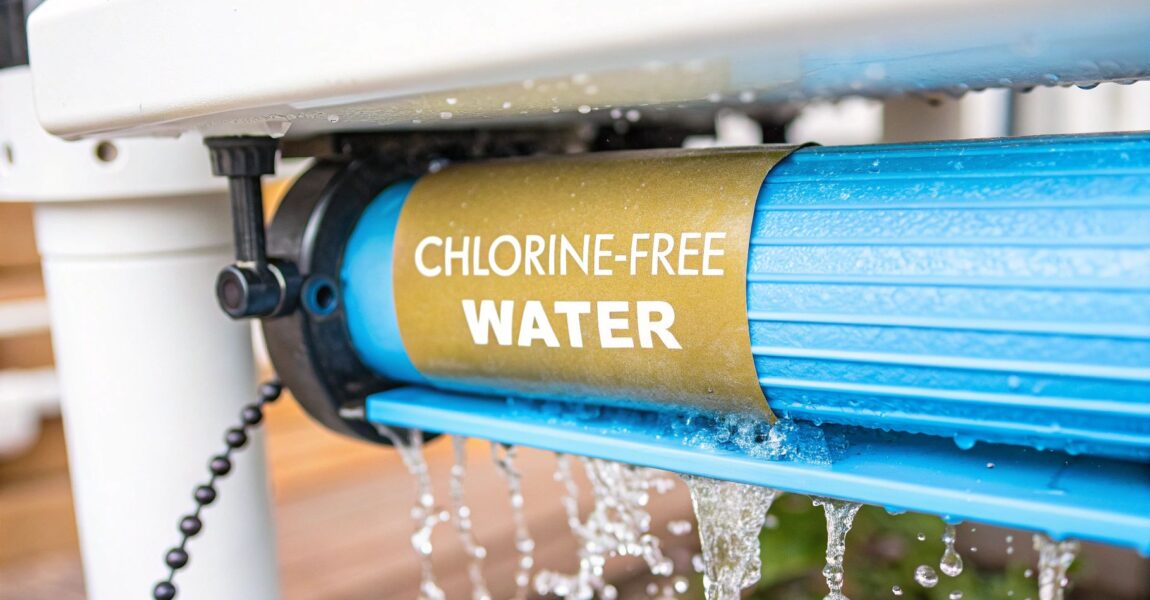
So, can reverse osmosis remove chlorine from your water? Yes, absolutely! An RO system is a fantastic way to banish that swimming-pool taste from your kitchen sink. But here's the plot twist: the famous reverse osmosis membrane, the superstar of the system, isn't the one doing the chlorine-busting. The real hero is a humble activated carbon filter that works as its bodyguard.
Let’s dive into how this dynamic duo gives you perfectly pure water, right from your tap.
Why Your Water Needs a Chlorine Bodyguard
Ever fill up a glass of water and get a whiff of the local pool? That's chlorine, and it’s in your tap water for a very good reason. Water treatment plants add it to annihilate nasty bacteria and viruses, keeping our public water supply safe. We can all thank chlorine for that.
But once that water reaches your home, chlorine’s job is done. What’s left behind is that distinct chemical taste and smell. Even worse, chlorine is a harsh chemical that can wreak havoc on the delicate machinery inside a high-tech water filter. This is where an RO system truly shines, using a clever, multi-stage process to transform your tap water into something spectacular.
The Chlorine Removal Teamwork
The real magic behind an RO system's chlorine-fighting power is the tag-team effort of two key players. First up is the activated carbon pre-filter, the bouncer at the door, specifically designed to grab chlorine molecules and stop them in their tracks.
Think of it as a bodyguard for the far more sensitive (and expensive) RO membrane that comes next in line.
This first step is non-negotiable. Chlorine is an oxidizer, meaning it will literally shred the microscopic pores of an RO membrane, ruining its ability to filter anything else.
The most crucial job of the carbon filter is protecting the reverse osmosis membrane. Without this pre-filtration step, the membrane's lifespan would be drastically shortened, and the entire system's performance would collapse.
This tag-team approach is incredibly effective. Nearly every home RO system includes an activated carbon pre-filter that strips out up to 99% of chlorine before the water gets anywhere near the main membrane. In U.S. cities where chlorine levels can hit 4 parts per million (ppm) to meet EPA standards, this pre-filter is the system's MVP. You can find more insights about RO performance on leafhome.com. This first stage is what lets us answer "can reverse osmosis remove chlorine?" with a confident yes.
How RO Systems Tackle Chlorine At A Glance
To make it crystal clear, let's break down how each part of a standard home RO system contributes to that perfect, chlorine-free glass of water. This table shows who’s doing what in the fight for pure water.
| Component | Primary Role | Effect on Chlorine | Impact on Water Quality |
|---|---|---|---|
| Carbon Pre-Filter | Adsorbs chemicals and contaminants | Removes up to 99% of free chlorine | Eliminates chlorine taste/odor and protects the RO membrane |
| RO Membrane | Separates dissolved solids from water | Minimal; not designed for chlorine removal | Removes a vast range of contaminants like lead, fluoride, and salts |
| Carbon Post-Filter | "Polishes" the water after the tank | Removes any lingering tastes or odors | Provides a final improvement to taste and purity before it hits your glass |
In short, while the RO membrane gets all the glory for making water ultra-pure, it’s the carbon filters that specifically target and neutralize chlorine, ensuring your whole system works flawlessly for years.
Meet The Carbon Filter: Chlorine's Kryptonite
While the reverse osmosis membrane is the brains of the operation, the real hero of chlorine removal is the activated carbon filter. Think of it as a chemical sponge with an impossibly huge surface area, packed with microscopic nooks and crannies just waiting to trap unwanted chemicals.
When your chlorinated tap water first enters the RO system, it flows straight into this carbon filter. What happens next isn't "filtering" in the normal sense; it's a process called adsorption. Instead of just blocking particles, the carbon's surface actively grabs onto chlorine molecules like a magnet and holds them tight, preventing them from going any further.
Granular Carbon Versus Carbon Blocks
Not all carbon filters are created equal. They typically come in two flavors, and knowing the difference is key to understanding why some RO systems for your home are better than others.
- Granular Activated Carbon (GAC): These filters contain loose bits of carbon. They work, but sometimes water can find an easy path and create little channels through the granules, letting some chlorine slip by. It's like a lazy river for water molecules.
- Solid Carbon Blocks: This is the good stuff. Finely powdered carbon is compressed into a dense, solid block, forcing water to navigate a complex maze. This ensures the water spends much more time in contact with the carbon, leading to far more thorough chlorine removal.
Because they're so much more effective, solid carbon blocks are the standard in any high-quality home RO system. They simply leave no escape route for chlorine. It’s these carbon pre-filters that allow modern RO systems to adsorb chlorine and other volatile organic compounds (VOCs) at rates higher than 99%. You can learn more about what else RO removes on frizzlife.com.
This pre-filter isn't just a nice-to-have feature; it's absolutely critical. Chlorine is a powerful oxidizer that will literally eat away at the delicate RO membrane, destroying it in short order. The carbon filter is a bodyguard, taking the hit to protect the main system.
Why Regular Filter Changes Are Crucial
Like a kitchen sponge, a carbon filter can only hold so much gunk. Over time, all its little pores get clogged with the chlorine and other impurities it has pulled from your water. Once it's full, it effectively clocks out and stops working.
When that happens, the carbon can no longer protect the RO membrane, and you'll probably start to notice that chlorine taste and smell creeping back into your water.
That's why sticking to the manufacturer's replacement schedule—usually every six to twelve months—is non-negotiable. Swapping out a carbon pre-filter is a cheap and easy task that protects the much bigger investment you made in the RO system itself. It’s the secret to keeping the whole setup working like new, year after year.
The Role Of The Reverse Osmosis Membrane
Once the carbon pre-filter has neutralized the chlorine, it's time for the star of the show to take the stage: the reverse osmosis membrane. This is where your ordinary tap water is transformed into something exceptionally pure through a filtration process so fine-tuned it operates on a molecular level.
Think of the RO membrane as the world's most exclusive bouncer. It has an incredibly strict guest list, and only pure water molecules are getting past the velvet rope. Your home's water pressure is all it takes to push water against this semi-permeable sheet. The pores in this membrane are ridiculously small—around 0.0001 microns—so only H₂O molecules are tiny enough to slip through.
Everything else? It gets turned away and flushed down the drain.
What The RO Membrane Actually Removes
This is where a home RO system truly earns its keep. The membrane is engineered to block a massive list of dissolved contaminants that most other filters can't even see. Its primary mission is to target and strip out the stuff that's chemically bonded with the water itself.
This includes a whole host of things you definitely don't want in your drinking glass:
- Heavy Metals: Nasty stuff like lead, arsenic, mercury, and chromium are stopped dead in their tracks.
- Dissolved Solids (TDS): This catches all the salts, nitrates, and other inorganic compounds that contribute to high TDS readings.
- Fluoride: The RO membrane is one of the single most effective ways to reduce fluoride added to municipal water supplies.
- PFAS: Those notorious "forever chemicals" that persist in the environment are also rejected by the RO process.
So, the RO membrane is the heart of the purification process. It tackles the most difficult contaminants, but it can only do its job safely because its bodyguard—the carbon pre-filter—has already taken out the damaging chlorine.
The Final Polish for Perfect Taste
After making its way through the membrane, the water is unbelievably pure. But most high-quality systems add one last step to guarantee a perfect glass of water every time. This purified water is held in a small storage tank under your sink, ready for when you need it.
Before that water ever gets to your faucet, it flows through a final carbon "post-filter." This last stage acts like a polishing filter, getting rid of any lingering off-tastes or odors the water may have picked up while sitting in the tank.
This finishing touch ensures the water you drink isn't just incredibly clean, but also has that crisp, refreshing taste you expect from bottled water. It's this complete, multi-stage approach—pre-filter, membrane, and post-filter—that makes a reverse osmosis system so incredibly good at delivering truly purified water right from your kitchen sink.
Chlorine vs. Chloramine: The Filtration Curveball
Just when you think you’ve got water figured out, your local water utility might throw you a curveball. A growing number of municipalities are now using chloramine instead of chlorine to disinfect the water supply. In fact, about one in five Americans now has chloramine-treated water piped into their home.
They both do the same job of killing germs, but they behave completely differently when they meet a water filter. Understanding this difference is critical to ensuring your home RO system is actually doing the job you hired it for.
Why Chloramine Is A Different Beast
So what’s the big deal? Chloramine is made by mixing chlorine with a little ammonia. This creates a much more stable chemical that sticks around in the water longer. That’s great for keeping pipes clean across a city, but it's a huge problem for the standard activated carbon filters we’ve been talking about.
The chemical bond in chloramine is simply too tough for regular carbon to break. A standard RO pre-filter that’s an all-star at removing chlorine will let a ton of chloramine pass right through. This doesn't just affect your water's taste; it sends a damaging chemical straight to the delicate RO membrane—the very component the pre-filter is supposed to protect!
The bottom line is simple: a standard carbon filter is the wrong tool for removing chloramine. Using one against chloramine is like trying to unlock a door with the wrong key—it just won’t work, and you might damage the lock in the process.
The Solution: Catalytic Carbon
So, what's the answer? You need a specialized type of filter media called catalytic carbon. Think of it as activated carbon that’s been given a superpower. Its surface has been modified to act as a catalyst, actively snapping that stubborn chlorine-ammonia bond.
This special process allows the filter to completely neutralize the chloramine, removing both the chlorine and ammonia components before they can do any harm. If your city uses chloramine, an RO system with a catalytic carbon pre-filter isn't just a good idea—it's an absolute necessity for your home.
Choosing The Right Filter: Chlorine vs. Chloramine
| Characteristic | Chlorine | Chloramine |
|---|---|---|
| Chemical Makeup | Simple chlorine (Cl) | Chlorine + Ammonia (NH₂Cl) |
| Stability | Less stable, dissipates quickly | Highly stable, lasts longer |
| Taste & Odor | Distinct "pool" smell | Milder, but can affect taste |
| Required Filter | Standard Activated Carbon | Catalytic Carbon is needed |
The easiest way to find out what your municipality uses is to check your local water utility’s annual water quality report, which is usually posted on their website. A quick search will tell you exactly what you’re dealing with, allowing you to pick a home RO system with the right pre-filter for the job.
What Else Does A Reverse Osmosis System Remove?
You came here wondering how to get rid of chlorine. What you've discovered is a system that provides a powerful, multi-layered defense against a massive range of water contaminants.
Choosing an RO system just for a chlorine problem is like hiring a world-class security team to stop a dog from barking. You end up with so much more protection than you ever imagined.
This isn't just about making your water taste and smell better. It’s about delivering genuine peace of mind by targeting all the unseen and unwelcome guests flowing from your tap. The whole system is engineered to catch a wide array of contaminants that other home water filters simply can't touch.
Beyond Chlorine: A Wider Net of Protection
The real beauty of a reverse osmosis system is its comprehensive approach. The same process that shields the membrane from chlorine also eliminates a host of other troublemakers in your water.
Here’s a quick rundown of what else a complete RO system is designed to kick to the curb:
- Heavy Metals: Lead from old pipes, arsenic, and mercury are all effectively rejected by that super-fine RO membrane.
- Nitrates and Sulfates: These dissolved salts, often from agricultural runoff, are easily removed.
- PFAS "Forever Chemicals": An RO membrane is one of the single most effective ways to remove these stubborn industrial chemicals right in your home.
- Disinfection Byproducts (DBPs): When chlorine mixes with organic matter in water, it can create nasty compounds like Trihalomethanes (TTHMs). That carbon pre-filter helps reduce these, too.
This multi-stage process provides a serious safety net. By knocking out chlorine first, the system lets the RO membrane do its job at peak efficiency, removing up to 99% of all total dissolved solids (TDS) from your water.
The numbers don't lie. While typical U.S. tap water has about 1.0-1.5 mg/L of chlorine, RO systems bring this down to practically zero. At the same time, the carbon and membrane stages work in tandem to achieve 90-99% removal of PFAS, 85-95% of fluoride, and a huge percentage of heavy metals. For more details, check out the EPA's overview of drinking water treatment technologies.
So, when you install a reverse osmosis system in your home to fix a chlorine issue, you're getting a solution that does so much more. You're investing in a purification process that ensures the water your family drinks isn't just better-tasting, but fundamentally safer and cleaner.
Choosing And Maintaining Your Home RO System
Alright, you’re ready to kick that chlorine taste out of your water for good. Picking the right reverse osmosis system for your home and keeping it running smoothly is actually pretty straightforward. With a little know-how, you can enjoy pure, clean water for years. It's a fantastic upgrade for any kitchen.
The first thing to look for is an official certification. A system that's NSF/ANSI 58 certified has been rigorously tested by independent labs to prove it really does what it claims. That seal is your guarantee that it will take care of chlorine and a whole lot more.

Upgrading Your Water Quality
A popular add-on for home RO systems is a remineralization filter. See, RO is so good at purifying that it strips out everything—including beneficial minerals like calcium and magnesium. A remineralization stage simply adds those healthy minerals back in after the water is purified.
This simple addition does two great things:
- It significantly improves the taste, giving you a smoother, more natural flavor instead of the "flat" taste some purified water has.
- It also bumps up the water's pH, balancing out the acidity and making it healthier to drink.
Keeping your system in top shape comes down to a simple, predictable maintenance schedule. Stick to it, and your water will stay pure and your system will be protected from damage.
Your Simple RO Maintenance Schedule
Changing the filters regularly is the absolute key to making your system last and ensuring it keeps pulling chlorine out effectively. The schedule can vary a bit between brands, but most follow a pretty standard, easy-to-manage timeline.
- Sediment & Carbon Pre-Filters: These are the frontline workers. Plan on swapping them out every 6 to 12 months to stop chlorine and sediment from ever reaching the membrane.
- RO Membrane: This is the heart of the operation. Because the pre-filters do such a great job protecting it, the membrane itself only needs to be replaced every 2 to 4 years.
- Carbon Post-Filter: This is the final polishing step. Change it every 12 months to keep your water tasting crisp and clean.
Follow these simple steps, and you'll have no trouble picking out a great home system and keeping it in perfect shape. For more detailed guides and tips, you might want to check out the extensive advice section on WaterFilterAdvisor.com.
Common Questions About RO Systems And Chlorine
Jumping into the world of home water filtration can feel a little overwhelming, but we’ve got your back. Here are some clear, no-nonsense answers to the most common questions homeowners ask about reverse osmosis and chlorine.
Will An RO System Affect My Kitchen's Water Pressure?
Nope, it won't touch the pressure at your main kitchen faucet. An under-sink RO system connects to its own dedicated, smaller faucet that gets installed right next to your main one.
The flow from the RO faucet itself is a bit slower—that’s the intensive purification process at work—but it fills a storage tank under your sink. This means you always have a few gallons of perfectly purified water ready to go, whenever you want it.
How Do I Know When To Change The Carbon Pre-Filter?
Most manufacturers suggest swapping it out every 6 to 12 months. But the best way to know for sure? Trust your senses.
If you suddenly notice that familiar chlorine taste or smell creeping back into your water, that’s your filter crying for help. It means the carbon is saturated and can't absorb any more chlorine, leaving your delicate RO membrane exposed. Change it right away.
Don't wait for a bad taste to be your only reminder. Sticking to a regular replacement schedule is the best way to ensure your system consistently removes chlorine and protects its most vital components from damage.
Beyond just filtering chlorine, understanding the broader health implications, such as the symptoms of chemical sensitivity, highlights the comprehensive benefits of clean water in creating a healthier living space.
Can I Install A Home Reverse Osmosis System Myself?
Absolutely. Most under-sink RO systems sold today are designed with DIY in mind. They usually come with easy-to-follow instructions, quick-connect fittings, and color-coded tubing that takes the guesswork out of installation.
If you’re comfortable with basic home plumbing tasks, you can likely get it done in an afternoon. If not, any plumber can handle the job quickly and ensure it’s a leak-free setup.
Ready to enjoy the purest, best-tasting water right from your kitchen sink? The experts at Water Filter Advisor provide in-depth guides and unbiased reviews to help you choose the perfect RO system for your home. Explore your options today at https://www.waterfilteradvisor.com.
- January 24, 2026
- 0
- Uncategorized
