Can Reverse Osmosis Remove Chlorine? Your Ultimate Guide to Pure, Great-Tasting Water

So, can reverse osmosis remove chlorine from your water? Yes, absolutely! An RO system is a fantastic way to banish that swimming-pool taste from your kitchen sink. But here's the plot twist: the famous reverse osmosis membrane, the superstar of the system, isn't the one doing the chlorine-busting. The real hero is a humble activated carbon filter that works as its bodyguard.

Let’s dive into how this dynamic duo gives you perfectly pure water, right from your tap.

Why Your Water Needs a Chlorine Bodyguard

Ever fill up a glass of water and get a whiff of the local pool? That's chlorine, and it’s in your tap water for a very good reason. Water treatment plants add it to annihilate nasty bacteria and viruses, keeping our public water supply safe. We can all thank chlorine for that.

But once that water reaches your home, chlorine’s job is done. What’s left behind is that distinct chemical taste and smell. Even worse, chlorine is a harsh chemical that can wreak havoc on the delicate machinery inside a high-tech water filter. This is where an RO system truly shines, using a clever, multi-stage process to transform your tap water into something spectacular.

The Chlorine Removal Teamwork

The real magic behind an RO system's chlorine-fighting power is the tag-team effort of two key players. First up is the activated carbon pre-filter, the bouncer at the door, specifically designed to grab chlorine molecules and stop them in their tracks.

Think of it as a bodyguard for the far more sensitive (and expensive) RO membrane that comes next in line.

This first step is non-negotiable. Chlorine is an oxidizer, meaning it will literally shred the microscopic pores of an RO membrane, ruining its ability to filter anything else.

The most crucial job of the carbon filter is protecting the reverse osmosis membrane. Without this pre-filtration step, the membrane's lifespan would be drastically shortened, and the entire system's performance would collapse.

This tag-team approach is incredibly effective. Nearly every home RO system includes an activated carbon pre-filter that strips out up to 99% of chlorine before the water gets anywhere near the main membrane. In U.S. cities where chlorine levels can hit 4 parts per million (ppm) to meet EPA standards, this pre-filter is the system's MVP. You can find more insights about RO performance on leafhome.com. This first stage is what lets us answer "can reverse osmosis remove chlorine?" with a confident yes.

How RO Systems Tackle Chlorine At A Glance

To make it crystal clear, let's break down how each part of a standard home RO system contributes to that perfect, chlorine-free glass of water. This table shows who’s doing what in the fight for pure water.

Component Primary Role Effect on Chlorine Impact on Water Quality
Carbon Pre-Filter Adsorbs chemicals and contaminants Removes up to 99% of free chlorine Eliminates chlorine taste/odor and protects the RO membrane
RO Membrane Separates dissolved solids from water Minimal; not designed for chlorine removal Removes a vast range of contaminants like lead, fluoride, and salts
Carbon Post-Filter "Polishes" the water after the tank Removes any lingering tastes or odors Provides a final improvement to taste and purity before it hits your glass

In short, while the RO membrane gets all the glory for making water ultra-pure, it’s the carbon filters that specifically target and neutralize chlorine, ensuring your whole system works flawlessly for years.

Meet The Carbon Filter: Chlorine's Kryptonite

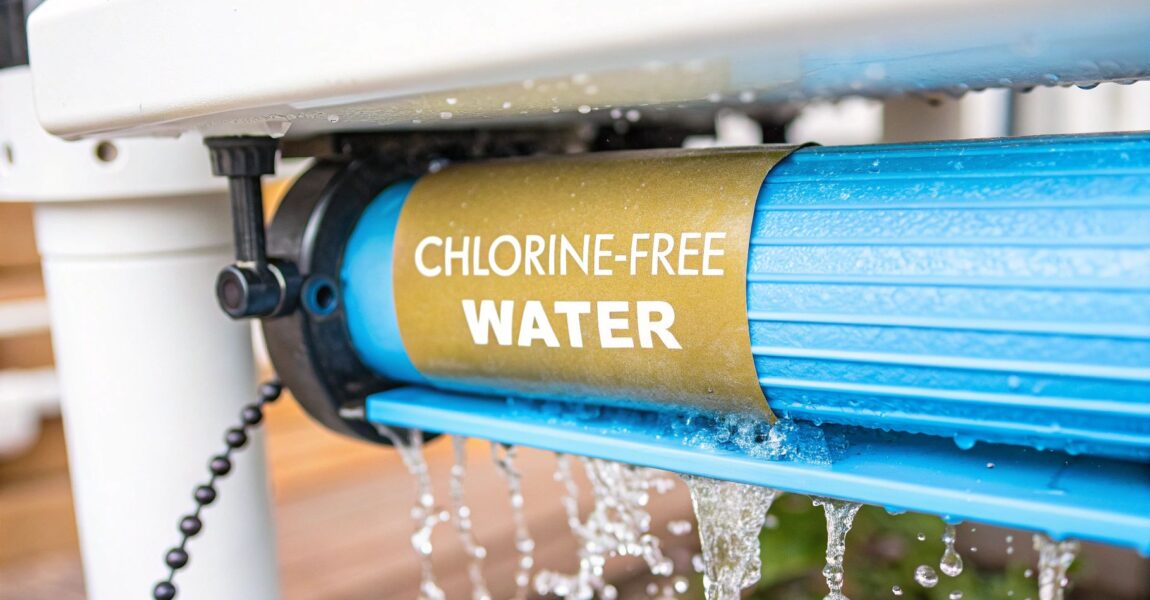
While the reverse osmosis membrane is the brains of the operation, the real hero of chlorine removal is the activated carbon filter. Think of it as a chemical sponge with an impossibly huge surface area, packed with microscopic nooks and crannies just waiting to trap unwanted chemicals.

When your chlorinated tap water first enters the RO system, it flows straight into this carbon filter. What happens next isn't "filtering" in the normal sense; it's a process called adsorption. Instead of just blocking particles, the carbon's surface actively grabs onto chlorine molecules like a magnet and holds them tight, preventing them from going any further.

Granular Carbon Versus Carbon Blocks

Not all carbon filters are created equal. They typically come in two flavors, and knowing the difference is key to understanding why some RO systems for your home are better than others.

  • Granular Activated Carbon (GAC): These filters contain loose bits of carbon. They work, but sometimes water can find an easy path and create little channels through the granules, letting some chlorine slip by. It's like a lazy river for water molecules.
  • Solid Carbon Blocks: This is the good stuff. Finely powdered carbon is compressed into a dense, solid block, forcing water to navigate a complex maze. This ensures the water spends much more time in contact with the carbon, leading to far more thorough chlorine removal.

Because they're so much more effective, solid carbon blocks are the standard in any high-quality home RO system. They simply leave no escape route for chlorine. It’s these carbon pre-filters that allow modern RO systems to adsorb chlorine and other volatile organic compounds (VOCs) at rates higher than 99%. You can learn more about what else RO removes on frizzlife.com.

This pre-filter isn't just a nice-to-have feature; it's absolutely critical. Chlorine is a powerful oxidizer that will literally eat away at the delicate RO membrane, destroying it in short order. The carbon filter is a bodyguard, taking the hit to protect the main system.

Why Regular Filter Changes Are Crucial

Like a kitchen sponge, a carbon filter can only hold so much gunk. Over time, all its little pores get clogged with the chlorine and other impurities it has pulled from your water. Once it's full, it effectively clocks out and stops working.

When that happens, the carbon can no longer protect the RO membrane, and you'll probably start to notice that chlorine taste and smell creeping back into your water.

That's why sticking to the manufacturer's replacement schedule—usually every six to twelve months—is non-negotiable. Swapping out a carbon pre-filter is a cheap and easy task that protects the much bigger investment you made in the RO system itself. It’s the secret to keeping the whole setup working like new, year after year.

The Role Of The Reverse Osmosis Membrane

Once the carbon pre-filter has neutralized the chlorine, it's time for the star of the show to take the stage: the reverse osmosis membrane. This is where your ordinary tap water is transformed into something exceptionally pure through a filtration process so fine-tuned it operates on a molecular level.

Think of the RO membrane as the world's most exclusive bouncer. It has an incredibly strict guest list, and only pure water molecules are getting past the velvet rope. Your home's water pressure is all it takes to push water against this semi-permeable sheet. The pores in this membrane are ridiculously small—around 0.0001 microns—so only H₂O molecules are tiny enough to slip through.

Everything else? It gets turned away and flushed down the drain.

What The RO Membrane Actually Removes

This is where a home RO system truly earns its keep. The membrane is engineered to block a massive list of dissolved contaminants that most other filters can't even see. Its primary mission is to target and strip out the stuff that's chemically bonded with the water itself.

This includes a whole host of things you definitely don't want in your drinking glass:

  • Heavy Metals: Nasty stuff like lead, arsenic, mercury, and chromium are stopped dead in their tracks.
  • Dissolved Solids (TDS): This catches all the salts, nitrates, and other inorganic compounds that contribute to high TDS readings.
  • Fluoride: The RO membrane is one of the single most effective ways to reduce fluoride added to municipal water supplies.
  • PFAS: Those notorious "forever chemicals" that persist in the environment are also rejected by the RO process.

So, the RO membrane is the heart of the purification process. It tackles the most difficult contaminants, but it can only do its job safely because its bodyguard—the carbon pre-filter—has already taken out the damaging chlorine.

The Final Polish for Perfect Taste

After making its way through the membrane, the water is unbelievably pure. But most high-quality systems add one last step to guarantee a perfect glass of water every time. This purified water is held in a small storage tank under your sink, ready for when you need it.

Before that water ever gets to your faucet, it flows through a final carbon "post-filter." This last stage acts like a polishing filter, getting rid of any lingering off-tastes or odors the water may have picked up while sitting in the tank.

This finishing touch ensures the water you drink isn't just incredibly clean, but also has that crisp, refreshing taste you expect from bottled water. It's this complete, multi-stage approach—pre-filter, membrane, and post-filter—that makes a reverse osmosis system so incredibly good at delivering truly purified water right from your kitchen sink.

Chlorine vs. Chloramine: The Filtration Curveball

Just when you think you’ve got water figured out, your local water utility might throw you a curveball. A growing number of municipalities are now using chloramine instead of chlorine to disinfect the water supply. In fact, about one in five Americans now has chloramine-treated water piped into their home.

They both do the same job of killing germs, but they behave completely differently when they meet a water filter. Understanding this difference is critical to ensuring your home RO system is actually doing the job you hired it for.

Why Chloramine Is A Different Beast

So what’s the big deal? Chloramine is made by mixing chlorine with a little ammonia. This creates a much more stable chemical that sticks around in the water longer. That’s great for keeping pipes clean across a city, but it's a huge problem for the standard activated carbon filters we’ve been talking about.

The chemical bond in chloramine is simply too tough for regular carbon to break. A standard RO pre-filter that’s an all-star at removing chlorine will let a ton of chloramine pass right through. This doesn't just affect your water's taste; it sends a damaging chemical straight to the delicate RO membrane—the very component the pre-filter is supposed to protect!

The bottom line is simple: a standard carbon filter is the wrong tool for removing chloramine. Using one against chloramine is like trying to unlock a door with the wrong key—it just won’t work, and you might damage the lock in the process.

The Solution: Catalytic Carbon

So, what's the answer? You need a specialized type of filter media called catalytic carbon. Think of it as activated carbon that’s been given a superpower. Its surface has been modified to act as a catalyst, actively snapping that stubborn chlorine-ammonia bond.

This special process allows the filter to completely neutralize the chloramine, removing both the chlorine and ammonia components before they can do any harm. If your city uses chloramine, an RO system with a catalytic carbon pre-filter isn't just a good idea—it's an absolute necessity for your home.

Choosing The Right Filter: Chlorine vs. Chloramine

Characteristic Chlorine Chloramine
Chemical Makeup Simple chlorine (Cl) Chlorine + Ammonia (NH₂Cl)
Stability Less stable, dissipates quickly Highly stable, lasts longer
Taste & Odor Distinct "pool" smell Milder, but can affect taste
Required Filter Standard Activated Carbon Catalytic Carbon is needed

The easiest way to find out what your municipality uses is to check your local water utility’s annual water quality report, which is usually posted on their website. A quick search will tell you exactly what you’re dealing with, allowing you to pick a home RO system with the right pre-filter for the job.

What Else Does A Reverse Osmosis System Remove?

You came here wondering how to get rid of chlorine. What you've discovered is a system that provides a powerful, multi-layered defense against a massive range of water contaminants.

Choosing an RO system just for a chlorine problem is like hiring a world-class security team to stop a dog from barking. You end up with so much more protection than you ever imagined.

This isn't just about making your water taste and smell better. It’s about delivering genuine peace of mind by targeting all the unseen and unwelcome guests flowing from your tap. The whole system is engineered to catch a wide array of contaminants that other home water filters simply can't touch.

Beyond Chlorine: A Wider Net of Protection

The real beauty of a reverse osmosis system is its comprehensive approach. The same process that shields the membrane from chlorine also eliminates a host of other troublemakers in your water.

Here’s a quick rundown of what else a complete RO system is designed to kick to the curb:

  • Heavy Metals: Lead from old pipes, arsenic, and mercury are all effectively rejected by that super-fine RO membrane.
  • Nitrates and Sulfates: These dissolved salts, often from agricultural runoff, are easily removed.
  • PFAS "Forever Chemicals": An RO membrane is one of the single most effective ways to remove these stubborn industrial chemicals right in your home.
  • Disinfection Byproducts (DBPs): When chlorine mixes with organic matter in water, it can create nasty compounds like Trihalomethanes (TTHMs). That carbon pre-filter helps reduce these, too.

This multi-stage process provides a serious safety net. By knocking out chlorine first, the system lets the RO membrane do its job at peak efficiency, removing up to 99% of all total dissolved solids (TDS) from your water.

The numbers don't lie. While typical U.S. tap water has about 1.0-1.5 mg/L of chlorine, RO systems bring this down to practically zero. At the same time, the carbon and membrane stages work in tandem to achieve 90-99% removal of PFAS, 85-95% of fluoride, and a huge percentage of heavy metals. For more details, check out the EPA's overview of drinking water treatment technologies.

So, when you install a reverse osmosis system in your home to fix a chlorine issue, you're getting a solution that does so much more. You're investing in a purification process that ensures the water your family drinks isn't just better-tasting, but fundamentally safer and cleaner.

Choosing And Maintaining Your Home RO System

Alright, you’re ready to kick that chlorine taste out of your water for good. Picking the right reverse osmosis system for your home and keeping it running smoothly is actually pretty straightforward. With a little know-how, you can enjoy pure, clean water for years. It's a fantastic upgrade for any kitchen.

The first thing to look for is an official certification. A system that's NSF/ANSI 58 certified has been rigorously tested by independent labs to prove it really does what it claims. That seal is your guarantee that it will take care of chlorine and a whole lot more.

Clear water in a glass, with laboratory test tubes in the background, highlights contaminant removal.

Upgrading Your Water Quality

A popular add-on for home RO systems is a remineralization filter. See, RO is so good at purifying that it strips out everything—including beneficial minerals like calcium and magnesium. A remineralization stage simply adds those healthy minerals back in after the water is purified.

This simple addition does two great things:

  • It significantly improves the taste, giving you a smoother, more natural flavor instead of the "flat" taste some purified water has.
  • It also bumps up the water's pH, balancing out the acidity and making it healthier to drink.

Keeping your system in top shape comes down to a simple, predictable maintenance schedule. Stick to it, and your water will stay pure and your system will be protected from damage.

Your Simple RO Maintenance Schedule

Changing the filters regularly is the absolute key to making your system last and ensuring it keeps pulling chlorine out effectively. The schedule can vary a bit between brands, but most follow a pretty standard, easy-to-manage timeline.

  • Sediment & Carbon Pre-Filters: These are the frontline workers. Plan on swapping them out every 6 to 12 months to stop chlorine and sediment from ever reaching the membrane.
  • RO Membrane: This is the heart of the operation. Because the pre-filters do such a great job protecting it, the membrane itself only needs to be replaced every 2 to 4 years.
  • Carbon Post-Filter: This is the final polishing step. Change it every 12 months to keep your water tasting crisp and clean.

Follow these simple steps, and you'll have no trouble picking out a great home system and keeping it in perfect shape. For more detailed guides and tips, you might want to check out the extensive advice section on WaterFilterAdvisor.com.

Common Questions About RO Systems And Chlorine

Jumping into the world of home water filtration can feel a little overwhelming, but we’ve got your back. Here are some clear, no-nonsense answers to the most common questions homeowners ask about reverse osmosis and chlorine.

Will An RO System Affect My Kitchen's Water Pressure?

Nope, it won't touch the pressure at your main kitchen faucet. An under-sink RO system connects to its own dedicated, smaller faucet that gets installed right next to your main one.

The flow from the RO faucet itself is a bit slower—that’s the intensive purification process at work—but it fills a storage tank under your sink. This means you always have a few gallons of perfectly purified water ready to go, whenever you want it.

How Do I Know When To Change The Carbon Pre-Filter?

Most manufacturers suggest swapping it out every 6 to 12 months. But the best way to know for sure? Trust your senses.

If you suddenly notice that familiar chlorine taste or smell creeping back into your water, that’s your filter crying for help. It means the carbon is saturated and can't absorb any more chlorine, leaving your delicate RO membrane exposed. Change it right away.

Don't wait for a bad taste to be your only reminder. Sticking to a regular replacement schedule is the best way to ensure your system consistently removes chlorine and protects its most vital components from damage.

Beyond just filtering chlorine, understanding the broader health implications, such as the symptoms of chemical sensitivity, highlights the comprehensive benefits of clean water in creating a healthier living space.

Can I Install A Home Reverse Osmosis System Myself?

Absolutely. Most under-sink RO systems sold today are designed with DIY in mind. They usually come with easy-to-follow instructions, quick-connect fittings, and color-coded tubing that takes the guesswork out of installation.

If you’re comfortable with basic home plumbing tasks, you can likely get it done in an afternoon. If not, any plumber can handle the job quickly and ensure it’s a leak-free setup.


Ready to enjoy the purest, best-tasting water right from your kitchen sink? The experts at Water Filter Advisor provide in-depth guides and unbiased reviews to help you choose the perfect RO system for your home. Explore your options today at https://www.waterfilteradvisor.com.
Can Reverse Osmosis Zap Bacteria? The Surprising Truth

So, you're eyeing that reverse osmosis system for your kitchen and wondering, "Can this thing really handle the nasty stuff, like bacteria?" The short answer is a big, confident yes. A well-maintained RO system isn't just a water filter; it's a microscopic bouncer, kicking nasty microbiological contaminants out of your drinking water.

It acts as a physical fortress, ensuring the water that fills your glass is incredibly pure and safe to drink.

How Reverse Osmosis Wins the Fight Against Bacteria

If you're even a little worried about what might be swimming in your tap water, you need a solution you can count on. Reverse osmosis is the heavyweight champion of home water filtration, designed to tackle these invisible threats right under your kitchen sink.

The real hero of the story is the RO membrane. This isn't just any filter; it's a high-tech sheet packed with microscopic pores measuring a ridiculously small 0.0001 microns. To give you some context, your average bacterium is a clumsy giant in comparison, measuring anywhere from 0.2 to 10 microns wide. In this game, size is everything—bacteria are simply too big to get through the door.

A Tough-as-Nails Physical Gatekeeper

Imagine the RO membrane as the world's most exclusive nightclub bouncer. It doesn't use chemicals or tricks to zap germs. Instead, it uses your home's water pressure to push tiny, pure water molecules through its super-fine surface while telling almost everything else, "You're not on the list."

This means it physically blocks and flushes away larger contaminants down the drain, including:

  • Bacteria like the notorious E. coli and Salmonella
  • Viruses that can ruin your week
  • Protozoa such as the dreaded Giardia and Cryptosporidium

This simple method of physical separation is what makes RO systems so incredibly reliable. In fact, the U.S. Centers for Disease Control and Prevention (CDC) points to reverse osmosis as a top-tier technology for kicking pathogens to the curb. A good system can get rid of more than 99% of bacteria, making it the go-to choice for homeowners who want genuine peace of mind with every sip.

A reverse osmosis system gives you a final, powerful line of defense right in your kitchen. It purifies the water you drink and cook with just moments before you use it.

By installing an RO system, you're putting a formidable barrier between your family and potential dangers lurking in both city and well water. It’s a foundational piece of any modern, safe home.

How Reverse Osmosis Performs Against Contaminants

To put it all in perspective, here's a quick look at how a typical residential RO system stacks up against various common contaminants. It's a true multi-stage workhorse.

Contaminant Type Example Typical Removal Rate
Microbiological E. coli, Giardia, Viruses 99%+
Heavy Metals Lead, Arsenic, Mercury 95% – 98%
Dissolved Solids Salt, Fluoride, Nitrates 90% – 99%
Chemicals Chlorine, Pesticides 98%+ (with carbon pre-filter)

As you can see, while RO is an absolute champion at removing bacteria and a wide range of other tough contaminants, its performance can depend on the specific substance. This is why multi-stage systems that include sediment and carbon filters are the standard.

How Reverse Osmosis Physically Blocks Bacteria

To really get how reverse osmosis (RO) handles bacteria, you have to think small. Really small. Imagine trying to shove a basketball through a keyhole—it’s just not going to happen. That’s the same genius principle behind an RO system, but on a microscopic level. It's a purely physical barrier, like a bouncer at a club who only lets the cool, small molecules through.

The heart of any RO system is its semipermeable membrane. This isn't your average coffee filter; it's an incredibly fine material with pores so tiny they're measured in angstroms. To put that in perspective, a typical RO membrane has pores around 0.0001 microns wide.

Now, let's talk about the bad guys. Bacteria like E. coli or Salmonella are tiny to us, but compared to an RO membrane's pores, they're absolute giants. A single bacterium can be anywhere from 0.2 to 10 microns in size, making it thousands of times too big to squeeze through. No VIP pass, no entry.

The Science of Size Exclusion

The process itself is both simple and powerful. Your home’s water pressure pushes water against this membrane. The water molecules, being exceptionally small, are forced through the tiny pores and collect on the other side as wonderfully purified water.

Meanwhile, all the larger contaminants get left behind. They simply can't pass through the membrane and are unceremoniously flushed down the drain. This rejected list includes a whole bunch of things you don't want in your glass:

  • Bacteria: Physically blocked and washed away.
  • Viruses: Also too large to pass through the 0.0001-micron pores.
  • Protozoan Cysts: Things like Giardia and Cryptosporidium don't stand a chance.
  • Dissolved Solids: This includes heavy metals like lead and arsenic, plus minerals like salt and fluoride.

This elegant process of "size exclusion" is what makes RO so incredibly effective. It doesn't need chemicals to kill or neutralize bacteria; it just flat-out denies them entry. So when someone asks, "can reverse osmosis remove bacteria?" the answer is a resounding yes—it physically separates them right out of your water.

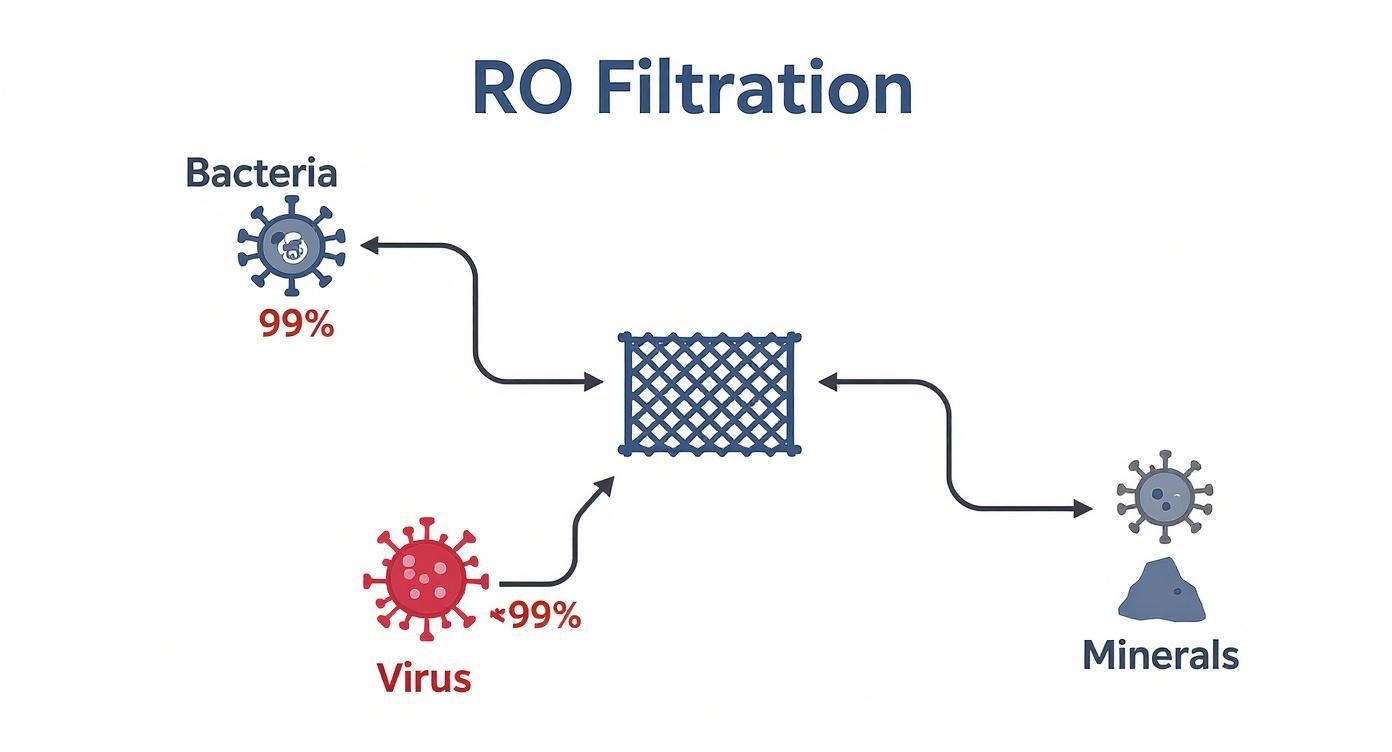
This diagram helps visualize how the RO membrane acts as a gatekeeper for different contaminants.

Reverse osmosis filtration diagram showing removal of bacteria, viruses, and minerals through membrane

As you can see, the membrane is a rock-solid barrier against not just bacteria, but also viruses and dissolved minerals, giving you truly comprehensive purification.

Proven Performance You Can Count On

And this isn't just talk—the effectiveness of reverse osmosis has been tested time and again. Its ability to remove bacteria is a well-documented scientific fact, not just a marketing claim. In fact, study after study shows that membrane filtration is one of the most reliable ways to achieve microbiological purification.

One major review of water treatment methods found that reverse osmosis achieved a bacterial removal rate of about 99.997%. That incredible level of performance is why RO isn't just used in homes; it's trusted in critical places like hospitals and bottled water plants. If you're curious, you can dive deeper into the research on membrane filtration effectiveness and see the data for yourself.

The real strength of reverse osmosis is its consistency. As long as the membrane is intact and the system has enough pressure, it will reliably block bacteria and other pathogens every single time you turn on the faucet.

This mechanical separation gives homeowners a powerful and dependable final line of defense. Even if your city issues a boil water advisory, a properly working RO system under your sink ensures the water you drink is still safe. It puts you back in control of your water quality.

Understanding the Limits of an RO System

A reverse osmosis system is an absolute beast when it comes to water purification, but it's not a "set it and forget it" magic box. Think of it like a high-performance sports car—it delivers breathtaking results, but only if you keep it tuned up. Its power to consistently block bacteria depends entirely on the system's integrity and your commitment to proper maintenance.

Knowing the system's limits isn't about being negative. It's about being smart so you can keep it running at peak performance, ensuring your family gets the safest, purest water possible.

Micropipette dropping water onto virus illustration demonstrating reverse osmosis system integrity and filtration

The Critical Role of Membrane Integrity

The heart and soul of an RO system is its semipermeable membrane. This is the super-fine barrier that physically stops bacteria in their tracks. But this membrane is delicate. Over time, it can get damaged, developing microscopic tears or holes you'd never see with the naked eye.

Even a single, tiny breach can become a microscopic superhighway, letting bacteria and other nasty contaminants sneak right past the filtration process. This is, without a doubt, the biggest vulnerability of any RO system. Once that membrane is compromised, it's no longer the near-perfect shield you're relying on.

This is exactly why routine maintenance and changing the membrane on schedule aren't just polite suggestions—they are absolutely essential to keep your system working like a true microbiological purifier.

The Unsung Heroes: Pre-Filters

Long before water ever gets to the RO membrane, it has to pass through a couple of other filters first. We call these pre-filters, and they are the unsung heroes of your system. They're the bodyguards, and their job is critical.

Typically, you'll have two kinds:

  • Sediment Filter: This is the bouncer at the front door. It grabs all the bigger stuff like sand, rust, and dirt. Without it, these gritty particles could literally scratch or tear the delicate RO membrane, dramatically shortening its life.
  • Carbon Filter: This filter's job is to remove chlorine and other chemicals. Chlorine, which is used to disinfect most city water, is incredibly harsh on the membrane's material. It can eat away at it over time, causing it to fail.

By taking out these threats first, the pre-filters allow the RO membrane to focus on what it does best: tackling the tiniest and toughest contaminants, including bacteria.

The Sneaky Risk of Post-Filtration Contamination

Okay, so your RO system has done its job perfectly. The bacteria are gone, and you have pristine water. But the journey isn't quite over. After being purified, that water chills out in a small storage tank under your sink before it gets to your faucet. This is where a new, sneaky risk can pop up.

If the tank, the tubing, or the faucet itself isn't kept clean, it's possible for new bacteria from the surrounding environment to get in and start a party. Now, super-pure RO water is a terrible place for bacteria to thrive, but it's not impossible.

The key thing to remember is that an RO system purifies water as it's being made, not at the very instant you turn on the faucet. This makes sanitizing the whole system every year—including the tank and faucet—a non-negotiable part of your maintenance routine.

Interestingly, research shows that while some biofilm can grow in RO systems, the total number of bacteria is far, far lower than what you'd find in regular tap water. This tells us that RO doesn't just remove bacteria, it also makes it harder for them to grow back. You can dig into the full findings on bacterial regrowth in RO systems if you want the nitty-gritty details. It just goes to show that while the risk is low and totally manageable, it's still there and reinforces why regular cleaning is so important.

Creating a Bulletproof System with UV Light

For anyone who wants the absolute highest level of water safety—especially if you're on well water—pairing a reverse osmosis system with an Ultraviolet (UV) purifier is the gold standard. Think of it as a one-two punch for microbiological safety. Your RO system physically blocks bacteria and viruses, while the UV light zaps anything that might, by some miracle, sneak through.

This combination gives you a powerful safety net. Even if a tiny, unseen tear were to form in the RO membrane, the UV stage is right there to neutralize the threat. It's the ultimate peace of mind in a glass of water.

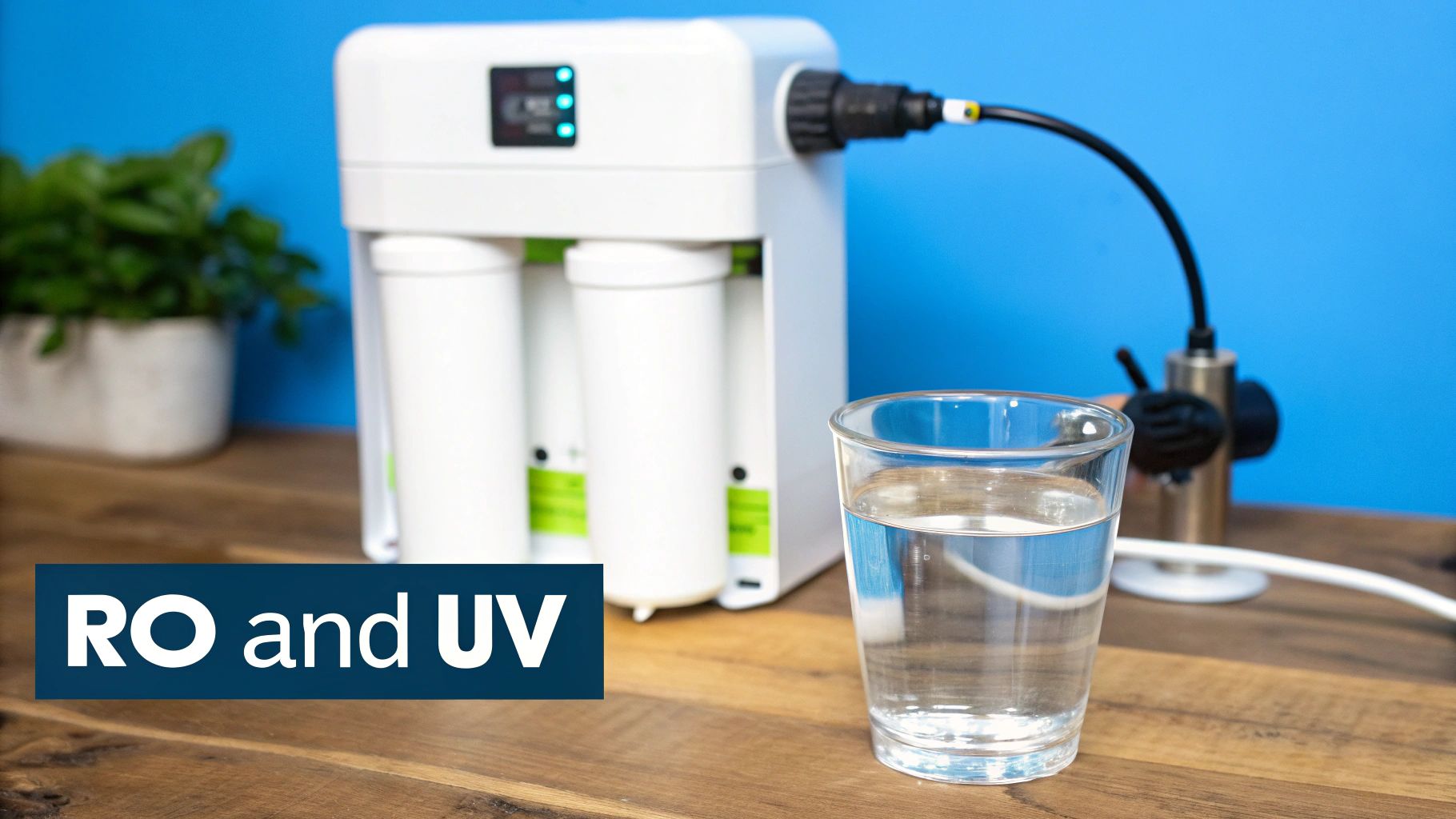
Reverse osmosis water filtration system with UV light purifier and glass of filtered water

How UV Light Neutralizes Microbes

So, how does this UV light stage work its magic? It's a brilliant and straightforward process. A UV purifier is a chamber that blasts water with a specific wavelength of ultraviolet light—254 nanometers, to be precise.

This light is a natural germicide. It doesn’t kill microbes with poison; instead, it completely scrambles their DNA and RNA as they pass by the lamp. This instantly destroys their ability to reproduce or cause any harm. It’s like giving them a fatal sunburn that makes them totally inert.

The best part is that this whole process is:

  • Chemical-Free: Nothing is added to your water, so there's no change to the taste or smell.
  • Extremely Fast: Purification happens instantly as the water flows through the chamber.
  • Highly Effective: UV is proven to neutralize 99.99% of common waterborne pathogens, including viruses that are too small for some filters to catch.

This combo provides a rock-solid answer to the question, "can reverse osmosis remove bacteria?" The RO membrane gets them out, and the UV light makes sure they stay out for good.

Comparing RO Alone vs an RO Plus UV System

While a standalone RO system is a fantastic filter, adding a UV stage takes your water purification to a whole new level. Deciding whether you need it often comes down to your water source and how much security you want against microscopic threats.

Here’s a quick breakdown of what each setup offers:

Feature Reverse Osmosis (Alone) Reverse Osmosis + UV Purifier
Primary Mechanism Physical barrier (membrane) Physical barrier plus germicidal light
Bacteria Removal Excellent (99%+ removal) Exceptional (Adds a 99.99% kill rate)
Virus Removal Excellent (99%+ removal) Exceptional (Targets even the smallest viruses)
Post-Filter Security Relies on system sanitation Actively sterilizes water just before the tap
Ideal For Most city water supplies Well water, boil advisory areas, immune-compromised households

The bottom line is that by adding a UV stage, you are no longer just filtering your water—you are actively sterilizing it. This is the best approach for anyone who simply can't afford to take risks with their water quality.

Is an RO/UV System Right for Your Home?

This powerful combination isn't necessary for every single household. If you're on a reliable city water system that is consistently free of microbiological problems, a high-quality RO system on its own is usually more than enough protection.

However, an RO/UV system becomes a critical investment in a few key situations. You should seriously consider this dual setup if:

  1. You use a private well. Well water isn't treated by a municipality and is much more likely to be contaminated by bacteria like E. coli from surface runoff.
  2. Your area has frequent boil water advisories. A combined system provides a reliable final barrier, protecting your family even when the public supply is compromised.
  3. You have vulnerable individuals at home. For households with infants, the elderly, or anyone with a compromised immune system, that extra layer of UV protection is invaluable.

Ultimately, combining RO with UV turns your water filter into a complete purification system. The RO handles the heavy lifting by removing everything from lead to salt, while the UV light delivers a final, targeted strike against any potential microbiological threat.

Your Simple Home Maintenance Checklist

Knowing how your reverse osmosis system works is great, but keeping it running like a well-oiled machine is what really counts. A properly maintained system is your number one defense against bacteria and other nasty stuff in your water. This checklist breaks down the essentials into simple, doable steps so your RO system can deliver pure, safe water for years to come.

Think of it like getting regular oil changes for your car. You wouldn't just skip them and hope for the best, right? The same logic applies here—a little consistent care goes a long way toward reliability and peace of mind.

Setting Your Filter Replacement Schedule

The filters are the workhorses of your RO system, and they need to be replaced on a strict schedule to keep that all-important RO membrane protected. If you want your system to actually remove bacteria, sticking to a replacement schedule is non-negotiable. Go ahead and mark these dates on your calendar or set a recurring reminder on your phone right now.

A typical RO system has a few different filter stages, and each has its own lifespan:

  • Sediment Pre-Filter: This one catches the big stuff like rust and dirt. You'll want to swap it out every 6 to 12 months to stop it from getting clogged and causing problems for the other, more delicate parts of the system.
  • Carbon Pre-Filter(s): These filters are crucial for removing chlorine, which will literally eat away at the RO membrane. Plan on replacing these every 6 to 12 months, too, as they lose their effectiveness over time.
  • RO Membrane: This is the heart of the whole operation. If you've been good about changing your pre-filters, the membrane itself should last a solid 2 to 3 years. You'll know it's time for a new one if your water production slows to a crawl or you notice a change in taste.
  • Carbon Post-Filter: This is the final "polishing" step that makes your water taste crisp and clean after it leaves the storage tank. Replace this one once a year to keep your water tasting great.

For a deeper dive into different filter types and how they all work together, you can find a ton of helpful resources and water filter advice from people who live and breathe this stuff.

Annual System Sanitization

Even with flawless filtration, the parts of the system after the membrane—like the storage tank, tubing, and faucet—can be a place for stray airborne bacteria to set up shop. This is exactly why an annual deep clean is so critical. Sanitizing the whole system once a year is a must-do step to prevent any bacterial regrowth and keep your water perfectly pristine.

The process is pretty simple. It usually just involves shutting off the water, draining everything, and then using a special food-safe sanitizing solution. You'll run the solution through the entire system, let it sit for a bit, and then flush it all out. Your RO system's manual should have detailed, step-by-step instructions to walk you through it.

Pro Tip: A great time to sanitize your system is whenever you replace the RO membrane. That way, you’re starting with a totally fresh and sterile environment for your newly purified water.

Choosing a System You Can Trust

If you're shopping for a new RO system or an RO/UV combo, don't let the price tag be your only guide. You absolutely need to look for third-party certifications that prove the system actually does what it says it does. These certifications are your guarantee that it's safe and performs as advertised.

Keep an eye out for these key labels on the box or in the product specs:

  • NSF/ANSI 58: This is the gold standard certification specifically for reverse osmosis systems. It confirms the system is effective at reducing a whole host of contaminants, including things like lead, arsenic, fluoride, and cysts. A system with this seal has been put through the wringer to meet strict public health standards.
  • NSF/ANSI 55 (Class A): If you're going for a system with a built-in UV light, this is the certification you need to see. Class A systems are rated for full-on disinfection—they're designed to kill bacteria and viruses in contaminated water, making them a safe bet for well water or other untreated sources.

By following this simple maintenance checklist and picking a certified system, you can rest easy knowing your reverse osmosis unit is an effective and reliable barrier against bacteria. Your diligence is the final, crucial step in securing safe and delicious drinking water for your home.

Common Questions About RO and Water Safety

Even after getting the hang of how reverse osmosis works, it's totally normal to have a few lingering questions. Let's walk through some of the most common things homeowners ask when they're thinking about an RO system to keep their family safe from bacteria and other nasty stuff.

Getting straight answers is the best way to feel good about the choice you're making for your home's water. Think of this as putting the final pieces of the puzzle in place.

Does Reverse Osmosis Remove Viruses Too?

That's a great question, and an important one. The answer is a big "yes." An RO membrane is an incredible barrier against viruses for the exact same reason it blocks bacteria—it all comes down to size.

Viruses are even smaller than bacteria, but they're still way too big to squeeze through the 0.0001-micron pores in the membrane.

That said, for total, bulletproof protection, you have to consider the real world. A tiny, microscopic flaw in a damaged membrane could theoretically let one of the absolute smallest viruses slip through. This is exactly why combining reverse osmosis with a UV light purifier is widely considered the gold standard for microbiological safety.

The RO system does the heavy lifting, acting as the main physical wall to stop over 99% of viruses. The UV light is your final, non-chemical safety net, zapping the DNA of anything that might have gotten past, making it completely harmless.

Is an RO System Necessary for City Water?

It's a fair point. Your city's water is treated and regulated to meet federal standards, so why bother with another filter? The simple answer is that a lot can happen to that water between the treatment plant and your kitchen faucet.

The water infrastructure in many parts of the country is old, and that creates contamination risks you have no control over. An RO system is your personal last line of defense right where you use your water.

Just think about these common situations:

  • Aging Pipes: Old pipes can rust and break down, potentially leaching lead and other contaminants into your water.
  • Water Main Breaks: When a major water line cracks, it can suck in untreated groundwater, bacteria, dirt, and whatever else is in the soil.
  • Boil Water Advisories: These get issued when your city finds a potential microbiological threat, meaning your tap water isn't safe to drink unless you boil it first.

In every one of those scenarios, a well-maintained RO system under your sink just keeps on working, giving you safe, purified water. It puts the control back in your hands, no matter what's going on with the pipes down the street.

How Will I Know When to Replace the RO Membrane?

The RO membrane is the heart of the whole operation, but it doesn't work forever. The good news is, your system will give you some pretty obvious signs when it's getting tired and needs to be replaced.

You don't need to be a water expert to see what's happening. Just pay attention to these three main clues that your RO membrane is on its way out:

  1. Slower Water Flow: This is usually the first thing people notice. Your RO faucet just doesn't fill a glass as fast as it used to. Over time, the membrane gets clogged up with all the contaminants it has filtered out, making it tougher for water to get through.
  2. Changes in Taste or Odor: If your RO water starts tasting or smelling more like your regular tap water, that’s a big red flag. It means the membrane isn't stripping out the dissolved solids that cause those off-flavors anymore.
  3. Higher TDS Meter Reading: For a more scientific check, grab an inexpensive handheld Total Dissolved Solids (TDS) meter. Test your tap water, then test your RO water. A healthy system should be rejecting over 90% of the solids. If that percentage starts to drop, you know the membrane is losing its punch and it's time for a new one.

At Water Filter Advisor, we believe every family deserves access to safe, great-tasting water. Our in-depth guides and unbiased reviews are designed to help you confidently choose the right filtration solution for your home. Explore our resources today at https://www.waterfilteradvisor.com.