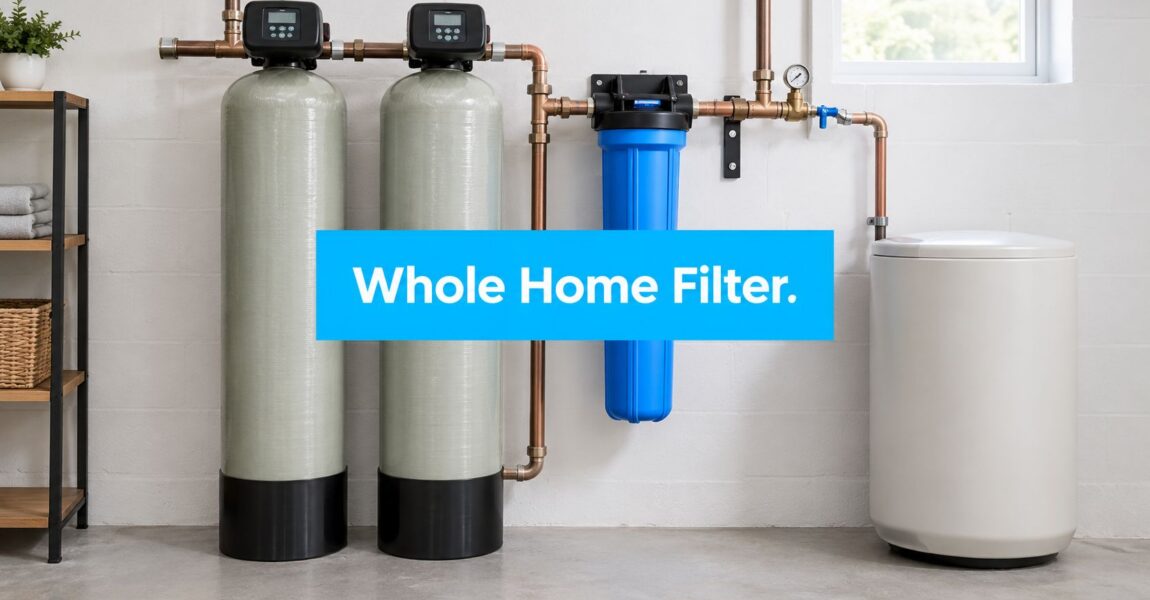
You fill a glass at the kitchen tap, start the shower, and run the washing machine. Although those outlets seem separate, the water usually traveled through the same main supply line before branching through your home. A full home water filtration system treats that incoming water at one central point, so filtration isn't limited to the glass in your hand. It can also affect shower water, laundry, water heaters, dishwashers, and other connected fixtures.
That broader coverage is why whole-house filtration has moved beyond a niche plumbing project. A recent market estimate valued the global whole-house water filtration market at $14.8 billion in 2025 and projected it to reach $28.6 billion by 2034, with a projected 7.6% compound annual growth rate over that period, according to Dataintelo's whole-house water filtration market estimate. The numbers describe market scale, but the homeowner question is more practical: do you need treatment at every outlet, or only at one drinking-water tap?
This guide focuses on the decisions that matter after the sales language fades. You'll learn how point-of-entry filtration works, why flow and pressure can matter as much as contaminant claims, how carbon differs from catalytic carbon, what to test before buying, and why disinfectant removal creates a maintenance responsibility. For additional homeowner guidance on comparing systems and replacement needs, explore this water filtration advice resource. If your property also needs dependable stored water, a guide to the benefits of residential water tanks can help you separate water storage from water treatment.
Introduction to Whole House Filtration at Home
A full home water filtration system changes the location of the treatment, not just the filter material. Instead of waiting until water reaches a pitcher, faucet, or showerhead, the system sits near where the main line enters the property. Every branch receives water after it passes through the selected filtration stages.
That can make a noticeable difference in everyday routines. You might taste less disinfectant at the kitchen tap, notice a different smell when hot water runs, or see fewer particles caught by fixture aerators. A shower filter can address one shower, and an under-sink cartridge can polish drinking water at one faucet, but neither treats the water traveling to the rest of the house.
A national survey cited by ASPE found that 77% of Americans used a water filter at home in 2022, compared with 73% in 2020. The same survey reported 12% using whole-home filtration, alongside 16% using faucet-mounted filters and 9% using under-sink systems, as described in Arizton's summary of home water filtration adoption. That context shows two things at once. Home filtration is a familiar household practice, while point-of-entry systems remain a distinct choice for people who want coverage beyond drinking water.
The morning test
Consider a household that starts the day with a glass of water, a shower, coffee, and a load of laundry. A kitchen-only filter helps with the glass and coffee, but the shower and washing machine still receive untreated water. A whole-house unit places one treatment layer before those uses split apart.
That doesn't automatically make whole-house filtration the right purchase. A homeowner who only dislikes the taste of drinking water may prefer a compact under-sink system. Someone concerned about odor at several fixtures, sediment entering the plumbing, or a consistent treatment approach throughout the property may have a stronger reason to consider point-of-entry equipment.
The useful question isn't, “Which filter removes the most?” It's where do you need treatment, what do you want reduced, and can the system deliver enough water without weakening household pressure?
How a Full Home Water Filtration System Works
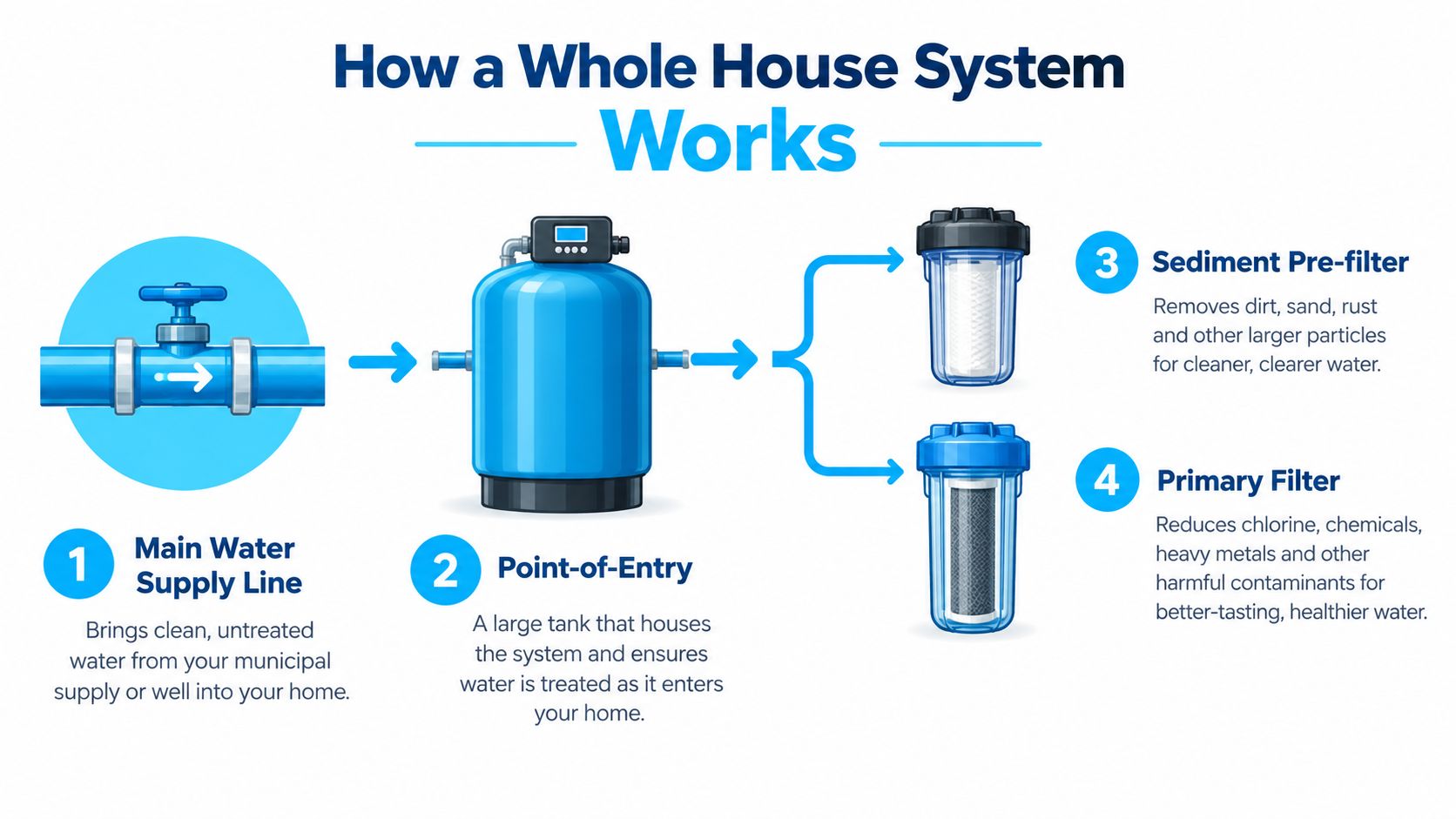
Start at the pipe, not the cartridge. A full-home water filtration system is generally installed on the main supply line as a point-of-entry setup. Water enters the property, passes through the system, and then travels toward faucets, showers, appliances, and other outlets. NSF's explanation of water treatment standards describes this architecture and explains why certification must be considered alongside flow and pressure.
Follow the water path
Main supply line. Municipal water or well water arrives through the property's incoming pipe. The system needs to be installed where the line can be isolated, serviced, and routed safely.
Sediment prefilter. This first stage catches physical material such as grit, rust particles, and other suspended debris. Its job is similar to a doormat. It stops the mess at the entrance so the more specialized media behind it doesn't become coated too quickly.
Primary treatment media. The water then moves through carbon, catalytic carbon, KDF-style redox media, or another medium selected for the target concern. The system addresses taste, odor, disinfectants, or specific contaminants covered by its tested claims.
Household distribution. Treated water continues through the plumbing network. The same treatment layer can reach the kitchen, bathroom, laundry area, water heater, and appliances.
The system must allow enough contact between water and media to support reduction while still moving water quickly enough for normal household use. Think of a highway toll booth. Too few open lanes create a traffic jam, but lanes that are too short or too fast may not give the process enough time to do its job. A larger tank, suitable media, and correct flow rating help balance those competing needs.
Read certification claims carefully
NSF/ANSI 42 generally relates to aesthetic effects such as chlorine, taste, and odor. NSF/ANSI 53 relates to health-related contaminant reduction, although the exact claim depends on the product and testing. A certification mark isn't a universal promise that the system removes every unwanted substance. It should match the specific contaminant and operating conditions you care about.
Pressure matters because the filter serves a building, not a single glass. A system that looks impressive on paper can still frustrate a household if its effective flow rate is too low or its media becomes restricted. Before buying, compare the system's tested claims with the flow your home needs during overlapping activities.
The video below offers another visual explanation of whole-house filtration and its plumbing position.
Whole House Versus Point of Use Filtration Compared
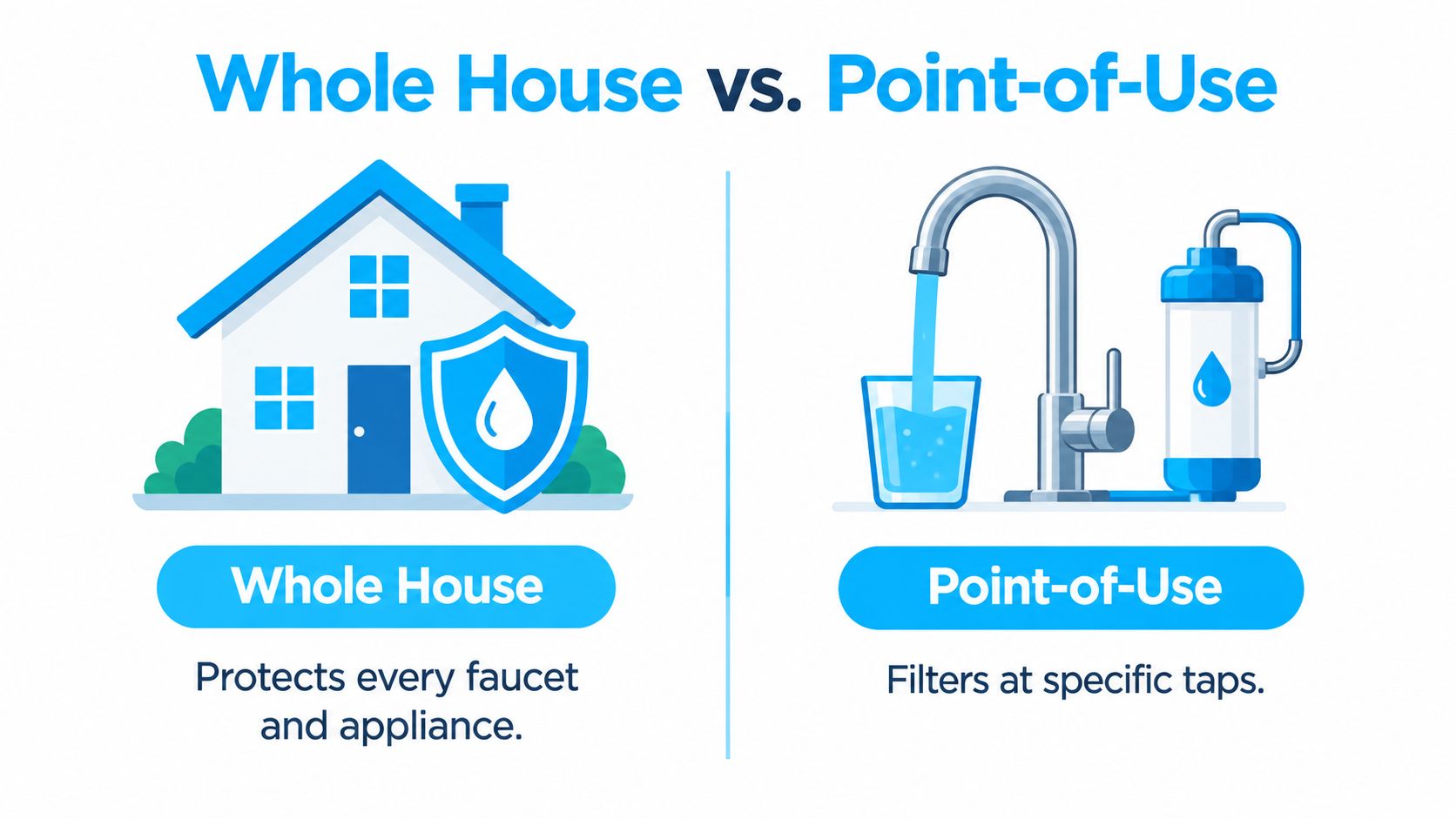
The difference is location. A whole-house system treats water before the plumbing branches, while a point-of-use system treats water at one selected outlet. Neither architecture wins every job.
Choose point-of-use filtration when your concern is limited to drinking and cooking water. An under-sink carbon filter or reverse osmosis system can focus treatment at the kitchen faucet without sizing equipment for every shower and appliance. A faucet-mounted filter offers an even simpler approach, though it remains tied to that fixture.
Choose point-of-entry filtration when you want a consistent treatment layer at multiple outlets. It can address whole-home taste and odor goals, provide a pre-treatment step for water entering the plumbing, and cover showers, laundry, and appliances. As this point-of-entry installation guide explains, treating water before it reaches taps, showers, appliances, and outdoor spigots makes sense when the goal is protection across the plumbing system rather than at one faucet.
Match the architecture to the job
A homeowner who notices a chlorine taste only while drinking may not need a large tank near the main line. A family that dislikes odor in multiple bathrooms, wants treated water for laundry, or needs sediment protection throughout the home has a broader use case.
| Feature | Whole House System | Point of Use Filter |
|---|---|---|
| Installation location | Main supply line before plumbing branches | One faucet, shower, refrigerator, or countertop |
| Coverage | Faucets, showers, appliances, and other connected outlets | Only the selected outlet |
| Main advantage | Consistent whole-home treatment | Focused treatment with a smaller footprint |
| Flow requirement | Must support household demand | Usually sized for one fixture |
| Best starting question | Do I want coverage throughout the property? | Which single outlet needs improvement? |
| Maintenance focus | Main-line access, prefilters, media, and pressure | Cartridge or membrane at the chosen fixture |
The two approaches can also coexist. For example, a whole-house carbon stage may improve general odor, while a separately certified under-sink system handles a drinking-water concern that requires more targeted treatment. The important point is to avoid assuming that whole-house filtration automatically replaces every specialized point-of-use technology.
Filtration Media and Stages That Power Whole House Systems
The tank is only the container. A whole-house system succeeds or struggles based on the media inside, the order of its stages, the water volume moving through them, and the contaminant the manufacturer has tested. These choices also affect pressure and service life, so a filter should be judged as part of the plumbing system, not as an isolated list of ingredients.
Sediment comes first
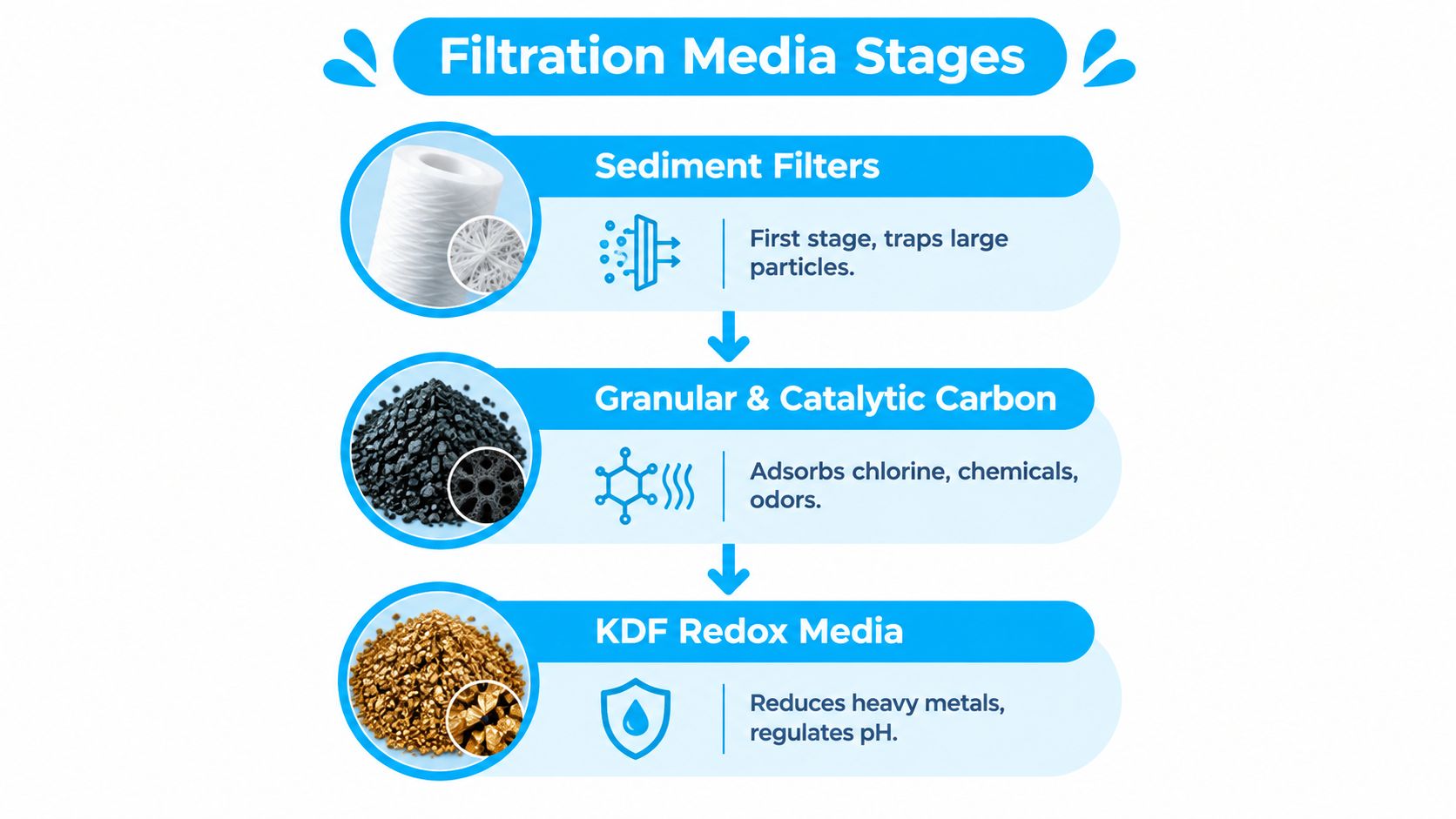
Sediment filtration protects the stages that follow. It catches physical particles before they reach carbon or reactive media, much like a coarse strainer protects a finer one. Homes with visible grit, rust flakes, or debris after plumbing work can use this stage to reduce early loading of the primary media.
Granular activated carbon works differently. It adsorbs certain compounds onto its surface and is commonly used to reduce chlorine, taste, and odor. It is not a universal contaminant remover. Water chemistry, contact time, media volume, and flow all influence the result.
Chloramine requires a closer match between the disinfectant and the media. NSF's discussion of NSF/ANSI 42, 53, and 401 filtration standards explains why the treatment claim and the tested conditions matter. Catalytic carbon, sometimes combined with reactive media, is generally preferred where chloramine or certain reduced sulfur compounds are present.
Pair stages for a reason
A common sequence places sediment filtration before catalytic carbon, then adds a reactive medium if the water profile calls for it. KDF-style redox media may help reduce certain metals and manage conditions that carbon alone does not address. Specialty media may target iron, hydrogen sulfide, or other verified concerns. Testing should guide that selection instead of a generic contaminant checklist.
Technical product information describes multi-stage systems that combine sediment prefiltration with catalytic carbon or KDF-style media. The arrangement can reduce fouling, support longer media service, and address chlorine, chloramine, hydrogen sulfide, or certain metals when the system is tested for those claims. One cited system reports up to 15 GPM flow and around 94.4% chloramine reduction under NSF/ANSI 42 testing, as documented in the product's NSF/ANSI 42 test report. Those figures also show the tradeoff: high flow and strong reduction depend on media selection, tank size, and contact time.
Media rule: Choose media for a verified water concern and a flow rate your plumbing can support. An impressive ingredient list is not enough.
A system designed for chlorine may perform differently against chloramine. A product marketed for “metals” may not cover every metal or concentration. Check the exact contaminant claim, applicable certification, test conditions, and the maintenance required to preserve performance.
Sizing Flow Rate and Installation Options for Your Home
Sizing starts with simultaneous use, not the number printed on a product box. A home may run a shower while a toilet refills, a washing machine draws water, or a dishwasher begins a cycle. The system must support the combined demand without creating an objectionable pressure drop.
Ask an installer to evaluate the incoming pipe size, available pressure, household fixtures, and the system's rated flow. Bigger isn't automatically better. An oversized unit can cost more and occupy more space, while an undersized unit can make normal activities feel restricted.
Sizing rule: Select a system that can meet your household's peak flow while preserving usable pressure at the fixtures you care about most.
Plan the installation point
Most installations sit after the main shutoff and before the line divides toward the water heater and interior fixtures. The installer may add a bypass valve so water can flow around the equipment during servicing. Pressure gauges before and after the filter can help reveal whether restriction is coming from the system or from a clogging cartridge.
Space planning deserves attention before the equipment arrives. Leave room to remove housings, replace cartridges, access valves, inspect connections, and manage any drain requirements. Outdoor installations also need protection from weather and accidental impact.
Decide who should install it
A professional plumber is the safer choice when the main line is difficult to access, the pipe material is unfamiliar, or the installation requires rerouting. A capable DIY homeowner may handle a simpler setup with clear instructions, proper shutoff access, and compatible fittings, but a leak at the entry point can affect the whole property.
Before installation, confirm:
- Pipe compatibility: Check the connection size and material against the existing plumbing.
- Service access: Make sure filter changes won't require dismantling nearby equipment.
- Bypass control: Verify that the household can receive water while the system is isolated.
- Pressure measurement: Install gauges when practical so future restriction is easier to diagnose.
- Flush and leak checks: The system should be flushed according to its instructions and inspected before normal use.
Maintenance Pressure and Lifecycle Costs Made Simple
A whole-house system is a working appliance in the plumbing line, not a set-and-forget ornament. Its ownership cost includes equipment, installation, replacement cartridges or media, testing, and the time needed to monitor performance.
Sediment cartridges usually need attention sooner when the incoming water carries more particles. Carbon media lasts according to water chemistry, usage, media capacity, and the manufacturer's service guidance. Rather than treating a calendar reminder as a guarantee, watch for changes in taste, odor, flow, and pressure while following the product's replacement schedule.
Pressure is a useful warning signal
A shower that gradually weakens may point to a clogged prefilter rather than a failure of the primary media. Pressure loss is commonly associated with system sizing and clogging. A clean 10-inch carbon block can drop about 3 PSI at 5 GPM, while the same cartridge loaded with sediment can lose 15 to 20 PSI, enough to make shower flow noticeably weaker, according to this technical explanation of domestic filter pressure loss.
A pressure gauge before and after the filter turns a vague complaint into a useful comparison. If the difference grows, inspect the prefilter and cartridge before assuming the entire system needs replacement.
Disinfectant removal creates responsibility
Chlorine and chloramine help control microbial growth in distribution systems. A point-of-entry carbon filter that removes disinfectant throughout the home can leave plumbing water with little or no residual protection. Public health guidance warns that bacteria may grow unchecked in household pipes when disinfectant is removed, especially if the system is poorly maintained.
This concern doesn't mean whole-house carbon is automatically unsafe. It means the design and maintenance plan matter. Hawaii public health guidance on home water treatment highlights the risk of microbial growth after disinfectant removal and the importance of preventing filter neglect. Well-water users should be especially careful because their water source, treatment steps, and microbial risks differ from those of a municipal supply.
Test before you spend
Many homeowners buy filtration after a chlorine smell, an unpleasant taste, or a widely reported contamination event. Those concerns are understandable, but sensory impressions don't identify every contaminant. Independent guidance from the University of Missouri Extension on selecting home water treatment recommends testing for suspected contaminants before choosing equipment and explains that no single test proves water is safe.
Build the ownership plan around three habits:
- Inspect regularly: Look for leaks, unusual pressure changes, and cartridge discoloration.
- Replace on schedule: Don't wait for a filter to become heavily restricted or develop an off odor.
- Retest when conditions change: Source changes, plumbing work, or new concerns can justify another water assessment.
Choosing Your Full Home Water Filtration System With Confidence
By now, the tradeoffs should be clear: whole-home coverage, flow, pressure, filter media, disinfectant removal, and maintenance all affect the purchase. The final step is turning those factors into a choice you can defend and keep operating.
Use this sequence:
- Test the water first. Start with a current utility report where available, then test for suspected concerns.
- Define the coverage goal. Decide whether you need treatment at one drinking tap or throughout the home.
- Match media to the result. Choose carbon, catalytic carbon, KDF-style media, or specialty treatment based on the verified target.
- Confirm flow and pressure. Compare peak household demand with the system's operating specifications. A filter that works like a narrow doorway can restrict water when several fixtures run together.
- Check certification scope. Confirm that NSF/ANSI 42, 53, or another applicable standard supports the specific claim you care about.
- Budget for ownership. Include installation, replacement parts, servicing, and the time needed for maintenance.
- Ask the installer direct questions. Confirm the bypass arrangement, pressure readings, drain needs, service clearance, and the effects of disinfectant removal.
A whole-house filter can suit a home that needs broad coverage, but tank size or a long contaminant list cannot determine fit by itself. Water Filter Advisor offers consumer guides comparing whole-house, under-sink, faucet, shower, refrigerator, and portable options, with information on testing, certifications, media, installation, and maintenance.
Make the decision practical. Arrange water testing, photograph the main-line installation area, and ask a qualified installer to calculate household flow needs. Compare systems with those facts in hand, then check whether you can replace filters and service the unit as required.
Visit Water Filter Advisor to compare full home water filtration system options, review filter media and certifications, and plan replacement care. Its guides can help connect your water test and household flow requirements with a system you can maintain confidently.
- September 23, 2026
- Uncategorized
