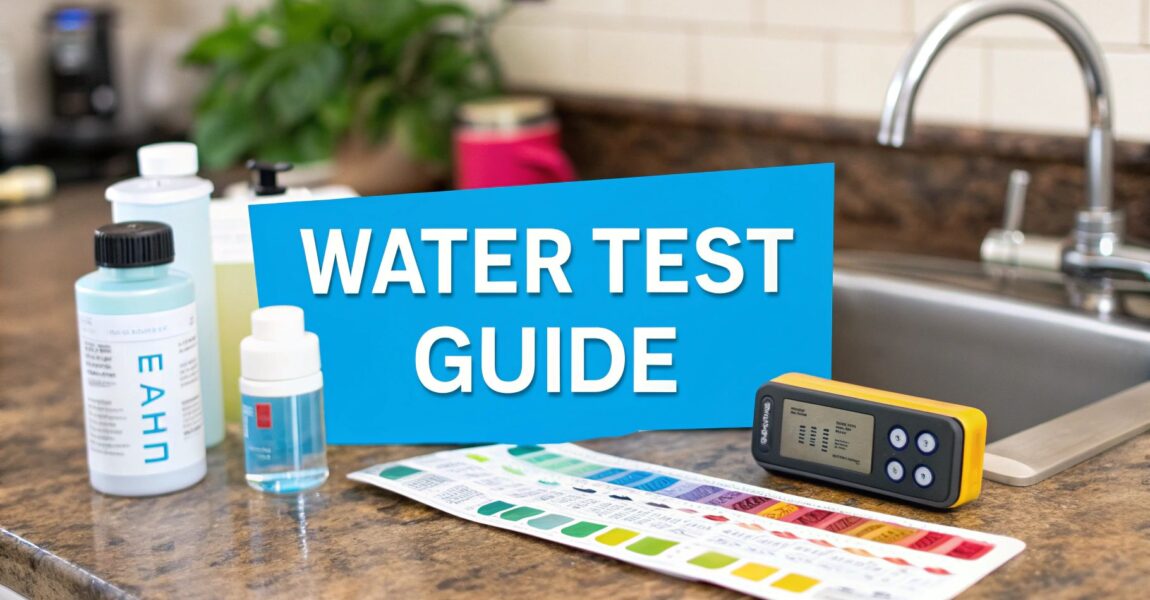
Ever get a weird taste from your tap water or hear a local news story about contamination and think, "Wait, is my water really pure?" It’s a fair question. The truth is, the most significant risks are often the ones you can't see, taste, or smell. That's where water quality testing kits come in—they're your secret weapon for understanding what's in your water so you can choose the right filter.
Uncovering Hidden Dangers in Your Tap Water
Most of us do a quick sensory check. If the water looks clear and doesn't taste or smell funny, we figure it's good to go. But here’s the catch: many of the most harmful contaminants are completely invisible. This is the water equivalent of "don't judge a book by its cover."
This is where the real worry for homeowners kicks in. You can’t see lead leaching from old plumbing, taste microscopic bacteria, or smell the industrial chemicals that might have found their way into the local water supply. Over time, these hidden threats can create serious health risks for your family.
Think of it like the air in your house. Just because it looks clear doesn’t mean it's pure. This same logic applies across the board—similar to testing water, the process of identifying unseen contaminants in properties shows just how critical it is to look for what you can't see. It’s all about making the invisible, visible.
From Mystery to Mastery
That feeling of not knowing is exactly why home water quality testing kits are so incredibly useful. These aren't complicated lab instruments. They're straightforward, easy-to-use tools designed to give you a clear picture of what's in your water, turning you into an informed filtration expert for your own home.
Using a test kit shifts you from just being a consumer to being the boss of your water quality. It pulls back the curtain on what's coming out of your faucet, replacing vague worries with real, actionable information. Once you know exactly what contaminants you're dealing with, you can choose a filter that actually works.
A water test kit does more than just give you results; it gives you a roadmap. It points you to the exact problem you need to solve, so you invest in the right filtration solution instead of just guessing.
Why Testing Is Your First Step to Better Filtration
Without testing, picking a water filter is basically a shot in the dark. You might grab a filter that’s great for chlorine, but what if your real problem is high lead levels or hard water minerals? It’s not just a waste of money; it leaves your family exposed to the very things you were trying to eliminate.
A good water quality test helps you confidently answer the big questions:
- What specific contaminants are in my water? You'll find out if you're dealing with heavy metals, bacteria, pesticides, or just high chlorine.
- What's my water's pH and hardness? These factors can damage your pipes and appliances and even affect how well certain filters work.
- Is my current filter even doing its job? Testing regularly is the only way to know for sure if it’s still effective or needs replacing.
In the end, testing gives you control. It’s the foundational step that ensures any money you spend on a water filtration system is a smart investment that directly tackles your home's unique water issues and protects your family’s health.
How Home Water Testing Kits Actually Work
Ever wondered what’s really going on when you dip a tiny test strip into a glass of water? It’s not magic, but it's some pretty clever science working on your behalf. Think of a home water testing kit as a decoder ring for your tap water, revealing secrets that are otherwise totally invisible and telling you exactly which filter you need.
At its heart, every kit is a miniature detective. Each test strip, powder, or liquid drop is loaded with specific chemical agents. When these agents meet their target—a particular contaminant in your water—they trigger a reaction. Most of the time, this reaction results in a simple color change.
Take chlorine testing, for instance. The reagent in the test specifically reacts to chlorine. The more chlorine there is, the darker the color change will be. It's a straightforward visual clue that gives you the first piece of the puzzle you need to find the right water filter.
Unpacking the Different Detective Tools
Not all water quality tests are created equal. Different kits use different methods to get you answers, and knowing the difference helps you pick the right tool for the job. You want accurate information, after all—it’s what guides your decision on a filtration system.
-
Test Strips: These are the go-to for most people. They couldn't be simpler: dip the strip into your water, wait a few seconds, and watch the magic happen. The little pads on the strip have dry reagents that change color when they react. Just match the colors on the strip to the provided chart, and you've got a quick snapshot of things like pH, hardness, and chlorine.
-
Color Disk Kits: If you need a bit more precision, color disk kits are a great step up. With these, you add a reagent (usually a powder or liquid) to a water sample in a small tube. After the water changes color, you pop the tube into a special viewer that has a colored disk. You then spin the disk until you find the exact color match, giving you a much more accurate reading of the contaminant level.
-
Digital Meters: For those who just want a number without any color-matching guesswork, digital meters are the answer. These are small, handheld electronic devices with a probe you stick right into the water. They measure things like Total Dissolved Solids (TDS) or pH and give you an instant, precise reading on a digital screen.
This infographic lays out the differences in accuracy and cost pretty clearly.
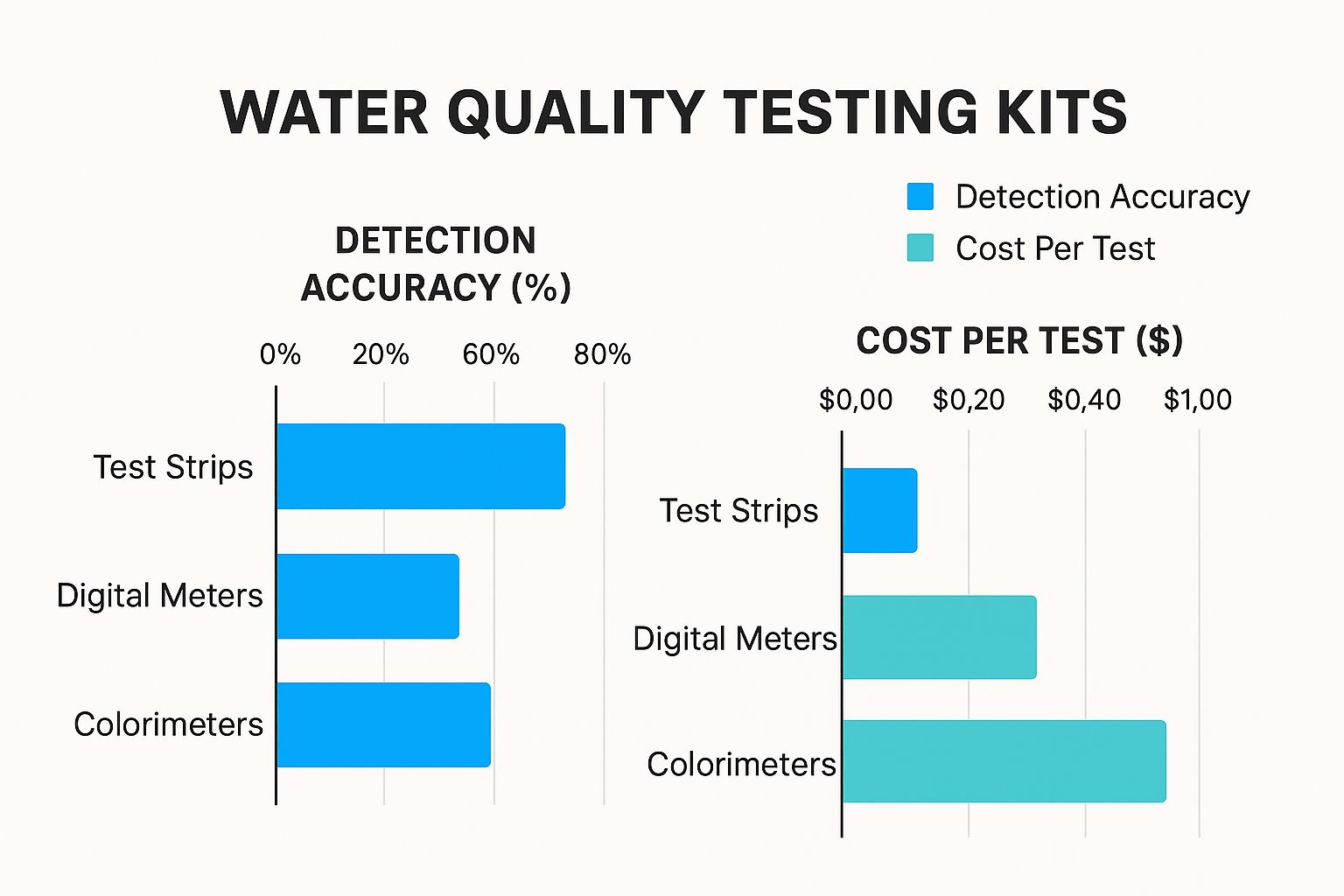
As you can see, there's a bit of a trade-off. Test strips are super affordable, but you get what you pay for in terms of precision. Digital meters and colorimeters, on the other hand, deliver much higher accuracy.
To give you a clearer picture, here's a quick comparison of the most common types of water testing kits. This should help you decide which one best suits your home filtration needs.
Comparing Common Home Water Testing Kits
| Test Kit Type | Best For | Key Contaminants Detected | Ease of Use | Typical Cost |
|---|---|---|---|---|
| Test Strips | Quick, general overview and initial screening. | pH, Hardness, Chlorine, Nitrates | Very Easy | $10 – $30 |
| Color Disk Kits | More accurate readings for specific contaminants. | Chlorine, pH, Iron, Copper | Moderately Easy | $20 – $60 |
| Digital Meters | Instant, precise numerical results for single parameters. | TDS, pH, Salinity | Very Easy | $15 – $150+ |
| Lab Mail-In Kits | Comprehensive and highly accurate analysis. | Lead, Arsenic, Bacteria, VOCs, Pesticides | Easy (but requires shipping) | $50 – $300+ |
Choosing the right kit really comes down to what you need to find out and how precise you need that information to be to select the best home filter.
The Growing Role of Home Testing
It’s no surprise that these kits have become so popular. They're simple, effective, and give you answers on the spot. In fact, if you look at the entire water testing equipment market, these home kits make up a massive 41.6% share of global revenues as of 2025. That’s a huge indicator of how much people rely on them to make smart filtration choices.
This trend is all about getting quick results for everything from pH to heavy metals without the hassle and expense of sending samples to a lab. You can learn more about these water testing market trends if you're curious.
The whole point of a water quality testing kit is to turn complicated water chemistry into a simple, understandable result. It’s about empowering you to make a smart choice, ensuring the filtration system you buy is the right one to fix your specific water issues.
At the end of the day, these kits take the mystery out of your water quality. They arm you with the knowledge you need to stop worrying about what might be in your water and start taking action with the right filtration system for your home.
Choosing the Right Test Kit for Your Water Source
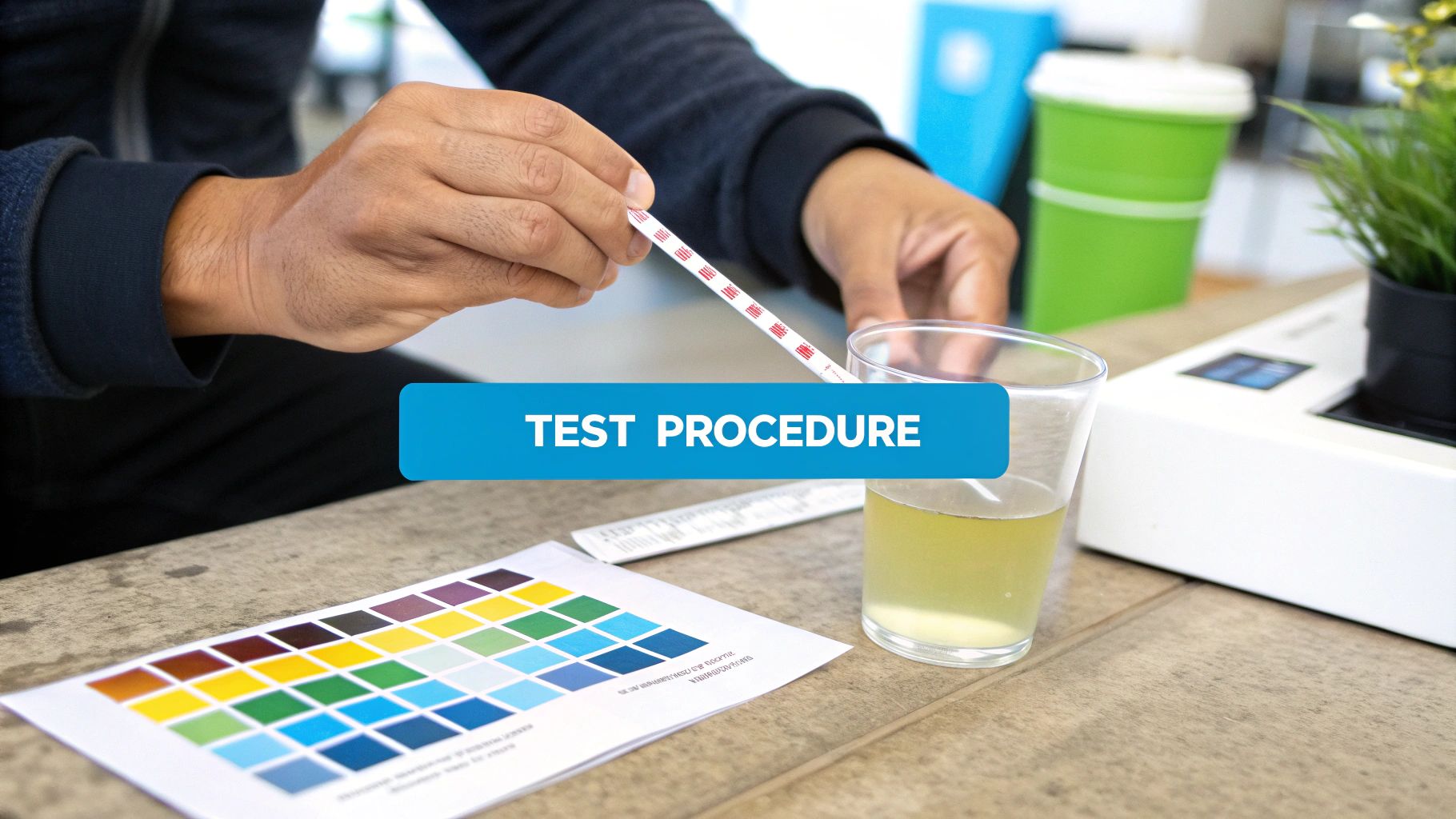
So, you've got the basics down on how water quality testing kits work. Now for the million-dollar question: which one should you actually buy?
Picking the right kit isn't about grabbing the most expensive box off the shelf. It’s about matching the right tool to your specific situation to get the data you need for a filtration decision. And that story always starts with one simple question—where does your water come from?
The stuff that might be lurking in city water is often a world away from what you'd find in a private well. Think of it like a doctor choosing a diagnostic test; they wouldn’t order a brain scan for a suspected broken arm. In the same way, your water source points you toward the most likely culprits, guiding you to a test that delivers relevant, actionable results for filtration.
City Water Versus Well Water Concerns
Your home's water source is, without a doubt, the single biggest factor in choosing a test kit. Each one has a totally different profile of potential problems that your testing strategy needs to zero in on.
For City Water Drinkers:
If your water comes from a municipal supply, it's already treated before it ever reaches your tap. That's a huge plus, but the treatment process itself can bring its own set of issues. The usual suspects here are:
- Chlorine and Chloramine: These disinfectants are added to kill bacteria. They do their job well, but they can leave behind a funky taste and smell. A good carbon filter is often the solution.
- Lead and Copper: A major concern for anyone in an older home, especially those built before 1986. These heavy metals can leach into your water from aging pipes and service lines, requiring a specialized filter.
- Hardness: High levels of dissolved minerals like calcium and magnesium cause that frustrating scale buildup in your pipes and appliances. This points you directly toward a water softener.
For Private Well Owners:
If you're on a private well, you are the water company. Your water comes straight from the ground, untreated, which makes it vulnerable to a whole different set of contaminants. Your top concerns should be:
- Bacteria (like Coliforms and E. coli): Runoff from nearby septic systems or farms can introduce seriously harmful bacteria into your water supply, making a UV purifier a must-have.
- Nitrates and Nitrites: These are really common in agricultural areas from fertilizer use. A reverse osmosis system is often the best defense.
- Heavy Metals (like Arsenic): Some metals occur naturally in the ground and can dissolve right into your groundwater.
- Iron and Manganese: These minerals are notorious for leaving ugly stains on your fixtures and laundry, not to mention giving your water a metallic taste. An iron filter is the hero here.
Choosing a test kit is like being a detective. For city water, your investigation starts with the treatment process and the pipes. For well water, you're looking for clues in the natural environment surrounding your home to pick the right filter.
Single-Purpose Tests vs. Comprehensive Kits
Once you know where your investigation should start, you have another choice to make. Do you need a scalpel or a Swiss Army knife? This really boils down to balancing cost against how complete a picture you need before buying a filtration system.
A single-purpose test is your scalpel. It’s designed to hunt for one specific thing, like lead, bacteria, or chlorine. These are perfect if you have a nagging suspicion about a particular problem or just want to confirm an issue before buying a filter. They're cheap and give you a fast, straightforward answer.
On the other hand, a comprehensive kit is the Swiss Army knife. It’s built to test for a whole slew of contaminants—often 15 or more—all in one go. This is the best place to start if you’re flying blind or want a full baseline report before you invest in something like a whole-house filtration system.
Getting that broader view is key, which is why exploring different types of filtration systems based on a wide range of results is always a smart move. If you feel a bit lost navigating all the options, you can always get some expert advice on water filters.
Alright, you've picked out a water quality testing kit and you're ready to see what's really in your water. Getting an accurate result isn't about luck—it's all about the process.
Think of it this way: if you're baking a cake, you can't just eyeball the ingredients. A little too much flour here, not enough sugar there, and you end up with something that's technically a cake, but not the one you wanted. Same goes for water testing.
Following a few straightforward steps ensures the information you get is solid. This isn't some complex lab experiment; it's a simple process designed to give you the facts you need to choose the right water filter. Let's walk through it together and dodge the common pitfalls that can mess up your results.
The most important part? Getting a good sample right from the start. You want to test the water that’s been sitting in your pipes, not the fresh stuff just coming in from the street.
Nailing the Sample Collection
First things first, go to the tap you use most for drinking water, which is probably your kitchen sink. Let the cold water run for at least two to three minutes. This simple step flushes out any water that's been sitting in your home’s plumbing, giving you a much more accurate snapshot of your actual water supply.
When you're ready to collect, grab a clean, sterile container. If your kit came with a vial, that's what you should use. If not, a clean glass jar that’s been washed and rinsed thoroughly will work just fine. Just be sure never to use a container that's had soap or chemicals in it, as even tiny residues can contaminate the sample and skew the test.
Critical Tip: Before you do anything else, read the instructions that came with your specific test kit. Different kits have different rules for sample size and handling, and following them to the letter is the only way to get a trustworthy result.
Once your sample is ready, what comes next depends entirely on the type of test you're using.
Performing the Test with Precision
Whether you've got test strips, reagent drops, or a digital meter, being precise is key. Even a small slip-up can lead to a bad reading, which might point you toward the wrong filter for your home.
Here’s a quick rundown on how to handle each type:
-
For Test Strips: This is often the fastest method, but it requires a light touch. Hold the strip by the end, dip it into your water sample for the time specified in the instructions (usually just a second or two), and pull it out. Never touch or shake the reactive pads on the strip—doing so can mess up the chemical reaction.
-
For Reagent Drops: If your kit uses drops, you'll be adding a precise number of drops to a measured amount of water in a vial. Don't guess here; be exact with both the water and the drops. After adding the reagent, cap the vial and gently swirl it or turn it upside down to mix. Avoid shaking it like a cocktail unless the instructions specifically tell you to.
-
For Digital Meters: This is as straightforward as it gets. Turn on the meter, make sure it’s calibrated if required, and stick the probe into your water sample. Just wait for the reading on the screen to stop changing before you write down the number.
For any test that involves matching colors, timing is everything. Read the result within the window of time the instructions give you—not a minute sooner, not a minute later. The chemical reactions keep going, so a reading taken too late will look darker and suggest a higher level of contaminants than you actually have. Follow these simple rules, and you'll turn a basic test into a reliable tool.
Making Sense of Your Results: A Guide to the Right Filtration System
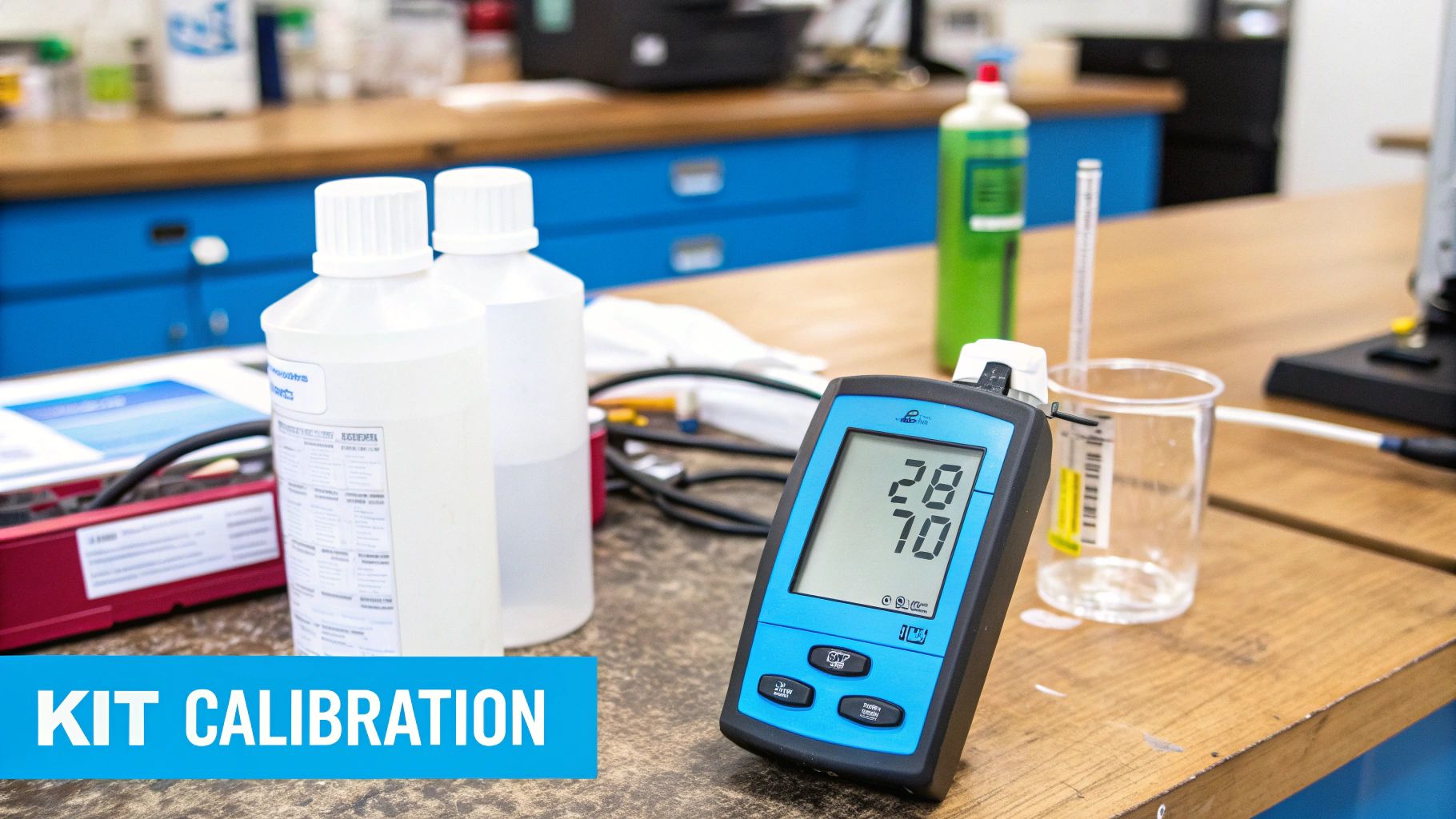
So, you've collected the sample, dipped the strip, and waited for the results. This is the moment your water quality testing kit really shines. Those colors and numbers aren't just abstract data; they're your personal roadmap to getting the perfect water filtration system for your home.
Think of it like this: you just played detective and identified the culprits messing with your water—whether it's too much chlorine, hard water minerals, or something more serious. Now, it’s time to pick the right tool to get the job done and restore peace (and purity) to your tap. This is where you turn those test results into a real action plan.
From Data to Decisive Action
You don't need a chemistry degree to understand your results. The color chart that comes with your kit is your translator, turning a simple chemical reaction into a clear message. If the test pad for chlorine turns a deep purple, the chart will tell you exactly what that means in parts per million (ppm).
But what do those numbers really mean for your home? This is where you connect the dots. Every type of contaminant has a specific filtration technology that’s built to take it out. Matching the problem to the right solution is how you avoid wasting money on a generic filter that doesn't fix your specific issue.
It’s this need for targeted solutions that’s causing a huge shift in the market. The global water testing kits market is on track to grow from USD 2 billion in 2025 to USD 3.5 billion by 2035. This boom is happening because more people are aware of what's in their water, especially with new regulations like the EPA's 2024 standards for 'forever chemicals' (PFAS). You can learn more about the future of water testing kits and what’s driving this demand.
Matching Contaminants to Filtration Solutions
Let's break down some common test results and translate them into smart filtration choices. This isn't about guessing; it's about making a solid decision based on the evidence you just gathered.
-
High Chlorine Levels: If your test flags high chlorine—a common side effect of city water treatment—an activated carbon filter is your best bet. These filters are champs at trapping chlorine and other chemicals that give your water a funky taste and smell. The result? Crisp, clean-tasting water.
-
Hard Water Minerals: Did your test reveal high levels of calcium and magnesium? That's the textbook sign of hard water, the culprit behind that chalky white buildup on your faucets and showerheads. The best tool for this job is a water softener. It uses a process called ion exchange to literally swap out those hard minerals, protecting your plumbing and even helping your soap lather better.
-
Bacteria or Viruses: Getting a positive result for microbiological contaminants like bacteria is a serious red flag, particularly if you're on a private well. You need a heavy-hitter here. A UV purification system uses ultraviolet light to zap microorganisms, making them completely harmless without adding any chemicals. Another fantastic option is a reverse osmosis (RO) system, which uses a hyper-fine membrane to block pretty much everything, including bacteria and viruses.
The most powerful thing a water test gives you is clarity. Instead of wondering what might be wrong, you know exactly what is, allowing you to invest confidently in a filtration system that provides a targeted, effective solution.
To make things even easier, we've put together a table that connects common problems with the right solutions. Think of it as a cheat sheet for choosing your filter.
Matching Contaminants to Filtration Solutions
| Contaminant Detected | Potential Sign | Recommended Filtration System | How It Works |
|---|---|---|---|
| Chlorine | Swimming pool smell or taste | Activated Carbon Filter | Adsorbs chlorine and organic chemicals, improving taste and odor. |
| Hardness (Calcium & Magnesium) | White scale buildup on fixtures | Water Softener | Uses ion exchange to remove hardness minerals from water. |
| Bacteria & Viruses | Positive test result (often no visible sign) | UV Purifier or Reverse Osmosis | UV light neutralizes microorganisms; RO physically blocks them. |
| Lead & Heavy Metals | Positive test result (invisible) | Reverse Osmosis or KDF Filter | RO membranes block heavy metals; KDF media uses a chemical process. |
| Iron | Red/brown stains on sinks and laundry | Iron Filter or Water Softener | Oxidizes iron to be filtered out or removes it via ion exchange. |
By using your water quality test kit as your guide, you’re no longer just buying a filter—you’re making a strategic investment in your home’s health. You can be sure that every dollar you spend is directly solving a problem you know you have, giving your family the clean, safe water they deserve.
When to Call in a Professional for Water Testing
Home water quality testing kits are fantastic tools for day-to-day monitoring. Think of them as your first line of defense—perfect for regular check-ups on things like chlorine levels or water hardness. They give you the quick feedback you need to pick the right kind of filter or just keep an eye on things.
But sometimes, you need to call in the big guns. Just like you'd go to a doctor for a serious health concern instead of just taking your own temperature, there are specific situations where a DIY kit just won't cut it. These are the moments when you need the pinpoint accuracy and detailed analysis that only a certified laboratory can deliver.
It's a similar idea to understanding the differences between at-home and clinic tests for your health. The principle is the same: at-home kits offer amazing convenience for baseline checks, but professional services provide the definitive, highly accurate results you need when the stakes are high.
When You Absolutely Need an Expert
So, how do you know when it's time to upgrade from a home kit to a professional lab? A certified lab test is a must in a few key scenarios where you simply can't afford to be wrong.
You should get professional testing on the books if you run into any of these situations:
- You Suspect Industrial Contamination: Live near a factory, farm, or landfill? Your water could be exposed to nasty stuff like pesticides, volatile organic compounds (VOCs), or heavy metals. Most home kits can't even see these.
- Someone's Getting Sick: If people in your house are dealing with ongoing stomach problems, a lab can run tests for pathogens like Giardia or Cryptosporidium that are often the culprits.
- You're Buying or Selling a House: A certified water test is often required for real estate deals, especially if the home has a private well. Lenders and local authorities need proof the water is safe before signing off.
- You Need to Verify Your Filter: Just installed a serious filtration system to tackle something specific like arsenic or lead? A professional lab test is the only way to get independent proof that it's actually doing its job.
While home kits empower you to keep tabs on your water, a professional lab test gives you the final, legally defensible answer you need when health and safety are on the line. It's the ultimate authority on your water quality.
Common Questions About Home Water Testing
Once you get your first results back from a water quality testing kit, a whole new set of questions usually pops up. That's perfectly normal. Getting to know your water is a journey, not a one-time thing. Let’s walk through some of the most common questions we hear to get you pointed in the right direction.
One of the first things people ask is how often they should be testing. It really boils down to where your water comes from. If you have a private well, you absolutely need to test your water at least once a year for the big stuff—bacteria, nitrates, and pH levels. For folks on city water, an annual test is still a smart move, especially if you live in an older home where lead pipes might be hiding.
How Often Should I Test My Water?
That "once-a-year" rule is a good starting point, but some situations demand more frequent check-ins.
-
For Well Owners: On top of your yearly test, you should test your water anytime you notice something off—a weird taste, a new smell, or a change in how it looks. It's also a good idea to test after a big flood or if there's been any construction or digging nearby.
-
For City Water Users: If you're putting in a new water filter, test the water before and after you install it. This is the only way to know for sure that it's actually working. Testing again every 6-12 months will tell you if the filter cartridges are still doing their job or if they're ready to be replaced.
Are More Expensive Test Kits Better?
Great question. A higher price can sometimes mean the kit tests for more things, but "more" doesn't automatically mean "better." The best kit is the one that targets the specific contaminants you're worried about.
A simple, cheap test strip is fine for quick checks on chlorine or water hardness. But if you have a real concern about something specific like lead or bacteria, you need to invest in a kit designed for that one job to get a reliable answer.
The goal isn't to buy the most expensive kit; it's to buy the right kit. Your first test should guide you, showing you exactly what to focus on when picking or maintaining a filtration system.
And that brings us to a key point: testing isn't just for finding a problem. It’s also the best way to make sure your water filter is still protecting you. Over time, filter cartridges get clogged and stop working as well. Periodically testing your filtered water is the only way to know for sure when it's time for a new one.
At Water Filter Advisor, we're here to help you figure it all out, from that first test to keeping your system running right. For more expert guides and honest reviews to find the perfect setup for your home, visit us at https://www.waterfilteradvisor.com.
- October 8, 2025
- 0
- Uncategorized
