Your Guide to Water Quality Testing Kits: The First Step to Better Filtration
Ever get a weird taste from your tap water or hear a local news story about contamination and think, "Wait, is my water really pure?" It’s a ...
Ever get a weird taste from your tap water or hear a local news story about contamination and think, "Wait, is my water really pure?" It’s a ...
You love the crisp, pure taste of water from your reverse osmosis (RO) system, but have you ever paused to listen to the sound it makes? That quiet gurgling from under the sink is the system's dirty little secret: for every pristine gallon of water you drink, it's sending a whole lot more straight down the drain.
This isn't a sign your system is broken. In fact, it's a critical part of how reverse osmosis works its magic. But it does mean there's a huge opportunity to make your home water filtration a lot smarter and more efficient.
Think of the reverse osmosis membrane as the world's most exclusive nightclub for water molecules. It's got a bouncer at the velvet rope, and the guest list is incredibly strict. Only the absolute purest H₂O molecules get inside.
Everyone else—all the dissolved salts, heavy metals, pesticides, and other microscopic party crashers—gets turned away. To keep the entrance from getting clogged with this rowdy crowd of contaminants, a steady stream of water acts like a continuous bouncer, flushing them away from the door and down the drain.
This process is called cross-flow filtration, and it's the very reason you get reverse osmosis system water waste. While some water (the "permeate") pushes through the membrane to become your drinking water, the rest (the "brine") is the cleanup crew, carrying all the rejected impurities away.
So, how much water are we really talking about? Brace yourself, because the numbers might be a little jarring.
A standard home RO system often has a waste ratio of 3:1 or even 4:1. Let that sink in: for every single gallon of pure water you collect, three to four gallons are sent swirling down the drain. In other words, only about 20-25% of the total water entering the system ever makes it to your glass.
To put that into perspective, here's a quick look at what that means for your pipes.
This table shows the typical relationship between purified water and wastewater in a standard home RO system, highlighting the efficiency gap.
| Metric | Typical Amount |
|---|---|
| Water Purified (Permeate) | 1 Gallon |
| Water Wasted (Brine/Concentrate) | 3-4 Gallons |
| Total Water Used | 4-5 Gallons |
| System Efficiency | 20-25% |
Seeing that only a quarter of the water becomes drinkable can be a tough pill to swallow. You can learn more about the global context of water use from the World Economic Forum's insights.
But remember, this isn't just waste for waste's sake. The amount of brine your system produces depends heavily on factors like your home's water pressure and just how contaminated your tap water is to begin with.
The key takeaway is this: the wastewater isn't just a byproduct; it’s a crucial part of the machine. It’s the janitor that keeps the filter clean, ensuring the membrane works effectively for years to come.
Fortunately, you're not stuck with a 4:1 ratio. Modern upgrades and a few simple tweaks can dramatically boost your system's efficiency. In this guide, we'll dive into exactly what causes this waste and give you practical solutions to save water, cut down your utility bills, and make your filtration system much more sustainable.
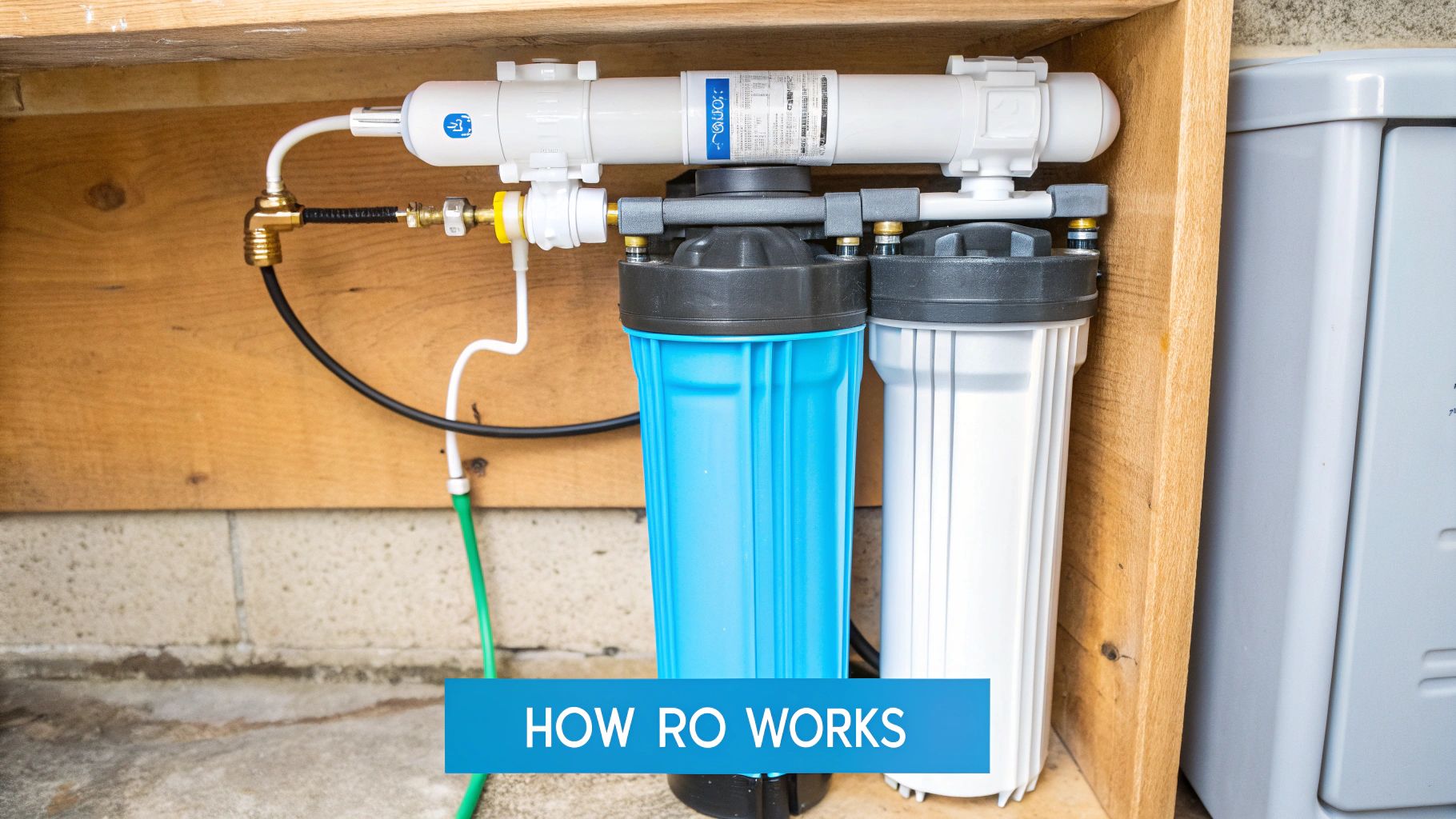
To really get why RO systems create "waste" water, you have to peek behind the curtain at the clever process happening under your sink. It’s not quite like making coffee, where water just passes through grounds and into your cup.
Reverse osmosis is much smarter, using a technique called cross-flow filtration. This is the secret sauce that makes it so incredibly effective at purifying water, but it's also the reason it sends some water down the drain.
Instead of just catching gunk like a simple screen, an RO membrane is constantly being rinsed. A stream of water flows across the filter's surface, sweeping away all the rejected minerals, salts, and other dissolved junk. This prevents the filter from getting clogged up and failing.
This self-cleaning action is what produces the wastewater, which is technically called brine or concentrate. This brine is just the vehicle carrying away everything the RO membrane has blocked—nasty stuff like chlorine, arsenic, fluoride, and heavy metals.
Without this constant flushing, the membrane would get fouled almost immediately and stop working.
In short, the wastewater is the system's built-in cleaning crew. It keeps the microscopic pores of the membrane clear so it can keep delivering exceptionally pure water for you and your family.
This process works so well that it's become a global standard for water purification. The market for reverse osmosis parts was worth a staggering $16.9 billion in 2023 and is expected to nearly double by 2029. It’s a testament to how many homes and industries rely on this tech.
A typical under-sink RO system is more than just one filter; it's a multi-stage purification machine. Each stage has a specific job to do, protecting the delicate RO membrane and making sure your water tastes great.
Getting a handle on how these parts work together is key to understanding water filtration systems as a whole. Once you see how each piece contributes, it becomes clear that the wastewater isn't a flaw—it's just a necessary part of a very sophisticated purification process.
You might think every reverse osmosis system wastes the same amount of water, but that's not how it works. The efficiency of your RO unit is actually a moving target, heavily influenced by the unique conditions inside your home’s plumbing. Several key factors can make your system work much harder—and waste a lot more water—than your neighbor's.
Think of it like this: your system has a tough job to do, and these variables determine whether it's having an easy day or struggling through a marathon. By understanding what affects your RO system’s performance, you can pinpoint the exact cause of any inefficiency and get it fixed.
The single most important factor is your home's water pressure, which we measure in pounds per square inch (PSI). The "reverse" in reverse osmosis is all about using force to push pure water molecules through the membrane, overcoming the natural direction of flow.
Low water pressure is like trying to squeeze a sponge with just your fingertips. You won't get much water out, and the whole process will be painfully slow and inefficient.
For an RO system to do its job, it needs a good, strong push. If your household pressure drops below 40 PSI, the system really struggles to force water through the membrane. When that happens, a whole lot more water gets diverted down the drain as brine.
Another major player is the concentration of Total Dissolved Solids (TDS) in your tap water. TDS is basically a catch-all term for all the invisible minerals, salts, and metals floating around in your water. The higher your TDS level, the more junk the RO membrane has to block and flush away.
If your water is loaded with these impurities, the system has to generate more wastewater just to keep the membrane from getting clogged up. It’s like a bouncer at a crowded club with a very long line of troublemakers to turn away—it takes a lot more effort and time to keep the entrance clear.
Believe it or not, even the temperature of your water matters. Colder water is denser and more viscous, which makes it physically harder to shove through the tiny pores of an RO membrane.
Each of these factors—pressure, TDS, and temperature—creates a unique operating environment in your home. By figuring out which one is the primary culprit, you can take targeted steps to make your system run as efficiently as possible.
So, you know your RO system creates wastewater. It's easy to feel a little guilty about it, but the good news is you're not helpless. You actually have a ton of control over your system’s efficiency.
You can slash the amount of reverse osmosis system water waste your home produces by taking one of two routes: either upgrading the hardware itself or getting a bit clever with reusing the water you already have.
Both strategies work great. The right one for you just depends on your budget and how hands-on you want to get. Let's dive into the most practical solutions out there for homeowners.
If you're after a long-term, "set it and forget it" solution, upgrading some of your RO system's parts can lead to massive water savings. The technology has come a long way from those old, wasteful 4:1 ratios.
This infographic breaks down just how much water a standard RO system uses, showing the ratio of waste to pure water.
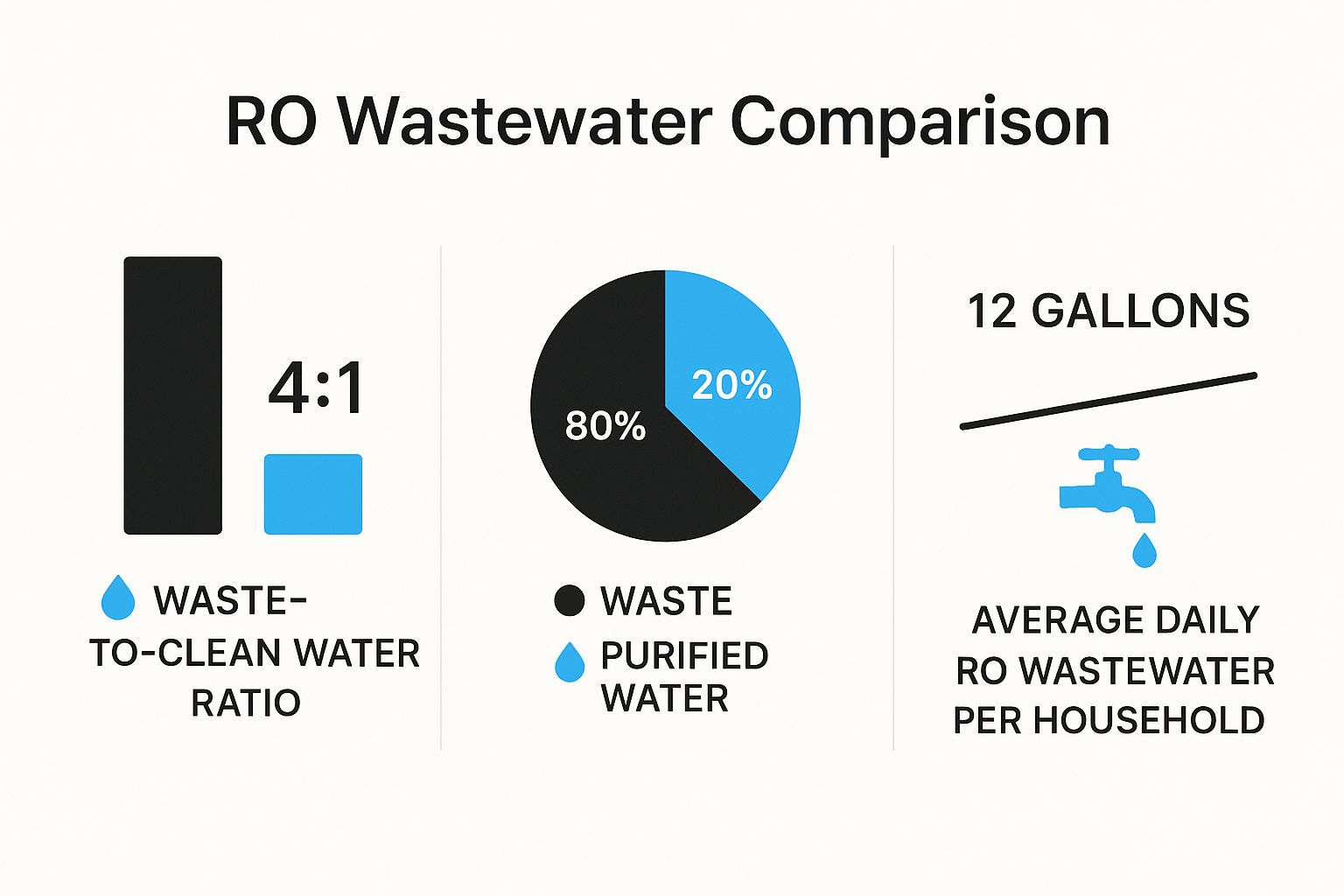
As you can see, a typical system sends a whopping 80% of the water it uses right down the drain. That adds up fast, day after day.
For a more budget-friendly approach you can start today, you can simply collect and reuse the brine water.
Think about it: this water has already gone through your sediment and carbon pre-filters, so it’s free of big particles and chlorine. It just has a higher concentration of the dissolved solids the RO membrane rejected.
This makes it perfectly safe for all sorts of non-drinking household jobs. On a bigger scale, initiatives are already exploring this. A project in India, for example, is working to save millions of liters of water every month just by collecting and reusing RO wastewater in local communities.
Setting up your own collection system is surprisingly easy. All you have to do is divert the little brine tube from your drain into a storage container—a bucket or a small water barrel stashed under the sink works perfectly.
Pro Tip: Just remember, this wastewater is a bit more concentrated in minerals than your regular tap water. While it's great for most things, you'll want to avoid using it on delicate, salt-sensitive indoor plants like ferns or azaleas.
Here are a few smart ways to put that "waste" water to good use:
Choosing the right upgrade or just forming a few new habits can make a huge dent in your home's water consumption. For more expert tips, you can always find great water filtration advice to keep your system running its best.
Deciding between an upgrade and a new habit can be tricky. This table breaks down the most common methods to give you a clear, side-by-side look at what each involves.
| Method | Waste Reduction Potential | Estimated Cost | Installation Difficulty |
|---|---|---|---|
| Permeate Pump | Up to 80% | $50 – $150 | Moderate |
| High-Efficiency System | Up to 75% | $300 – $600+ | Moderate to Difficult |
| "Zero-Waste" System | Up to 100% | $350 – $700+ | Difficult (Plumbing Required) |
| Wastewater Reuse | Up to 100% (if all is used) | $0 – $20 | Easy |
Ultimately, whether you invest in new hardware or simply put a bucket under your sink, you have powerful options to make your RO system much more sustainable.
You know that quiet gurgling sound coming from under your sink? It's easy to tune out, but it’s the sound of water—and money—constantly heading down the drain. The impact of reverse osmosis system water waste isn't just some abstract concept; it directly connects your kitchen to your wallet and the environment.
The most obvious hit is financial. A few gallons here and there might not sound like much, but it adds up surprisingly fast over the course of a year. Doing the math can be a real eye-opener, turning a vague number into a real line item on your household budget. It makes you wonder: is my system costing me more than it needs to?
Figuring out the actual cost is simpler than you might think. You just need two things: the rate from your latest water bill and your RO system’s waste ratio. For most standard models, that ratio is about 4:1.
Here’s a quick and easy way to estimate what your system’s inefficiency is costing you each year:
This simple math reveals the direct financial drain caused by an inefficient system. While under $50 a year might not break the bank, that’s money you could save with a high-efficiency model or a permeate pump.
Beyond your own bank account, there’s a much bigger community cost to consider. When millions of homes are each sending thousands of extra gallons of water to municipal treatment facilities, it puts a serious strain on our shared resources.
This problem is especially critical in water-scarce regions where every drop truly counts. The widespread use of inefficient RO systems can burden local water supplies, contribute to shortages, and increase the energy needed to treat and distribute water for everyone.
Understanding these financial and environmental costs gives you a powerful reason to look into the water-saving solutions we've talked about. By making your system more efficient, you directly help your budget, shrink your environmental footprint, and do your part for your community's water security.
https://www.youtube.com/embed/zTWUCHjZQp0
Even after getting the technical details down, you probably still have some practical questions about what reverse osmosis system water waste means for your daily life. It’s one thing to understand the mechanics, but another to live with it.
Let's tackle some of the most common concerns we hear from homeowners who are trying to balance pure water with being water-wise.
For most uses outside of drinking, absolutely. Think of this "wastewater" (also called brine) as just your regular tap water, only with a slightly higher concentration of the stuff you wanted filtered out in the first place.
Because it's already been through your system's initial sediment and carbon filters, it’s actually pre-cleaned of grit and chlorine. That makes it surprisingly useful around the house.
You can safely use it for:
Just a heads-up: If your home's water is naturally salty (common in coastal areas) or you use a water softener, that brine will have a higher salt concentration. Be cautious using it on salt-sensitive plants like azaleas, ferns, or gardenias, as it could harm them.
"Zero waste" is a pretty clever marketing term, but it's not magic. These systems don't make the filtered contaminants vanish into thin air. Instead, they find a brilliant way to reuse the brine water so none of it goes down the drain.
Here’s how it works: a small pump takes the wastewater from the RO membrane and reroutes it into your home's hot water line. From there, it mixes in with the water you use for washing dishes, showering, or doing laundry.
The amount of dissolved solids in the brine is so small that once it's diluted in your hot water tank, you'll never notice a difference. So while it's technically not eliminating waste, it's putting it to good use elsewhere. It's the ultimate in-home water recycling.
Yes, and it’s a fantastic upgrade. A water softener is the perfect partner for an RO system, especially if you have hard water. Softeners are specifically designed to remove minerals like calcium and magnesium.
Those are the two biggest culprits behind scale buildup, a crusty deposit that can clog up the tiny pores of your RO membrane. When the membrane gets scaled up, it has to work much harder and flush itself more often just to produce pure water—which means more waste.
By installing a water softener before the RO system, you remove those scale-forming minerals from the equation. This protects the membrane, helps it last longer, and allows it to run at peak efficiency with far less wastewater.

Disclosures: All opinions are my own. Links in the description are affiliate links, if you click on the product link, I’ll receive a commission at no additional cost to you.
shorturl.at/W1ULF
Original Video Source

Looking to get rid of fluoride in your water? After thorough testing, I found that all the water filters did an amazing job, but the AquaTru stands out. It not only removes 100% of fluoride but also has the most extensive certifications. If you’re considering a reliable option, reverse osmosis and AquaTru are my top picks!
Link to full video:
Original Video Source
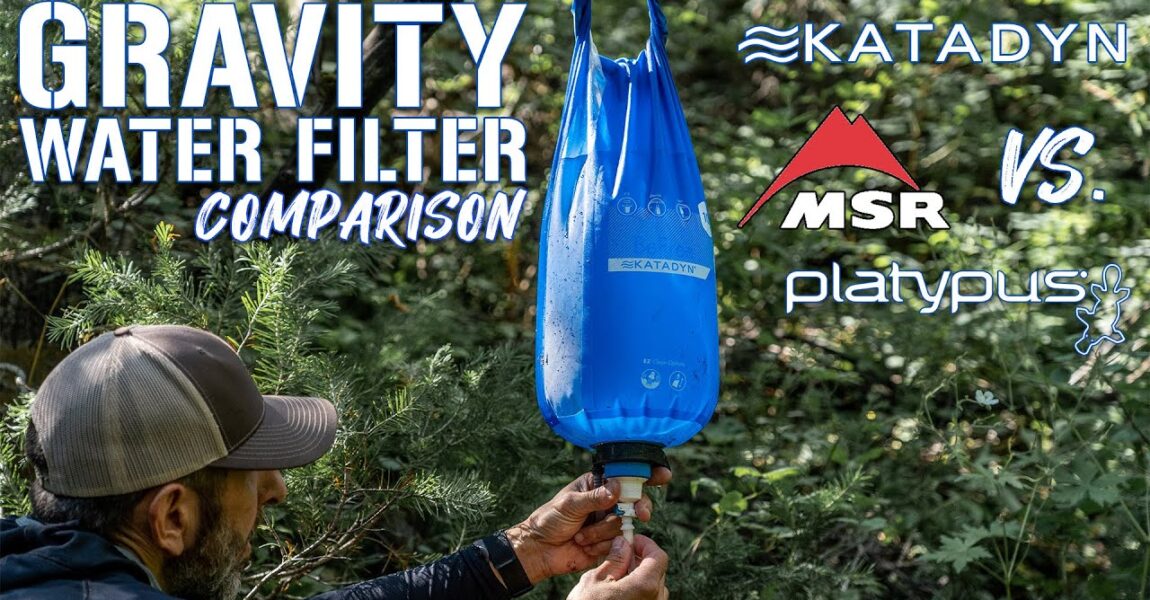
Gravity water filters are a great way to filter water in volume fast, and efficiently while hunting or backpacking. In this video we took a moment to point of some of the key features from the Katadyn, MRS, and Platypus Gravity Filters. Kendall has years of experience using these filters and lays out some tips for getting clean water in the backcountry.
Learn all about the best gravity water filter for your hunt and pick up a few tips to filter water right. Whether it’s the MSR water filter or the Platypus water filter for hiking, we’ll walk you through each one and what makes them a good option.
Shop Water Filters on BlackOvis.com:
Shop Katadyn gravity water filters on BlackOvis.com:
Shop MSR water filters on BlackOvis.com:
Shop Ovis Sacks Game bags:
Shop Camping on BlackOvis.com:
0:00 – Intro
1:14 – Key Features
4:08 – KATADYN GRAVITY BEFREE MICROFILTER WATER FILTER –
9:41 – MSR AUTOFLOW XL GRAVITY FILTER 10 LITER
–
16:37 – PLATYPUS GRAVITYWORKS WATER FILTER SYSTEM –
22:19 – Conclusion – Shop at BlackOvis.com
Follow BlackOvis on Instagram
Follow BlackOvis on Facebook
Subscribe to BlackOvis on Youtube
Original Video Source


water purifier,best water purifier,water purifier for home,best water purifier in india,best water purifier for home,ro water purifier,water purifier buying guide,best water purifier in india 2023,best ro water purifier in india,kent water purifier,best water purifier 2023,water purifier machine,water purifier installation,best water purifier under 10000,lg water purifier,best ro water purifier in india 2023,best r
Original Video Source

✅ This video is your ultimate guide to choosing the right water treatment system for your home.
Here’s the step-by-step process on how to make tap water safe to drink at home, considering factors like your water source, contaminants, budget, and more. Learn about different treatment technologies and popular water filter types like reverse osmosis, under-sink filters, and whole-house systems and how to choose which is best for your unique situation.
💧 Need more help with water quality? Get a custom treatment plan from a Certified Water Specialist (CWS) here ➡️
Here are the steps to choose a water filter:
Understand your water:
– Determine your water source (city water vs well water)
– Get your water tested by a certified lab (optional but recommended)
Determine your “why” for filtering:
– Improve taste
– Remove specific contaminants for health reasons
– Protect your plumbing from damaging contaminants
– Have peace of mind in case of emergencies
Determine proper treatment:
– Application: Point-of-use (single faucet) or Point-of-entry (whole house)
– Treatment Technology: Choose based on your water test results and why you’re filtering (e.g. reverse osmosis, carbon adsorption)
Consider different water filtration system types:
– Countertop systems (pitchers, distillers, ROs)
– Under-sink systems (higher capacity, multiple stages)
– Faucet-mounted filters
– Refrigerator filters
– Shower and bath filters
– Whole-house systems
Important considerations when choosing a system:
– Certifications (NSF, WQA, IAMPO) for contaminant removal
– Capacity/Lifespan of filters (replacement costs)
– Flow Rate (important for point-of-entry systems)
– Construction Materials & Design Quality
– System Footprint (dimensions) & Portability
– Filter Changes (ease of replacement, availability)
– Environmental Impact (wastewater production)
– Guarantee & Warranty
– Cost Considerations (upfront, installation, maintenance)
– Installation Considerations (DIY vs professional)
– Smart Features (optional – filter reminders, app connectivity)
About Water Filter Guru:
Brian Campbell is a Water Quality Association (WQA) Certified Water Specialist (CWS) and Certified Water Treatment Representative (CWR). He founded his residential water treatment business to help individuals navigate the complex world of water purification and find the ideal solution for their unique needs. Since then, he has tested a wide range of devices, from simple pitchers and portable filters to complex whole-home systems, focusing on their effectiveness against various contaminants and different water sources.
This video is NOT sponsored. Some product links are affiliate links which means if you buy something we’ll receive a small commission at no extra cost to you.
📒 Show Notes 📒
1️⃣ Test Your Water With Tap Score:
Get $10 off Tap Score discount code here:
2️⃣ Water Filter Certification Databases:
NSF
WQA
IAPMO
⏰ Chapters ⏰
0:00 How to Choose a Water Filter
0:30 Understand Your Water
3:50 Determine Your “Why”
5:44 Determine Proper Treatment
6:57 Treatment Technologies
9:41 Important Considerations
Our mission here at WaterFilterGuru.com is to help you find information, products and solutions to address your water quality needs.
Here are the other ways we can help you with your water situation:
⚡️FREE GUIDES: Check out our in-depth guides to learn how to identify and address your water quality needs:
⚡️PERSONALIZED QUIZ: Take our interactive quiz to get a suggestion based on your specific situation:
⚡️PRIVATE FACEBOOK GROUP: Join our Clean Water Mastermind and find answers to questions other folks have already asked
Connect with us here:
YOUTUBE:
INSTAGRAM:
TWITTER:
CONTACT US:
Image(s), Footage, SFX and/or Music used under license from Envato Elements
#waterfilterguru #cleanwater #drinkingwater #watertreatment #waterfilter #filteredwater
Disclaimer: Please see the link for our disclaimer policy for all of our videos on the Water Filter Guru YouTube channel.
Original Video Source

Best Under Sink Water Filter 2025 | Links To Products ⤵️
1. Waterdrop X16 Tankless Reverse Osmosis System ✅
✓ Check Prices –
2. NU Aqua Tankless RO System ✅
✓ Check Prices –
3. Waterdrop G3P800 ✅
✓ Check Prices –
4. NU Aqua 7-Stage RO System ✅
✓ Check Prices –
5. Waterdrop G2 RO System ✅
✓ Check Prices –
We are a participant in the Amazon Services LLC Associates Program, an affiliate advertising program designed to provide a means for us to earn fees by linking to Amazon.com and affiliated sites.
00:00 Intro
00:25 5️⃣ Waterdrop G2 RO System Review
01:21 4️⃣ NU Aqua 7-Stage RO System Review
02:13 3️⃣ Waterdrop G3P800 Review
03:06 2️⃣ NU Aqua Tankless RO System Review
04:03 1️⃣ Waterdrop X16 Tankless Reverse Osmosis System Review
In today’s world, ensuring access to clean and safe drinking water is a top priority for many households. An under sink water filter has become an increasingly popular solution for homeowners looking to improve their water quality. These compact and efficient systems offer a convenient way to purify tap water right at the point of use.
The best water filtration system for home use often depends on individual needs and preferences. However, under sink water filters consistently rank among the top choices due to their effectiveness and ease of installation. These systems are designed to remove a wide range of contaminants, including chlorine, lead, pesticides, and microorganisms, resulting in better-tasting and healthier water.
One of the most advanced types of under sink water filter is the reverse osmosis filter. This technology is widely regarded as the best water purifier available for residential use. A reverse osmosis system uses a semi-permeable membrane to remove up to 99% of dissolved solids, providing exceptionally pure water. For those seeking the best reverse osmosis system, it’s essential to consider factors such as filtration capacity, water pressure, and maintenance requirements.
Water filtration systems come in various configurations, but under sink models offer a balance of performance and convenience. They’re hidden from view, saving valuable counter space while providing on-demand filtered water. The best under sink water filter system will typically include multiple stages of filtration, often combining activated carbon filters with sediment filters and, in some cases, UV sterilization.
As we look ahead to 2025, the best under sink water filter options continue to evolve. Manufacturers are incorporating smart technology, improved filter materials, and more efficient designs. The best under the sink water filter in 2025 is likely to offer enhanced contaminant removal, longer filter life, and easier maintenance.
When choosing the best water filter under sink for your home, it’s crucial to consider your specific water quality issues and household needs. Some systems are designed to address particular contaminants, while others offer more comprehensive filtration. The best under sink water filter 2024 models are expected to provide a perfect balance of filtration effectiveness, ease of use, and cost-efficiency.
Water purification systems have come a long way, and under sink filters represent a significant advancement in home water treatment. Whether you’re concerned about taste, odor, or potential health risks, investing in a high-quality under sink water filter can provide peace of mind and improve your overall quality of life. By choosing the best water filtration system for your needs, you can enjoy clean, great-tasting water straight from your tap, making it easier than ever to stay hydrated and healthy.
#undersinkwaterfilter #waterfilter #waterfiltersystem
Original Video Source

📌Here are the discount links I promised:
1️⃣ SpringWell WS1: (57% off)
2️⃣ US Water Systems Matrixx Infusion: (40% off)
3️⃣ SoftPro Iron Master: (34% off)
🔬Don’t forget to test your well water first:
—————————
In this video, I’m going to break down the top 3 whole-house water filters for well water that effectively remove iron and sulfur, maintain excellent flow rate, and are built to last a lifetime:
00:00: Intro
00:39: SpringWell WS1
03:04: US Water Systems Matrixx Infusion
05:19: SoftPro Iron Master Water Filtration System
📝Lab Test Reports:
—————————–
🧑🏻🏫Disclaimer:
Some of the footage used in this video is not original content produced by AquaProfessor. Portions of stock footage of products were gathered from manufacturers, fellow creators, and various other sources. If something belongs to you and you want it to be removed, please do not hesitate to contact us at adarsh@aquaprofessor.com.
📝Note: This video is not sponsored. If you click any of our links above and make a purchase, we may earn a small commission at no extra cost to you.
Original Video Source
