How to Change Whole House Water Filter: 2026 DIY Guide

You notice it gradually. The shower doesn't hit as hard as it used to. The kitchen tap starts looking a little lazy. Then your coffee tastes a bit off, or the water has that faint chlorine smell you swear wasn't there a month ago.

A lot of homeowners assume something serious is going wrong with the plumbing. Most of the time, the culprit is simpler. Your whole house filter is doing its job, and now it's loaded up enough that it needs attention.

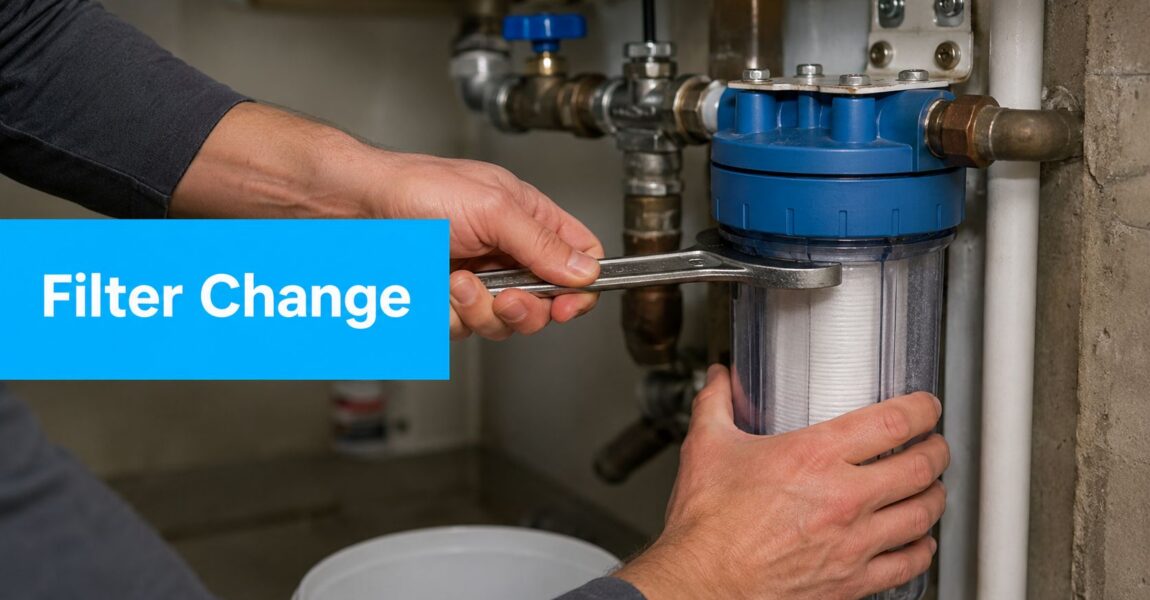
That's the good news. Learning how to change a whole house water filter usually isn't a big plumbing project. Once you're prepared, one installation guide notes the replacement itself can take about 10 minutes without tools or a plumber, which is why many homeowners treat it as routine maintenance instead of a major repair job, especially when a bypass valve is installed (Kind Water's replacement guide).

The part that rattles first-timers isn't usually the filter. It's the fear of opening the wrong thing, getting sprayed, or putting it back together and finding a leak. Fair concern. I've seen perfectly capable DIYers make the same avoidable mistakes over and over: skipping the pressure relief, pinching the O-ring, reinstalling stages in the wrong order, or cranking the housing down like they're sealing a submarine hatch.

None of that is hard to avoid once you know why each step matters. That's what makes this job manageable. You're not just swapping a cartridge. You're protecting water pressure, water taste, fixture performance, and the rest of your plumbing.

Your Guide to Cleaner Water and Better Pressure

A whole house filter sits in a funny spot in home maintenance. When it works, nobody thinks about it. When it starts clogging, the whole house feels it.

You'll often see the first clues in ordinary routines. The upstairs shower feels weak. The washing machine seems to fill slower. A glass of water tastes flatter, harsher, or just different enough that you notice. Those changes can sneak up on you because filtration problems don't usually announce themselves all at once.

Why this job feels bigger than it is

Homeowners hear “main water shutoff” and immediately think “plumber.” That's understandable. But replacing a cartridge in a whole house system is usually more like careful appliance maintenance than a complex pipe repair.

What matters is control. Shut water off cleanly. Relieve pressure. Open the housing the right way. Check the seal before you reassemble. Bring the system back online slowly.

Practical rule: If you move slowly on the shutdown and restart, the rest of the job gets much easier.

The actual swap is usually the shortest part. The prep and restart are where people either make life easy for themselves or create a mess.

What a successful filter change should feel like

A good filter change isn't dramatic. You don't need brute force, panic tightening, or improvised plumbing heroics. You need a clear path, the right cartridge, and a little patience.

Here's what usually goes right when the job is done properly:

  • Pressure returns smoothly: Fixtures stop feeling strangled by a clogged cartridge.
  • Water quality improves: Taste and odor issues that crept in often settle back down.
  • You avoid surprise leaks: A clean, properly seated O-ring does most of that work.
  • The next change gets easier: Once you know your shutoff, housing, and cartridge sequence, future swaps feel routine.

That's why this is a confidence-building project. You're working on something that affects every faucet in the house, but the task itself is very approachable when you respect the sequence.

Gathering Your Tools and Prepping the Area

The easiest filter change starts before you touch the housing. Most bad experiences come from stopping halfway through to hunt for towels, realizing the replacement cartridge is wrong, or discovering you don't know where the shutoff valve is.

Preparation is what keeps this from turning into wet, annoying chaos.

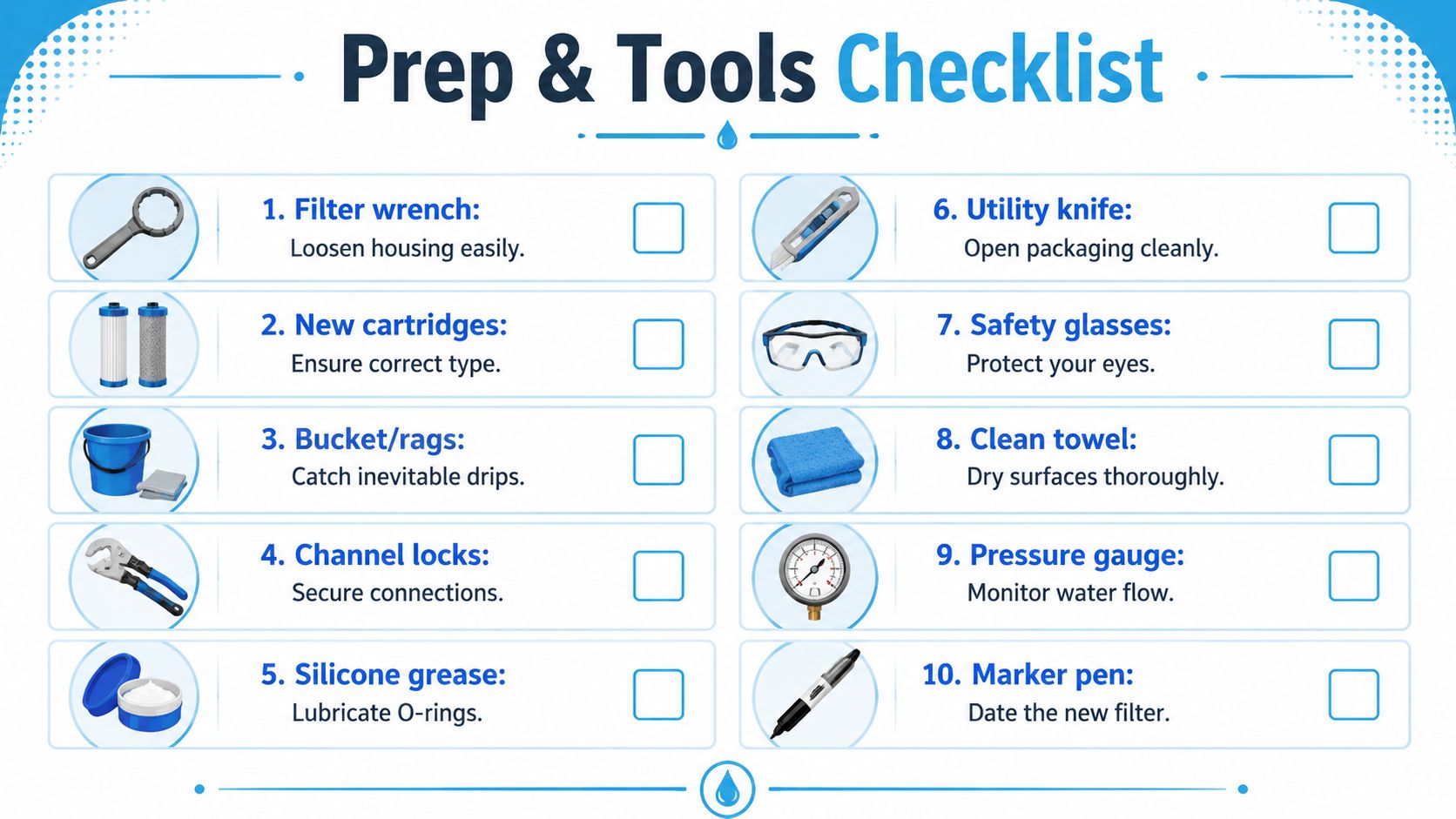
What to set out before you begin

A helpful checklist displaying the necessary tools and supplies needed to change a home water filter system.

Lay everything within arm's reach. Don't count on “I'll grab that in a second” once the system is open.

  • New cartridges: Match the exact type your system uses. Sediment, carbon, and specialty cartridges are not interchangeable just because they fit the housing.
  • Filter wrench: This gives you controlled turning force on the sump housing without beating it up.
  • Bucket and rags: Even a clean, careful swap releases trapped water.
  • Channel locks: Useful for nearby fittings if something needs light correction, but they are not your first choice for the plastic housing.
  • Food-grade silicone grease: A light coat on the O-ring helps it seat properly and reduces the chance of twisting or pinching.
  • Utility knife: Handy for packaging, especially when you don't want cardboard scraps and plastic wrapping near the open housing.
  • Safety glasses: Pressure relief can spit.
  • Clean towel: Use this to wipe the O-ring groove and housing threads.
  • Pressure gauge: Helpful if your setup includes one or if you like tracking system behavior over time.
  • Marker pen: Write the install date on the housing or cartridge if there's room.

The prep that prevents panic

Before you do anything else, find these parts:

What to locate Why it matters
Main shutoff valve You need a reliable way to stop incoming water before opening the housing.
Bypass valve If your system has one, it can shorten downtime and make servicing calmer.
Nearest downstream faucet You'll use it to release pressure from the line.
Pressure-release button Some housings have one on top. It makes opening the sump much easier.

If you have a multi-stage system, line up the new filters in installation order before starting. Don't open every package at once and mix them on the floor.

The homeowners who have the smoothest filter changes are almost never the strongest. They're the ones who prepared the area first.

Clear the work zone

Give yourself room. Move storage bins, detergent bottles, holiday decorations, or anything else crowded around the filter bracket.

A few practical habits help:

  • Put the bucket directly under the housing: Not “nearby.” Directly under it.
  • Protect the floor: A towel under the bucket catches the drips that miss.
  • Use decent lighting: Most sealing mistakes happen because someone couldn't clearly see the O-ring groove.
  • Keep kids and pets out of the area: You don't want someone bumping your arm while you're reseating a housing.

The goal is simple. When the system is open, you want both hands free and your brain calm.

The Main Event Performing the Filter Swap

The part that makes first-timers nervous is usually the moment the housing starts to turn. That hesitation is healthy. A whole house filter can hold pressure, and I've seen people crack a sump, dump a bucket of water on the floor, or pinch an O-ring because they rushed the swap.

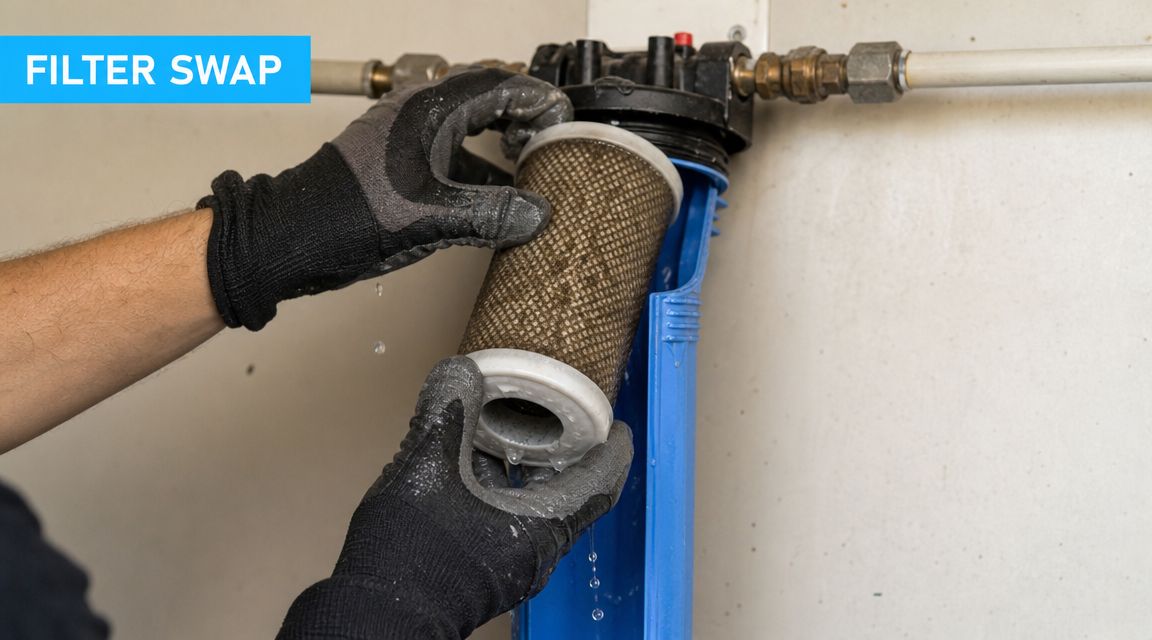
A person wearing protective gloves replacing a dirty, used water filter cartridge from a housing unit.

Shut the water down the right way

Shut off the water feeding the filter housing. If your system has a bypass, set it the way the manufacturer calls for before you open anything. If it does not, shut off the main supply upstream of the filter.

Then open a cold faucet downstream and leave it open for a moment. If your housing has a pressure-release button, press it. The goal is simple. Remove pressure before you try to unscrew the canister.

Skipping that step is how a routine filter change turns into a mess. If the housing feels unusually tight, trapped pressure is often the reason, not just a stubborn thread.

Loosen the housing with control

Put the bucket directly under the sump, then fit the housing wrench squarely around it and turn counterclockwise. Use steady pressure. Sharp jerks tend to slip the wrench or crack older plastic.

If it does not move, stop and verify two things before adding force:

  • the water is fully shut off
  • the line pressure is relieved
  • the wrench is seated flat on the housing ribs

Support the housing with your free hand as it comes loose. It usually holds more water than people expect, and dropping a full sump can damage the threads or the cartridge seat.

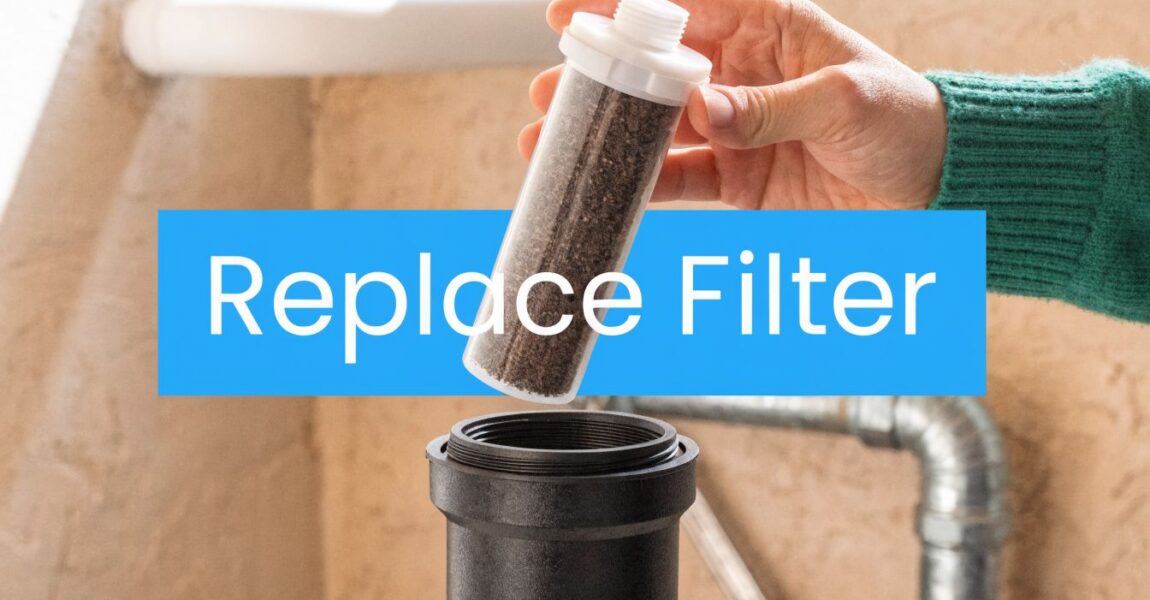
Remove the old filter and inspect the sealing surfaces

Lift out the old cartridge and set it in the bucket. Then check the inside of the housing, the threads, and the O-ring groove before you even touch the new filter.

Look for the stuff that causes leaks later:

  • sediment or sludge in the bottom of the housing
  • grit stuck in the O-ring groove
  • a dry, flattened, twisted, or cracked O-ring
  • signs the old cartridge was sitting off-center

Wash the housing with mild soap and water, then rinse it well. Wipe the groove and threads clean. A single grain of sand under the O-ring can be enough to cause a slow drip once pressure returns.

If the O-ring is damaged, replace it. If it is still in good shape, apply a light coat of food-grade silicone grease. Light coat. Too much grease attracts debris and makes it easier for the O-ring to shift out of place.

Set the new cartridge in correctly

Install the new cartridge in the orientation the manufacturer specifies. Some filters can go in either direction. Others have a clear top and bottom, a gasketed end, or a flow arrow that matters.

For multi-stage systems, keep each cartridge in its proper housing and order. First-timers often focus on getting the new filter to fit and miss the bigger issue, which is whether each stage is doing the job it was chosen for. Sediment, carbon, and specialty media are not interchangeable just because the cartridges look similar.

If your main reason for changing the filter is weak fixtures or poor flow, MG Drain Services' expert advice gives a good overview of other pressure causes worth ruling out. A clogged filter is common, but it is not the only reason a house loses pressure.

Reassemble carefully and stop before overtightening

Put the O-ring back in its groove and make sure it sits flat all the way around. Then thread the housing on by hand. It should turn smoothly with even resistance.

If it feels crooked, gritty, or hard to start, back it off and try again. Cross-threading is one of the costliest DIY mistakes on these housings, and once the threads are damaged, tightening harder only makes it worse.

Use the wrench only for the final snug fit if needed. Plastic filter housings do not need brute force to seal. They need clean threads, a seated O-ring, and even contact.

Use this quick check before you call the swap done:

Reassembly check What you want to see
O-ring Flat in the groove, not pinched or bulging
Housing threads Even and straight, no visible tilt
Cartridge position Properly seated and centered
Housing body Hand-tight or just slightly snugged with the wrench

For readers who like seeing the process in motion, this walkthrough can help with hand position and pacing:

Mistakes that cause trouble fast

A few shortcuts create the same problems again and again:

  • Using petroleum grease on the O-ring: Use food-grade silicone grease only.
  • Forcing in a cartridge that is only "close enough": Similar size does not mean correct seal or filtration.
  • Ignoring cartridge direction or stage location: The system may run, but performance can drop and filters can load up early.
  • Cranking the housing down hard: Extra force often means the O-ring is out of place or the threads are misaligned.

The best filter changes look boring. That's a good sign. Calm hands, clean parts, and a careful reassembly beat strength every time.

Post-Installation Checks and System Flushing

A lot of first-timers relax too early here. The housing is back on, the wrench is down, and it feels finished. I've seen more leaks show up in the first few minutes after re-pressurizing than during the actual swap, so treat startup like part of the job.

Start by bringing the water back on slowly. If your system has a bypass, return it to the filter position in a controlled way. The goal is to let the canister fill gradually so the O-ring can settle under pressure instead of getting hit all at once.

Watch the housing closely as it fills. Don't just look from a few feet away. Run a dry hand or paper towel around the seam, the cap, and any nearby fittings. Small leaks hide there first.

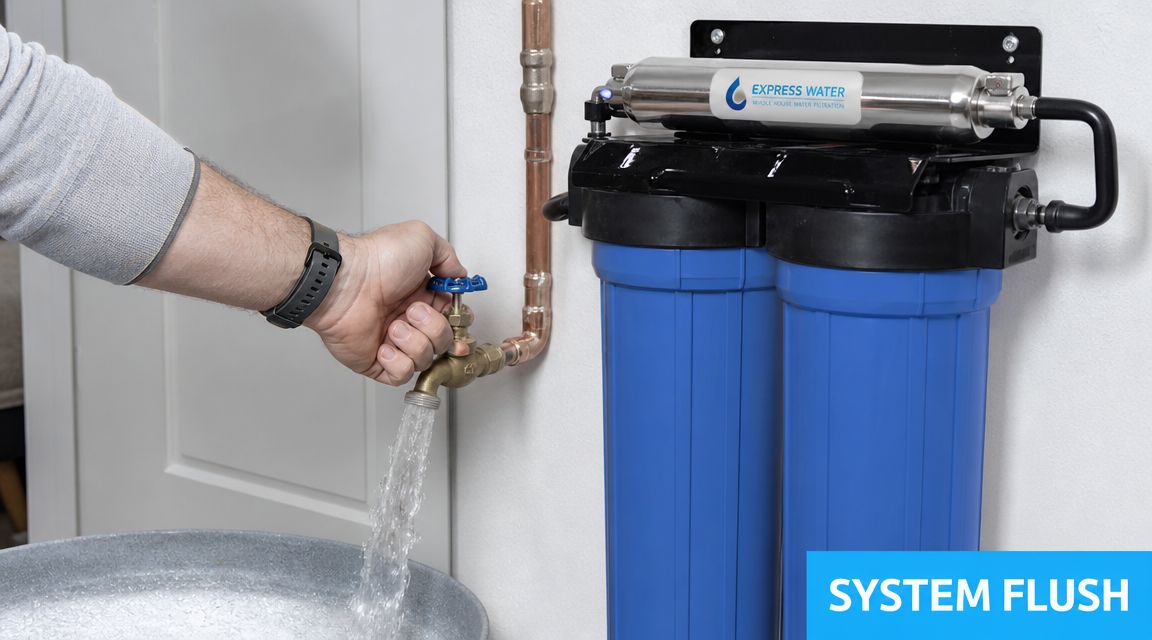
A person flushing a whole house water filtration system by running water through an installed brass faucet.

If you catch a drip, shut the water back off and relieve pressure before touching the housing. In my experience, the usual causes are simple. The O-ring shifted, a little grit got onto the sealing surface, or the sump threaded on slightly crooked. A tiny leak almost never stays tiny once the system sits under full pressure.

Once everything stays dry, flush the new filter with cold water only. Run water long enough to clear the startup dust and air from the cartridge. New carbon filters often shed harmless black or gray fines at first, and trapped air can make the water spit and surge. If you want a broader reference on filter care and replacement timing, this whole house water filter advice guide is a useful companion.

That flush does more than improve appearance. It clears loose media, pushes air out of the lines, and helps keep faucet aerators and appliance screens from catching that debris later. Skip this step and you may end up chasing cloudy water or weak flow at fixtures that were working fine before.

A little cloudiness right after the change is usually normal. Pour a glass and let it sit for a minute. If the cloudiness clears from the bottom up, that's air, not contamination.

You may also hear a bit of pipe noise or get some sputtering at faucets for a short time. That usually settles down as the air works out of the system. What should get your attention is different. A housing that keeps weeping, a strong bad taste that doesn't improve after flushing, or low flow across the whole house means something still needs attention.

Before you walk away, do a quick round of the house. Run a few cold fixtures, check that pressure feels normal, and come back to the filter housing after it has been under pressure for a bit. Then mark the install date on the housing.

That date saves guesswork next time. It also tells you, at a glance, whether a filter is due or just being blamed for another plumbing problem.

Solving Common Problems During a Filter Change

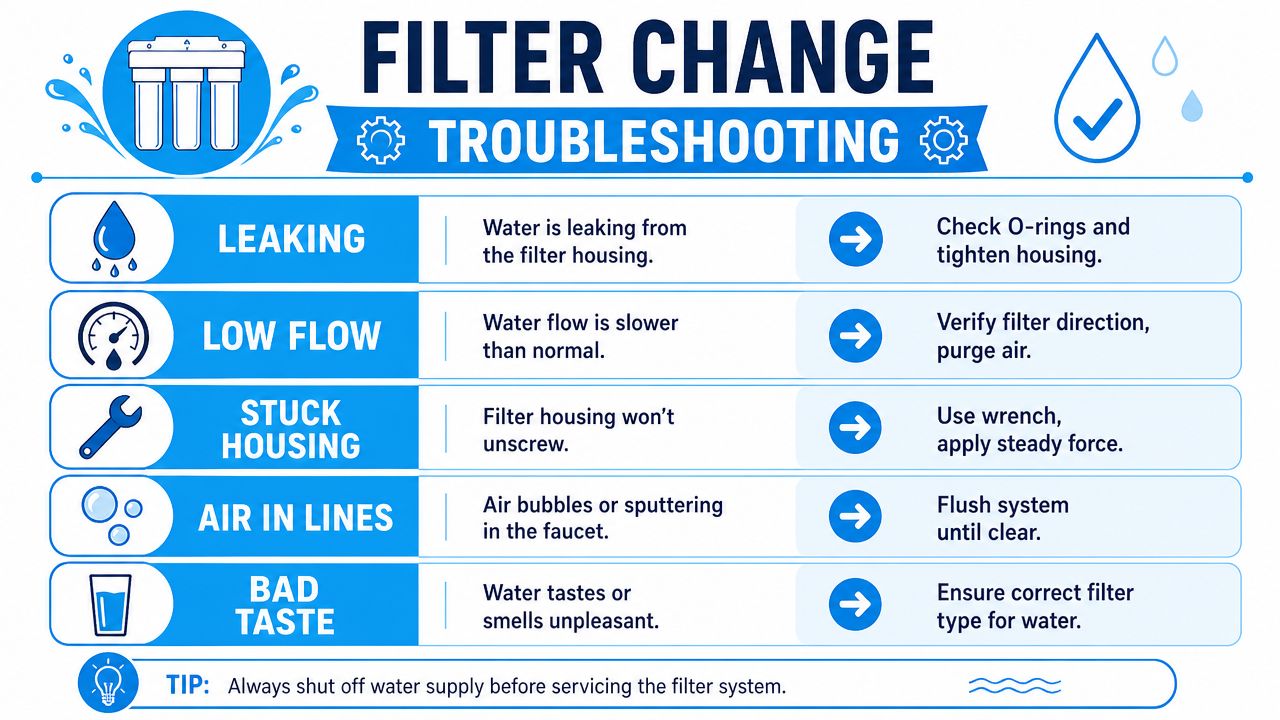
Most filter-change problems come down to a short list. The nice thing is that they're usually fixable without tearing the whole setup apart.

A troubleshooting guide for water filter systems illustrating common issues like leaks, low flow, and bad taste.

Leak at the housing

If the housing drips after reassembly, the first suspect is the O-ring. Not the threads. Not your tightening strength. The O-ring.

Common causes include:

  • It slipped out of the groove
  • It twisted during tightening
  • There's grit in the groove or on the sealing surface
  • It's worn or cracked

Shut the water off, relieve pressure, reopen the housing, and inspect everything carefully. Most recurring leaks trace back to seal alignment.

Housing is stuck solid

This usually happens when someone over-tightened it last time, or pressure wasn't fully relieved before trying to remove it.

Use the proper wrench and apply steady force. If low flow has been one of your household symptoms, MG Drain Services' expert advice is a useful companion read because it helps you separate filter-related restriction from broader plumbing pressure issues.

Slow, even pressure with the correct wrench works better than sudden force.

Avoid pipe wrenches on the plastic sump unless you're prepared to replace parts.

Pressure is still poor after the new filter

If the old filter was clogged and the new one didn't fix low flow, check these likely culprits:

Symptom Likely cause What to check
Weak flow everywhere Valve not fully reopened Main shutoff or bypass position
Weak flow right after replacement Air still in lines Continue flushing cold water
Flow dropped after install Cartridge mismatch or wrong orientation Filter type and seating
Only some fixtures affected Debris reached aerators Faucet aerators and showerheads

If you installed a finer filter than your system usually runs, that can also change how the house feels. Not every cartridge that fits a housing is a good match for whole-home flow demands.

No water flow at all

This one sounds scary, but it's usually something simple.

  • Bypass left in the wrong position
  • Main valve still shut or only partially open
  • Cartridge seated incorrectly and blocking flow
  • A direction-specific filter installed backward

When there's zero flow, go back to basics. Valve positions first. Cartridge orientation second. Fancy theories later.

Smart Maintenance and Choosing Your Next Filter

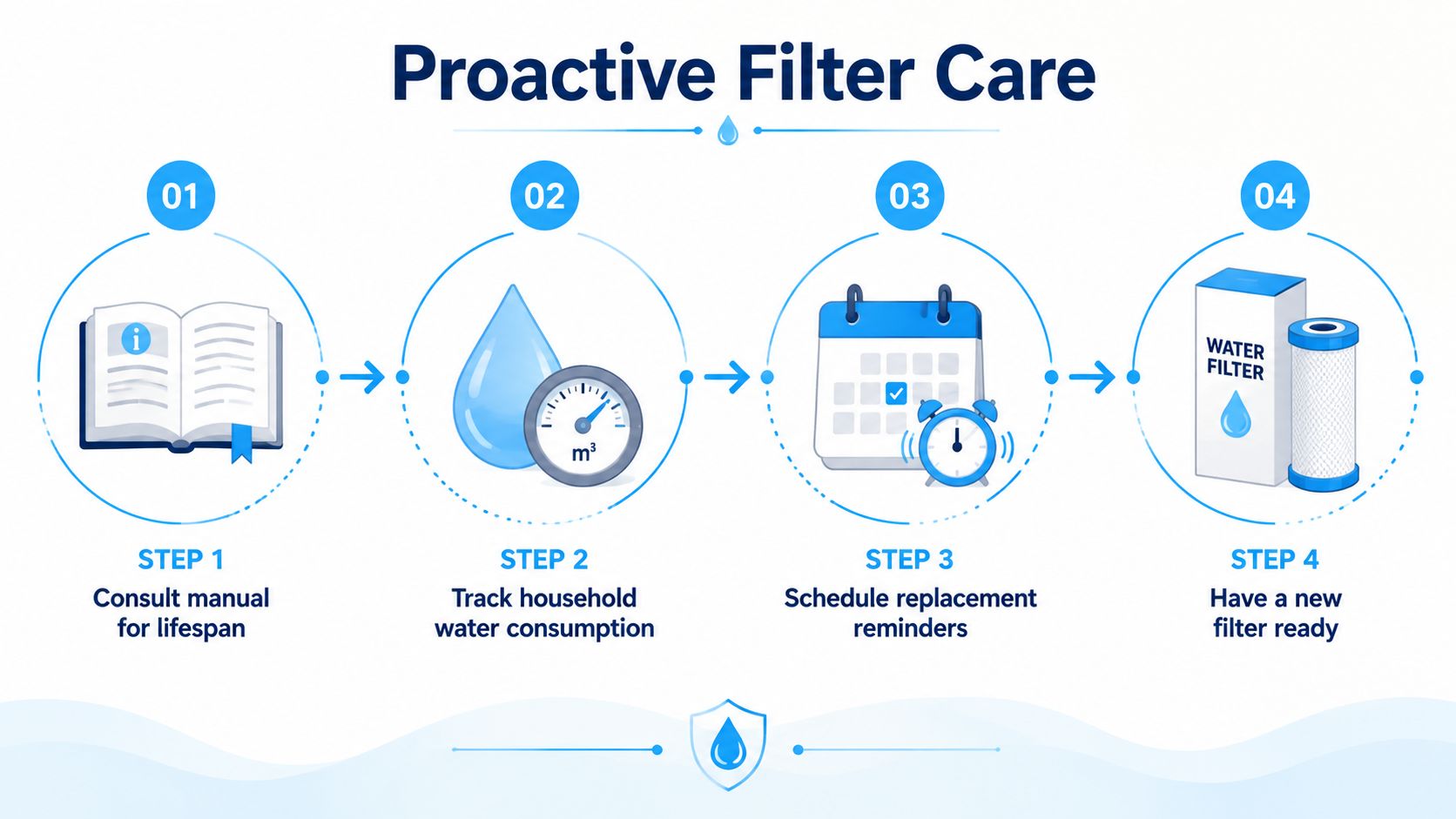
The easiest whole house filter change is the one you saw coming. Don't rely on memory. Set a reminder on your phone, write the date on the housing, and keep the correct replacement cartridges on hand before you need them.

If you use a multi-stage system, remember the maintenance logic that matters most: replace filters based on how the system behaves, not just on habit. Reduced pressure, changing taste, odor issues, and visible sediment loading are all practical signals that the system wants attention.

Pick the next filter with your water in mind

Your next cartridge choice should match your water source and what you're trying to fix.

  • Sediment filters: Best when sand, rust, or visible particles are the main issue.
  • Carbon filters: Better for chlorine taste and odor concerns.
  • Well water setups: Often need a different approach than municipal water because the water problems aren't the same.
  • Very fine cartridges: They can improve certain outcomes, but they can also create flow complaints if they're too restrictive for the house.

If you want to sharpen your filter selection before the next purchase, the buying and maintenance articles in Water Filter Advisor's advice library are a useful place to compare system types, cartridge roles, and homeowner-friendly maintenance tips.

Dispose of the old cartridge according to the manufacturer's instructions and your local waste rules. Don't toss a soaking wet used filter on a shelf and tell yourself you'll handle it later. That's how basements start collecting mystery messes.


If you want help choosing the right replacement cartridge, comparing whole-house systems, or getting clearer answers on maintenance, visit Water Filter Advisor.

Whole House Replacement Water Filter Cartridge: A Guide

You usually notice a whole house filter problem in the least scientific way possible.

The shower loses some punch. A glass of water smells a little earthy. Coffee tastes flat, and you find yourself blaming the beans. Then somebody in the house says, “Did the water always taste like this?” That’s when one finally looks at the filter housing and remembers the cartridge hasn’t been changed in a while.

A whole house replacement water filter cartridge isn’t exciting. It sits there, does its job, and gets ignored until the signs get annoying. But that cartridge is carrying a lot of weight. It helps protect taste, odor, flow, fixtures, and the money you already put into your filtration setup. Whole house systems often cost 10,000 to 50,000 yuan, or about $1,400 to $7,000 USD, with premium brands running higher, and the total cost keeps going with routine replacements and maintenance, as outlined in this cartridge cost and maintenance overview.

I’ve seen the same mistake again and again. People spend good money on the system, then treat the cartridge like it’s optional. It’s not. The cartridge is the working part. Ignore it long enough and the system stops acting like protection and starts acting like a restriction.

That Slowing Shower and Funky Taste

It usually starts small.

One bathroom still feels fine, but the shower at the far end of the house seems weaker than it used to. The kitchen tap runs a little slower. Cold water tastes dull, or maybe there’s a smell you can’t quite place. Nothing dramatic. Just enough to make you suspicious.

That pattern matters because whole-house filtration problems rarely announce themselves with one big failure. More often, the system slowly chokes down as the cartridge loads up with whatever your water brings in. If you’re on sediment-heavy water, that slowdown can show up in pressure first. If chlorine or odor reduction is the main job, your nose and taste buds often catch the problem before a wrench ever comes out.

The signs people miss

Homeowners tend to wait for obvious trouble, like a total pressure drop or visibly dirty water. In real homes, the first clues are usually more ordinary:

  • The shower feels weaker: Not dead, just not right.
  • Taste slips: Coffee, tea, and plain drinking water lose that clean neutral taste.
  • Odor creeps back in: Earthy, chemical, or stale smells can return.
  • Fixtures seem uneven: One tap feels normal, another doesn’t.
  • The system gets forgotten: Nobody remembers the last replacement date.

A filter doesn’t have to look terrible from the outside to be overdue inside.

That’s why smart filter maintenance is less about reacting to one dramatic symptom and more about paying attention to small changes before they turn into a messy Saturday.

Why this matters beyond convenience

A lot of people treat cartridge replacement like changing an air freshener. If the water still comes out, they assume it’s fine. That thinking costs you.

When the cartridge is spent, you don’t just lose performance. You also put stress on the rest of the system, make daily water use less pleasant, and risk buying the wrong replacement in a rush. That last one gets expensive fast, especially when you end up with a cartridge that technically “fits” but doesn’t match the housing, flow needs, or treatment goal.

The fix is usually simple. Identify the right cartridge, change it properly, and keep a basic replacement routine. The trick is doing it before that weak shower becomes a bigger water quality problem.

When to Replace Your Filter and The Risks of Waiting

Most whole house filter cartridges should be changed on a schedule, not just when the water gets bad. Experts recommend replacing most whole house water filter cartridges every 6 to 12 months, but that window changes with water conditions and system design, according to Aquasafe’s replacement guidance.

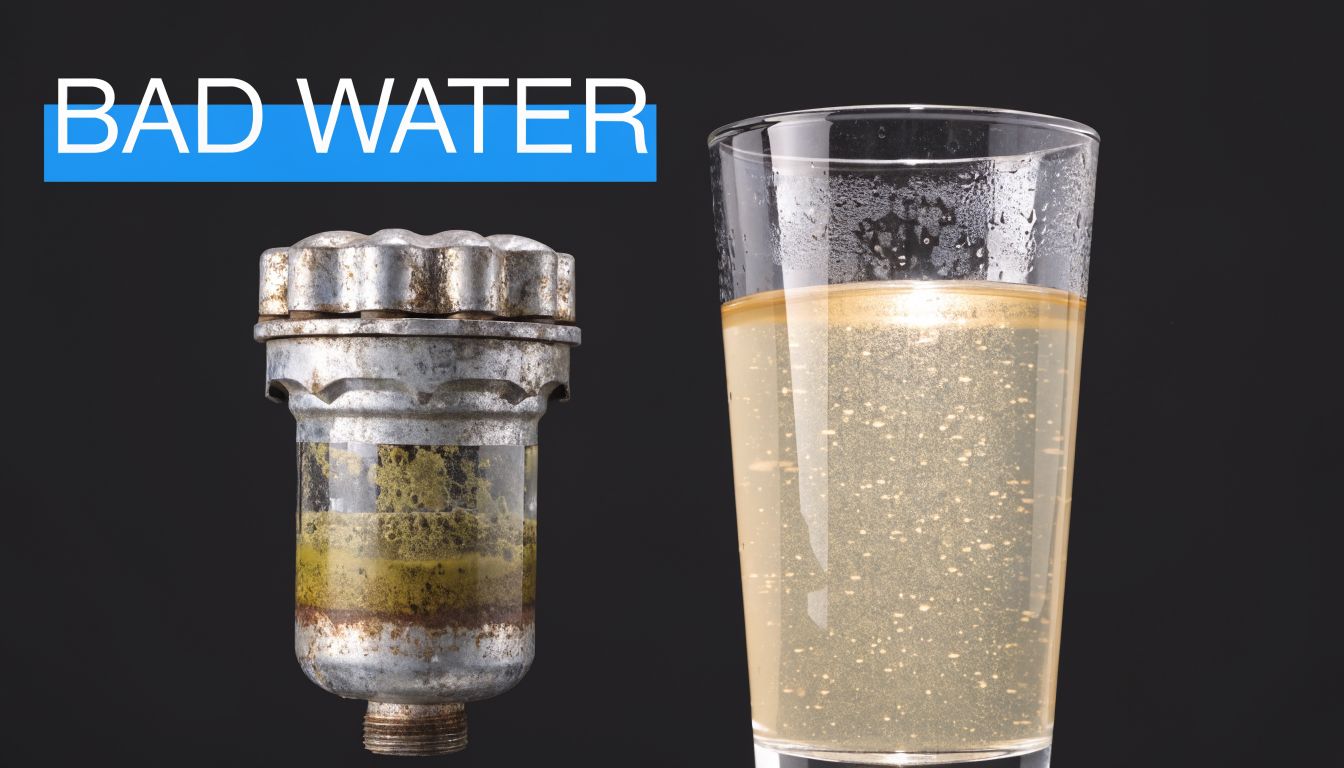
A dirty and clogged water filter cartridge next to a glass filled with cloudy contaminated tap water.

If your water carries more sediment or the house uses a lot of water, the cartridge won’t last as long as the label suggests. That’s especially true in multi-stage systems, where each stage has its own job and its own service life. Aquasafe notes that PP cotton pre-filters may need replacement every 3 to 6 months, activated carbon filters every 6 to 12 months, and reverse osmosis membranes every 2 to 3 years in systems that use them.

Go by the calendar and your senses

A cartridge can be overdue even if the water still looks clear. Not every exhausted filter announces itself with brown water or a dramatic drop in pressure. Some just lose treatment performance little by little.

Use both of these checks:

  • The calendar check: If you’re at the end of the recommended interval, assume it’s time to inspect or replace.
  • The household check: Notice lower pressure, changed taste, new odor, or fixtures that seem slower than usual.
  • The water source check: Well water with sediment or rusty water usually shortens replacement intervals. Cleaner municipal water may be easier on cartridges, but it still doesn’t make them permanent.

What waiting actually does

The biggest mistake is thinking an old cartridge merely stops helping. In reality, overdue cartridges can become part of the problem. Aquasafe warns that failure to replace cartridges on schedule can transform the filter into a source of bacteria, mold, and pollutants in the water.

That’s the part too many people miss. An exhausted cartridge isn’t just passive. It can become a dirty place in a wet, dark system, and that’s not something you want tied into every shower, faucet, and appliance line in the house.

Practical rule: If your water quality is questionable and your replacement date is fuzzy, replace the cartridge sooner, not later.

A simple timing guide

Here’s the clean version most homeowners can use:

Filter part Typical replacement timing
Sediment pre-filter 6 to 12 months in many whole-house systems
Main drinking water filter cartridge 6 to 12 months as a common recommendation
PP cotton pre-filter in multi-stage systems 3 to 6 months
Activated carbon filter 6 to 12 months
Reverse osmosis membrane 2 to 3 years

Schedules like these are a starting point, not a permission slip to ignore symptoms. If the shower softens, the taste slips, or the water starts smelling wrong, trust what the house is telling you.

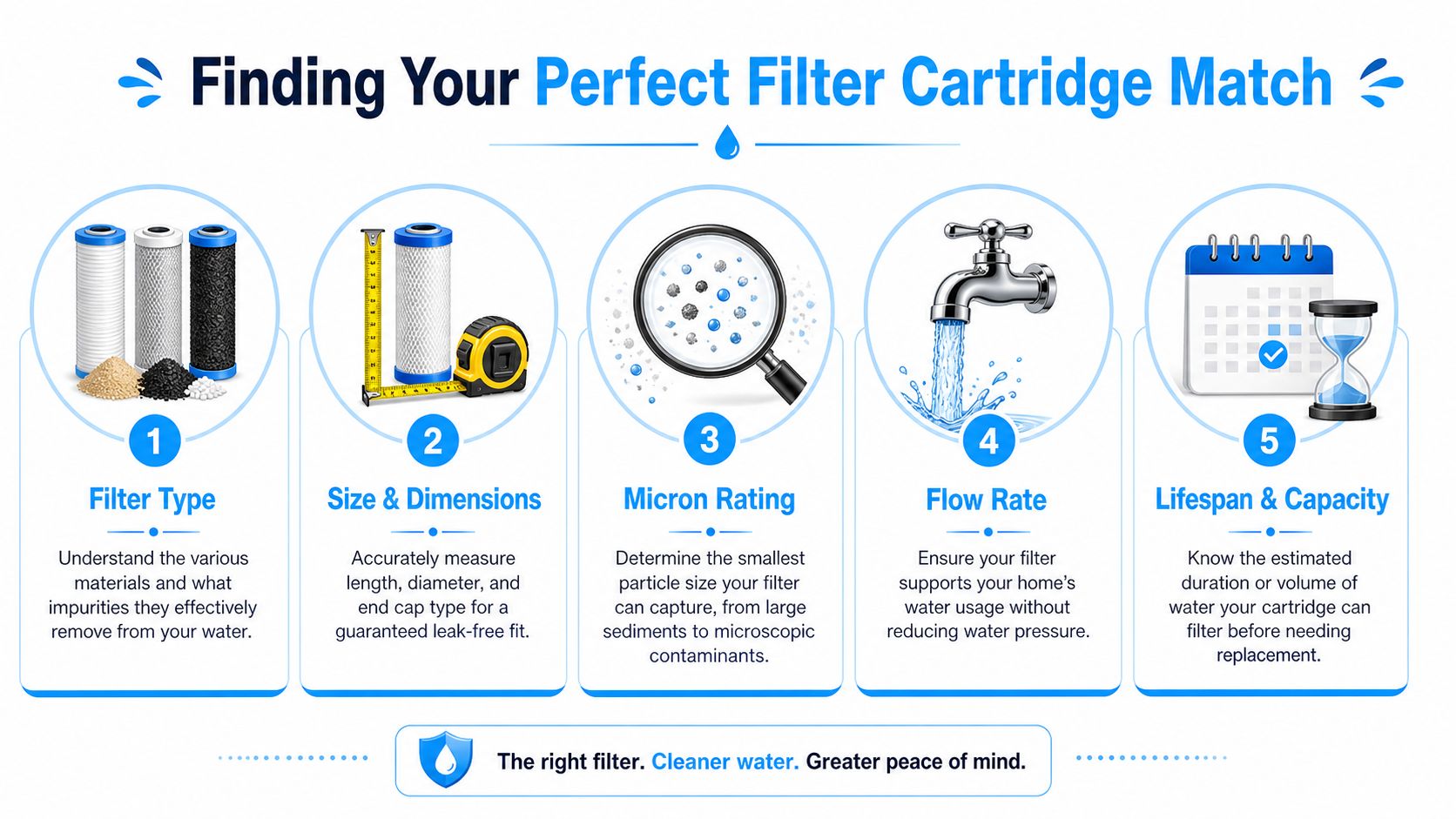
Finding Your Perfect Cartridge Match

A lot of bad cartridge buys happen the same way. The old filter comes out, the label is stained or missing, the homeowner grabs something that looks close, and the housing still screws shut. Then the pressure drops, the taste stays off, or the filter never seals quite right.

Buying the right whole house replacement water filter cartridge starts with compatibility, not price. Shelf price matters, but the expensive mistake is buying twice, or starving the house of flow because the cartridge was never a match for the system.

A five-step guide for choosing the right replacement water filter cartridge for your home water system.

Start with the part you already have

Before you pull out a tape measure, look for an exact ID.

Check these spots first:

  • The old cartridge label: Part number, brand, micron rating, and media type are often printed right on it.
  • The housing head or bracket: Many systems have a model sticker on the cap, sump, or mounting plate.
  • Old receipts, order emails, or install paperwork: This is often the fastest way to avoid buying the wrong cartridge.

If the system came with the house and there is no paperwork, take the old cartridge to the bench and inspect it closely. A blurry phone photo helps too. Guessing from memory at the supply counter is how people come home with the wrong diameter.

Measure the cartridge, not just the canister

If you cannot find a part number, measure the cartridge you removed.

Length and diameter come first. Close is not good enough here. A cartridge that is a little short, a little narrow, or built with the wrong end style can let water slip past the media or fail to seat properly.

Look at four things:

  • Length
  • Diameter
  • Open ends or end caps
  • Housing style, including standard slim housings and Big Blue housings

That last one trips people up all the time. Two housings can look similar on the wall and still take different cartridges.

Shop-floor rule: Bring the old cartridge with you if you can. A two-minute side-by-side check beats a second trip to the store.

Match the media to the job

A cartridge can fit perfectly and still be the wrong filter.

Sediment cartridges catch dirt, rust, and grit. Carbon cartridges help with chlorine, taste, and odor. Some systems use both because they are solving two different problems. Putting a carbon cartridge where a sediment stage belongs can clog the system early. Putting in sediment only will not do much for chlorine taste.

The right question is not “Will this fit?” It is “What is this stage supposed to remove?”

That is the step many guides skip, and it is where ownership cost starts. If you put the wrong media in the first housing, the next cartridge down the line gets hit harder and wears out sooner.

Understanding Micron Ratings

Micron rating tells you how fine the filter is. Lower numbers catch smaller particles, but they also restrict flow faster if your water carries a lot of sediment.

That trade-off matters in real houses. A very fine cartridge can sound great on the package and still be a poor choice for a home with heavy sediment, multiple bathrooms, or a high-demand morning routine.

Cartridge trait What it affects
Micron rating How fine the particle capture is
Media type What kind of contaminant the cartridge targets
Flow compatibility Whether the house keeps acceptable pressure
Lifespan How often you will replace it

If your water is dirty, a staged setup usually works better than asking one tight cartridge to do everything. Let a sediment filter catch the bigger debris first, then let the finer or carbon stage do its job without getting packed up early.

OEM or generic

Generic cartridges can work fine if the dimensions, end style, and media specs exactly match the original. The problem is that “fits most” is not the same as “fits your housing correctly.”

Cheap cartridges turn expensive. The lower shelf price looks good until the filter life is short, the pressure is disappointing, or the fit is sloppy enough to risk bypass. Then you buy another cartridge, or you spend time chasing a problem that started with the wrong part.

Certified OEM replacements are usually the safer pick for whole-house systems, especially when the housing uses a less common cartridge style. If you do buy generic, compare specs line by line, not just the headline size.

Count the real cost, not just the checkout total

A cartridge that costs less up front is not always a real bargain, it's just a lower price at checkout.

The true cost sits in three places:

  • How long the cartridge lasts in your water
  • Whether it keeps flow where the house needs it
  • Whether it protects the next filter stage instead of overloading it

I always tell people to keep a simple record on the wall or in their phone. Write down the cartridge model, install date, and how the water was behaving when you changed it. After one or two cycles, you stop buying blind. You know what fits, how long it lasts in your house, and whether the “cheaper” option saved money or just created another Saturday job.

Your Leak-Free Cartridge Replacement Guide

Most cartridge changes are straightforward. The trouble starts when people rush, skip pressure relief, or crank the housing down like they’re tightening a truck wheel.

A person holding a blue water filter cartridge ready to be installed into a plumbing system.

The replacement flow is well established. Shut off the water, relieve pressure, open the housing, inspect and clean, check the O-ring, install the new cartridge, tighten correctly, then bring the water back on slowly. SpringWell’s cartridge replacement instructions also note that 30% to 50% of failures stem from O-ring degradation, which is why experienced installers never skip that tiny gasket.

Tools that make the job easier

You don’t need a fancy truck full of gear. You do need a few basics:

  • Filter wrench: Best tool for stubborn housings.
  • Bucket or towels: There will be leftover water.
  • Silicone gel: For lubricating the O-ring.
  • Clean rag or sponge: For wiping out the sump housing.
  • Replacement O-ring if needed: Smart to keep on hand if yours looks tired.

If the housing has been overtightened in the past, the wrench stops this job from becoming an arm-wrestling match in your utility room.

The replacement sequence that works

Follow this order and you’ll avoid most common mistakes:

  1. Shut off the main water supply. If your filter setup has an isolation valve or bypass, use it.
  2. Relieve pressure. Open a downstream faucet before loosening the housing.
  3. Set a bucket underneath. Residual water will spill.
  4. Unscrew the housing counterclockwise. Use the filter wrench if needed.
  5. Remove the old cartridge and inspect the housing. Clean out sediment, slime, or carbon residue.
  6. Check the O-ring carefully. If it’s cracked, flattened, or nicked, replace it.
  7. Lubricate the O-ring with silicone gel. Dry O-rings twist and leak.
  8. Insert the new cartridge squarely. Make sure it seats properly.
  9. Reattach the housing hand-tight, then add a quarter turn. SpringWell notes this is the right finishing move, and it matters because over-tightening causes 20% of housing cracks.
  10. Turn the water back on slowly. Then check for leaks.
  11. Flush the system. SpringWell advises flushing 5 to 10 gallons to clear carbon fines after installation.

A slow restart is worth the extra minute. If you slam pressure back on immediately, small issues become wet issues fast.

Here’s a visual walkthrough if you like to watch the process before doing it yourself:

The two mistakes that cause the most grief

The first is skipping pressure relief. SpringWell reports that neglecting to relieve system pressure leads to 15% of splash-related mishaps. That’s the classic “why am I suddenly soaked” moment.

The second is treating the housing like it needs brute force. It doesn’t. Hand-tight plus a quarter turn is enough when the O-ring is seated and lubricated. If it only seals when you’re straining on the wrench, something else is wrong.

Tighten for the seal, not for revenge.

A couple of trade tips

If you’re working on a multi-stage system, lay the cartridges out in order before you start. Mixing stages is a simple mistake with annoying consequences.

If the old cartridge came out looking unusually collapsed, torn, or oddly dirty on one side, pay attention. That can hint at fitment issues, bad flow direction, or a cartridge that never seated correctly in the first place.

Troubleshooting Post-Installation Hiccups

A fresh cartridge is in, the housing is back together, and then you see a drip. Or the water looks cloudy. Or pressure still isn’t right. None of that automatically means you botched the job.

A technician points to a dripping water filter connection to demonstrate a whole house leak issue.

If the housing leaks

Start with the simple causes first.

  • Check the O-ring seating: It may be twisted, pinched, dirty, or out of its groove.
  • Back off and rethread the housing: Cross-threading can feel tight while still leaking.
  • Confirm the cartridge is the correct match: Homeowners deal with hundreds of cartridge varieties, and a mismatched cartridge can affect fit, flow, and even warranty status, as noted in Home Depot’s whole-house replacement category guidance.
  • Tighten correctly: Snug is right. Hulk-tight is not.

If the leak is coming from a nearby valve instead of the housing itself, that’s a different repair. In that case, this shut off valve leaking guide is a useful next step before you start blaming the filter.

If the water looks cloudy

New carbon cartridges often shed fine carbon dust at startup. That usually shows up as gray or cloudy water right after replacement.

The fix is simple. Flush the system thoroughly and check again. If the cloudiness clears as the water runs, it was likely startup residue. If it lingers or appears along with strange taste or odor, recheck cartridge seating and make sure the replacement media matches the application.

Cloudy water right after a carbon change is often a flushing issue, not a disaster.

If pressure is still poor

A new cartridge should improve flow if the old one was clogged. If pressure is still weak, work through this short checklist:

Problem Likely cause What to do
Low pressure at the whole house Wrong cartridge or blocked upstream issue Verify cartridge specs and check valves
Low pressure at one fixture Local aerator or fixture clog Clean the fixture, not the filter
Pressure dropped after installation Cartridge too restrictive or installed wrong Reconfirm micron rating and seating

The trap here is assuming every post-install problem is an installation mistake. Sometimes the filter change exposes another problem that was already there.

Smart Maintenance and Responsible Disposal

A whole-house filter runs best when replacement isn’t a surprise. The most practical homeowners don’t wait for bad taste or a weak shower. They build a simple routine and keep the next cartridge ready.

That matters because many people don’t have a good framework for the true lifecycle cost of a cartridge system. Replacement frequency changes with water quality, and flow rate affects how the system performs over time, which makes budgeting harder than it should be. That ownership-cost gap is spelled out in US Water Systems’ overview of whole-house cartridge system considerations.

Build a system you’ll actually follow

The best maintenance plan is the one you won’t forget.

Try this:

  • Write the install date on the housing: A permanent marker beats a fuzzy memory.
  • Set a calendar reminder: Put it on your phone for the next inspection or replacement window.
  • Store the exact cartridge model: Keep a note in your phone, on the housing, or in your home file.
  • Order before you need it: Having the next cartridge on the shelf keeps you from panic-buying the wrong one.

A house with changing water conditions may need adjustments over time. If your incoming water gets dirtier during part of the year, your replacement schedule may need to move up. That’s normal. The system should fit the water, not the other way around.

Disposal without the guesswork

Used filter cartridges are messy by design. They’ve collected the stuff you didn’t want moving through the house. Disposal depends on local rules and the cartridge materials, so check your municipal guidance first.

The practical approach is to let the used cartridge drain, bag it if it’s wet or dirty, and follow local disposal or recycling instructions where available. Some areas accept certain filter materials; others don’t. What matters is handling it deliberately instead of tossing a dripping cartridge into the garage corner for months.

If a delayed change or leak ever turns into wet drywall, flooring trouble, or a bigger cleanup problem, a solid reference like Restore Heroes' guide to water damage can help you understand what needs immediate attention.

Make better decisions next time

The biggest improvement most homeowners can make isn’t buying a fancier system. It’s keeping better records on the one they already own.

Track the cartridge used, the install date, how the water behaved before replacement, and whether that specific cartridge gave you good service life. Do that for one year and your next buying decision gets much easier. If you want more practical maintenance help and filtration explainers, keep a trusted bookmark to Water Filter Advisor’s advice library.

A whole house replacement water filter cartridge should be routine. When you know the exact part, understand the fit, and replace it before trouble starts, the whole job becomes cheaper, cleaner, and less stressful.


If you want straightforward help choosing, comparing, and maintaining home filtration systems, Water Filter Advisor is a solid place to start. It’s built for homeowners who want clear guidance on cartridges, system types, certifications, and real-world maintenance without the usual confusion.

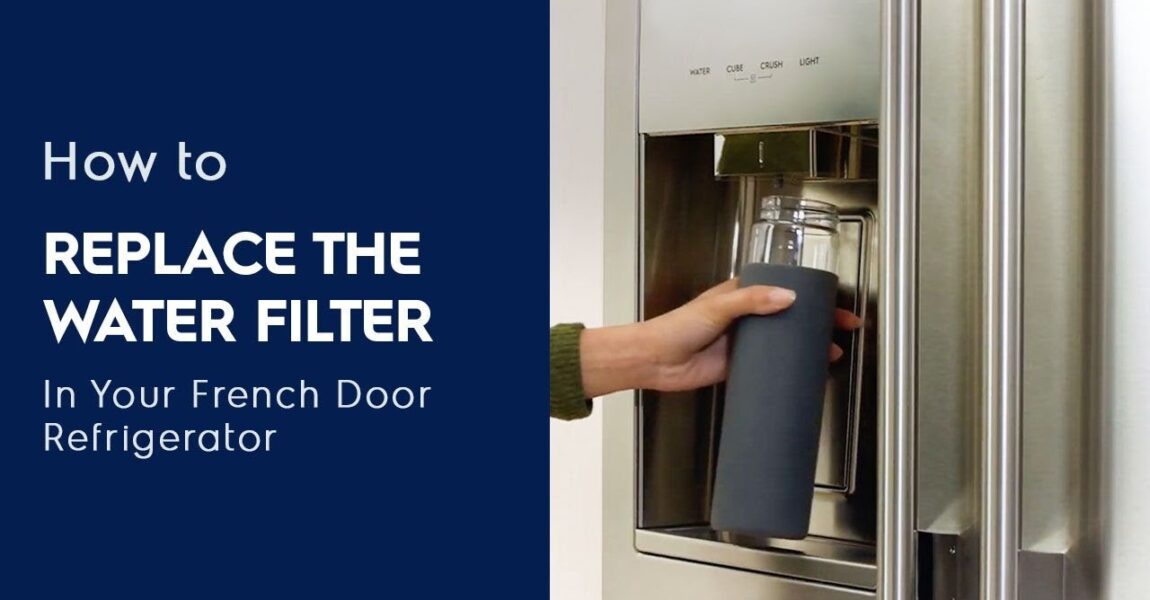
How to Replace the Water Filter in Your French Door Refrigerator

How to Replace the Water Filter in Your French Door Refrigerator


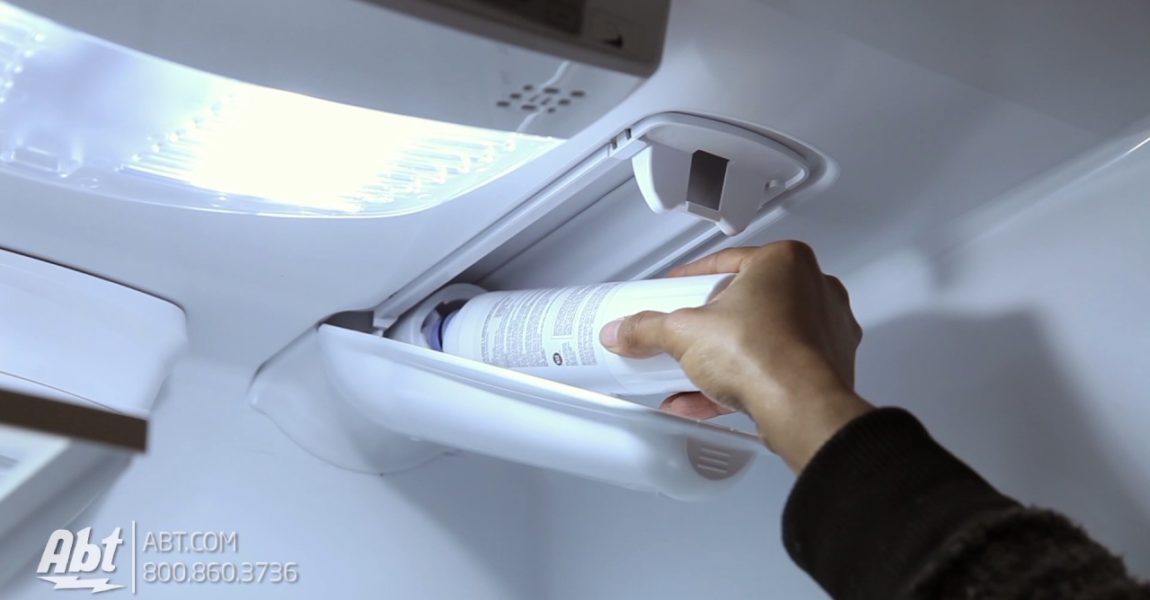
Learn in a few short steps how to remove and install the water filter in your Electrolux French Door Refrigerator. In no time, you’ll be enjoying refreshing, great-tasting water. Click here for more FAQs:

Subscribe:

Learn more about your Electrolux French Door Refrigerator here:

At Electrolux, we believe in better living for a better future, and we believe every change starts at home. That’s why we create appliances designed to make your life at home more effortless and sustainable. Subscribe for How To’s, Tips & Tricks, Appliance Walkthroughs, and more…and let’s take care of our future together.

Shop With Us Online:
Get In Touch Here:
Follow ElectroluxUS on Instagram:
Like ElectroluxUS on Facebook:
Explore More Design Inspiration on Pinterest:

#Electrolux #Refrigerator #WaterFilter #Appliances #HomeAppliances

Original Video Source

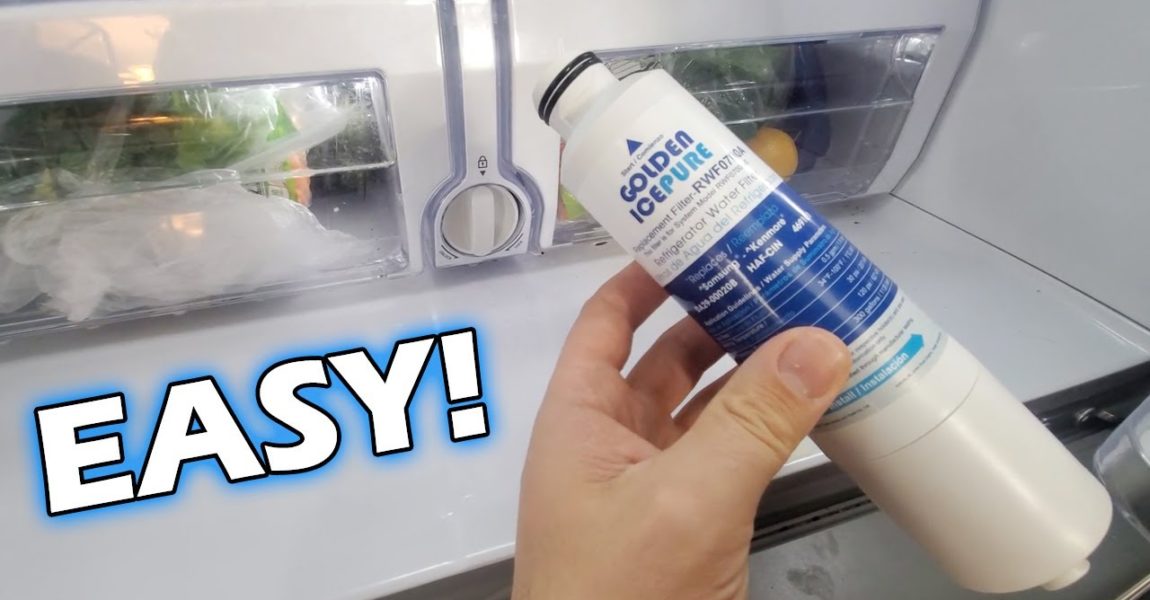
How To Change The Water Filter In A Samsung Refrigerator and Reset Water Filter Light

How To Change The Water Filter In A Samsung Refrigerator and Reset Water Filter Light


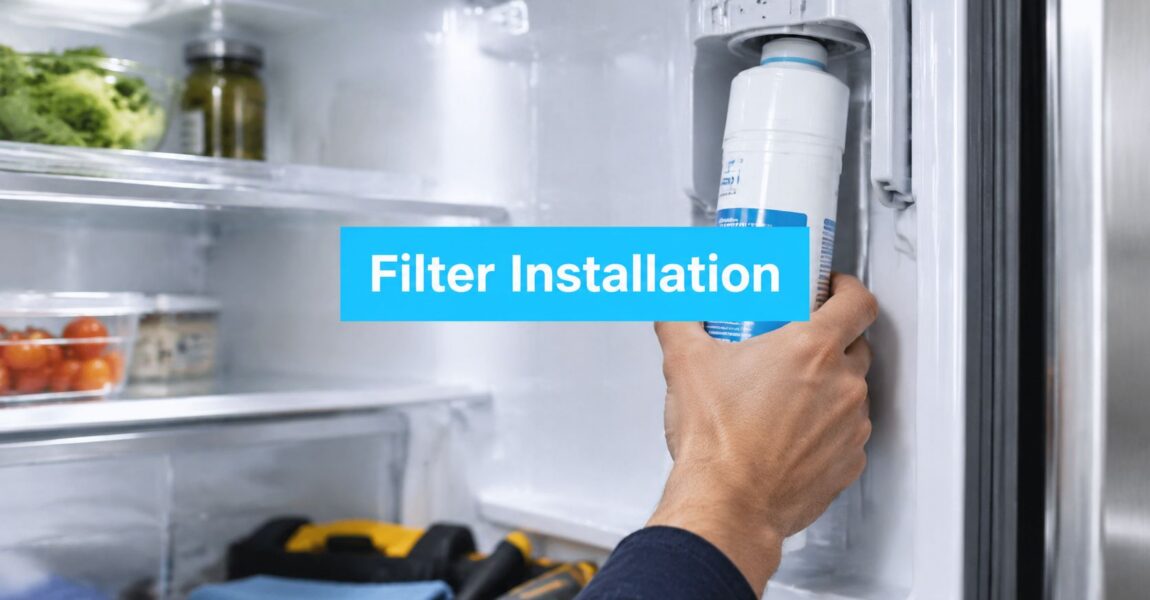
In this simple do-it-yourself video, I show you how to change the water filter in a Samsung Refrigerator and reset water filter light. This is fairly basic and should be performed every 2-3 months or when you notice your water filter light come on.

Replacement filters for Samsung Available on Amazon Here-

I found these replacement water filters for about $10 each and you can get a three pack for $30. Each filter roughly lasts for about 300 gallons before needing replacement.

If your water filter is stuck and hard to remove, you can use some small pliers to make the job easier. You want to rotate the water filter 45 degrees counter clockwise and it should be able to be pulled straight out.

Before installing the new water filter in your Samsung refrigerator, ensure the gaskets on the new filter are not damaged and seated properly.

To install, reverse the steps. I always find it beneficial to run about a gallon of water through the new filter before drinking from it. This will ensure all the carbon dust within the filter is removed.

Well, I hope you found this video helpful on how to change the water filter in a Samsung refrigerator and reset water filter light. Please stay tuned for future videos on easy to follow how to videos!

#Samsung #FilterReplacement #HowTo

DISCLAIMER: This video and description contains affiliate links, which means that if you click on one of the product links and make a purchase, I’ll receive a small commission. This helps support my channel and allows me to continue to make videos like this. Thank you for the support!

Original Video Source