Water Filtration System Home: Your 2026 Guide to Purity

You fill a glass from the kitchen tap, take a sip, and pause. Maybe it tastes a little like a swimming pool. Maybe it smells faintly chemical. Maybe the water looks clear, but you still don't feel fully settled about what's in it.

That moment matters more than people think.

A lot of homeowners start caring about filtration the same way. Not from a big disaster, but from a tiny moment of doubt at the sink, in the shower, or while filling a baby bottle. You're not being picky. You're paying attention to something your family uses every day.

That First Sip of Doubt

One customer at a hardware counter once described it perfectly. “I don't know what's wrong with my water,” she said, “but I don't like wondering every time I drink it.” That's where many people are right now. The water may be legal to drink, but “safe enough” and “something I trust” aren't always the same feeling.

A person holding a clear glass of water while looking at it, with the text Tap Doubts.

That concern is common. As of 2023, 91% of Americans reported using a water filter, a 25% increase since 2020, and EPA data showed that 27% of public water systems violated at least one drinking water standard in 2022, according to NSF's water filter research summary.

What your senses are telling you

Your eyes, nose, and tongue can't identify every contaminant, but they often notice clues:

  • Taste changes can point to chlorine, minerals, or old plumbing.
  • Odor problems often show up before you ever see an issue in the glass.
  • Cloudiness or particles may suggest sediment, rust, or disturbed pipes.
  • Skin and hair complaints after showering can make people realize the issue isn't only about drinking water.

The tricky part is that clean-looking water can still contain things you'd rather remove. Clear water isn't the same as filtered water.

Practical rule: If you've started wondering about your tap water more than once, that's enough reason to look into filtration.

Why filtration feels confusing

Home water treatment has a jargon problem. You start searching for a water filtration system home setup and suddenly you're buried in terms like carbon block, KDF, RO, UV, micron rating, NSF 42, NSF 53, point-of-entry, and point-of-use. It sounds more complicated than it is.

The job is simple. You're trying to match a water problem to the right tool.

Some systems improve taste. Some protect pipes and appliances. Some target lead. Some handle a broad mix of dissolved contaminants. Some do one job at one faucet. Others treat every drop that comes into the house.

Once you sort those categories out, the whole subject gets much easier to live with and much easier to shop for.

Mapping Your Home's Water Filtration Options

Think of home filtration like tools in a garage. You wouldn't use the same tool to hang a picture, rebuild a fence, and tighten a loose cabinet hinge. Water filters work the same way. The right system depends on where the problem is and what outcome you want.

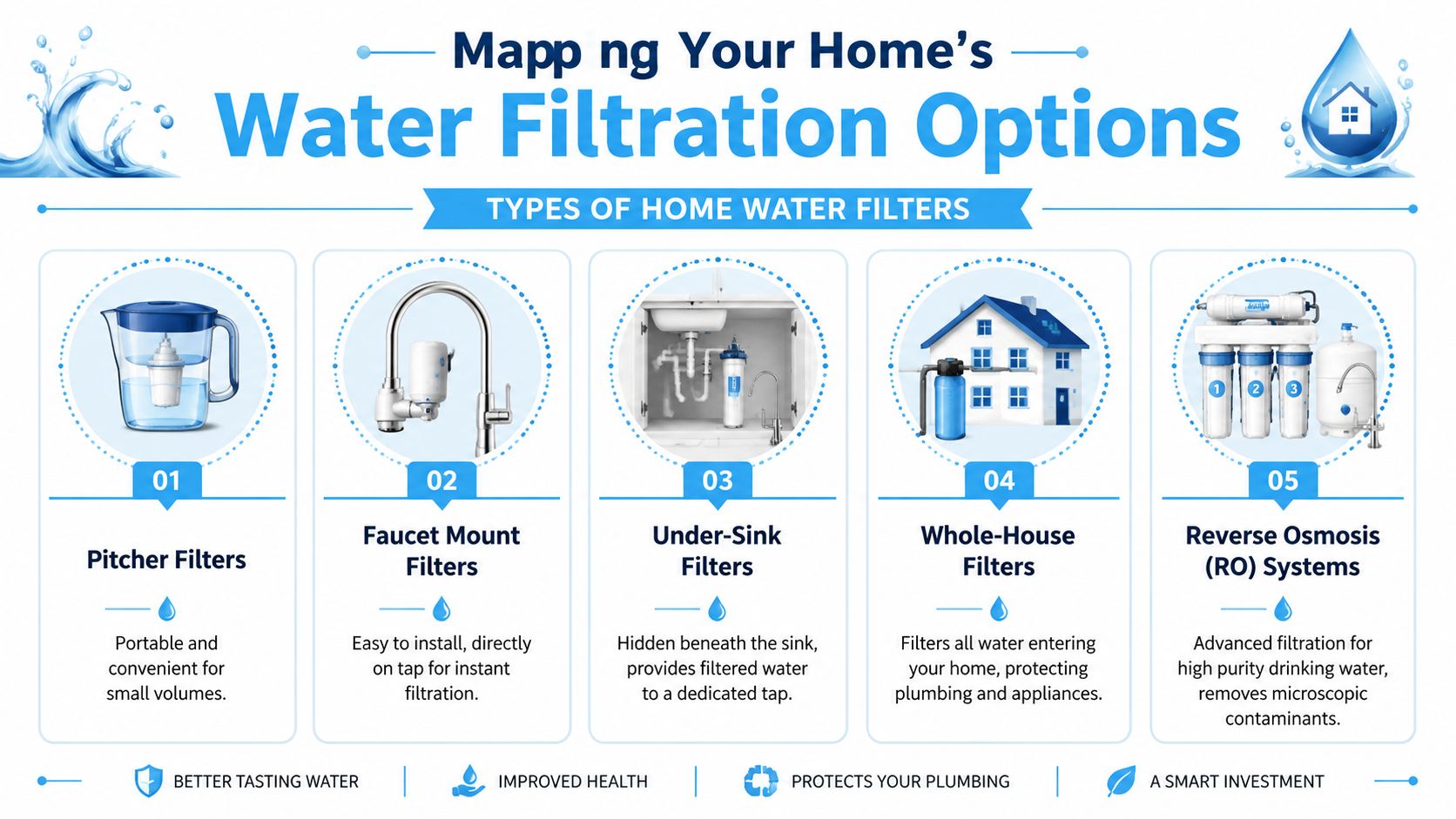
An infographic illustrating five different types of water filtration systems available for residential home use.

Point of use versus whole house

The first split is simple.

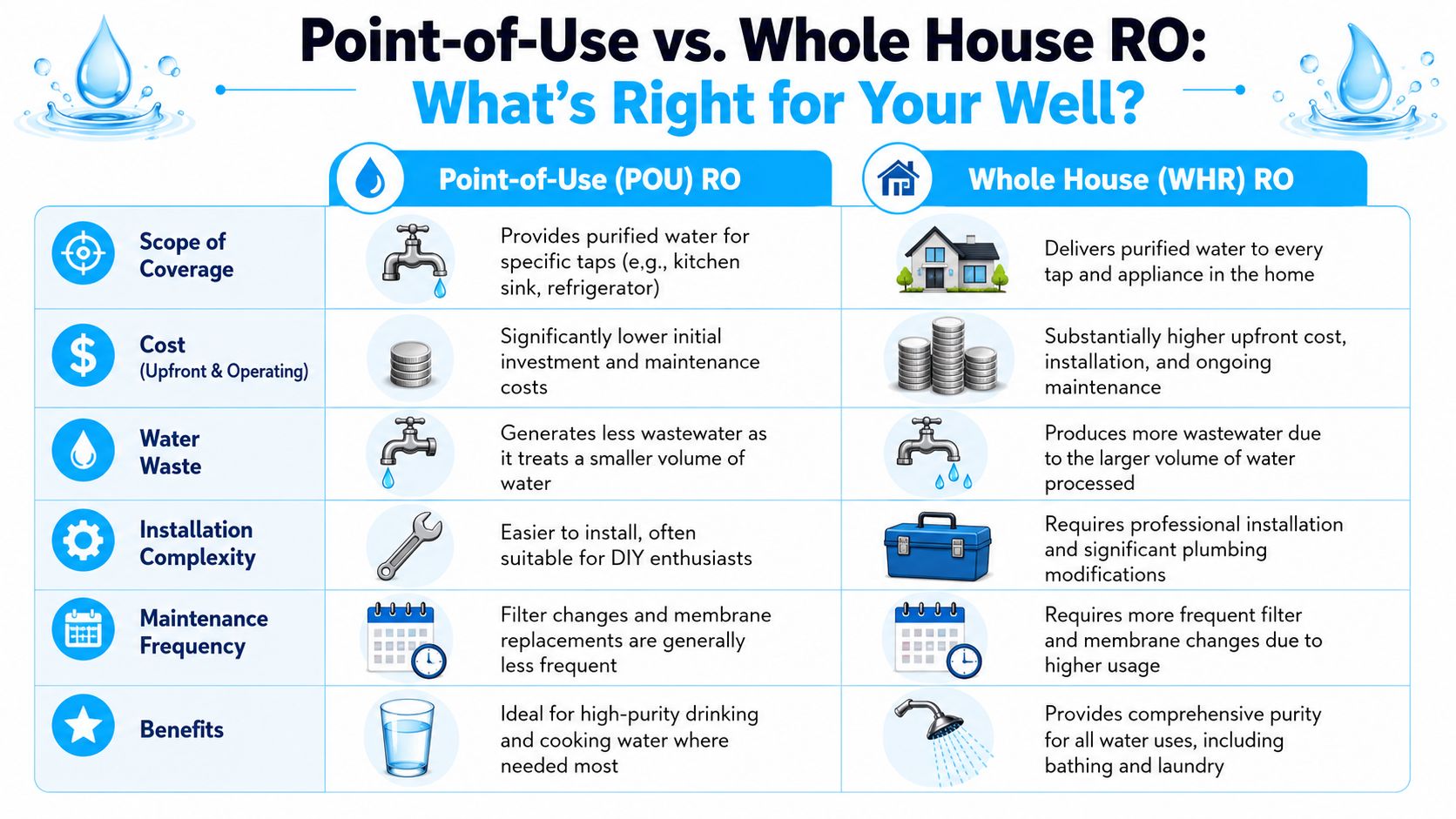
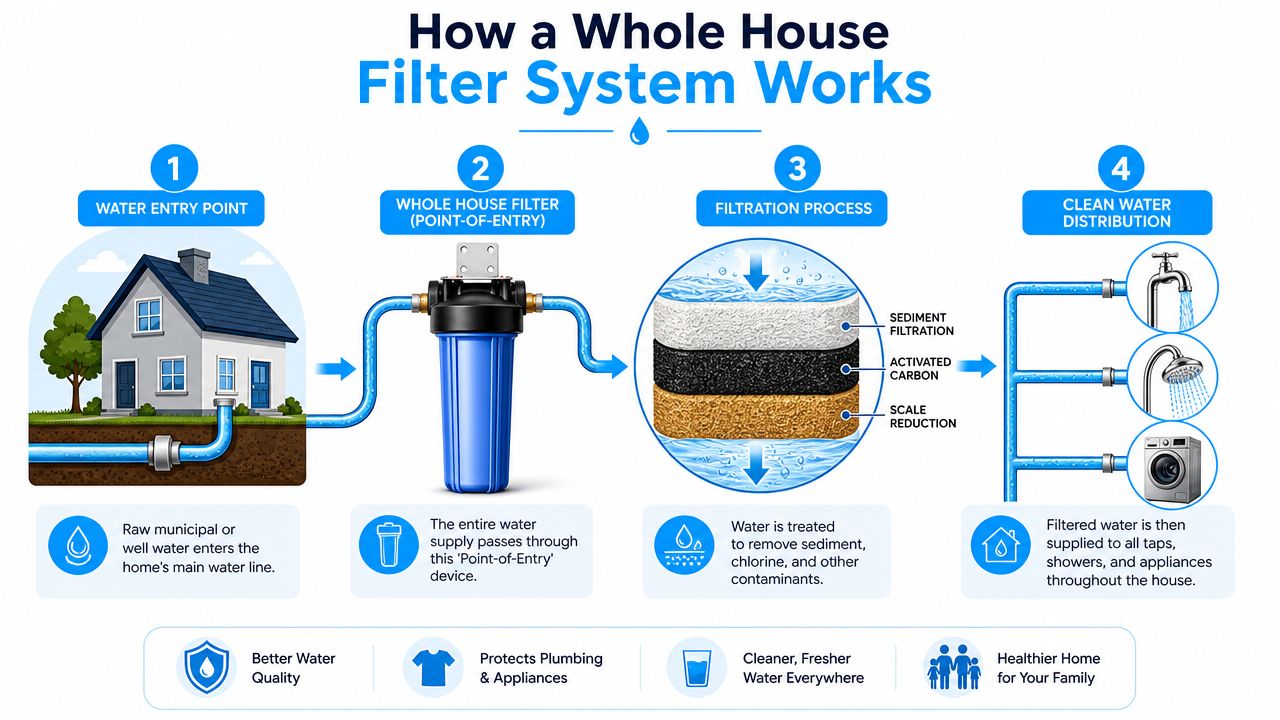
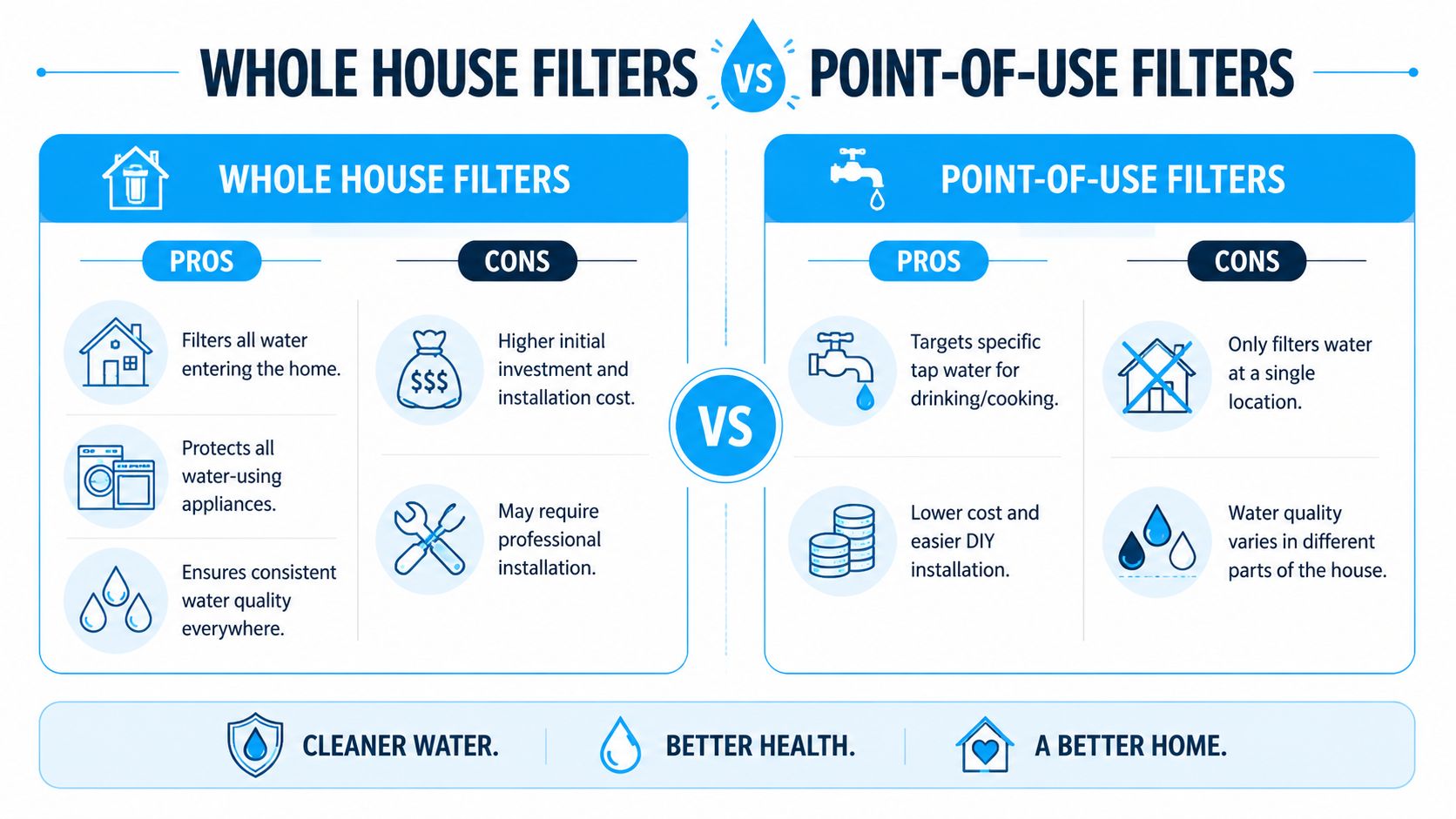
A point-of-use filter treats water at one location, like a kitchen faucet, under-sink tap, or pitcher. A whole-house system, also called point-of-entry, treats water where it enters the home. That means the kitchen sink, shower, washing machine, and water heater all get filtered water.

If your main complaint is drinking water taste, a point-of-use filter may be enough. If you care about showers, laundry, scale, plumbing protection, and chlorine smell across the whole house, you're looking at a bigger system.

The main filter types people actually buy

Here's the plain-English version of the common options:

  • Pitcher filters are the easiest entry point. Fill, wait, pour. Good for renters, small households, and people who want a no-tools solution.
  • Faucet-mount filters snap onto a kitchen tap. They're convenient when you want filtered water on demand without opening a cabinet.
  • Under-sink filters hide below the counter and usually feed a dedicated drinking-water faucet. They keep the counter clear and feel more permanent.
  • Reverse osmosis systems are usually installed under the sink. They use multiple stages and are chosen when people want very high-purity drinking and cooking water.
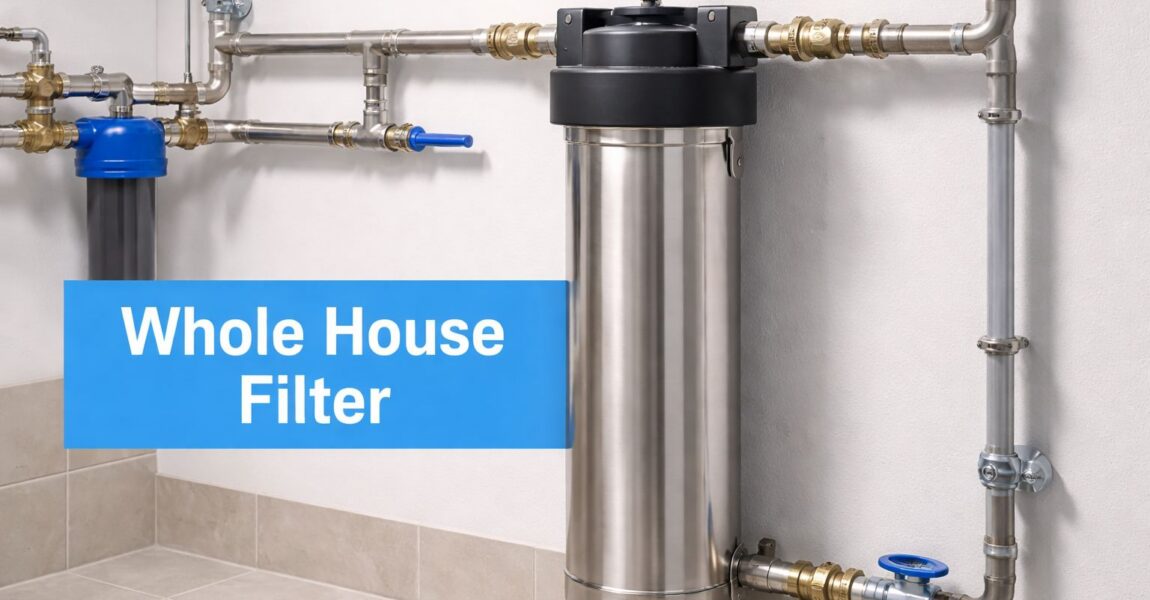
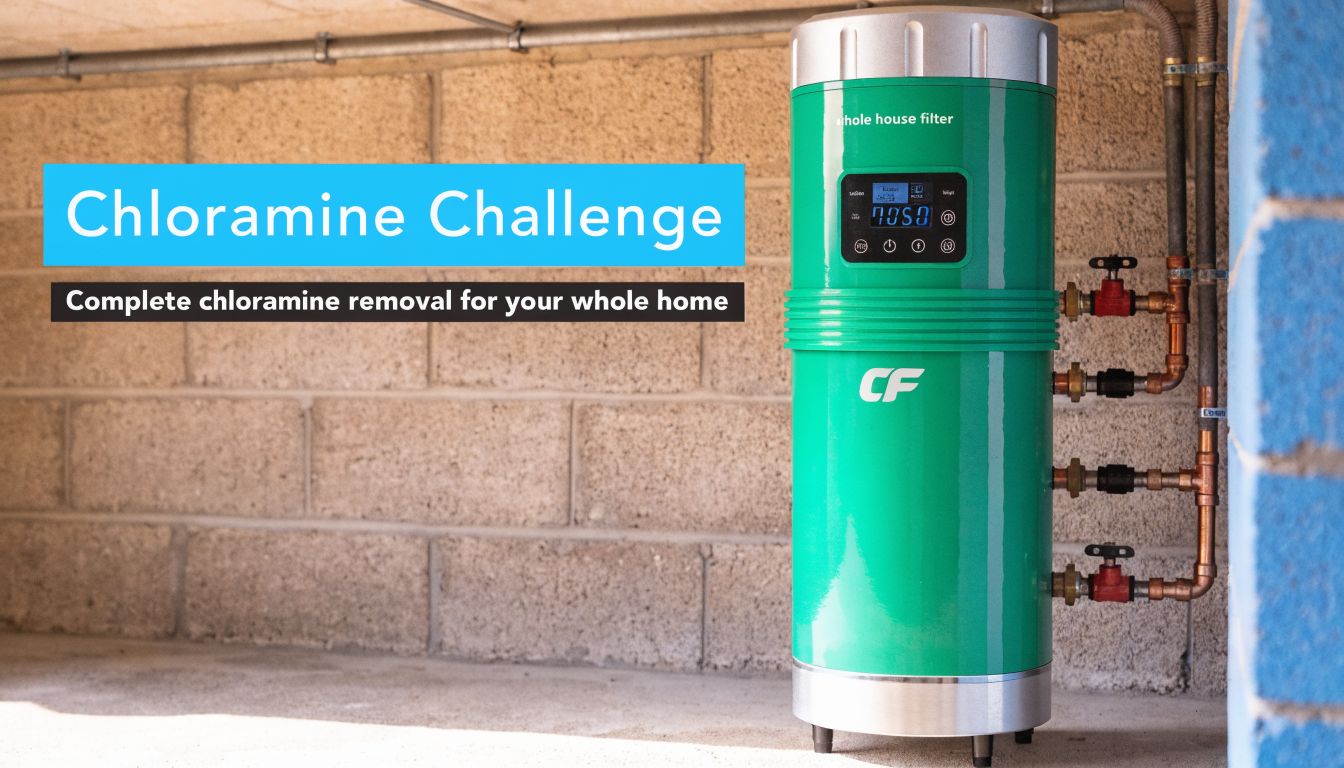
  • Whole-house filters sit near the main water line and treat all incoming water before it reaches fixtures and appliances.
  • Shower and refrigerator filters are specialty tools. They target one use case rather than the whole home.

What whole-house systems do differently

A whole-house filter changes the character of water throughout the building. That matters when the problem isn't only the taste in a glass. It matters when chlorine smell rises in hot showers, when sediment clogs fixtures, or when you want to protect water-using appliances.

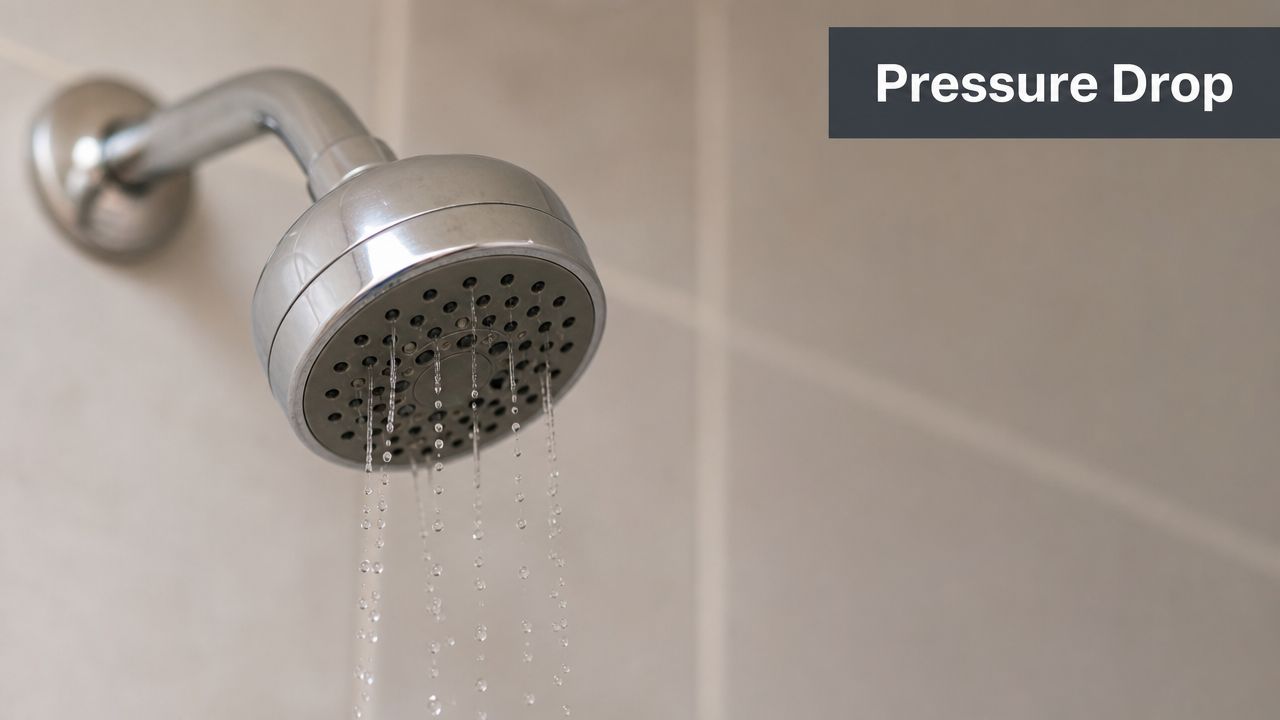
Modern systems are better at this than many people expect. Some whole-house systems maintain flow rates of 12 to 15 GPM, and the first sediment stage can process up to 1,000,000 gallons, helping protect the later media stages and reduce pressure-drop issues, based on the lab-test summary from Just Plumbing AZ.

That means “whole-house” doesn't automatically mean weak showers. A properly sized system can keep up.

A whole-house filter is less like a Brita pitcher and more like changing the quality of the water supply your home lives on.

Home Water Filter Types at a Glance

System Type Where It's Installed Typical Cost Best For Primary Benefit
Pitcher filter Countertop or refrigerator Lower upfront cost Renters, small households Simple improvement in drinking water taste
Faucet mount On the kitchen faucet Lower upfront cost Quick kitchen upgrades Instant filtered water without major installation
Under-sink filter Beneath the sink Moderate upfront cost Cooking and drinking water Hidden setup with dedicated filtration
Reverse osmosis system Usually under the sink Higher upfront cost than basic POU filters High-purity drinking water Broad contaminant reduction at one tap
Whole-house filter Main incoming water line Highest upfront cost Full-home treatment Protects fixtures, appliances, and every tap

Which option fits your home

A few simple examples make this easier:

If you own a house and hate chlorine smell in every shower, a whole-house setup makes more sense than a pitcher.

If you live in an apartment and only care about drinking water, a faucet filter or under-sink unit is usually the practical move.

If you want broad home protection plus better-tasting water at the kitchen sink, many households combine a whole-house filter with a separate drinking-water system. Homeowners comparing larger systems often browse guides like this roundup of best whole-house water filtration systems to narrow down sizes and media types before talking with an installer.

And if you're not sure whether your plumbing layout can handle a main-line install, local pros who offer dependable plumbing services can usually tell you quickly what's realistic in your home.

Decoding Your Water The Villains and The Heroes

Water filters make more sense when you stop thinking in brand names and start thinking in matchups. Something in the water causes a problem. A certain filtration method is built to tackle it.

That's the whole game.

A glass of fresh water being filled from a modern faucet with bright blue background.

The usual villains in household water

Some water issues are annoying. Some are costly. Some raise health concerns. A few common categories show up again and again.

Sediment is the easy one to picture. Think sand, rust, grit, or silt. It can make water look cloudy and can wear on valves, cartridges, and appliance parts.

Chlorine and chemical odors often show up as taste and smell complaints. If your shower smells like a pool when hot water runs, that's usually what people notice first.

Lead and other heavy metals are less dramatic to the senses, which is part of what makes them unsettling. Water can look and taste normal and still be something you want to treat more carefully.

Dissolved solids and microscopic contaminants are where many shoppers start hearing about reverse osmosis. These are often too small for basic sediment filters.

The heroes and how they work

A filter is only useful if you know what job it's doing.

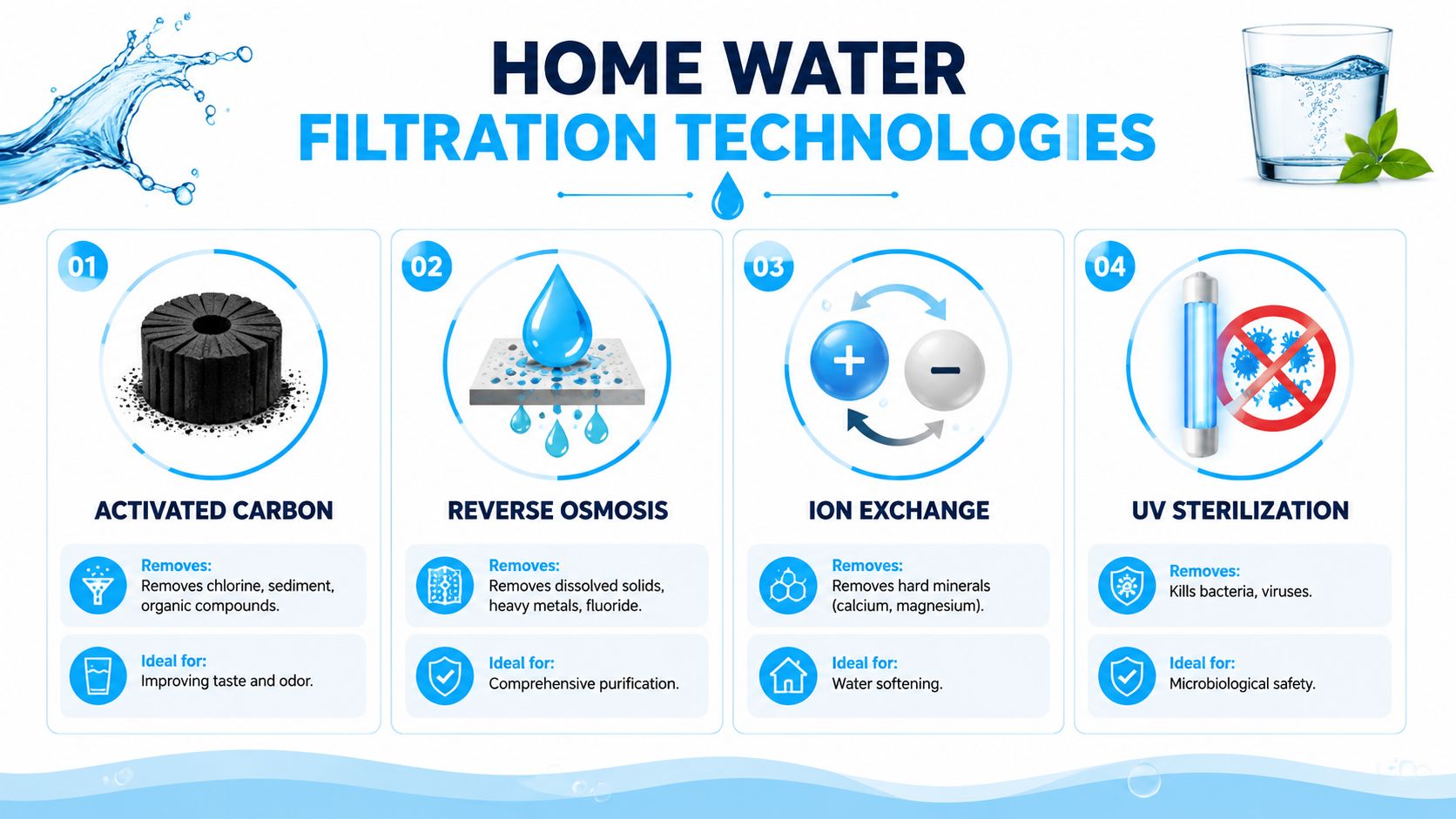
Carbon works like a sponge for chemicals

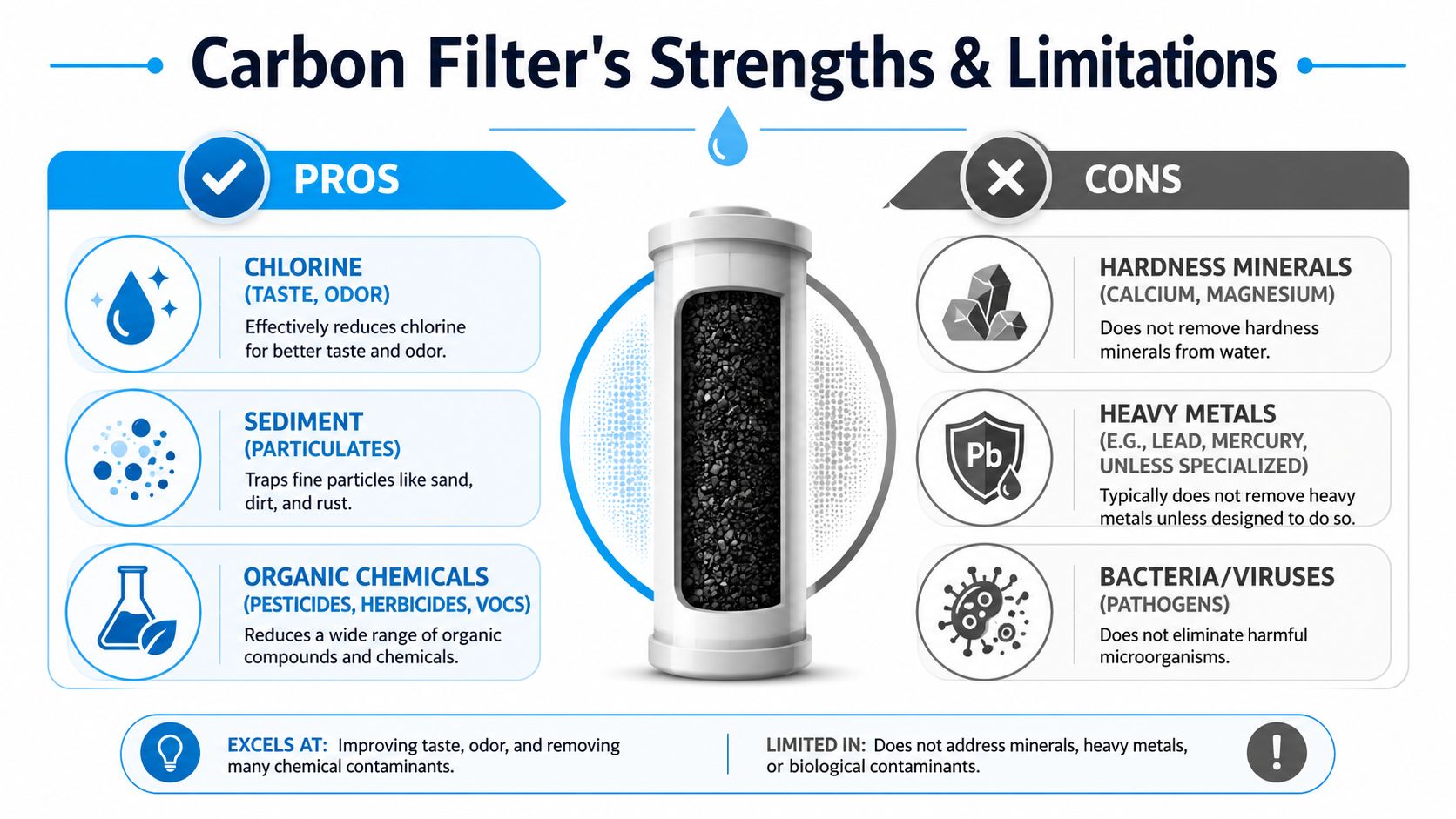
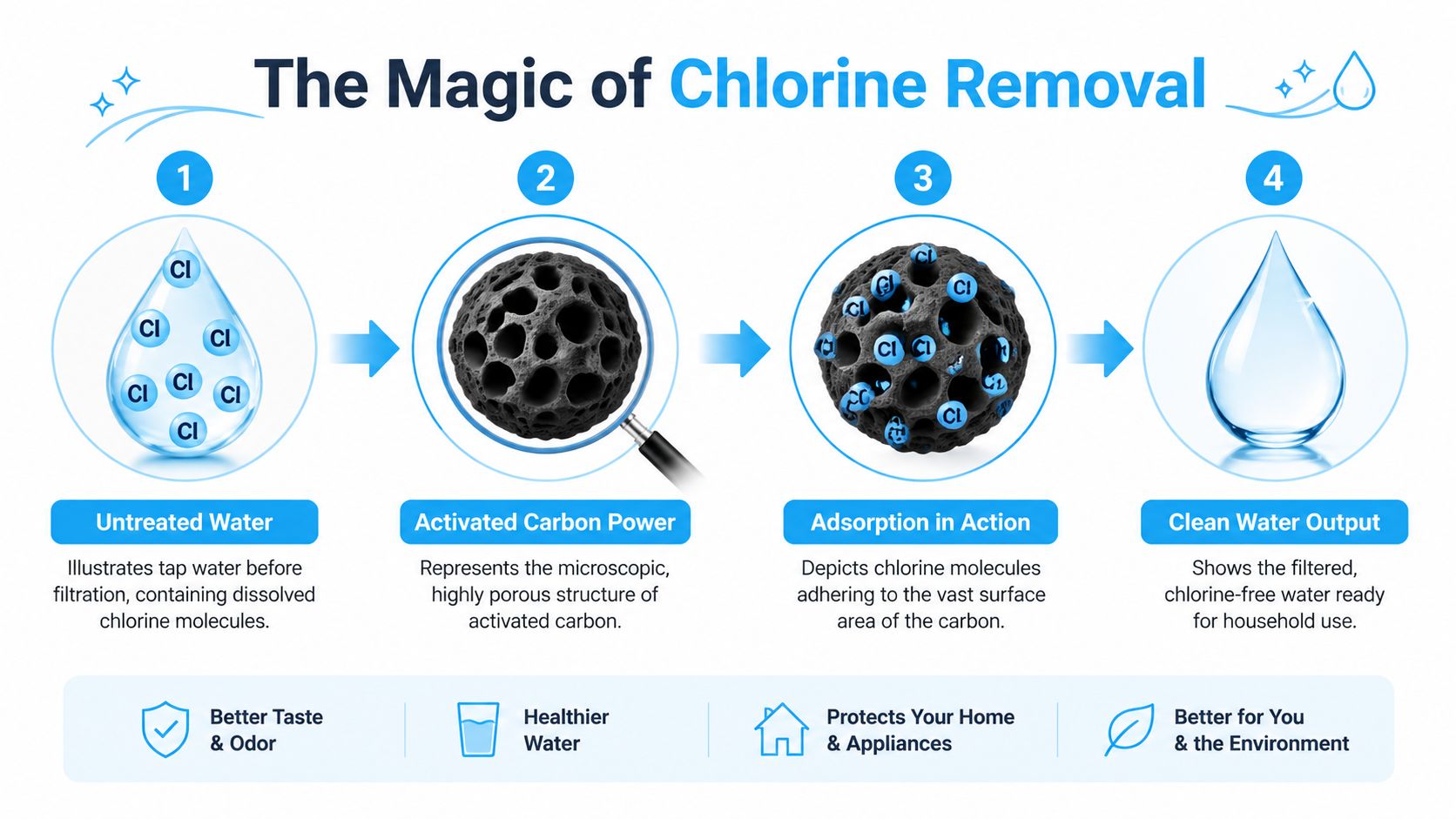
Activated carbon is one of the most common media in home filtration. The easy analogy is a sponge with an enormous amount of surface area. It attracts and holds many compounds that affect taste and odor.

If your water smells chemical or tastes flat, carbon is often the first hero on the scene. For a homeowner, the outcome is easy to notice. Water tends to taste cleaner, smell better, and feel more pleasant to drink and cook with.

Sediment filters are the doormat

A sediment filter doesn't do the glamorous work. It does the necessary work. It catches the visible grit before that grit reaches more specialized media farther downstream.

That's why multi-stage systems often start with sediment. It's the doormat at the front door. If you let mud into the house, everything else has a harder day.

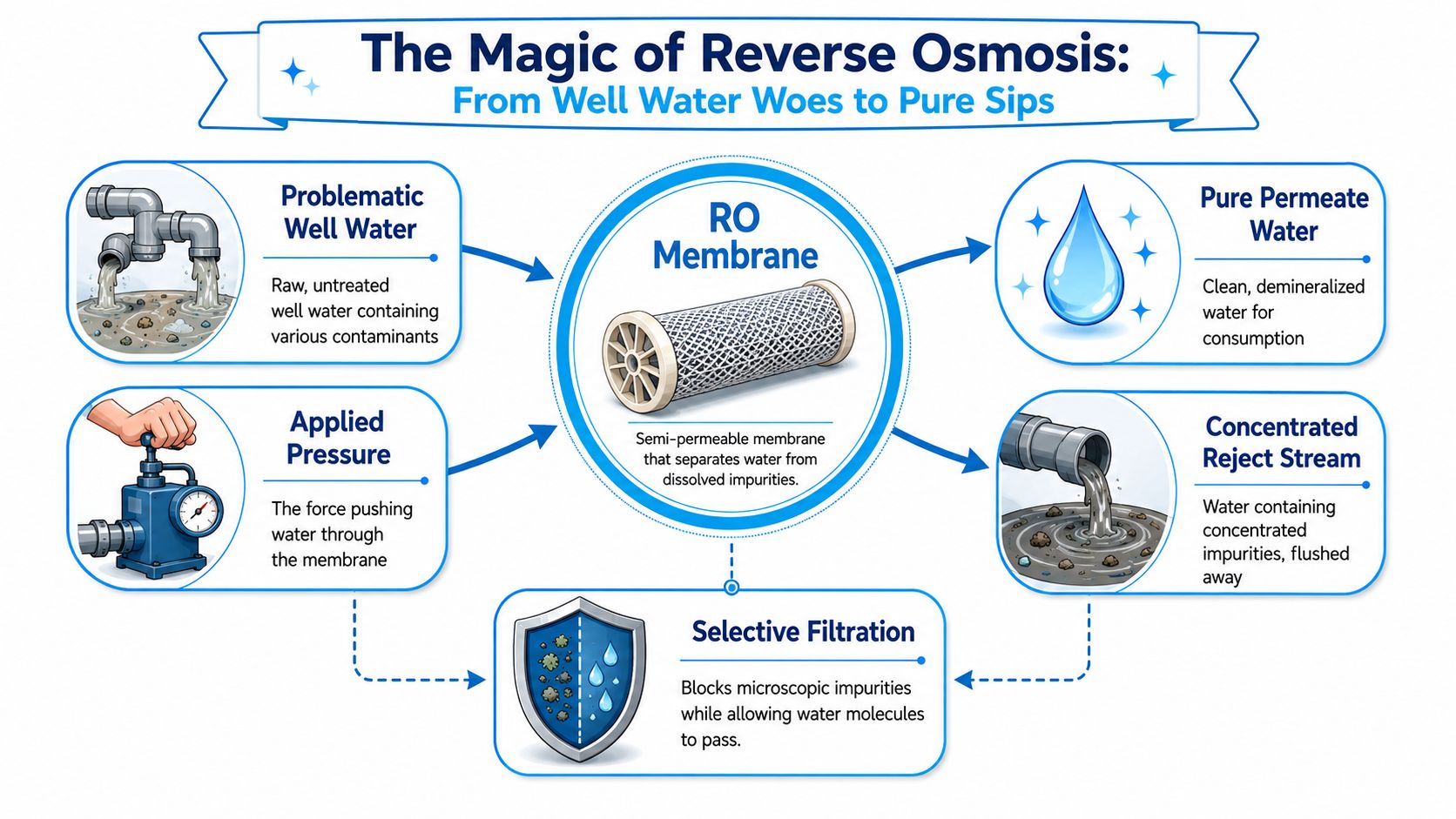
Reverse osmosis is the super-fine sieve

The global home filtration market is projected to reach USD 50.89 billion by 2033, and reverse osmosis units held a 62.23% market share in 2024, according to Grand View Research's home water filtration market analysis.

RO is popular because people understand what they're buying: very thorough filtration for drinking water. The simple analogy is a super-fine sieve that pushes water through a membrane while leaving many unwanted dissolved contaminants behind.

What this means in daily life is straightforward. RO water often tastes noticeably “lighter” and cleaner, especially if your tap water has mineral heaviness or a stubborn aftertaste.

For a quick visual explanation of how filtration stages work together, this overview is helpful:

UV is the quiet guard

Ultraviolet treatment doesn't trap particles like a sediment filter or adsorb chemicals like carbon. It works more like a silent security light. It targets microorganisms using light rather than a physical barrier.

Homeowners sometimes get confused here because UV doesn't usually fix taste or odor. It has a different mission. It's about microbiological control, not flavor.

If a filter promises to do everything, slow down and read the details. Good filtration is usually a team effort, not a magic trick.

Why multi-stage systems exist

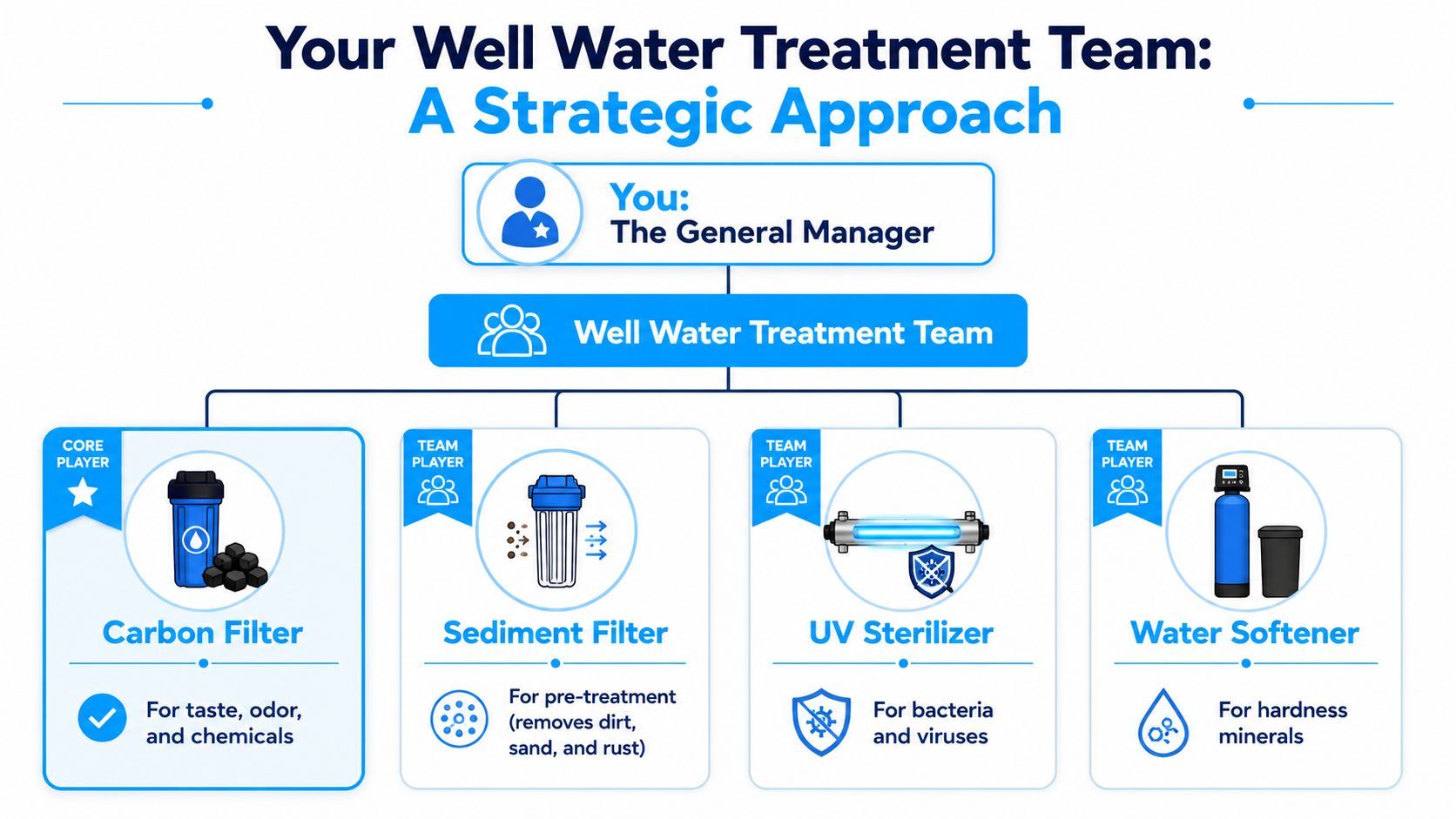
No single media is the hero for every problem. That's why you see combinations such as sediment plus carbon, or carbon plus RO, or sediment plus KDF plus carbon in larger home systems.

Cleaning a muddy window requires a multi-step approach. You would not use only a squeegee. First you rinse off grit, then you scrub, and finally you polish. Water treatment works the same way. Each stage handles a different part of the mess.

How to Choose Your Perfect Water Filtration System

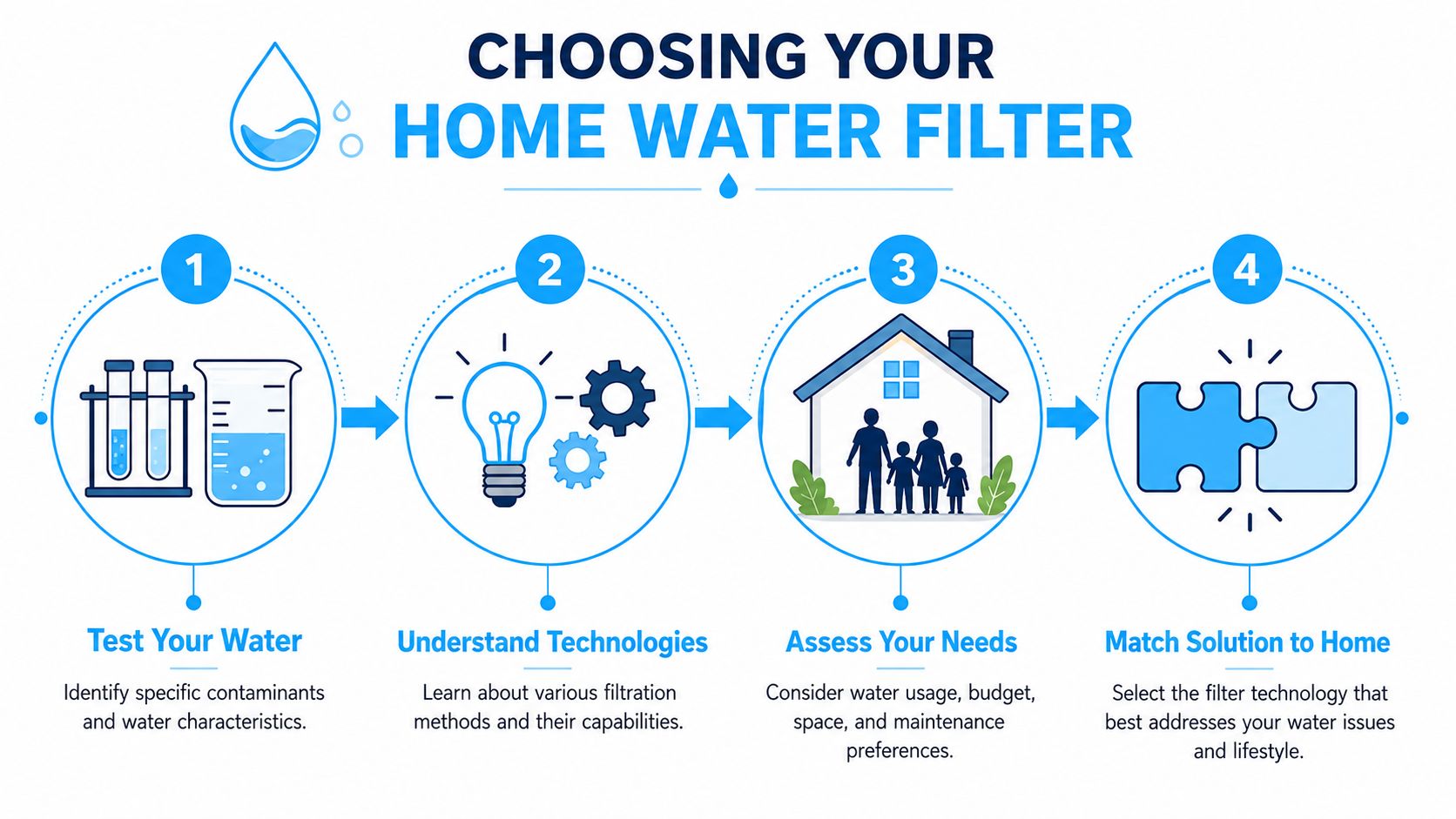
Buying a filter gets easier when you answer four questions in order. Not brand first. Not price first. Start with your water, then your house, then your habits.

Start with the water source

Municipal water and private well water create different shopping lists.

City water users often complain about chlorine taste, odor, sediment from older distribution lines, or concerns tied to aging plumbing. Well water owners usually need a more customized approach because well conditions can vary widely from one property to the next.

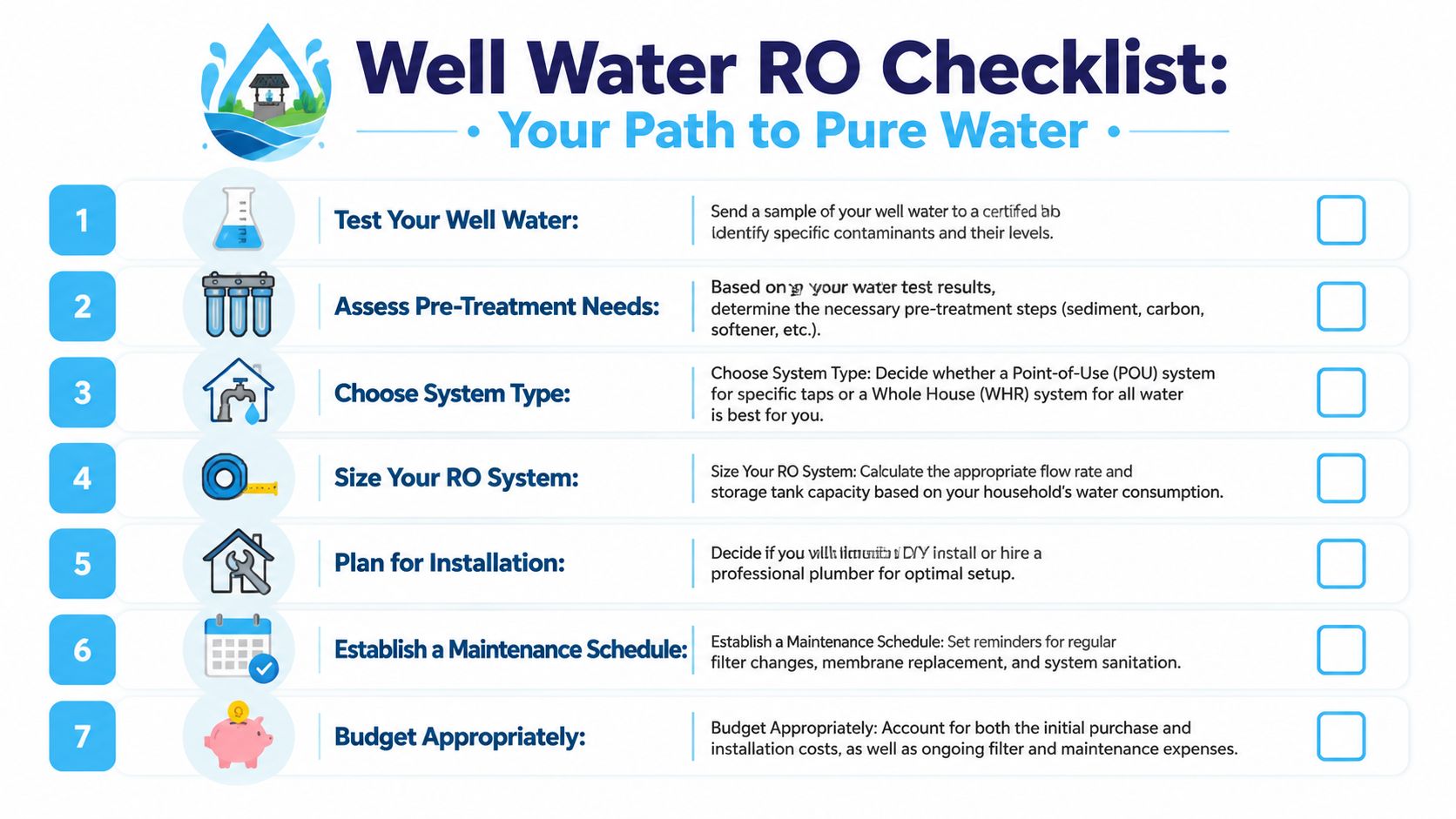
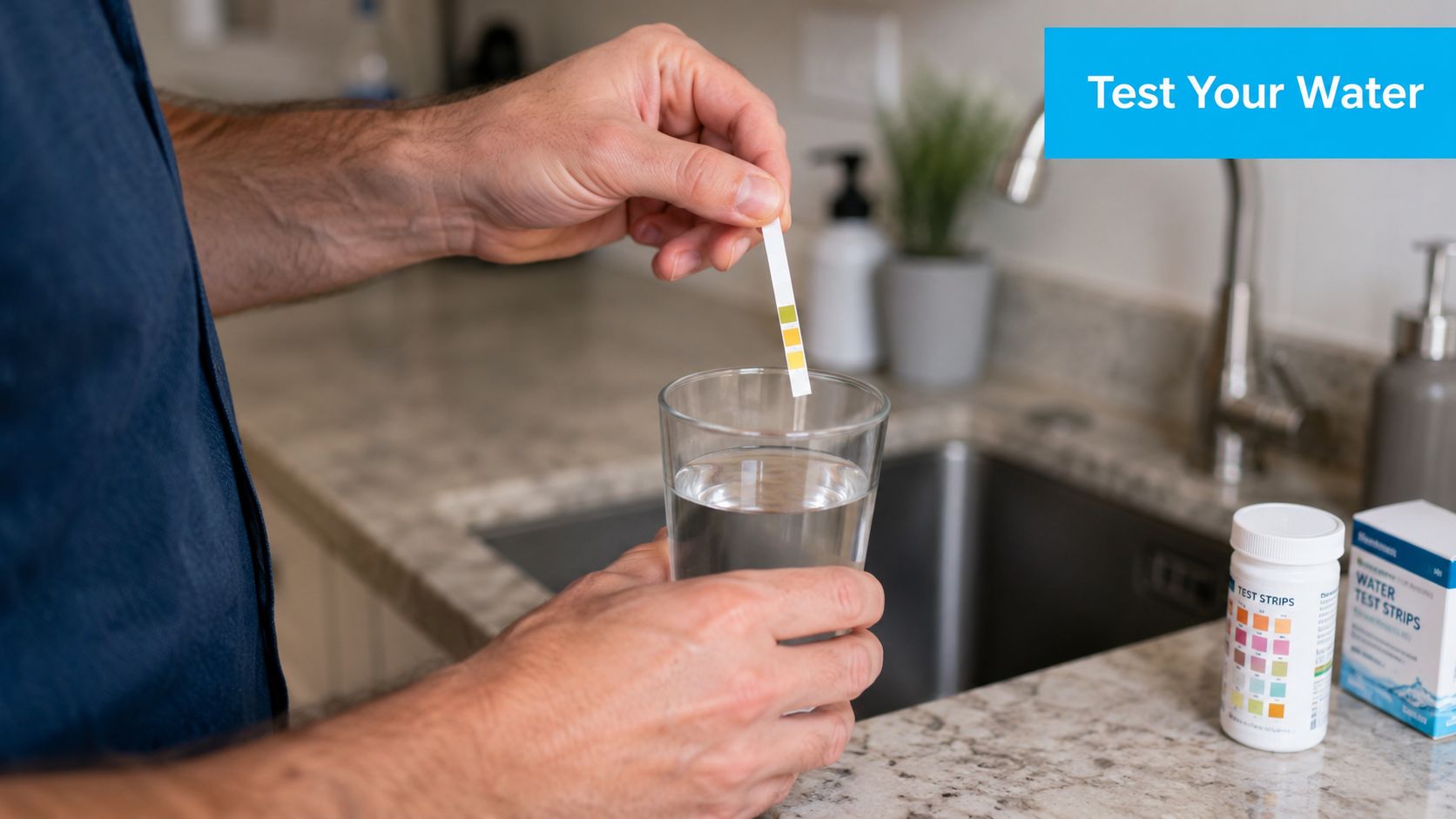
If you don't know what you're targeting, test first. A water filter should solve a known problem, not just give you a comforting box under the sink.

Decide what outcome matters most

A lot of people say they want “clean water,” but that can mean very different things.

Use this short checklist:

  • Better taste and smell: Look first at carbon-based systems.
  • Lead reduction: Check the certification details, not just the marketing.
  • Whole-home comfort: Think about showers, laundry, and appliance protection, not only the kitchen tap.
  • High-purity drinking water: RO usually belongs on your shortlist.
  • Visible particles: Sediment filtration should be part of the setup.

Learn the labels before you buy

Certification labels matter because they tell you what a filter has been tested to reduce.

NSF/ANSI 53 is one of the labels homeowners should know. NSF notes that NSF/ANSI 53 certification means a filter reduces specific health-related contaminants like lead by at least 99%, and certified systems that reduce chlorine below 0.5 ppm can help extend pipe life by 5 to 10 years while lowering disinfection byproducts linked to health risks, as explained in NSF's guide to home water treatment.

That sounds technical, but the practical takeaway is simple. Don't buy a filter because the box says “premium.” Buy it because the certification tells you what it's been tested to handle.

Know what each certification means to your house

A label isn't just paperwork.

  • For your drinking glass, a health-related certification can mean greater confidence about lead reduction.
  • For your plumbing, chlorine reduction can mean less wear on pipes and fixtures.
  • For your wallet, a well-matched certified system is less likely to become an expensive guess.

Buying advice: Read the contaminant reduction claims as carefully as you'd read the ingredients on food for your family.

Don't ignore flow rate and daily use

People often focus so hard on contaminant claims that they forget how the system will feel to live with.

If your home has multiple bathrooms and people shower, run laundry, and use sinks at the same time, whole-house sizing matters. If you hate countertop clutter, that rules out some point-of-use options. If you rent, anything requiring permanent plumbing changes may be a poor fit no matter how good the performance sounds.

A good choice isn't only about what the filter removes. It's also about whether your household will enjoy using it.

Build your own filtration profile

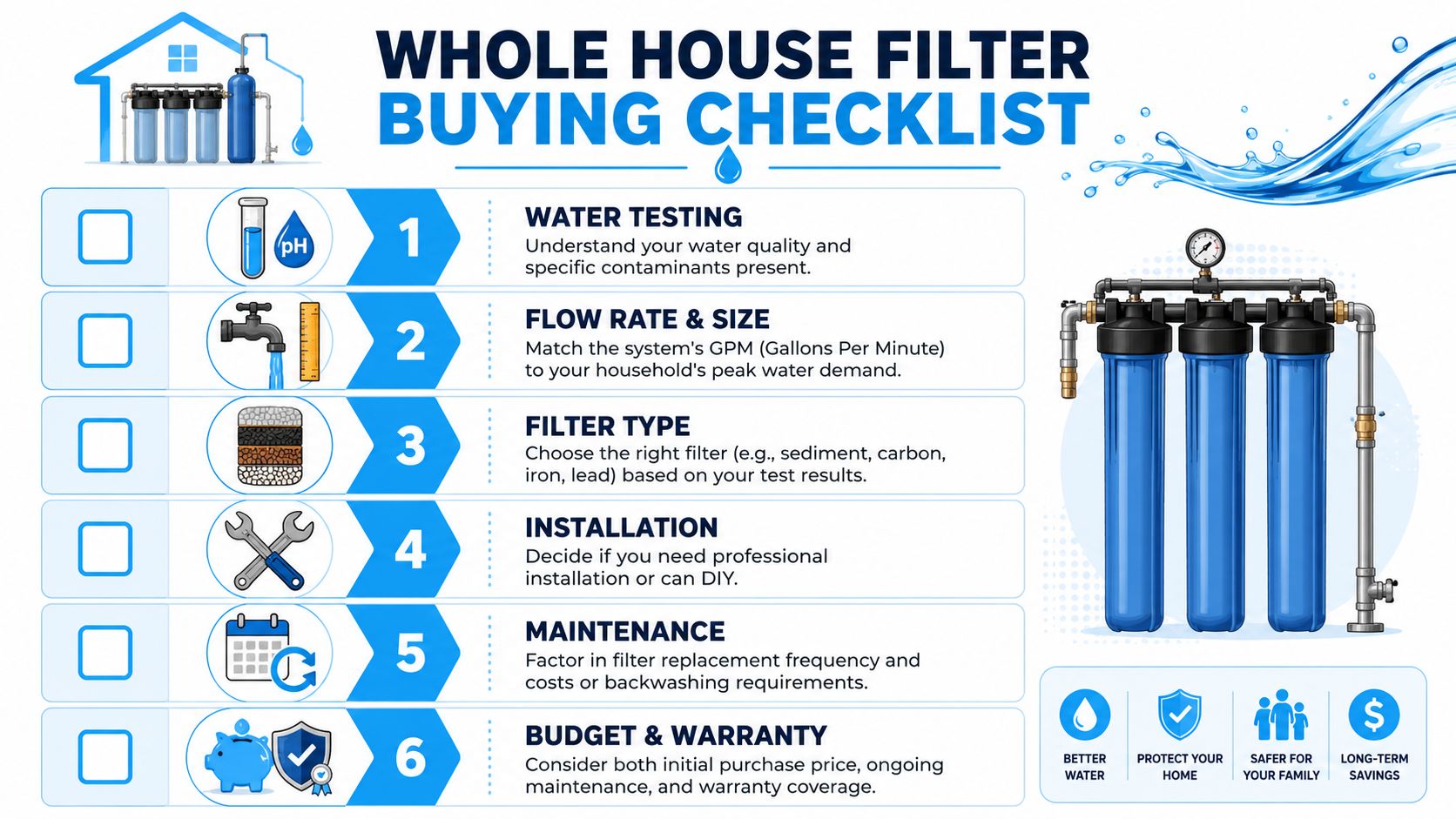
Here's a practical way to narrow the field:

  1. Water source
    City or well.

  2. Main complaint
    Taste, odor, particles, lead concern, or whole-home treatment.

  3. Coverage area
    One tap, one room, or every fixture.

  4. Installation tolerance
    DIY only, light plumbing, or professional install.

  5. Maintenance style
    Are you fine changing cartridges often, or do you want longer-service media?

That profile usually points you to the right category quickly. Then you can compare systems inside that category without getting lost in marketing noise.

Installation and Upkeep A Guide to Long-Term Ownership

A water filter isn't a one-time purchase. It's more like owning a furnace filter, only with more direct effect on what you drink, cook with, and bathe in. The best system is the one you'll maintain properly.

What you can install yourself

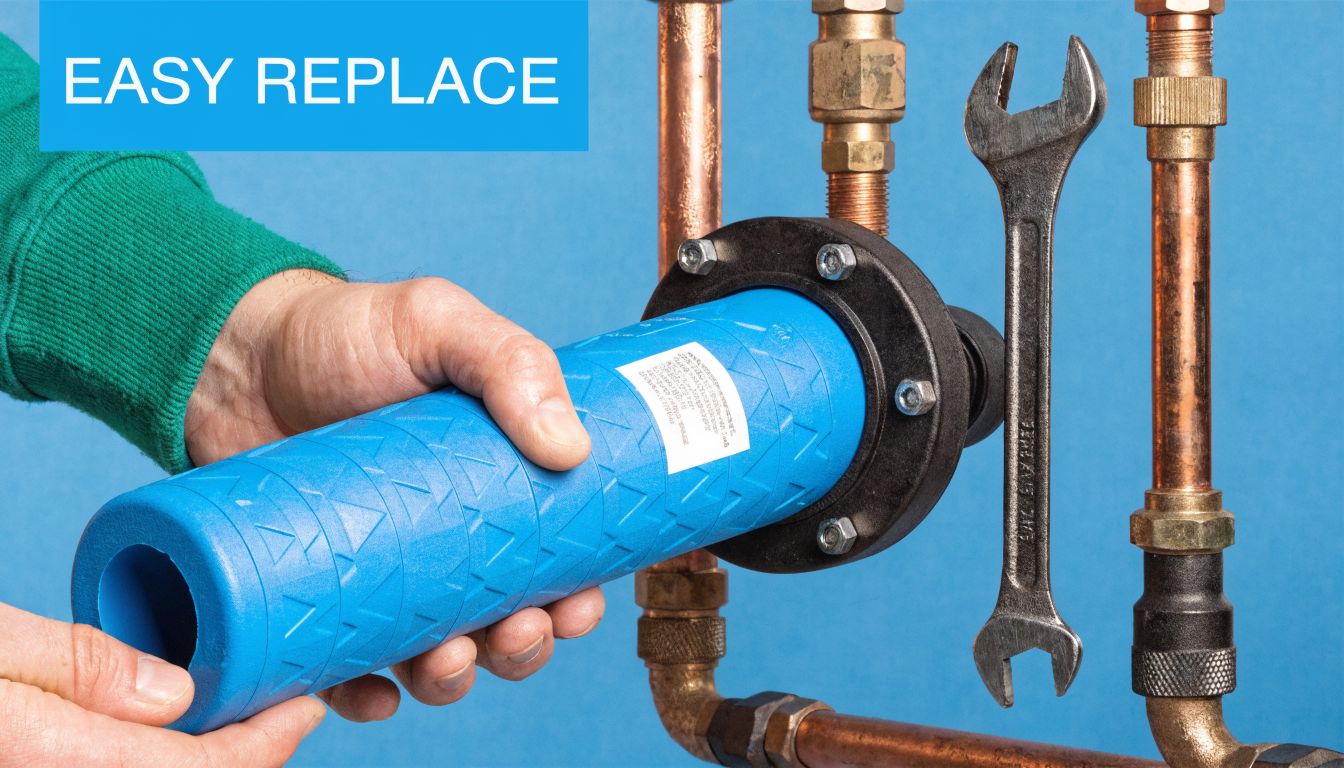
Pitchers and faucet-mount filters are straightforward. These units can be installed in minutes. Many under-sink filters are also manageable for a confident DIYer if the plumbing is accessible and you're comfortable tightening fittings carefully.

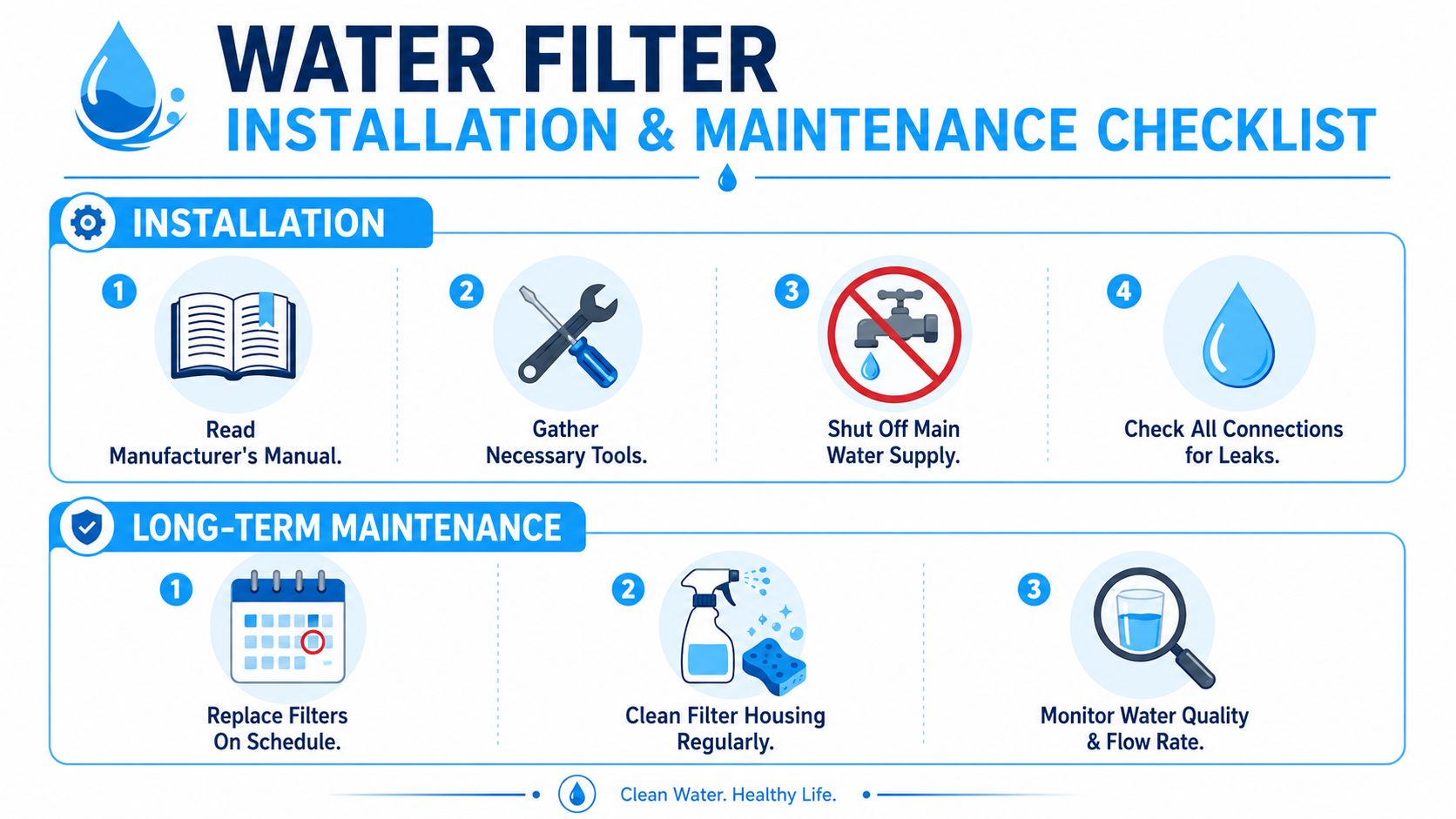
Whole-house systems are a different animal. They connect near the main line, need enough physical space, and have to be sized and oriented correctly. If you're thinking about a main-line system, a step-by-step guide like this overview on how to install a whole-house water filter can help you understand the job before deciding whether to DIY or call a pro.

What maintenance actually looks like

Filter ownership is mostly about staying on schedule.

  • Sediment pre-filters usually need more frequent attention because they catch the visible dirt first.
  • Carbon stages last longer, but they don't last forever. Once exhausted, they stop doing the job you bought them for.
  • Multi-stage systems need each stage changed according to its role, not all by guesswork on the same day.

If you ignore maintenance, the system doesn't “sort of work.” It gradually stops protecting your water the way you expect.

When professional help makes sense

Call for help when you're dealing with the main line, limited clearance, unusual pipe materials, or a setup that affects multiple fixtures. It also makes sense when your water issue is more complex than “I want it to taste better.”

If you want a local example of the kind of specialist profile worth checking, a listing like the Amber Pump local service profile shows the type of water-treatment-focused provider homeowners often look for when installation goes beyond a simple cartridge swap.

A good installer doesn't just mount equipment. They help make sure the system matches the water and the house.

The ownership mindset

The easiest way to stay happy with a filtration system is to think ahead about cartridge changes, access, and replacement parts before you buy. A compact filter tucked into an impossible corner becomes annoying fast. A larger system with simple service access may be easier to live with for years.

The goal isn't only cleaner water today. It's cleaner water without headaches six months from now.
Your Top Water Filtration Questions Answered

Do water filters remove everything good and bad

Not all filters work the same way. A simple carbon filter mainly targets things that affect taste, odor, and certain contaminants. Reverse osmosis is more aggressive. That's why you should choose based on your water issue, not assume every filter behaves the same.

What's the best option if I rent

Renters need flexibility. There's a real gap here, because 15% of U.S. renters face higher lead exposure from aging pipes in multi-family units, and non-permanent point-of-use options such as certified pitchers or faucet mounts can reduce contaminants like lead by 99% under NSF/ANSI 53, based on the renter-focused guidance from Antunes residential water filtration.

That makes pitchers, faucet filters, and some countertop systems practical choices when lease rules prevent plumbing changes.

Do I need whole-house filtration and a drinking-water system

Sometimes yes. They do different jobs. A whole-house filter helps with water used for showering, cleaning, and appliances. A separate drinking-water filter, often under the sink, can provide extra treatment where you cook and drink.

How do I know what I'm paying for

Check three things: the contaminants named on the certification sheet, the installation type, and the replacement schedule. If a product talks more about “refreshing water” than tested reduction claims, keep shopping.

Will filtration change how water feels in daily use

Usually, yes. People often notice the practical stuff first. Better taste. Less odor. Cleaner ice. Showers that smell less chemical. Fixtures and appliances that deal with less sediment and less untreated water stress.


If you're ready to compare systems without getting buried in marketing language, Water Filter Advisor is a solid place to start. It's built for households that want clear guidance on filter types, certifications, maintenance, and real-world buying decisions, whether you're choosing a pitcher for an apartment or a full water filtration system home setup for every tap.

Faucet Water Filtration Systems for Home: A 2026 Guide

You fill a glass from the kitchen tap, hold it to the light, and pause. Maybe it smells a little like a swimming pool. Maybe the taste is flat, metallic, or just off enough that you reach for coffee, juice, or bottled water instead. That hesitation is exactly why so many households start looking into faucet water filtration systems for home.

A good faucet filter sits in a practical middle ground. It's easier than a major plumbing project, more immediate than waiting on a city report, and often enough to solve the day-to-day problems people notice first: better taste, less odor, and more confidence when pouring water for kids, cooking pasta, or filling the kettle.

That First Sip Why Trust in Tap Water is Fading

For many people, the issue starts small. A strange smell one week. Cloudiness after plumbing work. A glass of water that tastes fine at one house and unpleasant at another. You don't need to be alarmist to admit that trust can fade quickly when something seems off.

That loss of confidence shows up in national research too. NSF found that 91% of Americans are now using water filters, and only 52% of filtration owners trust their home tap water overall. In rural areas, that drops to 44%, according to NSF's research on trust in certified water filters.

What people are reacting to

Most homeowners aren't starting with lab chemistry. They're reacting to real-life signs:

  • Taste changes: Water can taste like chlorine, metal, or stale minerals.
  • Odor surprises: A noticeable smell makes people question safety, even if the water is technically compliant.
  • Family routines: Parents often become more selective when they're mixing baby formula, packing school bottles, or making meals.
  • Old plumbing worries: If the home is older, the concern often shifts from the water source to what happens on the way to the faucet.

Trust doesn't disappear because someone read a technical report. It disappears when daily use no longer feels normal.

That's why faucet filters have become such a common first step. They let people improve the water they drink and cook with right at the sink, without committing to a major remodel or a whole-house system.

Why faucet filters feel approachable

A faucet-mounted system answers a simple question: “What can I do today?”

It gives you filtered water on demand, usually at the exact spot where you fill a glass, rinse produce, or top off the coffee maker. For many households, that's enough to move from vague concern to a concrete solution.

And that matters. Better-tasting water often means people drink more of it. Cleaner-smelling water can make tea, soup, and coffee more enjoyable. A modest kitchen upgrade can also reduce the temptation to keep buying bottled water out of habit.

Decoding the Different Types of Faucet Filters

When shoppers say they want a faucet filter, they usually mean one of a few different setups. Some attach directly to the faucet. Others hide under the sink but still serve the main kitchen tap. A few live nearby on the counter and connect when needed.

An infographic showing four common types of water filtration systems for homes with descriptions and illustrations.

The main categories at a glance

Type Best for What it feels like in daily use Main tradeoff
Faucet-mounted Renters, quick upgrades, low-commitment buyers Flip a lever or run water through the attached unit Visible on the faucet
Countertop People who want more filter room without going under the sink Sits beside the sink and connects to the faucet Takes up counter space
Pitcher Small households, dorms, backup use Fill, wait, pour Batch filtering, not on-demand
Under-sink direct-connect or point-of-use Homeowners or renters who want a cleaner look Filtered water through sink plumbing with less clutter up top Some install effort and under-sink space needed

Faucet-mounted filters

These are the classic screw-on units. They install directly onto the faucet spout and usually include a diverter, so you can switch between filtered and unfiltered water.

Their appeal is simple: low fuss. If your goal is better-tasting water for drinking and cooking, a faucet mount often gets you there fast. They're especially attractive for renters because they can usually come off just as easily when it's time to move.

Countertop filters and pitchers

These aren't faucet-mounted in the strict sense, but they often show up in the same shopping journey. Countertop filters connect to the faucet while keeping the filter body off the spout itself. That can be useful if you dislike the bulky look of a mounted unit.

Pitchers are the least permanent option. They're handy for refrigerators, guest rooms, or temporary setups, but they don't give you filtered water instantly from the tap.

Direct-connect under-sink systems

This category deserves more attention than it gets. Some newer models are designed to avoid the usual “major install” fear. Aquasana says renter-friendly direct-connect systems are responding to a 40% rise in renter queries for “no-drill” systems, and its Claryum Direct Connect offers a 15-minute DIY install while removing 78 contaminants, including chloramine, as described on Aquasana's under-sink filter page.

That matters if you want a cleaner countertop and don't love a device hanging off your faucet. It also matters if chloramine is on your radar, since some standard faucet-mounted options focus more narrowly on chlorine and lead.

Quick shortcut: If you want the easiest path, choose faucet-mounted. If you want the tidiest kitchen look, direct-connect under-sink models deserve a serious look.

If you want a side-by-side look at specific models, browsing these faucet water filter reviews can help you narrow down what fits your sink, habits, and budget.

The Science Inside How Your Filter Cleans Water

Most faucet filters look simple from the outside. Inside, they're doing layered work. Different materials target different problems, and knowing the basics helps you match the filter to what bothers you about your water.

A close-up view of a transparent faucet water filtration system with layered filter media purifying running water.

Activated carbon is the taste-and-odor workhorse

Think of activated carbon like an ultra-porous sponge with a huge amount of internal surface area. Water passes through it, and unwanted compounds stick to that surface instead of staying in your glass.

That's why carbon is so common in home filters. It's especially useful for reducing chlorine and certain compounds that affect taste and odor. If your coffee tastes harsh or your iced water smells like a pool, carbon is often the part doing the heavy lifting.

The technical side is impressive, but the practical side is what matters. Better taste usually means better everyday use. You notice it in plain drinking water first, then in tea, soups, rice, pasta, and coffee.

Ion exchange helps with heavy metals

Now picture a second layer that works more like a selective catcher. Ion exchange resin attracts and holds certain dissolved metals, including lead.

That's important because taste alone doesn't tell you whether a metal is present. Some of the contaminants people care most about aren't the ones they can smell. A filter that combines carbon with ion exchange can tackle both the obvious annoyances and the less visible concerns.

Why multi-stage design matters

A strong faucet filter usually doesn't rely on one material doing everything. It uses a sequence. One stage improves taste and odor. Another targets metals. Sometimes additional media are included for a wider contaminant range.

According to Tap Score's explanation of faucet filter media and standards, activated carbon has a surface area of about 1000 m²/g, adsorbs chlorine and VOCs, and ion exchange resins capture heavy metals. The same source notes that an NSF/ANSI 53 certified filter must demonstrate more than 99% lead reduction over its rated capacity, often 100 to 200 gallons.

That phrase “over its rated capacity” is the key detail many buyers miss. A filter shouldn't just work on day one. It needs to keep working until it reaches the cartridge's stated life.

Practical rule: If your main complaint is taste, carbon matters a lot. If your concern is lead, look for a filter that clearly includes the right media and certification for that job.

Why filters slow down over time

Every cartridge has limits. As media fill up, water can move more slowly and contaminant reduction can weaken. That doesn't mean the filter failed suddenly. It means it's doing what all filters do: collecting what you asked it to remove until replacement is due.

That's why a fresh cartridge often restores both flavor and flow. It's also why replacement timing isn't just a maintenance chore. It's part of the filter's actual performance.

Reading the Labels Understanding Certifications

Water filter packaging loves acronyms. The most useful ones tell you whether a product's claims were checked against a real standard. That's where NSF/ANSI certifications become valuable.

A simple way to think about certifications is this: marketing tells you what a brand says the filter does. Certification helps show what the filter has been tested to do.

The standards most shoppers should recognize

Here's the plain-English version of the labels you'll see most often on faucet water filtration systems for home:

  • NSF/ANSI 42: Focuses on aesthetic improvements such as reducing chlorine taste and odor.
  • NSF/ANSI 53: Covers health-related contaminant reduction, including concerns such as lead.
  • NSF/ANSI 372: Relates to lead content in the product materials themselves.
  • NSF/ANSI 401: Applies to certain emerging contaminants and is worth noticing if you want broader performance coverage.

If you only remember one distinction, make it this one: 42 is usually about making water more pleasant, while 53 is about reducing specific health-related contaminants.

How to read a box without getting lost

Don't stop at a logo on the front panel. Look for the exact claims tied to the standard. A filter might be certified for chlorine reduction but not for lead. Another might reduce lead but say nothing about chloramine.

That's where shoppers get tripped up. They assume “certified” means “certified for everything.” It doesn't. It means certified for the specific things listed.

A good label answers three questions clearly: what it reduces, which standard applies, and how long that claim lasts.

A simple shopping framework

When you compare filters, use this checklist:

  1. Start with your concern. Taste and odor? Lead? A broader list?
  2. Match the concern to the standard. Don't buy a taste-focused filter if lead is your main reason for shopping.
  3. Check the rated life. A strong certification matters most when the claim lasts through the cartridge's usable capacity.
  4. Prefer independent certification. It adds confidence that the performance claim wasn't self-declared.

This is one of the easiest ways to avoid buyer's remorse. Many disappointing filter purchases happen because the product worked exactly as designed, but the buyer chose the wrong design for the problem.

Simple Setup and Ongoing Filter Maintenance

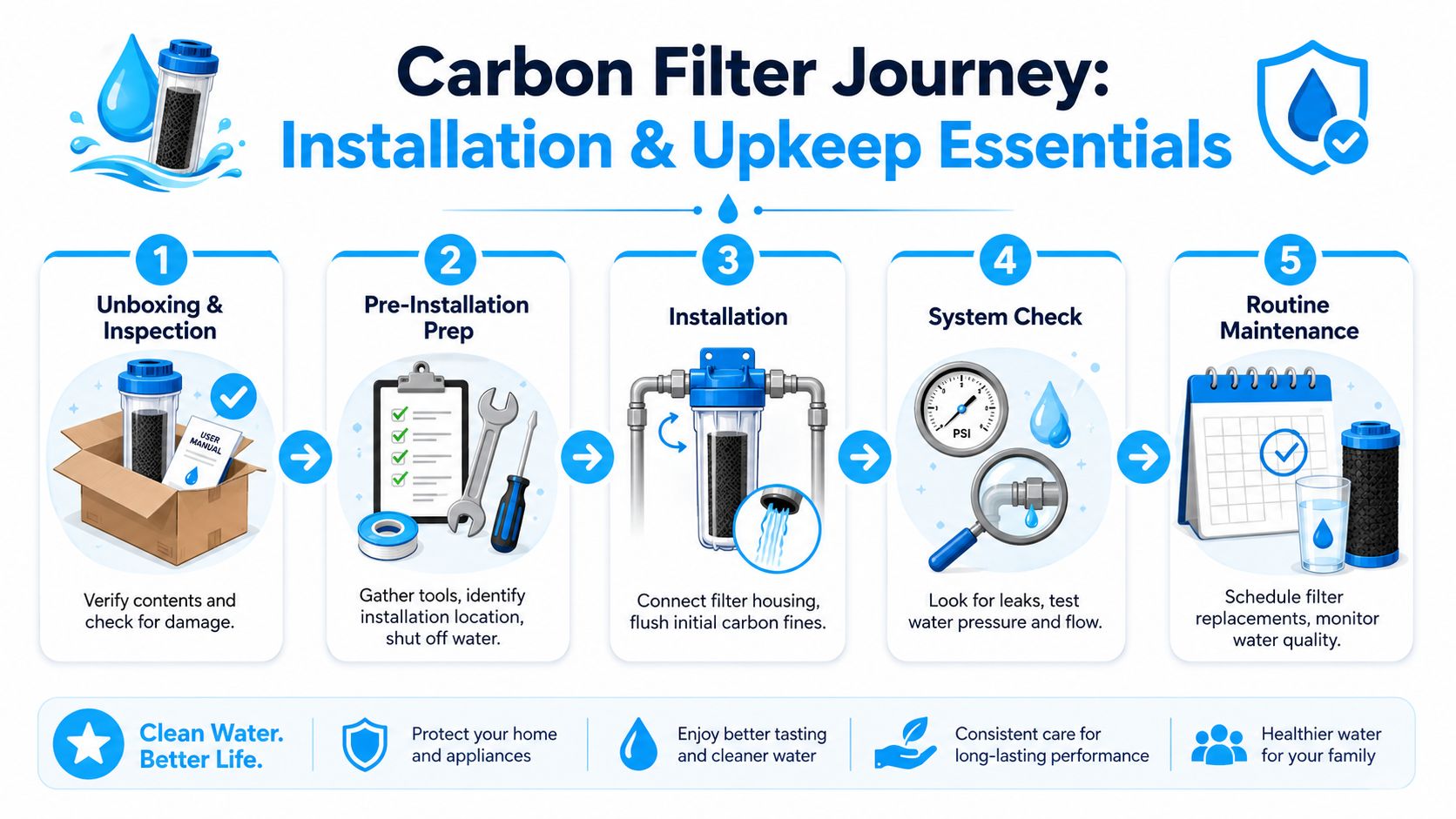
Installation worries stop a lot of people before they start. In reality, many faucet-mounted systems are very manageable for a basic DIYer. You're usually removing the faucet aerator, matching an adapter if needed, and twisting the unit into place.

A person installing a water filtration system onto a kitchen faucet with easy setup instructions.

A typical faucet-mount install

Most setups follow a familiar pattern:

  1. Remove the aerator from the faucet tip.
  2. Check the threads and choose the correct adapter if the filter includes more than one.
  3. Hand-tighten the filter housing onto the faucet or adapter.
  4. Run water through the new cartridge to flush carbon fines and prep the media.

The biggest mistake is forcing the wrong adapter. If the fit feels off, stop and verify the threading before tightening further. Cross-threading turns a quick project into an annoying leak chase.

A few setup details matter

A faucet filter works best when it matches both your plumbing and your habits. If you have an unusual faucet shape, a pull-down sprayer, or limited clearance, compatibility is just as important as the contaminant list.

For homeowners who want a better grasp of plumbing basics before installing anything near the sink, Northpoint Construction's plumbing advice offers useful context on how water lines and fixtures come together behind the wall. You don't need to become a plumber, but a little background makes the install feel less mysterious.

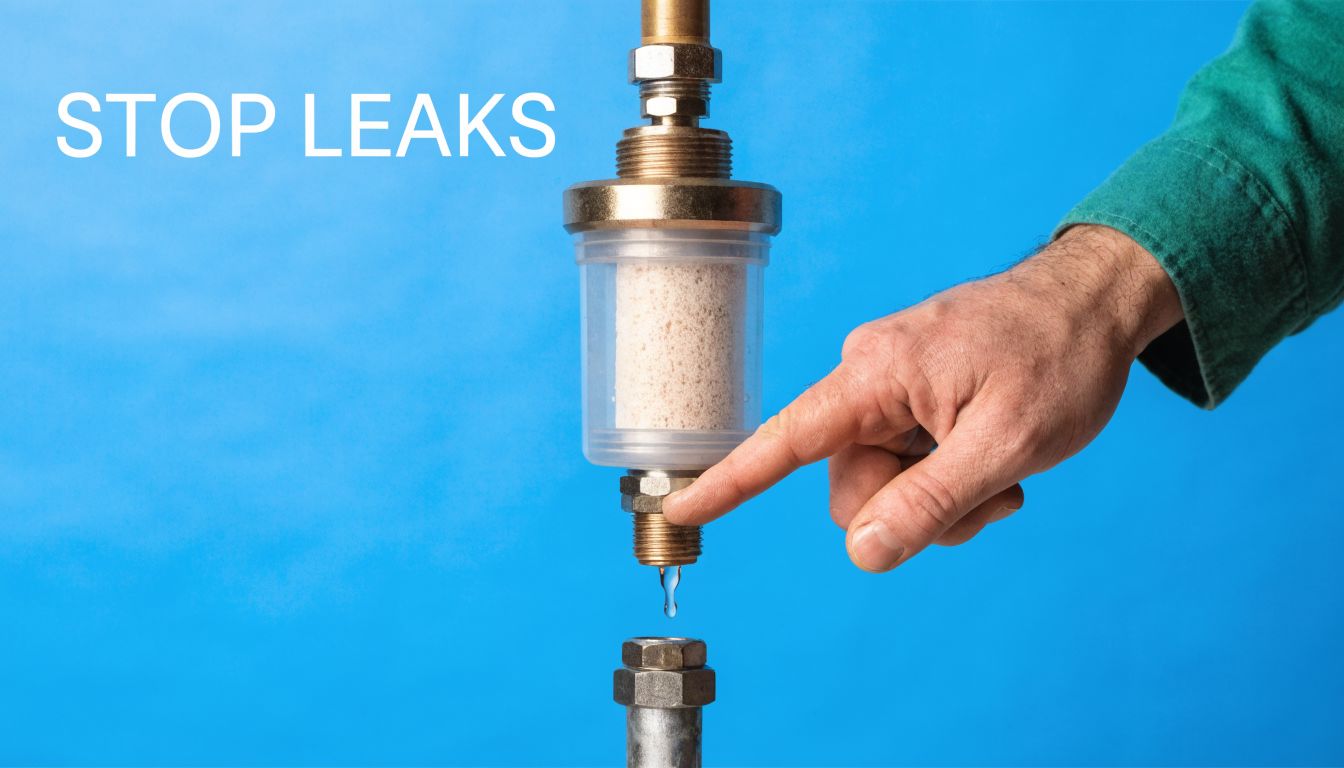
If a filter leaks on first install, the issue is often simple: wrong adapter, crooked threading, or a washer that didn't seat properly.

Maintenance is where performance lives

A faucet filter is only as good as its replacement routine. You don't need to obsess over it, but you do need to pay attention.

Common signs it's time to replace the cartridge include:

  • Slower flow: Water takes longer to fill a glass or pot.
  • Taste returning: Chlorine or off-flavors start creeping back in.
  • Indicator alerts: Some models have built-in reminders.
  • Heavy recent use: Holidays, house guests, or lots of cooking can use up filter life faster.

A short visual can help if you want to see a faucet-style install in action:

Keep maintenance realistic

The easiest system to maintain is the one that fits your routine. If you know you won't remember a complicated schedule, choose a model with a clear cartridge indicator or an easy subscription option for replacements.

That small convenience matters more than people think. A well-maintained basic filter will usually serve a household better than an advanced system with cartridges that get ignored.

Calculating the True Cost of Clean Water

The box price gets attention. The replacement cartridge determines whether you'll still like the purchase a year later.

Buyers often make the wrong comparison. They line up upfront prices, pick the cheapest model, and only later realize the ongoing cost or replacement frequency changes the value equation.

Upfront price versus ownership cost

According to Consumer Reports' faucet filter cost comparison, faucet filters often cost $15 to $80 upfront, while annual replacement costs for popular models such as ZeroWater Extremelife and Brita Basic SAFF-100 range from $36 to $57. The same source notes that faucet models can end up costing more over time than some under-sink options because their cartridges may need more frequent replacement.

That doesn't mean faucet filters are a poor value. It means the cheapest-looking option isn't always the least expensive to live with.

A better way to compare

Use three questions instead of one:

  • What does the unit cost to start?
  • How often will I replace cartridges in my household?
  • Am I paying for performance I need?

A single person filling a bottle and making coffee may be perfectly happy with a compact faucet mount. A busy family using filtered water for drinking, cooking, and filling multiple bottles every day may burn through cartridges much faster.

Where hidden costs show up

The long-term cost usually rises because of one of these reasons:

Cost driver Why it matters
Replacement frequency More cartridge swaps mean more spending and more hassle
Low capacity Heavy use shortens the time between replacements
Flow frustration If a filter feels slow, people may bypass it and waste the investment
Mismatch with water quality Sediment or certain water conditions can make a cartridge less practical in daily use

The true price of a filter isn't what you pay on day one. It's what you pay to keep getting water you actually enjoy using.

Faucet filter or under-sink

For some households, a faucet filter is still the smartest financial choice because the initial commitment is low and installation is simple. For others, especially those using a lot of filtered water, a direct-connect under-sink model can make more sense over time.

The practical lesson is simple. Don't ask only, “What can I afford today?” Ask, “What will this feel like to own?” That one shift leads to better decisions than chasing the lowest sticker price.

How to Choose the Right Faucet Filter System

Choosing among faucet water filtration systems for home gets easier when you stop shopping by brand first and start shopping by situation. The right filter for a renter in a studio kitchen isn't the right filter for a family with older plumbing.

A good decision usually comes down to three things: your water concern, your kitchen setup, and your household's daily volume.

Match the filter to the person using it

Here's a practical way to think about it.

The renter who wants no drama

You want something easy to install, easy to remove, and unlikely to start a conversation with a landlord. A faucet-mounted unit is often the safest bet. A renter-friendly direct-connect under-sink option can also work if you want a cleaner look and your sink cabinet has room.

Look for straightforward installation and clear replacement access. If you move often, portability matters almost as much as performance.

The family with young kids

You're probably thinking beyond taste. You want stronger reassurance at the tap used for drinking, cooking, and filling cups all day.

Certification and flow rate become more important. A system that performs well but feels too slow during busy mornings can become frustrating fast.

The coffee and cooking household

If flavor is your main issue, focus on a filter known for improving taste and odor. Water used in coffee, tea, soups, oatmeal, and pasta has nowhere to hide. You'll notice improvements quickly when chlorine-heavy taste is reduced.

Use flow rate and capacity as real-life clues

According to Pfister's Xtract performance overview, high-performing faucet filter systems can reach 1.5 GPM and filter 300 to 500 gallons, while standard models may deliver 0.8 GPM for 200 gallons. The same source says households of 4 or more should prioritize more than 1 GPM to avoid bottlenecks.

That “bottleneck” point is practical, not technical. If multiple people fill bottles, cook, and make drinks from the same sink, a slower filter changes the way the kitchen functions.

A simple decision checklist

Before buying, ask yourself:

  • What bothers me most right now? Taste, smell, lead concern, convenience, clutter?
  • Do I need an easy install? If yes, lean faucet-mounted or renter-friendly direct-connect.
  • How many people use this sink daily? Larger households should pay close attention to flow and capacity.
  • Do I want the filter visible or hidden? This alone can narrow the list quickly.
  • Will I keep up with replacements? Choose a system whose maintenance style matches your habits.

Buy for your real routine, not your ideal one. The best filter is the one your household will use correctly every day.

If you're comparing options side by side, this roundup of the top faucet water filters can help you narrow your shortlist and focus on systems that fit your sink, budget, and water concerns.


If you want help comparing models, understanding certifications, and finding a system that fits your home without guesswork, Water Filter Advisor is a useful place to start. It's built for people who want clear, practical guidance on choosing and maintaining better water filtration at home.

Is Filtered Water Better Than Bottled Water? A 2026 Guide

You’re standing in the store, looking at rows of bottled water with names that sound alpine, pure, and somehow safer than the faucet at home. One bottle says purified. Another says spring. A third promises crisp taste. Meanwhile, your tap water has a faint chlorine smell, and you’re wondering whether buying cases of water is the smart move or just an expensive habit.

That’s the core question behind is filtered water better than bottled water. For most homes, the answer is yes. But the useful answer is more specific than that.

Some bottled water is just repackaged municipal water. Some home filters work extremely well. Some don’t. Reverse osmosis can clean water impressively, but it also wastes water. Cheap, uncertified filters can disappoint. Neglected filters can make a good system perform badly. The right choice depends on your water source, your contaminants, your budget, and how much maintenance you’ll keep up with.

If you’ve also dealt with odd hot-water color changes or different water behavior around the house, this practical Big Bear homeowners' hot water guide is worth a read because it helps separate plumbing issues from actual drinking water quality concerns.

The Daily Water Dilemma

The bottled water aisle makes a simple decision feel technical. Families buy it for school lunches, road trips, emergencies, and peace of mind. Homeowners buy it because they don’t fully trust what comes out of the tap. Renters buy it because they don’t want to install anything. Everyone thinks they’re paying for certainty.

A young woman wearing a green cap thoughtfully choosing between numerous bottled water brands in a supermarket aisle.

That’s why this question matters so much at home. It isn’t just about taste. It’s about what your kids drink every day, whether you’re overspending, and whether the “safer” option is safer.

What most people are really asking

When homeowners ask me about bottled versus filtered water, they’re usually asking four things at once:

  • Is bottled water cleaner: They want to know if sealed plastic means fewer contaminants.
  • Is a filter enough: They want confidence that a pitcher, faucet filter, or under-sink unit can do the job.
  • What’s the smarter long-term buy: They’re tired of hauling cases and replacing plastic bottles.
  • What are the trade-offs: They don’t want a lecture. They want to know what works and what can go wrong.

Bottled water wins on convenience in the moment. Filtered water usually wins where it matters every day: control, cost, and targeted treatment.

The decision that actually matters

The best water solution isn’t the one with the cleanest label. It’s the one matched to your home.

If your issue is chlorine taste, you don’t need the same setup as a family dealing with lead concerns or a homeowner on well water with iron and sulfur odor. That’s where people waste money. They buy water, or buy filters, without matching the tool to the problem.

What Is Really in Your Bottled Water

Bottled water marketing is built on one message: trust the bottle more than the tap. That message doesn’t hold up very well once you look at sourcing, oversight, and actual test results.

A clear plastic water bottle covered in condensation, positioned in front of industrial piping and brick.

A lot of bottled water starts as tap water

According to the Environmental Working Group, approximately 64% of bottled water sold in the U.S. is sourced from municipal tap water, and when 10 popular brands were tested, they contained an average of 8 different contaminants, including caffeine, fertilizers, solvents, and plastic-derived chemicals, as summarized by this review of bottled water sourcing and testing.

That doesn’t mean every bottle is bad. It means the simple idea that bottled water is automatically purer than home drinking water isn’t reliable. In many cases, you may be paying a premium for water that began in a municipal system much like your own.

The practical issue is transparency. Consumers often assume the label tells the whole story. It usually doesn’t. If you’re trying to sort through technologies instead of brand language, it helps to compare water purification systems by what they’re designed to remove, not by the imagery on the packaging.

The bottle doesn’t guarantee better oversight

Public tap water and bottled water don’t operate under the same day-to-day consumer experience. Municipal water comes with routine public reporting. Bottled water is sold as a finished product, and most buyers never see much detail beyond the label.

That gap matters because safety depends on treatment and testing, not on whether water is sold in a bottle. A sealed cap is not a treatment method.

If you can’t verify what was removed, when it was tested, and what standard it met, you’re buying reassurance, not necessarily better water.

A short visual explainer helps make the industry contrast easier to digest:

The bigger problem is false certainty

People often buy bottled water to avoid whatever they dislike about tap water. Chlorine taste. Old pipes. News headlines. Cloudiness after plumbing work. That instinct is understandable.

But bottled water is a blunt instrument. It isn’t customized to your house, your plumbing, or your local water chemistry. A well-chosen home filter can be. That’s the difference between buying a product and solving a water problem.

How Home Water Filtration Actually Works

Home filtration gets confusing because people lump very different systems into one category. A pitcher, a faucet filter, an under-sink reverse osmosis system, and a whole-house unit do not solve the same problems.

Pitchers and faucet filters

Pitchers and faucet-mounted filters usually rely on activated carbon. That media is excellent for improving taste and odor, especially where chlorine is the main complaint. It can also reduce certain contaminants when the unit is certified for them.

These are the easiest systems to live with in apartments and rental homes. They’re simple, portable, and fast to set up. Their limit is capacity. If you need stronger contaminant reduction or higher volume, they can feel small very quickly.

Under-sink systems

Under-sink systems are where home filtration starts getting more precise. Some use carbon blocks. Others use reverse osmosis, often called RO. A carbon-based under-sink unit is a strong fit when the goal is better taste and targeted reduction without a lot of complexity.

RO systems push water through a membrane that can remove a much wider range of contaminants. That’s why they’re popular for families focused on drinking and cooking water at one dedicated faucet. They’re powerful, but they’re not automatically the best choice for every house.

Practical rule: Buy a filter for the contaminant you have, not the contaminant you fear.

Whole-house systems

Whole-house systems treat water where it enters the home. That matters when the problem affects more than drinking water. Think chlorine smell in showers, sediment, iron staining, or sulfur odor.

These systems don’t replace point-of-use drinking water filters in every case. They serve a different purpose. A whole-house sediment and carbon setup can protect fixtures and improve bathing water, while an under-sink unit handles drinking water at the kitchen sink.

What each type is best at

A quick way to understand this:

  • Pitcher filter: Best for renters who want better taste and basic reduction with no installation.
  • Faucet filter: Good for small kitchens that need easy access and quick installation.
  • Under-sink carbon filter: Strong option for targeted kitchen water improvement with better flow than RO.
  • Under-sink RO: Best when you need broad contaminant reduction and are willing to handle the waste-water trade-off and maintenance.
  • Whole-house system: Right for water issues that show up in every tap, shower, and appliance.

The best results come from matching the system to the actual water issue, then maintaining it on schedule.

Filtered vs Bottled A Head-to-Head Comparison

When families compare these options, the answer usually becomes clearer. Bottled water is a convenience product. Home filtration is a treatment strategy.

Filtered water vs bottled water at a glance

Factor Filtered Tap Water Bottled Water
Safety approach Can target specific contaminants with certified filtration Varies by brand and source
Regulatory visibility Public tap systems require monitoring and public reports Oversight applies after bottling, with less consumer visibility
Cost over time Usually far cheaper per gallon after setup Ongoing repeat purchase
Environmental footprint Lower, though RO has water waste High plastic and transport burden
Convenience Best at home, refill-based Easy to grab and carry
Taste control Can be tuned by filter type Depends on brand, source, and storage

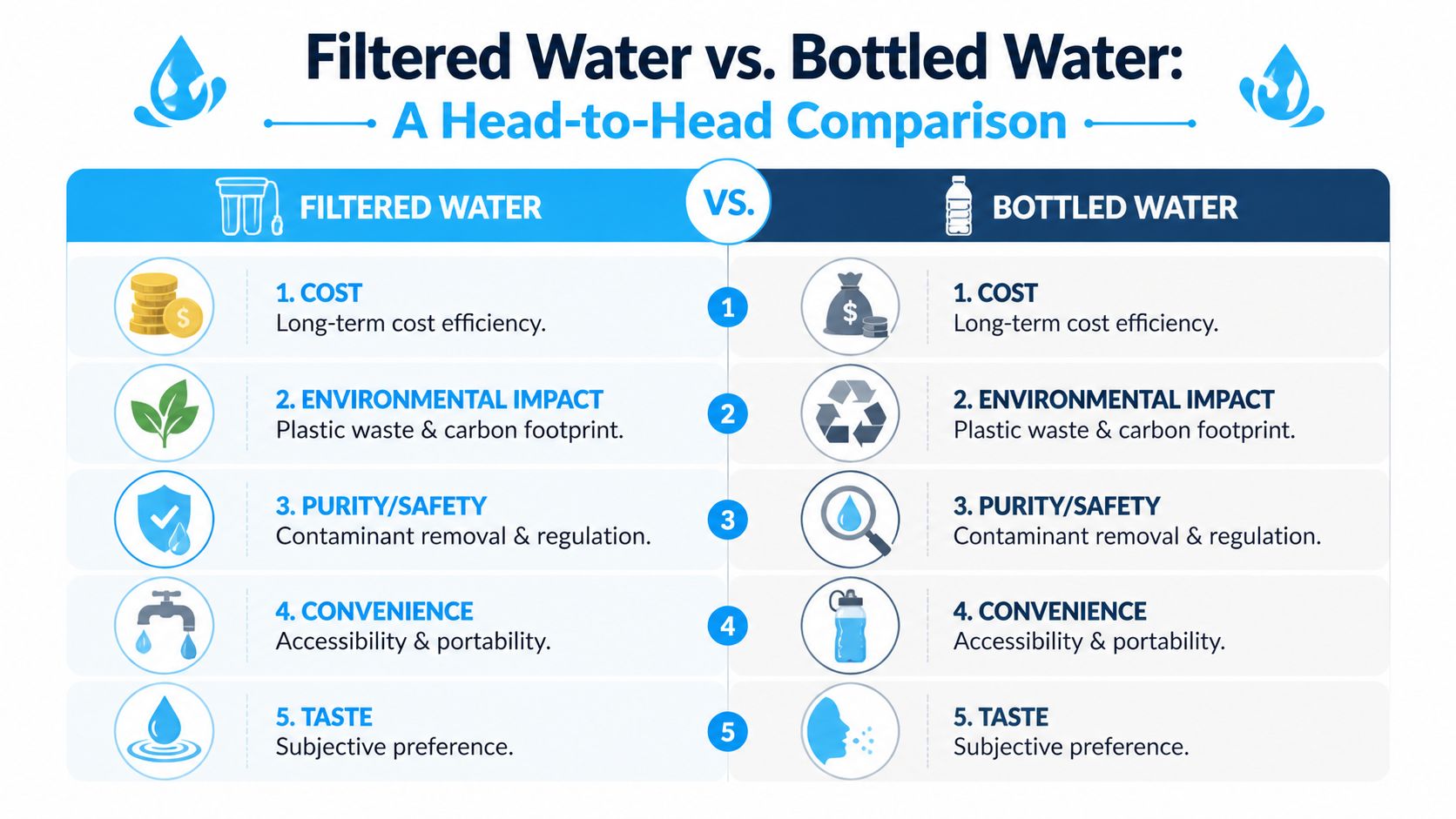
A comparative infographic outlining five key factors between filtered water and bottled water for consumer decision making.

Safety and contaminant reduction

This is the category people care about most, and it’s where filtering at home has a real advantage when done properly. Public tap water is regulated by the EPA, requiring mandatory monitoring and public reports. Bottled water is regulated by the FDA with less stringent testing and disclosure rules. Certified home filters, including systems built to standards such as NSF/ANSI 58, can verifiably reduce specific contaminants like lead, TTHMs, and mercury at the point of use, often outperforming bottled products, as discussed in this water quality and filtration review.

That last point matters. A certified filter gives you a performance target. Bottled water usually gives you a brand promise.

If your concern is chlorine taste, a simple carbon filter may be enough. If your concern is lead, disinfection by-products, or a known local issue, a more specific certified filter is the stronger move. Home filtration lets you treat the water you have.

Cost and daily use

This one isn’t close. EPA WaterSense figures cited in this bottled versus filtered water cost comparison indicate average residential tap water costs about $6.64 per 1,000 gallons for water alone and about $15.21 per 1,000 gallons including sewer, while bottled water averages around $1.22 per gallon, making it roughly 180 to 300 times more expensive than tap water even before filtration.

That’s before you count the hassle of carrying cases, storing them, and making emergency runs when you run out.

For a household that drinks a lot of water, bottled water isn’t just a beverage choice. It becomes a recurring delivery problem you manage yourself.

Home filtration has upfront cost and maintenance cost. Bottled water has no setup cost, but the meter never stops running.

Environmental impact

The environmental side is also one-sided in most homes. Americans consumed 14.4 billion gallons of bottled water in 2019, spent about $16 billion a year on bottled water, and bottled water production can require as much as 2,000 times the energy needed to produce tap water, according to this summary of bottled water’s financial and environmental costs.

Plastic use, transport, refrigeration, and disposal all stack up. A home filter doesn’t erase impact completely, especially if you choose RO, but it usually cuts the household waste stream dramatically compared with buying bottled water for daily use.

Convenience and taste

Bottled water still offers advantages. It’s portable, sealed, and available everywhere. For travel, emergencies, and short-term use, it’s practical.

At home, though, a good filter is more convenient after the first week. You stop loading cases into the cart. You stop wondering if you’ve got enough in the pantry. You refill a bottle from your own sink and move on.

Taste is personal. Some people prefer the mineral profile of certain bottled brands. Others just want to get rid of chlorine and odor. In most homes, a well-selected carbon filter handles the taste issue so well that bottled water stops feeling like an upgrade.

The Hidden Truths of Home Water Filtration

Filtered water is usually the better home choice, yet misguided advice often surfaces. People talk about filtration as if every system is efficient, foolproof, and maintenance-free. It isn’t.

Reverse osmosis wastes water

Reverse osmosis works. That’s why so many serious drinking water systems use it. But RO has a hidden cost that many homeowners don’t hear about until after installation.

According to this discussion of bottled water versus filtered water and RO trade-offs, reverse osmosis systems can produce 3 to 4 gallons of wastewater for every gallon of purified water. For some households, that’s acceptable. For others, especially in drought-conscious areas or homes where efficiency matters, it’s a deal-breaker.

RO makes the most sense when you need broad contaminant reduction. It makes less sense when your real complaint is taste and odor that a carbon system could handle with less waste.

Filters fail in ordinary ways

The second hidden issue is maintenance. A good filter that isn’t changed on time becomes a bad filter. Performance drops. Flow slows. Taste changes. In some cases, neglected cartridges can become part of the problem rather than the solution.

This isn’t a reason to avoid filtration. It’s a reason to avoid lazy filtration. If you know you won’t track replacement dates, don’t buy a complicated system with multiple stages and no reminders.

The best water filter is the one your household will maintain correctly.

Certification matters more than branding

A polished package doesn’t tell you much. Certification does. Some budget filters look convincing online and underperform in real kitchens.

The safest habit is simple:

  • Check certification first: Look for NSF-referenced contaminant reduction that matches your actual concern.
  • Replace on schedule: Don’t stretch cartridge life because the water “still tastes okay.”
  • Match the system to the problem: RO for broad reduction, carbon for taste and many common chemicals, whole-house treatment for house-wide water issues.

People get into trouble when they buy the most aggressive system available or the cheapest filter on the shelf. Both mistakes come from skipping the water diagnosis.

How to Choose Your Best Water Solution

There isn’t one correct answer for every house. There is a best-fit answer for your house.

A person placing a water bottle next to a portable countertop water filtration system on a counter.

If you rent and need zero hassle

A renter usually needs portability, easy setup, and no permanent changes. That points to a quality pitcher, countertop unit, or faucet-mounted filter.

You’re not building a forever system. You’re buying cleaner-tasting water with minimal friction. In this category, certification matters even more because marketing language can be vague and renters often shop by convenience first.

If you own a home and your family drinks a lot of water

A family kitchen usually does best with an under-sink system. If your main issue is taste, odor, or common municipal concerns, a certified carbon block system is often the sweet spot. If you have a stronger contaminant concern and have confirmed the need, RO may be worth it despite the wastewater trade-off.

A critical purchasing factor is certification. Uncertified filters may not perform as advertised, with some studies showing 30% of budget filters fail independent tests. NSF-certified filters are verified to reduce specific contaminants like chlorine, microplastics, and nitrates, but require cartridge changes costing $50 to $200 annually, as noted in this guide to healthier bottled, filtered, or tap water choices.

That annual cartridge cost is not a downside. It’s part of responsible ownership. Budget for it from day one.

If you use well water

Well water changes the conversation completely. You shouldn’t guess. Test first, then build the system around the results.

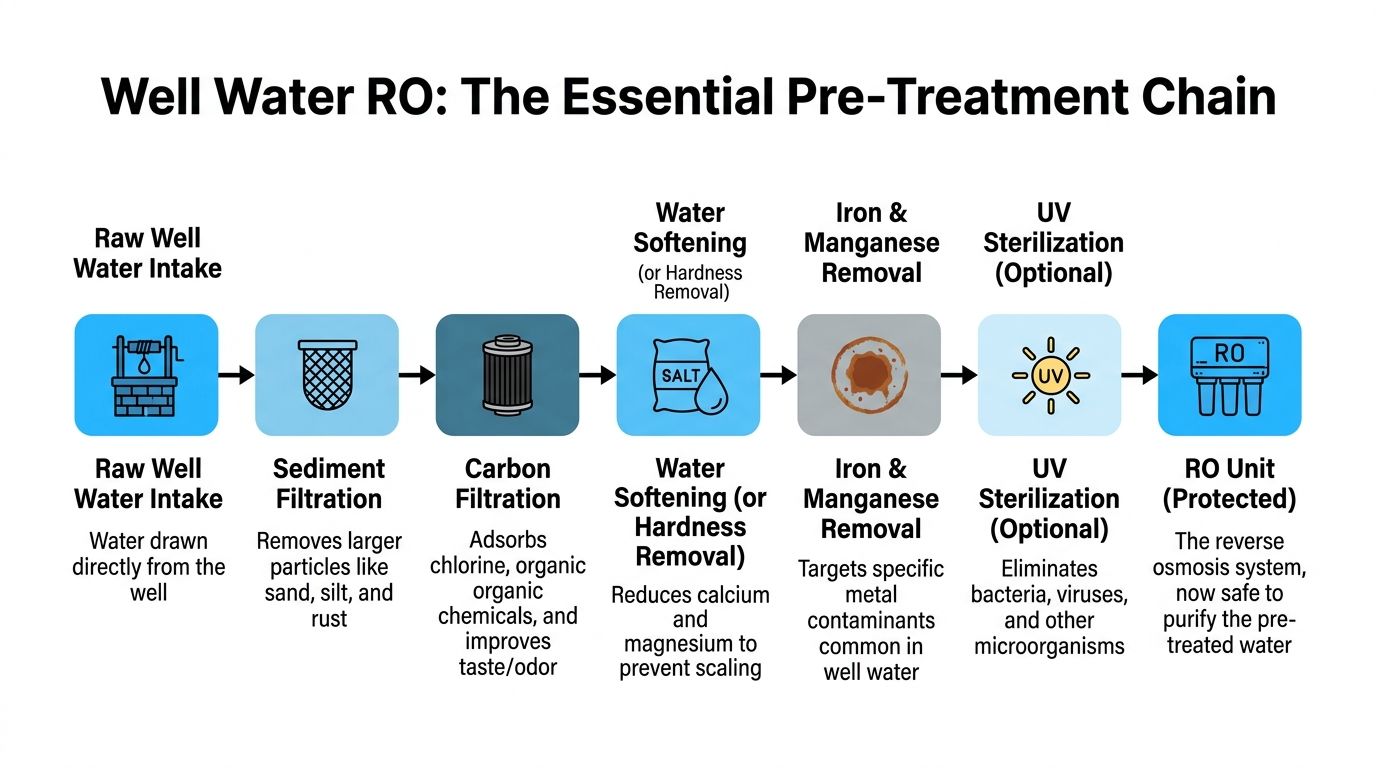
A well-water home may need sediment treatment, iron reduction, sulfur control, softening, or a separate drinking water filter. That often means a layered setup, not one do-everything product. If you need help narrowing down system types and maintenance priorities, the practical advice library at Water Filter Advisor is a useful place to start.

A simple decision framework

Use this checklist before you buy anything:

  • Start with your actual problem: Bad taste, lead concern, iron staining, sulfur odor, cloudy water, or something else.
  • Check whether the issue is whole-house or drinking-water only: Shower odor and appliance scale need a different approach than kitchen drinking water.
  • Choose certification over hype: Match the certified reduction claim to the contaminant.
  • Be honest about maintenance: If your household ignores filter reminders, choose a simpler system.
  • Avoid overbuying: Don’t install RO when a certified carbon unit solves the problem better for your situation.

Most homes don’t need bottled water as a daily plan. They need a properly matched filter and a replacement schedule that gets followed.

Frequently Asked Questions

Do water filters remove healthy minerals like calcium and magnesium

Some do, some don’t. Activated carbon filters generally focus on taste, odor, and selected contaminants. RO systems are more aggressive and can reduce minerals along with other dissolved substances.

Is it safe to reuse plastic water bottles

For routine daily drinking, I’d rather see people use a durable reusable bottle and fill it with filtered water at home. Single-use bottles were built for convenience, not as a long-term household water strategy.

How do I know which filter I need

Start with your water source and your specific complaint. Municipal users should review local water reports. Well owners should test their water directly before buying equipment.


If you want help choosing a system that suits your home, Water Filter Advisor is a solid next stop. It’s built for households that want clear, practical guidance on water testing, filter types, certifications, replacement schedules, and the full cost of ownership before spending money on the wrong setup.

Whole House Replacement Water Filter Cartridge: A Guide

You usually notice a whole house filter problem in the least scientific way possible.

The shower loses some punch. A glass of water smells a little earthy. Coffee tastes flat, and you find yourself blaming the beans. Then somebody in the house says, “Did the water always taste like this?” That’s when one finally looks at the filter housing and remembers the cartridge hasn’t been changed in a while.

A whole house replacement water filter cartridge isn’t exciting. It sits there, does its job, and gets ignored until the signs get annoying. But that cartridge is carrying a lot of weight. It helps protect taste, odor, flow, fixtures, and the money you already put into your filtration setup. Whole house systems often cost 10,000 to 50,000 yuan, or about $1,400 to $7,000 USD, with premium brands running higher, and the total cost keeps going with routine replacements and maintenance, as outlined in this cartridge cost and maintenance overview.

I’ve seen the same mistake again and again. People spend good money on the system, then treat the cartridge like it’s optional. It’s not. The cartridge is the working part. Ignore it long enough and the system stops acting like protection and starts acting like a restriction.

That Slowing Shower and Funky Taste

It usually starts small.

One bathroom still feels fine, but the shower at the far end of the house seems weaker than it used to. The kitchen tap runs a little slower. Cold water tastes dull, or maybe there’s a smell you can’t quite place. Nothing dramatic. Just enough to make you suspicious.

That pattern matters because whole-house filtration problems rarely announce themselves with one big failure. More often, the system slowly chokes down as the cartridge loads up with whatever your water brings in. If you’re on sediment-heavy water, that slowdown can show up in pressure first. If chlorine or odor reduction is the main job, your nose and taste buds often catch the problem before a wrench ever comes out.

The signs people miss

Homeowners tend to wait for obvious trouble, like a total pressure drop or visibly dirty water. In real homes, the first clues are usually more ordinary:

  • The shower feels weaker: Not dead, just not right.
  • Taste slips: Coffee, tea, and plain drinking water lose that clean neutral taste.
  • Odor creeps back in: Earthy, chemical, or stale smells can return.
  • Fixtures seem uneven: One tap feels normal, another doesn’t.
  • The system gets forgotten: Nobody remembers the last replacement date.

A filter doesn’t have to look terrible from the outside to be overdue inside.

That’s why smart filter maintenance is less about reacting to one dramatic symptom and more about paying attention to small changes before they turn into a messy Saturday.

Why this matters beyond convenience

A lot of people treat cartridge replacement like changing an air freshener. If the water still comes out, they assume it’s fine. That thinking costs you.

When the cartridge is spent, you don’t just lose performance. You also put stress on the rest of the system, make daily water use less pleasant, and risk buying the wrong replacement in a rush. That last one gets expensive fast, especially when you end up with a cartridge that technically “fits” but doesn’t match the housing, flow needs, or treatment goal.

The fix is usually simple. Identify the right cartridge, change it properly, and keep a basic replacement routine. The trick is doing it before that weak shower becomes a bigger water quality problem.

When to Replace Your Filter and The Risks of Waiting

Most whole house filter cartridges should be changed on a schedule, not just when the water gets bad. Experts recommend replacing most whole house water filter cartridges every 6 to 12 months, but that window changes with water conditions and system design, according to Aquasafe’s replacement guidance.

A dirty and clogged water filter cartridge next to a glass filled with cloudy contaminated tap water.

If your water carries more sediment or the house uses a lot of water, the cartridge won’t last as long as the label suggests. That’s especially true in multi-stage systems, where each stage has its own job and its own service life. Aquasafe notes that PP cotton pre-filters may need replacement every 3 to 6 months, activated carbon filters every 6 to 12 months, and reverse osmosis membranes every 2 to 3 years in systems that use them.

Go by the calendar and your senses

A cartridge can be overdue even if the water still looks clear. Not every exhausted filter announces itself with brown water or a dramatic drop in pressure. Some just lose treatment performance little by little.

Use both of these checks:

  • The calendar check: If you’re at the end of the recommended interval, assume it’s time to inspect or replace.
  • The household check: Notice lower pressure, changed taste, new odor, or fixtures that seem slower than usual.
  • The water source check: Well water with sediment or rusty water usually shortens replacement intervals. Cleaner municipal water may be easier on cartridges, but it still doesn’t make them permanent.

What waiting actually does

The biggest mistake is thinking an old cartridge merely stops helping. In reality, overdue cartridges can become part of the problem. Aquasafe warns that failure to replace cartridges on schedule can transform the filter into a source of bacteria, mold, and pollutants in the water.

That’s the part too many people miss. An exhausted cartridge isn’t just passive. It can become a dirty place in a wet, dark system, and that’s not something you want tied into every shower, faucet, and appliance line in the house.

Practical rule: If your water quality is questionable and your replacement date is fuzzy, replace the cartridge sooner, not later.

A simple timing guide

Here’s the clean version most homeowners can use:

Filter part Typical replacement timing
Sediment pre-filter 6 to 12 months in many whole-house systems
Main drinking water filter cartridge 6 to 12 months as a common recommendation
PP cotton pre-filter in multi-stage systems 3 to 6 months
Activated carbon filter 6 to 12 months
Reverse osmosis membrane 2 to 3 years

Schedules like these are a starting point, not a permission slip to ignore symptoms. If the shower softens, the taste slips, or the water starts smelling wrong, trust what the house is telling you.

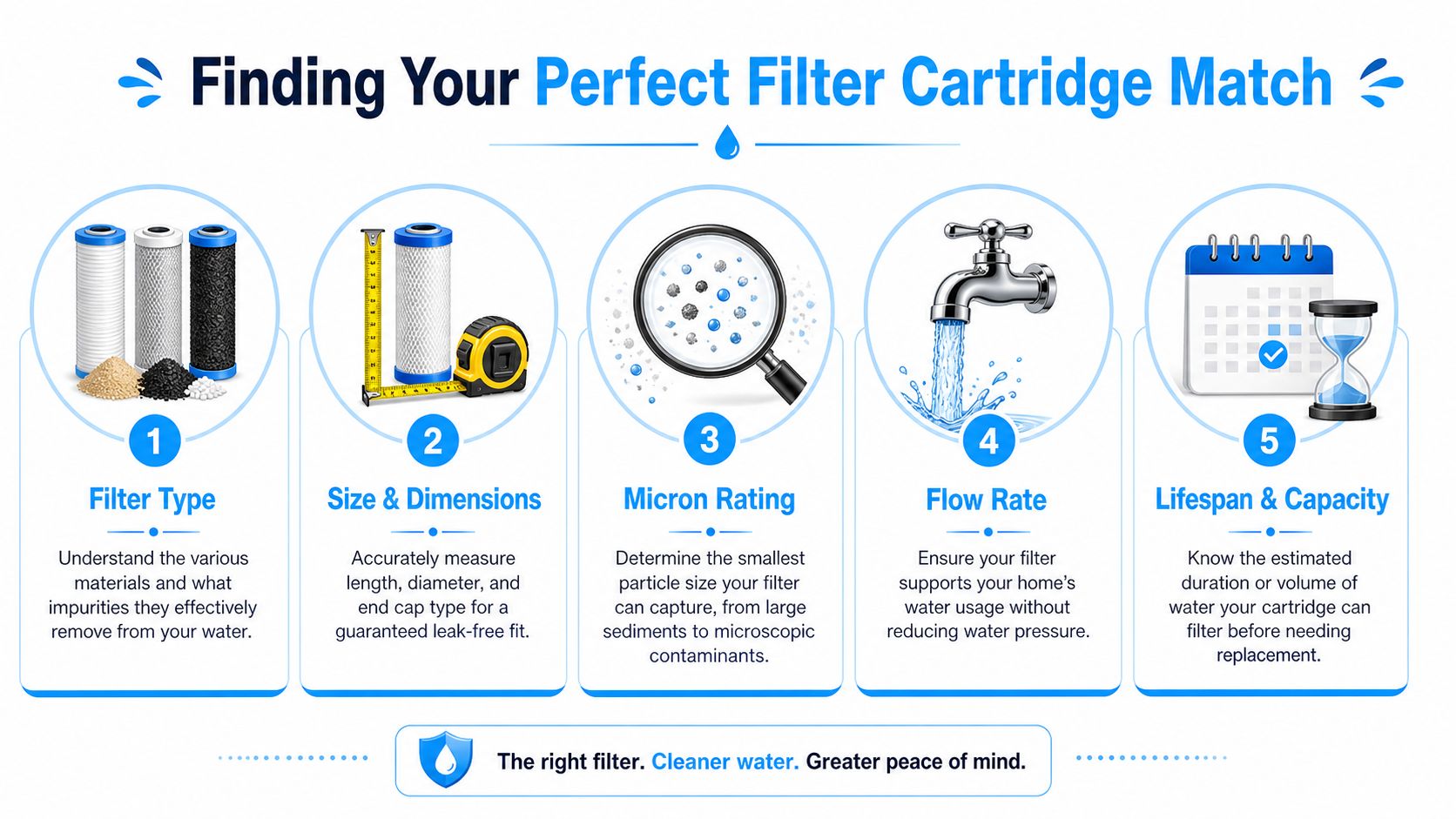
Finding Your Perfect Cartridge Match

A lot of bad cartridge buys happen the same way. The old filter comes out, the label is stained or missing, the homeowner grabs something that looks close, and the housing still screws shut. Then the pressure drops, the taste stays off, or the filter never seals quite right.

Buying the right whole house replacement water filter cartridge starts with compatibility, not price. Shelf price matters, but the expensive mistake is buying twice, or starving the house of flow because the cartridge was never a match for the system.

A five-step guide for choosing the right replacement water filter cartridge for your home water system.

Start with the part you already have

Before you pull out a tape measure, look for an exact ID.

Check these spots first:

  • The old cartridge label: Part number, brand, micron rating, and media type are often printed right on it.
  • The housing head or bracket: Many systems have a model sticker on the cap, sump, or mounting plate.
  • Old receipts, order emails, or install paperwork: This is often the fastest way to avoid buying the wrong cartridge.

If the system came with the house and there is no paperwork, take the old cartridge to the bench and inspect it closely. A blurry phone photo helps too. Guessing from memory at the supply counter is how people come home with the wrong diameter.

Measure the cartridge, not just the canister

If you cannot find a part number, measure the cartridge you removed.

Length and diameter come first. Close is not good enough here. A cartridge that is a little short, a little narrow, or built with the wrong end style can let water slip past the media or fail to seat properly.

Look at four things:

  • Length
  • Diameter
  • Open ends or end caps
  • Housing style, including standard slim housings and Big Blue housings

That last one trips people up all the time. Two housings can look similar on the wall and still take different cartridges.

Shop-floor rule: Bring the old cartridge with you if you can. A two-minute side-by-side check beats a second trip to the store.

Match the media to the job

A cartridge can fit perfectly and still be the wrong filter.

Sediment cartridges catch dirt, rust, and grit. Carbon cartridges help with chlorine, taste, and odor. Some systems use both because they are solving two different problems. Putting a carbon cartridge where a sediment stage belongs can clog the system early. Putting in sediment only will not do much for chlorine taste.

The right question is not “Will this fit?” It is “What is this stage supposed to remove?”

That is the step many guides skip, and it is where ownership cost starts. If you put the wrong media in the first housing, the next cartridge down the line gets hit harder and wears out sooner.

Understanding Micron Ratings

Micron rating tells you how fine the filter is. Lower numbers catch smaller particles, but they also restrict flow faster if your water carries a lot of sediment.

That trade-off matters in real houses. A very fine cartridge can sound great on the package and still be a poor choice for a home with heavy sediment, multiple bathrooms, or a high-demand morning routine.

Cartridge trait What it affects
Micron rating How fine the particle capture is
Media type What kind of contaminant the cartridge targets
Flow compatibility Whether the house keeps acceptable pressure
Lifespan How often you will replace it

If your water is dirty, a staged setup usually works better than asking one tight cartridge to do everything. Let a sediment filter catch the bigger debris first, then let the finer or carbon stage do its job without getting packed up early.

OEM or generic

Generic cartridges can work fine if the dimensions, end style, and media specs exactly match the original. The problem is that “fits most” is not the same as “fits your housing correctly.”

Cheap cartridges turn expensive. The lower shelf price looks good until the filter life is short, the pressure is disappointing, or the fit is sloppy enough to risk bypass. Then you buy another cartridge, or you spend time chasing a problem that started with the wrong part.

Certified OEM replacements are usually the safer pick for whole-house systems, especially when the housing uses a less common cartridge style. If you do buy generic, compare specs line by line, not just the headline size.

Count the real cost, not just the checkout total

A cartridge that costs less up front is not always a real bargain, it's just a lower price at checkout.

The true cost sits in three places:

  • How long the cartridge lasts in your water
  • Whether it keeps flow where the house needs it
  • Whether it protects the next filter stage instead of overloading it

I always tell people to keep a simple record on the wall or in their phone. Write down the cartridge model, install date, and how the water was behaving when you changed it. After one or two cycles, you stop buying blind. You know what fits, how long it lasts in your house, and whether the “cheaper” option saved money or just created another Saturday job.

Your Leak-Free Cartridge Replacement Guide

Most cartridge changes are straightforward. The trouble starts when people rush, skip pressure relief, or crank the housing down like they’re tightening a truck wheel.

A person holding a blue water filter cartridge ready to be installed into a plumbing system.

The replacement flow is well established. Shut off the water, relieve pressure, open the housing, inspect and clean, check the O-ring, install the new cartridge, tighten correctly, then bring the water back on slowly. SpringWell’s cartridge replacement instructions also note that 30% to 50% of failures stem from O-ring degradation, which is why experienced installers never skip that tiny gasket.

Tools that make the job easier

You don’t need a fancy truck full of gear. You do need a few basics:

  • Filter wrench: Best tool for stubborn housings.
  • Bucket or towels: There will be leftover water.
  • Silicone gel: For lubricating the O-ring.
  • Clean rag or sponge: For wiping out the sump housing.
  • Replacement O-ring if needed: Smart to keep on hand if yours looks tired.

If the housing has been overtightened in the past, the wrench stops this job from becoming an arm-wrestling match in your utility room.

The replacement sequence that works

Follow this order and you’ll avoid most common mistakes:

  1. Shut off the main water supply. If your filter setup has an isolation valve or bypass, use it.
  2. Relieve pressure. Open a downstream faucet before loosening the housing.
  3. Set a bucket underneath. Residual water will spill.
  4. Unscrew the housing counterclockwise. Use the filter wrench if needed.
  5. Remove the old cartridge and inspect the housing. Clean out sediment, slime, or carbon residue.
  6. Check the O-ring carefully. If it’s cracked, flattened, or nicked, replace it.
  7. Lubricate the O-ring with silicone gel. Dry O-rings twist and leak.
  8. Insert the new cartridge squarely. Make sure it seats properly.
  9. Reattach the housing hand-tight, then add a quarter turn. SpringWell notes this is the right finishing move, and it matters because over-tightening causes 20% of housing cracks.
  10. Turn the water back on slowly. Then check for leaks.
  11. Flush the system. SpringWell advises flushing 5 to 10 gallons to clear carbon fines after installation.

A slow restart is worth the extra minute. If you slam pressure back on immediately, small issues become wet issues fast.

Here’s a visual walkthrough if you like to watch the process before doing it yourself:

The two mistakes that cause the most grief

The first is skipping pressure relief. SpringWell reports that neglecting to relieve system pressure leads to 15% of splash-related mishaps. That’s the classic “why am I suddenly soaked” moment.

The second is treating the housing like it needs brute force. It doesn’t. Hand-tight plus a quarter turn is enough when the O-ring is seated and lubricated. If it only seals when you’re straining on the wrench, something else is wrong.

Tighten for the seal, not for revenge.

A couple of trade tips

If you’re working on a multi-stage system, lay the cartridges out in order before you start. Mixing stages is a simple mistake with annoying consequences.

If the old cartridge came out looking unusually collapsed, torn, or oddly dirty on one side, pay attention. That can hint at fitment issues, bad flow direction, or a cartridge that never seated correctly in the first place.

Troubleshooting Post-Installation Hiccups

A fresh cartridge is in, the housing is back together, and then you see a drip. Or the water looks cloudy. Or pressure still isn’t right. None of that automatically means you botched the job.

A technician points to a dripping water filter connection to demonstrate a whole house leak issue.

If the housing leaks

Start with the simple causes first.

  • Check the O-ring seating: It may be twisted, pinched, dirty, or out of its groove.
  • Back off and rethread the housing: Cross-threading can feel tight while still leaking.
  • Confirm the cartridge is the correct match: Homeowners deal with hundreds of cartridge varieties, and a mismatched cartridge can affect fit, flow, and even warranty status, as noted in Home Depot’s whole-house replacement category guidance.
  • Tighten correctly: Snug is right. Hulk-tight is not.

If the leak is coming from a nearby valve instead of the housing itself, that’s a different repair. In that case, this shut off valve leaking guide is a useful next step before you start blaming the filter.

If the water looks cloudy

New carbon cartridges often shed fine carbon dust at startup. That usually shows up as gray or cloudy water right after replacement.

The fix is simple. Flush the system thoroughly and check again. If the cloudiness clears as the water runs, it was likely startup residue. If it lingers or appears along with strange taste or odor, recheck cartridge seating and make sure the replacement media matches the application.

Cloudy water right after a carbon change is often a flushing issue, not a disaster.

If pressure is still poor

A new cartridge should improve flow if the old one was clogged. If pressure is still weak, work through this short checklist:

Problem Likely cause What to do
Low pressure at the whole house Wrong cartridge or blocked upstream issue Verify cartridge specs and check valves
Low pressure at one fixture Local aerator or fixture clog Clean the fixture, not the filter
Pressure dropped after installation Cartridge too restrictive or installed wrong Reconfirm micron rating and seating

The trap here is assuming every post-install problem is an installation mistake. Sometimes the filter change exposes another problem that was already there.

Smart Maintenance and Responsible Disposal

A whole-house filter runs best when replacement isn’t a surprise. The most practical homeowners don’t wait for bad taste or a weak shower. They build a simple routine and keep the next cartridge ready.

That matters because many people don’t have a good framework for the true lifecycle cost of a cartridge system. Replacement frequency changes with water quality, and flow rate affects how the system performs over time, which makes budgeting harder than it should be. That ownership-cost gap is spelled out in US Water Systems’ overview of whole-house cartridge system considerations.

Build a system you’ll actually follow

The best maintenance plan is the one you won’t forget.

Try this:

  • Write the install date on the housing: A permanent marker beats a fuzzy memory.
  • Set a calendar reminder: Put it on your phone for the next inspection or replacement window.
  • Store the exact cartridge model: Keep a note in your phone, on the housing, or in your home file.
  • Order before you need it: Having the next cartridge on the shelf keeps you from panic-buying the wrong one.

A house with changing water conditions may need adjustments over time. If your incoming water gets dirtier during part of the year, your replacement schedule may need to move up. That’s normal. The system should fit the water, not the other way around.

Disposal without the guesswork

Used filter cartridges are messy by design. They’ve collected the stuff you didn’t want moving through the house. Disposal depends on local rules and the cartridge materials, so check your municipal guidance first.

The practical approach is to let the used cartridge drain, bag it if it’s wet or dirty, and follow local disposal or recycling instructions where available. Some areas accept certain filter materials; others don’t. What matters is handling it deliberately instead of tossing a dripping cartridge into the garage corner for months.

If a delayed change or leak ever turns into wet drywall, flooring trouble, or a bigger cleanup problem, a solid reference like Restore Heroes' guide to water damage can help you understand what needs immediate attention.

Make better decisions next time

The biggest improvement most homeowners can make isn’t buying a fancier system. It’s keeping better records on the one they already own.

Track the cartridge used, the install date, how the water behaved before replacement, and whether that specific cartridge gave you good service life. Do that for one year and your next buying decision gets much easier. If you want more practical maintenance help and filtration explainers, keep a trusted bookmark to Water Filter Advisor’s advice library.

A whole house replacement water filter cartridge should be routine. When you know the exact part, understand the fit, and replace it before trouble starts, the whole job becomes cheaper, cleaner, and less stressful.


If you want straightforward help choosing, comparing, and maintaining home filtration systems, Water Filter Advisor is a solid place to start. It’s built for homeowners who want clear guidance on cartridges, system types, certifications, and real-world maintenance without the usual confusion.

Whole House Water Filter Chlorine Removal: Top Picks 2026

You turn on the kitchen tap, fill a glass, and catch that faint pool smell before the water even reaches your mouth. Later, the shower leaves your skin tight, your hair dull, and your bathroom full of that chemical steam smell. Then your morning coffee tastes flatter than it should.

That combination sends a lot of homeowners looking for answers. They start with a pitcher, then a faucet filter, then maybe a shower filter. Eventually, many realize the actual issue isn't one faucet. It's the water entering the house.

A whole house water filter chlorine removal system treats water at the point where it enters your plumbing. That means the kitchen sink, the shower, the laundry, and the appliances all benefit. The trick is choosing the right media for your water, especially if your city uses chloramine instead of plain chlorine. That’s where many buyers get tripped up.

Why Your Tap Water Tastes and Smells Like a Swimming Pool

Most city water systems add chlorine for a good reason. It kills bacteria and helps keep water safe as it travels through miles of pipes. The problem is that what protects the water supply can make life at home less pleasant.

You notice it first in taste and odor. Water can smell sharp, medicinal, or like a public pool. Then you notice it in places you didn’t expect. Coffee tastes bitter. Ice carries a chemical note. Showers feel harsher on skin and hair than they should.

A lot of homeowners assume they’re being picky. They aren’t. In a 2022 survey reported by WaterFilterGuru, 77% of Americans filter their drinking water, and that same source says the global water filtration market was valued at $14 billion in 2024 and is projected to reach $35 billion by 2034. That tells you this isn’t a fringe home upgrade. It’s a mainstream response to a very common complaint.

What chlorine changes around the house

Chlorine doesn’t stay politely in the kitchen. It follows the water.

  • At the sink: It affects taste and odor, especially in tea, coffee, soups, and pasta water.
  • In the shower: It can leave water smelling harsh, and many homeowners report more skin and hair dryness.
  • In the laundry room: It reaches fabrics, towels, and anything else washed in tap water.
  • At appliances: It flows through the same lines that feed your water heater, dishwasher, and washing machine.

If your coffee never tastes as smooth as it should, improving source water often helps more than changing beans. If you want a practical read on how filtration can remove bitterness from coffee, that guide is worth a look.

Clean-tasting water doesn’t just improve drinking water. It changes how the whole house feels to live in.

Why whole house filtration is different

A pitcher fixes one small task. A whole house system fixes the incoming water before it spreads through the plumbing. That matters if your biggest complaints come from showering, laundry, or the smell at multiple taps.

It also matters because chlorine removal isn’t one-size-fits-all. Some systems are excellent at standard chlorine and weak at chloramine. Some have strong media but poor sizing. Some look affordable until replacement costs show up. Getting this right starts with understanding what’s inside the tank.

How Filters Magically Banish Chlorine From Your Water

The word “filter” makes many people think of a screen, like a coffee filter catching grounds. Chlorine removal usually works differently. In many whole house systems, the media doesn’t just strain chlorine out. It attracts it, reacts with it, or breaks it down.

That’s why two tanks that look almost identical can perform very differently.

Activated carbon acts like a molecular sponge

Activated carbon is the workhorse in many chlorine filters. It has an enormous internal surface area filled with tiny pores. As water passes through, chlorine compounds cling to that surface. This process is called adsorption.

A simple analogy helps. A kitchen sieve catches pasta because the holes are smaller than the pasta. Carbon is more like a sponge covered in microscopic parking spots. Chlorine molecules stick to those spots as the water moves through.

A four-step infographic illustrating the process of chlorine removal from tap water using activated carbon filtration.

KDF doesn’t trap chlorine. It neutralizes it

KDF media works differently. It uses a redox process, which is short for oxidation-reduction. Instead of mainly giving chlorine a place to stick, KDF changes it chemically.

According to Water Anywhere’s product documentation on KDF media, KDF converts chlorine into harmless chloride with over 95% efficiency, and it can extend the life of downstream carbon filters by up to 5 times by protecting their pores from oxidative damage. That’s a big reason you’ll see KDF paired with carbon in higher-end systems.

Think of KDF as the bouncer at the door. It deals with chlorine early so the carbon behind it doesn’t get worn out as quickly.

Practical rule: When a system combines sediment filtration, KDF, and carbon in the right order, each stage protects the one behind it.

Catalytic carbon goes beyond basic carbon

Standard activated carbon is strong on chlorine. Catalytic carbon is modified to be more reactive, which matters even more once chloramine enters the conversation. It still helps with chlorine, but its bigger advantage shows up when the disinfectant is harder to break apart.

For now, the main point is this. “Carbon filter” is not specific enough. You need to know what kind of carbon, whether KDF is included, and how the stages are arranged.

Chlorine Removal Media Comparison

Media Type Primary Mechanism Effective Against Typical Lifespan Relative Cost
Granular Activated Carbon Adsorption on a porous surface Chlorine taste and odor Varies by water quality and usage Lower
Catalytic Carbon Enhanced adsorption and catalytic breakdown Chlorine and, more importantly, chloramine Often longer than standard carbon in the right application Medium
KDF Electrochemical redox reaction Chlorine, while protecting downstream carbon Long service life in properly designed systems Medium to higher
KDF plus Carbon Combo Neutralization first, adsorption second Broad chlorine reduction with staged protection Often more durable than carbon alone Higher upfront, better long-term value in many homes

Why flow rate still matters

Media only works when water has enough contact time with it. If water rushes through too fast, performance suffers. If the tank is too small, pressure can drop. If the media is poorly chosen, replacement comes sooner than expected.

That’s why chlorine removal isn’t magic in the marketing sense. It’s chemistry plus sizing plus proper sequencing. Get those three right, and the system feels invisible. You just stop smelling chlorine and stop thinking about your water every time you turn on a tap.

Chlorine vs Chloramine Is Your Filter Up to the Challenge

Often, many homeowners buy the wrong system.

They search for a whole house water filter chlorine removal setup, compare tanks, read that a unit uses carbon, and assume they’re covered. But a large share of city systems don’t use plain chlorine alone. They use chloramine, which is a more stable disinfectant.

That one detail changes the filter you need.

A green whole house water filter system installed in a basement for chloramine and chlorine removal.

Why chloramine is harder to remove

Chloramine is chlorine bonded with ammonia. Because it’s more stable, it tends to last longer in distribution systems. That helps utilities maintain disinfection farther from the treatment plant. It also makes chloramine tougher for standard activated carbon to remove well.

According to SoftPro’s catalytic carbon guidance, over 1 in 3 US water utilities use chloramine, and catalytic carbon can remove it with up to 99% efficiency. Standard activated carbon is not the right answer for many of these homes.

Consider this: standard carbon handles chlorine like wiping chalk off a board. Chloramine is more like scrubbing off dried adhesive. It takes a more specialized material and better contact conditions.

How to find out what your city uses

You don’t need to guess.

Use one of these checks:

  1. Read your water quality report. Most utilities publish an annual water quality report, often called a Consumer Confidence Report.
  2. Call the utility directly. Ask one question: “Do you disinfect with free chlorine or chloramine?”
  3. Check local treatment notices. Utilities often post treatment methods on their website.

If the answer is chloramine, don’t let a vague “removes chlorine taste and odor” claim talk you into the wrong tank.

If your utility uses chloramine, a standard carbon-only whole house filter may improve smell a bit and still leave you disappointed.

What to buy if you have chloramine

Look for these features:

  • Catalytic carbon media: This is the key upgrade for chloramine-treated water.
  • Pre-sediment filtration: Sediment can foul media and reduce effectiveness.
  • Adequate contact time: Bigger tanks and good internal flow design help the media do its job.
  • Clear maintenance guidance: If replacement intervals are vague, be cautious.

A product line such as the SoftPro Chlorine+ gets attention because it focuses on this exact issue instead of treating chlorine and chloramine as the same problem. Other systems may also use catalytic carbon effectively, but the principle matters more than the brand name. Match the media to the disinfectant.

The mistake that causes buyer’s remorse

Homeowners often install a standard carbon tank, expect full relief, and then still smell chemicals in shower steam or taste something off in drinking water. They think the system failed. Sometimes it did. More often, the system was solving the wrong problem.

If you remember one thing from this article, make it this: chlorine and chloramine are not interchangeable from a filtration standpoint.

Choosing the Right Size Filter to Avoid Weak Showers

A powerful filter that chokes your water flow isn’t a good upgrade. Homeowners usually describe this as “the filter killed my pressure,” but pressure and flow aren’t exactly the same.

A better way to picture it is traffic. Your plumbing system is the road network. Flow rate is how many cars can move through at once. If the road narrows too much, traffic backs up. In a house, that means weak showers when someone runs a sink, the dishwasher starts, or a toilet refills.

A modern chrome shower head spraying water against a wall with tan and green tiled surfaces.

What sizing really means

When you compare whole house systems, you’ll see references to flow capability. The practical question is simple: can the filter keep up with your house during your busiest water-using moments?

Those moments usually happen when several fixtures overlap, such as:

  • Morning rush: Shower running while a toilet refills and someone uses the bathroom sink
  • Laundry hour: Washing machine filling while dishes are being rinsed
  • Evening peak: One person showering while another uses the kitchen tap

If the unit is undersized, the media bed becomes a bottleneck.

A simple way to estimate your household demand

You don’t need a complicated worksheet to get in the right ballpark. Walk through your normal peak-use scenario.

Ask yourself:

  • How many showers might run at the same time?
  • Does the washing machine often run during those times?
  • Do you have a soaking tub or large shower setup?
  • Does your family stack water use in short bursts, or spread it out?

A smaller household with one bathroom has very different needs than a busy home with several bathrooms and overlapping routines. If you know your home experiences frequent simultaneous use, don’t buy a filter based only on price or compact size. Buy one based on what your house demands.

An undersized system can still remove chlorine well at one faucet and feel disappointing in real life because the house never uses water one faucet at a time.

Pressure drop is the hidden spec

A filter creates resistance. Good systems keep that resistance manageable. Poorly sized ones make it obvious every time you shower.

Watch for these clues when shopping:

  • Tank size matters: Larger media volume usually supports better contact time and less restriction.
  • Port size matters too: Small ports can limit performance even if the tank looks substantial.
  • Stage count adds resistance: More stages can help treatment, but they need proper design.
  • Sediment filtration choice affects flow: A very restrictive sediment stage can cause trouble upstream of the main media.

If you want to see how installers think about whole-house setup in practice, this walkthrough is helpful:

The best buying habit

Don’t ask only, “Will this remove chlorine?” Also ask, “Will it do that while my house is using water the way we live?”

That question prevents a lot of frustration. A correctly sized system feels boring in the best way. The showers stay strong, the sinks run normally, and the chlorine problem fades into the background.

Reading the Fine Print Certifications and Long-Term Costs

Marketing claims on water filters can sound impressive until you ask one simple question: who verified it?

That’s where certifications matter. They don’t tell you everything, but they help separate broad promises from tested performance. For chlorine-focused systems, the most familiar benchmark is NSF/ANSI 42, which deals with aesthetic water issues such as taste and odor reduction. If chlorine is your main complaint, that’s the certification many homeowners start with.

For broader contaminant claims, NSF/ANSI 53 matters more. Under this standard, health-related reductions often show up, including PFAS in systems designed and certified for that purpose.

A hand holding a magnifying glass over a blue bottle with an NSF/ANSI certified quality seal.

What the labels mean in plain English

Here’s the simple translation:

Certification What it commonly signals Why it matters
NSF/ANSI 42 Reduction of chlorine taste and odor and related aesthetic issues Useful when your water smells or tastes harsh
NSF/ANSI 53 Reduction claims for specific health-related contaminants when listed Important if you’re looking beyond taste and odor

The key phrase is when listed. A product doesn’t become a universal contaminant remover just because it mentions NSF. You have to read which substances the certification covers.

PFAS has changed the conversation

A chlorine filter may improve the way water tastes and smells while doing little for contaminants outside its design. That matters more now because homeowners are paying closer attention to PFAS.

According to US Water Systems’ PFAS-focused guidance, recent EPA regulations are pushing near-zero PFAS limits, and systems certified to NSF/ANSI 53 for PFAS reduction are becoming more important. The same source notes that adding this capability can affect flow rates and maintenance schedules under high chlorine loads.

That’s an important reality check. More treatment isn’t free. It can change replacement schedules, design choices, and how much media a system needs.

Certification tells you what a system was tested to do. It doesn’t replace reading the maintenance schedule.

The real cost isn’t just the purchase price

Homeowners often compare whole house systems like they’re buying a ladder. Buy it once, use it, done. Filtration doesn’t work that way. The actual cost includes:

  • Replacement media or cartridges
  • Sediment prefilters
  • Any service calls if you don’t maintain it yourself
  • Potential upgrades if your water quality changes

System design is paramount. A setup that protects carbon with sediment filtration, or uses KDF to reduce stress on downstream media, may cost more upfront and feel cheaper over time. A bargain unit with frequent replacements can become annoying fast.

A better way to compare systems

When you shop, compare these five things side by side:

  1. Media type
  2. What contaminants the unit is designed for
  3. Certifications tied to those claims
  4. Replacement schedule
  5. Expected maintenance effort

A smart buyer doesn’t chase the loudest claim. A smart buyer looks for a system whose certification, media choice, and upkeep plan match the house.

Finding Your Perfect Filter for City or Well Water

Your water source should decide your buying path. Too many homeowners shop by brand first and water type second. That’s backwards.

A house on municipal water usually needs a disinfectant strategy. A house on well water often needs a diagnosis first. The equipment can overlap, but the decision process shouldn’t.

If you’re on city water

City water buyers should start by identifying the disinfectant. That single step narrows the field quickly.

If your utility uses chlorine, a well-built carbon-based whole house system may be enough. If your utility uses chloramine, the media choice becomes more specific. As noted earlier, catalytic carbon is the safer bet for that chemistry.

For city water homes, good setups usually include:

  • A sediment stage first: This protects the main media from dirt and rust.
  • Media matched to disinfectant type: Standard carbon for chlorine, catalytic carbon for chloramine-focused treatment.
  • Enough flow capacity for the household: Don’t let treatment quality create shower frustration.
  • A maintenance plan you’ll follow: Great media still needs care.

For the 30% of US homes on chloramine-treated city water, pairing a pre-sediment filter with catalytic carbon is especially important because it improves disinfectant removal and can extend the life of appliances by up to 30% by reducing wear, as described qualitatively earlier from the same chloramine-focused source.

If you’re on well water

Well water buyers should slow down before purchasing anything.

A private well usually isn’t disinfected with chlorine unless you’ve shock-chlorinated it or use a dedicated treatment setup. That means a whole house chlorine filter may not solve the main problem. Sediment, iron, hardness, sulfur odor, and bacteria are often bigger concerns.

Start with testing. You want to know what’s present before you choose equipment. In many well-water homes, carbon is still useful, but it belongs inside a larger treatment train rather than acting as the whole strategy.

Well water treatment works best when each stage has one clear job. Testing tells you what those jobs need to be.

DIY or plumber

This decision depends on your plumbing comfort level and the complexity of the system.

DIY makes sense when you’re installing a straightforward point-of-entry unit, you have room to work, and you’re comfortable cutting into the main line, adding shutoffs, and checking for leaks.

A plumber makes sense when the installation space is tight, the system is heavy, local code is strict, or the setup includes multiple tanks, bypass valves, or other treatment equipment.

Either route can work well. The bigger mistake is focusing only on installation cost while ignoring placement, accessibility, and future service. If the unit is crammed into a corner where nobody wants to change a prefilter, maintenance usually slips.

The shortest path to the right decision

Use this decision path:

  • Municipal water: Identify chlorine or chloramine first.
  • Well water: Test first, then build the treatment plan.
  • Both: Size for your house, not for the sales brochure.
  • Any source: Choose a system you can maintain consistently.

That approach saves more frustration than any “best filter” list.

Common Questions About Whole House Chlorine Filters

Will a whole house chlorine filter lower my water pressure

It can, but a properly sized system usually keeps that from becoming noticeable. Pressure complaints often come from undersized units, restrictive prefilters, or a stage layout that doesn’t match the home’s flow needs. If your showers already feel weak, fix that baseline plumbing issue before blaming the filter.

Can I install one myself

Many homeowners can handle a basic installation if they’re comfortable working on the main water line. The job gets harder when the system includes multiple stages, bypass valves, or heavy media tanks. If you want more practical maintenance and buying guidance, the advice library at Water Filter Advisor is a useful place to continue your research.

Do I still need a shower filter if I install a whole house system

Usually, no. A true point-of-entry system treats the water before it reaches the shower, so adding another chlorine filter there is often redundant. Some homeowners still add point-of-use filtration for special preferences, but the main chlorine issue should already be handled upstream.

Can I use a whole house chlorine filter with a water softener

Yes, and they’re often paired. The filter handles chlorine, chloramine, sediment, or other target contaminants depending on design. The softener handles hardness minerals. What matters is placing equipment in a sequence that protects downstream components and keeps maintenance manageable.

How do I know when the filter media is spent

The first clues are practical. Chlorine smell returns. Water taste changes. Shower steam smells sharper again. Some systems also provide clearer service guidance than others, which is a good reason to avoid any product that stays vague about maintenance.

Is removing chlorine ever a downside

There can be one tradeoff worth understanding. The CDC warns that removing chlorine in a whole-house setup can increase germ growth in plumbing unless the system is maintained properly. That doesn’t mean you should avoid filtration. It means you should maintain the system, replace media on schedule, and keep the installation sanitary.

What’s the most common buying mistake

Choosing by the word “chlorine” on the box without checking whether the home has chloramine. That’s the mistake that leads to disappointing performance, premature maintenance frustration, and the feeling that whole-house filtration was overhyped.


If you’re narrowing down options and want a reliable next step, visit Water Filter Advisor. It’s a practical resource for comparing filtration types, understanding certifications, and choosing a system that fits your water source, budget, and maintenance comfort level.

Affordable Whole House Water Filter: A 2026 Buyer’s Guide

You’re probably here because your water is doing at least one annoying thing every day.

Maybe the shower smells a little like a pool. Maybe your coffee tastes flat even when the beans are good. Maybe new glasses come out of the dishwasher with spots, or your faucets keep collecting crusty buildup. And even when the water looks clear, you still wonder what’s riding along in it when your family drinks, cooks, showers, and washes clothes.

That’s where an affordable whole house water filter starts to make sense. Instead of treating just one sink, it treats the water as it enters the home, so the kitchen tap, shower, laundry, and bathroom all benefit. The smart way to shop, though, isn’t by sticker price alone. A filter that looks cheap on day one can get expensive fast once replacement cartridges, service, and pressure problems show up.

Why Your Tap Water Needs an Upgrade

You notice it on an ordinary Tuesday. The kids fill water glasses at the sink. The shower leaves your skin feeling tight. The coffee tastes a little off, even though you bought the good beans. None of those problems feels dramatic on its own, but together they are a sign that the water coming into your house is doing more than you want.

That matters because your plumbing works like your home’s circulatory system. If the incoming water carries chlorine, sediment, hardness minerals, or other unwanted material, those issues do not stay in one place. They show up in the shower, on clean laundry, inside appliances, and on the dishes you put back in the cabinet.

The whole-home difference

A pitcher filter helps with one glass at a time. A faucet filter helps at one sink. A whole-house system treats water at the entry point, so the water reaching your bathrooms, kitchen, laundry room, and water-using appliances starts cleaner from the start.

That wider coverage changes the value calculation. You are not just paying for better-tasting drinking water. You may also be reducing chlorine smell during showers, cutting sediment that can clog fixtures, and slowing the scale buildup that makes water heaters and dishwashers work harder over time. If you want more plain-English guidance on comparing systems, the articles in this home water filtration advice library can help.

Practical rule: If the problem shows up in more than one room, treating one tap usually leaves the bigger problem in place.

Seen problems and unseen problems

Some water issues announce themselves right away. Rust-colored stains, white crust on faucets, cloudy glasses, rotten-egg odor, or grit in the tub are hard to ignore.

Other issues are quieter. Chlorine can affect taste and smell without making water look dirty. Dissolved minerals can shorten appliance life even when the water looks clear. That is one reason shoppers get confused. Clear water is not always problem-free water.

You will also see technical terms that sound more important than they really are. One common example is TDS, or total dissolved solids. TDS is a broad measurement, not a safety verdict. It can help you understand how much material is dissolved in your water, but it does not tell you which substances are present or whether a whole-house filter alone is the right fix. For a simple walkthrough, read What Is TDS in Water.

Upgrade the water, not just the purchase price

A lot of homeowners start with the question, “What is the cheapest system I can buy?” That is understandable, but it is not the best starting point.

A better question is, “What will this system cost me to own?” A low-priced unit can act like an inexpensive printer that burns through costly ink. The tank or housing looks affordable on day one, then the replacement cartridges, service visits, pressure loss, or extra pre-filters raise the actual cost month after month. In other words, the tap water may need an upgrade, but your buying strategy does too.

That is why an affordable whole-house water filter should be judged by what it solves across the house and what it costs to keep running over several years, not just by the number on the box.

Decoding Your Filtration Options

Water filter shopping gets messy because brands love stacking buzzwords on the box. Multi-stage. Catalytic. KDF. Anti-scale. Advanced media. Most homeowners don’t need a chemistry degree. They need a plain-language translation.

Here’s the simplest way to think about it. Different filter types do different jobs. One catches grit. Another absorbs chlorine and odors. Another tackles hardness. Another deals with microbes. A good whole-house setup is often a team, not a single magic tank.

An infographic titled Decoding Your Filtration Options illustrating four common water filtration and treatment technologies.

The bouncer, the sponge, and the specialist

A sediment filter is the bouncer at the door. It stops bigger particles before they get inside the system. Sand, silt, rust, and debris are its main targets. Sediment doesn’t just look bad; it can clog other media and wear down appliances.

An activated carbon filter is more like a sponge. It grabs chlorine, bad tastes, odors, and many organic chemicals. This is usually the core technology for city water homes. If your complaint is “my water smells like a swimming pool,” carbon is usually where the conversation starts.

A water softener isn’t really a filter in the usual sense. It changes the water by swapping hardness minerals for sodium ions. That helps prevent scale buildup on pipes, water heaters, shower doors, and fixtures. If your main complaint is crusty residue and spotted dishes, filtration alone may not be enough.

A UV sterilizer uses light rather than media. It’s useful when microbial control matters, especially for some well-water homes. It doesn’t remove sediment or chlorine. It handles microorganisms, so it’s usually an add-on, not a stand-alone answer.

Where catalytic carbon and KDF fit

Some systems use upgraded media instead of plain carbon. One example is the SpringWell CF, which uses a 4-stage filtration design with media such as catalytic carbon and KDF to increase contact time between water and the filter bed. That setup supports over 95% reduction in chlorine and THMs at a 12 GPM flow rate with minimal pressure drop, based on the product specifications and performance details from SpringWell’s whole-house filter page.

That “contact time” language trips people up, so here’s the plain version. Water needs enough time touching the media for the media to do its job. If water blasts through too fast, performance can drop. Better designs slow and distribute the water inside the tank without making your shower weak.

Better media can matter as much as extra stages. A two-stage system with the right media can outperform a crowded stack of mediocre cartridges.

Filter types compared

Filter Type Primary Target Best For Average Lifespan
Sediment filter Sand, silt, rust, debris Homes with visible particles or as a prefilter Usually shorter-term and replaced more often
Activated carbon filter Chlorine, taste, odor, many chemicals Municipal water homes Often long-life in tank systems, shorter in cartridges
UV sterilizer Bacteria, viruses, microorganisms Well water or homes needing microbial control Ongoing bulb maintenance
Water softener (ion exchange) Hardness minerals Scale, spots, and hard-water buildup Resin-based service life varies with use and water quality

For a deeper library of plain-English buying help, Water Filter Advisor’s advice section is a handy place to compare filter types without getting buried in marketing language.

Matching the technology to the problem

Don’t start with brands. Start with symptoms and test results.

  • Chlorine smell and bad taste: Carbon filtration is usually the lead player.
  • Visible grit or cloudy water: Add sediment filtration first, so downstream media doesn’t get overloaded.
  • Scale and white crust on fixtures: You’re in softener or conditioner territory.
  • Iron staining or rotten-egg odor: You likely need specialty media, not just a standard carbon tank.
  • Microbial worries on well water: UV may belong in the system after proper prefiltration.

A lot of disappointment comes from buying a good filter for the wrong problem. The hardware may be fine. The match is what fails.

Sizing Your System for Perfect Pressure and Flow

People spend hours comparing contaminants and almost no time checking flow rate. Then the system gets installed and the shower pressure tanks every time the washing machine starts.

That’s a sizing problem, not a filtration problem.

Industrial whole house water filtration system with pressure gauges mounted on a gray concrete wall

What GPM and PSI actually mean

GPM means gallons per minute. Think of it as how much water your system can deliver during busy moments, not just over a full day. If two showers, a toilet refill, and the dishwasher overlap, your filter has to keep up.

PSI means pounds per square inch. That’s your water pressure. You don’t need to become an engineer here. You just need to know that a filter can be “effective” on paper and still annoy you if it restricts flow too much.

Some affordable whole-house systems are built to avoid that tradeoff. For example, certain tank-style units are designed to maintain strong pressure with very low pressure drop, while running enough flow for multi-bathroom homes. That’s a big reason they feel better in daily life than undersized cartridge setups.

A simple way to estimate your home’s demand

Use your busiest realistic moment. Don’t overthink the whole day.

Make a quick checklist:

  • Count bathrooms: More bathrooms usually means more chances for overlapping use.
  • Note simultaneous fixtures: Two showers at once changes the math fast.
  • Add utility loads: Washing machines and dishwashers matter if they often run during morning or evening routines.
  • Look at family habits: A house with one bathroom can still need stronger flow if everyone gets ready at once.

A lot of affordable whole-house systems operate in the range that works well for small to larger homes. The right fit depends less on square footage and more on how many water events happen at the same time.

If your current pressure already feels borderline, don’t buy the smallest filter your budget can survive. Buy the smallest one that can still handle your busiest hour.

Why homeowners get this wrong

Many buyers see “whole-house” and assume it will naturally support the whole house. Not always. Some entry-level systems are better suited to lighter demand. Others are fine on paper but become restrictive as cartridges load up with sediment.

That’s especially important if your home also relies on a booster setup, a well pump, or pressure-sensitive plumbing. In those situations, general system health matters along with filtration. If you’re troubleshooting weak performance at the same time, a practical guide to pump repair, service, and maintenance can help you separate a filtration bottleneck from a pump issue.

Pressure problems usually look like this

  • Morning shower drops off: The filter is too small for overlapping use.
  • Water starts strong, then weakens over time: The media or cartridge may be loading with sediment.
  • One bathroom is fine, two is not: The service flow rate likely doesn’t match peak demand.
  • Pressure was already poor before the filter: The problem may be upstream of the filter.

A good affordable whole house water filter should disappear into the background. You notice the cleaner water, not the system struggling to keep up.

Calculating the True Cost of Ownership

A filter can look like a bargain on checkout day and still turn into the pricier choice by year three.

That happens because the price tag only shows the entry fee. The important number to care about is total cost of ownership, or TCO. A whole-house filter works more like a car than a pitcher filter. You do not judge a car by the down payment alone. You also look at fuel, maintenance, repairs, and how long it stays useful.

A person calculates expenses next to a document and a container filled with green sand filtration media.

Four costs that decide whether a system is affordable

Start with purchase price. That is the number every seller puts front and center. Entry-level cartridge systems usually win this round because the box costs less on day one.

Then look at installation. Some setups are simple enough for a confident DIY homeowner with basic plumbing tools. Others need a plumber, shutoff planning, fittings, and enough wall space to service the unit later. That can change the first-year cost fast, even before the filter has cleaned a gallon.

Third is replacement cost. Many low-priced systems lose their advantage concerning this aspect. A cheap housing with expensive cartridges is a little like buying an inexpensive printer and paying a premium for ink every few months.

Fourth is ongoing effort. Time counts. If you need to track replacement dates, order parts often, open messy housings, and troubleshoot pressure drop, that labor belongs in the budget even if no invoice shows it.

The maintenance trap

A lot of affordable systems stay affordable only if you stop the math too early.

Budget cartridge models often ask for regular replacement filters. Mid-range tank systems usually cost more upfront but can go much longer before the media needs attention. Over a five-year stretch, that difference can flip the ranking. The cheaper system at checkout can end up costing more to own.

That is the core TCO idea in plain English. Do not compare filters by sticker price alone. Compare what they cost to keep running for the years you plan to live with them.

Wallet test: If the system is cheap to buy but expensive to keep fed with cartridges, it is not a low-cost system. It is a delayed-cost system.

A plain-English five-year comparison

Here are two common paths.

Path one: lower upfront cost. You buy a cartridge-based system because the initial bill feels manageable. Installation may be easier too. But replacements keep showing up like subscription charges. One purchase turns into a string of purchases.

Path two: higher upfront cost. You spend more on a tank-style system. That can sting at first. But if the media lasts much longer and maintenance is lighter, you may spend less across five years and deal with fewer interruptions.

The easiest way to picture this is to compare it to light bulbs. A cheap bulb costs less today, but if it burns out again and again, the long-life bulb can be the better value even with the higher shelf price.

Here’s a quick visual break if you want a general overview before doing your own math:

What to include in your own TCO math

Use a notebook, phone note, or spreadsheet. Then total these pieces over five years:

  • System price: The cost of the unit itself.
  • Install cost: DIY materials or plumber labor.
  • Replacement schedule: Every cartridge, prefilter, or media refill the system will need.
  • Maintenance effort: How often you will be servicing it, cleaning housings, or ordering parts.
  • Length of ownership: A long-term homeowner and a renter may value the same filter very differently.

If a seller does not make replacement timing and replacement part pricing easy to find, treat that as a warning sign.

A smarter way to shop

Ask each brand the same set of questions so you can compare apples to apples.

  • What part needs replacing first?
  • How often does that happen in normal household use?
  • What does each replacement cost?
  • Does the quoted lifespan assume ideal water conditions?
  • How much maintenance does the homeowner handle personally?

Clear answers usually point to a company that expects you to keep the system for years. Vague answers often hide the long-term bill.

An affordable whole house water filter is the one that stays reasonable to own after the first install, the first cartridge change, and the second year of use. That is why TCO matters more than the lowest number on the product page.

How to Read Certifications and Avoid Marketing Hype

The water filter industry loves broad promises. “Removes contaminants.” “Delivers pure water.” “Advanced protection.” Those phrases sound reassuring, but they don’t tell you what was tested, what was reduced, or whether anyone outside the brand checked the claim.

That’s where certifications matter.

A magnifying glass inspecting an NSF certified label on a blue water filtration pitcher.

What the common NSF standards mean

NSF/ANSI 42 usually relates to aesthetic issues such as chlorine, taste, and odor. If your goal is making water smell and taste better, this is a meaningful standard to look for.

NSF/ANSI 53 is more important when a brand is talking about health-related contaminants like lead or PFAS. Here, shoppers should slow down and read carefully, because many products imply broad protection without carrying the certification that supports the claim.

Some systems are also marketed around emerging contaminants. That’s not automatically bad. It just means the paperwork matters even more.

Why the certification gap matters

Affordable systems are starting to address newer concerns, but the gap is still big. As of 2026, only 10% to 15% of sub-$1,000 systems carry NSF/ANSI 53 certification for health contaminants like lead or PFAS, compared with over 70% of higher-priced systems. That matters more now because EPA PFAS regulations affect over 100 million US households, according to the contaminant and certification overview on Aquasana’s whole-house water filter page.

That doesn’t mean every affordable system is weak. It means you can’t assume that chlorine reduction and health-contaminant reduction are the same thing. They aren’t.

A filter can be good at taste and odor and still not be the right answer for lead or PFAS.

Marketing phrases worth side-eyeing

Use your baloney detector when you see these:

  • “Removes all contaminants” because no system removes everything.
  • “Lab tested” without saying what was tested, under which standard, or by whom.
  • “Equivalent to certified” because equivalent is not certified.
  • “Military-grade,” “space-age,” or “premium media” when there’s no performance document behind the wording.

What to check before you buy

A careful buyer looks for evidence that’s specific.

  • Named certifications: Not “meets standards,” but actual NSF/ANSI numbers.
  • Contaminant list: The system should say what it targets.
  • Test conditions: Flow rate and operating conditions affect real performance.
  • Replacement requirements: Certification only matters if the filter is maintained properly.

This is one place where spending a little more can buy clarity, not just hardware. A system that clearly states what it does is easier to trust than one that relies on glowing adjectives.

Budget Breakdowns Three Real-World Scenarios

Advice gets easier when you can see yourself in it. Here are three common households and how the numbers and tradeoffs play out when they shop for an affordable whole house water filter.

The urban renters

They live in a smaller home with city water. Their biggest complaints are chlorine smell and bad-tasting tap water. They don’t want a major install, and they may move before long, so portability matters almost as much as filtration.

A cartridge-based whole-house option can fit this situation. Systems like the RKIN CBS 5 have a relatively low upfront cost of about $776 and are DIY-friendly, according to this whole-house filter review roundup. That kind of setup works best when the goal is accessibility and simple installation.

The catch is the annual replacement cost of $120 to $300. For renters, that may still be acceptable because the lower commitment and easier install matter more than perfect long-term economics. They’re buying flexibility.

Renters often value “easy to install and easy to leave behind” more than the lowest five-year cost.

The suburban family

They own their home, have multiple bathrooms, and want cleaner water throughout the house without turning filter maintenance into a hobby. They care about taste, odor, skin comfort, and plumbing protection.

At this point, a budget tank system usually starts making more sense. The SoftPro Upflow Carbon Filter starts at $847+ and can process 600,000 to 1,000,000 gallons before media replacement is needed, based on the same review source linked above. That’s a very different ownership profile from a cartridge setup that needs frequent replacements.

For this family, the mid-range route often feels better in daily life. Fewer maintenance interruptions. Better long-term value. Less chance of replacement fatigue. They spend more upfront but often spend less emotional energy and less money over time.

The rural homesteaders

Their water comes from a private well. They’re dealing with sediment first, and maybe also iron staining or sulfur smell. Their needs are less about “nice taste” and more about protecting the rest of the system from rough water.

A cartridge or sediment-heavy setup can make sense at the front end here, especially when high sediment is the main enemy. The same RKIN category is useful for homes where easy access to sediment control matters. If they own the home and plan to stay, though, they often benefit from pairing sediment prefiltration with a longer-life primary treatment system instead of living forever on replacement cartridges.

The decision here depends on what the water test shows. For some well homes, sediment is only the first chapter. Iron, sulfur, and specialty treatment can drive the final design.

What each household is really choosing

These three homes aren’t just choosing products. They’re choosing a maintenance lifestyle.

  • Urban renters pick convenience and low commitment.
  • Suburban families pick lower long-term hassle.
  • Rural well users pick problem-specific treatment, often starting with sediment protection.

If your home ownership horizon is short, a lower-entry cartridge system can be rational even if the long-term math is weaker. If you plan to stay put, the budget tank path often looks better because it spreads the cost over much longer service life.

The common mistake is copying someone else’s ideal setup. The best affordable whole house water filter is the one that matches your water, your home, and how long you expect to live with the decision.

Frequently Asked Affordability Questions

Is a whole-house filter cheaper than bottled water

For many households, it can be more cost-effective over time, especially because it treats water for the whole home instead of just drinking water. I’d still compare based on your actual habits rather than assuming a universal answer. The key advantage is that a whole-house system also protects plumbing, fixtures, and appliances, which bottled water can’t do.

Does a cheap system always save money upfront

At checkout, yes. Over time, not always. Systems with frequent cartridge changes can keep asking for money long after the initial purchase. A more durable setup often costs more on day one and less over the ownership period.

Should renters avoid whole-house filtration

Not necessarily. Renters just need to weigh portability and installation effort more heavily. If moving is likely, a DIY-friendly cartridge system may be the more practical choice even if it isn’t the strongest long-term value on paper.

Is professional installation always worth paying for

It depends on the system and your plumbing confidence. Some setups are straightforward, while others are better left to a pro. If the home has older plumbing, pressure issues, or a pump-related setup, paying for clean installation can prevent bigger headaches later.

Can a whole-house filter help appliances last longer

Often, yes. Cleaner water can reduce sediment exposure and help limit the wear that rough water causes inside the home. The exact benefit depends on what’s in your water and whether the chosen system targets that issue.

What’s the safest way to choose without overspending

Start with a water test. Match the filter type to the problem. Then compare total ownership cost, not just the sale price. If a brand can’t explain replacement needs clearly, move on.


If you want help comparing systems, understanding certifications, or figuring out which setup fits your budget and water source, Water Filter Advisor is a solid place to keep researching. It’s especially useful when you want practical guidance instead of marketing fluff, whether you’re choosing your first whole-house filter or trying to avoid a costly upgrade mistake.

Reverse Osmosis With Minerals: A 2026 Homeowner’s Guide

You install a reverse osmosis system because you want cleaner water. The first glass pours out crystal clear. You take a sip and think, “Why does this taste so… empty?”

That reaction is common.

A strong RO system can do such a thorough job that it removes not only unwanted contaminants, but also the naturally occurring minerals that make water taste lively and balanced. That’s why so many homeowners start looking into reverse osmosis with minerals. They want the purity of RO, without the flat taste that can come with highly stripped-down water.

The good news is that remineralization isn’t complicated once you understand what it’s doing. It is the finishing step that helps purified water feel more natural again. The more useful question isn’t just whether to add minerals back. It’s which minerals, how much, and what kind of result you want in the glass.

The RO Paradox Why Pure Water Can Taste So Flat

A lot of homeowners assume the cleanest water should also taste the best. In practice, that’s not always true.

Reverse osmosis is excellent at removing dissolved material. In fact, RO systems remove 92-99% of dissolved minerals, including calcium at 97% and magnesium at 96%, and can reduce typical tap water from 300 ppm TDS to 15-30 ppm while lowering pH to 5.8-7.2 according to Frizzlife’s RO mineral guide.

That result is impressive for purification. It can be underwhelming for taste.

A flowchart explaining the RO paradox: how reverse osmosis purification removes essential minerals leading to flat-tasting water.

What TDS really means in plain English

TDS stands for total dissolved solids. That includes many things dissolved in water, both helpful and unhelpful.

A simple way to think about TDS is this:

  • Some dissolved solids are a problem. Lead, arsenic, nitrates, and other unwanted contaminants belong in the “remove it” category.
  • Some dissolved solids shape taste. Calcium and magnesium often give water a fresher, rounder character.
  • A very low TDS reading can mean the membrane is doing its job. It doesn’t automatically mean the water will be pleasant to drink.

If you sift flour through a very fine screen, you remove the lumps. If you keep going and strip out everything that gives the dough structure, you don’t end up with better bread. You end up with something incomplete.

RO can create that same effect in water.

Why low-mineral water feels empty

People describe demineralized RO water in similar ways. They call it flat, thin, blank, or “dead.” Those aren’t scientific terms, but they’re accurate descriptions of the drinking experience.

Minerals affect more than flavor. They also influence mouthfeel, which is the subtle sensation water leaves on your tongue. Water with some calcium and magnesium often feels crisper or smoother. Water with almost none can seem hollow.

Practical rule: If your new RO system produces very pure water that you don’t enjoy drinking, the problem usually isn’t that the system failed. It may be that it worked exactly as designed.

The pH piece that confuses people

Many homeowners hear that RO water can become slightly acidic and assume something is wrong. Usually, it’s not a defect.

When water has very few dissolved minerals, it has less buffering capacity. That means its pH can shift more easily. The range noted above, 5.8-7.2, helps explain why plain RO water can taste sharper or less balanced than expected.

That doesn’t mean RO water is dangerous by default. It means highly purified water is missing some of the natural structure that makes drinking water feel stable and satisfying.

Why this matters in a home

Flat-tasting water creates a practical problem. If your family doesn’t like the taste, they won’t use the system as much as they should.

That’s where remineralization comes in. It keeps the purification benefits of RO, then adds back selected minerals to improve taste, support a more balanced pH, and make the water feel more like water people want to drink every day.

Bringing Water Back To Life How Remineralization Works

A remineralization stage is usually the last stop in the filtration path. Water gets purified first. Then it passes through a cartridge that adds a controlled amount of minerals back.

The easiest analogy is a tea bag.

Plain hot water goes in. As the water moves through the tea, it picks up certain compounds that change flavor and character. A remineralization cartridge works in a similar way. The water flows through mineral media, and the media dissolves small amounts of selected minerals into the finished water.

Water being poured into a clear jar filled with natural rocks and moss to represent mineralization.

What the cartridge actually does

Inline remineralization cartridges aren’t random “alkaline boosters.” They’re designed to make purified water more balanced.

Inline calcite or magnesium-blend remineralization cartridges typically raise TDS by +20-40 ppm and stabilize pH at 7.2-8.0 according to Frizzlife’s reverse osmosis remineralization guide.

That one sentence explains most of the practical benefit:

  • TDS goes up a bit. Not back to raw tap water levels, but enough to improve taste.
  • pH becomes more stable. The water usually tastes less sharp and more rounded.
  • The result feels more natural. Many people compare it to spring water.

The mineral choices matter

Many buying guides become too vague. “Adds minerals back” sounds good, but it hides an important difference. Not all mineral stages produce the same kind of water.

Calcite heavy cartridges

Calcite is commonly used to add calcium.

Calcium can make water taste fuller and slightly creamy or rounded. Homeowners who want a softer, more familiar bottled-water taste often like calcium-rich remineralization.

Calcite also helps raise pH. That can be useful if your plain RO water tastes thin or slightly sour.

The tradeoff is balance. A cartridge that leans too heavily on calcium may improve taste without adding much magnesium.

Magnesium focused cartridges

Magnesium often gives water a brighter, crisper finish.

A magnesium-forward blend can make coffee and tea taste more lively, and many people prefer it if they want the water to feel “fresh” rather than soft. Magnesium also plays a role in raising pH and restoring electrolyte character.

If calcium is the mineral that often rounds the edges, magnesium is the one that gives the water some lift.

Blended cartridges

A blended cartridge usually gives the most balanced result for general household use.

Many homeowners do best with a cartridge that combines calcium and magnesium, because the two minerals affect taste differently. Calcium adds body. Magnesium adds crispness. Together, they create water that feels less processed and more complete.

Water that tastes good usually isn't the water with the most minerals. It's the water with the best balance.

Why “remineralization” is a useful word

The term can sound technical, but the basic idea is familiar in other parts of health. If you’ve ever read about what tooth remineralization is, you’ve seen the same principle. A structure loses minerals over time, then gets support from targeted mineral replacement.

Water works differently than teeth, of course. But the logic is similar. You’re restoring something that was intentionally stripped out.

What homeowners should match for their goals

Different households want different outcomes.

  • If taste is your top priority, look for a balanced calcium-magnesium blend.
  • If your plain RO water tastes too sharp, a cartridge that lifts pH more gently can help.
  • If you mainly want better coffee and tea, magnesium in the blend often matters.
  • If you already have hard source water and chose RO to escape that heavy taste, you’ll likely want a lighter remineralization stage, not an aggressive one.

That’s the core idea behind reverse osmosis with minerals. You aren’t undoing the RO process. You’re fine-tuning the final glass.

The Health And Taste Payoff Of Mineral-Rich Water

The first benefit people notice is taste. The second is that they start drinking more water without forcing themselves.

A refreshing glass of cold water with ice cubes sits on a surface near green foliage.

That matters more than most homeowners think. A filtration system only helps if people use it. If your kids reach for juice because the RO water tastes lifeless, or if you keep buying bottled water because your filtered water feels dull, the system isn’t delivering its full value.

What better taste actually feels like

When remineralization is done well, the change isn’t dramatic in a flashy way. It’s subtle and immediate.

People often notice:

  • A cleaner finish instead of a blank one
  • More body on the tongue
  • Less sharpness in plain drinking water
  • Better extraction in coffee and tea
  • More natural flavor in soups, rice, and pasta

Water isn’t supposed to taste like minerals in a strong, chalky sense. Good remineralized water tastes balanced, not “fortified.”

Calcium and magnesium don’t do the same job

Mineral choice becomes practical.

The World Health Organization suggests minimum levels of about 20-30 mg/L of calcium and 10 mg/L of magnesium in drinking water for health and taste, as summarized in this remineralization overview from Waterdrop.

Those minerals affect your experience in different ways.

Calcium and the rounder taste profile

Calcium tends to make water feel smoother and more settled. If you like bottled waters that taste soft and mellow, calcium often drives that preference.

It can also make cooked foods feel more familiar. Water used for boiling grains, simmering soups, or making tea doesn’t seem as stripped.

Magnesium and the crisp finish

Magnesium often adds the “spark” that keeps water from tasting sleepy.

In many homes, that translates into better-tasting black coffee and tea. It can also make cold drinking water feel more refreshing, especially if your plain RO water tasted empty.

If your goal is lively taste, don't ignore magnesium. Many homeowners focus only on calcium and miss the mineral that often makes the water feel more refreshing.

The pH benefit is practical, not trendy

A lot of marketing around “alkaline water” gets overblown. In a home RO system, the more useful point is simpler: remineralization often helps move water away from that slightly acidic edge and toward a more balanced profile.

That can help in two ways.

First, the water generally tastes better. Second, balanced water is often gentler on plumbing contact surfaces than highly demineralized water. Homeowners don’t need to obsess over pH numbers every week. They just need to understand that adding minerals back can improve stability as well as flavor.

Here’s a quick visual explanation before the practical takeaway.

Health support is about contribution, not magic

Remineralized RO water isn’t a multivitamin. It won’t replace a healthy diet.

But it can help restore minerals that plain RO removes, and that has value for people who drink filtered water all day. It also makes sense for families who want their drinking water to contribute something useful instead of being nutritionally blank.

That’s one reason many wellness conversations now put more emphasis on overall hydration habits instead of just volume. If you’re thinking about the bigger picture, this piece on prioritizing hydration gives helpful lifestyle context.

Where homeowners usually land

Most families don’t need extreme alkalinity or a complicated mineral recipe.

They usually want water that:

  • tastes clean
  • feels pleasant to drink all day
  • supports coffee, tea, and cooking
  • avoids the stripped taste of plain RO

That’s exactly where a well-chosen remineralization stage shines.

Remineralizing RO Compared To Other Filtration Systems

Homeowners usually compare the wrong things. They ask whether RO is better than a pitcher filter, or whether alkaline water is better than filtered water. The more useful question is this: which system gives you the mix of purity, taste, and practicality your home needs?

The biggest dividing line is contaminant removal.

RO membranes remove divalent ions like sulfate and calcium at 95-98% rejection and heavy metals at more than 99%, while standard carbon filters improve taste but do not remove dissolved solids or heavy metals, according to the FDA reverse osmosis technical guide.

That’s why carbon filters and RO systems aren’t direct substitutes. They solve different problems.

The simplest way to think about the options

A standard carbon filter is mostly a taste and odor tool. It’s useful when chlorine is your main complaint.

Plain reverse osmosis is a purification tool. It’s what you choose when you want stronger protection against dissolved contaminants.

RO with remineralization is a finishing system. It aims to keep the purification strength of RO while improving the final drinking experience.

Filtration System Comparison

Feature Standard Carbon Filter Plain Reverse Osmosis RO with Remineralization
Contaminant removal Good for chlorine, odor, and basic taste issues Strong dissolved contaminant reduction Same core RO purification with a final mineral stage
Mineral impact Usually leaves minerals in place Removes most dissolved minerals Removes first, then adds selected minerals back
Taste profile Better than untreated chlorinated water, but depends on source water Very clean, but can taste flat Cleaner taste with more body and balance
pH effect Usually little change Can feel slightly sharp or thin Often tastes more neutral or smoother
Best fit Homes with minor municipal taste issues Homes prioritizing maximum purity Homes wanting purity plus better daily drinkability
Maintenance style Simpler filter changes More stages to maintain Similar to RO, plus a remineralization cartridge

Plain RO versus RO with minerals

This is the comparison that matters most for serious buyers.

If your main priority is getting dissolved contaminants out of the water, both systems rely on the same core RO process. The difference appears after purification.

Plain RO gives you highly stripped water. Some people like that. Many don’t.

RO with minerals gives you a more finished result. It doesn’t make the water “less filtered” in the everyday sense. It polishes the taste profile after the hard work is done.

Homeowners often frame this as purity versus taste. A good remineralization stage lets you have both.

What about alkaline filters

Alkaline filters are popular because the concept is easy to market. But not every alkaline system is doing meaningful purification.

Some alkaline pitchers and cartridges mainly raise pH or add small amounts of minerals without offering the deep contaminant reduction that an RO membrane provides. If your concern is chlorine taste alone, that may be enough. If your concern includes lead, arsenic, nitrates, or high dissolved solids, it usually isn’t the same class of solution.

That’s why “alkaline” shouldn’t be the first word you shop by. Purification method should come first. Mineral finishing comes second.

Where each option wins

  • Carbon filters win on simplicity. They’re easy for renters and fine for light taste correction.
  • Plain RO wins on uncompromising purity. It’s the stripped-down technical solution.
  • Reverse osmosis with minerals wins on everyday satisfaction. It’s often the best fit for homeowners who want excellent water and actually want to enjoy drinking it.

The table makes the trade-offs look neat. Real homes aren’t always neat. Some people only need a carbon filter. Some need full RO. But when a homeowner wants cleaner water without the lifeless taste, remineralizing RO is usually the most complete answer.

Your 2026 Buyer's Guide To Remineralizing RO Systems

Shopping for an RO system gets confusing fast because product pages love buzzwords. “Alkaline.” “Mineral boost.” “Natural infusion.” Those phrases don’t tell you much.

What matters is the hardware, the cartridge design, and whether the system fits your water and household habits.

A modern black countertop water filtration system with a mineral infusion chamber next to a blue faucet.

Tankless or tank based

This is one of the biggest current choices.

Emerging tankless RO systems, noted as popular in 2026, often include integrated remineralization, offer flow rates up to 1000 GPD, and use 2:1 drain-to-pure water ratios that reduce water waste by over 50% compared with older tank systems, according to Culligan’s remineralization guide.

That sounds great, but capacity alone shouldn’t decide the purchase.

Why homeowners like tankless systems

  • They save under-sink space. No storage tank means a cleaner cabinet layout.
  • They often feel more modern. Many include filter-life indicators and integrated cartridges.
  • They can deliver water quickly. That’s appealing in busy kitchens.

Why tank systems still appeal to some buyers

Traditional RO systems can still make sense when a homeowner wants a straightforward design and doesn’t mind the storage tank footprint. Some people also prefer a setup with simpler, more modular parts.

The right choice depends on your cabinet space, your tolerance for maintenance style, and whether you value compact design over familiarity.

Check the mineral stage, not just the membrane

A lot of buyers inspect the RO membrane and ignore the remineralization cartridge. That’s a mistake.

Look for clear answers to these questions:

  • Which minerals are added back? Calcium only feels different from a calcium-magnesium blend.
  • What taste are you aiming for? Softer and rounder usually points one way. Crisp and lively points another.
  • Is the mineral stage separate or integrated? A dedicated post-filter can make replacements more straightforward.
  • Does the system explain its target water profile clearly? Vague promises usually mean vague results.

Match the mineral profile to your home

Here, smart buying beats flashy buying.

If your source water was very hard

You probably installed RO to get away from that heavy mineral taste and scale-forming feel. In that case, go with a gentler remineralization approach. You want balance, not a return to “thick” tasting water.

If your source water was soft and bland

A stronger calcium-magnesium blend may help more. You’re not trying to erase harshness. You’re trying to build character into the glass.

If coffee and tea matter a lot in your house

Don’t choose a cartridge blindly. Look for a blend that doesn’t rely only on calcium. Many people who care about brewed drinks prefer some magnesium contribution.

A short buyer checklist

Use this list when comparing systems side by side.

  • Look for NSF or ANSI clarity. Certifications matter because they help you separate broad marketing claims from tested filtration performance.
  • Read replacement details carefully. A good system becomes annoying fast if filter changes are confusing or proprietary.
  • Study the post-filter design. The remineralization stage should feel like a real part of the system, not a vague add-on.
  • Check installation fit. Some homes have tight sink cabinets, unusual plumbing layouts, or limited access.
  • Use practical research. If you want more plain-English buying help, the guides at https://www.waterfilteradvisor.com/advice/ are a useful place to compare system types and maintenance considerations.

Buy the system that fits your water and your habits, not the one with the most dramatic label on the box.

Installation Costs And Long-Term Maintenance Schedules

This is the part many buyers underestimate. They compare purchase prices and forget that filters are a living cost, not a one-time event.

A remineralizing RO system has the same basic ownership rhythm as a standard RO unit, plus one extra consumable. That extra stage usually isn’t difficult to live with, but it does need to be on your radar.

What installation usually involves

For most homes, a drinking-water RO system installs under the kitchen sink. The job often includes a feed connection, drain connection, dedicated faucet, and enough tubing space for the filtration stages.

If you’re comfortable with basic plumbing, some systems are manageable as a DIY project. If your sink area is cramped, your plumbing is older, or the system has a more involved layout, hiring a plumber can save frustration.

The key point is less about skill and more about fit. A roomy cabinet with standard plumbing is forgiving. A packed vanity-style sink base with awkward shutoffs is not.

The maintenance schedule that keeps systems happy

A homeowner gets the best results by treating maintenance as a calendar habit, not a “wait until it tastes weird” habit.

Pre-filters

Sediment and carbon pre-filters protect the membrane from the rough stuff coming in from the source water. When these clog up, the whole system can feel slower and less effective.

The RO membrane

The membrane is the heart of the system. If pre-filtration is neglected, membrane performance suffers sooner. If pre-filtration is handled well, the membrane usually has an easier life.

The remineralization cartridge

This filter is often forgotten because it sits at the end of the system and doesn’t seem as critical as the membrane. But if it’s exhausted, the water can drift back toward that flat, stripped taste that made you want remineralization in the first place.

A simple homeowner schedule often looks like this:

  • Check filters on a routine basis. Don’t rely only on memory if your system doesn’t have indicators.
  • Pay attention to taste changes. If water starts tasting dull again, the mineral stage may be spent.
  • Watch flow and fill time. Slower performance can signal a need for service.
  • Replace parts as the manufacturer directs. The exact timing varies by system design and your source water quality.

What actually drives long-term cost

The big ownership variables aren’t mysterious. They usually come down to:

Cost driver Why it matters
Source water quality Dirtier or harder water tends to stress filters faster
Filter design Proprietary cartridges can be convenient, but may limit shopping flexibility
Household usage Heavy daily drinking, cooking, and bottle-filling wear through consumables faster
Installation complexity A simple under-sink setup is easier to service than a crowded custom layout
Remineralization style Systems with a dedicated mineral stage add one more replacement item to the schedule

How to keep ownership simple

Most maintenance headaches come from neglect, not complexity.

Use a phone reminder. Keep replacement filters on hand before you need them. Label the install date on each cartridge if the system doesn’t track it for you. If several adults use the kitchen, make sure everyone knows where the shutoff is and what “normal” flow looks like.

A well-maintained RO system usually feels boring in the best way. It just keeps making water that tastes right.

For homeowners who like predictability, that's the main advantage. Once the system is dialed in, maintenance becomes a repeating household task, not an ongoing project.

The Final Word Is A Remineralizing RO System For You?

If you want the strongest home drinking-water purification and you also care about taste, reverse osmosis with minerals is hard to beat. It solves the main complaint people have with plain RO water by restoring some of the calcium, magnesium, or blended mineral character that makes water enjoyable.

It’s a strong fit for homeowners who want cleaner water for drinking, coffee, tea, and cooking without the flat finish of demineralized water. If you’re already considering RO, adding a remineralization stage is usually one of the smartest upgrades you can make.


If you’re comparing systems, replacement filters, or installation options, Water Filter Advisor is a practical place to start. It helps homeowners sort through certifications, filtration stages, maintenance needs, and product differences so you can choose a setup that fits your water, your kitchen, and your budget.

Best Under Sink Water Filter Comparison 2026

You fill a glass from the kitchen tap, hold it to the light, and take a cautious sip. Maybe it tastes faintly like a swimming pool. Maybe it is fine one day and off the next. Maybe your local water report leaves you with more questions than answers.

Many individuals start there. Not with a grand home upgrade plan. Just a nagging feeling that the water they drink every day could taste better, smell cleaner, or carry fewer things they do not want in it.

Pitchers and refrigerator filters help in some homes, but they often feel like partial fixes. They improve convenience. They do not always deliver the broad contaminant reduction people assume they do. An under sink system is different. It hides out of sight, feeds a dedicated faucet or your cold-water line, and can make a noticeable change every single day.

A good under sink water filter comparison should not stop at what looks best on the box. Day 1 performance matters. Day 365 matters more. The right choice depends on your water, your space, your tolerance for maintenance, and what you aim to remove.

The Quest for Better Tap Water

Dinner is on the stove, the kettle is heating, and the tap water has that familiar chlorine smell again. Or the coffee tastes flat, even with fresh beans. Or the water looks clear but leaves scale in the kettle and a lingering question in the back of your mind about what is coming through the line.

That is usually what starts this search. Not a renovation plan. A daily annoyance, a health concern, or a growing sense that the kitchen tap should be doing a better job.

A person looking thoughtful while holding a glass of clear water in front of a blurry background.

Municipal-water households often notice chlorine, inconsistent taste, or concern about contaminants such as lead, PFAS, and disinfection byproducts. Well-water households face a different problem. The utility is your own property, which means testing, treatment, and follow-through all land on you.

Why small fixes often disappoint

Pitchers, fridge filters, and faucet attachments have a place. They are easy to try and cheap to start with.

They also have limits that show up fast in real kitchens.

  • Pitchers: fine for a few glasses, less practical when you cook often or have a full household
  • Fridge filters: convenient for cold water, but usually tied to lower flow and a narrow use case
  • Faucet filters: quick to install, but they add bulk at the sink and do not always handle a broad range of contaminants

The bigger issue is long-term performance. A low-cost filter can look attractive on day 1 and turn expensive by month 12 if cartridges are small, flow drops early, or replacement filters are hard to find. That is where many buyers get frustrated. They solved one problem, then inherited another.

Why under sink systems become the serious option

An under sink system fits how people use water. It keeps the counter clear, gives you filtered water close to where you fill pots and glasses, and usually offers more treatment capacity than the smaller options above.

A well-chosen under sink system feels less like an accessory and more like a plumbing upgrade. It works reliably in the background, and you stop thinking about it because the water tastes right and the flow still feels usable months later.

That last point matters. Advertised performance is only part of the story. Ownership includes cartridge life under your water conditions, replacement cost, pressure loss as filters load up, and whether maintenance is simple enough to happen on time.

Here is a quick side-by-side view before getting into the filter types.

Filter Type Best For Key Contaminants Removed Typical Flow Rate Avg. Lifetime Cost
Single-stage carbon Better taste and odor in decent municipal water Chlorine, some sediment, some taste and odor compounds Usually strong at the faucet Lowest
Multi-stage under sink filter Homes needing broader reduction without full RO complexity Chlorine byproducts, lead, VOCs, and more depending on media and certification Moderate to strong Medium
Reverse osmosis system Maximum contaminant reduction, including dissolved solids Broad-spectrum reduction including dissolved contaminants Slower than standard carbon systems unless high-capacity design Highest

A good comparison weighs all of that together. Removal claims matter. So do cartridge prices, filter change intervals, water waste in RO systems, and how the unit performs after months of normal use. The right choice is the one that still makes sense on day 365, not just the one with the most impressive box.

How Under Sink Water Filters Work

Open the cabinet under a kitchen sink after a filter has been in service for months, and its true performance shows up fast. Flow has slowed. One cartridge is carrying too much of the load. The water may still taste better than raw tap, but not as good as it did right after installation. Under sink filters work as a chain of treatment steps, and each step affects how the next one performs on day 365, not just day 1.

Each stage has a specific job. One removes visible particles. One reduces chlorine, odors, and some chemical contaminants. In some systems, a membrane also separates water from many dissolved substances that carbon alone cannot catch.

A cutaway view of a multi-stage water filter cartridge demonstrating its layered filtration technology against a black background.

Sediment filtration catches the obvious physical stuff

Many under sink systems start with a mechanical prefilter.

This stage works like a very fine sieve. It traps sand, rust, silt, and other suspended particles that can cloud water or plug up downstream media. Sediment filtration does not remove dissolved chemicals, but it protects the more expensive stages that follow.

That protection has a direct cost impact. If sediment reaches a carbon block or RO membrane too early, flow drops sooner and cartridge life often shortens. Buyers sometimes blame the whole system when the problem is a neglected prefilter.

Carbon handles taste, odor, and many chemical issues

Carbon is the stage that many homeowners notice first because it often delivers the biggest improvement in taste and smell.

Activated carbon removes contaminants through adsorption. Compounds stick to the carbon surface as water passes through. Chlorine, many odor-causing compounds, and a range of organic chemicals can be reduced this way.

The carbon format matters in real use.

  • Granular activated carbon: Water flows through loose granules. This can work well for taste improvement, but channeling can reduce contact between water and media over time.
  • Solid carbon block: Water passes through a denser block with more consistent contact. In practice, this usually means better reduction performance and steadier filtration as the cartridge ages.

Those differences matter because they let you compare systems on more than branding. A filter that tastes great in week one but loses flow or performance early can become expensive fast if replacement cartridges are costly.

Reverse osmosis is the selective membrane stage

Reverse osmosis, or RO, adds a membrane that removes many dissolved contaminants standard carbon filters cannot address well.

The membrane allows water through while rejecting a broad range of dissolved substances. That is why RO is often the better fit for households dealing with dissolved solids, fluoride, nitrates, heavy metals, or multiple water quality concerns at once.

The trade-offs are practical. RO systems usually produce water more slowly than standard carbon filters. They have more parts to maintain. Many also send some water to drain during treatment. Over time, that affects both ownership cost and day-to-day convenience, especially in busy kitchens.

Post-filters and polishing stages refine the final result

Many systems finish with a polishing stage, often a small carbon post-filter.

Its job is straightforward. It removes any lingering taste before the water reaches the faucet. In a well-designed system, this final pass is why filtered water tastes clean instead of slightly stale after sitting in a storage tank or moving through multiple filter stages.

Why stage order matters in real kitchens

Stage order is not just a design detail. It determines how evenly the system wears.

A common sequence looks like this:

  1. Sediment first: Protects downstream media from physical debris.
  2. Carbon next: Reduces chlorine and organics that can foul later stages.
  3. RO membrane after pretreatment: Works better and often lasts longer when sediment and chlorine have already been reduced.
  4. Polishing stage last: Improves final taste at the tap.

Poor sequencing can shorten cartridge life, reduce flow, and raise maintenance costs. Good sequencing spreads the workload so no single stage gets overwhelmed too early. That is one of the clearest differences between a system that performs well in the first month and one that still makes sense a year later.

A Detailed Filter Type Comparison

Saturday morning, you fill a pot for coffee and catch that pool-like chlorine smell again. By Tuesday, you are reading filter boxes under the sink and trying to figure out why one cartridge costs a fraction of another, why some systems promise everything, and why two units that look similar can age very differently in real use.

The practical way to compare under sink filters is to start with the problem in your water and the cost of keeping the system performing well over time. Day-one performance matters. So does cartridge life, flow six months in, and whether maintenance stays simple enough that you keep up with it.

Infographic

Single-stage carbon filters

Single-stage carbon filters fit a narrow job well. They are usually the right pick when municipal water is safe overall but tastes chlorinated, smells off, or carries light sediment.

In a real kitchen, their biggest advantage is consistency with very little fuss. Installation is usually easy. The footprint is small. Flow often feels close to normal. Replacement costs also stay low, which matters if you want a filter you will not resent buying cartridges for a year from now.

What works:

  • Taste and odor improvement: Strong choice for chlorine taste and smell.
  • Simple ownership: One cartridge usually means fewer missed maintenance steps.
  • Lower yearly cost: Replacement parts and install demands are usually modest.
  • Good fit for limited space: Helpful in small cabinets or rental units.

What does not:

  • Limited treatment range: A single carbon stage will not cover every dissolved contaminant concern.
  • Performance drops can sneak up on you: Taste often worsens gradually, so some households run cartridges longer than they should.
  • Less margin for difficult water: Heavy sediment, lead concerns, or broad chemical reduction usually call for more than one stage.

A single-stage unit works best when the target is clear and the expectation is realistic.

Multi-stage under sink filters

Multi-stage systems cover the widest middle ground. For many households on city water, they offer the best balance between treatment range, flow, and long-term cost.

These systems combine media for different jobs. One stage may catch sediment. Another may handle chlorine, odor, and organic compounds. A specialty cartridge may target lead or specific chemical categories. That layered approach usually holds up better over time than asking one cartridge to do everything from the start.

Real-world wear matters here. A well-designed multi-stage system often degrades more gracefully because each stage carries part of the load. A poorly designed one can become expensive fast if replacement cartridges are proprietary, unevenly sized, or rated in a way that sounds generous on the box but falls off quickly in use.

Here is how the main filter types usually compare:

Filter Type Best For Key Contaminants Removed Typical Flow Rate Avg. Lifetime Cost
Single-Stage Carbon Chlorine taste and odor in otherwise decent tap water Chlorine, some sediment, some organics depending on certification Strong Lowest
Multi-Stage Broader municipal-water concerns without going all-in on RO Chlorine byproducts, lead, VOCs, additional contaminants depending on design Moderate to strong Medium
Reverse Osmosis (RO) Maximum reduction and broadest target list Dissolved solids and a wide range of contaminants Varies, often slower unless high-capacity system Highest

What works:

  • Broader coverage: Better fit for households with several concerns instead of one.
  • Better long-term balance: Many keep stronger flow than older RO designs while treating more than a basic carbon filter.
  • More flexible system matching: Easier to pair with common city-water issues.

What does not:

  • Stage count can mislead: Three well-chosen stages often outperform five weak ones.
  • Replacement costs vary a lot: Some systems look affordable upfront and become expensive once proprietary cartridges enter the picture.
  • Performance depends on the full design: Media quality, cartridge size, and certification matter more than marketing labels.

A short visual walkthrough can help before deciding which type suits your kitchen:

Reverse osmosis systems

RO systems are usually the strongest option when the concern goes beyond taste and odor. They make the most sense for households that want broad contaminant reduction, including dissolved substances that standard carbon filters may not address well.

They also change the ownership equation more than other filter types. RO brings more parts, more scheduled maintenance, and a higher upfront price. Even when the water quality result is excellent, the better question is whether the system still feels worth owning after a year of cartridge replacements, membrane care, and daily use.

What works:

  • Broad reduction capability: Strongest candidate for difficult water problems and wide contaminant lists.
  • High reassurance value: Useful when the goal is reducing uncertainty, not just improving taste.
  • Stronger fit for complex source water: Helpful where carbon alone is too limited.

What does not:

  • Higher cost of ownership: Upfront purchase price is only part of the bill.
  • More maintenance points: Prefilters, membranes, and post-filters all have their own replacement schedule.
  • Water chemistry can change in ways buyers do not expect: Some households notice differences in taste profile compared with straight carbon filtration.
  • Performance depends heavily on upkeep: A neglected RO system rarely delivers the same results it had when first installed.

I usually tell homeowners to be honest about maintenance habits here. If cartridge changes get delayed in your house, a simpler filter that gets serviced on time often performs better over a full year than an RO system that looked better on paper.

Which filter type fits which water problem

Use this rule of thumb:

  • Chlorine taste and odor only: Start with single-stage carbon.
  • Several city-water concerns: Look at a well-certified multi-stage system.
  • Lead concerns, dissolved contaminants, or broad reduction goals: RO is usually the strongest candidate.
  • Very limited cabinet space: Compact carbon units or compact tankless systems are easier to live with.
  • Low tolerance for maintenance: Fewer stages usually mean fewer missed replacement cycles.
  • Tight long-term budget: Compare cartridge pricing before you compare feature lists.

No filter type wins every household. The best choice is the one that matches your water problem, your cabinet space, and the cost and maintenance level you will still accept on day 365.

Decoding Certifications and Performance Metrics

A homeowner buys a filter that promises to remove a long list of contaminants, installs it on Saturday, and feels good about the purchase. Six months later, the flow is slower, the taste is only a little better, and nobody in the house is sure what the certifications on the box proved. That is where careful reading saves money.

Certification language helps separate verified performance from marketing copy. For an under sink system, that matters because the filter you can trust on day 1 is usually the filter you can budget and maintain properly through day 365.

What the main NSF and ANSI standards tell you

The standard number matters more than the slogan on the packaging.

Here is the practical shorthand:

  • NSF/ANSI 42: Usually covers aesthetic issues such as chlorine taste and odor.
  • NSF/ANSI 53: Usually covers specific health-related contaminant reduction claims.
  • NSF/ANSI 58: Common for reverse osmosis systems.
  • NSF/ANSI 372: Covers low-lead material compliance.
  • NSF/ANSI 401: Often applies to certain emerging contaminants.

These numbers help you compare systems on something firmer than branding.

One caution. “Tested to NSF standards” is not the same as certified to an NSF or ANSI standard by an independent body. A company can test internally or cite narrow lab conditions and still use language that sounds stronger than it is. Buyers should look for actual certification details, not broad wording.

Why claim count can mislead

A long contaminant list can create a false sense of coverage.

Some systems advertise many reductions, but only part of that list is backed by independent certification. Others make fewer claims and support them more clearly. In practice, I trust the second type more. Clear, narrower proof usually beats a crowded box front full of loosely supported promises.

That trade-off matters over time. A system with honest, specific certification is easier to evaluate, easier to maintain properly, and less likely to disappoint after the first few months.

The longer the marketing list, the more carefully you should verify the certification behind each claim.

What to check before you buy

The front label is only the start. Check the certification sheet, performance data sheet, or product listing from the certifier.

Look for:

  • The exact standard number: “NSF certified” is not enough without the number.
  • The contaminant named in the certification: Lead, cysts, chlorine, and PFAS are different claims.
  • The rated capacity: Certifications apply over a stated cartridge life.
  • The tested flow rate: Performance at a trickle may not feel good at the sink.
  • Whether the whole system or one component is certified: Marketing often blurs that distinction.

That last point gets missed all the time.

A cartridge may carry a certification, while the ad copy makes the complete system sound broader or more capable than the paperwork supports. For a homeowner comparing long-term value, that distinction affects confidence, replacement planning, and whether the system is likely to perform the way the box suggests.

Performance metrics that matter at the sink

Certifications tell you what a filter has been verified to reduce. They do not tell you everything about daily use.

Pay attention to these metrics too:

  • Flow rate: Good reduction claims mean less if filling a pot becomes annoying.
  • Rated capacity: A higher gallon rating can lower yearly operating cost if the replacement filters are reasonably priced.
  • Pressure drop over time: Some filters feel fine at first and become frustrating well before the official change date.
  • Cartridge change method: A quick, clean swap increases the odds that replacements happen on schedule.
  • Physical size under the cabinet: A bulky housing can turn routine service into a chore.

Routine service can become a chore, and real-world performance separates products here. Two filters can look similar on paper, yet one keeps acceptable flow and taste much closer to the end of its service life. The other starts slipping early, which means the practical cost is higher even if the official replacement interval looks the same.

A better way to read the specs

Buyers usually focus on what the filter removes. Experienced buyers also ask how long it removes it well, at what flow, and under what conditions.

When I compare under sink systems, I put more weight on clear independent certification, realistic capacity, and signs of stable performance over the full cartridge life than on stage count or oversized marketing claims. A simpler filter with specific proof often turns out to be the better purchase, especially for households that care about predictable cost, dependable taste, and fewer surprises over the first year.

Calculating the True Cost and Maintenance Burden

The cheapest system on the shelf can become the expensive one under your sink.

That happens when the unit is affordable but the cartridges are frequent, difficult, or easy to forget. It also happens when a system performs nicely for the first stretch and then starts slipping before the official replacement date.

Total cost of ownership

A useful buying decision includes more than the purchase price.

Think in five buckets:

  1. Initial hardware cost
    The system itself, fittings, faucet, and any accessories in the box.

  2. Installation burden
    Some homeowners install a basic carbon unit in an afternoon. Others pay a plumber because the sink area is cramped, the lines are old, or the drain connection for RO is awkward.

  3. Replacement cartridge cost
    Many budget systems become premium systems over time due to ongoing expenses.

  4. Replacement frequency
    A filter that needs attention more often can cost more in money, time, and annoyance even if each cartridge is not expensive.

  5. Performance drift between changes
    This is the hidden category. If water quality or flow degrades before the official change date, the effective cost goes up because you are either replacing early or drinking lower-quality water.

Why the schedule on the box is only a starting point

Manufacturers usually give a neat replacement interval. Real homes are not neat.

A verified gap in current guidance is that content rarely explains how water quality and usage affect real cartridge lifespan beyond the manufacturer claim. Lab-tested 2026 data highlighted strong initial performance in systems such as the Epic Smart Shield and Cloud RO, yet no source explained what happens at 80% filter saturation, how flow degradation shows up month to month, or when homeowners should replace based on performance cues rather than preset schedules (Frizzlife guide noting the knowledge gap).

That gap matters because filters do not all age gracefully.

What makes filters wear out faster

In the field, several things commonly shorten useful life:

  • Sediment-heavy water: Prefilters clog faster and starve the rest of the system.
  • High daily use: Big households push cartridges harder.
  • Challenging source water: Well water, seasonal shifts, or unusual chemistry can stress a filter sooner.
  • Skipped prefiltration: Downstream media pays the price.
  • Inconsistent maintenance: One overdue cartridge can drag down the entire system.

Signs your filter is fading before the official date

You do not always need a lab report to know something changed.

Watch for:

  • Slower faucet flow
  • Taste or odor creeping back
  • A change in coffee, tea, or ice flavor
  • Noises from a system that used to run without notice
  • More frequent cycling in systems with storage

If your water starts tasting like the old water, the calendar is no longer the most important signal.

Which filter types usually cost more to live with

The pattern is predictable even without quoting prices for every model.

Filter Type Upfront Cost Ongoing Maintenance Space Burden Risk of Surprise Costs
Single-stage carbon Lower Lower Low Low to moderate
Multi-stage Medium Medium Medium Moderate
RO Higher Higher Medium to high Moderate to high

Single-stage carbon is easiest to budget for. Multi-stage systems can be reasonable if replacement parts are common and simple to access. RO systems often deliver the biggest treatment jump, but they also ask you to stay organized.

The practical buying rule

If two systems look close on day 1, choose the one you are more likely to maintain correctly.

A high-performance system with awkward cartridges, poor access, and confusing replacement timing often loses to a slightly simpler model that a homeowner will service on time. Reliability in a kitchen is not just filtration media. It is user behavior.

Your Personal Filter Selection Checklist

A focused approach, rather than more options, leads to a cleaner decision.

Use this checklist to match the filter to your home rather than to a marketing pitch.

A person writing a checklist about home plumbing maintenance while sitting by exposed water pipes.

Start with the water problem you have.

Ask the first question candidly.

Is your issue mostly taste and odor, or are you trying to reduce a broader set of contaminants?

  • If the answer is chlorine taste, mild odor, and generally decent city water, a single-stage carbon filter is often enough.
  • If the answer is lead worries, chemical concerns, or multiple issues at once, move toward a multi-stage or RO system.
  • If you use well water or have unpredictable source water, lean toward a stronger treatment setup and consider whether prefiltration is necessary.

Check your kitchen before you check the product page

Cabinet space changes what is realistic.

A compact unit that fits cleanly and leaves room for normal kitchen storage may serve you better than a bigger system you resent every time you reach for dish soap. Also look at faucet options, drain access, and whether you are comfortable installing tubing and fittings.

Be honest about maintenance habits

This one matters more than buyers like to admit.

  • Low-maintenance personality: Simpler carbon systems tend to fit better.
  • Comfortable with cartridges and schedules: Multi-stage or RO can be a strong match.
  • You want alerts, guides, and upkeep help: Read practical homeowner resources before buying, such as the advice library at Water Filter Advisor.

Choose your likely best fit

Here is the short version.

Choose single-stage carbon if your water is already decent and you mainly want better flavor with minimal fuss.

Choose multi-stage if you want stronger contaminant reduction than a simple taste filter but do not necessarily need the full complexity of an RO system.

Choose RO if broad reduction is your top priority and you are willing to trade some space, complexity, and maintenance for that extra level of treatment.

The best system is the one that matches your water, fits your sink cabinet, and still feels worth maintaining after the new-purchase excitement is gone.

Frequently Asked Questions About Under Sink Filters

Can I install an under sink filter myself

Often, yes. Basic carbon systems are usually the easiest DIY option. Multi-stage systems take more time. RO is the most involved because it may require a dedicated faucet, drain connection, and more tubing. If your plumbing is old, cramped, or unfamiliar, hiring help is money well spent.

Will an under sink filter reduce water pressure

Sometimes. Carbon systems usually preserve a more natural faucet feel. Multi-stage systems can reduce flow somewhat depending on design. RO systems are the most likely to feel slower unless they are built for higher output. Good installation and timely cartridge changes make a big difference.

Do under sink filters remove healthy minerals

Some do, some do not. Basic carbon filters usually focus more on taste, odor, and selected contaminants. RO systems remove a much broader range of dissolved material, which can change the mineral profile of the water. Whether that matters depends on your preferences and the specific system design.

How do I know when to change the filters

Start with the manufacturer schedule, but do not stop there. Watch the sink. If flow slows, taste changes, odors return, or the system behaves differently, inspect it early. Real replacement timing depends on your water quality and how much water your household uses.

Are under sink filters worth it if I already have a fridge filter

Often, yes. A fridge filter is convenient, but it is usually not the same as a dedicated under sink treatment system. If you want filtered water for cooking, faster filling, and broader treatment choices, under sink systems are usually the stronger long-term solution.


If you want help narrowing the field, Water Filter Advisor publishes practical guidance for comparing systems, understanding certifications, and staying ahead of filter maintenance before performance slips.

The Dark Side of Chlorine: What’s Really Lurking in Your Tap Water?

Think about that glass of water from your kitchen tap. It looks perfectly clean, right? You’ve been drinking it your whole life without a second thought. But what if the very chemical added to keep your water safe is creating a hidden problem? Welcome to the complicated truth about chlorine in our water, and why a good water filter isn't a luxury—it's your home's last line of defense.

For over a century, chlorine has been the superhero of public health, wiping out nasty waterborne diseases like cholera and typhoid. But like any good superhero story, there’s a twist. The real danger isn't the hero itself, but the mess it leaves behind.

The Hidden Dangers Lurking in Your Tap Water

That glass of water from your kitchen tap looks perfectly fine, right? It's clear, doesn't have much of a smell, and you've been drinking it your whole life without a second thought. But what if the very chemical added to keep it safe is creating a hidden problem? This is the complicated reality of chlorine in our drinking water.

For more than a century, chlorine has been the unsung hero of public health. It’s an incredibly powerful disinfectant that practically wiped out devastating waterborne diseases like cholera and typhoid, saving countless lives in the process. Its main job is to kill dangerous microorganisms, and it does that job extremely well.

The Unintended Consequences of Disinfection

But the story doesn't stop there. After chlorine neutralizes the bad guys in the water, it doesn't just vanish. It continues to react with whatever else is in the water—specifically, naturally occurring organic matter like bits of decaying leaves and soil. This reaction creates an entirely new group of compounds known as disinfection byproducts (DBPs).

It's a bit like a security guard who, after stopping a break-in, accidentally sets off a series of small, invisible fires throughout the building. The immediate threat is gone, but a new, smoldering danger has taken its place. The most common and well-researched of these DBPs are Trihalomethanes (TTHMs), which are recognized carcinogens.

The real issue isn't the chlorine itself, but what it turns into after it has done its job. These disinfection byproducts are the true source of the long-term health concerns that experts worry about. A home water filter is your best tool for dealing with them.

A Problem in Every Home

This isn’t some rare, isolated problem affecting a few unlucky households. It's a sobering fact that a huge portion of residential water in the U.S. contains measurable levels of chlorine and its byproducts. That means millions of homes are unknowingly dealing with these compounds every single day.

The tricky part is that you can’t see, smell, or taste most of these harmful DBPs. They are silent passengers in the water you use for everything:

  • Drinking and cooking
  • Bathing and showering
  • Washing your clothes and dishes

Your local water utility does the essential job of making water biologically safe enough to reach your tap, but their responsibility pretty much ends at your property line. It’s now up to you, the homeowner, to take that final, crucial step. Dealing with the chemical risks that are created by the treatment process itself becomes a personal responsibility. This guide will walk you through exactly how to protect your family by filtering out these hidden dangers, turning your tap water from a source of worry into a source of clean, safe hydration.

How Chlorine Byproducts Silently Impact Your Health

While chlorine does a great job killing off immediate biological threats in our water, the real health concerns start after its work is done. The problem isn’t the chlorine itself, but what it leaves behind. The solution? Filtering it out before it ever reaches your glass.

When chlorine mixes with the natural organic stuff in water—think tiny bits of leaves or soil—it creates a new class of chemicals called disinfection byproducts (DBPs). The most well-known and concerning of these are Trihalomethanes (THMs).

This simple chemical reaction has some pretty complex consequences for our water supply.

Flowchart illustrating chlorination of water: chlorine is added to water, forming disinfection byproducts (DBPs).

As you can see, adding a disinfectant to water unintentionally creates new, potentially harmful substances that travel right through the pipes to your tap. The only way to stop them is to catch them with a filter right before you use the water.

The Carcinogenic Cocktail in Your Tap

Unlike the distinct smell of chlorine, THMs are typically tasteless, odorless, and invisible. You can’t rely on your senses to know if they’re in your water, which is what makes them so dangerous. This is why "just trusting your nose" is a bad idea and why a reliable filter is so critical.

The U.S. Environmental Protection Agency (EPA) specifically regulates Total Trihalomethanes (TTHMs) in drinking water for a reason: long-term exposure is directly linked to an increased risk of cancer.

When you drink water containing these compounds, they don’t just pass through. Your organs that process and store waste, like the bladder and rectum, end up with the most concentrated and prolonged exposure.

The primary danger in your tap water isn’t always the germ it’s designed to kill, but the chemical byproduct created in the process. A quality filter acts as a final checkpoint, removing these hidden threats before they enter your body.

This extended contact gives these carcinogenic compounds a greater chance to damage the cells in those organs, which can eventually lead to cancer. The risk builds up day by day, glass by glass, over a lifetime.

Unpacking the Alarming Statistics

This isn't just a theory; it's backed by serious research. A major meta-analysis found a direct line from long-term consumption of chlorinated water to about 4,200 bladder cancer cases and 6,500 rectal cancer cases in the U.S. every single year.

That accounts for a shocking 9% of all bladder cancers and 18% of all rectal cancers annually. You can read the full research on these toxic water findings for a deeper dive into the data.

These numbers show the real, human cost of "chlorine water side effects." It’s a powerful reminder that the final, critical step of water protection—filtration—needs to happen inside your home.

Heightened Dangers for Vulnerable Groups

While everyone is at risk from long-term exposure, some people are far more vulnerable to the effects of DBPs—especially pregnant women.

Studies have documented a disturbing link between high THM levels in drinking water and serious pregnancy complications, including:

  • Increased risk of miscarriage, particularly in the first trimester.
  • Low birth weight.
  • Potential for birth defects, such as neural tube defects.

A developing fetus is incredibly sensitive to toxins, and these chemicals can pass from mother to child with profound consequences. For expecting parents, ensuring water purity isn’t just a good idea; it’s an urgent priority. A quality home water filter becomes a critical tool for protecting the health of the whole family, starting with its most vulnerable members.

The Risks Beyond Your Drinking Glass

When you think of chlorine side effects, you probably picture a glass of water. But what if I told you the biggest dose you get all day isn't from drinking, but from your morning shower? This is where whole-house filtration becomes a game-changer.

That long, hot shower feels great, but it can create a concentrated dose of airborne chemicals right in your bathroom. The heat and steam vaporize chlorine and its byproducts, turning them into a gas you breathe.

A steamy shower stall with beige and brown tiles, a shower head, and folded towels on a shelf.

This process is called volatilization. It turns your shower stall into a mini gas chamber of chlorine and disinfection byproducts (DBPs) like chloroform. When you inhale that steam, these chemicals go directly into your lungs and bloodstream, completely bypassing your digestive system.

Skin Deep and Deeper

Your skin is your body’s largest organ, and it’s surprisingly porous. While it serves as a barrier, it also absorbs chemicals from your shower water.

A hot shower opens your pores, making it even easier for your skin to absorb chlorine. This direct contact is why so many people notice immediate side effects after showering in chlorinated water. A good shower filter or whole-house system is the only way to stop this.

These common problems are often the first sign a filter is needed:

  • Dry, Itchy Skin: Chlorine strips the natural oils (sebum) that moisturize and protect your skin. This is what causes that tight, dry, and flaky feeling after a shower.
  • Brittle, Dull Hair: Just as it does to your skin, chlorine strips the natural oils from your hair. This leaves it dry, brittle, and more likely to break. It can also cause color-treated hair to fade much faster.
  • Eye and Nose Irritation: The same chemicals that bother your skin can lead to red, stinging eyes and an irritated nose, especially in an enclosed, steamy shower.

Think of it this way: a 10-minute hot shower can expose your body to as many, if not more, volatile chemicals as drinking eight glasses of the same water. This is why focusing only on drinking water is a half-measure. To be fully protected, you need a filtration strategy for your shower too.

From the Shower to the Swimming Pool

The respiratory effects of inhaling chlorine aren't just limited to your bathroom. They are even more pronounced in places with high concentrations of chlorinated water, like swimming pools.

When chlorine mixes with organic material from swimmers—sweat, oils, and urine—it creates a class of volatile DBPs called chloramines. These are the compounds responsible for that "pool smell" and for irritating the respiratory tract.

Studies show that swimming in chlorinated pools can trigger respiratory problems, particularly in children and competitive swimmers with frequent exposure. Constant inhalation of these airborne DBPs is linked to lung inflammation and a higher risk of developing asthma. Even a backyard or community pool could be contributing to chronic respiratory issues. You can discover more about the health findings from chlorinated pools and their impact on lung health.

This highlights a critical point: protecting yourself from chlorine side effects requires more than just filtering your drinking water. To be fully protected, you need to address the water in your entire home—especially your shower, where the risks from absorption and inhalation are highest.

How to Identify the Threats in Your Own Water

To protect your home from the side effects of chlorine, you have to stop guessing what's in your water. The first step is to get the facts. This knowledge is what empowers you to pick the right filtration solution, and you don’t need a science degree to do it.

Your investigation starts with a document called your local water utility’s Consumer Confidence Report (CCR). Every community water system is required to give this annual water quality report to its customers.

Think of the CCR as a report card for your tap water. It lists what contaminants they found, at what levels, and if those levels break any federal rules. You can usually find it on your water utility’s website or by searching online for “[Your City Name] water quality report”.

Decoding Your Water Report

Once you pull up your CCR, you’ll see a lot of data. You want to zero in on the important stuff. Look for a section called "Disinfection Byproducts" or for specific chemicals like "Total Trihalomethanes (TTHMs)" or "Haloacetic Acids (HAA5)."

The report will show a number next to these contaminants, usually in parts per billion (ppb). The U.S. Environmental Protection Agency (EPA) sets the maximum contaminant level (MCL) for TTHMs at 80 ppb.

It's critical to know that the EPA's legal limit isn't a "safe" limit. It's a regulatory balancing act between public health and the cost of water treatment. Many health experts agree there is no truly safe level of exposure to carcinogens. This means even legally compliant water should be filtered to remove these compounds.

If you see TTHM levels in your report getting close to that 80 ppb limit, that’s your signal. It's clear proof that your water has significant levels of these chemicals, turning a national issue into a personal one and giving you a solid reason to look into home filtration.

Going Beyond the Report with Home Testing

A CCR provides a great overview, but it’s based on averages or samples from different points in the system. It doesn’t tell you exactly what’s coming out of your specific faucet. For that, you need to test it yourself.

You’ve got a few options, each with different costs and levels of detail:

  • DIY Chlorine Test Strips: These are cheap and simple. You just dip a strip into your water, and it changes color to give you a basic reading of the "free chlorine" level. It’s a quick way to confirm the disinfectant is there, signaling the need for a filter.
  • Comprehensive Mail-In Lab Kits: For a full analysis, use a professional water testing service. You take a sample from your tap, mail it to a certified lab, and get back a detailed report on dozens of contaminants, including the exact levels of TTHMs, chlorine, and more. This data is the ultimate guide to choosing the perfect filter.

Once you have this data—either from your CCR or a home test—you're no longer in the dark. You now have the evidence you need to take the most important step: choosing the right water filter to protect your family from these hidden threats.

Your Guide to Choosing the Right Water Filter

Two water filters on a kitchen counter near a sink, with 'Filter Options' text.

Alright, you know what's in your water. Now it's time to build your defense. Picking the right water filter can feel like a chore, but it really doesn't have to be. Let’s cut through the noise and break down the most practical home filtration options into a simple "Good, Better, Best" approach.

This guide will help you find the perfect shield for your family against chlorine and its tricky disinfection byproducts (DBPs), like Trihalomethanes (THMs). By matching the right technology to your needs, you can turn your tap from a source of concern into a source of clean, safe hydration.

Good: Starting With Simple Solutions

If you're new to water filtration, renting your home, or just working with a tight budget, point-of-use filters are a fantastic place to start. They’re designed to be affordable, incredibly easy to set up, and do a solid job of removing the main culprits behind bad-tasting water.

The two most popular "Good" options are:

  • Water Pitcher Filters: The definition of simplicity. Just fill the pitcher from the tap, and let the water trickle through a filter cartridge. They’re perfect for improving the taste of your drinking water and a great fit for small households or even a dorm room.
  • Faucet-Mounted Filters: These little gadgets attach right onto your kitchen faucet. A quick flip of a switch lets you toggle between filtered water for drinking and cooking, and regular tap water for things like washing dishes.

Both of these options rely on activated carbon. Think of activated carbon as a super-porous sponge. Its huge surface area is packed with millions of microscopic nooks and crannies that are perfect for trapping chlorine molecules, which is why they dramatically improve the taste and smell of your water.

But here’s the trade-off. While they’re great for chlorine, their ability to snag smaller, more complex chemicals like THMs is often limited. They also don't do anything to address the chlorine you’re exposed to in the shower.

Better: Upgrading Your Kitchen Sink

Want a more permanent and powerful solution for your kitchen? An under-sink filter is the next logical step up. These systems are tucked away neatly under your sink, delivering a constant stream of filtered water through a separate, dedicated faucet. No countertop clutter.

Under-sink systems are a serious upgrade in filtration muscle. They use larger, more advanced multi-stage filter cartridges that can last anywhere from six months to a year, which is far more convenient than a pitcher filter.

The technology here gets more sophisticated, often using several stages:

  1. Sediment Pre-filter: This first line of defense catches bigger particles like rust, sand, and silt.
  2. Activated Carbon Block: This is a more compressed and potent form of carbon, offering superior chlorine and taste removal.
  3. Catalytic Carbon: A specialized type of carbon specifically engineered to capture chloramine, a tough chlorine-ammonia disinfectant used by many cities that standard carbon struggles with.

These multi-stage systems are far more effective at grabbing a wider range of contaminants, including a good portion of THMs. By installing an under-sink system, you get high-quality filtered water on demand for all your drinking and cooking needs.

Best: The Ultimate Whole-House Protection

For homeowners who want to completely eliminate the effects of chlorine from every single tap, faucet, and showerhead, a whole-house water filtration system is the ultimate solution. We call this the "Best" option because it's the only one that tackles both the water you drink and the water you shower in.

A whole-house system is installed right where the main water line enters your home, purifying every drop you use. That means cleaner water for drinking, cooking, bathing, and even doing laundry.

These are robust systems, typically using large tanks packed with high-grade filter media, such as:

  • High-Capacity Catalytic Carbon: This provides comprehensive removal of both chlorine and stubborn chloramine, along with the dangerous byproducts they create.
  • KDF (Kinetic Degradation Fluxion) Media: This unique media uses a chemical reaction to convert chlorine into a harmless chloride, boosting chlorine removal and preventing bacteria from growing inside the filter itself.

Filtering all the water in your home eliminates your exposure in the shower, where those volatile chemicals can be inhaled or absorbed through your skin. The result? Softer skin, healthier hair, and the peace of mind that comes from knowing your entire home is protected.

To help you weigh your options, we've put together a quick comparison table.

Home Water Filter Comparison for Chlorine and THM Removal

This table breaks down the common home filtration systems, showing how they stack up against chlorine and its byproducts, along with practical things like cost and maintenance.

Filter Type Chlorine Removal Effectiveness THM Removal Effectiveness Protects Showers Typical Cost Best For
Pitcher / Faucet Good Low No $20 – $50 Renters, small budgets, improving drinking water taste.
Under-Sink Excellent Good to Very Good No $150 – $400 Homeowners wanting high-quality drinking/cooking water without countertop clutter.
Whole-House Excellent Excellent Yes $800 – $2,500+ Homeowners wanting to protect the entire home from chlorine, including showers.
Shower Filter Excellent Low Yes $30 – $100 Anyone looking for a targeted, affordable solution to reduce chlorine in their shower.

Choosing the right filter is about matching the technology to your specific goals and home. For more detailed reviews and buying guides, you might be interested in checking out our guide on selecting the right filtration system for your needs.

A Few Common Questions We Hear About Chlorine

It's completely normal to have questions. The whole story of chlorine in our water—being both a lifesaver and a potential health risk—is a lot to take in. You're weighing the pros and cons, trying to figure out the best way forward for your family.

Let's tackle some of the most frequent questions and clear up any confusion about chlorine, its side effects, and how filtration really works. My goal is to give you the confidence to make the right call for your home.

If Chlorine Is So Bad, Why Do Cities Even Use It?

This is probably the most common—and logical—question we get. The answer really boils down to a single word: priority. Your city's top priority is stopping deadly waterborne diseases like cholera and typhoid from making a comeback. And for that job, chlorine is a champ. It's powerful, it's cheap, and it does an incredible job of killing dangerous germs on the long journey from the treatment plant to your faucet.

Think of it this way: your water utility is focused on preventing immediate, acute threats. Their job is essentially done once that water is biologically safe. But that very process creates chemical byproducts that pose long-term risks. That’s where your responsibility begins—filtering out those chemicals to ensure the water is truly clean for your family.

The main active ingredient doing the heavy lifting is often a form of sodium hypochlorite. This is what gives chlorine its disinfection power, but it's also what reacts with organic materials in the water to create the byproducts we’ve been discussing.

My Water Doesn't Smell Like a Pool, So It's Safe, Right?

This is a really common and dangerous assumption. Trusting your nose is a sure way to get a false sense of security. Here’s the hard truth: the most harmful chlorine byproducts, like the known carcinogen Trihalomethane (THM), are completely odorless, colorless, and tasteless.

That "pool smell" you might notice is often from a different compound called chloramine. But just because you don't smell it doesn't mean your water is free from danger. The invisible chemical threats are the ones we really worry about.

You simply can't trust your senses to detect the most serious risks in chlorinated water. The only way to know for sure is to get the facts—either by testing your water or reading your utility's official water quality report. This is why investing in the right filter is a decision based on science, not scent.

Getting the data takes all the guesswork out of the equation.

Is Bottled Water a Better Option Than Just Filtering My Tap?

Not really. It might feel like an easy fix, but bottled water opens up a whole new can of worms. For starters, the EPA actually has stricter regulations for municipal tap water than the FDA has for the bottled water industry. Some of the most popular brands are literally just filtered tap water sold back to you at a massive markup.

And that’s just the beginning. You also have to consider:

  • The Cost: Buying bottled water for a whole family adds up incredibly fast. It's far more expensive over the long haul than a good home filter.
  • The Waste: All those single-use plastic bottles create a staggering amount of pollution, ending up in our landfills and oceans.
  • The Microplastics: Studies keep finding that plastic bottles can shed tiny particles, known as microplastics, directly into the water you're about to drink.

A quality, certified home water filter is a much more reliable, affordable, and environmentally friendly choice. It gives you direct control over your water quality day in and day out.

What's the Deal with Chloramine? Is It Better?

Chloramine is another disinfectant that's gaining popularity with city water departments. It's a compound made by mixing chlorine with ammonia. The big advantage for utilities is that it’s more stable, so its disinfectant power lasts longer in the water pipes.

While chloramine might produce fewer THMs, it can create other disinfection byproducts that scientists are still studying. For you, the homeowner, the most important thing to know is this: chloramine is much more difficult to remove than chlorine.

A standard activated carbon filter does a great job on chlorine, but it's not very effective against chloramine. To get rid of it, you need a specialized filter media called catalytic carbon. This is exactly why you need to check your water report. Knowing whether your city uses chlorine or chloramine is the key to buying a filter that will actually solve your problem and give you safe, clean water.


Here at Water Filter Advisor, we live and breathe this stuff. Our mission is to cut through the noise and give you clear, research-backed advice. We have in-depth guides and reviews to help you pick the perfect filtration system, so your family gets the safest water possible. Feel free to explore your options and find the right solution at https://www.waterfilteradvisor.com.

Finding the Best RO System for Your Home in 2026

When you're hunting for the best RO system, it really boils down to one thing: finding a unit that wages war on the specific junk in your water, fits your home, and doesn't make your wallet cry. The best systems out there are the ones that give you total confidence in every single glass.

Why Finding the Right RO System Matters

A father and child fill a glass with pure, filtered water from a modern kitchen tap.

It doesn't matter if your water comes from the city or a private well—you can never be too sure what's hitching a ride in it. City water is treated, sure, but that doesn't stop it from tasting like a swimming pool or carrying disinfection byproducts. Worse, ancient pipes can leach lead into your water long after it leaves the treatment plant.

If you're on well water, you've got a whole different cast of characters to worry about. Farm runoff can spike nitrate levels, and natural elements like arsenic or radium can be hiding in your water with no taste or smell to warn you. These are the invisible troublemakers that have families searching for something stronger than a basic pitcher filter.

The Best Defense for Your Home's Water

Reverse osmosis (RO) is considered the top-tier solution for home water purification for a good reason—it’s a ruthless contaminant-killer. An RO system works by forcing water through a special membrane that strips out up to 99% of total dissolved solids (TDS). It catches an enormous range of contaminants that other filters just can't handle:

  • Heavy metals like lead, mercury, and arsenic
  • Chemicals like chlorine and fluoride
  • Dissolved salts, nitrates, and sulfates
  • Microscopic organisms like Giardia and Cryptosporidium

More and more people are turning to this technology. The global RO system market, valued at USD 9.26 billion in 2025, is expected to hit USD 14.81 billion by 2034. That growth is all about people wanting to take control of their water quality. You can see the data yourself in market research on reverse osmosis systems.

Think of an RO system as the final line of defense inside your home. It’s a reliable guard against a huge list of impurities, giving you peace of mind that the water your family drinks and cooks with is truly clean.

This guide will walk you through everything you need to know to pick the best RO system for your house. We'll break down the tech, compare the different types of units, and point out the features that really matter so you can make a solid choice.

How Reverse Osmosis Guarantees Pure Water

You've probably heard of reverse osmosis, and it might sound a little like science fiction. But the idea behind it is actually pretty simple. Imagine a filter so ridiculously fine that it only lets pure water molecules pass through, leaving virtually everything else behind. That's RO in a nutshell.

The core of any RO system is its semipermeable membrane. This isn't your average filter; its pores are incredibly tiny, about 0.0001 microns wide. For perspective, a single human hair is about 75 microns thick. Only water can squeeze through these microscopic openings. Unwanted guests like heavy metals, salts, and other dissolved solids are physically too large to pass and get unceremoniously flushed away.

This is why RO is the gold standard for home water purification. It removes a massive range of impurities that standard filters just can't touch—we're talking lead, arsenic, fluoride, dissolved salts, and even some bacteria and viruses. It’s a physical barrier that separates the good stuff (pure H₂O) from the bad.

The Teamwork of Multi-Stage Filtration

Of course, that powerful membrane doesn't work alone. A good RO system is a multi-stage team, with each filter playing a specific role to protect the membrane and deliver the best possible water.

  1. Sediment Pre-Filter: This is the bouncer at the door. Its job is to catch the big stuff—rust, dirt, sand, and any other sediment floating in your water. Taking this debris out first is crucial to prevent the more sensitive filters down the line from getting clogged up.

  2. Carbon Pre-Filter: After the sediment filter, water moves through at least one carbon filter. Carbon is a superstar at grabbing chemicals, especially the chlorine and chloramines that cities use for disinfection. This step is vital because chlorine will absolutely destroy a delicate RO membrane over time. As a bonus, it also gets rid of foul tastes and odors.

  3. The RO Membrane: Here's where the real magic happens. With the path cleared by the pre-filters, water is forced through the RO membrane. This is the stage that rejects up to 99% of all total dissolved contaminants, washing them right down the drain. Bye-bye, bad guys.

  4. Post-Filter/Polishing Filter: Once the water leaves the storage tank, it gets one last pass through a final "polishing" filter. This is usually another carbon filter that mops up any residual tastes or odors the water might have picked up in the tank. The result is exceptionally crisp, clean water that’s a joy to drink.

Why Rejection Rate and TDS Matter

As you shop for a system, you'll see terms like "TDS" and "rejection rate" thrown around. Total Dissolved Solids (TDS) is just a measure of everything dissolved in your water—minerals, salts, metals, you name it. A high TDS reading doesn't automatically mean your water is dangerous, but it's a good indicator that there's a lot of stuff in there you probably don't want to drink.

The rejection rate tells you exactly how much of that TDS is being removed. This is where the thin-film composite (TFC) membrane shines. It’s so good at its job that it has completely changed the game for home filtration. In fact, TFC membranes powered over 91% of the RO market in 2022 because they can achieve rejection rates of up to 99.9% for nasty contaminants like lead and arsenic. You can see more on the RO membrane industry's impressive growth in recent reports.

A high rejection rate is the ultimate proof of performance. It's a direct measure of how well the system protects your family, turning unpredictable tap water into a consistently pure and safe source of hydration.

Choosing the Right RO System for Your Home

Alright, let's get practical. Knowing the science behind RO is one thing, but picking the right unit for your kitchen is where it really counts. Forget about finding one single “best” model—the best RO system is the one that fits your home, your water, and your life.

We're looking at three main players here: under-sink, countertop, and whole-house systems. Each one is built to solve a different problem, whether you’re short on space or dealing with seriously troubled water straight from the source. Let's walk through some real-world situations to see which one makes sense for you.

The Best RO System for Different Scenarios

The right choice for a family of four who owns their home is going to be totally different from what a student in a small apartment needs. A homeowner wrestling with nasty well water contaminants needs a heavy-duty solution, while someone in the city might just want their tap water to taste better.

Let's break down who each system is really for. This quick decision tree can help you visualize where you fall.

Flowchart guiding users to pick the best RO water filtration system based on space and permanence.

As you can see, a couple of quick questions about your space and how permanent you want the setup to be can point you in the right direction fast.

Under-Sink Systems: The Family Standard

For most homeowners and families, an under-sink RO system is the undisputed champ. These units get tucked away neatly inside your kitchen cabinet, hooking directly into your cold-water line. You get pure, filtered water on-demand from a separate, dedicated faucet right on your sink.

It's the perfect "set it and forget it" option. You get an endless supply of top-quality water for drinking and cooking without cluttering up your counters. If you're planning a kitchen remodeling project, that’s the ideal time to install one, since the plumbing work can be done along with everything else.

Countertop Systems: The Renter's Ally

What if you can't go drilling holes or messing with plumbing? If you're renting, living in a dorm, or just have zero space under your sink, a countertop RO system is your new best friend. These are completely self-contained units that work right out of the box.

Just plug it in, fill the tank with tap water, and it does the rest. It’s the ultimate choice for anyone who needs portability or can’t make permanent changes to their plumbing. You get all the filtration power of a bigger system with the convenience of a coffee maker. They take up a bit of counter space, sure, but you can take it with you when you move.

Whole-House Systems: The Ultimate Guardian

For those facing major water quality headaches across the entire house, only a whole-house RO system will do. We're not just talking about drinking water here—this is about protecting your pipes, dishwasher, washing machine, and even your skin and hair from hard water, iron, sulfur, and other harsh contaminants.

These are serious, large-scale systems installed where your main water line enters the house. Every single tap, from the kitchen to the shower, will deliver purified water. Because they process so much water, they almost always need a large storage tank and a booster pump to maintain strong, steady water pressure throughout your home. This is the best RO system for anyone on problematic well water or in a city with exceptionally poor water quality.

Comparing RO System Types for Your Home

To put it all together, this table gives you a clear, side-by-side look at how these systems stack up. Use it to quickly match your needs with the right technology.

Factor Under-Sink RO System Countertop RO System Whole-House RO System
Ideal User Homeowners, families Renters, apartment dwellers, students Homeowners with severe water issues
Installation DIY-friendly; requires plumbing connections None, plug-and-play Professional plumber required
Footprint Hidden in a cabinet Takes up counter space Large, requires dedicated space (garage, basement)
Water Output Dedicated faucet for drinking/cooking Batches of purified water Purified water at every tap in the home
Portability Permanent installation Highly portable Not portable; a permanent home fixture

At the end of the day, picking the right system comes down to knowing your own situation. Once you understand your water quality, living arrangement, and budget, you can make a choice with confidence. For more targeted help with a wide range of water concerns, you might find the helpful advice at Water Filter Advisor useful.

Key Features to Look for in an RO System

Assortment of water filtration system parts, including different-sized filter cartridges, tubing, and connectors.

When you start shopping for an RO system, the spec sheets can get confusing fast. But here's the bottom line: finding the best RO system isn't about getting the most features. It's about finding the right features to fix your specific water problems.

Let's cut through the marketing fluff. This is the no-nonsense buyer's checklist, focusing on the criteria that actually make a difference in the performance and safety of your drinking water.

Contaminant Removal Performance

An RO system’s main job is to pull contaminants out of your water. You shouldn’t have to just trust a manufacturer’s claims. That’s where third-party certifications from groups like the NSF (National Sanitation Foundation) and ANSI (American National Standards Institute) come in. They're not optional; they're proof.

Think of these certifications as a guarantee that the system has been put through its paces and performs as stated. They provide a clear, objective benchmark for what you're buying.

  • NSF/ANSI 58: This is the big one for reverse osmosis systems. It verifies the system’s ability to reduce nasty stuff like lead, arsenic, fluoride, and overall TDS (Total Dissolved Solids). If a system has this certification, you know it works.

  • NSF/ANSI 42: This standard deals with aesthetics—taste and smell. It certifies that the system effectively removes chlorine and other things that make tap water unpleasant. It's less about health and more about getting that crisp, clean flavor.

A system without these certifications is a gamble. The best RO system will always have its performance backed by a reputable third party.

Water Production Rate and System Capacity

How much pure water do you actually need in a day? Your answer points you to the right system capacity, which is measured in Gallons Per Day (GPD). This number tells you the maximum amount of water a system can produce in 24 hours under perfect conditions.

If you live alone, a 50 GPD system might be plenty. But for a big family that's always cooking, you’ll want to look at 75 GPD or even higher. It's important to know that GPD isn't the same as flow rate—the speed water comes out of your faucet depends more on water pressure and the system's tank.

Think of GPD like a car's top speed—it's an indicator of the machine's overall power. A higher GPD just means the system can refill its storage tank faster, so you're less likely to run out of pure water when you're filling pots or have guests over.

Tank vs. Tankless Designs

You'll have to choose between a classic RO system with a storage tank and a newer, tankless model. This decision affects everything from how much space you lose under the sink to how fast your glass fills up.

Traditional Tank Systems:
These are the tried-and-true workhorses. They store a few gallons of purified water in a pressurized tank so it's ready the moment you open the faucet. They're reliable, don't need electricity, and usually cost less upfront. The tradeoff is the bulky tank taking up cabinet space and the time it takes to refill once emptied.

Tankless RO Systems:
Also known as "on-demand" systems, these sleek units use a booster pump to purify water as you need it. This gets rid of the storage tank, which is a massive win for saving space. You get a continuous flow of freshly filtered water, and they're often more efficient. The downsides? They cost more and require electricity, so no filtered water during a power outage.

Wastewater Efficiency

The RO process works by pushing pure water through a membrane and flushing the leftover contaminants down the drain. The ratio of wastewater to pure water is a major factor in a system's efficiency. Older systems were notoriously bad, with some wasting 4 gallons for every 1 gallon of pure water produced (a 1:4 ratio).

Thankfully, modern systems are much better. You can now find units with waste ratios of 1:2 or even 1:1.

  • 1:1 Ratio: This is the gold standard for efficiency. For every gallon of pure water you get, only one gallon goes to the drain.
  • 1:3 Ratio: This is more common in standard, budget-friendly models. It means three gallons are wasted for every purified gallon.

In areas with high water costs, a more efficient system can pay for its higher price tag over time through water savings alone.

Remineralization for Enhanced Taste

Reverse osmosis is so effective it strips out nearly everything—including healthy minerals like calcium and magnesium that give water a good taste. Without them, the water can taste "flat" or slightly acidic. To fix this, many of the best RO systems now include a remineralization stage.

This is a final filter that adds a small amount of beneficial minerals back into the water after purification. It does two things: it dramatically improves the taste, making it similar to premium bottled water, and it raises the water's pH to make it less acidic. If taste is a top concern for you, definitely look for a system with a remineralization filter.

Calculating the True Cost of an RO System

It’s easy to get hung up on the sticker price when you're shopping for an RO system. But the real cost—the total cost of ownership—is what truly matters. This includes what you'll spend on filters, the water that goes down the drain, and maybe even installation.

Looking at these long-term costs upfront means no nasty surprises later. A cheap system might look like a great deal, but if it wastes tons of water or needs pricey filters, you could end up paying more in the long run. Let's break it down so you can budget smart.

Budgeting for Replacement Filters and Membranes

The biggest recurring cost for any RO system is replacing the filters. These are the parts doing all the heavy lifting, and they don't last forever. You'll need to schedule and budget for replacements to keep your water quality high.

Here’s a common replacement schedule to give you an idea:

  • Pre-Filters (Sediment & Carbon): These are the workhorses that protect the RO membrane. Plan on swapping them out every 6 to 12 months.
  • RO Membrane: This is the heart of your system. It's the most durable part, but you'll still need to replace it every 2 to 5 years, depending on how hard your water is.
  • Post-Filter (Polishing Filter): This filter gives your water that final crisp taste. It’s usually changed once a year.

For a standard under-sink system, you can expect to spend about $75 to $150 a year on filters. It’s an extra cost, for sure, but it’s a small price for pure water on demand and usually much cheaper than buying bottled water all year.

"A year worth of filters cost us roughly $150, which for us has been worth it. Compared to the effort of constantly refilling jugs or buying bottled water, maintenance feels minimal."

The Hidden Cost of Wastewater

Reverse osmosis works by flushing away contaminants, which creates wastewater. This "brine" water goes right down the drain, and the amount can add up on your water bill. A system's efficiency is measured by its pure-water-to-wastewater ratio.

For instance, an older, inefficient system might have a 1:4 ratio. That means for every one gallon of pure water you get, four gallons are wasted. Modern, high-efficiency systems, however, can hit a 1:1 ratio, which cuts that waste dramatically.

Think about it: if your family uses three gallons of RO water a day, switching from a 1:4 system to a 1:1 system can save you over 3,000 gallons of water every single year.

DIY vs Professional Installation Costs

The last piece of the puzzle is installation. If you're handy, most under-sink and countertop RO systems are designed for a straightforward DIY install. With a few basic tools, you can probably get it done in a couple of hours and save some cash.

But if you’re not comfortable with plumbing or you need to drill a new hole in a granite or quartz countertop, calling a pro is the way to go. A plumber will typically charge between $150 and $300 to install an under-sink system. It gives you a leak-free setup and total peace of mind.

For a big whole-house system, professional installation isn't optional—it's a must, and the cost will be higher.

Common Questions About Home RO Systems

Deciding on an RO system is a big step. It’s common to have a few last-minute questions before you commit. We'll cover the most frequent concerns homeowners run into, giving you clear, direct answers so you can make the right choice.

Let's clear up any final doubts about mineral content, filter changes, and installation.

Do RO Systems Remove Healthy Minerals?

One of the first questions people ask is whether reverse osmosis strips out beneficial minerals like calcium and magnesium. The answer is yes. The membrane is designed to remove nearly everything from the water, which includes healthy minerals. This is why some people find pure RO water tastes "flat."

However, the mineral content from water is minimal compared to what you get from food. If you're concerned about taste or mineral loss, many modern RO systems now come with a remineralization filter stage.

A remineralization filter adds small, controlled amounts of minerals like calcium and magnesium back into the water after purification. This improves the flavor—making it taste more like premium bottled water—and also raises the pH, so the water is less acidic.

How Often Will I Need to Replace Filters?

Replacing filters is the main ongoing maintenance for any RO system. The exact schedule depends on your water quality and usage, but following the manufacturer's guidelines is the best way to keep your system running correctly.

A typical replacement schedule for an under-sink RO system looks like this:

  • Pre-Filters (Sediment and Carbon): These do the heavy lifting by trapping sediment and chlorine. Plan on replacing them every 6 to 12 months.
  • RO Membrane: This is the core of the system. It's durable, but its lifespan depends on your water hardness and how well you maintain the pre-filters. Expect it to last 2 to 5 years.
  • Post-Filter (Polishing Filter): This final carbon filter removes any leftover taste or odor from the storage tank. It’s usually replaced once a year.

Many new systems now have filter life indicators—a light or an alert—that tell you exactly when a change is needed, taking out all the guesswork.

Will an RO System Lower My Home's Water Pressure?

This concern depends entirely on which type of system you choose. An under-sink or countertop RO unit will not lower the water pressure in your kitchen sink, shower, or other faucets. These are point-of-use systems that work independently and use their own dedicated faucet, which will have a slower flow because of the intensive filtration process.

A whole-house RO system, on the other hand, is a different story. Since it’s installed on your main water line, it can definitely reduce your home's overall water pressure. To solve this, these systems are almost always installed with a booster pump and a large storage tank to guarantee strong, consistent pressure at every tap.

Is It Possible to Install an RO System Myself?

Yes, absolutely. Most under-sink systems and all countertop models are designed for DIY installation. They come with color-coded tubing, quick-connect fittings, and step-by-step instructions. If you're comfortable with basic home projects, you can probably get it done in an afternoon.

The major exception is a whole-house RO system. These are complex installations that involve cutting into your main water line and doing electrical work for the booster pump. A job this big should always be left to a licensed plumber to ensure it's done safely and meets all local codes.


At Water Filter Advisor, we're here to help you find the right water filtration solution. We provide in-depth guides and unbiased reviews to give you the expert insight needed for a confident decision. Explore our resources to get safer, better-tasting water at home. Learn more at Water Filter Advisor.