2026 Faucet Water Filter Reviews: The Ultimate Home Guide
Tired of tap water that tastes like it came from a swimming pool or smells a bit… funky? A faucet-mounted filter is one of the fastest, cheapest ways to get delicious, clean water right from your kitchen sink. Our faucet water filter reviews are diving deep into what really matters: what junk they pull out, if they're certified to do it, what they'll cost you long-term, and how they survive the chaos of a busy kitchen.
Your Guide to Choosing the Best Faucet Filter
Picking the right faucet filter shouldn't feel like a high-stakes guessing game. It all boils down to a few key factors. This guide is designed to help you see past the flashy packaging and pick a filter based on what it actually does. The mission is simple: get clean, great-tasting water straight from your tap, without the hassle and plastic waste of bottled water.
These nifty gadgets attach directly to your kitchen faucet, giving you purified water with a simple flick of a switch. It's why they're a smash hit in homes and apartments alike. They are engineered to tackle the common water quality gremlins that sabotage both the safety and taste of your H2O.
What Really Matters in a Faucet Filter
Before we start naming names, let's talk about what separates a champion filter from a dud. We've zeroed in on the most critical things to look for.
- Contaminant Removal: This is the filter's whole reason for being. The best models are certified to yank out villains like lead, chlorine, mercury, and even some pesticides.
- Certifications: Always, always look for NSF/ANSI certifications. These are independent, third-party tests that prove a filter walks the walk, not just talks the talk.
- Long-Term Cost: The price on the box is just the cover charge. The real cost of admission is the price of replacement cartridges and how long they last.
- Flow Rate and Usability: A filter shouldn't slow your water to a sad trickle. It also needs to be a breeze to install and simple enough for daily use without a second thought.
When you focus on these pillars, you can tune out the marketing noise and find a filter that delivers real value and confidence in every glass.
A filter's true worth isn't just in the water it provides, but in the contaminants it removes. Independent certifications like NSF/ANSI 53 for lead reduction are your best guarantee of safety and performance.
We’ll use these core principles to pit the top filters on the market against each other. The table below gives you a quick snapshot of how different filter types stack up.
| Feature | Faucet Filters | Water Pitchers | Under-Sink Systems |
|---|---|---|---|
| Convenience | Instant access | Requires filling/waiting | Instant access |
| Installation | Simple, no tools | None | More complex |
| Cost | Low initial cost | Very low initial cost | Higher initial cost |
| Filter Lifespan | ~100 gallons | ~40 gallons | ~500+ gallons |
Why Faucet Filters Are an Essential Home Upgrade
Turning on your tap should be a simple act of trust. You expect clean, safe water. But with aging city pipes and a growing list of "what-ifs," that trust has eroded for many of us. This is why home water filtration is exploding in popularity—it’s not just about better taste, it's about taking back control.
A great faucet filter is your personal bodyguard for your water, right where you need it most. It’s an instant, effective solution for common tap water woes, from that chlorinated pool taste to more serious, invisible threats.
The Hidden Risks in Your Tap Water
Just because your water looks crystal clear doesn't mean it's pure. That water quality report from your city is a snapshot taken at the treatment plant, miles away. It says nothing about the nasty hitchhikers your water can pick up on its journey through pipes—some of which are older than your grandparents—to your kitchen.
A faucet filter is built to battle these very issues:
- Lead: A serious health risk, especially for kids, that often leaches from old pipes and plumbing fixtures.
- Chlorine: It’s used to disinfect our water, but it leaves behind an unpleasant chemical taste and smell.
- Trihalomethanes (TTHMs): These are nasty byproducts that form when chlorine parties with organic matter in the water, and they carry potential health risks.
- Sediment and Particulates: Little bits of rust, sand, and other gunk that can make water cloudy and taste "earthy."
A reliable filter gives you direct authority over what ends up in your glass, serving up peace of mind every time you hydrate.
The real value of a faucet filter is simple: it instantly turns uncertain tap water into a source of clean, trustworthy hydration. It's a small change that makes a huge difference in your health and daily routine.
Smart Economics and Environmental Impact
The case for faucet filters goes way beyond health. Financially and environmentally, it’s a slam dunk. One filter cartridge can replace hundreds—sometimes thousands—of single-use plastic water bottles. You’re not just slashing your plastic waste; you’re saving a boatload of money over time. The cost per gallon for filtered tap water is a tiny fraction of what you'd shell out for bottled water.
This shift to filtering at the tap is a full-blown movement. The market for filtered water systems was valued at USD 12.72 billion in 2023 and is projected to skyrocket to USD 25.2 billion by 2032. It’s proof that households are choosing filtration to cut costs and waste. If you're a data nerd, you can dive into the full filtered water faucets market analysis to see the numbers. It confirms that making the switch is a smart and popular decision.
Understanding Filter Certifications and Performance
When you're shopping for faucet filters, you'll be bombarded with claims. But how do you separate marketing magic from real-world muscle? The answer is certifications—the independent, third-party proof that a filter actually does what it claims.
Trying to decode water filtration can feel a bit like science class, but mastering these certifications is the single most important thing you can do. Without them, you're just crossing your fingers and hoping for the best.
Decoding the NSF/ANSI Standards
The most important certifications come from NSF International. When a filter is NSF certified, it means it has been put through a grueling, standardized wringer to prove it removes the specific contaminants the company claims it does.
For faucet filters, you really only need to know about two key standards:
- NSF/ANSI 42 (Aesthetic Effects): This one is all about taste and smell. If your main gripe is that your tap water has a pungent chlorine aroma, a filter certified to Standard 42 is your champion.
- NSF/ANSI 53 (Health Effects): This is the heavyweight champion of health and safety. Filters with this certification are proven to reduce specific health-related contaminants like lead, mercury, asbestos, cysts (like Giardia), and certain chemicals (VOCs).
A filter can be certified for one or both. If a filter is certified to Standard 53 for lead, for example, it has been scientifically proven to remove a specific amount of lead, giving you verifiable protection.
When you pick a filter certified to NSF/ANSI 53, you're not just buying a product. You're getting a scientifically proven safeguard for your family's health. It's the only way to be certain that dangerous contaminants like lead are actually being removed from your water.
Why Certification Is Non-Negotiable
Any company can slap "reduces lead" on a box, but without that NSF/ANSI 53 certification, it's just empty words. Certification means the company is held accountable. It proves the entire system—the filter media, the housing, everything—works in harmony to get the job done right, from the first glass to the last.
This is exactly why savvy shoppers now make certification their top priority. The game has changed.
A recent survey revealed that 92% of buyers now look for independently certified filters before making a purchase. People want proof, especially when it comes to specific contaminants. The best models, for example, demonstrate up to 99.3% lead reduction—and not surprisingly, those are the same filters that score the highest for taste improvement. You can see how this has become a massive factor for shoppers by checking out the latest water filter market trends.
Ultimately, these standards put the power in your hands. They let you look right past the slick ads and focus on what really counts: proven, data-backed performance. By checking for those NSF/ANSI certifications, you can be sure your faucet filter is a true tool for cleaner, safer water.
Detailed Faucet Water Filter Comparison for 2026
Alright, let's get to the main event: our faucet water filter reviews. Forget the marketing hype. We're running the top models through a real-world gauntlet to see how they stack up head-to-head. We’re judging them on what actually matters in your kitchen: contaminant removal, true cost over time, water flow, and the all-important taste test.
Our mission here is to lay out the pros and cons for each filter, plain and simple. This will help you see past the feature lists and find the perfect match for your sink, your family, and your wallet.
This chart breaks down the key performance data that separates a good filter from a great one. We're looking at certifications, lead removal capability, and how users rate the final taste.
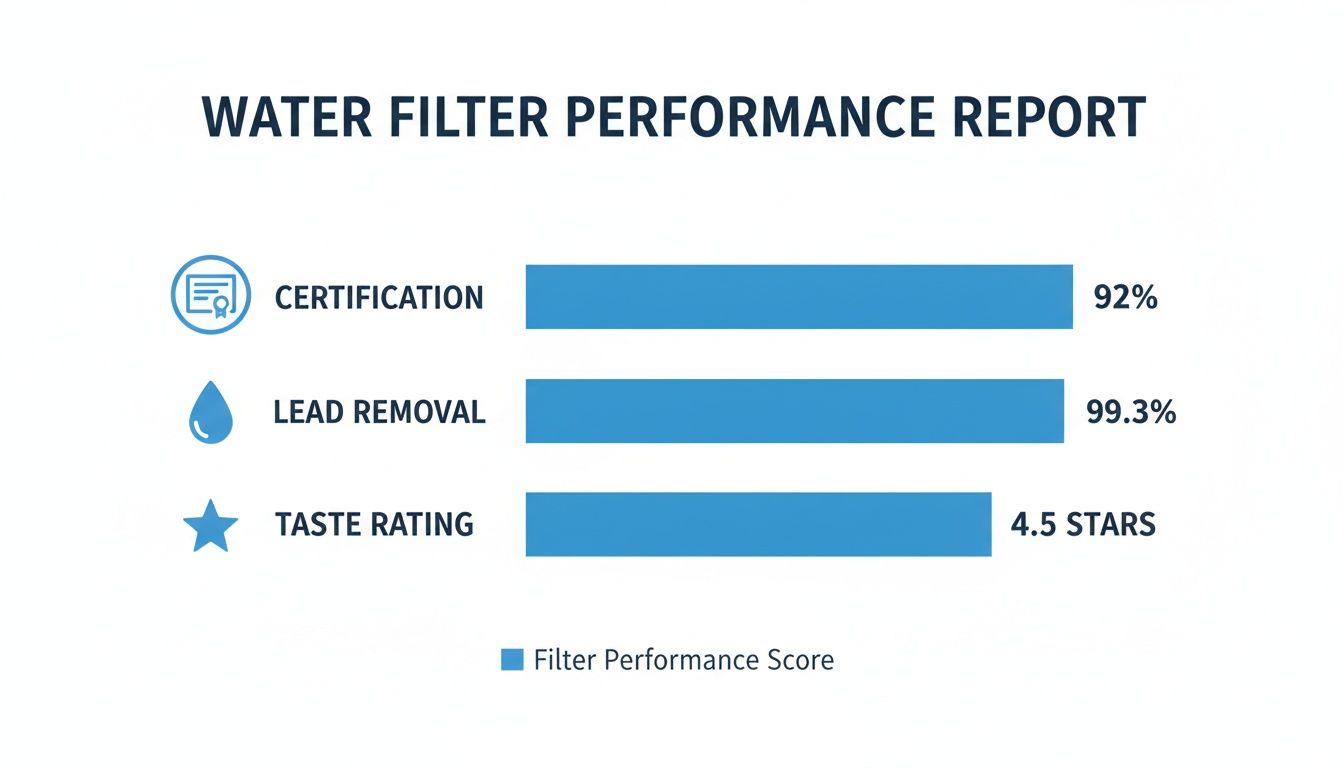
As you can see, the top performers don't just talk a big game—they deliver outstanding lead removal and earn high marks on taste, all backed by independent certification.
To give you a clearer picture, this table provides a side-by-side look at how leading faucet filters compare on the metrics that define performance and long-term value.
Faucet Water Filter Head-to-Head Comparison
| Model | Key Certifications | Removes Lead? | Filter Lifespan (Gallons) | Average Cost Per Gallon | Best For |
|---|---|---|---|---|---|
| Model A | NSF/ANSI 42 | No | 100 | $0.20 | Basic taste and odor improvement |
| Model B | NSF/ANSI 42 & 53 | Yes, >99% | 100 | $0.28 | Health protection, families with children |
| Model C | NSF/ANSI 42, 53, 401 | Yes, >99% | 120 | $0.25 | Comprehensive removal of emerging contaminants |
| Model D | NSF/ANSI 42 | No | 200 | $0.15 | Budget-conscious users focused on chlorine |
This comparison highlights the critical trade-offs. While some models boast a lower cost per gallon, they often sacrifice the power to remove dangerous contaminants like lead. For true peace of mind, investing in a filter with NSF/ANSI 53 certification is the only way to go.
Contaminant Removal Efficacy
First things first: a water filter's primary mission is to make your tap water safer. When you're comparing faucet filters, nothing is more important than what they take out of your water. We always hunt for NSF/ANSI 53 certification first, as this is the standard that covers health-related baddies like lead, mercury, and cysts.
Let's see how two different types of filters handle this job:
- Model A (Basic Filtration): This filter is certified to NSF/ANSI 42. That means it does a bang-up job removing chlorine, the main culprit behind water that tastes and smells like a swimming pool. If that's your only issue, it's a solid choice. But it won't touch lead or other heavy metals.
- Model B (Advanced Filtration): This is the one you want for real protection. It carries both NSF/ANSI 42 and 53 certifications. It banishes chlorine just like the other model, but it's also proven to reduce lead by over 99%, along with other nasty stuff. If you live in a home with older plumbing or have young kids, this level of filtration isn't a luxury—it's essential.
The bottom line is simple. For better-tasting water, Model A works. For safer water, Model B is the only choice.
Real-world impact is everything. A filter that only makes water taste better without removing harmful contaminants is a job half-done. Prioritizing NSF/ANSI 53 certification for lead is the most critical step you can take to protect your family's health.
Filter Lifespan and Long-Term Cost
Don't be fooled by a low sticker price. The true cost of a faucet filter is all about the replacement cartridges—how much they cost and how often you have to buy them. A cheap filter can easily become a money pit if its cartridges are expensive and don't last.
Let's do some quick kitchen-table math on the cost per gallon:
- Filter System X: The unit costs $30 upfront and includes one filter that lasts for 100 gallons. A replacement cartridge costs $20. If you use 300 gallons in a year, your cost per gallon is about $0.23.
- Filter System Y: This one is $50 upfront. The replacement cartridges come in a two-pack for $45, and each one is good for 100 gallons. For that same 300 gallons of use, your cost per gallon jumps to around $0.32.
A $0.09 difference per gallon might not sound like much, but it adds up fast. For a family of four, that could be an extra $50-$60 a year. Always calculate the long-term cost. Sometimes, paying a little more upfront saves you a lot more down the road.
Impact on Water Flow
One of the biggest gripes about faucet filters is a drop in water pressure. Nobody has time to wait forever just to fill a pot of pasta water. The flow rate, measured in gallons per minute (GPM), is the spec you need to watch. Your regular unfiltered faucet likely runs around 2.2 GPM.
A decent faucet filter should give you a flow rate of at least 1.0 to 1.5 GPM when you're using it. But keep in mind, that number will change over the life of the filter.
As a filter cartridge fills up with sediment and contaminants, it naturally starts to clog, and the water flow will slow down. This isn't a defect; it's a sign that the filter did its job and it's time for a new one. Some of the better-designed models manage this slowdown more gracefully, holding a steady flow for longer.
When you're reading faucet water filter reviews, look for comments about the flow rate after a month or two. That gives you a much more honest picture of daily performance than the "brand-new" specs on the box.
Real-World Taste and Odor Improvement
Certifications tell you what a filter removes, but the ultimate proof is in the glass. Does the water actually taste and smell better? We've found that the answer often depends on the quality of the activated carbon inside the filter. For instance, many people find that filters using coconut shell carbon produce a crisper, cleaner taste than those with standard carbon blocks.
Think about these real-world scenarios:
- The Coffee Enthusiast: If you're serious about your coffee, you know water quality is everything. Tap water loaded with chlorine can make even the best beans taste bitter and "off." A filter that’s a beast at chlorine removal (NSF/ANSI 42) can completely transform your morning brew, letting the coffee's true flavors sing.
- The City Dweller: Living in an old building often means dealing with water that has a funky, metallic, or musty taste from aging pipes. A comprehensive filter (NSF/ANSI 53) doesn't just fix the taste—it gives you the confidence of knowing you're also removing lead and other junk from those old pipes.
Taste is subjective, but it’s a huge deal. The filters that consistently get 4.5-star ratings or higher for taste are almost always the ones using higher-grade materials. It proves that not all carbon is created equal, and it's what separates water that's just "fine" from water that tastes genuinely great.
Our Top Picks for Every Household and Budget
After all the testing and research, one thing is crystal clear: there's no single "best" faucet filter for everyone. The right one for you depends on your water, your home, and what you care about most. Our faucet water filter reviews are all about matching the right filter to the right problem.
Instead of a generic top-ten list, we've broken down our top picks by the real-world situations they solve. Whether you're a parent worried about old pipes or a renter just trying to get better-tasting water on a budget, we'll point you to the filter that gets the job done.
Best for Families Concerned with Lead
If you have young children or live in a home built before the 1980s, lead safety is non-negotiable. Your first and only priority should be a filter certified to NSF/ANSI 53 for lead reduction. These are the only models proven to remove over 99% of lead, creating an essential firewall between your plumbing and your family.
The model we recommend for this job also happens to be a fantastic all-around filter. It nails the critical lead protection while also doing an excellent job on chlorine, so your water is both safer and tastes noticeably better. Yes, the upfront cost and replacement filters are a bit more, but the peace of mind is priceless.
For families, choosing a filter with an NSF/ANSI 53 certification for lead isn't just a bonus feature—it's the entire reason to buy one.
Best Budget-Friendly Option for Renters
When you're renting, you need a simple, affordable fix that won't require a call to the landlord. The best choice for a renter is a filter that snaps on in seconds, has a low cost per gallon, and targets the number one complaint about city water: chlorine.
Our top pick for renters fits the bill perfectly. It's certified to NSF/ANSI 42, your guarantee that it will dramatically improve the taste and smell of your water. The replacement filters are cheap and easy to find, bringing the cost down to just pennies per gallon. It’s the smartest, easiest upgrade you can make to a rental kitchen.
Best for Superior Taste and Odor Removal
Are you the person who can taste the difference in your coffee or tea depending on the water? If your main goal is absolutely pristine flavor, you need a filter that goes beyond basic chlorine removal. The top-tier filters for taste usually rely on high-grade activated carbon, like coconut shell carbon, which is incredibly porous and grabs all sorts of compounds that make water taste "off."
Our choice for the taste purist stands out for a reason. It holds both NSF/ANSI 42 and 53 certifications, but what really matters is what people say about the water it produces: exceptionally crisp and clean. Coffee tastes richer, tea is brighter, and a simple glass of water is genuinely refreshing. This filter proves that the quality of the filter media is just as important as the certifications on the box.
Most Durable Long-Term Investment
For homeowners who just want a reliable filter that lasts, durability is king. You need a unit that can handle the daily chaos of a busy kitchen without cracking or springing a leak. The best long-term picks almost always have stainless steel components and a much tougher filter housing.
Our pick for durability is built like a tank. It might have a higher price tag upfront, but its solid construction will save you from the hassle and hidden cost of replacing leaky plastic models every year or two. These tougher filters often come with a longer warranty, too, which shows the manufacturer stands behind their build quality.
Installation and Maintenance Made Simple
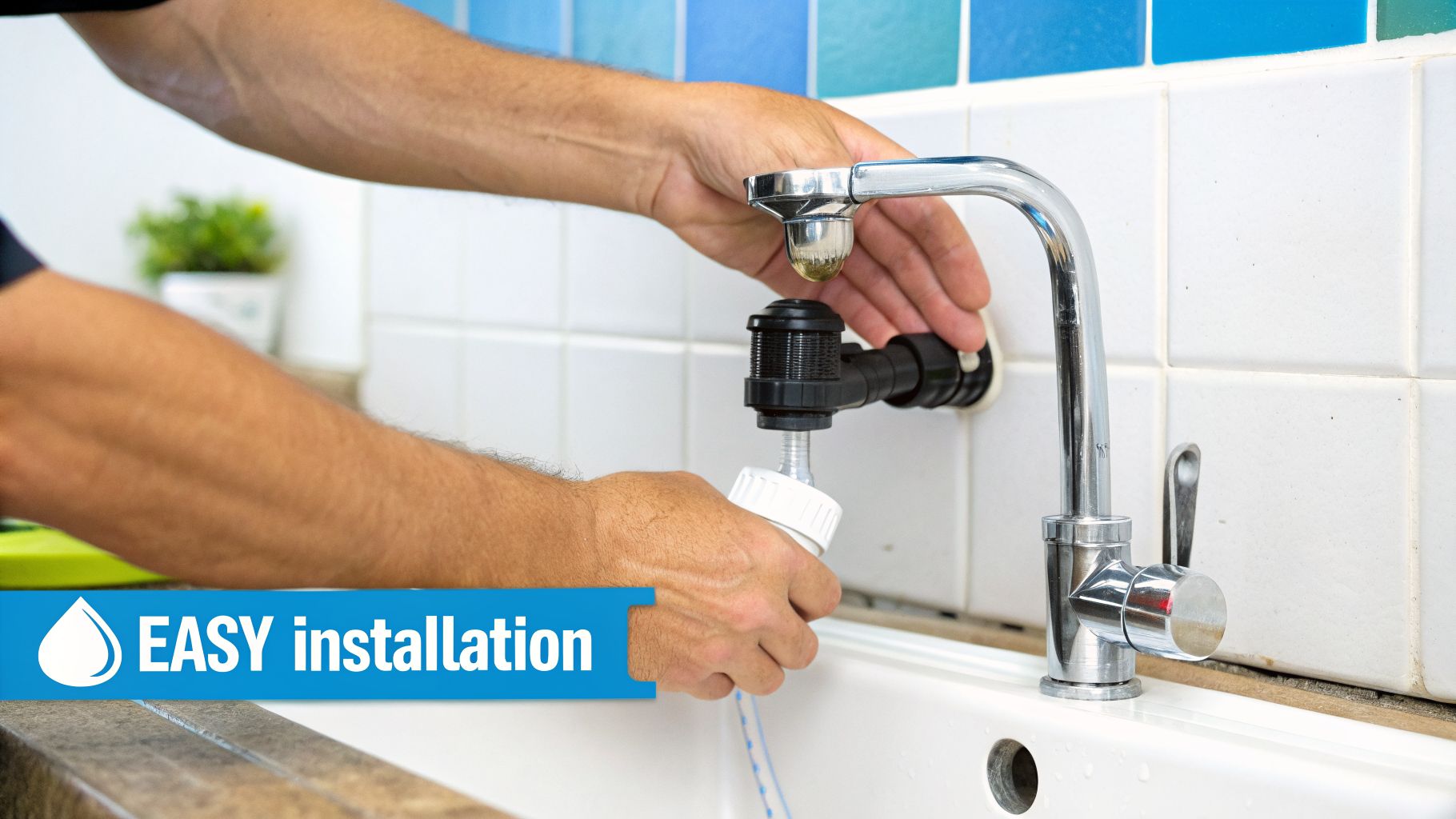
Let's be honest, a huge part of the appeal of faucet filters is how ridiculously simple they are. You shouldn't have to hire a plumber or break out a toolbox just to get clean water. In most cases, you can have one of these installed and running in just a few minutes.
The key is getting that installation right from the start. A good seal means no leaks and ensures every drop of water is forced through the filter media as intended.
Most faucet filters today use a simple twist-on design. Your kit will include a few different adapters to fit the threads on your kitchen faucet. Just find the one that matches, screw it on, and then attach the main filter unit. A firm hand-tight twist is usually all it takes.
If you notice any drips from your faucet's original hardware during this process, it might be a good time to learn how to fix a leaky faucet. A solid, leak-free fixture is the foundation for a properly working filter.
Your Long-Term Maintenance Checklist
Keeping your filter working at its best is incredibly straightforward. A little routine maintenance goes a long way.
When to Change the Cartridge: That little indicator light is just a timer. The real signal is your water flow. As the filter fills up with trapped gunk, the flow rate will drop. When you notice a real slowdown, it’s time for a new cartridge.
Clean the Housing: Every time you swap out the cartridge, take a minute to wipe the inside and outside of the plastic housing with a damp cloth. This prevents any grime or mineral scale from building up.
Maximize Filter Life: If you have hard water or a lot of sediment, your filter is working overtime. A simple trick is to run the tap on the unfiltered setting for a few seconds first. This can flush out larger particles before you switch over to the filtered stream, giving your cartridge a little more life.
A filter's performance and lifespan are directly tied to your local water quality. If your tap water has high levels of sediment or total dissolved solids (TDS), it can clog a cartridge in under two months, no matter what the box says.
Knowing how your local water affects your filter is crucial. We're seeing a shift towards smarter filters that help with this. In some areas, connected filters that send replacement reminders have helped people achieve 90% on-time cartridge changes. In those same homes, lead exposure has plummeted by an incredible 80%.
For more hands-on tips to keep your home's water systems running smoothly, head over to our complete guide on water filter advice.
Common Questions About Faucet Filters
Even after digging through reviews and comparing models, you probably still have a few practical questions. It's totally normal. Let's clear up the most common concerns so you can buy with total confidence.
Will This Thing Actually Fit My Faucet?
This is the number one worry we hear, but it's rarely a problem. Faucet filters are designed to work with the vast majority of standard kitchen faucets. The easiest way to check is to simply unscrew the little screen at the tip of your faucet (that’s the aerator) and look at the threads.
Your new filter will come with a small bag of multiple adapters. These are little threaded rings that bridge the gap between your faucet and the filter mount. Whether your faucet has threads on the outside (male) or inside (female), one of those adapters will almost certainly give you a tight, leak-free seal. Just know that these are not designed for pull-out, pull-down, or sprayer-style faucets.
Is My Water Pressure Going to Drop?
Yes, and that's actually a good thing. When you switch to the filtered stream, you'll see a slower flow. This is on purpose. A slower flow rate gives the water more "contact time" with the filter media inside, which is crucial for grabbing contaminants. Don't worry, it should be a steady, usable stream—not a frustrating drip.
Think of a slow flow rate as proof your filter is doing its job. When the water starts getting too slow, it's not broken. It means the filter has trapped so many impurities that it's full and ready to be replaced.
Are Faucet Filters Better Than a Pitcher?
"Better" really depends on your lifestyle and what you need. Each one has its own clear advantages.
- Faucet Filters: The big win here is convenience. You get filtered water instantly, right from the tap. No waiting. They also last longer, typically filtering around 100 gallons before needing a change.
- Water Filter Pitchers: These are great for their simplicity and portability. No installation needed, and you can keep one in the fridge for cold, filtered water. They're a solid choice for one person or if you don't use a ton of filtered water. Pitcher filters usually last for about 40 gallons.
For a busy family or anyone who does a lot of cooking with filtered water, a faucet filter is almost always the more practical and life-changing pick.
At Water Filter Advisor, we're here to give you the straight facts you need to choose the right water filter for your home. You can find more expert guides and reviews over at our main site, https://www.waterfilteradvisor.com.