
You were expecting a quick filter swap. Instead, the old cartridge is sitting there like it's welded into the refrigerator. You twist, push, maybe pull a little harder, and nothing moves. That's usually the moment people reach for pliers.
Stop there.
A stuck refrigerator water filter is one of those repairs that gets more expensive when force shows up too early. The filter housing is plastic, the seals are rubber, and the latch parts on many models aren't built for a wrestling match. In most homes, the filter isn't stuck because the cartridge suddenly turned into concrete. It's stuck because something is locking it in place, and if you identify that “why” first, removal gets much safer.
The Stuck Filter Standoff You Can Win
Most homeowners assume a stuck filter means one thing: twist harder. That's rarely the best move.
A refrigerator filter lives in a cramped little space with O-rings, a latch or release mechanism, and just enough clearance for the cartridge to come out at the correct angle. If pressure is trapped in the line, if a little moisture froze around the collar, or if the filter went in slightly crooked last time, the cartridge can feel jammed solid even when the actual problem is minor.
Practical rule: If the filter won't move with normal hand pressure, change tactics before you change tools.
What works is a calm, mechanical approach. It's similar to diagnosing a door that won't open. You don't kick it first. You check whether it's locked, swollen, or blocked.
Here's the mindset that saves housings:
- Start with cause, not force. Pressure lock, ice, and latch problems each need a different fix.
- Protect the housing. Damaging the old filter is annoying. Damaging the refrigerator's built-in filter base is expensive.
- Escalate in steps. Use pressure relief, access, and gentle heat before you try extra force.
- Watch for warning signs. Cracking sounds, flexing plastic, or a release button that feels dead are clues to stop.
This matters for more than convenience. Your refrigerator's water filtration system only helps if you can service it without breaking the parts around it. A smart removal keeps filtered drinking water flowing and keeps a simple maintenance job from turning into a repair call.
Diagnosing the Jam Why Your Filter Is Stuck
A stuck filter usually has a specific cause. The feel of the jam tells you a lot, and that matters because pressure, ice, a bad latch, and a crooked removal angle do not respond to the same fix.

Pressure lock is the first thing to suspect
This is the one I check first on a service call because it fools people. The filter feels mechanically stuck, but the underlying issue is water pressure loading the O-rings against the housing. Whirlpool's stuck filter guidance notes that shutting off the refrigerator water supply and dispensing water first can release that pressure and make removal easier, as noted earlier in the article.
High house pressure can make that grip worse. Frigidaire's owner support for refrigerators says water pressure above the normal operating range can affect water system parts and filter fit, which is one reason a cartridge can feel glued in place instead of snug. If your home has strong water pressure at several fixtures, keep that in mind while diagnosing the jam.
Filter hardware is sensitive to fit and sealing pressure in more ways than many homeowners realize. This overview of DIY 0.22 micron filtration is outside the refrigerator world, but it does a good job showing why a seal that is working correctly can also become stubborn to separate.
Ice can create a false “seized” feel
A little moisture around the filter head or collar can freeze into a thin ring. That ring does not need to be thick to stop rotation. I have seen filters act welded in place from just a trace of frost in the compartment.
This shows up a lot after the door was left open, after heavy humidity, or when cold air is leaking directly onto the filter area.
If the filter was manageable last week and suddenly will not turn at all, ice is a strong suspect.
Latch trouble feels different from seal trouble
Push-button and quarter-turn designs can jam for different reasons. On button-release models, the filter may be fine while the release mechanism is the part that failed or bound up. On twist-in models, the cartridge may start to turn and then bind because it is dropping at the wrong angle or catching on the housing tabs.
That difference matters because extra force on a failed latch does not free the filter. It transfers stress into the plastic filter head, which is the expensive part.
A quick symptom check helps:
| Symptom | Likely cause |
|---|---|
| Filter won't budge but dispenser was recently active | Pressure lock |
| Filter area feels very cold or recently had frost nearby | Ice around collar |
| Button won't click or push-to-release action feels dead | Latch or housing issue |
| Filter starts to move but binds strangely | Wrong angle or misalignment |
The goal here is simple. Figure out what is holding the filter before you try to overpower it. That is how you avoid turning a routine filter change into a cracked housing or a leaking refrigerator.
Safe Removal Techniques Before You Use Force
A stuck filter usually gives you a warning before it breaks. The safe move is to clear the cause of the jam first, then try removal again with normal hand pressure.
Relieve pressure first
Start by shutting off the water supply to the refrigerator. The valve is often behind the fridge, in the basement below it, or under a nearby sink. If you are not sure where your main shutoff is, these EZ Plumbing water shutoff instructions are a practical refresher.
Then press the dispenser lever and run water until flow slows to nothing. This step matters because line pressure can keep the filter O-ring loaded against the housing, especially on quarter-turn designs. Frigidaire's support guidance for water filters also recommends dispensing water after shutoff as part of the replacement process: Frigidaire filter replacement instructions.
Try the filter again after pressure is gone.
If your model uses a twist-in cartridge, push the filter in slightly before you turn it. If it uses a push-button release, hold the button fully in while you pull the filter straight out. Keep the cartridge square to the housing. A bad angle can make a normal seal feel locked solid.
Use gentle heat if ice is likely
If the compartment feels unusually cold, or you have seen frost nearby, thaw the area before you twist harder. Use a warm, damp cloth against the filter head and collar for several minutes, then try again.
Keep the heat mild. GE Appliances advises using a warm cloth or letting the area warm naturally if a water filter is frozen in place: GE Appliances water filter help.
Skip boiling water, open flame, and high heat from a heat gun. Plastic filter heads warp faster than people expect, and then a stuck filter turns into a leaking housing.
Add grip, not crushing force
If pressure relief and thawing do not solve it, improve your grip before you increase force. Start with a dry dish towel or rubber jar opener. If that still is not enough, move to a rubber strap wrench. This is one of the few tools I trust on filter cartridges because it spreads force around the body instead of crushing one spot.
Use a steady hand:
- Support the housing with your free hand so you can feel if the plastic starts flexing.
- Apply slow, even pressure instead of quick jerks.
- Keep the filter aligned with the opening as it turns or slides out.
- Keep metal pliers off the housing and off thin plastic filter caps.
A visual walkthrough can help if you want to see the hand position and motion more clearly.
Know when the problem isn't the filter
Sometimes the cartridge is fine and the release mechanism is the part that failed. Whirlpool's product help notes that if the eject button stays stuck, the filter may need to be reinserted and the button worked gently, and if that does not restore normal release, service may be needed for the filter housing or button assembly: Whirlpool refrigerator water filter troubleshooting.
That is the point where I tell homeowners to stop trying for one more hard twist. If the button does not click, the filter drops crooked, or the housing flexes before the cartridge moves, the jam is no longer just a tight seal. More force usually cracks the expensive part.
Tips for Major Refrigerator Brands
Different brands use different release styles, and homeowners often get stuck because they're trying the right motion for the wrong design.
Samsung and LG
Many Samsung and LG refrigerators use a quarter-turn internal filter. These often need a firm inward push before the turn starts cleanly. If you only twist, the cartridge can bind on the seal and feel tighter than it is.
These models also punish bad alignment. If the old filter was installed at a slight angle, the next removal can feel rough right from the first movement. Keep the cartridge square to the housing and don't let it droop as you turn.
Whirlpool, Kenmore, and Maytag
This family includes many base-grille filters, push-button releases, and internal compartment filters. The common sticking point here is access. If the door isn't fully open, or the shelf below the filter blocks your hand, you can end up pulling on a bad angle.
For push-button styles, debris or wear in the release button can create the false impression that the filter itself is frozen. Press the button fully, hold it, and lightly wiggle the filter rather than yanking it straight out.
A few practical checks help on these models:
- Door clearance: Open the refrigerator door all the way.
- Shelf interference: Remove the shelf below if your hand position is cramped.
- Button travel: Make sure the release button moves through its full range.
GE and Frigidaire
GE and Frigidaire often use push-to-release or internal twist designs. When these stick, the release mechanism is often the primary cause. If the button feels mushy, stuck, or inconsistent, twisting harder can load the filter base instead of releasing it.
A gentle side-to-side wiggle while maintaining pressure on the release button sometimes helps. If it doesn't, treat the latch as the likely issue rather than doubling down on force.
Check the exact mechanism in your owner's manual before trying “universal” advice online. A push filter turned like a twist filter is how housings get damaged.
When Removal Goes Wrong Handling Breakage
Sometimes the old cartridge loses the fight before the housing does. That's frustrating, but it's still manageable if the break is limited to the filter itself.
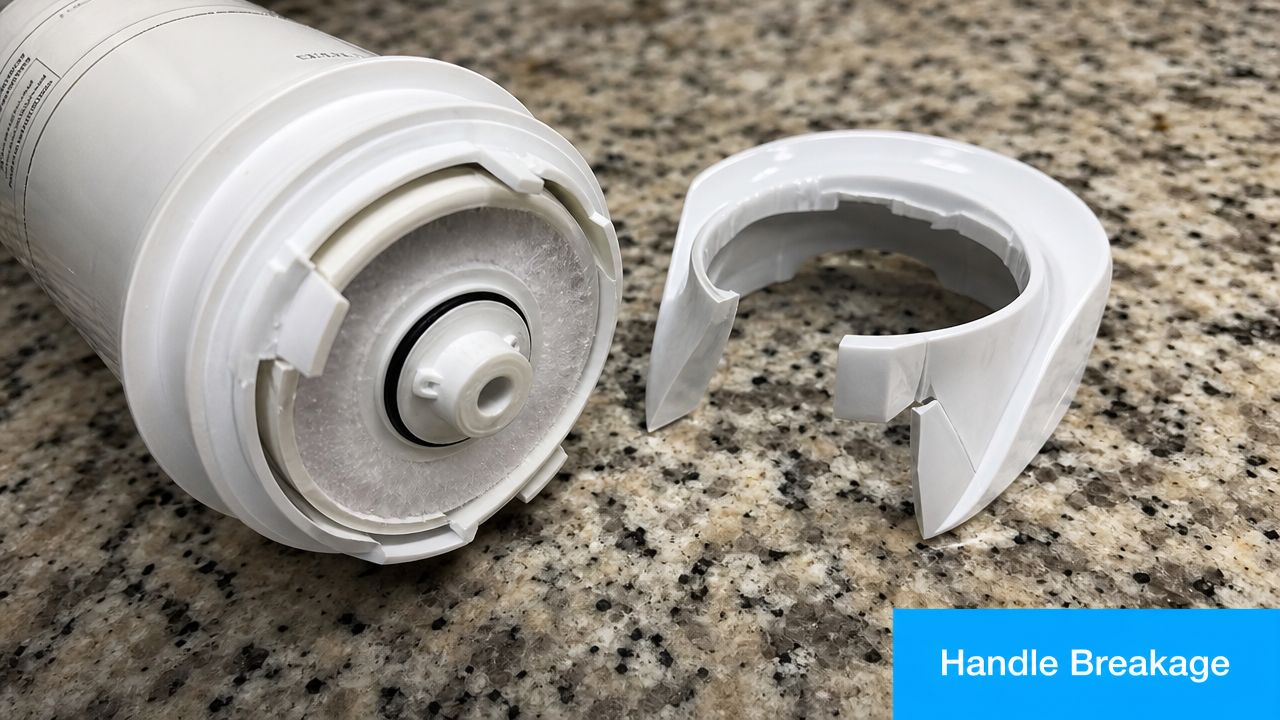
If the handle or cap breaks off
If the filter's grip tab, cap, or handle snaps off, the cartridge is already headed for the trash. At that point, it's reasonable to grip the exposed body of the old filter with channel-lock pliers and try to rotate it carefully.
The key word is carefully. Grip the filter body, not the refrigerator's plastic housing. Use just enough pressure to turn the cartridge without crushing it into fragments.
Red lines that mean stop
Some damage means you should stop immediately and call for service.
- Cracks in the housing: Even a small crack can turn into a leak under line pressure.
- Filter base flexing: If the built-in assembly moves with the cartridge, you may be stressing mounting points or water connections.
- Broken plastic left behind: Pieces inside the socket can block the new filter from seating.
- New filter won't go in at all: That usually means something in the housing is distorted, obstructed, or broken.
Use a flashlight and inspect the cavity before installing the replacement. If you see torn O-ring material, broken tabs, or plastic shavings, don't force the new cartridge in. A leak from that area can show up later, after you think the job is done.
How to Prevent a Stuck Filter Next Time
Getting the old filter out is only half the job. The smarter win is making sure the next replacement doesn't become another standoff.
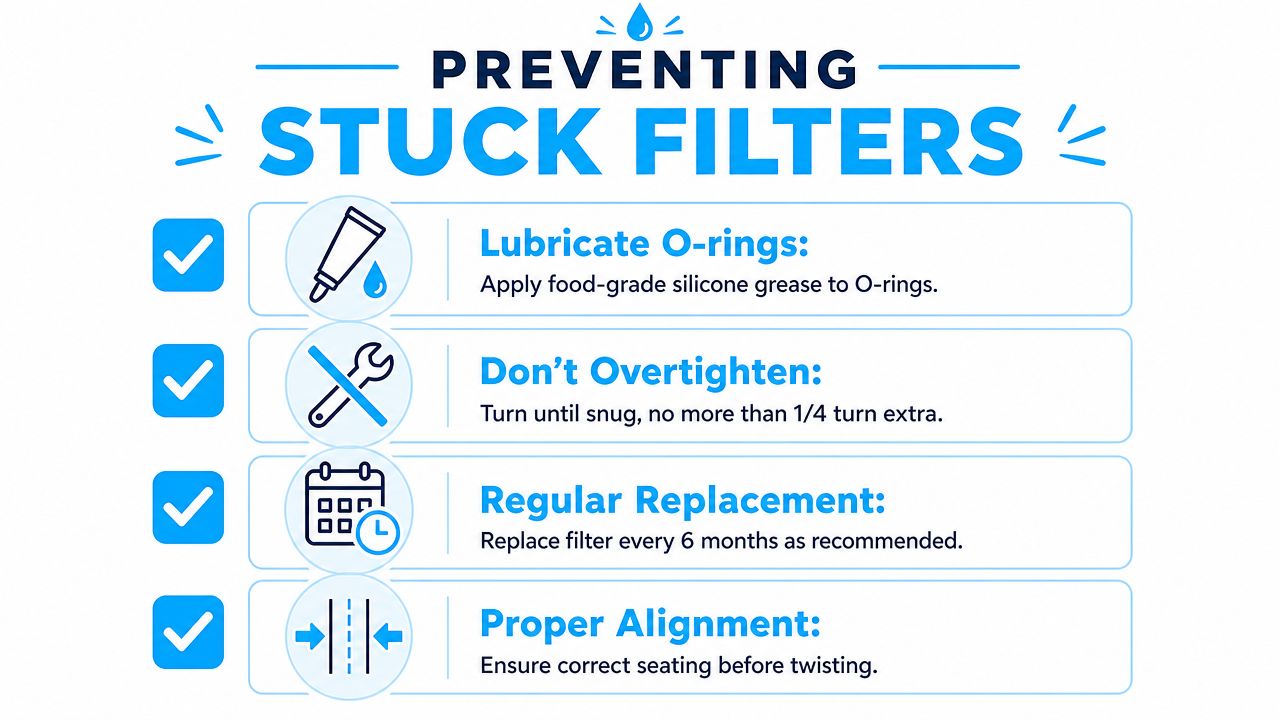
Small habits that save the housing
Most stuck filters start with installation habits. If you install the next cartridge cleanly, squarely, and without overdoing the twist, removal later is usually uneventful.
A few habits are worth keeping:
- Use a light film of food-grade silicone grease: Apply it only to the O-rings, not all over the cartridge.
- Turn until snug, then stop: You want a seal, not a personal record.
- Seat the filter straight: If it starts crooked, back it out and try again.
- Purge pressure before future removals: Build this into your routine every time.
Choose replacement filters carefully
A refrigerator's filtration system depends on more than media quality. Fit matters. If the cartridge dimensions or O-ring profile are slightly off, removal can be harder and sealing can be less predictable.
That's why I usually tell homeowners to stick with OEM or well-matched certified replacements for refrigerator filters. Cheap cartridges can cost more in hassle than they save in price.
It also helps to stay aware of your broader water quality. If your home water leaves deposits, has unusual taste issues, or raises questions about what the refrigerator filter is handling, learning about effective water quality analysis can help you make better filtration choices across the house. For more day-to-day maintenance guidance, this Water Filter Advisor advice hub is a useful place to compare upkeep tips for different home filtration setups.
A stuck filter is often a maintenance clue. The cartridge, the fit, and the water conditions all play a part.
Prevention isn't busywork. It's cheap insurance against a cracked housing, a failed latch, and an hour spent fighting a part that should've come out by hand.
If you want straightforward help choosing, replacing, and maintaining home filtration products, Water Filter Advisor is a solid resource. It covers refrigerator filters, whole-house systems, under-sink options, and practical maintenance advice so you can keep your water cleaner without guessing.
- June 2, 2026
- Uncategorized
