
You pull a shirt out of the dryer, and there it is, a blue stain on clothes after washing that wasn't there before. The shirt's clean, the machine's done, and now you're staring at streaks that look like somebody dragged a marker across the fabric.
Don't guess. Blue marks after laundry usually come from detergent residue, fabric softener residue, dye transfer, or, less obviously, water quality. If the stain pattern is blotchy, streaked, or seems to show up load after load, the fastest fix is to stop blaming the fabric and start checking the washer, the additives, and the water coming into the house.
The Moment You Spot Those Blue Streaks
You've got a still-warm shirt in your hands, and the blue smudges are bright enough to make you mad. That's the point where people usually do the wrong thing, they toss in more detergent, run the same cycle again, and hope the stain disappears on its own.
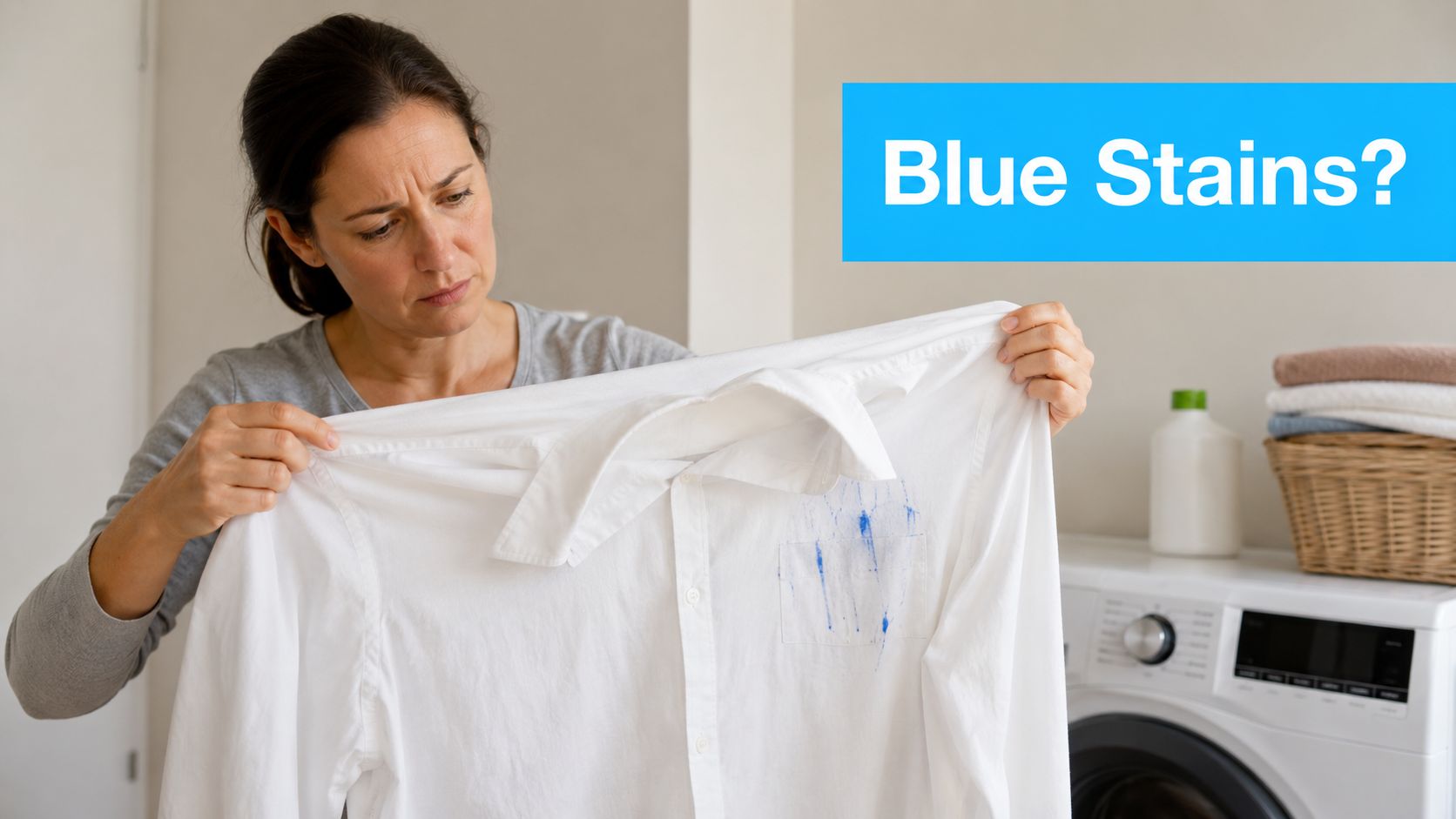
Read the stain pattern before you touch anything
A blue stain on clothes after washing usually tells a story. Dots or streaks point toward residue or transfer. A more general tint across several garments leans harder toward the washer, the rinse cycle, or the water itself.
If the damage hits only one piece, look for a dark new garment that may have bled color. If the same pale blue haze shows up on different loads, stop thinking about one-off fabric damage and start thinking about a repeat source. That's where water filtration readers should pay attention, because plumbing and supply water can keep reintroducing the same problem.
Practical rule: if the stain shows up again after a second wash, the issue is upstream, not the shirt.
The fastest triage is simple, inspect the load type, the detergent amount, and whether the problem appears across multiple fabrics. Laundry mistakes are common, but a water problem has a nasty habit of repeating itself until someone tests the supply.
Common Causes You Can Rule Out in Five Minutes
Start with the easy stuff. In a high-efficiency washer, too much liquid detergent is a classic way to leave blue residue behind, and HE machines are less forgiving because they use less water and need correct dosing to rinse clean. A machine that's overloaded or running with poor rinse performance can leave concentrate on fabric instead of washing it away, which is why detergent buildup is such a common culprit in modern laundry setups (ThriftyFun troubleshooting guidance, Appliance Teacher on washer spots).
The quick self-checks that actually mean something
Look at the dispenser drawer. If it's crusted with blue or gummy residue, that's not a mystery stain, that's sloppy rinsing or product buildup. Open the drum and smell it too, because a washer that smells stale or chemical-heavy is often carrying residue from previous loads (Speed Queen maintenance guidance).
- Detergent overdose: If you used more than the recommended amount, especially in an HE washer, cut it back immediately. Overuse is one of the fastest ways to create spotting.
- Fabric softener residue: If the dispenser still has slick residue or the clothes feel coated, the softener didn't rinse clean. That residue transfers straight onto fabric.
- Dye transfer: If a new dark item went in with whites, that's your suspect. Wash new bold colors separately until they stop bleeding.
- Old drum residue: If flakes, lint, or visible buildup are coming off the drum or gasket, the washer itself is shedding onto the load.
I'd rank the suspects this way. If the stain is on a single mixed load, think dye transfer. If it keeps appearing across loads, think detergent residue or rinse failure. If it's tied to the household water supply, you'll see it in more than one machine cycle and not just one detergent brand.
How to Remove Blue Stains From Clothing Step by Step
Don't rush to bleach first. The safest move is to rewash the garment without detergent or softener, because sometimes you're not dealing with a true dye stain, you're dealing with leftover product sitting on the fabric. Keep the water cold, and use an extra rinse if your machine allows it, because heat can lock the problem in place (Karen's Green Cleaning guidance, ThriftyFun stain-removal guidance).
Work through the removal routine in order
- Rewash first. Skip detergent and softener, then run the garment through a clean cycle. This often removes loose residue without making the stain worse.
- Soak in white vinegar and water. Use a 1:1 white-vinegar-to-water solution and let the item sit for about 30 to 60 minutes. That's a practical middle step when residue is stubborn but the fabric still looks salvageable (Karen's Green Cleaning guidance).
- Use oxygen-based bleach for persistent residue. If the blue mark still hangs on, oxygen bleach is the smarter next step for many fabrics because it's less aggressive than chlorine.
- Use diluted chlorine bleach only for whites. If you're dealing with a white garment and the stain seems tied to a water issue, a diluted chlorine-bleach solution is a fallback, not a first move.
- Stop before the dryer. Do not machine-dry until the stain is gone. Heat sets dye-based marks and makes them much harder to pull out later (Karen's Green Cleaning guidance).
Never let a stained shirt go into the dryer as a test. If it comes out worse, you've just baked the problem in.
For readers who like chasing every possible stain myth, the same kind of confusion shows up in carpet care. The piece on truth about vinegar baking soda rug myths is a good reminder that not every home remedy does what people claim. Laundry deserves the same skepticism.
Washer Checks and Maintenance That Stop the Stains Coming Back
If the same blue stain keeps showing up, the washer is guilty until proven clean. Modern HE washers changed the game in the 2000s, and that matters because they depend on low-sudsing detergent, careful dosing, and good rinsing to stay neutral rather than coating clothes with leftover product (ThriftyFun troubleshooting guidance).
Clean the parts that hide residue
Start with a maintenance cycle using a washer-safe cleaner. That clears a lot of hidden buildup without you having to tear the machine apart. Then scrub the dispenser drawer, because softener and detergent residue love to harden there and wash back into later loads (Speed Queen maintenance guidance).
Check the drain filter next if your machine has one. Gunk there slows rinsing and lets old material linger in the system. Open the drum and inspect the surface for chipped enamel or loose fibers, because anything shedding inside the washer can end up on clothes instead of in the drain.
A plain maintenance checklist works best:
- Run a cleaner cycle: Use a washer-safe cleaner on a regular maintenance cycle.
- Scrub the dispenser: Remove hardened detergent and softener residue.
- Inspect the drain filter: Clear out lint and sludge that interfere with rinsing.
- Check the drum and gasket: Look for wear, chips, or trapped debris.
- Reduce product load: Use only the recommended amount of detergent for the load size and fabric type.
One source also recommends checking pipes for leaks or deterioration when stains keep returning, which is smart. If plumbing is feeding dirty water or broken-down residue back into the wash, a clean drum won't save you (Speed Queen maintenance guidance).
When the Real Cause Is Your Water Supply
People usually waste money on the wrong fix. A blue stain on clothes after washing can come straight from the tap if copper is in the water, either from household plumbing or from a leak that keeps putting dissolved metal into the supply (Cleaners Talk on copper-related blue stains). That kind of staining isn't a detergent problem first. It's a water problem first.
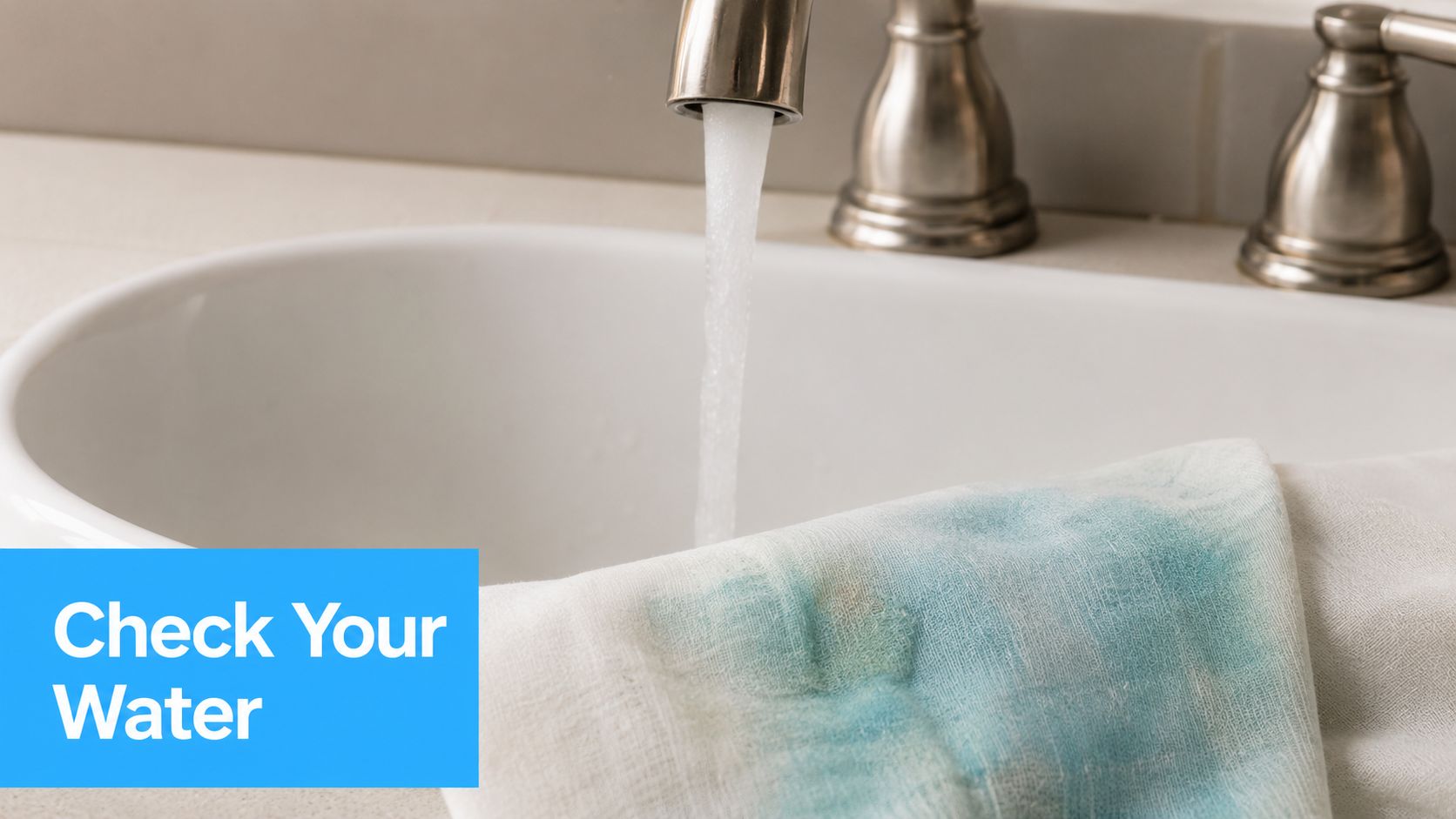
What copper staining usually looks like
Copper-related staining tends to keep repeating across loads, especially when the same water source is used every time. It can show up as a pale blue or bluish-green cast, which is exactly the sort of thing that gets mistaken for dye transfer at first glance. If the issue seems worse after water sits in the pipes overnight, that's another reason to suspect the plumbing rather than the detergent drawer.
The practical move is a water test before you buy a filter blind. Copper often enters water from household plumbing, so testing tells you whether the washer is innocent and the supply is the core problem. A state-certified lab panel is the safest route if you want a clear answer, and an at-home copper test can be a useful first pass.
Do this first: test the water before replacing the washer. A new machine won't fix copper in the plumbing.
If the test confirms copper, a plumber should look for aging pipes, brass fittings, or a hidden leak. If the water is the issue and not just a localized plumbing defect, filtration becomes the smarter long-term move. For readers comparing how minerals and deposits behave in other settings, fixing stubborn boat water spots is a useful parallel, because the same basic lesson applies, water chemistry leaves a mark when you ignore it.
Choosing the Right Home Filter for Copper and Sediment
Once copper is confirmed or strongly suspected, I'd stop fiddling with laundry hacks and look at the water path. A whole-house filter is the strongest choice when you want to protect the washer, showers, sinks, and every faucet at once. An under-sink filter is great for drinking water but leaves the laundry room untouched, and a shower filter is too narrow to solve a whole-home stain problem.
Match the filter to the problem
For copper reduction, media matters. KDF-55, KDF-85, and catalytic carbon are the names that matter most in this conversation because they're used in systems designed to reduce metals and related water issues. If your home also has old pipes shedding grit, a sediment pre-filter helps keep larger particles from loading up the main filter too fast.
| Filter Type | Covers Laundry Water? | Reduces Copper | Sediment Handling | Maintenance |
|---|---|---|---|---|
| Whole-house | Yes | Yes, when the system is rated for it | Best with a sediment pre-filter | Cartridge changes and flow checks |
| Under-sink | No | Only at one tap | Limited to that sink | Easier to maintain, but narrow in scope |
| Shower filter | No | Only at the shower | Minimal | Simple, but not a laundry fix |
For shoppers who care about standards, NSF/ANSI 53 is the one to look for when copper reduction is part of the claim. Certification doesn't mean every filter does everything, it means the product has been tested against a defined standard.
Cartridge life and flow rate matter too. A filter that chokes flow or gets clogged fast is a bad trade for laundry water, because the washer needs consistent pressure to rinse properly. If you want a broader homeowner's roadmap, the practical advice at Water Filter Advisor's guidance page fits this exact decision point.
For a second opinion on stained surfaces and metal residue, the rust-removal guide from Neat Hive Cleaning's rust tips is a useful comparison point. Rust and copper aren't the same problem, but both tell you the water system deserves attention.
A Prevention Routine That Actually Sticks
The best routine is boring, and that's the point. Dose detergent for the actual load size, skip liquid softener when you can, or switch to a dye-free version, and run an extra rinse every few loads if your machine leaves residue behind. Deep-clean the washer on a regular maintenance cycle, because a dirty machine keeps inventing new problems for you.
Keep the laundry room from becoming a lab
If the stain problem was tied to copper or another water issue, re-test the water after plumbing work or when the problem comes back. That one habit keeps you from chasing the wrong culprit for months. If the water checks out and the washer is clean, then the load formula is the last thing to tighten up.
- Dose less, not more: Use the detergent amount the load needs.
- Reduce additives: Softener and extra boosters are often the first things to cut.
- Rinse harder: Add an extra rinse when you're washing light fabrics or mixed loads.
- Clean the machine: Keep the washer from recycling its own residue.
- Test the water: Don't assume the tap is fine just because the stain is inconsistent.
Never machine-dry a stained garment until the stain is fully gone.
That rule saves clothes, plain and simple. Heat turns a fixable problem into a permanent one, and nobody needs that kind of drama from a shirt.
If your laundry keeps coming out blue, stop guessing and start testing. Water Filter Advisor helps homeowners separate washer problems from water-quality problems, which is exactly what you need when the stain keeps coming back. Visit Water Filter Advisor for practical help choosing the right filtration path for your home.
- July 27, 2026
- Uncategorized
