
Imagine turning on your kitchen tap and getting water that’s not just safe, but tastes crisp, clean, and refreshing every single time. That’s the magic of a block carbon filter, a quiet hero in the world of home water purification. It's the ultimate fix for common annoyances, like that swimming pool scent in your morning coffee or the invisible chemicals you'd rather not be drinking.
Your Guide to Purer Water
Think of a carbon block as a microscopic maze with magnetic walls. As water flows through, the maze physically traps gunk like sediment and rust. At the same time, the carbon's massive internal surface area acts like a chemical super-magnet, pulling nasty contaminants out of the water and holding onto them through a process called adsorption. It’s a simple concept with seriously powerful results for your home.
This guide will walk you through everything you need to know about this essential home upgrade. We'll cover:
- How these impressive filters are actually made and the science behind how they work.
- The specific contaminants they target to protect your family's health.
- How to choose the perfect system for your home, whether you own or rent.
The Growing Demand for Clean Water
The rising popularity of carbon block filters isn’t just a trend; it's a direct response to growing concerns about what’s really in our tap water. Families everywhere are deciding they want more control over their water quality, looking for reliable ways to remove chlorine, volatile organic compounds (VOCs), and funky odors. It’s a smart investment in your family's well-being. A high-quality filtration system delivers immediate benefits, from better-tasting food and drinks to protecting your home’s appliances from sediment buildup.
By removing impurities right at the source, a block carbon filter provides peace of mind with every glass. It transforms your tap water from a source of uncertainty into a reliable foundation for a healthier household.
Ready to take the next step? For more expert insights and comparisons, check out our comprehensive water filter advice to find the perfect solution for your needs. This guide will give you the practical knowledge you need to make a confident choice.
How a Block Carbon Filter Purifies Your Water
It might surprise you to learn that a carbon block filter starts out as something pretty basic, like coconut shells or coal. These raw materials are super-heated in a low-oxygen chamber, which transforms them into a fine powder called activated carbon. But this isn't your average powder—it's incredibly porous, with millions of microscopic nooks and crannies.
That activated carbon powder is then mixed with a food-grade binder and squished under extreme pressure, forming a solid, dense block. The final product looks simple, but it’s hiding an incredible secret: a massive internal surface area. In fact, a single gram of this material can have more surface area than an entire football field.
The Two-Stage Purification Powerhouse
When tap water passes through a carbon block, it gets cleaned in two distinct ways. This dual-action approach is what makes these filters so incredibly effective, using a one-two punch of physical blocking and chemical attraction.
First up is mechanical filtration. Think of the filter as an extremely fine screen. As water is forced through its tightly packed structure, the filter physically traps and holds onto larger particles.
- Silt and Sediment: This is the stuff that makes water look cloudy or murky.
- Rust Flakes: Flakes from older pipes get caught before they can get into your glass.
- Organic Debris: Tiny bits of sand, dirt, and other gunk are strained out.
This first step clears up the water, but the real magic happens next, at a level you can't even see.
This infographic shows the simple yet effective journey your water takes through a block carbon filter system.
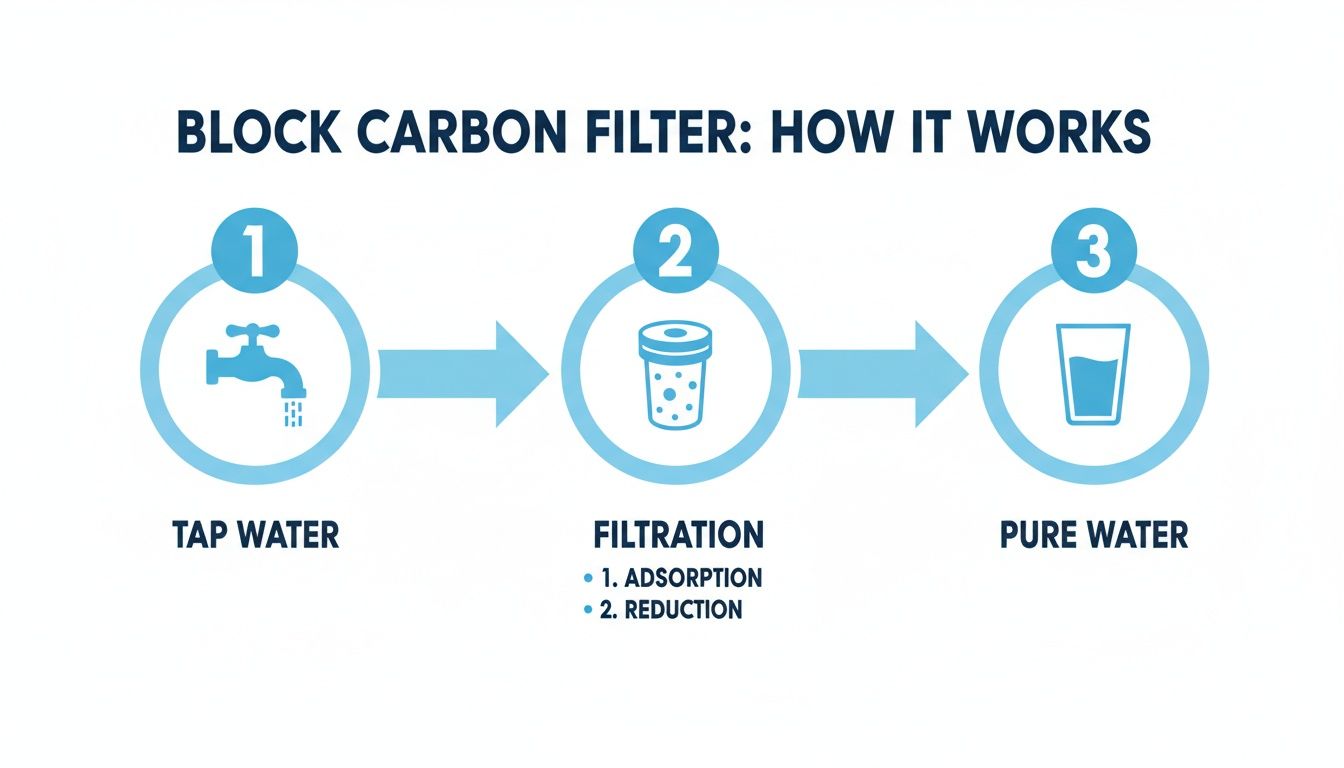
As you can see, the process efficiently turns standard tap water into purified drinking water just by passing it through the specialized carbon block.
Adsorption: The Chemical Magnet
The second, and more powerful, stage is called adsorption. Now, it’s easy to mix this up with absorption, but they're totally different. A sponge absorbs water by soaking it all up. Adsorption is more like static cling or a chemical magnet.
As the water snakes its way through the filter's maze-like interior, dissolved chemical contaminants are attracted to the carbon's surface and literally stick to it. This chemical bond yanks them right out of the water, locking them inside the filter for good.
Think of the carbon block's vast internal surface as a massive parking lot for contaminants. Adsorption is the process that directs unwanted chemicals like chlorine and pesticides into parking spots, where they remain locked away, allowing only clean water molecules to drive past.
This unique ability to grab and hold onto impurities is what allows a block carbon filter to make such a dramatic difference in your water's taste and smell, all while targeting specific chemicals that are a concern for your health.
Preventing a Common Filter Flaw
One of the biggest wins for the solid block design is that it prevents a problem called channeling. In looser filter media, like some granular activated carbon (GAC) filters, water can carve out little tunnels—the path of least resistance—and flow right through without being properly treated.
When that happens, a good chunk of the water bypasses the filtration media entirely. The solid, compressed structure of a carbon block makes that impossible. Every single drop of water is forced to take the long, scenic route through the dense carbon, which guarantees maximum contact time and ensures no contaminant gets a free pass. It’s this reliability that makes block filters a go-to choice for anyone wanting consistently clean water.
What Contaminants Do Carbon Block Filters Actually Remove?
Alright, now that we've pulled back the curtain on how a block carbon filter works its magic, let's get into the nitty-gritty. What is this little powerhouse actually pulling out of your tap water?
Knowing what a filter is designed to target—and just as importantly, what it leaves behind—is the absolute key to choosing the right one for your home and feeling confident about it. We can group the stuff a carbon block filter grabs into three main categories.
Better Taste and Smell
This is where you'll notice the most immediate difference. If your tap water tastes a bit "off" or has a funky chemical smell, a carbon block filter is your new best friend. It’s fantastic at grabbing the compounds that cause these common annoyances.
- Chlorine: This is the big one. Your city uses chlorine to keep the water supply safe, which we want, but nobody loves that swimming pool taste and smell it leaves behind. Carbon filters are champs at removing chlorine, completely changing your water's flavor for the better.
- Hydrogen Sulfide: Ever turn on the tap and get that "rotten egg" smell? That's hydrogen sulfide. Carbon filters do a great job of reducing it, making your water much more pleasant to be around.
If you want to dig deeper into why that chlorine taste is so common, it’s worth understanding the ugly truth about chlorine in your tap water and why getting rid of it is a win for both taste and health.
Health-Critical Contaminants
This is where a quality carbon block filter really earns its keep. It's not just about making water taste good; it’s about creating a crucial line of defense against a whole host of potentially nasty chemicals.
These filters are especially good at adsorbing organic, carbon-based chemicals that you can't see, smell, or taste.
- Volatile Organic Compounds (VOCs): This is a huge category of chemicals that includes industrial solvents and components of gasoline that can unfortunately find their way into groundwater. A solid carbon block is highly effective at trapping many of them.
- Pesticides and Herbicides: Agricultural runoff can taint water supplies with these chemicals, but activated carbon is proven to reduce them significantly.
- Trihalomethanes (TTHMs): These are sneaky disinfection byproducts that form when chlorine mixes with organic matter in the water. They are a genuine health concern, and certified carbon filters are specifically tested to remove them.
The ability to remove these invisible contaminants is what elevates a block carbon filter from a simple taste-improver to an essential health-focused appliance in your home. It’s the protection you can't see that often matters most.
Grabbing Physical Gunk
Finally, that dense, tightly packed structure we talked about makes a carbon block a fantastic mechanical filter. It physically blocks and traps tiny particles that make water look cloudy or murky.
This includes common culprits like:
- Sediment and Silt
- Sand and Dirt
- Rust Flakes from old pipes
By straining out this grit, the filter doesn't just make your water clearer. It also protects your coffee maker, ice machine, and other appliances from getting clogged up.
Carbon Block Filter Contaminant Removal Guide
To make it even clearer, here’s a quick-reference table that lays out what carbon block filters are great at removing and what they typically leave behind.
| Contaminant Category | Specific Examples | Effectively Removed by Carbon Block? | Notes for Homeowners |
|---|---|---|---|
| Aesthetic Contaminants | Chlorine, Hydrogen Sulfide (rotten egg smell), Chloramines | Yes | This is the primary reason many people install them—for dramatically better taste and odor. |
| Organic Chemicals | Pesticides, Herbicides, VOCs, TTHMs | Yes | Carbon's porous structure is ideal for adsorbing these carbon-based compounds. |
| Physical Particulates | Sediment, Silt, Sand, Rust Flakes | Yes | The dense block acts as a sieve, physically trapping particles down to its micron rating. |
| Heavy Metals | Lead, Mercury, Arsenic | Sometimes | Standard carbon blocks are not effective. Specialized "catalytic" or modified blocks can reduce lead, but always check for specific NSF certifications. |
| Dissolved Minerals | Calcium, Magnesium, Potassium, Fluoride, Salts | No | These healthy minerals pass right through, which is generally a good thing. Carbon filters do not soften water. |
| Microorganisms | Bacteria, Viruses, Cysts (like Giardia) | No (Typically) | Standard carbon filters don't remove these. You need a sub-micron filter (e.g., 0.5 microns for cysts) or a dedicated UV purification system. |
This table shows that while carbon block filters are incredibly versatile, they aren't a silver bullet. Understanding their specific strengths helps you build the right water treatment plan for your home.
What Carbon Filters Don't Remove
It’s crucial to be realistic about what a carbon filter can't do. Think of it as a specialized tool, not a cure-all for every possible water problem.
Here are a few things they generally won't touch:
- Beneficial Minerals: Healthy stuff like calcium, magnesium, and potassium flows right through. This is good! These minerals are great for you and give water a pleasant taste.
- Dissolved Solids: This includes salts, which means a carbon filter won't fix hard water.
- Most Microorganisms: Standard carbon blocks are not designed to remove bacteria or viruses. For that, you need a specialized system like a UV purifier.
- Fluoride: This is another dissolved mineral that carbon adsorption doesn't capture.
- Heavy Metals: While some high-end carbon blocks are treated to reduce lead, your average filter isn't going to reliably remove things like lead, arsenic, or mercury.
Knowing these limitations is powerful. For many homes, a carbon block filter is the perfect all-in-one solution. But if you have more complex water issues, it serves as a critical first step in a more comprehensive multi-stage filtration system.
Choosing the Right Carbon Block Filter for Your Home
Finding the perfect carbon block filter for your home isn’t about grabbing the most expensive one off the shelf. It's about matching the right technology to what you actually need.
Whether you're a homeowner dreaming of a whole-house solution or a renter who just needs something simple for the kitchen sink, understanding a few key specs will help you see past the marketing hype and make a choice you can feel good about. Let's break down the technical jargon into practical terms.
Decoding the Tech Specs
When you start comparing filters, you’ll see a few numbers pop up again and again: micron rating, flow rate, and capacity. Getting a handle on these makes the whole process a lot less intimidating.
- Micron Rating: This is all about how fine the filter's mesh is. A micron is a microscopic unit of measurement, so this number tells you the size of the smallest particle the filter can reliably trap. A 5-micron filter is great for catching sediment, but a super-dense 0.5-micron filter is what you need to capture tiny cysts like Giardia.
- Flow Rate: Measured in gallons per minute (GPM), this tells you how fast water can actually move through the filter. A low flow rate might be fine for a single kitchen tap, but for a whole-house system, you'll want a much higher GPM to avoid weak showers and slow-filling washing machines.
- Capacity: This is the filter's lifespan, measured in gallons. It’s an estimate of how much water it can purify before it gets clogged with contaminants and needs to be replaced.
Finding Your Perfect System Type
Carbon block filters are the powerful engine inside many different types of water purification systems. The best setup for you really depends on your budget, your living situation, and how much of your home's water you want to treat.
Here are the most common ways they're packaged:
- Faucet-Mounted Filters: These little guys attach directly to your kitchen tap. They're incredibly easy to install, which makes them a go-to for renters or anyone wanting a quick, targeted fix for their drinking and cooking water.
- Refrigerator Filters: If your fridge has a water and ice dispenser, it's almost certainly using a small carbon block filter. These are awesome for convenience but only treat the water coming from that one appliance.
- Under-Sink Systems: Installed out of sight beneath the kitchen sink, these systems feed filtered water to a dedicated, smaller faucet. They strike a great balance between performance and convenience, usually offering a much higher capacity than the faucet-mounted options.
- Whole-House Systems: This is the most comprehensive solution you can get. Installed where the main water line enters your home, a whole-house system treats every single drop of water you use—for drinking, cooking, showering, and doing laundry.
The Gold Standard: NSF Certifications
So, how do you really know if a filter does what it claims? You look for the seal of approval from NSF International (formerly the National Sanitation Foundation). These independent, third-party tests are the only way to be sure you're getting what you pay for.
Think of NSF/ANSI certifications as a trusted report card for your filter. They prove a product has been rigorously tested and meets strict standards for contaminant removal, so you know you're getting the protection you expect.
Two certifications are particularly important for carbon block filters:
- NSF/ANSI 42: This standard focuses on aesthetic effects, like removing that chlorine taste and smell from city water. If you're mainly after better-tasting water, this is the seal to look for.
- NSF/ANSI 53: This one is all about health effects. Filters with this certification are proven to reduce specific health-related contaminants like lead, certain VOCs, and cysts.
Which Carbon Filter System Is Right For You?
This table breaks down the most popular home water filter systems that rely on carbon blocks. Use it to compare options based on installation, cost, and how much of your home’s water they cover.
| Filter System Type | Best For | Typical Installation | Pros | Cons |
|---|---|---|---|---|
| Faucet-Mounted | Renters, budget-conscious individuals, quick kitchen fix | DIY, screws onto existing faucet in minutes | Very affordable, easy to install/remove, targets drinking water | Slower flow, frequent filter changes, may not fit all faucets |
| Refrigerator | Convenience, filtered ice and water from the fridge | DIY, usually involves twisting or pushing in a cartridge | Extremely convenient, improves taste of water/ice | Only filters fridge water, proprietary and can be expensive |
| Under-Sink | Homeowners wanting dedicated filtered tap | Moderate DIY or plumber-assisted | High capacity, out of sight, excellent performance | Requires under-sink space, may need a hole drilled for a new faucet |
| Whole-House | Homeowners wanting comprehensive filtration | Professional installation recommended | Filters all water in the house, protects plumbing/appliances | Higher upfront cost, larger footprint, more involved installation |
Ultimately, choosing the right system comes down to your primary goals. If it's just better-tasting drinking water, an under-sink or faucet model is perfect. If you want to protect your whole home, a whole-house system is the way to go.
By focusing on certified performance and the right system for your lifestyle, you can find a filter that delivers pure, great-tasting water for years to come. To get a wider view, you might find it helpful for understanding carbon filter technology in a broader context and seeing how it stacks up against other methods.
Putting Your Filter to Work: Installation and Upkeep
Alright, you've picked out the perfect block carbon filter. Now for the important part: getting it installed and keeping it running smoothly. Proper setup and a little routine care are all it takes to get that clean, tasty water you're after.
The very first thing you need to do with a new carbon filter is also the one most people skip. You have to flush it. New filters often have some loose carbon dust, or "fines," which is just harmless residue from the manufacturing line.
Running cold water through the filter for a few minutes before you start drinking from it washes all that dust away. This simple step prevents any cloudy water or little black specks from showing up in your glass and gets your system started on the right foot.
Quick Tips for a Smooth Installation
Putting in a water filter can feel like a big job, but most systems made for homes are pretty simple. Whether you've got an under-sink model or a whole-house unit, these tips will help you avoid the most common pitfalls.
- Read the Manual: I know, I know. But seriously, taking five minutes to scan the manufacturer's instructions can save you an hour of headaches.
- Shut Off the Water: Before you loosen a single connection, find the shut-off valve for the line you're working on and turn it off. It's the only way to guarantee you won't flood your kitchen.
- Do a Leak Check: After everything is hooked up, turn the water back on slowly. Then, meticulously check every connection point for drips. Even a tiny, slow leak can cause a world of damage if it goes unnoticed.
Knowing When It's Time for a Change
So, how do you know when your filter is spent? Manufacturers give you a ballpark timeframe, like every six months, but the real answer depends on your water and how much of it you use. The best way to know for sure is to just pay attention.
There are two dead giveaways that your filter needs to be replaced:
- Your Water Pressure Drops: This is the most obvious sign. As the filter catches more and more gunk, it gets clogged, and the water has a harder time getting through. If your faucet flow has slowed to a trickle, the filter is full.
- Bad Tastes and Smells Come Back: Remember that chlorine smell you wanted to get rid of? If you start tasting it again, it means the carbon is maxed out. Its contaminant "parking lot" is full, and new stuff is just passing right through.
Forget the calendar. The best way to maintain your water quality is to watch for these two clues—slower flow and returning tastes. That way, you're changing the filter based on its actual condition, not just a date.
Why You Can't Just Wash and Reuse a Carbon Filter
It's a logical question: can't I just give the filter a good rinse and pop it back in? With a block carbon filter, the answer is a hard no, and here's why. The filter works through adsorption, a process where contaminants get chemically stuck to the carbon's massive internal surface.
Once those microscopic pores are filled up, they're full for good. There's no way for a homeowner to scrub or flush those trapped chemicals out. Trying to clean it won't work, and you'll probably damage the filter's solid structure, which could let unfiltered water sneak right through.
Think of it like a dead battery. Once it's used up, you can't just shake it back to life. The filter did its job protecting you, and the only way to get that protection back is to put in a fresh cartridge. A little bit of simple maintenance goes a long way in guaranteeing you'll have pure, healthy water for years.
Your Top Questions About Block Carbon Filters
When you start digging into water filtration, a lot of questions pop up. It's totally normal. You're trying to figure out which technology is best, how it will actually affect your home, and how to get the most bang for your buck. Let's tackle some of the most common questions we hear about the workhorse of water filtration: the block carbon filter.
Are Block Carbon Filters Actually Better Than Granular Filters?
This is a great question because it gets right to the core of how these filters work. Think of it this way: a Granular Activated Carbon (GAC) filter is like a big jar of marbles. Water can find little gaps and channels to zip through, sometimes missing a lot of the filtration media.
A block carbon filter, on the other hand, is like a solid brick of compressed sand. Water has no choice but to slowly and methodically work its way through the entire dense structure. This forced contact is what makes all the difference.
That's why a certified carbon block is almost always the better pick for removing serious health-related contaminants like lead or VOCs in your home. For consistent and reliable filtration, the block design is simply superior because it eliminates "channeling," where water takes the easy way out.
Will a Block Carbon Filter Kill My Water Pressure?
Yes, any filter will cause a small drop in pressure, but it's usually so minor you won't even notice. The real factor here is the filter's micron rating. A filter with a very fine 0.5-micron rating has much smaller pores than a standard 5-micron one, so it will restrict the flow a bit more.
For a single faucet at your kitchen sink, this is rarely an issue. But for a whole-house system, you absolutely need to pay attention to this. Make sure the system you choose is properly sized for your home's plumbing. Always check the gallons per minute (GPM) flow rate to ensure it can keep up with your showers and appliances.
How Do I Really Know When to Replace the Filter?
Forget the calendar. While manufacturers give you a ballpark estimate like "every six months," your water and your house will give you much clearer signals.
Here are the two dead giveaways that it's time for a new filter:
- Your Water Pressure Drops Noticeably: This is the most obvious sign. As the filter does its job trapping gunk and sediment, it slowly gets clogged. When your faucet flow turns into a sad trickle, it's begging for a replacement.
- Bad Tastes and Smells Come Back: Remember that chlorine smell your water used to have? If it starts creeping back in, the carbon is maxed out. Think of it like a parking lot—once all the spots are full, new contaminants have nowhere to go and just drive right on through.
Trust these real-world signs. It’s always better to change a filter a bit early than to wait until it’s not doing its job anymore.
Can I Use a Block Carbon Filter for My Well Water?
You bet, but it should never be the only thing you use. A block carbon filter is fantastic for handling the organic stuff often found in well water, like pesticides or herbicides, that can make it taste and smell funky.
The thing is, well water usually has other baggage that carbon can't handle alone, such as:
- Heavy Sediment: Sand and silt will clog a carbon filter in no time.
- Bacteria/Viruses: Carbon filters trap things; they don't kill microorganisms.
- Iron & Manganese: These minerals cause those lovely orange stains and need special filters.
A smart well water setup will almost always have a sediment pre-filter before the carbon block to protect it, and often a UV purifier after it to zap any bacteria. The first step, no matter what, is to get your well water tested so you know exactly what you're up against.
At Water Filter Advisor, our goal is to cut through the confusion and help you find the right filtration solution for your home. Check out our guides and reviews to make a smart decision for your family. Visit us at https://www.waterfilteradvisor.com to get started on your path to cleaner, safer water.
- January 20, 2026
- 0
- Uncategorized
