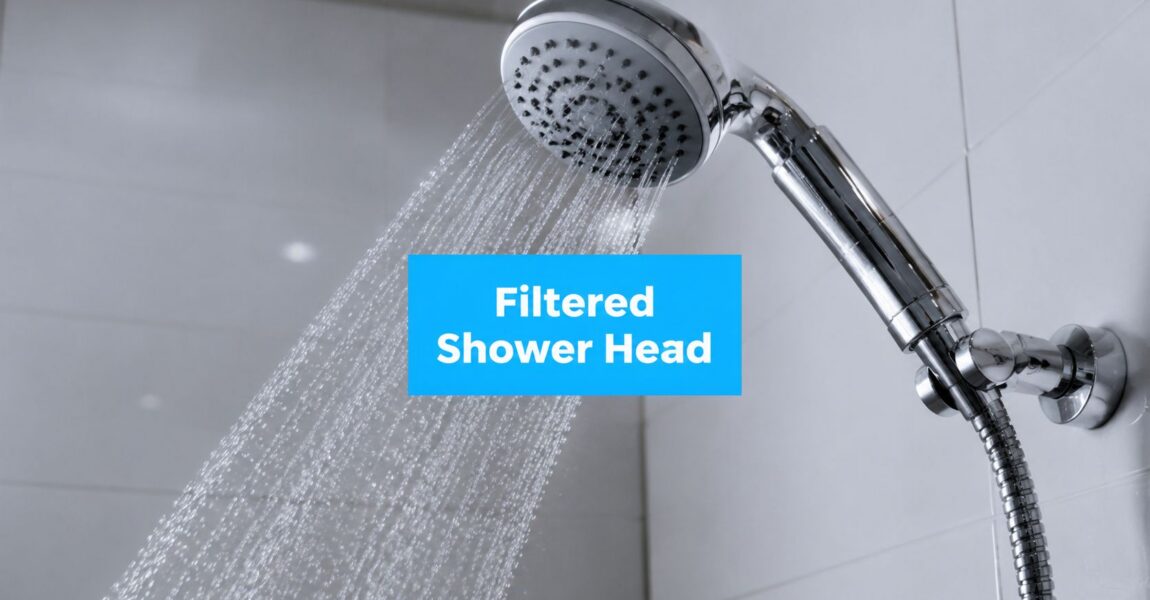
Your shower might already be telling you what's wrong. Your skin feels tight after ten minutes under hot water. Your hair gets rougher the day after wash day. The bathroom carries that faint pool-like smell, especially when the water is steaming.
Most detachable shower head guides act like the big decision is spray pattern versus finish. For people dealing with chlorine, hard water, or skin irritation, that's the wrong question. The best shower head detachable setup is the one that keeps filtration working without turning your shower into a weak trickle.
Beyond Spray Patterns The Real Job of a Detachable Shower Head
A detachable head isn't just a convenience tool for rinsing tile, bathing kids, or washing a dog. In a filtration-focused bathroom, it becomes part of a water treatment system. That changes how you judge it.
Most reviews still rank handheld models by how many settings they have, how shiny the chrome looks, or whether the hose feels flexible. That misses the issue that decides whether the shower feels better after a week or worse after a few months. The ultimate test is how the detachable head behaves once a filter is added in line.
According to plumbing guidance on detachable heads and filter pressure loss, existing content on best shower head detachable options largely ignores whether added hardware pushes pressure loss beyond the filter's rated limit. The same source notes that a 2025 study by the American Society of Plumbing Engineers found 38% of shower filter users reported reduced spray performance after 6 months, often because detachable fittings added pressure drop that no buying guide tested end to end.
That finding matches what shows up in real bathrooms. A detachable head can look excellent on paper and still perform poorly once a filter cartridge, swivel connection, and longer hose all start resisting flow.
What actually matters
When I assess a detachable model for filtration use, I care about a different shortlist:
- Filter integration: Is the filter built into the handle, mounted before the head, or added as a separate cartridge between the arm and hose?
- Pressure discipline: Does the head still rinse shampoo cleanly once the filter starts loading up?
- Seal quality: Do the connection points stay tight after repeated docking and handheld use?
- Body material: Chrome and stainless steel tend to hold up better than light plastic when moisture, heat, and repeated movement are involved.
Practical rule: If a detachable head doesn't work well with a filter installed, it isn't a premium shower solution. It's just a nice-looking nozzle.
That's why this guide stays focused on filtration performance first. Spray patterns matter. Clean water matters more.
Why Your Shower Needs a Filter Not Just a New Head
A new head can change how water feels. A filter changes what's in the water.
That distinction matters because many of the complaints people blame on “bad shower pressure” are really water quality problems. If chlorine is stripping oils from skin and hair, a stronger spray won't solve it. If sediment is irritating the scalp or clogging the faceplate, more spray modes won't fix that either.
Chlorine is the problem most households actually notice
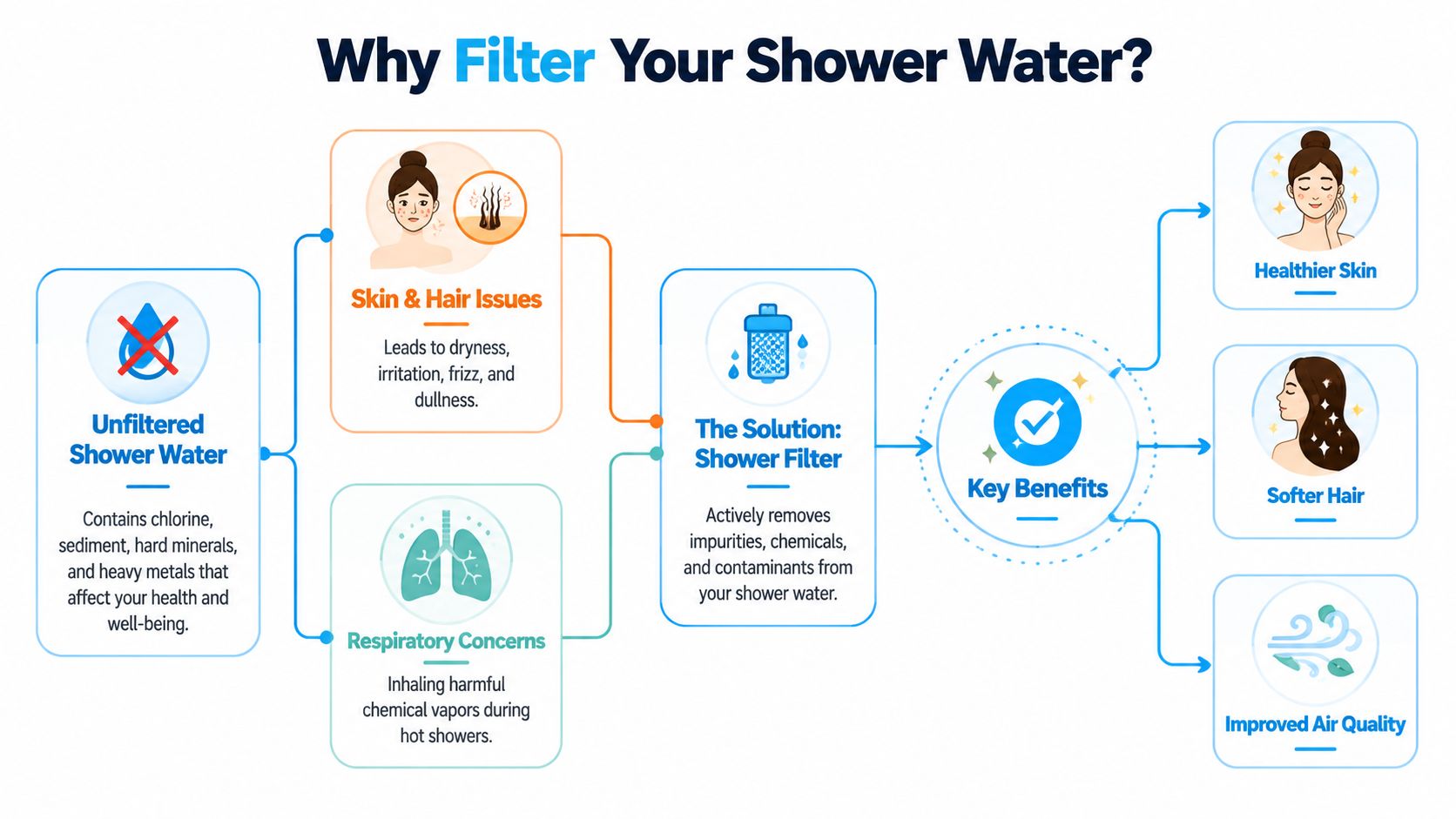
In the United States, chlorine is common in municipal supplies. It's present in over 90% of U.S. public water systems, and showering turns a portion of it into airborne exposure because hot spray aerosolizes the water. Studies cited in the verified data show that up to 70 to 80% of airborne chlorine exposure occurs in the bathroom due to shower spray, and detachable heads using combinations of KDF, activated carbon, and mineral balls can reduce chlorine concentration by 95 to 99% under standard flow conditions of 2.0 to 2.5 gpm.
That's why filtered shower heads often help in ways people notice quickly. Less chlorine contact usually means less post-shower tightness, less roughness at the ends of the hair, and a less aggressive chemical smell in the steam.
The media inside the filter determines what gets reduced
Not all integrated filters do the same job. The names matter.
- KDF: Often used when chlorine reduction and heavy metal performance are priorities.
- Activated carbon: Common in systems aimed at taste, odor, and chlorine-related chemical reduction.
- Mineral media: Often included in multi-layer cartridges as a support stage alongside the primary media.
The practical point is simple. If a detachable head advertises “filtration” but doesn't clearly identify its media, I treat that as a warning sign. Vague claims usually mean vague performance.
Why skin and hair react so strongly
Shower water hits more than your body. You inhale it too. Hot water opens pores, wets the scalp thoroughly, and fills a small enclosed room with vapor. That makes shower filtration different from a countertop drinking filter. The contact is broader, warmer, and harder to ignore.
The verified data also notes that prolonged exposure to chlorine and chloramine in shower steam is linked to skin dryness, hair damage, and respiratory irritation, especially for people with sensitive skin or asthma. It also states that the American Academy of Dermatology reports over 40% of adults say shower water quality affects their skin health.
If your skin feels worse after showering than before, the water itself deserves attention.
When a filter makes the most sense
A shower filter moves from “nice upgrade” to “smart fix” in a few situations:
- Sensitive skin households: Kids, eczema-prone adults, and anyone who gets itchy after hot showers usually benefit from chlorine reduction.
- Color-treated hair: Harsh water can leave hair dull and rough even when shampoo is doing its job.
- Small bathrooms with poor ventilation: Chemical odor and steam exposure become more noticeable fast.
- Rentals: A detachable filtered head is one of the easiest ways to improve water quality without altering plumbing.
For more practical home filtration guidance, the advice library at Water Filter Advisor is worth bookmarking.
Top Detachable Shower Heads with Integrated Filters
If you're shopping for the best shower head detachable model for filtration, ignore marketing terms like “spa rain” until you know what sits inside the filter body and how the unit is built around it.
Early in the search, a comparison table helps separate actual filtration choices from generic handhelds with decorative promises.
Filtered Detachable Shower Head Comparison
| Model | Filtration Type | Key Contaminants Removed | Flow Rate (GPM) | Best For |
|---|---|---|---|---|
| Cobbe Handheld Shower Head with Filter | 15-stage integrated filtration | Heavy metals, chlorine, and other impurities | Not specified | Users who want integrated contaminant reduction in one handheld unit |
| Multi-layer detachable filtered heads | KDF, activated carbon, mineral balls | Chlorine and common shower-water impurities | 2.0 to 2.5 under standard testing conditions | Sensitive skin and chlorine-focused filtration |
| Chrome or stainless steel detachable filtered heads | Varies by cartridge design | Depends on media used | 1.8 to 2.5 for balanced performance | Buyers prioritizing durability and long-term seal quality |
| Basic detachable heads without a defined filter system | Minimal or unclear | Unclear | Varies | Better avoided if filtration is the priority |
Cobbe stands out for integrated filtration design
The clearest named example in the verified data is the Cobbe Handheld Shower Head with Filter. According to testing coverage of handheld shower heads, it uses a 15-stage filtration system designed to remove heavy metals, chlorine, and other impurities.
That matters for one reason above all. A detachable head with integrated filtration has fewer mismatched parts than a setup where you combine a random hose, a random handheld, and a separate in-line cartridge. Fewer transitions usually mean fewer places for pressure loss, leaks, and thread wear to show up.
What I look for beyond the cartridge count
A bigger stage count doesn't automatically mean better filtration. Some brands stretch stage language for marketing. What matters more is whether the unit pairs useful media with a design that still showers well once the cartridge starts doing real work.
I rank detachable filtered heads using four practical criteria:
- Known media over mystery media: KDF and activated carbon tell me more than “ionic beads” or “energy stones.”
- Solid body construction: Verified data indicates that chrome or stainless steel bodies significantly outperform plastic in rust resistance and long-term build quality.
- Reasonable flow target: The same verified data places optimal performance between 1.8 and 2.5 GPM.
- Spray variety without gimmicks: Top-tier detachable heads should provide at least five distinct spray patterns, but only after filtration basics are handled.
A filtered handheld should feel like a reliable plumbing fixture, not a beauty gadget.
The trade-off between integration and flexibility
Integrated filtered handhelds are attractive because installation is simpler. Renters like them because they usually swap in and out without much trouble. They also keep the filtration point close to where water exits, which can be useful when chlorine reduction is the main goal.
Separate in-line filter plus detachable head setups can be stronger when you want more control over cartridge style or replacement sourcing. The downside is compatibility. Every added joint, washer, and swivel can affect pressure and long-term sealing.
Here's where buyers often go wrong. They compare detachable heads as if the head alone creates the result. In practice, the shower arm, filter housing, hose, cartridge age, and docking bracket all influence the final experience.
Best fit by buyer type
For renters
A compact integrated unit usually makes the most sense. It installs fast, removes easily at move-out, and doesn't ask you to build a multi-part system.
For families with skin concerns
Look for multi-layer media that clearly includes chlorine-focused filtration, especially KDF and activated carbon. Skip vague wellness language.
For households hard on hardware
Choose metal-bodied detachable heads where possible. The hose gets handled often, the dock gets used often, and cheap plastic tends to show wear earlier.
For buyers chasing “high pressure”
Be careful. High-pressure branding often hides the fact that once filtration starts restricting flow, the spray can become sharp but not effective. Good rinsing is the goal, not aggressive needle spray.
Solving Your Specific Water Issues
The right detachable filtered head depends less on brand hype and more on the problem coming out of your pipe. If you don't match the filter to the water issue, you'll spend money and still hate your shower.
If chlorine is the issue
This is the most common starting point for city-water households. If your bathroom smells chemical when the shower gets hot, prioritize media designed for chlorine reduction. In practice, that means looking for cartridges built around KDF, activated carbon, or a layered design that clearly identifies both.
This is also the group that notices cosmetic improvements first. Skin comfort, scalp calmness, and a less harsh steam profile usually improve before anything else.
If hard water is beating up your shower
Hard water isn't the same as chlorine, and buyers confuse the two all the time. Hardness usually shows up as scale on fixtures, rough hair feel, and soap that doesn't rinse cleanly.
A detachable filtered head can help with the shower experience, but it won't replace a full hardness treatment strategy for the whole home. For renters, though, a filtered handheld is often the only realistic move because it addresses the point of use. If your hot water system is also part of the problem, resources on expert water heater fixes in Las Vegas show the kind of mechanical issues that can worsen mineral-related headaches in real homes.
If low pressure is already frustrating
A common pitfall for many filtered detachable setups involves performance. The EPA established the WaterSense program in 2007, requiring showerheads to stay at a maximum of 2.5 gpm at 80 psi, and compliant detachable models can cut water use significantly while still performing well when they're engineered properly. For low-pressure homes, choosing a model built to work efficiently within that 2.5 gpm limit matters because once you add filtration, a poorly designed head will feel weaker.
A quick decision guide
- Dry skin and chlorine smell: Choose chlorine-focused media first.
- Visible scale and rough rinse feel: Prioritize a filter setup that helps manage the shower experience, while recognizing that whole-home hardness treatment is the broader fix.
- Renters who can't alter plumbing: Choose an integrated detachable filtered head with straightforward threading.
- Low-pressure apartments: Look for efficient heads rather than oversized “rain” formats that need more flow to feel satisfying.
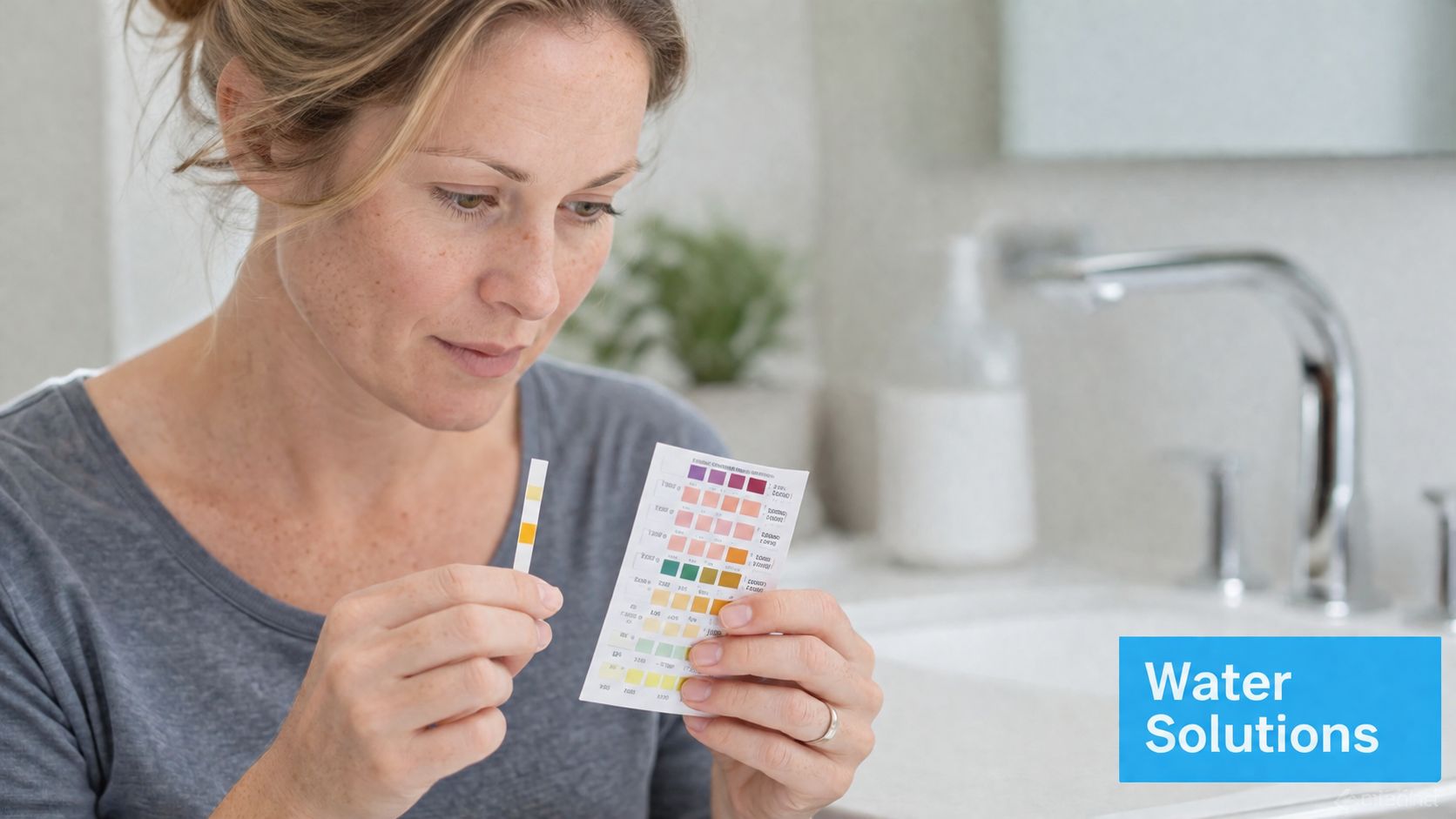
Test first if you can. Even a simple strip test gives you a better starting point than buying by online star rating.
Installation and Keeping Your Filter Effective
A filtered detachable setup isn't hard to install, but careless installation is one of the fastest ways to create leaks, weak spray, and early seal failure.
Install it like a plumbing connection, not a bathroom accessory
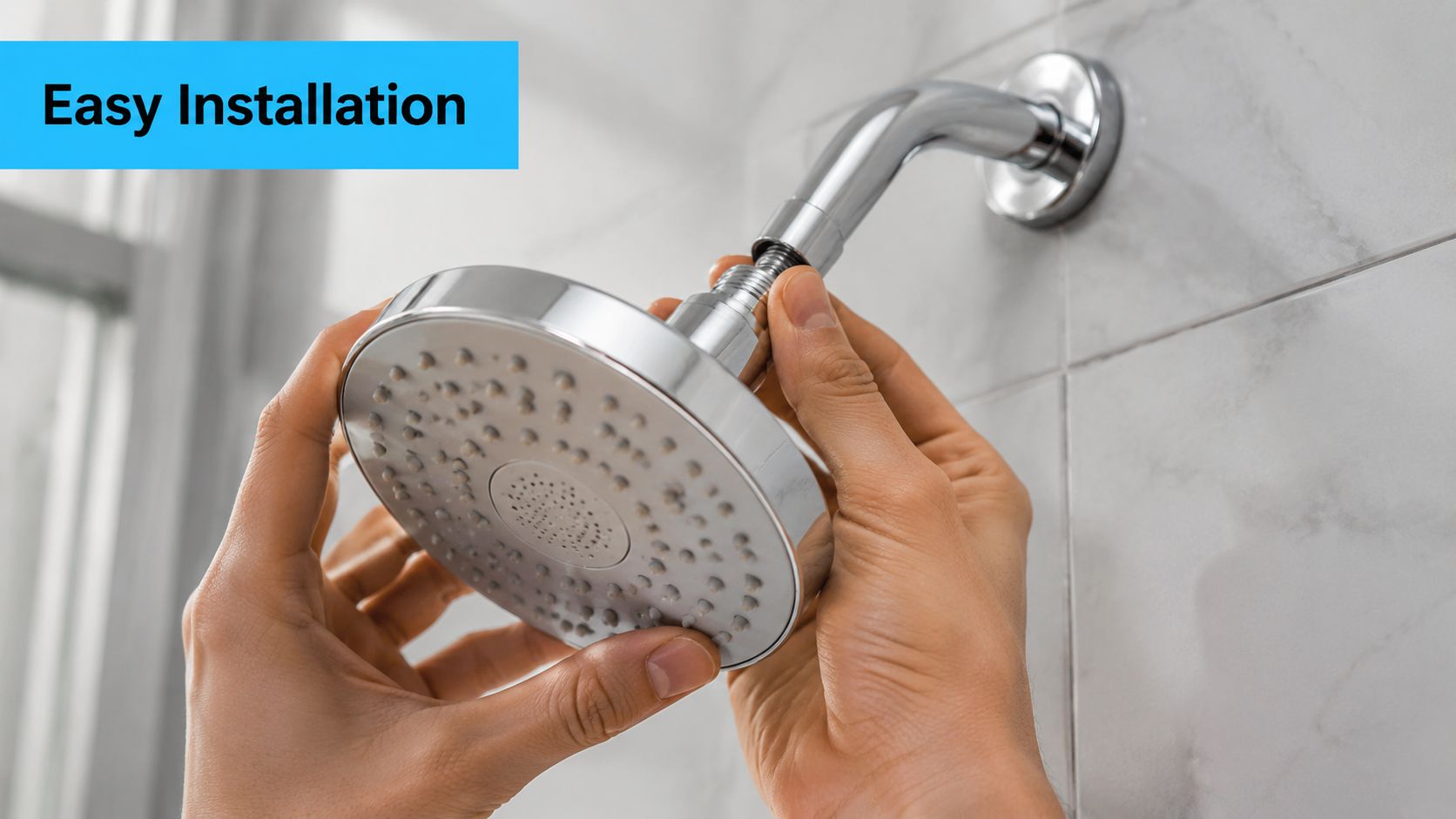
Start by removing the old head and cleaning the shower arm threads. If the new unit includes washers, use the supplied ones in the right locations instead of stacking extras from another product. Hand-tighten first. If you reach for tools too early, cross-threading gets much more likely.
After installation, run cold water first, then warm water, and check every joint. The common leak points are the shower arm connection, the filter housing seam, and the hose nut at the handheld.
The handheld motion matters more than people think
One of the least discussed failure points is mechanical stress. Verified field data states that 27% of filter inlet failures in multi-use households stem from mechanical stress at connection points. That's exactly why some detachable filtered systems age badly even when the cartridge itself is still serviceable.
In daily use, a few habits help:
- Support the hose: Don't let the head hang and twist by the filter connection.
- Dock gently: Snapping the head back roughly into place adds repeat stress to the joint.
- Avoid unnecessary disconnection: Frequent removal of threaded sections wears seals faster.
- Watch for wobble: If the connection starts rotating loosely, address it before it becomes a leak.
Keep the cartridge fresh enough to protect pressure
A shower filter doesn't just stop working all at once. More often, pressure fades first, then spray quality gets uneven, then users start blaming the head. In reality, the cartridge is usually loading up with what it captured.
That's why maintenance should be tied to shower performance, not just memory. If a once-clean spray starts feeling patchy or the handheld suddenly seems weaker, inspect the filter before replacing the entire fixture.
Here's a useful installation walkthrough if you want a visual reference before starting:
Replace worn washers early. A cheap seal often decides whether the whole filtered system feels solid or annoying.
Our Final Verdict on the Best Filtration System
There isn't one best shower head detachable option for every bathroom. There's a best fit for the water problem you have.
For families with sensitive skin, the smartest choice is a detachable head with clearly identified multi-layer filtration media aimed at chlorine reduction. If the product doesn't tell you what's in the cartridge, move on. Skin-focused buyers need clarity more than style.
For renters, an integrated filtered handheld is usually the strongest answer. It installs without much fuss, removes cleanly when you move, and avoids the compatibility headaches that come with assembling separate parts from different brands. That's where a model like the Cobbe concept is appealing. The integrated approach is simple and practical.
For homes with low pressure, efficiency matters more than “rainfall” branding. Stay with designs that work well inside the WaterSense flow limit and avoid bulky heads that only feel good when supply pressure is already generous. A smaller, better-engineered filtered handheld often outperforms a larger fashionable one.
For buyers who are tough on fixtures, pick durability over novelty. Metal-bodied detachable heads with dependable seals usually age better than lightweight plastic units, especially in busy bathrooms where the handheld gets pulled off the dock constantly.
The main takeaway is simple. Buy the shower head as part of a filtration system, not as a standalone accessory. If the filter media is credible, the body is durable, and the pressure stays usable as the cartridge does its job, you've found the right setup.
If you want help comparing shower filters, understanding media types, or choosing a system that fits your water and budget, Water Filter Advisor is a practical place to start. It's especially useful when you need straight answers on chlorine, hard water, replacement filters, and what is effective in everyday homes.
- July 19, 2026
- Uncategorized
