Master How to Install Shower Filter: Quick 2026 DIY Guide

You notice it the second the hot water hits. The steam carries that chemical smell, your skin feels tight before you even towel off, and your hair never quite feels clean and soft at the same time.

A shower filter is a simple fix, but the install goes better when you treat it like real plumbing instead of product packaging. Some setups thread on in minutes. Others fight back because the old shower arm is corroded, the factory washer is missing, or the house uses chloramine-treated water and the new cartridge needs a proper flush before anyone showers in it.

That part gets skipped in a lot of “tool-free” guides. It should not be. A clean, leak-free install is what turns a filter from a gadget into an upgrade you feel on your skin and hair every day.

If you want better water in the bathroom, start with the shower. Then use solid water treatment advice to match the filter and install method to your plumbing, especially if you live in an older home: practical water filtration guidance for homeowners.

Why Your Shower Water Needs an Upgrade

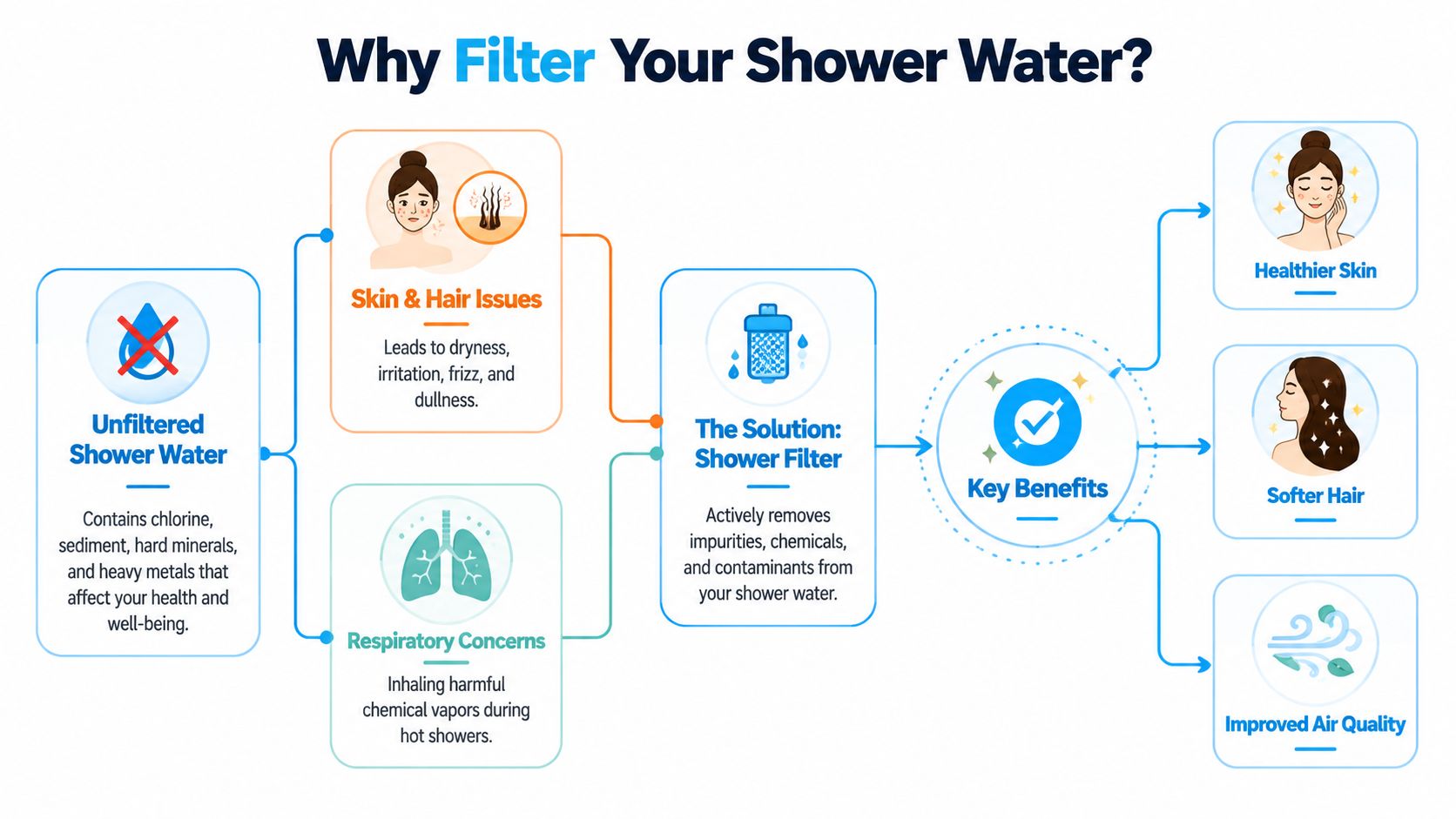
You feel bad shower water before you know what is in it. Skin feels tight after a rinse. Your scalp gets itchy. Hair turns rough, dull, or harder to manage. If the steam carries a bleach-like smell, that is another common clue.

In real bathrooms, the problem is often disinfectants in the water, especially chlorine or chloramine, plus the wear and tear of the plumbing feeding the shower. I see this a lot in older homes. The filter matters, but so does the condition of the shower arm, the threads, and any mineral buildup sitting behind the old showerhead. A good install starts with understanding that you are improving water quality at the fixture, not fixing every issue upstream.

What people usually notice first

The first signs show up on your body and hair, not on a water test report.

  • Skin feels dry fast: You step out of the shower and already want lotion.
  • Hair feels rough or frizzy: Color-treated, curly, and fine hair usually shows the change first.
  • Steam smells chemical-heavy: Hot water makes that smell more obvious.
  • Sensitive skin gets irritated more easily: Water can meet municipal standards and still feel harsh in daily use.

Hot water makes all of this more noticeable.

That is why a shower filter can make such a big difference. It improves the water at the exact point where it hits your skin and hair every day. In homes served by chloramine-treated water, this also means you need to follow the manufacturer's flushing steps after installation instead of jumping straight into a shower. Skip that, and people often think the filter is not working when the cartridge has not been flushed properly yet.

There is also a comfort piece people miss. If you are already improving flow and spray performance with things like savings and comfort with low-flow shower heads, cleaner-feeling water makes that upgrade feel complete.

Why this upgrade makes sense

A shower filter is a targeted fix. You do not need to open walls or commit to a whole-house system just to make one of your daily routines feel better.

It is also one of the few bathroom upgrades you can usually feel right away. Better water on your skin. Less chemical smell in the steam. Hair that feels cleaner instead of stripped. The catch is simple. The result depends on choosing the right filter for your water and installing it carefully, especially if old threads, corrosion, or hard-water scale are part of the job.

Choosing Your Ideal Shower Filter Type

A lot of installation problems start here, at the buying stage. Someone orders a filter because the box says universal, then finds out the unit is too bulky for a low-mounted arm, the showerhead no longer clears the wall, or the cartridge media is a poor match for local water treatment.

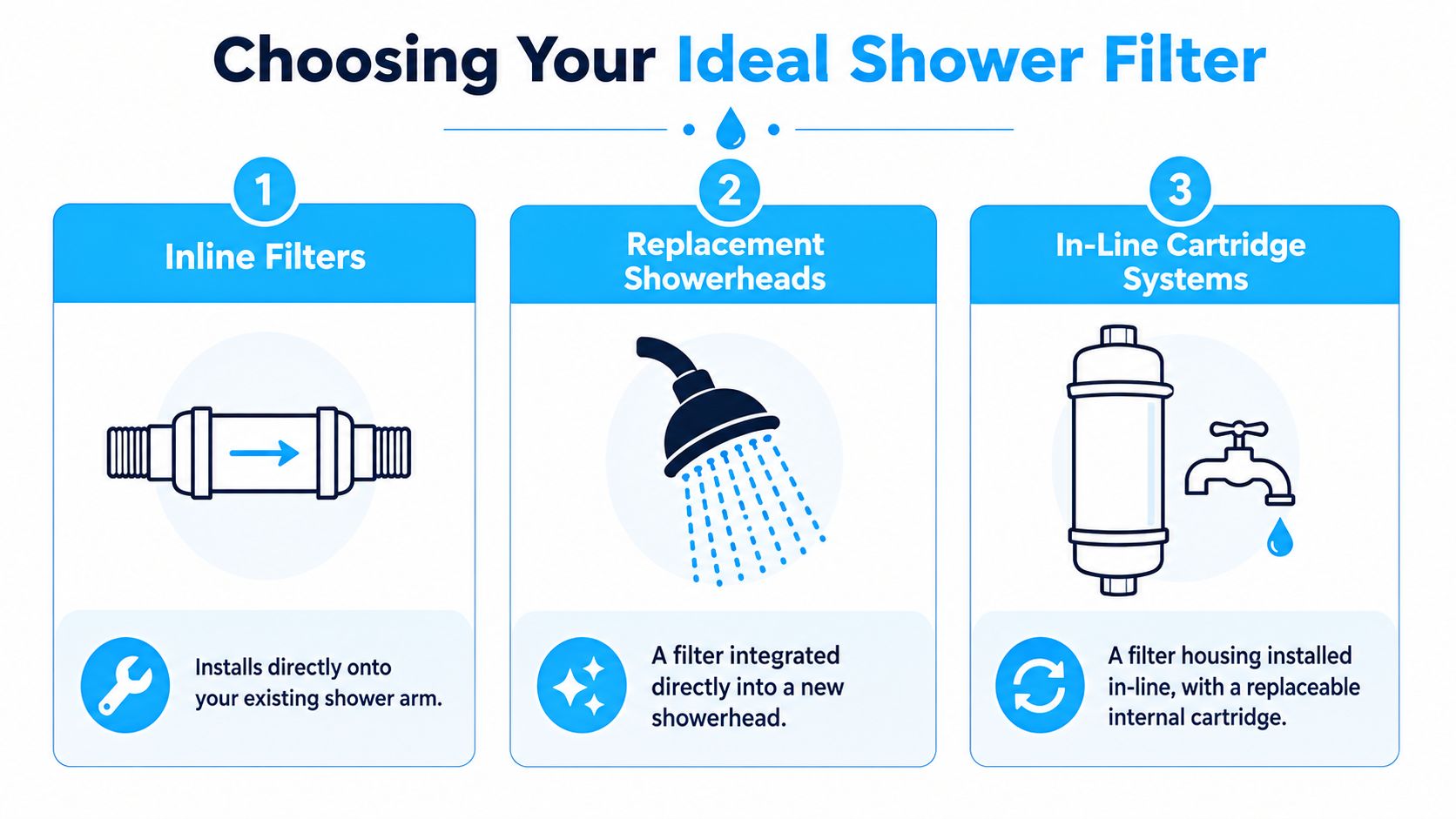
A guide on how to choose the right shower filter, showing three types of filtration systems.

Choose the filter for your plumbing first, then for the marketing claims on the package. That approach saves returns, cuts down on leaks, and gives you a better shot at the result you want: shower water that feels better on skin and leaves hair less dry and dull.

The three common filter styles

Inline filters thread between the shower arm and your current showerhead. I recommend these when you already like your showerhead and want to keep its spray pattern, finish, and flow feel. They are also the easiest fit in many rentals, as long as there is enough space between the wall and the head.

Replacement showerheads combine the filter and the head in one unit. They make sense when the old head is worn out, scaled up, or not worth saving. One swap improves water quality and the shower experience at the same time.

In-line cartridge systems use a separate housing with a replaceable cartridge inside. These are often easier to service later, but they can look bulkier and may put more weight on an older shower arm.

How to choose without getting burned

If your current showerhead works well, an inline unit is usually the smartest buy.

If the old head sprays unevenly, has heavy mineral buildup, or looks rough, replace the whole thing.

If you care most about simple cartridge changes, a cartridge housing is easier to maintain, but check clearance carefully before you buy.

Filter Type Best For Installation Ease Key Feature
Inline Filter Keeping your existing showerhead Easy Mounts between shower arm and current head
Replacement Showerhead Full shower refresh Easy Filter is built into a new head
In-Line Cartridge System Easy cartridge servicing Moderate Replaceable internal filter cartridge

What actually matters

Stage count gets too much attention. In real bathrooms, fit, cartridge availability, thread quality, and water chemistry matter more.

That last point gets missed all the time. If your city uses chloramine instead of free chlorine, make sure the filter is rated for it and follow the flushing instructions exactly after installation. A quick rinse is not always enough. With chloramine-treated water, some cartridges need a more thorough flush before the water smells and feels right. If you want a broader comparison of shower filters and other home options, Water Filter Advisor's filtration advice library is a good reference.

Older homes need extra caution. Corroded threads, short shower arms, and mineral buildup can limit what style fits cleanly. A bulky cartridge housing that looks fine online can turn into a leak point if the arm is worn or the head ends up hanging at an awkward angle. General fixture-fit guidance from Bulls Eye Repair's home maintenance resources is also useful if your bathroom hardware has not been touched in years.

Buy the filter that matches your water, your space, and the condition of the shower arm. That is what makes installation go smoothly.

Your Pre-Installation Checklist and Tools

You find out what kind of shower filter install you really have after the old showerhead comes off. In a newer bathroom, the threads are usually clean and the filter goes on with little fuss. In an older home or rental, mineral scale, old tape, and corrosion at the shower arm can turn a "tool-free" job into a leak chase.

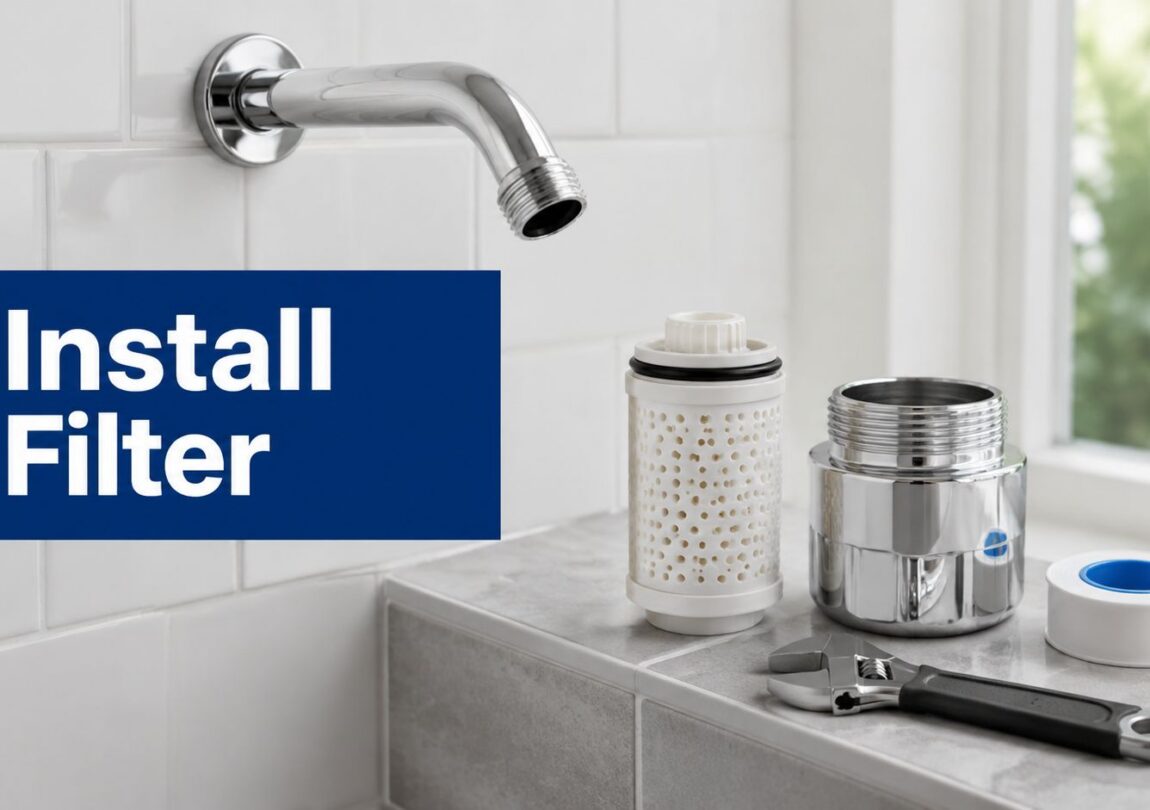
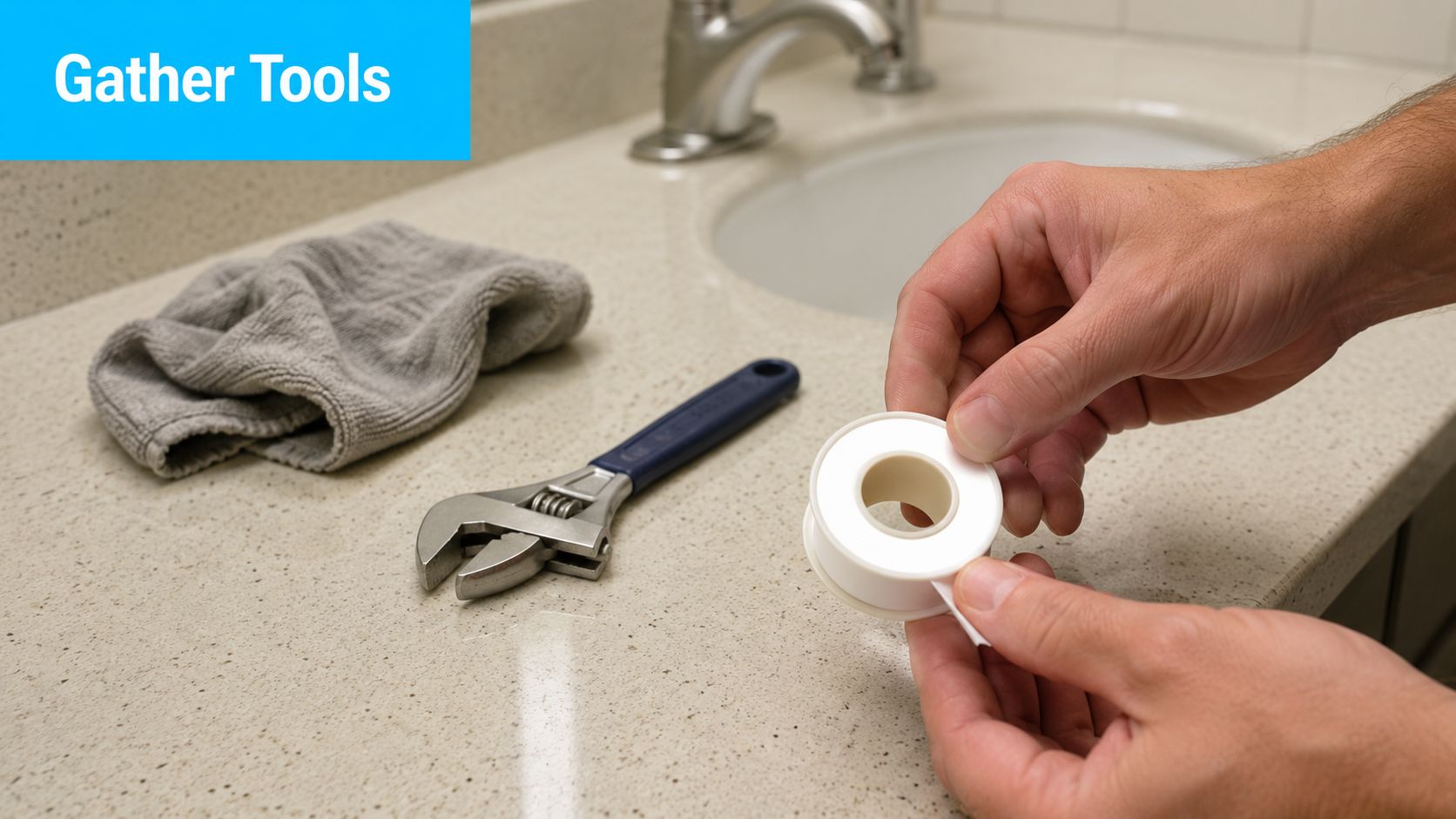
A person preparing to install plumbing fixtures with a wrench and plumber's tape on a bathroom counter.

I keep this part simple. Set out a few basic items before you touch the old head, and the install goes faster and cleaner.

  • Your shower filter kit: Confirm the housing, cartridge, washer, O-ring, and any adapter are in the box.
  • Fresh plumber's tape: Use new tape every time. Old tape or half-dried scraps cause bad seals.
  • Adjustable wrench: Helpful for stuck showerheads and for snugging connections without overdoing it.
  • Soft cloth or rag: Wrap finished surfaces before using the wrench so you do not scratch chrome, nickel, or painted parts.
  • Old toothbrush or small nylon brush: Good for cleaning thread grooves.
  • Small bowl or towel: Catch grit, old tape, and drips so they do not end up down the drain.

The toothbrush earns its place. Dirty threads are one of the most common reasons a new filter drips right after installation. If old tape, scale, or white mineral crust stays in the grooves, the new tape cannot seat properly and the filter body may tighten crooked.

Check the shower arm before you install anything new. Look closely at the threaded end, not just the finish around it.

  • Damaged threads: Flattened, bent, or partially stripped threads can cause slow leaks no matter how good the filter is.
  • Corrosion: Light discoloration is usually fine. Heavy rust, pitting, or flaky metal means you need to slow down and tighten with care.
  • Leftover sealant: Remove every bit of old tape or pipe dope.
  • Washer fit: Make sure the washer or O-ring sits flat in the filter connection before tightening.

One more real-world point gets missed in a lot of "easy install" guides. If your water utility uses chloramine, some filters need a longer flush than the quick rinse printed on generic packaging. Keep a bucket or towel nearby and plan a proper flush after installation so the cartridge media clears fully and the water smells normal sooner.

If the shower arm already shows staining inside the wall escutcheon, damp drywall, or other signs of hidden leaks, inspect that before adding a filter. A new filter improves water quality for skin and hair, but it will not fix a failing threaded connection behind the wall.

Clean threads, fresh tape, the right washer, and a wrench within reach. That is what makes this job go smoothly, especially in older bathrooms where corrosion decides how "easy" the install will be.

The Step-by-Step Shower Filter Installation

A shower filter install feels easy until the old showerhead refuses to budge or the new filter starts threading on crooked. In newer homes, this can be a five-minute swap. In older bathrooms with mineral buildup or light corrosion, the same job takes a little more patience. The payoff is worth it. Once the filter is in and flushed properly, the water is usually much kinder to dry skin, irritated scalps, and color-treated hair.

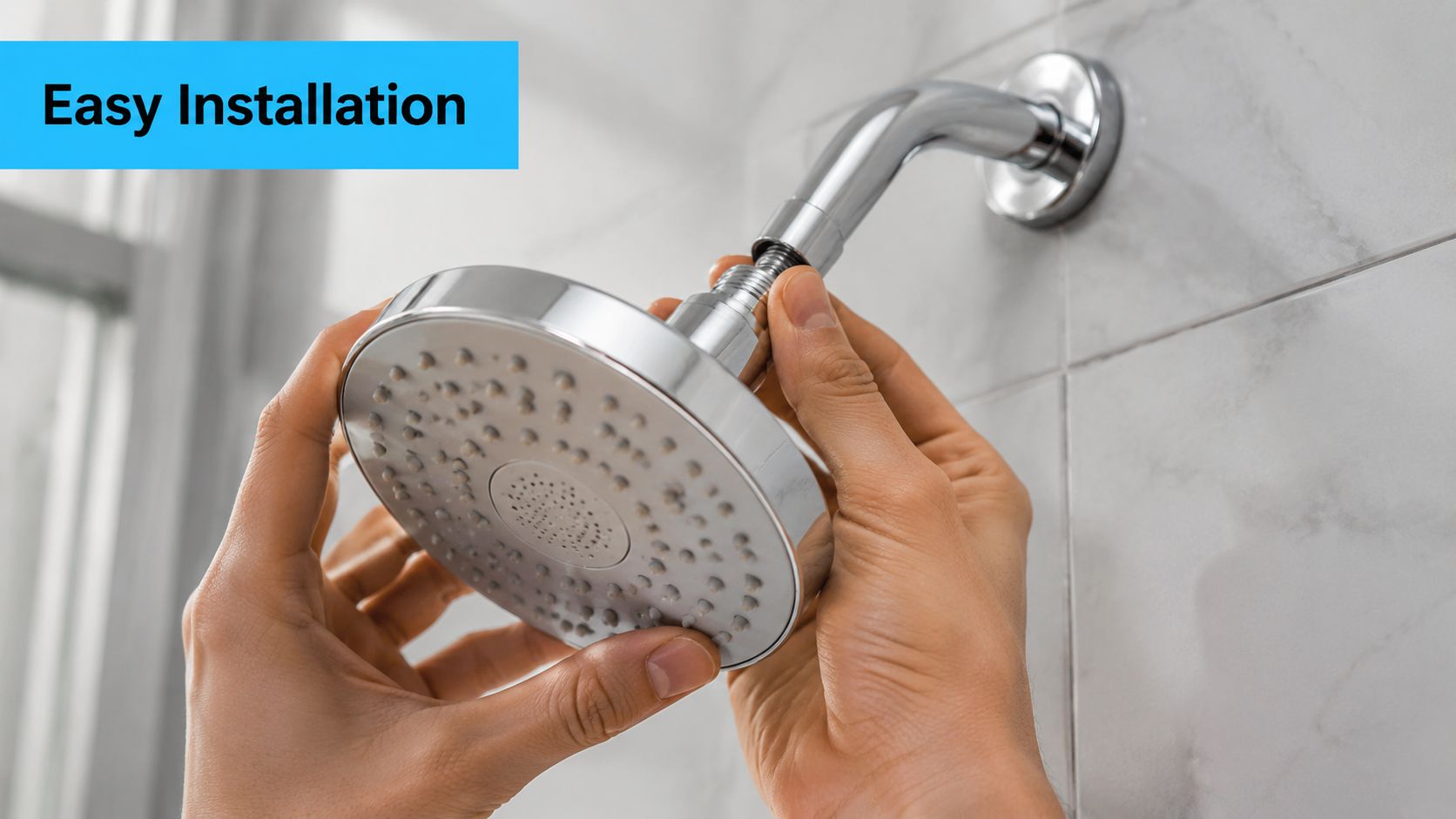
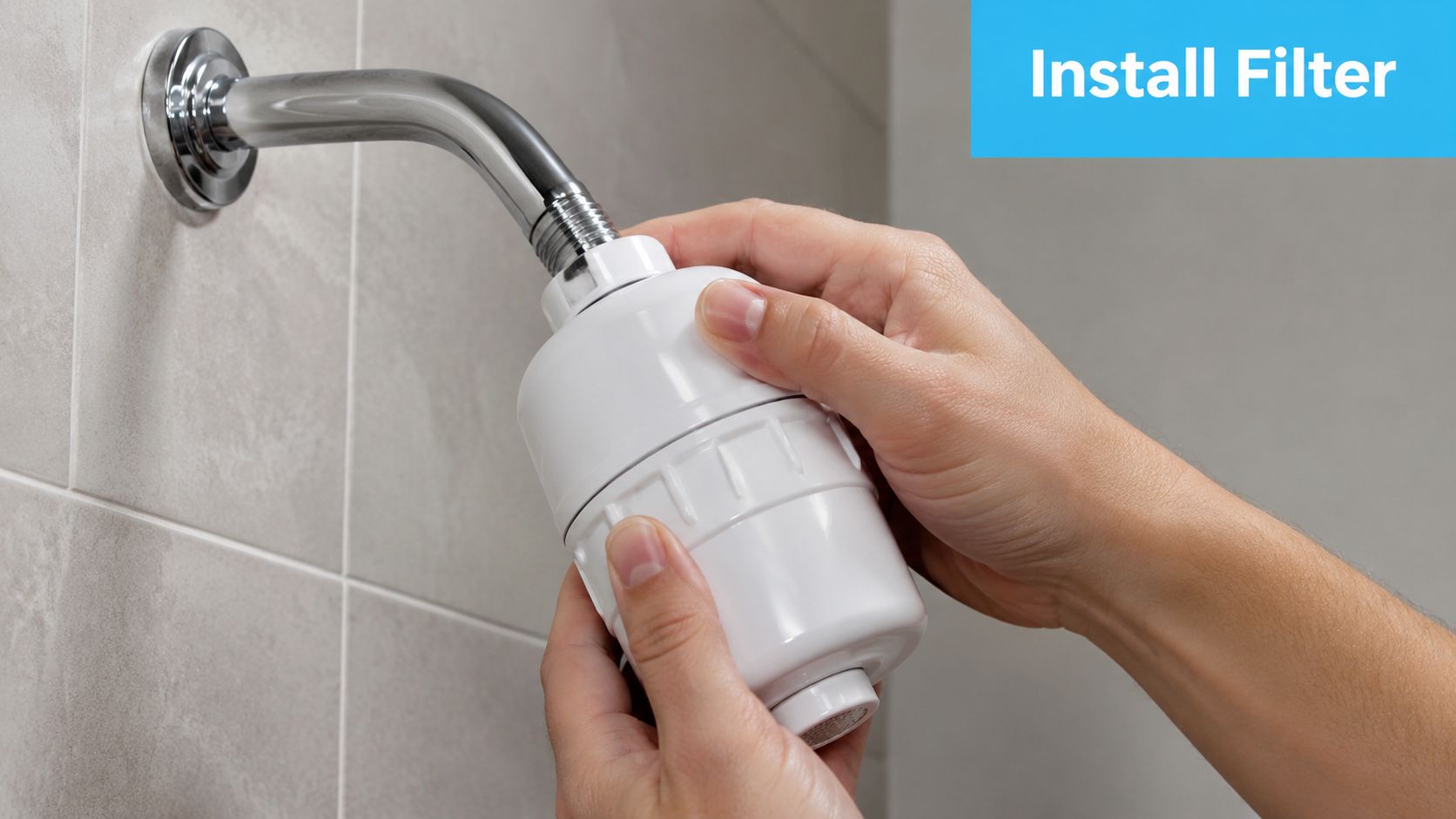
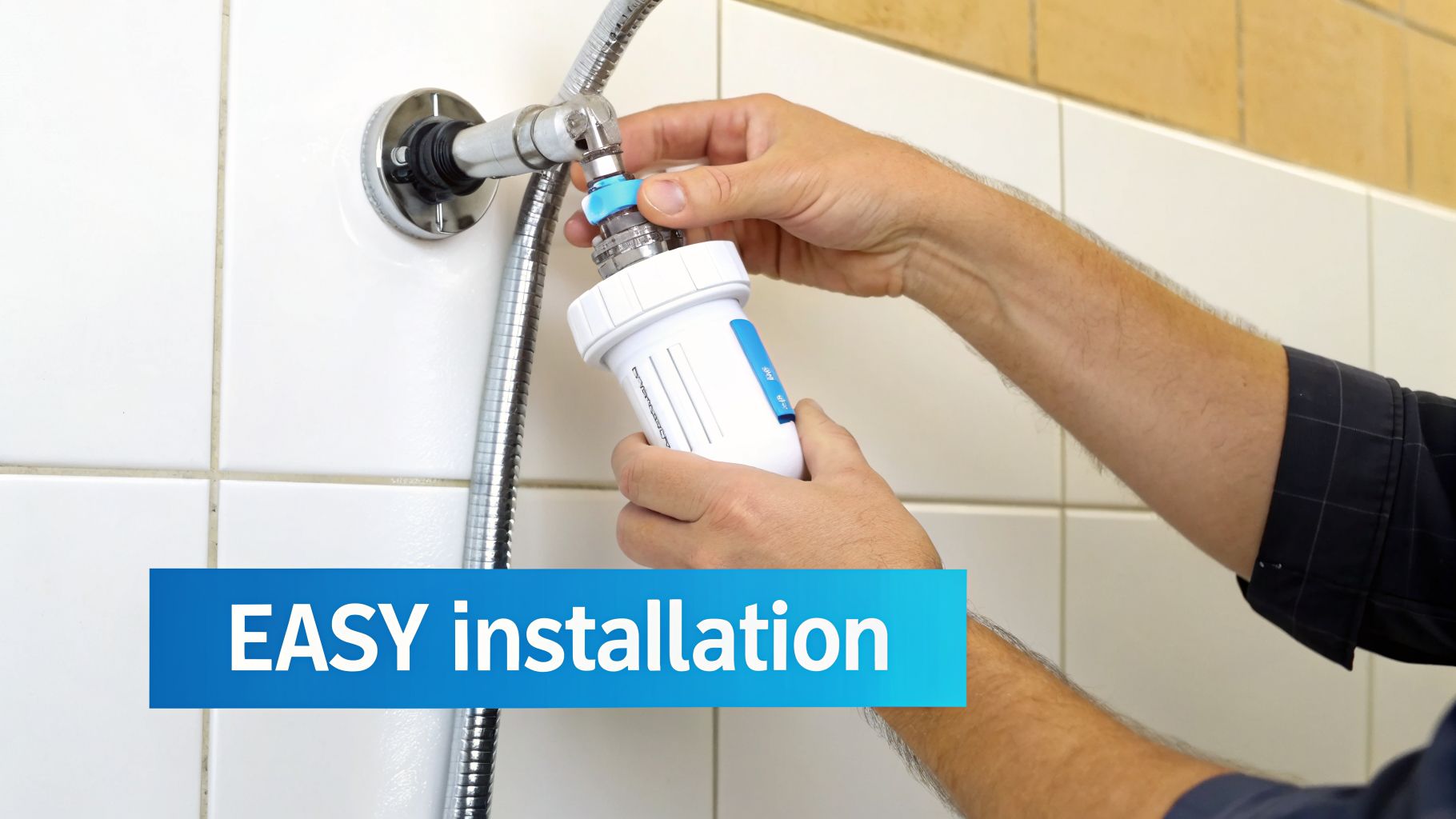
A pair of hands screwing a white shower filter unit onto a wall-mounted shower arm pipe.

Remove the old showerhead

Start with the shower off and the area dry so you can spot leaks later.

Turn the old showerhead counterclockwise. If it comes off by hand, fine. If it fights you, wrap the fitting with a soft cloth and use an adjustable wrench with steady pressure. Pulling hard to one side can twist the shower arm inside the wall, and that turns a simple filter install into a repair job.

On stubborn fittings, a little patience beats more force. Short, controlled pressure usually works better than muscling it.

Clean the threads properly

With the old head removed, clean the shower arm threads until the grooves are fully visible. Strip off old tape, old pipe dope, and any grit sitting in the threads.

This step decides how the rest of the install goes. If debris stays behind, the filter can bind early, sit crooked, or leak even when it feels tight.

A dry rag, an old toothbrush, or a nylon brush usually does the job.

Apply thread seal tape the right way

Wrap fresh thread seal tape clockwise so it tightens with the filter instead of bunching up underneath it. Use enough tape to fill the threads cleanly without creating a bulky lump.

A good rule is 5 to 8 full wraps, overlapped neatly and pressed into the grooves with your fingers, followed by the manufacturer's flushing steps after installation, as noted in Aquasana's installation guidance.

Neat tape matters. Sloppy tape causes more leaks than people expect.

Install the washer and thread on the filter

Set the rubber washer or O-ring flat inside the filter connection before you thread anything on. Then start the filter by hand and keep it straight from the first turn.

If it does not spin on smoothly, stop and back it off. Cross-threading usually starts in the first turn or two, especially on older shower arms with worn threads.

Hand-tight is often enough on a clean connection with a properly seated washer. If needed, give it a small extra turn with pliers or a wrench over a cloth. Keep that final snug-up gentle. Plastic housings and plated fittings do not like over-tightening.

If you are installing an inline model, reattach the showerhead after the filter body is secure. If the filter and showerhead are one piece, you are already at the final connection.

Flush the filter before first use

Run cold water through the new filter before you shower. New media often sheds a little harmless carbon dust at startup, and flushing clears that out before it hits your hair and skin.

For many filters, a short flush is enough. For chloramine-treated water, I recommend being more thorough than the quick rinse some boxes suggest. Let it run, cycle the water on and off a few times if the manufacturer calls for it, and keep flushing until the water runs clear and the initial carbon smell settles down. That extra minute or two prevents a lot of false alarm moments later.

For readers who like watching the sequence before touching a wrench, this short install demo helps with the hand positions and fitting order:

What a good installation looks like

A proper install is easy to judge. The filter sits straight, the showerhead points where it should, and every visible connection stays dry during the first run.

Check the joint with dry fingers or a tissue. Even a slow seep needs attention right away because it rarely fixes itself once hot water and vibration get involved.

If you want a broader DIY reference for bathroom fixture work, Bulls Eye Repair's home maintenance resources are worth browsing. Shower filters are simpler than many fixture swaps, but the same habits matter. Clean threads, correct tape direction, a flat washer, and careful tightening.

Quick install summary

  1. Turn off the shower and remove the old showerhead
  2. Clean the shower arm threads completely
  3. Wrap fresh tape clockwise with 5 to 8 neat turns
  4. Seat the washer and thread the filter on by hand
  5. Snug it gently if needed, then flush it thoroughly

That is the whole job. A leak-free install usually comes down to thread prep, a straight hand-threaded start, and a proper flush at the end.

Troubleshooting Leaks and Other Common Issues

You finish the install, turn the water on, and spot a drip at the fitting or a burst of dark water from the head. That does not mean the filter is faulty. In my experience, post-install problems usually come from thread prep, washer placement, or a flush that was too short for the way your local water is treated.

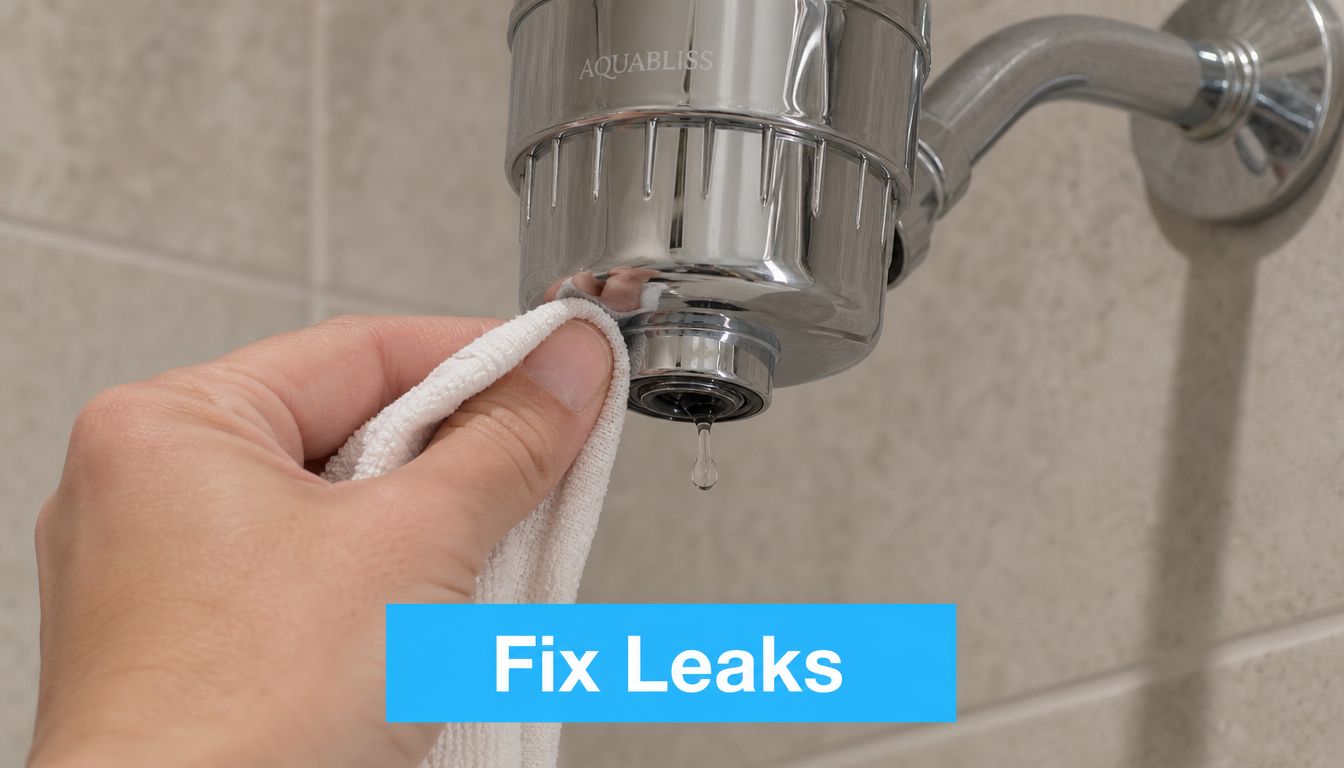
A hand holds a white cloth under a leaking chrome Aquabliss shower filter in a tiled bathroom.

Start with the leak before you start blaming the filter body. A threaded shower connection only has a few places to fail, and each one has a straightforward fix. What causes trouble is over-tightening. I see that a lot in older homes where the shower arm threads are already worn or slightly corroded. More force on damaged threads rarely seals the joint. It usually makes alignment worse.

If water drips from the threaded joint

Work through these checks in order:

  • Washer missing, twisted, or pinched: Remove it and seat it flat.
  • Tape wrapped the wrong way: Rewrap it clockwise so it stays in place as the fitting tightens.
  • Too little tape on older threads: Add a few neat wraps so shallow or worn threads can seal.
  • Cross-threaded fitting: Back it off and restart by hand. It should spin on smoothly for the first turns.
  • Mineral buildup on the shower arm: Clean the threads fully. Old scale can stop the filter from seating square.

If the drip seems to be coming from somewhere behind the visible connection or from the wall area, it's smart to learn the broader signs of hidden leaks so you don't mistake a larger plumbing problem for a bad shower filter install.

If the water looks cloudy or dark at first

That is usually carbon fines washing out of a new cartridge. It looks alarming, but it is common on first start-up.

Flush the filter longer than the box suggests if your water supplier uses chloramine. The short, tool-free marketing version of this job skips over that detail, but chloramine systems often need a more deliberate flush with warm water and a few on-off cycles before the media settles and performance levels out. If the filter seems disappointing right away, I would question the flush first.

If pressure drops and stays low

A small change in flow during the first run can happen while the cartridge saturates. Weak pressure that continues means something is restricting the path.

  • Check the inlet screen: New installs often catch loose sediment from the pipe.
  • Make sure the cartridge is seated correctly: If it sits crooked, flow drops fast.
  • Inspect the showerhead itself: An old head full of scale can get blamed on the new filter.
  • Look at the shower arm in older homes: Rust flakes and debris can break loose during installation and lodge in the filter or head.

One good reset solves a lot of these issues. Take the unit back off, clean the threads, confirm the washer is flat, reinstall it by hand, and flush it properly. A careful reinstall beats brute force every time.

Maintaining Your Filter for Pure Water Year-Round

A shower filter only helps your skin and hair if the cartridge inside it is still doing its job. I see plenty of installs that were done right once, then ignored until the water starts smelling like a pool again. Good maintenance is what keeps the chlorine reduction, softer feel, and better shower experience going.

Cartridges do not all age at the same pace. A house with heavy use, sediment, or chloramine-treated water will usually burn through media faster than the box implies. In older homes, rust and scale from the supply line can shorten cartridge life too, especially after the first install shakes loose debris inside the shower arm.

Signs it's time to change the cartridge

You usually get warning signs before the filter is fully spent.

  • The chlorine smell returns: If that treated-water smell comes back, the media is likely near the end of its service life.
  • Skin feels tighter or hair feels dull: This is often the first thing people notice, even before they notice odor.
  • Water flow drops off: Sediment, scale, or a loaded cartridge can restrict flow.
  • The cartridge has been in place longer than the manufacturer recommends: Calendar reminders work better than guesswork.

How to replace it without creating leaks

Replacement is simple if you stay methodical. Shut the shower off fully, let the fixture cool if you have been using hot water, then unscrew the housing carefully so you do not pinch the O-ring or cross-thread the body on reassembly.

Set the old cartridge aside, wipe out the housing, and check the washer and threads while it is open. If you live in an older home, look for rust flakes or mineral grit inside the filter body. That debris can keep the new cartridge from seating properly and cause a slow drip that gets blamed on the filter itself.

Install the new cartridge in the correct direction, hand-tighten the housing, and flush it before showering. If your water utility uses chloramine, give the new cartridge a longer flush than the quick-start instructions suggest. Warm water and a few on-off cycles usually help settle the media and clear carbon fines more thoroughly.

On-time cartridge changes are what keep the improvement real. The housing is reusable. The media inside is the working part.

If you want help comparing shower filters, replacement cartridges, and other home water treatment options without digging through marketing claims, Water Filter Advisor is a solid place to start. It's especially useful when you're deciding between a basic shower upgrade and a bigger filtration plan for the whole home.

AquaBliss Shower Filter Review: Is It The Ultimate Home Water Filtration Upgrade?

Do you ever step out of a steamy shower only to find your skin feels tighter and drier than a forgotten sponge? You're not alone. In this deep-dive AquaBliss shower filter review, we’re going to find out if this simple gadget is the hero your home's water system needs to combat common issues like dry skin, brittle hair, and color-treated hair that fades way too fast.

Why Your Shower Water Might Be Sabotaging You

That glorious, hot spray you crave every day could be a double agent. While it feels fantastic, the water flowing through your pipes isn’t just pure H₂O—it’s a chemical cocktail. Water treatment plants use disinfectants like chlorine to make our water safe, which is great for preventing illness. But that safety comes at a cosmetic cost.

Chlorine is a powerhouse killer of bad bacteria, but it doesn't know when to stop. It also attacks the natural oils that keep your skin supple and your hair shiny. When those oils are stripped away, you're left with:

  • Dry, Itchy Skin: Stripping the skin's protective moisture barrier leaves it irritated, tight, and begging for lotion.
  • Dull, Brittle Hair: Your hair’s natural oils provide shine and strength. Without them, you get a frizzy, lifeless mess.
  • Faded Hair Color: Since chlorine is a bleaching agent, it's no surprise it can yank the vibrance right out of your expensive dye job.

Then there's "hard water," a term for water high in minerals like calcium and magnesium. These minerals leave a film on everything they touch—including you. Hard water is a notorious culprit behind frustrating hair issues. For instance, it’s a key reason many people find their blonde hair turning brassy due to hard water.

Ever notice that "squeaky clean" feeling after a shower? That's not a good thing. It's a red flag that hard water minerals have stripped away your skin's protective oils, leaving it vulnerable to dryness.

This is where a shower filter enters the chat. Think of it as a bouncer for your bathroom, stopping these unwanted party crashers at the door. By targeting chlorine and other impurities, a good filter can transform your daily shower from a skin-drying chore into a true home spa experience.

AquaBliss Shower Filter At a Glance

So, where does the AquaBliss filter fit into your home filtration strategy? Here’s a quick rundown of what it brings to the bathroom.

Feature Benefit
Multi-Stage Filtration A dream team of media like KDF-55, calcium sulfite, and activated carbon targets a whole squad of contaminants.
Universal Fit Designed to connect to any standard shower arm in minutes, no tools or tears required.
Replaceable Cartridge Easy maintenance; you only swap the inside filter, not the entire unit.
Cost-Effective An affordable ticket into the world of shower filtration without a major investment.
For Urban & Well Water Built to tackle both chemical disinfectants in city water and some minerals from wells.

Ultimately, the AquaBliss positions itself as an accessible, all-around solution for anyone looking to improve their home water quality without a complicated or expensive setup.

We'll get into how different filter media work their magic later on, but if you're looking for broader guidance on water filtration for your home, you can learn more here. For now, let’s find out if the AquaBliss shower filter is the effective, affordable fix you've been searching for.

How the Multi-Stage Filtration System Works

The real genius of an AquaBliss shower filter isn't in one single material—it's in its teamwork. Think of it less like a simple strainer and more like an obstacle course for your water. Each layer inside the filter has a specific job, and as water rushes through, it gets progressively cleaner and purer.

This layered, multi-stage design is its secret weapon. A single-layer filter would get overwhelmed quickly or only catch a narrow set of contaminants. By stacking different materials, AquaBliss builds a comprehensive defense against everything from chlorine to sediment, turning your tap water into something much kinder.

For many homes, this level of water filtration isn't a luxury; it's a necessity. The water coming out of your pipes can directly contribute to common issues like dull hair and itchy skin.

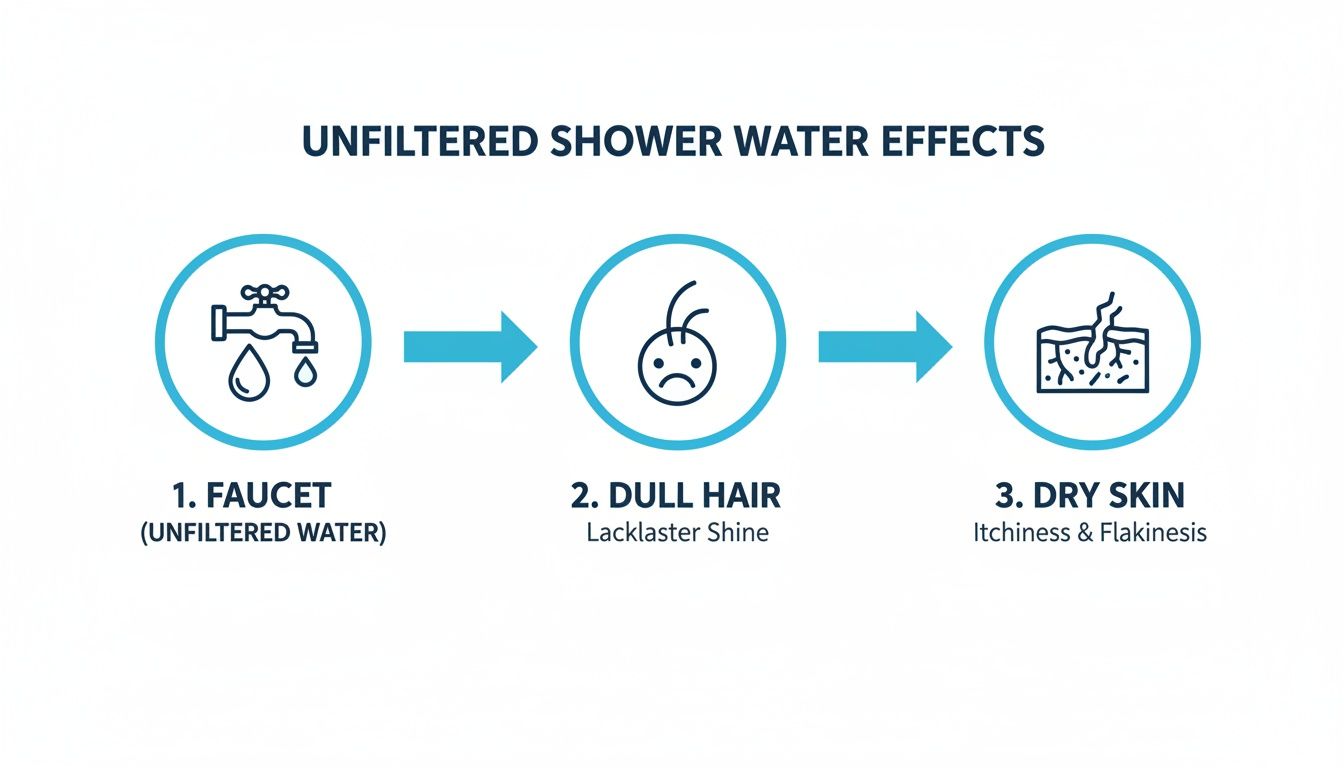
Infographic illustrating the progression of unfiltered shower water to dull hair and dry skin.

As you can see, filtering water right at the source can make a world of difference for your entire home.

The Core Filtration Trio

While there are many layers at play, a few key components do the heavy lifting. Understand these, and you’ll see how the filter transforms your water quality.

  • KDF-55 (Kinetic Degradation Fluxion): This is your front line of defense against chlorine and heavy metals. KDF-55 is a granular blend of high-purity copper and zinc that starts a chemical reaction called redox. This process zaps harsh free chlorine and converts it into a harmless, water-soluble chloride long before it reaches your skin or hair. It also helps prevent bacteria and algae from setting up camp inside the filter.

  • Activated Carbon: Think of this as a super-sponge with a massive surface area. It’s fantastic at grabbing and trapping organic chemicals and other contaminants that cause bad tastes and odors, especially the funky disinfection byproducts often found in city water.

  • Calcium Sulfite: This material is a chlorine-killing specialist, and it truly shines in hot water. Where other media can start to get lazy as the temperature rises, calcium sulfite keeps on working. It can remove up to 99% of chlorine, which is why your shower starts feeling so much cleaner and fresher.

When you combine these three, you get a powerful synergistic effect. What one layer might miss, the next one is designed to catch. It’s a much more thorough approach to home water filtration than any single material could ever achieve on its own.

Beyond the Basics: Layers for Total Care

The AquaBliss filter doesn't stop there. It includes several other layers that are all about refining the water and improving how it feels on your skin.

For example, you’ll find mineralized balls designed to infuse the water with trace minerals and help balance its pH. Other layers, like zeolite and tourmaline, work to pull out even more impurities and actually change the water’s texture. This is what creates that "softer" water sensation, even though it's not a traditional water softener.

This layered design is a big reason why AquaBliss has become a major player in a fast-growing market. After its 2023 upgrade, the filter really stood out in the filtered shower head category, which is on track to become a $2.5 billion market by 2025. Lab data shows its 15-stage design captures 99% of sediments and cuts down hydrogen sulfide (that rotten egg smell) by over 90%. You can dig into the numbers behind the industry's growth with these market statistics from AB Newswire.

All this complex science packed into a small canister is what turns a routine shower into a genuinely better experience for your home.

Real-World Performance and Water Pressure

All the talk about filtration layers and redox reactions is great, but it doesn't mean much until you actually step into the shower. What you really want to know is: how does the AquaBliss perform day-to-day in a real home?

The first thing you'll likely notice is the smell—or rather, the lack of it. That "public pool" funk from chlorine is one of the first things to go, thanks to the KDF-55 and calcium sulfite media doing their job. Your shower stops feeling like a chemical treatment and starts feeling like a pure, clean rinse.

It also tackles the effects of hard water minerals. While this isn't a full-blown water softener, it does an admirable job of inhibiting scale. That means less of that chalky buildup on your glass doors and shower walls. You'll also feel it on your skin, which tends to feel less dry and tight right after you get out.

Chlorine and Contaminant Reduction

At its core, a shower filter's main job is to get rid of chlorine, and AquaBliss excels here. The multi-stage design is built for high-efficiency removal, which makes a huge difference not only for your skin but also for the steam you're breathing in during a hot shower.

The numbers back this up. AquaBliss filters became a household name because they work, with 2023 market reports showing over 95% reduction in chlorine and certain heavy metals. The real trick is that they manage to do this while keeping your water pressure strong—a common pitfall for lesser filters.

The difference is often noticeable from the very first use. People often describe the water as feeling "silky" or "smoother," which is the direct result of stripping out all those harsh disinfectants and minerals that lead to dry skin and irritation.

Maintaining Strong Water Pressure

Let's be real: nobody wants a filter that turns their powerful shower into a sad little trickle. It's a valid concern. Anytime you add something to your home's plumbing line, you introduce resistance. Thankfully, the AquaBliss was engineered to keep this to a minimum.

For most homes with standard water pressure, usually somewhere between 40 and 80 PSI, you probably won’t notice a difference. The filter keeps the flow rate above the 2.5 gallons per minute (GPM) standard, so your shower should feel just as invigorating as before.

Here’s a general guide:

  • Standard Pressure (40-80 PSI): You'll likely experience no noticeable change in flow.
  • High Pressure (80+ PSI): The filter might actually tame the flow a bit, which can help save water without feeling weak.
  • Low Pressure (Below 40 PSI): If your pressure is already low, you might see a small drop. Any filter will create some resistance.

If your home has a weak flow to begin with, it’s worth looking into how to fix low water pressure before installing any filter. But for the majority of people, the AquaBliss does an excellent job of giving you cleaner water without sacrificing a satisfying shower.

The Impact on Your Skin and Hair Health

Let's get to the fun part. The specs and flow rates are important, but the real reason you're looking at a home shower filter is for what you can see and feel. Will it actually make a difference for your skin and hair? This isn't just about filtering water; it's about giving your personal care routine a serious upgrade.

The science is simple: when you remove the harsh chemicals and minerals from your water, your body's natural moisture can finally do its job.

A woman with wet hair and water droplets on her back in a shower, promoting softer skin and hair.

Think about it this way: showering in chlorinated water is like giving your skin and hair a daily bath in a mild bleaching agent. That chlorine aggressively strips away the natural oils (sebum) that protect your skin. This constant stripping action leads to the familiar cycle of dryness, itchiness, and irritation. Over time, it can even contribute to premature signs of aging, like fine lines.

When the AquaBliss filter takes that chlorine out of the equation, your skin can finally hold onto its own moisture. It’s common for users to notice an immediate drop in that tight, itchy feeling after a shower. For some, it even brings welcome relief from ongoing dry skin conditions like eczema.

Restoring Your Hair’s Natural Radiance

That same stripping effect that’s so tough on your skin is just as bad for your hair. Chlorine and hard water minerals rough up the hair cuticle—the outermost layer of each strand. That’s the villain behind hair that feels coarse, looks frizzy, and is a nightmare to manage.

Filtered water lets that hair cuticle lie flat and smooth again. This simple change unlocks several benefits you’ll notice right away:

  • Increased Softness and Shine: When your cuticles are smooth, they reflect light better and feel silky soft.
  • Reduced Frizz and Tangles: Without mineral buildup gumming things up, your hair becomes more cooperative and less prone to tangles.
  • Better Product Performance: Shampoos and conditioners can finally work the way they're supposed to on hair that's truly clean.

A shower filter isn't just another plumbing fixture; it's a beauty tool. By providing cleaner water, it creates the ideal foundation for healthier skin and hair, allowing your other products to deliver the results they promise.

This is an absolute game-changer if you color-treat your hair. Chlorine is infamous for making expensive dye jobs fade incredibly fast. By filtering it out, you can keep your color looking vibrant for much longer, which means fewer trips to the salon and more money in your pocket. From platinum blondes fighting off brassiness to brunettes keeping their rich tones, a quality shower filter like the AquaBliss is a non-negotiable part of their home hair care.

A Foundation for Better Wellness

At the end of the day, this is the most important takeaway for our AquaBliss shower filter review. The noticeable improvements to your skin and hair are what make this product so compelling. It turns a daily chore into a proactive step for your overall wellness.

The filter isn’t adding some magic potion to your water. It’s simply taking out the bad stuff, letting your body get back to its natural, hydrated state. The difference is often so stark that people say they can't imagine going back. Softer skin, shinier hair, and longer-lasting color aren't just cosmetic perks—they're clear signs that you've successfully improved your home water quality right where it matters most.

Easy Installation and Long-Term Maintenance

Let’s be honest, nobody wants a home upgrade that turns into a weekend-long project requiring a panicked call to the plumber. The best thing about the AquaBliss shower filter? You can get it set up in minutes, seriously. No toolbox, no special skills, no headaches.

It’s designed to be a universal fit for any standard shower arm, which means it works in pretty much any home or apartment. For renters, this is a huge win since you can’t make permanent changes to the plumbing. The process is as simple as changing a lightbulb: just unscrew your shower head, screw the AquaBliss filter on, and then screw your shower head back onto the filter. Done.

Hands easily installing a white shower filter onto a shower hose connection in a tiled bathroom.

This dead-simple setup is a big reason AquaBliss has made such a splash in the home water filtration market. The global demand for shower filters is massive—estimated at USD 1.12 billion in 2024—and a lot of that growth comes from people who just want a quick, effective solution without any fuss. You can dig into more stats on this growing home filtration trend over at DataHorizzon Research.

Long-Term Costs and Cartridge Replacement

Once it's installed, you can pretty much forget about it. The only "maintenance" you’ll ever do is swapping out the filter cartridge. If you can replace the filter in a Brita pitcher, you can handle this.

AquaBliss suggests a new cartridge every 4 to 6 months. Your mileage will vary, of course. If your home's water is extra hard or loaded with chlorine, you’ll probably find yourself on the shorter end of that, closer to the 4-month mark.

Replacing the cartridge is just as straightforward as the initial install:

  1. Unscrew the two halves of the filter housing.
  2. Pull out the old, used-up cartridge.
  3. Pop the fresh one in.
  4. Screw it all back together. That’s it.

This is what makes the filter so practical for any home. There are no service calls or complicated parts. You just get a steady supply of filtered water with a few minutes of effort twice a year.

And what about the cost? The replacement cartridges are very affordable, making this a smart, budget-friendly choice for long-term home water filtration. When you spread that cost over a cartridge that lasts up to six months, you're talking pennies per shower. It’s the perfect combination of easy setup, zero-hassle upkeep, and low ongoing costs.

Our Final Verdict on the AquaBliss Filter

So, what's the bottom line here? After putting the AquaBliss shower filter through its paces, we can say it’s a seriously effective and easy-to-use solution for any home wanting better shower water. Its main mission is to tackle chlorine and other contaminants, and it absolutely delivers on that promise.

This isn't just about lab reports. We're talking about real, noticeable changes—the kind you can actually feel. Users consistently rave about having softer skin and shinier hair, and finally banishing that harsh "pool" smell from their bathroom. The tool-free installation makes it a fantastic option for just about everyone, whether you own your home or rent an apartment. Plus, swapping the cartridge is a piece of cake, so keeping it running is never a hassle. For those of us fighting the endless battle with hard water, it also does a great job slowing down scale buildup.

Who Is This Filter For?

The AquaBliss is a great all-arounder, but it’s a real game-changer for a few specific groups of people looking to improve their home water filtration.

  • City and Suburban Dwellers: If your home gets city water, you’re showering in chlorine every single day. This filter is one of the best ways to stop it right at the showerhead, saving your skin and hair from its drying effects.

  • Those with Sensitive Skin or Hair: Anyone struggling with dryness, itchiness, eczema, or trying to protect brittle, color-treated hair will feel a huge difference. By stripping out the chemical irritants, the AquaBliss helps create a much gentler, more soothing shower.

  • Anyone Seeking an Affordable First Step: If you're new to the world of home water filtration and just want to see a real improvement without dropping a ton of cash, this is your perfect starting point. It gives you proven results without breaking the bank.

Our final verdict in this AquaBliss shower filter review is that it offers exceptional value. It successfully bridges the gap between high performance and affordability, making it a highly recommended investment for a healthier, more comfortable shower experience in your home.

Of course, no filter is without its trade-offs. The main thing to keep in mind is the ongoing cost of replacement cartridges, which you'll need to change out every 4-6 months. But when you weigh that against the benefits—and the money you might save on specialty hair and skin products—it’s a very reasonable price to pay for a daily wellness upgrade. If you want a dependable filter that’s simple to use and does exactly what it says it will, the AquaBliss is a confident buy.

Frequently Asked Questions

Still have a few questions on your mind? You’re not the only one. Let's wrap up this AquaBliss review by answering the most common questions we hear about this popular home water filtration device.

How Will I Know When to Change the Filter Cartridge?

AquaBliss suggests a new cartridge every 4-6 months to keep your water filtration system running smoothly. Honestly, your senses will tell you when it’s time for a change.

If that familiar chlorine smell starts creeping back into your shower, or you feel the water pressure drop off a bit, those are sure signs your filter has done its job and needs replacing.

Will an AquaBliss Filter Lower My Home's Water Pressure?

For most homes with standard water pressure (around 40-80 PSI), you won’t notice a difference. The AquaBliss is built to keep your shower flow strong.

If your home already struggles with very low water pressure, any filter will add a little resistance, so you might see a small decrease.

Think of it like this: the filter is designed for high performance with minimal impact. For the vast majority of users, the change in pressure is so negligible that the benefits of clean, filtered water far outweigh it.

Is This a True Water Softener for Hard Water?

While this filter does a great job fighting the annoying effects of hard water—like scaly buildup and that dry, itchy feeling on your skin—it isn't a true, salt-based water softener.

It works by inhibiting scale, but it doesn't actually remove the calcium and magnesium minerals that define hard water. It definitely makes hard water feel much better on your skin and hair, but technically, it conditions the water rather than "softening" it, making it a great addition to any home dealing with hard water issues.


At Water Filter Advisor, we're committed to helping you find the best solutions for your home's water quality. Explore our in-depth guides and reviews to make a confident choice for your family's health and comfort. Learn more at https://www.waterfilteradvisor.com.

How To Install The StoneStream Hard Water Filtration Kit - Mixer Shower

How To Install The StoneStream Hard Water Filtration Kit – Mixer Shower


The StoneStream Hard Water Filtration Kit includes the EcoPower showerhead and the StoneStream universal shower hard water filter. Both designed to purify your shower water and remove any impurities from your shower water such as Chlorine, Limescale, heavy metals, and more.

The Hard Water Filtration Kit is especially beneficial for those of you who live in a hard water area, and for anyone who feels itchy or dried hair or skin.

To get your StoneStream Hard Water Filtration Kit go to

For any questions about fitting, operation and maintenance of our products – please reach out to us via

Original Video Source

SUBSCRIBE
Weekly newsletter