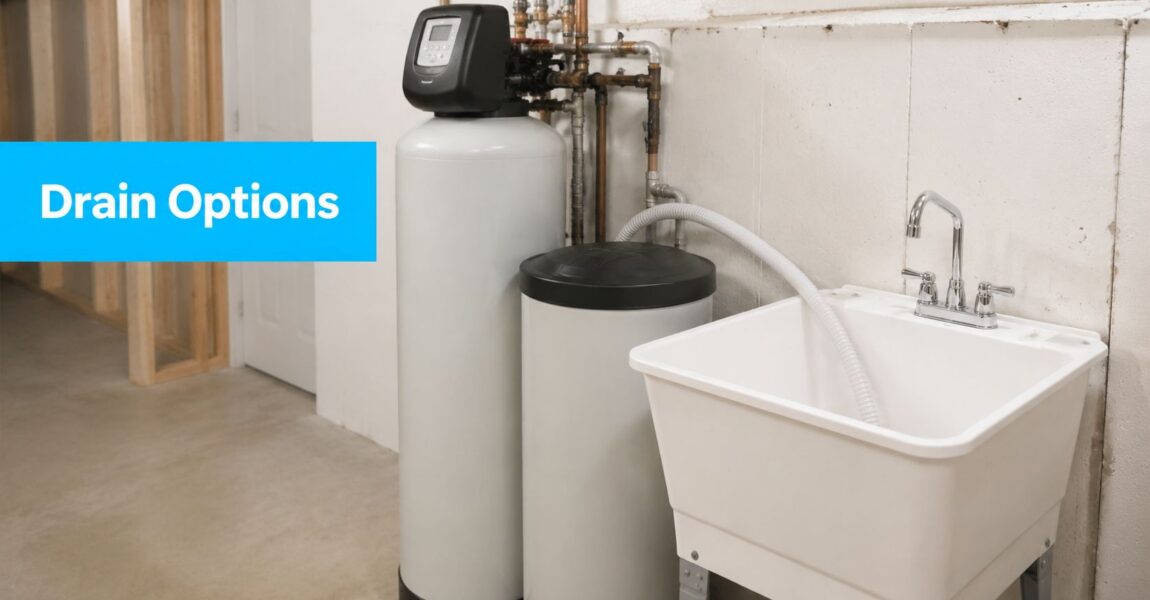
A lot of homeowners reach the same point in a softener install and suddenly slow down. The tank is set. The bypass is connected. Salt goes in one side, hard water comes in the other. Then you're left holding a drain tube and wondering where that water is supposed to go.
That last connection matters more than people think. A water softener doesn't just make minerals disappear. During regeneration, it sends mineral-laden discharge and brine out through the drain line. If that line is routed badly, you can end up with contamination risk, overflow, foul smells, or a floor full of water at the worst possible time.
The safest water softener drain options are the ones that protect two things at once. They protect your home from leaks and backups, and they protect your drinking water from cross-contamination. That's the frame I use on every install. Not “what's easiest?” but “what fails safely, and what stays code-compliant?”
Your New Softener Is In Now Where Does the Water Go
A new softener often looks finished, but is not. The resin tank is standing there like a new appliance, the brine tank is in place, and everything feels done. But the drain line is the part that decides whether the system will work cleanly or cause headaches.
I've seen homeowners treat that tube like an afterthought and aim it at whatever opening is nearby. That's how people end up with a hose shoved into a sewer cleanout, dropped too deep into a sink, or snaked across a room where it kinks the first time someone stores a box against it. The softener may still run for a while, but the risk starts immediately.
The drain line carries the waste stream from regeneration. It needs a destination that can accept discharge without backing up, splashing, or creating a contamination path into the plumbing system. That's why common choices are usually a utility sink, floor drain, sump-related setup, or another approved indirect drain arrangement.
If you want a good example of how location drives drain planning, this guide on water softener installation in Big Bear shows why placement around real homes often dictates whether the cleanest solution is in a garage, utility room, or basement corner.
For homeowners doing research before cutting pipe, practical water treatment advice can also help you think through the whole-home side of the project, not just the mechanical hookup.
Practical rule: If the drain plan feels improvised, it probably is. Softener drainage should look deliberate, supported, and easy to inspect.
What the drain choice really controls
Your drain choice affects more than convenience:
- Safety: A bad connection can expose the system to wastewater.
- Reliability: A long, awkward run can make the softener struggle to discharge properly.
- Cleanup risk: If the receptor can't keep up, regeneration can end on your floor.
- Serviceability: A visible, accessible drain line is easier to check when something goes wrong.
That's why smart water softener drain options always start with the same question. Where can this line discharge freely and safely, without ever becoming part of the wastewater pipe itself?
The Golden Rule of Softener Drainage The Air Gap
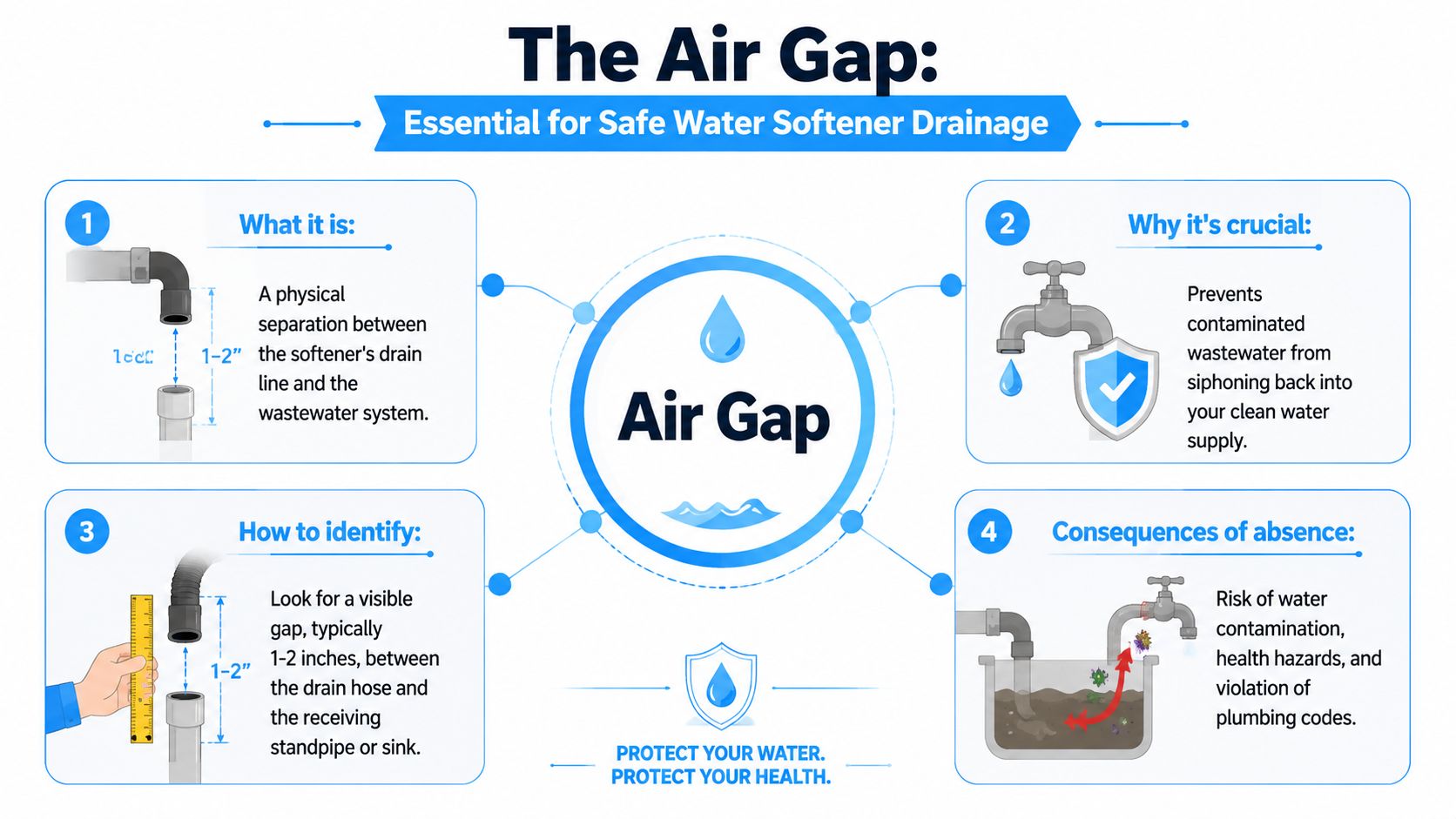
Before talking about drain destinations, there's one rule that sits above all of them. The drain line must end with an air gap. It must not be hard-connected directly into a household waste line.
A good way to picture it is this: wastewater plumbing is a dirty channel under changing pressure. If the softener drain line is tied directly into that channel, you've built a bridge between contaminated water and a system connected to your home's potable plumbing. The air gap breaks that bridge with open space.
According to Pipe Pros Utah's guidance on safe water softener drain options, water softener discharge should terminate with an air gap of about 1.5 inches above the flood rim or receptor to prevent back-siphonage of non-potable brine into the plumbing system.
What an air gap looks like in the real world
It isn't complicated. The end of the drain tube stops above the place receiving the discharge.
That receptor might be:
- A laundry sink
- A floor drain
- An approved standpipe-type receptor
- Another approved indirect drain point
What it should not be is a hose pushed down into dirty water, taped into a drain opening, or glued into a waste pipe to “make it neat.”
Why plumbers care so much about it
Backflow problems don't announce themselves politely. They happen when a drain backs up, when pressure conditions change, or when wastewater rises where it shouldn't. If the line is submerged or directly connected, the softener drain can become a contamination path.
That's why I explain the air gap to homeowners as a missing stair problem. If it's there, nobody notices it. If it's missing, one ugly event exposes the whole mistake.
A neat-looking direct connection is often the unsafe one. The little open space looks less tidy, but it does the real protective work.
Quick air gap check
If you're standing in front of a softener and trying to judge whether the setup is safe, check these points:
- Look for visible separation. You should see open air between the tube end and the receptor.
- Check for submersion. The line end should never sit in standing wastewater.
- Inspect for “DIY sealing.” Caulk, tape, foam, or a jammed hose in a drain opening is a red flag.
- Watch the discharge path. Water should fall cleanly into the receptor without spraying out.
A lot of drain mistakes come from trying to make the line disappear. With softeners, the safe installation is usually the one you can clearly see.
Comparing Your Top Water Softener Drain Options
Some water softener drain options are forgiving. Others only work when the house layout, soil, or pump arrangement cooperate. The best destination is usually the one that gives the shortest, cleanest, most inspectable route while still handling the discharge safely.
Water Filter Guru's overview of discharge options notes that a floor drain or laundry sink is usually the simplest, while a sump basin adds a pump-mediated lift path and a dry well or French drain depends on site conditions and soil infiltration.
Water Softener Drain Option Comparison
| Drain Option | Best For | Pros | Cons |
|---|---|---|---|
| Laundry sink | Utility rooms, basements, garages near a sink | Easy to inspect, easy to maintain, simple indirect discharge setup | Can splash if positioned poorly, sink must stay clear enough to receive discharge |
| Floor drain | Basements or utility spaces with nearby floor drainage | Clean and low-profile, often the simplest route | Drain must accept flow without backing up, poor placement can cause splashing |
| Standpipe | Laundry-area setups with an approved receptor arrangement | Compact option where sink space is limited | Must be configured correctly, less forgiving if the line is jammed in too far |
| Sump basin | Homes where gravity drainage isn't practical | Can solve elevation and distance problems when planned well | Adds pump dependence, more parts means more failure points |
| Dry well or French drain | Exterior or site-specific installs with suitable soil | Useful where interior drainage isn't nearby | Depends heavily on soil conditions, weak in clay or high-water-table locations |
Laundry sink
A utility sink is one of my favorite solutions because you can see everything. If the line shifts, splashes, leaks, or starts discharging strangely, you catch it quickly. It's also easier to keep the air gap obvious.
The downside is human behavior. People stack buckets in sinks, leave rags in the basin, or fill the sink with tools and paint trays. A softener drain needs that sink to stay available when regeneration happens, not just when you happen to be watching it.
Floor drain
A nearby floor drain is often the cleanest answer. There's no basin to clutter up, and the route can be short and direct. If the drain is healthy and the line is secured properly above it, this is often a very practical installation.
Where it goes wrong is in older basements or utility spaces with slow drains. If the floor drain already struggles during normal use, a softener discharge can expose that weakness fast.
Standpipe
A standpipe can work well, especially around laundry plumbing, but it needs to be treated like a proper receptor. This is not a place to shove the tube deep and forget about it.
Standpipes are compact and tidy when done right. They're less forgiving when done casually.
Sump basin
A sump basin can be useful when the softener sits below available drainage or when routing to another receptor is unrealistic. But once you choose this path, you've tied softener discharge to a pump system.
That means the drain route now depends on float switches, pump condition, basin capacity, and power. It can work, but it's no longer the simple option.
Field note: Every pump-assisted setup deserves extra attention because the drain line itself may be fine while the basin or pump is the actual weak link.
Dry well or French drain
This is the most site-dependent option. In the right setting, it can work well. In the wrong setting, it turns into a wet patch, a soggy trench, or a maintenance problem you inherit every rainy season.
Dry wells and French drains rely on the ground's ability to accept and disperse water over time. If the soil drains poorly or the water table is already working against you, this option can disappoint even if the trench looked great the day it was installed.
Drain Line Sizing and Placement Best Practices
A softener can only push drain water so far and so well. If you ask too much of the line, the unit pays for it. That's why drain hose size, routing, and support aren't small details. They're part of whether regeneration finishes the way it should.
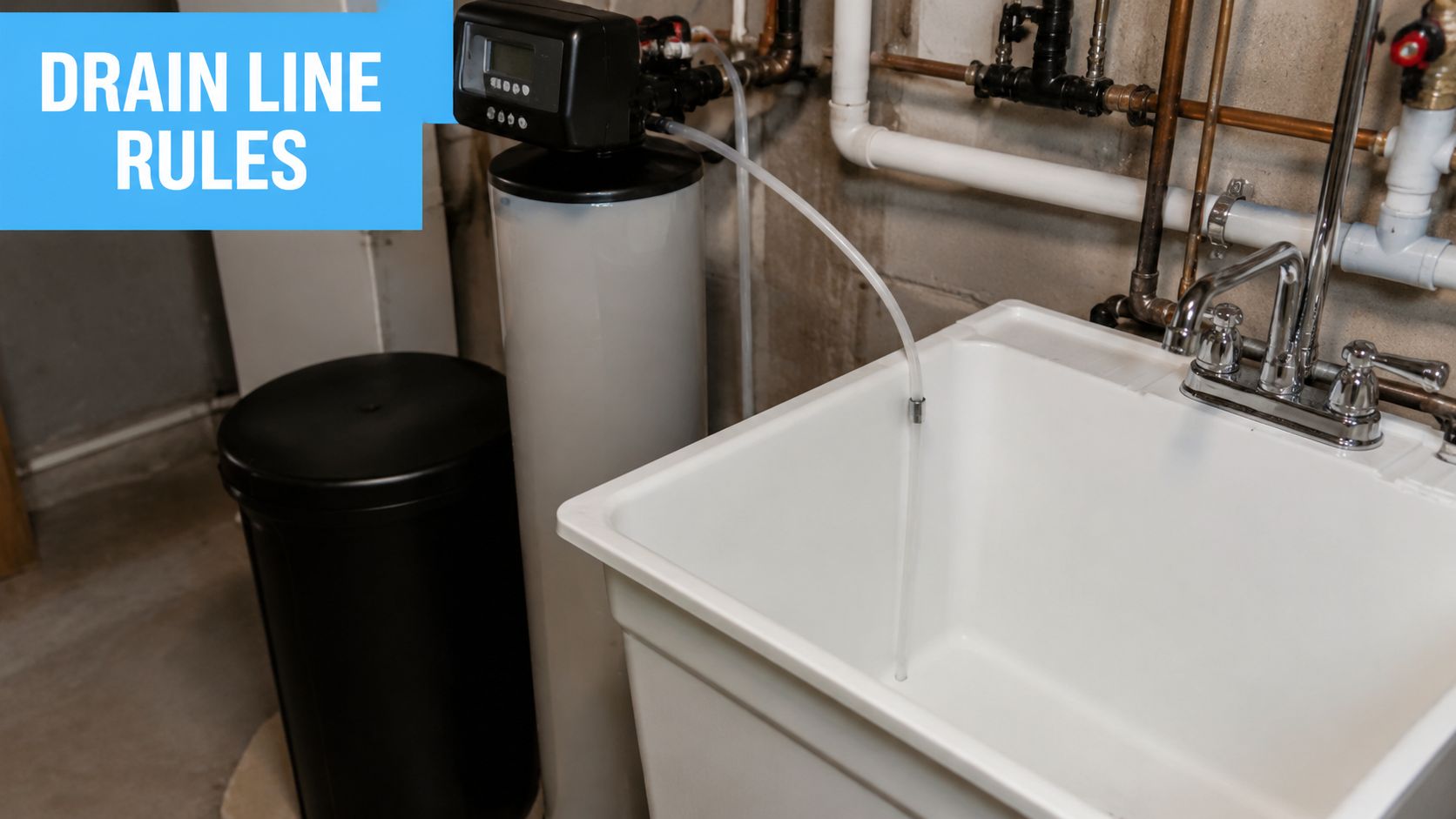
A Morton Water Softeners drain hose requirement guide specifies a drain hose with 3/8 inch inside diameter, no more than 8 feet vertically or 30 feet horizontally, and an air gap of 1.5 inches at the end to prevent backflow and flooding.
What those limits mean in practice
The numbers tell you the softener isn't a transfer pump for your whole house. It's designed to discharge within a workable range.
If you run the line too high, too far, or through a maze of bends, several problems show up:
- The unit may struggle to discharge fully
- Flow can slow enough to affect regeneration
- The hose becomes easier to kink or trap debris
- Leaks become harder to spot because the route is hidden
Placement habits that prevent callbacks
The best drain line routes usually share the same traits:
- Short path: Keep the run as direct as the room allows.
- Open visibility: Don't bury the line behind storage or finished panels if you can avoid it.
- Supported routing: Strap or clip the hose so it doesn't sag, whip, or rub on sharp edges.
- No coils or pinches: Extra hose stuffed behind the unit is a common mistake.
- Freeze protection: If any part of the route is exposed to cold conditions, rethink it before winter does.
A drain line doesn't need to be pretty. It needs to be stable.
Small placement mistakes that create big messes
I see these often:
- The hose hangs loose behind the brine tank. It eventually kinks.
- The discharge point is too low in the sink. That increases splash and contamination risk.
- The line crosses a walking path. Someone catches it with a foot or storage bin.
- The route goes through an unprotected exterior wall or cold space. Then freezing becomes the primary problem.
Keep the hose where you can inspect it without moving half the garage. If a drain line is hidden, problems stay hidden too.
Good water softener drain options aren't just about the destination. They also depend on whether the line can reach that destination without fighting gravity, furniture, and common sense.
Understanding Codes and Environmental Impact
Plumbing code can feel picky until you understand what it's trying to stop. Most of the rules around softener drainage exist because wastewater and drinking water must never have a direct path to each other. That's the heart of it.
PB Water Softening's installation article describes the widespread adoption of air-gap and non-direct-discharge rules as a major milestone in softener drainage practice. The same article notes that a French drain can be built as a 10-foot trench about 2 feet deep filled with rock and pipe to disperse discharge over time.
Why the code side matters
The code is doing two jobs at once:
- Protecting the potable system from backflow
- Controlling where regeneration discharge ends up
That's why direct hard connections are such a bad idea. They might look efficient, but they defeat the separation modern plumbing practice is built around.
Outdoor discharge isn't automatically harmless
Homeowners sometimes assume outside means safe. Sometimes it is. Sometimes it isn't.
Softener discharge contains brine and backwash water. If you dump that where plants, shallow roots, wet soil, or nearby water-sensitive areas are already under stress, you may create a new problem outside instead of solving one inside.
French drains and similar dispersal systems work best when the site supports slow infiltration. They're less attractive where soil stays tight and wet, where runoff collects, or where the discharge has nowhere reasonable to go after heavy use.
Think beyond the softener itself
When evaluating an outdoor option, ask practical questions:
- Does the ground absorb water well, or stay soggy?
- Will discharge collect near the house?
- Could it affect landscaping you care about?
- Will the route stay accessible for maintenance?
A code-compliant setup protects your plumbing. A well-chosen discharge location protects the rest of your property too.
Troubleshooting Common Water Softener Drain Issues
A healthy drain setup is boring. It sends the regeneration water where it belongs and doesn't ask for attention. When a problem starts, the clues are usually pretty ordinary at first. Gurgling, drips, a damp floor, or a sink that suddenly looks busier than normal during regeneration.
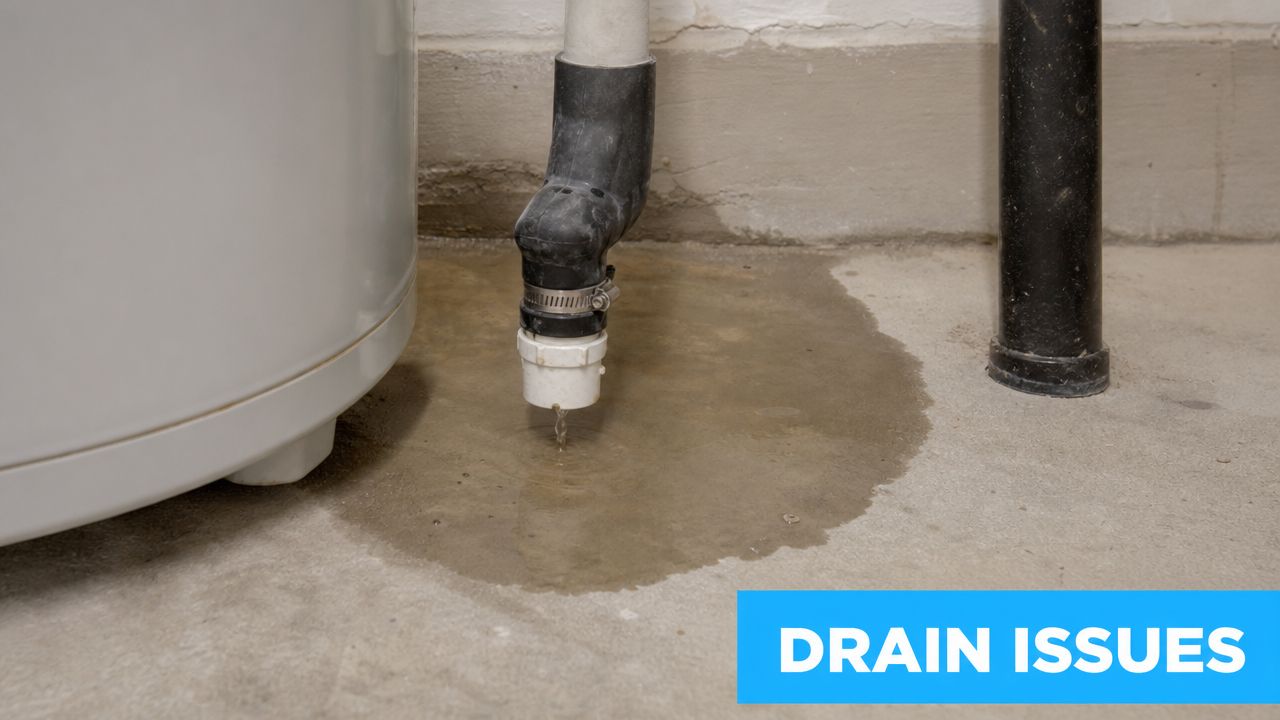
Water pooling near the drain point
If you see water around the floor drain or utility sink during regeneration, start with the obvious checks.
- Check the receptor first: The drain itself may be slow or partially blocked.
- Watch one full discharge cycle: You want to see whether the water arrives too fast, splashes out, or backs up.
- Look at hose position: A shifted line can spray outside the target area.
If the drain destination can't accept the discharge reliably, that location may not be one of your better water softener drain options after all.
Gurgling or burping sounds
A loud drain line usually means something isn't flowing cleanly. Sometimes it's a partial blockage. Sometimes the hose routing creates awkward bends or low spots that trap water and air.
Check for sagging sections, kinks, or places where the hose was pinched behind the unit. If the route looks like a roller coaster, simplify it.
For a visual walkthrough of common drain-related service issues, this video gives a useful real-world look at what can go wrong and how installers think through the fix:
Bad smell near the softener
A softener drain line shouldn't create sewer odor in normal operation. If you smell wastewater, inspect the drain receptor area and check whether someone created an improper direct connection or let the hose sit where dirty water collects.
That smell is a clue, not just an annoyance.
Winter and cold-space problems
If part of the drain route passes through a cold garage wall, crawlspace, or unconditioned area, freezing is a serious concern. A frozen drain line can stop discharge and force the system into a backup situation inside the home.
Shut the unit down and use bypass mode if you suspect a frozen or blocked drain line. Don't keep forcing regeneration into a line that can't discharge.
When troubleshooting, don't start with the control valve. Start with the simple path the water takes. Most drain issues reveal themselves with a flashlight and one patient inspection.
Frequently Asked Questions About Softener Drains
Some drain questions keep coming up because they don't have one-size-fits-all answers. The biggest one is usually about septic systems.
Florida Water Technologies points out that whether a water softener can drain into a septic system is still an under-answered question for homeowners on private wastewater systems, especially where salinity loading and soil absorption are real concerns.
Can a water softener drain into a septic system
Sometimes homeowners do use a septic-connected drain path, but in these cases, local guidance matters a lot. The practical concern isn't just whether the water can physically get there. It's whether that destination makes sense for the septic system, the soil conditions, and local rules.
If your home is on septic, ask a local plumber or septic professional who understands both plumbing code and site conditions. This is not a place for guesswork.
What if there's no drain nearby
Then the drain plan needs to drive the installation plan, not the other way around.
You may need to:
- Relocate the softener closer to an approved receptor
- Use a pump-assisted arrangement if gravity drainage isn't workable
- Consider a site-appropriate exterior dispersal method if local conditions allow it
The wrong answer is usually the tempting one. “I'll just run the hose over there somehow.”
Can I drain it outside
Sometimes, yes. Sometimes, no.
Outdoor discharge depends on the site. Soil, grading, weather exposure, landscaping, and local code all matter. An exterior option that works on one property can be a bad fit on the next one over.
Do I need a special sump setup
If you're draining into a sump basin, think of the pump as part of the drain system, not a separate detail. The basin has to stay serviceable, the pump has to be dependable, and the setup has to handle the added discharge without creating another maintenance problem.
What's the best overall option
For many homes, the best answer is the simplest approved one nearby. A utility sink or floor drain often wins because it gives you a short route, easy inspection, and fewer moving parts.
That said, the best water softener drain options are always house-specific. The safest setup is the one that respects code, preserves an indirect discharge path, and still works when nobody is standing there watching it.
If you're sorting through water treatment decisions beyond just softener drainage, Water Filter Advisor is a strong place to compare filtration options, maintenance guidance, and practical buying advice for safer, better-performing water at home.
- June 5, 2026
- Uncategorized
