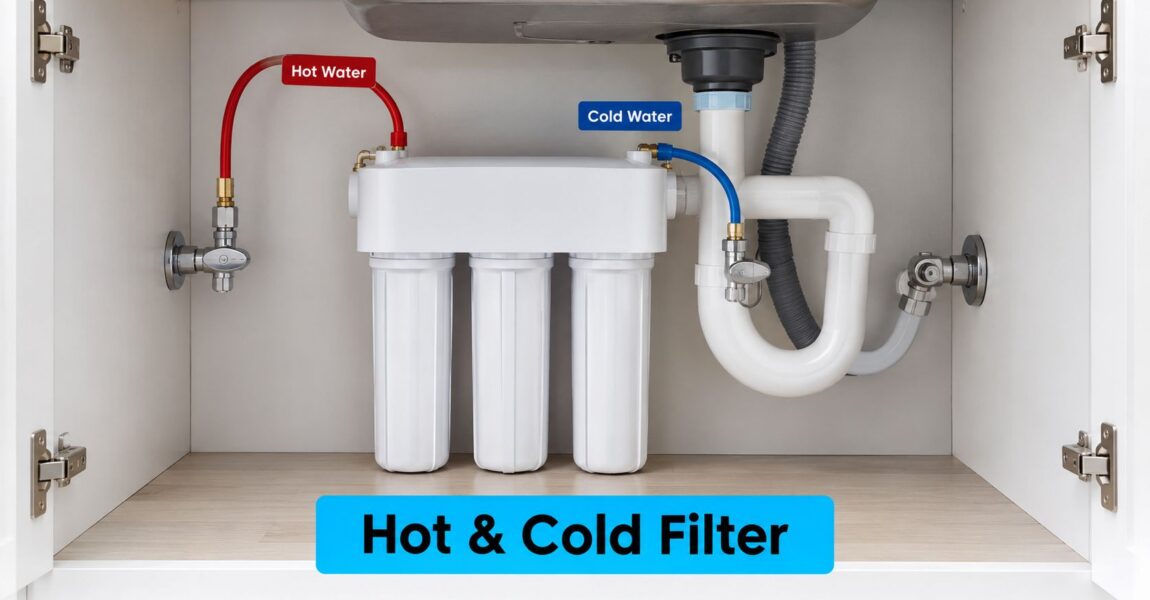
Standard under-sink water filters are designed for cold water only, usually within a supply range of 40–100°F, and should never be connected directly to hot-water lines. If you want filtered hot water as well as filtered cold water, you need a specialized system or a carefully planned combination of separate filtration and heating equipment.
You may have reached this page after standing at the kitchen sink with a cup in one hand and a plumbing question in the other. The faucet delivers hot water from one side and cold water from the other, while the filtration unit rests inside the cabinet below. It looks like one neat setup, so it's natural to assume both temperature settings must pass through the same filter.
That assumption causes trouble. A standard filter normally treats the cold branch only. The hot branch remains connected to the household hot-water supply unless a separate, purpose-built arrangement has been installed. Understanding that distinction is the key to creating a safe under sink water filter hot and cold setup.
The Hidden Reality of Filtered Kitchen Faucets
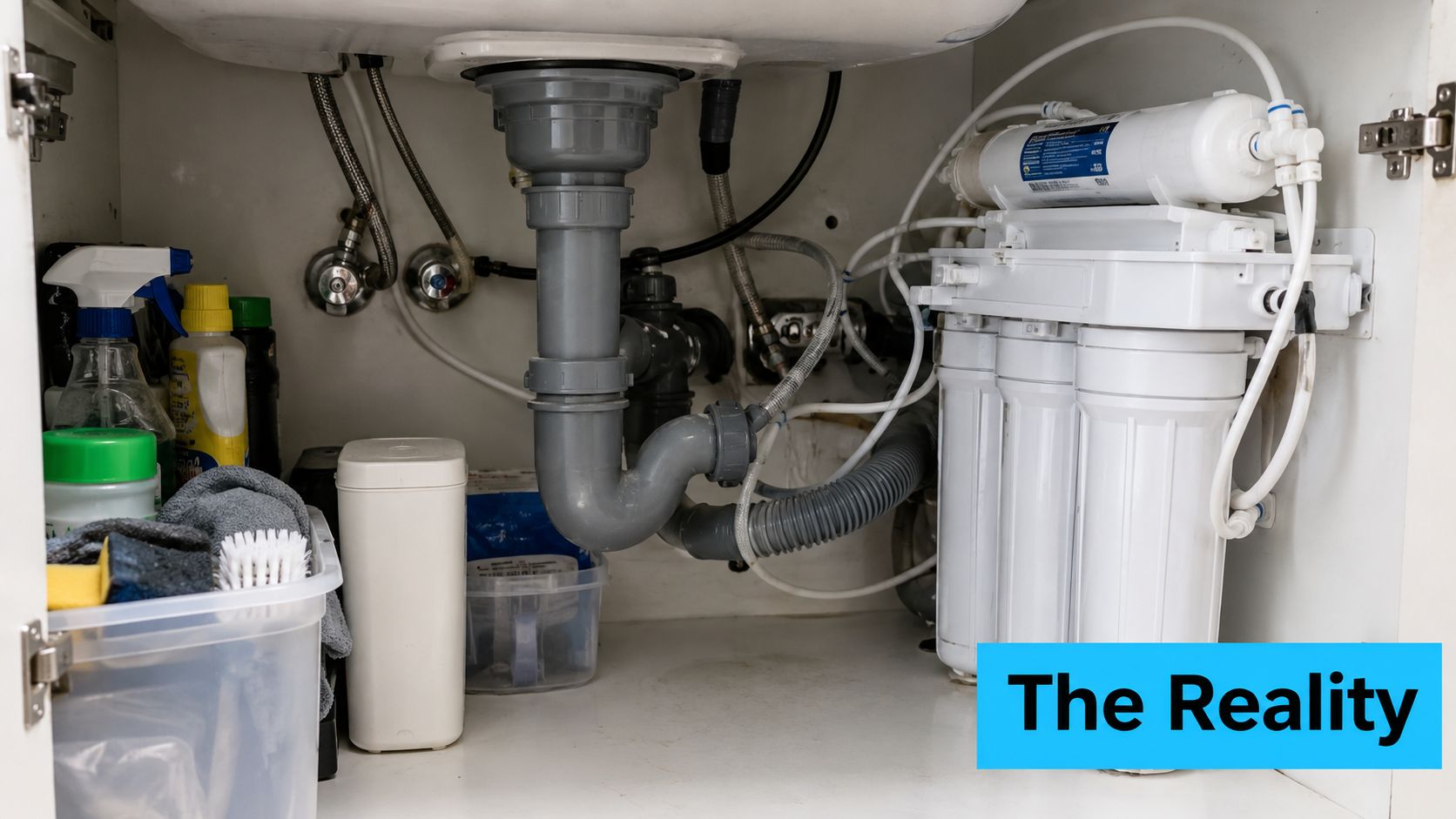
A homeowner named Daniel recently installed a popular multi-stage filter beneath his kitchen sink. The unit connected neatly to the cold-water pipe, and a small drinking-water faucet sat beside the main tap. The cold filtered water tasted noticeably better, but when he turned the main handle toward hot, he noticed something confusing. The water still came from the same familiar faucet, yet there was no reason to believe it had passed through the filter.
He traced the pipes and found the answer. The filter had one inlet from the cold supply and one outlet to the dedicated filtered faucet. The hot-water pipe ran separately from the water heater to the regular kitchen faucet. Nothing was wrong with the installation. His expectation was the part that needed correcting.
Why the confusion is so common
The word “faucet” hides several different plumbing arrangements. A standard kitchen faucet may have hot and cold inputs, while a three-way faucet can add a third, filtered-water channel. A separate drinking-water tap can do the same job without changing the main faucet. In each case, the visible fixture may look like one unit even though the water travels through separate internal passages.
That matters because a filtered cold outlet doesn't automatically make the hot outlet filtered. If a homeowner connects the filter outlet to the hot pipe, the filter may receive water outside its approved operating range. If the homeowner instead mixes filtered cold water with unfiltered hot water at the faucet, the result is blended water, not water filtered at both temperatures.
Practical rule: Treat the cold, hot, and filtered outlets as separate plumbing paths unless the manufacturer specifically identifies the system as compatible with both temperatures.
The category is widespread enough to make this misunderstanding easy to encounter. One market report says more than 55 million households in North America used under-sink filtration units in 2023, while 65% of new installations were placed under kitchen sinks, yet almost all of those systems were designed for cold water only, according to market data on under-sink filtration adoption.
What a realistic kitchen arrangement looks like
For many homes, the cleanest arrangement is simple:
- Cold drinking water: The cold branch feeds the under-sink filter, which then supplies a dedicated drinking faucet or filtered outlet.
- Hot tap water: The hot branch continues to supply the ordinary kitchen faucet.
- Filtered hot water: A separate heating tank or purpose-built filtered hot-water dispenser receives filtered water through components rated for heat.
This layout also gives you flexibility when replacing the kitchen faucet. A homeowner comparing the best faucet styles for remodels should check whether the chosen fixture supports a third filtered-water channel, rather than assuming every hot-and-cold faucet can accept filtered water internally.
The important point is reassuring: you can have filtered water available for cold drinking, tea, cooking, and instant dispensing. You just can't achieve that result by sending hot supply water through an ordinary cold-water filter.
Why Temperature Limits Matter for Your Filter
You turn on the kitchen tap expecting filtered water, then notice a leak forming inside the cabinet. The filter may still look intact, yet the problem can begin with water that was too warm for its design.
A filter is a small pressure vessel, not just a tube filled with material that catches unwanted particles. It contains filter media, seals, fittings, and sometimes a membrane. Each component has an operating range, and heat affects them in different ways.
Carbon media can lose performance under unsuitable conditions. Plastic housings and rubber seals may soften, deform, or stop sealing properly. Reverse-osmosis membranes depend on controlled water conditions because they separate substances through a thin membrane under pressure. Excess heat can therefore lead to reduced treatment, leaks, or early failure.
Most under-sink filtration systems are made for cold-water feed, with supply limits typically around 40–100°F. Their instructions explicitly prohibit connection to hot-water lines. Exceeding that range can damage housing seals, carbon media, and membranes, as shown in the documented installation guidance for a cold-water filtration system.
Heat changes more than taste
A homeowner may assume hot water only makes the filter less effective at removing contaminants. The effect can be broader because heat reaches the physical parts that contain the water and direct it through the media.
A weakened seal can let water bypass the cartridge or escape into the cabinet. A damaged housing may leak when the line is under pressure. A compromised membrane may stop performing according to its tested specifications. Clear-looking water does not prove that the system is still providing the expected treatment.
Warm climates also require care. Incoming water from a cold line can be warmer than expected under some conditions, so compare the actual supply temperature with the model's stated inlet range. A cold-water connection alone does not guarantee that the water is within specification.
Under-sink filter temperature limits
| Filter Type | Max Temperature | Risk If Exceeded |
|---|---|---|
| Standard under-sink carbon or membrane unit | Typically 100°F, within a broader 40–100°F supply range | Seal damage, media degradation, membrane damage, reduced performance, or failure |
| Purpose-built hot-water filtration hardware | Check the model's own specification | Higher temperatures may be acceptable only when the housing, media, seals, and connections are designed for that service |
| Conventional filter connected to a household hot line | Not approved unless explicitly labeled for hot-water use | Heat can exceed the rated range and cause performance, leak, or durability problems |
A temperature rating defines the conditions under which the manufacturer tested the system. It is not a suggestion. If a product is labeled for cold water only, a mixing valve or adapter cannot change that rating.
Heat-resistant filtration is a product category, not a plumbing workaround. The label must approve the temperature, and the fittings must support the same service.
Installation Options for Filtered Hot and Cold Water
The practical answer to “can I have filtered hot and cold water?” is yes, but the solution depends on what you mean by filtered hot water. Some households only need filtered cold drinking water and ordinary hot tap water. Others want filtered water heated for tea, coffee, cooking, or instant dispensing.
Three arrangements cover most kitchen needs.
Option one filters the cold side only
This is the simplest setup. The filter connects to the cold-water branch and sends treated water to a dedicated drinking faucet or a compatible three-way faucet. The regular kitchen faucet continues to provide ordinary hot and cold water.
It's a good fit when your main concern is drinking water, filling a kettle, washing produce, or cooking with filtered cold water. It also avoids sending heated water through equipment that wasn't designed for it.
Option two adds a separate heating tank
A dedicated under-sink heating tank receives suitable water and supplies an instant-hot tap. The heating assembly is separate from the conventional filter, so its tank, wiring, controls, and outlet components can be designed for high-temperature service.
A documented example specifies a stainless-steel tank, outlet temperatures of 88–98°C, and supply pressure between 25 and 125 psi, as described in the instant-hot system specification. Those details show why this is more than a filter connected to a hot pipe. The heating equipment has its own engineering requirements.
Option three uses a specialized filtered hot-water system
Some systems are designed specifically for filtered beverage water or instant-hot use. They may combine filtration, controlled heating, and a dedicated dispenser. These products can suit homeowners who want hot filtered water on demand, but compatibility must be checked carefully.
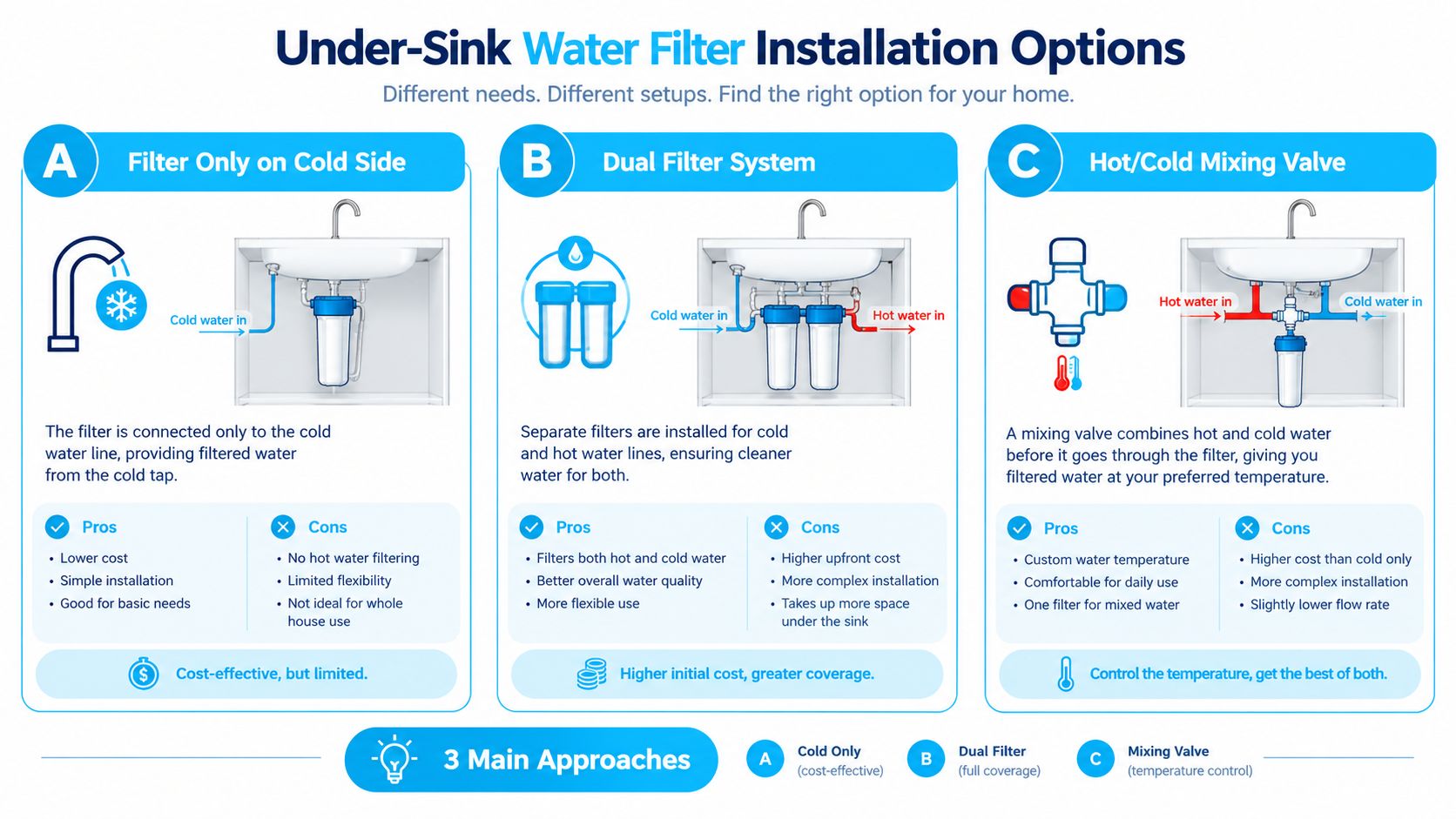
A mixing valve can blend hot and cold water at the outlet, but it doesn't make an ordinary filter safe for hot-water service. It may be part of a correctly designed system, yet it can't replace a temperature-rated filter and heating assembly.
Here's a visual guide to the plumbing problem and the possible equipment combinations:
Filtered hot and cold water installation methods
| Method | Complexity | Best For | Cost Range |
|---|---|---|---|
| Filter on the cold line with a dedicated faucet | Low to moderate | Drinking, cooking, and cold filtered water | Varies by filter, faucet, and installation |
| Filtered water plus a separate heating tank | Moderate to high | Tea, coffee, cooking, and instant-hot dispensing | Varies by tank, tap, electrical work, and plumbing |
| Specialized hot-water filtration system | Moderate to high | Households wanting a coordinated filtered hot and cold setup | Varies by system specifications and installation requirements |
The best choice depends less on the appearance of the faucet and more on the path the water takes beneath the counter. Ask the installer to identify every inlet, outlet, valve, and heating component before the work begins.
Setting Up a Dedicated Filtered Hot Water System
You want filtered water for cold drinks, cooking, and a quick cup of tea, but your kitchen has only one crowded cabinet. The practical solution is to plan the water route first. In a dedicated setup, cold water passes through the filter, then either stays cold at a drinking-water outlet or continues to a heater designed for filtered water.
That sequence matters. A standard cold-water filter is like a doorway built for one direction and one temperature. It can clean the incoming cold supply, but heated water should not be sent backward through its housing unless the manufacturer specifically approves that use. The heater and dispenser also need to be matched to the filtered-water path.
Confirm three specifications before buying
Read the product documentation before choosing the filter, tank, or faucet. Check these points:
- Inlet temperature range. Confirm whether the filter accepts cold water only, heated water, or cold water that is heated after filtration. A cold-feed filter belongs before the heating unit, not after a hot-water supply.
- Line connection. Look for instructions identifying a cold inlet, filtered outlet, heating-tank inlet, or dedicated dispenser connection. Connectors that look alike may carry water in different directions or serve different purposes.
- Pressure and flow rating. Compare the ratings for the filter, heating tank, faucet, tubing, and shutoff valve. A narrow tube or restrictive cartridge can slow delivery, while insufficient flow can affect how the heating unit operates.
Specifications are more useful than a general label such as “hot and cold.” For example, one manufacturer's specification sheet lists a 38–100°F operating range, 20–90 psi pressure range, and 2.0 gallons per minute at 60 psi. Those figures describe that product's approved conditions, not every filter sold for kitchen use.
Build the water path in order
The installer should identify the cold and hot supply lines, test the shutoff valves, and mark the intended route before connecting anything. The approved cold supply should feed the filter. From there, one branch can supply filtered cold water, while another can feed a compatible heating tank or heating assembly. The hot dispenser outlet then receives water after the heating stage, without sending heated water back through a conventional filter.
Leave service space around cartridges, valves, tubing, electrical connections, and leak points. A tank may fit beneath the counter on installation day but become difficult to remove when the filter housing blocks its connections. Keep the water lines visible enough to trace later.
Account for flow and drainage
Filtration adds resistance, so a dedicated filtered faucet may deliver water more slowly than the ordinary kitchen tap. Consumer guidance places many under-sink systems in a typical range of about 0.8 to 2.0 gallons per minute, while one product example lists a maximum of 1.70 gallons per minute at 60 psi, according to consumer testing guidance on under-sink filter flow.
Reverse-osmosis equipment can add wastewater connections and backflow protection to the plan. An air-gap faucet may be required by local plumbing rules to keep drain water separate from the purified-water route. Confirm that requirement before drilling the counter.
A plumber or qualified installer should check any arrangement combining drinking-water tubing, mains power, pressure controls, and a heating tank. A successful installation gives you filtered cold and hot water through a clearly separated, serviceable path.
Safety and Warranty Considerations to Review
The first safety question is simple: does the equipment have documented approval for the water temperature you intend to use? A conventional filter marked for cold water should stay on the cold branch. Connecting it to hot water can damage the system and may leave you relying on filtration equipment that no longer performs as tested.
Warranty terms usually follow the same logic. Manufacturers commonly specify approved temperatures, pressures, installation methods, replacement parts, and maintenance procedures. If an owner disregards those requirements, a later claim may be challenged because the equipment was used outside its design conditions. Keep the installation instructions and product specification with your purchase records so you can verify the approved setup later.
Understand what certification does and doesn't mean
Under-sink and other point-of-use treatment systems use voluntary NSF performance standards, rather than federal residential filter regulations. NSF includes under-the-sink systems within its certification scope. Common standards include NSF/ANSI 42 for aesthetic concerns such as chlorine taste and odor, and NSF/ANSI 53 for health-related contaminants, according to NSF's explanation of water-treatment standards.
Certification applies to a defined product, contaminant claim, and operating condition. It doesn't automatically mean that every version of a product removes every contaminant, or that a cold-water certification covers hot-water use. Read the performance data for the exact model and intended application.
Independent consumer testing guidance notes that many under-sink filters are chosen for certified reduction of chlorine and lead. Some higher-end systems also carry certifications related to PFAS, VOCs, pesticides, microplastics, and emerging contaminants such as pharmaceuticals under NSF/ANSI 401, as discussed in consumer testing of under-sink water filters.
Protect the plumbing around the filter
A safe installation also depends on ordinary plumbing discipline:
- Use approved tubing and fittings. Mismatched connections can leak or disconnect under pressure.
- Keep lines free of kinks. A bent tube can restrict flow and increase strain on fittings.
- Check the cabinet after installation. Moisture around a housing, valve, tank, or drain connection needs immediate attention.
- Flush the system as directed. New cartridges and membranes may require flushing before drinking.
- Replace cartridges according to the manufacturer's guidance. A filter that remains installed indefinitely may not deliver its expected performance.
Reverse osmosis deserves extra care because NSF/ANSI 58 specifically covers RO systems. RO is commonly used for tougher contaminant concerns such as arsenic and heavy metals, while basic carbon systems are generally aimed more at chlorine, odors, and taste improvement, according to NSF's overview of water filtration systems.
Certification, temperature approval, and installation instructions should all point to the same use case. If one document says cold-only and another product listing suggests hot-water use without supporting details, pause before purchasing.
Making the Right Choice for Your Kitchen
Many shoppers looking for an under sink water filter hot and cold aren't necessarily asking for one cartridge to process every drop at both temperatures. They often want a split-use solution, filtered cold drinking water plus safe hot water for tea, cooking, or instant dispensing. That distinction makes the buying decision much clearer.
Start by writing down what you want from the tap. If you mainly fill glasses, bottles, pots, and kettles with filtered water, a cold-line filter and dedicated outlet may solve the problem. If you want instant hot beverage water, you'll need a compatible heating assembly. If contaminant reduction is the priority, choose the treatment method and certification first, then select the faucet and heating equipment around it.
Use the plumbing facts as your decision filter
| Consideration | If Yes, Choose | If No, Choose |
|---|---|---|
| Do you need filtered water mainly for drinking and cooking? | Cold-line filtration with a dedicated or three-way filtered outlet | Consider a system that also includes controlled hot-water delivery |
| Do you want instant filtered water for tea or hot beverages? | A purpose-built heating tank or filtered hot-water dispenser | A conventional cold-water filter may be sufficient |
| Does the product explicitly approve your intended inlet temperature? | Continue checking pressure, flow, space, and certification | Do not connect it until the manufacturer confirms compatibility |
| Do you have cabinet space, a suitable power supply, and accessible shutoffs? | Compare integrated heating and filtration options | Use a simpler cold-only arrangement or consult a plumber |
| Are you comfortable checking tubing, valves, and leak points? | A straightforward cold-line installation may be manageable | Arrange professional installation |
Before choosing equipment, compare the full ownership picture. Include the filter cartridges, faucet or dispenser, heating equipment, installation, available cabinet space, electrical requirements, and future maintenance. A low-complexity cold-water system may suit a family that wants better-tasting drinking water. A separate heating tank may make more sense for someone who regularly prepares hot drinks and wants filtered water at the point of use.
For further help comparing filter types, certifications, replacement needs, and installation decisions, consult the under-sink filtration advice from Water Filter Advisor. The important purchase question isn't “does this faucet have hot and cold handles?” It's “which component filters the water, which component heats it, and are those components approved to work together?”
Water Filter Advisor offers consumer guidance for choosing, comparing, and maintaining home filtration systems, including under-sink filters, cartridges, certifications, and water testing kits. Visit Water Filter Advisor to compare practical options before you connect a filter to your kitchen's hot and cold plumbing.
- October 5, 2026
- Uncategorized
