A carbon filtered shower head is a simple device that screws onto your shower pipe, designed to remove chlorine and other chemical contaminants before the water hits your skin and hair. Think of it as a personal bodyguard for your bathroom, turning your daily shower into a purer, healthier rinse by filtering out invisible troublemakers.
Your Daily Shower Is Dirtier Than You Think
We all love the idea of stepping into a cascade of pure, clean water every morning. But let’s be honest: that’s rarely what’s actually happening. The water flowing into your home is treated with chlorine to make it safe to drink—a necessary process—but that chemical doesn’t just magically disappear on its journey to your bathroom.
This chlorine, which is a hero for killing bacteria in the water supply, becomes a bit of a villain once it reaches your shower. When you crank up the heat for a relaxing, steamy shower, its less-than-charming side effects become much more noticeable.
The Invisible Problem in Your Water
Inside a hot, enclosed shower, chlorine can easily vaporize into a gas that you breathe in. It's a shocking thought, but a short 10-minute shower can lead to a measurable increase in chloroform—a nasty byproduct of chlorine—in a person's lungs. This is a big deal because our lungs absorb chemicals far more efficiently than our stomachs do.
When you breathe in chlorine steam, it gets a direct pass into your bloodstream. Over time, this exposure can lead to airway irritation, a nagging cough, or that scratchy feeling in your throat that just won't go away.
But it’s not just about what you’re breathing. These same chemicals are dousing your body’s largest organ: your skin. The very same chlorine that’s so effective at disinfecting water is also stripping away the natural oils that keep your skin soft and your hair from feeling like straw.
What’s Really in Your Shower Stream?
The issue goes far beyond just chlorine. Your municipal water can carry a whole cocktail of unwanted guests that a standard shower head does absolutely nothing to stop. These often include:
- Volatile Organic Compounds (VOCs): These are synthetic chemicals that love to turn into vapor in hot shower steam, which can tank your home's indoor air quality.
- Disinfection Byproducts (DBPs): When chlorine gets frisky with tiny bits of organic matter in the water, it creates a whole new class of chemicals like trihalomethanes (THMs).
- Sediment and Odors: Fine particles of rust and leftover chemical residues can give your water a funky smell and an unpleasant, gritty feel.
This is where a carbon filtered shower head comes to the rescue. It acts as a bouncer at the club door of your shower, catching these unwelcome contaminants before they can ruin your day. This isn't just a luxury—it's a practical, health-focused upgrade for any home.
How Carbon Filters Cleanse Your Shower Water
So, what’s the secret sorcery happening inside a carbon filtered shower head to snatch all those unwanted chemicals out of your water? The magic is a process called adsorption, and it all comes down to the incredible power of activated carbon.
Think of the activated carbon in your filter as a microscopic coral reef, but instead of providing a home for fish, its millions of nooks and crannies are designed to trap pollutants. This carbon, often made from humble coconut shells, is super-heated and treated with oxygen to create a mind-bogglingly vast internal surface area.
How vast? A single gram of activated carbon can have a surface area the size of a football field. This massive, craggy landscape is what makes it a chemical-trapping superstar.
The Power of Adsorption Explained
As water rushes through the filter cartridge, it’s forced to navigate this porous carbon maze. Contaminants like chlorine and other organic chemicals get snagged on its surface.
Adsorption is a process where molecules, like chlorine, physically stick to the surface of another material, like activated carbon. This is different from absorption, where one substance is drawn into another (like a sponge soaking up water). With adsorption, the unwanted chemicals are trapped on the carbon’s surface, like flies on flypaper.
This "stickiness" is driven by weak chemical forces. The carbon’s immense surface area provides an almost endless number of parking spots for chlorine, volatile organic compounds (VOCs), and other synthetic chemicals that cause foul odors and skin irritation. Once they stick, they’re out of the game, leaving you with purer water.
The effectiveness of this process is driving huge demand. The shower filter market was valued at USD 1.12 billion in 2024 and is on track to nearly double by 2033. This growth is largely thanks to rising awareness about disinfection byproducts like trihalomethanes (THMs), which are carcinogenic. Activated carbon is a champ here, adsorbing over 99% of free chlorine and many organic compounds. You can explore more data about the growing shower filter market and why it matters for home water quality.
Granular Carbon vs. Solid Carbon Blocks
Not all activated carbon filters are created equal. For shower heads, you’ll typically find two main types of carbon, each with its own strengths and weaknesses for this specific job.
Granular Activated Carbon (GAC): This is the rockstar of shower filters. It’s made of loose carbon granules, like coarse black sand. Water flows easily around the granules, which is perfect for a shower where you need to maintain that glorious water pressure. GAC gives you a fantastic balance of filtration performance and a high flow rate.
Solid Carbon Blocks: These are made from carbon powder that’s been compressed into a solid, brick-like form. This dense structure has much smaller pores, forcing water through a more torturous path. While this can offer slightly better filtration, it almost always causes a noticeable drop in water pressure—the arch-nemesis of a good shower.
For a carbon filtered shower head, GAC is the undisputed champion. It’s the ideal compromise, delivering excellent chemical adsorption without murdering your water pressure. The loose granules allow water to move through quickly while still providing enough contact time for adsorption to grab onto chlorine and VOCs, leaving you with a shower that feels both powerful and pure.
Carbon Filters Vs. Other Filtration Technologies
Not all shower filters are built the same. While a carbon filtered shower head is a fantastic choice for pulling chlorine and organic chemicals out of your water, it's not the only game in town. The world of water filtration has several different players, each with its own special skills. Knowing the difference is how you pick the right defense for your specific water problems.
This simple diagram shows you exactly how activated carbon works its magic.
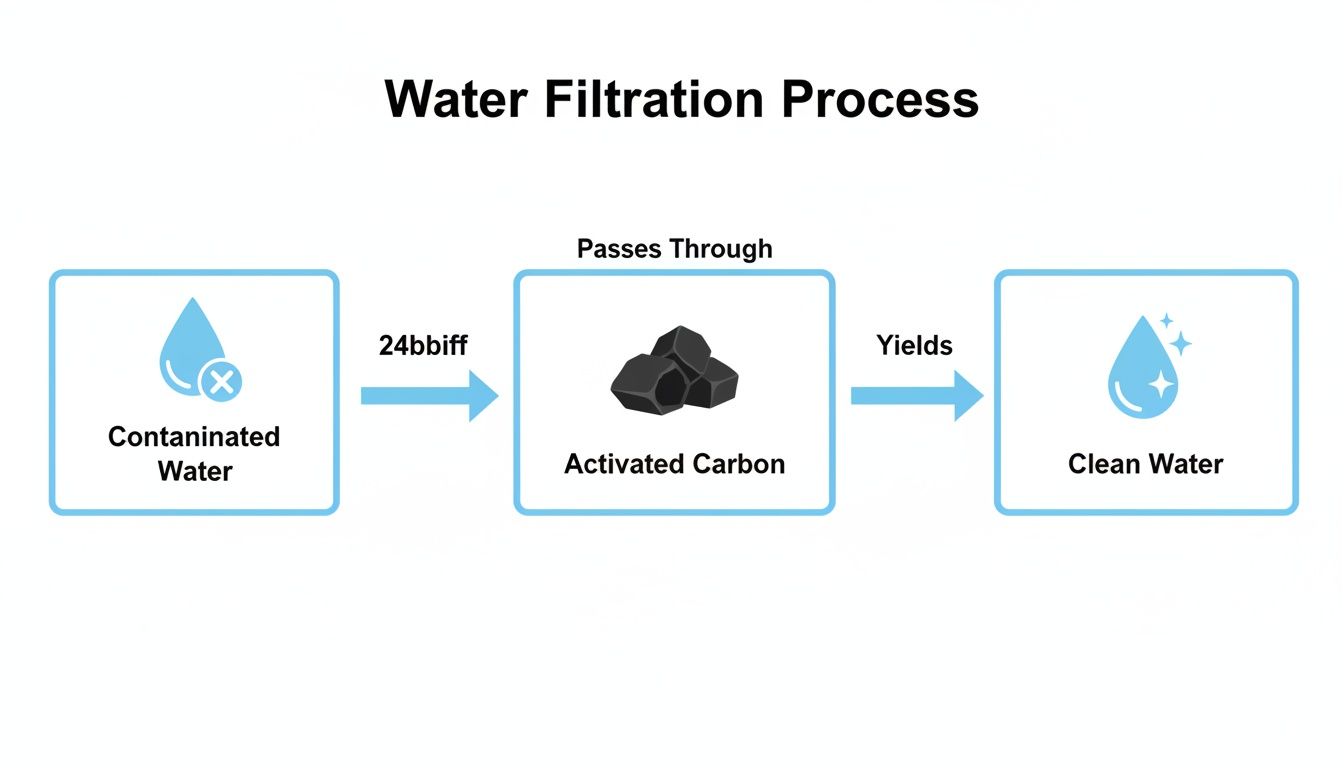
As you can see, contaminated water flows in, the carbon grabs onto the nasty stuff, and cleaner, purer water flows out. It's a straightforward but powerful process.
KDF Filters: The Heavy Metal Champion
A very common alternative to carbon is the KDF (Kinetic Degradation Fluxion) filter. You can think of KDF media as a tiny chemical reactor. It's a special blend of high-purity copper and zinc that creates a small electrochemical charge as water passes over it. This reaction, called redox, is incredibly good at targeting specific contaminants.
One of KDF's best features is that it works great in hot water, which is an area where some carbon filters can start to lose their edge. It's a real workhorse for:
- Neutralizing free chlorine by turning it into harmless chloride.
- Reducing heavy metals like lead, mercury, and iron.
- Slowing bacterial growth, since the environment it creates is tough for microbes to survive in.
While KDF is a superstar against minerals and bacteria, it doesn't do much for the organic chemicals and VOCs that carbon filters are so good at grabbing. This makes KDF an excellent pick for anyone on well water or in a home with older pipes where heavy metal contamination is the main worry.
Vitamin C Filters: A Neutralizing Specialist
Next up, we have Vitamin C filters. This technology uses ascorbic acid (that’s just Vitamin C) to instantly neutralize both chlorine and its stubborn relative, chloramine. Many city water systems use chloramine as a disinfectant, and it can be much harder for standard carbon or KDF filters to remove.
The big selling point for Vitamin C is how fast and thoroughly it works on chloramine. A tiny amount of Vitamin C can completely dechlorinate a huge volume of water in a split second.
This high performance does come at a cost, though. Vitamin C cartridges tend to have a much shorter lifespan than carbon or KDF, so you'll be swapping them out more often. They are a fantastic, targeted fix if your main goal is simply getting rid of chlorine and chloramine, but they won't touch other things like heavy metals or sediment.
Multi-Stage Filters: The All-In-One Solution
Why pick just one technology when you can have them all? Multi-stage filters are designed to give you the best of every world. These filters pack several different types of media into one cartridge, creating a comprehensive purification team. A typical multi-stage filter might include:
- Activated Carbon: To soak up chlorine, VOCs, and bad smells.
- KDF Media: To fight heavy metals and bacteria in hot water.
- Calcium Sulfite: Another fast-acting agent that excels at removing chlorine in high temperatures.
- Sediment Layers: To catch rust, dirt, and other larger particles before they can clog the other media.
This layered approach means your water has to pass through a gauntlet of specialized defenses, with each stage targeting a different set of impurities. This move toward combined technologies is a huge reason the global shower filter market is set to grow at a CAGR of 6% between 2024 and 2030. The fact that these systems are so effective at reducing skin and hair problems—which can affect 70-80% of people in hard water areas—is a major driver. You can learn more about the growth of the shower filter market and how it’s changing home wellness.
To help you sort through the options, here’s a quick comparison of the most common filter types.
Shower Filter Media Comparison
| Filter Type | Primary Contaminants Removed | Best For | Average Lifespan |
|---|---|---|---|
| Activated Carbon | Chlorine, VOCs, pesticides, bad odors | General-purpose chlorine and chemical removal. | 4-6 months |
| KDF (Kinetic Degradation Fluxion) | Chlorine, heavy metals (lead, mercury), bacteria, scale | Hot water performance and homes with heavy metal concerns. | 6-12 months |
| Vitamin C | Chlorine and chloramine | Specifically targeting and neutralizing chloramine effectively. | 1-3 months |
| Multi-Stage | All of the above (chlorine, metals, chemicals, sediment) | Comprehensive, all-around water purification. | 4-6 months |
As you can see, there's no single "best" filter—it all comes down to what's in your water and what you want to remove.
Alright, you're sold on the idea of a carbon filter. Now comes the fun part: picking the right one for your shower.
It's easy to get lost in all the options, but finding a great filter isn't about guesswork. It’s about knowing what to look for on the box and matching it to what you actually need. Let's break down the key things that matter.
Finding The Perfect Carbon Filtered Shower Head

Think of this as a simple buyer’s checklist. Once you know these four things, you can confidently choose a filter that will perform well and give you real value for your money.
Check the Filter Capacity
The first number to hunt for is filter capacity, which is almost always measured in gallons. This tells you exactly how much water the filter can clean before the carbon is maxed out and needs to be replaced.
A bigger number here means the filter lasts longer. Simple as that.
For instance, many filters are rated for 10,000 gallons. If you've got a family of four taking an 8-minute shower each day, that filter will last you about six months. Don't just trust the "lasts 6 months" claim on the box—always compare the gallon rating for a true sense of its lifespan.
A filter's capacity is its lifespan. A 12,000-gallon filter will last 20% longer than a 10,000-gallon one under the same usage conditions, giving you a better long-term value.
Looking at the gallon capacity helps you spot those "cheap" filters that burn a hole in your pocket with constant replacements. It’s the best way to judge the real cost of owning one.
Balance Flow Rate and Water Pressure
Nobody wants a weak, drizzly shower. The power of your shower's spray is all about its flow rate, measured in Gallons Per Minute (GPM). To save water, federal rules say new shower heads can't go above 2.5 GPM. A good carbon filter is designed to work within that limit without ruining your water pressure.
- Low-Flow Models (Below 2.0 GPM): Great if you're focused on saving water, but they can feel a bit weak if you're used to a stronger spray.
- Standard Models (2.0-2.5 GPM): This is the sweet spot. Most filters land here, giving you a solid, satisfying spray that doesn't waste water.
- High-Pressure Designs: Some clever designs use special nozzles that make a 2.5 GPM flow feel much more powerful. You get the best of both worlds.
Look for models that specifically say they maintain water pressure. A well-made filter cleans your water without leaving you shivering under a trickle.
Look for Independent Certification
How do you know if a filter actually does what it promises? The easiest way is to check for third-party certification. For shower filters, the gold standard is NSF/ANSI 177.
This isn't just some fancy sticker. It's proof from an independent lab that the filter really does reduce free available chlorine. When you see that NSF/ANSI 177 mark, you know its claims have been tested and verified. While a lot of uncertified filters do a decent job, this certification gives you peace of mind.
Calculate the True Cost of Ownership
Finally, don't just look at the price tag on the shelf. The real cost of a carbon filtered shower head is the initial price plus the cost of all the replacement cartridges you'll buy later. A cheap head with pricey, short-lived filters can cost you a lot more over a year or two.
The market for these things is exploding—it's expected to hit $2.5 billion by 2025 because everyone wants healthier water. Innovators are making multi-stage filters that combine activated carbon with other media to remove over 95% of chlorine. These often use cartridges that cost under $20 and last three to six months. You can see more on the filtered shower head market's growth if you're curious about industry trends.
To find the best deal, just do some quick math: divide the replacement cartridge cost by its gallon capacity. That gives you the cost-per-gallon and shows you which option is actually the most affordable in the long run.
Easy Installation and Simple Maintenance Guide
One of the best parts about upgrading to a carbon filtered shower head is that there's no need to call a plumber. Seriously. This is a five-minute DIY project that almost anyone can handle with just their hands.
The whole process is about as complicated as changing a lightbulb. You just unscrew your old shower head, and then twist the new filtered one on in its place.
Most homes in the US and Canada have a standard 1/2-inch thread on the shower arm—that’s the pipe coming out of the wall. This means pretty much any filtered shower head you buy will fit right out of the box, no adapters needed.
A Step-by-Step You Can Handle
Ready to get started? Here’s a quick walkthrough of just how simple it is. Your kit should come with everything you need, including a small roll of plumber's tape.
- Get the Old Head Off: Turn the old shower head counter-clockwise. If it's a bit stubborn, you might need a little muscle, but it should unscrew by hand.
- Clean the Threads: Use a cloth to wipe off any old gunk or tape residue from the shower arm's threads. A clean surface is key for a good, tight seal.
- Apply New Tape: Wrap the plumber's tape clockwise around the threads three or four times. This is the secret weapon against annoying drips.
- Screw On the New Filter: Twist your new carbon filtered shower head onto the arm clockwise until it feels snug. Hand-tight is all you need—don't go crazy and overtighten it.
And you're done! Turn on the water and check for any leaks at the connection. If you see a drip, just give it one more gentle turn. While the shower head itself is simple, anyone planning a bigger bathroom remodel might want to learn how to install a curbless shower for some broader project tips.
Keeping Your Filter in Top Shape
Once it's installed, the maintenance is just as simple. The filter cartridge won't last forever, so knowing when to swap it out is key to keeping your water clean. Over time, the carbon inside gets saturated with all the contaminants it has pulled out.
You don’t have to guess or set a calendar reminder, though. Your shower will give you some obvious clues.
The biggest sign is a drop in water pressure. If your once-strong spray has become a weak drizzle, the filter is likely clogged with sediment and ready for a change.
Another dead giveaway is the return of that chlorine smell. Once the activated carbon is full, it can’t grab any more chemicals, so they’ll start passing right through into your shower. If your bathroom starts smelling like a public pool again, it’s time for a fresh cartridge. If you're looking for more general tips on water filters, you can explore additional advice here.
The Real-World Benefits For Your Skin And Hair

Okay, you know the science behind how a carbon filtered shower head works. But what does that actually mean for you? It’s not just about what’s being taken out of the water; it’s about what you’ll feel every single day.
For most people, the first thing they notice is their skin. Chlorine is great for disinfecting city water, but it’s harsh. It strips away your skin’s natural oils (the sebum), which is often the real reason for constant dryness, itching, and irritation.
When you install a filter that pulls out that chlorine, you’re giving your skin a chance to breathe. It can finally hang on to its natural moisture, which is why many people feel a difference almost right away. If you have sensitive skin or deal with something like eczema, getting rid of that daily chemical blast can be a game-changer.
Healthier Hair Is Just A Shower Away
The change in your hair can be even more dramatic. Just like with your skin, chlorine strips the natural oils from your hair and scalp, leaving it brittle, dry, and looking dull. A carbon filtered shower head helps put a stop to that.
Once the harsh chemicals are gone, you’ll probably see a few things happen:
- Less Frizz, More Shine: When your hair keeps its natural moisture, the cuticle lays flat. That means smoother, shinier hair that isn't as prone to frizz.
- Color-Treated Hair Lasts Longer: Chlorine is a bleach. It will absolutely fade your salon color, meaning more trips to the stylist. Filtered water helps keep that color looking fresh for weeks longer.
- A Happier Scalp: An itchy, flaky scalp is often just an irritated one. Take away the chemical irritants, and you can help restore balance and cut down on dandruff and discomfort.
Honestly, a lot of people find they don't need to use as much conditioner or pricey shine serums because their hair is just healthier to begin with.
The All-Important Distinction: Purification vs. Softening
Now, it’s really important to understand one key difference. A carbon filter is a pro at purification, but it does not "soften" water in the technical sense.
A carbon filter removes chemical contaminants like chlorine and VOCs. It does not remove the dissolved minerals—like calcium and magnesium—that are responsible for water hardness.
This is a big deal when it comes to setting expectations. The mineral content in your water will be exactly the same. So, a carbon filter alone isn't going to stop hard water spots on your glass shower door or prevent limescale buildup in your pipes.
Even so, you'll hear people say their water feels softer, and they're not wrong. That feeling comes from your skin and hair not being dried out by chlorine. If you're looking into the logistics of fitting a shower for a remodel, knowing this helps you plan for your specific water type.
At the end of the day, a carbon filtered shower head is one of the easiest and most noticeable upgrades you can make. You’re not just taking a shower—you’re getting rid of the invisible chemical load and giving your skin and hair a much-needed break.
Common Questions About Carbon Shower Filters
It's smart to have questions before you decide to upgrade your shower. Even after you know how they work, a few common concerns tend to pop up. Let's get those answered so you can feel confident about your choice.
One of the first things people ask is about performance. After all, nobody wants to trade a powerful shower for filtered water.
Will A Filter Ruin My Water Pressure?
Not if you get a well-made filter. Quality manufacturers design their shower filters to work perfectly with standard home water pressure, so you won't lose that satisfying flow. Most are built to deliver water right at or near the federal maximum of 2.5 gallons per minute (GPM).
If you do notice the pressure start to drop over time, that’s actually a good sign. It means the filter is full of sediment and has done its job—and it's your cue that it's time for a replacement cartridge.
How Often Do I Need To Change The Cartridge?
You'll often hear the "six-month" rule, and it's a decent starting point. But in reality, how long a cartridge lasts really comes down to your water and how you use it. A few things can shorten a filter's life:
- Water Hardness: If you have hard water, the filter will clog up with minerals and sediment much faster.
- Household Size: A filter serving a family of four is going to work a lot harder than one used by a single person.
- Usage Frequency: The more showers taken, the quicker you'll hit the filter's total gallon capacity.
Your best bet is to pay attention to the signs. When the pressure drops or you start to smell chlorine again, it's time for a change, regardless of what the calendar says.
Can A Shower Filter Help With Hair Loss?
A carbon shower filter isn't a medical treatment for hair loss, but it absolutely can create a better environment for healthy hair. By filtering out chlorine and other chemical irritants, you cut down on the scalp inflammation and dryness that makes hair brittle and prone to breaking.
Think of it this way: a filter improves the "soil" so your hair has the best possible conditions to grow. It supports scalp health by removing stressors, but it won't fix underlying genetic or medical causes of hair loss.
Are Carbon Filters Effective Against Chloramine?
This is a key question. Standard activated carbon is a champion at removing chlorine, but it's not very effective against chloramine. Chloramine is a tougher, more stable disinfectant that many cities now use.
To properly deal with chloramine, you need a filter with catalytic carbon. This is a special type of carbon engineered specifically to break the strong chemical bonds in chloramine. You'll find that many of the best multi-stage filters include a catalytic carbon layer for exactly this reason.
At Water Filter Advisor, we're committed to providing the clear, research-driven information you need to make confident decisions for your home. From understanding contaminants to choosing the right filter, we help you navigate the world of water purification. Explore our in-depth guides and reviews at https://www.waterfilteradvisor.com to find the perfect solution for your family.
- March 24, 2026
- 0
- Uncategorized
