
If you've ever spotted those bizarre blue-green stains colonizing your drains or found yourself patching yet another pinhole leak in your copper pipes, your well water is likely throwing a corrosive temper tantrum. The hero of this story? An acid neutralizer for well water, a whole-house filtration system designed to raise your water’s pH. Think of it as a giant antacid tablet for your entire home, stopping destructive water from literally eating your plumbing from the inside out.
What Is an Acid Neutralizer and Do You Need One?
Ever wondered why your pipes or water heater tapped out years ahead of schedule? The silent assassin is often acidic water, which is any water with a pH below a neutral 7.0. This low pH makes your water aggressive, allowing it to dissolve any metal it touches—including your expensive copper pipes, brass fixtures, and the guts of your water heater.
An acid neutralizer is a "point-of-entry" system, which is just a fancy way of saying it treats all the water flowing into your house right at the source. It works by sending your water on a journey through a tank packed with a special neutralizing media, usually calcite (a high-purity form of crushed marble). This media slowly dissolves, raising the water's pH to a safe, non-corrosive level while adding a few healthy minerals back into the mix.
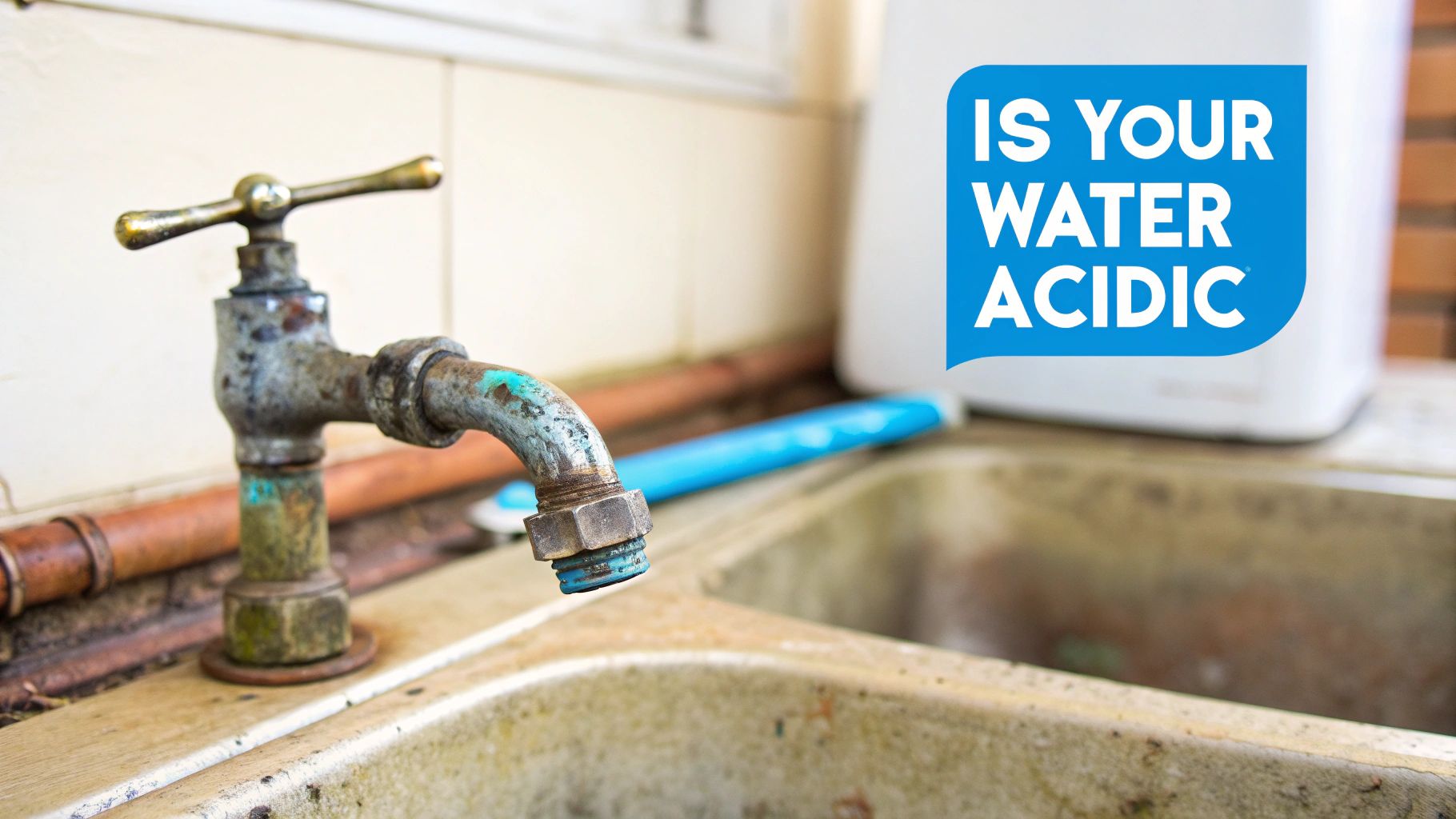
Common Signs You Have Acidic Well Water
The damage from low-pH water is sneaky, often going unnoticed until you’re staring down a massive repair bill. Ignoring those early whispers can get expensive fast. In fact, industry data shows that untreated acidic well water is behind 60% of premature pipe failures in homes over 20 years old, with repairs hitting an average of $4,500 per household. For families we've helped at Water Filter Advisor since 2007, these systems are a game-changer, providing whole-house protection and cutting lead leaching by up to 90% once the pH is balanced.
So, how can you spot the problem? Keep an eye out for these tell-tale signs:
- Blue-Green Stains: Seeing these distinct stains in sinks, tubs, and around fixtures is the classic calling card of acidic water dissolving the copper from your pipes. It's like your plumbing is crying, and these are its colorful tears.
- Pinhole Leaks: If you're constantly finding and fixing tiny leaks in your copper plumbing, it’s a sure sign your pipes are being eaten away from the inside.
- Metallic Taste: When water tastes sharp or metallic, it's because it's leaching metals like copper, zinc, and even iron straight into your drinking glass. Not exactly the refreshing mineral water you had in mind.
- Appliances Dying Early: Low-pH water is tough on appliances. It corrodes the internal parts of dishwashers, washing machines, and water heaters, drastically shortening their lifespan.
To make it even simpler, here’s a quick-glance table to help you connect the dots between your water problems and the likely cause.
Diagnosing Acidic Well Water
| Symptom | Potential Cause | Recommended Solution |
|---|---|---|
| Blue-green stains on fixtures | Acidic water corroding copper pipes | Test pH; install an acid neutralizer |
| Pinhole leaks in copper plumbing | Internal pipe corrosion from low pH | Test pH; install an acid neutralizer |
| Metallic or sour taste in water | Leached metals (copper, zinc, lead) | Test pH & heavy metals; install a filter system |
| Appliances fail prematurely | Corroded internal components | Test pH; install an acid neutralizer |
This table should help you quickly identify if acidic water is the root of your issues. If you're seeing one or more of these signs, the next step is getting your water tested.
The core idea behind an acid neutralizer is simple: it sacrifices its own mineral media to save your plumbing. By letting the water dissolve a bit of calcium and magnesium, it becomes less aggressive and stops the corrosion dead in its tracks.
At the end of the day, getting an acid neutralizer isn't just about protecting your pipes. It’s about safeguarding your entire home’s plumbing infrastructure and ensuring the water your family drinks and bathes in is clean and safe.
Understanding Water pH and Why Your Well Is Acidic
Before we dive into fixing your acidic water, let's get a handle on what's actually going on inside your pipes. The whole issue boils down to your water's pH level—a simple scale that tells us how acidic or alkaline something is. It’s this hidden chemistry that determines if your water is playing nice with your plumbing or slowly eating it for lunch.
Think of the pH scale like this: 7.0 is perfectly neutral. It's the sweet spot. Anything below 7.0 is acidic, and the lower the number, the more corrosive it gets. Anything above 7.0 is alkaline, which is what you're aiming for.
Your goal is to nudge that pH number back up into a safe, neutral zone.
For your home's plumbing, the ideal pH range is between 7.0 and 8.5. Water that drops below a pH of 6.5 is considered highly aggressive. It's a serious threat to copper pipes, brass fixtures, and pretty much any metal component in your appliances.
What Makes Well Water Acidic in the First Place?
Unlike city water, which gets treated and balanced at a municipal plant, your well water is a direct reflection of its journey through the earth. Its chemistry is shaped by everything from the clouds in the sky to the ground it travels through before reaching your tap.
The main culprit is often rainwater itself. As rain falls, it picks up carbon dioxide from the atmosphere, forming a very weak carbonic acid. This makes most rainwater naturally a bit acidic, usually landing somewhere between a 5.0 and 5.5 pH. When this slightly acidic rain hits the ground, its real adventure begins.
How Your Local Geology Plays a Major Role
Once that rainwater seeps underground, its final pH is decided by the rocks and soil it encounters. This is where your local geology becomes the star of the show.
- Granite and Sandstone Regions: If you live in an area with bedrock like granite or certain sandstones (common in the Northeast and Pacific Northwest), there's nothing there to buffer the water's acidity. These rocks don't dissolve easily, so the water stays acidic as it fills the aquifer your well pumps from.
- Limestone and Dolomite Regions: On the flip side, if the groundwater filters through limestone or dolomite, it dissolves alkaline minerals like calcium carbonate along the way. This process naturally neutralizes the acid and raises the pH. People with wells in these areas almost never have to worry about acidic water.
- Decomposition of Organic Matter: The soil itself also plays a part. In places with lots of vegetation or swampy ground, decaying leaves and roots release more carbon dioxide into the soil. This CO2 dissolves into the groundwater, making it even more acidic before it ever gets to your well.
Ultimately, acidic well water isn't a sign of pollution—it's just nature at work. An acid neutralizer for well water isn't some quick fix; it’s a necessary tool to counteract your property's specific geology and protect your home from the silent damage of low-pH water.
How Do Acid Neutralizer Systems Actually Work?
So, how does an acid neutralizer turn that aggressive, pipe-eating well water into something balanced and harmless? It's not magic, but it is a pretty clever bit of chemistry. The whole process hinges on a tank filled with a special mineral media that basically acts as a sacrificial hero, dissolving itself to save your plumbing.
At its core, the system is simple. It routes your incoming well water through this tank. As the acidic water washes over the mineral media, a natural reaction takes place. The media, which is alkaline, slowly dissolves and releases beneficial minerals like calcium and magnesium into the water. This process is what raises the pH, making the water far less corrosive and bringing it back into a safe, neutral range.
This chart gives you a great visual of the pH scale and where you want your home's water to be.
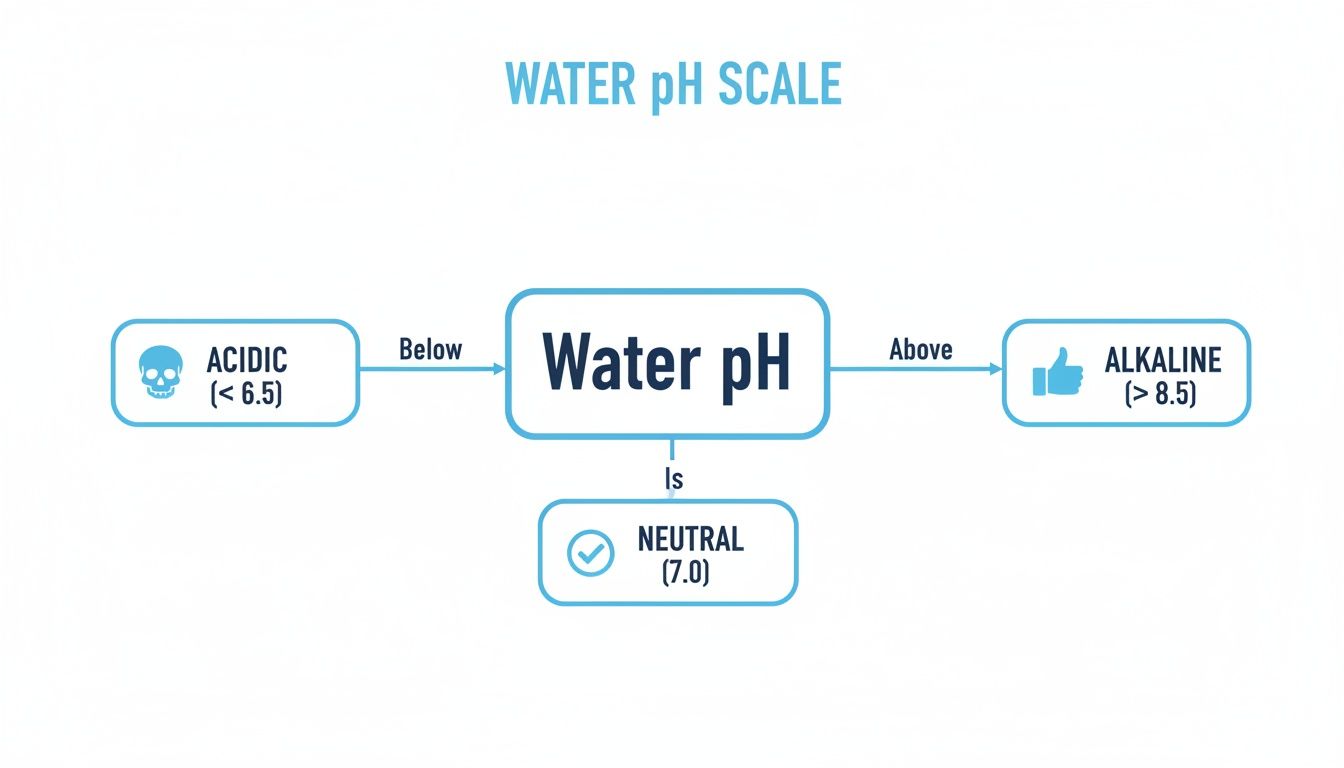
As you can see, the goal is to shift your water out of that damaging acidic zone (anything below 6.5) and into the ideal neutral or slightly alkaline zone (7.0 and up).
Upflow vs. Backwashing: The Two Main System Designs
Acid neutralizers typically come in two main flavors, and each one handles the water and the media inside a bit differently.
An upflow system works kind of like a lava lamp. Water comes in from the bottom of the tank and flows upward through the media, causing it to gently tumble and swirl around. This constant motion is key because it prevents the media from packing down into a solid, concrete-like block, ensuring every last drop of water gets properly treated.
A backwashing system is more like a self-cleaning coffee maker. Water flows down through the media bed, just like a standard filter. But, on a set schedule (usually every few days), the system slams the flow into reverse. This powerful backwash cycle lifts and rinses the entire media bed, flushing out any trapped sediment and preventing "channeling"—which is when water carves a single path through the media, tanking its effectiveness.
The rise of non-backwashing acid neutralizers has been a game-changer for well owners looking for a low-maintenance fix. These systems, which really took off in the early 2000s, use self-dissolving media to continuously neutralize acids, making them perfect for wells with pH as low as 5.0. You can dig deeper into this trend by checking out market analysis reports on the acid neutralizer market from Data Insights Market.
The Key Players: Calcite and Magnesium Oxide
The real workhorses inside these systems are the neutralizing minerals. The two you’ll hear about most are Calcite and Magnesium Oxide, which is often sold under the brand name Corosex.
Calcite is the go-to for most situations. It’s essentially just crushed and screened white marble—a really pure form of calcium carbonate. It dissolves slowly and is "self-limiting," which means it naturally stops dissolving once the water hits a neutral pH. This makes it almost impossible to "over-correct" and make your water too alkaline.
Magnesium Oxide (Corosex) is the heavy hitter. It's way more reactive than calcite and can jack up pH levels much more effectively. This makes it the perfect tool for water that is extremely acidic (think pH below 6.0). But all that power comes with a catch: it can easily raise the pH too high if you're not careful.
To get the best of both worlds, a lot of pros will use a blend of the two. A common mix is 80-90% Calcite with 10-20% Magnesium Oxide. This gives you the steady, reliable neutralization of calcite with an extra boost from magnesium oxide to handle more aggressive water.
Choosing the right media—or the right blend—is everything. This table breaks down the key differences to help you figure out what your water needs.
Choosing Your Neutralizing Media: Calcite vs. Corosex
This quick comparison will help you see the strengths and weaknesses of the two most common neutralizing media, Calcite and Corosex, so you can decide which is the right fit for your well water's pH level.
| Feature | Calcite (Calcium Carbonate) | Magnesium Oxide (Corosex) |
|---|---|---|
| Best pH Range | Most effective for water with a pH between 6.0 and 6.9. | Ideal for extremely acidic water with a pH between 4.5 and 6.0. |
| Neutralizing Power | Slower acting and self-limiting; prevents over-correction. | Highly reactive and powerful; can raise pH significantly. |
| Impact on Hardness | Adds calcium, slightly increasing water hardness. | Adds magnesium, which also contributes to water hardness. |
| Potential Drawbacks | May not be strong enough for very low pH levels on its own. | Can raise pH too high (over 8.5) if not blended or used carefully. |
| Common Use Case | Used as the primary media in most residential systems. | Often used in a blend with calcite to boost performance for low pH water. |
Ultimately, testing your water is the only way to know for sure. If your pH is only slightly acidic, pure Calcite is usually the safest and most effective choice. For seriously acidic water, a carefully measured blend containing Corosex is likely the better solution.
Choosing the Right Acid Neutralizer for Your Home
Picking out the right acid neutralizer for your well isn't like grabbing a random box off the shelf at a hardware store. Think of it more like being a detective for your plumbing. If you choose the wrong system, you could be out a lot of money and either not fix the problem or, even worse, create new ones. Getting it right the first time means you have to really understand the unique chemistry of your water.
And that brings us to the absolute first step, before you even think about shopping: get a comprehensive water test. Forget those simple pH strips you use for a pool; they just won't cut it here. You need precise, hard numbers to make a smart decision and make sure your investment actually pays off.
What to Test for Before You Buy
A detailed lab report is your treasure map. It gives you the critical data points that will steer every decision you make, from the type of media you need to the size of the tank. Without it, you're just flying blind.
Here’s what your water test needs to cover:
- pH Level: This is the big one. It tells you exactly how acidic your water is, which is the key to deciding if you need a gentle media like calcite or a more potent blend with magnesium oxide.
- Hardness: This measures the dissolved calcium and magnesium already in your water. Since neutralizers work by adding these same minerals, you have to know your starting point to figure out how hard the water will be after treatment.
- Alkalinity: People often mix this up with "alkaline," but it's different. Alkalinity is your water's ability to resist pH changes. If it's low, your pH can swing all over the place.
- Iron Content: Iron is the arch-nemesis of neutralizing media. It can coat the minerals and stop them from working. If you have more than a tiny amount of iron, you'll probably need a separate iron filter installed before the neutralizer.
Think of your water test results like a prescription from a doctor. You wouldn't just start taking random medication without a diagnosis, right? The same goes for water treatment—don't buy a system until you know exactly what you're up against.
Sizing Your System for Optimal Performance
Once you've got that water report in hand, the next job is to size the system correctly. If it's too small, it won't be able to keep up when you're using a lot of water, which means your pH won't be corrected and you'll probably notice a drop in water pressure. Go too big, and you're just throwing money away.
The key is to figure out your home's peak service flow rate, which is just a fancy way of saying the maximum amount of water your household might use at one time. It's measured in gallons per minute (GPM).
Here's a quick way to get a rough estimate:
- Kitchen Sink: 2.0 GPM
- Bathroom Sink: 1.5 GPM
- Shower: 2.5 GPM
- Dishwasher: 2.0 GPM
- Washing Machine: 2.5 GPM
Just add up the fixtures you could see yourself running at the same time. For instance, if someone is taking a shower (2.5 GPM) while the dishwasher is going (2.0 GPM), you'd need a system that can handle at least 4.5 GPM. For most homes with 2-3 bathrooms, the peak flow rate usually lands somewhere in the 8-12 GPM range.
You can check out our guide for more detailed advice on selecting a system that will meet your needs.
Upflow vs. Backwashing: The Final Decision
We touched on this earlier, but now that you have your water test data, you can make the final call between an upflow and a backwashing design.
An upflow system is a fantastic, low-maintenance choice if your water is clean and doesn't have much sediment. The water flows upward, which naturally keeps the media loose and prevents it from clumping together. This means consistent treatment without wasting any water on backwash cycles. It’s no surprise they’ve become a favorite, with the market growing from USD 567 million and projected to hit USD 881.11 million by 2033.
But—and this is a big but—if your water test shows any real amount of sediment, silt, or iron, a backwashing system is the only way to go. That powerful, periodic backwash is essential for cleaning the media bed and flushing out all the gunk that would quickly clog up an upflow system. It does need a drain and uses more water, but for problem well water, it's the right tool for the job. Let your water test be your guide here, because choosing the wrong one is a recipe for failure.
Installation and Long-Term Maintenance
So, your new acid neutralizer has arrived. Awesome! Now it's time to get it hooked up and start protecting your plumbing. Whether you're a seasoned DIYer or you're calling in a plumber, knowing the game plan is key to getting it right from the start. Proper installation isn't just about connecting a few pipes—it's about strategic placement so your entire house gets the benefit.
The sweet spot for your acid neutralizer is right where the main water line enters your home. To be specific, it needs to go after the pressure tank but before any other gear, like a water softener or an iron filter. This order is non-negotiable. You have to fix the pH first, which sets the stage for your other filters to do their jobs properly.
The Ongoing Commitment to Balanced Water
Here’s a common misconception: people think these systems are "set it and forget it." While they are incredibly low-maintenance, they do need a little TLC to keep working perfectly. The special media inside the tank—that calcite or calcite/Corosex mix—is designed to dissolve as it neutralizes the acid. It's just like a bar of soap getting smaller every time you use it.
This means you’ll have to add more media periodically. How often depends on a few things:
- Your water's pH: The lower the pH (more acidic), the faster you'll burn through the media.
- Your household's water usage: A big family will use up media way faster than a couple.
- The size of your neutralizer tank: Bigger tanks hold more media, so they last longer between refills.
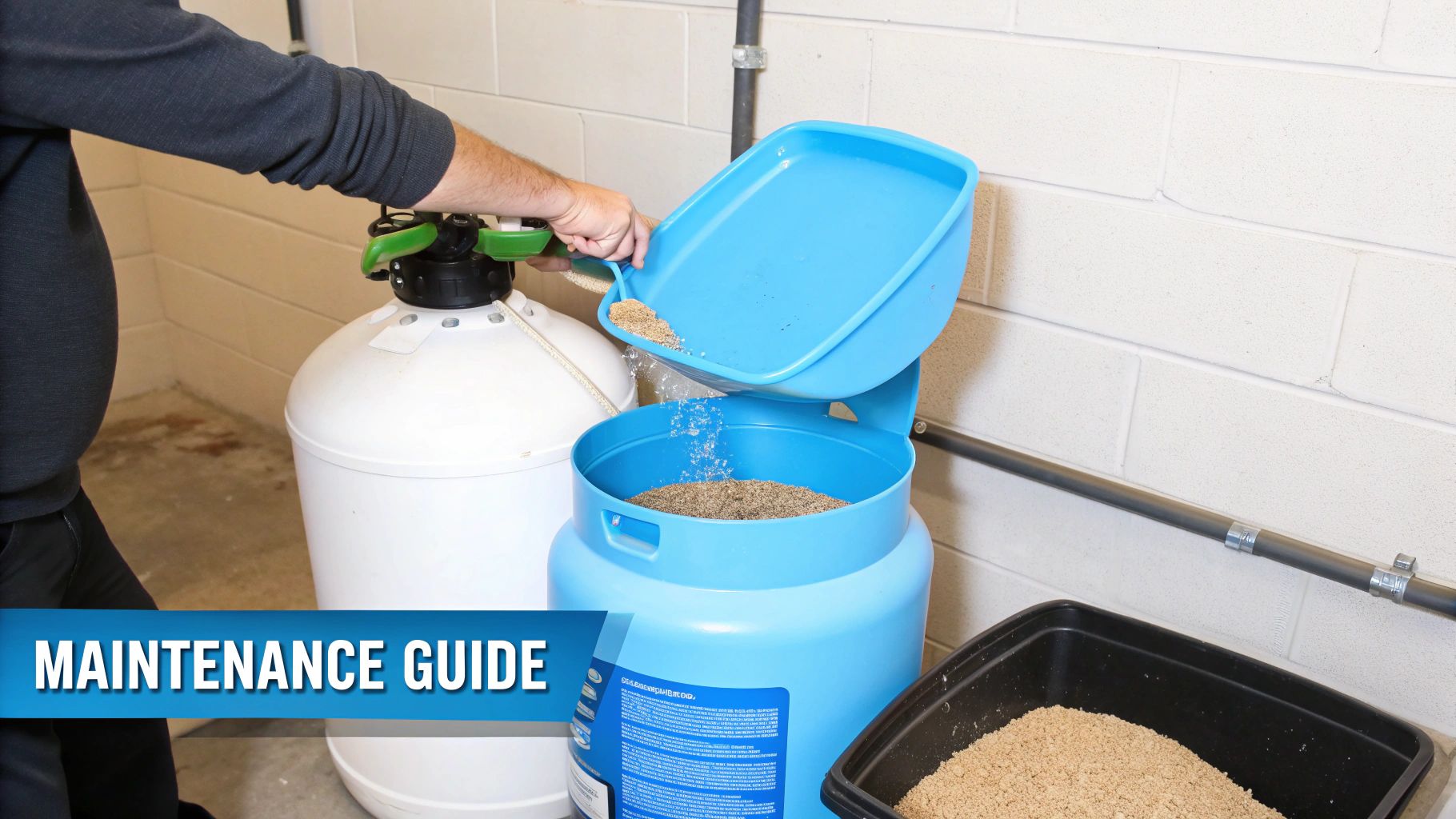
Most homeowners find they need to top off their acid neutralizer for well water every 1 to 3 years. It's a simple job: just depressurize the system, open the port on top of the tank, and pour in a new bag of media.
Here's an easy trick: check the media level in your tank twice a year. If it looks like it's dropped to about halfway, that's your cue to schedule a top-off. This simple habit keeps your pH from slowly creeping back into the danger zone.
What to Expect for Maintenance Costs
Beyond the initial purchase and install, your only real ongoing cost is the replacement media. A 50-pound bag of good-quality calcite usually runs between $50 and $100. If your water is very acidic and needs a blend with magnesium oxide (Corosex), the price might be a little higher.
Most home systems just need one or two bags for a refill, which keeps the yearly maintenance cost very manageable. When you stack that small expense against the thousands you could spend fixing corroded pipes, replacing a water heater, or dealing with pinhole leaks, the value is obvious. A quick check and a timely refill are all it takes to keep your neutralizer protecting your home for years to come.
Pairing Neutralizers with Other Water Filters
It's a rare day when a well only has one water problem. You're often dealing with a cocktail of issues. Maybe you've got acidic water eating away at your copper pipes, but you also have hard water leaving crusty white scale on your faucets and iron turning your laundry a lovely shade of orange.
An acid neutralizer is a fantastic piece of equipment, but it’s a team player. To get the best results, you need to understand its role and where it fits in with other treatment systems.
The Classic Combo: Neutralizer + Water Softener
The most common partner for an acid neutralizer is, without a doubt, a water softener. In most cases, this isn't just a good idea—it's practically a necessity.
Here’s why: an acid neutralizer works by dissolving media like calcite (calcium carbonate) or magnesium oxide into your water. This process raises the pH, but it also adds calcium and magnesium minerals. And what do those minerals cause? Hardness.
So, in fixing your low pH problem, you’re almost guaranteed to make your water harder.
Getting the Order Right is Everything
When you're installing both a neutralizer and a softener, the sequence is absolutely critical. There's no room for debate on this one.
The acid neutralizer must always be the first piece of equipment in line after your well's pressure tank. The water softener always comes second.
Why does it matter so much? Water softeners are built to work with water that's in a neutral pH range. If you pump aggressive, acidic water directly into your softener, it will slowly destroy the delicate resin beads inside. You'll shorten the life of your softener and cripple its ability to remove hardness.
By putting the neutralizer first, you protect your softener and let it do the job it was designed for.
So, You'll Probably Need a Softener
Once the neutralizer has balanced the pH, your pipes are safe from corrosion. But now you've got a new set of problems from the increased hardness:
- Scale Buildup: That chalky white crust that clogs up faucets, showerheads, and coffee makers.
- Soap Scum: Hardness minerals interfere with soap, preventing a good lather and leaving a gross film on your skin, hair, and dishes.
- Appliance Damage: Scale is the mortal enemy of water heaters and dishwashers, clogging up pipes and ruining heating elements.
By following the neutralizer with a water softener, you create a powerful one-two punch. You get water that is perfectly balanced, non-corrosive, and soft.
Boosting Your Iron Filter's Performance
An acid neutralizer can also be a game-changer if you’re fighting iron. Most iron filters—especially the common air-injection or oxidizing types—work far better when the water's pH is neutral or even slightly alkaline.
If your well is both acidic and iron-heavy, the low pH keeps the iron dissolved, making it much harder for the filter to grab onto it.
Install an acid neutralizer for well water right before your iron filter, and you raise the pH to that sweet spot. This simple adjustment creates the perfect conditions for the iron to oxidize (basically, to rust) so the filter can easily pull it out of your water. No more stubborn orange stains on your sinks and tubs.
Frequently Asked Questions About Acid Neutralizers
Once you’ve got the basics down on how these systems work, a few practical questions almost always come up. Let’s tackle the most common ones head-on so you can feel confident about your next steps.
How Much Does an Acid Neutralizer Cost to Own?
It's smart to think about the total cost of ownership. The initial price for the system itself usually lands somewhere between $800 and $1,500. If you're having a pro handle the install, budget another $300 to $600 for that.
The main running cost is replacing the media inside the tank. You'll need to do this every 1 to 3 years, and a refill typically costs between $150 and $400. It feels like a big investment upfront, but it's a bargain compared to the thousands you could spend on plumbing repairs down the road.
Will an Acid Neutralizer Make My Water Hard?
Yes, it sure will. That’s actually a direct result of how it works. By dissolving minerals like calcium and magnesium into your water to raise the pH, it inherently increases the water's hardness.
This is exactly why so many people install a water softener right after their acid neutralizer. That one-two punch tackles both the acidity and the resulting hardness, giving you fantastic water quality all over the house.
Can I Install an Acid Neutralizer Myself?
If you're really comfortable with plumbing projects—we're talking cutting and fitting pipes—then a DIY installation is definitely possible.
However, getting it in the right spot in your plumbing line is absolutely crucial for it to work properly and not mess with your water pressure. Because an improper install can be a costly headache, most folks opt to hire a professional. Only take this on if you're 100% sure of your skills.
How Do I Know if My Neutralizer Is Working Correctly?
The most reliable way is to simply test your water again. About a week or two after the system is up and running, grab a good pH test kit and check the water from a faucet that's "downstream" from the neutralizer.
You're aiming for a pH between 7.0 and 8.5. If you’re not there yet, you might need to tweak the system's settings or look into a different media mix. On a simpler note, you should also notice those ugly blue-green stains starting to disappear over time.
At Water Filter Advisor, our goal is to give you the expert guidance and honest reviews you need to find the perfect water treatment system for your home. Check out our resources to make a smart decision and start enjoying safer, better-tasting water. Learn more at Water Filter Advisor.
- February 11, 2026
- 0
- Uncategorized
