Let’s cut to the chase. When it comes to water filter replacement costs, you could be looking at anywhere from $20 for a basic pitcher filter to well over $200 for a high-tech reverse osmosis membrane. The final price tag really boils down to the kind of system you have in your home, how much water your family uses, and what kind of contaminant-busting technology is packed inside that filter.
Decoding Your Water Filter Expenses
Think of your water filter as the unsung hero of your kitchen, quietly working day in and day out to catch all the gunk you don't want in your glass. But like any hard-working hero, it eventually gets clogged up and needs a replacement to stay effective. Getting a handle on the ongoing water filter replacement cost isn't just a budgeting exercise—it's about making sure your water stays as clean, safe, and delicious as possible.
The demand for clean water solutions is bigger than ever. With new technologies and a growing awareness of water quality, the global water filtration market is on track to hit an estimated $35.18 billion by 2034. This boom shows just how many people are investing in better water for their homes, which makes understanding the long-term costs of maintenance more important than ever.
To give you a quick overview, here are some common costs you can expect.
Typical Home Water Filter Replacement Costs at a Glance
This table breaks down the estimated annual cost and replacement frequency for the most popular types of home water filters.
| Filter Type | Average Replacement Cost (Per Filter) | Typical Replacement Frequency | Estimated Annual Cost |
|---|---|---|---|
| Water Pitcher Filter | $15 – $30 | Every 2-3 months | $60 – $180 |
| Faucet Mount Filter | $20 – $40 | Every 3-4 months | $60 – $160 |
| Under-Sink Filter | $50 – $100 | Every 6-12 months | $50 – $200 |
| Refrigerator Filter | $30 – $60 | Every 6 months | $60 – $120 |
| Whole House Sediment | $25 – $50 | Every 3-6 months | $50 – $200 |
| Whole House Carbon | $60 – $150 | Every 12 months | $60 – $150 |
| Reverse Osmosis | $100 – $250+ | Every 1-2 years | $50 – $250+ |
As you can see, the numbers can vary quite a bit. It all comes down to the specific system you've chosen for your home's needs.
Why Replacement Costs Vary So Much
So, what's behind those different price tags? A replacement filter's cost isn't just pulled out of thin air. It’s a direct reflection of the filter’s complexity, how long it’s built to last, and the specific job it’s designed to do. For some, this even affects their hobbies. If you're serious about your morning coffee, for example, knowing the details of optimizing water quality for brewing will shape your filtration needs and, in turn, your budget.
Here are the main factors that determine what you'll end up paying:
- Filtration Technology: A simple activated carbon filter found in a pitcher is a world away from a complex, multi-stage reverse osmosis system that can pull out microscopic contaminants. The more advanced the tech, the higher the cost.
- Filter Lifespan and Capacity: Some filters are designed to handle about 40 gallons and need to be swapped out every couple of months. Others are workhorses that can process thousands of gallons and last a whole year.
- Brand and Certifications: You'll often pay a bit more for filters that are NSF certified. That certification means they've passed rigorous independent tests to prove they do what they claim to do, giving you peace of mind.
The initial price of a filtration system is just the beginning; the long-term replacement cost is what truly matters for your household budget. For a deeper dive into different systems and their maintenance, check out our https://www.waterfilteradvisor.com/advice/.
Breaking Down the Key Cost Factors
Ever wondered why your buddy's pitcher filter replacement costs less than a fancy coffee, but the cartridge for your under-sink system sets you back a bit more? That water filter replacement cost isn't just a random number. It's tied directly to what that little cartridge is built to do.
Think of it like buying tires for your car. A standard set for a daily driver is pretty straightforward and affordable. But if you need high-performance, all-terrain tires designed for rugged conditions? You're looking at a completely different price point for a completely different job. It's the same deal with water filters.
Filtration Technology: What's Under the Hood?
The single biggest factor driving the price is the technology inside the filter. It's the engine of the whole system.
A simple activated carbon filter, the kind you find in most pitchers and refrigerator dispensers, is a workhorse for improving taste and smell. It acts like a powerful magnet for chlorine. These are almost always your most budget-friendly option.
But then you have something like a reverse osmosis (RO) system. This is a whole different ballgame. An RO system uses pressure to force water through a super-fine membrane, stripping out nearly everything that isn't water—we're talking lead, arsenic, and other dissolved solids. That level of purification requires much more advanced engineering and materials, so the replacement membranes and their pre-filters naturally cost more.
This infographic gives you a quick visual breakdown of how the tech stacks up price-wise.
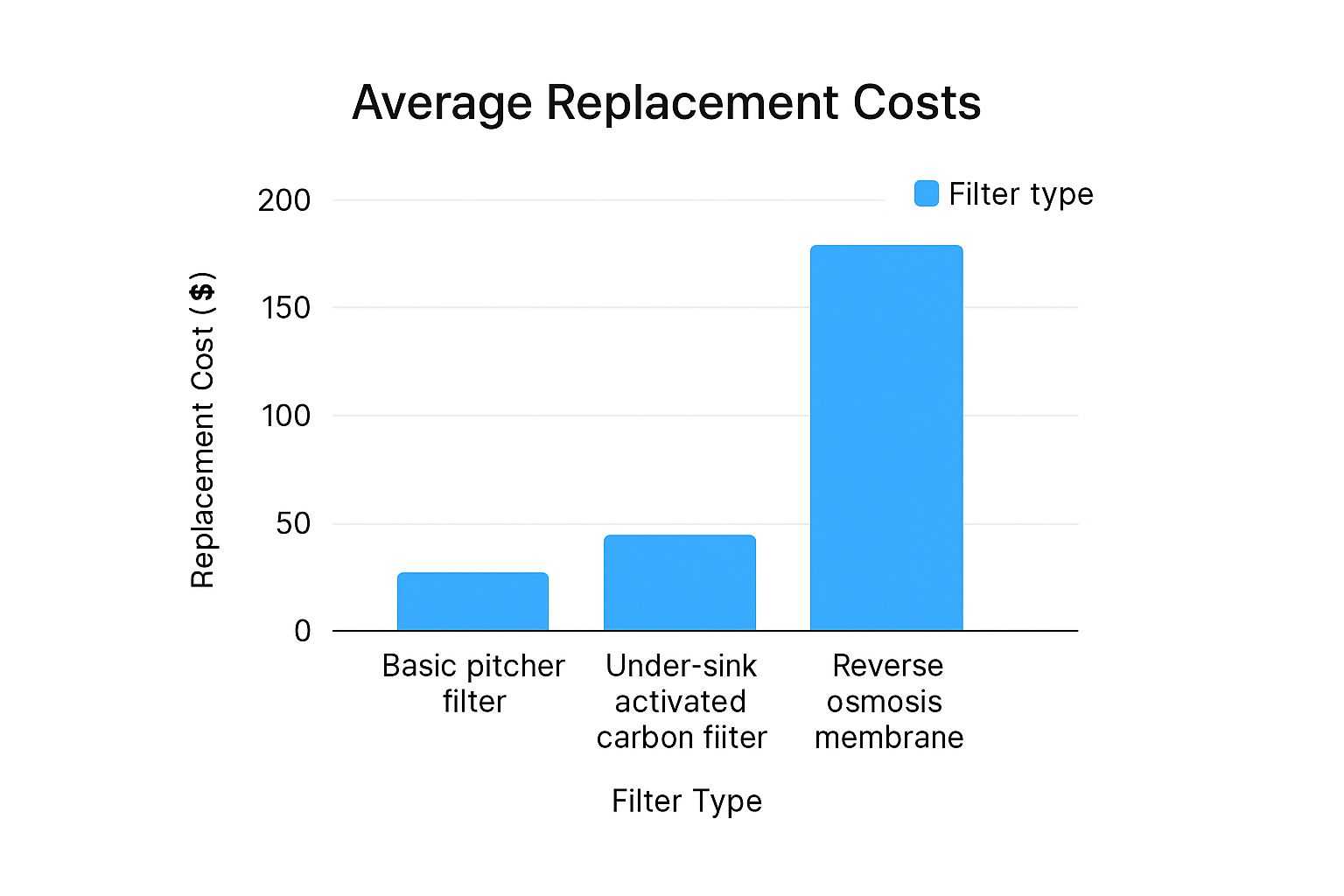
As you can see, there’s a real jump from a basic carbon filter to an advanced RO membrane. The price reflects just how much heavy lifting the filter is doing.
Filter Lifespan and Capacity
How long a filter lasts is another huge piece of the puzzle. This is usually measured in either gallons or months. A little filter on your faucet might be good for 100 gallons or so, lasting a few months. A big sediment filter for your whole house, on the other hand, can chew through thousands of gallons before it needs to be replaced.
Often, a longer-lasting filter will have a higher price tag upfront. But, because you're buying them less often, they can actually save you money in the long run. It's that classic trade-off: pay less now, or pay less overall.
A filter's capacity isn't just a suggestion—it's the point at which it can no longer effectively capture contaminants. Pushing a filter past its limit means you're no longer getting the protection you paid for.
Brand Reputation and Certifications
You've probably noticed a price gap between the official manufacturer's filters and generic third-party versions. There's a reason for that. Big-name brands pour a ton of money into research, development, and getting their products officially certified by groups like the NSF (National Sanitation Foundation).
That NSF seal is basically a guarantee. It means the filter has been rigorously tested and proven to remove the exact contaminants it claims to. A certified filter might cost a bit more, but you're paying for the peace of mind that it actually works.
It's also smart to keep an eye on the future. The cost of filter replacements is expected to creep up, thanks to global inflation rates of 5-8% pushing up the price of raw materials. You can get a deeper dive into how market trends are impacting future filtration costs on BruceMacKay.com.
Comparing Costs Across Different Filter Systems
Picking a water filter system is a bit like choosing a new kitchen appliance. Are you looking for the quick-and-easy convenience of a microwave, or do you need the heavy-duty power of a professional-grade oven? The right choice really comes down to your needs, and the water filter replacement cost will vary just as much.
Let's walk through the most common types of home filtration systems to see how their long-term costs really stack up.
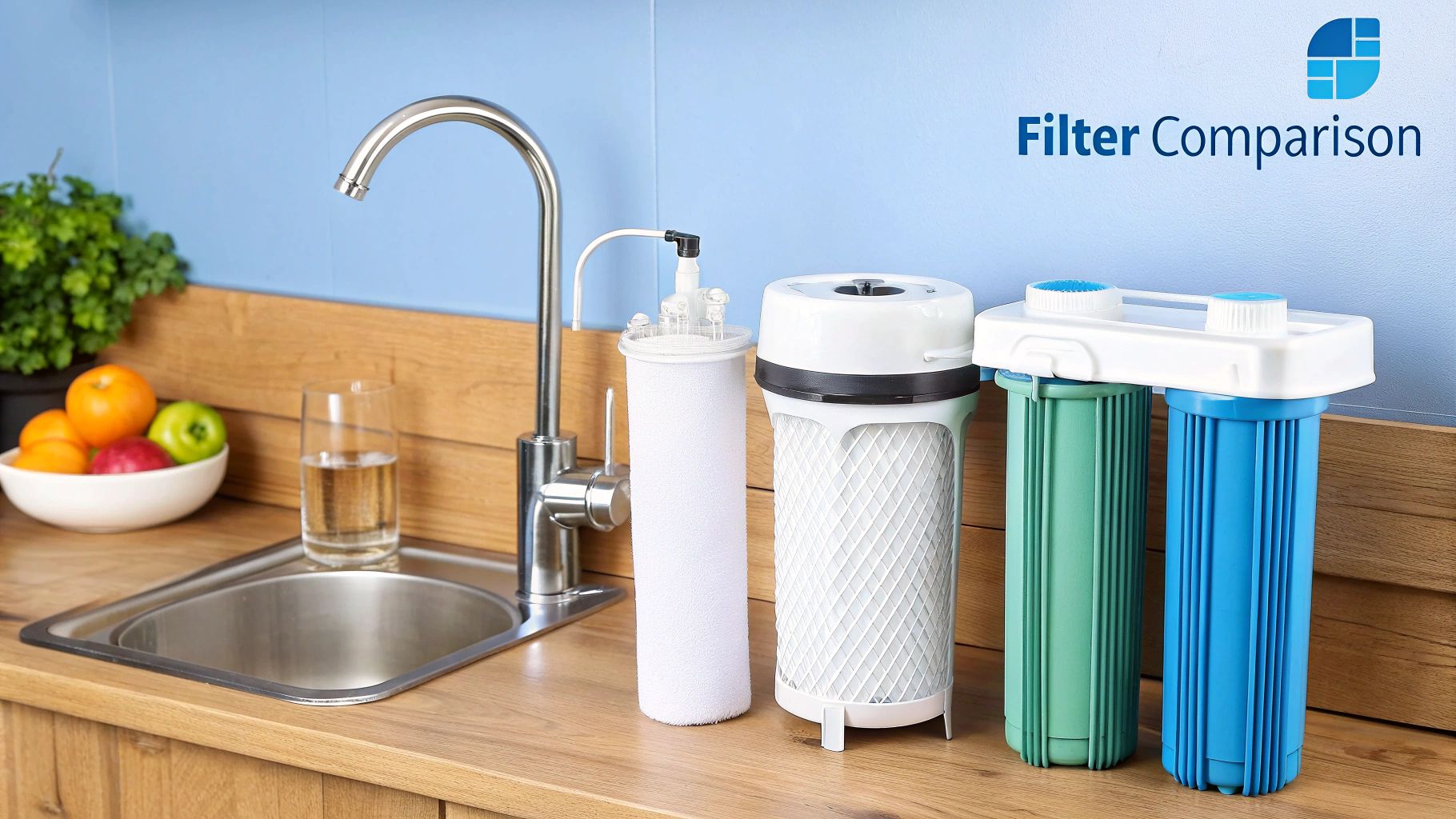
Think of us as your personal shopper, guiding you through the different options to find the perfect fit for your home and budget. When you're thinking about the long-term investment, it helps to use the same mindset as when evaluating costs for household products like your morning coffee. The upfront price is just one part of the story.
H3: Pitcher And Faucet-Mounted Filters
Pitcher and faucet filters are the "grab-and-go" options in the filtration world. They're a fantastic choice for renters, college students, or anyone who just wants a simple, low-commitment way to get better-tasting drinking water.
Their main selling point is the super-low upfront cost. But because they're small, you'll be swapping out filters more often. A standard pitcher filter might last you about two months, while a faucet filter can stretch to three or four. This makes their ongoing water filter replacement cost feel more like a small, recurring subscription.
- Replacement Cost Range: $15 – $40 per filter
- Best For: Individuals or small households mostly looking to improve the taste and smell of tap water, especially by getting rid of chlorine.
H3: Under-Sink And Refrigerator Filters
Stepping up a level, you have under-sink and refrigerator filters. These are the "set-it-and-forget-it" workhorses of home water filtration. Tucked away out of sight, they give you filtered water on demand, right from your main tap or fridge dispenser.
These systems strike a great balance between performance and convenience. Their filters last a lot longer—usually six to twelve months—so you'll only have to think about replacements once or twice a year. The cost of an individual filter is higher than a pitcher's, but the total annual expense often works out to be similar, or even less, because they last so long.
These mid-range systems are often the sweet spot for families. They deliver excellent filtration for common contaminants without the complexity or expense of a whole-house setup.
H3: Whole-House And Reverse Osmosis Systems
Now we're getting into the premium end of the market with whole-house and reverse osmosis (RO) systems. A whole-house system is the ultimate solution, treating every single drop of water that comes into your home. This means it protects not just your drinking water but also your plumbing, appliances, skin, and hair.
A reverse osmosis system, which usually gets installed under the sink, provides the highest level of purification you can get for drinking water, removing up to 99% of all dissolved contaminants. The replacement filters for these systems are the most expensive, but they also have the longest lifespans—RO membranes can last for two years or even longer. These aren't just filters; they're major upgrades to your home's water quality.
- Replacement Cost Range: $50 – $250+ depending on the specific filter stage and the complexity of the system.
- Best For: Homeowners dealing with significant water quality issues (like hard water or well water) or families who want total protection at every single faucet.
A Detailed Comparison of Home Water Filter Systems
To help you visualize the differences, it's useful to see all the options side-by-side. Each system type serves a different purpose and comes with its own long-term cost commitment.
| Filter System Type | Replacement Cost Range | Filters Contaminants Like… | Best For |
|---|---|---|---|
| Pitcher & Faucet | $15 – $40 | Chlorine, taste, and odor | Renters and individuals |
| Under-Sink | $50 – $100 | Lead, chlorine, cysts, VOCs | Families wanting dedicated drinking water filtration |
| Whole-House | $25 – $150 | Sediment, chlorine, rust | Homeowners wanting protection for all water |
| Reverse Osmosis | $100 – $250+ | Dissolved solids, heavy metals | Maximum purification for drinking water |
This table gives you a quick snapshot, but remember to factor in your own water usage and local water quality when making a final decision. What works for a small apartment won't be the right fit for a large family home on well water.
The Hidden Costs of Not Replacing Your Filter
It’s tempting to look at that water filter replacement cost and think, "I'll get to it next month." We’ve all been there. But what if we flip that thought on its head? The real cost isn’t the new filter; it’s the price you pay for not replacing the old one.
Think of it this way: a filter is basically a microscopic bouncer for your water. When it’s new, it’s a vigilant guard, stopping all the unwanted gunk from getting into your glass. But over time, that guard gets overwhelmed and clogged up. Eventually, the gate fails, letting through the very contaminants you bought the system to stop in the first place.
Timely replacement isn't just another chore—it's a critical investment in your family's health and your home's well-being.
The Impact on Your Health and Home
The biggest risk of procrastination? Your family’s health. An old, saturated filter just can't grab contaminants like chlorine, lead, or bacteria anymore. Worse, a clogged filter can become a breeding ground for germs, potentially making your water less safe than straight-from-the-tap.
And it doesn't stop there. A neglected filter can create a domino effect of problems for your appliances.
- Reduced Water Flow: The first thing you'll notice is a drop in water pressure. That strain can wear out your refrigerator's ice maker and water dispenser over time.
- Appliance Damage: All that scale and sediment that the filter should have caught can now build up inside your coffee maker, dishwasher, and water heater. This leads to expensive repairs or, even worse, having to replace them entirely.
- Wasted Money: You're paying for a filtration system that simply isn't doing its job. Every glass of water becomes a reminder of an investment that's stopped paying off.
An expired filter isn’t just ineffective; it’s a liability. You lose the protection you invested in, and you open the door to bigger, more expensive problems down the line.
It's no surprise that people are taking water quality more seriously than ever. The global water filter market, valued at $2,987 million in 2025, is expected to jump to over $4,700 million by 2033. That’s a huge indicator of just how important clean water has become in homes everywhere. If you're interested in the numbers, you can explore the full market analysis on marketreportanalytics.com.
At the end of the day, ignoring that replacement reminder is a gamble. The few bucks you save by stretching an old filter's life just aren't worth the potential cost to your health and home. Viewing the water filter replacement cost as proactive protection is the smartest move you can make.
Smart Ways to Save on Replacement Filters
Keeping up with your water filter replacement cost doesn’t have to drain your bank account. With a few savvy moves, you can keep your water pristine without overspending. It’s all about finding those simple savings that really add up over time.
Think of it like buying in bulk at the grocery store. You could grab a single item every week, or you could buy a family-sized pack for a much lower cost per unit. The same idea applies to water filters, and it's one of the easiest ways to cut down on what you spend year after year.
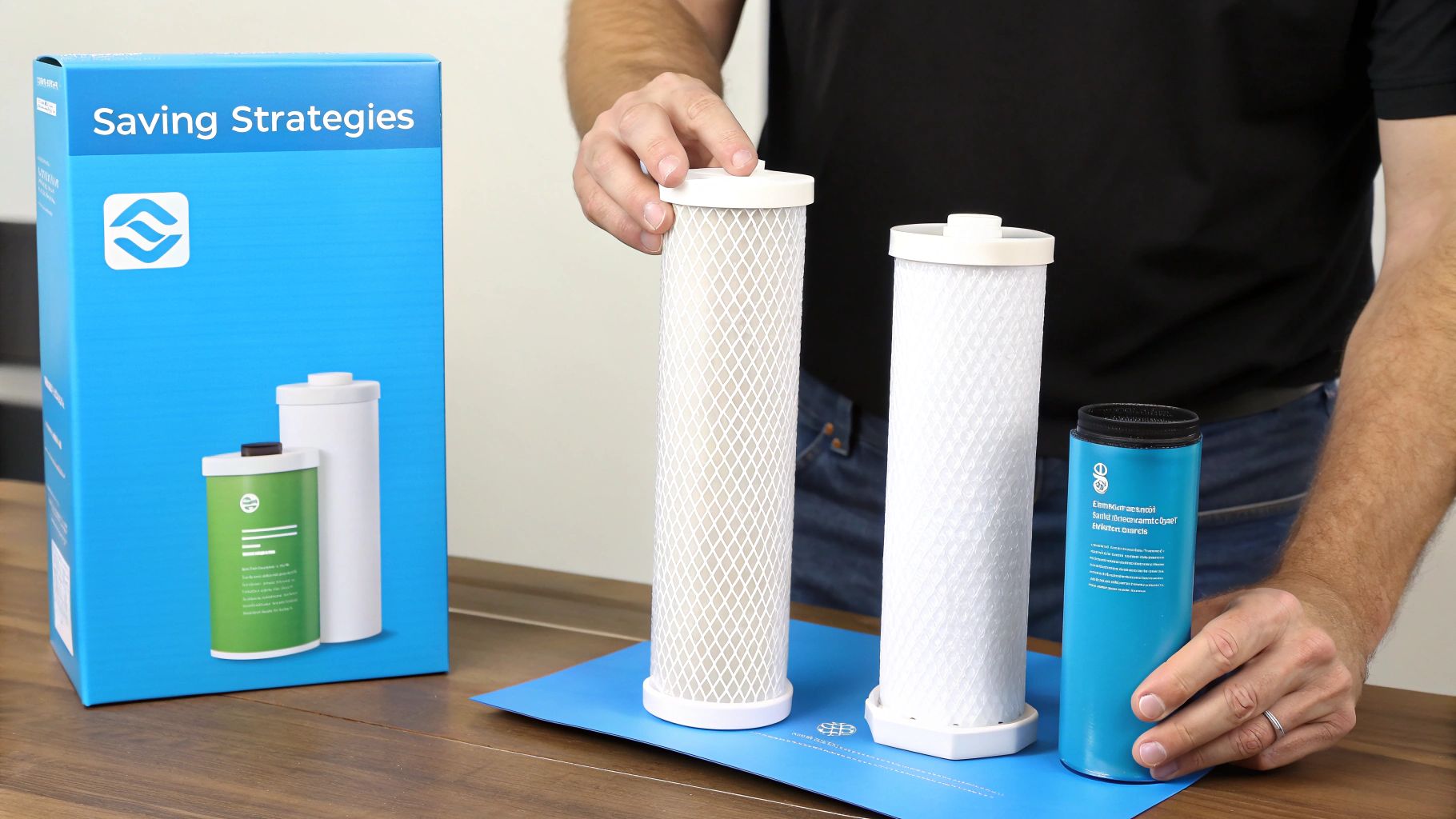
Lock in Savings with Smart Shopping
One of the most straightforward strategies is to look into subscription services. Plenty of filter brands and online stores offer a "subscribe and save" option, knocking 5% to 15% off the price for setting up automatic deliveries. This not only saves you cash but also means you'll never forget to swap out an old filter again.
Another great tactic? Buying in bulk. A single filter might look cheaper on the shelf, but grabbing a multi-pack of two, three, or even six at once almost always brings down the price for each one. This works especially well for common filters, like the ones in your fridge or pitcher, that you know you'll be replacing on a regular schedule.
Explore Certified Third-Party Options
While sticking with the original manufacturer's filters guarantees performance, the market for third-party compatible filters has really taken off. These alternatives often deliver identical filtration for just a fraction of the price. The trick is to know what you're looking for.
Always check for the NSF/ANSI certification mark on any third-party filter. This is an independent stamp of approval, showing the filter has been rigorously tested to meet the same tough standards for contaminant removal as the name-brand version. It's your guarantee that the filter is both safe and effective.
Filters without that certification are a roll of the dice. You might save a few bucks upfront, but you have no real proof that they're actually cleaning your water. Stick with certified options, and you get the best of both worlds—savings and peace of mind.
Protect Your Investment with a Pre-Filter
If you have a whole-house system, especially in an area with a lot of sediment in the water, a simple pre-filter is a total game-changer. Think of it as a bouncer for your main filtration system.
This inexpensive first line of defense is built to catch all the bigger gunk—sand, dirt, rust, you name it. By trapping that heavy debris, the pre-filter stops your more expensive carbon or reverse osmosis filters from getting clogged up too soon. This one small addition can seriously extend the life of your main filters, meaning you won't have to replace them as often and will save a good amount of money over the years.
Budgeting for Clean Water All Year Round
Thinking about your water filter replacement cost shouldn't feel like an unexpected hit to your wallet. It's much smarter to treat it like any other regular household bill, right up there with electricity or internet.
The price you pay for the filtration system itself is really just the starting point. The real, ongoing cost of ownership comes down to those replacement cartridges you'll need over time. By planning for this, you can make sure your family always has clean, safe water without any last-minute financial stress. Budgeting for your filters means you're never caught off guard when that little reminder light starts flashing.
Creating Your Annual Filter Budget
The easiest way to stay on top of things is to map out your costs for the entire year. It’s simpler than it sounds.
Here's a quick way to figure it all out:
- Identify Your Filters: Make a list of every single water filter you have in your home—think refrigerator, under-sink system, whole-house unit, even shower heads.
- Check Replacement Frequency: Look up the manufacturer's recommendation for how often to change each one. Is it every 6 months? Once a year?
- Calculate Annual Need: Do the simple math to see how many of each filter you'll need for the next 12 months.
- Total the Cost: Add up the prices for all the filters you'll need to get your total annual budget.
The key is to shift your mindset. Stop seeing it as a one-off purchase and start treating it as a predictable utility. That’s the secret to effortless maintenance and consistently pure water.
Go ahead and take a moment right now to check your current filter’s status. While you're at it, set a calendar reminder for its next replacement. You'll thank yourself later.
Frequently Asked Questions
It's totally normal to have questions when you're figuring out water filters. Let's tackle a few of the most common ones we get about water filter replacement cost and how often you need to swap them out.
How Often Should I Really Replace My Water Filter?
The manufacturer's guidelines are a great starting point, but honestly, your own senses are the best judge. A fridge filter might be good for six months, while a simple pitcher filter often needs a swap every two months.
But here's the real test: if you notice the water flow slowing down, or if the taste or smell starts to seem a little "off," it's time for a change. Don't wait for the calendar if your water is telling you something's up.
Are Generic Filters as Good as Brand-Name Ones?
They definitely can be, and you can save a good chunk of change. The trick is knowing what to look for. Many generic filters work just as well as the big-name brands for a much lower price.
The most important thing is to check for an NSF/ANSI certification on the filter or its packaging. This is your proof that it's been independently tested and meets real standards for removing contaminants. If a filter isn't certified, there's no way to know if it's actually doing its job.
Does Hard Water Make Me Replace Filters More Often?
Oh, absolutely. Hard water is loaded with minerals like calcium and magnesium, and those minerals will clog up your filter way faster than soft water.
If your home has hard water, you should plan on replacing your filters more often than the manufacturer recommends to keep getting clean water.
This is a huge deal for whole-house systems. A simple sediment pre-filter or a dedicated water softener can make your main filters last so much longer, saving you a lot of money over time.
At Water Filter Advisor, our goal is to help you get clean, safe water without the guesswork. Check out our guides and reviews to find the right solution for your home and budget. Learn more at Water Filter Advisor.
- October 13, 2025
- 0
- Uncategorized
