Finding the Best Water Filter for Your Home in 2026
You're probably here because your tap water is doing at least one annoying thing. It smells like a swimming pool. It tastes flat or metallic. It ...
You're probably here because your tap water is doing at least one annoying thing. It smells like a swimming pool. It tastes flat or metallic. It ...
You’re likely facing a common scenario for those who begin comparing water filters. You pour a glass from the tap, take a sip, and wonder if that chlorine taste is normal. Then you notice dry skin after showers, white buildup on fixtures, or rust-colored sediment in a sink, and the question changes from “Is my water safe?” to “Why am I putting up with this?”
That’s where the whole house vs under sink water filter decision gets real. These aren’t just two versions of the same product. They solve different problems in different ways. One treats the water entering your home. The other focuses on the water you drink and cook with.
I’ve installed both types, tested both types, and watched people buy the wrong one for the wrong reason. That’s the expensive mistake. If you want cleaner showers, less chlorine throughout the house, and better protection for plumbing and appliances, a whole-house system is usually the right move. If your main concern is premium drinking water from one faucet, an under-sink filter is often the smarter buy.
Few embark on this search out of a passion for filtration technology. Instead, the journey is prompted by concerns about one's water quality.
Maybe it’s the smell at the kitchen tap. Maybe the shower leaves your skin tight and your hair dull. Maybe you’re on a well and you’re tired of sediment showing up where it shouldn’t. Or maybe you’ve read enough about lead, PFAS, or old plumbing that you want control over what your family drinks.
The mistake is assuming every filter fixes every problem.
A whole-house filter and an under-sink filter follow two completely different philosophies. One says every drop entering the home matters. The other says the water you ingest matters most, so focus your budget there.
Here’s the quick comparison before we go deeper:
| Feature | Whole House Filter (Point of Entry) | Under Sink Filter (Point of Use) |
|---|---|---|
| Main job | Treats water entering the home | Treats water at one faucet |
| Best for | Showers, laundry, appliances, plumbing | Drinking and cooking water |
| Contaminants it commonly targets well | Chlorine, sediment, broad household water issues | Lead, PFAS, VOCs, fine drinking-water contaminants |
| Installation | Usually professional | Often DIY-friendly |
| Good fit for renters | Rarely | Usually yes |
| Best buyer | Homeowner who wants full-home protection | Household focused on premium potable water |
Choose based on where the problem shows up. If the problem is everywhere, filter everywhere. If the problem is mostly what you drink, filter at the sink.
That’s the practical way to think about it.
A whole-house filter treats water the moment it enters the house. That changes more than the taste at one tap. It changes how your shower feels, how much sediment reaches your plumbing, and how hard your appliances have to work every day.

Choose a whole-house system if the water problem shows up all over the home. Chlorine smell in the shower. Grit in fixtures. Staining, buildup, or premature wear on water-using equipment. This is the point-of-entry option for people who want the entire house protected, not just one drinking faucet.
That broader protection is the true value. Certified systems meeting NSF/ANSI 42 and 61 can achieve up to 97% chlorine reduction (https://www.hartwater.co.uk/blog/under-sink-vs-whole-house-water-filter/). Some models are also rated for 1,000,000 gallons or 10 years (https://www.hartwater.co.uk/blog/under-sink-vs-whole-house-water-filter/). In practice, that means less chlorine odor in bathrooms, less sediment moving through valves and fixtures, and better conditions for water heaters, dishwashers, and washing machines.
Here’s where whole-house filtration earns its keep:
This is the system I recommend when a family complains about the water in more than one room. If the water is affecting daily life across the house, treat the house.
A whole-house filter is built for broad protection. It usually is not the best choice for highly targeted drinking-water purification.
That matters if your biggest concerns are lead, PFAS, fluoride, dissolved solids, or the kind of fine contaminant reduction people expect from a dedicated reverse osmosis setup at the kitchen sink. A whole-house system can handle sediment, chlorine, and general household water issues very well. It does not automatically give you the highest level of treatment for every ingestible contaminant.
Buy based on the problem. If you want better water for bathing, cleaning, plumbing, and appliances, whole-house filtration is the right tool. If you also want stronger purification for drinking and cooking, pair it with a second system at the kitchen tap.
Homeowners get the most value from whole-house filtration, especially if they plan to stay put and want to protect both the family and the house itself. This option makes the most sense with chlorinated city water, sediment-heavy well water, or any situation where bad water is affecting comfort, maintenance, and long-term equipment costs.
It also fits well during a remodel or plumbing upgrade. If walls are open or lines are being reworked, install the filtration system then and do it once. Domicile Construction's renovation guide is useful if you want to see how filtration and plumbing upgrades fit into a larger renovation budget.
You fill a baby bottle, make coffee, boil pasta, and pour a glass of water straight from the kitchen tap. That is the water your family ingests. An under-sink system is built for that exact job.
It treats water at the point of use, usually one kitchen faucet, with far more precision than a broad house-wide filter.
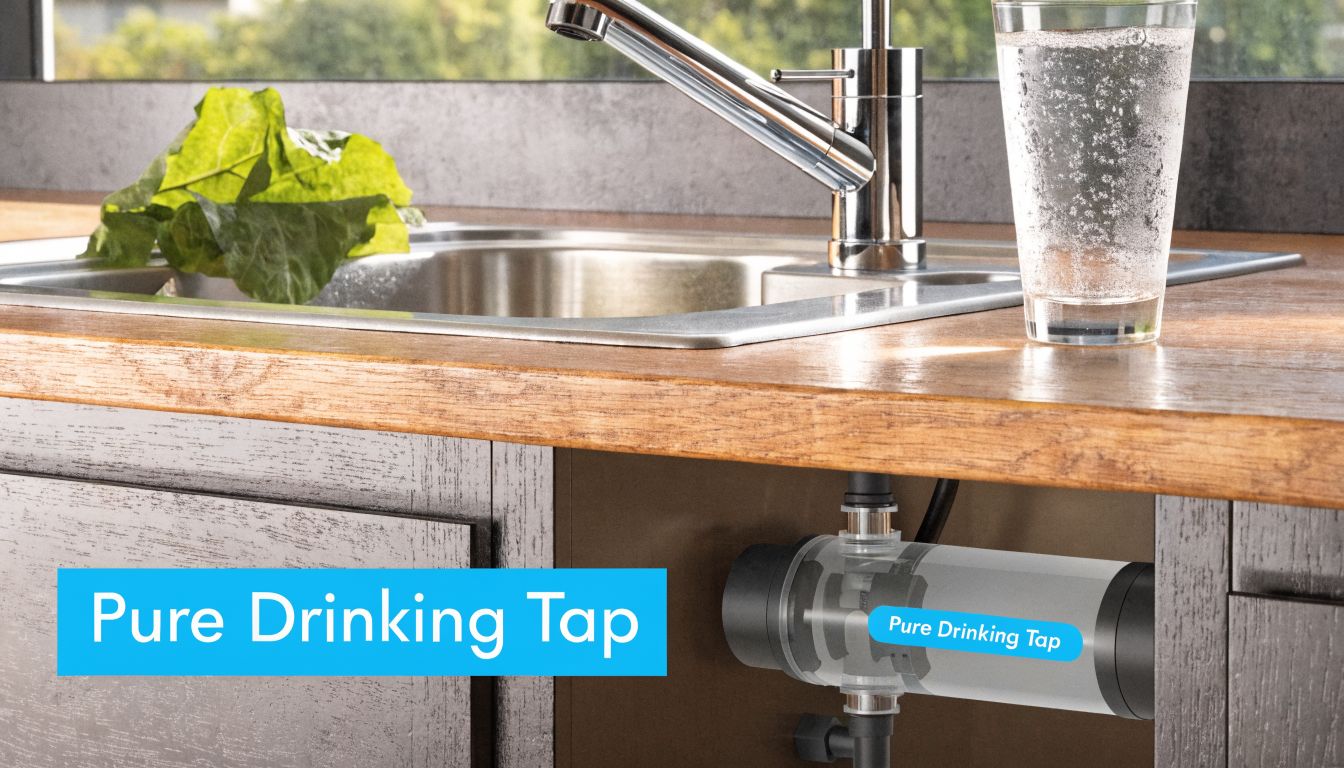
If your top concern is what goes into your body, under-sink filtration is often the smarter buy. This category is built to target drinking-water contaminants such as lead, PFAS, VOCs, bad tastes, odors, and in many cases dissolved solids.
Many of the best units use multi-stage carbon blocks, ion exchange, or reverse osmosis. That matters because the kitchen tap demands higher performance than the rest of the house. You do not need lab-grade water in a toilet tank. You do want better treatment where you drink, cook, rinse produce, and mix formula.
I install these for families who are tired of compromising. They want cleaner water at the tap that matters most, and they do not want to pay to treat every gallon used for flushing or mopping.
Under-sink systems take up little space and usually cost less to buy and install than a whole-house setup. Many models are realistic DIY projects if the cabinet has room and the plumbing is accessible.
They also make financial sense because they treat a small share of total household water use. The U.S. Environmental Protection Agency shows that toilets, clothes washers, and showers make up the bulk of indoor residential water use, which is why filtering only the kitchen line can be the more efficient choice for ingestion-focused households (https://www.epa.gov/watersense/statistics-and-facts).
That is the primary appeal. You spend your filter budget where it delivers the biggest day-to-day payoff.
An under-sink filter will not help dry skin from chlorinated showers. It will not reduce scale or sediment feeding the water heater. It will not protect the dishwasher, washing machine, or ice maker unless those lines are connected to the system. It will not fix a whole-home water quality problem.
That household impact is the deciding factor. Under-sink filtration improves the water you consume. It does little for the water your home uses.
My recommendation is simple. Choose under-sink filtration if your main complaint is drinking and cooking water. Skip it as a standalone fix if your water is damaging appliances, irritating skin and hair, or causing problems at every tap.
If you want the short version, here it is. Whole-house filtration is better for coverage. Under-sink filtration is better for precision.
That’s the fight.
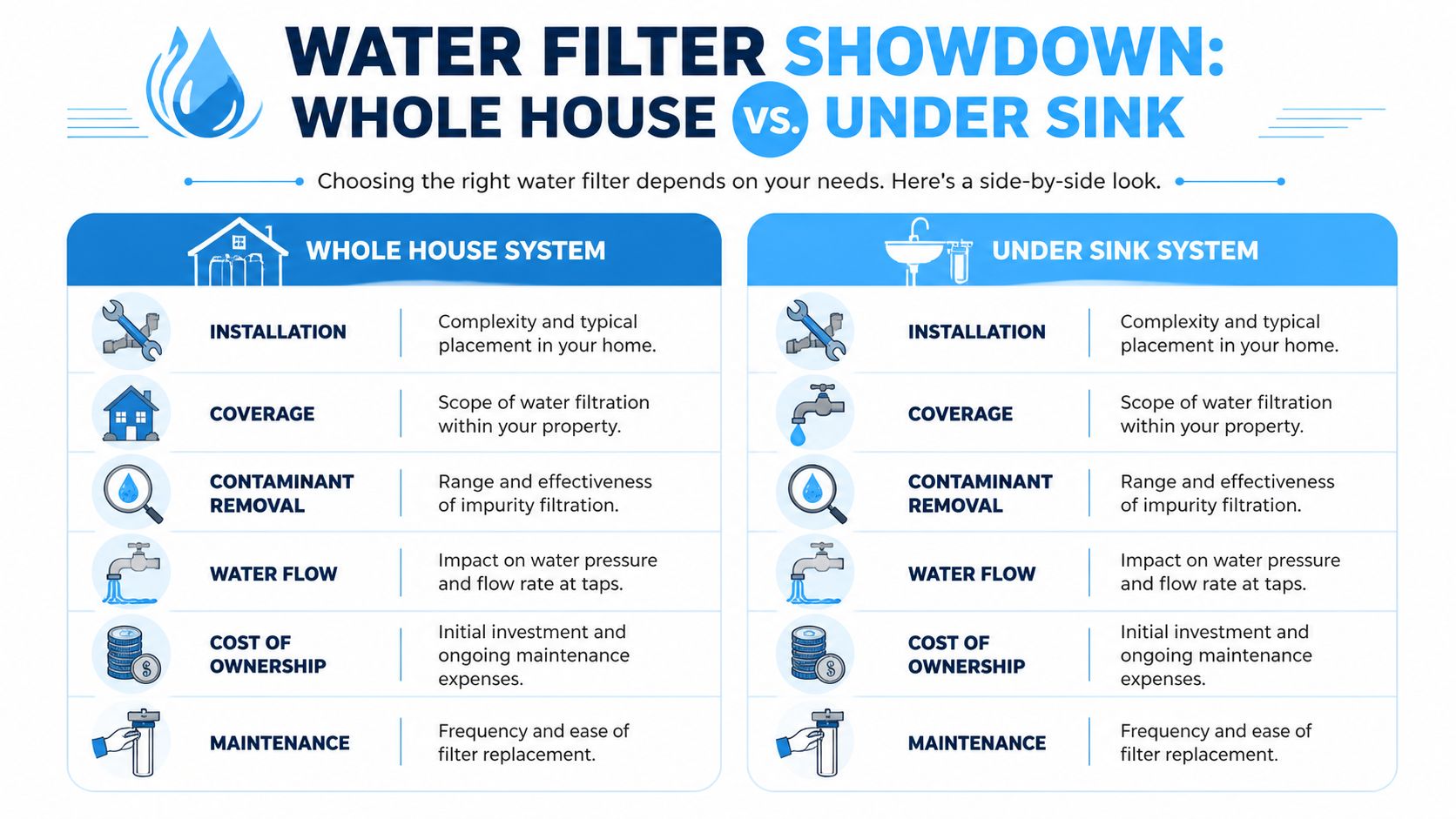
| Feature | Whole House Filter (Point of Entry) | Under Sink Filter (Point of Use) |
|---|---|---|
| Placement | Main incoming water line | Under one sink, usually kitchen |
| Coverage | Entire home | One faucet |
| Main strength | House-wide water treatment | Premium drinking and cooking water |
| Best contaminant focus | Chlorine, sediment, broad household treatment | Lead, PFAS, VOCs, fine contaminant reduction |
| Pressure impact | Depends on sizing, but designed for full-house flow | Usually limited to one faucet |
| Installation difficulty | Higher | Lower |
| Maintenance style | One central service point | Cartridge changes at the sink |
| Best user | Homeowner | Renter, apartment dweller, or drinking-water-focused homeowner |
Whole-house systems win on scope. Under-sink systems win on intensity.
A whole-house unit treats every drop coming into the home, so it helps with shower water, bath water, and appliance feed lines. That gives it a broader household impact. But broad treatment is not the same as the highest level of contaminant removal at one tap.
An under-sink system is where you go when your priority is drinking-water quality first. That’s where technologies like reverse osmosis and multi-stage specialty media make sense.
Practical rule: Use whole-house filtration to improve the home’s water environment. Use under-sink filtration to improve the water you ingest.
Flow matters more than most shoppers realize.
A whole-house system has to feed the entire property. If it’s properly sized, it can handle household demand without creating the kind of pressure drop people worry about. If it’s undersized, the whole family notices it when multiple fixtures run at once.
Under-sink systems only serve one faucet, so the pressure discussion is much smaller in scope. That said, some highly purified systems, especially reverse osmosis designs, can feel slower than a regular tap. Plenty of homeowners accept that tradeoff because they care more about water quality than faucet speed at that one location.
This category isn’t close.
A whole-house filter usually means cutting into the main line, setting up bypass options, making room for service access, and ensuring the system is sized correctly for the home. That’s usually professional work.
Under-sink systems are much easier to live with if you’re handy. They’re compact, localized, and often manageable with basic tools. That makes them especially attractive for apartments and homes where a major plumbing job doesn’t make sense.
Whole-house systems are easier to forget about once installed, but the service isn’t optional. When a main filter is due, the entire house depends on that maintenance being handled on time.
Under-sink systems usually ask for more hands-on awareness because the cartridges are right there under the cabinet. The upside is simple. You can monitor the system more directly, and replacement is often straightforward.
Here's a helpful perspective:
Certifications tell you what the filter is built to do. Ignore marketing language and read the certifications.
For whole-house systems, NSF/ANSI 42 and 61 matter when you’re evaluating chlorine reduction and material safety. For under-sink systems, NSF/ANSI 42, 53, and 58 are the big ones to watch depending on whether you want taste improvement, health-related contaminant reduction, or reverse osmosis performance.
This depends on your problem list.
If you say any of these, a whole-house system is easier to justify:
If you say any of these, an under-sink system is easier to justify:
A family buys a cheap under-sink filter to fix bad-tasting water. Six months later, the kitchen water tastes better, but the showers still smell like chlorine, the dishwasher still spots glasses, and the water heater is still taking the hit. That is how people misread cost.
A filter's overall cost encompasses purchase price, installation, replacement filters, appliance protection, and how much of your daily water use it improves.
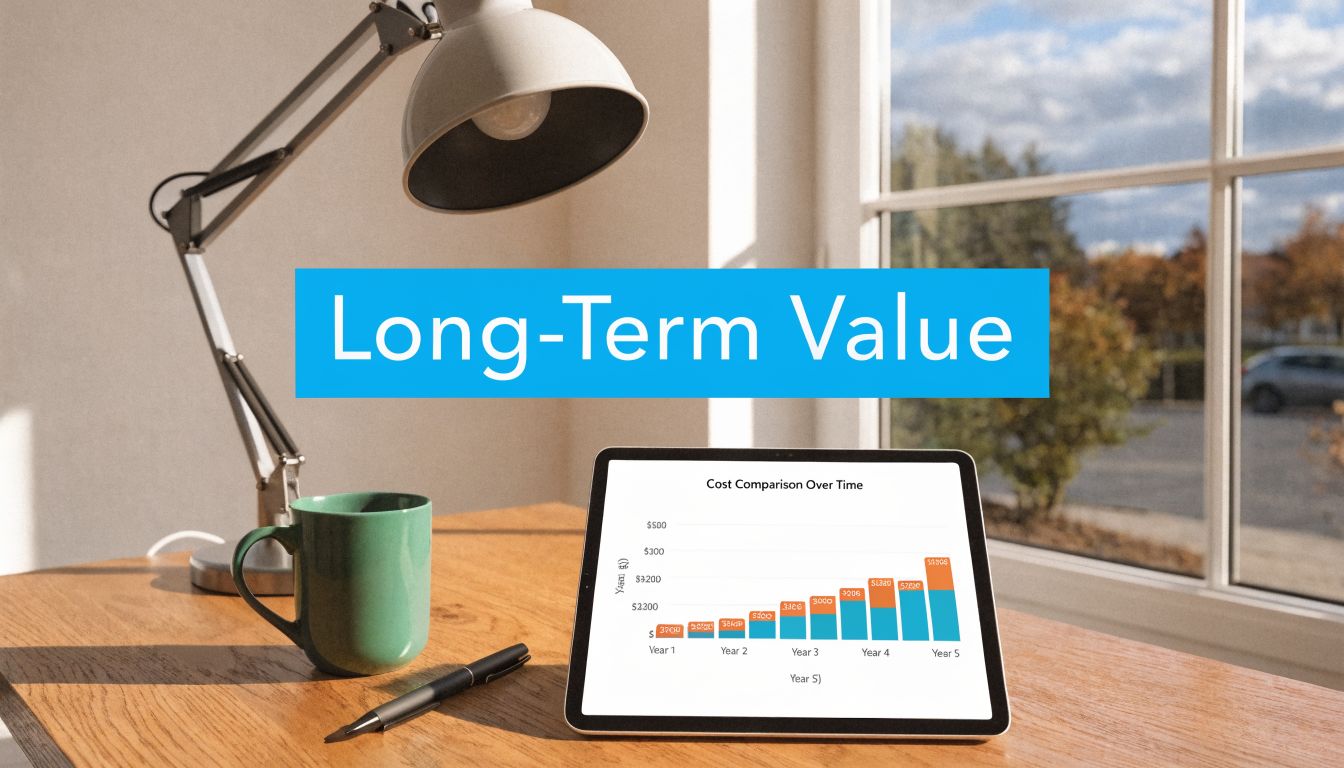
Whole-house filtration costs more up front because it treats every tap in the home. Aquasana says installation can range from $1,500 to $5,000 and that some advanced systems can reach 1,000,000 gallons or a 10-year lifespan in its whole-house vs under-sink comparison.
That price is justified only if you need whole-home results. If your water is rough on skin, leaves chlorine odor in bathrooms, clogs fixtures with sediment, or shortens the life of appliances, a main-line system addresses the full problem in one place. It can also cut the wear that poor water puts on plumbing, the water heater, the dishwasher, and the washing machine. Those savings are slow and unglamorous, but they are real.
If you plan to stay in the home for years, whole-house filtration usually makes more financial sense than patching symptoms room by room.
Under-sink systems win on entry price. Aquasana lists $100 to $500 as a typical upfront range for under-sink systems in its under-sink water filter guide.
That lower cost is the right move for a lot of households. If your main goal is clean water for drinking and cooking, an under-sink filter gives you the best return per dollar. You are filtering the water you consume most directly, not paying to treat toilet fill water or every shower in the house.
This is also the easier option for tighter budgets, smaller homes, and renters who want better water without a major install. If you want help comparing ownership questions before you buy, our water filtration advice library covers the basics clearly.
Overspending usually happens in two predictable ways.
The first mistake is buying a whole-house system for a drinking-water-only problem. If the shower water feels fine, the laundry is fine, and your concern is lead, PFAS, taste, or odor at the kitchen faucet, a whole-house unit is overkill.
The second mistake is buying an under-sink system for a whole-home water problem. It will not fix chlorine in the shower, sediment at multiple fixtures, or the long-term strain on appliances.
Buy for the problem you have, not the product category that sounds bigger.
Filters only pay off when you replace cartridges and media on schedule. Ignore maintenance and the value drops fast. A neglected whole-house system can reduce flow and stop protecting the plumbing side of the home. A neglected under-sink system can leave you drinking water that no longer matches the performance you paid for.
Use this rule:
For a useful overview of what installation and ownership questions buyers often ask before choosing a system, this video gives a solid general primer:
The right answer changes with the home, the people in it, and the water coming in. That’s why blanket advice is usually bad advice.
A suburban family on city water often notices the same pattern. The tap is drinkable, but the water smells harsh, the bathrooms carry that swimming-pool note, and showers leave skin and hair feeling rougher than they should.
That household should usually start with a whole-house filter.
Why? Because their complaint isn’t just at the kitchen sink. It’s everywhere water touches daily life. A kitchen-only upgrade won’t change shower comfort, bathroom odor, or laundry water.
This one is easy. If you rent and your main concern is drinking water, buy an under-sink system.
You probably don’t need a plumber cutting into the main line. You probably don’t own the building. You probably want something compact, removable, and focused on the water you consume.
That’s exactly where under-sink filtration shines.
Well water changes the conversation. Sediment, iron, odor, and other nuisance issues often show up long before you even think about the kitchen faucet. If the house has visible water problems across fixtures, a whole-house setup is usually the anchor solution.
That said, many well-water homes benefit from a layered approach. The whole-house system handles the broad nuisance load. A kitchen filter can then polish drinking water further if needed.
For broader home-water decision help tied to testing, maintenance, and choosing the right type of treatment, Water Filter Advisor’s home filtration advice library is a useful resource.
Some people care less about shower feel and more about what goes in the pot, kettle, and glass. If you cook constantly, make coffee daily, or mix formula, the case for an under-sink filter gets stronger.
You’re paying for targeted purification where flavor and ingestion matter most.
Use this quick guide:
If you’re stuck, stop comparing marketing pages and answer these questions thoughtfully.
If the problem affects more than one room, a whole-house system usually makes more sense.
Ask yourself:
If you answered yes to most of those, lean whole-house.
Now ask the kitchen questions.
If that list sounds like you, lean under-sink.
The right choice gets obvious when you stop asking which system is “better” and start asking which problem you’re paying to solve.
Your house matters as much as your water priorities.
A practical checklist:
If you’re buying a home and evaluating systems before move-in, it helps to look at water quality as one part of the broader property checklist. Can Do Duct Cleaning's home guide is useful for spotting hidden house-condition issues before you commit to major upgrades.
Here’s the blunt version.
Yes, and in many homes that’s the best setup.
A whole-house system handles chlorine, sediment, and broad incoming-water problems. An under-sink filter then gives you high-end drinking and cooking water at the kitchen tap. That combination makes a lot of sense for larger households, well-water homes, and anyone who wants full-home comfort without giving up finer filtration where they ingest water.
Hard water changes maintenance and equipment planning more than people expect. If you have scale buildup on fixtures, water heaters, or shower doors, a filter alone may not solve everything. Some homes need dedicated treatment for hardness in addition to filtration.
The practical takeaway is simple. If hard water affects the whole house, think beyond a sink-only solution. If your concern is only what you drink, an under-sink unit still has a place, but it won’t fix scale on plumbing or fixtures.
Sometimes yes. Sometimes no.
A whole-house filter can do a strong job on chlorine, sediment, and broad household treatment. But if your main concern is highly targeted drinking-water contaminants, many buyers still prefer an under-sink system at the kitchen for an extra layer of confidence.
That’s not a contradiction. It’s using each tool properly.
Whole-house filtration improves the water your home uses. Under-sink filtration improves the water your family swallows.
Heavy sediment and strong chlorine load usually shorten effective service life in real-world use. That applies to both system types. The dirtier or more chemically aggressive the incoming water, the harder the media has to work.
That’s why maintenance schedules should never be treated as decoration. If your water quality is rough, inspect performance sooner, watch for pressure changes, and don’t stretch replacement intervals just to save money.
For one faucet, often yes. For the whole home, no.
Under-sink systems are usually the better choice when you want focused contaminant reduction for potable water. Whole-house systems are better when you want every shower, bathroom, laundry line, and appliance feed protected. Different mission. Different winner.
Buying based on fear instead of fit.
People read about a contaminant, panic, and buy the most aggressive system they can find without matching it to their home, water source, and daily use. That’s how they end up with a premium under-sink filter while still hating their showers, or a whole-house filter while still wanting better drinking water at the kitchen faucet.
The best decision comes from matching the filter to the lived problem.
If you want help comparing systems, understanding certifications, or figuring out what type of filtration fits your home, visit Water Filter Advisor. It’s a practical resource for homeowners and renters who want clear answers, not marketing fluff.
After digging through a mountain of whole house water filter reviews, one thing is crystal clear: these systems are more than just a simple upgrade. They’re a complete overhaul for your home’s water, protecting your pipes, appliances, and your family's health in ways a simple pitcher filter never could.
Most people start their search because they're tired of the chlorine taste in their tap water. A whole house filter absolutely solves that, but its real superpower is that it works on every single faucet and water-using appliance in your home. It’s a point-of-entry system, meaning it cleans the water for everything—not just for drinking.
This all-in-one approach is why the market is booming. The global home water filtration market hit a value of USD 20.26 billion in 2024 and is expected to keep climbing. A huge chunk of that growth is driven by whole house units. You can discover more insights about the growing water purifier market if you're curious.
Think about it. Your morning shower, the dishwasher, the washing machine—unfiltered water affects them all. A whole house system tackles these issues at the source, giving you consistent, high-quality water everywhere.
Here are the benefits you'll actually notice:
The biggest benefit, though, is the peace of mind. Knowing every drop of water in your home—for cooking, drinking, bathing, and cleaning—is free from nasty contaminants is a level of confidence you just can’t get from a single-faucet filter.
At the end of the day, installing a whole house water filter is a solid investment. It's an investment in your home's plumbing and, more importantly, in your family's well-being. By treating water the moment it enters your house, you fix dozens of small problems at once and totally change your relationship with the water you use every day.
Before you can make sense of any whole house water filter reviews, you have to get a handle on what’s happening inside those tanks. Don't think of these systems as a single wall stopping everything bad. It’s more like a specialized team where every player has a specific job. Each filter type is built to tackle a different problem, from stinky chlorine smells to things you can't even see.
It all starts at the "point of entry"—right where the main water line comes into your house. A whole house system gets installed there, treating every single drop of water before it ever gets to your kitchen sink, your shower, or your washing machine. The specific tech it uses is all based on what's actually in your water to begin with.
Most systems you'll see use a multi-stage approach, layering different filter materials to pull out contaminants one by one. This is a smart setup because it gets rid of the bigger gunk first, letting the later stages focus on the finer, tougher-to-catch stuff.
Here’s a breakdown of the three main players:
The EPA's WaterSense program often talks about using water efficiently, which goes hand-in-hand with keeping your home’s plumbing healthy. A good filter system does just that by preventing the scale and corrosion that unfiltered water can cause.
This focus on quality and efficiency is exactly what a good filtration system brings to the table—it protects your pipes and appliances from the constant assault of unfiltered water.
Each filtration method is a specific tool for a specific job. A carbon filter won't soften water, and a softener won't kill bacteria. Understanding this is the key to matching a system to your home's unique water profile.
At the end of the day, picking the right system isn’t about buying the one with the most stages. It’s about figuring out your main water issues and choosing the technology designed to fix them. Once you understand how these filters actually do their job, you’ll be much better equipped to read reviews with a critical eye and find a solution that delivers clean water everywhere in your home.
Looking at all the whole house water filter reviews can make your head spin. But if you know what to look for, you can cut right through the marketing fluff and get to the good stuff: performance, filter life, and certified results. Let's break down the metrics that separate a decent filter from a great one.
The most important job of any filter is getting the junk out of your water. This isn't just about making it taste less like a swimming pool; it's about targeting specific problems, like the chlorine from your city's treatment plant or the sediment stirred up from a private well. The best systems use multiple stages to catch a wide range of impurities.
Next up is the flow rate, which we measure in gallons per minute (GPM). This number is huge because it directly affects your home's water pressure. Get a system with too low a GPM, and you'll be dealing with a sad, trickling shower every time someone runs the dishwasher.
Finally, we'll look at how long the filters last. A system that needs new, expensive filters every few months is just a money pit waiting to happen. The real winners have high-capacity cartridges that can go for years—or hundreds of thousands of gallons—making them a true set-it-and-forget-it solution.
To give you a clearer picture, this table lays out the core specs of some of the leading systems on the market. It's a straightforward way to see how they stack up against each other on the most critical performance points.
| System Model | Filtration Technology | Removes These Contaminants | Flow Rate (GPM) | Filter Lifespan (Gallons) | NSF/ANSI Certified |
|---|---|---|---|---|---|
| Aquasana Rhino® | Sediment, Carbon, KDF | Chlorine, Sediment, VOCs, Herbicides | 7 – 15 | 600,000 – 1,000,000 | 42 |
| SpringWell CF1 | Sediment, Carbon, KDF | Chlorine, Chloramine, PFOA/PFOS | 9 – 20 | 1,000,000 | 42, 53 |
| Pentair PC600 | Sediment, Carbon | Chlorine, Sediment, Particulates | 6 | 600,000 | 42 |
| iSpring WGB32B | Sediment, CTO Carbon | Chlorine, Sediment, Rust, Pesticides | 15 | 100,000 | 42, 53 |
| Express Water | Sediment, GAC, Carbon | Chlorine, Sediment, VOCs, Odors | 15 | 100,000 | 42, 53 |
As you can see, filter lifespan and flow rates can vary quite a bit. A system like the SpringWell or Aquasana is built for the long haul, while others might require more frequent changes but offer a high flow rate out of the box.
At the end of the day, a filter has one job: clean your water. But they don't all go about it the same way. The top-tier models are engineered to knock out an impressive list of contaminants, giving you peace of mind with every drop.
Take a quality system like the Aquasana Rhino. It uses a tag-team approach with a sediment pre-filter, activated carbon, and KDF media. This combination is brutally effective against the usual suspects:
The best way to know if a filter really does what it says is to look for third-party certifications. You want to see labels like NSF/ANSI 42 (for things like chlorine and taste) and NSF/ANSI 53 (for health-related contaminants like lead). This is your proof that the system has been independently tested and actually works.
"Will this thing kill my water pressure?" It's one of the first questions I hear from homeowners, and it's a valid one. This is where the flow rate (GPM) is so important. For an average home, you’ll want a system that can handle 10 to 15 GPM so you can run a few things at once without the water slowing to a crawl.
Think about it: you’re in the shower, and someone starts the washing machine. With a low-GPM filter (say, 5-7 GPM), your shower will feel weak and pathetic. But a system built for high flow (15+ GPM) won't even flinch. The best ones are designed with wider ports and high-flow media to keep your water pressure strong and steady.
The sticker price is just the beginning. The real cost of a whole-house filter shows up over time, and it all comes down to the filter lifespan. Swapping out cartridges every few months is a pain, and the cost adds up fast.
The best systems are built like tanks. The Aquasana Rhino, for example, has a main filter that’s good for one million gallons—that can be up to 10 years of clean water. Sure, you’ll still need to change the pre-filters every 3-6 months, but the main unit is built to last. That means less money and less hassle for you.
This simple graphic shows the most common tools in a whole house system's toolbox.
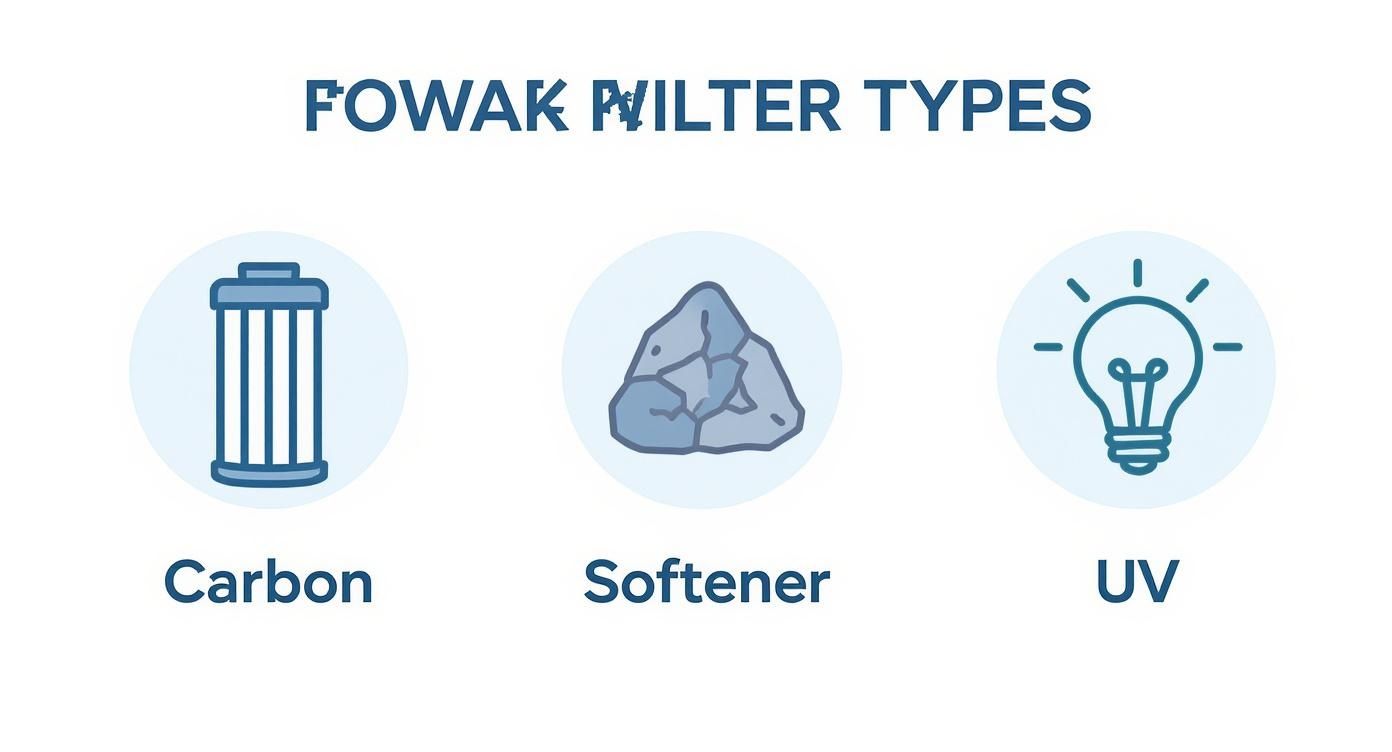
It shows how different technologies—like carbon, water softeners, and UV purifiers—are each designed for a specific job, whether it's removing chemicals or ensuring your water is biologically safe to drink.
The right filter for you really depends on where your water comes from. City water and well water are two completely different beasts.
If you're on a municipal supply, your main enemies are chlorine, chloramines, and sediment. A multi-stage system with a sediment pre-filter and a big activated carbon tank is perfect for this. It'll make your water taste and smell great while protecting your pipes.
Well water is a whole other ballgame. You could be dealing with sediment, iron, manganese, and even bacteria or viruses. A proper well water system needs a multi-layered defense:
This is why people love whole house filters—they solve the problem everywhere, for every use. From the kitchen sink to the shower, you get clean, safe water without thinking about it. Users constantly rave about the low maintenance and long filter life, not to mention the huge difference in water clarity and taste. You can discover more insights about the growing water purifier market to see just how essential these systems have become.
Ultimately, picking the right system is about matching its certified performance to your water's specific problems. Focus on contaminant removal, flow rate, and filter life, and you’ll find a whole house filter that gives you great water from every tap.
That sticker price on a new whole house water filter? It’s just the starting line. To get the full picture of what you’ll actually spend, you need to look at the total cost of ownership. This means factoring in the initial purchase, the cost of professional installation, and—most importantly—the recurring expense of replacement filters and media.
It’s easy to get fixated on the upfront price, but that can be a costly mistake. A cheaper system might look like a great deal today, but if you’re swapping out expensive filters every six months, it will quickly eclipse the cost of a premium system built to last a decade. The real goal is finding the best long-term value, not just the lowest price tag.
First up is the system itself. Prices can run from a few hundred dollars to several thousand, depending on what you need it to do. A simple sediment and carbon filter for treated city water will be on the lower end. But if you’re dealing with well water, a more robust setup with a UV purifier and a water softener will naturally cost more.
Next, you have to get it installed. If you’re a seasoned DIYer with plumbing experience, you might be able to handle this yourself. For most people, though, this is a job for a professional.
This is where the long-term financial reality sets in. Maintenance is a recurring expense, and it can vary wildly from one model to the next. These are the costs you’ll need to budget for year after year.
Here are the most common recurring expenses:
The real value of a whole house filter isn’t its upfront cost, but its cost-per-gallon over its entire lifespan. A system rated for one million gallons might seem pricey at first, but it often brings the cost of purified water down to just pennies per gallon in the long run.
To really see how these costs play out, let's map it out over five years. This table gives you a clearer idea of how different types of systems stack up financially over time, helping you look beyond the initial price.
See how costs add up over five years. This breakdown compares the initial purchase, installation, and recurring filter expenses for different whole house systems.
| System Type | Initial System Cost | Estimated Installation | Annual Filter Costs | Total 5-Year Cost |
|---|---|---|---|---|
| Basic Sediment/Carbon | $400 – $800 | $400 | $100 | $1,300 – $1,700 |
| High-Capacity Carbon | $1,200 – $2,000 | $500 | $50 | $1,950 – $2,750 |
| Well Water System + UV | $1,800 – $3,000 | $700 | $150 | $3,250 – $4,450 |
| System with Softener | $1,500 – $2,500 | $600 | $200 | $3,100 – $4,100 |
By adding up the true cost of clean water, you can make a much smarter decision. It helps you balance the initial hit to your wallet against the long-term maintenance costs, making sure you pick a system that fits both your water needs and your budget for years to come.
Jumping into whole house water filter reviews is a recipe for confusion unless you know exactly what problem you’re trying to solve. The best system in the world is completely useless if it doesn't target the junk floating around in your tap water. So, the first and most critical step is to stop guessing and find out what you’re really up against.
If you're on city water, your local utility is required to publish an annual water quality report, sometimes called a Consumer Confidence Report (CCR). It’s a decent starting point, listing contaminants they've found and at what levels. But for a true picture of what's coming out of your faucets—or if you have a private well—an independent home water test is the only way to go. It gives you a clear, actionable list of what you need to filter out.
Once you have those test results in hand, you can stop looking at generic features and start matching your specific needs to the right technology. The goal is to find a system built for your exact situation. Think of it less like buying an appliance and more like getting a prescription for your home's water.
Let's walk through a few common real-world scenarios to see how this plays out.
You live in a typical suburban home on city water. Your biggest complaints are that your shower smells like a swimming pool and your drinking water has a faint chemical taste. Your appliances seem fine, but you're constantly buying bottled water because the tap stuff just isn't cutting it.
You’re out in the country and get your water from a private well. It sometimes has a bit of an earthy smell, and you've noticed some rust-colored stains popping up in your sinks and toilets. Your main concern, though, is the invisible stuff—potential bacteria or viruses, since your well isn't treated by a municipality.
Choosing the right filter is all about matching the technology to the contaminant. A carbon filter won't stop bacteria, and a UV light won't remove sediment. Understanding this distinction is the key to getting water that is truly clean and safe for your family.
Your water tastes perfectly fine, but you're in a constant war against hard water. There’s a chalky white film on your shower doors, your coffee maker is always getting clogged, and your dishwasher leaves spots on every single glass. You're worried about what this scale is doing to your pipes and expensive appliances over time.
By figuring out which scenario you're in, you can confidently pick a system that directly solves your problem. That way, every dollar you spend actually delivers the results you’re looking for. The same principle of matching the right tool to the right job is key in all aspects of home maintenance, and it's useful for understanding the differences between various purification systems for your home's air as well.
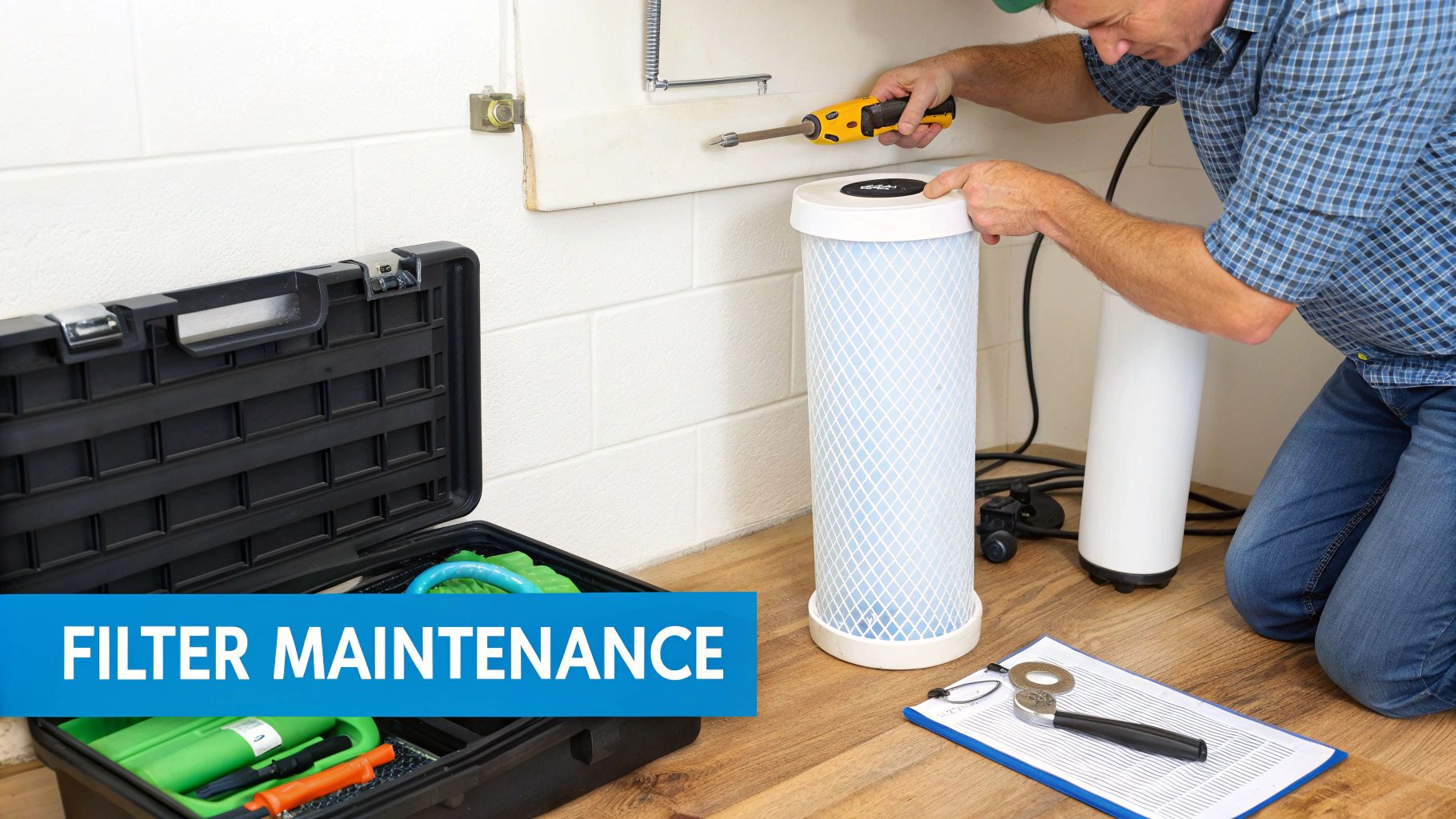
Okay, you've sifted through the whole house water filter reviews and picked your system. What's next? Getting it installed and running is where the rubber meets the road. A proper setup is non-negotiable if you want your filter to perform at its best for years to come.
The first big question is always DIY vs. pro install. While some kits look simple enough, remember that you're cutting into your home's main water line. If you've got serious plumbing chops and the right tools, it’s a project you can probably handle.
For most of us, though, hiring a licensed plumber is the way to go. It's just smarter and safer. A pro makes sure everything is leak-free, up to code, and doesn't do anything to void your warranty.
Once your system is in, a little upkeep goes a long way. This is how you protect your investment and make sure your water quality stays high. If you neglect it, you'll eventually deal with clogged filters, dropping water pressure, and a system that gives out way too early.
The good news is that for most multi-stage systems, maintenance is pretty simple—it’s mostly just changing out filters. You can always find more in-depth advice on water filter maintenance for specific models, but a basic schedule is all you really need to stay on top of things.
Don't wait until your shower feels weak or that old chlorine smell comes back. A simple, proactive maintenance plan is the best way to guarantee you always have great-tasting water and get the maximum life out of your filter.
Think of this as your cheat sheet for keeping the system running like new. I recommend setting calendar reminders so you don't forget. A few minutes of prevention now saves you from big headaches later.
Here’s what a typical schedule looks like:
Stick to this simple schedule, and you'll keep your water pressure strong and your water pure. It’s the easiest way to get your money's worth from your new system.
To wrap things up, here are a few quick answers to the questions we hear most from homeowners when they're looking at whole house water filters.
A properly sized and installed system really shouldn't have a noticeable impact on your water pressure. The key is making sure the filter you choose has a flow rate (measured in GPM, or gallons per minute) that can keep up with your home's demand.
If you do notice a drop in pressure down the road, the most likely culprit is a clogged filter. That's why sticking to a regular maintenance schedule is so important.
If you're on city water, your local utility is required to provide an annual Consumer Confidence Report (CCR). This gives you a good baseline.
For a much more detailed picture, especially if you have a private well, grabbing an independent home water test kit is your best bet. It will pinpoint the specific contaminants you're dealing with, so you can choose a system that actually targets your home's unique water issues.
Some of the simpler models are definitely designed with DIY in mind. That said, it almost always involves cutting into your main water line, so you need to be pretty confident in your plumbing skills.
If you're not comfortable with that, we always recommend hiring a licensed professional. It's better to get it done right the first time.
Ready to find the perfect filtration solution for your home? The team at Water Filter Advisor has done the research to make your decision simple and stress-free. Explore our in-depth guides and top picks today!
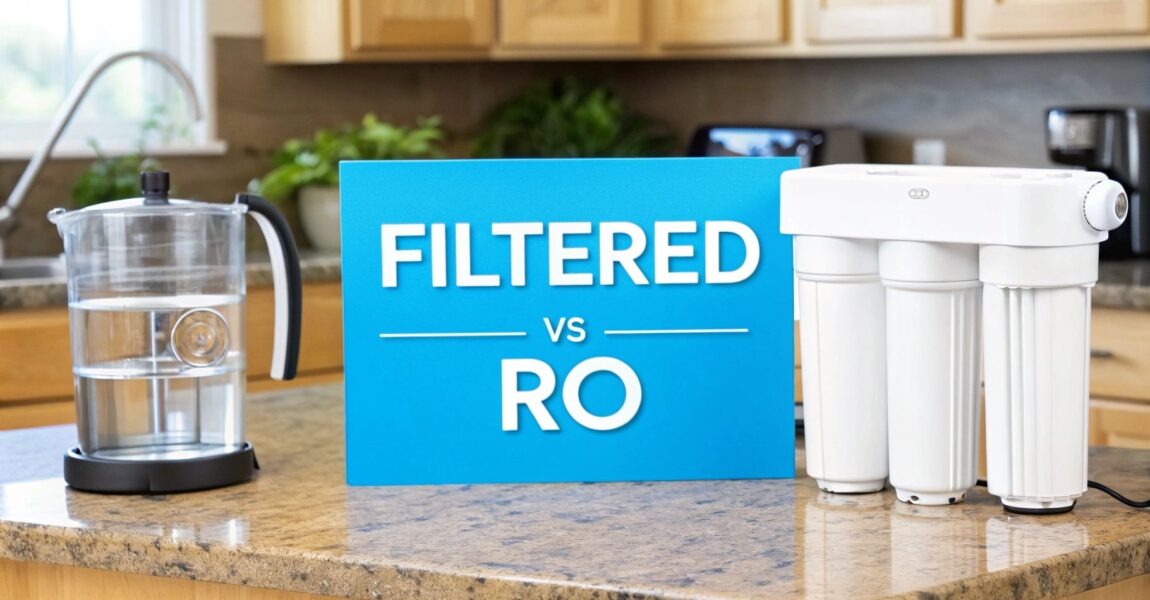
So, you want better tap water. Welcome to the club! But when you start looking, you run into two heavy hitters: standard water filters and reverse osmosis systems. What's the real difference?
Let's cut to the chase. A standard filtered water system is like a bouncer at a club—it grabs the obvious troublemakers, like chlorine, making your water taste and smell way better. A reverse osmosis (RO) system is like a top-secret government lab—it purifies your water, zapping up to 99% of almost everything else, including salts, heavy metals, and fluoride.
The choice boils down to a simple question: are you looking for a simple taste upgrade, or do you want the absolute purest water you can get flowing from your tap?
Diving into the world of home water filtration can feel like you’ve stumbled into a chemistry class you didn't sign up for. You'll hear technical terms like "activated carbon" and "semi-permeable membrane" tossed around, which can make a simple decision feel surprisingly complex.
But don't worry. Comparing filtered water to reverse osmosis is easier than it sounds. It all comes down to what's lurking in your water and what you personally want to kick to the curb.
Think of standard filters—the kind you find in a simple pitcher, faucet attachment, or under-sink unit—as a basic gatekeeper. They do a fantastic job of grabbing the big stuff that ruins the taste and smell of your water, especially chlorine. They take your regular city tap water and make it genuinely pleasant to drink.
Reverse osmosis (RO) is a whole other beast. It's more like a high-security checkpoint for your water. By forcing water through an incredibly fine membrane, it strips out nearly everything that isn't pure H₂O. We're talking dissolved salts, fluoride, arsenic, lead, and a long list of other contaminants that simpler filters can't even see.
To make the right call, let's put them side-by-side. This table cuts through the noise and lays out the core differences.
| Feature | Standard Water Filters | Reverse Osmosis (RO) Systems |
|---|---|---|
| Primary Goal | Improves taste, odor, and clarity by removing chlorine and sediment. | Purifies water by removing a huge range of dissolved contaminants. |
| Technology | Uses media like activated carbon or sediment screens to trap particles. | Pushes water through a high-tech membrane to separate out impurities. |
| Contaminant Removal | Great for chlorine, sediment, some VOCs, and larger particles. | Removes up to 99% of TDS, including salts, fluoride, arsenic, and lead. |
| Mineral Impact | Keeps healthy minerals like calcium and magnesium. | Removes almost all minerals, both the good guys and the bad guys. |
| Installation | Simple (pitchers, faucet mounts) to moderate (under-sink systems). | More complex, usually needing a dedicated faucet and drain connection. |
This gives you a solid starting point. For more in-depth comparisons and product suggestions, you can always check out more expert advice to zero in on the perfect fit. Now, let's dig deeper to help you match the right system to your home's unique needs.
Before we can really get into the reverse osmosis vs. filtered water debate, we need to be clear about what we mean by "filtered water." It's a broad term that covers a few popular technologies, each one a specific tool for a specific job. These methods don't technically purify water; they improve it by tackling problems like bad taste, weird smells, and cloudy appearance.
Think of standard filters as a bouncer at a club. They aren't there to check the ID of every single molecule, but they are great at stopping the most obvious troublemakers from getting past the rope. For most people on city water, this is often all you need to take your tap water from "meh" to "ahh."
The most common player in the home filtration game is the activated carbon filter. This is the magic inside everything from your basic water pitcher and refrigerator filter to the more serious under-sink and whole-house systems. It's so popular because it’s incredibly good at one thing: adsorption.
An activated carbon filter is basically a super-sponge with a massive, porous surface area that acts like a magnet for certain contaminants. As water flows through, chemicals and impurities get trapped and stick to the surface. It’s especially good at nabbing chlorine—the chemical most cities use for disinfection and the main reason your tap water can taste and smell like a swimming pool.
By removing chlorine and some volatile organic compounds (VOCs), these filters make a huge difference in how your water tastes. If you want to get into the nitty-gritty, you can dig deeper into understanding water filtration and its impact on flavor. For many households, just getting rid of that chemical funk is the entire goal.
Next up are sediment filters. These are the unsung heroes in many home water setups, especially for homes with older pipes or private well water. Their job is simple, physical screening—they’re basically a high-tech net designed to catch solid gunk.
Imagine pouring water through an extremely fine mesh. That’s what a sediment filter does, catching debris both big and small, like:
These filters are absolutely essential for protecting the more delicate and expensive parts of a system that might come after them, like an RO membrane. They keep your water clear and prevent clogs, making sure everything runs smoothly.
While carbon and sediment filters deal with chemicals and grit, ultraviolet (UV) purifiers are built to fight an entirely different enemy: living microorganisms. A UV purifier isn't a "filter" in the traditional sense because it doesn't actually remove anything from the water. Instead, it blasts the water with powerful UV-C light.
This blast of UV light wrecks the DNA of bacteria, viruses, and nasty protozoa like Giardia and Cryptosporidium. It doesn't kill them, but it renders them sterile and harmless, neutralizing them without adding a single chemical to your water.
UV purification is a crucial defense for anyone on a private well, where microbial contamination is a real risk. It’s also used as a final safety step in many high-end systems to give you total peace of mind against invisible biological threats that other filters can't touch.
Each of these standard methods is great at its specific job, but they all leave smaller, dissolved contaminants behind. And that’s where the conversation really shifts over to reverse osmosis.
When a standard filter just won't cut it, reverse osmosis (RO) steps into a league of its own. This isn't just about filtering water; it's a full-blown purification process designed to strip your tap water down to its purest form: H₂O. If you're looking for the absolute cleanest water possible for your home, this is the technology you need to know.
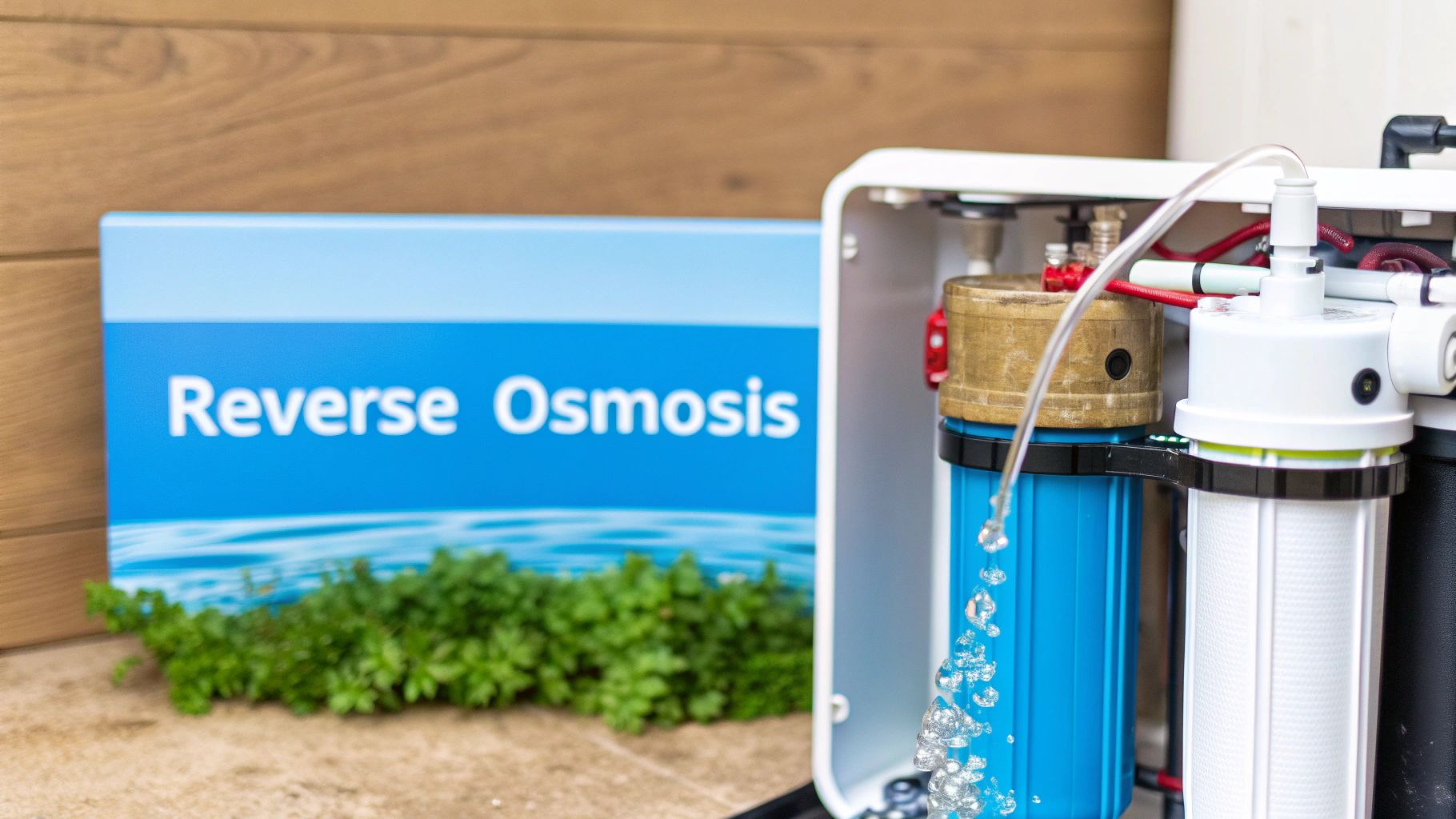
The concept is surprisingly simple but incredibly powerful. An RO system uses your home's water pressure to push tap water through a special semi-permeable membrane. This membrane is the heart of the system, packed with microscopic pores around 0.0001 microns—so tiny that practically nothing but pure water molecules can squeeze through.
Everything else dissolved in the water—from salts and heavy metals to fluoride and nitrates—gets blocked and flushed down the drain. This core difference is what truly separates simple filtering from genuine purification when you compare filtered water vs reverse osmosis.
A typical under-sink RO system isn't a one-trick pony. It’s a team of filters working in harmony, with each stage playing a crucial part in delivering that incredibly pure water.
This methodical, multi-stage process is exactly why RO is considered the gold standard for home water treatment. It’s not one filter doing all the work; it’s a coordinated system built for maximum purity.
You can't argue with the results. Reverse osmosis technology is a major player in the global water purification scene, holding about 36-39% of the market share. Its power to remove up to 99% of dissolved salts, heavy metals, and fluoride makes it an essential tool, especially where groundwater quality is a concern. You can find more details on the water filter market and current trends.
The number one reason people choose reverse osmosis is simple: it removes the nasty stuff that other filters can't even touch. An activated carbon filter is great for getting rid of chlorine, but it's completely helpless against dissolved inorganic compounds.
An RO system, on the other hand, is built to tackle a whole range of tough contaminants:
This level of performance gives you complete peace of mind. For families with specific health concerns, compromised immune systems, or anyone who just wants the purest water they can get, the power of RO is unmatched. It’s the final word when just improving your water isn’t enough and you’re aiming for true purification.
This is where the gloves come off and the real differences between standard filters and reverse osmosis (RO) shine. Choosing the right system for your home isn’t just about the technology—it's about matching that tech to the specific water problems you need to solve.
You can think of it this way: standard filters are great at making decent water even better, while reverse osmosis is designed to take questionable water and make it exceptionally pure. Let’s break down exactly what each method is built to handle and what it leaves behind.
For most homes on a municipal water supply, the biggest complaints are about taste and smell. The culprit is almost always chlorine, which is where filters using activated carbon are the undisputed champions. They are specialists at improving the "aesthetic" qualities of your water.
Activated carbon works like a sponge, using its huge internal surface area to adsorb chlorine and other volatile organic compounds (VOCs). When water flows through, these unwanted elements get trapped, leaving you with water that tastes crisp and clean, without that faint “swimming pool” aroma. Their job pretty much stops there, though; they aren't designed to touch dissolved solids, heavy metals, or salts.
If your main goal is simply to banish that chlorine taste and odor, an activated carbon filter is the most direct and budget-friendly solution. While RO also removes chlorine (usually in a pre-filter), its true purpose is to tackle a much wider range of contaminants.
Here's where reverse osmosis systems pull away from the pack. Contaminants like lead from old pipes, naturally occurring arsenic, fluoride added by water districts, and nitrates from farm runoff are all dissolved in water. Standard carbon or sediment filters just can't physically grab them.
An RO system's semi-permeable membrane, with pores as tiny as 0.0001 microns, is specifically engineered to block these dissolved inorganic compounds. It forcefully separates pure water molecules from a long list of things you don't want to drink.
If your water test shows high levels of any of these, reverse osmosis isn't just a good idea—it's essential for your family's safety and peace of mind.
A huge difference between filters and RO is how they treat minerals. Standard filters like carbon are selective; they take out the bad stuff but let beneficial minerals like calcium and magnesium pass right through. Many people prefer this for both taste and potential health benefits.
Reverse osmosis, however, is not selective at all. Its ultra-fine membrane strips out nearly all total dissolved solids (TDS). This includes harmful contaminants, but it also takes out those healthy minerals. The result is incredibly pure but "demineralized" water. While we don't rely on water for our primary mineral intake, some people find the taste a bit flat. To solve this, many modern RO systems now come with a remineralization post-filter that adds a balanced amount of healthy minerals back into the water right before it hits your glass.
To make this simple, the table below gives you a clear, at-a-glance breakdown of what each technology can and cannot do. Use it to quickly match your specific concerns with the right system.
| Contaminant | Activated Carbon Filter | Sediment Filter | UV Purifier | Reverse Osmosis System |
|---|---|---|---|---|
| Chlorine | Excellent | Ineffective | Ineffective | Excellent (via pre-filter) |
| Sediment (Sand, Silt, Rust) | Fair | Excellent | Ineffective | Excellent (via pre-filter) |
| Lead & Heavy Metals | Limited / Varies | Ineffective | Ineffective | Excellent |
| Fluoride | Ineffective | Ineffective | Ineffective | Excellent |
| Nitrates & Sulfates | Ineffective | Ineffective | Ineffective | Excellent |
| Bacteria & Viruses | Ineffective | Ineffective | Excellent | Good (but UV is better) |
| Healthy Minerals | Retains | Retains | Retains | Removes |
Ultimately, your decision comes down to your water quality. If you have generally safe city water and just want it to taste better, a standard filter is a perfect fit. But if you have specific worries about hard-to-remove contaminants or just want the highest level of purity possible, reverse osmosis is the undisputed champion.
Performance is one thing, but how a system fits into your budget and your life is what really matters. When we get down to the practical differences of filtered water vs reverse osmosis, the cost, maintenance, and installation are worlds apart.
Let's talk money. These two approaches are on completely different financial planets.
Standard filters are your easy entry point. A basic water pitcher can be yours for $20-$40, and a more serious under-sink or faucet-mounted setup will run you $50 to $200. The ongoing costs are straightforward, too—you'll swap out filter cartridges every few months, which usually costs between $15 and $50 a pop.
Reverse osmosis systems are a bigger investment in your home's water quality. A solid under-sink RO unit starts around $200 and can easily top $500, especially with fancy features like a remineralization stage. The long-term costs are also more involved. You aren't just changing one filter; you're replacing multiple cartridges (sediment, carbon, etc.) every year and the main RO membrane every two to four years.
This decision tree cuts through the noise by boiling it down to what you care about most: better taste or ultimate purity.
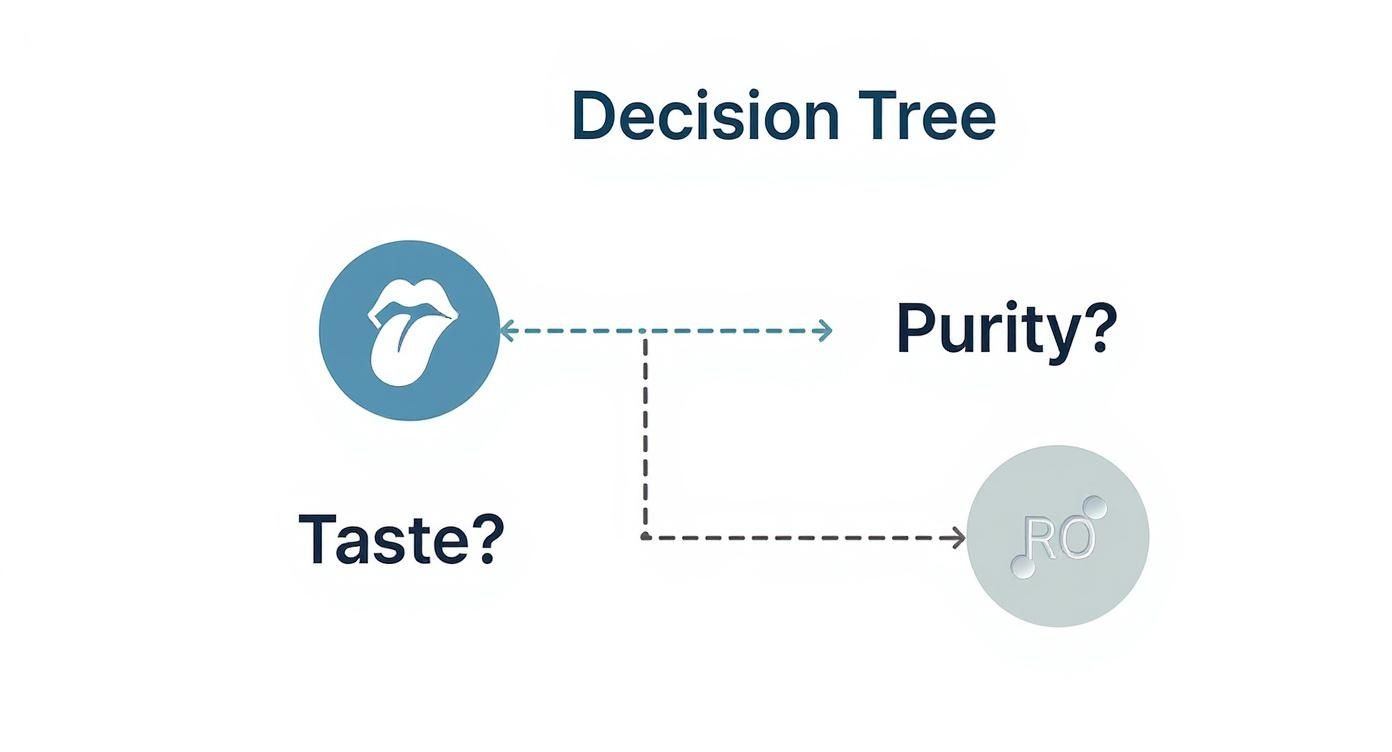
As you can see, if you're just looking to improve taste and odor, a standard filter is your best bet. If you're after the highest level of purification possible, the path leads straight to reverse osmosis.
This is another area where the two systems couldn't be more different.
Most standard water filters are designed with the DIYer in mind. A pitcher filter obviously needs no installation, and you can usually twist a faucet filter on in minutes without any tools. Even most under-sink carbon filters are manageable for anyone comfortable with basic home repairs.
Installing a reverse osmosis system is a real project. It involves:
While many kits are marketed for DIY, one wrong move can lead to a leaky disaster under your sink. That's why a lot of homeowners just hire a plumber, which can add another $150-$300 to the initial cost.
One of the biggest concerns people have with reverse osmosis is the wastewater. It’s a valid point. To flush away all those contaminants it removes, the system has to send a certain amount of water down the drain. This is a key difference from standard filters, which produce zero wastewater.
The efficiency of an RO system is all about its pure-water-to-wastewater ratio. Older systems were infamous water hogs, sometimes wasting three gallons (or more!) for every single gallon of pure water they produced. Thankfully, modern technology has come a long way.
Today’s systems are much smarter. While you might still see ratios from 1:1 to 3:1 (waste to pure), the best modern RO units have dramatically improved, with some models achieving nearly 80% water recovery rates. In fact, the US EPA calculates that if everyone switched to WaterSense-labeled RO systems, we could save over 3.1 billion gallons of water across the country every year. You can learn more about how newer systems have tackled this issue over at hawaiiancoolwater.com. This progress makes choosing an RO system a much more eco-friendly decision than it used to be.
The choice between a standard water filter and a reverse osmosis system gets a lot easier once you stop focusing on technical specs and start thinking about your actual situation at home. What's the real goal here? Are you just trying to make your morning coffee taste better, or are you worried about specific health risks hiding in your water supply?
Let's walk through a few common household scenarios to figure out which system is the right fit for you.

Scenario 1: The City Dweller Seeking Better Taste
You live in an apartment or a fairly new house with a reliable municipal water supply. Your main gripe is that chlorine smell and taste that makes tap water just a little bit… off. You’re not really concerned about heavy metals or anything serious—you just want crisp, clean-tasting water on demand.
Scenario 2: The Suburban Family with Older Plumbing
Your family lives in a home built before the 1980s, and you have a nagging worry about lead potentially leaching from old pipes or solder joints. The city’s water report looks okay, but you're not so sure about the plumbing that leads directly to your kitchen tap.
Think of it as a matter of risk management. If you just want better taste, a standard filter is perfectly fine. But for tough-to-remove contaminants like lead or fluoride, reverse osmosis is the undisputed winner for maximum safety.
Scenario 3: The Rural Homeowner on Well Water
You're on a private well, which means you're the captain of your own water quality ship. Your list of potential concerns is long, from sediment and rust to invisible threats like nitrates from agricultural runoff or even bacteria and viruses.
Scenario 4: The Health-Conscious Individual Seeking Purity
You want your water to be as pure as humanly possible. We're talking free from fluoride, trace pharmaceuticals, microplastics, and all the other emerging contaminants you hear about. Your goal is simple: total control over what's in your glass, leaving nothing but pure H₂O.
As you plan out your installation, especially for a more involved RO system, it's smart to think about the long term. Looking into innovations like smart plumbing systems with leak-detecting pipes can make a real difference in your installation and future maintenance plans. Once you diagnose what your home truly needs, you can pick a system with confidence, knowing it will deliver exactly what you're looking for.
Deciding between a standard filter and a reverse osmosis system can feel a bit overwhelming. Let's tackle some of the most common questions head-on to help you get the clarity you need.
Yes, it does. The RO process is so fine that it strips out nearly all dissolved solids, including good-for-you minerals like calcium and magnesium.
But here's the thing: we get the vast majority of our minerals from food, not water. If you're still concerned or just prefer the taste of mineral water, many modern RO systems have an add-on remineralization filter that puts a healthy dose of minerals back in before the water ever hits your glass.
Absolutely. Most under-sink RO systems are designed for the handy homeowner. If you're okay with basic plumbing tasks—like hooking up a few water lines and drilling a small hole in your countertop for the new faucet—you can probably get it done in an afternoon.
If that sounds like a recipe for a weekend headache, just call a plumber. It's a quick job for a pro and gives you peace of mind that it's done right and won't spring a leak.
The most crucial part of the filtered water vs reverse osmosis decision is knowing what you're trying to remove. Without that information, you're just guessing.
The only way to know for sure is to test it.
A good first step is to check the free consumer confidence report (CCR) from your local water utility. It gives you a baseline of what they've found. For a more precise look at what's coming out of your faucet—and this is a must if you have a private well—you can buy a home water test kit or send a sample to a state-certified lab for a full-blown analysis.
At Water Filter Advisor, our goal is to give you the clear, unbiased information you need to choose the best water filtration system for your family's health and peace of mind. Explore our in-depth guides and reviews at https://www.waterfilteradvisor.com.

Welcome to the main event in the battle for your tap water! In one corner, we have the lightning-fast, always-ready Faucet Filter, delivering clean wa ...
Picking the right countertop water filter is about way more than just improving the taste of your water—it’s one of the most important decisions you c ...
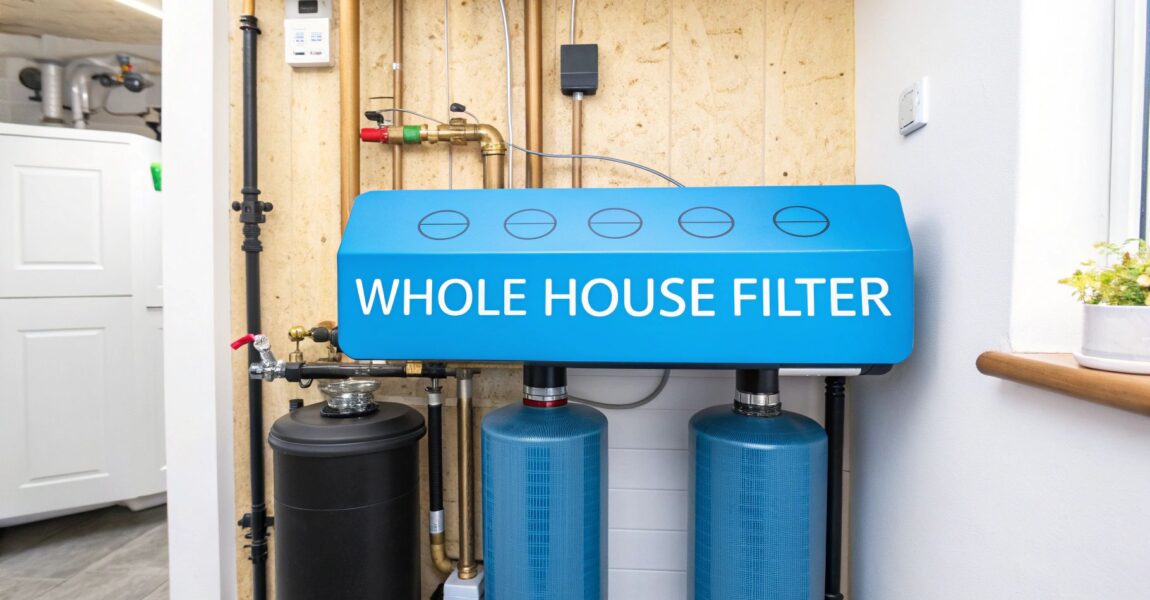
Ever wondered what's really in your tap water? When you start the hunt for the best whole house water filter, you're not just buying an appliance—you're taking control of every drop of water in your home. The top-tier systems all do a few key things brilliantly: they attack contaminants with multiple stages of filtration and are built like tanks to last for years. This isn't just a filter under your sink; it's a full-on water upgrade for your entire house, purifying water from the laundry room to your morning shower.
A whole house water filter, also known as a point-of-entry (POE) system, is the ultimate solution for your home's water quality. Forget those clunky pitchers or faucet attachments that only treat water at a single tap. This powerhouse gets installed right where your main water line enters your home.
The result? Every single faucet, showerhead, and water-using appliance—from your washing machine to your dishwasher—gets pristine, filtered water.
Choosing the right system is about more than just banishing a funky taste or smell. It's a serious investment in your family's well-being and the longevity of your home's plumbing. Unseen villains like chlorine, sediment, and heavy metals can wreak havoc on your pipes and force your appliances to work overtime, leading to costly repairs.
Installing a full-scale filtration system delivers benefits you'll feel all over the house. It provides a level of comprehensive protection and convenience that single-point filters simply can't match.
Here are the key perks:
Many homeowners switch to a whole house filter because they're tired of the constant hassle of water treatment. It transforms water quality from a daily chore—refilling pitchers, changing tiny filters—into something that just works, silently and effectively, in the background.
The demand for these systems is surging as more people become aware of what's in their water. The U.S. water purifier market was valued at approximately USD 7.0 billion in 2024 and is projected to climb to USD 10.7 billion by 2033. This boom is fueled by a collective desire for healthier living and incredible advancements in filtration technology, proving just how much homeowners value a reliable, whole-home solution. We'll get into the nitty-gritty of testing your water, comparing different technologies, and finding the perfect system for your needs in the next sections.
https://www.youtube.com/embed/fsosGnwhgd4
Before you can choose the right whole house water filter, you have to play detective. What’s actually in your water? Without knowing what you're fighting, you’re just shooting in the dark and might end up with a system that doesn't solve your specific problems.
Your water comes from one of two places: a municipal supply (city water) or a private well. Each source presents a unique cast of potential contaminants, and identifying yours is the most critical first step. This isn't just about making your water taste better; it's about safeguarding your health and your home.
If a water bill shows up in your mailbox every month, you're on municipal water. This means a public utility treats the water with chemicals like chlorine or chloramine to kill germs before it reaches you. That's a huge head start on safety, but it leaves behind those treatment chemicals.
On the flip side, if your home has a private well, you are the sole guardian of your water's safety. Well water is far more likely to contain naturally occurring contaminants like sediment, iron, manganese, and even microorganisms like bacteria or viruses, particularly after heavy rain.
The core difference is this: city water is pre-treated for safety but contains disinfection byproducts, while well water is completely untreated and can harbor a much wider range of natural and environmental contaminants. Your filter choice must be tailored to your water source.
Figuring out the specific chemistry of your water is easier than you might think. The path to answers is quite different depending on where your water originates.
For homeowners on municipal water, your local utility is legally required to provide you with an annual water quality report, often called a Consumer Confidence Report (CCR). This free document is your treasure map, listing detected contaminants and their levels against EPA standards. You can almost always find it on your city’s website.
If you have a private well, testing is your responsibility. While home test strips can give you a basic idea, sending a sample to a state-certified laboratory is the only way to get a truly accurate and detailed analysis. This is non-negotiable for identifying invisible threats like bacteria, nitrates, arsenic, or VOCs.
Once you have your report or lab results, you can start identifying the real culprits. Each one affects your water in a different way.
Knowing exactly what's in your water is the first step to fixing it. For coffee lovers, this is a familiar topic; you can see how it applies to brewing in this piece on the most overlooked step in brewing: water quality. Once you know what you need to remove, selecting the right system becomes much clearer.
Now that you know what might be lurking in your water, let's meet the technologies designed to take it out. Picking the best whole house water filter isn’t about finding a single "perfect" system. It's about assembling the right team of technologies to tackle your specific water issues. Each filtration method has a distinct specialty, excelling at removing certain contaminants while ignoring others.
This is where we get into the nuts and bolts. Forget the marketing hype for a moment and let's focus on the core technologies that make these systems work. Once you understand how each one functions, its strengths, and its maintenance needs, you can confidently build a solution that’s perfectly matched to your home.
Think of an activated carbon filter as a high-tech chemical sponge. Its surface is incredibly porous, packed with millions of microscopic nooks and crannies. As water flows through, these pores trap chemical contaminants through a process called adsorption.
This makes carbon filters the undisputed champions for improving the taste and smell of city water. They are phenomenal at grabbing chlorine and chloramine—the disinfectants responsible for that "public pool" scent. They also effectively remove a range of VOCs, pesticides, and industrial solvents.
However, carbon filters are not designed to remove sediment, heavy metals, or microorganisms. They are specialists, and their primary mission is to make your water taste and smell fantastic by eliminating specific chemical threats.
Often the first line of defense in any whole house setup, a sediment filter is also the simplest. Its job is straightforward: to act as a physical barrier, catching solid particles like dirt, sand, rust, and silt before they can enter the rest of your plumbing.
These filters are rated in microns to indicate how small of a particle they can trap. A 5-micron filter, for example, will stop particles completely invisible to the naked eye.
By removing this debris first, a sediment filter protects the more expensive and sensitive filters downstream. It prevents them from getting clogged, which helps the entire system run more efficiently and last longer. A sediment filter is a non-negotiable component for nearly every setup, especially for homes on well water.
Think of your sediment filter as the bouncer at the club door of your filtration system. It stops the obvious troublemakers from getting inside and causing problems for the more specialized equipment, like your carbon filter or UV purifier.
Unlike filters that physically trap contaminants, an Ultraviolet (UV) purifier is a sterilizer. It uses a powerful UV-C light lamp to scramble the DNA of living microorganisms, rendering them unable to reproduce and cause illness.
This technology is the gold standard for neutralizing biological threats like bacteria (E. coli, coliform), viruses, and protozoan cysts (Giardia, Cryptosporidium). A UV purifier is an absolute essential for any well water system or for anyone concerned about microbiological safety.
It's crucial to understand that a UV system doesn't remove anything else. It won't change your water's taste, smell, or chemical composition. That’s why it’s almost always paired with sediment and carbon pre-filters—the water must be crystal clear for the UV light to penetrate and work effectively.
This infographic breaks down the ongoing costs and maintenance for these key technologies.
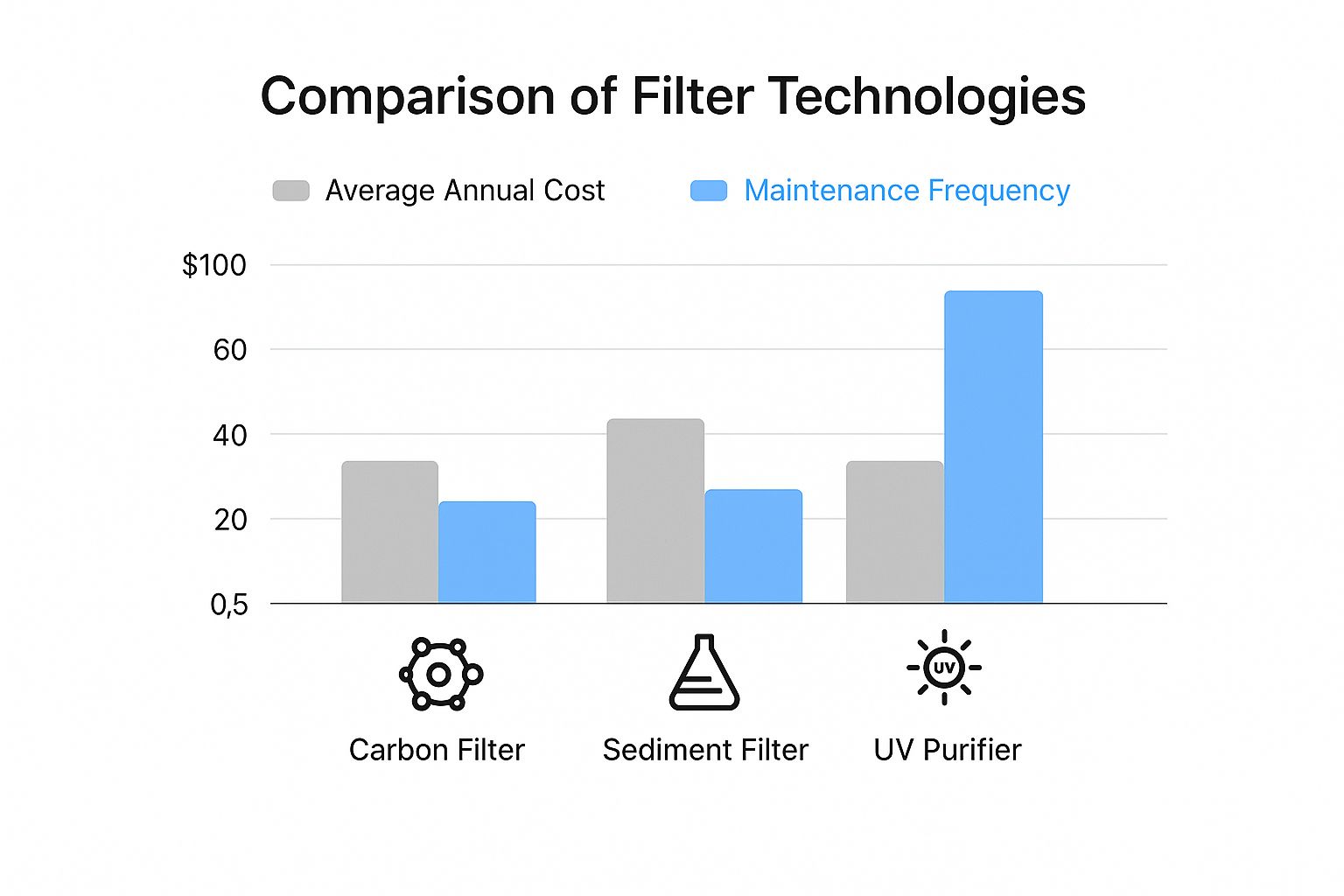
As you can see, while UV purifiers have a higher annual cost due to the lamp replacement, their maintenance is much less frequent than the cartridge-based carbon and sediment filters that need regular swaps.
To make things even clearer, here's a side-by-side comparison of what each technology does best.
| Filtration Technology | Removes | Best For | Average Maintenance | Notes |
|---|---|---|---|---|
| Carbon Filter | Chlorine, chloramine, VOCs, pesticides, herbicides, bad taste & odor. | Homes on municipal (city) water to improve taste, smell, and chemical safety. | Cartridge change every 3-12 months. | Doesn't remove minerals, heavy metals, or microbes. Effectiveness depends on the quality of the carbon. |
| Sediment Filter | Dirt, sand, rust, silt, and other suspended solids. | All homes, especially those on well water. Acts as a pre-filter. | Cartridge change every 3-6 months. | Protects other filters from clogging. Micron rating determines the size of particles it can stop. |
| UV Purifier | Bacteria (E. coli), viruses, cysts (Giardia), and other microorganisms. | Homes on well water or anyone concerned with microbiological contamination. | UV lamp change every 12 months. | A sterilizer, not a filter. Requires pre-filtration to ensure water clarity for the UV light to work. |
| Water Softener | "Hardness" minerals like calcium and magnesium. | Homes with hard water issues (limescale, soap scum, appliance damage). | Refill salt every 1-2 months. | Uses ion exchange. Doesn't filter other contaminants but solves major hard water problems. |
This comparison clearly shows how each piece of equipment has a specific, targeted role. Building the ideal system is all about combining them to match your water test results.
Hard water isn't a health risk, but it's a massive household nuisance. Caused by high levels of dissolved calcium and magnesium, it leads to that crusty limescale buildup on fixtures, soap scum in the shower, and poor appliance performance.
A traditional salt-based water softener solves this problem through a process called ion exchange. It swaps the "hard" mineral ions for "soft" sodium ions, effectively stopping scale formation in its tracks. While it's the most effective way to truly soften water, it does require you to keep it topped up with salt.
The desire for solutions like these is driving massive growth in the home water treatment industry. The global home water filtration market was valued at USD 10.85 billion in 2021 and is expected to reach USD 26.73 billion by 2030, driven by consumers demanding reliable ways to clean their water. Advanced technologies like UV purifiers and multi-stage systems are a big part of that boom. You can explore more data on the home water filtration market if you're interested in the trends.
Understanding these core technologies is the key to building the best whole house water filter for your home. Next, we’ll look at how to combine them into effective systems designed for different real-world scenarios.
You've got the tech down. Now for the fun part: designing the perfect system for your home. The best whole house water filter is never a one-size-fits-all solution. It’s a customized setup you build based on your water source, your family's size, and the specific contaminants revealed in your water test.
Let's move from theory to practice. We’ll walk through a few common household scenarios to show you how different components come together to solve real-world water problems. See which one sounds most like your situation—it’ll give you a fantastic starting point.
If you live in a city or suburb, your water is already treated. The main complaints are almost always the swimming-pool smell of chlorine or the more persistent chloramine. It’s not just about taste; these disinfectants are also known for causing dry skin and brittle hair.
You don't need a complex system here. The goal is to refine the water the city provides.
Recommended System:
This simple two-stage setup is the perfect, cost-effective solution for the vast majority of homes on municipal water. You'll notice the difference at every single tap.
Well water is a completely different animal. It's raw, untreated groundwater, which means you could be facing a whole cocktail of issues. We're talking sediment, heavy metals like iron and manganese, and the most significant threat: potential microbiological contamination.
For well owners, filtration isn't a luxury; it's a critical safety measure. A robust, multi-stage system is non-negotiable.
Recommended System:
For anyone on a well, the philosophy is "defense in depth." You have to assume contaminants are present and build a system that can handle sediment, chemical, and biological threats right from the start.
Hard water is an equal-opportunity offender, affecting both city and well water users. If you're fighting a losing battle against limescale on your fixtures, soap scum in the shower, and spotty dishes, your primary focus should be on mineral control.
This leads to a choice: a traditional water softener or a salt-free conditioner. A salt-based softener is the most effective fix for seriously hard water, as it actually removes the hardness minerals. A salt-free conditioner, on the other hand, alters the mineral crystals so they can't stick to surfaces, reducing scale without adding salt to your water.
Recommended Combination:
This need for customized solutions is a global trend. The whole house water filter market is booming worldwide, driven by different local concerns. In North America, awareness of contaminants is a key driver. In Europe, it’s strict regulations, and in Asia, it's rapid urbanization. This global demand fuels continuous innovation. You can discover more insights about these global water quality trends and see how the market is evolving.
For some homeowners, "good enough" isn't good enough. The goal is absolute purity. This is the family that wants to remove the widest possible range of contaminants—chlorine, sediment, heavy metals, fluoride, even trace pharmaceuticals. To achieve this, you need a comprehensive system that covers all the bases.
This is the top-tier approach for ultimate peace of mind.
Recommended System:
Choosing the right whole house water filter is a huge step, but it’s only half the journey. A fantastic system is only as good as its installation and the ongoing care you provide. This is where a little planning goes a long way, transforming a box on your doorstep into a reliable source of clean water for your entire home.
Before you even make a purchase, create a solid plan for getting the system installed and maintaining it. You’ll need to decide between a DIY installation and calling a pro, and you must look beyond the initial price to understand the true, long-term costs. Getting this right from the start means no unpleasant surprises down the road.
The first big decision is whether to install the filter yourself or hire a licensed plumber. The DIY route can certainly save you a few hundred dollars in labor costs, but it’s not a project for the faint of heart. You need to be comfortable with basic plumbing, because a single mistake could lead to leaks, water damage, or a filter that simply doesn't work correctly.
Hiring a professional plumber buys you peace of mind. They have the right tools, know the local building codes, and possess the experience to ensure your system is installed for optimal performance and water flow. While it costs more upfront, it's an investment in protecting both your new filter and your home.
If you're leaning toward DIY, make sure you know what you’re getting into. Here’s a quick reality check:
Keep this in mind: A professional installation isn't just for convenience. Many manufacturers will void their warranty if the system isn't installed by a licensed plumber. Suddenly, that DIY savings could become a very expensive gamble.
That initial price tag on the filter? It’s just the beginning. To truly understand the investment, you have to factor in the ongoing maintenance costs that keep the system running effectively. Ignoring these will lead to unexpected bills and, even worse, a filter that eventually stops doing its job.
These predictable, recurring expenses reveal the true cost of the system over its lifetime and should be as important in your decision as the initial purchase price. For a deeper dive into managing your system long-term, you can explore our complete archive of water filter advice.
To give you a clearer picture, let's break down the common long-term costs. Thinking about these expenses over a five-year window will give you a realistic idea of the total investment.
Ongoing Expense Breakdown:
By mapping these costs out, you can choose a system that not only solves your water problems but also fits comfortably within your long-term budget.
As you narrow down your choices for the best whole house water filter, a few practical questions always come up. These are the real-world details that can make or break your experience. Let's get you quick, clear answers to these common sticking points so you can move forward with confidence.
Yes, any filter system will introduce some resistance to your plumbing, which can cause a slight drop in water pressure. However, a properly sized and installed system will have such a minimal effect that you likely won't even notice it. The goal is to avoid creating a bottleneck where your water enters the house.
A few factors influence pressure:
The best way to prevent problems is to select a system with a GPM rating that can handle your family's peak water demand. For most homes, a system rated for 15-20 GPM is more than adequate. Most importantly, nothing maintains strong water pressure better than changing your filters on schedule.
This is a critical question, and the honest answer is: it depends entirely on the filter system and your water source. A standard carbon filter is fantastic at removing chlorine and making water taste great, but it will not eliminate microbiological threats like bacteria or viruses.
A filter and a purifier are not the same thing. A filter removes particles and chemicals, while a purifier neutralizes living organisms. For truly safe drinking water from a questionable source, you often need both.
If your primary concern is ensuring your water is microbiologically pure—especially if you're on well water—you absolutely need a dedicated purification stage. This typically means adding a UV purification system after your main filter or choosing a specialized filter certified for cyst and virus removal, such as a sub-micron filter.
Always look for NSF/ANSI certifications. These independent, third-party ratings confirm what a system can actually remove. For example, NSF/ANSI 53 certifies a filter for removing health-related contaminants, while NSF/ANSI 55 is the standard for UV systems. It’s your guarantee that the filter lives up to its claims.
Sizing your system correctly is crucial for performance and satisfaction. It really comes down to two factors: how much water your household uses and how quickly you need it.
First, consider the number of people and bathrooms in your home. A larger family naturally uses more water, so you'll want a system with a higher filter capacity—the total number of gallons a filter can treat before it needs to be replaced.
Second, and more importantly, is the peak flow rate (GPM). You can get a rough estimate by adding up the flow rates of the fixtures you might use at the same time (a shower is about 2.5 GPM, a toilet flush is 2 GPM, a kitchen faucet is 1.5 GPM).
Here's a quick rule of thumb:
Choosing an undersized system is a common mistake that leads to frustration. It's always better to have a little more capacity than you think you need.
At Water Filter Advisor, our mission is to give you the knowledge to find the perfect water filtration solution for your home. We offer in-depth guides, honest reviews, and practical advice to make your decision simple. Explore our resources today to get safer, better-tasting water. Visit us at https://www.waterfilteradvisor.com.
Aquasure Whole House Water Filtration System Review – Best Home Water Filter System 2020
———————————————————————————-
► Click the link below for more information
(product price, deals, discounts, shipping, etc):
►
———————————————————————————-
We all know how important it is to drink enough water. While many people have water dispensers in their fridge, some still rely on good ol’ tap water. If that’s the case, you may want to add a water filter to your kitchen arsenal to help filter out harmful contaminants like chlorine, lead, pesticides, and more.
We’ve been researching and testing most of the products available today. We also surveyed the market and took into account both user reviews and professional reviews. There are lots of different features that we took into account.
So, if you choose Aquasure Whole House Water Filtration you can be sure that you buy a great product.
► Why We Recommend It
Perfect for homes with 3 to 4 bathrooms
Reduces water bill by removing particles and chemicals
Prolong the life of household appliances
Removing skin damaging hard minerals like iron and magnesium
Exceptional performance & high efficient Aquatrol control head
Aquasure reverse osmosis membrane help save water
Constructed of high strength, premium-quality materials
Thanks for watching and don’t forget to like and subscribe to our channel for more videos like this. If you have any questions about the product leave a comment down below and we will get back to you as soon as we can!
► Disclaimer ◄
AnimatedReview is a participant in the Amazon Services LLC Associates Program, an affiliate advertising program designed to provide a means for sites to earn advertising fees by advertising and linking to Amazon.com. As an Amazon Associate We earn from qualifying purchases.
Original Video Source
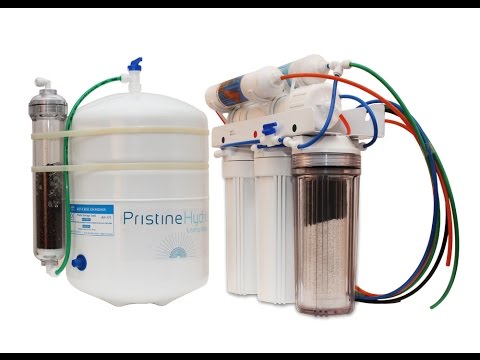
Evaluating the alternatives:
1. Carbon Block Filter
2. Reverse Osmosis
3. Purified Water
4. Water Ionizer
5. Bottled Water
6. PristineHydro Water Revival System
INSPIRING AND EDUCATING HUMANITY TO ADOPT A HEALTHY LIFESTYLE
Original Video Source
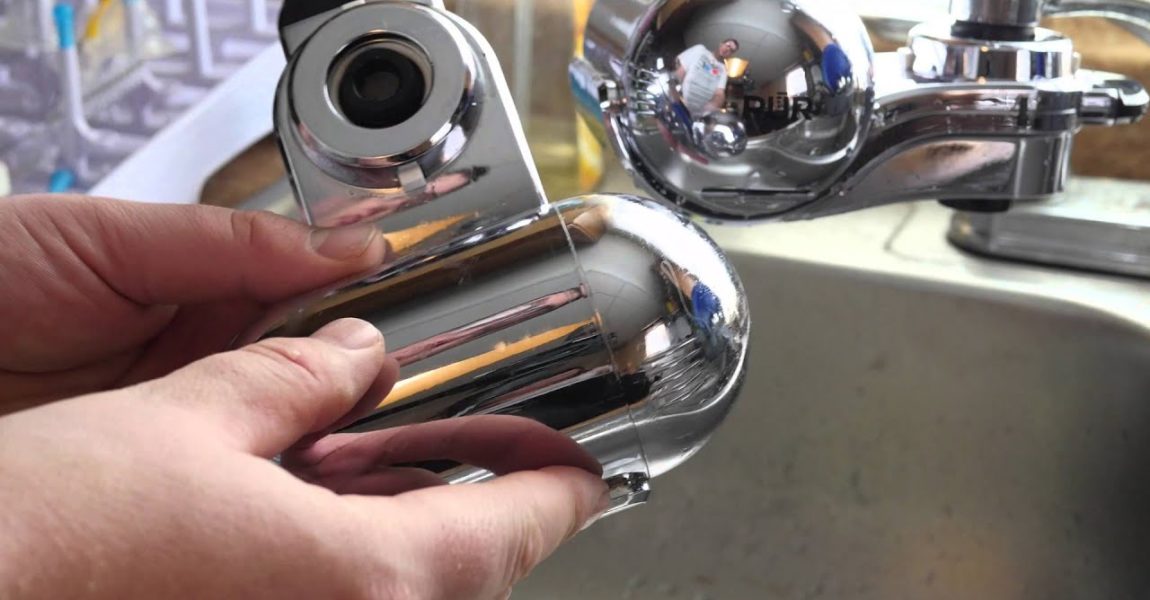
PUR ULTIMATE Water Filtration System. I nice afforable way to get filtered water right from your kitchen sink. My first unit was impossible to line up so the water came out straight down, it always lined up crooked. I delt with it until I needed to change the filter and then noticed a leak. I contacted customer support and by the time they got back to me I had fixed the leak, but the it was still crooked. I mentioned to them about it being crooked and they sent me a new unit right away and guess what, it aligned perfectly EVERY time. Get the PUR here: Get filters here:
Disclaimer: The JRESHOW receives free products to create these videos from companies, start-ups, and distributers all around the world. These videos created are intended to be entertaining, descriptive, and unbiased to the product or service of topic. In addition, we are a participant in the Amazon Services LLC Associates Program, an affiliate advertising program designed to provide a means for us to earn fees by linking to Amazon.com and affiliated sites.
Original Video Source
