Tankless Under Sink RO System: A Homeowner’s Guide

You're standing at the kitchen sink with a pot in one hand and a pitcher in the other, and the old setup is making you wait. The cabinet under the sink is already crowded, the water filter you're considering sounds promising, and you're trying to figure out whether a tankless under sink RO system is smarter, or just newer.

The appeal is easy to understand. You want reverse osmosis drinking water without surrendering half your cabinet to a storage tank, without staring at a slow trickle at the faucet, and without feeling like you've bought a solution that creates a different problem. That's where tankless RO stands out, because the design changes how the system stores water, how it fills, and how much room it takes up in a real kitchen.

A happy family filling a glass with clean, filtered water from a modern kitchen sink faucet.

What a Tankless Under Sink RO System Does

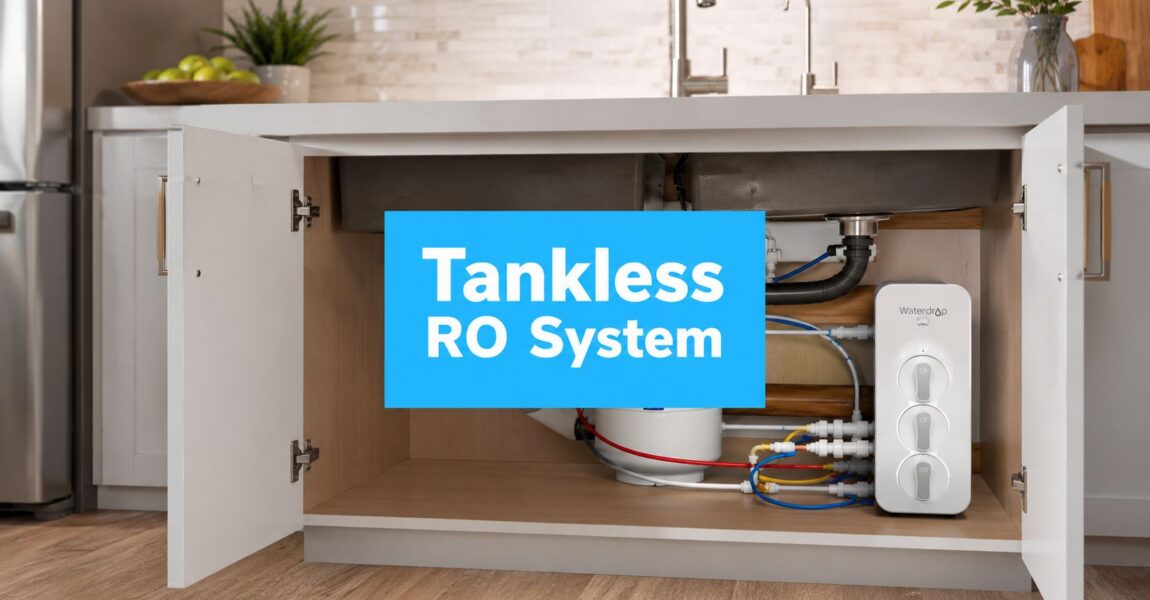
A homeowner usually notices the problem before they know the name for it. The pot is too big for the faucet, the pitcher needs refilling again, and there's barely any room left under the sink because of the disposal, cleaners, and random plumbing elbows. A tankless under sink RO system is built for that exact scene, because it replaces the bulky storage tank with a compact unit that makes purified water on demand.

The basic idea is simple. Reverse osmosis still does the cleaning, which means water is pushed through a membrane that removes what basic sediment and carbon filters leave behind. The tankless format changes the way the system fits into a cabinet and the way it delivers water at the tap, because it does not wait to fill a separate reserve before you can use it.

Cabinet space is only one part of the story. Under a sink, the P-trap, disposal, shutoff valves, and nearby hoses can leave an awkward layout that makes a traditional tank hard to place without crowding everything else. A tankless unit is designed to work around that geometry, which is why it appeals to homeowners who want RO water without turning the cabinet into a storage puzzle.

Water use is the other part. The U.S. EPA notes that a typical point-of-use RO system can send 5 gallons or more of reject water for every gallon of treated water, while WaterSense-labeled models must stay at 2.3 gallons or less per gallon produced. The EPA also estimates that choosing a WaterSense-labeled RO can save more than 3,100 gallons of water per year versus a typical system, or about 47,000 gallons over the system's lifetime. EPA point-of-use reverse osmosis systems That long-term cost picture matters because the system is not only about taste and convenience, it also shapes how much water goes down the drain and how often filters need to be replaced.
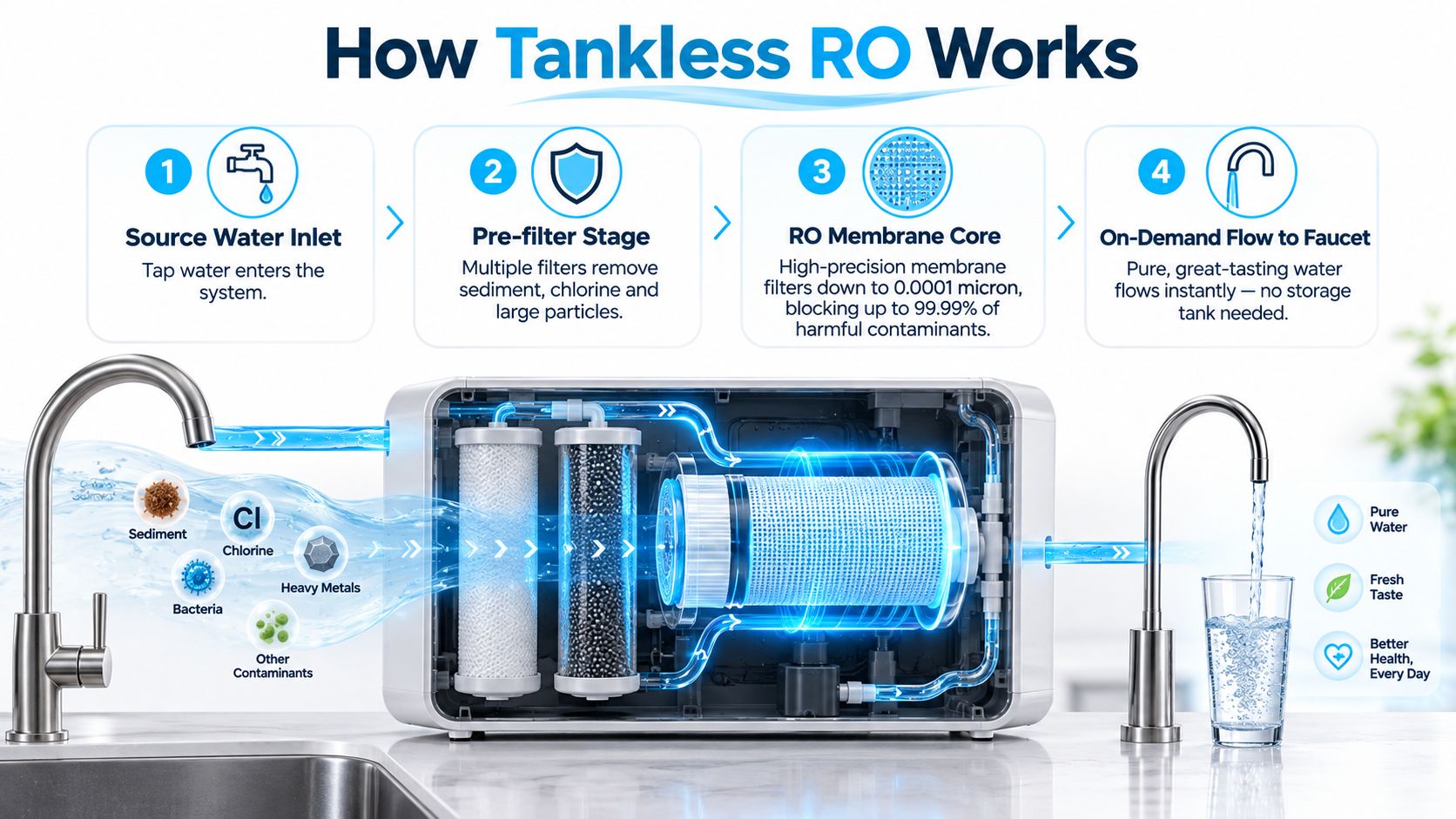
An infographic showing the four-stage water purification process of a tankless under sink RO system.

How Reverse Osmosis Works Without a Storage Tank

Reverse osmosis is easier to understand if you picture a screen so fine that only water can move through it. A coffee filter catches grounds because the holes are smaller than the particles, but an RO membrane is far more selective, and that's why it can remove dissolved contaminants that ordinary filters can't catch. In a home system, the water usually moves through a sediment pre-filter, a carbon pre-filter, the semi-permeable membrane, and then a polishing post-filter.

Why the pump changes everything

A tankless system keeps the same cleaning stages, but it changes how water is moved. Instead of filling a storage tank slowly and then pushing water out later, the unit uses an internal electric pump to pressurize the feed water and send it through the membrane as you open the faucet. That's the whole trick. No storage tank means no waiting for a reserve to rebuild, and no air-pressure bladder taking up cabinet space.

Practical rule: If the water only needs to exist when you're using it, a tank is optional, not essential.

The pump and the automatic shutoff logic work together so the system produces water only when the faucet is open. That's why tankless units feel more immediate at the tap, and why the water tastes fresher to many users, since it hasn't been sitting in a pressurized reservoir for hours. Modern tankless designs also tend to use direct-flow membranes and tighter waste control, which is part of why the category has moved from niche upgrade to mainstream kitchen equipment.

The result is simple to feel in daily use. You open the faucet, the system wakes up, and water starts moving without the tank refill cycle that older RO owners know well. That on-demand behavior is what makes tankless RO feel less like a reservoir and more like a mini purification station tucked under the sink. For a visual walkthrough of small-space planning, Aureli Construction's Greater Boston kitchen guide is a useful reference for thinking about tight cabinet layouts.

Tankless vs Tanked RO Systems Compared

A buyer usually wants the comparison in one glance, not buried in jargon. The short version is that tankless wins on space, on-demand delivery, and usually better efficiency, while tanked systems still have real advantages if you want simpler mechanics and no electrical dependence. The right choice isn't about which format sounds modern, it's about which one fits your cabinet, usage pattern, and tolerance for complexity.

Tankless vs Tanked Under-Sink RO at a Glance

Criterion Tanked RO Tankless RO
Under-sink footprint Larger, because the storage tank needs space Compact, no storage tank
Gallons per day output Adequate for many homes, but tied to refill cycle Often higher and more continuous in use
Waste-to-pure ratio Often less efficient in older designs Commonly tighter, especially in modern units
Power requirement Usually no electricity Requires electricity for the pump
Typical filter-change complexity Straightforward, plus tank sanitizing Front-access cartridges are often easier to swap

A tanked system still makes sense for people who want a simpler machine with fewer powered parts. It can keep working through a power outage, and it doesn't require an outlet under the sink. That appeals to homeowners who'd rather trade cabinet space for mechanical simplicity.

Tankless pulls ahead in kitchens where the cabinet is the bottleneck. Water World notes that tankless systems can save 50% to 75% of under-sink space compared with tank-based systems, which is a big deal if you're sharing that cabinet with a disposal or a tight drain layout. Water World on storage tanks vs tankless reverse osmosis systems

There's also the daily-use side. Tankless units don't run out in the same way a small reserve can, so they suit households that pour a lot of filtered water throughout the day. Tanked units can feel punchier at first, but the tankless format is the one that better matches a sink used for repeated cooking, bottle filling, and back-to-back glasses.

Sizing, Flow Rate, and Pressure Requirements

A tankless RO system can look impressive on a product page and still feel slow at the sink if the home's plumbing does not match its operating window. The numbers matter, but they only make sense when you connect them to the way water is used in a kitchen. Modern tankless systems commonly rate around 400 to 800 GPD, and some products advertise up to 1000 GPD. In faucet terms, that often works out to filtered-water flow rates around 0.28 to 0.56 GPM, with some 1000 GPD units advertising up to 0.69 GPM. Tankless RO market data and product summaries Waterdrop tankless RO product details

What those numbers mean in a kitchen

GPD is a daily production rating, while GPM is the pace you feel when a glass or pot is filling. A homeowner may never think about gallons per day, but they notice whether the faucet gives a steady stream or leaves them waiting. If the unit is sized well for the house, it should feel closer to ordinary tap water than to a refill station.

Pressure is where many buyers get caught off guard. One technical guide notes that RO membranes need at least 40 PSI, and that pressure below that point can reduce production and lower TDS rejection below 90%. The same guidance says pressures above 80 PSI may require a pressure-reducing valve. Another product specification lists an operating window of roughly 20 to 80 psi and 41 to 100°F for a 600 GPD unit. OneMiro technical installation guidance Waterdrop tankless RO product details

A tankless RO system can be undersized for the home even when the brochure looks strong.

That is why sizing is more than picking a large capacity. The question is whether the supply pressure, water temperature, and electrical setup all fit the unit's range. Cold inlet water, weak pressure, or a home that needs a booster pump can change performance more than the headline GPD rating suggests. A tankless system is fast when it is fed correctly, but it also shows the limits of the plumbing behind it.
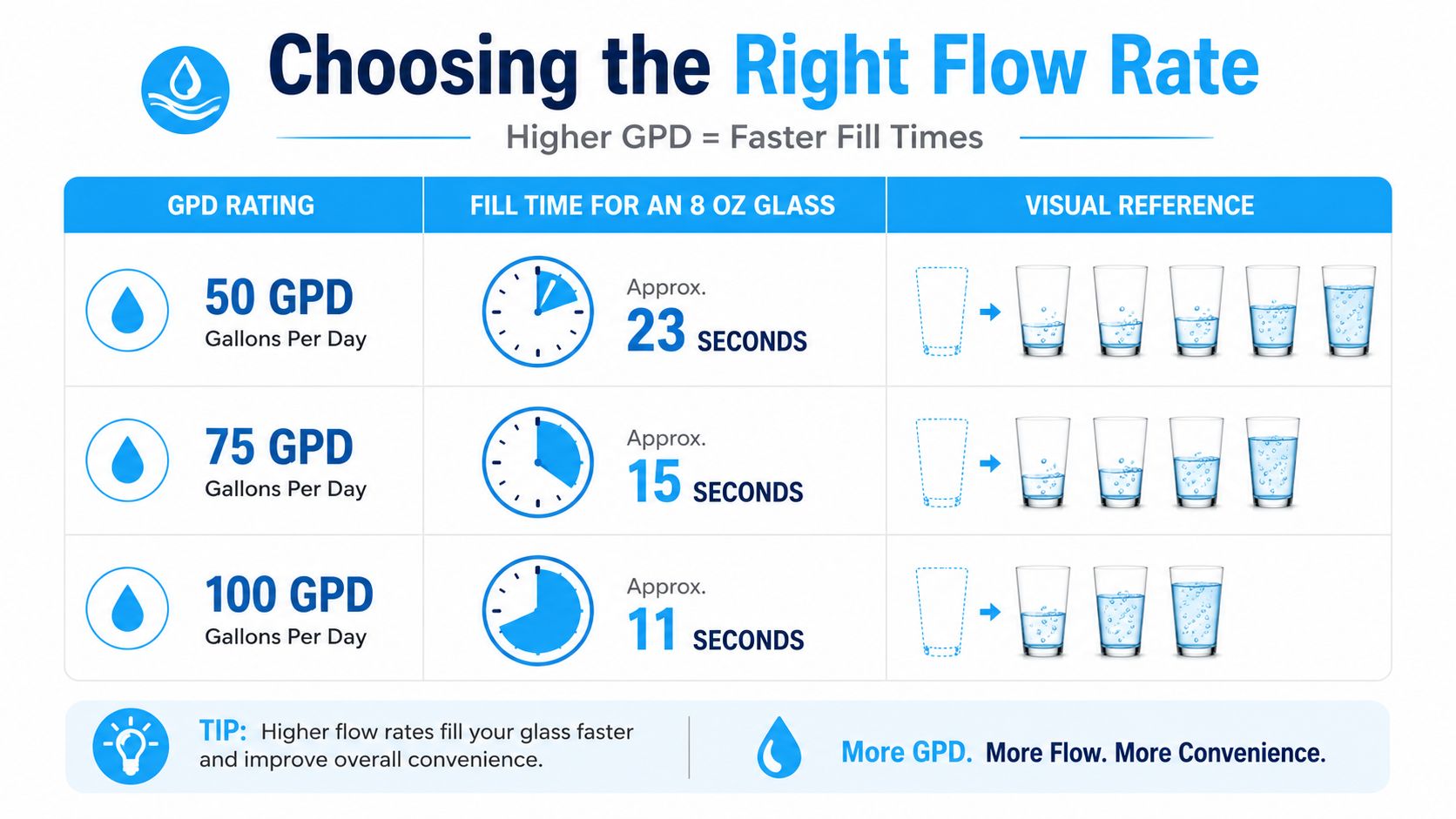
A chart comparing water filter flow rates in gallons per day versus glass fill times in seconds.

If you are comparing systems for a real kitchen, the cabinet matters too. The filter housing has to share space with the P-trap, disposal, shutoff valve, tubing bends, and any nearby outlet, so a unit that looks compact on paper can still be awkward to service. A useful way to judge fit is to treat the cabinet like a small mechanical room, not just an empty box. For a buyer weighing a do-it-yourself setup against help from a pro, DIY vs professional installers is worth a careful look.

The long-term cost picture also depends on how hard the system has to work. A unit that is constantly pushed outside its comfortable pressure or temperature window can waste more water, strain filters sooner, and make replacement cycles feel less predictable. In that sense, sizing is not only about speed at the faucet. It is about whether the system can keep delivering that speed without turning your under-sink space into a compromise between cabinet geometry, pressure, and upkeep.

Installation Realities Most Buyers Don't Expect

The under-sink cabinet is where the marketing copy meets the actual house. A unit can be small on paper and still feel awkward in a real cabinet if the P-trap, disposal, shutoff valve, tubing bends, and electrical outlet all compete for the same few inches. One technical guide gives a typical clear-space target of about 40 cm × 20 cm × 45 cm, which is a much more useful starting point than the product's bare dimensions alone. Technical cabinet-fit guidance

What has to fit in the cabinet

The first thing to check is not the box, it's the plumbing around the box. The drain saddle has to go on the horizontal drain section before the P-trap, and you need room for future filter changes without removing half the cabinet contents. Disposal reset access, outlet reach, and tubing bend radius all matter more than they sound like they should.

A typical install follows a predictable path. The bracket gets mounted, a hole gets drilled for the dedicated faucet, the cold-water line gets tapped with a feed-water adapter, the drain saddle gets placed correctly on the drain line, and the pump gets plugged into a GFCI outlet. That sequence sounds basic until a homeowner discovers the outlet is blocked, the cabinet wall is too shallow, or the drain layout leaves no safe spot for the saddle.

If you're deciding whether to handle it yourself, DIY vs professional installers is a helpful place to compare the kind of cabinet work that feels manageable versus the kind that benefits from a pro. A tankless system still rewards careful measuring before purchase, because cabinet geometry can make a compact unit feel oversized.

Measure the cabinet for service access, not just for physical placement. If you can't get a hand, a filter, and a wrench in there later, the install isn't really finished.

That's the part product pages skip. They usually show the unit size, but the cabinet is what decides whether the system is pleasant to live with.

Honest Pros and Cons of Going Tankless

A tankless under sink RO system looks appealing for a simple reason. It gives you drinking water on demand, keeps the cabinet from feeling crowded, and removes the stored-water feel that some homeowners notice with a tanked setup. It can also reduce waste water compared with older reverse osmosis habits, and product data for the category points to more efficient ratios than the old, drain-heavy approach.

The advantage is not only space. It is the way the unit fits a busy kitchen cabinet while still doing the same job as a larger system, like a compact tool that replaces a bulky one without changing the task itself.

The trade-offs are real

Electricity is part of the package, so no outlet means no pump. The pump can add a soft hum while the system runs, and the plumbing is usually less forgiving than with a simple tank setup. That does not make the system complicated, but it does mean a cramped cabinet or awkward wiring can turn a straightforward purchase into a headache.

Pressure is the next constraint homeowners run into. If the membrane needs at least 40 PSI to work properly, a home with weak pressure may need a booster strategy so the system can keep up. If household pressure rises above 80 PSI, some installs may need a pressure-reducing valve. Those details shape performance and lifespan, because reverse osmosis is a little like squeezing water through a fine screen, too little force slows it down, too much stress can shorten the system's comfortable operating range.

The cost picture also needs to be honest. Filter and membrane changes still happen, and some product-level data ties high-efficiency models to average annual operating costs around $140/year. That is why a tankless unit can look lean on paper but still ask for ongoing upkeep over time.

Cabinet fit is the third reality, and it is easy to underestimate. A system can be physically compact and still clash with the drain, the disposal, or the outlet location, especially if the cabinet already feels crowded. If you open the door and find the receptacle is not ready for a pump-driven unit, an outlet not working electrician can save a lot of trial and error.
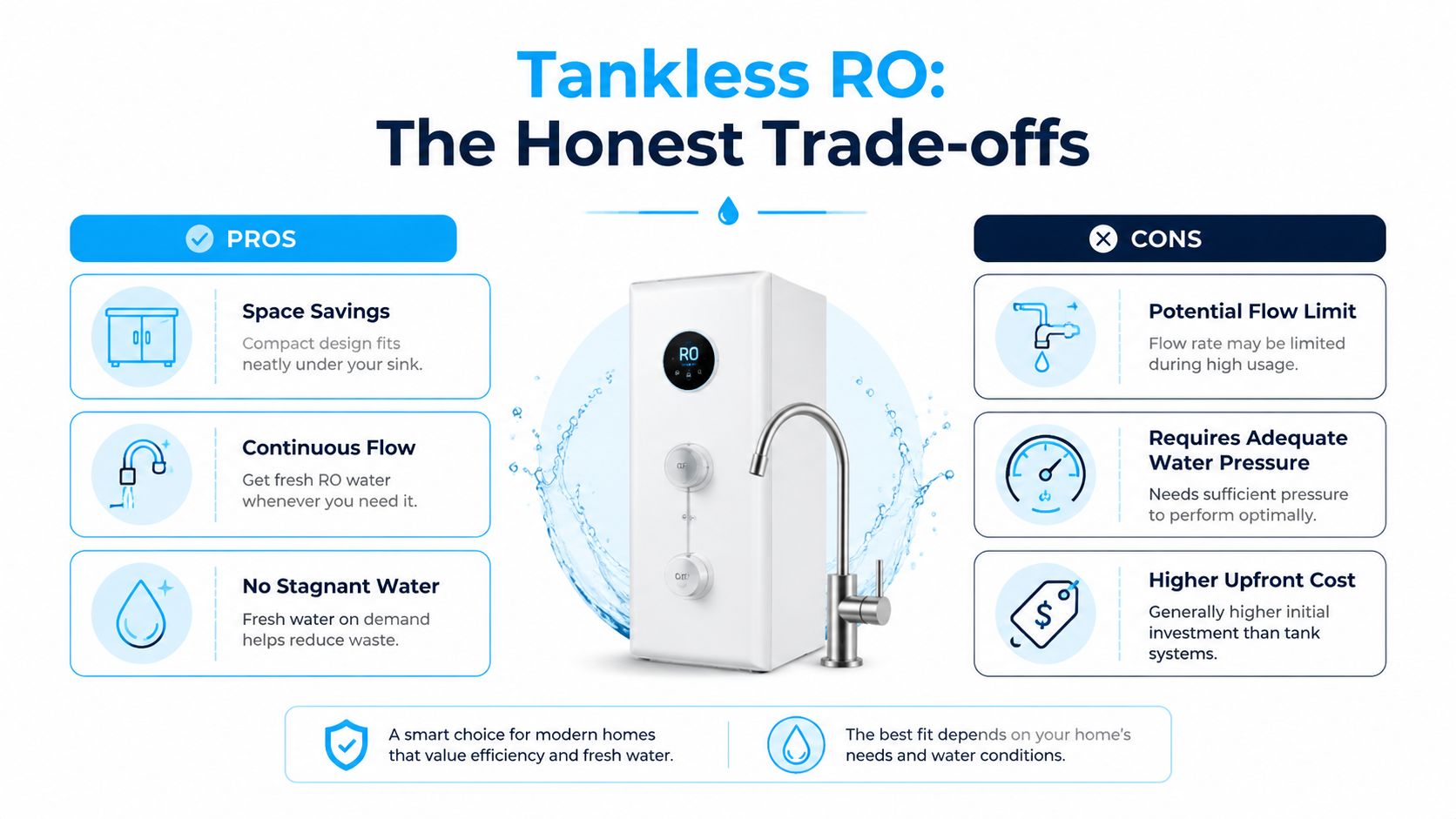
An infographic showing the advantages and disadvantages of a tankless under sink reverse osmosis water system.

Certifications, Contaminants, and Water Quality Fit

The point of all this hardware is still the water at the glass. For an RO system, the core drinking-water standard is NSF/ANSI 58, which covers reverse osmosis performance. NSF/ANSI 42 relates to aesthetic effects like chlorine taste and odor, while NSF/ANSI 53 covers health-related contaminant claims. Those standards matter because they help you connect a system's label to what it's built to reduce.

That's especially useful when you're matching the system to the home. City water with chlorine or chloramine often leads people toward RO because taste and odor are part of the complaint. Older plumbing raises lead concerns. Well water or water with high total dissolved solids can make the case for RO even stronger, because the membrane is designed for broad dissolved-solids reduction rather than just surface-level polishing.

The contaminants homeowners usually care about most in this category include lead, arsenic, chromium, fluoride, nitrates, and total dissolved solids. A tankless unit doesn't change the chemistry of what RO can do, it changes how the water is delivered and how much space the system needs to do it. That's the useful way to think about fit.

Buy for the water you actually have, not for the label that sounds most advanced.

A tankless system is a strong match when the goal is point-of-use drinking water with compact hardware, especially in kitchens where the cabinet is already doing too much work. It's less compelling if the household doesn't need RO-level treatment and would be better served by a simpler filter stage.

Maintenance, Filter Schedules, and Who Should Buy One

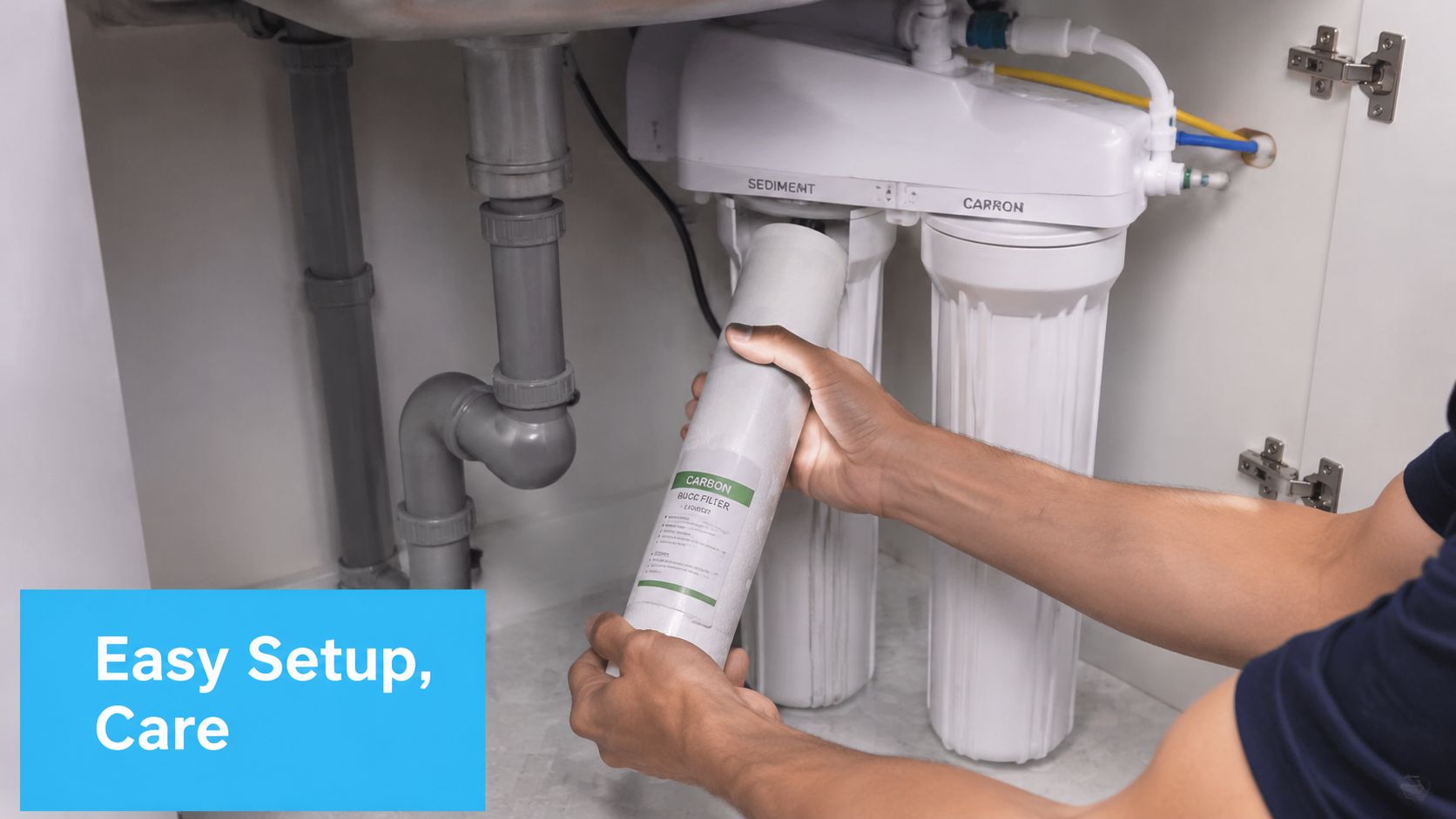
Maintenance is where the long-term comfort of tankless lives or dies. A practical cadence is sediment and carbon pre-filters every 6 to 12 months, the RO membrane every 2 to 3 years depending on feed water, and a polishing post-filter annually. An annual sanitization also helps keep biofilm from forming inside the lines.

The daily habits are simple. Check for drips at the drain saddle after the first week, keep the space in front of the unit clear so you can swap cartridges easily, and watch the TDS reading on the faucet if the system includes one. If you want a broader maintenance reference, the Water Filter Advisor advice section covers practical filter-care topics in a homeowner-friendly format.

Tankless makes the most sense for small kitchens, apartments without basement utility rooms, households that fill pots and pitchers often, and homeowners who want filtration with lower waste and less cabinet clutter. It makes less sense for people with chronically low pressure who don't want a booster pump, off-grid homes without a reliable outlet, or anyone who's happy living with a slower tank-fed trickle.

If you're comparing a tankless under sink RO system to other home filtration options, Water Filter Advisor has guides that can help you sort through cabinet fit, contaminant concerns, and maintenance trade-offs before you buy. Visit Water Filter Advisor to compare systems, check filter-care guidance, and narrow down the right setup for your kitchen.
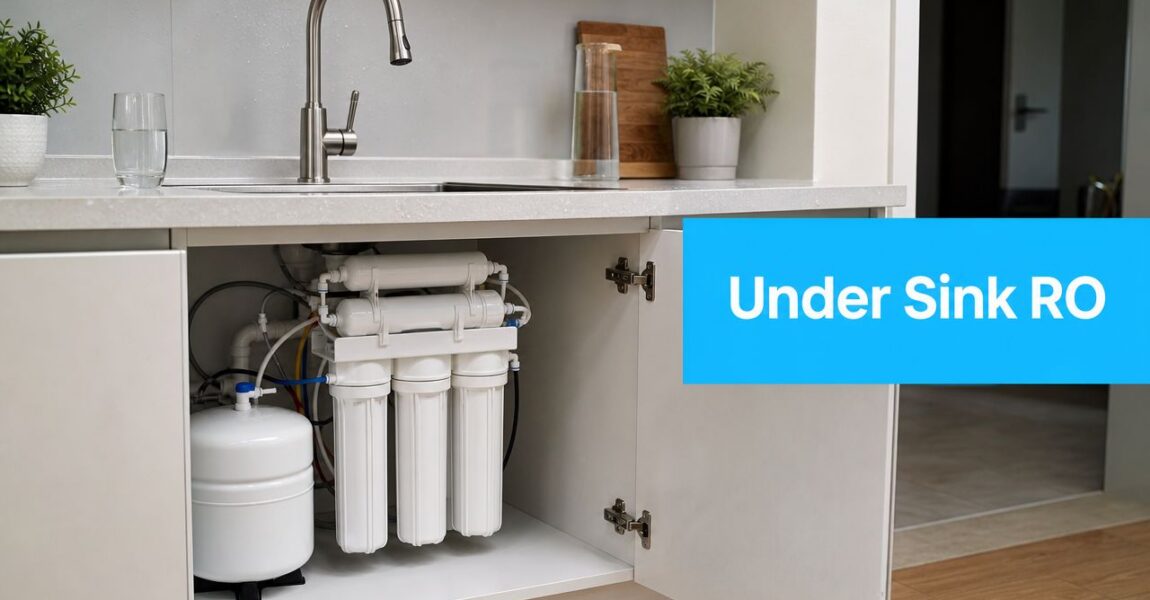
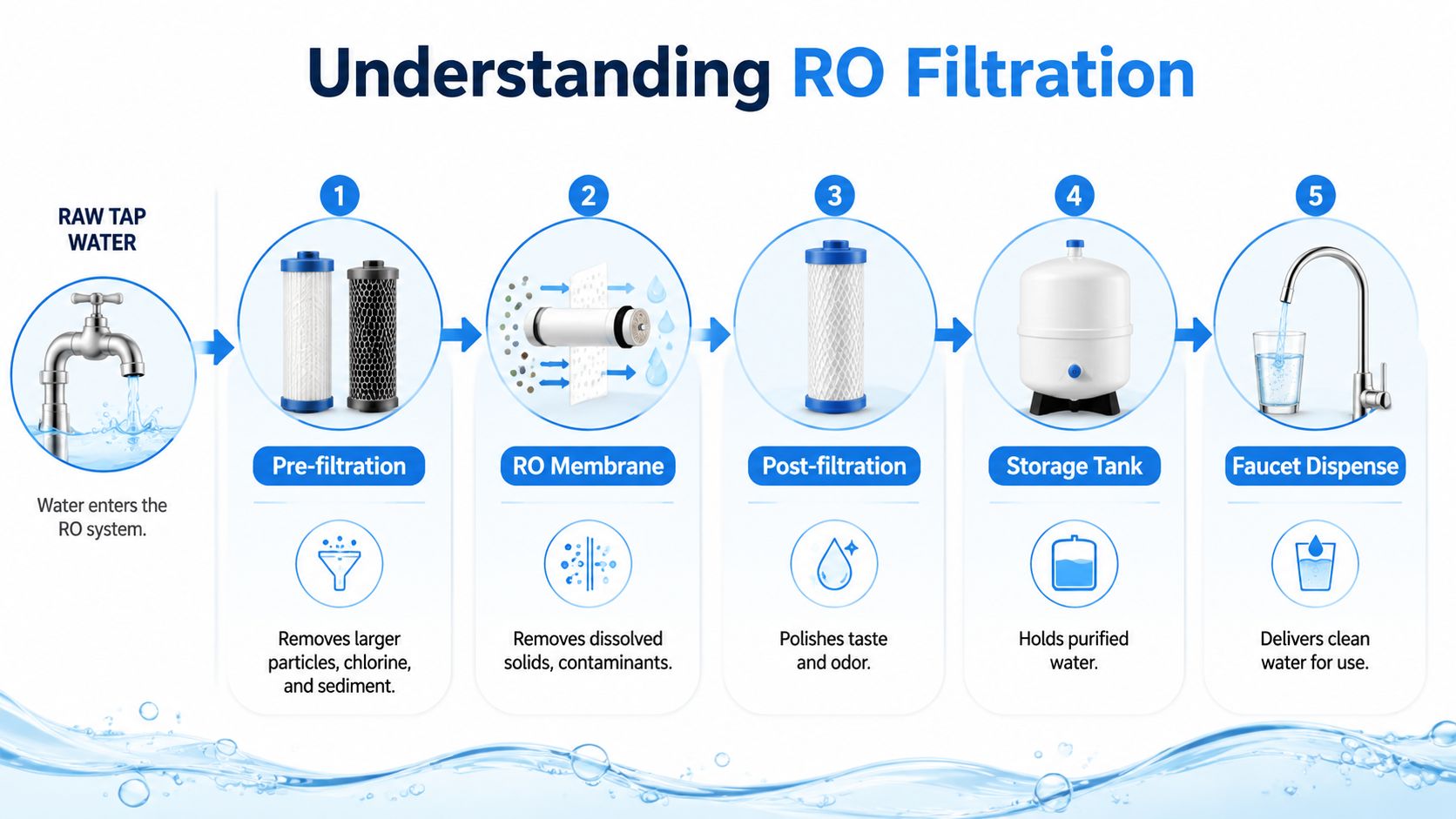
Best Under Sink Water Filter Reverse Osmosis of 2026

You're at the kitchen sink, filling a glass, and doing the same calculation a lot of homeowners do. The water meets local standards, but the taste changes, the smell is off after treatment cycles, and buying bottled water forever is a bad deal. Then you start shopping for an under-sink reverse osmosis system and run straight into inflated filter claims, oversized flow-rate numbers, and very little clarity on what the system will cost you to own.

Start with the two factors that matter most. Total cost of ownership. Real-world water efficiency.

That means looking past the sticker price. A cheap RO system gets expensive fast if it burns through proprietary filters, needs frequent service calls, or sends several gallons down the drain for every gallon you drink. A pricier unit can be the better buy if it wastes less water, has predictable replacement costs, and keeps performance steady over time. That is the part many review roundups gloss over, and it is usually where the smart buying decision gets made.

Here's the short list I'd use to sort the market fast.

System Best for Standout strengths Watch-outs
Cloud RO Best overall for most homes Strong balance of filtration performance, compact tank-free design, and low wastewater output Check cabinet space, faucet placement, and local replacement filter access before you buy
Waterdrop G3 P800 Best for households that want fast delivery from a tankless system High output and a modern under-sink footprint that suits busy kitchens Many homes do not need this much capacity, and overbuying raises long-term filter cost
Aquasana SmartFlow RO Best for buyers who want detailed published specs before they purchase Clear performance documentation and strong contaminant reduction claims from the manufacturer Filter changes follow different intervals, so maintenance planning takes more attention
WaterSense-labeled point-of-use RO systems Best for buyers who care most about water waste Better efficiency standards than many conventional RO systems Fewer models qualify, so your choices are narrower

My advice is simple. Do not buy an RO system because the feature list looks impressive. Buy the system that fits your water use, your cabinet, and your maintenance budget, while keeping wastewater under control. If you get those four things right, you will make a better decision than someone chasing the flashiest specs on the page.

Why Your Tap Water Needs a Second Look

A lot of people don't start looking for reverse osmosis because of one dramatic event. It's usually a slow build. A cloudy first pour in the morning. Ice cubes that smell faintly chemical. Coffee that tastes flat even with good beans. Or that nagging thought every time a plumbing repair hits the neighborhood.

That concern is reasonable.

Most homeowners aren't trying to become water chemists. They just want control over what comes out of the kitchen tap. That's why under-sink RO keeps pulling people in. It puts the filtration where it matters most, at the point where you drink, cook, rinse produce, and fill the kettle.

The appeal of RO is simple. It doesn't just make water taste better. It tackles a wider range of dissolved impurities than basic carbon filters do, and it does it from a compact system tucked below the sink instead of forcing you into bottled water or countertop clutter.

The kitchen problem is usually a trust problem

You can live with a lot in a house. Hard-to-open windows. A noisy dishwasher. Even that one cabinet door that never hangs straight.

Water is different. You use it every day, and if you don't trust it, the annoyance never stops. You notice it in tea, pasta, baby formula, and the dog bowl. A decent under-sink RO system fixes that daily friction in a way few upgrades do.

You don't buy reverse osmosis because tap water is always terrible. You buy it because “probably okay” isn't good enough for the water you drink every day.

Why under-sink RO is the right kind of upgrade

I like under-sink systems because they're practical. They don't take over the kitchen, and they solve the problem at the one faucet where purity matters most.

They also force a better buying conversation. Instead of obsessing over surface-level features, you can ask the questions that matter:

  • How much water does it waste
  • How often do filters need replacement
  • Is performance independently certified
  • Will it fit the cabinet you already have
  • Can you live with the maintenance

Those answers separate a smart purchase from an expensive annoyance.

Decoding Reverse Osmosis Filtration

Reverse osmosis sounds more complicated than it is. At its core, an RO system pushes water through a membrane that acts like an extremely selective gatekeeper. Water gets through. A lot of dissolved contaminants don't.

Think of the membrane as the strictest bouncer in the building. If a particle is too large, chemically incompatible, or dissolved in a way the membrane rejects, it doesn't get into the VIP room. It gets sent away with the waste stream.

A diagram illustrating the five stages of a reverse osmosis water filtration system for home use.

What each stage actually does

Most under-sink RO systems use a multi-stage layout. The exact stage count varies, but the jobs are familiar.

  1. Sediment filtration catches grit, rust, and particulate matter. This stage protects everything downstream.
  2. Carbon filtration reduces chlorine and improves taste and odor. It also helps protect the membrane.
  3. RO membrane does the heavy lifting on dissolved solids and many of the contaminants people worry about most.
  4. Post-carbon polishing gives the final water a cleaner finish at the faucet.
  5. Optional remineralization adds minerals back for taste in some systems.

If you strip away the branding, that's the basic logic of almost every serious residential RO system.

Two terms buyers should stop ignoring

Product pages love jargon, but two terms matter enough to learn.

TDS means total dissolved solids. It's a broad measure of dissolved material in water. It doesn't tell you exactly what's present, but it does tell you how much dissolved content the system is reducing.

Micron rating tells you how fine a filter is for catching particles. Lower micron ratings generally mean finer filtration at the prefilter level.

Neither term should scare you off. You don't need to master water chemistry. You just need to know what job each number is trying to describe.

Practical rule: Don't confuse stage count with quality. A well-built RO system with sensible filtration and a strong membrane usually beats a bloated system with extra stages added for marketing.

Why RO tastes different from regular filtered water

Basic filters mostly improve flavor by reducing chlorine and some odor-causing compounds. RO goes further. Because it removes a broad range of dissolved material, the water often tastes cleaner and lighter.

Some people love that immediately. Others prefer systems with remineralization because completely stripped-down water can taste flatter to them. That's a taste decision, not a purity debate.

The useful takeaway is this. If you want your drinking water to be consistently neutral and clean, reverse osmosis gets you there more effectively than ordinary under-sink carbon filtration.

What to Look For in an Under Sink RO System

You notice the cost after the install, not at checkout. The wrong RO system keeps sending water down the drain, burns through pricey proprietary filters, and turns a “good deal” into an expensive appliance under your sink.

Start with the numbers that affect ownership cost. Ignore inflated stage counts and glossy feature lists until a system proves it is efficient, certified, and practical to live with.

Waste ratio deserves top billing

If you compare only purchase price, you miss the biggest long-term expense. Water efficiency matters because every extra gallon sent to the drain shows up in your utility bill and puts more wear on the membrane.

As noted earlier, modern RO systems vary widely in waste ratio. Some are efficient enough to make sense in a typical kitchen. Others still waste far too much water for what they deliver. A strong target is a low drain-to-product ratio, with 1:1 standing out as excellent and anything creeping much higher demanding a hard second look.

This also affects how often the system has to work to keep up. Better efficiency usually points to a better-designed system, not just better marketing.

Certification separates real performance from box copy

Contaminant claims mean nothing without independent testing. I do not give much weight to phrases like “high-performance purification” or “premium-grade membrane” unless the system has certification to back them up.

NSF 58 is the certification to look for first. It shows the RO system has been tested against a recognized reverse osmosis standard.

Use this filter before you buy:

  • Require NSF 58 for the RO system itself
  • Verify any extra contaminant claims with independent certification
  • Ignore vague marketing terms if they are not tied to a real standard

A certified system costs more in some cases. It is still the smarter buy because you are paying for verified performance, not promises.

Flow rate and recovery are not the same thing

Buyers confuse these specs all the time, and manufacturers do not always help.

Gallons per day (GPD) tells you how much purified water the system can produce over time. That affects recovery after you fill a bottle, a coffee reservoir, or a cooking pot.

Flow rate tells you how fast water comes out of the faucet at that moment. That affects whether the system feels normal to use or annoyingly slow.

Tankless models often advertise high output and fast dispensing, but the key question is simpler. Can the system keep up with your household without wasting excess water or relying on expensive filter sets? For a family that cooks a lot, fills bottles daily, or uses RO water for pets and ice, recovery speed matters just as much as faucet speed.

Maintenance cost is part of the system price

The purchase price is the opening bid. The actual cost comes from replacement filters, membrane lifespan, service calls, and wasted water over several years.

Check these points before you commit:

  • Prefilter replacement schedule
  • Membrane replacement schedule
  • Actual replacement filter cost
  • Whether the system uses proprietary cartridges
  • How easy it is to buy parts a year or two from now
  • How your incoming water quality will affect filter life

Hard water, high sediment, and heavy chlorine load shorten filter life fast. In those homes, a cheap system often becomes the most expensive option under the sink.

I prefer RO systems with easy-to-find replacement filters, clear service intervals, and a membrane that does not need constant babysitting. That setup usually costs less to own, even if the initial price is higher.

Make sure it actually fits your kitchen and your water

A good RO system still fails if it does not fit the cabinet, the plumbing, or the way your household uses water.

Check the footprint. Tank systems eat more space but can deliver familiar faucet performance. Tankless systems free up cabinet room and often improve efficiency, but they depend more on steady water pressure and electronics. If your home has low pressure, some systems will struggle unless they include a booster pump.

Also check what your water needs before you buy. If your tap water is already low in dissolved solids and mainly tastes like chlorine, a full RO setup may be more system than you need. If you have high TDS, nuisance contaminants, or water that leaves scale everywhere, RO makes far more sense.

Buy for your water and your five-year cost, not for the longest feature list. That is how you end up with a system you still like after the first set of replacement filters.

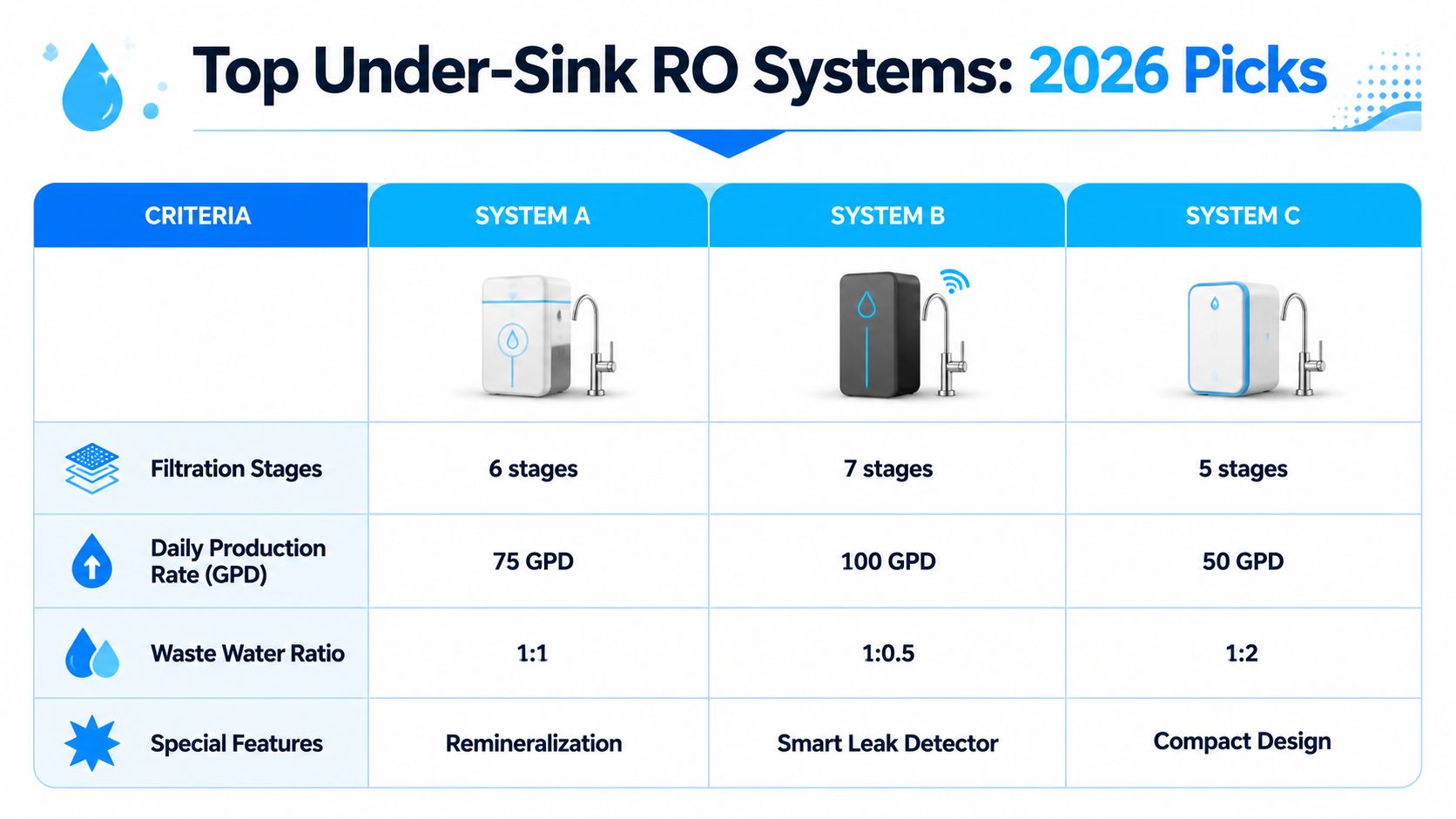
The Best Under Sink RO Systems of 2026

A homeowner buys the cheapest RO system online, then gets hit with pricey proprietary filters and a drain line that dumps far more water than expected. Two years later, the “budget” unit has cost more than a better system would have from day one.

That is why I would not rank these systems by sticker price alone. I care most about what they cost to own and how efficiently they make drinking water in a real kitchen.

A comparison chart of three under-sink reverse osmosis water filter systems labeled A, B, and C.

Best overall for most homes

Cloud RO is the pick I would give the average homeowner first.

The reason is simple. It balances the three things that matter most after installation: solid contaminant reduction, good water efficiency, and a cabinet-friendly design. As noted earlier, it also checks the boxes I look for in a modern under-sink RO system, including certified performance and a favorable waste ratio.

That matters more than a flashy faucet or app feature. A system that wastes less water and does not punish you on replacement costs usually wins over five years.

If you want one recommendation that makes sense in the broadest range of homes, start here.

Best tankless option for high demand

Waterdrop G3 P800 fits homes that burn through a lot of filtered water and want tankless convenience.

Its main selling point is output. You get fast production and a layout that frees up cabinet space, which is useful in busy kitchens that fill bottles, cook often, or have several people using the tap throughout the day. The tradeoff is that high-output tankless systems are not always the efficiency champions, so I would only pay for this class of machine if your household will use that speed.

Big capacity numbers look impressive on a product page. Your water bill does not care about marketing. If two systems filter your water well, buy the one with the better waste ratio and the more reasonable filter costs.

Best for buyers who want published performance detail

Aquasana SmartFlow RO deserves a look if you want a brand that gives you clear operating details instead of vague promises.

I respect that approach because it lets you compare systems like an adult. You can check flow, service intervals, and contaminant claims before you buy, then judge whether the annual upkeep makes sense for your budget. That is far more useful than polished product photos and generic “premium filtration” language.

For buyers who want to compare specs, maintenance schedules, and long-term ownership tradeoffs side by side, this reverse osmosis buying advice guide is a practical place to continue your research.

If a brand makes you work hard to find replacement intervals, filter pricing, or efficiency information, skip it. Hidden ownership costs are still ownership costs.

Best choice if water efficiency is your top priority

Start with WaterSense-labeled point-of-use RO systems.

That label is one of the fastest ways to separate serious designs from wasteful ones. In this category, efficiency is not a side benefit. It directly affects how much water goes down the drain and how expensive the system feels after a year or two of daily use.

I would take a slightly less flashy RO system with better efficiency over a feature-packed water hog almost every time. For many households, that is the smarter buy.

Recommendations for Specific Water Needs

Buy for your water and your habits, not for a spec sheet fantasy. The right under-sink RO system is the one you will still like after the first filter change, the first water bill, and the first time you have to service it in a cramped cabinet.

A woman testing tap water quality with a test strip at a modern kitchen sink.

For small apartments and cramped sink cabinets

Choose a tankless system.

Space is the obvious reason, but it is not the only one. Tankless units usually make the cabinet easier to clean up, easier to service, and easier to install without awkward tubing loops wrapped around a storage tank. In a tight apartment kitchen, that matters every day.

Cloud RO makes sense in this role because the compact footprint is the point of the design. If your cabinet already holds a trash pullout, cleaning supplies, or oddball plumbing, a slim tankless chassis is the practical answer.

For households that want fast, spec-driven performance

Pick a system from a brand that publishes the numbers that affect ownership. Flow rate, filter life, membrane life, and waste ratio matter more than polished marketing copy.

Aquasana SmartFlow RO fits that buyer profile. As noted earlier, Aquasana does a better job than many brands of giving shoppers concrete operating details instead of generic filtration language. That makes comparison shopping easier and helps you estimate real yearly cost before you buy.

For well water homes

Treat the well water first. Then use RO as the finishing step at the sink.

I see this mistake all the time. A homeowner installs an under-sink RO on raw well water with sediment, iron, hardness, or seasonal swings, then blames the RO system when filters clog early or membrane performance drops. The RO unit is doing its job. The pretreatment is missing.

Use this rule:

  • Add sediment control first if the water carries grit or visible particles.
  • Address hardness and iron upstream if those are present.
  • Do not expect under-sink RO to solve whole-house issues like scale, rust staining, or sulfur odor.

Water Filter Advisor has a general guidance library on home filtration categories and maintenance topics if you need a broader overview before choosing equipment.

For budget shoppers

Focus on total cost of ownership.

A cheap RO system can cost more over three years if it burns through proprietary filters, sends too much water down the drain, or needs frequent service calls because the design is fussy. This is the part many roundups miss. The sticker price is the smallest number you will pay.

Budget buyers should look for three things first: reasonable replacement filter pricing, a clear service schedule, and a strong efficiency rating. If two systems cost about the same up front, buy the one that wastes less water. That choice lowers the effective cost of every gallon you drink.

The best budget buy is rarely the cheapest unit on the product page. It is the one that stays affordable after a year of actual use.

Installing and Maintaining Your RO System

Installation scares people more than it should. Most under-sink RO systems are manageable if you're patient, organized, and comfortable working in a cramped cabinet. The main difficulty isn't technical brilliance. It's avoiding sloppy connections and giving yourself enough room to route tubing cleanly.

A person installing a carbon replacement filter into an under-sink reverse osmosis water filtration system.

What installation usually involves

Most systems require the same core tasks:

  • Cold-water connection to feed the system
  • Drain connection for reject water
  • Dedicated faucet setup unless your system uses a compatible integrated design
  • Filter assembly placement inside the cabinet
  • Initial flushing before drinking the water

If you're handy, this is often a reasonable DIY project. If your sink base is cramped, your plumbing is unusual, or you already hate working under sinks, hire a plumber and be done with it.

A clean installation saves headaches later. Most RO “system problems” I see start as installation problems.

The annual maintenance checklist

RO ownership is simple if you respect the schedule and irritating if you ignore it.

Use this checklist once the system is in service:

  • Replace carbon stages on schedule because chlorine exposure and clogging can shorten membrane life.
  • Replace the membrane when required because an overdue membrane drags down performance.
  • Inspect fittings and tubing for slow leaks or stress points.
  • Sanitize when recommended by the manufacturer during filter changes or service intervals.
  • Pay attention to taste and flow changes because they often show up before a full failure does.

The best maintenance advice is boring. Be consistent.

How to think about total cost of ownership

Use a simple formula:

5-year cost of ownership = system price + (annual filter cost x 5)

That formula won't capture every variable, but it forces the right buying mindset. You're not purchasing a box. You're purchasing years of filtered water, replacement parts, and routine upkeep.

If you want more practical maintenance guidance and filter planning help, the Water Filter Advisor advice center is a useful reference point.

A quick install walkthrough helps if this is your first system:

When to call for help

Call a plumber if any of these apply:

  • You don't have a straightforward drain connection
  • Your countertop needs drilling and you're not equipped for it
  • You're working with stone surfaces and don't want to gamble
  • Your supply valves are old or questionable
  • You're installing into a home with unusual water pressure or treatment equipment

There's no prize for turning a clean install into a weekend-long cabinet disaster.

Common Questions About Reverse Osmosis Filters

Why is my RO faucet so slow

That's usually normal to a point. RO systems filter water more slowly than a standard kitchen line. Tank systems depend on stored pressure, and tankless systems depend on live production. If the flow has suddenly dropped, check whether the filters are overdue or whether feed pressure is lower than it should be.

My system keeps making noise. Is that a bad sign

Usually not. Gurgling, brief rushing sounds, and drain noise often happen as the system fills, flushes, or sends reject water away. What you're listening for is a change. New loud vibrations, constant running, or sudden repeated cycling can point to a bad connection, air in the system, or a valve issue.

Can I connect my RO system to a refrigerator or ice maker

Often, yes. Many under-sink setups can feed a fridge line if the layout makes sense. The catch is distance and pressure. A short, clean run is much easier than snaking tubing across the kitchen and expecting perfect performance.

Why does RO water taste flat to some people

Because RO removes a lot of dissolved material. Some people love that clean neutral taste. Others prefer remineralized water because it tastes less stripped. That's why systems with built-in remineralization appeal to many households.

Is a tankless system always better than a tank system

No. Tankless is better for some kitchens, especially where space and modern design matter. Tank systems still make sense when buyers want a simpler setup and don't mind giving up more cabinet room. The right answer depends on your layout, maintenance preferences, and efficiency priorities.


If you're narrowing down the best under sink water filter reverse osmosis system for your home, Water Filter Advisor is a solid place to compare filtration types, understand maintenance, and match a system to your actual water conditions instead of buying off hype.